Tag: Electronics

  • Qualcomm’s new smartwatch chips will reportedly be built using 4nm process node

    Qualcomm’s new smartwatch chips will reportedly be built using 4nm process node

    Qualcomm is looking to take its Snapdragon Wear chipset to a higher level while replacing the current Wear 4100 platform. Built on the 4nm process node, the Snapdragon Wear 5100 and 5100+ are both expected to improve the performance of Google’s wearable operating system thanks to the manufacturing process being used.

    While Samsung Foundry will reportedly build the chips (it should be noted that Samsung manufacturers the Snapdragon 8 Gen 1 SoC used on most flagship Android devices), this doesn’t mean that they will be used on any Samsung timepiece. Being built on the 4nm process node, the Snapdragon Wear 5100 and 5100+ should be more energy-efficient than the current 4100 chip which is built on the 12nm process node (and compared to the 28nm process node used on the Snapdragon Wear 3100).

    The difference between the 5100 and the 5100+ is in the packaging with the former separating the SoC and the PMIC (power management integrated circuits). The latter is known as a Molded Embedded Package (MEP) where everything is packaged together. The more powerful of the two chips features an “ultra low power deep sleep mode” that will allow for Bluetooth or Wi-Fi connectivity even when employed.

    The “Plus” chip also will include technology from ARM that supports heart rate and fall detection and will deliver improved haptics. Both variants include four Cortex-A53 cores running at a clock speed of 1.7GHz. In addition, both chips will feature the Adreno 702 GPU running at 700MHz.

    The Snapdragon Wear 5100 and 5100+ will both support up to 4GB of LPDDR4X RAM and eMMC 5.1 storage. This happens to be the same core as the Wear 4100+ although it would seem that Qualcomm is counting on the reduced process node to cover some of the improvements found in the newer chips.

    The ISP will support dual cameras in the 13MP and 16MP range and the thought is that watches will be used for video conference calls in the future. The 5100 line of Snapdragon chips can be used not just to power a Wear OS device, but also can drive an Android device as well.

    The 5100+ will include the QCC5100 co-processor which adds a 22nm Cortex-M55 ultra-low-power processor to help reduce the consumption of battery power. Speaking of which, it seems that the move to use a 4nm process node to build the two variants is a recent change from the 5nm that Samsung was going to use to produce the silicon.

    There is no word when the chips will be available for use on consumer devices. It doesn’t appear that the components will be available to be used on the rumored Google Pixel Watch. The rumor mill has worked overtime to produce renders of what is supposedly the Pixel Watch with a circular watch face. The speculation calls for the timepiece to be unveiled in May, possibly during the Google I/O Developer Conference.

    The device will reportedly be equipped with the capability to allow Google Assistant to process speech on-device. Not only can this speed up the time it takes for the digital helper to respond to queries, it also could allow users to speak to the Assistant even when offline.

    Tipster Max Weinbach disseminated a tweet a few months back that said the Pixel Watch will be powered by a Samsung Exynos chipset similar to the 5nm Exynos W920. The latter is the silicon used with the Galaxy Watch 4 line, but it will carry the Tensor name. That is the name used by Google for the AI-focused SoC that debuted on the Pixel 6 series.

    Google might want to keep the Tensor branding on the chips that power its devices in order to give the public a certain expectation about the AI features that will be available on its products and to present a certain aura of premium quality.

  • Samsung invests another $920 mln in northern plant

    Samsung invests another $920 mln in northern plant

    Samsung has received permission to invest an additional $920 million in its electronic components plant in the northern province of Thai Nguyen.

    The license, awarded to the South Korean’s electronics giant’s Samsung Electro-Mechanics unit, will increase its total registered investment in the province by 68 percent to $2.27 billion.

    Samsung, Vietnam’s biggest foreign direct investor, first invested $1.3 billion in the electro-mechanics unit in 2013. The unit produces mainboards and other electronics components.

    As of last year, Samsung had invested $18 billion in Vietnam. It has six plants in the country and is building a new research and development center in Hanoi.

  • Samsung invests another $920 mln in northern plant

    Samsung invests another $920 mln in northern plant

    Samsung has received permission to invest an additional $920 million in its electronic components plant in the northern province of Thai Nguyen.

    The license, awarded to the South Korean’s electronics giant’s Samsung Electro-Mechanics unit, will increase its total registered investment in the province by 68 percent to $2.27 billion.

    Samsung, Vietnam’s biggest foreign direct investor, first invested $1.3 billion in the electro-mechanics unit in 2013. The unit produces main boards and other electronics components.

    As of last year, Samsung had invested $18 billion in Vietnam. It has six plants in the country and is building a new research and development center in Hanoi.

  • iPhone doubles Vietnam market share

    iPhone doubles Vietnam market share

    iPhone’s market share in Vietnam increased from 4 percent in 2020 to 9 percent last year, making it the fifth-largest smartphone seller.

    The growth of 119 percent was the highest for any brand, Counterpoint Research said in a report.

    Apple was behind Samsung (34 percent), OPPO (19 percent), Xiaomi (13 percent), and vivo (11 percent).

    Strong growth in Apple products was seen in the last quarter of the year, with sales doubling year-on-year, the report said.

    This was when the company launched iPhone 13.

    Last year, taking advantage of the rising demand, several stores were set up to exclusively sell Apple products like FPT’s F.Studio, TopZone and Lazada Apple Flagship Stores.

    Counterpoint analyst Ivan Lam said: “Apple has always had a place in Vietnamese consumers’ hearts. Last year it expanded its distribution campaign in Vietnam.”

    The overall smartphone market grew by 7 percent last year, the report said.

  • Toshiba To Invest $1 Billion To Double Power Chip Production

    Toshiba To Invest $1 Billion To Double Power Chip Production

    Toshiba Corp said on Friday it will invest about 125 billion yen ($1.09 billion) to more than double the production of power management semiconductors, aiming to catch up with power chip giants such as Infineon Technologies AG.

    The Japanese industrial conglomerate will build a cutting-edge 300-millimeter fabrication plant in central Japan for power management chips, which efficiently control electric power in cars, electronic devices, and industrial equipment.

    Toshiba will invest around 100 billion yen in the new plant, on top of a 25 billion yen investment in a 300-millimeter fabrication line it is building at an existing chip plant, a Toshiba spokesperson said.

    The new plant is set to start operating by March 2025. When the first phase is complete, Toshiba’s power chip output capacity would be 2.5 times its current level. Depending on demand, the new plant could further expand with additional investment, the spokesperson said.

  • Apple Glasses could also correct your vision, new patent shows

    Apple Glasses could also correct your vision, new patent shows

    There aren’t many new products to gather the attention and hype that the Apple Glasses AR/VR headset has managed to accumulate in the past few months. Apple’s rumored wearable often occupies headlines and leaks about its features are flying left and right.

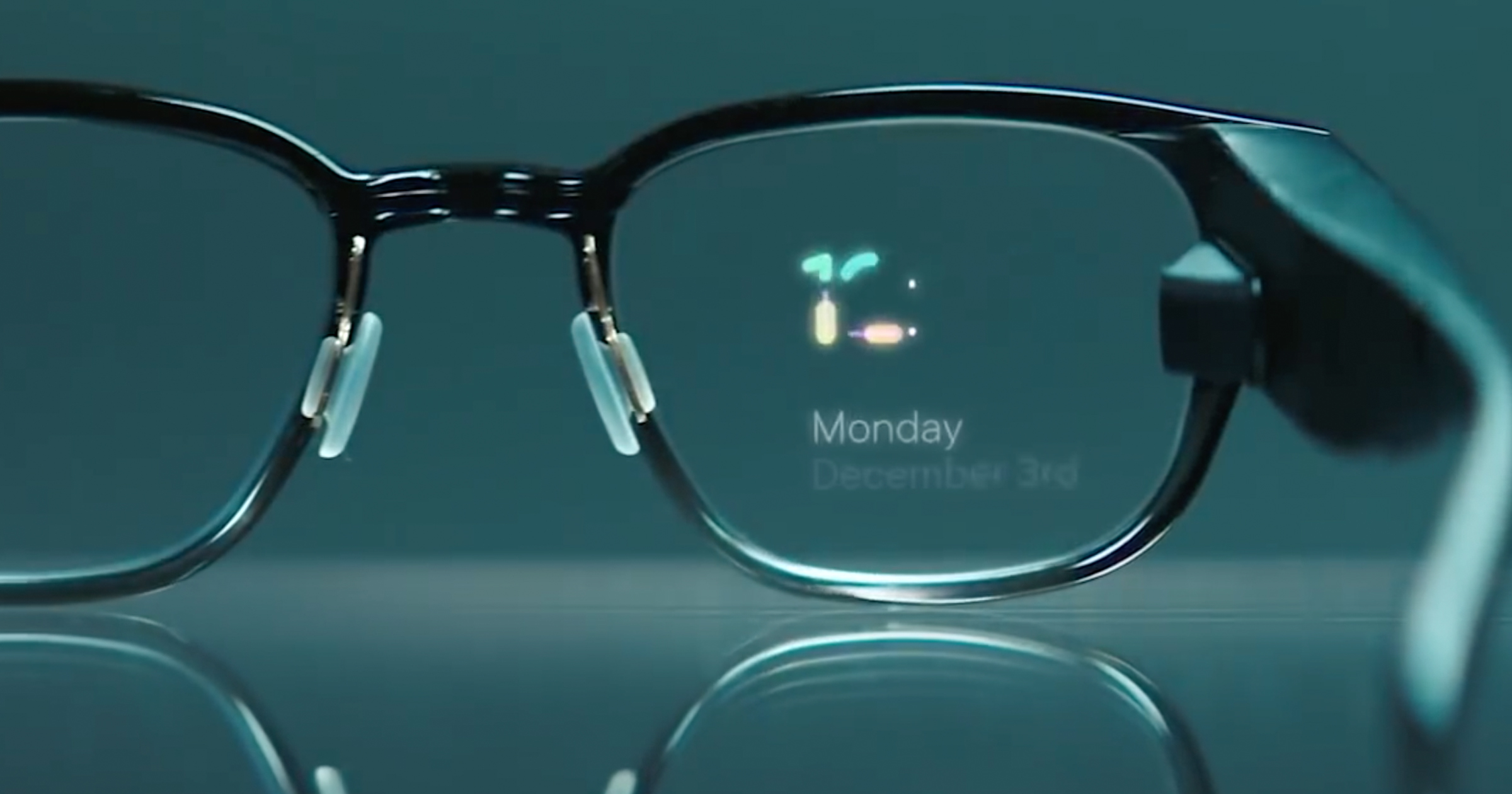
    The latest Apple Glasses rumored feature could benefit people with prescription glasses. According to a new patent, granted to Apple on Thursday, the new Apple Glasses might feature a system of lenses that adjust to match the user’s prescription.

    The patent in question is titled “Tunable and foveated lens systems,” and describes a clever system of lenses that can be manipulated to act as a regular pair of glasses. The difference is that the system adjusts the position of the lenses automatically, and any person – with or without prescription glasses – could use it without any problems.
    This can be achieved by using a stack of liquid crystal lenses – the liquid material inside can change its optical properties when a current passes through it. Apple says in the patent documents that such a system can also help people with various vision problems, such as presbyopia (inability to focus at a certain distance).

    The clever system manages to circumvent one big obstacle that lies before smart glasses technology – users with regular prescription glasses. Using another pair of smart glasses on top of your prescription glasses is far from comfortable, and manufacturers normally would have to offer different models with different dioptric parameters to suit every consumer out there. Using this futuristic adjustable lens system could not only make smart glasses much more comfortable and approachable but help advance vision-correction technology.

    Bear in mind, though, that Apple (and every other big tech company) files for hundreds of patents every year. Seeing this cool feature on paper doesn’t mean that the actual product will have it onboard. Let’s quickly browse through all Apple Glasses patents that we’ve unearthed so far. One of the latest and most futuristic patents so far was the “Direct retinal projector.” As the name suggests, Apple is looking for ways to project the image directly onto the user’s retina.

    Another cool patent from last year describes Apple Glasses adjusting to ambient lighting, decreasing the ambient light in order to boost the brightness of the projected image.  Much less high-tech was the patent filing describing how Apple Glasses could be used to unlock other gadgets nearby – most wearable devices already have such functionality.

    The rumored self-cleaning feature of the Apple Glasses is far more interesting. The patent involved describes a way to “shake” the device free of dust using vibration.

    Finally, another patent filing showed how Apple Glass might detect sound and direct you to its origin. That might turn out to be a very useful feature for a device you wear on your head and look (kinda) through it.

    • Plastic or metal frames
    • Two 8K resolution displays
    • 120Hz refresh rate
    • Wi-Fi 6E connectivity
    • LiDAR in the frame
    • Gesture and voice controls
    • UI called Starboard
    • Adjustable lenses
    • Price: $499
    • Release date: 2025

    A major Apple Glass leak revealed a $499 price, and also suggested an announcement date sometime in Q3/Q4 2021, which is clearly not happening. According to tech analyst and insider Ming-Chi Kuo, Apple Glasses won’t be ready until 2025.

  • Apple does it again, becomes first publicly traded U.S. firm to be valued at three trillion bucks

    Apple does it again, becomes first publicly traded U.S. firm to be valued at three trillion bucks

    For a short period of time today, Apple’s stock market valuation exceeded three trillion dollars. The tech company and iPhone manufacturer hit that valuation when it topped $182.856 a share on Monday, briefly reaching a new high at $182.88. By closing time, the stock had dropped back to $182.01. Apple’s shares rose $4.44 on the first trading day of the new year.
    Remember the early days of the pandemic when investors dumped big tech names like Apple? Since its pandemic low, Apple’s stock has tripled adding two trillion dollars in market capitalization. Apple’s shares are up 41% since the start of last year making it one of the best performers among the Dow Industrials.
    You might recall the race that Apple had with Amazon more than three years ago to see which firm would be the first U.S. publicly traded firm to reach $1 trillion in value. Apple hit that mark on August 2nd, 2018. After hitting that mark, Apple’s shares declined 30% as it cleared the decks in anticipation for its run to a two trillion dollar valuation which it hit on August 19th, 2020.
    Apple has all engines on “go” right now with the iPhone 13 series continuing to be red hot, and with iPads selling well thanks to the never-ending pandemic. The Apple Watch remains the world’s top-selling timepiece and next year Apple is expected to enter the mixed reality space with a new headset. Interestingly, the company has seen its valuation surge by a factor of nine since the death of co-founder and co-CEO Steve Jobs from pancreatic cancer in 2011.
    Ironically, at the time he passed, Jobs owned just a small amount of Apple shares. His fortune came from an 8 percent stake in Disney that he received from the $7.4 billion acquisition of Pixar by Disney in 2006. Based on the current valuation of Disney, Jobs would be worth $22 billion today which is well behind the $226 billion that Elon Musk is reportedly worth. Amazon founder Jeff Bezos is believed to be worth $202 billion (you don’t suppose that Bezos still uses an Amazon Fire Phone, do you?)
    Tech stocks, including Apple, played a big role in the 27% gain earned by the S&P 500 last year. Apple, Tesla, Microsoft, Nvidia, and Alphabet combined to produce a 31% increase.
    The Journal’s iconic “Heard On The Street” column noted that it has taken nine months for Apple to tack on its latest trillion bucks in valuation even though the prospects for the company haven’t changed during that time period. In fact, the Journal mentions research firm Visible Alpha and its forecast that iPhone unit sales will rise only 1% this year compared with 24% last year.
    This is not a short-term slowdown say analysts surveyed by FactSet. Over the next three years, Apple will grow its top line by only 5% a year putting Apple dead last among other tech giants including Amazon. The latter’s valuation is $1.3 trillion less than Apple’s even though the Echo manufacturer garnered 25% more revenue than Apple last year
    Amazon is also expected to see its revenue grow 16% a year over the next three years compared to the aforementioned 5% for Apple. Apple’s products and services are doing quite well but the iPhone still makes up half of its revenue and has benefited from deals offered by the carriers looking to get more 5G phones into customers’ hands.
    Apple certainly enjoyed a bountiful fiscal 2021 with revenue up 33% to $365.8 billion, meaning that the company took in one billion clams each and every day. That was a company record, by the way, and operating income soared 64% to $108.9 billion. This was the first time Apple produced a double-digit growth rate in three years.
    Once Apple’s shares stabilize over three trillion dollars, it will be time to watch out for the rise to four trillion. However, one day the growth just won’t be there and then it truly will be the time to see what Apple has under its sleeves as the next big thing.

  • Samsung has invested nearly $18 bln in Vietnam

    Samsung has invested nearly $18 bln in Vietnam

    Samsung has invested $17.74 billion in Vietnam in the last 24 years, 29 percent of it in the last five.

    With eight manufacturing and research facilities in the country, the South Korean electronics giant achieved revenues of nearly $60.5 billion in the first 10 months of this year, Samsung Vietnam CEO Choi Joo Ho told Deputy Prime Minister Le Minh Khai at a meeting in Hanoi Monday.

    It marked a 15 percent year-on-year rise despite the challenges to keeping factories going and sourcing parts amid Covid-19, he said.

    Exports accounted for nearly 89 percent of the revenues, he added.

    The company is building a $220-million research and development center in Hanoi, the first of its kind outside of its home country.

  • Qualcomm’s Apple M1-rivalling silicon arriving in 2023

    Qualcomm’s Apple M1-rivalling silicon arriving in 2023

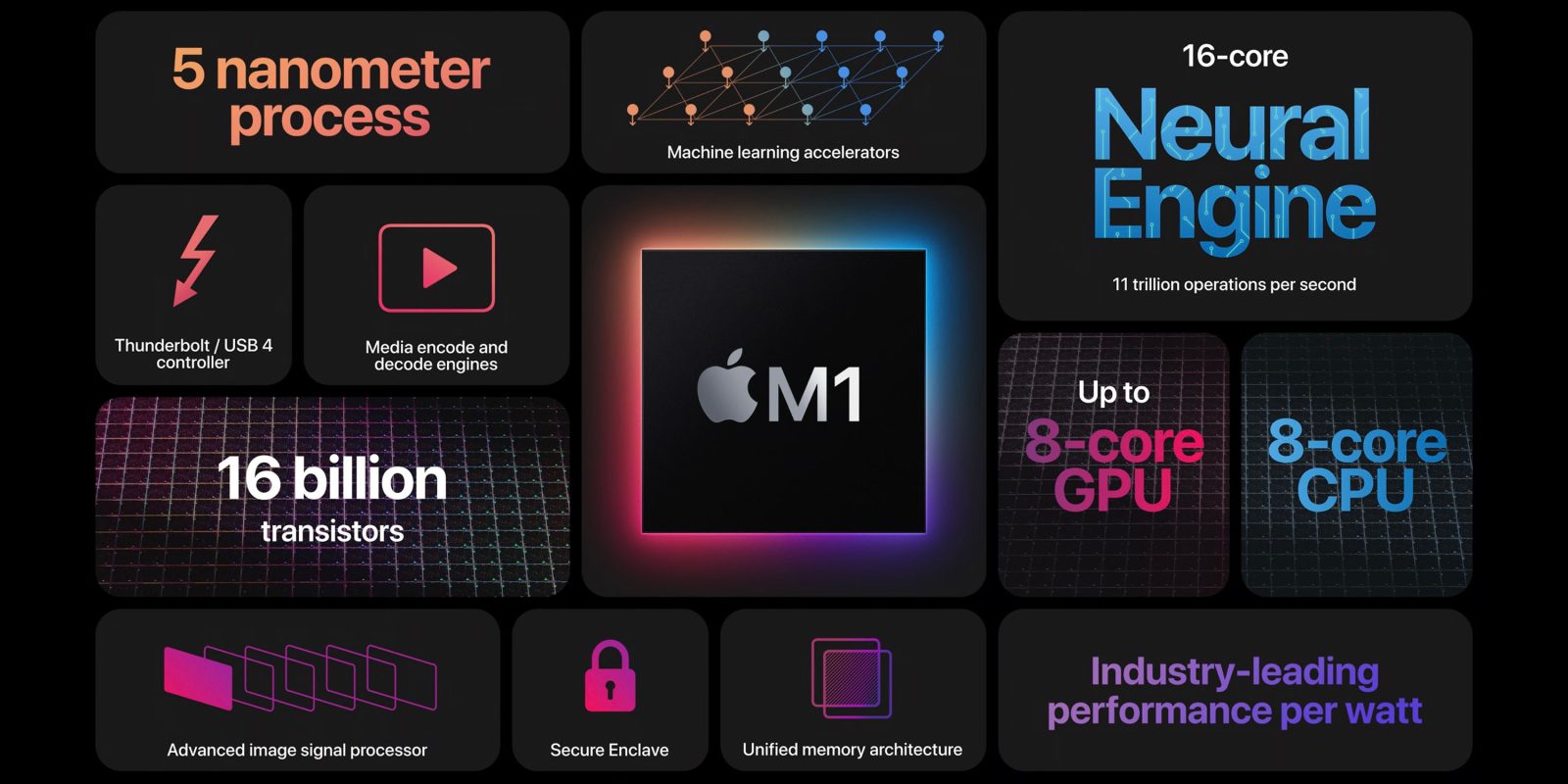
    Qualcomm revealed plans to bring to the market an Apple M1-beating chip by 2023 during its 2021 investor conference.

    The processor will be based on technology from Nuvia, a chip startup that was founded by ex-Apple engineers who had worked on Apple A and M series chips and was bought by Qualcomm earlier this year. We can hope to see Nuvia’s tech in smartphone chips too at some point in the future.

    For now, the focus is on the next generation of Arm-based processors which Qualcomm claims will set a new performance benchmark for Windows PCs. The chip will offer industry-leading sustained performance and battery life, or so Qualcomm hopes. It will feature Arm-based CPU cores, Adreno graphics, 5G modem, Hexagon DSPs, and Spectra imaging core.

    If you look at what Apple has done with the M-series, on the upper hand it even has the performance of an [Nvidia] RTX 3080 at discrete graphics.” – Qualcomm CEO Cristiano Amon.

    Qualcomm will also work on improving its Adreno GPUs to offer a desktop-like gaming experience on PCs. The chip giant is aiming to have samples out for customers in around nine months, with the official launch planned for 2023.

    Whether the chip will be able to live up to the claims or see the same fate as the Qualcomm Snapdragon 8cx and Microsoft Surface SQ2 PC chips that failed to make a mark remains to be seen.

    Apple meanwhile has already launched even more powerful versions of the M1 chip, the M1 Pro and M1 Max, and is now reportedly working on the third-generation of Mac chips that will likely offer significantly better CPU performance than the latest chips. The M series chip power a slate of new Apple products, including some of the best tablets that money can buy.

  • Razer opens retail store and cafe inside its new Southeast Asia HQ

    Razer opens retail store and cafe inside its new Southeast Asia HQ

    Global lifestyle brand for gamers, Razer, has launched its Southeast Asia headquarters in Singapore: home to the country’s first Razer retail store and café.  The building façade features the brand’s signature black and striking neon green, while the store offers the brand’s full range of products, allowing gaming fans to sample and experience Razer’s latest innovations and creations.

    Meanwhile, the new technology-focused F&B concept serves beverages made by a state-of-the-art robotic barista arm. At the RazerCafe, guests can order a beverage at the store or pre-order a cup of coffee via the RazerCafe App and collect it in-store.

    “Our gamer-centric ecosystem has redefined the gaming experience for more than a decade with the introduction of innovative solutions and whole new product categories, and we’re not planning on slowing down,” said Min-Liang Tan, co-founder and CEO of Razer.

    “The new regional hub represents everything that Razer stands for, from innovation, to design, to sustainability, and will not only be home to Razer’s growing staff, but to up-and-coming entrepreneurs, and even gamers looking for a place to train and learn as well.”

    As part of the expansion, the company has increased its staff number in Singapore from 600 to 1000.

  • Samsung reports record third quarter revenue despite global chip shortage

    Samsung reports record third quarter revenue despite global chip shortage

    Samsung had a record third-quarter revenue as it reported the U.S. Dollar equivalent of $63.1 billion for the period. That works out to a 10% increase for the top line while operating profit for the quarter came to $13.5 billion (or 26% higher than the operating profit reported during the previous quarter). $22.6 billion in revenue during the quarter came from Sammy’s semiconductor business.

    Samsung was able to navigate its chip business through the global chip shortage “by flexibly operating its product mix.” Samsung’s mobile business also played a huge role in the company’s record-breaking third-quarter. Thanks to strong sales of its flagship phones including foldable like the Galaxy Z Fold 3 and the Galaxy Z Flip 3, Samsung generated $24.2 billion in revenue during the period from July through September.

    Demand for semiconductors improved thanks to strong sales of computers; the latter benefited from the increased number of people working at home because of the pandemic.

    The company’s profits were impacted by the larger marketing outlays it made for its foldable line. Strong demand for Samsung’s phones also led its display business to deliver $7.5 billion in revenue. Earnings for the display segment were helped by strong demand for small to medium OLED panels. Demand for larger-sized displays was sluggish.

    Samsung is optimistic about Q4 and 2022 results, but cannot estimate results for the chip business because of the supply issues in that market. For the fourth quarter, the company expects to report higher earnings “due to expanded supply of SoCs and related products for launches of new 5G smartphones in 2022.”

    The company expects that the Galaxy S22 series will be its first flagship series of the new year with the Galaxy S22, Galaxy S22+, and the Galaxy S22 Ultra kicking off 2022 in January. Meanwhile, investors were happy with the report as the shares soared 2.28% on Wednesday (or $1.45 USD) to $61.22.

  • Chip shortage forces Apple to cut production of the 5G iPhone 13 series in 2021

    Chip shortage forces Apple to cut production of the 5G iPhone 13 series in 2021

    The chip shortage is now having an impact on Apple’s iPhone 13 series. Those knowledgeable about what is going on inside Apple’s camp say that the company will cut its production targets for this year by as many as 10 million units reducing the number of handsets made this year to 80 million from the original target of 90 million. Both Broadcom and Texas Instruments are the chipmakers who aren’t able to deliver the number of components they promised to Apple according to anonymous sources.

    Texas Instruments supplies Apple with chips for its displays and one chip that has become hard to find powers the OLED panels on iPhone models. Broadcom produces wireless components for the iPhone. Lead times in the chip industry, which measures how long it takes a manufacturer ordering chips to receive them, is at a record-setting 21.7 weeks compared to nearly 12 weeks at the same time last year.

    Broadcom is fabless which means that it relies on independent foundries like TSMC to manufacture its semiconductors. While Texas Instruments does make some chips itself, it also relies on TSMC to produce some of its chip designs. This means that both must scramble to get their semiconductors made by TSMC and since Apple is the end-user of these components, Apple is the company that is getting the brunt of the shortage.

    Apple already has been able to sidestep price hikes of as high as 20% instituted by TSMC. As the latter’s largest customer, Apple was able to get away with only a 3% price increase while also avoiding getting hit by the shortage. But even Apple now can’t escape what is happening around the world.

    Once again, what brought on the shortage were car manufacturers who early last year figured that their new car business was dead meat in the wake of the pandemic. So they cut back on ordering chips and when demand for new cars turned out to be much better than expected, automakers backed up their trucks to take as many chips as they could buy. This shortage could continue next year and might not run its course for some time.

    New orders for the iPhone 13 series made through Apple’s website will not be delivered until November in some cases and if you want to pick up your new handset at an Apple Store, you’re out of luck. The phones are “currently unavailable” for Apple Store pick up. And today’s report says that Apple’s carrier partners are also seeing delays in receiving new iPhone shipments.

    What is at stake here is Apple’s fiscal first-quarter of 2022, which is known as the holiday quarter since it includes Chanukah and Christmas. The company is expected to take in $120 billion in revenue during this year’s holiday quarter, up 7% from last year’s fiscal first-quarter revenue. Interestingly, a decade ago the $120 billion would be more than a complete year’s worth of revenue for Apple.

    Both the U.S. and China would love to become self-sufficient when it comes to semiconductors. The U.S. has made this rather tough for China by not allowing a Dutch company named ASML from shipping a $150 million machine called extreme ultraviolet (EUV) lithography machine to China’s top foundry, SMIC. The EUV machine is used to print circuit designs on wafers that are eventually cut into individual chips.

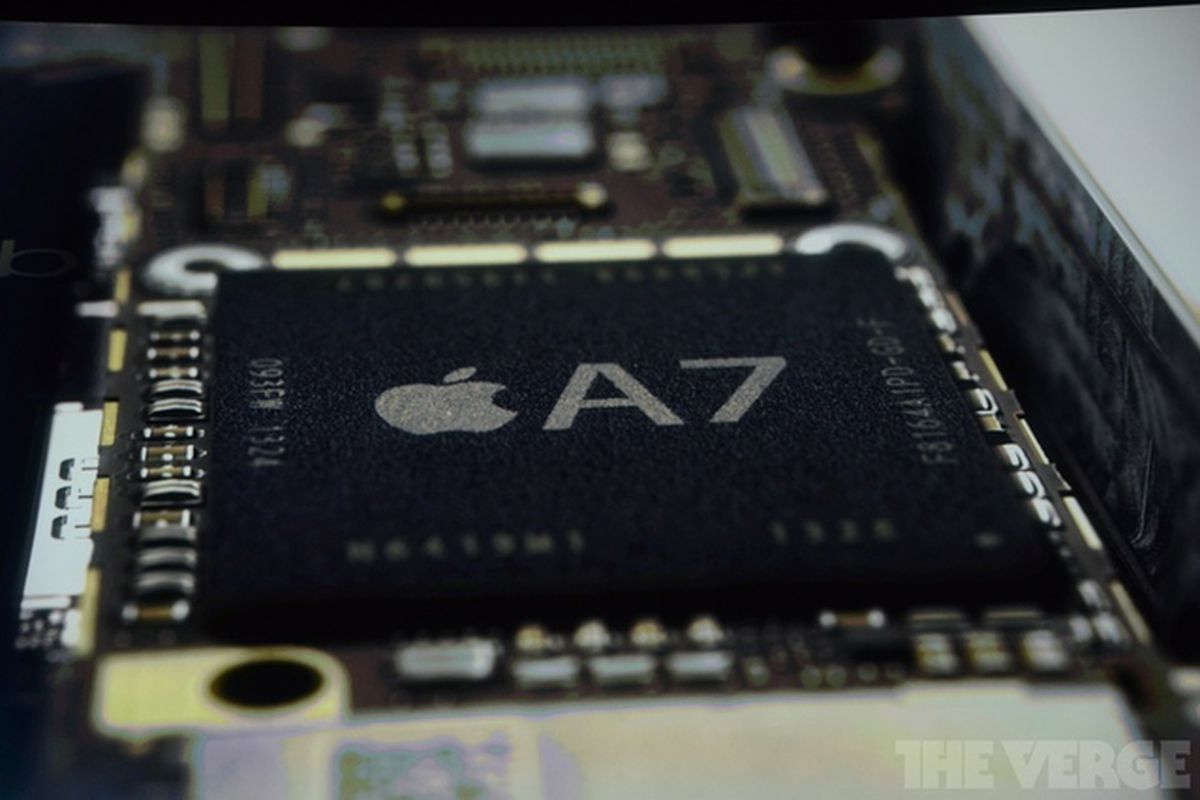
    With billions of transistors used on semiconductors like the A15 Bionic (which has 15 billion transistors stuffed inside it), etching circuit patterns require a machine that can etch an extremely thin line on the wafer and that is what the EUV machine does. ASML is working on its next-generation EUV that it says will allow foundries to build more powerful and energy-efficient chips over the next decade.

  • Samsung Electronics Close To Finalising $17 Billion Texas Chip Plant

    Samsung Electronics Close To Finalising $17 Billion Texas Chip Plant

    Samsung Electronics Co Ltd is close to finalizing the construction of a $17 billion semiconductor factory in Williamson County in the U.S. state of Texas, three people with knowledge of the matter said. Samsung told Reuters that it is continuing due diligence in multiple locations and that it has yet to make a decision. The factory will make advanced logic semiconductor chips and is likely to create about 1,800 jobs, Samsung previously said in filings to state officials.

    One of the people said though no decision has been made, the Austin suburb of Williamson County is the frontrunner due to the subsidies on offer as well as the likelihood of stable sources of electricity and water. A winter storm shut down at Samsung’s existing chip plant in Austin during the first quarter caused the equivalent of 300 billion to 400 billion won ($254 million to $339 million) of damage to wafer production.

    All three people declined to be identified as they were not authorized to speak with the media. Samsung previously said it would start construction on the new 6-million-square-foot (557,418-sq-meter) plant in January, with production up and running by the end of 2024. The plan comes at a time when the global auto industry faces a significant semiconductor shortage.

    “With the United States turning semiconductors into a strategic material, it is becoming a risk to be concentrated only in Asia,” said Park Sung-soon, an analyst at Seoul-based Cape Investment Securities. “Samsung wants to be on the ground in the U.S.”

    In the global chip contract manufacturing industry, Samsung is second to TSMC which had 52.9% of market share compared to Samsung’s 17.3% as of end-June, according to analysis provider TrendForce.

  • LG, Samsung are hiring again in Vietnam

    LG, Samsung are hiring again in Vietnam

    Two Korean technology giants are seeking to hire thousands of people in Vietnam, including workers, engineers and IT staff. In September, Samsung announced it is looking to hire 1,000 production staff for its Bac Ninh factory. A month earlier it said it wanted to recruit 3,000 workers for its Thai Nguyen plant.

    The company plans to expand operations at the former to increase production of flagship phones Z Fold and Z Flip to 25 million units a year.

    It is also looking to recruit thousands of employees to work in R&D. It is building a $220-million R&D center in Hanoi with 2,200 – 3,000 researchers and other staff, and plans to open it in 2022.

    LG’s factory in Hai Phong is also hiring new laborers, including IT and R&D engineers.

    It is offering VND9,5-13 million for a technician’s position. The LG Display factory in Hai Phong also announced that it is in need of 5,000 more production workers.

    Due to Covid-19, the recruitment is only in Hai Phong and candidates from elsewhere cannot apply this time, an HR official said.

    LG has three large factories in Hai Phong, mainly producing phones, TVs, air conditioners, vacuum cleaners, washing machines, and refrigerators.

    Samsung has six production facilities in Ho Chi Minh City, Hanoi and Bac Ninh and Thai Nguyen provinces that make handheld devices and home electronics, and employ more than 160,000 workers.

  • Huawei’s chairman says that sourcing chips is its biggest problem

    Huawei’s chairman says that sourcing chips is its biggest problem

    Let’s use our imagination a little, shall we? Had the U.S. not placed Huawei on the Entity List for security reasons in 2019 and followed that up exactly a year to the day by changing Export rules banning Huawei from receiving chips from certain foundries using American technology, the smartphone market “league tables” would be different. Huawei would not have sold sub-brand Honor and would most likely be the top handset manufacturer on this planet.

    But the truth brings a harsher reality to Huawei as the manufacturer is predicted to finish the year as the seventh-largest smartphone shipper with Honor right behind it. Still, the company’s current rotating chairman (the position rotates, not the actual executive) Guo Ping is determined that Huawei will never drop out of the smartphone industry. Citing the U.S., Guo says that the policies of individual countries have no impact on Huawei’s place in the world and the firm will never limit its business to selling in China only.

    This morning, Guo told new Huawei employees that “The U.S. has created many difficulties for Huawei but they are solvable. It is in the supply chain where the US has a big impact on Huawei. We need more investment and innovation to deal with the US sanctions. Huawei has established and helped its industrial chain partners to solve the problems of supply continuity and competitiveness.”

    The Chairman said that Huawei employees should have the attitude that “what does not kill me makes me stronger,” and added that “if every employee works diligently and effectively and makes achievements, Huawei will become better and the U.S. will not be able to beat us.” For those who believe that the company should give us its mobile phone business, ponder this statistic.

    After real estate and automobiles, the mobile phone sector is the third-largest “industrial sector” in the world. This calls to mind the famous quote from bank robber Willie Sutton who was once asked why he robbed banks. “Because that’s where the money is,” was his reply. Why should Huawei give up on making phones when it still is where plenty of money lies.

    While being placed on the Entity List makes it hard for Huawei to access the U.S. supply chain, Guo says that the major issue affecting Huawei is its inability to buy chips. The chairman says, “At present, the biggest difficulty for us is the mobile phone business. As we all know, chips for mobile phone need advanced technology as they are small and have low power consumption. Huawei can design its own chip but no one can manufacture it for us. That’s where we (are) stuck.”

    As a country, China has been hoping to become self-sufficient when it comes to manufacturing chips. This would prevent tech companies in the country from having to worry about having their businesses held hostage. “Technology should be used to give full play to its value. It is imperative to combine 5G with artificial intelligence, cloud and enterprise application scenarios to unleash the potential of Internet of Everything and Intelligence of Everything,” said Guo.

    “Huawei phones have a lot of unique technologies of their own. We are looking forward to the day when the core problem of chip manufacture will be completely solved in China,” Huawei’s current chairman states. Huawei’s Chairman is also thinking ahead about 6G. He sees 5G becoming the universal global network that most people envision it becoming. But as for 6G Guo, sees the next generation of wireless connectivity being used as a regional network for industrial use.