Retail News CRM

Tag: Electronics

  • HTC has reported revenue growth for the second consecutive month

    HTC has reported revenue growth for the second consecutive month

    It’s that time of the month when we review HTC’s latest revenue numbers and brace for disappointment. But in an unexpected twist, this time the Taiwan-based brand has positive news to report.

    For the last month of 2020, HTC reported NT$615 million ($21.96 million) in unaudited consolidated revenue. That’s a small increase of 1.02% versus the same period a year earlier, much better than the median decline of 42.03% experienced throughout 2020.

    The impact of the all-important annual holiday season was visible in HTC’s latest numbers too. In comparison to November, the company’s monthly sales numbers climbed a decent 10.68%.

    As a direct result of these results, December has become the second-consecutive month that HTC has posted both month-on-month and, more importantly, year-on-year growth.

    The last time HTC reported two consecutive months of year-on-year revenue growth was four years ago, specifically February and March 2017 before the launch of the flagship HTC U11.

    Whether or not these positive trends continue into 2021 will remain to be seen. But at the moment, it seems HTC is mostly focused on its lineup of VR products rather than the smartphone segment, despite the occasional launch.

  • Apple had strong App Store sales in 2020

    Apple had strong App Store sales in 2020

    The Apple App Store generated over $64 billion in revenue last year. That would be a 28% increase over the $50 billion that the iOS digital storefront collected in 2019; it would also represent a 3.1% hike over 2018’s revenue of $48.5 billion. Part of the reason for the surge in the top line has to do with the global pandemic which led businessmen working from home and children engaged in remote learning to download certain apps from the App Store. In addition, there were apps installed to help both kids and adults kill time. Mobile games come to mind as does the short-form video app TikTok used to create 15 seconds and 60-second videos

    The App Store is part of Apple’s Services division which garnered over $50 billion in gross for the first time ever in fiscal 2020. This helped the company achieve a major goal of doubling Services revenue from $25 billion to $50 billion over five years. Consider the businesses that are included in this unit and you’ll see why it is the fastest-growing business unit inside Apple. The Services division houses the App Store, Apple Pay, AppleCare+, Apple Music, Apple News+, Apple Arcade, iCloud, Apple TV+, Fitness+, Apple Books, and more. Apple Music has grown to 85 million subscribers in just five years which Loup Ventures says, “illustrates the power of services built on top of default apps.” Apple’s services sector grew by 16% last year to $53.7 billion in sales and Loup Ventures sees another 15% hike next year. And consider that the App Store makes up 35% to 40% of Services Revenue.

    Loup Venture’s Andrew Murphy sees Apple creating more services that would add new features to some of the tech giant’s existing or default Services platforms.  Some examples could include:

    • Stocks+ could allow Apple to provide trading and advisory services for users.
    • Maps+ could be monetized by Apple by suggesting destinations to users that would be based on input from them.
    • Mail+ would be a premium email service offering productivity, inbox management, scheduling and more.

    In 2019, Apple CEO Tim Cook explained that Apple’s Services sector had a goal to “help our customers get the most out of the products and to enrich lives” by making companion apps “more entertaining, more useful and more informative.” The original plan for the Services sector was to generate recurring revenue allowing Apple to collect flows of cash even in years when the iPhone just isn’t selling. These recurring revenues are high margin allowing Apple to bank large sums of money.

    Loup Ventures used Fitness+ for a case study noting that it adds value to Apple Watch users who can view biometric data on their watch screen. Besides integrating with the Apple Watch, it also integrates with the Apple iPhone, Apple TV, and AirPods.

    Based on revenue, Apple’s Services business is just about the size of a Fortune 50 firm. Would Apple ever decide to spin it off as a separate company? It is a possibility but nothing that is being looked at right now. During the holidays, App Store customer spending was up 27% year over year. In 2019, App Store customer spending was up 16% on an annual basis.

    Apple, as many of you know, takes a 30% cut of in-app purchases made using the App Store’s “in-app” platform. Because iOS is a closed system, Apple’s customers can’t sideload apps and are forced to buy paid apps through the App Store even if they can be purchased for less money from another app store. As a result, Apple is being investigated by some regulatory agencies for monopolistic behavior. Recently though, Apple dropped its cut to 15% for the purchase of apps created by developers with less than a $1 million in annual sales.
  • Key Apple supplier is one step closer to building its new U.S. factory

    Key Apple supplier is one step closer to building its new U.S. factory

    Back in May, the world’s largest foundry, Taiwan Semiconductor Manufacturing Co. (TSMC), was going to announce that it was building a U.S. based chip manufacturing facility. The U.S. facility moved one step closer to reality. Taiwan’s ministry of economic affairs gave the go ahead for TSMC to proceed with the first phase of building the factory in Arizona with an investment of $3.5 billion. The total cost of the facility is expected to be close to $12 billion.

    The country’s ministry of economic affairs has the job of authorizing major investments made overseas by Taiwan companies. TSMC’s application has been approved by the ministry according to an announcement made earlier today. The plant is expected to be operating by 2024 and churn out chips made using the 5nm process. By that year, the most cutting-edge integrated circuits will be made using the 3nm process. TSMC’s Arizona factory will turn out 12-inch wafers with as many as 20,000 a month rolling out of the facilities.

    The factory was originally planned by President Donald Trump as a sign that the U.S. would become a leader in tech production. While many U.S. companies design their products in the states like Apple does, the actual manufacturing is usually done overseas in Taiwan or China. For example, the iPhone is designed in Cupertino but is assembled by three Taiwan firms. Trump had asked TSMC to announce its plans prior to the U.S. election as he figured that his chances for re-election would get a shot in the arm if he could announce that the world’s largest chip manufacturer was building a plant in the states. However, it looks as though Trump will be out of office by the time the factory in Arizona starts volume production.

  • Chinese smartphone shipments continue to fall although iPhone deliveries rose last month

    Chinese smartphone shipments continue to fall although iPhone deliveries rose last month

    Brokerage firm Goldman Sachs analyzed smartphone data compiled by the China Academy of Information and Communications Technology (CAICT). The numbers revealed that November smartphone shipments in China amounted to 29.6 million units last month, down 15% from last year. On a sequential basis, shipments rose 13% from October. Shipments of international brands, of which Apple is believed to be the leader, were up a whopping 99% to 6.9 million units last month from the same month in 2019. From October 2020 to November 2020, international shipments rose 18%.

    The aforementioned 15% decline in November smartphone shipments in China compares to year-over-year declines of 13%, 36%, and 27% for August, September, and October respectively. Goldman’s Rod Hall said that despite strong demand for 5G enabled phones, the overall smartphone market was weak in the country. Hall told clients, “We see these ongoing weak trends as interesting given Chinese 5G units have been better than we expected but not enough to offset the very weak overall demand environment.”

    According to Goldman Sachs, Apple iPhone deliveries in China were up during November. In the investor note, Hall stated, “In our opinion, the overall market weakness that we continue to see in China may be beginning to translate into higher-end demand stagnation at Apple. We also note that lower-end market strength in China is important for the absorption of refurbished/2nd hand iPhones which could have a negative effect on device resale pricing and the trade-in value that new iPhone buyers experience.”

    Hall is bearish on Apple and expects the price of the stock to drop from the current $122.10 to $75 over the next 12 months. That would be a 39% decline; the analyst maintains his “sell” rating on the stock. While the consensus expects Apple’s first 5G iPhone models to generate growth in China, Hall says that year-over-year growth “may not be as pronounced as many investors believe it will be in the iPhone 12 cycle.”

  • China’s Xiaomi takes third place in Vietnam smartphone market

    China’s Xiaomi takes third place in Vietnam smartphone market

    China’s Xiaomi grabbed a 12 percent market share in the third quarter to surpass Vivo and become the third-largest smartphone brand in Vietnam.

    Xiaomi reported sales growth of 114 percent year-on-year despite Covid-19 impacts, Singaporean technology market analysis firm Canalys said in a recent report.

    South Korea’s Samsung stayed on top with a 33 percent market share, followed by China’s Oppo (15 percent); but sales of both brands dropped sharply at 6 percent and 21 percent year-on-year respectively.

    VinSmart, a subsidiary of Vietnam’s largest listed company, Vingroup, was fourth with a 9 percent market share.

    VinSmart had launched its first product at the end of 2018, and produced its first 5G smartphones in collaboration with U.S. chip giant Qualcomm last month. The brand is focusing on the low-end segment with 12 offerings all priced at below VND5 million ($212).

    China’s Vivo also grabbed a market share of 9 percent in the third quarter after growing 75 percent.

    Almost 10 smartphone brands have been vying for third place in recent years, with Apple, Xiaomi, and Vivo the most notable names. No brand has remained in that position for more than six months.

    According to We Are Social, a social media marketing and advertising agency, around 75 million people, or almost 80 percent of the country’s population, use smartphones.

  • Samsung killing yet another redundant service in December

    Samsung killing yet another redundant service in December

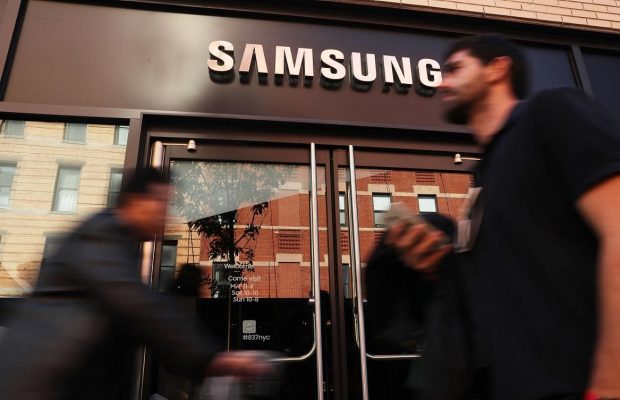
    Samsung has always been trying to make people use its tools on their phones, regardless of whether or not there were better alternatives out there. That’s one of the reasons we’re seeing the South Korean giant closing many of them due to few people using them.

    For example, S Translator was launched as an alternative to Google and Microsoft Translator services but didn’t manage to find too many fans among Samsung smartphone users. Add to that the S Translator was available on high-end Galaxy devices for the most part, and you have a recipe for failure.

    Well, it looks like come December 1, Samsung will be shutting down S Translator, the company announced earlier this week. The announcement mentions that all information the service collected from users will be destroyed on the same day.

    In the meantime, we would like to thank those who have used the S Translator service. We inform you that the above service, which has given us a lot of interest and love, can no longer be provided due to the company’s operating policy. Upon termination of this service, your personal information collected for the purpose of providing the service will be destroyed without delay in order to protect your personal information.

    Apparently, Samsung is trying to streamline its mobile app ecosystem, so many apps and services that have become redundant, such as S Voice, Mirrorlink, and Find My Car. It’s hard to say if Samsung is done killing its unpopular services, but Bixby might next on the list.

  • LG Electronics starts eco-friendly clothing line with Net-A-Porter

    LG Electronics starts eco-friendly clothing line with Net-A-Porter

    LG Electronics has unveiled an eco-friendly clothing line in collaboration with British online fashion retailer Net-A-Porter as the South Korean tech giant pushes marketing for its clothing-care appliances.

    The appliance maker said it joined with the premium online fashion marketplace to launch a limited-edition range named LG X Net-A-Porter Sustainable Collection.

    The two partners cooperated with global fashion brands, including Le Kasha of France, Mara Hoffman of the US, and Bondi Born of Australia, to release 13 types of environmentally friendly apparel.

    LG Electronics said the launch of the new clothing line is part of its “Care for What You Wear” global campaign that aims to protect the environment by reducing fabric waste.

    It added that the clothes from the new brand can be easily managed through its clothing care appliances, including the Styler, LG’s steam closet that keeps clothes fresh and deodorized without dry cleaning.

  • Vietnam PM tells Samsung to set up chip plant

    Vietnam PM tells Samsung to set up chip plant

    Prime Minister Nguyen Xuan Phuc has called on Samsung Electronics to build a semiconductor plant in Vietnam. He made the suggestion at a meeting on Tuesday with the South Korean company’s vice chairman, Lee Jae-yong, who is on a three-day business trip to Vietnam to explore business opportunities, the Government news site reported.

    He said a semiconductor plant would enable the company to have a closed production chain in Vietnam where it already has smartphone and consumer electronics plants.

    Samsung has two factories making smartphones in the north and a consumer electronics manufacturing plant in Ho Chi Minh City.

    Phuc promised Vietnam would create the best possible conditions for Samsung to invest, including in R&D and hi-tech projects.

    He said Vietnam has managed to contain the Covid-19 pandemic and would be the only country in Southeast Asia to achieve positive growth this year, possibly emerging as the fourth-largest economy in the region this year.

    Lee said Samsung’s $220 million research and development center in Hanoi, the first of its kind outside South Korea, would begin functioning in 2022. Construction began in March this year.

    With more than 3,000 engineers it would become the company’s key R&D center globally, he said.

    He thanked the Vietnamese government for allowing more than 3,000 Samsung personnel to enter the country to work since March through the Covid-19 pandemic.

    If Samsung’s production units in Vietnam did not function normally, it would disrupt its global production and supply chain, he said.

    He plans to visit TV screen producer Samsung Electronics HCMC CE Complex (SEHC) at the Saigon Hi-Tech Park in HCMC’s District 9 and consider expanding it.

    The PM told him the government had agreed with HCMC’s proposal to allow SEHC to become an export processing company to enable it to expand and strengthen its global competitiveness.

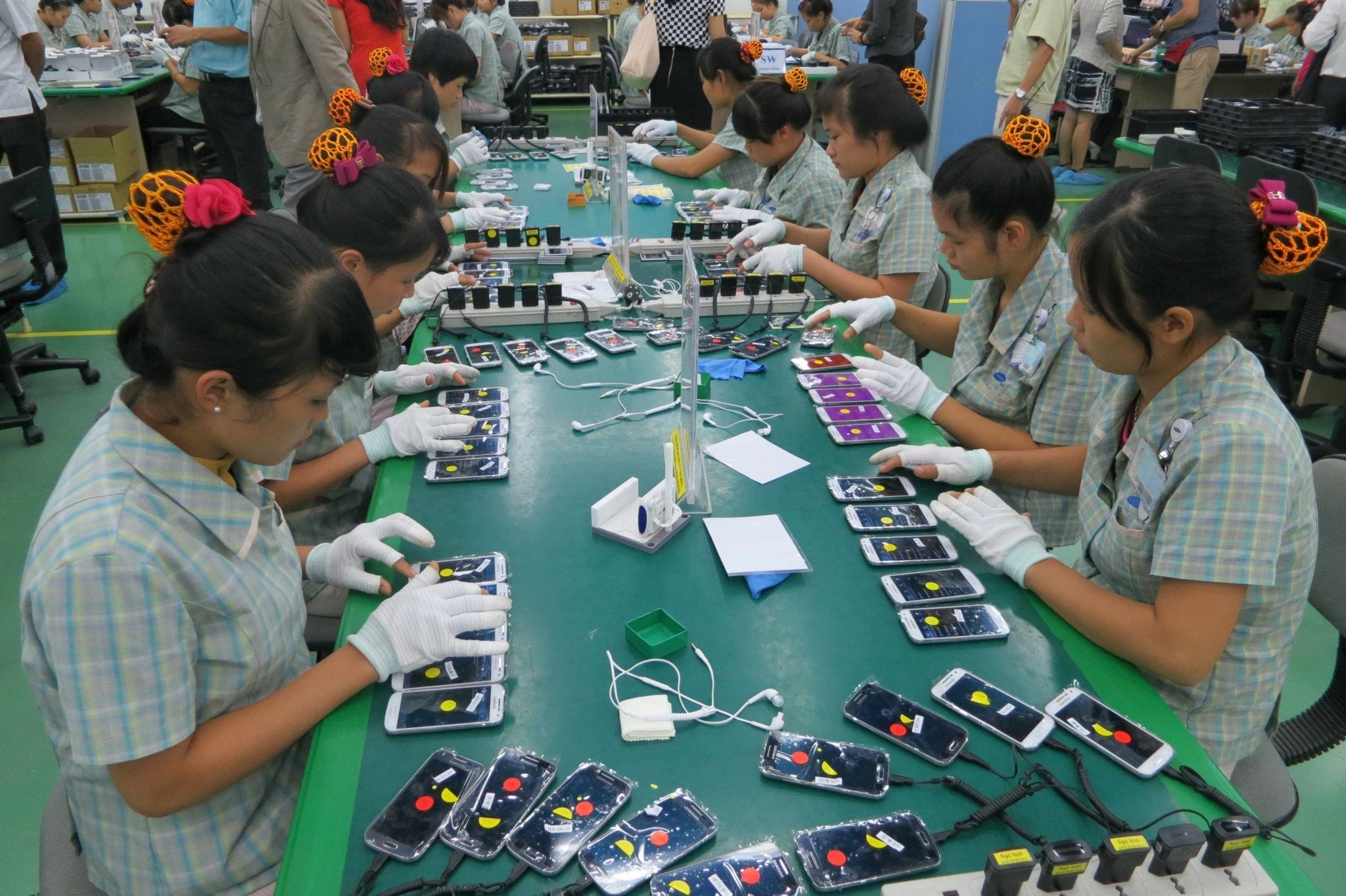
    Vietnam is Samsung’s largest smartphone production base, with half of all its phones being made in the country. It has invested over $17 billion in Vietnam so far.

  • Samsung heir visits Vietnam to discuss possible investments plan

    Samsung heir visits Vietnam to discuss possible investments plan

    Samsung Electronics vice-chairman Lee Jae-yong departed for Vietnam for a three-day visit to explore business opportunities. He is scheduled to meet Prime Minister Nguyen Xuan Phuc on Tuesday to discuss possible investment plans and visit Samsung’s plants in Hanoi.

    The focus will be on whether Lee announces new investment plans including the construction of a factory for electronic-car batteries in Vietnam.

    Lee is also expected to inspect the progress of a Samsung Electronics research center that is currently under construction in Hanoi.

    Construction of the $220 million research and development center, the first of its kind outside South Korea, began last March.

    It is Lee’s first visit to Vietnam since October 2018. He is exempt from mandatory quarantine after the government scrapped the quarantine requirement for foreign managers, investors, and diplomats visiting the country for less than 14 days.

    Vietnam is Samsung’s largest smartphone production base, with half of all its phones being made in the country at plants in Bac Ninh and Thai Nguyen provinces in the north. It has invested over $17 billion in Vietnam so far.

  • LG Uplus opens seven-storey product showroom targeting Gen Z

    LG Uplus opens seven-storey product showroom targeting Gen Z

    South Korean telecom giant LG Uplus Corp. said Thursday it opened a seven-story product showroom in southern Seoul by partnering with local popular establishments as part of its broader efforts to capture young customers.

    The seven-story building, including its underground floor, in the posh southern district of Gangnam houses a cafe, a bookstore and a photo studio popular among South Korean millenials and the younger Generation Z, or those born after the mid-90s.

    LG Uplus said the store allows visitors to experience its 5G services and content, such as augmented and virtual reality, although it does not directly sell the company’s products.

    The telecom operator said it also partnered with Google to set up a filming studio for YouTubers. Visitors to the building can take part in live YouTube broadcasts by reserving a spot through a proprietary application.

    LG Uplus has recently focused on beefing up its services to cater to tech-savvy younger generations.

    The carrier said in July that it started live shopping broadcasts on its online store that allow users to directly interact with shopping hosts via live chats.

  • VinSmart produces smartphones for US mobile service provider

    VinSmart produces smartphones for US mobile service provider

    VinSmart, a subsidiary of Vietnam’s largest listed company Vingroup, has received a contract manufacturing order for two million smartphones from a major U.S. carrier.

    Le Thi Thu Thuy, general director of VinSmart, without identifying the U.S. company, said Thursday at a press conference that the first consignment was sent a month ago. The phones carry the American service provider’s logo.

    “This is an important step in understanding the U.S. market… before taking Vsmart phones there in future,” Thuy said.

    The U.S. company has such stringent standards that despite having a team in Vietnam to supervise the VinSmart factory 24/7, it still thoroughly inspects the phones once they reach the U.S.

    The contract is for four models, all of them supporting 4G.

    A confidentiality agreement prohibits VinSmart from disclosing the name of its partner.

    VinSmart has a plant for manufacturing 125 million phones, IoT devices, and other smart devices per year at the Hoa Lac Hi-Tech Park in Hanoi.

    The brand is currently sold in three countries, Russia, Myanmar, and Spain, but the company expects to sell its Aris 5G in the U.S. by next year.

    VinSmart had a 16.7 percent market share in the first quarter and surpassed Apple to become the third-largest smartphone brand in Vietnam behind Samsung and China’s Oppo.

  • Qualcomm Snapdragon 875 will be unveiled in December

    Qualcomm Snapdragon 875 will be unveiled in December

    Qualcomm has started sending out invites for a two-day digital event that will kick off on December 1 and although the chipmaker hasn’t confirmed this, it’s a given that the Snapdragon 875 will be unveiled during the Tech Summit.

    Per rumors, the Snapdragon 875 will be Qualcomm’s first SoC to employ the 5nm manufacturing process. It is expected to have one Cortex-X1 core, three Cortex-A78 cores, and four Cortex-A55 cores. The chip will reportedly be manufactured by Samsung.

    We can expect it to be around 20 percent more power-efficient than the Snapdragon 865. Performance could get a 10 percent boost.

    The Snapdragon X60 5G modem will apparently be integrated within the chip.

    It is not clear at the moment if Qualcomm also plans to announce other chips during the event. The company is apparently working on its first 6nm chip dubbed Snapdragon 775G which will succeed the Snapdragon 765G. Another 5nm silicon and an entry-level chip are also in the pipeline reportedly.

    A couple of reports suggest that Snapdragon 875 powered phones will be faster than the iPhone 12. While Android users may rejoice at the prospect, the alleged high price of the chip could prevent some Android manufacturers from equipping their 2021 phones with the SoC.

    For instance, the grapevine has it that only the highest-end Samsung Galaxy S21 model will be powered by the Snapdragon 875, and the rest will either employ an in-house chip or settle for the Snapdragon 865.

  • Issues with the Samsung Galaxy S20 Ultra 5G and other high-end-models are frustrating users

    Issues with the Samsung Galaxy S20 Ultra 5G and other high-end-models are frustrating users

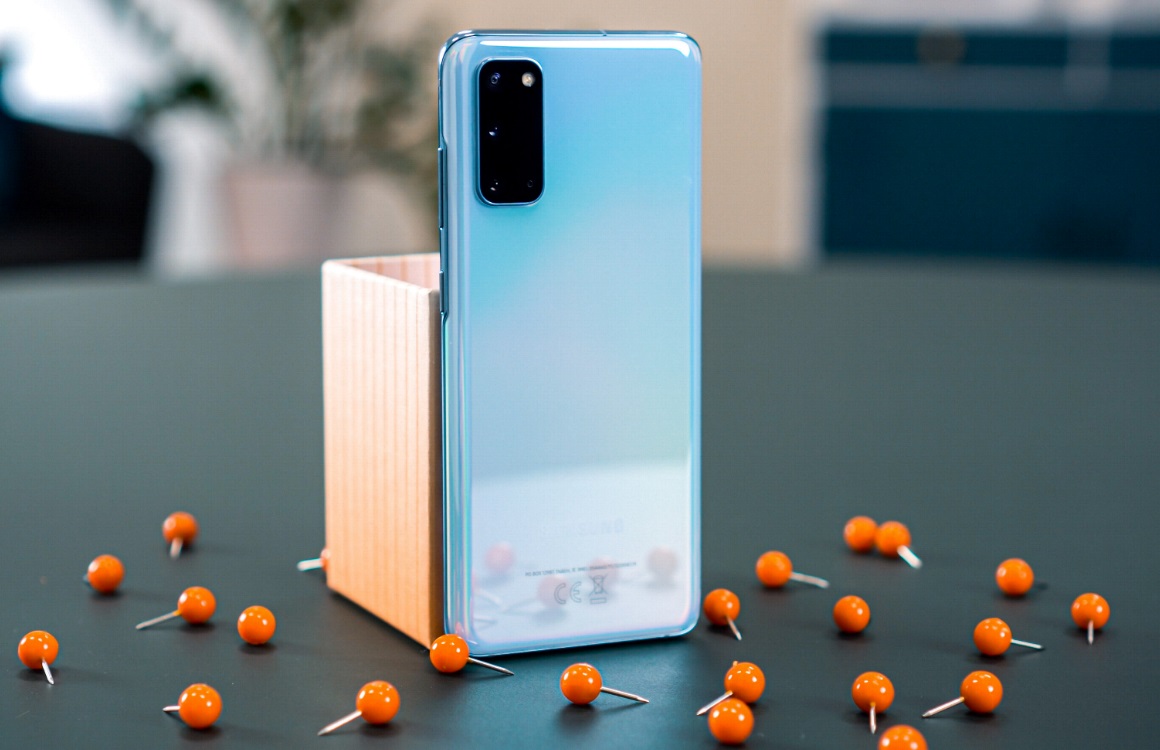
    Some of the phones in Samsung’s 2019-2020 flagship lineup are experiencing issues with the indicator that shows how much battery life remains on these models. The particular phones affected include those in the Galaxy S10 and S20 families and the Galaxy Note 10 and Note 20 lines. There are two major problems affecting these phones. One is that the battery (and thus the phone) shuts down before the indicator measuring the remaining battery life hits 1% or less. The other problem is that the phone runs through the last 1%-5% of battery life too quickly.

    Several users confirmed that these battery issues are legitimate. One subscriber with the handle of Ldn_brother wrote: “I can confirm this on the s20 ultra. As soon as I get down below 15% the battery magically disappears rapidly. I’ll be on 6% and all of a sudden my phone has turned off after I pick it up 2 mins later. I’ve kind of learned to live with it, although I know its not right. Never had this with the S4 or S7.”

    One Galaxy S20 Ultra 5G user had a suggestion. He posted “Easy solution, charge your phone whenever possible and don’t let it get that low.” This might sound like an impractical fix, but if you don’t mind spending a few bucks for a power bank (one with a 10,000mAh capacity battery or larger), you might be able to try out this bit of advice to see if there is any improvement.

    If you feel like blaming the blazing fast charging capabilities supported by some of these devices, you might be barking up the wrong tree. For example, it is true that the Galaxy S20 Ultra 5G comes with a 25W charger out of the box, and Super Fast Charging 2.0 does support 45W charging,  But one of the devices having battery issues is the Galaxy Tab S5e, and that slate charges at “only” 15W. And this brings us to another point; while we have been focusing on flagship Galaxy phones, other Samsung devices have had these problems as well.

    So far we have yet to hear from Samsung about these battery issues. Owners of Galaxy devices impacted by this problem should keep their fingers and toes crossed hoping that the manufacturer can solve this issue with a simple OTA update. Or you can take matters into your own hands by calling Samsung yourself and alerting them to the problem. In the states, pick up your phone (and assuming that there is enough battery life on the device) and call 1 (800) 726-7864. The company’s online support site can be found by tapping on this link.

  • NVIDIA rumored to pay $40 billion for ARM Holdings

    NVIDIA rumored to pay $40 billion for ARM Holdings

    Back in July, we told you that Japan’s SoftBank was talking to American GPU manufacturer NVIDIA about selling it ARM Holdings. The latter’s main business is the design of CPU cores such as the 64 bit Cortex-A78 CPU core. Both sides are closing in on a deal that would be valued at over $40 billion. The deal would give SoftBank a multi-billion dollar profit after it purchased the company for $32 billion. NVIDIA is the world’s third-largest GPU supplier and ARM is the third-largest in the world thanks to its Mali line of graphic chips.

    The Journal report noted that ARM and NVIDIA have been talking on an exclusive basis over the last few weeks and a deal could be announced as soon as early next week. NVIDIA’s shares have soared over 100% this year thanks to heavy demand for its GPUs which are used in video games, cloud computing, and in other devices that have taken off thanks to the coronavirus. If a deal can be agreed to not only would it be one of the biggest transactions of the year, it could also be the largest deal of all time involving the purchase of a semiconductor company.

    However, as with most tech-related deals these days, the purchase of ARM by NVIDIA could set off antitrust alerts. Regulatory agencies could put such a deal under intense scrutiny and ARM customers like Samsung and Apple could try and put the kibosh on the transaction. If the merger closes, NVIDIA would control the pricing on ARM’s CPU cores and Adreno GPU chips along with the pricing of the Mali GPU line.

    According to the Journal, SoftBank has been working with a small team on the final terms of the ARM deal. The team includes ARM CEO Simon Segars and Chief Financial Officer Yoshimitsu Goto.

  • Samsung phone sales down

    Samsung phone sales down

    Samsung Electronics remained the top smartphone vendor in the second quarter of the year despite suffering a sharp decline in sales.

    Samsung sold 54.75 million smartphones in the April-June period to take an 18.6-per-cent market share, according to market researcher Gartner.

    Its second-quarter sales suffered a 27.1-per-cent year-on-year decline, the largest drop among the top five smartphone brands, Gartner added.

    “The Covid-19 pandemic continued to negatively affect Samsung’s performance in the second quarter of 2020,” said Anshul Gupta, senior research director at Gartner. “Demand for its flagship S Series smartphones did little to revive its smartphone sales globally.”

    China’s Huawei Technologies came a close second with an 18.4-per-cent market share after it sold 54.12 million smartphones in the second quarter, down 6.8 percent from a year ago.

    “Huawei’s performance in China helped it avoid a worse quarterly performance,” Gartner said.

    US tech titan Apple was third with a 13-per-cent market share after it sold 38 million iPhones in the second quarter, down 0.4 percent from a year earlier.

    Chinese brands Xiaomi and Oppo took the fourth and fifth spots in the global smartphone sales rankings, respectively, Gartner said.

    The global smartphone sales in the second quarter dropped 20.4 percent year-on-year to 295 million units, according to Gartner, as the Covid-19 pandemic continued to undermine the mobile phone industry.