Retail News CRM

Tag: Electronics

  • Xiaomi rewards its first ever customers with a refund

    Xiaomi rewards its first ever customers with a refund

    Back in 2011 Xiaomi launched the Mi 1 in China, and thus entered the increasingly competitive smartphone market, eventually overtaking goliaths such as Apple and Samsung, at least according to some research agencies.

    The successful Chinese phone maker is offering a reward to some of its first customers – those who bought the aforementioned Xiaomi Mi 1 ten years ago.

    According to Xiaomi, its first Android phone sold 184,600 units, so if we imagine that all of those who bought a Mi 1 are eligible and request the refund, that equates to about $57 million in refunds, or around $309 for each person.

    Of course, Xiaomi’s first users were all in China and conditions are sure to apply, plus it’s likely that the refunds are in the form of store credit. But in any case, this is a fun way for Xiaomi to acknowledge and thank the people who invested in the then-young company with their trust and hard-earned money.

    And what’s the successful company up to now? From its humble beginning with the Mi 1, running Android 3 on one gigabyte of RAM, the Chinese company’s most recent flagship is the Mi 11 Ultra, which we reviewed earlier this year and found to be solid.

    Also, recent Xiaomi Mi 12 spec rumors hint that Xiaomi’s next premium smartphone will be quite a flagship killer, possibly boasting a 200-megapixel camera and supporting wireless charging of up to 100 watts.

    If you’re a fan of Xiaomi, you may also want to check out our list of the best Xiaomi phones to check out in 2021.

  • Qualcomm Tops Magna’s Bid With $4.6 Billion Offer For Veoneer

    Qualcomm Tops Magna’s Bid With $4.6 Billion Offer For Veoneer

    Chipmaker Qualcomm Inc said on Thursday it had offered to buy Swedish auto parts maker Veoneer Inc for $4.6 billion, an 18.4% premium to a bid by Canada’s Magna International Inc that was accepted by Veoneer’s board. U.S.-listed shares of Veoneer rose 21.7% in premarket trading as the stage was set for a bidding war. Neither Magna or Veoneer made any immediate comment. Demand has been on the rise for advanced driver assistance systems, known in the industry as ADAS, that add features ranging from collision warning to parking assist. Some systems collect data from cameras and radar to monitor surroundings, interpret the situation and take action.

    Qualcomm, apart from powering mobile phones, has been a chip supplier to carmakers for a decade and last year started its own line of ADAS systems called Snapdragon Ride. Earlier this year it signed a signed a collaboration deal with Veoneer to develop a software and chip platform for driver-assistance systems. While fully self-driving vehicles are years away, assisted-driving features, such as adaptive cruise control, are being fitted into new cars by most manufacturers.

    Qualcomm hopes to grow its automotive chips business by creating open and competitive platforms for automakers along with Veoneer. “As the automotive industry continues to transform, it is becoming increasingly important for automakers to have a partner who develops horizontal platforms that drive innovation and enable competition,” said Qualcomm CEO Cristiano Amon.

    Magna has a similar interest in buying Veoneer as it tries to compete with ADAS makers such as Aptiv, Bosch and Continental to capture a larger share of the booming business. The Canadian company had offered to buy rival Veoneer in July for about $3.8 billion in cash.

  • Xiaomi patents an all edge curved screen phone

    Xiaomi patents an all edge curved screen phone

    Some trends in the tech world just don’t want to fade away, and one of those is the endless desire to curve screen edges. It all started with the Galaxy Note Edge in 2014, but it wasn’t until the Samsung Galaxy S6 Edge that the trend gained popularity.

    With time, however, curved displays started feeling more like a cumbersome gimmick than the beautiful innovation it was meant to be and its flame dwindled in the wind of progress. In recent years, the feature has boiled down to just a slight curve in flagship devices.

    Having said that, it would seem some mobile phone manufacturers out there are trying to light the fire once again. In February this year, Xiaomi patented a design with an 88˚ curved screen, covering almost everything besides the edges and the back. Now the company pushes the idea of the curved display even further to the extreme.

    The new patent envisions a waterfall display that envelops all four sides including the edges, which is much more difficult to achieve. The additional screen real estate could probably be used for displaying notifications, battery status, or other general information. There is also a possibility that pressure sensitivity could be added for additional functionality thanks to the whole lack of buttons thing.

    As the patent shows, Xiaomi has not only stretched the screen to hug all of the device’s front but has also removed all ports and buttons on the sides. What’s more, you won’t find any camera cutouts or notches to disrupt the beautiful flawlessness of the panel.

    How will you take selfies, you ask? Well, Xiaomi is one of the first to start experimenting with under-display cameras and has reached its third variation of that technology. The company is expected to release the Xiaomi Mi Mix 4 this year, which is rumored to have one.

    The back of the patеnted phone also features a peculiar design. We can see the large cutout for the camera, but there is also one right below it that doesn’t portray any clear purpose.

    Nevertheless, it is doubtful that such extreme designs will come back in fashion. They are not practical in more ways than one, and users seem to have lost interest in them. On the other hand, the idea of port- and buttonless mobile devices is starting to creep up, and it might not be too long until it becomes the new mainstream approach.

  • Intel CEO says chip shortage will continue throughout this year

    Intel CEO says chip shortage will continue throughout this year

    As many of you know, we are in the middle of a chip shortage that has been impacting automobile and consumer electronic manufacturers. Intel CEO Pat Gelsinger sees the shortage continuing throughout the remainder of this year, bottoming out during the second half of 2021 before things start to improve. In fact, the executive doesn’t expect the supply-demand picture to return to normal until 2023.

    Gelsinger said, “I don’t expect the chip industry is back to a healthy supply-demand situation until ’23. For a variety of industries, I think it’s still getting worse before it gets better.” Last month, we told you that the lead time, the time it takes between placing an order for semiconductors and actually receiving them, hit 17 weeks in April; that was the longest lead time recorded by Susquehanna Financial since 2017 and was a big jump compared to the previous year’s 12.53 figure.

    Unlike fabless manufacturers like Apple, Qualcomm, MediaTek, and others, Intel owns its own factories (aka fabs, short for fabrication plants). A company like Apple designs its own chips, but without the means to manufacture them itself, the company turns to the world’s largest contract foundry, Taiwan Semiconductor Manufacturing Company, Limited (TSMC Ltd.) to produce them.

    Gelsinger says that thanks to Intel’s ownership of its fabs, it is more able to keep up with demand for chips than those who are outsourcing production to another foundry. The executive says that demand for chips will continue to be strong over the next 10 years thanks to expected growth in demand for 5G smartphones, AI, and electric vehicles. Intel’s CEO is on the side of those industry executives who see the current demand for chips continuing into the future.

    Other executives don’t believe that the industry can sustain the growth of more than 5% on an annual basis. Broadcom Inc. CEO Hock Tan is one such executive. Even though his firm reported a 15% revenue hike for its latest quarter, Tan says chip production is a mature industry that will revert back to low growth.

    There is no denying though, how important chips are to the global economy. The U.S. leads the way in the sales and design of chips although production is led by Taiwan’s TSMC and South Korea’s Samsung. TSMC will be opening at least one fab in Arizona no later than 2024.

  • Foxconn suppliers resume operations in coronavirus hotspot Bac Giang

    Foxconn suppliers resume operations in coronavirus hotspot Bac Giang

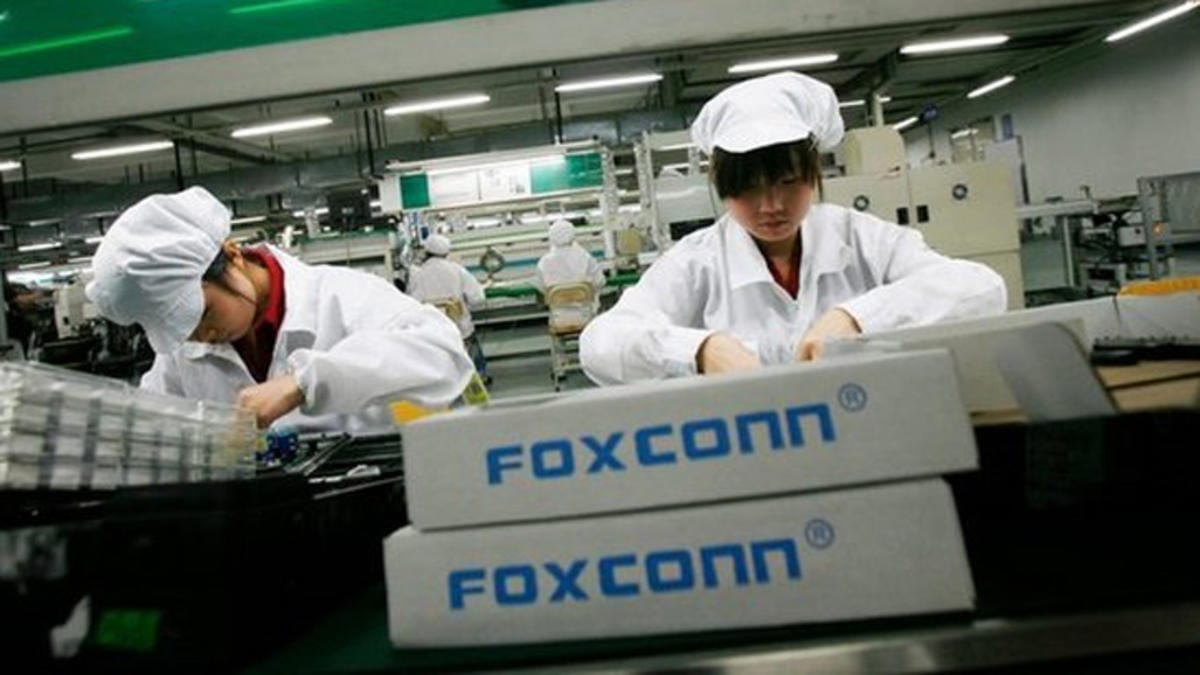
    Two electric component manufacturers for Foxconn in Bac Giang resumed operations Friday following a temporary suspension due to the coronavirus crisis.

    Fuhong Precision Component and New Wing Interconnect Technology, located inside two industrial parks, were allowed to resume operations as they satisfy Covid-19 prevention standards. Both firms produce electric components for Taiwanese electronics contract manufacturer Foxconn, a major assembler for several Apple products.

    Both firms have to abide by Covid-19 prevention protocols like maintaining distances between workers, providing them accommodation and testing them for Covid-19.

    As originally planned, eight firms in four industrial parks across Bac Giang were supposed to resume operations Friday. But only four firms filed documents to have their production process evaluated, and only two among them, Fuhong and New Wing, made the cut.

    Nguyen Xuan Ngoc, deputy head of the management board of Bac Giang industrial parks, said it would take weeks before all local industrial zones could resume operations due to strict evaluation procedures.

    Bac Giang, home to 13 Samsung suppliers and Apple partners Foxconn and Luxshare, is the most severely hit locality in Vietnam’s latest Covid-19 wave, recording 1,927 cases over the past month. It is followed by neighbor Bac Ninh with 736 cases.

    Bac Giang had to shut four local industrial parks: Van Trung, Quang Chau, Dinh Tram and Song Khe-Noi Hoang starting May 18 after the province recorded a staggeringly high number of new coronavirus cases due to the parks’ large scale and high number of workers. The province has around 240,000 people employed at its six industrial parks.

  • Global firms dominate Vietnam electronics exports

    Global firms dominate Vietnam electronics exports

    In the first quarter this year, exports of phones and components were worth $14.1 billion, 99 percent of it by foreign firms.

    Exports of computers and parts exports topped $12 billion, with foreign companies accounting for 98 percent.

    The agency said the rate of use of local parts in the industry is 5-10 percent, with Vietnamese businesses in the supply chain mostly producing low added-value products.

    There are several domestic smartphone brands like Vsmart produced by VinSmart, a subsidiary of conglomerate Vingroup, and Bphone by cybersecurity company BKAV, but the market is dominated by foreign brands.

    The agency said: “The products made by domestic firms do not meet the demand in terms of quality or design. The linkages between foreign firms and their local counterparts remain weak.”

    But it admitted Vietnamese businesses have been striving to improve quality so that they could enter the supply chains of foreign companies, pointing out for instance that the number of local tier-1 suppliers (who supply products directly to a company without going through intermediaries) of Samsung had increased from four in 2014 to 35 last year.

    Local electronics firms should identify their core products, target their market segments, stay ahead of consumer trends, and keep up with the global technological development to create competitive products, it said.

    “They should take advantage of trade deals such as the EU–Vietnam Free Trade Agreement,” the agency stressed.

  • LG to use smartphone production line for home appliances

    LG to use smartphone production line for home appliances

    South Korean tech giant LG Electronics plans to use its smartphone production line in Hai Phong to make home appliances instead.

    The company has taken this decision after deciding to withdraw from the smartphone market and failing to find buyers for its production line in the northern port city.

    The Yonhap news agency reported Tuesday that the company will complete the transformation within this year and reallocate affected workers. The factory employs more than 16,000 workers at present.

    “Exiting smartphone production there is part of LG’s plan to restructure our core product portfolio,” said Jung Hai-jin, president of LG Electronics in Vietnam.

    He also affirmed that the shutdown of LG’s smartphone business will not significantly impact LG’s production, business activities or employees in Hai Phong.

    LG launched the production line in Hai Phong, around two hours east of Hanoi, in 2015. The plant has been producing home appliances, smartphones and in-vehicle infotainment components.

    Earlier, a Business Korea report had said that the tech giant has decided to terminate its loss-making mobile phone production and sales business, but not been able to find buyers for its largest smartphone factory in Hai Phong.

    The report mentioned that Vietnamese smartphone makers already have their own facilities and local firms can’t afford to pay the large sum it would take to buy LG’s factory.

    However, at a meeting with the Foreign Investment Agency under the Ministry of Investment and Planning last week, LG leaders said the smartphone factory in Hai Phong was still operating normally. It is also building a new 4-hectare factory to produce refrigerators there, it said.

    LG’s smartphone division has posted losses of around $4.5 billion over the last five years, according to Reuters. The group has said that dropping out of the fiercely competitive smartphone business would allow it to focus on growth areas such as electric vehicle components and connecting devices.

  • China slashes import tax to boost semiconductor sector

    China slashes import tax to boost semiconductor sector

    China announced new import cuts this week to boost the nation’s semiconductor industry. This follows after US sanctions on some Chinese companies including tech giant Huawei and chipmaker SMIC to ease the impact on the industry.

    According to China’s finance ministry, chipmakers producing high-end 65-nanometer technology or smaller chips can import raw materials and machinery tax-free through 2030.

    Totaling more than $300 billion annually, China’s processor chips and other semiconductors form the country’s largest single import. Despite the country’s strong chip industry, China still relies on Taiwan, the US and Europe for certain parts. In China’s fourth session of the 13th National People’s Congress (NPC) held in early March, the party pledged to build up self-reliance in science and technology.

  • Apple to accredit independent repair shops in Vietnam

    Apple to accredit independent repair shops in Vietnam

    U.S. consumer electronics giant Apple will extend to Vietnam a program that provides independent repair shops with access to genuine parts.

    In a blogpost Monday, the company said it would open registrations for the program later this week for Vietnam and 37 other markets including Australia, South Korea and the UAE.

    In other countries like China, it will begin later this year.

    This means customers will not need to visit Apple authorized service providers to get their iPhone and Macbook problems fixed and can instead go to third-party repair providers.

    Interested businesses can join the program for free but must have an Apple-certified technician (certification is also free) doing the repairs.

    The technicians must pass exams through an online authorized testing center and the certification is updated on a product basis annually.

    Apple said further applicants must be an established business with documents available for review by it, and have easily accessible premises and not a residential address.

    “Qualifying repair providers can purchase genuine Apple parts and tools at the same price as [authorized service providers] and receive free access to training, repair manuals and diagnostics,” Apple wrote.

    There are already over 1,500 accredited independent repair shops in the U.S., Canada and Europe.

  • U.S. Court Reverses Trump Ban on Xiaomi

    U.S. Court Reverses Trump Ban on Xiaomi

    Smartphone giant Xiaomi has been awarded a temporary block for its ban over links with the Chinese military, citing the original move as «arbitrary and capricious».

    U.S. District Judge Rudolph Contreras issued a temporary halt to the ban, claiming that Xiaomi was deprived of the rights for due process and that Xiaomi was likely to win a full reversal of the ban.

    The court is somewhat skeptical that weighty national security interests are actually implicated here, said Contreras on the originally stated concerns by the former administration when issuing the ban.

    In response, Xiaomi will look to continue to request that the court declare its blacklisting as unlawful and permanently remove the designation, according to a statement from the Chinese smartphone company.

    Since Joe Biden took over the White House, an increasing number of firms have pushed back against bans issued by the former Trump administration.

    In addition to Xiaomi, Chinese data firm Luokung Technology said it would sue the U.S. government earlier this month over what it described as an unjustified ban while Boston-based State Street Global Advisors reversed an initial decision against investing in sanctioned entities in the renowned ‘Tracker Fund’ in  Hong Kong.

  • Looking to replace lost smartphone sales, Huawei turns to pig farming

    Looking to replace lost smartphone sales, Huawei turns to pig farming

    Huawei should have been the top smartphone manufacturer in the world last year. The company had a plan in place to take over the top spot by 2021 and despite losing access to its U.S. suppliers (including Google) in 2019, by early 2020 the company had topped Samsung and Apple to become the largest smartphone manufacturer in the world. But then the other shoe dropped. Exactly one year to the day that the U.S. Commerce Department put Huawei on the entity list forcing the Chinese firm to stop doing business with Google, the U.S. made an export rule change. All of a sudden, foundries using American sourced tech were no longer allowed to ship to Huawei without a license.

    Obtaining the most cutting-edge chipsets for its phones and 5G base stations became impossible. In an ironic twist, even chips designed by Huawei were off-limits to it and the firm’s smartphone sales plunged 42% during the fourth quarter when the ban started. The U.S. considered Huawei, ZTE, and some other Chinese firms to be national security threats due to its alleged ties with the Communist Chinese government.

    In November, Huawei sold its Honor sub brand so that the latter would not be banned from obtaining chips and U.S. components because of its association with Huawei. The $15 billion that Huawei received in the sale was certainly needed and now the company could end up the seventh-largest smartphone manufacturer this year. Huawei’s smartphone production could drop by 60% this year although the company could not confirm the figure. A Huawei spokesman said, “The issue here is not like there’s any problems with our quality or experiences of the Huawei products. It’s not a level playing field for Huawei as Huawei is caught in between the geopolitical tensions.”

    The company has been looking for other sources of income which has led it to the pig farming industry. That’s right, Huawei, the company behind one of the most technologically advanced smartphone lines in the world, is in the business of farming pigs. This is a major industry in China where 50% of the world’s live hogs are located. Huawei is actually bringing tech to the industry with facial recognition used to identify individual pigs. Farms are using other technology to monitor pigs’ diet, weight and exercise. A Huawei spokesman, discussing the tech firm’s entry into pig farming, said, “The pig farming is yet another example of how we try to revitalize some traditional industries with ICT (Information and Communications Technology) technologies to create more value for the industries in the 5G era.”

    Besides pig farming, Huawei wants to branch out into the mining industry. Company founder and CEO Ren Zhengfei introduced a mining lab earlier this month. Using Huawei technology, Ren wants to turn miners into white collar workers allowing them to wear suits and ties to work. With the company’s technology, the mining industry will see “fewer workers, greater safety, and higher efficiency.” The executive added that Huawei will continue expanding its television, tablet, and computer lines.

    This is important because Ren doesn’t see the U.S. removing his company from the entity list. Even so, he states that “We can still survive even without relying on phone sales.” And even though the company is looking at new sources to bring in revenue, it hasn’t given up on the phone business. Huawei is still expected to release its two flagship models this year, the P50 and the Mate 50 lines. The company is expected to use its home-grown HarmonyOS for both models.

    While Huawei might be losing market share in smartphones, it still remains the top provider of networking equipment in the world. Still, Huawei needs to be careful with how it proceeds. After all, there is a long-time saying on Wall Street: “Bears make money, bulls make money and pigs get slaughtered.”

  • Electronics exports boom driven by FDI

    Electronics exports boom driven by FDI

    Vietnam’s electronics exports have been booming due to consistent foreign investment in the sector, HSBC said in a recent report.

    The country’s exports rose by 50.5 percent year-on-year in January, with the primary driver of growth being Samsung’s recently released Galaxy S21 smartphone.

    Electronics exports last year were a record $96 billion, or a third of the country’s total exports.

    It attributed the rapid rise to Samsung’s investments since 2008. The South Korean company now has six plants in Vietnam.

    The country has also emerged as a growing supplier of chips with over 11 percent of the global market share in 2019 after growing at 300 percent that year.

    Its increasing production of computers has also supported chip production.

    U.S. company Intel set up a $1-billion chip assembly and testing facility in 2006, and in January 2021 reportedly injected another $475 million to manufacture 5G products and core processors.

    U.S. tech giant Apple has been producing Airpods since May 2020, and is likely to start producing iPads as early as mid-2021.

    Foxconn, a key supplier for Apple, received a license in January to build a $270-million plant in the northern province of Bac Giang. The Taiwanese contract manufacturer has so far invested $1.5 billion in Vietnam.

    Vietnam’s competitive policies will continue to attract quality FDI, which is crucial in helping the country move up the value chain.

    The country has to improve labor productivity through better education and vocational training. The other priority is improving infrastructure, said the report.

  • Samsung Electronics appoints new president for Samsung Vina

    Samsung Electronics appoints new president for Samsung Vina

    Kevin Lee, a veteran in the mobile telephony industry with over 30 years’ leadership experience, has been named the new president of Samsung Vina Electronics.

    He was senior vice president, Verizon Account, at Samsung Electronics America and president of Samsung Electronics Benelux and Greece before coming to Vietnam. Under his leadership, Samsung Vina aims to sustain its commercial success in Vietnam, expand its sustainable business practices, build stronger and more impactful strategic partnerships, nurture innovation and become Vietnam’s top-of-mind, premium consumer electronics brand.

    Kevin Lee said: “Vietnam is going to be in the spotlight in 2021. I want to be a part of Vietnam’s success stories by capturing opportunities for growth: recovered economy, IoT technology, open business environment, and a young, captivated generation of new consumers. I envision Samsung to be the brand that places itself into the right opportunities and at the appropriate channels where we provide the most value for consumers. Then and only then can we become the most beloved brand and stand out in a competitive landscape.”

    Samsung’s ultimate goal in the coming years is becoming a brand that has widespread recognition across business units, winning consumers’ hearts and support, and maintaining leadership positions in product categories where the company has a presence.

    To achieve these goals, Samsung’s strategic growth roadmap under Kevin Lee’s leadership will revolve around two main driving forces.

    The first is to focus more on people. For consumers, Samsung Vina will maintain a consistent brand voice which allows consumers to recognize and remember the brand with ease. The company aims to conduct more market research programs to further understand and communicate with consumers.

    It will also strengthen strategic partnerships with business partners and influencers on a “win-win” basis, while reinforcing its workforce with rigorous training programs and competitive, best-in-class benefits.

    In many places, Samsung Vina runs corporate social responsibility programs, including specialized training programs in line with the government’s directive to improve Vietnam’s digital literacy and other initiatives that improve people’s quality of life.

    The second is utilizing impactful innovations with on-demand flexibility. Samsung Vina is committed to delivering meaningful products and at the same time reimagining operations in this new age.

    Samsung Vina will utilize its technology base to drive digital transformation and new innovations with on-demand flexibility.

    Samsung is well-known for transformative ideas and technologies like TVs, smartphones, wearable devices, tablets, digital appliances, network systems, system LSI, foundry, and LED solutions.

  • Apple doubles iPhone sales in India during the calendar fourth quarter

    Apple doubles iPhone sales in India during the calendar fourth quarter

    With Apple set to report its fiscal 2021 first-quarter earnings report tomorrow (check-in around 5 pm ET), it looks as though things are off to a good start. According to research firms Counterpoint and CyberMedia, Apple delivered over 1.5 million iPhone units in India during the fourth calendar quarter (from October through December). This was a 100% improvement on a year-over-year basis.

    The increase doubled the iPhone’s market share in the world’s second-largest market for smartphones to 4%. Despite its ranking behind only China, India is a developing country where the average person earns an annual salary of $2,000 USD; this means that consumers are looking for value and explains why Xiaomi has been doing so well in the country with its value for money strategy.

    Apple saw higher sales in India during the quarter for its 2019 iPhone 11, 2018 iPhone XR, this year’s 5G iPhone 12, and the “more-affordable” iPhone SE (2020). For all of last year, iPhone sales in India rose 60% year-over-year to 3.2 million units. Apple has been beefing up its operation in the country and has started manufacturing newer models in India. It also opened its online Apple Store and is offering AppleCare+ to Indian Apple device buyers. It also used some attractive promotions to jump-start iPhone sales with a free pair of AirPods wireless Bluetooth earbuds to those purchasing an iPhone 11. It hopes to open India’s first physical Apple Store later this year.

    The iPhone models that Apple makes in India are not impacted price-wise by an import tax. But models that are assembled in other countries have the tax added to the price of the device making the price prohibitive for the average Indian consumer. For example, the starting price of the iPhone 12 Pro Max in the U.S. is $1,099 compared to the equivalent of $1,781 in India. The $249 AirPods Pro is $341 in the country while the AirPods Max cost an Indian consumer $815 compared to the $549 price tag in the states. Surprisingly, some prices have been adjusted downward.

    For example, Apple Music costs $9.99 per month in the states but is only $1.35 monthly in India. The Apple One bundle including Apple Music, Apple TV+, Apple Arcade and 50GB of iCloud, costs the equivalent of $2.65 a month in India compared to $14.95 monthly in the U.S.

    Jayanth Kolla, chief analyst at Convergence Catalyst, told TechCrunch, “Unlike most foreign firms that offer their products and services for free in India or at some of the world’s cheapest prices, Apple has focused entirely on a small fraction of the population that can afford to pay big bucks.

  • Vietnam a global bright spot in electronics production

    Vietnam a global bright spot in electronics production

    Vietnam stands to benefit from its emergence as a global bright spot in electronics production with some index scores exceeding China and India.

    Experts attribute this to lower labor costs and better policy incentives.

    Jason Yek, Asia country risk senior analyst at market research company Fitch Solutions, said that the increased presence of large electronic manufacturers in Vietnam would generate jobs, support exports and improve the country’s electronics supply chain,

    The country started 2021 off by awarding a license to a unit of Taiwan’s Foxconn on January 18 to build a $270 million plant capable of producing eight million laptops and tablets annually in the northern province of Bac Giang.

    Foxconn, a key supplier for Apple, has so far invested $1.5 billion in Vietnam and plans to raise its investment by $700 million and recruit 10,000 more local workers this year, the government said.

    The company, which is said to be moving some iPad and MacBook assembly to Vietnam from China at the request of Apple, is also looking into investing $1.3 billion in the central province of Thanh Hoa.

    This was followed by a recent decision of Japanese electronics giant Panasonic to end the production of washing machines and refrigerators in Thailand to consolidate appliance assembly in Vietnam.

    Data from U.K. research company Euromonitor International shows 2.8 million refrigerators and 2.27 million washing machines were sold in Vietnam during 2019, compared with 1.92 million and 1.75 million, respectively, in Thailand.

    “As urbanization has advanced everywhere in Asia, regional product preferences have grown similar. The Thai market has little room for growth, but labor costs are high, so it was natural to consolidate production,” Akio Ota, former president of Panasonic Appliances Vietnam.

    Higher scores.

    In a recent report, the Economist Intelligence Unit (EIU), a division of the U.K.-based Economist Group, gave Vietnam higher index scores than China and India in some categories, highlighting the country as a potential manufacturing hub.

    On a scale of 10, Vietnam scored 6 in FDI policy, while both India and China scored 5.5 each.

    Vietnam also exceeded both countries in the score of foreign trade and exchange controls and surpassed India in the labor market.

    EIU explained that Vietnam’s incentives for international firms for setting up units to manufacture hi-tech products, its pool of low-cost workers and the spate of free trade agreements it has signed place it in an enviable position among Asian peers.

    Vietnam’s membership of free trade agreements represents a strong point in its trade relations, reducing export costs, and the country’s low-skilled manufacturing wages will remain competitive for years to come, it added.

    Yek of Fitch Solutions also said that favorable labor demographics, relatively low labour costs, and a strong business environment will continue to aid Vietnam’s bid to attract FDI over the medium term.

    “Vietnam, not being embroiled in trade disputes with major economies such as the U.S. or Europe, also positions it favorably for exporters seeking to use it as an exports manufacturing hub or in some cases, another manufacturing hub in addition to their Chinese operations so as to diversify their supply chains.”

    Nguyen Mai, chairman of Vietnam’s Association of Foreign Invested Enterprises, said the expansion of Foxconn in Vietnam is similar to what South Korean giant Samsung has been doing for nearly 15 years.

    Government data shows that Samsung had poured over $17 billion into Vietnam as of mid-2020 to become the largest FDI company in the country. It has two smartphone factories in the northern region and a TV screen production facility in Ho Chi Minh City.

    The company is also building its largest mobile research and development center in Southeast Asia in Hanoi.

    The expansion of Foxconn in Vietnam increases the possibility that a wave of hi-tech projects will find its way to the country in upcoming years, Mai said.

    However, experts have also listed several disadvantages that are slowing down the country’s efforts to attract investment.

    Yek said that to achieve the government’s goal of moving up the manufacturing value chain, further improvements are needed in the education and skill levels of the labor force, which is a long-term task.

    And while there are ongoing projects to develop the country’s transport and logistics infrastructure, progress has been slow, Yek said. In fact, bottlenecks can appear as the country’s infrastructure capacity fails to keep pace with trade volumes, he added.