Retail News CRM

Tag: Electronics

  • Suning shutting half of its Laox store footprint in Japan

    Suning shutting half of its Laox store footprint in Japan

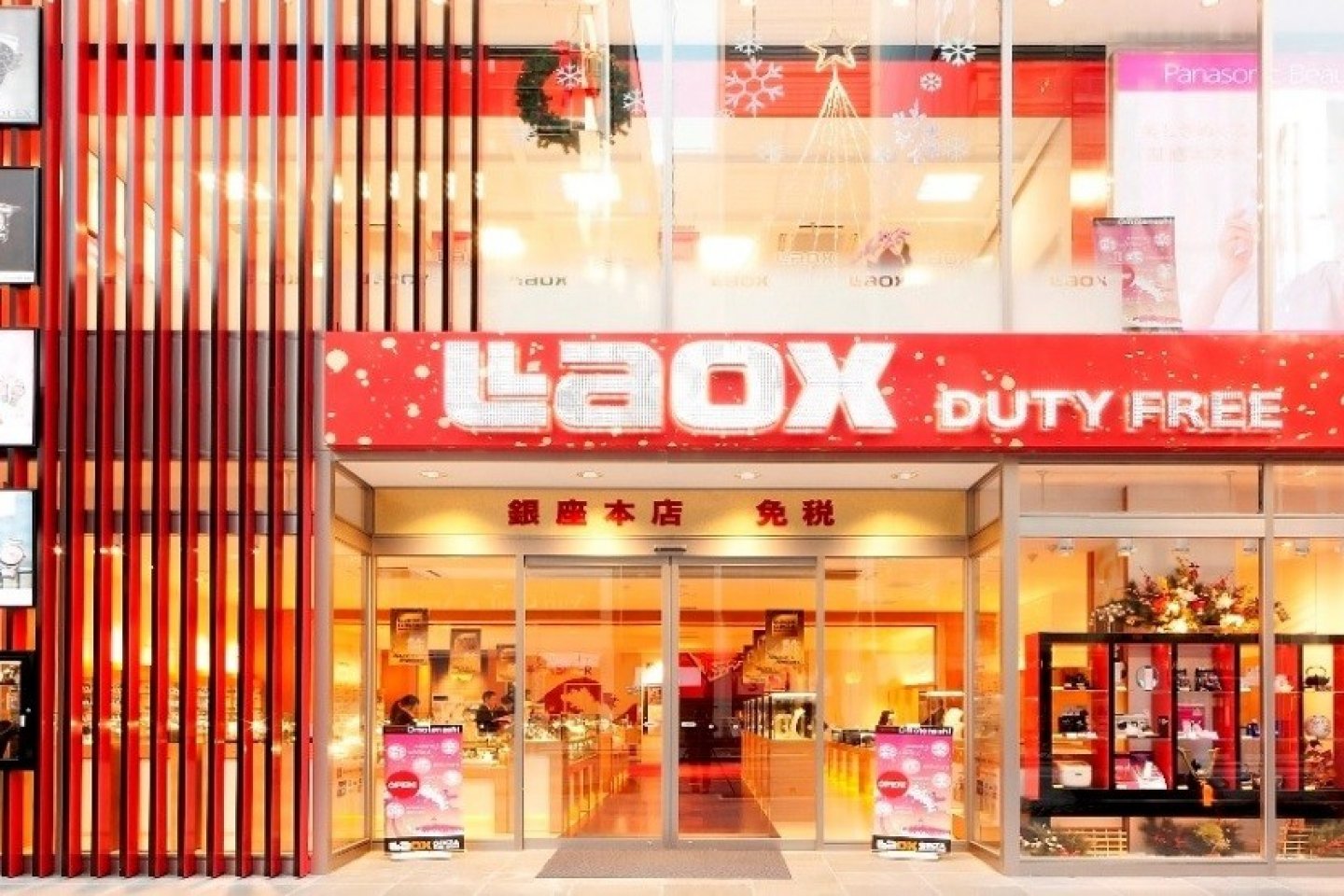
    Japanese electronics retailer Laox is to shut half of its stores in Japan as its customer base dried up due to Covid-19 social-distancing.

    Laox is managed by Chinese electronics giant Suning and the duty-free stores had been a popular location for Chinese tourists looking for Japanese appliances.

    The significant drop in the number of foreign tourists, especially those from China, has forced the company to close 12 outlets in the country to cut costs and improve cash flow.

    The 12 stores will include locations in Hokkaido, Kyushu, Tokyo and Okinawa.

    Since February, the company has twice called on staff to apply for voluntary retirement to restructure due to the financial impact of the pandemic. Laox recorded a net loss of US$18.1 billion for the March quarter.

  • France says that Apple won’t allow the iPhone to work with its “StopCovid” app

    France says that Apple won’t allow the iPhone to work with its “StopCovid” app

    European countries have been upset at Apple for making it harder for them to get their own contact tracing platforms up and running on the iPhone. These countries want to use Bluetooth to keep track of the phones that pass by the vicinity of other devices. This way, smartphone users will know if they have been in close contact with someone who tested positive for COVID-19.
    The problem with using Bluetooth is that it would require Apple to change the settings on the iPhone. Currently, Apple blocks apps from using Bluetooth if the latter is running in the background and data from that particular app is going to be removed from the device. Since the Europeans want the data collected by contact tracing through Bluetooth to be sent to a centralized server, that would violate Apple’s rules. France, for example, wants Bluetooth to keep running in the background even though the data collected would be sent to a centralized server. For that to take place, Apple would have to change some iPhone settings which it is loathe to do. Allowing Bluetooth to run in the background for contact tracing will drain the battery on a user’s iPhone.
    France’s minister for digital technology, Cedric O, said during a television appearance, “Apple could have helped us make the application work even better on the iPhone. They have not wished to do so. I regret this, given that we are in a period where everyone is mobilized to fight against the epidemic, and given that a large company that is doing so well economically is not helping out a government in this crisis. We will remember that when time comes.” While O could not venture a guess about what could be behind Apple’s decision not to make the necessary changes, the minister added, “We consider that oversight of the healthcare system, fighting the coronavirus, is a matter for governments and not necessarily for big American companies.”
    The minister also stated that France’s “StopCovid” contact tracing app will be ready to go on June 2nd regardless of what Apple does. Testing will begin next Monday, May 11th. That happens to be the date when the country will officially start to reopen from its lockdown. In the country, Android is the leading mobile operating system with a 78.8% share. Apple’s iOS is next with 21.1%. Since Android phones don’t have the same restrictions, France feels confident to go ahead with its plans anyway.
    Still, Germany gave in to Apple and decided not to use a method of centralized storage called Pan-European Privacy-Preserving Proximity Tracing (PEPP-PT) for its COVID-19 contact tracing. Britain started testing its contact tracing app today and it has decided to go the centralized route like France is.
    Last month more than 300 professors from around the world signed an open letter that said while Bluetooth based contact tracing is strongly preferred, the centralized approach could lead to unprecedented government surveillance. In the letter, the professors wrote, “Some of the Bluetooth-based proposals respect the individual’s right to privacy, whilst others would enable (via mission creep)  a form of government or private sector surveillance that would catastrophically hamper trust in and acceptance of such an application by society at large. It is crucial that citizens trust the applications in order to produce sufficient uptake to make a difference in tackling the crisis. It is vital that, in coming out of the current crisis, we do not create a tool that enables large scale data collection on the population, either now or at a later time. Thus, solutions that allow reconstructing invasive information about the population should be rejected without further discussion. Such information can include the “social graph” of who someone has physically met over a period of time.”
  • Apple & Samsung face tough times as global smartphone shipments set to drop 15%

    Apple & Samsung face tough times as global smartphone shipments set to drop 15%

    The smartphone market has been struggling for the past couple of months due to the COVID-19 pandemic and, although the situation is expected to improve in the second half of the year, a huge decline is still predicted. The latest report by DigiTimes Research claims smartphone shipments are now expected to decrease by a whopping 15% this year to 1.15 billion units. That is slightly more pessimistic than earlier forecasts and can be attributed to the worsening situation. Smartphone brands with large presences in the United States and Europe, which have implemented strict lockdown measures and are likely to experience an economic recession, are expected to feel the biggest impact this year.

    Those competing in the premium segment will face extra pressure too. After all, customers are starting to live on tighter budgets, and smartphones aren’t typically high on the list of priorities, especially not high-end ones. DigiTimes believes Apple has already lowered orders for the iPhone 11, which is the best-selling iPhone device globally, for the second and third quarters. The newly released iPhone SE should help soften the near-term impact, but Apple itself is still expecting a noticeable decline.

    So much so that it has reportedly decided to cut its internal iPhone shipment target for the entire year. There has yet to be an official comment on the matter, but the first indications of this should arrive later this week. Apple is scheduled to announce its results for the January-March quarter on Thursday, April 30. These should be accompanied by an official revenue guidance for the current quarter, which will provide a clearer indication of how Apple is battling shrinking global demand.

    The final quarter of the year should be more positive for the Tim Cook-led company, but it will be far from plain sailing. Apple is reportedly facing severe iPhone 12 delays and recent reports suggest the company has cut its orders for the second half of 2020 by 20%. Samsung is another company that has reportedly lowered its internal smartphone shipment forecasts for the year. The poor reception of the Galaxy S20 series is one of the main reasons for this outcome.

    The COVID-19 pandemic combined with significantly higher prices has led to significantly lower demand than predicted. The Galaxy S20 Ultra is understood to be performing slightly better than expected, but the smaller and cheaper Galaxy S20 & S20+ have missed sales targets.

    If the situation fails to improve, the Galaxy S20 series could become the worst-selling Galaxy S lineup in years or perhaps ever. That would massively impact revenue, profit, and valuable market share on a global scale. To make matters worse, the next-gen Galaxy Note 20 series will apparently resemble the Galaxy S20 lineup very closely. If true, Samsung may struggle to sell those flagships too.

    More worrying for Samsung is the fact that it is also losing market share in the crucial Indian market. The company was number one only a few years ago but dropped down into third place during the first quarter. That was before COVID-19 had heavily impacted the market, which means the second quarter could be particularly bad for the company.

  • Qualcomm reveals faster, more efficient Quick Charge 3+ technology for the masses

    Qualcomm reveals faster, more efficient Quick Charge 3+ technology for the masses

    Qualcomm has just announced a new version of its quick charging technology for smartphones. It’s called Qualcomm Quick Charge 3+ because it’s better than Quick Charge 3 technology but less advanced than Quick Charge 4+.

    While there haven’t any breakthroughs in the smartphone battery field, quick charging seems to thrive. As one would expect from such a technology, Quick Charge 3+ will be faster and more efficient than Quick Charge 3.0.

    According to Qualcomm, Quick Charge 3+ can bring a smartphone’s battery from 0% to 50% in just 15 minutes, 35% faster compared to the previous generation. More importantly, the new technology is backward compatible with older Quick Charge devices, while newer devices can work with Quick Charge 3+ accessories.

    Basically, Qualcomm is bringing the speed and efficiency of Quick Charge 4+ to cheaper smartphones. Some of you might already know that with Quick Charge 4+ technology, a compatible device can get up to 50% charge in 15 minutes, just like the new Quick Charge 3+.

    The catch is Quick Charge 3+ will be available on Qualcomm Snapdragon 765 and 765G chipsets, followed by other Snapdragon SoCs later this year. These processors are part of Qualcomm’s new mid-range tier, whereas Quick Charge 4+ is meant for flagships equipped high-end chipsets like the Snapdragon 845.

    For early adopters, the world’s first smartphone with both Quick Charge 4+ and Quick Charge 3+ charging technology is Xiaomi’s Mi 10 Lite Zoom.

  • Expansion during pandemic: Apple’s services arrive in many new markets and regions

    Expansion during pandemic: Apple’s services arrive in many new markets and regions

    Apple will be expanding Apple Music, the App Store, and other services to a whole trove of new markets in Africa, the Middle East, Oceania, and several nations across the Balkan peninsula in what could be perceived as the largest geographical expansion in nearly a decade. Back in 2012, more than a billion and a half people in India, Russia, and other countries gained access to Apple’s services.

    Cupertino is bringing the App Store to 20 new countries, 8 in Africa (Cameroon, Ivory Coast, Democratic Republic of Congo, Gabon, Libya, Morocco, Rwanda and Zambia) and a dozen others across the globe, bringing the grand total of supported countries to 179, but wait until you learn of the gains Apple Music is making. The music streaming answer to Spotify is now available in 52 new countries and regions across the world, bringing the toal tally to 167 countries. As a comparison, Spotify only operates in 79 countries. Arriving on most developing markets also commands a pretty important change for Apple Music’s terms and conditions: while the service costs $9.99 a month and offers a three-month free trial in the US and most developed markets, Apple Music will go for $4.99 a month and offer a six-month free trial in most of the new markets.

    The bid here is pretty clear – as global smartphone sales go down and consumers are less likely to upgrade their devices every second year, Apple has put the larger focus onto its services division, which is expected to become the next big revenue gainer for the world’s largest tech company. For the last fiscal year, the services division as accounted for 17.8% of its $260.1 billion in revenue.

    With a userbase of 1.5 billion active devices across the world, Apple surely has lots of potential for increasing the subscriber numbers of its Apple TV+, Apple News+, and Apple Music services. Indeed, Apple strives to have a grand total of 600 million subscribers by the end of 2020. Yet, the largest money pig for Apple is the App Store, as it grants Apple between 15 and 30% of all app sales and in-app purchases.

    How would this expansion of services affect a world economy vastly crippled by the COVID-19 pandemic and a userbase isolating itself at home? Logic suggests that Apple should see a steady increase of subscribers across the board, but the jury is still out on the data itself. Moreover, earlier reports suggested that Apple TV+ might not be a smash-hit-video-streaming service just yet, as it reportedly suffered heavy new subscriber losses from sworn rivals Netflix, HBO Now, and Disney+.

  • Apple Store workers are being asked to work from home

    Apple Store workers are being asked to work from home

    Last month, a leaked internal memo revealed that Apple plans on reopening on a staggered basis, the 458 retail stores it owns outside of China. Apple hoped to start opening these locations during the first two weeks of this month, although whether this happens remains to be seen. In China, the company has reopened all 42 Apple Store locations as the country claims to be on the mend.

    While the Apple employees that man the 458 closed stores are stuck at home, Bloomberg reports that the company is asking some of them to work from home answering technical support questions as part of the AppleCare team. Those who want to participate must set up a workspace in a quiet room in their home with the ability to accommodate the 27-inch Mac that Apple will send to workers. These makeshift workspaces also must have a strong internet connection, and the employees need to go through a two-week virtual training course.

    The report notes that Apple Store employees were sent forms to fill out in order to apply for the technical support jobs. Those who aren’t interested in answering these calls from home are asked to explain why. Despite this, Apple claims that the program is not mandatory and that all of its retail employees are still getting paid their full paychecks and receiving their benefits whether they participate in the program or not.

    But those who cannot work from home have concerns. They worry that by not agreeing to answer AppleCare and technical support calls from their home, they will look bad in the eyes of their managers. To be sure, there are Apple Store employees happy to help out during the crisis although others don’t understand why they are being asked to do this work. This latter group notes that Apple already promised them their full pay and benefits just for staying home.

    While Apple had started the work from the home program a few weeks ago, over the last week it has reached out in earnest to Apple Store employees seeking to fill the gaps in the AppleCare system. On Friday, the tech giant’s retail chief, Deirdre O’Brien, said that the recruiting “has been going great.”

    Most of Apple’s engineers are working from home and Apple has been reimbursing these employees for desks and computer monitors needed to set up a home office. Apple is also sending tips to employees on how best to create an ergonomic environment. And it also is allowing, with permission from those in the higher ranks of the company, some engineers to take home unfinished hardware and software to work on. The COVID-19 pandemic is resulting in the delay of new products. Apple did launch its two new iPad Pro tablets a couple of weeks ago, although they reportedly were manufactured back in January. The budget-priced iPhone 9, originally rumored to be introduced on March 31st, is now expected to first see the light of day on April 15th with its release a week later. And today, contract manufacturer Foxconn said that it still hopes to have the upcoming 5G 2020 iPhone models ready in time for the holiday shopping season.< Apple originally closed its Apple Stores in China on February 3rd. As new domestic infections started to decline sharply in the country, Apple reopened these locations on March 13th. The very next day, all of the firm's brick and mortar stores outside of China were shuttered. At first, Apple said that those stores would be closed until March 27th, but that was later revised to "until further notice." And while the aforementioned leaked memo from O’Brien discusses reopening all closed stores this month, Apple might take a more conservative path and keep the stores closed for a few additional weeks.

  • South Korea hopes Vietnam will not quarantine Samsung experts

    South Korea hopes Vietnam will not quarantine Samsung experts

    he South Korean envoy has expressed concern Samsung may suffer huge losses if 1,000 South Korean experts are isolated upon arrival in Vietnam.

    “If experts and engineers of Samsung Electronics enter Vietnam and are placed in quarantine for 14 days, this giant can suffer great damage,” Ambassador Park Noh-wan told reporters in Hanoi Friday.

    Samsung needs to bring in another 1,000 experts to Vietnam to support production line operations, he said.

    Vietnam has suspended entry for those arriving from Daegu City and North Gyeongsang Province, South Korea’s two largest Covid-19 outbreak areas, over the past two weeks. Those arriving from South Korea are automatically quarantined for 14 days as a preventive measure.

    The South Korean Embassy in Vietnam has proposed that the Vietnamese government adjusts its policy, allowing representatives of Korean businesses, including experts and engineers of Samsung and LG, to enter the country and not be quarantined.

    South Koreans with diplomatic and official passports should also be considered for this policy, Park said, adding that all people with a medical certificate issued by Korean medical authorities should be allowed to enter Vietnam normally.

    “The fact that they are in an isolated area will cause a lot of damage. We are very worried,” Park said.

    Park said the number of South Koreans coming to Vietnam has plummeted after Vietnam halted visa waivers for South Korean nationals starting February 29. During the first two months of this year, only 100 South Koreans arrived every day, compared with the previous figure of 13,000, he said.

    The ambassador said that from March 7, Vietnamese airlines are suspending all flights to South Korea. Previously, there were 80 non-stop flights every day between Vietnam and South Korea, around 550 flights per week. About 170,000 South Koreans live in Vietnam now.

    “I hope that the two countries will take effective measures to prevent the (Covid-19) epidemic (from spreading) but not affect the two countries’ long-term relations,” he said.

    South Korea sent three emergency response teams to Vietnam Thursday to provide consular support to more than 270 citizens quarantined over the novel coronavirus outbreak.

    The teams plan to stay in Vietnam for a week starting Thursday, but they could decide to extend their stay if needed. They will discuss with Vietnamese authorities the possibility of lifting the quarantine, while helping citizens who want to return home and those facing visa and other consular problems.

    South Korea is one of Vietnam’s biggest trade partners and investors. The country is the second-largest feeder market of Vietnamese tourism, after China.

    Samsung, the world’s biggest smartphone maker, is the largest foreign investor in Vietnam, employing around 160,000 people.

    Samsung Electronics began construction on a $220 million research and development center in Hanoi, the first of its kind outside South Korea, on Monday.

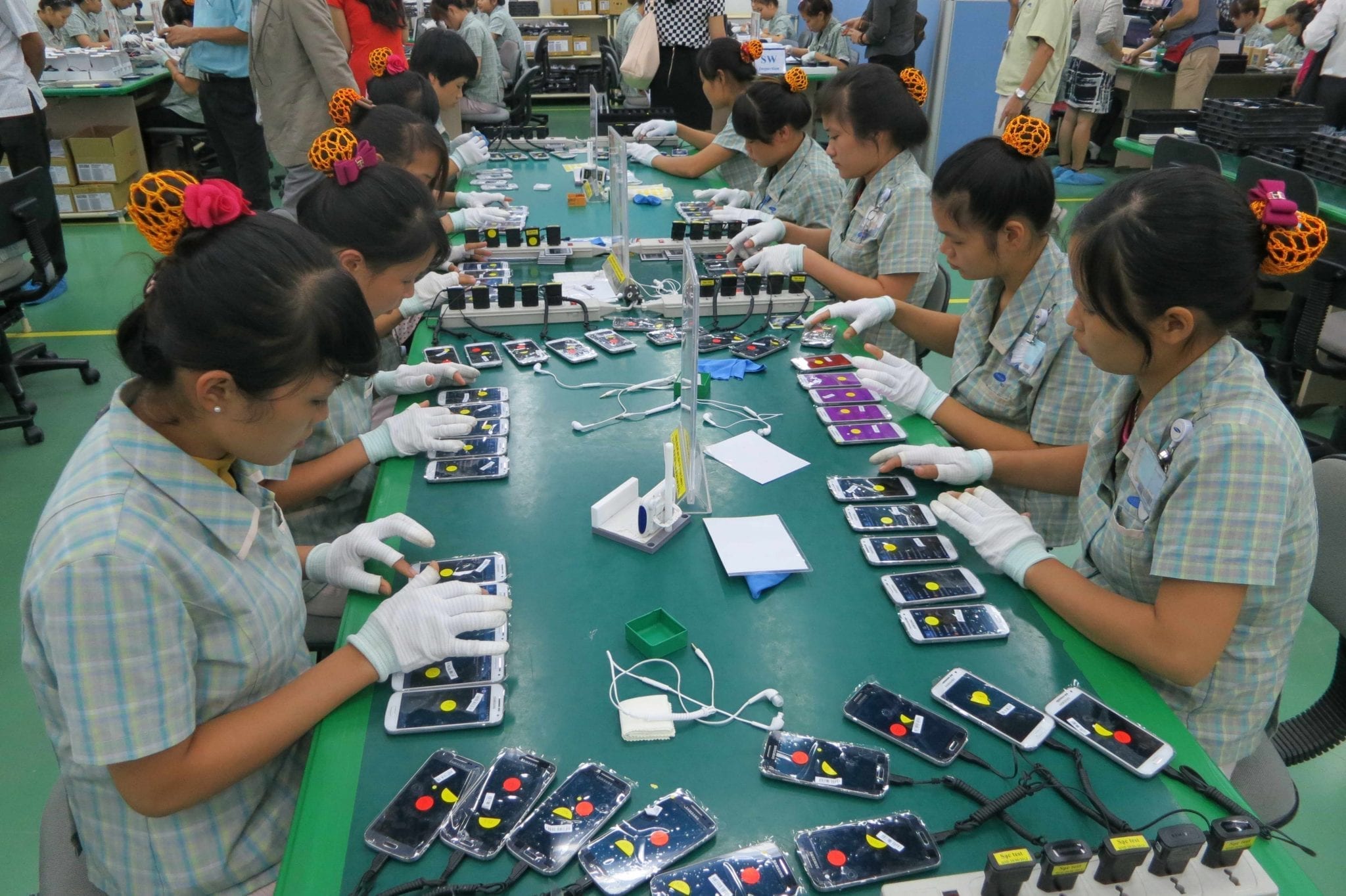
    Samsung Electronics said on Friday that it would temporarily move some smartphone production to Vietnam from South Korea. The announcement was made after another of its Korean staff tested positive for the coronavirus, forcing it to temporarily close a factory in the southern city of Gumi in South Korea.

    Since late February, a total of six workers have tested positive at the factory complex in Gumi, close to the city of Daegu – the epicenter of South Korea’s virus outbreak – leading to previous temporary closures at the plant. “Once the Covid-19 situation stabilizes, we plan to move back the output to Gumi,” it said in a statement.

    The global death toll from the Covid-19 epidemic had reached nearly 3,600 in 102 countries and territories by Sunday morning, mostly in mainland China (3,097), followed by Italy (233), Iran (145) and South Korea (50).

    The Vietnamese government has deployed various measures to prevent the spread of the virus, including requiring everyone coming from mainland China, Italy, Iran and South Korea, the worst-hit countries so far, to be quarantined for at least 14 days on arrival.

    As of Sunday afternoon, Vietnam has confirmed 30 Covid-19 infections, with the latest nine being foreign tourists. All nine have been quarantined.
  • Coronavirus case confirmed in Samsung factory in South Korea

    Coronavirus case confirmed in Samsung factory in South Korea

    We have been hearing news about different factories’ production struggles over the coronavirus outbreak for almost two months now. Unfortunately, on Saturday, Samsung temporarily closed one factory in South Korea over a confirmed case of the coronavirus, reports Reuters. Until now, Samsung has remained fairly unaffected by the public health crisis.

    The aforementioned factory complex is situated in the South Korean city of Gumi, close to the center of South Korea’s largest coronavirus outbreak (in the city of Daegu), where, reportedly, the cases of infected with the illness amount to around 433. However, the factory is responsible only for the production of a small portion of high-end phones, in particular the Galaxy Z Flip and the Galaxy Fold, primarily for the domestic market.

    The facility is to remain closed until Monday morning, while the floor where the infected employee worked will be shut down until February 25, Tuesday. Workers that came into contact with the employee in question are now in self-quarantine and will be tested for possible infection with the virus.

    Samsung states that production in other factories in South Korea will remain unaffected for now.

  • Apple China reopens stores slowly

    Apple China reopens stores slowly

    Apple China has reopened 10 more stores in China, as the business begins to return to normal despite the ongoing coronavirus outbreak.

    The 10 reopened outlets, which are located in Shanghai, Chengdu, Dalian, Guangzhou and Qingdao Vientiane City, will operate with limited business hours, according to stores’ websites.

    It is not yet clear whether or not the 10 Apple China stores will apply the same measures to prevent coronavirus transmission as five stores in Beijing which reopened last week with protection, including temperature checks of customers upon entry

    Meanwhile, Apple warned of global iPhone supply shortages earlier this week, and said it would be unlikely to meet quarterly revenue targets while its Chinese factories remained shut.

    “Work is starting to resume around the country, but we are experiencing a slower return to normal conditions than we had anticipated,” the company said in a statement. “As a result, we do not expect to meet the revenue guidance we provided for the March quarter.”

    Although the iPhone manufacturing partners outside Hubei have resumed production, “they are ramping up more slowly than we had anticipated”.

    Meanwhile, archrival – Samsung – has launched its latest smartphone in Vietnam, saying its factories in the country are running at full capacity during the coronavirus epidemic.

    Nguyen Tri Thong, corporate marketing director at local smartphone unit Samsung Vina Electronics, told the Nikkei Asian Review that Samsung’s new products have been available for delivery as the company has a clear production schedule.

    “The outbreak of the coronavirus did create challenges to many businesses globally. However, we have been mobilizing our backup plans in order to maintain our position,” Thong said. “We don’t see any serious issues in our supply chain at the moment,” he said without giving further details.

  • Lenovo Philippines opens second Legion concept store

    Lenovo Philippines opens second Legion concept store

    Tech brand Lenovo has opened its second Legion concept store in the Philippines at SM City Cebu.

    The company has launched the outlet near the mall’s cyberzone area to showcase its gaming devices and accessories. It will also serve as an event space for monthly gaming tournaments.

    Lenovo Philippines GM Michael Ngan says it wants to introduce the Legion brand to Filipinos living outside the national capital. He indicated that further branches are likely to open in the country.

    The Legion concept store is offering a range of promotions to mark its Cebu launch.

  • HTC experienced a terrible start to the year

    HTC experienced a terrible start to the year

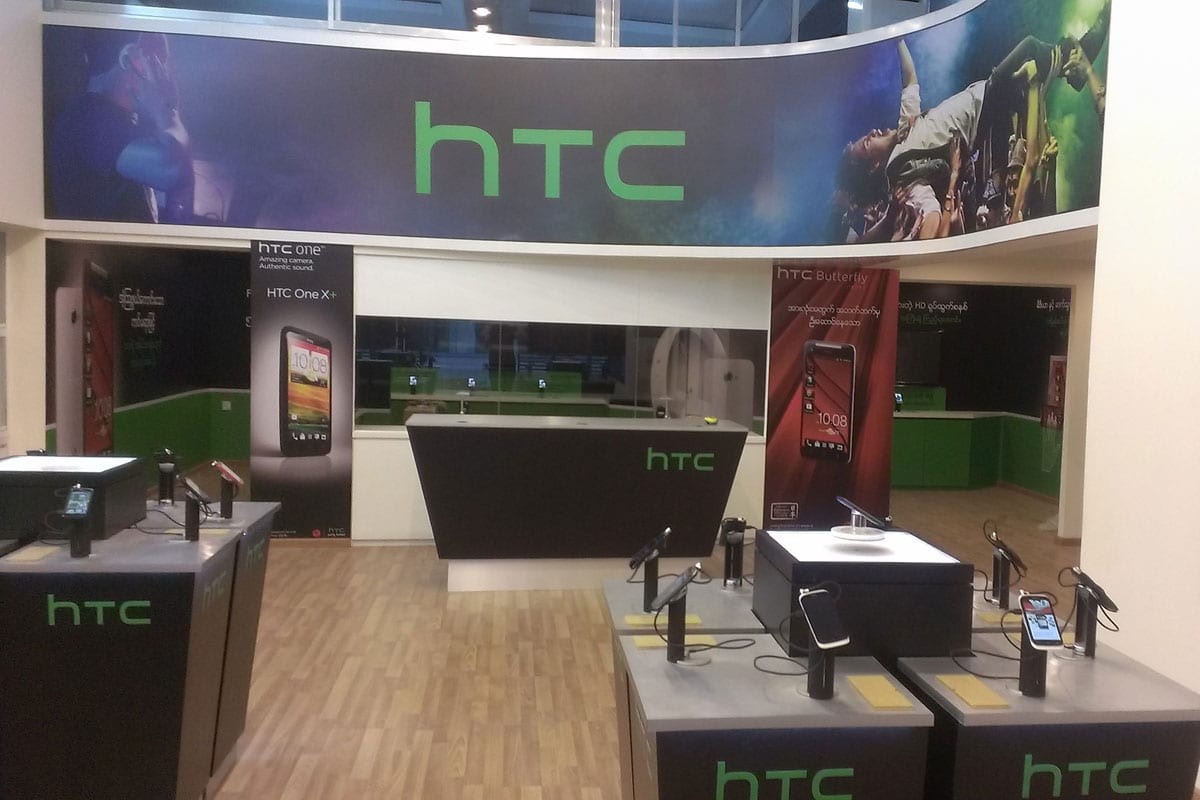
    Declining interest in the brand combined with a lack of new smartphones resulted in 2019 being HTC’s worst year on record. But if new revenue figures are anything to go by, 2020 could be even tougher for the Taiwan-based company.

    HTC’s shrinking smartphone business and newer VR headset division generated just $16 million between them in the month of January. The start of 2020 was, therefore, the company’s second-worst month on record behind only July 2019.

    The results equate to a 21.4% decline from December, which was large to be expected now that the holiday season is over, but more worryingly represents a 52.4% decline from January 2019 when it generated a more impressive $33 million.

    The company has been shrinking virtually non-stop since 2020 and, as you can see, shows no sign of slowing down anytime soon. Despite this, HTC is still feeling pretty positive about its future.

    Back in October the company gained a new CEO who teased an increased focus on VR and a return to the premium smartphone segment in the near future with a 5G-ready device. Whether this can actually turn things around, however, remains to be seen as the company has made similar promises in the past.

  • Razer opens its first London flagship store

    Razer opens its first London flagship store

    Singapore and Hong Kong-backed gaming company Razer has opened a flagship store in London’s West End as it tries to boost its global reputation.

    Backed by Singapore fund Temasek with Hong Kong tycoon Li Ka-shing and founded by Singaporean entrepreneur Min-Liang Tan, Razer has expanded from its gaming-hardware roots into software and financial services.

    The new RazerStore in London is the first in Europe and the brand’s largest yet with a 3700sqft footprint. It follows stores in Las Vegas, and San Francisco in California, Causeway Bay and Tsim Sha Tsui in Hong Kong and another in Taipei. RazerStore London opened to long queues.

    Like Razer’s other stores, the British venue is almost all black with contrasting bright green throughout.

    “All in all, it’s a decent retail experience, quite dissimilar to the Apple retail stores, but in a familiar kind of way,” observed Adrian Ip of WCCF Tech in a commentary posted online.

    “Where Apple is all light colors and airy atmospheres, Razer knows its audience and is primarily targeting it at hardcore gamers so thumping music, black paint, and RGB everywhere is the order of the day.”

    Visitors can try out all the Razer goods including mice and keyboards designed for gamers, headsets and the brand’s Blade-series laptops. Accessories and a small range of apparel complement the offer.

    In the downstairs area of the store, guests can play the game Fortnite, using Razer equipment, and there is a streaming booth.

    Ip said he was told by staff that RazerStores offer the brand a physical presence in major cities to market their goods as well as get more people hands-on with their gaming equipment.

    “This makes them less reliant on reviewers, but these are no glory loss-leaders: the stores have quickly reached profitability after launch”.

    “Given London’s location as a major global city with a large and wealthy population, it seems likely that this shop should reach profitability relatively quickly too.”

  • Samsung reportedly makes surprise decision about which chip will power the Galaxy S11 line

    Samsung reportedly makes surprise decision about which chip will power the Galaxy S11 line

    Traditionally, Samsung powers its latest flagship phones in the vast majority of markets with chipsets it designs and produces itself. In the U.S., China, and Japan, Galaxy S and Galaxy Note handsets typically employ the latest Qualcomm Snapdragon SoC. That’s because Qualcomm’s chips work better with the 4G networks in those regions. For example, earlier this year Samsung packed the Snapdragon 855 into U.S., Chinese and Japanese versions of the Galaxy S10 series. In other markets, these phones were equipped with the Exynos 9820 chipset.
    Now, the reverse could happen with the new Galaxy S11 line rumored to be unveiled in San Francisco on February 18 of next year. According to a report in South Korea’s The Elec, the Snapdragon 865 Mobile Platform will be employed in Galaxy S11 devices in all regions except one. Samsung Galaxy S11 models launching in Europe next year will be powered by the Exynos 990 SoC; elsewhere, these units will have the Snapdragon 865 Mobile Platform under the hood. The reason? According to the report, Samsung executives noted that the Snapdragon 865 outperforms the Exynos 990. The latter was unveiled by Samsung in October and the manufacturer said that the chip offers a 20% performance boost over the Exynos 9825 SoC. Interestingly, both the Exynos 990 and Snapdragon 865 are manufactured by Samsung using its 7nm EUV process. We should note that Samsung has stopped developing its own custom cores.

    One difference between the Snapdragon 865 and the Exynos 990 involves the CPU cores being used. The former features ARM’s latest and most powerful Cortex-A77 while the latter includes the older Cortex-A76. In addition, the new flagship Snapdragon chipset’s Neural Processing Unit (NPU) for AI functionality runs up to 15 Tera Operations Per Second (TOPS) compared to 10 TOPS for the Exynos 990. The Image Signal Processor (ISP) on Qualcomm’s chip has support for 200MP cameras while Sammy’s chip supports cameras up to 108MP. Interestingly, Samsung has decided to use MediaTek’s 5G processor on some of its low to mid-range models.

    You might recall that Samsung had to adjust which chip to use on 2015’s Samsung Galaxy S6 in the U.S., China, and Japan. That’s because the Snapdragon 810 SoC was fond of overheating. So Samsung decided to employ the Exynos 7420 chipset in Galaxy S6 units that normally would have featured the Snapdragon 810. But that adjustment lasted all of a year before Samsung reverted to its previous pattern.
    We expect the Samsung Galaxy S11 family to include a 6.2-inch Galaxy S11e, 6.5-inch Galaxy S11, and a 6.8-inch Galaxy S11+. All three displays are expected to refresh at 120Hz allowing for buttery smooth scrolling and improved animation. The Galaxy S11+ should come with five camera sensors on the back including a 108MP primary (producing 27MP images with pixel binning), an ultra-wide camera, a telephoto camera with 2x optical zoom, a telephoto camera with 5x hybrid zoom and a Time of Flight depth sensor. Using a combination of sensors the Galaxy S11+ could offer 50x hybrid zoom and 100x digital zoom.
    It should be interesting to see what Samsung does in 2021 when TSMC will manufacture the 5nm Snapdragon 875 Mobile Platform and Samsung turns to its 5nm process to produce the successor to the Exynos 990. At 5nm, both chips will be packed with billions of transistors making them more powerful and energy-efficient than next year’s chips. The 2021 integrated circuits will contain as many as 171.3 million transistors per square millimeter. Both TSMC and Samsung have roadmaps taking their chip manufacturing down to 2nm over the next few years.
  • Asus Experience Store opens in Singapore

    Asus Experience Store opens in Singapore

    Singapore’s first Asus Experience Store has opened on the third level of Bugis Junction.

    The 3000sqft concept area contains three separate areas: a Republic of Gaming-branded store for gaming equipment, the main showcase space for laptops and peripherals and an assistance centre for service and technical advice.

    The gaming store contains a six-station gaming network called the Battlezone, which visitors can book online to use for free. The brand hopes to hold regular events in the space to help foster the local gaming community.

    The Asus computer outlet contains the brand’s full range of workstations and hosts workshops in image and video post-production.

    Included in the Asus Experience Store is space specially dedicated to workshops where customers can learn how to post-produce images and videos or hear professional talks about Asus products.

  • Paytech Pioneer Opens APAC Hub in Singapore

    Paytech Pioneer Opens APAC Hub in Singapore

    The firm is looking to replicate the European success of its Apex platform – which powers fintech unicorns including Revolut, Monzo and Starling Bank – in the region.

    Global Processing Services (GPS) has opened its new regional headquarters in Singapore, which will enable the firm to better support its existing clients and regional banking providers, the payments processor announced at the Singapore Fintech Festival.

    The APAC hub will support existing client expansion and regional client needs as fintechs look for a platform partner to help them scale internationally, the firm said in a statement.

    It currently works with digital bank Revolut, which is expanding across the region, and Singapore’s own Railsbank through its Apex platform.

    Singapore was an easy choice – it means not only that we can support our clients as they grow, but that we can take an active part in the current fintech revolution going on there, Joanne Dewar, CEO at GPS, said about the new office.

    GPS works with over 40 issuing banks globally and operates programs for more than 100 clients in 60 countries with more than 150 currencies. Its Apex platform caters to fintechs, digital banks, e-wallets and other service providers to enable both virtual and physical card payments.