Tag: export

  • Thai rice prices hit over three-year low

    Thai rice prices hit over three-year low

    Prices of rice shipped from Thailand declined to an over three-year low this week due to US President Donald Trump’s move to impose import tariffs and an existing market surplus.

    Meanwhile, India’s rice export prices neared a two-year low on subdued demand. The US announced to impose a flat 26% tariff on all goods being exported by India to the US, a 36% tariff on goods from Thailand, and 37% on Bangladeshi products.

    Thailand’s 5% broken rice fell to $395-400 per tonne, its lowest since January 2022.

    Meanwhile, India’s 5% broken parboiled variety was quoted at $392-400 per tonne and fell to its lowest level in nearly 22 months on subdued demand from African buyers amid ample supplies. Indian 5% broken white rice was priced at $380 – 385 per tonne this week.

    Overseas buyers incurred losses due to the sharp drop in prices over the last few weeks, so they are cautious about new purchases, said Himanshu Agrawal, executive director at Satyam Balajee, a leading rice exporter.

    According to traders, Vietnam’s 5% broken rice was offered at $405-410 per tonne.

    A Ho Chi Minh City-based trader said that prices edged up as the major winter-spring harvest is almost over. The Trump administration’s new tariffs will not have any direct impacts on rice exports from Vietnam.

    Traders said domestic prices are also rising, led by prices of fragrant rice.

    Meanwhile, domestic rice prices in Bangladesh stayed elevated despite efforts to import the grain, hitting consumers hard.

  • Fruit, vegetable exports decline for 3rd straight month

    Fruit, vegetable exports decline for 3rd straight month

    Exports of fruit and vegetables fell by 10.5% year-on-year in March to an estimated US$421 million, marking the third consecutive month of decline.

    They had decreased by 5.2% to $416 million in January and 6.5% to $303 million in February.

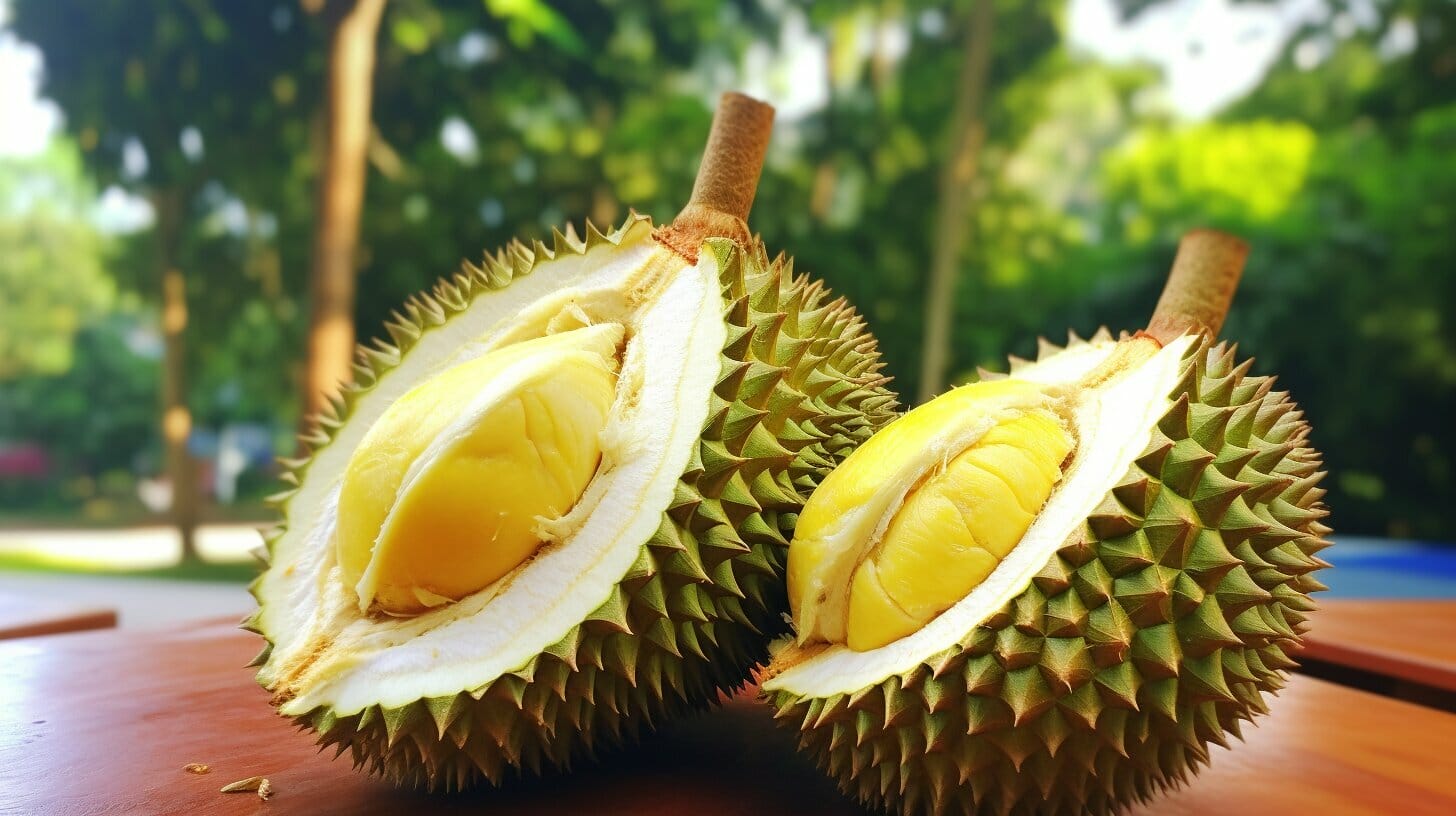
    The main reason was the decline in durian shipments, a major export item, the Vietnam Fruit and Vegetable Association said.

    Dang Phuc Nguyen, the association’s general secretary, said since the start of the year China, Vietnam’s largest export market, has been amending import regulations and now requires all durian shipments to undergo testing for cadmium and auramine O residues at accredited laboratories.

    Cadmium is a toxic heavy metal and auramine O is an industrial dye, and both are strictly controlled due to their potential cancer risks.

    The new requirement is resulting in longer and more complicated customs clearance procedures and difficulties for exporters, Nguyen said.

    Some of them have halted shipments to China just to complete the procedures, he said. If the situation persists, this year’s exports could be less than last year’s, he added.

    Exports were worth $7.15 billion last year, with durian accounting for $3.4 billion, or nearly 50%.

    The target for this year is $8 billion, which is achievable if the inspection issues are soon resolved.

  • Rice exports grow by over 23%

    Rice exports grow by over 23%

    Vietnam’s rice exports from Jan. 1-15 reached 268,700 tons worth nearly US$165.7 million, up 38.7% in volume and 23.28% in value year-on-year, according to the Vietnam Food Association.

    However, export prices for 5% broken rice fell to $413 per ton, with 25% broken rice at $387 per ton.

    Despite the positive start, the VFA predicts a challenging year for rice exports, citing global competition and India’s return to the export market. The projected annual export volume for 2025 is 7.5 million tons, down from the record 9.04 million tons in 2024.

    In the domestic market, farmers in the Mekong Delta are facing slower demand and lower prices for rice. Key varieties like IR 50404 and OM 5451 are trading at VND5,500–5,700 (US$0.22-0.23) and VND5,800–6,000 per kilogram, respectively. The decline is attributed to ample global supply, particularly from competitors such as India and Thailand.

    Retail rice prices in An Giang are at VND15,000-22,000 per kg, depending on the variety. Meanwhile, by-products like rice bran and broken rice fetch between VND5,600–7,300 per kg.

    As of January 20, Mekong Delta provinces have sown over 1.46 million hectares of the winter-spring crop, with 85,000 hectares already harvested.

    However, erratic weather, including alternating rain and sunshine, has heightened risks of diseases such as leaf blight and pests like gall midges, particularly in provinces such as Dong Thap and Kien Giang.

    The agriculture sector advises farmers to closely monitor their fields and take preventive measures to minimize potential losses early in the season.

  • Thailand resumes durian exports to China after temporary ban due to carcinogen detection

    Thailand resumes durian exports to China after temporary ban due to carcinogen detection

    Thailand has resumed exporting durians to China following a temporary ban due to the latter’s stricter requirement regarding Basic Yellow 2, a carcinogen.

    Itthi Sirilathayakorn, deputy minister of Thailand’s Ministry of Agriculture and Cooperatives, said exports were resumed on Monday, with 96 tons of durian worth 7.8 million baht (US$228,900) to be shipped to China on Monday and Tuesday via border channels in Nakhon Phanom and Chiang Rai.

    The shipments underwent stringent screening and certification to comply with China’s tougher import standards, The Bangkok Post quoted Itthi as saying.

    Basic Yellow 2, also known as Auramine O, is a coloring chemical typically used in fabrics, paper, leather, and house paint. It is classified as possibly carcinogenic to humans.

    Traces of the chemical were detected in some Thai durian shipments in late 2024, prompting China to enforce tougher import requirements earlier this month, including the newly added testing for the chemical.

    At the time, customs checkpoints across China were instructed to reject durian shipments lacking the lab test results certifying that the fruit was free of the chemical.

    Itthi said the ministry has since enhanced screening measures. As of Jan. 17, On January 17, six laboratories in Thailand were authorized by China customs to conduct Basic Yellow 2 testing, according to the Department of Agriculture. Four more labs are expected to be approved next week, increasing testing capacity to 1,300 samples per day.

    Some 100 durian containers from Thailand were reportedly sent back due to the increased scrutiny.

    These fruits were being sold at local markets for just 110-120 baht per kilogram, down from their initial prices of 230-240 baht, due to being overripe.

    The abrupt shift in import standards similarly left many Vietnamese businesses unable to adapt quickly, leading to delays or returns of durian shipments at the border.

    Some companies in Vietnam also had to redirect the durians to the local market, selling them at massive discounts instead of waiting for customs clearance.

    China imported 1.53 million tons of durian worth US$6.83 billion in the first 11 months of 2024, up 9.4% in volume and 3.9% in value from a year ago, according to customs data reported by Vietnam Agriculture News.

    Thailand accounted for 52% of the shipments, down from 65% a year earlier, while Vietnam’s share grew from 35% to 47% during the same period.

  • Durian exports surge by 44% to $3.1B

    Durian exports surge by 44% to $3.1B

    Durian exports in the first 11 months of this year fetched US$3.1 billion, 44% up from a year earlier, customs data shows.

    China was the biggest market, accounting for $2.8 billion, or 90% of all exports, a 43% year-on-year increase.

    Thailand followed with $177 million, up 82%, while Hong Kong and Japan stepped up purchases by 16% and 85%. Shipments to Cambodia rose by 139 times to $3 million.

    Dang Phuc Nguyen, general secretary of the Vietnam Fruit and Vegetable Association, said 2024 has been a bumper year for exports, especially of durian.

    The association estimated fruit and vegetable exports would hit $7.1 billion for the year, up 27% from 2023, with durian accounting for half the value.

    Durian exports are expected to rise next year as Vietnam begins to ship durian pulp and puree to China.

    These products will bring more value than fresh durian, helping farmers make use of fruits that meet quality standards but are misshapen.

    Vietnam has around 154,000 hectares under durian and produces 1.2 million tons of the fruit annually.

    Exports of other fruits such as banana, jackfruit, mango, and coconut have also seen year-on-year increases of 20-400% in the first 11 months.

  • Chinese kiwi prices in Vietnam start at $0.8/kg

    Chinese kiwi prices in Vietnam start at $0.8/kg

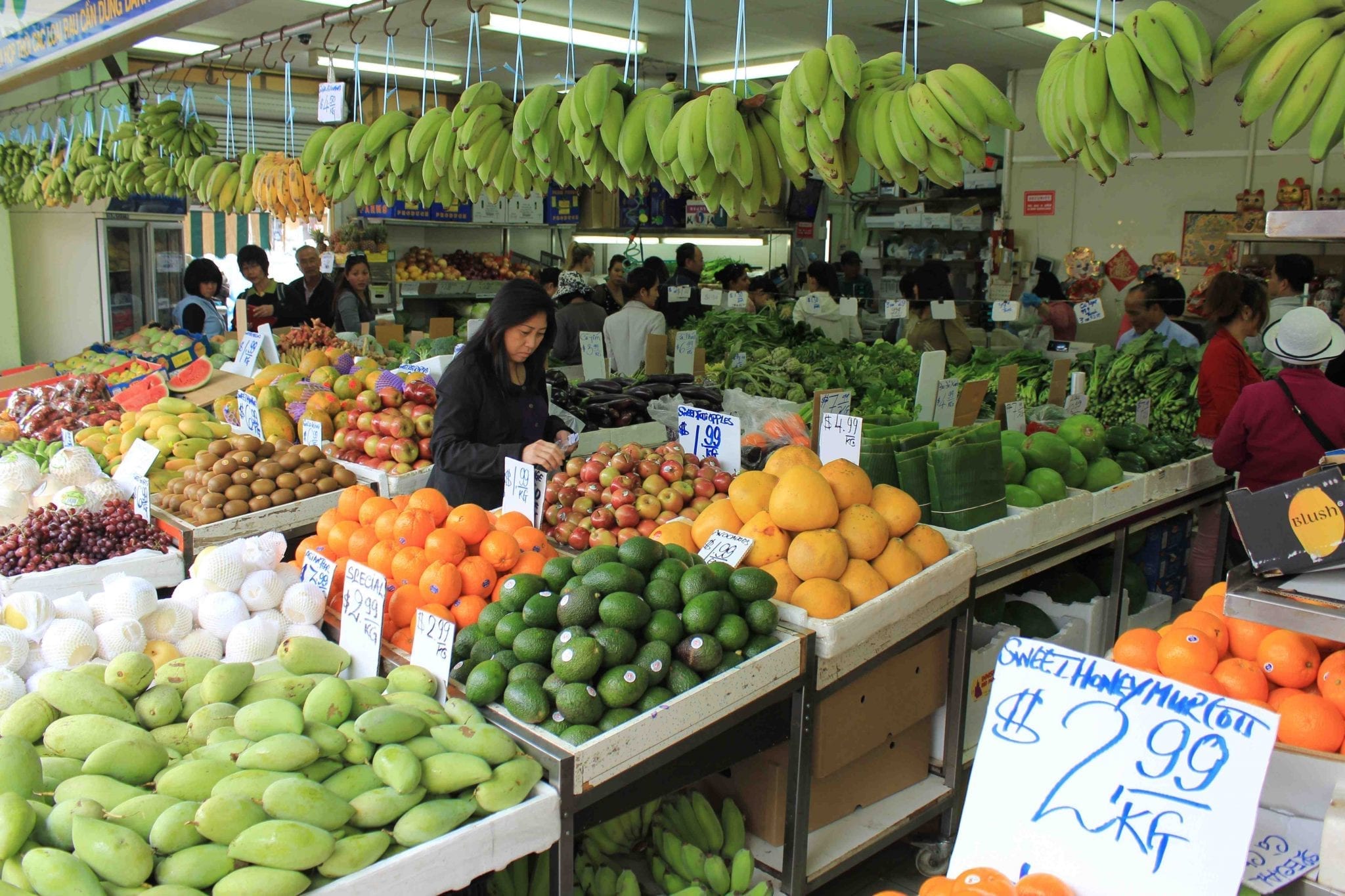
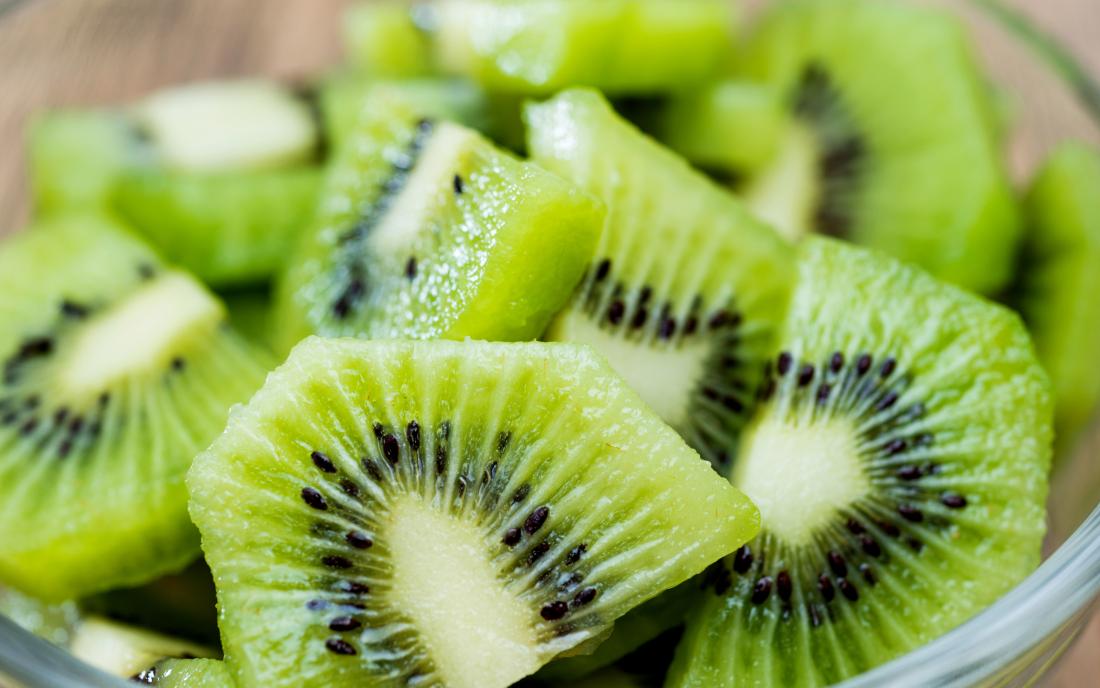
    Chinese green kiwi is being sold at VND20,000 (US$0.79) per kilogram onwards by wholesalers in Vietnam, a third of the prices of imports from Australia and New Zealand.

    Australian and New Zealand wholesale prices start at VND60,000 and go up to VND120,000. But the VND20,000 price is unusually low for a fruit considered an upmarket item in Vietnam.

    Thanh Hoa, a fruit wholesaler in HCMC, said these are the lowest prices in years. “I import thousands of boxes at a time to get the best prices.”

    Retailers are selling the fruit at VND50,000-80,000 per kilogram. In China, green kiwi is primarily grown in provinces with a temperate climate such as Sichuan, Shaanxi and Henan.

    Thanks to advanced breeding technologies and large scale of production, China is able to produce large quantities of the fruit and maintain low prices.

    Vietnamese importers say Chinese kiwi is able to enter Vietnam at current rates because logistic costs have been optimized.

    Dang Phuc Nguyen, general secretary of the Vietnam Fruits & Vegetables Association, said China has acquired kiwi varieties from other countries and breeds them with low labor costs.

    Vietnam’s imports of Chinese agriculture produce in the first 10 months were worth $800 million, a 24% increase year-on-year, according to the customs department. The main fruits it imported were apple, grape, persimmon, and kiwi.

  • Fruit, vegetable exports soar 27%

    Fruit, vegetable exports soar 27%

    Exports of fruits and vegetables were worth an estimated US$6.6 billion in the first 11 months of 2024, a 27% increase from a year earlier.

    The Vietnam Fruit and Vegetable Association came up with the estimate based on customs data, which shows exports to major markets growing at double-digit rates.

    In the first 10 months, for which official data is available, shipments to China rose by 30% year-on-year to $4.1 billion, while exports to the U.S., South Korea and Thailand jumped by 35%, 41% and 70%.

    Durian was the best-selling item, making up more than $3 billion worth of fruit and vegetable exports in the period, with China accounting for $3 billion.

    Vietnam has been the second largest supplier with a 39% market share, trailing Thailand’s 60.2%.

    Dang Phuc Nguyen, general secretary of the association, said China has very high demand for fruits and vegetables, especially Vietnamese durian.

    If exports to the country continue to grow at current rates, Vietnam could surpass Thailand as China’s top durian supplier in the next year or two, he said.

    He expected fruit and vegetable exports to touch a record $7 billion this year.

    Vietnam gained approval to export frozen durian and fresh coconut to China in August,and many exporters have since reported signing large contracts to supply them. One company said it has a deal to ship up to 1,500 containers of coconut.

    Coconut, passion fruit and some other agricultural products are growing in popularity in the U.S, while Thailand has increased imports of fruits from Vietnam this year as its own production has been hit by unfavorable weather.

  • Laos’ sprouting durian industry strives for exports to China

    Laos’ sprouting durian industry strives for exports to China

    Durian production in Laos has come to fruition and the industry is seeking opportunities to export to China – the world’s largest consumer of the stinky fruit. Tao Jian, a 54-year-old Chinese entrepreneur and the owner of Jinguo, a company with 50,000 durian trees planted on the Bolaven Plateau in southern Laos, recently celebrated the first harvest from his.

    Though the region is primarily known as Laos’ coffee hub, it could soon gain recognition for durians.

    Tao said the country’s fertile soil is ideal for farming the fruit and a hybrid durian variety, a mix between Malaysian and local cultivars, has been successfully developed there, leading to high-quality produce.

    “I believe Laos will soon become the world’s fourth-largest durian producer, after Thailand, Vietnam and Malaysia,” he told Nikkei Asia.

    While the durian industry has been expanding rapidly in several Southeast Asian countries, large-scale durian farming has only been sprouting recently in Laos, where the fruit used to be grown mostly in the backyards of local families.

    At a meeting between the Lao Agricultural Business Association, representatives of Lao durian growers, and Chinese agricultural importers in August, Bounthieng Latthanavong, president of the association, stated that durian production methods in Laos have become more professional and robust, positioning the industry for success in global markets, as reported by the official Lao News Agency.

    Elavanh Latpakdee, a representative of durian farmers in Laos, said the association has 170 farms spanning 20,000 hectares and many trees have started producing fruits, yielding around 900 tons of durian per year. It expects production to rise to 24,300 tons worth more than US$155.5 million.

    Durian farming in Laos has come a long way, but the country has not yet been allowed to export the fruit to China.

    However, that goal might not be too far off. Bounchanh Kombounyasith, Laos’ director general of the Department of Agriculture, said market access documents were being prepared and Lao durians will soon be exported to China, a state-owned Chinese newspaper reported late last month.

    As the top importer of the fruit, China procured 1.4 million tons of durians worth $6.7 billion in 2023, with Thailand and Vietnam being the top suppliers.

    In the second quarter of this year, Thailand shipped about $2.67 billion worth of durian to China, accounting for 75% of imports. Vietnam supplied most of the remaining shipments during the period, the South China Morning Post reported, citing Chinese customs data.

    China’s burgeoning demand has been transforming the durian industry in Southeast Asia.

    Many farmers in Thailand and Vietnam have become wealthy from the fruit.

    And it might also turn the sprouting durian industry in Laos into an economic boon for the country.

    China is Laos’ second largest trading partner and its top investor, China Daily reported, citing Chinese customs data.

    Bilateral trade between the two nations hit a record $7.1 billion in 2023. It amounted to $4.9 billion in the first seven months of this year, a 30.3% increase from a year ago.

    Besides the natural advantages noted by Tao, Laos’ durian industry has been attracting investment from Chinese businessmen who possess the resources to develop the sector. Many of these investors are turning to Laos to establish durian farms with the aim of shipping the fruit back to China.

    The Laos-China railway, launched in December 2021, might add to this momentum by reducing the travel time from Vientiane, the capital of Laos, to Kunming, a key trade center in southwestern China, to under 10 hours.

    The industry also receives the support of foreign professionals like Duangdavone Sulayavongsa, a durian cultivation expert with nearly 20 years of experience in Thailand.

    He believes that Lao durians hold the potential to become a major export commodity, greatly benefiting the country’s economy.

  • Philippines rice imports up 19% in 8 months

    Philippines rice imports up 19% in 8 months

    Rice imports to the Philippines amounted to 2.8 million metric tonnes (MT) during the first 8 months of this year, 19% higher than he same period last year, data from the country’s Department of Agriculture (DA) showed.

    In its latest report, the department’s Bureau of Plant Industry (BPI) said in August alone, rice from abroad increased to 296,350.9 MT compared to 167,403 MT in July. However, it was still lower than the average monthly arrival of 400,000 MT logged in the earlier months.

    Agriculture Assistant Secretary and spokesman Arnel de Mesa said rice prices have been decreasing. Regular and well-milled rice is sold at around 45 PHP (US$0.8) per kilo and even as low as PHP42, he added.

    According to the report, Vietnam remained the Philippines’ top source of the staple during the period, shipping over 2.17 million MT or around 77% of the country’s total imports in the January-August period. It was followed by Thailand (371,390 MT), Pakistan (156,121 MT) and Myanmar (66,910 MT).

    Last year, inbound shipments of rice totaled 3.6 million MT, down 5.9% from the record-high 3.82 million MT in 2022. The DA projects rice imports for this year will not exceed last year’s volume.

  • Vietnamese passion fruits enter Australian market

    Vietnamese passion fruits enter Australian market

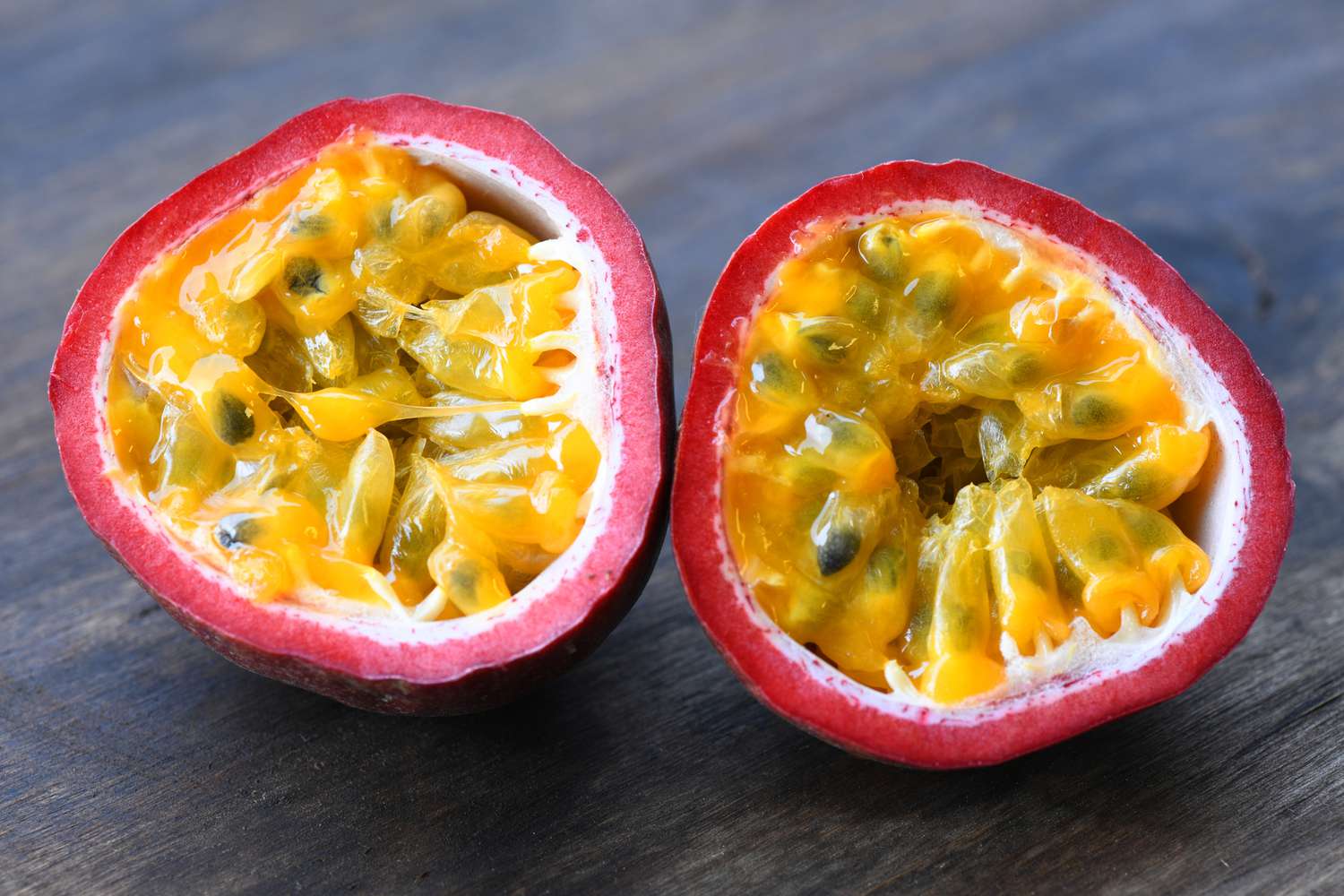
    Passion fruits have become the fifth kind of Vietnamese fruits to be officially exported to Australia, following mango, longan, lychee, and dragon fruit.

    On Monday, the Plant Protection Department under the Ministry of Agriculture and Rural Development in collaboration with the Australian Embassy in Vietnam held a ceremony to announce the export of Vietnamese passion fruits to Australia and the import of Australian plums into Vietnam.

    Huynh Tan Dat, Director of the Plant Protection Department, underlined that Vietnam has great potential and advantages in tropical fruits.

    Currently, Vietnamese fruits are available in over 60 countries and territories. Specifically, passion fruits have been exported to 20 countries in various forms such as fresh, frozen, and juice.

    The area of passion fruit in Vietnam is currently over 12,000 hectares and is expanding, mostly in the northern mountainous region. Many provinces in the Central Highlands are also expanding the cultivation area of this fruit.

    In recent years, Vietnam has concentrated on improving passion fruit quality by promoting chain production and ensuring traceability for the product, focusing on two varieties of yellow passion fruit and purple passion fruit.

  • Rice exports top $3.8B in 8 months

    Rice exports top $3.8B in 8 months

    Vietnam exported 6.16 million tons of rice worth nearly US$3.85 billion in the first eight months of this year, the Ministry of Agriculture and Rural Development (MARD) has said.

    This marked a 5.9% increase in volume and a 21.7% growth in value from the same period last year.

    According to the MARD, along with the increase in output, the average rice export price in the period also rose about 14.8%, reaching $625 per ton.

    In the domestic market, prices of many types of rice in the Mekong Delta region remained stable last week compared to the previous week.

    Specifically, prices in the Mekong Delta province of An Giang remained unchanged for popular varieties such as Dai Thom (fragrant rice) 8, OM 5451 and OM 18.

    Regular rice retails at VND15,000-16,000 (US$0.6-0.64) per kilogram, while long-grain fragrant rice is sold at about VND20,000-21,000.

  • Philippines spends $1.2B on Vietnamese rice in H1

    Philippines spends $1.2B on Vietnamese rice in H1

    Rice was the Vietnamese product with the highest export value to Philippines in the first six months of 2024, with a turnover of $1.2 billion, up 41% over the same period last year.

    According to data from the Vietnam Trade Office in the Philippines, Vietnamese rice has been leading the market in the Philippines, Vietnam’s largest rice export partner, for many years.

    In June, the Philippines reduced rice import tax from 35% to 15% until 2028, and is expected to increase import volume from 4 million to 4.5 million tons. This is deemed a great opportunity for Vietnamese rice in the second half of the year.

    However, although rice export opportunities are expanding, many businesses are still cautious due to high input prices and the impact of storms that could reduce rice supply at the end of the year.

    The Vietnam Trade Office in the Philippines recommends that businesses need to balance costs to offer competitive prices and maintain market share. At the same time, the Ministry of Industry and Trade, the Embassy and the Vietnam Trade Office will also support businesses in trade promotion activities, advertising and improving product quality to increase export value, it said.

    Last year, Vietnam exported more than 3 million tons of rice to the Philippines, down 3% compared to 2022. However, thanks to the increase in prices, export turnover reached $1.75 billion, up 17.6% compared to the previous year.

  • Google Drive gets automatic captions for video uploads with new update

    Google Drive gets automatic captions for video uploads with new update

    Google Drive is now rolling out a useful feature for videos you upload: automatically generated captions. It seems the new feature is widely rolled out.

    The feature is available for personal Google Accounts and uses speech recognition tech to transcribe the audio. To use the feature, users should request automatic captions after uploading a video to Drive. On the other hand, for Google Workspace users, the captions are enabled automatically, unless their admins disable it.

    To generate captions for a video, you can right-click on the video and then click on Manage caption tracks, and then generate automatic captions. On mobile, tap the three-dot menu on the top right, and then go for Manage caption tracks and generate automatic captions, but this has to be done when a video is already playing.

    It takes some time for the request to process. Then, the automatic captions will be available in a YouTube-esque player by tapping “CC”.

    Having captions is also great for searching for videos based on content, while they also improve the accessibility of media stored in Drive. For now, English is the only language that is supported, with other languages planned “in the future”.

  • Fisheries exports grow by 6% in H1

    Fisheries exports grow by 6% in H1

    Vietnam’s fisheries exports in the first half of 2024 were worth US$4.4 billion, up 6% year-on-year on higher demand in major markets like the U.S., China and the EU.

    The Vietnam Association of Seafood Exporters and Producers’ latest report said key items such as shrimp, pangasius, and tuna did well.

    Pangasius accounted for $918 million and tuna for $472 million, up 5% and 23%. Shrimp fetched $1.6 billion, a 6% increase, while exports of other crustaceans jumped by 75% to $125 million.

    The U.S. and EU imported 18% and 56% more tuna. Shrimp exports to China and the EU rose by 17% and 13%.

    Top shrimp exporter Minh Phu said profits for the first half were VND7.2 billion (US$284,000) as against a loss of VND98 billion in the same period last year.

    Its CEO, Le Van Quang, said the company has been receiving more orders than last year and is planning to boost exports to China, Japan, South Korea, Australia, and New Zealand.

    Businesses are optimistic that seafood exports, especially of green and sustainable products, will grow even more in the coming months.

    But the seafood association said some challenges remain, such as fierce competition from Ecuador and India, rising transport costs and a shortage of raw materials for processing.

  • Durian exports rise by 45% in first half

    Durian exports rise by 45% in first half

    Vietnam exported US$1.32 billion worth of durian in the first six months of 2024, up 45% year-on-year, according to customs data.

    It accounted for 65% of all fruit exports during the period and is growing increasingly popular in many key markets.

    China was the largest importer, accounting for over 92% of Vietnam’s durian exports.

    Its imports increased by 46% from the same period last year.

    Thailand was the second largest market for Vietnamese durian, with shipments increasing by 90.5% to $47 million.

    Exports to Japan doubled from a year ago to $2.6 million. Cambodia bought $1.6 million worth of the fruit from Vietnam, a 23-fold increase.

    Currently the monthong variety is the most favored for its taste, aroma, small seeds, firm texture, and longer shelf life.

    Dang Phuc Nguyen, general secretary of the Vietnam Fruit and Vegetable Association, expected durian exports to skyrocket in the second half, fueled by the harvest of the fruit in the Central Highlands from July to October.

    Furthermore, Vietnam and China have wrapped up negotiations and will soon sign a protocol for the export of frozen durian.

    With all this in the works, Nguyen expected exports for the year to hit $3 billion.

    But there are challenges, he said, with some shipments to China recently being flagged for containing banned substances.

    Vietnamese authorities have been discussing the issue with their Chinese counterparts and investigating the cause.

    Inspections have indicated that the contamination did not occur at orchards, and so traders, packaging facilities and exporters have been urged to strictly comply with quality control regulations.