Tag: Fashion

  • Why Dutch tailor Suitsupply thinks it can beat Hong Kong’s retail slump

    Why Dutch tailor Suitsupply thinks it can beat Hong Kong’s retail slump

    Retailers in Hong Kong’s Central business district have endured more bad news than good over the past year, but the area still has cachet with international brands looking to enter the Hong Kong market.

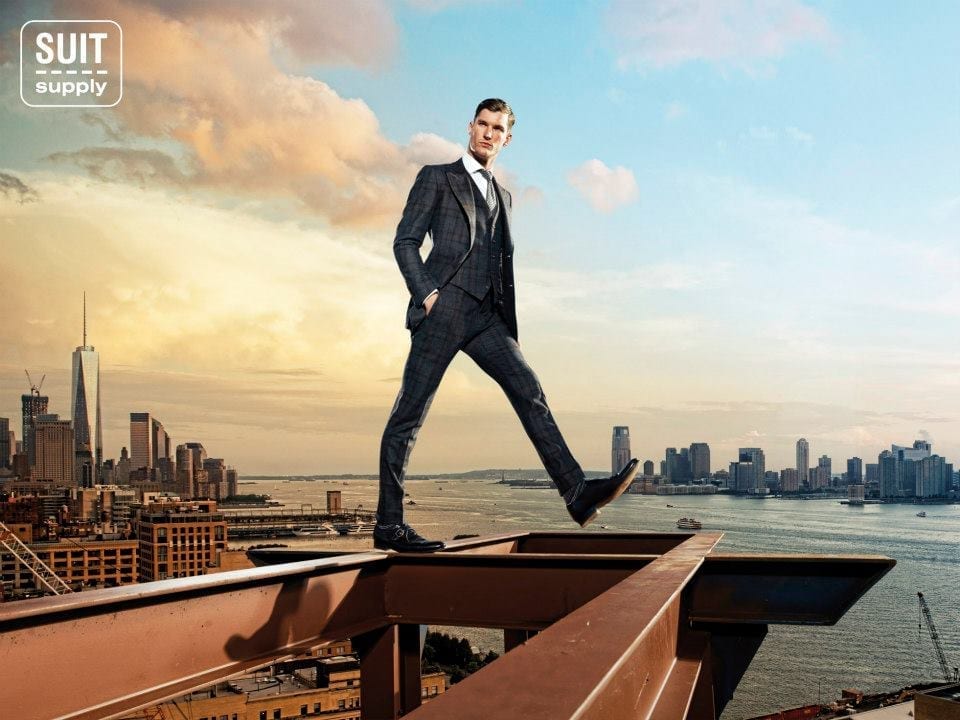
    In early December, Dutch tailor Suitsupply opened its first boutique in the city, taking a large space on Ice House Street. The move is a statement of confidence in Hong Kong retailing, according to the company’s founder and chief executive, Fokke De Jong.

    “We’ve looked at Hong Kong for a long time and we’re confident. Our online business here is very strong so that’s a good indicator,” he says.

    Suitsupply’s arrival is a stark counterpoint to the departure, actual or pending, of big fashion retailers from Central such as American giants Coach and Abercrombie & Fitch, the latter set to vacate its Pedder Building premises with their HK$7 million-a-month rent. Suitsupply’s Ice House Street location is impressively large at 6,700 sq ft, making it one of the biggest high-fashion store openings anywhere in Hong Kong in 2016.

    The store has a small ground-floor entrance but opens out into a sprawling first floor that features sections for bags, shoes, evening wear and made-to-measure tailoring. De Jong says locating the store away from street level and making it less obvious and visible is deliberate and part of its “location-based” strategy.

    “By that I mean we have huge stores in out-of-the-way places. People will go out and find us,” says De Jong. Some of these “crazy” locations De Jong mentions include lofts spaces, rooftops and even a full villa.

    Suitsupply, which eschews all traditional forms of glossy fashion advertising, relies instead on its retail experience, which is both old and very new. For example, De Jong says the brand has tailors at all the company’s stores, who can provide tailoring services within half an hour. He says that few other quality menswear brands offer such immediate service.

    As well as challenging the traditional tailors in the city and fast fashion retailers such as Zara and Massimo Dutti, Suitsupply is a direct challenge to higher-end luxury menswear brands with its accessible pricing – an alterable Italian-style grey wool suit can cost as little as HK$3,000, several thousand dollars less than some of the more stellar Italian and British menswear brands.

    “We bring quality, hand-crafted clothes and the best materials all for a more attainable price,” says De Jong of the brand’s appeal.

    How is Suitsupply able to provide such high quality at relatively low prices? De Jong says the key is the “vertical” nature of the company: “We design, manufacture and sell … everything is in our own hands.”

    Having out-of-the-way locations which cost less to rent and relying on social media instead of traditional advertising keep expenses down too, he adds.

    Suitsupply was established by De Jong in 2000, during his time at university, when he would travel to Italy buying up suits and then selling them on campus. De Jong became so successful at it, he quit his studies and began selling clothes full-time, although scaling up Suitsupply was fraught with challenges.

    “Nobody wanted to sell their fabrics to me at first,” says De Jong, who insisted on using the best Italian fabric mills for his suits. He says it took a great deal of time and effort to build relationships with Vitale Barberis Canonico and Reda, two of the more famed mills from the Biella region which supply the likes of Ermenegildo Zegna. Today, Suitsupply is one of the Biella region’s biggest customers and De Jong says his company has helped secure jobs in the area.

    Returning to the theme of opening in Hong Kong during a dip in retail fortunes, De Jong says Suitsupply has always taken a different path to traditional retailers. Though the Hong Kong store has only been open a short while, De Jong is confident Suitsupply’s offer will resonate with Hong Kong men.

    “We bring new energy to tailoring, we’re not pretentious or serious. We bring fun to menswear and make it less intimidating,” he says.
  • Balenciaga opens Osaka pop-up

    Balenciaga opens Osaka pop-up

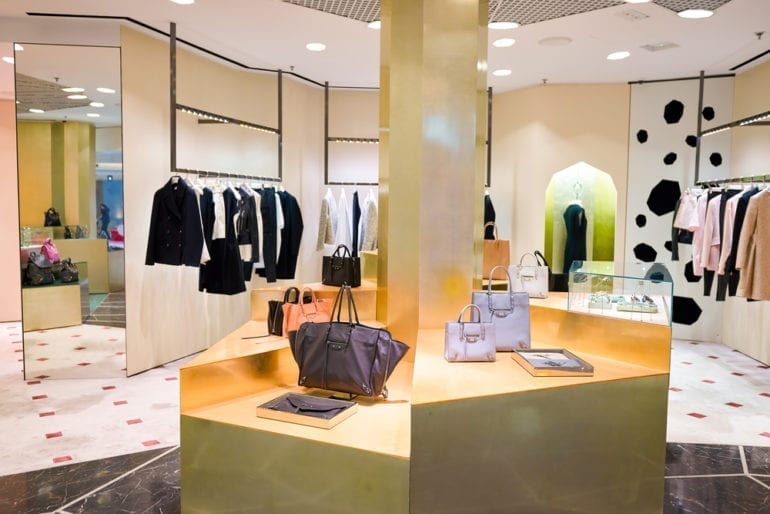
    French fashion maison Balenciaga has opened a new pop-up store in Osaka, adding to the five standalone boutiques already retailing in the Japanese city.

    The Parisian label has its sights set on pushing its newest ‘it’ handbag – the Bazar Shopping Bag – onto the Japanese clientele.

    The new Osaka pop-up shop will house the original Bazar Shopping from the latest collection, as well as holiday and resort versions. Also for sale are pouch and wallet versions of the bag.

    The colourful tote bag, designed by Demna Gsvalia, featured in Balenciaga’s Autumn/Winter 2016 collection. The Bazar Shopping Bag — already a hit with fashionistas such as Pernille Teisbaek, the co-founder and creative director at Social Zoo Direct — is part of Gvsalia’s first accessory line since taking the helm of Balenciaga this year.

    Despite being compared to a heavy-duty laundrette carryall, the Balenciaga accessory retails for a whopping £975 per unit and has been hailed a best-seller on major fashion e-platforms Net-a-Porter and MatchesFashion.com.

    Balenciaga is known for ‘it’ bags, since the Arena handbag, designed by Nicholas Ghesquire over ten years ago.

    The pop-up shop is located within a portion of the Hankyu department store in Osaka. It is open from now until the end of December.

  • ‘Made in China’ label no longer cheap and nasty

    ‘Made in China’ label no longer cheap and nasty

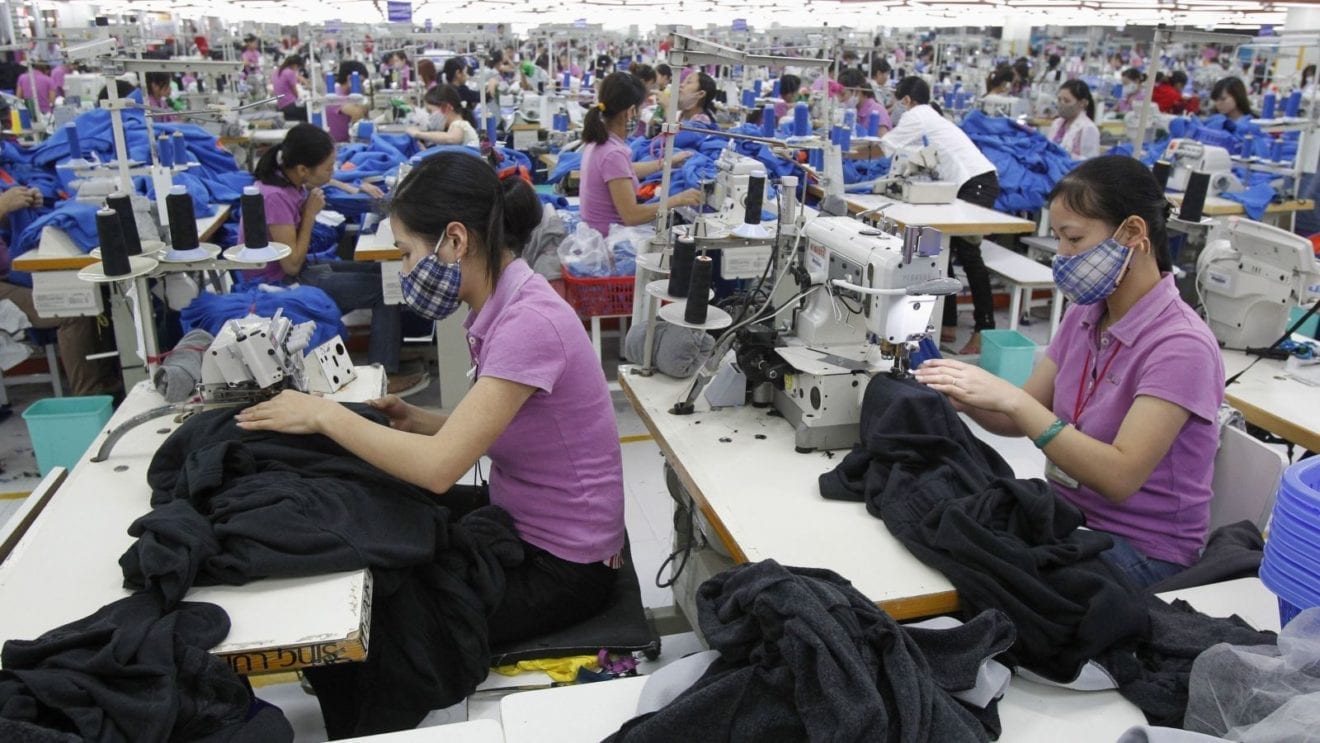
    The Made In China label has become synonymous with cheap fabrics and fast fashion — but that’s changing just as quickly as the industry grew.

    As the country’s economy shifts from one of manufacturing to consumption, the quick and dirty goods so beloved by the West are likely to be made in other countries with lower labour costs.

    Meanwhile, China’s booming middle class is demanding quality and sophistication, and that could mean a $140 billion payday for the Australian economy, experts predict.

    Rich Chinese are now the target customer for any Aussie business, and the transaction works both ways. The nation’s newly powerful creators could soon be exporting their ideas straight into your home and wardrobe.

    Chinese shoppers spend billions in Australia each year. Picture: Stuart McEvoy/The Australian
    Chinese shoppers spend billions in Australia each year.

    LABEL FREAKS TO FASHION GEEKS

    As their economy has exploded, the Chinese have gained a reputation for being obsessed with designer labels. If it’s Prada, Gucci or Dior, it’s a status symbol they want in their wardrobe.

    But the still fledging market is catching on to what’s seen as truly sophisticated worldwide.

    Now the demand is for innovation, style and originality, and China is starting to make its name in the fashion business for more than just factories. The industry has tripled in size and is valued at $85 billion.

    Vogue China was only established in 2005, and at the time there were no Chinese supermodels. Now the magazine has a monthly print circulation of 1.8 million to American Vogue’s 1.2 million, and 30 million unique users online.

    Its editor Angelica Cheung says the Chinese consumer is increasingly willing to take risks, whether on an original look or a less well-known designer.

    If Aussie businesses are agile enough, that could mean important opportunities. China’s middle class have higher disposable incomes than ever, but demand for products is not yet being met.

    Alice McCall became the first Australian designer to open their own boutique in China last year, and our wool industry is looking at how it can offer more than raw material to the rapidly developing country.

    But if we are too slow, China’s homegrown designers will outstrip the competition domestically and export its own ideas to the world.

    Chinese designers like Madame Zhou are exploring new territory, and their ideas are coming to your wardrobe.
    Chinese designers like Madame Zhou are exploring new territory, and their ideas are coming to your wardrobe.Source:Supplied

    AUSTRALIA’S $140 BILLION BONUS

    The growth of China’s gross domestic product (GDP) is at six per cent compared to 10 per cent ten years ago, with manufacturing only nominally up while services have dramatically increased.

    This has coincided with both rapid urbanisation and industrialisation and a new demand for goods and services from overseas, particularly Australia, according to Helen Sawczak, national CEO with the Australia China Business Council.

    “This demand has been fuelled by a growing and relatively affluent middle class in China, which conservative estimates have put at 109 million adults,” Ms Sawczak said. “The new middle class in China continues to demand clean, green and safe premium products which includes Australian agribusiness products especially fresh produce, wine, vitamins, health supplements, infant formula. They also want high quality education, property investment opportunities and unique tourism experiences.”

    Chinese tourists have the potential to make Australians far richer, with 1.4 million visiting in 2016 and spending billions of dollars.

    “Some projections have suggested that by 2025, Australia will receive two million tourists per annum which could impact the Australian economy by $140 billion,” says Ms Sawczak, who recently produced a report entitled The Long Boom: What China’s Rebalancing means for Australia’s Future.

    “Chinese tourists tend to be avid shoppers when visiting Australia and our report indicates that visitors are more likely to continue buying Australian products after their trip.”

    The Mercedes-Benz China Fashion Week made the world sit up and take notice. Picture: Lintao Zhang/Getty Images
    The Mercedes-Benz China Fashion Week made the world sit up and take notice. Picture: Lintao Zhang/Getty ImagesSource:Getty Images

    POWER COUPLE

    The China Australia Free Trade Agreement has now been in place for a year, substantially removing tariffs on a wide range of products and has helped to facilitate more bilateral trade.

    Australian manufacturers are hoping to bypass the multi-million dollar daigou trade, which came to public attention in Australia at the peak of last year’s baby formula shortage scandal.

    Tens of thousands of international grey market traders, now better known by the Chinese term daigou, ship groceries and skincare products to friends and relatives in China — selling goods at a premium of up to 50 per cent and making as much as $100,000 a year.

    Competition to capture China’s lucrative market is fierce. The Chinese may see Australia as a destination for food and wine, but it is not as synonymous with premium fashion.

    But there is an opening. Li Zhang, project director of the Australian Lifestyle Expo, said earlier this year: “Australian brands are seen as healthy, green, organic, natural, environmentally friendly and high quality, therefore their willingness to pay is pretty high.”

    The large market could be vital for Australian businesses looking to grow, with Shanghai alone matching our population of 24 million.

    China is no longer the world’s factory, and we need to take notice.

  • Closure of Ralph Lauren Hong Kong flagship store

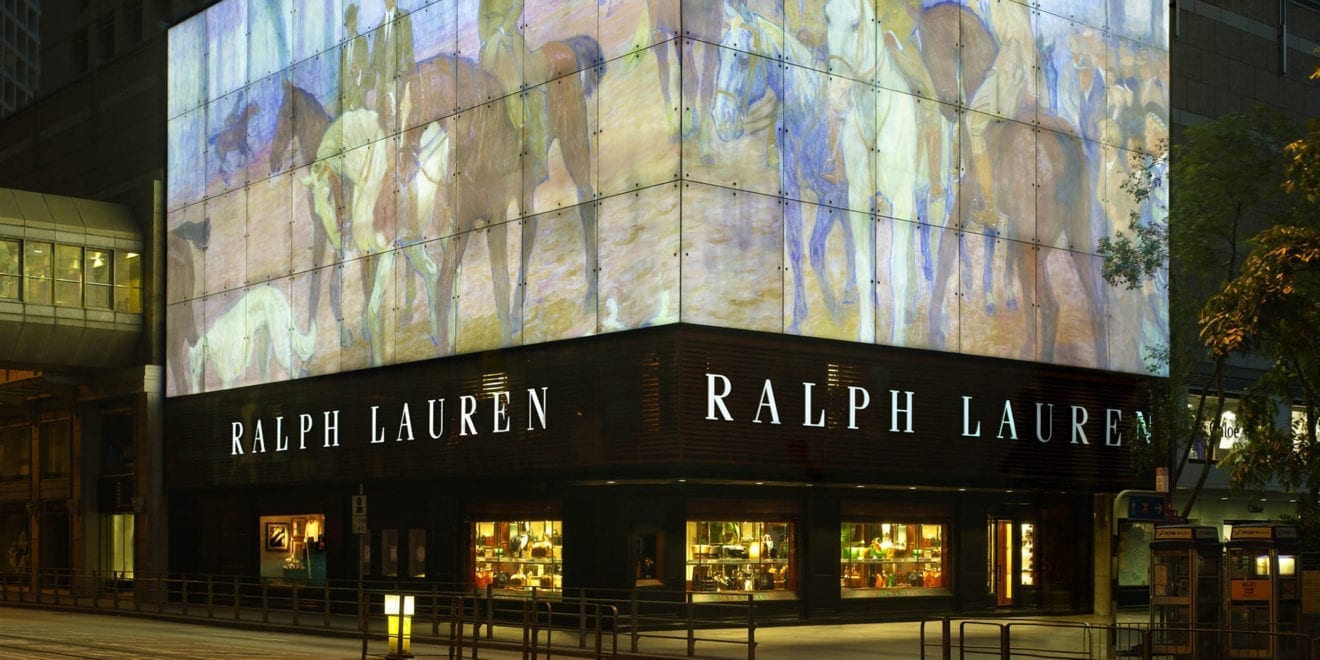
    Closure of Ralph Lauren Hong Kong flagship store

    “We are in the midst of transforming our presence in China, a region that we believe will become an important driver of growth for us over the long term,” Ralph Lauren said in 2012 after the fashion conglomerate of which he was then chief executive announced plans to open 60 stores in greater China by 2015.

    A year later, Ralph Lauren launched its first men’s flagship store in Asia in the Landmark Prince’s in Hong Kong’s Central district, and in October 2014 it opened an enormous “mansion” store at the Lee Gardens complex, presenting accessories, watches and jewellery as well as men’s and women’s fashions.

    Fast forward two years, and the 20,000 sq ft store in Causeway Bay is no more, having closed overnight late last week.

    Contacted for comment about its abandonment of the doubtless expensive space in the Lee Gardens, a representative of the brand said the closure was “part of our strategic and financial plan”, adding: “We are redeploying assets to focus on new concept stores and transition away from unprofitable formats and locations.”

    We are redeploying assets to focus on new concept stores and transition away from unprofitable formats and locations

    Ralph Lauren spokeswoman

    Ralph Lauren is “combining men’s and women’s flagships in the recently renovated Prince’s Building location, as well as remaining focused on providing our customers with the authentic style and luxury shopping experience they expect from us,” the spokeswoman said.

    The move is part of a new strategy from Stefan Larsson, who worked for Swedish fast-fashion retailer H&M for 15 years and who replaced Lauren as chief executive in late 2015 (Lauren remains executive chairman and chief creative officer). The restructuring will, according to reports, cut over 50 stores and 1,000 jobs worldwide and save the publicly traded company between US$180 million and US$220 million a year. Its share price has been under pressure in the past 12 months, twice falling below US$85. Ralph Lauren shares closed at US$108.19 on Monday, down more than 9 per cent on their US$119.59 close on December 7, 2015.

    Ralph Lauren’s sudden exit from its Causeway Bay flagship store is the latest high-profile fashion closure to have occurred or been flagged in 2016. American fast-fashion label Forever 21 has announced it will close its multi-storey Causeway Bay flagship store. British label Paul Smith closed its Times Square store and Abercrombie & Fitch is set to leave its prime location in the Pedder Building in Pedder Street, Central – although, with a flailing brand reputation, poor sales and that famous HK$7 million monthly rent to pay, the move by Abercrombie & Fitch came as no surprise. Italian luxury clothing and accessories label Tonino Lamborghini also shut down more than 10 stores and in-store counters in the city earlier this year.

    Abercrombie’s Pedder Street closure will leave it with no stand-alone stores in Hong Kong, an effective withdrawal from the market, following on the closure of some 50 stores in the US in 2016.

    Although the “umbrella revolution” protests in 2014 that were a factor in a downturn in Hong Kong’s retail sales have long ended, political turmoil continues and visitor numbers, having dropped, have not fully recovered. Competition for high-spending Chinese consumers has been stiff, with destinations such as Japan, South Korea, Milan and London stealing some of the traffic from Hong Kong.

    The city’s retail sales dropped 10.5 per cent in the first half of 2016, their worst performance since 1999.

    Still, for all the negative news there are nuggets of hope. Italian brand Versace is opening a huge flagship store opposite the Landmark in Central next year, and mega brand Louis Vuitton is revamping its Hong Kong stores and continuing to invest in the city. Louis Vuitton chief executive and chairman Michael Burke told me a few months ago that “the leader in the market still believes in Hong Kong”.

    However, Louis Vuitton and Versace are definitely in the minority.

    With little sign of major recovery, Hong Kong’s economic outlook uncertain and retail sales continuing to fall, the fashion industry is on tenterhooks and braced for tougher times ahead. Since I wrote about Gucci’s rent dispute with its landlord Hongkong Land in 2015, there have been a spate of big-brand store closures, and threats by more prestige brands to shut up shop if rents aren’t adjusted.

    A few agile, smaller brands may exploit their departure, and subsequent rent drops, but times continue to be tough for the majority. Ralph Lauren probably won’t be the last big brand to close an expensive Hong Kong flagship store. Swire Properties chief executive Guy Bradley said in August he saw no signs of a retail turnaround.

  • Marie France Van Damme Opens Second Boutique in Hong Kong

    Marie France Van Damme Opens Second Boutique in Hong Kong

    Marie France Van Damme, the Hong Kong-based company known for its globally influenced line of luxury resort, swim, and ready-to-wear, announced today the opening of a seventh boutique in December 2016. Located in Hong Kong’s Elements shopping mall in Kowloon, the new store will mark Marie France Van Damme’s second retail location in Hong Kong, where the designer has lived for more than 30 years. The company opened its very first store in Hong Kong’s acclaimed International Finance Centre (IFC) mall in September 2013. 

    Situated on the second floor (Shop 2109) of the Elements shopping mall, within the International Commerce Centre (ICC), on 1 Austin Road West in Kowloon, the 700-square foot boutique will open alongside such brands as Gucci, Chanel and Prada and include Marie France Van Damme’s extensive luxury resort line. The ICC is Hong Kong’s tallest building and also houses The Ritz-Carlton and W Hong Kong. Incorporating Marie France Van Damme’s signature aesthetic, which blends subtle Asian influences and elegant simplicity, the boutique will feature teak wood, bronze panels, and embossed crocodile leathers with textiles and finishes that can be found in the designer’s home as well as her flagships in Hong Kong and London.

    The ICC’s waterfront location on Victoria Harbour, across from the IFC, suits its important role in the city in many ways. Feng shui teaches that mountains govern people, water governs wealth. The special placement of these skyscrapers is said to channel positive energy for health and prosperity. The shopping mall’s design, and its name, Elements, refer to the feng shui elements: wood, fire, earth, metal, and water. With a direct train linking Elements to Guangzhou, the new boutique will offer a unique luxury shopping experience in one of Hong Kong’s latest attractions on the Kowloon side of the city.

    As Marie France continues to expand her presence worldwide focusing on cities that not only inspire the designer, but also appeal to her sophisticated, jet-set clientele, Marie France Van Damme will celebrate the boutique opening with several special events in Winter 2016 and introduce a new in-store campaign photographed in Hong Kong by Herbert Ypma. The campaign will feature the new Resort 2017 collection, a return to the glamorous roots of resort wear with its muted palette of silver and nude, hand embroidery and opulent fabrics; from French lace to metallic-toned Italian weaves and featherweight Chinese Silks. 

    The company currently has 100 retail locations in some of the world’s most desirable places. Marie France Van Damme opened its first store in the fall of 2013 at the acclaimed International Finance Centre (IFC) in Hong Kong, a second in the summer of 2014 in Bangkok’s esteemed Mandarin Oriental, third and first European boutique in 2014 in London’s Brompton Cross neighborhood, and fourth boutique in the summer of 2015 in Phuket, Thailand. In November 2015, Marie France Van Damme introduced a fifth branded boutique in Singapore’s Takashimaya Shopping Centre and sixth retail location in Phuket in July 2016.

    Made in Hong Kong & South China

    Marie France Van Damme is proud of the production capabilities it has built for itself in the past 30 years. With couture and tailoring facilities in-house and embroidery produced across the border in China, every production piece is fitted and quality verified by Marie-France to ensure that the Marie France Van Damme label fulfills the highest standards in the industry.

    About Elements Shopping Mall/Hong Kong

    Offering over one million square feet of pure shopping experiences, the Elements shopping mall is located in Hong Kong’s tallest building the International Commerce Centre (ICC) on the Kowloon side of Hong Kong. A lavish world offering of shopping, dining, art and entertainment, Elements shopping mall is located next to Hong Kong’s most famous attraction Sky100 Hong Kong Observation Deck and takes a new approach to Hong Kong’s shopping environment and is themed after the five Chinese elements. The five elements are Metal (Luxury brands and world-class dining), Fire (Entertainment), Water (International cuisine), Earth (Fashion) and Wood (Health, Beauty and Lifestyle) whereas each zone is individually designed. Elements boasts a range of sought after brands, dining options, an ice rink and a 1,600 capacity cinema –  currently larger than any movie theatre in Hong Kong.

  • A new modern lifestyle luxury fashion event comes to Hong Kong

    A new modern lifestyle luxury fashion event comes to Hong Kong

    We are proud to present the inaugural evening of “FELICIA”, a trendy new fashion evening in collaboration with Marc Jacobs and Moët & Chandon taking place  between PLAY and STUDIO clubs Hong Kong.

    “FELICIA” will be working in collaboration with Marc Jacobs for the launch of his new Resort 2017 collection in Hong Kong at a standout event. Conceived for local and visiting fashionistas, Felicia is specifically geared to these discerning customers needs providing a trendy, light hearted yet stylish evening.

    Generously sponsored by Moët & Chandon, who will be using this event as a showcase for their latest Moët Rosé Impérial Limited Edition With Flamingos, a  daring departure from their iconic bottle design. The evening is sure to dazzle as much as their new bottle.

    “FELICIA” was conceived to cater to the ever growing crowd of young trendy professionals working across the fashion, design and creative industries in Hong Kong. A place to meet, socialise and network “FELICIA” represents what it means to be a trendsetter in a modern age, uniquely positioned to attract the right crowd, we aim to please. Toungue-in-Cheek.

    As the first collaboration of many more to follow, we will celebrate the evening with smooth sounds from DJ Miya and DJ Patrick Rizarri, starting the evening off in the intimate STUDIO serving their signature cocktails before moving on as the party grows into the larger PLAY, which will be lavishly decorated by Marc Jacobs, inspired by their 2017 collection. Exclusive special edition Marc Jacobs gift bags will be given away to distinguished guests with table sales.

    Marc Jacobs is a well known international fashion designer originating from New York City, creating trendy wearable mens and womens clothes and accessories that often feature bright colours or fun motifs. #marcthenight

    Moët & Chandon is a french fine winery and a co owner of the luxury goods company LVMH. Creating some of the world finest champagnes since 1743, the company has  a rich history of heritage and luxury. #openthenow

    PLAY and STUDIO are two prestigious clubs and event spaces in Hong Kong with a focus on good music and the finest drinks the venues feature state of the art Matrix lighting and D&B sound equipment. #hifelicia

  • Fashion franchises are a popular trend in Vietnam

    Fashion franchises are a popular trend in Vietnam

    At a one-day event held last week at the japan External Trade Organisation (JETRO) Office in Ho Chi Minh City, a group of more than 10 Japanese fashion giants introduced their wares to potential Vietnamese partners. These firms include Isato Design Works; In Design Lab; M-Trading, Inc; Kobe Leather Cloth Co., Ltd.; T-Three Co., Ltd; and Sachiyo Hayashi Beauty Laboratory Co.; Ltd. They all aim to open franchise stores in Vietnam in the future.

    This event was the first of its kind held by JETRO Office in Ho Chi Minh City, targeting Vietnamese companies which have already organised franchising deals or are interested in such deals in the future. In total, 30 Vietnamese firms attended.

    Maison Fashion Group and Imex Pan Pacific (IPP Group) are the most prominent Vietnamese firms to form franchise deals with international brands, but more look to be on the way.

    In recent years, Japanese firms have invested in many service-related projects in Ho Chi Minh City. This market is expected to develop even more in the future. “In addition, Vietnam is home to specific regulations on foreign investment and trading habits, thus penetrating this market via co-operative agreements with local partners is an optimal choice”, said Teramoto Ukai, a JETRO official.

    Japanese electronic products and consumer goods have long been famous in Vietnam for their quality. And now, Japanese firms want to tap into the local fashion market, which is growing at an annual rate of 10%-15%.

    Miniso, a leading Japanese lifestyle brand, is one of the latest firms to connect with Vietnamese market. In April 2016, Miniso signed a franchise deal with le Bao Minh Group.

    “Vietnam has growing consumer demands, thanks to rising incomes and [interest in] global trends. In addition, Vietnam is considered to be one of the 10 Asian retail markets with the fastest growth. The important thing is how to select brands and partners to cash in on the potential”, said Le Thi Ngoc Hai, chairwoman of Le Bao Minh Group.

    Miniso, which has been franchised successfully in the Republic of Korea, Malaysia, China, the Philippines, and Thailand, opened its first three stores in Hanoi in August 2016. It plans to have 13 stores in-country by the end of 2016, between Hanoi, Ho Chi Minh City, Danang, Nghe An, Can Tho, and Haiphong, Hai added.

    This franchising path follows a greater franchising trend in Asia. Along with the food and beverage sector, healthcare, education, and retail, fashion in Vietnam has attracted many famous global brands.

    The UL’s Monsoon Accessorize entered the Vietnamese market in 2009 after signing a franchise deal with Maison, and has since opened three stores nationwide. Spain’s Mango, which also has Maison as its franchise partner, opened its first local Mango store in 2004 and now has 10 stores in Ho Chi Minh City and Hanoi.

    In 2011, the UK’s Karen Millen entered Vietnam in partnership with Maison, and now has stores in Hanoi and Ho Chi Minh City. That same year, France’s Christian Louboutin entered the local market, with one store in Ho Chi Minh City.

    Singapore’s Charles & Keith and the UK’s Topshop also appeared in Vietnam via franchise deals. Charles & Keith now has seven stores in Vietnam after six years in the local market, while Topshop has one store in Ho Chi Minh City. In another case, IPP Group, owned by Jonathan Hanh Nguyen, has also been a favoured franchise partner for international fashion groups, including Italy’s Bulgari S.p.A., the US’s GPS Strategic Alliances with Gap and Banana Republic, and the UK’s Warehouse. They each have opened three stores in Vietnam.

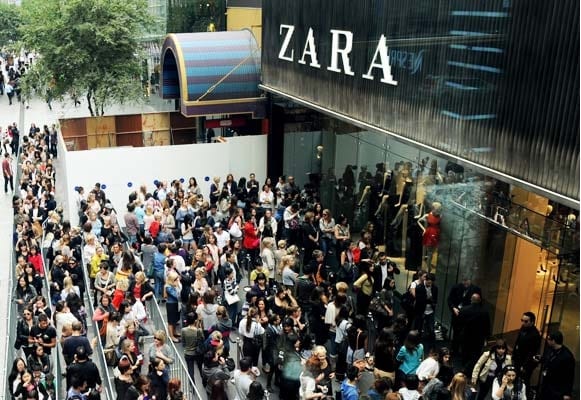
    Zara, a famous Spanish clothing and accessories retailer, officially opened its first store in Vietnam in early September 2016. The opening was wildly successful- on its opening day, it chocked up around VND5.5 billion (US$251,000) in revenue.

    According to a source from Zara, it plans to open a chain of seven stores in Vietnam in the future, including two in Hanoi in 2017.

  • China’s Shang Xia reveals five-year travel retail plans

    China’s Shang Xia reveals five-year travel retail plans

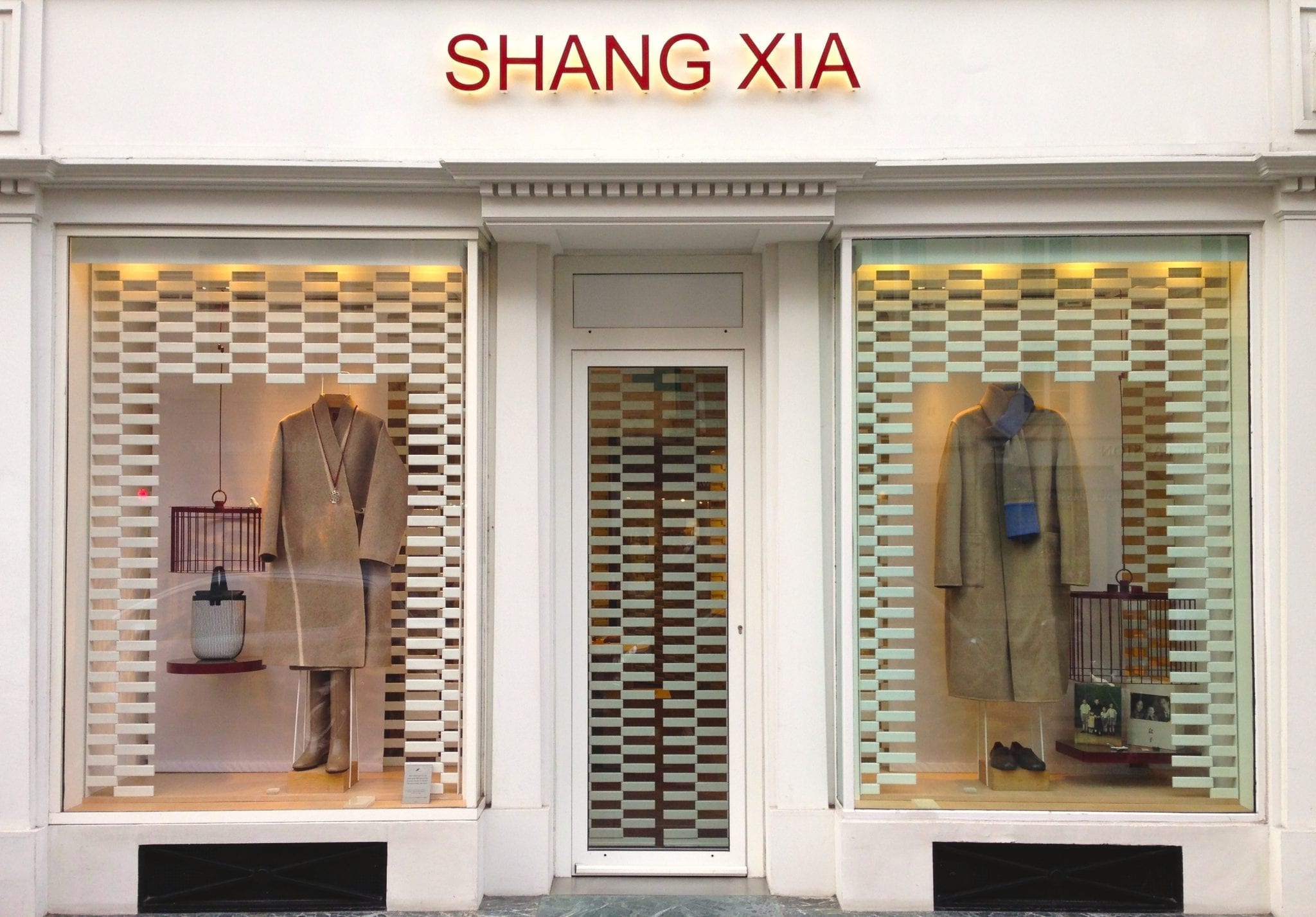
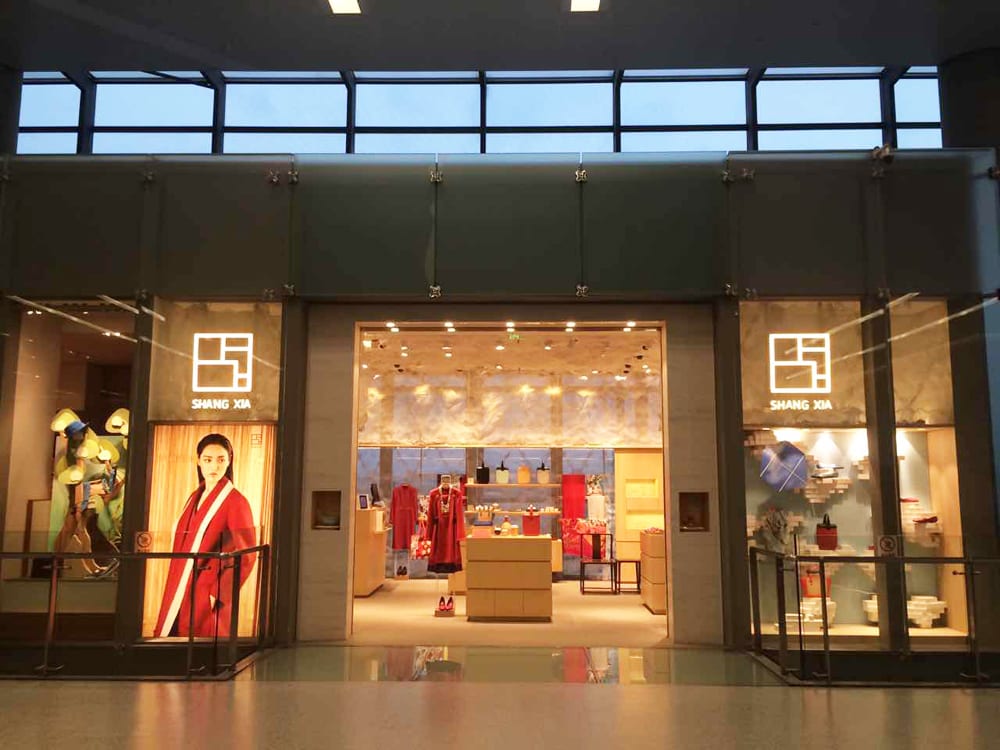
    Chinese lifestyle, home and fashion brand backed by Hermès, Shang Xia has confirmed that it has big ambitions for the travel retail channel and hopes to open new standalone boutiques at Beijing, Heathrow and Hong Kong international airports in the next five years.

    Tina Priscilla Tam, the brand’s Vice President, Travel Retail and Wholesale Business for Asia Pacific told TRBusiness that she believes that travel retail is the ideal channel to communicate the brand’s message to travellers ‘who value and appreciate the beauty of the culture’.

    “Shang Xia’s strives to preserve China’s fading traditions of craftsmanship and re-evaluates the tradition in the context of contemporary lifestyles,” says Tam. “China’s great heritage of technical ingenuity shimmers with potential.

    “Wooden furniture; bamboo woven on porcelain; cashmere felt; eggshell porcelain…These remarkable materials are transformed by the CEO and creative designer – Qionger Jiang. Her inspiration embodies both beauty and utility.

    BRIDGING EAST AND WEST

    “’As above, so below’; the translation of Shang Xia is simple, but profound. It speaks of heritage and construction; of intangible bridges, which link tradition and the present; east and west; art and lifestyle; human and nature.”

    Shang Xia has confirmed that it has big ambitions for the travel retail channel.

    Tam believes that Hong Kong Airport is a perfect location for the brand to open a standalone boutique. “Hong Kong is one of the most popular destinations for international tourists,” identifies Tam.

    “A place where ‘east meets west’, reflecting the cultural mix of the territory’s Chinese roots with influence of foreign cultures. A good standpoint for the brand to transmit the message of beautiful Chinese heritage and tradition to the world.”

    Shang-Xia-Hongqiao-Airport

    Shang Xia boutique at Hongqiao Airport.

    Shang-Xia-Shanghai-flagship

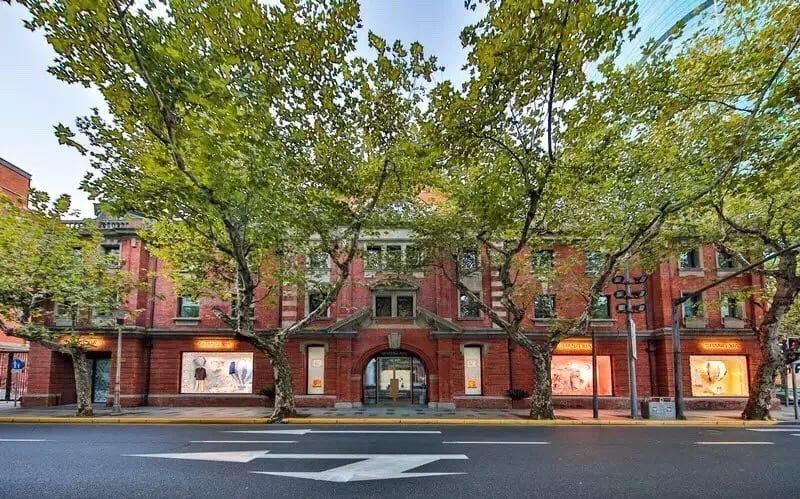
    The flagship Shang Xia store in Shanghai.

    London Heathrow is also on the wish list. “Travel retail is a window to the world. With the dynamics of the channel, it is true that some brands consider it as a sixth continent.

    “They have regular travellers who enjoy discovering new and inspired ideas and culture.”

    GLOBAL APPEAL?

    The brand is keen to relay that just because it was born in China, does not mean that it only appeals to one market, but can appeal to those of all nationalities ‘inspired by the preservation of beauty’.

    Shang-Xia-Taiwan-3

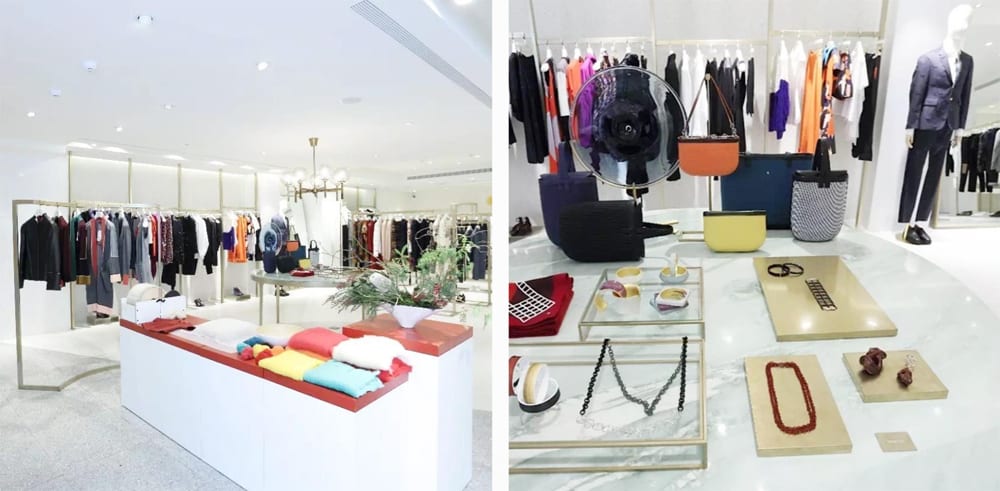
    The brand offers cross-category merchandise from homeware, to clothing and jewellery.

    The brand already boasts boutiques in Paris, Shanghai and Beijing (domestic). “Apart from the above locations, Shang Xia has a partnership in Taiwan where it has already opened two shop-in-shop concept stores in August [with the Shankong group],” says Tam. “The next step will be Hong Kong in January 2017.

    “We focus not only on destinations for Chinese travellers. We review destinations and partners who understand the brand and share the same core values.”

    The brand will open a new standalone store at Beijing Airport’s Terminal 2 in Q2 2017, building on its success Hongqiao Airport.

    TRUST IN TRAVEL RETAIL

    “The successful story gives us the confidence and trust in travel retail; a channel that allows us to share the values of the brand to a wider population and other nationalities,” adds Tam.

    Shang-Xia-Taiwan

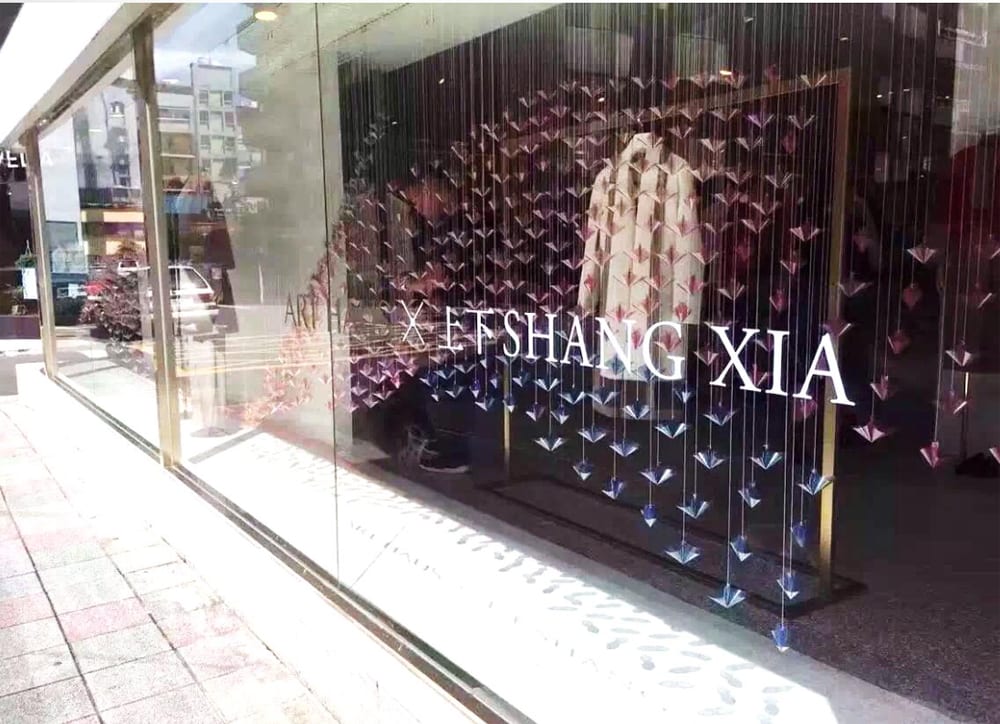
    Shang Xia ‘Art Haus’ boutique in Taipei, Taiwan.

    “We believe Beijing Airport T2 is the next important step for us to open in the capital city’s main travel gateway. Of course, we will explore other Chinese airports.”

    The Beijing store will carry Ready to Wear, costume jewellery, tea-ware, and home ware. Although the company doesn’t currently merchandise these categories in separate boutiques it is open to new concepts.

    “We are not limiting ourselves and we are happy to explore new concepts to better serve our customers.”

  • DFS Group Unveals Exclusive Pre-Launch of Bulgari Jewelry Collection in Stores Worldwide

    DFS Group Unveals Exclusive Pre-Launch of Bulgari Jewelry Collection in Stores Worldwide

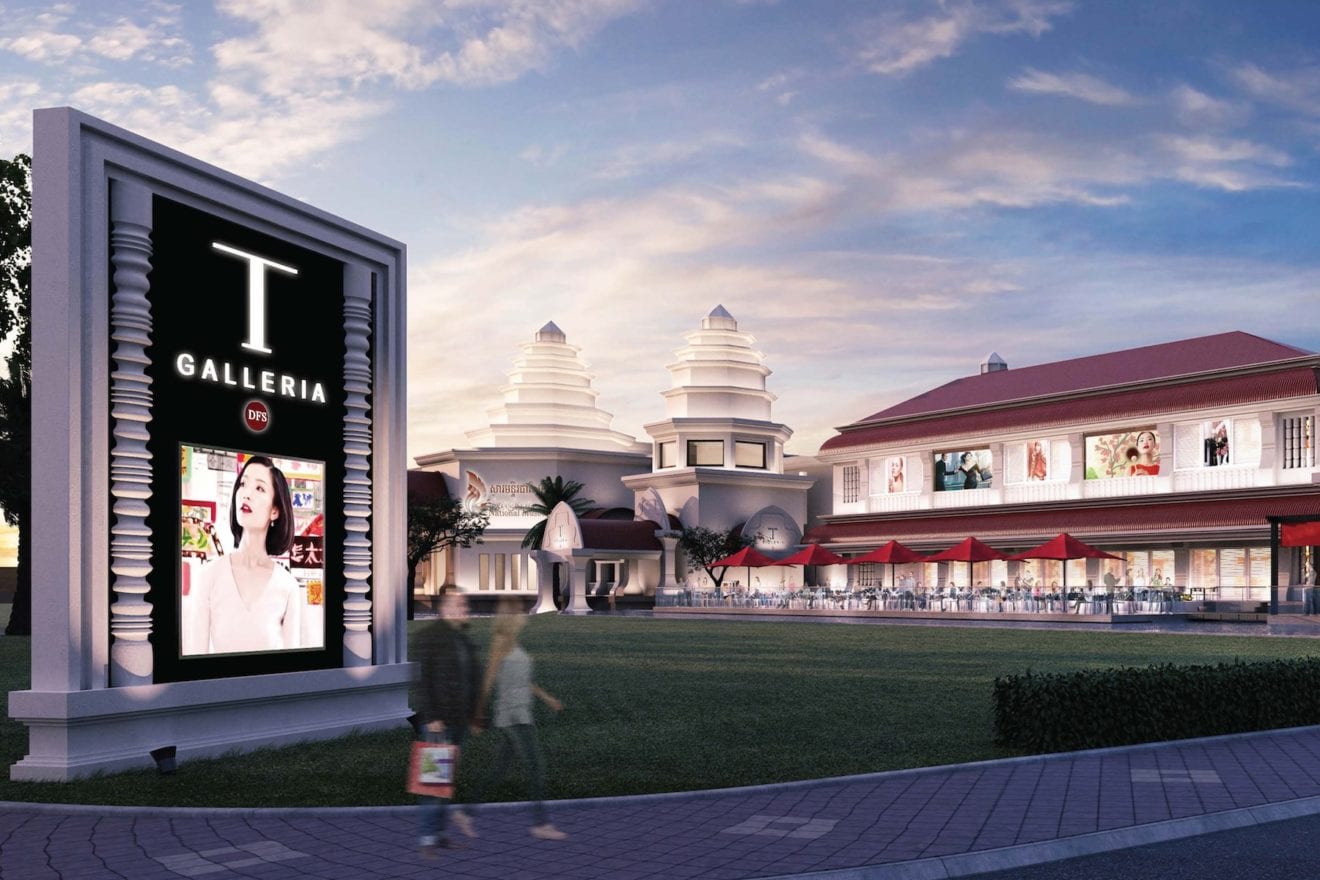
    DFS Group, the world’s leading luxury travel retailer, is excited to announce the pre-launch of an exclusive BVLGARI-BVLGARI collection by Italian luxury jewelry brand Bulgari, which will be available only at DFS and T Galleria by DFS stores beginning this holiday season until October 2017. The specially created, one-of-a-kind jewelry collection includes necklaces and bracelets with signature double-sided pendants – one side featuring a Carnelian stone and the other side a Mother of Pearl. With the two contrasting sides, the pendants offer travelers a piece they can interchange according to mood, outfit or occasion.

    “We are honored to work with our long-standing partner Bulgari to present our customers with an exclusive set of one of their most iconic jewelry designs,” said Christophe Chaix, Senior Vice President Fashion, Watches, Jewelry and Accessories, DFS Group. “In the coming holiday season, we look forward to exciting our customers with a jewelry set that strongly resonates with their preferences, while elevating their gifting experience with something only DFS can offer.”

    The BVLGARI-BVLGARI collection, an emblematic favorite for over four decades, became the ambassador of Bulgari’s tradition of luxury, quality and the finest Italian design. This particular exclusive rendition of the BVLGARI-BVLGARI collection aims to excite and attract customers seeking a limited edition for the holiday season.

    The Carnelian in red on one side of the pendant symbolizes happiness and joy and is always the most popular color among Chinese shoppers. In Western culture, this color resembles an iconic Christmas color reminiscent of holly berries. On the flipside, the Mother of Pearl, symbolizing purity with a hint of feminine glamour, is one of the four imperial colors classic to the brand that magnifies the ever modern style of the BVLGARI-BVLGARI collection.

    The exclusive BVLGARI-BVLGARI line is now available at all DFS Bulgari boutiques worldwide, except in Abu Dhabi.

  • Burberry cuts product lines to focus on newest fashions

    Burberry cuts product lines to focus on newest fashions

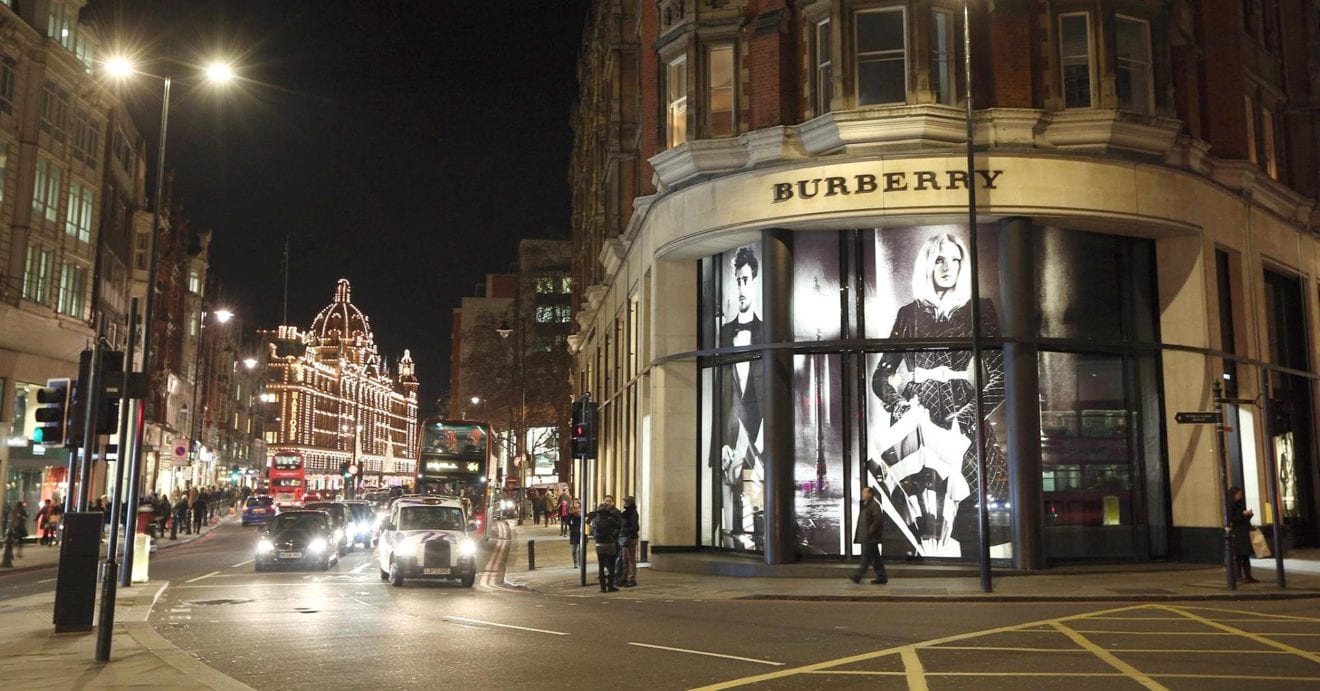
    Burberry is cutting between 15 and 20 percent of its product lines in a quest to focus on its newest ranges as it battles to attract shoppers in a volatile luxury goods market. The U.K. luxury-goods maker reported a 24 percent drop in first-half profit that met analysts’ estimates, but failed to match rivals that reported better-than-expected results.

    While luxury brands have been struggling with slowing growth in Asia, a drop in tourist spending in Europe following a series of deadly attacks and competition from fast-fashion chains, Burberry has been hit particularly hard. Its adjusted pretax profit fell 4 percent to 146 million pounds ($182 million) in the six months through September, in stark contrast with contrast with those of LVMH, Kering SA and Hermes International SCA, which all beat estimates in their latest reporting periods.

    The company had already announced a 4 percent drop in half-year sales to 1.16 billion pounds last month as weak demand in some overseas markets offset a surge in sales in its British home as tourists took advantage of a lower pound.

    The brand, which recently removed longstanding  creative director Christopher Bailey from his additional role of chief executive offer, bringing in Marco Gobbetti, the former CEO of Céline to hand the business/operational side of the brand. Additionally, Burberry announced in February that it plans move away from the traditional model of presenting seasonal ranges months ahead of their appearance in store, in favor of two collections a year that would be available in shops immediately.

    Finance chief Carol Fairweather said on Wednesday the company was cutting back on product lines ahead of the key Christmas trading period and would give greater prominence to its newest products, such as the bridle bag that was a top seller from its September runway show. “We are delighted with everything we have in place for (the) festive (season),” she said in a statement.

    Shares in Burberry, along with other luxury groups such as LVMH, fell on Wednesday after Donald Trump’s victory in the U.S. presidential election added to uncertainty over prospects for the global economy, analysts said. Burberry makes about 20 percent of its sales in the United States.

  • Changi Airport Group issues tenders for T3 Fashion & Jewellery

    Changi Airport Group issues tenders for T3 Fashion & Jewellery

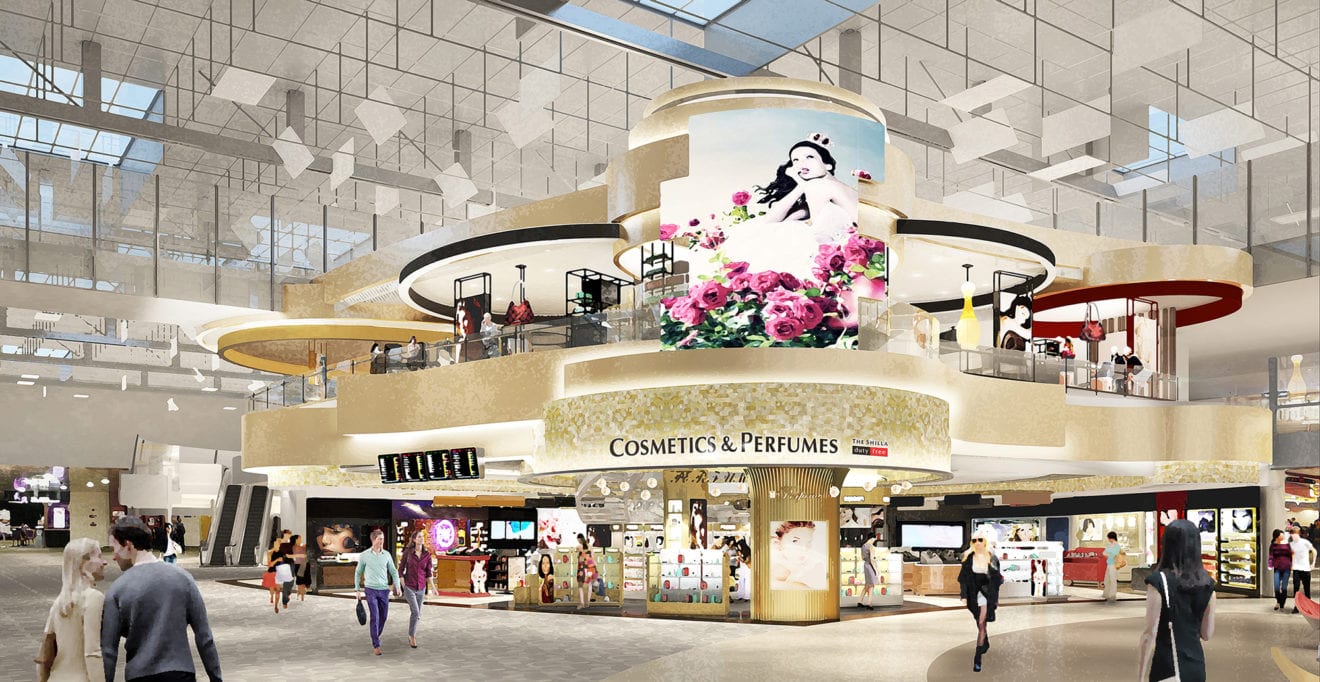
    Changi Airport Group (CAG) has issued retail tenders across fashion and jewellery categories, as well as for a short-term tenancy shop.

    CAG has opened two individual commercial opportunities in fashion, in search for established mid-price fashion names to operate at the terminal three North departure/transit lounge, spanning 94sq m and 41sq m respectively. The operators will run the units for three years between July 9 2017 to July 8 2020.

    One retail unit will be designated for a jewellery name to operate a 35sq m store concession at T3’s South departure/transit lounge. The three-year tenancy contract will also begin from July 9 2017 to July 8 2020.

    The airport operator stated it was searching for “unique and exciting mid-price fashion brands and concepts as well as unique and exciting jewellery brands that are currently not represented at terminal three of Singapore Changi airport that will inject buzz to and differentiate the retail offerings at Singapore Changi.”

    This is in twine with a short-term tenancy shop totalling 21sq m at T2 North departure/transit lounge, with a tenancy period of one year from May 20 2017 or upon the date of physical handover of the premises to the successful operator. The airport said all product categories may be considered, with the exception of liquor and tobacco and perfumes and cosmetics concepts.


  • Swedish retail giant H&M opens 18th Philippines Store in Centrio

    Swedish retail giant H&M opens 18th Philippines Store in Centrio

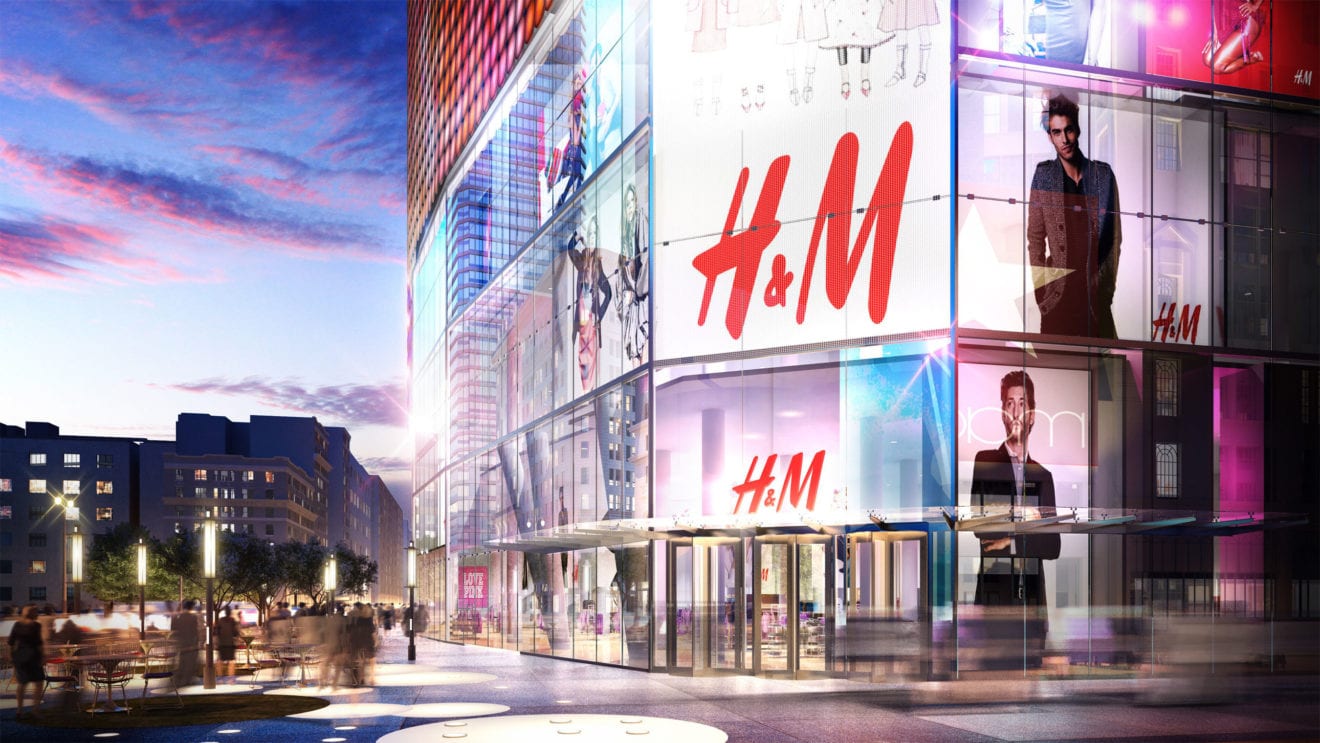
    Swedish retail giant H&M Hennes and Mauritz, Inc. has opened its 18th store in the Philippines at Ayala Centrio Mall in Cagayan de Oro City.

    H&M Country Manager for South East Asia Fredrik Famm leads the countdown for the ribbon cutting of their Centrio Store

    H&M Country Manager for South East Asia Fredrik Famm leads the countdown for the ribbon cutting of their Centrio Store

    Over a thousand excited shoppers queued as early as the day before to be the first to see only its second store in Mindanao after Davao.

    The crowd lines up to get a glimpse of the new store

    The crowd lines up to get a glimpse of the new store

    H&M Cagayan de Oro has more or less 1,500 square meters of store space and opens regularly from 10am-9pm.

    It carries a full assortment of H&M products including ladies, men’s, kids, shoes, accessories and lingerie, and also has complete sports, denim and underwear departments for both men and ladies.

    Ed Montalvan and other media are given a quick tour of the store prior to its 27 Oct opening by AList Dir Cybill Guynn (RMB, NPN)

    Ed Montalvan and other media are given a quick tour of the store prior to its 27 Oct opening by AList Dir Cybill Guynn (RMB, NPN)

    Alert environment-conscious shoppers will find an array of Conscious and sustainably-produced products, and will be delighted to avail of the option to donate used clothes for a discount voucher they can use for their next purchase under H& M’s Garment Collecting Program..

    Fredrik Famm, H&M Country Manager for South East Asia, sees a lot of potential in his assigned region, especially the Philippines.

    Fredrik Famm, H& M Country Manager for South East Asia, fields queries from the media with Danreb Mejia, H&M Head for Communications & Press

    Fredrik Famm, H& M Country Manager for South East Asia, fields queries from the media with Danreb Mejia, H&M Head for Communications & Press

    “By the end of the year we will have around 20 stores in the Philippines,” Famm said an exclusive media interview prior to the 27 October Centrio store opening. “We have big plans for the coming years given the country’s growing population, growing middle class, growing disposable income, and growing fashion interest.”

    “We’ve been in the Philippines for exactly two years since October 2014,” he said. “It’s been an amazing journey, we’ve been very well received, so we now have 18 stores in the country, it’s been a very quick expansion, and Filipino customers have embraced us in an amazing way.”

    The country’s robust economy has obviously been the driver for the store’s fast expansion.

    “We see a lot of potential in the Philippines, there is a lot of fashion interest, we see that segment is growing very quickly, and we see we have something to offer that is not yet fully present in the market,” Famm said. “We offer fashion, quality and price, and our products are made in a sustainable way. We think we can manage this mix better than most of our competitors.”

    H&M Centrio offers the same fashion at the same price you find in H&M stores all over the world

    H&M Centrio offers the same fashion at the same price you find in H&M stores all over the world

    H&M has sold out collections and there have been long queues whenever they open a new store. Apparently, fashion conscious Pinoys who’ve been abroad have been delighted to find the same merchandise at the same prices in H&M’s Philippine stores.

    “The fashion you see in Cagayan de Oro is the same that you can see in London, Paris, New York,” Famm stressed. We believe fashion is global and everything travels fast these days via internet and social media. We want customers to have the same experience when they enter our store in Cagayan de Oro as what they experience when they enter a store in Europe or US.”

    Thus, the chain has experienced sold out collections and long lines whenever they have opened a new store in the Philippines.

    Centro Mall Manager Natalie Mae Crisostomo (left) with Veronika Spanikova , H&M Construction Manager for South East Asia & Joy Tan, Construction Project Manager for H&M Philippines (photo by Mike Banos, NPN)

    Centro Mall Manager Natalie Mae Crisostomo (left) with Veronika Spanikova , H&M Construction Manager for South East Asia & Joy Tan, Construction Project Manager for H&M Philippines.

    “We want Cagayan de Oro customers to be able to find the same fashion in bigger cities in Europe and the US. We have the same collections everywhere and we build our stores the same way,” he added.

    Providing fashion for every age group at affordable prices has endeared the store to fashion conscious Pinoys eager to make their own individual fashion statements.

    “We believe customers are looking for the same fashion all over the world. Looking at the diversity that we have, everyone must be able to dress their own personality,” Famm said.

    “Every day you have new fashion arriving in the store, and that’s what makes us extremely competitive.  We want customers to find something new every time they visit us so customers should be able to come back every week and find something interesting.”

    Pinoy shoppers who’ve shopped in H&M stores all over the world will be further delighted to know they’re paying the same prices for the same merchandise they’ve been buying aboard.

    Souvenir shot with Danreb Mejia, H&M Head for Communications & Press

    Souvenir shot with Danreb Mejia, H&M Head for Communications & Press

    “We aim to have the same prices all over the world except for local differences due to customs duties, taxes, logistics, or exchange rates, but more or less we have the same price levels especially within the Philippines,” Famm assures.

  • Foschini to open three more outlets after Junction Mall entry

    Foschini to open three more outlets after Junction Mall entry

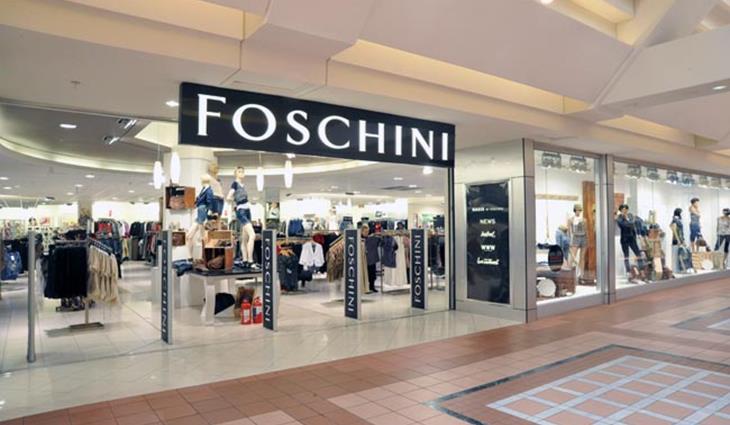
    South Africa’s clothing retailer Foschini Group has set its eyes on opening of three more outlets after marking its entry into the country with a branch at Nairobi’s Junction Mall.

    Foschini Group, which has 22 different retail brands under its label, has opened Sterns — a contemporary and classic Jewellery shop that targets individuals in the lower-middle, middle and upper income class — at the Junction Mall.

    The firm plans to open three additional stores — Foschini women’s wear shop, Markham targeting men and a second Sterns store — at the Village Market before the end of the year, with further plans to open 10 more next year.

    “Sterns store is our first entry into Kenya and the East African market. We’re bringing something fresh into a market that has for a long time been dominated by closed family businesses. We aim to cater to individuals in all categories,” said the Foschini Group Kenya area manager Isabelle Achila in an interview.

    The Fix and Exact fashion lines, Totalsports and Sportscene sports and street wear brands, AmericanSwiss — a jewellery line and @Home, a homeware and interior décor store, are other retail brands the group is looking to introduce in Kenya. Foschini’s entry is expected to create more than 100 jobs for locals.

    “We believe that Kenya is a strong emerging market with opportunities for growth. Our mission it to be the biggest retailer in Africa and we plan to introduce other brands that are doing well outside South Africa,” said Ms Achila.

    The group’s debut in the local market was scheduled to happen in 2015 but the delay in completion of the Two Rivers Mall where Foschini Group has booked 10 stores and the construction of the Village Market extension saw them push back entry dates. The firm had also embarked on an expansion drive in West Africa delaying its entry into the Kenyan market.

    “The reason why we have not rolled out as aggressively as we had anticipated and would want to is because the various places where we had booked space are yet to open and this has delayed our entry plans. We are specific when it comes to location and we were able to open our current branch at the Junction Mall because an opportunity we liked presented itself,” she said.

    Foschini Group deals in clothing, jewellery, accessories, sporting and outdoor equipment as well as homeware that target the middle and upper middle income markets.

    The group has a network of more than 2,100 stores in African countries that include Botswana, Nigeria, Ghana, Lesotho, Swaziland and South Africa. It also has an international presence with stores in Hong Kong, Mexico, Netherlands, Qatar and Switzerland, among others.

    South African brands are looking for markets outside the country to beat competition and grow sales from Africa’s growing middle class with disposable income.

    Edgars, another South African fashion chain retailer is also eyeing the local market, which is now billed as the second biggest retail market after South Africa.

    It is estimated that by 2020 Africa’s spending power will be Sh140 trillion ($1.4 trillion) up from Sh86 billion ($860 million) in 2008.

    Global players are now turning to emerging markets such as Africa for growth, attracted by rising disposable household incomes, fast economic growth and a young population, according a study by McKinsey & Co.

  • Korean Fashion Struts Authentic Style to Thailand’s Online Shoppers

    Korean Fashion Struts Authentic Style to Thailand’s Online Shoppers

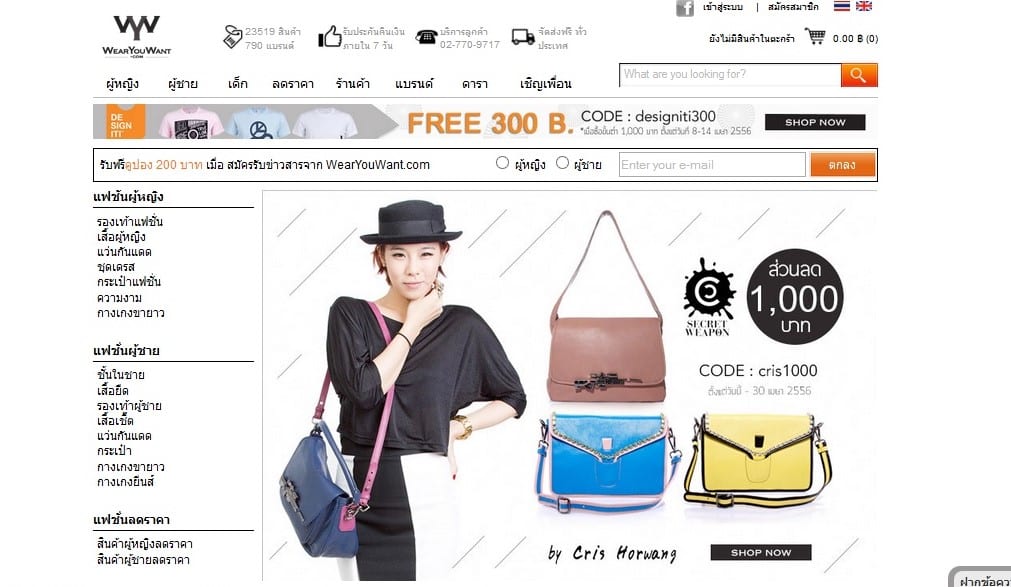
    WearYouWant, Thailand’s leading online fashion and beauty marketplace, is launching a premium, Korean fashion range in Thailand, designed and made in Korea, to satisfy the ever-growing love of Korean brands in the Kingdom. Developing a close relationship with online fashion house, Atria International Style, WearYouWant is sourcing authentic Korean brands, importing these for the Thai market from up-and-coming local Korean designers.

    Just as Korean pop music as captured a huge fan base in Thailand, there is high demand for Korean fashion too. The new Korean range of cool and stylish women’s apparel, accessories, bags and shoes, is to be showcased on WearYouWant. The launch, planned for December 2016, is big news for Thailand’s online shoppers. It is also a sign of growing focus from Korea on Thailand’s rapidly developing e-commerce market; the fastest growing in Southeast Asia.

    The WearYouWant collection is unique in Thailand and has been specially curated by fashion experts to assure quality and to appeal to the country’s online fashion-buying market who are actively seeking out Korean brands. Martin Toft Sorensen, Co-Founder and Co-CEO of WearYouWant confirms that this latest fashion collection launch is part of an ongoing strategy to understand and meet their customers’ needs and a response to the market in Korea too.

    Our decision to move forward with Korean brands is in part due to a general push for designers to expand beyond the saturated markets in Korea. WearYouWant is an ideal platform for this expansion as there is a great amount of passionate interest from our online shoppers for Korean fashions. We pride our success in being ahead of the curve with consumer trends and this is what makes our platform so vibrant, relevant and exciting.”

    This launch follows the Last Mile Fulfilment (LMF) Korea 2016 conference in September 2016, which Martin Toft Sorensen attended. The event focused on the attraction of Thailand’s solid e-commerce market and higher purchasing power for Korean brands looking to grow within Southeast Asia and succeed outside Korea’s competitive markets. Also clearly highlighted was the importance of fashion distributors in assisting Korean brands to spread out within the region and the value that this can bring to outside markets. The WearYouWant launch aims to add value to Thailand’s blossoming ecommerce market where demand is strong and expectations high.

    ATRIA STYLE (www.atriastyle.com), a powerful South Korean platform that sells contemporary fashion and beauty brands all over the world has been working closely with WearYouWant to fuel cross-border fashion and beauty relations in Thailand to build strong commerce presence between these two key retail luxury markets.

    Founder and CEO, Cindy Yun is optimistic about the future success of Korean fashion and beauty brands through the WearYouWant platform.  “Korean designer fashion is forward thinking, high quality and, in terms of production, there is a good lead time in creating output. This means that brands are stylish and affordable which greatly appeals to savvy Thai consumers. For designers looking to expand their collections outside of Korea, WearYouWant is a vital online lifeline and the e-commerce opportunity this launch entails will enable them to realize their true potential.”

  • Iconic Global Brand, Calvin Klein, Debuts on ZALORA

    Iconic Global Brand, Calvin Klein, Debuts on ZALORA

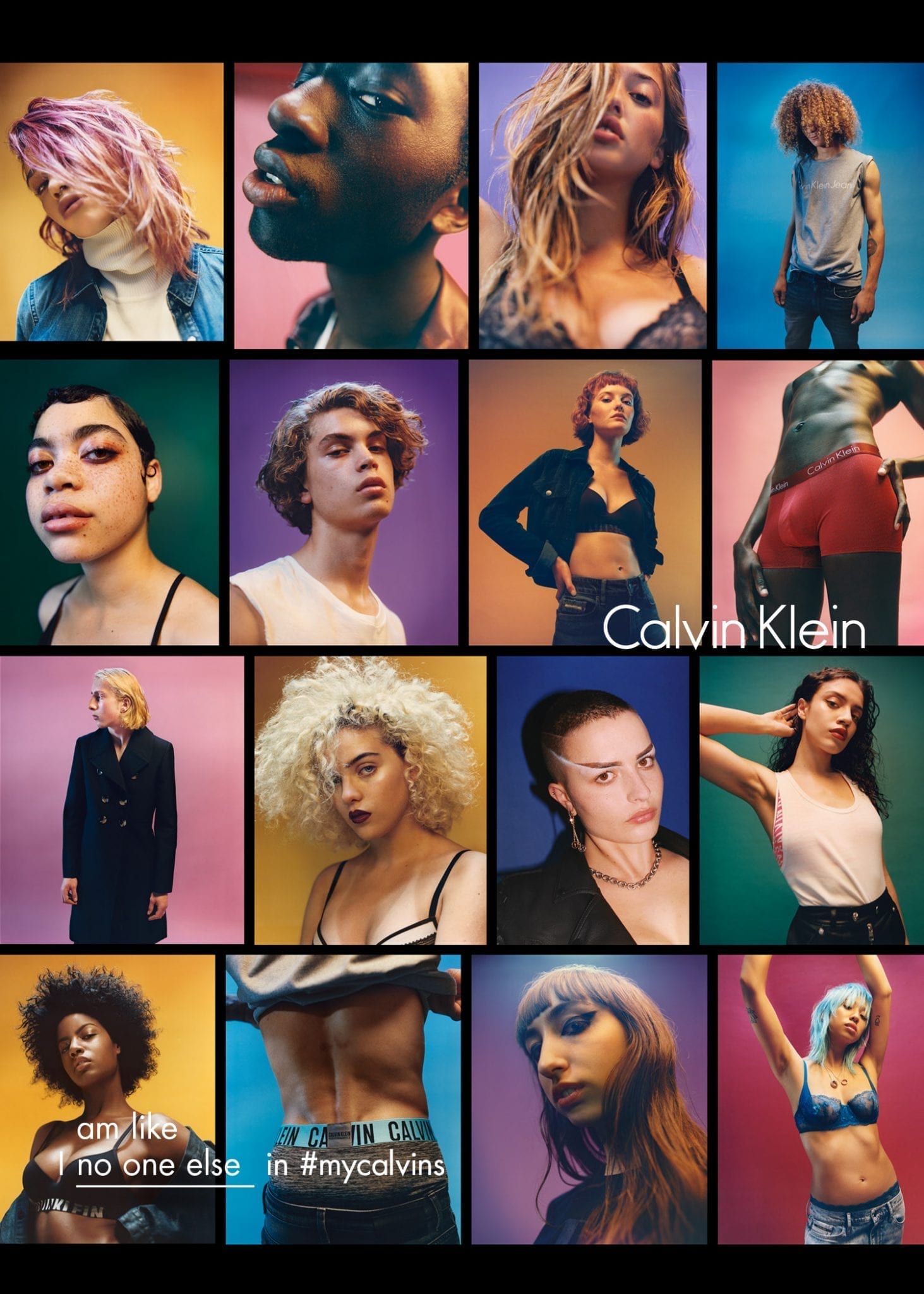
    ZALORA, Asia’s online fashion destination, today announced a partnership with iconic global lifestyle brand Calvin Klein to launch Calvin Klein Jeans, Calvin Klein Underwear and Calvin Klein Performance at ZALORA.com across the Asia region. This partnership significantly expands the distribution of Calvin Klein presence in five key markets including Singapore, Hong Kong, Taiwan, Malaysia and Philippines. Fashion-conscious customers from these countries can now buy their favourite Calvin Klein products on-the-go and at the comfort of their home at ZALORA website and Calvin Klein owned online store.

    ZALORA will launch the Fall 2016 season with Calvin Klein Jeans – the original designer jeans that exemplifies sexy, provocative and youthfulness; Calvin Klein Underwear – the first designer underwear that is modern, body conscious and sensuous; and Calvin Klein Performance – a contemporary and stylish athleisure wear. Offering over 300 assortment of product from womenswear, menswear, underwear, bags and small leather goods, ZALORA.com is a comprehensive one-stop online shopping destination for Calvin Klein fans.

    “We are thrilled to be launching Calvin Klein across all of our markets in Asia,” said Parker Gundersen, Chief Executive Officer of ZALORA Group. “Calvin Klein enjoys tremendous appeal across Asia and this launch will be an exciting enhancement to our brand portfolio. With strong partners like Calvin Klein, we remain well ahead of the competition in terms of product assortment and ability to serve the millions of consumers throughout Asia seeking trusted and convenient access to fashion online.”