Tag: Fashion

  • Amorepacific alligns on offline experiences for online shoppers

    Amorepacific alligns on offline experiences for online shoppers

    Amid difficult times for traditional offline retailers, Amorepacific is charting a new course for its operations across many of its most important brands. The goal is not simply to adapt to the so-called New Normal, but to embrace it with new and meaningful experiences for consumers.

    There is no doubt that the foot traffic in offline stores is falling sharply as more and more consumers find what they need via e-commerce. This long-term trend has accelerated due to the prolonged pandemic, and the beauty industry has not been immune. Many retailers have shuttered branches and shopping centers like Seoul’s Myeongdong district, which has long been a hub for attracting tourists from around the world, are experiencing unprecedented difficulties as tourists have stayed away.

    As Korea’s leading beauty conglomerate, Amorepacific has moved quickly to provide differentiated experiences for consumers, seeking to overcome the shock of the crisis with new distribution channels and strategies that embrace a combination of enhanced offline and expanded online approaches, while at the same time pioneering new markets overseas.

    In this new approach, the offline environment takes on an added role as an experience platform. More than just for buying products, it’s a place where customers can begin to explore a new world of beauty through new contents and services. Amorepacific’s aim is to create synergy between online and offline environments in creative ways that strengthen brand loyalty while also attracting new customers.

    “We know that consumer needs are changing and it’s time for us to embrace new and creative ways to approach them,” said Suh Kyung-bae, Chairman & CEO of Amorepacific Group, in his new year’s address, “Amorepacific continues to evolve but we will always focus on providing outstanding beauty experiences for our customers.”

    Amorepacific’s offline stores with outstanding beauty experiences

    • Amore Store Gwanggyo is an experience-based beauty store whare customers can meet and experience 40 brands and 2,000 products of Amorepacific. REFILL STATION opened in October 2020 at Amore Store Gwanggyo which enables customers to choose from 15 shampoo and bodywash products to refill recycled containers made from coconut shells. It is economical, environmentally friendly, and the contents are always at a discount from regularly bottled products.
    • Amore Seongsu is a place where customers can get to know beauty trend and experience Amorepacific’s latest beauty science and technology. BASE PICKER is a new service launched on April 6th at Amore Store Seongsu. Customers can create personalized foundation and cushion products from a choice of 2 textures, 2 product types and 100 colors. BASE PICKER was developed in collaboration with the Korea Advanced Institute of Science and Technology after conducting three years of research on skin tones and foundation colors. Tailored products are mixed on the spot with a special robot operated by patented technology in a fast and hygienic process.
    • IOPE lab is located in Seoul’s Myeongdong shopping district. It’s a place where customers can receive personalized measurement and genetic analysis of their skin type, and obtain personalized skincare solutions. Customers can also try the store’s personalized hydrogel mask service. Created with a 3D printer on the spot, the service received a 2020 CES Innovation Award.
    • FACEFIT by ARITAUM is located in Seoul’s Times Square Mall. Operated with professionally trained face-fit consultants, the store offers one-on-one personalized service optimized for each customer’s individual facial features. Customers can choose from key Amorepacific brands such as HERA, IOPE and HANYUL, and experience “face-only-fitness” as they learn how to exercise their facial muscles. The store also provides mini-makeup services and precise diagnosis of each customer’s skin problems.
  • Shiseido to sell beauty brands BareMinerals, Buxom, Laura Mercier

    Shiseido to sell beauty brands BareMinerals, Buxom, Laura Mercier

    Shiseido Americas is selling cosmetics brands, BareMinerals, Buxom, and Laura Mercier to AI Beauty Holdings Ltd, a newly-formed affiliate of private equity investment firm, Advent International. The terms of the deal were not disclosed.

    Upon completion of the transaction, Pascal Houdayer, the former chief executive of NAOS (Bioderma, Esthederm, Etat Pur) will serve as CEO of the standalone business.

    Launched in 1995, BareMinerals is a leader in mineral-based cosmetics; Buxom, created in 2007, is a colour cosmetics brand ranked among the top five US brands across various lip categories. Prestige makeup brand Laura Mercier was founded in 1996.

    “We are strong believers in the BareMinerals, Buxom, and Laura Mercier brands,” said Tricia Glynn, a managing director at Advent. “They are clear leaders in prestige beauty and are widely recognised for their quality, authenticity, and innovation, with differentiated products and devoted customers.”

  • Tiffany unveils new campaign “About Love” starring Jay Z, Beyonce

    Tiffany unveils new campaign “About Love” starring Jay Z, Beyonce

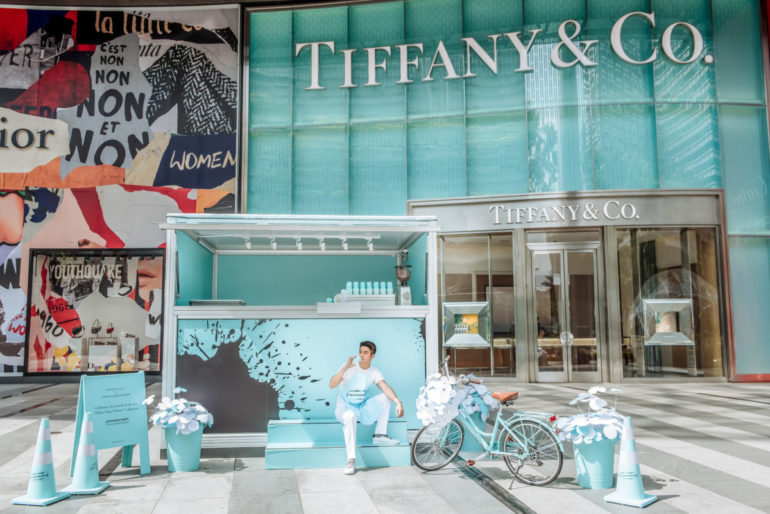
    Tiffany & Co. announced today that powerhouse couple Beyoncé and JAY-Z will star in its latest campaign celebrating modern love. Synonymous with the world’s greatest love stories since 1837, Tiffany’s debut of “ABOUT LOVE” marks the latest evolution of the luxury jeweler’s new creative direction. The campaign is the result of a close collaboration and a shared vision between both the Carters and Tiffany & Co.

    As the first time the couple has appeared in a campaign together, “ABOUT LOVE” is an exploration of connection and vulnerability. The Carters’ love story is illuminated by the iconic Tiffany Diamond and set against the backdrop of Jean-Michel Basquiat’s Equals Pi (1982). As part of a private collection from its creation until now, this campaign marks the work of art’s first public appearance, propelling Tiffany’s long-standing tradition of working with New York creatives forward. Ushering in a new brand identity, this campaign embodies the beauty of love through time and all its diverse facets, forging a new vision of love today.

    Worn in a campaign for the first time in history, the Tiffany Diamond weighs 128.54 carats and boasts an unprecedented 82 facets. Seen on Beyoncé throughout “ABOUT LOVE,” it is considered among the most important gemstone discoveries of the 19th century. Unearthed in 1877 in the Kimberley Mines of South Africa, founder Charles Lewis Tiffany purchased the rough diamond in 1878, solidifying the brand’s reputation as a diamond authority. House icons including designs from Jean Schlumberger and the Tiffany T collection are also featured throughout. Most notably, JAY-Z wears Jean Schlumberger’s legendary Bird on a Rock brooch, reconstructed as a pair of one-of-a-kind cuff links. Jean Schlumberger was best known for dressing high society’s elite in the 1960s and ’70s, so it is appropriate that his unmistakable designs live out his legacy on one of today’s greatest creative forces.

    A film by acclaimed director Emmanuel Adjei has also been created and features a musical performance of the classic song “Moon Rivers.” Made famous in the 1961 film Breakfast at Tiffany’s the iconic tune is reimagined with vocals by Beyoncé, captured by JAY-Z on a Super 8 camera. The couple selected the Orum House in Los Angeles to serve as the setting for the film, in which nostalgic flashbacks are interwoven with cinematic, dreamlike visuals. Basquiat’s Equals Pi appears once again as a common Tiffany Blue thread throughout the narrative. The accompanying “ABOUT LOVE” print campaign was shot by Mason Poole and styled by June Ambrose and Marni Senofonte.

    “ABOUT LOVE” reflects Tiffany’s continued support of underrepresented communities. As a part of the house’s partnership with the Carters, Tiffany & Co. is proud to pledge a USD $2 million commitment towards scholarship and internship programs for Historically Black Colleges and Universities (HBCUs). Additional details on this initiative are forthcoming.

    “ABOUT LOVE” launches globally in print on September 2. The accompanying film will launch on Tiffany.com September 15 and will be amplified through global media activations. The campaign will further unfold later this year with additional films created by acclaimed director Dikayl Rimmasch and second unit director, Derek Milton.

  • Adidas sells Reebok to Authentic Brands

    Adidas sells Reebok to Authentic Brands

    Authentic Brands has cemented its position as a major player in American retail after what one analyst described as a “massive acquisition” – the successful $2.456 billion bid for Reebok.

    Adidas confirmed the sale overnight after six months of negotiations with prospective bidders.

    Neil Saunders, MD of GlobalData, said Authentic Brands has proven its ability to turn around struggling brands like Aéropostale and so it will be confident that it can achieve a similar result with Reebok.

    But he warned the new owner needs to take a different approach to ensure Reebok’s future success.

    “If, under Authentic Brands, Reebok focuses less on competing with Nike and more on developing a credible brand that can be offered via its various stores and other third-party retailers it should be able to build sales. However, the market remains extremely competitive so coming up with a differentiated offer that has clear customer focus and a strong distribution strategy will be key to future success.”

    Reports emerged in May that Authentic had lodged a bid for Reebok. At the time the New York Post said the $1 billion fell far short of the $3.8 billion Adidas paid for Reebok five years ago and the $2.4 billion Adidas was thought to be seeking.

    Adidas CEO Kasper Rorsted said he believed the change in ownership would position the brand well for long-term success.

    “As for Adidas, we will continue to focus our efforts on executing our ‘Own the Game’ strategy that will enable us to grow in an attractive industry, gain market share, and create sustainable value for all of our stakeholders,” he said.

    Adidas acquired Reebok back in 2006. Saunders said the German company originally saw it as a vehicle with which to take on the might of Nike, especially in the US.

    “While Adidas did manage to restore Reebok to profitability it was far less successful in building a brand that was able to steal share and capture the hearts and minds of consumers. Part of the issue was a lack of clarity around what Adidas wanted Reebok to be. As a result, it was neither seen as the go-to brand for sporting professionals nor for those looking for athleisure fashion and style,” said Saunders.

    Adidas’ sale of Reebok for less than it paid for it – and after years of difficulty and disappointment – underlines the degree to which the brand’s equity has been eroded, he said.

    “The decision to sell should not solely be chalked up to the pandemic. Indeed, the footwear and sports apparel market has performed extremely well over the past 18 or so months.

    “However, the market is becoming much more competitive, with Nike and others doubling down on direct-to-consumer sales, brands like Lululemon eating up large slices of growth, and retailers launching a multitude of sporting own labels,” said Saunders.

    Jamie Salter, founder, chairman and CEO of Authentic Brands Group described it as “an honour” to be carrying Reebok’s legacy forward.

    “This is an important milestone for ABG, and we are committed to preserving Reebok’s integrity, innovation, and values – including its presence in bricks and mortar. We look forward to working closely with the Reebok team to build on the brand’s success.”

    The closing of the transaction is subject to customary closing conditions and is expected to occur in the first quarter of next year. Adidas intends to share the majority of the cash proceeds from the sale with its shareholders.

    When Adidas bought Reebok in 2006, the brand came along with the Rockport, CCM Hockey and Greg Norman brands, which were subsequently divested for €400 million (US$470 million at today’s exchange rate).

    In 2016 Reebok initiated a turnaround plan called ‘Muscle Up’ which saw the label significantly improve its growth and profitability prospects, according to Adidas.

    In March of this year, Adidas unveiled its 2025 ‘Own the Game’ strategy designed to significantly increase sales and profitability and build market share. As part of the process of developing that strategy, the company assessed options for Reebok, which in February led the company to opt to divest Reebok, rather than dilute its focus across two brands.

  • Esprit issues shock profit warning

    Esprit issues shock profit warning

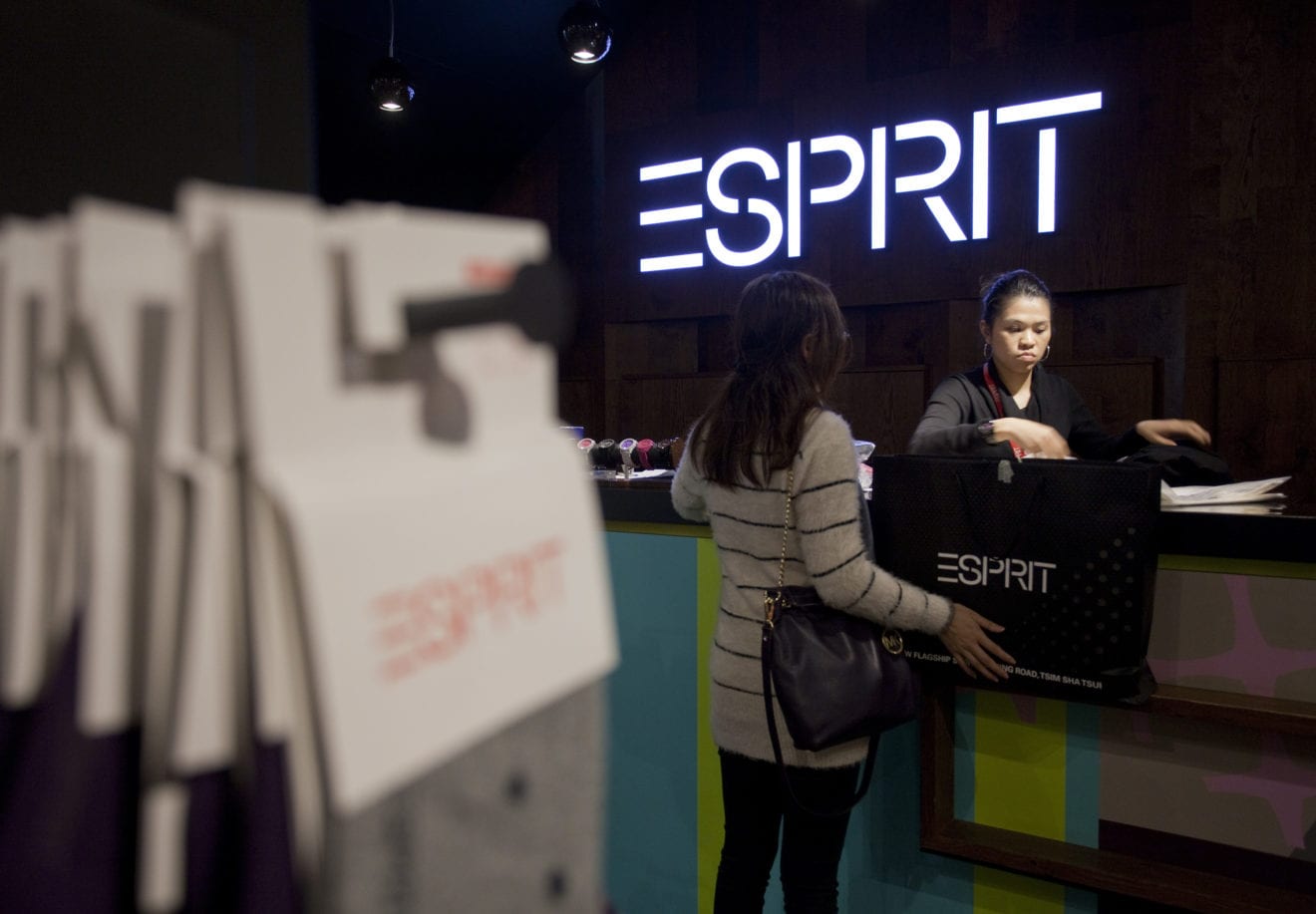
    Apparel retailer Esprit says it is on track to record its first profitable half year since the second part of 2017.

    In a positive profit alert filed with the Hong Kong stock exchange the embattled retailer – which lost US$463 million in the six months to June last year, mainly through writedowns – says it expects a profit of “not less than HKD 110 million” (US$14 million) for the six months to June this year. However, HKD 85 million ($10.9 million) of is due to currency-exchange gains.

    Sales for the half-year were down 6 per cent to HKD 3.8 billion (US$488 million).

    During the past three years, the company has slashed its store network, quit all Asian markets, culled staff and restructured its European operations under a form of bankruptcy protection to try to stem years of losses.

    Esprit’s acting executive chairman Christin Chiu said the reduction in sales was due to Covid-related lockdowns in key markets, and the closure of its Asia-Pacific retail operations.

    She said the group overcame the adverse effects of a significant decrease in consumer traffic and continued to implement its cost-control policy and development strategies, resulting in positive improvement in the overall operating conditions.

    “This performance reflects accelerated growth in the e-commerce channel in the first half of 2021, with a 17-per-cent year-on-year increase in the segment revenue.”

    She said the turnaround from loss to profit was due to the significant reduction in writedowns, cost control measures, higher sales and gross profit through its e-commerce channel, and the exchange gain.

    Esprit plans to release its interim results on August 24.

  • Giordano sales rebound, delivering first-half profit despite fewer stores

    Giordano sales rebound, delivering first-half profit despite fewer stores

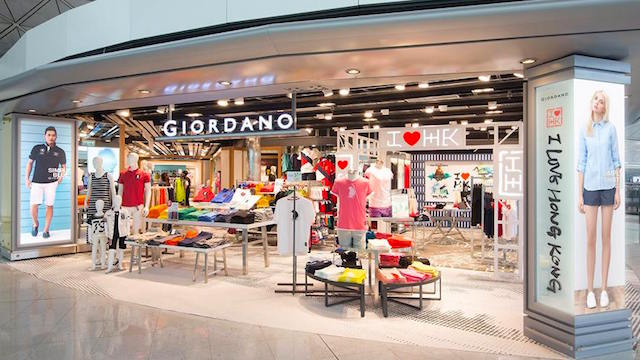
    Hong Kong-listed apparel retailer Giordano is back in the black after first-half sales rose 19 percent against the prior year – including 44 percent in the second quarter.

    Giordano, which now has 2094 stores across Southeast Asia, Greater China, and the Middle East, reported a post-tax profit of HKD60 million (US$7.71 million) for the half, in which its gross margin grew by 2.4 percentage points to 57 percent. The profit was a stark contrast to the Covid-impacted comparable period’s loss of HKD175 million ($22.5 million).

    And despite ongoing disruption to sales in various markets, the company pared back its inventory turn from 138 days to 124.

    The retailer closed a net 93 stores during the period, but its online sales soared 21.6 percent and now represent 10.1 percent of total group sales. Wholesale sales to franchises rose by 21.1 percent.

    While the company incurred a loss in Hong Kong and Macau – where mainland tourists were effectively barred for the entire period – increased sales to local consumers, the closure of unprofitable stores and rent reductions helped lessen the impact.

    “The average rental is still high despite gloomy consumer sentiment and the absence of incoming tourists,” said chairman and CEO Peter Lau in a results filing. “Management is continuing to negotiate with landlords for more affordable rental arrangements.”

    However, sales in Mainland China delivered a double-digit increase despite fewer stores.

    “Online sales and the franchising business continue to be our focus of development,” said Lau. “The online gross margin improved with increases in selling prices and fewer discounts.”

  • Nike launching sustainable concept store in Seoul

    Nike launching sustainable concept store in Seoul

    After launching the Rise concept store last year to Guangzhou, China, sportswear giant Nike has unveiled a new version of the concept which will launch in Seoul, South Korea.

    The store will feature a new digital platform, Sports Pulse, which will seek to bridge the gap between physical and online retail and create an “immersive retail experience”, as well as an interactive RFID-enabled footwear table, Inside Track, where shoppers can compare product details by simply placing products on the table.

    Three new ‘experience zones’ will also be debuted in the Seoul store: The Sports Hub, which will help shoppers connect with sporting opportunities in the city; The City Replay, a space to showcase hyperlocal products; and The Huddle, a place for a group or one-on-one expert sessions tailored to their fitness goals.

    And, according to Nike, it does so while also boosting the business’ sustainability and circularity.

    “In addition to being among the first Nike stores to secure a LEED Gold certification, Nike Seoul is also the first in Asia to launch … Nike’s fully integrated service for recycling and donating gently worn footwear and apparel,” the business said in a statement.

    “Shoppers can drop off gently-worn shoes – and now, for the first time, apparel – to the Seoul store, where the products will either be recycled or donated to partnering organizations that help communities facing disasters and other challenging circumstances.”

  • Garment firms fear order plunge

    Garment firms fear order plunge

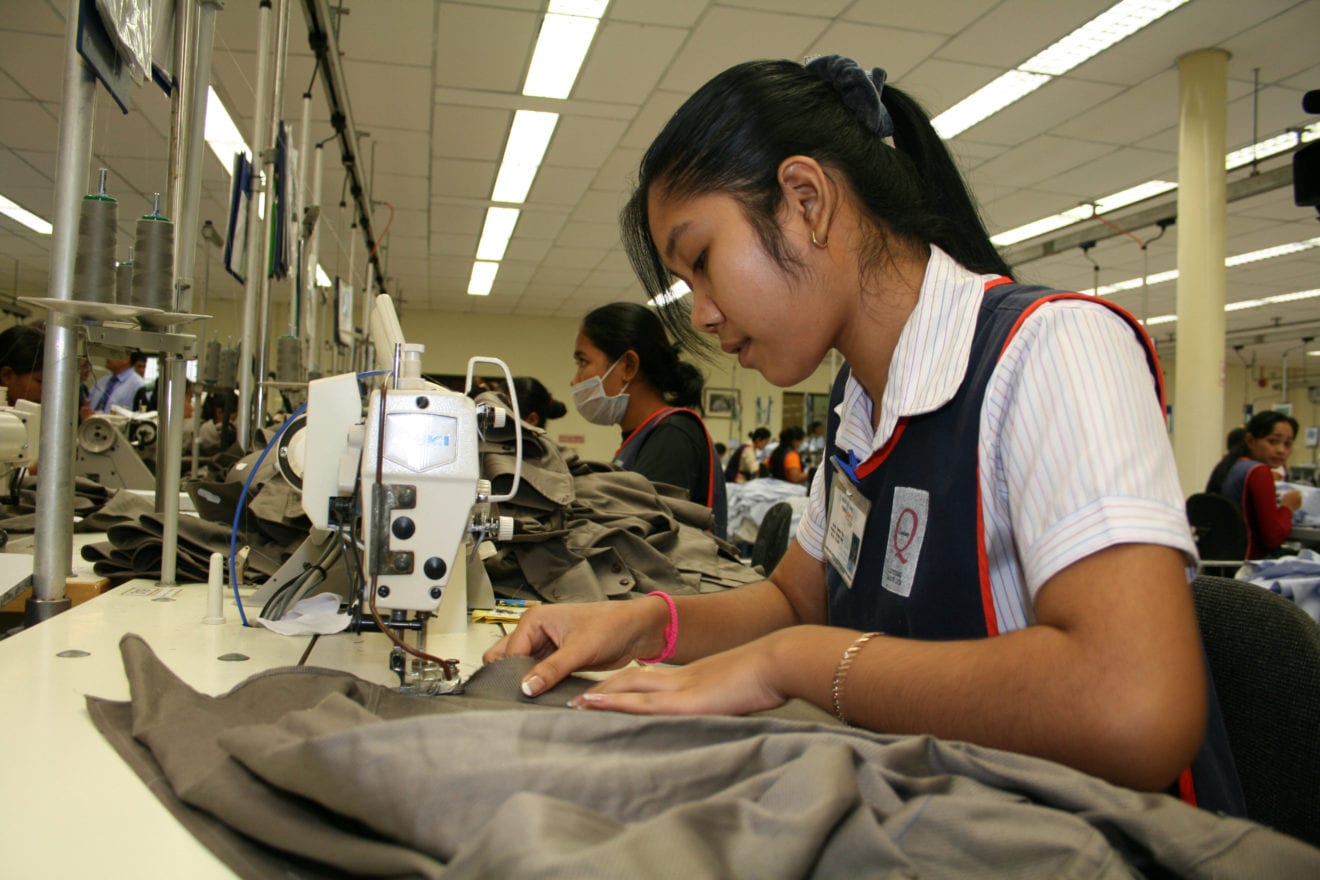
    Vietnam, the world’s second-biggest garment exporter, is facing the risk of losing orders to competitors amid the complicated Covid-19 situation in August.

    Gia Dinh Group JSC in the southern province of Binh Duong has secured orders till the end of December, but face higher material prices plus late shipments, along with higher logistics costs. The company’s management board said if the pandemic prolongs, it would fail to fulfill its orders.

    Over 80 percent of garment and textile enterprises in the southern region have had to either lower labor productivity or suspend operations to combat the disease.

    Vu Duc Giang, chairman of the Vietnam Textile and Apparel Association (VITAS), said production in August is “extremely difficult”, especially for firms in southern localities imposing social distancing. Up to 90 percent of production chains in the south have been broken.

    Meanwhile, only 70-80 percent of garment and textile companies in the northern region are still operating.

    Delivery pressure amid outbreaks is a big challenge for garment and textile enterprises now, he said, stating that if they fail to meet delivery deadlines, their customers would cancel orders, which will affect production both this year and the next.

    “If the Vietnamese market is not stable, partners will shift orders (to other countries). Garments are seasonal. Nobody wants to buy outdated clothes though they are on sale,” the VITAS chairman said.

    The Ministry of Industry and Trade also stated garment and textile enterprises in Vietnam are facing the risk of international clients postponing or canceling orders, and shifting their focus to other countries. “When the pandemic is controlled, it will be very difficult to resume business relations, and that will take time,” the ministry said.

    The VITAS chairman also mentioned the risk of labor shortages. Many workers have left Ho Chi Mih City for their hometowns to avoid being infected with the coronavirus, and only 60-65 percent may return to the city when the Covid-19 outbreak is pushed back, according to Giang. “There will be rather severe labor shortages in the coming time,” he predicted.

    Vietnam exported $18.6 billion worth of textile and garment products in the first seven months of this year, a year-on-year increase of 14.1 percent, according to the General Statistics Office.

  • H&M to open first store in Cambodia next year

    H&M to open first store in Cambodia next year

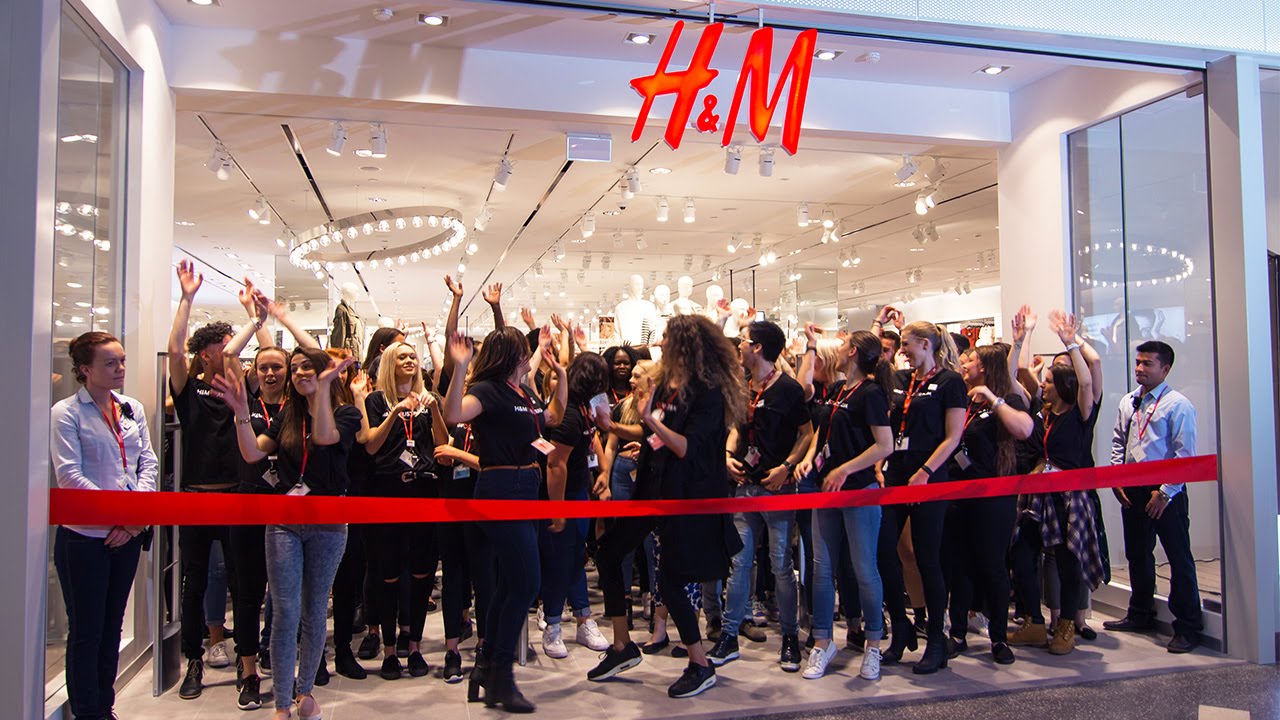
    Swedish multinational clothing retail company Hennes & Mauritz AB (H&M) has announced the opening of its first store in Cambodia next year, according to a press release issued in early July.

    The firm, however, did not disclose the specific date and location of this first store.

    H&M already has a large presence in the region with 11 stores in Vietnam and 43 in Thailand.

    The decision to expand its stores to Cambodia was made after the company assessed the potential of Cambodia given the gradual increase of local purchasing power.

    The firm has been manufacturing its products in Cambodia since the 1990s.

  • China sales help Armani bounce back from pandemic

    China sales help Armani bounce back from pandemic

    Sales at Giorgio Armani jumped 34% in the first half of 2021 as business in China and the United States helped the Italian fashion group bounce back, although it said it could be next year before it fully recovers from the pandemic.

    “The goal is to return to pre-pandemic levels by 2022, with… over 2 billion euros in direct consolidated revenues,” Chairman and CEO Giorgio Armani said on Sunday in a statement announcing 2020 results and the trend for January-June.

    The luxury group said consolidated net sales had fallen 25% last year to 1.6 billion euros ($1.9 billion), with most of the decline occurring in the first half of 2020.

    Luxury goods sales around the world fell sharply last year for the first time in years as the pandemic forced shop closures and brought international tourism to a virtual halt.

    “The drop in revenues in 2020 should be read not only as a consequence of the pandemic but also in line with Giorgio Armani’s own strategic principle of ‘less is more’,” said Armani Deputy Managing Director Giuseppe Marsocci.

    The Milan-based group did not give the value of total sales in January-June but said the positive sales trend so far this year pointed to a much better profitability scenario for 2021.

    For the whole of last year the group made a consolidated net profit of 90 million euros but an operating loss (EBIT) of 29 million euros.

    It also said on Sunday that its financial position improved significantly in the first half with net cash and cash equivalents of 1.088 billion euros “ensuring the financial resources necessary for the Group’s medium to long-term stability and growth”.

    Speculation about succession plans at Armani has come to the fore recently, especially after the 87-year-old designer said he could consider teaming up with another Italian company.

    Sources said earlier this month that John Elkann, scion of Italy’s Agnelli family, had explored a possible tie-up as part of plans to build a luxury conglomerate.

  • Burberry opens new London flagship

    Burberry opens new London flagship

    Change is afoot at Burberry. Since 2018, the British heritage brand’s Chief Creative Officer Riccardo Tisci has been reimagining the label with the goal of finessing its high-end luxury status. Working closely with CEO Marco Gobbetti, who recently announced he’ll be stepping down from his role at the end of the year, Tisci has revamped Burberry’s aesthetic image. From a logo rebrand by Peter Saville to a CGI campaign with Nick Knight and Tom Wandrag, Tisci’s collections have modernized house codes and staples such as the trench coat, whilst also setting a more conceptual agenda, as seen in the S/S 22 menswear collection. Now, Burberry debuts its new flagship store at No.1 Sloane Street, London, inviting the world to experience the Burberry universe afresh.

    Despite the digital race towards virtual living and surge in online shopping during the pandemic, placing a focus on real-life stores remains a priority for luxury big dogs like Burberry. In 2020, the brand opened a hybrid physical-digital store in Shenzhen, China, to cater to local shoppers as the country slowly reopened ahead of the West. As stores worldwide begin inviting shoppers back in, brands must be mindful of where they’re placing their bets on consumers making a physical trip to the store after months of placing orders online. The new Burberry flagship offers a unique shopping experience, telling the stories behind the brand’s latest collections and drops such as the signature Olympia and TB bags to entice visitors back to the physical.

    Designed with the renowned architect Vincenzo De Cotiis, the store merges Burberry’s past, present and future. Architecture references British classicism and brutalism, whilst the Burberry house check can be found throughout the space, such as on mirrored lighting grids in the ceiling. A dedicated area on the ground floor spotlights the trench coat made from gabardine, which the brand’s founder Thomas Burberry invented in 1879. Head upstairs to womenswear and menswear, and you’ll find sculptural furniture, seating and fixtures, in a space that offers the ultimate luxury experience.

  • Bally signs up Johnny Huang as brand ambassador

    Bally signs up Johnny Huang as brand ambassador

    Bally is underlining the strength of the Chinese consumer with its latest campaign as it has signed up Chinese actor and model Huang Jingyu, also known as Johnny Huang, as the campaign’s star and as its brand ambassador more widely.

    “The award-winning Chinese actor will reinterpret our pioneering spirit with his signature style and edge,” the company said. In its 170th anniversary year, it’s also planning plenty of major activities with the celebrity.

    The company has 60 stores in China and a dedicated webstore there, as well as a prominent presence on e-tail sites like Tmall and on local social media.

    Buit it’s not all about China, of course, with the actor also being known internationally. In fact, his appointment is the first time a Chinese personality has acted as global face for the label.

    The company said its new spokesmodel is “a formidable actor” with a “dynamic personality and modern sense of style” that works well with Bally.

    As well as fronting the AW21 campaign alongside model Zhao Jiali, he will continue as the brand’s ambassador for its SS22 imagery and will appear at Bally events such as store openings like that for the planned Bally Hike pop-up in Beijing. That store will feature a dedicated hiking clothing and accessories collection.

  • LVMH takes control of Off-White label

    LVMH takes control of Off-White label

    French luxury group LVMH is acquiring a 60% stake in Off-White, the label of designer Virgil Abloh who has been responsible for Louis Vuitton’s men’s collections since 2018.

    LVMH reports that it has taken a majority stake in Off-White, the brand launched in Milan in 2013 by American designer Virgil Abloh. This will give the world’s largest luxury goods company a firm foothold in streetwear, a highly profitable segment that has risen to prominence within haute couture in recent years.

    LVMH will own 60% of the brand while the founder will retain a 40% stake. Further details of the transaction were not disclosed, writes Les Echos.

    Until now, Off-White was controlled by New Guards, an Italian group that also owns Palm Angels and Heron Preston. New Guards was bought by Farfetch in August 2019 for around 600 million euros. As a licensee, Farfetch will continue to operate the brand.

    Within its segment, Off-White is a major player. The label already has 56 stores worldwide and counts more than 10 million followers on Instagram. In February, Andrea Grilli, the big boss of New Guards, announced that he is aiming for sales of one billion dollars within five to ten years.

    The deal highlights the ever-closer partnership between Abloh and the French luxury house. The story began in 2007, when the designer of Ghanaian-American descent, who at the time was still artistic director for Kanye West, collaborated on the creation of a Fendi collection. In 2015, Abloh was then a finalist for the LVMH Young Designer Award. Three years ago, he was appointed head of Louis Vuitton’s men’s collections.

  • Uniqlo takes over Superdry’s London flagship

    Uniqlo takes over Superdry’s London flagship

    The parent company of Uniqlo, Fast Retailing Group has signed a letting for the former Superdry store on Regent Street.

    The store is expected to sell a mixture of both Theory and Uniqlo clothing.

    The contemporary fashion brand Theory launched in New York in 1997 and at the end of February 2021, it holds 436 stores worldwide.

    The Japanese fashion retailer’s other brands, including US-based denim brand J Brand, could also be sold in the store, property sources said.

    The store is expected to open later this year although the exact date is not yet known.

    Last month Superdry closed the doors to its Regent Street flagship store, which first opened in 2011.

    The retailer is currently considering several locations in the capital, including Forever 21’s former flagship store on Oxford Street, which was forced to closed last year after the retailer filed for administration in the UK.

  • Cos launches its first Philippine store

    Cos launches its first Philippine store

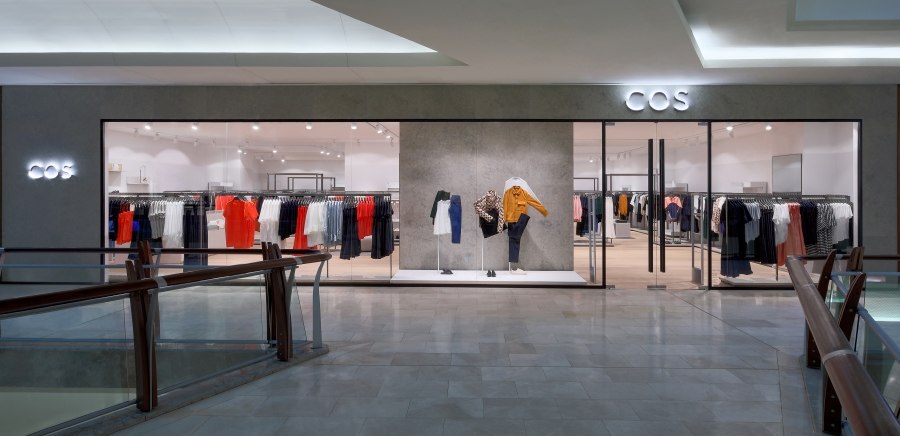
    London-based fashion favorite COS opened its first Philippine store on Friday, June 25, at SM Aura Premier in Taguig City.

    The store, located close to the main entrance of the Bonifacio Global City mall, houses both womenswear and menswear and features the brand’s Spring-Summer 2021 collection.

    At its core, COS cares about sustainability. Its collections are dominated by wardrobe essentials that are designed to last beyond a season.

    Part of its commitments includes shifting to 100% sustainably sourced or recycled materials in its pieces and even its packaging. As of 2021, nearly 86% of its collection are sustainably sourced, according to the brand.

    Most clothing pieces start at P2,000, with accessories costing upwards of P2,000 as well. The store also has in-house consultants to help you shop and plan your outfits.

    COS is located on the first floor of SM Aura Premiere in Taguig City. Customers must follow COVID-19 safety protocols, including the wearing of masks and face shields, as well as social distancing.