Tag: Fashion

  • Lululemon comes unharmed out of the Covid-19 Crisis

    Lululemon comes unharmed out of the Covid-19 Crisis

    Lululemon has emerged from the Covid-19 crisis as one of its greatest retail survivors, posting an operating surplus in the first quarter while almost all of its apparel contemporaries were bleeding red ink.

    Net revenue was US$652 million, a decrease of ‘just’ 17 percent at a time when apparel brands like Guess dropped by 51.5 percent, and Puma by 50 percent.

    Lululemon reported $32.8 million income from operations in the quarter to May 3, down 75 percent on the same period last year, but an outlier in the industry.

    “Lululemon has managed through the crisis better than every company in our coverage universe (with Nike perhaps the lone exception),” analysts led by Sam Poser wrote, reported by Marketwatch. “Lululemon has cemented its position as the best publicly-traded company in the specialty retailer sector, in our view.”

    In its results statement, Lululemon said Covid-19 forced the closure of all of its company-operated stores in North America and Europe, with others in some Asia-Pacific markets over differing periods during the pandemic.

    But direct-to-consumer revenue soared 70 percent on a constant-currency basis as the company targeted housebound consumers eager to buy comfortable exercise wear in place of their normal office attire.

    Direct to consumer net revenue represented 54 percent of total sales compared to 26.8 percent for the first quarter of last year.

    “We are learning more every day about our guests — how they enjoy interacting with us online and what makes them comfortable as stores reopen,” said CEO Calvin McDonald.

    “Our strong digital business demonstrates the strength of our guest connection and the long-term opportunity to create further omni experiences going forward.”

    Perhaps the most alarming downside to the quarter was an increase in inventories of 41 percent to $625.8 million.

  • Smart clothing set to become a US$11bn market

    Smart clothing set to become a US$11bn market

    Annual sales of integrated fitness apparel – smart clothing – is set to multiply from around US$1 billion this year to $11 billion in 2025.

    Analysis by Juniper Research revealed that explosive growth is likely to see smart clothing become the largest fitness wearable sector in terms of revenue, as traditional consumer wearables are overtaken.

    The firm’s report finds that wearables have been diversifying for several years, developing to analyze cadence, exercise form and precise positioning during exercise.

    Recent technological innovations delivering personalized health-and-fitness insights have threatened the established position of leading manufacturers such as Fitbit, which continue to emphasize the breadth of features over personalized offerings, to their detriment

    Traditionally, subscription models have not been an effective approach to the health and fitness wearables industry, but devices providing coaching and feedback are likely to change this. As the market changes, such additional opportunities in terms of business approach will become more available to vendors, according to Juniper.

  • Ecoalf opens first Japanese flagship

    Ecoalf opens first Japanese flagship

    Spanish fashion brand Ecoalf has opened its first Japanese flagship store, in Tokyo.

    Located in Shibuya district, the Ecoalf store spans two floors and offers a wide selection of products including the label’s latest collection.

    Designed by Japanese architect Yohei Sakamaki, the store features a sustainability concept ‘Sharing Ecology’, using natural materials such as Japanese bamboo, stone and sand. Interior features include a giant rock named “Date-Kanmuri-Ishi” and wooden panels to create a warm yet modern ambiance.

    A black staircase leads customers to the upper floor which is dedicated to #Actnows, a monthly event held by the brand to raise awareness of sustainability issues.

    “Our aim is to raise awareness of the need to protect the planet and we will continue to accelerate this message,” said Javier Goyenechem, president and founder of Ecoalf.

  • FJ Benjamin launches five online stores

    FJ Benjamin launches five online stores

    Southeast Asian fashion group FJ Benjamin opened five new online stores for recognized international fashion labels, with more to come, as it pivoted online in the wake of trading restrictions during the Covid-19 crisis.

    Brand owners typically grant distributors only brick-and-mortar rights and prior to the pandemic, FJ Benjamin had e-commerce rights for only Superdry, the British streetwear brand. So when stores were shuttered due to government social-distancing measures, the Singapore company could not immediately turn online to compensate for suspended in-store sales.

    However, the company has since sealed deals with Guess, Casio, Pretty Ballerina, and Anti-Social Social Club to sell online. FJ Benjamin’s IT staff worked around the clock to develop stores for the brands and get them up and running as permission was granted by brand owners.

    Further sites are imminent for US Polo Association, Rebecca Minkoff, Moby, Lancel, Axel Arigato, Barbara Sturm, and “a well-known European lifestyle cosmetics brand,” said FJ Benjamin Group COO Douglas Benjamin.

    Superdry launched online in Singapore in June last year and in Malaysia last January. “The results were very encouraging,” Benjamin said.

    When the pandemic hit, FJ Benjamin-run stores in Singapore, Malaysia, and Indonesia were shuttered for much of the past two months. So Benjamin quickly pursued e-commerce rights for other brands.

    “We are pleased that we are now able to offer the convenience of e-commerce to our customers for five brands, and will be able to do so very soon for at least seven more, including some new labels which will make online debuts only,” he said.

    “In the future, we may consider opening brick-and-mortar stores if it proves to be a viable option depending on the Covid-19 situation, performance of the brand online, and future rental expectations,” he said.

    Benjamin said overseas brand principals understood the challenges faced by the group amid the pandemic and readily agreed to release the online channel rights in its markets.

    He says a new focus online will not see less attention to physical stores, although the closure of some non-performing outlets in the three markets is inevitable.

    We will definitely be culling stores that are not performing to expectations, where we cannot be profitable either because of high cost or low volume.”

    However, he believes physical stores will always be relevant in the fashion industry.

    “People still want to go down to stores to touch and feel, but there is a new comfort that has emerged among consumers with regards to shopping online.”

    FJ Benjamin has adopted a click-and-pick omnichannel approach to its online stores which allows customers to buy online and collect or return items in physical stores, where they are available.

    Benjamin expects consumers will continue to shop online once the pandemic passes as consumers have got used to the channel.

    “We believe this shift to online shopping, although hastened by the Covid-19 pandemic, will be sustainable and scalable.”

    Those advantages include being able to shop 24-seven with different access points to their preferred brands.

  • Struggling Le Saunda warns of yet another loss

    Struggling Le Saunda warns of yet another loss

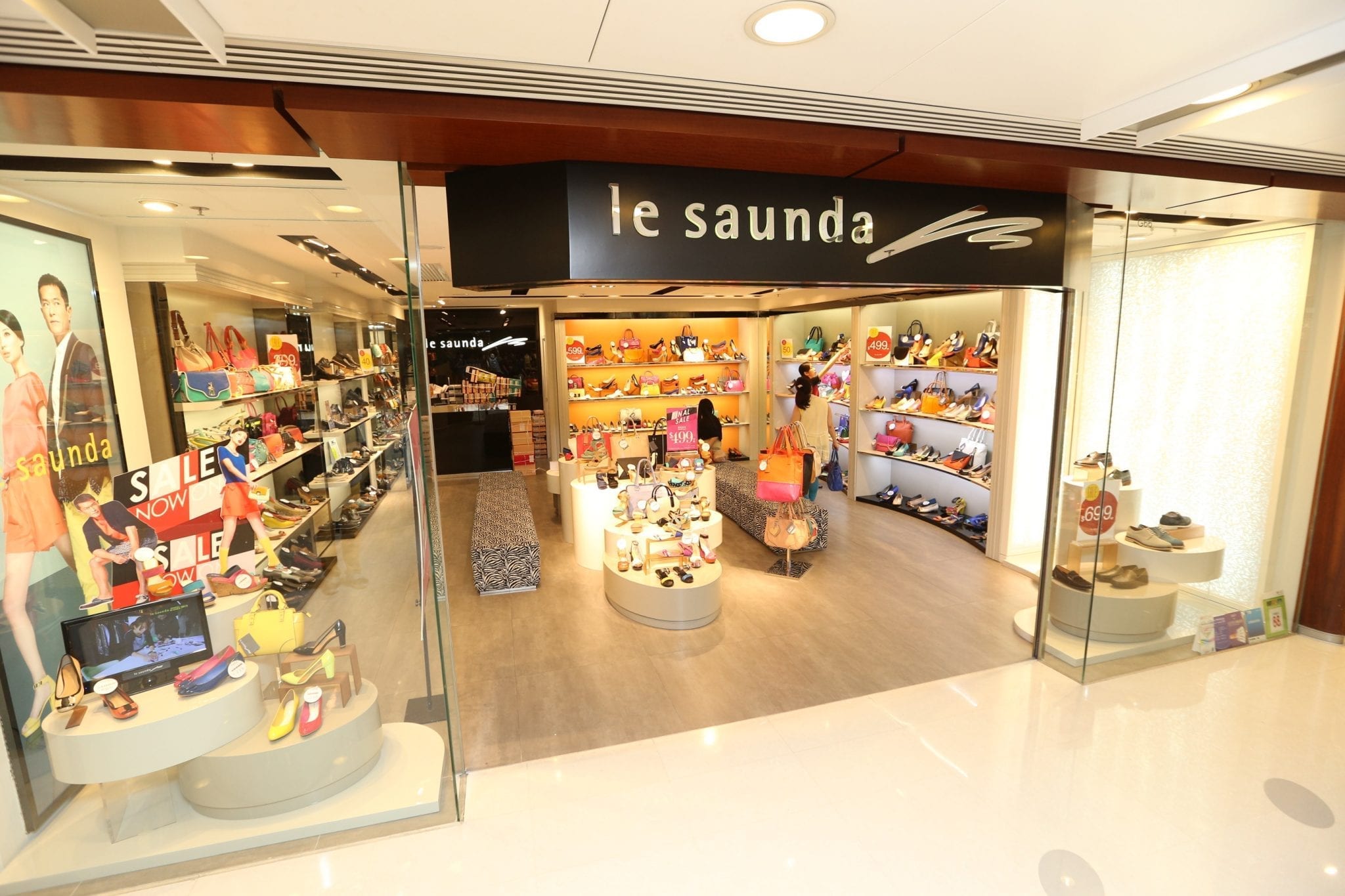
    Late last month, embattled Hong Kong-based shoe retailer Le Saunda announced its third consecutive annual loss. Yesterday it flagged yet another, at least for the first half.

    In a stock-exchange filing, Le Saunda’s board advised that during the three months to May 31, the group’s self-owned offline retail business saw same-store sales decline 32.7 percent and total sales down 38.2 percent, due to widespread store closures in the last year. Online sales fell 16.4 percent.

    While nonspecific about the scale of the loss in the current half-year, chairman James Ngai said the results would be impacted in part by a US$5 million redundancy bill related to the closure of its factory in Shunde, Guangdong last month. The company is now contracting out all production to third-party suppliers.

    However the result was largely caused by the coronavirus pandemic, he said. “The expected net loss is primarily attributable to the significant decrease of the group’s total retail sales due to the adverse impact on the retail market that brought by the outbreak of Covid-19 epidemic since late January.”

    As at the end of May, Le Saunda had 414 retail outlets trading in Mainland China, Hong Kong and Macau, 72 fewer than a year earlier. The majority – 368 – were self-owned stores, the balance franchised outlets on the mainland.

    During the first half of last year, Le Saunda was showing signs of improvement, recording a profit of $337,000, however in June ongoing protests inHong Kong saw retail sales decline as shops were often shuttered and inbound mainland tourist numbers declined.

    Le Saunda trades under the brands Le Saunda, Linea Rosa, Pitti Donna and CNE.

  • Mulberry to cull global workforce

    Mulberry to cull global workforce

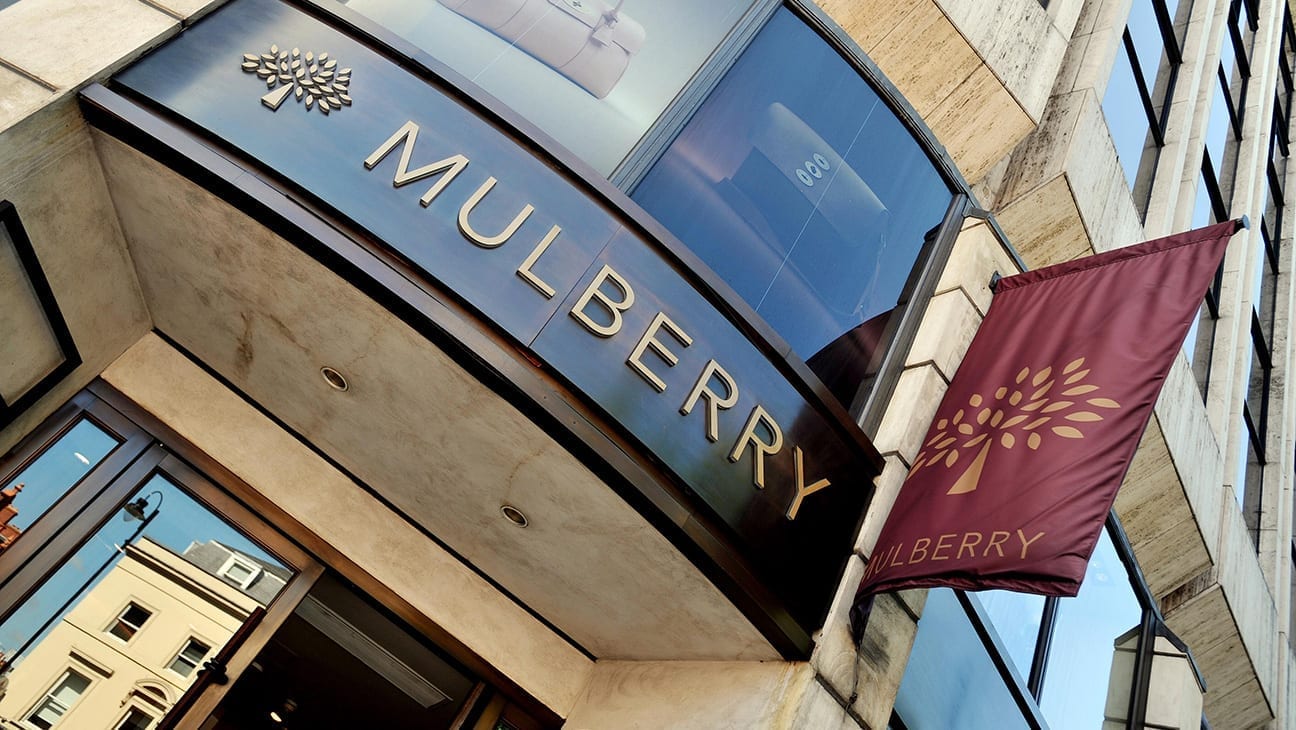
    Mulberry is culling about 25 percent of its staff worldwide as it right-sizes in the wake of the Covid-19 pandemic. In a statement, the UK-based fashion brand said that while it has been able to reopen most of its stores in China and South Korea – and some in Europe and Canada – the majority remain closed.

    “We reacted swiftly to manage the impact of Covid-19 and continue to execute a well-developed plan to manage capital, reduce costs and maintain a robust liquidity position,” said CEO Thierry Andretta.

    However, despite the good performance of Mulberry’s sector-leading digital and omnichannel presence, and a global network of concessions, the shutting of physical stores has had – and will continue to have – a marked effect on the business.

    A consultation process on proposals to reduce employee numbers across the global business has begun.

    “This has been an incredibly difficult decision for us to make, but it is necessary for us to respond to these challenging market conditions, protect the maximum number of jobs possible and safeguard the future of the business. We remain confident in the strength of the Mulberry brand and our strategy over the long-term,” said Andretta.

    While digital channels have continued to trade without interruption throughout the pandemic and their sales were good, they could not fully offset the decrease in demand experienced from store closures.

    In the UK, Mulberry will begin to phase the reopening of stores from June 15, but with additional safety standards and procedures put in place to ensure they operate safely.

    The brand has also taken steps to manage its inventory levels in line with anticipated lesser demand.

    “Given the uncertainty as to the impact and duration of Covid-19 on the company and the wider economy and the consequential effect on demand, we expect the recovery in our overall sales levels over the medium term to be gradual. Even once stores reopen, social-distancing measures, reduced tourist and footfall levels will continue to impact our revenue,” the company said.

    Cutting staff levels would help Mulberry to manage its operations and cost base to ensure the company is the correct size and structure to reflect market conditions, said Andretta.

  • Gap the brand flounders on ‘anemic’ range driving parent’s $932 million loss

    Gap the brand flounders on ‘anemic’ range driving parent’s $932 million loss

    Gap – the brand – is floundering internationally, with sales down 50 percent in the first quarter, a rate far worse than other mainstream apparel retailers in the wake of the Covid-19 crisis.

    Gap Inc, its parent, reported a US$932 million net loss for the three months to March on sales down group-wide by 43 percent to $2.11 billion. That decline was worse than its peers Abercrombie & Fitch and Urban Outfitters, and even budget-positioned multi-brand apparel retailer Kohl’s.

    Neil Saunders, MD at GlobalData Retail, said one of the reasons for Gap the brand’s dire performance was a complete failure to transfer lost store sales online.

    “At a time when other retailers were almost doubling their online revenues, Gap’s e-commerce sales dropped by 5 percent,” said Saunders. “We believe that this is indicative of the brand’s lack of traction with customers and its inability to stimulate loyalty. It aptly demonstrates that a fair proportion of sales are driven, not by a burning desire to visit and buy from Gap, but from chance visits to stores and impulse buys often stimulated by excessive discounting. As soon as stores are closed, Gap drops off the radar and consumers have neither the will nor inclination to shop the brand online.”

    Sales at Banana Republic fell by 47 percent globally and by 50 percent in the US, with online sales down modestly. However, Saunders said the dynamics of that are more excusable as Banana Republic is exposed to the smart casualwear sector which is heavily dependent on demand from office workers, who have been stuck at home for many weeks in most western markets.

    In stark contrast, sales by its sportswear brand Athleta, fell by just 8 percent, with store sales down 50 percent and online sales up 49 percent. Old Navy’s global net sales fell 42 percent, with store sales down 60 percent and online sales up 20 percent.

    CEO and president Sonia Synga trumpeted a quick pivot to e-commerce resulting in 40-per-cent growth online in April and 100 percent in May across all of the group’s brands, the first two months of the new quarter. “This online momentum, enabled by new omni-capabilities that have expanded the way customers can shop with us, leaves us well-positioned to fuel our brands going forward,” she said.

    Meanwhile, Saunders said the “heart and soul” of Gap the brand’s problems stem from its “anemic” ranges.

    “These are bland and undifferentiated and do nothing to stimulate consumers. Against a market saturated with alternative apparel destinations, this simply isn’t good enough. Gap has been aware of this problem for eternity but has consistently failed to act, either because it is too inert to do so or because it is unsure of how to correct the problem. In fairness, recent management changes may be the remedy to this, but the crisis has interrupted any progress than might have been made.”

    He said that before the advent of the pandemic, Gap Inc was in a weak position. “It emerges even more withered with quite a lot of holes in its strategy. Solid brands like Athleta provide some hope but are too small to make up for the problems elsewhere. As such, Gap now needs to reinvent and refocus its efforts with an urgency that is unparalleled in its history.”

  • Canali expands China retail presence

    Canali expands China retail presence

    Italian luxury-apparel label Canali has extended its retail footprint into seven additional cities in China.

    The firm has assumed control of the stores, which were selling its own branded goods under a franchise partnership, in a move to further its direct-retail prospects in the territory. The 10 stores affected are located in Changsha, Changchun, Hangzhou, Kunming, Nanning, Taiyuan and Xi’an.

    A statement from the brand described the takeover as further strengthening Canali’s position in luxury menswear within China.

    “This is an important project that stems from our conviction about the leading role of the Chinese market,” said Canali’s president and CEO Stefano Canali.

    “The acquisition signifies our long-term commitment to this strategic market and marks an important cornerstone of the next phase of Canali’s growth in China to elevate the brand presence and customer experience.”

  • Uniqlo opens new Vietnam store, goes online in the Philippines

    Uniqlo opens new Vietnam store, goes online in the Philippines

    Japanese fast-fashion retailer Uniqlo is to open its third store in Ho Chi Minh City this week and will debut online in the Philippines.

    Less than a month after the opening of the Ho Chi Minh’s second store at SC Vivo City, Uniqlo Vietnam is to launch another store in the country’s tallest building Landmark 81 this Friday (June 5).

    Occupying a 2000sqm area, the Uniqlo Landmark 81 store features the brand’s LifeWear products for males, females and kids. The store also features Uniqlo’s latest collections including the Billie Eilish x Takashi Murakami UT. To celebrate the opening, Uniqlo Landmark 81 is running several promotions such as giving away Uniqlo’s mugs and Landmark 81 SkyView tickets.

    Meanwhile, in the Philippines, the fast-fashion brand says it will launch online in the second half of this year.

    “An online store will provide local Uniqlo customers a faster and easier way of purchasing their favorite LifeWear items,” said Masayoshi Nakamura, COO at Uniqlo Philippines.

  • LVMH’s Tiffany takeover is in doubt as virus outbreak hits jeweller’s sales

    LVMH’s Tiffany takeover is in doubt as virus outbreak hits jeweller’s sales

    The US$16.2 billion Tiffany takeover by luxury-goods group LVMH appears in doubt.

    The New York-listed jeweler’s share price tumbled 9 percent after Women’s Wear Daily reported that LVMH board members held a special meeting in Paris to discuss the bid.

    Both Tiffany and LVMH have declined to comment on the matter, and the absence of denial seemed to further fuel speculation.

    Reuters today has reported that LVMH CEO Bernard Arnault is exploring ways to reopen negotiations in an attempt to reduce the price.

    “While Arnault now has concerns about overpaying for Tiffany, he still believes in the deal’s strategic rationale, according to the sources,” reported Reuters. “Tiffany will give LVMH a bigger share of the lucrative US market and expand its offerings in jewelry, the fastest-growing sector in the luxury goods industry.”

    Store closures in the wake of the Covid-19 pandemic, the collapse of tourism and social unrest in the US related to the death of George Floyd at the hands of Minneapolis police are raising concerns about the state of the US economy. The LVMH board is reportedly questioning whether the jeweler will be able to meet its debt obligations once the takeover is complete.

    Terms of the Tiffany takeover were agreed last November, well before the Covid-19 crisis hit China and then North America, both key markets for the jeweller. LVMH had planned to pay $135 per share for Tiffany, representing its largest acquisition to date, before rolling it into the jewelry & watches division where it would sit alongside Bulgari and Tag Heuer.

    Tiffany stores have been closed in the US since mid-March due to the pandemic and this week, many were boarded up to protect them from looting during the US protests.

    In Hong Kong, where the company used to command strong sales to mainland Chinese tourists, sales have taken a severe hit, first due to protests and then due to the closure of borders due to coronavirus.

  • H&M talks online growth, sustainability and recovering after Covid-19

    H&M talks online growth, sustainability and recovering after Covid-19

    Fashion giant H&M is expanding its online presence around the world, as it continues to recover from the coronavirus pandemic and work toward its goal of becoming climate positive by 2040.

    The company said it will expand the digital presence of its brands Cos, Weekday, Monki, & Other Stories and Arket in Europe from May onwards.

    The company said it will also push through with its plans to launch an e-commerce site for its H&M brand in Australia later this year, and open a digital flagship store of its lifestyle brand Arket on Alibaba’s e-commerce platform Tmall in August.

    The world’s second-largest clothing firm said the current situation highlights customer desire for digital solutions and the importance of integrated channels.

    “We are glad that we are able to provide this in most of our markets and in even more markets from May onwards, as Cos, Weekday, Monki, & Other Stories and Arket are set to expand, making their collections available online to nine additional markets across Europe,” the company said.

    H&M said with the world experiencing this health crisis, digital solutions are needed as cars and homes are becoming safe havens for shoppers and mobile devices and computers will be their main point of locating products before going to stores.

    The fast-fashion giant announced in March that the second half of its first-quarter sales were negatively impacted by the outbreak of the COVID-19 pandemic, particularly China.

    Total sales in March dipped 46 percent compared to the previous corresponding period but online sales saw a 17 percent increase.

    H&M’s total sales during the period between March 1 to May 6 this year decreased by 57 percent in local currencies compared with the same period in 2019.

    Online sales, which are open in 46 of the company’s 51 online markets, increased by 32 percent in the same period.

    Helena Helmersson, H&M’s new chief executive, said they think the pandemic will lead to a fast shift towards digital and that they need to be ready for it.

    At the group’s recent annual general meeting, a new board member was elected, Danica Kragic Jensfelt, who is a professor at the Royal Institute of Technology in Stockholm and does research in robotics and artificial intelligence.

    When asked if the new board appointment means AI and robotics are what H&M will be concentrating on in the near future, H&M said they have always made big investments in its tech foundation and AI.

    “We continuously see clear signals that we are on the right track and we will continue to invest in this area in the future, to secure an organization that drives innovation and optimizes business decisions,” the Swedish fashion retailer’s media team said.

    According to H&M, their AI work spans across the entire value chain – from design to customer experience.

    “By analyzing a large amount of data from our operations within the group, we can align supply and demand much better, with the goal of only producing what we are selling.”

    H&M said the pandemic has affected their day-to-day operations as well as their outlook for the future.

    “Due to the exceptional situation caused by the spread of COVID-19, we are reviewing all parts of our business,” the company said.

    “The world continues to adapt to a situation like no other, and H&M Group, like so many companies around the world, continues to navigate the effects of the coronavirus crisis.”

    The group said they have been forced to make difficult decisions and take strong measures across all parts of the business but that in everything they have been doing, the customer is always in focus.

    “We believe that customer-centricity, strong collaboration, subsisted sustainability and expanding digitalization are key factors for our success.”

    Helmersson, who once headed the sustainability department in the company, said sustainability work is an integral part of the whole business and includes every area of the company, hence its growth targets and sustainability goals have equal weighting, live side by side and are entirely interconnected.

    “I know the importance of environmental protection, people empowerment and industry transparency to build a sustainable business,” Helmersson said. “These areas are not only close to my heart but very much part of my business perspective.”

    With the release last week of the 2019 Material Change Insights Report compiled by the global non-profit Textile Exchange, H&M said it seems their efforts on sustainability are showing progress.

    The report showed the H&M Group leads the ranking in the use of organic cotton and down certified by the Responsible Down Standard. This means the company is recognized as the number one company sourcing preferred cotton. This includes organic cotton, recycled cotton and cotton sourced through the Better Cotton Initiative, among others.

    “Being ranked as a leading company in sustainable materials sourcing is a great recognition of all the hard work we do every day to make our business more sustainable,” said Cecilia Brännsten, H&M’s Environmental Sustainability manager.

    “But that doesn’t mean we are done yet, there is still work to do to increase the use of recycled materials and push for innovative materials.”

    After cotton and synthetic materials such as polyester and nylon, the materials the H&M group use the most are man-made cellulosic materials such as viscose.

    Sourcing them in a more sustainable way has been a big part of the company’s goal, H&M said.

    The company has announced its commitment to become climate positive throughout its entire value chain by 2040 at the latest.

    “That means we will reduce more greenhouse gas emissions than our value chain emits  — all the way from cotton farms to the customers’ washing machines and the recycling baskets,” the company said.

    H&M said to become climate positive, they need to change how their products are made and enjoyed.

    “About 70 percent of a garment’s climate impact arises during the manufacturing process itself. Making fibres, processing materials, dyeing and fabricating requires a lot of energy,” the fashion giant said. “We make tough demands on our suppliers, and we also help them to switch from fossil-based to renewable energy sources such as wind and solar.”

    H&M cited as example that the group is currently implementing energy efficiency programs throughout its supply chain in close cooperation with its business partners.

    “We also work on putting pressure on and collaborating with governments and authorities. This is a way to create positive changes beyond our industry.”

    But, the company said, to be completely climate positive, they need to find new solutions.

    “We are exploring new techniques that potentially could absorb greenhouse gases and turn it into new fabrics and products,” H&M said. “We are constantly exploring new ways of making our products, such as making fabrics out of citrus peel and old fishnets.”

    The H&M group said it wants to make sustainable fashion affordable for everyone.

    “It’s the essence of what we do and why we exist,” the company said. “As part of an industry facing significant challenges, we want to ensure that we move away from a linear system to a circular one that ensures long-term sustainability. As a major player in the industry, we are well-positioned to lead this change.”

    Stores reopening

    According to the retailer, the current situation with the coronavirus crisis remains challenging for them but they are happy to be gradually re-opening stores in markets where governments have eased restrictions.

    “Safety measures vary from market to market-based on recommendations and guidance from the relevant authorities,” the company said.

    The company’s media team said some of these recommendations and guidelines include the use of plexiglass, limiting the number of customers in stores, closure of fitting rooms and the use of personal protective equipment to name some.

    “These measures have been well received by customers,” the team said.

    The team said it is in extraordinary situations like this current pandemic that people see how interconnected human health and planetary health are.

    “This is why the H&M Group, together with other leading companies, just joined the Uniting Business and Governments to Recover Better statement, the latest initiative of the UN Global Compact.”

    The Recover Better statement, signed recently by around 150 companies, is a call to action for governments and policymakers to reimagine a better future grounded in bold climate action.

    “It is now more important than ever that companies and governments show leadership standing by their commitments in climate action, and that we take responsibility together,” H&M said.

    The company said it expected to make a loss in the second quarter but pointed to a rebound in demand in China.

    H&M said in those markets that have begun to open up, trade in the stores has initially been muted. At present 3,050 stores, representing 60 percent of the group’s 5,061 stores, are still temporarily closed.

  • Ted Baker plots new heading after hefty loss

    Ted Baker plots new heading after hefty loss

    British lifestyle brand Ted Baker is seeking to raise £95 million to strengthen its balance sheet in the wake of the Covid-19 pandemic and fund a strategy for expansion dubbed ‘Ted’s Formula for Growth’.

    The plan was revealed along with its results for the year to January 25 during which global sales slipped 1.4 percent to £630.5 million, which the company attributed to discounting to remain competitive against its rivals.

    Wholesale revenue rose by 9.6 percent on the back of expansion into footwear, without which it would have slipped 3.7 percent on a like-for-like basis. Store sales were down by 5.3 percent and licensing revenue down 14.1 percent.

    Recently appointed CEO Rachel Osborne says the new strategy and recapitalization plan will strengthen the company as it rides out the Covid-19 crisis which has had significantly more impact on global retailing since Ted Baker’s financial year closed. Revenue was down 36 percent during the 14 weeks from January 26 to May 2 as stores were shut down in many parts of the world.

    “The Ted Baker brand is much loved, it has a unique personality and character built up over many decades, and that provides us with a remarkably strong foundation from which to continue our international growth,” said Osborne.

    “Over the past six months, our new executive team has pulled together and undertaken a thorough review of the business, identified key opportunities, and acted decisively in a number of areas. I am confident that our transformation plan will enable us to capitalize on our opportunities and deliver value for all of our shareholders.”

    Ted Baker reported a loss of £79.9 million for the year, a significant turnaround from a £30.7 million profit for the year prior. The company said the deficit was due to £84.6 million of non-underlying expenses, mainly an inventory write-down, store asset impairments, and a £7.6 million loss related to the sale of the Asian business.

    The strategy Osborne will now lead, Ted’s Formula for Growth, will focus on making the most of the company’s strong brand, its diversified channel footprint, (retail, wholesale and license channels; multiple product categories and geographic spread), combined with substantial investments during the past five years in IT, CRM, logistics, and infrastructure.

    The company will focus first on stabilizing the foundations of the current business, which has been disrupted in recent months by multiple executive changes, driving growth, and achieving operational excellence.

    The company wants to re-energize the brand, increase engagement, and encourage more people to consider purchasing the brand. It seeks to attract more customers and “gain a higher share of wallet and lifetime value through deeper and broader relationships with new and existing customers” using technology to increase customer acquisition and retention, and increase conversion online.

    The company wants to expand its product range and relevance to make clothing more relevant to all-day occasions, and drive accessories, footwear, and large license partner categories.

    In an outlook note, the company said it plans to cut the number of its suppliers from more than 150 to 100, reduce its stock cycle from three years to two, and reduce staff costs at both head office and in stores.

    By 2023, Ted Baker expects to achieve sales growth of around 5 percent and a pretax earnings margin of between 7 and 10 percent.

    Emily Salter, retail analyst at GlobalData, said that although Ted Baker’s sales are likely to start improving in the next few weeks as stores across Europe start to re-open, recovery will be slow for it as many consumers will be unwilling to return to shopping locations and economic uncertainty will be high, reducing the propensity to spend on premium brands.

    “Prior to the onset of Covid-19, Ted Baker’s sales were suffering as the appeal of the brand was waning as it struggled to resonate with shoppers, with the store and online revenue falling by 5.3 percent and 2.4 percent respectively for the year to February. Although the retailer blamed discounting for this decline, the fact that it was unable to drive growth online points to problems with the relevance of the brand.

    “It now has a permanent CEO and CFO to help address these issues but turning the business around will not be an easy feat as consumer shopping habits are likely to change in the long term due to Covid-19, with shoppers purchasing less frequently and increased spend shifting online,” she said.

  • Asia a bright spot for cashed-up Ralph Lauren

    Asia a bright spot for cashed-up Ralph Lauren

    Luxury retailer Ralph Lauren saw online sales in Asia surge by 15 percent during the peak of Covid-19 lockdowns.  But the company’s early decision to close stores around the world saw overall sales drop by 15.4 percent, resulting in an operating loss of $284 million and a net loss of $249 million for the March quarter.

    Neil Saunders, MD of GlobalData Retail, says while the quarter ended before the peak of the pandemic in the US, the European market was hit hard with revenue down by 19.3 percent year on year and trade in North America down by 11.2 percent.

    “Unfortunately, digital channels did not completely pick up the slack from stores as Ralph Lauren temporarily suspended online operations in late March to enhance health and safety protocols. On a comparable basis, this pushed down sales by 7 percent in North America and 2 percent in Europe.”

    Saunders says that while Ralph Lauren’s loss may widen in the second quarter, the company has liquidity of more than $2 billion and a very strong balance sheet with minimal debt. “On top of this, actions to reduce expenditure in the near-term will help to minimize losses and preserve cash.”

    Saunders says the crisis came at an unfortunate time for the brand. “This quarter should have been one which capped a year of recovery for the group, which has been trying to improve its brand image and connect with new customers. In our view, while progress was patchy – especially in North America – there were signs that things were going in the right direction with steady growth in comparable sales and some stronger results from Asia and Europe.

    “Sadly, the severe downtick in trade has undone this advancement and for the full fiscal year the company will end up with a comparable sales decrease of 2 percent.”

    He believes that many Asian markets will see a reasonable bounce back in retail sales for the brand in the current quarter, but doubts the same will be true of Europe and especially not in the US.

    “The first issue in the US is that, even before the pandemic hit, the improvement in Ralph Lauren’s business was only partial. The company was moving in the right direction, but enhancements in marketing and assortments had not fully taken root and brand perception was only inching up by small increments.

    “For this reason, we do not believe that there will be a mass of customers clambering to get back to the brand once things fully reopen. This is even more so as some of what Ralph Lauren sells will, at least in the near-term, be much less relevant to consumers who are staying at home more and going out less.”

    Saunders says Ralph Lauren also faces challenges in its wholesale division, exposed to “some very unfavorable channels, especially department stores”.

    “The recovery in these locations will be weak and protracted so, although Ralph Lauren has been reducing its reliance on third-parties, it will be unduly affected. Some of the flagship stores will also suffer from a reduction in tourist numbers, which are an important component of their success. Both these structural challenges to the business will not abate before 2021.”

  • Abercrombie & Fitch sales tumble in SE Asia

    Abercrombie & Fitch sales tumble in SE Asia

    US apparel retailer Abercrombie & Fitch suffered a 51-per-cent fall in sales in Asia Pacific in its first quarter as Covid-19 forced store closures across the region.

    Worldwide, the company suffered a 34-per-cent decline, but at least one analyst is impressed that the company’s sales did not fall further.

    “The group was one of the first to close its physical stores as this crisis broke and it is very heavily exposed to discretionary apparel categories that took a battering during the depths of the pandemic,” said GlobalData Retail MD Neil Saunders.

    “Compared to rivals, A&F has performed relatively well.”

    The loss of sales in physical stores was compensated for in part by a 25-per-cent rise online.

    “Over the period, A&F did a good job with digital marketing and kept customers regularly informed of various offers and deals,” said Saunders. “This both helped to keep the brand on the radar and stimulated some buying activity in a market that would otherwise have been very subdued.”

    In terms of sales across all channels, the company’s namesake brand performed the best, declining 30 percent worldwide. Sales at the surfwear concept Hollister declined by 36 percent. By geography, sales fell 31 percent in the Americas and by 35 percent in Europe, Middle East and Africa (EMEA).

    The soft sales saw the company record an operating loss of US$209 million and a net loss of $244 million.

    As at the end of May, Abercrombie & Fitch has reopened about half of its global store network in the wake of the Covid-19 crisis. Sales at those stores are running at about 80 percent of the levels of one year ago in North America, and 60 percent in EMEA.

    “This is not a bad initial come-back figure, especially as our data shows that where reopening has occurred, customer traffic and spend is gradually building which indicates the numbers will strengthen as time progresses,” says Saunders.

    “Nevertheless, the numbers show that trade is not coming back with a bang and given A&F is in a relatively good position in terms of brand and product mix, productivity levels will be significantly worse in other parts of the apparel market.”

  • H&M launches menswear clothing line using intelligent fabrics

    H&M launches menswear clothing line using intelligent fabrics

    Sweden fashion retailer H&M launches an intelligent fabric this week, deploying fashion technology for menswear which keeps the wearer cool in the summer heat.

    Called Coolmax, the intelligent fabric absorbs moisture and allows air to pass through.

    “We see fabric innovation as pushing menswear forwards in new ways,” said Ross Lydon, head of menswear design at H&M. “Coolmax is our first collection that optimizes everyday clothing with high-performance materials. It is a segment of the market that we will continue to explore and focus on in the future.”

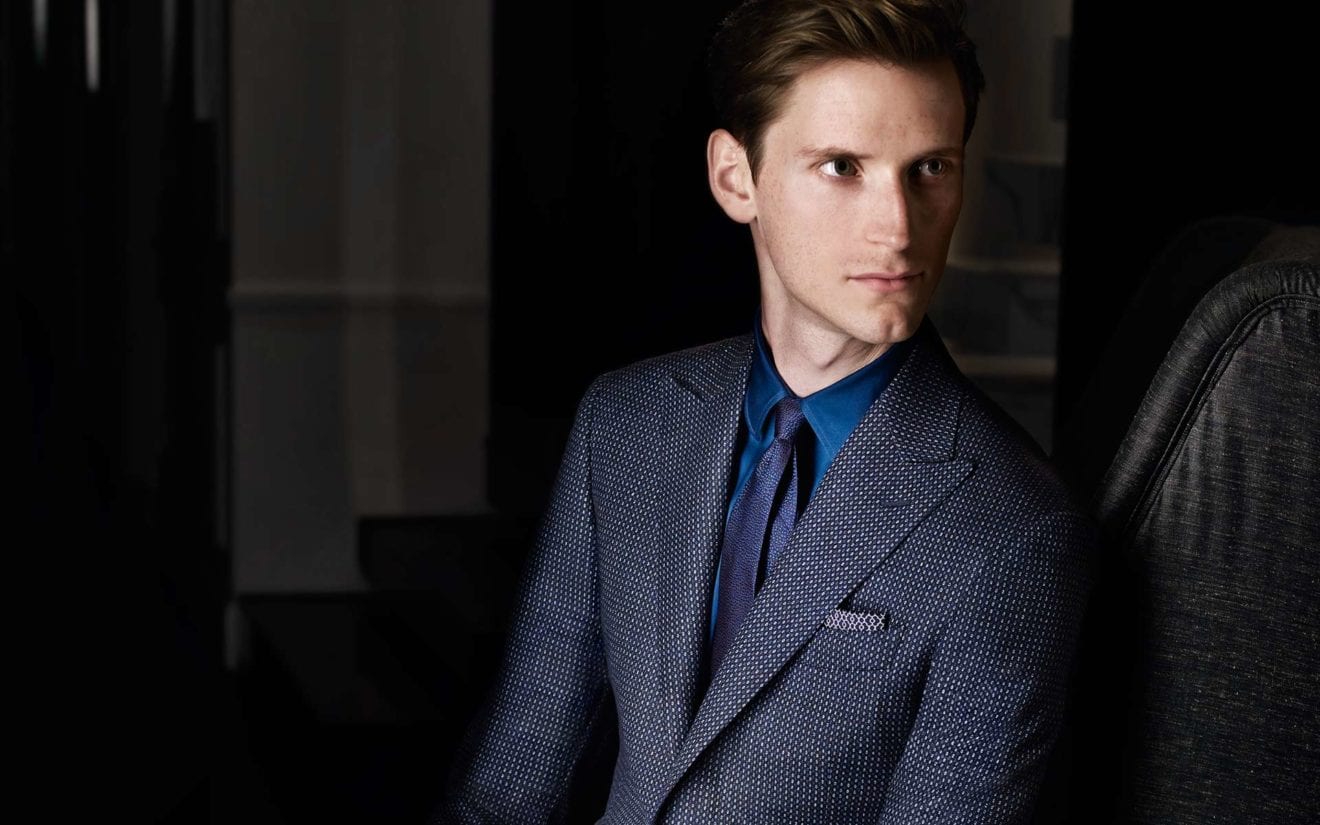
    Coolmax fabric will be used in clothing such as polo shirts and crewneck T-shirts or jeans. The hero of the new Coolmax collection is a two-button tailored slim-lapel jacket, pictured at the top of the screen, which retails for 69.99. T-shirts are priced at €9.99 and polo shirts at 14.99.