Tag: Fastfood

  • Jollibee is Hiring For its Upcoming Mississauga Location

    Jollibee is Hiring For its Upcoming Mississauga Location

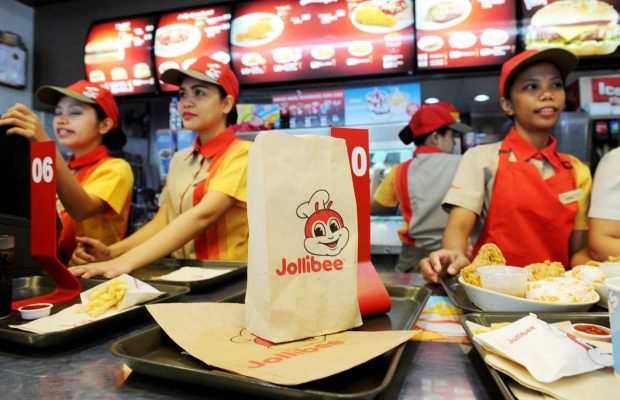
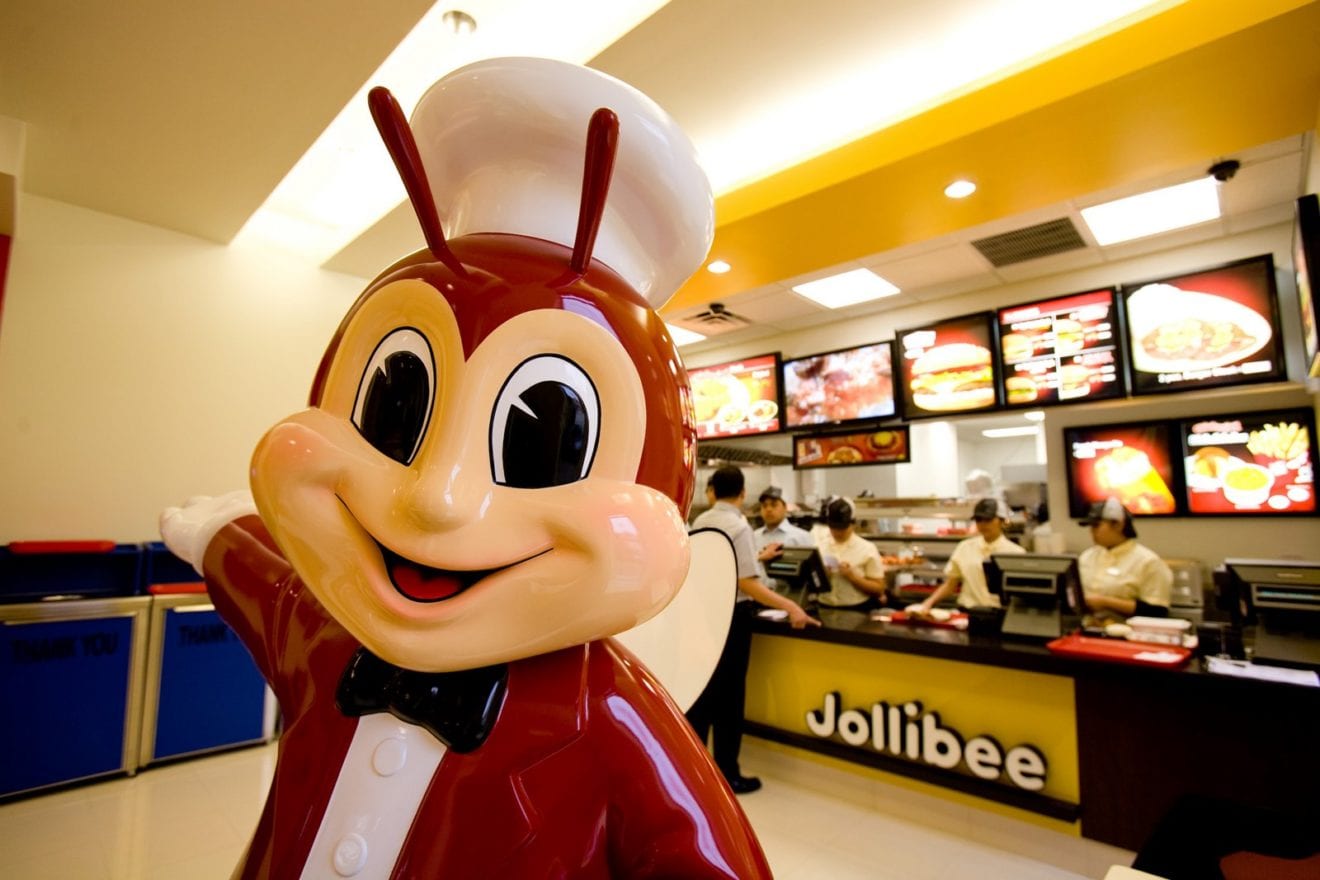
    You’ve waited so patiently for Mississauga’s very first Jollibee location and while you will have to wait a little longer to chow down on its extremely popular offerings, you can apply to work there now.

    The soon-to-open Jollibee restaurant, a popular fast food brand from The Philippines, will take shape inside the recently opened Seafood City Supermarket in Heartland Town Centre. But while the resto isn’t slated to open until 2018, the brand is already hiring.

    According to Jollibee’s website, it’s currently looking for a restaurant manager for the Mississauga location (it’s also looking to hire for the same position in Scarborough, so let your east end friends know if they’re in the market for a foodservice position).

    The brand is also looking for a store supervisor and general “crew members” to help with the day to day work of running a bustling quick-service joint.

    Note that restaurant managers and store supervisors must have some academic and professional credentials.

    Part-time and full-time positions are available and all applicants must present proof that they are eligible to work in Canada.

    As for exactly when the resto will open, Heartland Town Centre and Seafood City representatives say that Jollibee is slated to open early in the New Year, which means you’ll get to warm up with a burger this coming January or February.

    The brand offers a range of Asian and North American staples, boasting traditional fast-food hamburgers, spaghetti (which is definitely an unusual find at quick-service chains), fried chicken, garlic pepper beef, spring rolls, corned beef breakfast dishes and more.

    As for Seafood City, that was exciting opening in and of itself.

    For those who don’t know, Seafood City is a Filipino supermarket with over 20 locations in the U.S. The brand specializes in Filipino food and products and Mississauga is now home to the chain’s first Canadian location. The store officially opened its doors in September.

    Jollibee will joint a host of other quick-service spots inside the supermarket, including Grill City, Noodle Street, Crispy Town and Valerio’s Bake Shop (which just opened this month).
  • The McDonald’s rendang burger lands in Indonesia

    The McDonald’s rendang burger lands in Indonesia

    McDonald’s Indonesia has introduced the rendang burger to celebrate the country’s 72nd anniversary of independence and being the burger and fast-food lovers that we are, we just had to try it.

    After all, what better way to honor Indonesian culture than bring one of its top dishes—which has even been regarded as the world’s most delicious food—in fast-food burger form to the masses? While the fast-food giant has released similar short-term specials, this rendang burger in its latest iteration, is sold as part of a special menu titled “Ini Rasa Kita” (this is our flavor). The menu is available from July 28 til September 10, 2017.

    The special menu includes three rendang burger options: your classic rendang burger with a single patty, the double rendang burger, and the rendang burger special, which has one patty and a fried egg on top. There’s also a limited edition soda belimbing (starfruit) you can order as a part of a meal package if you’re feeling particularly adventurous. 

    We’ve comprehensively tasted and reviewed Bali’s best burgers so we feel pretty confident about our ability to give you the 411 on McDonald’s ‘culturally adapted’ new number. Just sayin.

    Going in to Bali’s Jimbaran Ngurah Rai By Pass McDonald’s with a ‘go big or go home’ mentality, we ordered ourselves the rendang burger special, which set us back Rp 40k (USD2.99) a person since we went for the meal combo. Gotta get those salty McD fries, after all. 

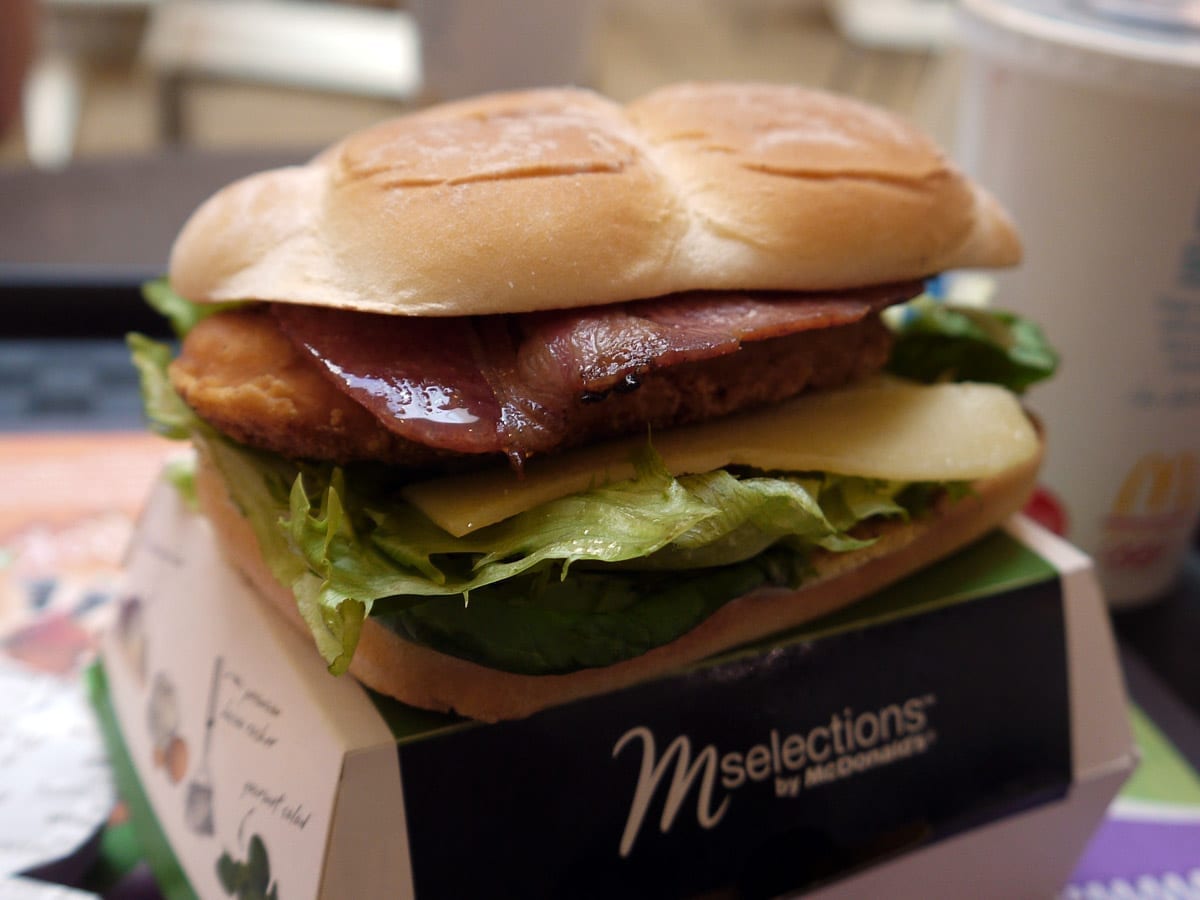
    Upon unboxing the special rendang burger, we’ve got to tell you it’s a bit smaller than we expected since McD’s promotional photos make it look like a juiced up burger compared to their standard menu—but it turns out the rendang burger is just your classic McD cheeseburger with special toppings. Same nice greasy, cheesy taste, just nothing amped up quality-wise. Another thing we immediately noticed were the giant slices of onion on top. While those appeared a bit off-putting at first, they’re a nice textural addition to the greasy fried egg and thin standard beef patty.

    As far as the actual rendang seasoning goes, please don’t expect the tastiest slow cooked rendang from your favorite padang kitchen. Have you had Indomie rendang before? Because the spice packaging that comes with the instant noodles is exactly what the McDonald’s rendang sauce recipe tastes like. MSG-filled and a bit too ‘instant mix’ on the tongue to be that slow-cooked, creamy and rich coconut-milk spiced sauce that’s earned rendang world fame.

    That said, we loved the rendang special burger as a quick bite and anticipate some late night McDonald’s visits in the next couple of weeks to get our MSG and fast food fix.

  • Jollibee to open 15 more outlets in Singapore, eyes 150 in Indonesia

    Jollibee to open 15 more outlets in Singapore, eyes 150 in Indonesia

    The famous Philippine chicken joy is spreading its wings across Asia as home-grown fast-food chain Jollibee announced Friday its plans for expansion in Singapore and Indonesia.

    Dennis Flores, Jollibee president and head of international business in Europe, Middle East, Asia and Australia, confirmed that 15 more outlets will be opened in Singapore in the next five years.

    He also revealed the company’s long-term expansion plans in Indonesia.

    “We’re looking at putting up no less than 150 stores in Indonesia over the next 10 years,” Flores told ABC-CBN News.

    Jollibee opened its first outlet in Singapore in 2013 located at Lucky Plaza, a known hub for overseas Filipino workers. Flores said, a 6th outlet will open at Jurong East in April 2018.

    He said the growing number of Singaporean patrons is proof that “Jollibee’s offerings have greatly appealed to the taste buds of the locals.”

    Aside from Indonesia and Singapore, Jollibee is looking into growing its international store network in Malaysia and Macau.

  • Jollibee poultry plant gives chicken farmers new income opportunity

    Jollibee poultry plant gives chicken farmers new income opportunity

    Cargill Joy Poultry Meat Production Inc. opened on Tuesday, giving chicken farmers in Batangas and nearby provinces new income opportunities, Jollibee Foods said Wednesday.

    A joint venture between Jollibee Foods and Minneapolis, USA-based Cargill , the largest poultry processing plant in the country has a yearly capacity of 45 million chickens.

    “The plant increases income opportunities for local poultry farmers in Batangas and nearby provinces as they will supply the chickens to be processed at the JFC facility,” according to Jollibee Foods.

    The poultry plant in Santo Tomas, Batangas will supply the demand of JFC bands with dressed and marinated chicken.

    “C-Joy is partnering with local poultry farmers in Batangas and nearby provinces to supply the new facility with chicken,” according to Cargill.

    “We are looking forward to producing the chickens that will be supplied to the C-Joy plant to meet the poultry meat requirements of Jollibee,” said Vic Lao, president of Highcrest Corp., a partner-grower of the C-Joy.

    Cargill and Jollibee Foods revealed the partnership in May last year, saying the processing plant will create an estimated 1,000 new full-time jobs in Batangas.

    They said the plant will be 70-percent owned by Cargill Philippines which will oversee the setting up, management, and operations, with Jollibee Foods owning 30 percent.

    JFC invested P244.9 million in the processing plant, and P15.2 million in Cargill Joy Poultry Realty Inc. from which C-Joy leased the land to build the facility.

    The poultry processing plant is industry positive, according to the United Broilers Raisers Association.

    “This is positive for the industry as this will promote competition among big market players like San Miguel and Bounty fresh,” UBRA president Bong Inciong told GMA News Online.

    “Maganda rin ‘yan kasi kaunti lang ‘yung big players. So, healthy for the industry na may competition sila. Also, ‘yung mga small farmers will be given opportunity to grow kasi meron silang bagong malaking client,” he added.

    Summit Securities Inc. president Harry Liu said the development will have an impact on the financial condition of Jollibee Foods.

    “I think it will help the bottom line. I am sure they are doing this investment for future requirement and steady supply for the business now and in the future,” he said in a separate text message.

    JFC closed the third quarter with a net profit of P1.62 billion, up 21.1 percent from a year earlier.

  • Burger King sales grow even as industry stagnates

    Burger King sales grow even as industry stagnates

    American fast-food chain Burger King, in the second year of its India operations, grew 69% to post sales of Rs 237 crore during FY17 when most quick-service restaurants were struggling with stagnant sales. In the 2016-17 fiscal, the company generated average sales of Rs 2.7 crore from each of its 88 outlets opened till March, while its rival Westlife Development, that runs McDonald’s in the south and west, posted average sales of Rs 3.6 crore from each outlet. Burger King, however, notched up higher numbers than Jubilant FoodWorksBSE, where average sales per outlet were at Rs 2.1 crore from both brands, Domino’s Pizza and Dunkin’ Donuts.

    Burger King’s losses rose to Rs 62 crore during last fiscal, compared with Rs 38 crore a year ago, as the company doubled its store count. Burger King, that now runs more than 100 stores in India, claims it is now profitable at both the store and company level. “Our restaurant EBIDTA (earnings before interest, taxes, depreciation and amortisation) has been positive since last July,” said Rajeev Varman, CEO, Burger King India. “Sales grew mainly due to three reasons — all our burgers are grilled similar to an Indian-stye tandoor which is healthy, our focus on entrylevel pricing, and we offer the largest vegetarian menu within QSR.”

    Burger King, that is popular for its Whopper burger, entered India in November 2014 when most quick-service restaurants were struggling with falling sales. There was a slight revival last fiscal but the overall market continued to face challenges, compounded further by demonetisation announced in November last year which saw consumers reduce discretionary spending. The 65-year-old burger chain partnered Everstone Capital in India, which holds a majority stake in the company through subsidiary F&B Asia Ventures.

    It has lined up $100 million for expansion over the next few years and expects to open at least 40-45 restaurants in India in the next few years. “There’s a significant room to grow as the potential in each of the 28 cities where we are present remains high,” said Varman. Leading quick-service restaurants have seen low same-store sales growth (SSG) since the past two years with consumers cutting back on discretionary spending.

  • Hanoi finally gets its first McDonald’s

    Hanoi finally gets its first McDonald’s

    Global burger behemoth McDonald’s opened its first branch on Saturday in the historic heart of communist Hanoi, a conservative city renowned for its traditional – and cheap – Vietnamese staples beloved by food-obsessed locals.

    Hungry customers lined up for Big Macs and Chicken McNuggets at the Vietnamese capital’s first McDonald’s outlet. It overlooks the tree-lined Hoan Kiem lake, which draws millions of tourists annually to see French-era colonial buildings and sample street-food favourites like pho noodle soup and banh mi sandwiches.

    The restaurant is the first outside of the southern commercial hub Ho Chi Minh City, where 16 branches have opened since McDonald’s first came to Vietnam in 2014 to much fanfare, especially among the rapidly-growing middle class and American-obsessed youth.

    The global fast food chain received a similarly warm welcome in Hanoi on Saturday, as hungry diners crammed into the two-storey eatery for a first taste of the Golden Arches.

    For 84-year-old Tran Dinh Luyen, who fought against the US in the Vietnam War, the restaurant was a sign of warming ties with a former enemy.

    “I am happy that McDonald’s has opened a restaurant in Hanoi. It’s a very famous American brand, so it shows how far US-Vietnam relations have come,” he told after mowing down on a Big Mac with his daughter and granddaughter.

    Some curious tourists stopped to see what all the fuss was about, perplexed that a brand ubiquitous in the West would draw so much attention.

    “It’s kind of random to see McDonald’s opening … it’s an interesting cultural experience to see how important it is that the store is opening here,” American Dan Moore told AFP, after his wife remarked she might not have expected to find one of the most salient symbols of capitalism in the communist country.

    The one-party state has seen dizzying economic growth in recent years as it has opened its doors to foreign investment, which has included an influx of western chains like Starbucks, KFC and Burger King.

    Growth in the fast food sector has been buoyed by rapidly rising incomes – annual per capita income has more than doubled in the past decade to about US$2,100 today – especially among under-30s, who make up half of Vietnam’s population of 93 million people.

    The fast food industry in Vietnam has seen double-digit growth annually for the past five years, and the country has the highest 2017 growth in Asia-Pacific for fast food chains, according to market research firm Euromonitor International.

    Though meals can cost as much as three times the local fare, customers are still showing strong appetite.

    “Young people like to hang out in fast food restaurants as they are seen as a cool and nice place … and these customers also like the taste of the food,” Euromonitor analyst Samuel Huynh told.

  • Jollibee closes 12 Hotpot Resturants in China

    Jollibee closes 12 Hotpot Resturants in China

    Jollibee Foods Corp (JFC) has closed its restaurant chain 12 Hotpot in Mainland China.

    The 16 Shanghai-area stores were shut down by its subsidiary, 12 Hotpot (Shanghai) Food and Beverage Management, a 48 per cent-owned JV with WJ Investments.

    It was formed in August 2012 when JFC’s wholly owned subsidiaries Jollibee Worldwide and Golden Plate entered into an agreement with Hoppime, a subsidiary of Wowprime Corp of Taiwan and some of its key executives. The idea was to establish WJ Investments to own and run 12 Hotpot in China, Hong Kong and Macau.

    With the discontinuation of the mainland business, 12 Hotpot (Shanghai) then the JV will be liquidated.

    “JFC will focus on building its larger and fast-growing businesses in China and other parts of the world,” says the company.

    At the end of September, JFC had 3644 stores in its worldwide network. It also has a 40 per cent interest in Smashburger with 355 outlets, mostly in the US. In China its businesses include Yonghe King (305 stores), Hong Zhuang Yuan (44) and Dunkin’ Donuts (18).

    The company has also been running Happy Bee Foods Processing to supply products to its restaurants.

    In the Philippines, JFC has the largest foodservice network with 2756 restaurant, namely Jollibee (1023 outlets), Chowking (510), Mang Inasal (471), Red Ribbon (411), Greenwich (262) and Burger King (seven).

    JFC’s overseas stores include Highlands Coffee (219 including 193 in Vietnam and 26 in the Philippines), Jollibee (186 including 93 in Vietnam, five in Singapore and four in Hong Kong), Pho 24 (31 including 15 in Vietnam, 14 in Indonesia and one in Korea), and Hard Rock Cafe (8 with three each in Hong Kong and Macau, and two in Vietnam).

  • McDonald’s Singapore is turning Japanese

    McDonald’s Singapore is turning Japanese

    McDonald’s Singapore is turning Japanese, launching a Ninja Burger and reviving its Samurai Burger. To promote the two offerings, it has launched an “Honour Your Appetite” marketing campaign.

    Senior director of marketing, menu and digital innovation Agatha Yap says the Ninja Burger expands the brand’s variety of Japan-inspired promotional flavours, which kicked off with the Samurai Burger for a short while only in the late 1990s.

    To promote the return of the Samurai Burger, McDonald’s released a commercial featuring a fight between two samurais in a forest.

    Meanwhile, McDonald’s Singapore has started using UberEats so customers can order home delivery, which MD Kenneth Chan says will complement the fast-food chain’s 24-hour McDelivery platform.

  • Fair Work terminates Domino’s Pizza worker agreements

    Fair Work terminates Domino’s Pizza worker agreements

    Shares in Domino’s Pizza have dropped sharply after the Fair Work Commission terminated deals with workers under which they were paid less than minimum award rates.

    The ruling by the Fair Work Commission to terminate 27 expired, existing enterprise agreements by January 24 could add significantly to Domino’s labour costs.

    Domino’s shares dropped $1.36, or 2.9 per cent, to $45.23.

    The company in August forecast a 20 per cent rise in annual profit in 2017/18, its weakest pace in four years, due to the impact of higher wages and slowing sales growth.

    The Shop, Distributive and Allied Employees Association (SDA) said it had long held concerns about the pay and conditions of Domino’s workers, especially Sunday penalty rates.

    Domino’s said it had not opposed the termination of the enterprise agreements, and had requested and been granted time to transition to a new agreement that is currently being negotiated.

    “Negotiations with the relevant parties for a new EBA are well advanced, and the intention is for it to take effect before the termination of the existing EBAs,” Domino’s said in a statement yesterday.

    Over the past 18 months, Domino’s has already increased our team members’ take-home pay in good faith in anticipation of the new EBA.

    “Domino’s will communicate the Commission’s decision to its franchisee network today, so that employees continue to receive their correct entitlements in this transitional period and beyond.”

    The new enterprise agreement will apply to more than 20,000 employees in 660 Domino’s stores across Australia, and the company intends for it to take effect before the termination of the existing agreements.

    “Over the past 18 months, Domino’s has already increased our team members’ take-home pay in good faith in anticipation of the new EBA,” Domino’s said in a statement.

    The company has been auditing its franchise stores for three years and recovered $5.4 million worth of unpaid wages and superannuation since 2014.

    The Retail and Fast Food Workers Union said the Fair Work decision will return tens of millions of dollars to Domino’s workers every year.

    According to the union’s analysis, an average casual delivery driver working 10 hours per week was being underpaid by more than $2,000 per year under the old agreements.

  • McDonald’s posts positive third quarter results

    McDonald’s posts positive third quarter results

    Global fast food chain, McDonald’s, has posted an increase in sales for the third quarter as its promotions and fresh food offerings attract more customers.

    McDonald’s net income rose to $1.88 billion (A$2.42 billion) in the three months ending September 30 from $1.28 billion the previous corresponding period.

    Total revenue was $5.75 billion, down 10 per cent from a year earlier due to charges related to a refranchising initiative, according to McDonald’s.

    The fast-food company said on Tuesday that sales in the US rose 4.1 per cent at existing locations during the third quarter, thanks to its US$1 drinks and its two for US$5 promotion called McPick 2.

    McDonald’s also said pricier burgers, which are stuffed with crispy onions, kale or guacamole, helped boost sales, too.

    McDonald’s has been working to modernise its restaurants by adding mobile ordering and offering delivery through the UberEats app. It’s also been tinkering with its menu as more people shun processed foods: It removed artificial preservatives from its nuggets and it’s working to use fresh beef in its Quarter Pounder burgers.

    “We’re building a better McDonald’s and more customers are noticing,” said chief executive Steve Easterbrook.

    Adjusted earnings came to $US1.76 per share, a penny above what analysts expected, according to Zacks Investment Research.

    Revenue fell 10 per cent to US$5.75 billion, missing analyst expectations of US$5.8 billion. The company said it brought in less revenue as it switches more stores from company-owned restaurants to ones owned by franchisees, especially in China and Hong Kong.

    Neil Saunders, managing director of GlobalData Retail, although various storms and natural disasters across the US threatened to blow McDonald’s off course, the company’s third-quarter numbers are a testament to both its resilience and the soundness of its reinvention strategy.

    He said international growth may have waned slightly in lead markets, but its US comparable sales growth continues to accelerate over the same period last year.

    “Given that the fast food and casual dining segments as a whole struggled over the third quarter, this is an encouraging set of results which suggests McDonald’s is gaining both market and customer share,” Saunders said.

  • Domino’s pays $42m to buy out Japan stake

    Domino’s pays $42m to buy out Japan stake

    Domino’s Pizza is taking full ownership of its Japanese joint venture by buying out partner Bain Capital’s minority stake for $42 million.

    Domino’s, which in May announced Bain’s intention to exit, on Monday said it would pay less than the $46.4 million it set aside for the deal in its full-year accounts.

    The purchase will be funded by a combination of cash and existing debt facilities, and is expected to be completed by Friday.

    Domino’s said the transaction will be earnings per share accretive in the current financial year, which started on July 3.

    The deal is the second in less than a week for Domino’s.

    Last week, the company continued its European expansion with the 32 million euro (A$48.1 million) acquisition of German chain Hallo Pizza.

    The cost of integrating the 170 stores into Domino’s Pizza Deutschland, which is majority owned by Domino’s Pizza, will bring the ASX-listed company’s net spend on the deal to between $A52.6 million and $A63.1 million.

    That transaction will only have a small positive contribution to Domino’s FY18 underlying earnings because it won’t complete until early in the 2018 calendar year.

    Earlier this month, the pizza chain said it had returned $5.4 million in underpaid wages and superannuation to its employees over the past four years under a national audit of its stores that is due to wrap up in December.

  • Competing fast food chains join forces

    Competing fast food chains join forces

    Two competing fast food franchise chains are joining forces in a brand new merger.

    Ali Baba Lebanese Cuisine and Le Wrap have combined their businesses to form the Retail Systems Group (RSG).

    RSG will run a stable of 63 stores across Australia, 40 Ali Baba locations and 23 Le Wrap stores. The merger reflects the synergy between the two brands.

    Robert Marjan, Ali Baba CEO and RSG director, said “This is the merger of two unique propositions in the food court. We can both learn a lot from each other and grow stronger. It will broaden the reach of both brands and significantly bolster support to franchisees.

    “The increased numbers from the merger will increase momentum for RSG,” said Marjan.

    “Business tasks are enhanced. Negotiations with landlords and suppliers are more constructive. The franchisees have access to a combined professional team with years of experience to guide and assist them. Marketing benefits and cost savings are able to be combined.”

    Kebab franchise Ali Baba was founded in 1979. The family franchise’s success has been built on utilising traditional Arabic herbs and spices, premium ingredients and secret recipes.

    Kaan Celik started the Le Wrap business serving healthy, freshly made wraps in 2005 with the aim of creating something “modern and simple”. His hands-on approach has been a key driver of success.

    “This merger will open up more opportunities for Le Wrap. We can learn a lot from Ali Baba. Retail Systems Group will operate from a position of power,” said Celik.

    It was a question of finding the right partner to combine forces, he added.

    “This business is quite simple and it has so much potential.”

    The ability to look at each brand with an outsider’s perspective will prove invaluable for the business, he said.

    Right now the business is focused on three months of hard work and planning that will lead to refinements across the brands.

    Major growth is planned over the next couple of years, with a goal of 100 combined stores in the next 24-36 months.

    And Marjan told Inside Franchise Business this merger could be just the beginning for RSG.

    “We may have further expansion, depending on how quickly we can get up and running. It could be a successful brand that needs a bit of extra suppport, or a start up, or another major brand we can merge with. We will assess the opportunities.”

    Marjan said combining forces was one way to stay competitive in a tough food retail market.

    “It’s not the only way, but for businesses with the number of stores we have, it’s an ideal way to be stronger and give us a fighting chance.

    “Shopping centres are making it tough.”

    RSG is based at the Ali Baba premises in Ingleburn, New South Wales which includes a kitchen for research, development and trials of new products.

    Putting both businesses under one roof will provide immediate costs savings, pointed out RSG general manager Harry Malovany.

    He is expecting the new business to have greater appeal to franchise buyers, with two options with investment levels from $200,000 to $300,000.

    Malovany predicts joint location opportunities will also arise as a result of the merger.

  • Lotte sells Burger King Japan to Affinity Equity

    Lotte sells Burger King Japan to Affinity Equity

    Affinity Equity Partners of Hong Kong has bought Burger King’s Japanese business from South Korea’s Lotte Group for an undisclosed sum.

    A new entity set up by Affinity, Burger King Japan Holdings, is expected to take over the roughly 100 fast-food outlets next month, reports Nikkei Asian Review.

    The US burger chain had pulled out of Japan in 2001 following poor earnings, but re-entered the market in 2007 when Lotte and Japan-based Revamp bought the franchise and ran it as Burger King Japan. Three years later the business was transferred to Lotte subsidiary Lotteria.

    Meanwhile, rival McDonald’s has maintained leadership in the market despite a slowdown and store closures in the past few years, pushing Burger King to seek a new approach.

    Affinity bought the Burger King South Korean franchise last year from VIG Partners for US$170 million. Meanwhile, Affinity is raising $5 billion for its fifth fund, which exceeds its $3.8 billion fund in 2013.

  • McDonald’s Singapore: Lock up your phone

    McDonald’s Singapore: Lock up your phone

    In a bid to help families reconnect, McDonald’s Singapore has introduced a locker for mobile phones at its Marine Cove flagship.

    Its new“Family Playdate” concept includes table service with the aim of promoting human interaction.

    McDonald’s says a survey it ran shows that more than 90 per cent of parents and children use their mobile devices when they’re together, despite most parents wanting to be “more disciplined in staying away from digital distractions during family time”.

    Rather than go hi-tech, the 100 clear lockers have physical keys, and staff members will remind customers to take their phones when they leave.

    Staff members will also act as “guest experience leaders”, says the fast-food company. They will “engage with families”. When ordering at a self-service kiosk, customers can select the table-service option at no extra charge
    A McDonald’s Singapore says the restaurant will gather feedback on the initiatives to decide whether or not to expand them to other outlets.

  • Pizza chain’s customers complain of data breach

    Pizza chain’s customers complain of data breach

    Customers of pizza chain Domino’s Australia are complaining their personal data has been leaked, prompting eerie personalised emails from scammers.

    Many took to social media to complain about phishing emails addressing them by their first names and mentioning where they live.

    But Domino’s insists there’s been no “unauthorised access” to its systems, although it is investigating a potential issue with a former supplier.

    “It was a bit eery (sic) getting all these spam emails that somehow knew my name and suburb and initially were making it past the spam filter,” Mitchell Dale posted on Domino’s Facebook page.

    “The decision to try to keep me in the dark and not announce what had happened is why I will not be ordering Dominos again.”

    “Nothing better than waking up finding out your data has been breached,” Dylan James posted on Facebook.

    “Why haven’t you informed anyone yet?”

    In an undated statement on its website, Domino’s Australia said there was no evidence to suggest there had been unauthorised access to its systems.

    “We are investigating a potential issue with a former supplier’s systems that may have led to a number of customer email addresses, names and store suburbs (related to pizza orders) being accessed,” it said.

    “Domino’s acted quickly to contain the information when it became aware of the issue and has commenced a detailed review process.”

    The company did not say when it first became aware of the issue and insists no financial information has been accessed.