Tag: Holiday

  • AirAsia to lay off 30% of workforce

    AirAsia to lay off 30% of workforce

    AirAsia India is expected to let go of several of its employees as its part-owner, AirAsiaBerhad struggles to maintain its group operations across regions following the outbreak of coronavirus.

    AirAsia Berhad is set to reduce up to 30 percent of its workforce across regions including its Indian operations which it part-owns with Tata Sons as the group struggles to maintain its operations following the Covid-19 outbreak.

    Sources in the airline said that apart from salary reduction up to 75 percent, the group is seriously considering plans to let go between 25 percent and 30 percent of its entire workforce of about 20,000 across regions.

    An AirAsia India spokesperson, however, declined to comment on the possible measures being taken to retrench employees. As of December 2019, AirAsia India had a market share of 7 percent. It has a total fleet size of 30 aircraft and flies to 21 destinations across India.

    The airline sector is one of the most-affected industries since the outbreak of coronavirus across the countries. According to the airline consultancy firm CAPA, most airlines in the world could file for bankruptcy soon. “As the impact of the coronavirus and multiple government travel reactions sweep through our world, many airlines have probably already been driven into technical bankruptcy, or are at least substantially in breach of debt covenants.”

    As far as the airlines operating in India are concerned, CAPA said they are expected to incur a total loss of $3.6 billion during the first quarter of the current financial year. Cash reserves are running down quickly as fleets are grounded and what flights there are operate much less than half full, it said.

    Surprisingly, AirAsia India recently received its board’s clearance for increasing its borrowing limit by ₹1,000 crore to ensure it continues to pay leasing and parking charges for its grounded aircraft. AirAsia India is learned to be the first domestic airline to formally increase the borrowing limit. The decision to increase the limit from ₹500 crore to ₹1,500 crore was taken at a meeting of the shareholders in April.

    AirAsia India is a joint venture between Tata Sons, which owns 51 percent in the airline, and AirAsia Berhad. The special resolution was approved to carry out “existing and future financial requirements to support its business operations”

    AirAsia India, which has been struggling since it began its operations in June 2014, recorded a fourth-quarter net loss of ₹123.3 crore in FY19, which was 26 percent lesser than the same quarter in the previous year. It recorded revenues of ₹1,057.6 crore, a 65 percent increase from Q4 of FY18 on the back of a 38 percent increase in capacity, and a 19 percent increase in average fare.
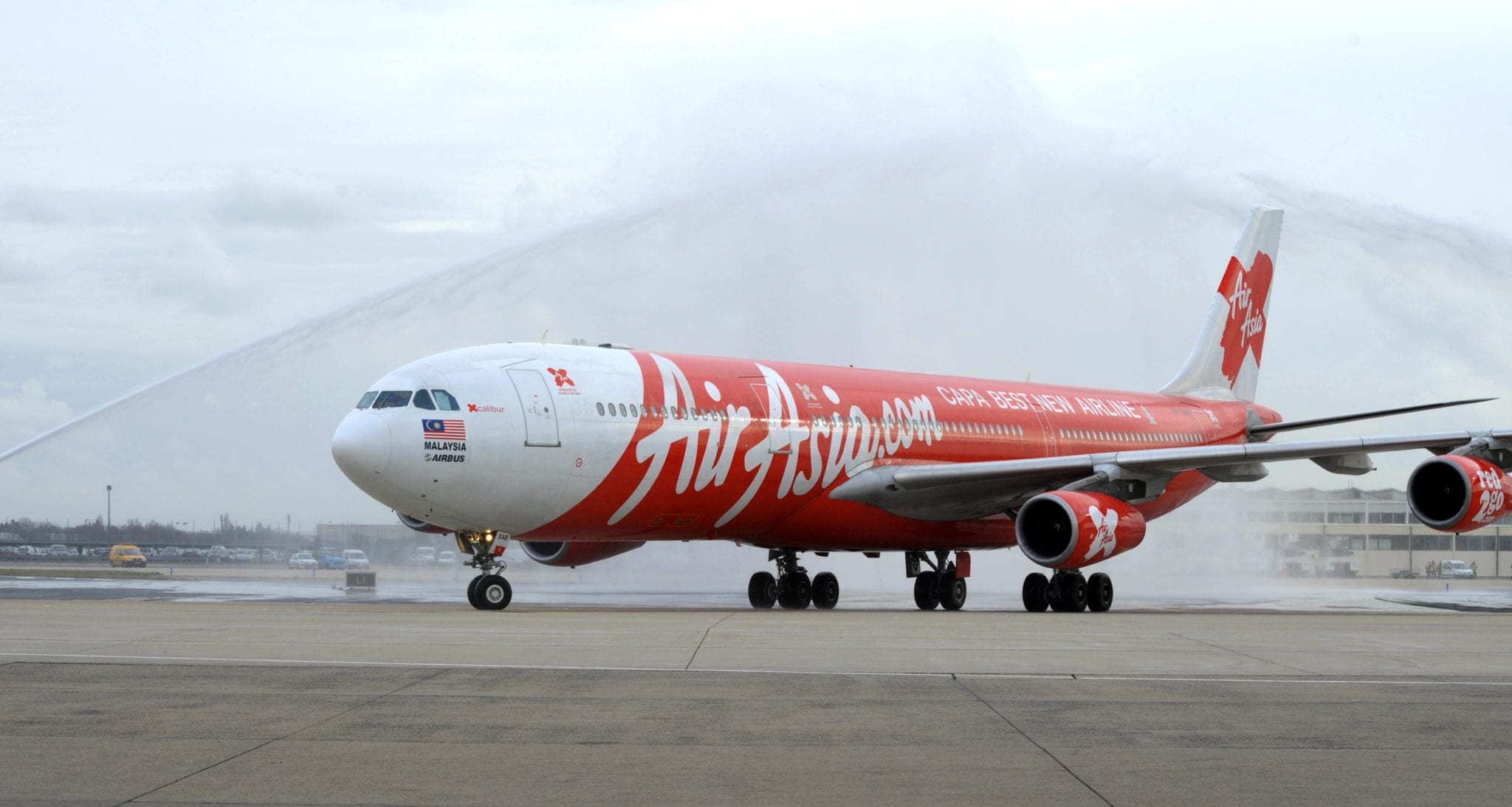

  • AirAsia to increase frequency for Langkawi, Kuching and Penang

    AirAsia to increase frequency for Langkawi, Kuching and Penang

    Low-cost airline AirAsia Bhd will increase flight frequencies for its most sought after routes during the Recovery Movement Control Order (RMCO) period including Langkawi, Kota Kinabalu, Kuching and Penang.

    Chief executive officer Riad Asmat said the routes are from Kuala Lumpur to Langkawi, Kuching and Kota Kinabalu, as well as from Johor Bahru to Kuching and Penang. However, the number of add-on flights for July would be announced later, he said.

    “Since the resumption of our flights post-hibernation mode, we are witnessing encouraging demand for domestic travel.

    “We will continue to monitor demand and hope to gradually increase the frequencies from our other hubs such as Kota Kinabalu, Kuching, and Penang in the near future,” he said.

    Other AirAsia’s domestic destinations are Alor Setar, Ipoh, Kota Bharu, Kuala Terengganu, Miri, Bintulu, Sibu, Sandakan, Tawau and Labuan.

    Commenting on in-flight safety measures, Riad said it was paramount for AirAsia to continuously educate travellers about safe flying to build their confidence to start travelling again.

    Hence, the airline has implemented various measures throughout different flight phases such as temperature screenings, limited hand-carry item, face mask usage, end-to-end contactless procedures, proper hygiene standards and inflight medical training for cabin crew.

    According to IATA, evidence suggests the risk of Covid-19 transmission on board is extremely low as aircraft are equipped with features that will reduce the already-low risk of transmission onboard.

    Passengers are seated facing forward with the seatback serving as a solid barrier, while the cabin air is fully filtered and renewed every 2-3 minutes through the hospital-grade high-efficiency particulate air (HEPA) filters, ensuring clean cabin air.

    Coupled with a layered approach of biosafety measures covering the entire passenger journey, the risk of transmission onboard is further minimised.

    “With continuous information provided to our guests, we believe this will help to build the confidence of our travellers to start flying again,” he said.

    With regard to international destinations, Riad said AirAsia would begin operations once the situation improves and governments lift borders and travel restrictions.

    Asked on AirAsia’s focus in the next five to six months, he said the airline would continue with the diversification of its revenue base during this situation, with a more rigorous and market-friendly approach to further expand its digital and ancillary businesses such as Santan, Teleport and BigPay.

    Aside from that, AirAsia would also focus on supporting government initiatives to promote local tourism together, he said.

    AirAsia, which was named the World’s Best Low-Cost Airline for 11th consecutive time at the Skytrax World Airline Awards 2019, has recently extended the sale of its Unlimited Pass Cuti-Cuti Malaysia due to the overwhelming demand.

    Since its launch on June 11, over 40,000 flights have been redeemed with the first flight redemption taking place only seven minutes after the pass went on sale.

    On Thursday, AirAsia announced its partnership with local hotels to offer hassle-free, best price guaranteed deals with bigger savings on SNAP, its new flight+hotel combo booking platform.

    SNAP leverages the airline’s extensive network of over 160 destinations, with many being unique and exclusive routes, to provide the best price for flights, while working directly with hotel partners to offer best value room deals.

  • AirAsia launches three-day sale for domestic flights

    AirAsia launches three-day sale for domestic flights

    AirAsia Group Bhd, which resumed its domestic flights on April 29, has launched a three-day sale for domestic flights booked through airasia.com and its mobile app from today to Sunday.

    During the sale, AirAsia BIG members can enjoy all-in one-way fares from as low as RM129 for domestic travels between July 1 and Nov 19, while non-members’ fares start from RM134.

    In a statement, Amanda Woo, head of the commercial for AirAsia, said passengers can now perform an unlimited number of date changes to their flights with the recent announcement of flight change fee waiver for all new bookings with travels up to Dec 31.

    She added that since the resumption of its domestic services, AirAsia has enhanced its safety measures throughout the entire flying journey, including pre-flight, in-flight, and arrival processes.

    Several contactless procedures including contactless payments at the airport, contactless kiosks, passenger reconciliation system, as well as enhanced features on AirAsia mobile app are also in place to ensure a smooth and safe travel experience for all AirAsia’s guests.

  • AirAsia to slash workforce by at least 30%

    AirAsia to slash workforce by at least 30%

    Southeast Asia’s biggest low-cost carrier AirAsia Group is set to reduce its workforce by up to 30% as founder Tony Fernandes considers selling a 10% stake in the airline to raise cash. Desperately trying to stave off a cash flow crisis triggered by the coronavirus pandemic which has decimated the region’s travel and tourism industry, AirAsia will also slash remaining staff salaries by up to 75% in an attempt the save the airline, the Nikkei Asian Review has learned.

    The retrenchment will include cutting 60% of AirAsia’s cabin crew and pilots for both AirAsia and its medium-haul affiliate AirAsia X. AirAsia Group operates through Malaysia, Thailand, Indonesia, Japan, India and the Philippines.

    Almost all of the company’s 20,000 employees have been individually re-evaluated since January based on salary scale and performance, with the lay-off expected to continue through to the end of July.

    Multiple sources have told Nikkei that the airline — in which Fernandes continues to hold a majority stake — may also sell 10% of the company’s paid-up shares to raise cash, with South Korea’s SK Corp reportedly leading a trio of multinationals expressing interest.

    The share sale would not require shareholder approval as management has already been mandated to increase the number of new shares by up to 10% at a shareholders meeting last June. Korea’s third-largest conglomerate SK Corp could subscribe to new AirAsia shares of 1 Ringgit each, raising approximately $78.4 million for the airline. SK Corp, which has a major presence in the energy and telecommunications industries via its 95 subsidiaries, registered revenue of $213.6 billion last year and is backed by to $257.9 billion worth of assets.

    “All the proposals are being deliberated by the Board of Directors, with a decision can be expected as soon as next week,” a source said.

    While remaining employees are asked to take pay cuts ranging between 15%-75%, Fernandes has also slashed AirAsia’s capital expenditure and the working capital of all the group’s operating airlines. Fernandes and the airline’s co-founder Kamarudin Meranun have also agreed to draw no salary for the medium term.

    “Budgets for departments have been slashed while the salary cuts are expected to last until the end of next year,” the source said. “AirAsia only expects the situation to improve in 2022.”

    Employee benefits, which include free and discounted flights and complimentary meal coupons, have been curtailed significantly.

    “Bonuses, salary increments, and incentives have been put on hold while only travel allowance and basic salary paid,” the source said. Another source close to Fernandes said that Fernandes was also exploring the sale of unprofitable airline ventures in Japan and India.

    “He (Fernandes) is open to reduce stakes or even exit Japan and India, due to the complexity of the domestic industry and escalating costs if compared to sales,” the source, who declined to be named. Thai AirAsia was exploring a merger with several domestic budget carriers in an attempt to survive the pandemic.

    Malaysia’s government is also looking at channeling over $350 million to the country’s three main cash-strapped carriers AirAsia, Malaysia Airlines, and Malindo Airways as part of a broader economic rescue package.

    The government hopes the funds will help the airlines survive the pandemic crisis and new operating procedures which may include social distancing onboard and contactless check-in.

  • Thai AirAsia chief proposes longer weekends

    Thai AirAsia chief proposes longer weekends

    Thai AirAsia’s executive chairman is proposing to the government a policy allowing one day working from home per week to avoid public congestion and boost the domestic tourism market to reach its target of 100 million trips this year.

    As more people get used to working from home, the government should consider allowing civil servants and private companies to work remotely one day a week, said Tassapon Bijleveld, executive chairman of SET-listed Asia Aviation (AAV) and the largest shareholder of Thai AirAsia.

    He said that when people are not bound to an office routine for Fridays, there’s a chance they’ll consider taking more trips for three-day weekends.

    The Tourism Authority of Thailand and the Finance Ministry are working on a tourism stimulus plan to make activities more affordable in the second half of the year.

    Mr Tassapon said he discussed the idea with the state agency, arguing that it would help efforts to push domestic tourism once the coronavirus crisis ends.

    “The domestic market still has a chance to take the lead in restoring the national economy, but it will depend on the scale of efforts from the government and cooperation from the private sector,” he said.

    He also encouraged the Interior Ministry and governors of each province to scrap the 14-day quarantine for inter-provincial travelers, as well as make clear whether a health certificate is needed. Some provinces have not clarified the rules, and airlines cannot plan routes to those destinations.

    Mr Tassapon said that while the aviation industry in Thailand is at a critical stage, the government can help it by offering local travelers a tax deduction on expenses for domestic airfares, which the previous scheme didn’t cover.

    According to the Tourism and Sports Ministry, local travelers took 24.7 million trips during the first four months of this year, down 50.3% year-on-year, generating 190 billion baht for the economy, down 48.3%.

    Mr Tassapon said Thailand’s tourism landscape after the global health crisis will lean towards quality tourists because more requirements for each trip will make people want to stay longer and spend more in Thailand instead of coming 3-4 times a year as they did before the pandemic.

    Moreover, Thailand should preserve the natural resources that have been restored during the outbreak.

    To achieve those goals, attractions are necessary for certain areas such as the northeastern provinces of Thailand.

    In the past, most tourists went to southern Thailand, which boasts plenty of famous resort islands, resulting in exploitation of nature and unbalanced tourism revenue.

    The Board of Investment should invite a major theme park operator such as Disney or Universal Studios to open a full-scale park in destinations that lack natural attractions, Mr Tassapon said.

    He noted that almost every province in the Northeast has an airport already. New investment could create many jobs for local communities.

  • AirAsia to resume Philippine domestic flights starting June 3

    AirAsia to resume Philippine domestic flights starting June 3

    AirAsia announced on Sunday that it will be resuming its domestic flights starting June 3 as quarantine protocols are eased in several areas in the country including Metro Manila.

    In an advisory, AirAsia said that resumption of services will gradually increase to include international destinations by July 1.

    Selected domestic flights are available for booking via the airline’s website or mobile application. Travelers can also use their credit accounts to redeem these flights.

    AirAsia also announced that operations for domestic flights will be temporarily moved to Terminal 3 of the Ninoy Aquino International Airport from its previous location at Terminal 4.

    Travelers were advised to expect enhanced safety measures which include the mandatory wearing of face masks to be permitted to travel, among others.

    AirAsia Philippines CEO Ricky Isla said assured the traveling public that they are “well prepared to welcome everyone aboard.”

    “During the hibernation of our fleet, we took the time to step up our handling procedures to ensure that our guests have a swift and safe journey with us. Needless to say, we are well prepared to welcome everyone on board,” Isla said.

    “As we resume our services around our network, AirAsia is determined to help rebuild our economy and country,” Isla added.

    Other airline companies such as Philippine Airlines and Cebu Pacific have earlier announced the resumption of some flight operations this June.

  • AirAsia enhances digital self check-in prior to flights resumption

    AirAsia enhances digital self check-in prior to flights resumption

    AirAsia has rolled out a number of additional safety procedures prior to the resumption of its flights, including enhanced digital self-check-in procedures.

    AirAsia check-in kiosks at airport terminals have been designed to perform contactless transactions by scanning QR codes of flight bookings from mobile devices or printed boarding documents. Guests only need to check-in online to generate a code, which will activate the kiosks automatically.

    “We look forward to flying with our guests as soon as circumstances allow it. With the hope that the global community is on its way to recovery, we continue to put in place measures that will safeguard the health and wellbeing of our passengers and crew. One way AirAsia is doing this is by maximizing the power of technology in line with our vision of becoming a fully digital company,” AirAsia Philippines Chief Executive Officer Ricky Isla said.

    To initiate a contactless transaction at kiosks, guests are advised to check-in first on the AirAsia.com website or mobile app. The generated QR code on their mobile device or printed document after checking-in may then be scanned at the kiosk, which will always be on “active mode” to read QR codes. Scanning a QR code will automatically print boarding passes and baggage tags without having to touch the kiosk’s screen.

    Guests may seamlessly self-check-in on the AirAsia.com website and mobile app 14 days up to 1 hour before the scheduled departure time.

    AirAsia’s mobile app will also see an enhancement soon where guests can scan their passports via the app itself, facilitating more streamlined user experience and a seamless and contactless self-check-in process. There are also plans to progressively add other features such as travel visa scanning capabilities in the near future.

    Meanwhile, measures that will be strictly enforced as part of the safety procedures include physical distancing at check-in and boarding queues.

    Guests will be required to have their body temperature checked by airport or airline personnel. Protective gear such as face masks will also be required inside the aircraft, and all passengers will be encouraged to practice high personal hygiene throughout the flight.

    Guests who experience symptoms related to Covid-19 during a flight are advised to seek assistance from cabin crew, who have been trained to handle inflight medical situations. Flight crew who attend to guests with said symptoms will be placed under home quarantine for 14 days in compliance with government guidelines.

    Protective equipment will be provided to ground and cabin crew while all aircraft will be furnished with antibacterial sanitizers compliant with the Bureau of Quarantine.

    All AirAsia aircraft, which are fitted with hospital-standard High-Efficiency Particulate Air (HEPA) filters, will also be sent for thorough disinfection after each flight with the use of disinfectant approved by the Bureau of Quarantine and the Civil Aviation Authority of the Philippines.

    AirAsia is complying with advice and regulations from the local government, civil aviation authorities, global and local health agencies, including the World Health Organization.

    AirAsia continues to closely monitor the situation and reserves the right to announce further policies according to the latest developments.

  • AirAsia extends credits for 2 years

    AirAsia extends credits for 2 years

    AirAsia customers with flights that had been scheduled to depart between March 23 and July 31, 2020 can now choose between a credit with a 2-year validity, or unlimited changes for flights departing up to Oct 31, 2020.

    AirAsia has also extended all credits previously issued for COVID19 related disruptions with validity for up to 2 years.

    The unlimited flight changes option means that customers can change their booking to any new travel date before Oct 31, 2020, on the same route, for an unlimited number of times, without any additional cost, subject to seat availability.

    The credit can be redeemed within 730 calendar days from the issuance date. The travel date of the new booking can fall on any date within the published flight schedule on AirAsia’s website.

    The two options are only applicable for direct online bookings made via airasia.com.

  • AirAsia India starts domestic flight bookings for 21 destinations

    AirAsia India starts domestic flight bookings for 21 destinations

    Low-cost carrier AirAsia India has started bookings for 21 destinations ahead of the resumption of domestic flights from Monday.

    In a release, the airline said it would strictly follow the SOPs (standard operating procedures) and guidelines laid out by the regulatory bodies to enable safe travel.

    AirAsia flights are open for booking for travel to all its 21 destinations where it flies to in the country, the release issued on Saturday said.

    “We are appreciative of the government working collaboratively with all stakeholders to define the new protocols to help open up domestic flying in a calibrated manner keeping the health and safety of passengers and the airline crew in focus.

    “The new SOPs and guidelines will pave the way for ensuring and instilling a sense of confidence amongst passengers,” Sunil Bhaskaran, AirAsia India Managing Director and Chief Executive Officer, said.

    Among other measures, the airline would facilitate regular disinfection procedures to control or kill infectious agents using the cleaning, sanitizing, and disinfecting products approved by the public health authority and aircraft manufacturer.

    According to the release, passengers would have to mandatorily web check-in, complete their self-declaration form, and download the Aarogya Setu app before they arrive at the airport. They have also been advised to report two to four hours prior to the departure time to allow enhanced health and safety processes to take place.

    Reverse zone boarding process starting from the rear of the aircraft would be followed, it added.

    Commercial flight services remain suspended since March 25 when the nationwide lockdown to prevent the spreading of coronavirus infections was imposed.

  • Agoda axes staff as Covid-19 virus outbreak decimates bookings

    Agoda axes staff as Covid-19 virus outbreak decimates bookings

    Asian online travel agency and metasearch engine Agoda has shed 1500 staff in a major downsizing brought on by the impact of the coronavirus pandemic.

    The cuts equate to more than a third of the company’s regional payroll believed to be 4000.

    The move is a “last resort”, according to CEO John Brown, who has personally pledged to waive his own salary for the rest of the year while the travel industry plummets globally. Another senior staff has also faced 20-per-cent cuts in salaries.

    “Before getting to this decision we took aggressive measures and every opportunity to reduce costs across the business,” said Brown. “Staff reductions will always be the last resort, but we have had to make this very difficult decision. The truth is that while we are seeing some signs of recovery in our core markets in Asia-Pacific, the impact of Covid-19 on the travel industry is deeper and will be more prolonged than we could have envisaged.”

    The announcement was made during a virtual town hall with employees this week and formalized in an email to all staff.

    According to Brown, most staff cuts are in the firm’s customer experience group, as well as in product, IT, finance, partner services, marketing, and the Rocketmiles program. The CEO said this will be the first and last cut in staff.

  • AirAsia studying possibility of increasing airfares

    AirAsia studying possibility of increasing airfares

    Low-cost airline AirAsia Bhd is studying the possibility of increasing its airfares in the future, following the implementation of the Conditional Movement Control Order (CMCO). Executive chairman Datuk Kamarudin Meranun said discussions are ongoing to decide if there is an urgent need for AirAsia to increase its airfares in the future.

    “Even if there is an increase, it will not be significant.

    “At the moment, we do not know exactly how much the increase would be (if any) as we do not know the total number of AirAsia aircraft that would be allowed to operate during the CMCO,” he told reporters after the launch of the group’s charity campaign, “Derma Dengan Ikhlas” here today.

    On Tuesday, some local carriers warned that passengers will likely have to pay over 50% or more for airfares if social distancing is implemented onboard aircraft, as proposed by the International Air Transport Association (IATA) in view of the Covid-19.

    Malaysia Airlines Bhd and Malindo Air said the need for social distancing among passengers would result in a spike in airfares by up to 54%.

    Malaysia Airlines said this was seen in Thailand after its government-regulated empty seating between passengers, which resulted in domestic fares increasing by over 50%.

    “We will continue to drive dynamic pricing based on capacity and demand. Promotions will surely be ascertained periodically as and when it is feasible.

    “We expect customers to be more concern about safety and security,” it said in a news report yesterday.

    Kamarudin said the increase of fares would be subject to costs and AirAsia would try as much as possible not to increase its fares so as not to burden passengers.

    “Our intention is resuming flight (operations) is to ensure that operations can continue and not because we are aiming for profit, as, in the current challenging situation, it is difficult for airline companies to make a profit.

    “As long as we can pay for management costs such as maintenance and so on, it is sufficient,” he said.

    He said the operation of airline companies is subjected to government directives, hence, all plans will have to comply with the government’s decision, especially during the CMCO.

    “So, when we made a plan and when the announcement by the government is not in line with our plans, we have to change it,” he said.

    Meanwhile, Kamarudin said AirAsia has used RM50,000 from its contribution fund to purchase essential goods from ST Rosyam Mart supermarket to be distributed to more than 1,000 families and various communities, including single mothers, non-governmental organizations, mosques and welfare organizations.

    “So far, we have provided assistance to more than 50 locations and we realized that there are more communities that are in need of such assistance,” he said.

    The airline had launched a public digital donation drive on April 5 and has managed to raise RM911,000 to date.

  • Cebu Pacific to introduce Contactless Flights as “new normal”

    Cebu Pacific to introduce Contactless Flights as “new normal”

    Cebu Pacific will introduce contactless flights in the future when people are ready to fly again. The low-cost airline put safety as its topmost priority in the age of “new normal” as the Philippines will start to ease its quarantine restrictions come May 16. Here are some of our new guidelines for Cebu Pacific Contactless Flights within the Philippines:

    Guests are required to keep masks on, from airport entrance until arrival. Bag drop counters will close one hour before flights, to allow enough time for staggered boarding procedures. Physical distancing markers must be followed.

    Hand sanitizers will be provided for guest and staff use, at the airport and inside the aircraft. CEB passenger areas such as kiosks, bag drop counters, shuttle buses, and aircraft lavatories and seats will also be frequently sanitized for everyone’s safety.

    Guests are highly encouraged to check-in online to minimize proximity to our check-in agents. Those with no bags can head straight to gate. Once the row is called, have boarding passes ready for scanning by our boarding gate agents.

    Meanwhile, operations teams have these world-class Preventive Measures in place:

    CEB pilots and cabin crew will undergo rapid antibody tests before their assigned flights, as part of our commitment to flattening the curve. The operating crew cleared for flights will also don personal protective equipment. They are also trained to assist and isolate guests onboard, as needed.

    Our daily disinfection program includes the misting of the aircraft cabin, using an Airbus-approved disinfectant effective in eradicating viruses including the Coronavirus. This process is aligned with the International Air Transport Association (IATA) guidelines and ensures that all surfaces (such as passenger seats, overhead bins and cargo compartments) are covered and sanitized. Lavatories will also be sanitized every 30 minutes.

    The air inside the cabin is changed every three minutes, using High-Efficiency Particulate Air (HEPA) filters installed in our Airbus aircraft. HEPA filters can filter out viruses with 99.99% efficiency, which is why it’s also used in hospital operating rooms.

    Cebu Pacific said that it will continue to work with government authorities and use guidelines from the World Health Organization and the International Civil Aviation Organization. They will keep refining their procedures, so people can travel with peace of mind.

  • AirAsia will not take jet deliveries this year

    AirAsia will not take jet deliveries this year

    Malaysia’s AirAsia Group said on Wednesday it did not intend to take any new aircraft deliveries this year because of the sharp fall in demand from the coronavirus crisis, and was revisiting its order book with Airbus SE.

    Reuters last week reported Airbus had put six jets up for sale after giving up on AirAsia taking delivery of them, according to sources familiar with the matter.

    The Asian budget carrier is one of the European manufacturer’s largest customers, with 349 A321neos and 13 A320neos on the order that has yet to be delivered, according to the Airbus order book.

    AirAsia expects to end 2020 with 242 aircraft in its fleet, down one from last year, Executive Chairman Kamarudin Meranun said in a statement.

    AirAsia said it had resumed domestic flights in Malaysia on Wednesday and hoped to do so in Thailand, the Philippines and Indonesia in May, subject to approval from authorities.

    The airline said that it had restructured most of its fuel hedges, struck when oil prices were higher, and that it was cutting employee costs, renegotiating contracts and cutting back on non-essential spending to lower costs by at least 30% this year.

    Airbus on Wednesday posted a 49% slump in first-quarter adjusted operating profit to 281 million euros ($304.7 million) as revenue dropped 15% to 10.631 billion euros amid the “gravest crisis the aerospace industry has ever known”.

  • AirAsia sets up special recovery flights in the Philippines

    AirAsia sets up special recovery flights in the Philippines

    AirAsia released a schedule of special recovery flights in the Philippines for those who are affected by the lockdown or enhanced community quarantine in parts of Luzon and in different areas of the country.

    The flights are in response to requests from various organizations, including local and international government agencies.

    Those who intend to book these flights must get in touch with the relevant government agency.

    The airline is arranging more flights as required.

    AirAsia added that flight schedules may change at short notice, as new regulations may have to be met in response to the COVID-19 pandemic.

    “AirAsia assures that the safety and wellbeing of our guests and Allstars is our top priority. AirAsia is complying with advice and regulations from the local government, civil aviation authorities, global and local health agencies, including the World Health Organization,” it said.

    It added, “AirAsia is closely monitoring this situation and reserves the right to announce further policies according to the latest developments.”

  • AirAsia won’t be missed, says ex-aviation chief

    AirAsia won’t be missed, says ex-aviation chief

    Low-cost air travel will remain largely unaffected if AirAsia were to cease operations because of lost revenue caused by the Covid-19 pandemic, says an aviation expert.

    Malaysia’s former head of civil aviation, Azharuddin Abdul Rahman, said the impact on air travel and tourism would only be felt initially. Low-cost air travel would soar again after other airlines take up AirAsia’s flight slots. Aviation specialist and researcher Roger Teoh agrees, saying new airlines would be created to take the place of insolvent airlines in a survival of the fittest. Azaruddin said AirAsia’s flight slots would be a precious aviation commodity. The carrier had hundreds of slots every day.

    He could not imagine AirAsia closing shop after the airline had “changed the landscape of air travel, not only in this region but in Asia Pacific as well”. Azharuddin said there was a place for both low-cost carriers like AirAsia and legacy full-service carriers such as Malaysia Airlines.

    The two airlines have been at the center of recent speculation about a merger, with Malaysia Airlines suffering the impact of its long-standing financial problems.

    AirAsia recently announced that 96% of its 255-strong fleet had been grounded because of the Covid-19 pandemic. Its staff has been required to take pay cuts of between 15% and 75%, and aircraft manufacturer Airbus recently announced it would sell six aircraft on order by AirAsia.

    Azharuddin said the two airlines should form a partnership but remain as separate entities in order to stay competitive.

    The partnership could capitalize on the large 600 million population of Southeast Asia, with the Asia Pacific area as another catchment area, he said.

    Azharuddin said a MAS-AirAsia partnership could compete with Singapore Airlines (SIA).

    SIA recently merged with its low-cost spinoff airline SilkAir in February, before the height of the pandemic.

    ‘Root of AirAsia’s problems’

    Teoh, a researcher with Imperial College London specializing in aviation, said a merger between AirAsia and MAS would raise airfares over the long term from lack of competition.

    He said while it was not certain if AirAsia would cease operations, any potential exit of low-cost carriers would only affect the tourism industry temporarily.

    New airlines would be created to take the place of insolvent airlines, in a “survival of the fittest” with potential consolidation among existing airlines.

    Teoh said AirAsia management decisions were partly to blame for the airline’s problems. A sale and leaseback policy (in which aircraft was sold and leased back from the buyer) had resulted in higher operating expenses.

    He claimed that since this model was adopted in 2019, “AirAsia has not made an annualized profit”.

    RM5 billion raised from the sale of aircraft was then redistributed to shareholders as special dividends from December 2018 to August 2019, a move which cost AirAsia’s long-term financial health and resilience.

    Hedging on fuel prices at the end of 2019 had caused the airline to lock in its fuel costs, Teoh added.

    “They are not able to benefit from the cheap oil prices that we see today,” he said.

    “This is expected to result in a very large derivative loss in their coming financial statement.”