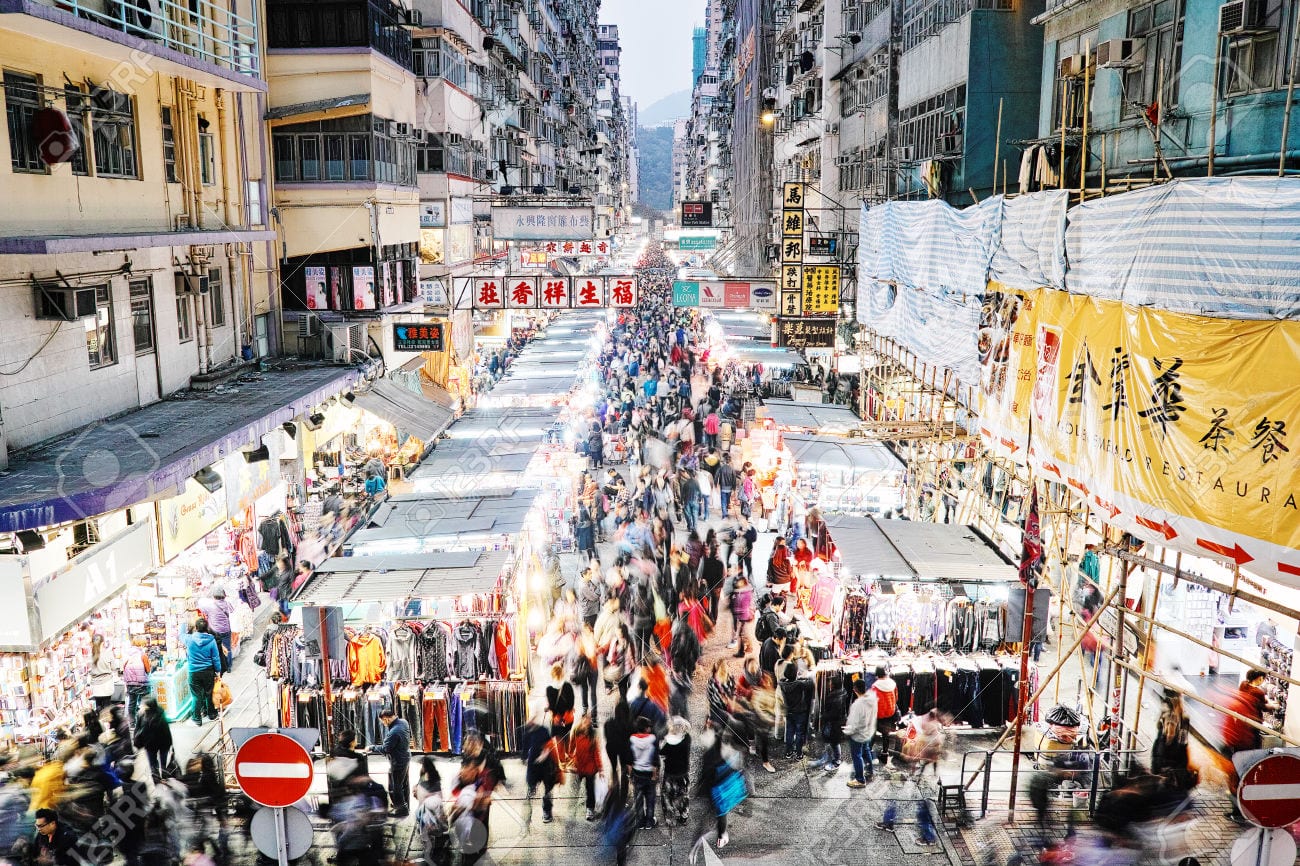
The data may be a little dated, but Asian cities are holding their own in the retail rent rankings.
New York’s Fifth Avenue still tops the list with an average rent of US$3500 per sqft per year. Hong Kong’s Causeway Bay is cemented in second place at $2399 and the Champs Elysee in Paris a distant third at $1372.
(It should be noted, the list ranks the single most most expensive shopping strip in each country, not overall.)
Data released by Cushman Wakefield this month – albeit more than a year out of date – shows the Philippines making the biggest gain: retail rental rates in Manila’s Bonifacio Global City High St were a mere US$56.40 per sqft per annum, but that is enough to make Manila 51st on the top 65 list – up eight places.
Singapore’s Orchard Rd ranked 14th – up two places – at $336.80 and Taipei’s ZhongXiao East Rd 20th, up three places, at $273.20.
The Ginza in Tokyo, Japan, ranks a modest eighth at $881.90 in a virtual tie with Myeongdong in Seoul, Korea at $881.80. The Ginza has fallen from sixth in last year’s survey, while Myeongdong has dropped from eighth.
Cushman & Wakefield stresses that the global rankings focus on high street locations. This excludes mall rental rates – and in cities like Manila, Bangkok and Kuala Lumpur, malls dominate the premium retail landscape, not high street strips.
Vietnam’s Ho Chi Minh City CBD retail rents are more expensive than in Bangkok at $150.50 for 32nd place, and $125.40 for 35th respectively. Bukit Bintang in Kuala Lumpur, Malaysia, ranked 40th (up one place) at $111.
Hong Kong mobile operator SmarTone is extending its 4G coverage to two new MTR rail network extensions.
The operator announced it has provided full turnkey multi-operator integrated radio systems to the new Kwun Tong Line Extension, covering the Whampoa and Ho Man Tin stations, under contract from MTR Corporation (MTRC).
By the end of the year SmarTone also plans to extend 4G coverage on all South Island Line (East) stations.
The mobile systems will incorporate the latest LTE-Advanced technologies including tri-band carrier aggregation.
“With the extension of our 4G coverage, SmarTone customers enjoy an outstanding mobile experience on the new MTR Kwun Tong Line Extension. We have also been working closely with MTRC to upgrade and expand the capacity of the existing MTR urban lines, which include the high-traffic stations on the Island Line, Kwun Tong Line and Tsuen Wan Line,” SmarTone CEO Stephen Chau said.
“SmarTone will continue to invest in spectrum and LTE-Advanced Pro / pre-5G technologies within the next few years to provide a superior customer experience and to evolve SmarTone’s network into an advanced, dynamic and cloud-based network architecture.”
Zurich Insurance has launched a solution in Hong Kong and Singapore which provides risk-assessment services and protects businesses against the risks associated with supply chain disruptions.
Called Zurich Supply Chain Insurance, the product is the first-of-its-kind in the Asia-Pacific region and is now available to qualified customers based in the two markets.
“Increasing globalisation, improved transport and logistics through to technological advancements have enabled companies to source materials from virtually anywhere in the world,” said Keith Thomas, chief executive officer of Zurich’s Global Corporate in Asia Pacific business unit. “While this provides increased flexibility and cost savings, it can also result in complex supply chains that are highly interconnected, more exposed and difficult to manage.”
According to Zurich, the new solution helps reduce supply chain failures and provides cover if delayed or undelivered supplies result in a financial impact on a company’s operations. Supply Chain Insurance consists of two components. In the first phase, risk engineers carry out a risk assessment to identify and evaluate customers’ exposure to critical risks throughout their supply chain, and recommend prioritized mitigation actions. In the second phase, the risk assessment is combined with other sources of data to underwrite and price the risk.
“Many organizations are not aware who their key suppliers are, especially in the lower levels of the supply chain, and very few have visibility over their entire supply chain,” said Hassan Karim, technical underwriting manager of Zurich Asia Pacific. “Half of supply chain disruptions occur beyond the preliminary supplier of goods, therefore making it extremely difficult to establish where an organization lies within its suppliers’ priorities.”
Karim added that it is essential to take a holistic approach and to identify critical supplies when working with customers to manage their exposures.
“Effective supply chain risk management can present significant benefits to businesses and is becoming an increasingly important driver of their profits,” he said. “Every customer’s supply chain is different so we work with them to shape the appropriate solution and offer an individually tailored policy to meet their specific needs.”
The Supply Chain Insurance solution has been available in Europe and North America for the past six years, according to Zurich.
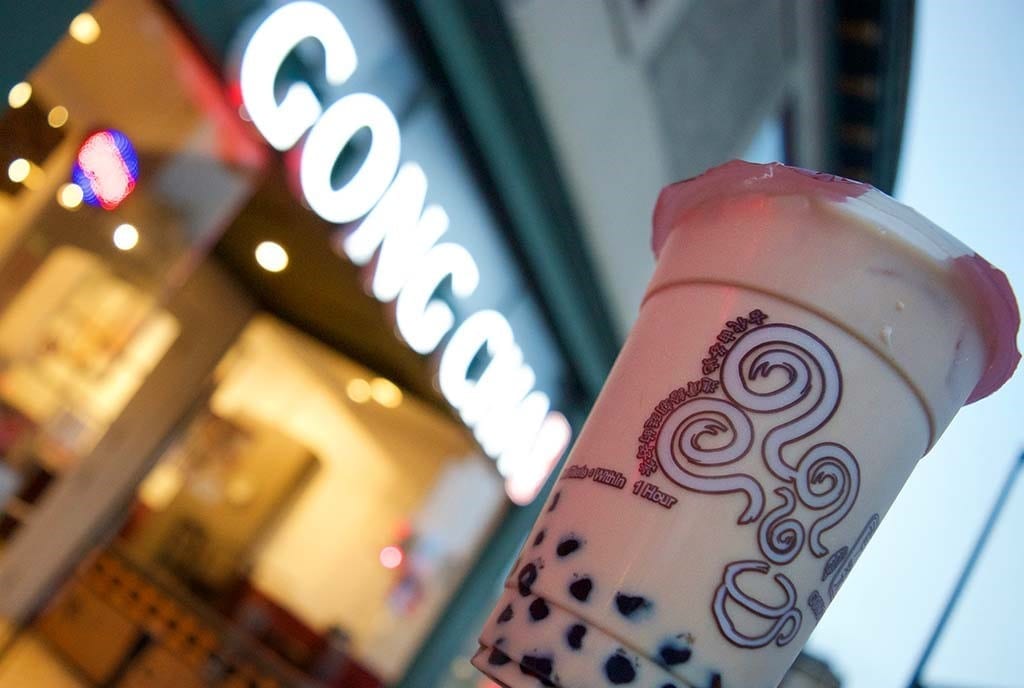
Bubble tea brand Gong Cha Korea is planning international expansion.
Aided by the global passion for Hallyu, or the so-called Korean Wave, Gong Cha plans to open stores in the Middle East and Europe. It will also buy more than 1380 stores in 18 countries, including the US, Canada, Australia, New Zealand, China, Japan, Singapore, the Philippines, and Hong Kong.
Currently, Gong Cha Korea operates only about 360 stores in its home market, which last year brought in KRW8 billion (US$7 million) profit – representing 11 per cent growth year-on-year.
As most of Gong Cha’s customers are aged from 10 to their 30s, the company expects entering new foreign markets will be easier through creating synergies with Hallyu.
The expansion will be facilitated by a share transaction with its parent company Royal Tea Taiwan in which the Korean business will progressively boost its ownership from 35 per cent to 70 per cent by January 2017.
Royal Tea Taiwan was launched in 2006, and introduced to Korea by franchisee Kim Yeo-jin in 2012. Two years later, Japanese private equity fund Unison Capital bought 70 per cent of the Korean business.
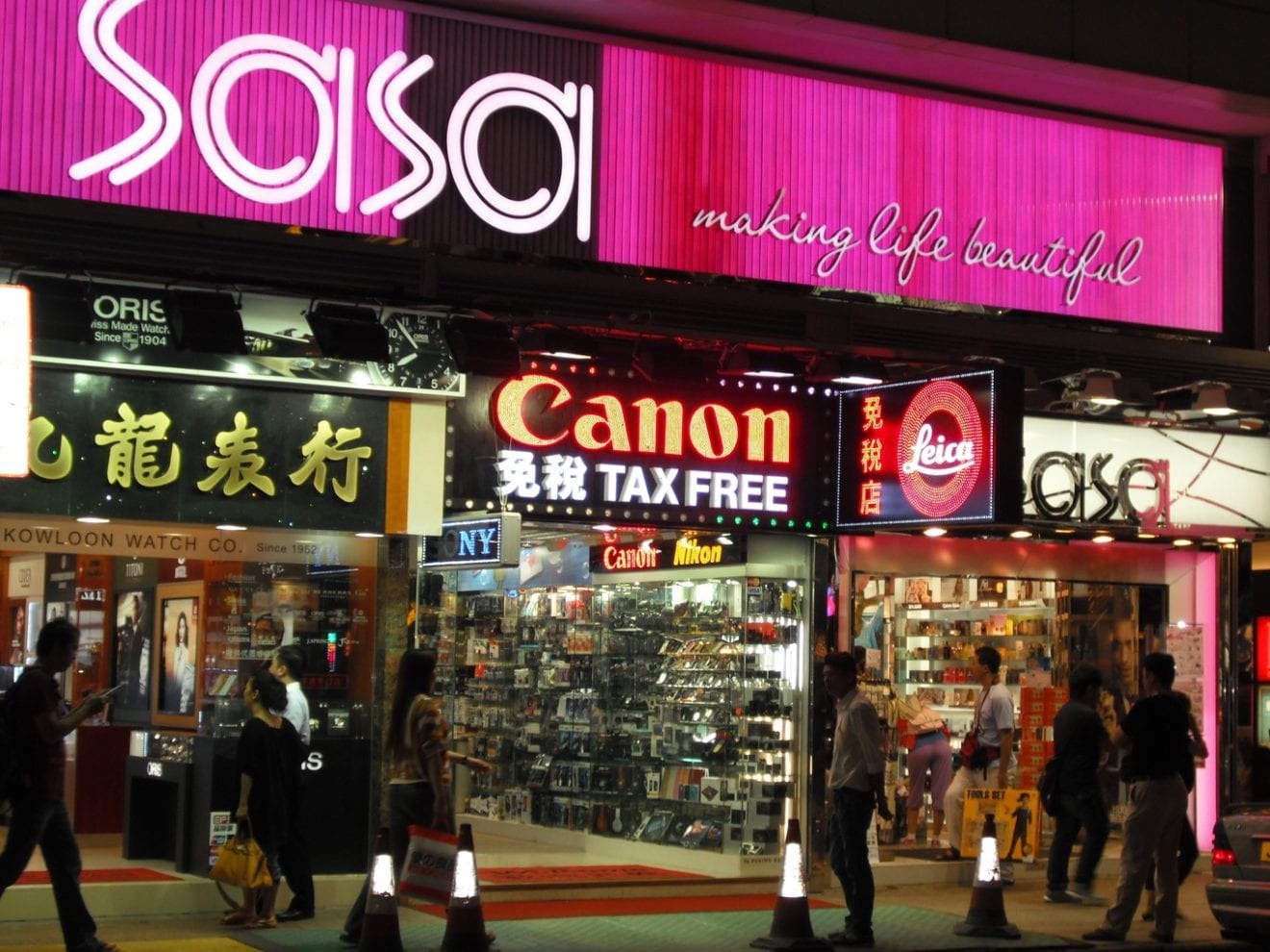
Twilight has come for the retail industry in Hong Kong, said cosmetic outlet operator Sa Sa International (0178) chairman Simon Kwok Siu-ming, although he remains optimistic of better days ahead.
The week-long national holiday saw improved sales for the firm, and he hopes the uptrend is sustainable for the rest of the year, especially during Christmas and New Year high season. Regarding the mainland tax reform on luxury cosmetics, with the Chinese government cutting taxes from 30 percent to 15 percent starting this month, Kwok said it came unexpectedly, and it’s too early to determine its impact on Sa Sa.
But he expressed confidence in Hong Kong products. “I think it is more important to know that authentic and quality goods can be bought here,” he said.
Kwok noted Sa Sa managed to open several outlets in recent months. But under pressure to reduce operating costs, he hoped shop rents can come down to reasonable levels soon, so that there will be no staff layoffs or pay reductions.
Sixty percent of Sa Sa sales came from neighborhood areas, and the retailer said earlier it will shift away from the tourist areas if landlords refuse to slash rents.
But Kwok said the firm was able to find cheaper outlets, as a contract was renewed at a site opposite the Sogo store in Causeway Bay at 60 percent lower monthly rent of HK$800,000.
The ASEAN region (The Association of Southeast Asian Nations) is emerging as one of the most promising e-commerce markets in the world to replace the saturated Chinese market.
Following the establishment of the ASEAN Economic Community (AEC) at the end of 2015, e-commerce is providing huge opportunities for Korean retailers seeking new customers abroad.
Most member states of ASEAN, including Indonesia, Thailand, Malaysia, Singapore, the Philippines and Vietnam, are experiencing an e-commerce boom.
The Internet-based retail market has been relatively underdeveloped in Southeast Asia due to low Internet penetration and lack of customers with purchasing power.
However, with the middle class growing and Internet penetration spreading, the number of online and mobile shoppers in the region is rising fast.
Still, it is fragmented and Internet users account for only around 40 percent of the total population of Southeast Asia, indicating that the region has much room to grow.
According to the 2016 report “E-Conomy SEA (Southeast Asia)” released jointly by Singapore’s sovereign fund Temasek and Google, the average annual growth rate of Internet users in the region is forecast to reach approximately 14 percent by 2020, well above 4 percent for China and 1 percent for the United States.
Online shoppers, accordingly, are also on a sharp rise.
According to Bain & Company, the number of digital consumers, or those aged over 16 and using e-commerce, reached 150 million in 2015. Of them, around 100 million or 75 percent actually purchased goods online.
By nation, Indonesia ranked at the top with 51 million digital consumers, followed by Vietnam (31 million), the Philippines (28 million), Thailand (23 million), Malaysia (14 million) and Singapore (3 million).
“Chinese and global Internet companies should look at Southeast Asian e-commerce as their next potential gold rush,” reported IT-specialized media TechCrunch in June, 2015.
In particular, ASEAN’s e-commerce has a special feature that sets itself apart from other countries.
For example, the online retail market in the U.S. and Korea first grew with expansion of PC-based shopping. However, Southeast Asia experienced the e-commerce boom with more consumers accessing Internet via smartphones.
In 2015, e-commerce in the ASEAN is estimated at $5.5 billion (6.06 trillion won), and the amount is expected to rise to $8.78 billion by 2025, according to E-Conomy.
The portion of e-commerce to retail sales in the region stood at only 0.8 percent in 2015 but is forecast to jump to 6.4 percent by 2025.
Global players eye ASEAN
Against this backdrop, global players are making fast forays into the ASEAN e-commerce market.
In April, Alibaba, China’s largest e-commerce company, purchased a controlling stake in Southeast Asian online retailer Lazada Group for $1 billion, its largest overseas investment.
Lazada was started by Germany’s Rocket Internet in 2012 with headquarters in Singapore. It is operating in Malaysia, Indonesia, the Philippines, Thailand and Vietnam. It is the number one e-commerce player in Philippines, Malaysia, Thailand and Vietnam.
In June, U.S. retail giant Amazon also decided to invest $600 million to open an e-commerce platform in Indonesia, according to Daniel Tumiwa, chairman of the Ecommerce Association of Indonesia (IDEA).
Japanese SoftBank and Silicon Valley venture capitalist Sequoia Capital acquired a $100 million stake in Tokopedia, the biggest startup investment in Indonesia. eBay, another U.S. e-commerce giant, currently owns Qoo10, the online shopping mall based in Singapore.
Korean companies are also expanding their operations in the region to capitalize on the rising popularity of hallyu or the Korean Wave.
On Sept. 20, CJ Korea Express, South Korea’s largest parcel delivery service company, signed an international delivery service contract with Lazada. Under the deal, CJ would deliver goods made in Korea purchased by customers via Lazada’s website.
On the same day, KOTRA, Korea’s trade-investment promotion agency, joined hands with Qoo10 to start an online support program and help Korean small firms export their goods to Southeast Asia. Qoo10 has a total of 300 million online members in Singapore, nearly 60 percent of its population.
SK Planet opened 11th Avenue, its online shopping mall, in Indonesia in 2014 and Malaysia in 2015.
Korea is now focusing on expanding exports of consumer goods to ASEAN as it has faced limitations to increase external shipments of parts and intermediary products.
“With more Korean firms entering the ASEAN e-commerce network, including Lazada, exports of Korean consumer goods, such as mobile phones, cosmetics, food and fashion items, are on a sharp rise,” Roh In-ho, KOTRA’s Asia Regional Director based in Singapore, said.
For sustainable growth, Korean firms need to make more effort to come up with localized strategies that meet demands from local customers.
“If diversifying marketing strategies, ASEAN e-commerce will offer good opportunities for small Korean exporters,” Roh said. “It is very important to develop designs and products that locals would like.”
China Mobile Hong Kong has contracted Huawei to fully upgrade the operator’s FDD/TDD converged LTE network to a 4.5G LTE-Advanced Pro network.
The upgrade is aimed at offering customers a superior user experience and laying the groundwork towards a future 5G network evolution.
In October last year, the 3GPP formally named LTE-Advanced Pro as the new LTE standard with the designation of 4.5G. China Mobile Hong Kong has commenced its network upgrade following a series of network optimization projects this year.
“After stringent selection processes, we firmly believe that Huawei’s world leading network technology and equipment have made it the ideal partner for CMHK’s 4.5G network upgrade,” China Mobile Hong Kong director and CEO Sean Lee said.
“We are very pleased to work with Huawei to upgrade our 4G mobile network to 4.5G for significant network capacity optimization and speed improvement, as well as achieving superior user experience for consumers and commercial customers.”
Huawei president of carrier business Zou Zhilei added that the upgrade is aimed at reinforcing the operator’s market leading position.
“Our advanced 4.5G technology will enable CMHK to capitalize on the emerging new devices, new businesses and new experiences, offering an excellent mobile video experience for customers in Hong Kong, as well as enhancing its capability in expanding enterprise and industry (B2X) segment,” he said.
While Fast Retailing profit fell in the full year, the Japanese apparel giant says its second-half profit rebounded sharply.
Consolidated revenue rose 6.2 per cent to JP¥1.7864 trillion (US$17.19 trillion) while its operating profit fell 22.6 per cent to ¥127.2 billion.
Factors underlying the sharp decline in profit include a ¥11 billion foreign-exchange loss, a ¥13.8 billion J Brand impairment loss, and ¥9.3 billion for impairment losses on Uniqlo Japan and Uniqlo US stores, plus retirement and store-closure losses.
In the second half, from March to August, profit rebounded by 94.3 per cent year-on-year, attributed to a nascent recovery in sales at Uniqlo Japan and Uniqlo International, and concerted cost-cutting efforts.
For Uniqlo Japan the second-half profit bounced back by 38 per cent. Revenue for the year was ¥799.8 billion, up 2.5 per cent, with profit dropping 12.6 per cent to ¥102.4 billion. Same-store sales rose 4.9 per cent in the second half compared to a 1.9 per cent decline in the preceding six months.
For Uniqlo International, full-year revenue was up 8.6 per cent to ¥655.4 billion while profit fell 13.7 per cent to ¥37.4 billion. In the second half, however, profit rebounded to 15 times the previous year’s level, mainly because of sharp profit gains in Uniqlo Greater China (encompassing China, Hong Kong and Taiwan), Southeast Asia and Oceania, and Europe.
For the group’s global brands, revenue rose 11.3 per cent while profit fell 34 per cent for J Brand, revenue rose 32.7 per cent and profit by 34.8 per cent for GU, profit was also up for Theory, while Comptoir des Cotonniers, J Brand and Princesse Tam.tam had losses.
During the 12 months, Uniqlo International opened a series of stores, including its first global flagship store in Southeast Asia, the Uniqlo Orchard Central store in Singapore. As of August 31, the number of Uniqlo International stores had grown by 160 to 958.
Hong Kong free to air TV broadcaster ViuTV has unveiled its content lineup for 2017 with more “real choices” for Hong Kong viewers as ViuTVsix, an English-language channel, will be launched at channel 96 on March 31, 2017.
ViuTVsix will provide viewers with news and public affairs programs, variety shows, infotainment, classic and latest dramas.
In 2017, ViuTV will continue to bring a wide range of extremely entertaining and compelling programs, including Cuisine in Darkness hosted by I Love You Boyz and veteran chef Gabriel Choy, Being Director, Priceless, a series of microfilm directed by Jim Chim, Christine Ng, Prudence Liew and Kevin Boy, Full Time Mama On Vacation, Train You Mother, Grade6 in University and IQ148.
ViuTV will broadcast different dramas from Monday to Friday, including Ex, Mid-Night Cousin starring by Hong Kong Film Awards Best Supporting Actor Michael Ning, and Urban Legend hosted by David Siu and Queenie Chu.
As an open platform for music lovers, ViuTV will work closely with different music labels to promote “real music” to Hong Kong viewers. For example, superstar Alan Tam will host a nine-episode music program to be aired in 2017.
Also, ViuTV will bring Asia’s hottest drama and variety shows to Hong Kong viewers in 2017, including W, DOCTORS, Love in the Moonlight, Natusko Kira, Crime Scene, Takeshis Medical Check-Up Show and Hometime Pride.
ViuTV will also screen a variety of world-class sports events, including HK Sevens, Hong Kong Marathon and selected LaLiga matches in live.
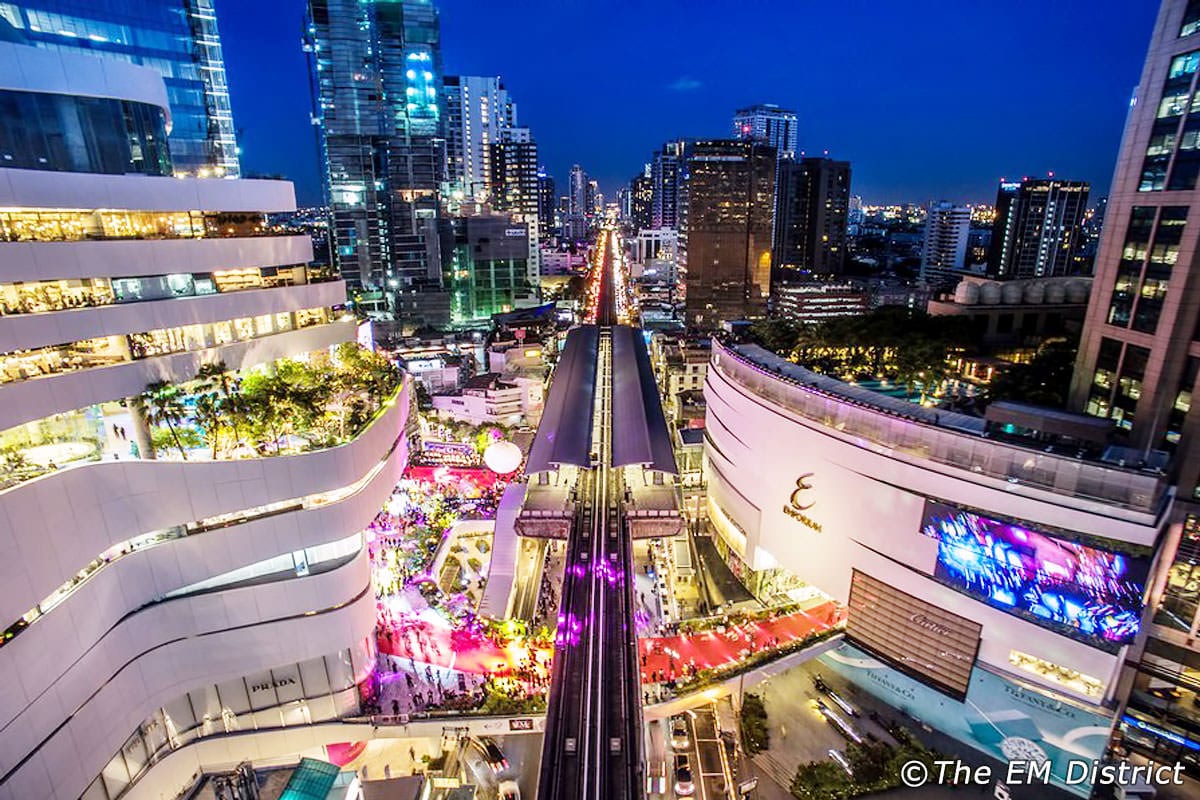
Asia is home to more than half the world’s most dynamic retail hubs, according to new research that reinforces images of the region’s mall-strewn megacities.
The research, by professional services and investment management company JLL, says 12 of the fastest-growing retail cities are in Asia, with eight in China alone — another indication that global economic growth is increasingly driven by the Asia-Pacific region.
JLL lists Dubai as the world’s fastest-growing retail destination, with Shanghai second and Beijing third. Places 9 to 13 are occupied by Bangkok, Chengdu, Kuala Lumpur, Jakarta and Manila, respectively. Only two European cities make the top 20 — Moscow and Istanbul — with none from Africa. Mexico City is the sole city from the western hemisphere, sitting at number 19.
Overall, JLL lists London as the “most attractive” city for retailers, with Hong Kong second and Paris third. Dubai, Singapore, Shanghai, Tokyo and Beijing all make the top 10, with Bangkok, Taipei, Seoul and Osaka in the top 20.
Shanghai at night. The Chinese megacity is projected to be one of the world’s retail hubs in the coming years (Photo: Simon Roughneen)
The study looks at the presence of 240 international retail brands in 140 cities — which altogether make up 36% of the world’s gross domestic product, 13% of the global population and a third of total worldwide consumer spending.
“The search for growth is escalating the penetration of international brands across the world’s most attractive retail cities, especially in Asia,” said David Zoba, chairman of JLL’s Global Retail Leasing Board.
Asia catching up
Many Western economies continue to suffer from slow growth — in stark contrast with Asia, where the International Monetary Fund predicts overall growth of more than 5% in 2016-17 and describes the region as “the engine of the global economy.”
Asia is urbanizing rapidly as economies develop and incomes rise, meaning that big global brands will increasingly look to Asia as a source of consumers. World Bank research shows that nearly 200 million people in the East Asia and Pacific region –excluding India and its heavily populated neighbors such as Pakistan — moved from the countryside to cities during the decade after 2000.
In 1800, only 3% of the world’s population lived in cities, a figure that rose to 13% by 1900. Now more than half the world’s population is urbanized, with projections that 70% or more of the world will live in urban areas by 2050. And while in the 19th and 20th centuries urbanization was mainly a Western and Japanese phenomenon, developing countries are catching up fast, particularly in Asia.
Despite the steady rural-urban shift, only 36% of East Asia’s population had moved to urban areas by 2010, with only Japan, Malaysia, South Korea and Taiwan having larger urban than rural populations.
While China had by far the largest absolute numbers of people moving to cities, smaller countries such as Cambodia, Laos and Vietnam showed higher rates of urbanization. Laos more than doubled its small urban population, while high-growth economies such Cambodia and Vietnam both had between 4% and 4.5% annual urban population growth rates. Retail investors are noticing opportunities even in smaller cities such as Phnom Penh, where Japanese mall operator Aeon opened the city’s first large shopping mall in 2014.
Asia’s cities will continue to grow over the coming decades as the region becomes wealthier. McKinsey Global Institute expects that in the next 15 years, “the center of gravity of the urban world will move south and, even more decisively, east.” According to MGI, half of global GDP in 2007 came from 380 developed world cities, with the 22 biggest cities in developing countries contributing a mere 10%.
However, MGI predicted that by 2025 half of the cities in its 2007 rankings will not make the list, with 136 developing world cities entering its ranking of the 600 biggest urban economies — including 100 from China alone.
“By 2025, developing-region cities of the City 600 will be home to an estimated 235 million middle-class households earning more than $20,000 a year at purchasing power parity (PPP),” MGI reported. The figure is larger than the 210 million such households expected in the cities of developed regions.
Thinktank Oxford Economics said that cities such as Chengdu, Hangzhou and Wuhan “will become as prominent in 2030, in economic terms, as cities like Dallas and Seoul are today.”
Shift east
The thinktank predicted that by 2030 eight European cities will drop out of the global top 50 cities ranking, measured by GDP, while nine Chinese cities will join that group, taking the Chinese total to 17, which will be more than North America and four times more than Europe.
In turn, the thinktank said, this will mean more Asian consumers with money to spend. “Starting from a comparatively low base today, China will boast some 45 million high-income urban households (exceeding $70,000 per annum at 2012 prices and exchange rates) by 2030, putting it well ahead of Europe and hot on the heels of North America. Shanghai will jump from a rank of 69th today to 8th for its number of high-income households in 2030,” Oxford Economics said.
Otherwise, however, the seven megacities with the most high income residents will remain the same as today, with Tokyo leading New York, London, Osaka, Los Angeles, Paris and Chicago.
But Asian cities are set to add tens of millions of middle-income households (incomes between $10,000 and $70,000) to their ranks by 2030. Jakarta will be home to 9.4 million, with 7 million to 9 million more in each of Chongqing, Shanghai, Tokyo and Beijing, the projected top five cities ranked by population of middle-income households, according to the thinktank.
JLL said that for retailers, vying for market share in emerging economies is sometimes risky, but the potential prize — market access to vast populations and rapidly expanding middle classes — outweighs any perils.
For example, China’s anti-corruption crackdown has had “a knock-on effect” on the luxury goods market in the world’s second-biggest economy, said James Hawkey, JLL’s head of retail for China. But retailers are nonetheless “increasingly comfortable dealing with these risks, and generally have their eyes on the long-term prize of establishing a strong position in major world markets.”
Although incomes and spending power remain lower in many Asian countries and cities than in the West, part of the attraction of smaller, less-developed markets is relatively low rental costs.
“Places like Ho Chi Minh City, Jakarta and Bangalore present an opportunity for retailers to establish their brands at rents of less than $2,000 per square meter per year with projected in-store sales increasing by 8% to 10% until 2019,” JLL reported.
Wealthy mid-sized cities or trade-oriented city-states such as Singapore and Hong Kong also benefit from high numbers of visitors such as tourists or business travelers.
But Asia’s urbanization will not mean that rural dwellers will be ignored by retailers, particularly in China.
“Retail potential in Asian hubs is strongly influenced by what is happening in their hinterlands — what is happening in nearby provinces and/or countries,” Steven McCord, JLL’s head of research for northern China, told the Nikkei Asian Review.
“Shanghai exerts a ‘gravity effect’ over its surrounding cities and provinces due to its size and the wealth of its retail offer. Therefore, close to 80 million people within day-trip distance to Shanghai will regularly travel to that city for large shopping sprees,” McCord added.
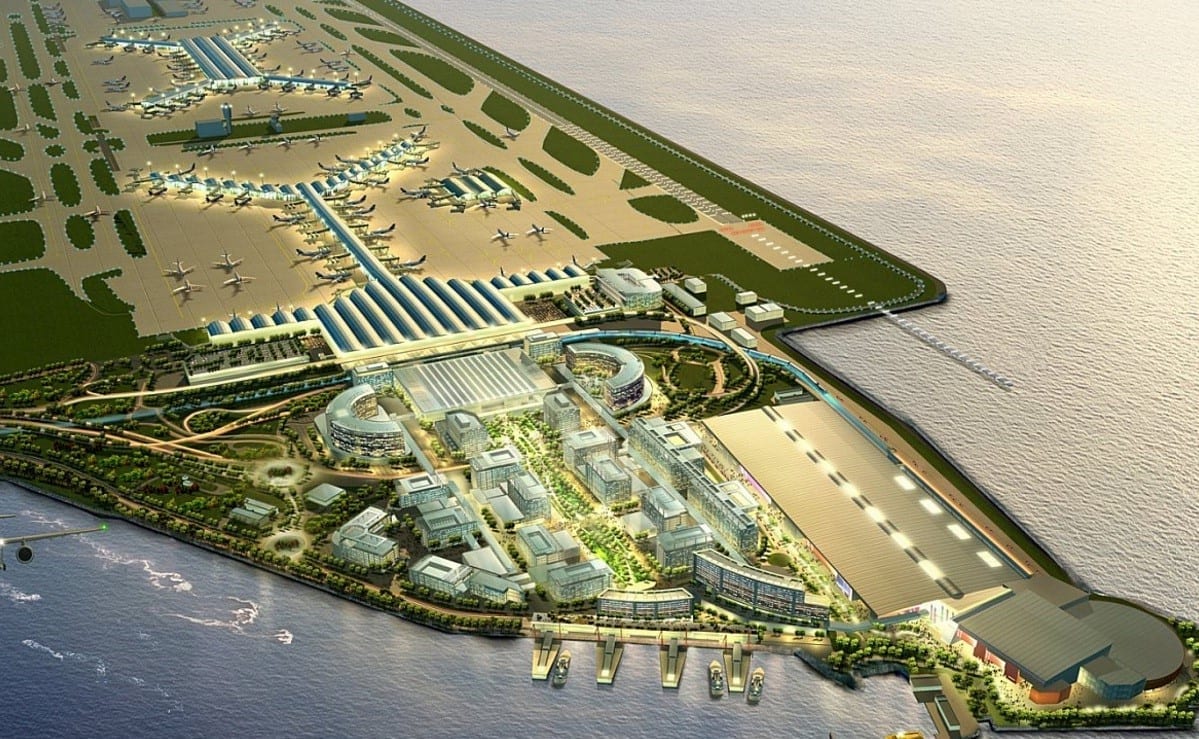
SkyCity will feature retail complexes, entertainment facilities, dining space, hotels, and office towers in approximately 25 hectares of land at the north of the airport island.
The SkyCity plan was unveiled at “The Future of Shopping Malls” Business Conference and Exhibition hosted today by the AA. More than 300 senior executives from the property development and investment sectors of Hong Kong and major overseas markets, as well as representatives from the HKSAR government, business associations and professional bodies, attended the event.
Mr Jack So Chak-kwong, chairman of the AA said: “Our vision is to create a new destination that goes far beyond the traditional notion of a shopping mall. Located right next to the airport, SKYCITY aims to capture broad opportunities in tourism and business, while also providing a dynamic lifestyle and family entertainment hub for Hong Kong residents and visitors alike.”
HKIA’s passenger traffic is projected to rise to more than 100 million by 2030 with the completion of the three-runway system. SkyCity will make use of the Tuen Mun-Chek Lap Kok Link and the Hong Kong-Zhuhai-Macao Bridge, strategic road links.
Phase 1 of the project will comprise a retail, dining and entertainment (RDE) destination of 195,000 sq. metres, scheduled to open in 2021, and a hotel providing 450 to 750 rooms, expected to be completed in 2020. Invitations for tender submissions for the hotel and RDE developments will be issued in November 2016 and early 2017 respectively.
Asian cities dominate the latest retail destination rankings, with the Middle East taking most of the remaining spots.
According to the latest edition of JLL’s Destination Retail report, which ranks markets for retailer expansion around the world, Asia is fuelling global growth, taking 12 of the top 20 spots. Six of those cities are in China – but Singapore, Hong Kong and Macau are not among them. Six months ago Hong Kong was second only to London – neither city makes the list now.
This time around, the top two cities are Dubai and Shanghai, with Beijing ranking third. The other Asian cities in the top 20 are Bangkok, Chengdu, Kuala Lumpur, Jakarta, Manila, Tianjin, Shenyang, Shenzhen, Chongqing and Hangzhou. (The full list is below).
Besides Dubai, Abu Dhabi, Kuwait, Jeddah and Riyadh make the list, meaning 85 per cent of the top 20 destinations are in just two regions.
“The global retail landscape is expected to change significantly over the next 10 years, as a fast-growing middle class in emerging markets attracts retailers hungry for growth,” says David Zoba, chairman of JLL’s Global Retail Leasing Board.
JLL says Shanghai has become a favourite of international brands looking to test the Chinese market and gain exposure. While established prime markets include West Nanjing Rd and Huaihai Rd, new submarkets targeting local residents are popping up along the many new metro lines leading out of the city, and the city’s retail network is growing and shifting.
Beijing follows as the third-fastest-growing retail market with its swelling middle class and strong concentration of high-net-worth individuals. Properties such as China World Mall and the landmark project Taikoo Li continue to draw high-end shoppers, while malls like Beijing APM and Oriental Plaza dominate tourist-friendly shopping strip Wangfujing. The Chinese capital’s suburbs are also experiencing rapid growth as people choose to shop more locally rather than brave the traffic into the city centre.
“Emerging markets can expose international retailers to greater levels of economic and geopolitical risks. One pertinent example is China’s anti-corruption campaign and the knock-on effects on the luxury market,” says James Hawkey, head of retail for China, JLL. “However, international retailers are increasingly comfortable dealing with these risks, and generally have their eyes on the long term prize of establishing a strong position in major world markets.”
Added Zoba: “The search for growth is escalating the penetration of international brands across the world’s most attractive retail cities, especially in Asia. Retailers who succeed in acquiring the right space in the right place at the right time will benefit from successful, profitable growth, but they should be mindful that potential rewards go hand in hand with risk,” continues Mr Zoba.
Retail rents in these emerging markets reflect legislation, market transparency, reputational risk, maturity, as well as growth potential, meaning that their levels are relatively low compared to more mature markets. Places like Ho Chi Minh City, Jakarta and Bangalore present an opportunity for retailers to establish their brands at rents of less than US$2000 per square metre per year with projected in-store sales increasing by 8 to10 per cent until 2019, based on Oxford Economics forecasts. However, as cities mature and the pace of new construction of retail centres slows, rents will gradually increase.
JLL’s Destination Retail report 2016 examines the presence of 240 international retail brands across 140 retail cities, giving insights for international retail expansion. The 140 cities make up 36 percent of the world’s GDP, 13 per cent of the global population and 33 per cent of total consumer spending.
DHL Express has opened its new Tsing Yi Service Center, a HK$78 million (US$10.1 million) facility on the third floor of the Goodman Interlink building in Hong Kong.
“The opening of the new Tsing Yi Service Center follows double-digit growth in our international shipments over the past year, and underscores our confidence in the Hong Kong market,” said Herbert Vongpusanachai, senior vice president and managing director of DHL Express Hong Kong and Macau. “With a steady growth in our Hong Kong business contributed by the strong e-commerce sector, this facility is set to cement our market leadership with its enhanced handling capacity.”
The 12,777-square-metre facility is double the size of the previous facility located in the same building and is capable of handling 380 tonnes of shipments per day, the strongest out of all DHL service centres worldwide.
“We’ve been looking for a site since 2014,” said Vongpusanachai. “Hong Kong hasn’t been the easiest place in which to look for a new warehouse. There are very few fully equipped warehouses that have the size and scale that we needed based on our requirements.”
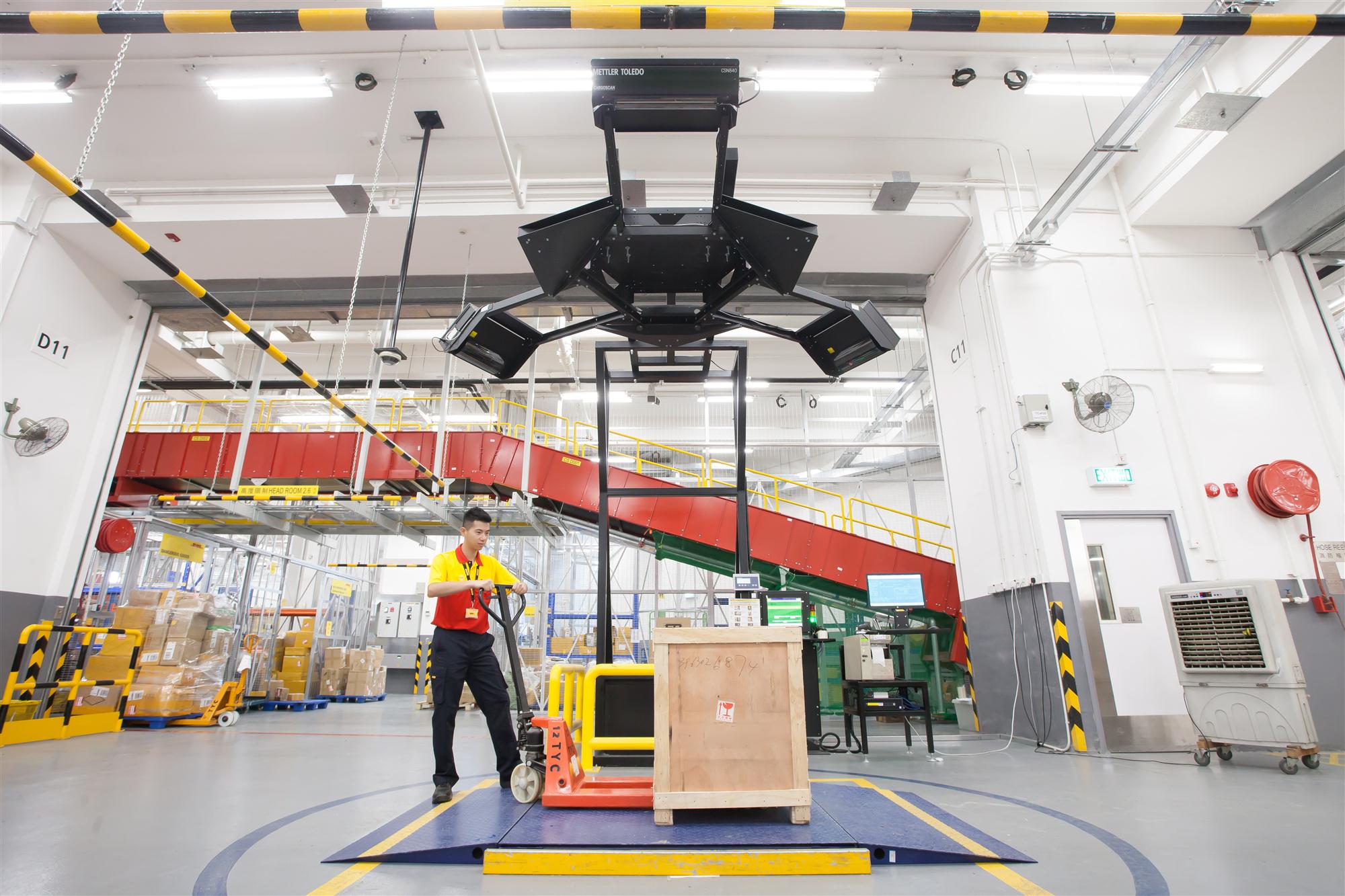
Features include a high-speed automated reweigh and dimensioning machine capable of processing 2,200 pieces per hour, a 3D dimensioning and reweigh machine for unconveyable shipments that need volumetric measuring, a singulator which rearranges shipments so they travel down the conveyor belt one by one, and 122 CCTVs providing 24-hour monitoring.
“It’s got all the technologies that we wanted,” said Vongpusanachai. “We want to be able to scan the shipments automatically when they come in, we want to sort them so that they go to the correct belt automatically, and we want to be able to build our own aircraft ULDs that we can bring straight to the airport.”
One other “secret weapon,” according to Vongpusanachai, is the Clear-In-The-Air system, which allows all customs clearance information to be sent to the destination and handled while the plane is still in the air, cutting down transit times.
Even though economic and trade conditions around the region have been disappointing, Vongpusanachai said that he wasn’t too concerned.
“We’ve seen a bit of an economic slowdown over the past few quarters, but with the uptick in last quarter’s numbers and with our medium- to long-term look at the economy, we’re confident that we’ll actually see moderate growth in the near term,” he said. “There’s also still a lot of potential in the growth of certain sectors. The government has also increased its forecast for next year in terms of air trade.”
The major driver of growth for DHL Express in recent times has been e-commerce, which was the predominant motivation for an upgraded facility.
“We’ve seen a lot of customers moving away from big breakbulk to smaller shipments directly to the workplace or residence,” said Vongpusanachai. “That has been an emerging trend. This facility will allow us to increase our capacity and become more efficient in handling these types of shipments. Our focus as an express company is on time-definite international shipments.”
The new Tsing Yi centre, which had its soft opening in July 2016, adds to DHL Express Hong Kong’s two other service centres in Cheung Sha Wan and Tsuen Wan.
“These are some of the largest facilities that we have across the whole network, since Hong Kong is a high-capacity, high-volume exporter,” said Vongpusanachai. “We are always looking for new places. There is a plan but it’s a longer-term plan. Sometimes facilities might not be available yet, but we’re always looking ahead to see where we can expand.”
The third-runway project at Hong Kong International Airport, which is scheduled to be completed by 2023, will give DHL Express the possibility of increasing capacity by operating more flights, allowing the DHL Central Asia hub to expand.
“That’s something that we’re looking forward to,” Vongpusanachai said. “We’re very excited about the project and how we can participate in the growth of Hong Kong’s economy.”
The Hong Kong Electronics Fair (Autumn Edition) and electronicAsia opened today at the Hong Kong Convention and Exhibition Centre (HKCEC) and continue through 16 October. The 36th Electronics Fair (Autumn Edition) is organised by the Hong Kong Trade Development Council (HKTDC), while the 20th electronicAsia is jointly organised by the HKTDC and MMI Asia Pte Ltd.
“As the world’s largest electronics marketplace, the Electronics Fair and electronicAsia gather around 4,200 exhibitors from 29 countries and regions,” said Benjamin Chau, Acting Executive Director, HKTDC. “The exhibits this year include smart tech, virtual reality, wearable electronics and more, demonstrating the industry’s ability to keep abreast of the technology trends and launch products that match the market’s demand. We hope they will be received well during the fairs.”
The HKTDC has organised more than 140 buyer missions this year representing more than 12,000 global buyers from over 8,000 companies to the two fairs. These include major international retailers, importers and distributors such as TDL from Canada, Product Group from Australia, Casino from France, Casanova from Spain, Mad Robots from Russia, Mobibox from Brazil, Sound Village from Argentina, LehuMall.com from the Chinese mainland, Croma from India, ICST from Japan, Signeo from Singapore and Matahari Mall.com from Indonesia.
Debut Virtual Reality and Startup zones showcase innovative technology and ideas
Adopting smart and high-tech solutions has become a prevailing trend across virtually all sectors. To effectively showcase the latest technologies and products, the HKTDC has introduced a new Tech Hall at the Convention Hall, clustering five thematic zones including the inaugural Virtual Reality and Startup zones, as well as Smart Tech, Robotics & Unmanned Tech and 3D Printing. This assemblage will help buyers source high-tech electronic products with ease while investors can explore investment and partnership opportunities in a range of new technologies developed by startups.
Startups are a growing force in driving economic diversity. The new Startup zone gathers close to 50 startup companies from Hong Kong, Canada, the Chinese mainland, Taiwan and the US to showcase new technologies. A Canadian exhibitor is presenting an in-vehicle diagnostic and monitoring device that can transform a conventional car into a smart vehicle. Its nine-axis sensor can gather data to reconstruct the car’s motion path if it is involved in an accident. A local startup exhibitor is introducing an electronic smart price tag equipped with a high-definition colour display and Wi-Fi, allowing pricing information to be updated wirelessly in real-time.
To stand out in the marketplace, startups need suitable opportunities to explain their ideas and showcase their products to potential investors. To this end, the Electronics Fair provides an excellent platform with a series of startup-themed events on the programme. These include the “First Step of Your Startup Project” seminar, which features Ben Bateman, Senior Director of Strategic Programs of the US crowdfunding platform Indiegogo, a pitching session where startups can pitch solutions or product ideas to potential investors on the spot, as well as “Startup, Smart Launch” where newly developed technology and products can be introduced to buyers. Entrepreneurs behind successful startups are also on hand to share their experiences with visitors.
Virtual Reality zone energises the tech craze
Many industry players in the technology and online gaming sectors are investing in the development of virtual reality (VR) applications. The new Virtual Reality zone at the Electronics Fair is showcasing a range of VR headsets and related technology as well as VR video cameras. One of the Hong Kong exhibitors is using the fair to parade its 360-degree VR drone, a professional grade system for filming 360-degree panoramic scenes and VR videos. It is compatible with action cameras, enabling all-direction aerial spherical photography. A company from Taiwan has brought its 3D video camera module that enables users to capture 3D videos on a mobile phone with the module and an app.
Launched last year, the Smart Tech and Robotics & Unmanned Tech zones continue to be popular with fair visitors keen to view the latest creative products and future technologies including robots with IoT technology, luggage tracking bands, drones and electric scooters. Meanwhile, the 3D Printing zone features 3D printers and related materials and technology. A local exhibitor is presenting a 3D printing education kit for use at home or in a professional learning setting. Users can assemble the printer themselves to print directly and, in the process, learn more about 3D printing technology.
Hall of Fame presents branded products
The brand of an electronic product is one of the key factors influencing consumer purchasing decisions. The Hall of Fame at the Electronics Fair gathers electronic products from some 550 brands, covering digital entertainment, home tech, wireless and communications, power and accessories. Buyers can choose from a wide variety of respected brands at the fair, including Desay, Goodway, GP Batteries, Haier, Intel, Motorola and VTech.
electronicAsia offers cutting-edge electronic parts and components
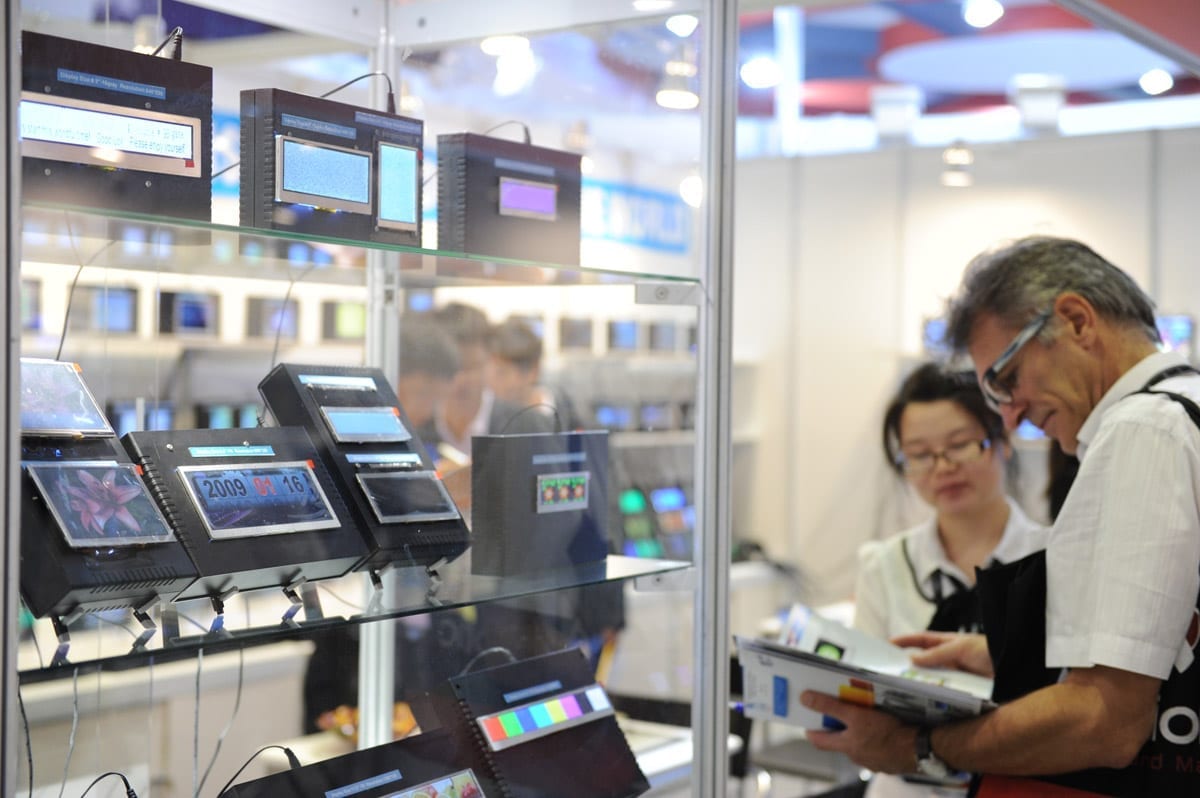
Held concurrently with the Electronics Fair, electronicAsia is an important sourcing platform for electronic components and production technologies. The fair gathers cutting-edge innovations from the US, Germany, France, Singapore, Taiwan, Japan and Korea, providing the industry with new product design ideas and materials. One of the highlight zones is World of Display Technology, which features products such as a LCD display suitable for outdoor use under direct sunlight. The product features a wide-viewing angle, high-resolution display and can also be used as a touch-screen panel.
electronicAsia is also showcasing other components such as printed circuit boards, keyboards, switches, integrated circuits as well as parts, modules and technology for solar and photovoltaic energy. Key components for smart devices such as display backlight and smart switch modules are also on show, targeting mobile device manufacturers.
Symposium on Innovation & Technology discusses IoT and smart devices
Besides being an annual sourcing event for the industry, the Electronics Fair and electronicAsia also provide insights into market trends and industry intelligence. As smart devices and IoT technology continue to gain attention, the HKTDC is nurturing these trends by jointly organising today’s Symposium on Innovation & Technology with the Hong Kong Electronics & Technologies Association. Representatives from the world’s leading tech companies including Tesla, Amazon Web Services, HP and Qualcomm are among those sharing their expertise on smart tech and IoT trends.
During the two fairs, a number of buyer forums and seminars are organised to address hot-button issues in the electronics sector such as virtual reality, augmented reality, wearable technology and integrated circuits among other industry developments. Meanwhile, TEDxHong Kong will be held on Saturday (15 October). TED, which stands for “Technology, Entertainment, Design”, is a forum for thought leaders from various sectors to share their views on future technological advancements. The winning products of The Electronic Industries Awards (EIA) 2016, jointly organised by the HKTDC and the Hong Kong Electronic Industries Association (HKEIA), are displayed at the fairground (booth no.: 1CON-00B). This year, there are 21 award winners from 13 product categories. The EIA aims to stimulate creative design and innovation within the electronics industry, as well as recognise and award exhibitors for their outstanding performance.
Big business through small orders
In view of the keen demand for small order sourcing, the hktdc.com Small Orders zone returns to the fair, featuring a total of more than 330 counters offering over 2,900 products for buyers looking to source products in minimum quantities of between five and 1,000 pieces. With the increasing popularity of e-commerce, the Small-Order Online Transaction Platform (https://smallorders.hktdc.com) enables global buyers to complete transactions with suppliers online. The platform is displaying more than 120,000 products from over 10,000 suppliers.
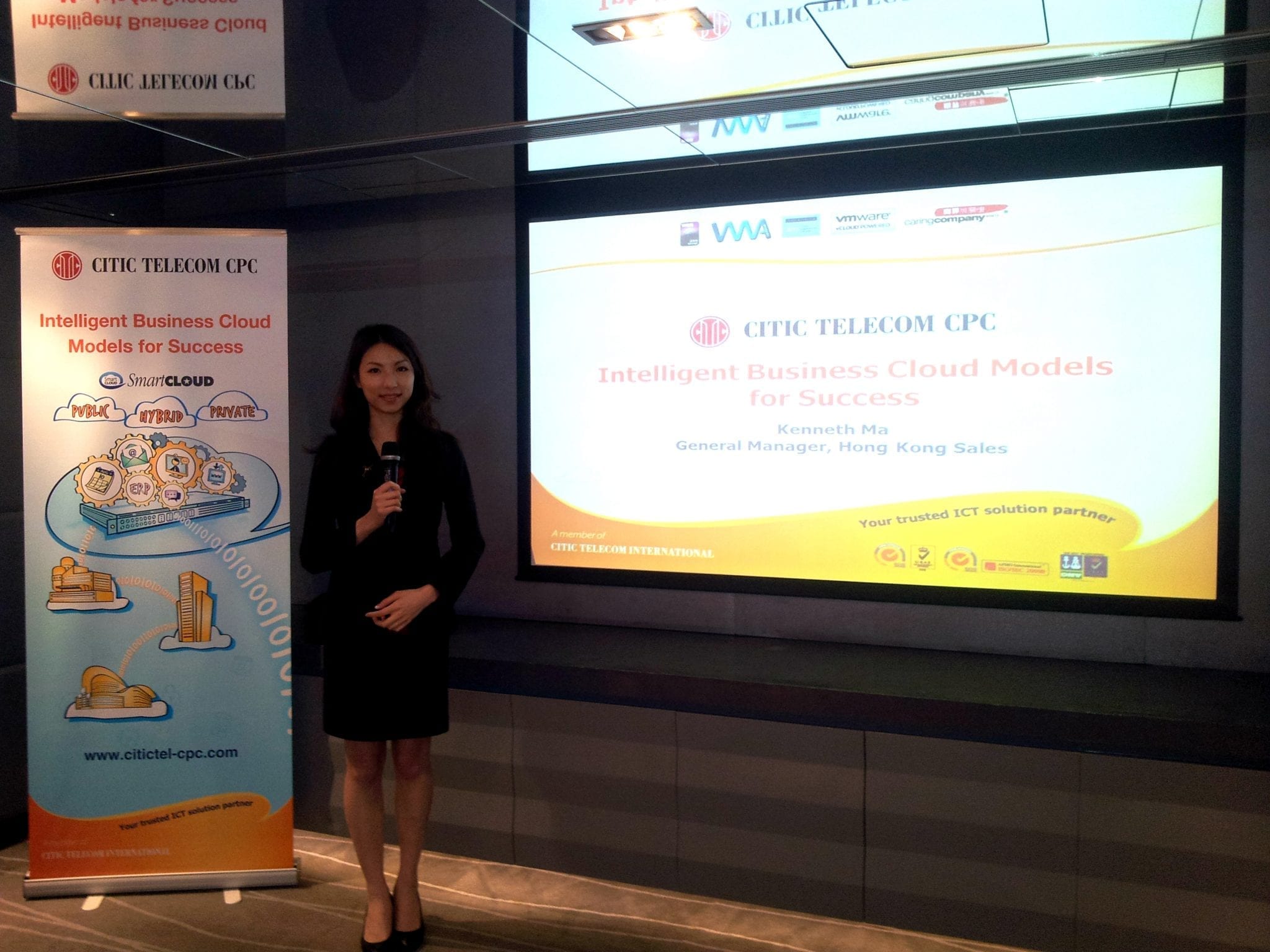
Hong Kong’s CITIC Telecom International has expanded its presence in Southeast Asia with the acquisition of a 100% stake in cloud infrastructure services provider Acclivis.
Acclivis mainly operates cloud facilities in the markets of Singapore, Indonesia, Malaysia and Thailand. The company also owns the ISP Pacific Internet in Singapore and Thailand.
CITIC Telecom said the acquisition will transform the company into one of the few trans-regional one-stop ICT services providers in Southeast Asia, and will create synergies with the company’s subsidiaries including CITIC Telecom CPC.
“Acclivis is a technology company that has strong technological capabilities and unique advantages. It operates internet service via Pacific Internet in the region and its businesses and the services we offer to our corporate customers have apparent strategic synergies,” CITIC Teleom CEO Dr Lin Zhenhui said.
“The acquisition will enable us to expand our services to internet service, cloud computing and management services, support our transformation geared towards the mobile and internet arenas and expansion of the Southeast Asia market, giving us another rapid growth driver.”
The deal still requires the approval of Acclivis parent DeClout, but pending this is expected to be completed by the end of the year.
CITIC’s current development strategy is focused on “taking roots in the Mainland market while accelerating expansion and geographic coverage in the international market with Hong Kong and Macau serving as bases and connections.”