Tag: Hong Kong

  • The Hong Kong book shops thriving in the face of digital dominance

    The Hong Kong book shops thriving in the face of digital dominance

    There was much ado in literary circles about British book retailer Foyles’ 2011 decision to fend off the digital media onslaught by investing in an “experience” bookstore. As in an actual, bricks and mortar shop.

    “You can sit at home and buy a book, and have it delivered to your door, but you don’t get that social interaction,” says Janette Cross, Foyles’ head of customer experience, who notes a returning fondness for the immersive experience of browsing and sharing.

    So in the face of market research predicting the demise of the printed word, Foyles closed its London flagship – a literary institution for 85 years – to open a highly designed new “experience” store a few doors down on Charing Cross Road.

    It worked, from a commercial viewpoint, and Foyles has now expanded the concept to new stores in Birmingham (opened September 2015) and Bristol (last December). But while Foyles was lauded for its pluck in reviving reverence for the book, Freeman Lau, a Hong Kong-based designer, points out that the Chinese have been doing so for years.

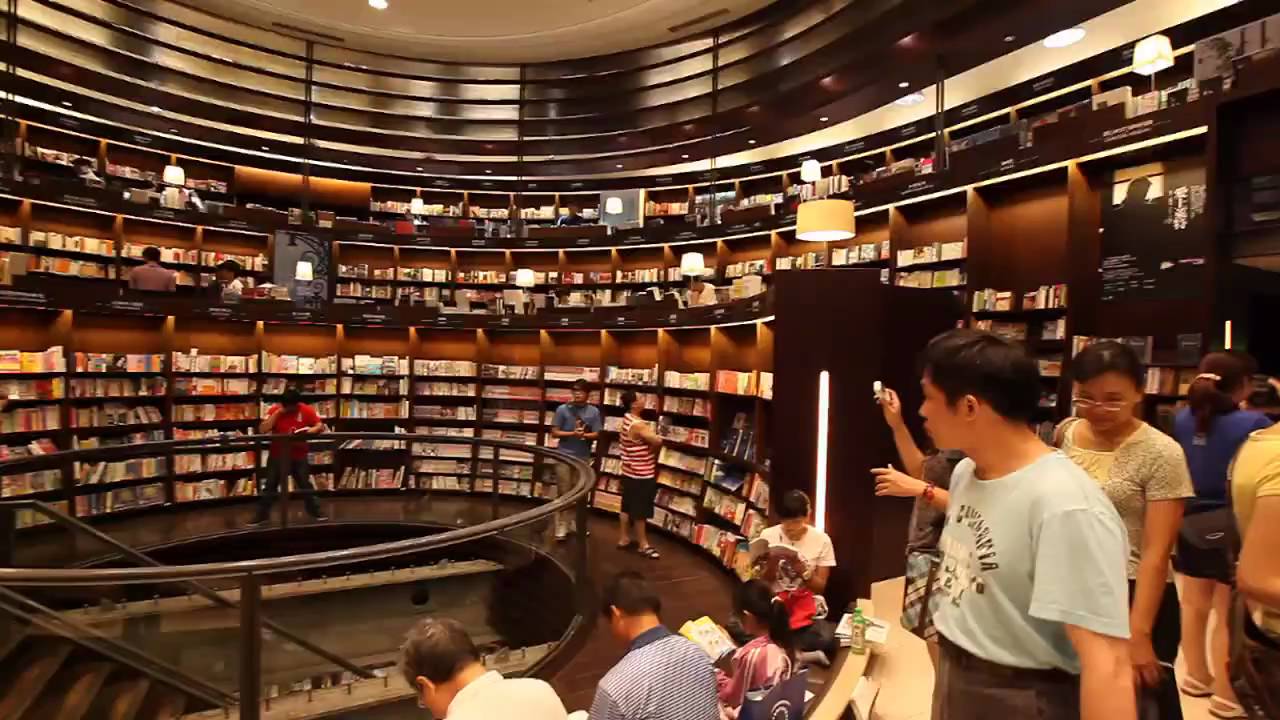
    He’s alluding to Eslite, the famous Taiwanese bookstore chain with stores throughout Taiwan, the mainland and Hong Kong, which has been redefining book culture since in 1989. Though its range of books is impressive, chic cafes, cosy nooks and high-end design have become the hallmarks of the Eslite brand.

    While other retailers were still sleeping, Eslite introduced 24-hour shopping, its stores drawing late-night crowds intent on browsing, not boozing. Even the A list set are getting in on the act. “After midnight,” says Lau, co-founder of KL&K Design, a Hong Kong and mainland-based design studio, “you can go to Eslite and see movie stars.”

    Extrapolating its successful theme, the brand has even opened the first Eslite Hotel, where the lobby is like an intimate library, and bookshelves in the 99 guest rooms are stocked with curated collections.

    David Hong of EHS ArchiLab, architect, project manager and designer of Eslite Hotel, says the brief was not to build a traditional luxury hotel, but imagine a privileged lifestyle.

    The site is within an old factory complex in Taipei dating from the Japanese colonial era, recently repurposed as cultural space.

    A bookstore sits next to the hotel, but independently. “You go into the lobby, and feel a sense of privacy – inviting you to sit and read a book quietly,” says Hong. Guest rooms have a warm ambience – lighter, textured brick walls and polished concrete – which are traditional materials used in Taiwan houses, and also, he adds, “relate to how an intellect should be living”.

    Hong agrees that Eslite has made literary culture more accessible. Eslite Hotel, opened early last year, received a best design award at Taiwan’s 2015 Golden Pin design competition.

    KL&K Design explored the theme when it was commissioned in 2014 to create a total branding and space concept for Reading Mi bookstore in Shenzhen. Designer Ko Hong, partner in charge of the project, says that bookstores nowadays can’t maintain revenue by just selling books. Hence, he says, Reading Mi is more than just a bookstore but “a multihyphenated lifestyle destination that lends richness to the physical retail experience.” The project is a Golden Pin Design Award 2015 Design Mark recipient.

    Targeting the location’s younger population, the bookstore makes up a third of the 994 square metre space, with the remaining areas allocated to a cultural section, a cafe, and a children’s illustration area.

    “At Reading Mi,” says Ko, “visitors can spend their leisure time poring over books, but also shop for cultural design products, drink coffee, and participate in workshops and seminars.” There’s magic afoot, he adds. “Reading Mi is a place to search for your inner self. The bookstore is the cultural core, everything else spirals around it.”

    The overall layout of the store follows the linear grid of bookshelves, Ko explains. “A cylindrical floor-to-ceiling bookshelf with cushioned seating serves as a focal point. Inspired by the British Museum Library, we wanted to create a noble yet embracing feeling of humanity. We call it ‘the man and book united nook’, which serves as a strong visual DNA as well as a social media photo opportunity (which has proven to be quite successful).”

    By incorporating multiple retail and lifestyle experiences in a single, cohesive space, Reading Mi has considered all ways to attract the customer of today, Ko says. The brand is planning to set up its chain in Guangdong province first and then spread to the rest of China. Its second shop opened in October 2015, and the third is scheduled for May 2016.

    In London, the architect of Foyles’ new flagship, Alex Lifschutz, of Lifschutz Davidson Sandilands, agrees that Foyles was “incredibly brave” to make such an investment in the midst of recession, and at a time when selling books was becoming “extremely difficult”. Focus groups with industry representatives revealed the need to bring immersive qualities in store – events, talks, and music – creating “almost like a book-centred village feel”, he explains.

    Situated in the former home of Central Saint Martin’s College of Art & Design, it was a beautiful building to begin with. “Our design has stripped away a century’s ad hoc accretions to reveal the original structure,” says Lifschutz. By enlarging the existing central lightwell, an atrium brings daylight in. Instead of the labyrinth of old, the new bookshop is devoid of walls – the bookshelves provide the partitions; the books create the journey.

    “The book stack partitions have the natural property of absorbing sound and provide a magical way to juxtapose quiet browsing with different music (jazz and classical, for instance) and film departments, author talks and happenings without walls or doors,” says Lifschutz, “so walking through the store is a much more dynamic and immersive experience.” A new cafe, gallery, jazz record shop and event space allow for in-store events.

    Lifschutz sees an opportunity for booksellers to make a book purchase part of a more meaningful experience – “a glorious meal rather than a snack”. Much like progressive greengrocers have done to counter competition from supermarkets: redesigning stores to present their wares in a more appealing way.

    “None of these things are rocket science – the ingredients of the meal are pretty much the same. It’s whether you can put them together in a way that makes the meal intriguing, fun and tasty,” Lifschutz says. To that end, he adds, architecture “is just one part of the story”.

    “My advice to booksellers is step outside themselves, think about what makes their local environment unique, what is special about their local community and focus on providing a customer experience that cannot be matched by digital bookselling.”
  • Hong Kong Government Allocates About $64 Million In Fashion Industry For Upcoming Budget

    Hong Kong Government Allocates About $64 Million In Fashion Industry For Upcoming Budget

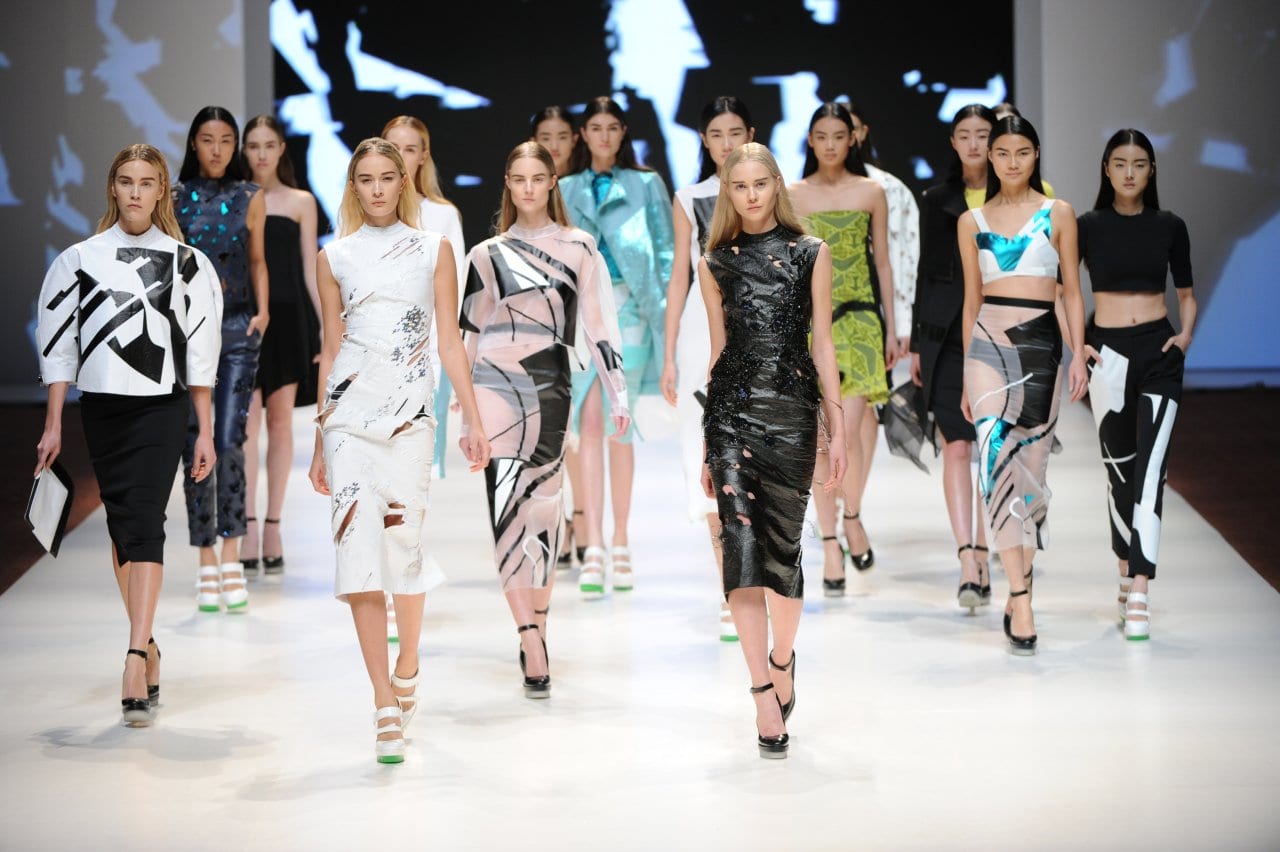
    The Hong Kong government just settled its 2016-17 budget — which includes an allocation for the fashion industry of 500 million Hong Kong dollars (or about $64.35 million at current exchange rates).

    Financial secretary John C. Tsang told us that the funds will go towards developing the fashion industry, specifically promoting local designers and brands internationally and in Hong Kong. He added that the city’s government will establish an incubation program for fashion designers, “drawing on the experience of other fashion capitals like London, New York and Seoul.”

    Additionally, the Hong Kong government will set up a resource center to provide technical training and support for young designers, according to Tsang.

    “The uncertain pace of U.S. interest rate [normalization], heightened financial market volatility, modest and patchy growth in advanced economies, weak growth in emerging markets, a slowdown in inbound tourism and subdued exports will all impact on growth prospects,” the Hong Kong government said in a release, WWD reported.

    The Hong Kong Trade Development Council will also team up with the local government to sponsor programs that will bring emerging Hong Kong-based brands to fashion weeks in Paris and New York. From Sept. 7-10, the HKTDC plans to host a new event called Centrestage — giving Asian brands a platform for runway shows. 

    In related news, Lane Crawford recently tapped nine artists to create a series of visual installations for the luxury retail company’s stores in Hong Kong and China in celebration of the Chinese New Year — which began earlier this month.

    Participating artists include Andrea Minini, Angel Chen, Desmond Leung, Hui Hoi Kiu, Huijun Guan, Mosaic Art Projects (which is led by visual artists Karen Pow and Chao Harn Kae), Jan Zhou and Yeli Gu.

  • Bleak New Year for Chow Tai Fook

    Bleak New Year for Chow Tai Fook

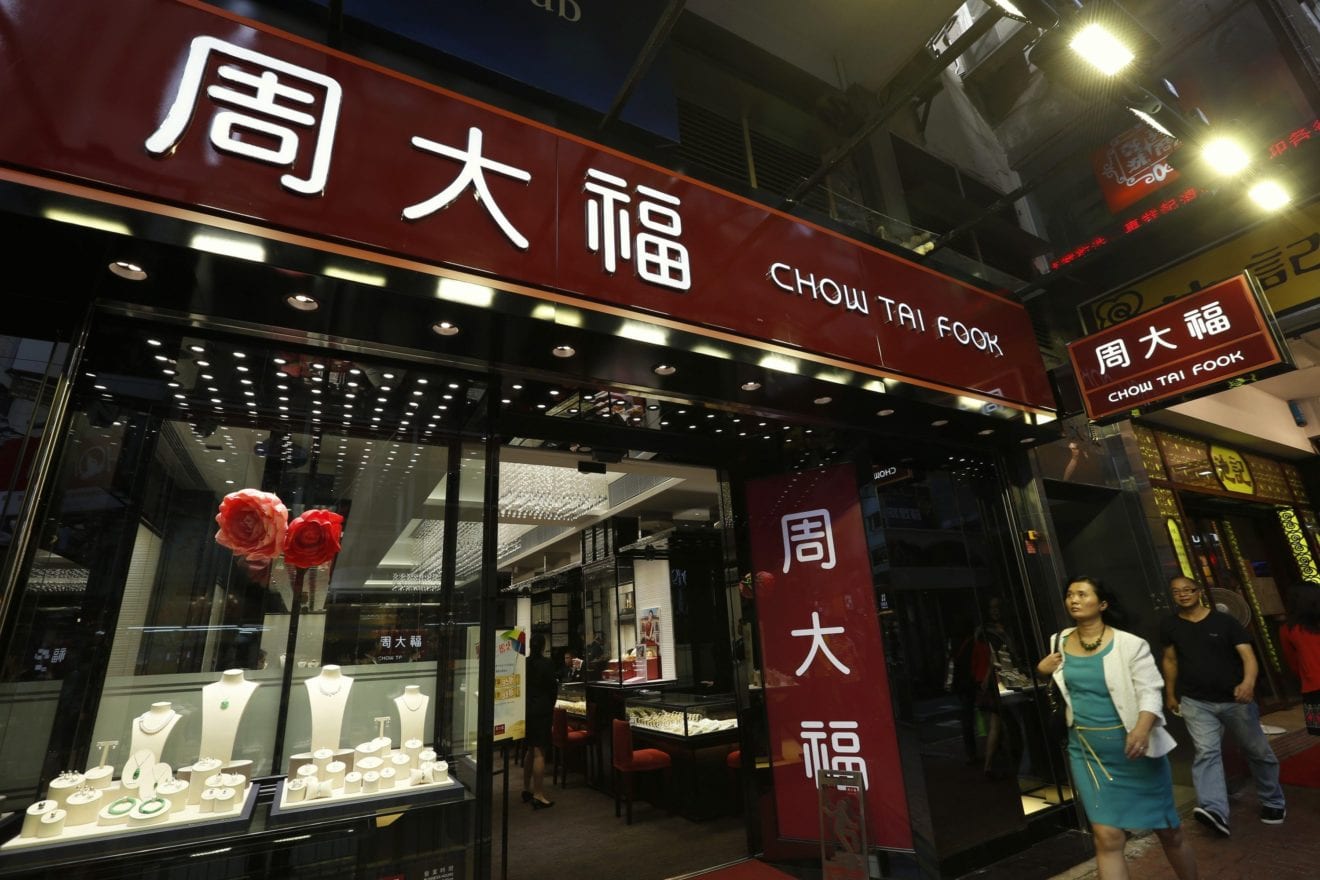
    Chinese New Year sales for the Chow Tai Fook Jewellery Group took a dive in Mainland China, Hong Kong and Macau.

    Unaudited figures for the period, from January 25 to February 14, show the value of retail sales dropped 30 per cent in China and 23 per cent in Hong Kong and Macau – a 29 per cent dip for the group – compared with the previous Chinese New Year.

    Same-store sales dropped 31 per cent in China, 22 per cent in Hong Kong/Macau, and 28 per cent for the group. Same-store sales figures were also broken down into product – gem-set jewellery dropped 30 per cent in China, 3 per cent in Hong Kong/Macau, and 20 per cent for the group, while gold products fell 33 per cent in China, 25 per cent in Hong Kong/Macau, and 31 per cent for the group.

    Chow Tai Fook says the plunge in China was mainly because of more outbound travel from the mainland during the celebration, and a weakening of consumer sentiment for luxury goods because of the economic slowdown and volatility in the stock market.

    It attributes the decrease in Hong Kong and Macau to the drop in mainland tourists to Hong Kong as well as continuing weak retail sentiment in both regions.

    “Management anticipates the retail business environment will continue to be challenging for the fourth quarter and the sales performance will be worse than that of the third quarter,” the company said a statement.

  • Hong Kong start-up PopUp Angels offers retailers Popup Stores

    Hong Kong start-up PopUp Angels offers retailers Popup Stores

    Hong Kong start-up PopUp Angels is offering a short-term alternative to retailers and landlords with pop-up store rentals as shop vacancies across the city continue to rise.

    Launched in November in Hong Kong, the PopUp Angels portal lets retailers, or food and beverage companies, test ideas and reach new markets without committing to a long contract.

    While demand from potential tenants is high, the city’s landlords are slowly coming round to the idea as their traditional model comes under threat from slumping retails sales.

    “Given that the retail market in Hong Kong has been doing so well in the past few years, it takes a while for the landlords to realise the golden age has passed and it’s time to find different ways to maximise the use of their vacant spaces,” said Kit Chan, director of PopUp Angels.

    Real Estate Agency Sheraton Valuers predicted the vacancy rate for ground floor stores in Causeway Bay to reach one in 10 in the wake of the recently ended Lunar New Year holiday.

    Retail sales recorded a year-on-year decrease of 3.7 per cent in 2015, hitting the lowest level since 2002, pushing many retailers to close stores.

    The start-up is aimed at companies testing a new idea or online retailers wanting to open a bricks and mortar store for a short period to boost their brands’ presence.

    PopUp Angels offer spaces to rent for any period from one day to up to a year, Chan said.

    Rental prices range from HK$3,000 (US$386) a day for a 375-sq-ft space in Central to HK$25,000 a week for two-storey location in the Western district.

    The start-up is also able to put potential tenants in touch with contractors and help guide them through any licensing issues.

    PopUp Angels was launched last September in Singapore, where the majority of vacant properties it lists are in shopping malls, according to Adrian Chan, who heads the operation in the Lion City.

    Melanie B, owner of Yoga BamBam, leases out the 375-sq-ft first floor space above her studio in Central through PopUp Angels to help with costs and to bring in some creativity.

    The former art gallery below PMQ – a design cluster on the grounds of the city’s former Police Married Quarters – was renovated with the goal of leasing the space as a pop-up by including internet access for card payment, a sturdy floor and lighting suitable for displaying art.

    “I don’t like stagnation, so the idea of a pop-up is that it changes every weekend, or every week,” she said.

    “So to have designer lingerie one week and then a hair product the next seems like a fun way to do it.”

  • Hong Kong tourism, retail continue slump with less mainlander visits

    Hong Kong tourism, retail continue slump with less mainlander visits

    The Hong Kong Tourism Board (HKTB) said on Jan. 19 that the number of visitors to the city fell 2.5 percent last year over 2014 to 59.31 million, among whom 45.84 million were from the Chinese mainland, down 3 percent. The number of overnight mainland visitors dropped 5.7 percent to slightly less than 18 million.

    Even Christmas season failed to meet expectations, with the number of mainland travelers being merely 3.72 million in December, down 15.5 percent, the biggest monthly drop in 2015.

    The total number of visitors to Hong Kong had been on the decline for seven consecutive months since June, the HKTB said.

    On the other hand, the retail sector also had a difficult time. According to the latest data from Hong Kong’s Census and Statistics Department, retail sales totaled 475.2 billion Hong Kong dollars in 2015, down 3.7 percent from 2014, the biggest drop since 2002.

    Last December’s retail sales were estimated at 43.7 billion Hong Kong dollars, down 8.5 percent year-on-year, while the total volume of retail in the same month fell 6.1 percent.

    Sales revenues of jewelry, watches and luxury gifts registered the biggest fall, down 17 percent in December year-on-year and 15.6 percent last year from 2014. In addition, clothes, commodities at department stores, medicine and cosmetics all saw a fall in revenue.

    The retail sector has been falling since March 2015, and saw revenue drops for ten months in a row last year. Retail sales in August totaled 37.9 billion Hong Kong dollars, down 5.4 percent year-on-year, the biggest fall in 2015.

    On February 15, Hong Kong Disneyland said it suffered a net profit loss of 148 million Hong Kong dollars, the first of its kind since 2012.

    Besides, Ocean Park,recently reported a double-digit fall in the number of mainland visitors during the Spring Festival holidays, while total admissions to the park fell 14 percent in 2015. Tom Mehrmann, the park’s chief executive, said the number of mainland visitors now has dropped to a mere 40 percent of the total admissions from over 50 percent in July 2015, and he expected a further drop in numbers during the months to come.

  • Prada Asia fortunes wane

    Prada Asia fortunes wane

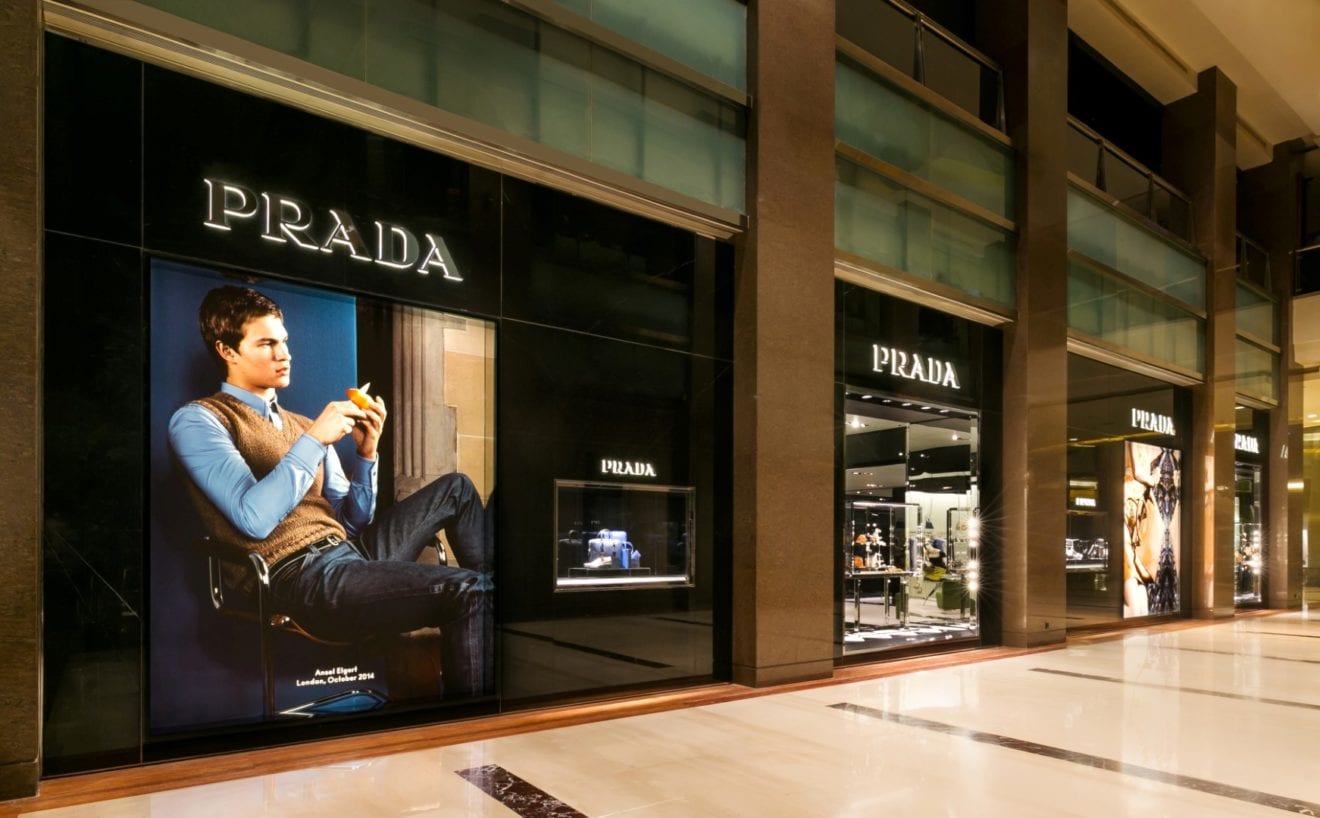
    Prada Asia is the Italian luxury label’s achilles heel with the company reporting  a 16 per cent decrease in sales in the region in the year to January 31.

    “The economic situation of the Chinese market remains negative although there was some improvement in the final quarter,” Prada said in its earnings statement.

    “Consequently, in the 2015 financial year, the entire Asia Pacific area (excluding Japan) recorded a 4 per cent revenue decrease at current exchange rates and a 16 per cent decrease at constant exchange rates.”

    Japan proved a better market, for the label: for the fifth consecutive year, sales rose, this time by  11 per cent at current exchange rates, or 4 per cent at constant rates.

    Global sales changed little – for the second year in a row – largely due to the strengthening US dollar.  Total revenue was 3.552 billion euros (US$3.96 billion) in 2015. Sales in the US fell 9 per cent excluding currency fluctuations.

    “Throughout 2015, we had to deal with an economic environment characterised by extreme volatility in currency markets, as well as by the deteriorating geopolitical situation in many world regions,” commented said CEO Patrizio Bertelli, in a clear reference to the falling demand for luxury goods in China and the Paris terrorist attacks.

    “These two factors have made prices fluctuate wildly and diverted tourist traffic in sudden and unpredictable ways. Our retail network – now truly global thanks to investment in recent years – enables us to keep developing a direct relationship with our ever more demanding customer all over the world. In the coming months, the group will be focusing its energies on the development of new commercial and marketing initiatives to sustain organic growth, also by means of an extensive digital project to strengthen dialogue with our customers. These actions, taken against the background of rigorous and disciplined cost control, will enable us to consolidate our market position with satisfactory margins and returns on investment.”

    Prada is listed in Hong Kong.

  • SmarTone opens online store for smartphones, accessories

    SmarTone opens online store for smartphones, accessories

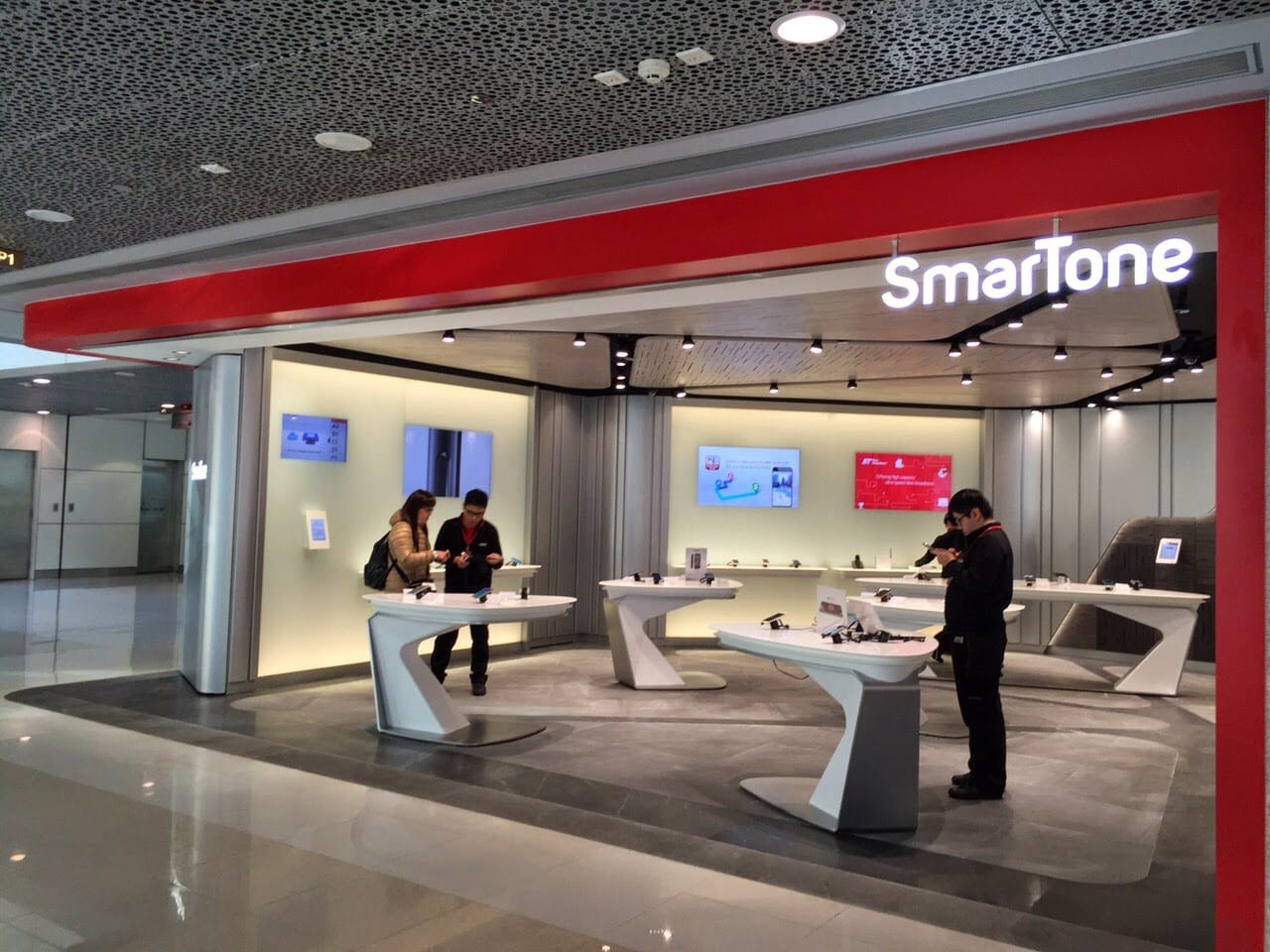
    SmarTone has launched a new online store for customers looking to buy smartphones and accessories.

    The store at shop.smartone.com will provide customers with a range of online exclusive offers, including a 12-month screen replacement warranty for smartphones and HK$50 off on accessories for every HK$1,000 smartphone purchase.

    Customers will be able to use the shop to choose their own numbers for prepaid SIMs from a pool of sought after numbers.

    The store will also offer free delivery to commercial addresses in Hong Kong for every order over HK$300.

    As a promotional offer, the company is providing winning customers with up to a HK$1,000 rebate on their orders, for a total pool of store credit worth HK$100,000. The promotion ends on Tuesday.

    SmarTone interim CEO Stephen Chau said the new store is aimed at adapting to the changing demands of Hong Kong consumers.

    “SmarTone has always focused on delivering an outstanding experience to our customers. In recent years, we have observed the trend of Hong Kong consumers shopping online,” he said.

    “To better serve customer needs, our new online store focuses on bringing products from quality brands internationally to customers, and they also enjoy our renowned customer care such as gift wrapping service and 24/7 Web Chat. Leveraging on our omni-channel capability, we aim to provide customers with an enjoyable shopping experience.”

  • Step Inside Asia’s Largest Jordan-Only Store in Hong Kong

    Step Inside Asia’s Largest Jordan-Only Store in Hong Kong

    Dipping into the streetwear mecca of Hong Kong, you’ll now find the all-new Jordan Brand store, set amongst the busy streets of the city’s Central District.

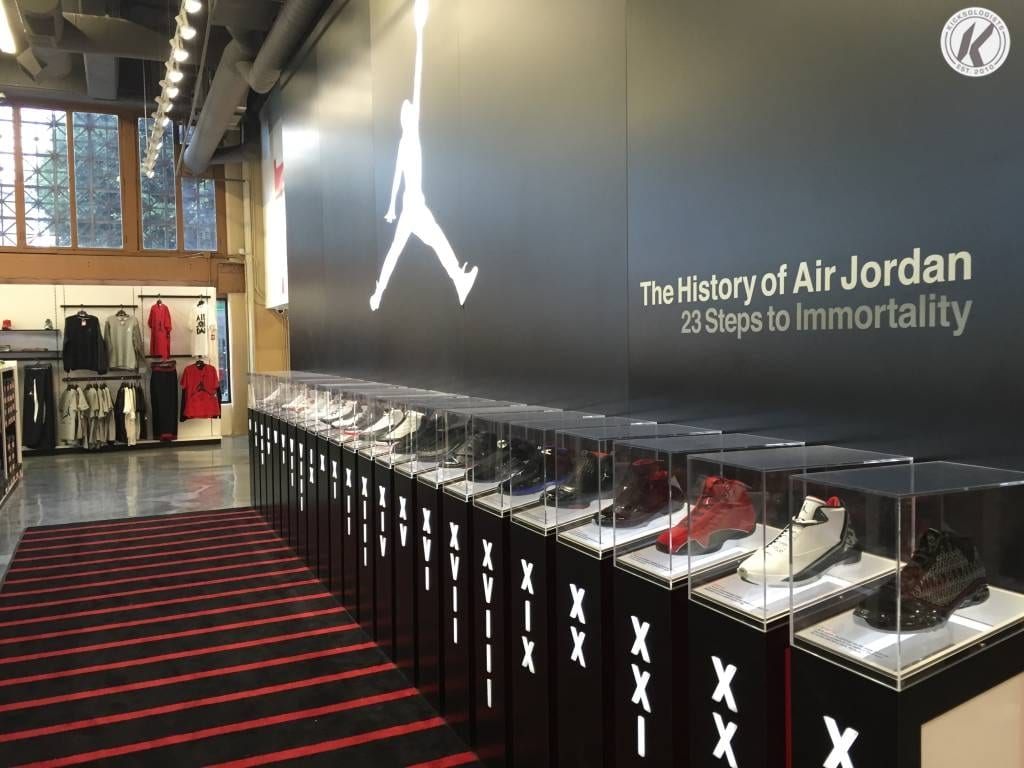
    Located on Wellington Street, Jordan 8 Wellington is currently Asia’s largest Jordan-only store in Hong Kong, offering a fresh new approach to premium retail.

    Taking the Jordan Brand to the next level, consumers are invited to members-only concepts, including custom t-shirts and jerseys, along with first access to Jordan Brand products. The space also offers a hands on experience  allowing visitors to test selected sneakers – with basketball drills and moves, displayed on an adjacent digital wall.

    Adopting the brand’s new design concept which originated at Chicago’s 32 South State Street store, the space pays homage to the legendary Michael Jordan through art installations and historical displays.

    Also, be sure to peep Drake previewing a pair of “Kentucky Blue” OVO x Air Jordan 8 Retros.

  • Hong Kong to post surplus even as economy grapples with China slowdown

    Hong Kong to post surplus even as economy grapples with China slowdown

    Hong Kong is forecast to post a healthy fiscal surplus in its annual budget on Wednesday, with a series of one-off sweeteners expected to help businesses hurt by a slowdown in China, including the hard-hit retail and tourism sectors.

    Hong Kong’s longstanding Financial Secretary John Tsang isn’t expected, however, to unveil any sweeping new initiatives amid concerns the government’s reliance on one-off measures are failing to bolster the city’s economic fundamentals as it enters a period of slower growth and heightened political tensions.

    Tsang wrote on his official blog on Sunday that while sweeteners may only account for 1 percent of Hong Kong’s annual budget, they provide an important boost for the local economy and job market, and play an important “stabilising” role.

    A night-long riot shook the city after the authorities tried to remove illegal street stalls during the Lunar New Year, the worst violence since pro-democracy protests in 2014.

    While Hong Kong has tended to post healthy surpluses over the past decade, pressures are mounting on some of the economy’s biggest drivers. Mainland Chinese tourists who power the territory’s all-important retail sector stayed away from the city last year, leading to the worst annual decline in sales since 2002.

    Hong Kong officials have also sought to integrate more closely with China through Beijing’s “One Belt, One Road” blueprint to deepen regional economic co-operation, though the details remain sketchy.

    Four economists surveyed by Reuters expect fourth quarter growth to slow to a seasonally adjusted 0.1 percent from 0.9 percent in the third. From a year earlier, growth was forecast at 2 percent, down from 2.3 percent in the third quarter.

    Six economists estimated the economy would expand 2.3 percent in 2015, slightly less than the official forecast of 2.4 percent.

    The global financial hub’s economy is highly reliant on China which is grappling with its slowest growth in nearly 25 years.

    The government is forecasting a surplus of HK$36.8 billion while professional services firm Deloitte expects HK$80 billion.

    Despite a recent softening in the city’s sky-high property prices, analysts expect cooling measures implemented over the past few years to stay in place. Standard & Poor’s has forecast a 10 to 15 percent drop in property prices in 2016.

    Hong Kong’s economic pressures come on top of an increasingly fraught political environment, including the disappearances and feared abductions by Chinese agents of several Hong Kong booksellers, and lingering tensions towards Beijing’s refusal to allow full democracy in Hong Kong after protesters occupied major roads for 79 days in late 2014.

    The former British colony, with a population of 7.3 million, returned to Chinese rule in 1997 under a “one country, two systems” framework that gave it a large degree of autonomy although its leaders ultimately defer to Beijing.

  • Hong Kong’s Chow Tai Fook, Sa Sa saw sales fall over Lunar New Year

    Hong Kong’s Chow Tai Fook, Sa Sa saw sales fall over Lunar New Year

    Hong Kong’s top jewellery firm Chow Tai Fook and cosmetics retailer Sa Sa saw sales declines of at least 20 percent during the key Lunar New Year shopping season, as China’s slowing economy weighed on consumer spending.

    Chow Tai Fook Jewellery Group Ltd, Hong Kong’s largest jewellery firm by market value, saw its retail sales drop by almost a third in mainland China and by 23 percent in Hong Kong and Macau between Jan. 25 and Feb. 14, compared with the previous year’s Lunar New Year period. The buying spree usually happens a week or more before the start of Lunar New Year, which fell on Feb. 8 this year.

    Same-store sales were down 31 percent in mainland China and down 22 percent in Hong Kong and Macau, Chow Tai Fook said in a filing to the Hong Kong stock exchange on Wednesday.

    “The management anticipates the retail business environment will continue to be challenging for the fourth quarter and the sales performance will be worse than that of the third quarter,” the jeweller said.

    China’s economy, which posted the slowest growth since 2009 in the fourth quarter, and the government’s crackdown on corruption have stifled spending among Chinese consumers, who typically flock to Hong Kong to shop for everything from handbags to milk powder.

    On Wednesday, another prominent retailer in Hong Kong also reported dismal sales. Sa Sa International Holdings Ltd, which has a store in almost every corner of Hong Kong, posted a 20 percent drop in retail sales in Hong Kong and Macau over Feb. 8-14, compared with the previous year’s Lunar New Year period. Sa Sa’s same-store sales fell 19 percent over the same period, it said in a filing to the Hong Kong stock exchange. The announcements came after Hong Kong’s market closed on Wednesday. Chow Tai Fook’s shares ended 6 percent lower, while Sa Sa’s stock was down by 0.9 percent, versus the main Hang Seng index’s 1 percent fall.


  • Another $3.5m funding for Grana

    Another $3.5m funding for Grana

    Hong Kong-based online clothing retailer Grana has secured an extra US$3.5 million in seed funding.

    This brings total funding to date to $6 million, with an additional Series A funding pending. The lead investor  is Golden Gate Ventures, with MindWorks Ventures and Bluebell Group also involved.

    Grana has just launched in the US market, and the extra funding will help the brand continue its international growth. The company offers clothing made from international fabrics including Chinese cotton twill and silk, French poplin, Irish linen, Italian merino wool, Japanese chambray and denim, Mongolian cashmere and Peruvian cotton. Designing in-house, Grana works directly with fabric mills to ensure the best possible prices.

    In its beta launch in March last year it sold 2000 Peruvian Pima cotton T-shirts in three weeks, shipping to eight countries. Month-over-month sales have been increasing by 40 per cent since the company launched in October 2014.

    As well as helping Grana ship to new markets, the new funding will support its entry to the China and US markets. The funds will also be critical to new product category launches such as leather goods, undergarments and activewear.

    “The support is critical to our US expansion, a priority market that already represents 20 per cent of our global sales,” says CEO and co-founder Luke Grana, an Australian based in Hong Kong.

    Grana opened a “fitting room” in San Francisco in December, and has also introduced the concept in Hong Kong, Singapore and Sydney. These outlets are designed as showrooms rather than retail shops, offering interaction with Grana Cheetahs (customer service representatives) and the chance to explore the website.

    “In a world where startups are disrupting established industries, Grana is disrupting how to build a global brand with bottom-up marketing from their biggest fans, city by city,” says Golden Gate Ventures managing partner Vinnie Lauria.

    Grana will also use the new funding to build its global team. It now has more than 40 employees in Hong Kong, and has just added team members in San Francisco.

  • Apple Granted 4 Design Patents in Hong Kong

    Apple Granted 4 Design Patents in Hong Kong

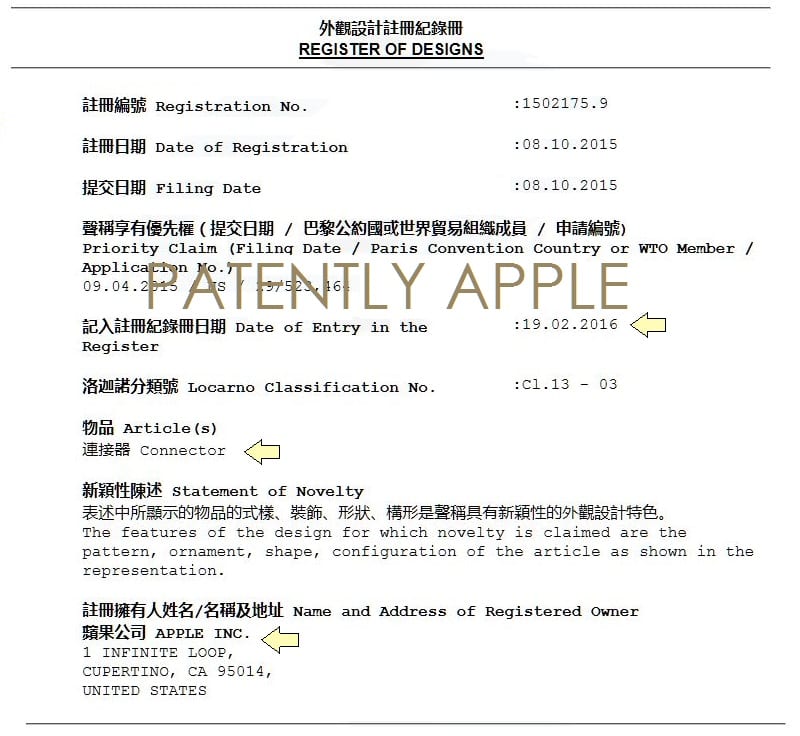
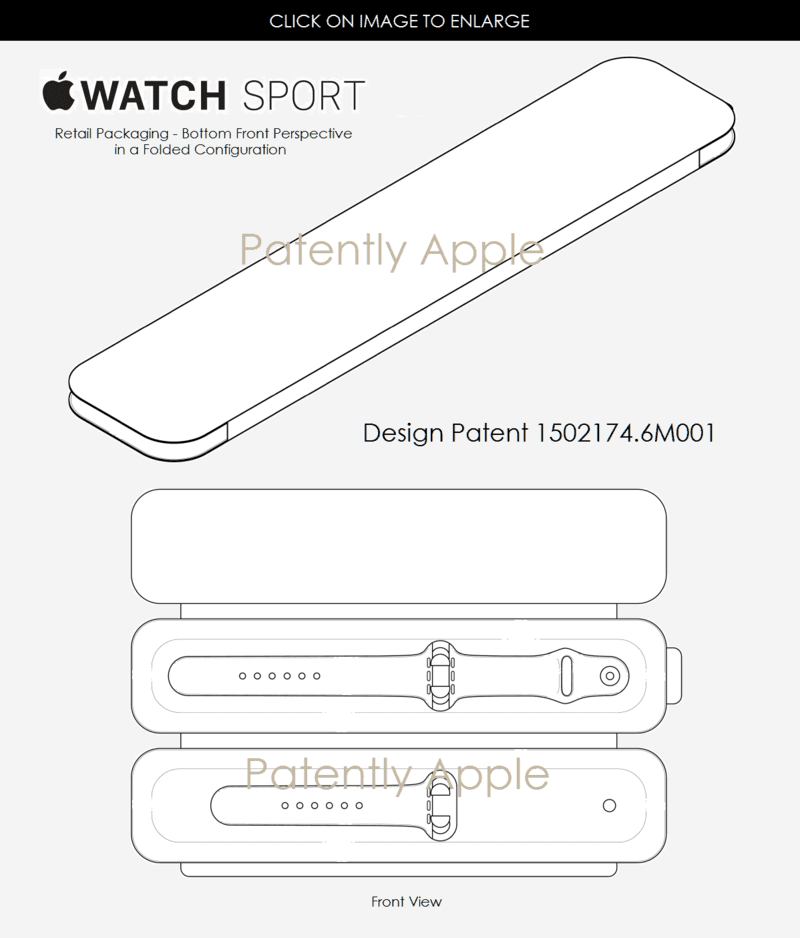
    Apple was granted four design patents yesterday in Hong Kong China covering the Apple Watch Sport’s retail packaging & a connector with an on-off switch at the top as noted in our cover graphic.

    Unlike “patent applications,” design patents published by the U.S. Patent and Trademark Office and/or any other Patent Office, don’t reveal pertinent information about a particular design. All we are given is a series of simple photos and/or line-art graphics of what was actually registered. The first design patent is a case in point. It’s a design patent for a ‘connector’ – but it’s not one that’s familiar. Without patent details, there’s no way to verify with certainty what the connector is for. .

    Design Patent: Connector

    Apple was granted a design patent in Hong Kong yesterday for a connector that is unidentified. If any reader is able to identify this connector, then please make note of it in our comment section below and we’ll update this report accordingly.

    2AF 55 CONNECTOR DESIGN PATENT

    Update 5:40 a.m.: Several comments suggested that the connector design was associated with the hidden data port. After going back to the design patent and conducting a more focused search online for this, I came a across a design for a charging strap as noted in the graphic below. It’s an accessory not made by Apple.

    Going back to the design patent there was a second part of the design, the male connector as presented below that’s to mate with the female connector as noted noted above. If this design is associated with the Apple Watch, then will Apple introduce this with the Apple Watch 2 design or are they licensing this design to accessory makers? Time will tell, but for now, it appears that our fan base may have had it right in suggesting the connector was for the hidden data port. Thanks to all who sent in comments on this in a timely manner. Cheers.

    2.88 AF 55 CONNECTOR

    3AF 55 CONNECTOR GRANTED DESIGN

    Design Patent: Apple Watch Sport Retail Packaging

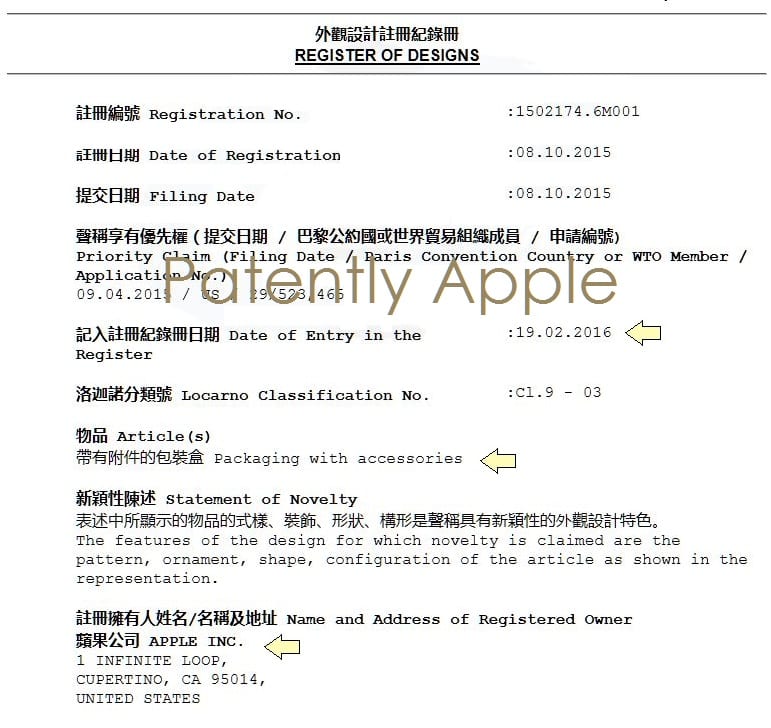
    Apple was granted three design patents yesterday in Hong Kong numbered 1502174.6M001 to .6M003 covering the retail packaging for the Apple Watch Sport as noted below.

    4af 55 apple watch sport retail packaging

    5af 55 apple watch sport granted patent

    6AF 55

  • Furla Asia-Pacific plans more flagships

    Furla Asia-Pacific plans more flagships

    Luxury Italian brand Furla is planning more flagship stores in Asia as the region delivers strong growth for the 89-year-old family-owned company.

    FURLA CEO_Eraldo PolettoIn an exclusive interview with Inside Retail Asia, Furla CEO Eraldo Poletto explains how the company has bucked the decline in luxury spending in core markets like Hong Kong and Singapore during the past year. Furla achieved 53 per cent growth in total sales (in euro at the current exchange rate) in Asia-Pacific, where it counts 14 markets – Australia, Cambodia, China, Hong Kong, India, Indonesia, Korea, Macau, Malaysia, Singapore, Taiwan, Thailand, The Philippines and Vietnam. Japan, a stand-alone territory in Furla’s accounts, saw sales grow 24 per cent.

    Even discounting sales from new stores, like-for-like growth for Furla Asia-Pacific reached 15.5 per cent last year, yet the region accounts for just 19 per cent of the company’s sales – about €64.4 million ($72.1 million) – suggesting strong growth potential ahead.

    “The consistent strategy we have implemented over the past four years – positioning ourselves as the only Italian and ‘Made-in-Italy’ brand in the premium segment, without accepting compromises in terms of quality – is paying off,” says Poletto.

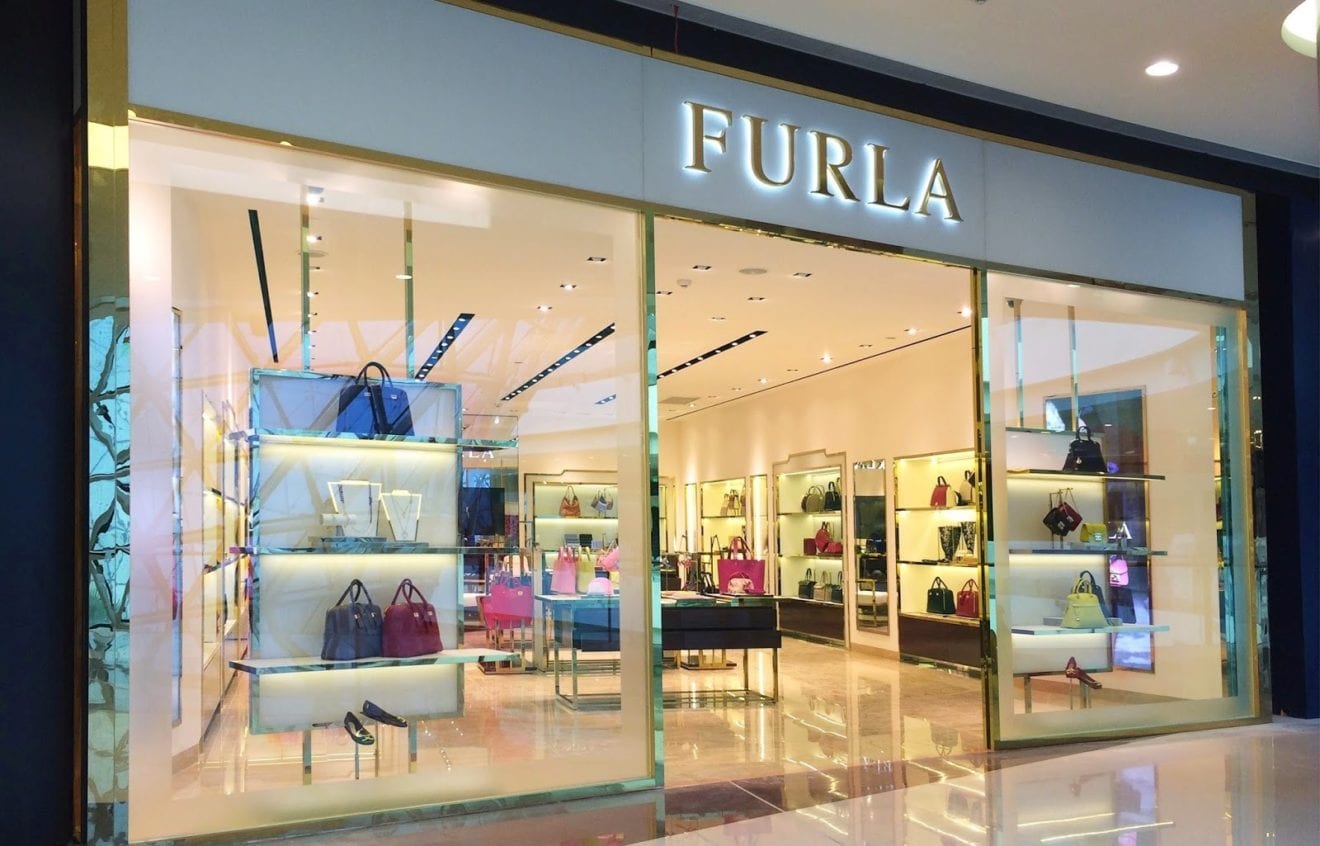
    “We are expanding our footprint with important flagships: Singapore Marina Bay Sands opened in September; Hong Kong Miramall and Shanghai Citic, each with a 300 sqm street facade, opened in December with a luxury retail concept showcasing our full ladies’ and men’s collections.”

    Furla China Flagship Store @ Shanghai Citic Square 4

    He says more flagships will open this year in Australia and Bangkok.

    “Flagships are meant to represent every aspect of the brand in terms of image and product range; however, we are not expecting to open more than five or six flagships in the region, as we are focusing on the profitability of our retail network, and prefer to penetrate the market extensively.”

    In what he terms a “capillary” approach, more standard-sized stores and points of sale will also open across the region.

    Furla China Flagship Store @ Shanghai Citic Square 7

    For the past two years the company has opened or renovated one store a week. It now has 172 points of sale in Asia-Pacific, along with 72 monobrand stores in Japan.

    “In terms of our retail format, our average store size is increasing together with Furla’s total-look collections. Malls and high-street locations complement each other, and in this period of time, rent levels in some markets have decreased substantially because of a drop in demand from luxury, watch and jewellery brands. We are always on the lookout for new opportunities to invest in,” says Poletto.

    “Our retail store concept is also quite special, as it wants to deliver a 360-degree luxury shopping experience while maintaining our the value-for-money approach.”

    Furla China Flagship Store @ Shanghai Citic Square 2

    Asians appear to be embracing Furla’s distinctive quality brand feel and shopping experience. Perhaps surprisingly, the brand has no strategy of differentiating its Asia-Pacific product range from those of other markets.

    “We believe that if a product captures customers’ hearts in one market, its appeal is universal. Our price and product range have always been appealing to a large spectrum of clientele; it is not by chance that our two best-seller styles – Metropolis and Artesia – represent the most affordable and the highest offer of our collection respectively.

    Furla China Flagship Store @ Shanghai Citic Square 6

    “In terms of branding, strong marketing investments – like our collaboration with Mario Testino and a more aggressive digital and outdoor media planning strategy – are making Furla far more visible.”

    Department stores are still an integral part of the Furla sales strategy, especially in China, where that sector is still in its infancy by western standards.

    “The department store culture in Greater China isn’t very strong yet, and there are very few players compared to the shopping mall retail model in western markets. There is most surely room for improvement in this region.

    Furla China Flagship Store @ Shanghai Citic Square

    “The situation is much more developed in Singapore and Australia, and obviously a priority in Korea with Shinsegae, Hyundai and Lotte, where we are present with 10 domestic stores and an aggressive development plan.”

    Furla is also experiencing strong growth in the travel retail sector, which is helping both top-line sales and brand awareness.

    “Travel retail will continue to fuel the growth in APAC,” says Poletto. “Total sales generated by the travel retail channel were up 27 per cent for 2015, and we opened five new locations. We see blooming opportunities in this channel as Asian customers shop worldwide while they travel: it is a great showcase for the brand.”

    In June, Furla will open a directly managed boutique in Hong Kong International Airport.

    Furla China Flagship Store @ Shanghai Citic Square 8

    Southeast Asian focus

    Furla’s strong growth in the region is coming not just from the established markets of Hong Kong, Singapore and Greater China.

    “We have witnessed a significant double-digit growth in Southeast Asia markets including Cambodia, Malaysia, Singapore, Thailand, The Philippines and Vietnam,” says Poletto.

    “In Indonesia, a fast-growing country with a population of 250 million, we have a capillary quality presence with 10 boutiques in five cities. As of today, Furla has 46 stores in Southeast Asia, and we will focus on strengthening our foothold in these markets this year.”

    Furla China Flagship Store @ Shanghai Citic Square 5

    In India, which Furla has entered in a joint venture with Genesis Luxury, the label has three boutiques – one each in Mumbai, Delhi and Calcutta.

    “They are all performing very well with a 50 per cent sales growth increase in 2015,” says Poletto. But the market has considerable challenges.

    “India is a market with very high potential, but also with a huge limits when it comes to infrastructures. There are not enough qualitative shopping malls to cover Indian clients’ high demand for fashion and luxury: this is why Indian consumers represent a key nationality in markets like Dubai, London or Singapore.

    “In terms of expansion, we will tap into all the new relevant real-estate projects.”

    Globally, Furla has 415 monobrand stores, of which 190 are directly owned and 198 franchised. It has 27 travel retail stores and more than 1200 outlets in department stores and multibrand outlets.

    Furla China Flagship Store @ Shanghai Citic Square 10

    Results released today show that Furla’s global turnover reached €339 million last year, up 30 per cent on 2014. The growth was driven across all Furla product categories, including the new men’s collection, women’s footwear collection and eyewear.

    Poletto says that being a family-owned business – an increasingly rare phenomenon in the model luxury retail business – has its advantages.

    “Being 89 years old gives us a great DNA to be around into the future: the real assets are the brand and its heritage, which are translated into equity. The Furlanetto family has very strong values – they have a long-term vision, instead of making opportunistic choices.”

  • Swarovski and DFS put customers in the frame

    Swarovski and DFS put customers in the frame

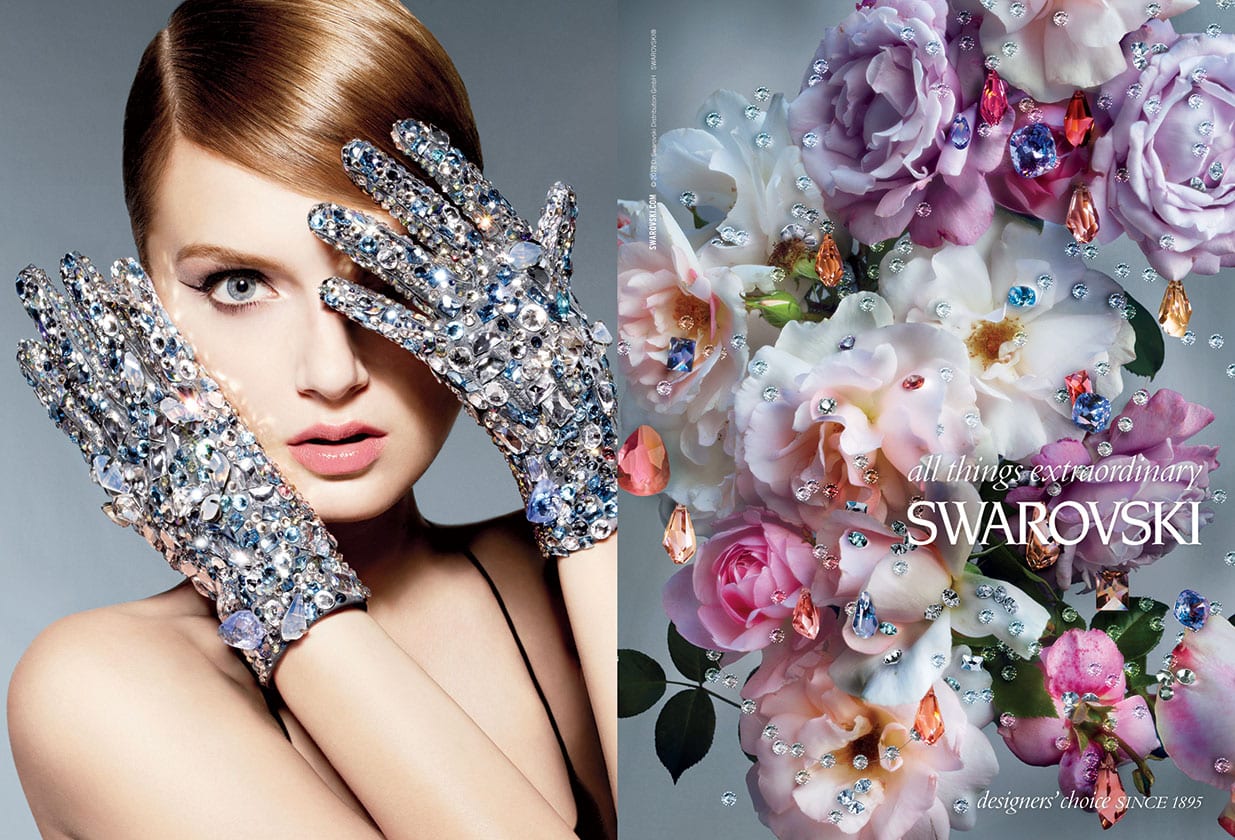
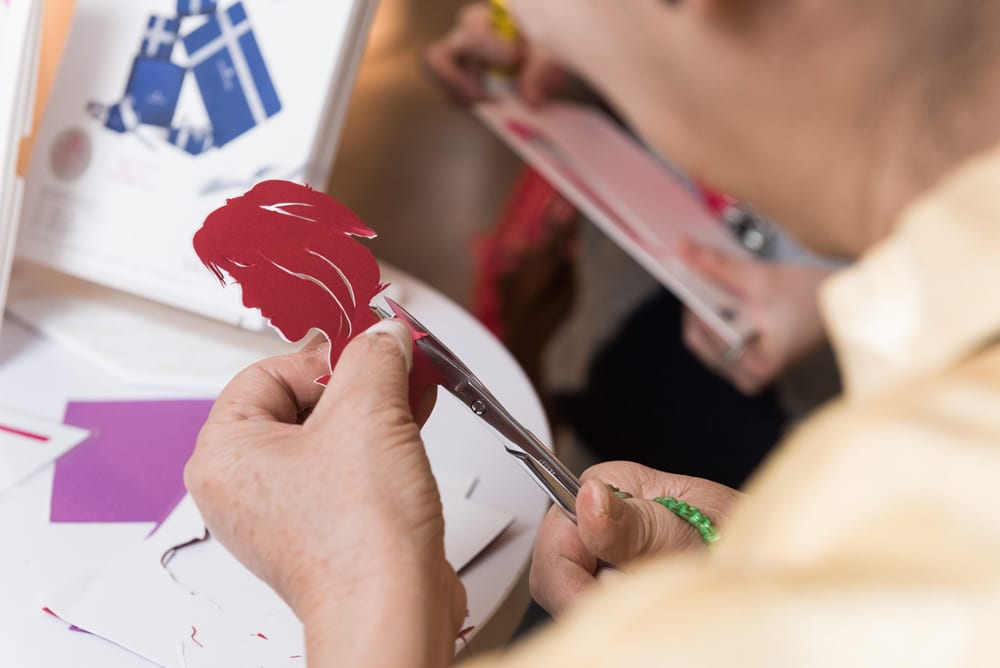
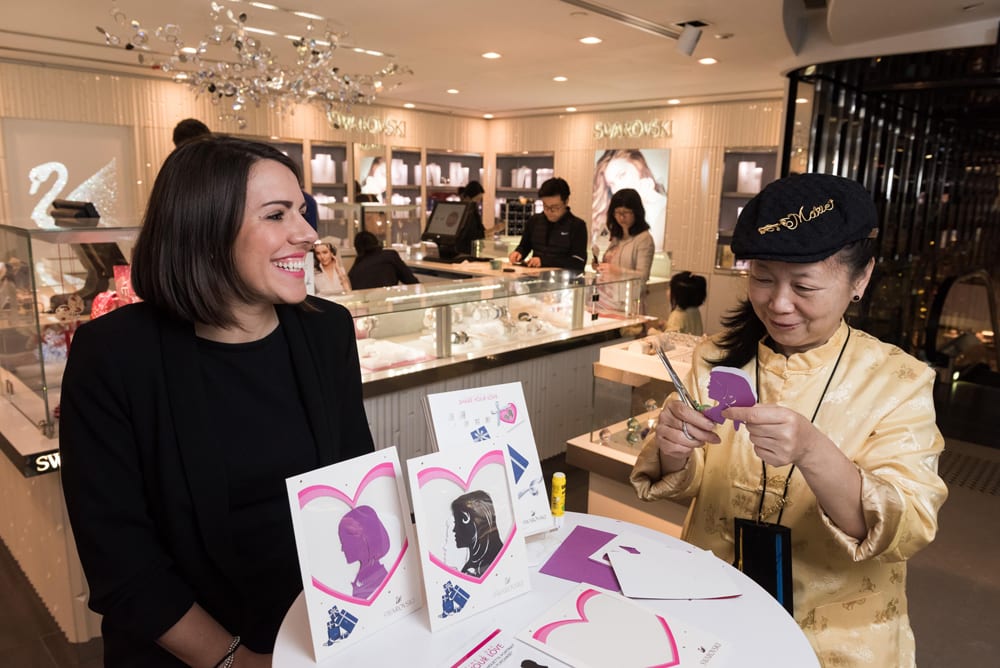
    Throughout February 2016, shoppers who make purchases at selected T Galleria by DFS stores in Hong Kong and Macau can enjoy an ‘exclusive’ silhouette portrait created by local artists as part of a new Swarovski campaign.

    The portraits are gifted in a Swarovski paper frame decorated with the brand’s iconic crystals.

    The service is now available at the T Galleria by DFS stores in Canton Road and Tsim Sha Tsui East in Hong Kong, as well as at City of Dreams and The Shoppes at Four Seasons in Macau.

    Swarovski-DFS-Valentines-Day-offer2

    Karen Tse, Director, Travel Retail Asia Pacific, Swarovski, said: “Swarovski believes that the shopping experience is crucial to how consumers appreciate and value our brand and our exquisite jewellery.

    Swarovski-DFS-Valentines-Day-offer1

    “That is why we have been introducing innovative consumer events such as the Valentine’s Day portrait offer. We
    want to give Swarovski customers an enjoyable memory of visiting our shops and that’s particularly important in prime locations for tourists such as our shops in T Galleria by DFS.”

    Jason Blejwas, Director Merchandise, Sunglasses, Fashion Watches and Jewellery, Global Merchandising, at DFS Group Limited, said: “We’re excited to partner with Swarovski to bring our T Galleria by DFS customers another exciting activation that celebrates our local destinations as well as our fantastic Swarovski product offering.

    “We’re confident this delightful and engaging in-store experience will make for a memorable trip for visitors to Hong Kong and Macau this Valentine’s Day.”

  • Hong Kong’s Disneyland struggling to work its magic

    Hong Kong’s Disneyland struggling to work its magic

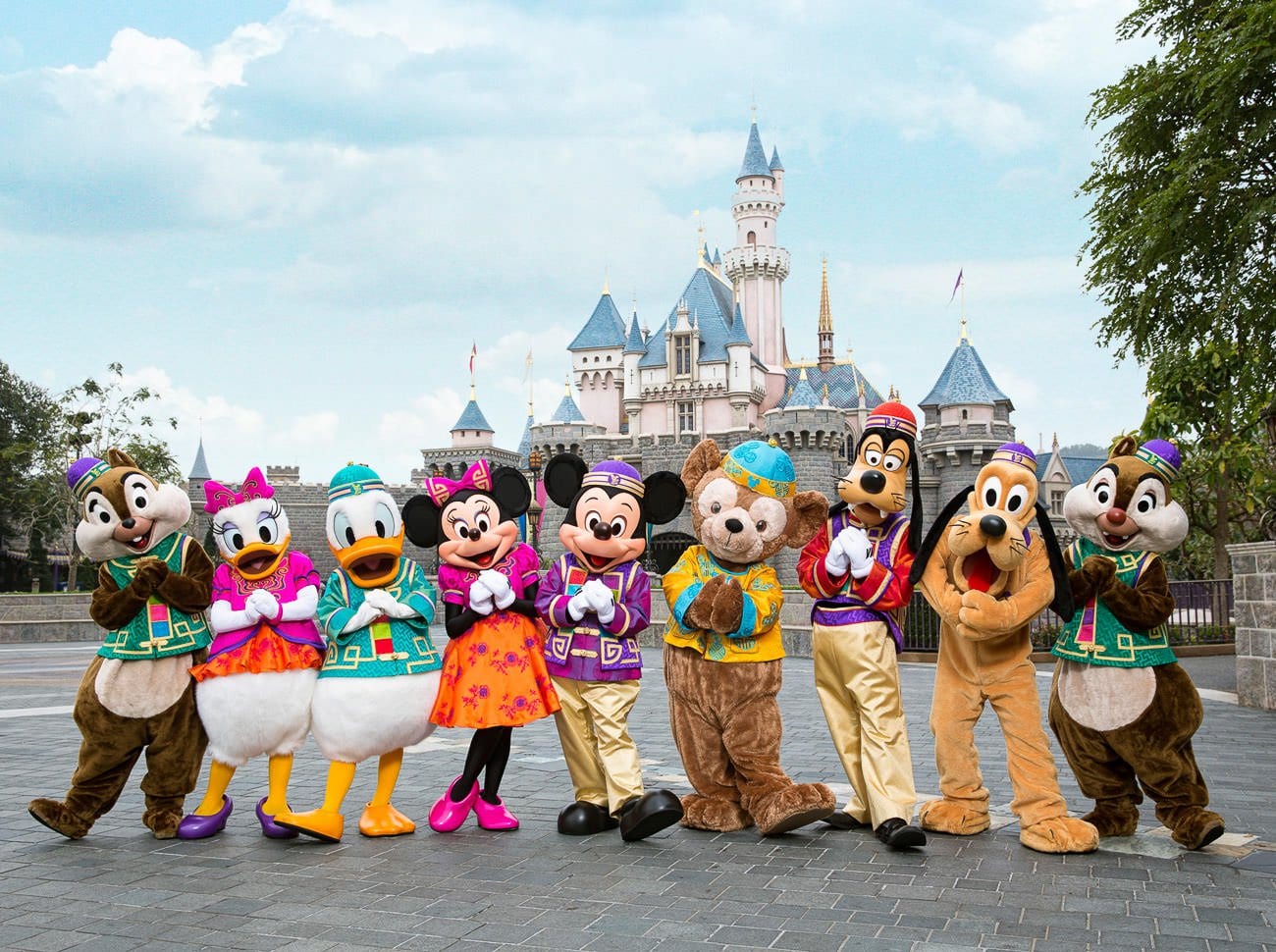
    As Walt Disney readies to open its first Disneyland resort in mainland China and its sixth in the world by June, its decade-old theme park in Hong Kong has tumbled back into a loss, portending challenges ahead amid the country’s slowing economic growth.

    Hong Kong Disneyland recorded a loss of HK$148 million (S$27 million) in the year ended October last year, its first loss in four years, after fewer Chinese tourists visited the city. The resort had suffered seven years of losses from its opening in 2005, before turning in its first profit in 2012.

    The former British colony has already seen retail sales slump as fewer mainland Chinese tourists visit, hurt by a combination of China’s slowdown and a weak yuan, relative to the Hong Kong dollar, that has dulled the city’s attractiveness.

    WHY HONG KONG

    It’s very easy for us to visit Shanghai. We will definitely go later… There are more things to do in Hong Kong, as well as other famous attractions like Victoria Peak.

    MS LU MEI-YIN, 45, a graphic designer from the northern coastal city of Qingdao in China, who visited Hong Kong Disneyland earlier this year.

    WHY NOT HONG KONG

    Who will go to Hong Kong Disneyland when we have one at our door? Even if we want to visit a foreign Disney park, I will go to Tokyo, which many of my friends have recommended.

    MS HUANG SHILIN, a 33-year-old mother of two children from Hangzhou, in Zhejiang province.

    • MIXED FORTUNES FOR ASIA’S DISNEYLANDS

    • Hong Kong Disneyland

      Opened: Sept 12, 2005

      Visitor numbers: 6.8 million last year, down 9.3 per cent from the year before

      Ticket prices: General adult entry fee is HK$539 (S$98); the park is planning to give discounts

      Size: 126ha

    • Shanghai Disneyland

      Opening: June 16, 2016

      Visitor numbers: 15 million people expected in the first year; projected yearly visitor numbers of 25 million to 30 million

      Ticket prices: Peak period adult ticket costs HK$590 per day; HK$438 at other times

      Size: 400ha

    • Tokyo Disneyland

      Opened: April 15, 1983

      Visitor numbers: Traffic for the entire fiscal year expected to fall 3 per cent to 30.4 million for the fiscal year through next month. Attendance in 2013 and 2014 was up sharply, due to factors such as the park’s 30th anniversary and the launch of large attractions

      Ticket prices: Starting from April 1 this year, adults will pay 7,400 yen (S$91) for a single-day ticket, a 500-yen increase

      Size: 200ha

    Revenue at the Hong Kong resort fell 6.4 per cent to HK$5.1 billion, while annual attendance slipped 9.3 per cent to 6.8 million, it said.

    With Disney’s Shanghai park set to open on June 16, more Chinese could be lured away. Mainland Chinese customers helped boost Hong Kong Disneyland to a record profit of HK$322 million in fiscal year 2014.

    Last year, they formed the biggest group of visitors to Hong Kong Disneyland, accounting for 41 per cent, followed by Hong Kong residents at 39 per cent, and international visitors at 20 per cent, the resort said in a statement on Monday.

    It will be contending with a sister resort in Shanghai that is three times larger in size, and with similar ticket prices.

    Adult tickets at Shanghai Disneyland will be more expensive than at its counterpart in Hong Kong during peak times, such as at weekends and on holidays, but cheaper during other periods.

    Recruitment and staff training are now under way at the Shanghai theme park, the South China Morning Post (SCMP) reported.

    “The next two years will be very challenging,” Hong Kong Disneyland managing director Andrew Kam told reporters on Monday.

    In anticipation of the stiff competition, Hong Kong Disneyland will offer discounted entrance fees and hotel room rates, he said.

    A one-day ticket, for example, would cost about 400 yuan (S$86) and include lunch, while hotel room rates would be discounted by up to 30 per cent, SCMP reported.

    A 750-room hotel is due to open next year.

    Mr Kam said new attractions this year include a revamp of the Space Mountain roller coaster, with elements from the Star Wars movies, and a themed area based on Marvel’s Iron Man franchise.

    “Our asset is really differentiation,” he was quoted as saying by Nikkei Asian Review. “We will focus on serving customers around the region.”

    Falling numbers from China have encouraged the theme park to look harder at South-east Asian markets, including countries like Indonesia, the Philippines and Thailand.

    Hong Kong Commerce and Economic Development Secretary Greg So said the Shanghai park highlights more Chinese characteristics, while Hong Kong is an “international playground”.

    Hong Kong’s other big tourist attraction, Ocean Park, is also feeling the heat, with profits down 53 per cent at HK$45.2 million for the fiscal year that ended last June. It has announced plans to seek new markets in Asia and boost its retail and food sectors, SCMP reported.

    In an editorial published on Wednesday, the Hong Kong English-language newspaper said mainland tourists are increasingly spoilt for choice amid a proliferation of theme parks in the region. It called on Hong Kongers to change their attitude towards mainland Chinese visitors.

    “There is another cloud in Disneyland’s outlook that only Hong Kong people themselves can disperse – anti-mainlander sentiment, which has a negative impact on Hong Kong’s image as a safe, welcoming city.

    “Sadly, it is compounded by violent incidents such as the Mongkok riot,” SCMP said.