Tag: Hong Kong

  • A New Air Jordan Store Has Just Opened Up In Hong Kong

    A New Air Jordan Store Has Just Opened Up In Hong Kong

    Jordan Brand has already shown us that they have huge plans of going international with their upcoming retail store in Toronto. So does that mean they’ll stop there? Nope.

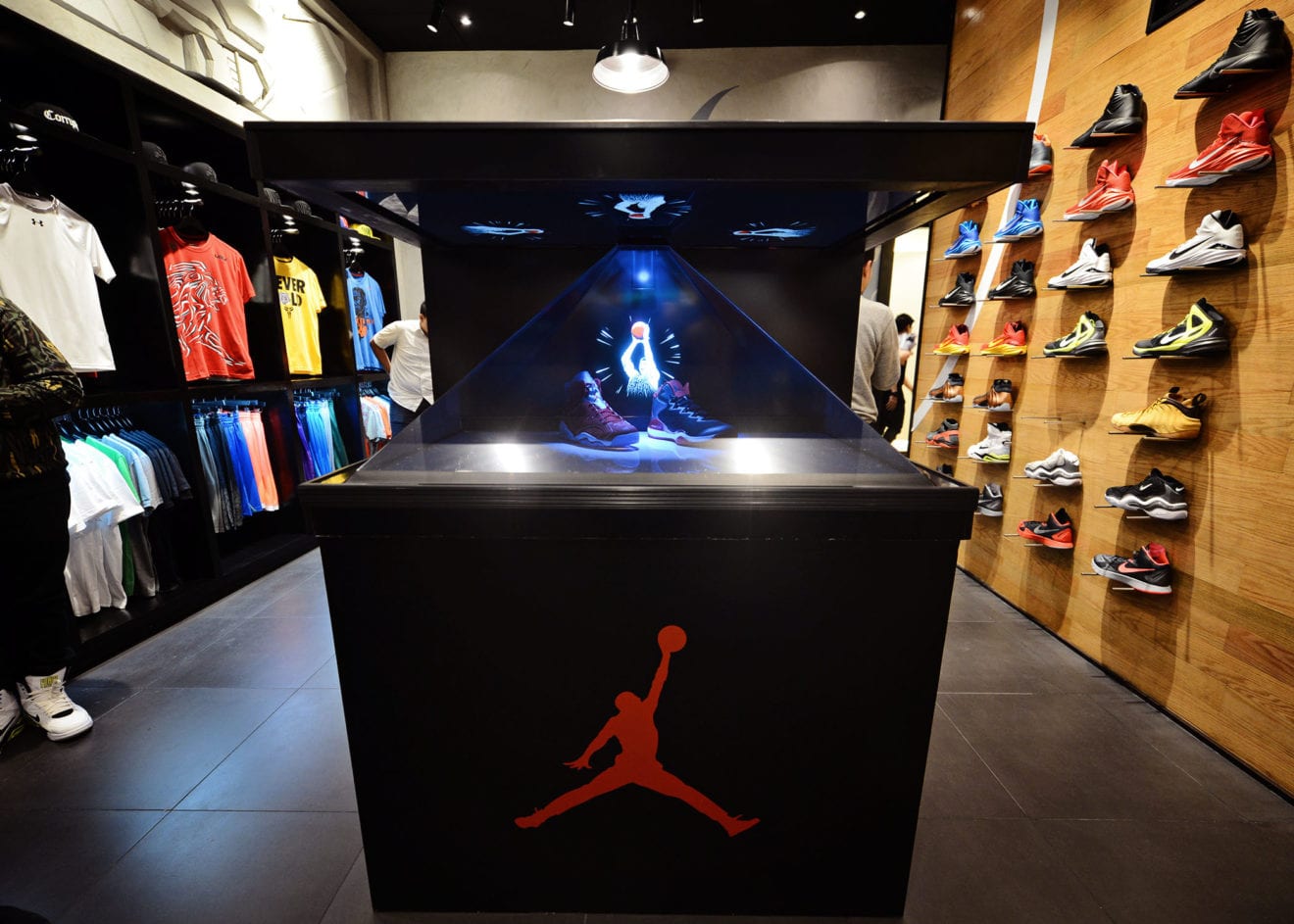
    The Jumpman is making its presence felt all around the world with their latest power move coming in Hong Kong. In the pictures above you can see the new Jordan Brand retail store that features a section with every silhouette from the Air Jordan 1 through the 29 draped in gold as well as something they’re calling the Jordan Flight Club which gives you access to The Draw, Jordan Breakfast Club, and Footwear Trial.

    From the outside of the store you can also see a massive recreation of the iconic “Wings” poster with Michael’s outstretched arms done in gold for that touch of luxury. Take a look at images of the retail space above and give us your thoughts.

    The Air Jordan 8 Wellington flagship store is located at Wellington Place, 2-8 Wellington St. in Hong Kong.

  • Jewellers scale down to adapt as Hong Kong loses its tourist lustre

    Jewellers scale down to adapt as Hong Kong loses its tourist lustre

    After a decade of aggressive store expansion, Hong Kong’s jewellery retailers have been hardest hit by the recent downturn in tourism, with half their revenue coming from mainland shoppers.

    Jewellers have now been forced to a adopt variety of strategies to tackle the tougher market, ranging from trying to lure local customers, cutting store sizes and expanding business overseas.

    TSL, one of Hong Kong’s largest jewellery chains, is scaling back its presence in tourist districts while setting up more small shops in local malls.

    Estella Ng Yi-kum, deputy chairman and chief strategy officer at TSL, said the rent for one store in a prime area could pay for at least two stores of the same size in a residential area.

    “Moving into residential areas enables us to provide better customer service,” said Ng, adding that growth in local stores is “much more stable”.

    After the closure of its flagship Causeway Bay store earlier this year, TSL has opened three smaller stores in Temple Mall North in Wong Tai Sin, Plaza Hollywood at Diamond Hill and Olympian City in Kowloon.

    Luk Fook, the city’s second largest jeweller, is maintaining its presence in prime retail areas, in the hope that the mainland tourists will return, while cutting the size of some stores or relocating them to secondary locations.

    Earlier this year, Luk Fook closed a store on Nathan Road, which had cost HK$2 million a month to rent. Meanwhile it opened a smaller store on the same street with the rent as low as HK$400,000.

    “The turnovers were almost the same,” said Luk Fook chairman and chief executive William Wong Wai-sheung, adding the smaller store was enough to cater for the shrinking number of mainland tourists.

    Following the logic that mainlanders have to spend their money somewhere, Chow Tai Fook, the city’s largest jeweller, has moved into both the mainland and South Korea, another emerging tourist mecca.

    It recently opened a new store in Qianhai free-trade zone in Shenzhen, offering competitive prices just slightly higher than Hong Kong. The jeweller’s mainland business contributed 56 per cent of its total revenue in the six months to September 30 this year, according to company figures.

    International jewellery brands seem to be adopting the opposite strategy, switching their existing stores to prime locations, according to a retail leasing expert.

    Joe Lin, executive director of retail services at leasing firm CBRE, said many international brands had rented stores with either better quality in terms of customer traffic and visibility, or lower rents in Causeway Bay.

    “This is a great timing” said Lin, adding that more prime store locations had become available amid the retail downturn.

    This article appeared in the South China Morning Post print edition as Jewellers forced to adapt as city loses its tourist lustre

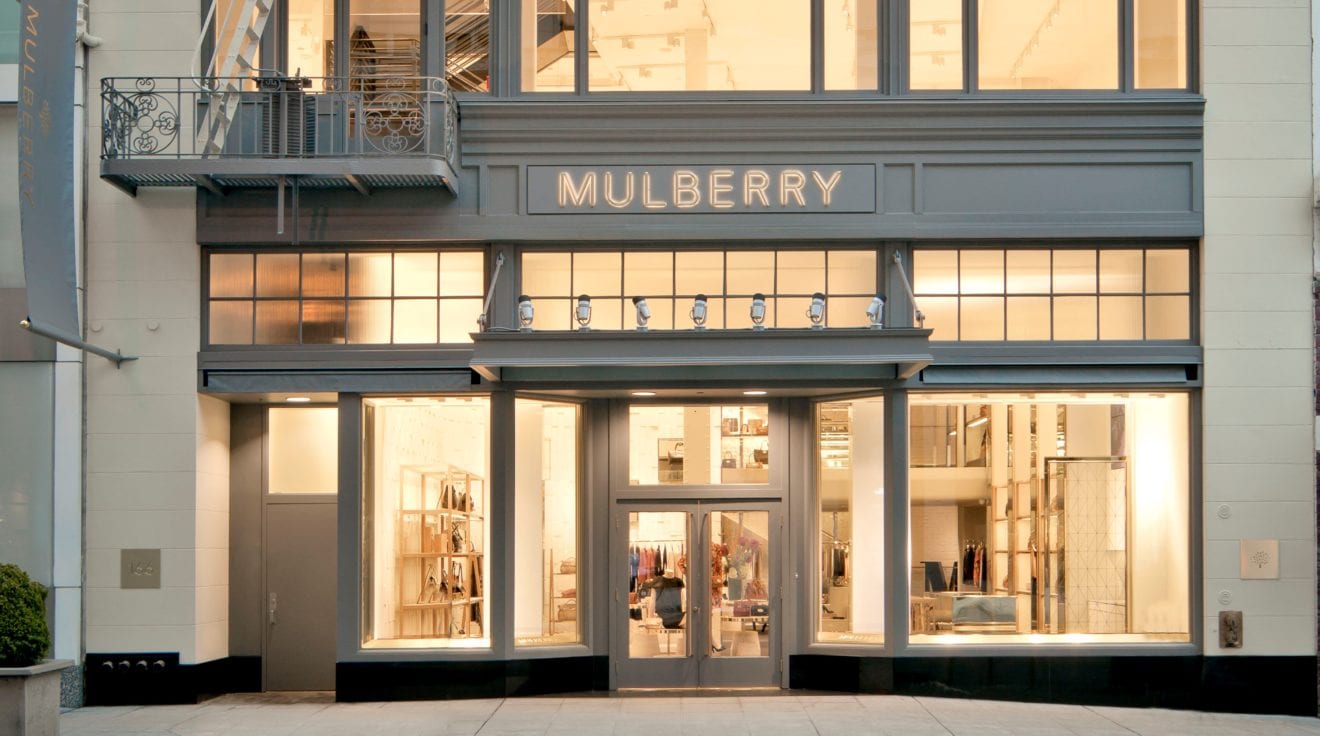
  • Mulberry laments tough Hong Kong

    Mulberry laments tough Hong Kong

    Tepid demand for luxury products in the once insatiable Asian markets is the only blemish on a remarkable comeback by British fashion brand Mulberry.

    After a tumultuous 2015 that saw a change in leadership and a strategic U-turn on pricing strategy, luxury retailer Mulberry has posted first half results that indicate a return to stability and strategic clarity, bringing  the retailer back into profitability against a £1.1 million loss this time last year.

    Mulberry revealed overall revenue growth of five per cent and like for like sales growth of 10 per cent. UK trading was particularly strong, with same store sale up 14 per cent, including digital sales.

    However, strong store trading at home was offset somewhat by declining wholesale sales, largely due to decreasing demand in Asia.

    Wholesale performance remains a thorn in the side of luxury players, with Mulberry admitting wholesale declines of 11 per cent.

    “This could spell trouble ahead across the British luxury sector, including Mulberry,” observes Andrew Hall, consultant with retail analyst Conlumino.

    The decline in Asian sales – particularly notable in China and Hong Kong – “will remain a worrying sticking point for the likes of Mulberry and rival Burberry,” says Hall.

    “The crackdown on corporate ‘gift giving’ in China and Hong Kong has dampened demand for handbags and other designer luxury goods, as well as reducing the flow of affluent tourists from the area to international retail destinations. However, Mulberry will be hoping to renew appeal to this market in the second half of the year through the first collection produced by Creative Director Johnny Coca, to be showcased at London fashion week.”

    “Previously we have expressed concerned over Mulberry’s inability to foster a viable identity of luxury British heritage; however, the retailer has become more proactive over this half year, being keen to stress the importance of the UK factories in delivering a British product – as well as having a positive impact on gross margins. In addition, Mulberry has begun to reinforce this identity through its handbag designs; looking forward, this should be applied across the product range to strengthen a luxurious, international appeal,” says Hall.

    CEO Thierry Andretta has provided clear leadership, steering the retailer away from the inappropriate up-market prices toward more affordable price points.

    “No doubt this strategic turnaround has bolstered store performance, with consumers showing a strong preference for RRPs below £1000, which the majority of Mulberry products now have. A more sensible pricing strategy is also driving digital sales; this has proven an encouraging area of growth for the rejuvenated retailer, with digital sales up by 20 per cent and now accounting for 12 per cent of group sales.”

    Hall says despite the Asian market performance, Mulberry’s first half results paint an encouraging picture of a retailer growing on newly stabilised foundations.

    “This has positioned Mulberry for a strong Christmas period, with the nativity spoof Mulberry Miracle video having been viewed over 1.7 million times and innovative gifting packages or ‘chests’ of Mulberry products attracting attention.

    “This should help deliver a strong full year performance in 2016, although international reception to Coca’s first collection for the retailer will be critical to recouping a positive wholesale performance,” concludes Hall.

  • Hong Kong must step up support for the tech sector

    Hong Kong must step up support for the tech sector

    Hong Kong has established the Innovation and Technology Bureau in a bid to bolster technology and innovation development.

    The IT workforce in the city has jumped nearly four-fold from 3,000 two decades ago, according to a survey from the Vocational Training Council. However, the talent availability for jobs such as program development has been falling while IT managerial jobs have been stagnant over the years.

    IT jobs in Hong Kong are mostly sales, support and after-sales service positions, as product development positions have been contracting over last one or two decades. Simply speaking, Hong Kong’s IT industry focuses more on technical support rather than technology innovation.

    The city’s economic structure is one of the underlying reasons. Hong Kong relies heavily on property, finance and retail sectors which require only technical support services from the industry. As a result, the IT sector has lagged behind in development of high-end technology products.

    Local universities have been trying to nurture talents for the industry. However, secondary school students have very limited interest in either IT or electronic engineering.

    Secondary students who apply for these programs had relatively lower scores in the Hong Kong Diploma of Secondary Education Examination since the 2000 dotcom bubble.

    Why has Hong Kong made little progress in developing the IT industry? Let’s take a look at some places where the IT industry has flourished — Israel and Singapore.

    Many of Israel’s industries are closely tied to its national defense. The Jewish state’s internal and external security work involves national interests. Hence, the country finds it necessary to promote the high-tech sector.

    Its modern national defense industry involves high-technology such as communication, electronics, materials and auto control technology. As technologies are sought to be upgraded continuously, talents have been nurtured, resulting in a huge pool of skilled professionals.

    Also, military enterprises usually have a long supply chain, including upstream and downstream technology and products supply. That creates a spillover effect. Some of the talents might quit their jobs and start up their own companies.

    Meanwhile, technology talents in other sectors might be inspired to become entrepreneurs themselves. They have much more experience and knowledge than young graduates.

    A “visible hand”, or government support, is a key element for nurturing hi-tech companies.

    Park Chung-hee, who led South Korea from 1961 to 1979, had hammered out preferential policies for large tech companies. That has helped create a number of tech giants like Samsung and LG.

    Singapore is even smaller than Hong Kong. However, the city state has managed to become a leading player in recycling used water, thanks to government incentives.

    Favorable government policies are essential for development of hi-tech industry.

    Authorities should provide some protection for the sector in the early stage before it can stand on its own feet. The government needs to take care of the interests of various stakeholders.

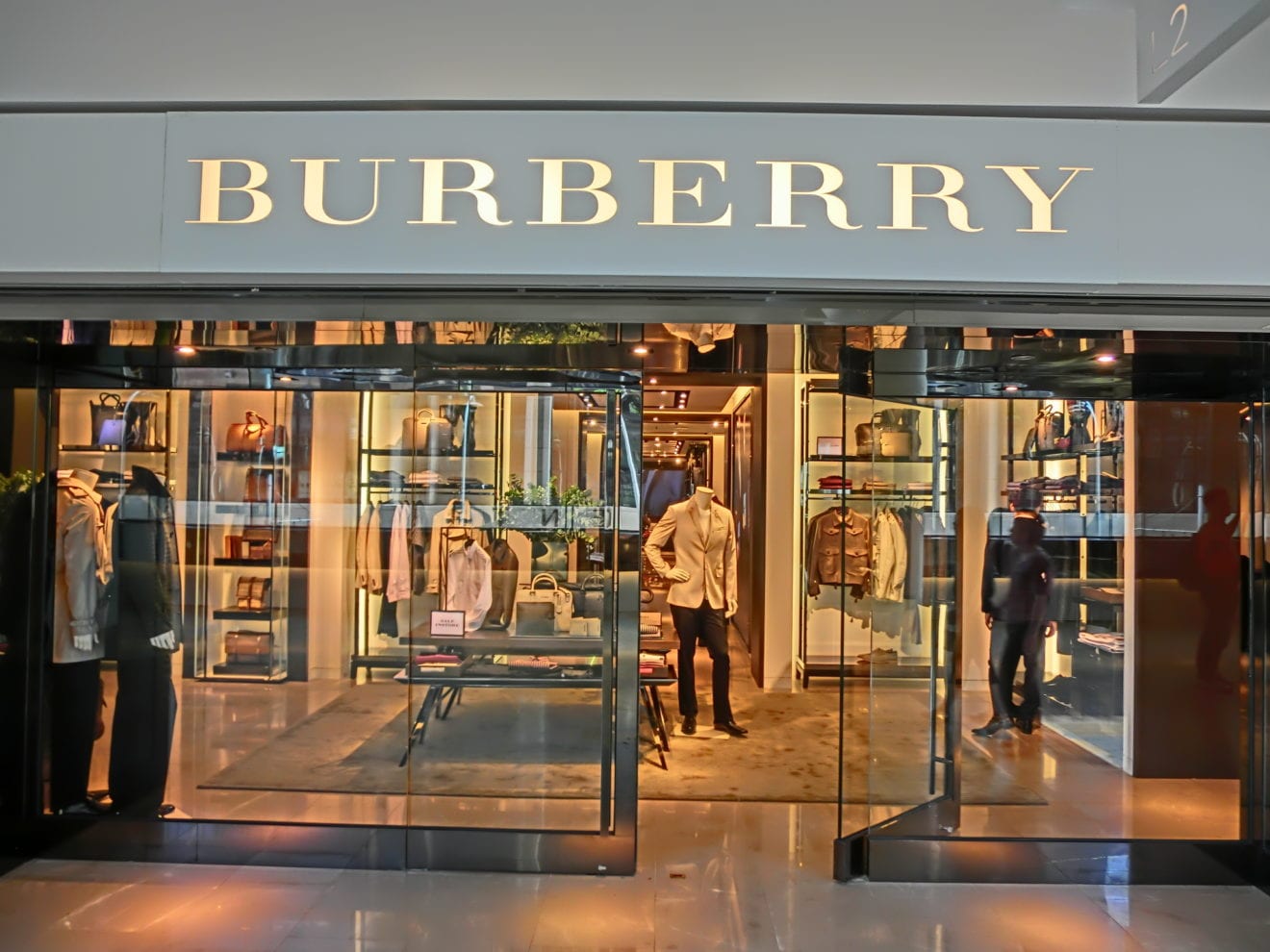
  • Burberry offering ‘biggest discounts ever’ in Hong Kong as brands try to pull back shoppers

    Burberry offering ‘biggest discounts ever’ in Hong Kong as brands try to pull back shoppers

    British luxury brand Burberry has joined Prada and Gucci in offering discounts of as much as 50 per cent in its Christmas sales, the steepest reductions since the Individual Visit Scheme for mainland tourists was launched in 2003, underlining the depth of the retail slump in Hong Kong.

    The sales started two days ago, a staff member at Burberry’s Causeway Bay store told the Post. She said only around 10 types of handbag and some clothing items are carrying the discounts.

    “I haven’t seen such a deep discount since I started working here” she said , adding the biggest was 30 per cent in the past.

    Burberry launched its annual Christmas sales in late November with initial discounts of as much as 40 per cent on selected items, rising to 50 per cent this week. Its iconic small Orchard leather bag, which was priced at HK$16,000, is now selling for HK$8,000.

    “A 50 per cent discount is unusual for big luxury brands like Burberry” said Hayman Chiu, associate director at Cinda International, adding that it was the biggest price cut for Burberry that he could remember since the visitor scheme launched.

    “The whole luxury industry is doing the same thing right now,” he said, referring to the similar discounts by Prada and Gucci .

    Three American brands, Marc by Marc Jacobs, Michael Kors and Coach, are currently offering discounts of as much as 50 per cent. European brands such as agnès b, Longchamp and Balenciaga have reductions of 40 per cent.

    The discounts for most of those brands are deeper than last year, according to sales staff at the Sogo department store.

    Brands are also resorting to discounts after falls in the Japanese yen and euro this year prompted mainland shoppers to avoid Hong Kong.

    The strong Hong Kong dollar, which is pegged to the US dollar, has made luxury goods more expensive than in Japan and Europe, said Mariana Kou, retail analyst at brokerage CLSA.

    However, a deeper discount isn’t a always a draw.

    Louisa Cheung, a local shopper in the Burberry store in Causeway Bay yesterday, ended up buying nothing. “Deeper discounts only work for customers who are loyal to the brand,”she said.

  • Hong Kong Central Bank Lifts Key Rates

    Hong Kong Central Bank Lifts Key Rates

    “Instead of going into the property market, (capital flows) could go out and ease the property market, and that could strike consumers’ confidence and I think the economy next year may not perform so well”, said Paul Tang, chief economist at Bank of East Asia in Hong Kong. As Hong Kong’s currency is pegged to the United States dollar, the city’s monetary policy typically moves in line with the Fed.

    “The normalization of Hong Kong’s interest rate will begin with the outflow of funds from the Hong Kong dollar trigger by high interest rates of the U.S. dollar”.

    A company logo is displayed inside the HSBC headquarters in Hong Kong November 3, 2015.

    The rate hike followed the U.S. Federal Reserve’s decision to raise the range of its benchmark federal funds rate by a quarter of a percentage point to between 0.25 percent and 0.50 percent on Wednesday, its first move in almost a decade.

    “We have seen a relatively slow economic growth this year, which is to a large extent attributed to the weak performance in our foreign trade”.

    Meanwhile, rampant deflationary pressure worldwide, volatilities in the global financial landscape, the growth of regional trade agreements, as well as lingering geopolitical threats and increased terrorist concerns, are the major risks and challenges facing Hong Kong exporters. Data from retail banks, which account for about 90% of the total customers’ deposits in the banking sector, are used in the calculation.It should be noted that the composite interest rate represents only average interest expenses.

  • Rising HK dollar expected to give locals the travel itch

    Rising HK dollar expected to give locals the travel itch

    Cash registers in Hong Kong won’t be ringing merrily next year after the US rate hike, with locals likely to scratch their travel itch with the appreciating Hong Kong dollar.

    The greenback reached a two-week high against a basket of major rivals yesterday after the US Federal Reserve raised interest rates for the first time in nearly a decade.

    The Hong Kong dollar, pegged to the US unit, also rose.

    Hong Kong Retail Management Association chairman Thomson Cheng Wai- hung said the interest hike’s immediate effect on the industry is limited, but further hikes next year would destabilize the market and make tourists further lose their appetite for the SAR.

    “No matter if it is accommodation in hotels or shopping, it would appear more expensive for tourists. Many of them are going to Japan, South Korea and Europe. The trend would worsen,” Cheng said.

    He expects retailers selling high-end products such as jewelry to take a hit.

    According to a survey last month of its members, a single- digit decline in sales this Christmas is expected year-on- year. Most members feel next year’s performance will be worse. Cheng predicted that retail sales this year would drop 3 percent from last year.

    As for local shoppers, some could be attracted to travel overseas due to the strong Hong Kong dollar. “It is not an advantage for local retailers,” Cheng said. The strong US dollar and hence HK dollar would encourage mainland tourists to explore other destinations, CLSA senior investment analyst Mariana Kou said.

    “We believe Japan, Korea and Europe would continue to be beneficiaries,” Kuo said.

    Safety concerns after recent terrorist attacks, however, may affect travel into Europe.

    Miramar Travel saw Christmas bookings jump by 20 percent from last year. But they reminded Hongkongers that despite cheaper shopping, other travel expenses do not necessarily go down.

    The rising popularity of Japan has led to a shortage of hotels and higher costs.

    Travel Industry Council chairman Jason Wong Chun-tat said the hike had been expected and would have limited impact on exchange rates.

    He remained optimistic for inbound tourism, saying hotel occupancy rates are expected to reach 80 to 90 percent during this holiday season.

  • HK braces for economic chill ahead of new rate hike cycle

    HK braces for economic chill ahead of new rate hike cycle

    Hong Kong is bracing for greater economic challenges as the prospect of a new cycle of interest rate rises drives fears of capital outflows that could put further pressure on the Asian financial hub.

    Hong Kong’s property market, which has seen prices more than double since 2008, had already slowed in anticipation of a local rate hike, and analysts say a further slowdown will depend on China, which is facing its weakest growth in 25 years.

    The city’s central bank on Thursday raised the base rate it charges through its overnight discount window to a seven-year high of 0.75%, tracking a decision by the US Federal Reserve to raise the range of its main rate by a quarter point, its first move in nearly a decade.

    The Hong Kong dollar’s peg to the US dollar means the city’s monetary policy follows that of the Fed, which said in its statement on Wednesday it expects a gradual tightening cycle.

    Norman Chan, the chief executive of the Hong Kong Monetary Authority (HKMA), warned of gradual capital outflows as hot money that had flowed in due to loose monetary policy exits.

    “I would advise members of the public to make necessary preparations in terms of managing the credit, liquidity and other relevant risks in order to cope with possible shocks and adjustments that may arise from the normalisation of US and Hong Kong interest rates,” Chan said after the policy decision Thursday.

    And although the immediate impact of policy tightening is likely to be limited, it comes at an increasingly uncertain time for Hong Kong, which is grappling with sluggish economic growth on the back of a slump in tourism and retail spending, as well as a slowdown in China.

    About US$130 billion has flowed into Hong Kong dollar assets since 2008, when the Fed adopted its near-zero rate policy, according to the HKMA.

    Hong Kong property sales slid 41.7% in November year-on-year to a record low, while the city’s property stock sub-index has dropped about 20% from multi-year highs hit in June. The index was up 0.8% early on Thursday.

    Financial Secretary John Tsang, who last week flagged a rate hike as the biggest concern for the city’s economy, said Hong Kong had the ability to cope with large capital outflows, echoing a report from the International Monetary Fund this week that said risks were manageable.

    “Whether Hong Kong will experience capital outflows next year depends not only on the pace of rate hikes by the Fed, but also China’s economy,” said Raymond Yeung at ANZ in Hong Kong, adding the property market faces some pressure in the medium term.

    Commercial banks in Hong Kong will decide separately whether to increase their lending or deposit rates.

    Any increase in rates could add to the city’s household debt to gross domestic product (GDP) ratio, which is already at a record high of around 64%, as repayment obligations rise.

    For homeowners, it could also mean leaner times in a city where the average house price is 17 times household income, according to consultancy Demographia.

    While the city has successfully weathered previous US rate hikes, Hong Kong’s economy is now more vulnerable as it struggles with weaker retail sales as fewer cash-rich mainland tourists stream across the border on shopping sprees.

    Though policymakers have faced a growing chorus of criticism on the burden of holding a currency peg to the greenback, the government reiterated on Thursday that a peg is the best policy option for the city’s mercantile economy.

    Expectations are the city’s economy will expand at 2%-3% rates in the current year, far below the heady rates of nearly 8% seen in the first quarter of 2011.

    Some observers said the property market was still a concern.

    “The key problem with Hong Kong right now is that (property) prices are already well ahead of earnings power and the economic situation,” said Nicole Wong, property analyst at CLSA.

  • PetSmart opens Hong Kong global sourcing office

    PetSmart opens Hong Kong global sourcing office

    US pet provisions retailer PetSmart will open its global sourcing office in Hong Kong this month.

    The company says it chose Hong Kong to leverage the city’s strategic location to provide high-quality, innovative products for pet owners in North America.

    PetSmart is a renowned specialty pet retailer of services and solutions for the lifetime needs of pets in North America. The new Hong Kong office, located in Kwun Tong, will support the company’s global sourcing efforts in Asia and work closely with the US team to ensure all products sourced meet company objectives and customer needs.

    “As PetSmart continues to bring pet owners closer to their pets, we have an opportunity in Hong Kong to get closer to our supply chain controlling quality and costs, consolidate our non-food product assortment and develop innovative products in-house that our customers desire,” said Jim Persinger, director of PetSmart International Holdings.

    “Hong Kong is a fast-paced and growing market with close proximity to a significant Mainland factory base that develops high-quality, non-food pet products. Setting up an office in this strategic location will allow us to better serve our customers.”

    Dr Jimmy Chiang, associate director-general of Investment Promotion with Invest Hong Kong, said the establishment of PetSmart’s sourcing operations in Hong Kong reaffirms the territory’s status as an international trading and sourcing hub.”

    PetSmart operates 1444 pet stores in the US, Canada and Puerto Rico and approximately 202 in-store PetSmart PetsHotel dog and cat boarding facilities.

  • McDonald’s pilots new open concept in Hong Kong

    McDonald’s pilots new open concept in Hong Kong

    McDonald’s first opened its doors in Hong Kong in 1975. Fast-forward 40 years and McDonald’s is pioneering a new dining concept it’s calling McDonald’s Next in the bustling city on the South China Sea.

    Billed as a “food bar,” the open-concept eatery is located in the city’s Admiralty area, a major shopping hub (and hang-out for youths) near the main Central district on Hong Kong Island.

    McDonald's Next Hong Kong digital create your taste ordering kiosk touchscreen

    While a handful of McDonald’s in Hong Kong already offer Create Your Taste digital ordering, the McDonald’s Next location in Admiralty (taglines include: “What’s Next is Now” and “Your creation. Made by us. Worth the wait”) is offering a whole new level of personalization and customer experience for the brand.

    mcdonald's next

    In addition to being open until 1:00 a.m. and offering free mobile device charging and table service after 6:00 pm, what makes the Admiralty location unique is the personalization, interactive design and social nature of the dining experience.

    McDonald's Next personalized Hong Kong table service Create Your Taste

    Almost like a sushi bar in appearance, customers sidle up to the counter (which McDonald’s calls a theater kitchen) to design and order on touchscreens their customized salads and burgers from the DIY “Create Your Taste” menu that launched in Hong Kong in 2014.

    McDonald's Hong Kong Next Create Your Taste #createyourtastehk

    McDonald's Next Hong Kong customer #createyourtastehk #cyt

    As in other CYT locations, the food is served on a wooden plank with a toothpick flag impaling the burger bun and the fries in mesh wire baskets.

    McDonald's Hong Kong Create Your Taste burger menu

    The integrated McCafe menu also includes gourmet coffee in smartly designed packaging, such as premium Ethiopian Sidamo coffee beans bagged in a style that would make third wave coffee snobs swoon.

    On the tables, customers will find various makes of charging cords for mobile devices to rejuice their ever-present smartphones.

    Coffee beverages served with latte foam art depicting characters in a marketing tie-in with the new Peanuts movie and a gingerbread man design, part of the local “Hug the Moment” holiday campaign.

    McDonald's Next Hong Kong DIY salad Snoopy foam latte

    Last but not least, for dessert customers can indulge in mixed berry Belgian waffles. Throughout the experience, they are (naturally) encouraged to share photos of their creations on social media with the hashtag #createyourtastehk.

    McDonald's Hong Kong Create Your Taste burger menu

    The “Create Your Taste” menu consist of 19 base ingredients including numerous salad options with cheese, sauces and ingredients like chopped boiled eggs, grilled chicken, couscous, quinoa, asparagus and even crayfish.

    The packaging both rewards and reflects the handiwork of each customer’s creation, with taglines such as “Your creation — made by us, served to you.”

    McDonald's Next Hong Kong Create Your Taste packaging

    On the tables, customers will find various makes of charging cords for mobile devices to rejuice their ever-present smartphones.

    McDonald's Next Hong Kong Create Your Taste mobile charging

    In another inspired touch, limited edition Create Your Taste tote bags given away during the launch promotion reproduced each customer’s unique order as a graphic illustration, whether a hamburger or a salad.

    McDonald's Hong Kong Create Your Taste tote bag

    McDonald's Next Hong Kong Create Your Taste salad tote bag

    To be sure, Create Your Taste is not unique to McDonald’s Hong Kong, and is now available in other markets including New Zealand, Australia,Canada and in select US cities including New York, where YouTube vlogger Casey Neistat reviewed the CYT “$12 burger” in September with a pal.

    The Next concept also has hints of McDonald’s “Corner McCafe” concept concept in Sydney, Australia.

    McDonald's Hong Kong Create Your Taste #cyt localization

    Beyond the customizable menu itself, the McDonald’s Next design is far from the counter interaction McDonald’s customers are use to. The open design of the bar encourages a more social space.

    McDonald's Next Hong Kong employees

    And forget the standard issue gold and red uniforms—McDonald’s Next employees wear a uniform that’s hipper and more appropriate for Hong Kong: black t-shirts. Even the balloons decorating the McDonald’s Next are chic, coming in black and silver.

    And on the tables, customers will find various makes of charging cords for mobile devices to rejuice their ever-present smartphones. McDonald’s is promoting McDonald’s Next as part of the brand’s 40th Anniversary in Hong Kong. The local press has raved about the new “food bars” with local social media users equally excited.

    It’s all designed, of course, to appeal to selfie-happy millennials and post-millennials (i.e. teens), key demographics for McDonald’s in the Chinese territory. But the local media hasn’t been all raving about the cool new McDonald’s Next, even as the Create Your Taste concept gains traction worldwide. For weeks now, Hong Kong’s newspapers have been reporting on how Western chains play into the mad economics of the city, even as BuzzFeed’s reviewers (for one) rave about McD’s only-in-Hong Kong local menu items such as flavored seasonings to shake onto your French fries.

    Scores of former fast food workers recently turned up at Hong Kong’s human services office after spiraling rents resulted in the closure of five of the city’s seven Burger King locations.

    And a homeless woman’s death in a McDonald’s booth—where she sat slumped over, unnoticed for some time—has shined a light on how the 24-hour McDonald’s locations have become de facto homeless shelters, with many of the destitute stretching out in booths overnight.

    Meanwhile, a little north in mainland China in the city of Hangzhou, McDonald’s is weathering a different kind of PR storm. Criticism has met the company’s decision to convert a historic building on the city’s famous West Lake into a McDonald’s.

    The building is the former home of Chiang Ching-kuo, son of Generalissimo Chiang Kai-shek, both of whom were Kuomintang leaders and later presidents of Taiwan—the longtime enemy and ongoing thorn-in-the-side of China’s ruling Communist party.

    Beyond the burger giants, KFC is opening its first ever location on the roof of the world. The chain is not yet in the far west of Tibet but that will change early next year when a KFC will open in Tibet’s capital of Lhasa. It will also come as Yum! Brands spins off its China operations by the end of 2016.
  • Metrobooks Hong Kong plans up to 10 stores

    Metrobooks Hong Kong plans up to 10 stores

    Metrobooks Hong Kong plans to open as many as 10 more stores in the territory, undeterred by the demise of rival retail booksellers.

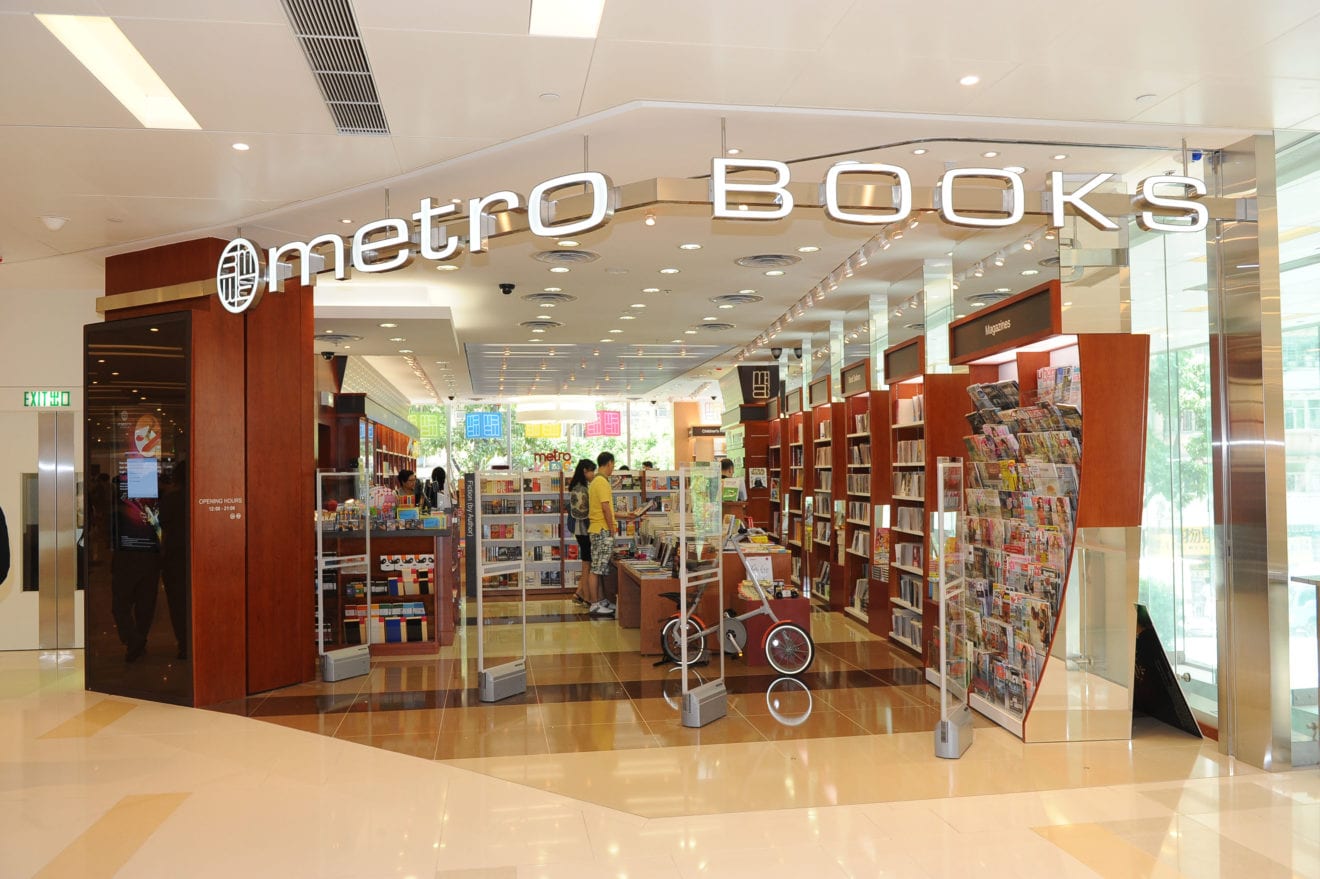
    The company opens its fourth store in Hong Kong this Friday – on the 9th floor of Times Square. The 465 sqm store is split into two: Metrobooks offers lifestyle books and quality stationery to sophisticated professionals and MetroKids by Metrobooks targets young families and expatriates.

    Metrobooks’ parent, National Book Store Inc of the Philippines, chose Hong Kong as its first overseas location back in 2007 and has steadily expanded in the territory during the last few years.

    “NBS strongly believes in the retail market in Hong Kong and targets to open five to 10 more stores in the coming years,” a spokesman told Inside Retail Hong Kong.

    Besides books, Metrobooks offers a wide range of unique stationery items sourced from Japan and the US.

    Included in the Times Square store is an exclusive range from Itoya – the long established Japanese stationery shop. The first store of Itoya opened in 1904 in Ginza, Tokyo. Now Itoya has evolved into the leading stationery store in Japan, with the 12-storey flagship store in Ginza, 18 branches and one overseas store in San Francisco.

    The MetroKids by Metrobooks is the largest and most specialised English language children’s bookstore in Hong Kong, comprising 280 sqm of space split into three zones – Parenting & Early Learning; Intermediate and Young Adult, with more than 7000 items including books, stationery, art & craft, toys and gifts.

    Besides the best-selling series from well-known publishers like Scholastic, Oxford Reading Tree, Jolly Phonics and Usborne, and stationery brands like Tombow and Stabilo, Metrobooks says it aims to source innovative collections and emerging brands from around the world.

    Among the unique offer in the MetroKids by Metrobooks shop is a range from International Arrivals, a stationery brand from the US with fun, functional and easy-to-use crafting and creation tools inspiring children to express themselves with their imagination with creativity.

    NBS is the largest bookstore chain in the Philippines, with over 180 stores nationwide.

    In Hong Kong it has stores at Times Square, in Elements Mall and K11 in Tsim Sha Tsui, and at Mikki in Kowloon.

    The Itoya corner at Metrobooks.

  • Tomei sells 45% stake in Hong Kong unit to tap local expertise

    Tomei sells 45% stake in Hong Kong unit to tap local expertise

    Tomei Consolidated Bhd said it has disposed of 14.49 million shares that is equivalent to a 45% stake in its wholly-owned subsidiary Wealthy Concept Ltd (WCL) for HK$4.5 million (RM2.5 million), cash.

    WCL is a Hong Kong-based company that is involved in the distribution and retail of jewellery. The stake was sold to two Chinese citizens Wang Guang (9.66 million shares; 30%) and Li Yi (4.83 million shares; 15%).

    In its filing with the exchange, Tomei said the sale was to tap on the local expertise of its new shareholders in the retail of gold and jewelleries business in China.

    It added that it intends to utilise the proceeds from the disposal as working capital.

    Following the disposal, Tomei will be left with 17.71 million shares or 55% in WCL.

    “The proposed disposal is not expected to have any material effect on the earnings, net assets, share capital and the substantial shareholdings of Tomei for the financial year ending Dec 31, 2015,” said the company.

    Tomei closed 1 sen or 2% lower at 49 sen today, bringing its market capitalisation to RM69.3 million.

  • Apple Hong Kong IFC Store Adds Third Floor

    Apple Hong Kong IFC Store Adds Third Floor

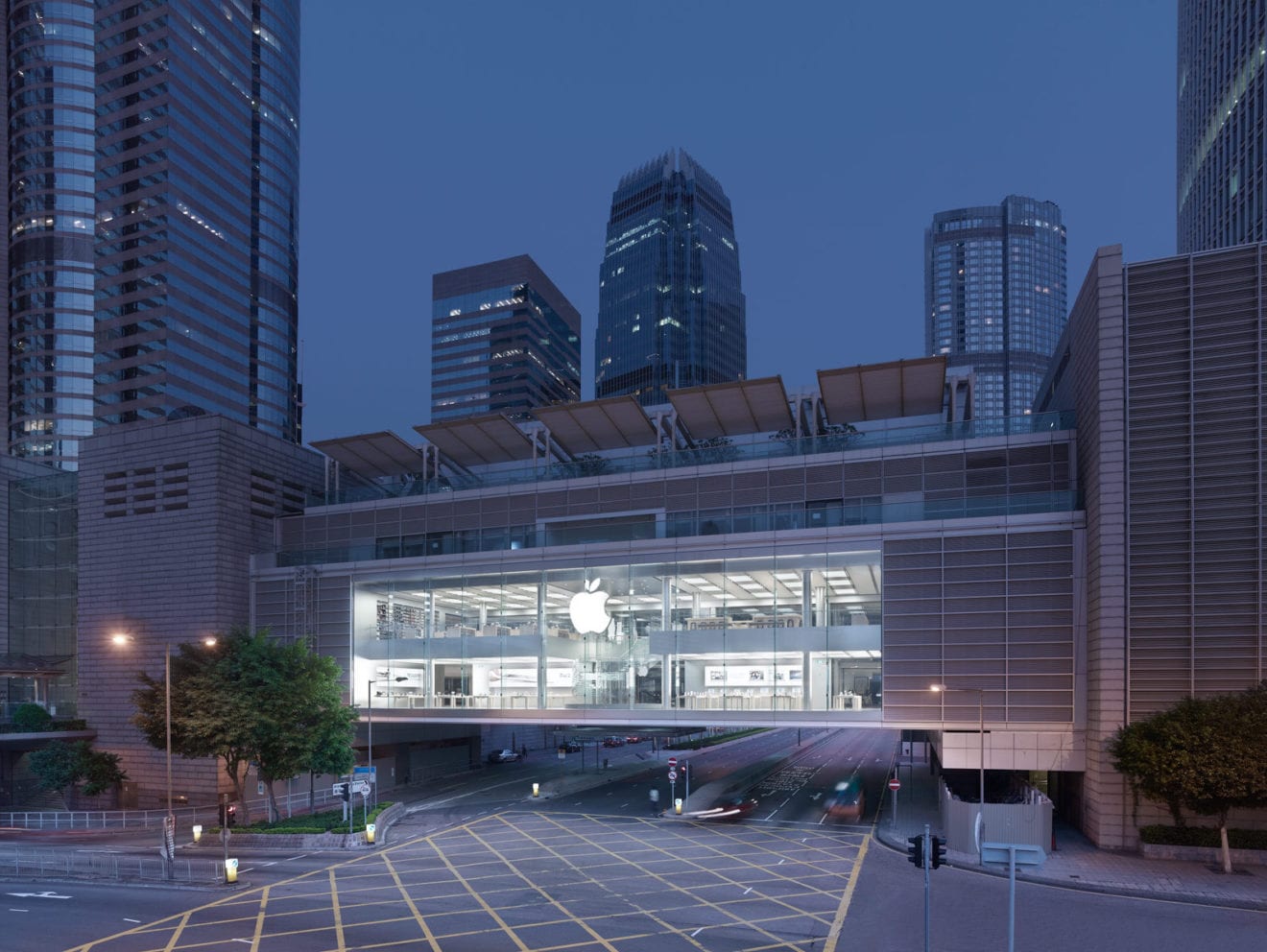
    Apple Insider reveals that the iPhone maker is working to develop a third floor for its first Apple store in Hong Kong, which originally opened in 2011. Located at the International Finance Center (IFC), the tech giant’s signboard outside the new floor claims that it will be opening “soon,” even though no official dates have been disclosed as yet.

    Apple Inc.’s ongoing attempts to expand its retail stores all around China have been increasingly evident after it rolled out new stores in Dalian, Beijing, Chengdu, and most recently, Nanning on December 12. It seems that this expansion plan is part of the tech giant’s agenda to launch at least 40 Apple Stores in China by 2016.

    Even though the tech giant has launched a number of other stores in Hong Kong following its IFC-based outlet, it seems that Apple is interested in renovating its first store in the area. The company is working to create a separate staircase entry to the floor rather than extending the existing one, further creating a grander feel to the present outlet.

    We believe that the company’s recent attempts to integrate its retail branches with genius bars and workshops is part of its on-going renovations to recreate a new style of store interior under the leadership of Apple’s Chief Designer, Jony Ive and Apple’s Retail and Online Stores’ senior VP, Angela Ahrendts. This may help the iPhone maker create a theme of architectural consistency between all outlets and operate distinctively against its competitors.

    Since this Apple Store outlet is located in the city’s Central District and hangs over one of its busiest roads, we believe that the store expansion will help Apple lure in more customers. It also seems that the renovation will soon end, as speculation states that lights have already been switched on inside the space, possibly hinting at its upcoming opening. Judging by the company’s popularity in Asia, which has led to its drastic expansion plan; providing customers with three floors full of Apple products will surely work as a great marketing push for the tech giant in Hong Kong.

  • Qianhai Chow Tai Fook mall opens in Shenzhen

    Qianhai Chow Tai Fook mall opens in Shenzhen

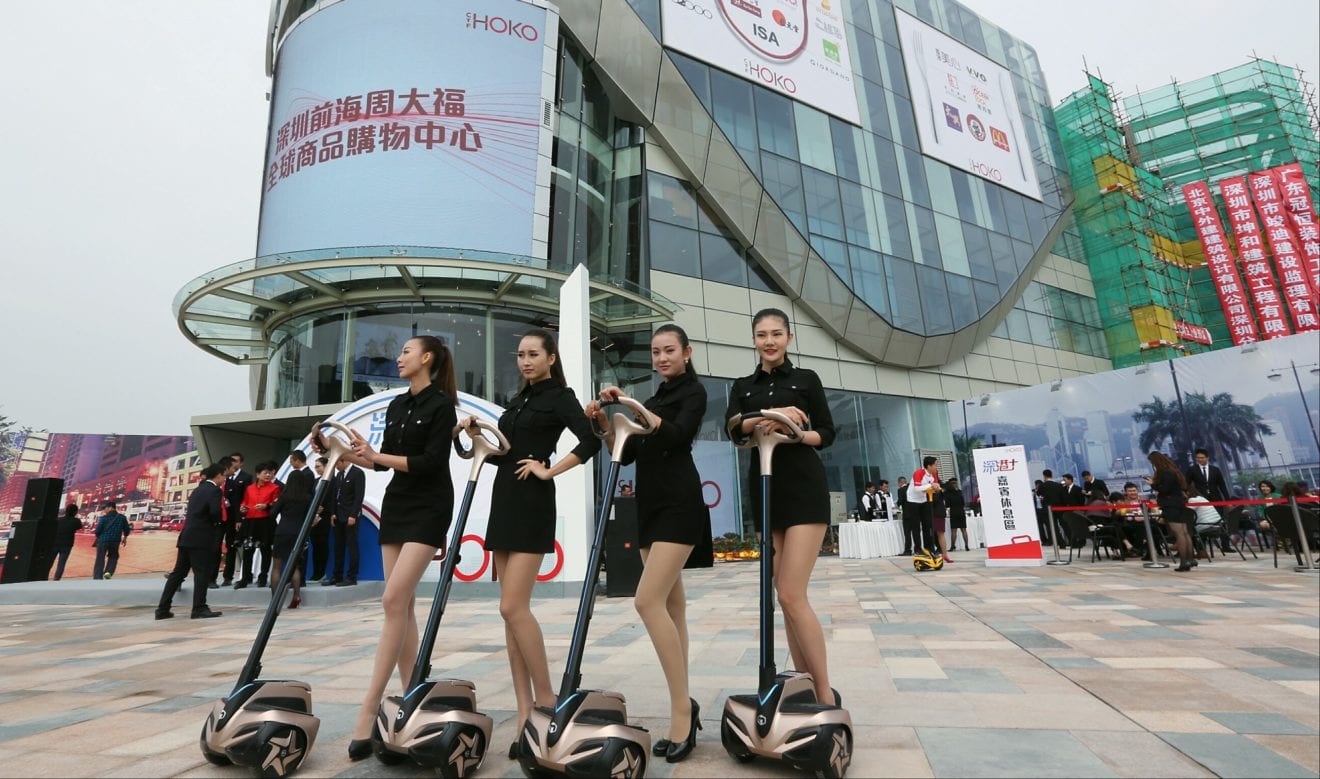
    The new Qianhai Chow Tai Fook mall opened its doors in Shenzhen on Monday – selling Hong Kong sourced goods to mainlanders at prices said to be cheaper than in Hong Kong.

    Officially named the Qianhai Chow Tai Fook Global Goods Shopping Center, the 19,000 sqm mall is a joint venture between jeweller Chow Tai Fook and two investment partners.

    A total of 21 retail brands opened stores in the first phase of the development opened yesterday, including beauty products chain Sa Sa, fast fashion brand Giordano and CRCare. They are joined by a range of food and infant formula retailers.

    More stores will join the development when stage two opens next summer.

    The HK$423 million shopping centre has been built inside the Shenzhen special economic zone, taking advantage of tax concessions and allowing mainlanders to buy Hong Kong sourced goods without crossing the border.

    Shenzhen has a population of 20 million creating a huge potential catchment for the development.

    Adrian Cheng Chi-kong, executive director of the Qianhai Chow Tai Fook mall, said it will not be competing with the border shopping mall planned for the Hong Kong side of the border, explaining the two properties will cater for different clienteles.

  • Hacking of Hong Kong’s VTech may prove worst cybersecurity breach of 2015 in Asia

    Hacking of Hong Kong’s VTech may prove worst cybersecurity breach of 2015 in Asia

    The massive hacking of customer accounts at Hong Kong-based educational toy maker VTech, which left more than six million children’s profiles exposed, may have been the worst cybersecurity breach in the Asia-Pacific this year.

    “If we made a top-five list today, VTech would place first on the list for the Asia-Pacific based on the reported number of accounts affected,” Forrester Research senior analyst Heidi Shey said.

    The VTech incident last month compromised 4.8 million parent accounts and 6.4 million related children’s profiles on the company’s Learning Lodge app store customer database and Kid Connect servers.

    Also affected were 235,708 parent and 227,705 children accounts at the company’s Planet VTech online games platform.

    That was worse than the data breach at Japanese online shopping mall operator Rakuten in April, when the identification and passwords of about five million customers were stolen.

    A recently published Forrester report showed the Rakuten incident was listed as the top corporate data breach in the Asia-Pacific over the past 12 months. Details of the VTech hack were only released last week.

    VTech chairman Allan Wong Chi-yun said he blames an “orchestrated and sophisticated attack on our network” for the incident, which ranks as the largest known targeted hack on children’s data worldwide.

    Hong Kong’s privacy commissioner Stephen Wong Kai-yi last week said an investigation had been launched into VTech’s system of collecting personal data and the safeguards used to protect that information.

    The company said it was cooperating with law enforcement worldwide to investigate the incident, and has hired US cyber forensic firm Mandiant to help in that effort.

    Companies in mainland China and Hong Kong are forecast to remain under siege from growing cyberattacks as the number of data breaches in those two markets escalated this year.

    The average number of detected cybersecurity incidents on the mainland and the city increased 417 per cent to 1,245, up from 241 last year, according to a new survey by global professional services firm PwC.

    “Today, we are witnessing attacks from all angles, but the industries facing the most impact include consumer, retail and technology,” Kenneth Wong, PwC China and Hong Kong’s cybersecurity leader, said on Thursday.

    Customer data, internal records and intellectual property were the most targeted data in detected cyberattacks in mainland China and Hong Kong, according to the PwC survey.

    Respondents reported a 64 per cent rise in security incidents that compromised customer records, much steeper than the global average increase of 35 per cent.

    The average total financial loss due to cybercrime for companies on the mainland and Hong Kong was up 10 per cent to US$2.63 million, compared with US$2.4 million in the survey last year.

    Wong pointed out that the numbers from its survey will likely be conservative because many companies rarely publicise cybersecurity incidents in their operations.

    Respondents also said current and former employees were the source of half of all the detected data breaches security in the survey.