Esprit Holdings swung back into the red with a net loss of HK$87.7 million (US$11.2 million) for the first half of 2026. Revenue for the six months to June totaled just HK$14.9 million ($1.9 million), reflecting the brand’s radical downsizing into a pure licensing shell.
The result reverses a brief HK$1.3 million profit recorded a year earlier. Esprit has booked a full-year profit only once since 2016, racking up more than $1 billion in cumulative losses while shuttering store networks and liquidating units across Europe and North America. In June, the company deconsolidated its Canadian business following local insolvency filings.
Balance-sheet cash generation was minimal, with net cash inflow standing at $712,000 for the period. Total assets stood at HK$295.45 million against liabilities of HK$232.19 million, supported by HK$335 million in total credit facilities, of which HK$125.13 million was drawn at the end of June.
Accumulating Legal Claims
Legal liabilities from defunct operational entities continue to drain group reserves. In July, the International Court of Arbitration ordered Esprit to pay $3.93 million and HK$40,900 plus interest over disputed 2024 legal fees, forcing an additional HK$22.5 million charge on top of earlier provisions.
A Dutch bankruptcy trustee handling the collapse of Esprit Europe is seeking up to 49 million euros ($57.1 million) over contested intra-company transfers. Esprit contends the claim is unenforceable in Hong Kong courts. A separate dispute over an early lease termination poses an estimated HK$14 million exposure.
Retail Partners and Royalties
Under acting chairman Bradley Wright, the company has staked its survival entirely on collecting royalties from third-party partners. Licensees handle inventory, logistics, and store operations across Asia and the Americas while Esprit trades as an asset-light trademark owner.
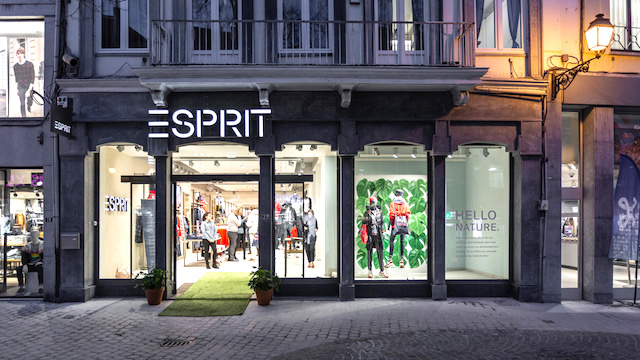
In Hong Kong, Esprit’s licensee opened a second location with a flagship store at Olympian City. Mainland Chinese partners sell across Tmall, Douyin, Vip.com, and JD.com while pushing the brand into activewear. In North America, the local licensee placed retro logo fleece sweatshirts into Costco in the United States and Walmart in Canada in July.
The shift mirrors the path taken by troubled apparel names across the region that abandoned direct retail in Asian markets in favor of wholesale brand licensing. Stripping away direct operating costs lowers overhead quickly, but the model leaves Esprit dependent on wholesale discounters and cut-price online channels that risk diluting whatever brand equity remains from its 1980s peak.
Attention turns next to the legal jurisdiction dispute in Hong Kong, where proceedings on the 49 million euro Dutch trustee claim will test whether Esprit’s offshore corporate structure can protect its remaining HK$63.26 million in net assets from European creditors.