Tag: Hong Kong

  • Chow Tai Fook sales recovering in Hong Kong, Macau

    Chow Tai Fook sales recovering in Hong Kong, Macau

    Same store Chow Tai Fook sales in Hong Kong and Macau “continued to show a sequential improvement” during the first quarter of the year.

    The trend reverses 12 consecutive quarters of decline by the Hong Kong-listed jeweller, the first increase since last last three months of 2014.

    Chow Tai Fook says Mainland China same-store sales rose 12 per cent year-on-year and in the two SARs by 4 per cent. However, sales volume declined by 2 per cent in the mainland and 1 per cent in Macau and Hong Kong.

    Performance of gold products in both Mainland China, Hong Kong and Macau benefitted from an increase in Average Selling Price, rising 19 per cent. But sales of gem-set jewellery fell 17 per cent year-on-year during the quarter in the two SARs.

    “The percentage of RSV (retail sales value) settled by China UnionPay or RMB to the total RSV of Hong Kong and Macau market, a proxy for sales contribution from Mainland tourists, declined to 45 per cent in the quarter as compared to 49 per cent of the same period last year,” Chow Tai Fook said in its stock exchange filing, adding that “such contribution was similar to that in the first half of FY2017”.

    The company had 2381 points of sale as of end-March, with 102 located in Macau and Hong Kong.

  • Thailand plans to build Bangkok-China-Hong Kong cable

    Thailand plans to build Bangkok-China-Hong Kong cable

    The Thai government is eager to build a new subsea cable linking China, Bangkok and Hong Kong, as part of the efforts to transform Thailand into Southeast Asia’s digital hub.

    The Digital Economy and Society ministry is drawing up a master plan for the cable project, and lso aims to attract foreign investors to the project.

    According to the report, the government is currently in the process of identifying a marine route for the planned cable system.

    Thai cabinet has approved a 5 billion baht ($145.5 million) investment in the system. The investment will be handled by state-owned operator CAT Telecom via the Neutral Gateway Network & Data Center project.

    Investment in the cable forms part of the government’s Thailand 4.0 strategy, which aims to transform the nation’s economy with a focus on digitally-enabled innovation and establish the nation as a digital hub for the wider region.

    As part of this project, the government is also investing in establishing Digital Park Thailand, a planned new digital business economic zone, and has just approved the establishment of he facility along the Eastern Economic Corridor.

  • Hong Kong’s fresh retail chicken shops may make a comeback

    Hong Kong’s fresh retail chicken shops may make a comeback

    Chicken rules the roost when it comes to Cantonese cuisine, and the fresher the better. But past government efforts to discourage retail sales of live chickens had almost put the once ubiquitous chicken shop on the endangered list.

    In the not so distant past, people in Hong Kong would visit their neighborhood chicken shop — easily identified by the cages of squawking chickens out front — where they had the butcher ‘process’ their chosen bird on the spot.

    “Live poultry is much tastier than frozen meat, especially when steamed,” says a local woman in her 60s, presumably reflecting the sentiments of the territory’s residents, who like their chicken steamed, boiled or as a base for soups.

    But having so many live chickens around increases the possibility of an avian flu epidemic, which can be devastating to both birds and people. Since the late 1990s, with each outbreak of the bird-born disease that resulted in human deaths, government officials have ordered the wholesale slaughter of chicken stocks.

    Because of this, the government had stepped up measures over the years to restrict the live poultry business, including encouraging poultry farms and chicken retailers to relinquish their live poultry licenses. At the same time, safety measures, such as vaccinations and inspections, were implemented to halt the spread of the disease at production and distribution centers.

    As a result, there have been no recent outbreaks of bird flu in the territories, prompting the Hong Kong Food and Health Bureau earlier this month to change its stance and let the live poultry trade flourish again.

    Meanwhile, the number of chicken retailers — once numbering more than 800 shops — has fallen to about 130 as of the end of 2016, putting a premium on live poultry, which has been trading at the high range of 200 Hong Kong dollars ($25.72) per chicken. This price surge has forced Hong Kong shoppers to turn to cheaper frozen birds available in supermarkets.

    But with the government’s new recommendations, there may soon come a time when Hong Kong’s chicken lovers can buy their birds fresh without putting a dent in their wallets.

  • CTM, csl launch VoLTE roaming between Hong Kong and Macau

    CTM, csl launch VoLTE roaming between Hong Kong and Macau

    Hong Kong’s csl, Macau’s CTM and PCCW Global have jointly launched the first service offering end to end VoLTE and video over LTE calling services between Hong Kong and Macau.

    The new service will be available to mobile customers of the csl, 1O1O and CTM brands at no extra charge. It makes use of csl sister company PCCW Global’s high-speed IP connection between the two markets.

    CTM and csl jointly launched he Call Macau Home Pass voice, data, SMS and video call roaming service last year. The service has a monthly fee of HK$138 ($17.75) or a daily fee of HK$38.

    “CTM was the first telco in Macau launching the VoLTE and ViLTE services last year. This year, we are delighted to have achieved new breakthroughs in the service level through the collaboration with and PCCW Global on a broader horizon,” CTM CEO Vandy Poon said.

    “Upcoming, we will continue to develop our local and roaming services to facilitate Macau’s trade and economic exchange with foreign countries and to promote the diversified development of the Macau economy as well as the enhancement of our customer experience.”

    Former monopoly CTM still dominates the Macau mobile market. Earlier this month, the Macau Business Daily published a collective statement from the operator’s rivals calling on the MSAR government to even the playing field by reducing the cost of leased line access and creating conditions that would encourage investments in competing network infrastructure.

  • Hong Kong’s IoT ecosystem taking shape

    Hong Kong’s IoT ecosystem taking shape

    The explosion of internet of things (IoT) has led to the growing need for connecting devices like sensors and actuators. As many IoT devices require relatively low speed and small amounts of data transmission, low power wide area networking (LPWAN) technologies have come onto the scene.

    Like many other countries, LPWAN technologies are getting lots of attention among service providers, hardware manufacturers and enterprises in Hong Kong. The building of LPWAN networks, the manufacture of IoT devices and testing are underway in the city.

    LPWAN technologies

    Compared to cellular or traditional wireless connectivity technologies, LPWAN has lower power requirements and offers a longer range of connectivity and battery life at lower costs.

    They are suited to applications such as city lighting, energy grid and meter management and parking space monitoring. These applications transmit small messages like temperature, movement, battery status and many more in just a few bytes.

    Generally speaking, LPWAN technologies can be separated into two discrete groups—technologies operating in a license spectrum like NB-IoT (narrow band IoT) and those using unlicensed spectrum like LoRaWAN and Sigfox.

    Proposed by 3GPP, NB-IoT leverages existing GSM or LTE cellular networks with software upgrades to existing base stations. More carriers are already moving ahead with NB-IoT functionality in their mobile networks.

    LoRaWAN is driven by semiconductor company Semtech and is supported by the LoRa Alliance. The alliance members include carriers and technology vendors.

    Sigfox is a network owned by the company of the same name, which has teamed up with third-party operators to deploy the network globally. Sigfox uses ultra narrowband, which means lower throughput. LoRaWAN is not as low power as Sigfox but can support higher bandwidth applications.

  • Luk Fook Sees Improved Jewelry Sales

    Luk Fook Sees Improved Jewelry Sales

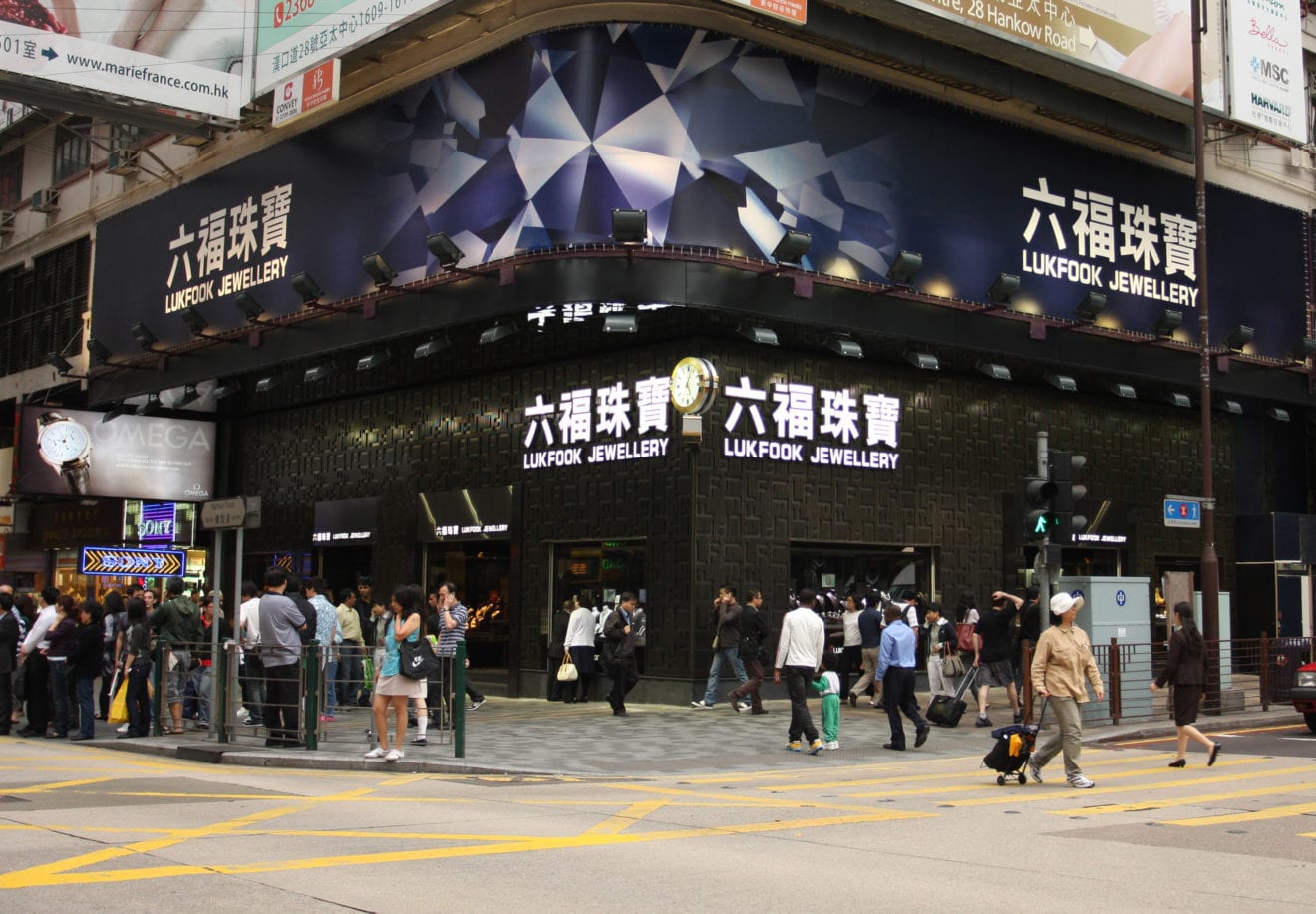
    Hong Kong-based jeweler Luk Fook Holdings recorded its first quarterly growth for same-store sales in three years, driven by its gem-set jewelry offering and an improvement in Hong Kong.

    The company reported a 2% rise in overall same-store sales across its 199 self-operated stores during the fiscal fourth quarter, which ended March 31. An 11% rise in the gem-set jewelry segment offset a 1% decline in gold sales.

    The report did not include sales at Luk Fook’s licensed shops — stores that the company licenses other parties to operate — or e-commerce sales.

    With a relatively low base and an encouraging improvement in Hong Kong and Macau in March, the group’s retail business recorded a turnaround after 12 consecutive quarters of decline, Luk Fook said.

    Same-store sales in Hong Kong and Macau, where all its stores are self-operated, went up 1%, with gem-set jewelry rising 12% and gold products declining 5%. Aside from improved market sentiment, Luk Fook attributed the growth to an increase in high-value gem-set jewelry sales in March.

    In mainland China, same-store sales rose 11% overall, with gold products increasing 16% and gem-set jewelry growing 6%.

    The jeweler opened four self-operated locations in mainland China during the quarter for a total of 133 in that locale, alongside 47 stores in Hong Kong, 10 in Macau and nine in other areas. Luk Fook also had 1,296 licensed shops in China and one in Korea at the end of the quarter.

  • WeChat Pay launches new service in Hong Kong

    WeChat Pay launches new service in Hong Kong

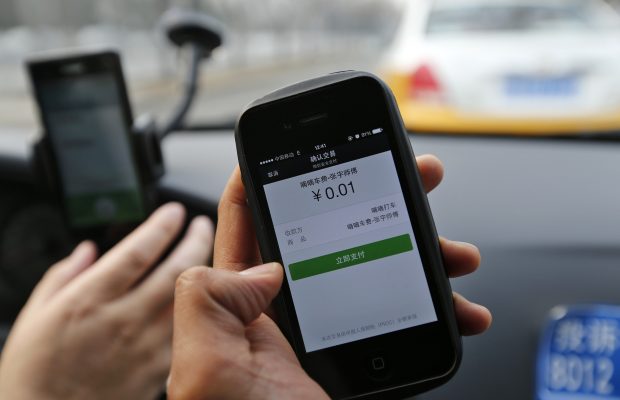
    WeChat Pay, one of the Chinese mainland biggest mobile payment platforms, has boosted its cross-border business by launching a new service in Hong Kong.

    In a move that is expected to promote businesses of local merchants, it opened a channel for membership card applications when customers pay through WeChat.

    After paying for their goods through the platform, they will receive information from local merchants’ WeChat official accounts automatically on becoming a member.

    The virtual membership card will enable customers to be given details on vendors’ latest activities, while at the same time help local merchants gain new followers and promote their businesses.

    Hong Kong, which is a major destination for Chinese mainland outbound tourists, is a key market for WeChat Pay to develop its cross-border business, said Grace Yin, director of WeChat Pay international operations.

    “We will further increase our investment in the cross-border payment business in Hong Kong to help local merchants better serve mainland tourists,” Yin said.

    WeChat Pay’s move comes at a time when Hong Kong’s retail industry is still struggling to recover from a “chilling winter” caused by the decline in the number of mainland visitors.

    Mainland arrivals dropped 6.7 percent year-on-year in 2016, according to the Hong Kong Tourism Board. The situation saw a slight improvement this year, rising 1.1 percent from January to February compared with a year earlier.

    “Linkage of WeChat payment and the merchants membership system will enable us to provide a better shopping experience to consumers, thereby enhancing our brand reputation. Moreover, with data on WeChat Pay users, we will be able to understand our consumers better,” said Wang Yifan, social media specialist with British cosmetics brand Lush, which has a number of stores in Hong Kong.

  • Centric Software Opens New Office in Hong Kong

    Centric Software Opens New Office in Hong Kong

    Centric Software announces the opening of a new office in Hong Kong, bringing its innovative Product Lifecycle Management (PLM) solutions to local retailers, brands and manufacturers. Centric Software is the leading PLM solution for fashion, retail, footwear, luxury, outdoor and consumer goods companies.

    The opening of the Hong Kong office confirms Centric Software’s explosive growth in Asia, having recently opened an office in Tokyo, Japan in 2016 and Shanghai, China in 2014. In addition, the company recently announced the signature of its first customer in Australia, Redbubble. Leveraging the success and continued growth in the region, now with 25 Asian customers, Centric plans to further develop the market in Hong Kong and the surrounding regions.

    “Prior to the opening of our new Hong Kong office, we had already built strong momentum with several large customers.  Companies in Hong Kong and throughout South East Asia need modern, mobile-based PLM solutions. It’s a big space to grow,” said Nick Wei, Regional Sales Director Hong Kong at Centric Software.

    “The fashion market is very competitive and companies need every possible advantage beginning with the products they make and sell; products are the heart of any brand, retailer or manufacturer.  Making great products starts with great product development technology, like Centric PLM,” Wei adds.

    Supporting not only retailers and brands, but also original design manufacturers (ODM) and original equipment manufacturers (OEM) with flexible, configurable, out-of-the-box and intuitive PLM, Centric Software solutions enable companies to speed time to market, improve team collaboration and cut costs while developing deeper bonds with trading partners.

    “Fashion companies here are really excited to finally have a modern, mobile PLM solution available to them. They want innovative easy to use, cloud and mobile-based PLM software that provides a ‘single version of the truth’ solution,” Wei explains, “Centric’s mobile applications, which are the first to be developed in the sector, keep product teams connected at all times to aid product design development and execution.”

    “In Asia, when a company invests in a technology partner, they want to know you are present and a have strong local team to service them. This new office will allow Centric Software to work in close proximity with our customers and provide them with the industry best practices and Agile DeploymentSM knowledge needed to enable their ambitious growth strategies,” Wei concludes.

    “We are very excited to announce the opening of our new home in Hong Kong,” said Chris Groves, CEO of Centric Software. “We will continue to build on innovations made with our customer partners in the region and will look forward to welcoming new ones into the Centric family.”

  • HLIB Research retains Sell on Pharmaniaga

    HLIB Research retains Sell on Pharmaniaga

    Hong Leong Investment Bank (HLIB) Research is maintaining its Sell rating on Pharmaniaga and target price  of RM4.29, based on FY18 price-to-earnings multiples of 15.6 times , which is in line  with the international peers.

    It said on Thursday that despite Pharmaniaga’s monopoly in the government concession business, “we expect near term headwinds driven by lower orders and higher finance cost to drag earnings”.

    HLIB Research said the uninspiring FY16 earnings (RM52.9mil, down 40.3% on-year) largely reflected the government’s move to rationalise its expenditure and shift towards a leaner procurement model.

    “We expect the trend of slower government offtakes to follow through in FY17 as evidenced by the 2017 Budget healthcare allocation (RM4bil in 2017 vs RM4.6bil in 2016).

    “Whilst the group has been working on a sleuth of measures aimed at diversifying its earnings base in the long run, which we are inherently positive on; its interim outlook still remains downcast by weaker demand from the concession business amidst a rising cost environment,” it said.

    The research house said that to address immediate concerns, it expects Pharmaniaga to undergo an internal cost recalibration programme in FY17 to address some of the margin pressures it faces amidst the slower concession off-take (inventory optimisation and efficiency drive in its logistics department).

    However, in the mid-term, it is upbeat on the prospects of Pharmaniaga’s venture into the Indonesian market, which augurs well for the group’s diversification strategy.

    Pharmaniaga’s 55% stake subsidiary PT MPI has 31 distribution points across Indonesia as at FY16 and is in a strong position to benefit from the nation’s increasing demand for medicines.
    GlobalData estimates that the Indonesian pharmaceutical industry is expected to grow to US$12.6bilin FY20 from US$7bil in FY15.

    HLIB Research said furthermore, PT Errita (manufacturing) is well positioned to benefit from the JKN initiative; a universal healthcare programme which aims to provide 100% coverage to all Indonesian by 2019. This has fueled the demand for generic drugs in the nation. Indonesia accounted for 29% of non-concession revenue in FY16 (FY15: 23%).

    “However, the success of their Indonesian ventures largely hinges upon the successful registration of the right offerings into the JKN system having passed the drug registration hurdle and conquering the logistical challenge that Indonesia presents.

    “We anticipate advancements into the private sector in FY17 on the back of the low base effect. The group has turned its attention to capture a greater share of the private business domestically amidst waning concession orders.

    “Despite its Indonesia and private sector segments having shown positive signs, we anticipate the near term prospects to remain challenging for the bread and butter business, as lower concession orders (FY16: 51% of revenues vs. FY15: 56% of revenues) drag earnings.

    “Downside risks to the stock stems from lower than expected government offtake and a further depreciation of the ringgit,” it said.

  • CDF-Lagardere, Shilla win Hong Kong Airport concessions

    CDF-Lagardere, Shilla win Hong Kong Airport concessions

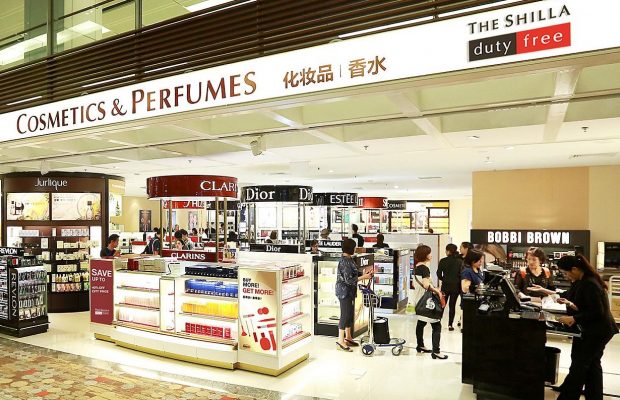
    Key Hong Kong airport concessions for cosmetics, fashion accessories and liquor & tobacco have been awarded at Hong Kong International Airport.

    The Airport Authority of Hong Kong has awarded the liquor & tobacco concession to China Duty Free – Lagardere Company and the perfume & cosmetics and fashion accessories concession to Shilla Travel Retail Hong Kong Limited (Shilla).

    The concessions will open from November 2017 and follow an open tender exercise.

    Cissy Chan, executive director, commercial of the Airport Authority said she is confident the new concessions “will elevate the overall airport experience and create a new shopping journey for the worldwide passengers”.

    The liquor & tobacco concessionaire will have the flexibility to include complementary products and upmarket gourmet food items.  The perfume & cosmetics and fashion accessories concessionaire will offer a one-stop shopping destination for beauty and fashion accessories, such as sunglasses, fashion watches, small leather goods and handbags.

    CDF – Lagardere, the awardee of the liquor & tobacco concession, will be introducing new experiential concepts, which include a wide selection of Chinese liquor assortment, a whisky chamber bringing an extensive offering under one roof, an in-store VIP lounge, tasting bars and more, said Chan.

    Shilla, which will be operating the perfume & cosmetics and fashion accessories shops, will bring a wide spectrum of beauty products and fashion accessories representing almost 100 brands that are new to HKIA.  There will be a dedicated zone for male-specific products, as well as a New Generation zone providing a platform for emerging Korean and Japanese brands.

    Both concessionaires will bring in new ideas to deepen customer engagement through digital initiatives. Interactive zones with virtual reality (VR), interactive and digital devices, together with iBeacon technology, will be installed inside the shops to enhance in-store navigation and real-time promotional offers.

    Charles Chen, President of China Duty Free Group (CDF) said being awarded the liquor & tobacco concession at HKIA marks an important milestone in the international development of the organisation’s duty free business.

    “We extend our sincere gratitude to the AA for their trust, and we will join hands with Lagardère Travel Retail to present a world class duty free shopping experience to the HKIA passengers.”

    Dag Rasmussen, chairman & CEO of Lagardere Travel Retail promises the company’s teams across the world will collaborate with brand partners “to bring to life a new benchmark for quality and engagement in travel retail”.

    And Roberto Graziani, president, Hotel Shilla Travel Retail says the highly contested tender win is a tribute to Shilla’s innovative category insights, deep understanding of customer needs and long-standing operational excellence.

    “We are grateful to the AA for this vote of confidence and look forward to warrant to our customers and all stakeholders, offers, services, and operational performances which will stay abreast of trends and changes in the consumers’ preferences, always maintaining a strong competitive edge throughout the length of the concession.”

  • 3 Hong Kong upgrading network to prepare for 5G

    3 Hong Kong upgrading network to prepare for 5G

    Hutchison Telecommunications Hong Kong Holding’s mobile division 3 Hong Kong has teamed up with Huawei to upgrade its mobile network in preparation for the 5G era.

    The operator is adopting five component carrier aggregation (5CC CA) using its extensive spectrum holdings across the 1800-MHz, 2100-MHz, 2300-MHz and 2600-MHz bands with both FDD and TDD technology.

    Huawei will also upgrade the network to support 4×4 MIMO and 256 quadrature amplitude modulation (QAM) technology, to enable 3 Hong Kong to provide customers with data download speeds of over 1.2Gbps.

    In addition to these 4.5G technologies, 3 Hong Kong has started planning for the deployment of 4G technologies based on network cloudification.

    The partners have already deployed Huawei’s CloudEdge technology on the 3 Hong Kong core network and are now applying CloudRAN technology to the wireless access network. The operator also plans to adopt Huawei’s CloudAIR air interface cloud technology.

    A Massive MIMO base station has also been built in Causeway Bay to conduct field tests of the 5G technology, and 3 Hong Kong plans to continue the deployment of Massive MIMO in key locations within the year.

    “As we move towards the 5G and IoT era, 3 Hong Kong is actively deploying 5G technologies and upgrading its existing network architecture,” HTHKH executive director and CEO Cliff Woo Chiu-man said.

    “In addition to using CA technology with 5CC, we have conducted research and carried out trials for various technologies, such as small cell installations, network cloudification, NFV and Massive MIMO towards the 5G era. These  efforts will enable the timely launch of services to meet market demand as soon as the 5G  standard and Hong Kong’s spectrum plans are confirmed.”

  • L Catterton Asia launches beachwear platform

    L Catterton Asia launches beachwear platform

    Australian swimwear brand Seafolly and Colombian beachwear brand Maaji are the first signings for a global lifestyle platform launched by L Catterton Asia.

    Based in Singapore, L Catterton Asia is an arm of private equity firm L Catterton, formed last year through a partnership between Catterton, LVMH and Groupe Arnault. It will be the controlling shareholder of the combined business, with the Maaji and Seafolly founders as minority shareholders.

    It is the first step in the aggregation of the fragmented swimwear/beachwear industry.

    Seafolly was founded in 1975 by Peter and Yvonne Halas, and has been led by Anthony Halas since he became CEO in 1998. He has built the business across international markets in Europe, North America and Asia. L Catterton Asia acquired a controlling interest in the brand in December 2014, and now it is sold in 41 countries (there are four stores in Singapore) as well as online.

    Maaji was founded by sisters Manuela and Amalia Sierra in 2002, and has a presence in more than 54 countries.

    “With this unparalleled combination of Maaji and Seafolly we look to grow our portfolio and create the largest independent house of beach lifestyle brands,” says L Catterton Asia chairman/managing partner Ravi Thakran. “This combination will drive many synergies, including geographic expansion, retail rollout and product sourcing.”

    L Catterton Asia’s goal is to preserve each brand’s DNA and heritage, while enabling the brands to enhance their global growth.

    Previously known as L Capital Asia, L Catterton Asia was launched in 2009 and manages more than US$1.6 billion across two private equity funds, and more than US$2 billion including co-investments. It has offices in Singapore and Mauritius, with further regional advisory presence in Hong Kong, Mumbai, Shanghai and Sydney. Its investments include Charles & Keith, Crystal Jade, Pepe Jeans Group and YG Entertainment, which promotes Korean singers and entertainers like Big Bang and Psy.

  • Pink Star diamond sells for record $553 million

    Pink Star diamond sells for record $553 million

    Hong Kong jewellery company Chow Tai Fook ­has paid a record HK$553 million (US$71.2 million), including fees, for the illustrious Pink Star diamond.

    This makes the diamond the most expensive ­precious stone sold at auction. The sale relieves auction house Sotheby’s of unwanted inventory it was forced to take on three years ago.

    Measuring 2.69cm by 2.06cm and set on a ring, the 59.6-carat stone is the largest “internally flawless fancy vivid pink” diamond ever graded by the Gemological Institute of America, the industry arbiter. It is more than twice the size of the 24.8-carat Graff Pink, previously the most expensive pink diamond, which fetched US$46.2 million including fees in Geneva in 2010.

    The previous record holder for any diamond was the Oppenheimer Blue, a 14.6-carat “vivid blue”, which sold for 56.9 million Swiss francs (US$56.7 million) in Geneva last May.

    Chow Tai Fook, owned by the family of late tycoon Cheng Yu-tung, last year bought a 5.03-carat green diamond, Aurora Green, for HK$130 million at auction, and a 507-carat Cullinan Heritage rough diamond for HK$275 million in 2010. The Cullinan Heritage was subsequently cut and turned into a necklace.

    Asia overtook the US last year as the largest auction market, prompting Sotheby’s to opt for Hong Kong instead of Geneva to sell the Pink Star. The Swiss city is the traditional centre for sales to dealers.

    “Industry buyers remain the biggest market for large precious stones, but we are seeing great potential for growth among Asian private collectors. That’s why we did not sell this in Geneva,” says Sotheby’s Asia chairwoman Patti Wong.

    Sotheby’s initially sold the Pink Star in 2013 after New York cutter Isaac Wolf, acting on behalf of Ukrainian investors, made a record bid of 68 million Swiss franc for it. However, says Wong, his backers failed to come up with the money.

    Sotheby’s had made a pre-sale guarantee to the seller for the diamond, then estimated at US$60 million, and had to buy it when the sale fell through. It placed the diamond in its inventory with a value of US$72 million.

  • Study Reveals Hong Kong Shoppers Are Just Having a Fling with Fast-Fashion Retailers

    Study Reveals Hong Kong Shoppers Are Just Having a Fling with Fast-Fashion Retailers

    Global loyalty marketing agency ICLP surveyed 750 consumers in Hong Kong and asked them the brand that comes to their mind first of the retailers that they shop regularly. The survey reveals a correlation between characteristics of sectors and brand relationships, and found that the two “most named” retail sectors are supermarkets and fast-fashion retailers. The findings show that Hong Kong consumers lack passion and commitment towards supermarkets. On the other hand, though 64% of Hong Kong consumers naming fast-fashion retailers as their top-of-mind brands are Millennials, one of every three are in a ‘casual’ relationship with that brand. Brands need to understand the individual buying behaviours and purchasing decisions of their customers in order to map out suitable solutions to engage them and thus strengthen the customer relationship.

    The survey, which reveals underlying gaps in the retail experience of Hong Kong consumers, asked respondents to rate their expectation and experience of core relationship criteria to determine if their relationship contained commitment, intimacy and passion. These criteria were then mapped onto a model based on Sternberg’s Triangular Theory of Lovei in partnership with an expert on relationship dynamics, Professor Ron Rogge at the University of Rochester in the United States. While retailers should be aiming for a devoted customer relationship which incorporates commitment, intimacy and passion, the study showed that Hong Kong retailers are still far from achieving this.

    Missing Passion and Commitment towards Supermarkets

    In the ICLP survey, over 30% of the total respondents named supermarket brands as their top-of-mind brands. More than half of them are Generation Xers born between 1965 and 1980. This is may be because, while supermarkets target the mass public, their most frequent customers are from mature age groups such as the elderly and housewives. Among those who named supermarket brands in the survey, 35% are in a ‘liking’ relationship which lacks passion and commitment. They only feel intimacy towards the brand, meaning that many come into contact with the brand on a regular basis, and are willing to share information and interested in obtaining information about products.

    The nature of the business and characteristics of the sector could well be one reason for the results. Supermarkets are where consumers acquire their daily consumption needs, and players in this retail sector offer close to the same selection of products, consistent quality, standardised commodities and self-service. Supermarket customers emphasise value for money and are price-sensitive. They are likely to switch supermarket brands when the next best offer comes along. This is also reflected from the smallest gap of reliability between expectation and experience of relationship criteria according to the study. Minimal brand enthusiasm with no engagement has resulted in the large percentage of ‘liking’ relationships. 

    The study also reveals the disconnection between expectation and experience of core relationship criteria is mainly attributed to communication, followed by rewards, representing 26% and 25% of experience not meeting expectation, respectively.

    Looking into the gap in these relationship criteria, the respondents’ actual experience compared to expectation fell behind in the following areas:

         9% in getting access to special and exclusive offers

         8% in being asked how they would like to be communicated to, e.g. phone, email, SMS

         6% in feeling that their custom and loyalty is rewarded

         6% in feeling that they are rewarded with offers that are tailored to them

    Mary English, General Manager at ICLP, commented: “The distribution of relationship type for supermarkets best demonstrates the application of the Triangular Theory of Love. It is normal for supermarket to achieve ‘liking’ relationships as customers actively look for daily product information from supermarkets and emphasise value for money. However, supermarket brands should consider how to create stronger reward programmes and ensure consumers access to special and tailor-made offers in order to enhance the emotional connection between their brand and customers, thus developing ‘devoted’ relationships.

    Loyalty strategies for supermarket brands have to evolve as the market is changing. Nowadays, comprehensive personalised loyalty programmes are more significant than traditional points-based reward programmes. Supermarkets need to understand the key drivers that build more loyal relationships, which encourage customers to spend more and become better brand advocates. Communication is of paramount importance to create a reciprocal sense of passion that drives ‘devoted’ relationships. It is recommended that supermarket brands maintain a close, interactive and instant communication with customers in the way that their consumers prefer, and be mindful of the tone of communication with customers.

    Fast-Fashion Retailers Missing All Three Relationship Components

    In the survey, 15% of total respondents voted fast-fashion brands as their top-of-mind brands. Over 60% of them are Millennials born post-1980, as fast fashion targets the younger generation who keep updated of the latest trends and expect a rapid response. Among those who selected a fast-fashion brand, 33% respondents are in a ‘casual’ relationship with limited passion, intimacy and commitment; that is, they like the brand but avoid getting too engaged. This may be explained by the characteristics of the fast-fashion sector. Fast-fashion brands do not heavily emphasise brand character and identity, but focus on the availability of options and trendiness, coupled with relatively low prices.

    Disconnection between expectation and experience of core relationship criteria in this sector is mainly attributed to recognition, followed by respect, representing 42% and 33% of experience not meeting expectation, respectively. Looking into the gap in these relationship criteria, the respondents’ actual experience compared to expectation fell behind in the following areas:

         16% in sending them a message, gift or offer on their birthday

         9% in feeling that the brands have their interest at heart

         8% in feeling that their personal information is treated with respect and is used for their benefit

    Mary added: “As a majority of Hong Kong Millennials are less committed and passionate towards their favourite retailers, fast-fashion brands need a cohesive consumer engagement strategy to improve commitment and passion, and foster ‘devoted’ relationships with Millennials. While fast-fashion retailers keep customers updated with the latest trends and products information, they still have some way to go in structuring their brand character and identity, and incorporating these elements into their loyalty programmes, which are only price-driven, in order to enhance emotional connection between customers and their brand.

    As a segment with high spending potential, Hong Kong Millennials are seen as an influential generation that loves online shopping. They can easily access online shopping platforms to review product information and comment before making purchase decisions. Any brand that is able to develop an innovative online-to-offline customer engagement strategy will have a chance to stay ahead of the competition. While online shopping brings convenience to both brands and customers, the conversion of online shoppers into real-life foot traffic remains essential for brands to succeed in an increasingly digital retail environment.

    With the rise of digital platforms and e-commerce, retailers need to understand individual customers’ needs by leveraging customer data such as purchase preference and consumption habits, and by big data analysis. To build closer connections with Millennials, fast-fashion brands should fully utilise social media such as fan pages, forums and social media activities with incentives to engage Millennials who frequently use digital media during their shopping journey, and actively listen across channels to win long-term trust from customers. Relevant recommendations and insights on the latest trends from the brand based on their preferences are top of Millennials’ demands. ”

    No Standard Formula for Customer Loyalty Approaches

    When comparing the two sectors – fast fashion versus supermarkets, fast-fashion retailers have more ‘casual’ relationships than supermarkets by nearly double. The uniqueness of each sector plays a certain role in affecting the distribution of relationship type. Compared to supermarkets, the disconnection between the expectation and experience is also larger for fast fashion. However, all retailers should acknowledge their shortcomings in order to build devoted relationships with as many of their shoppers as possible.

    Mary concluded: “Despite the same backdrop, different sectors of the retail industry require different customer loyalty approaches. Brands should start by understanding individual buying behaviours and purchasing decisions with the aid of different customer data analytics, in order to map out integrated solutions to engage customers and thus strengthen the customer relationship.”


  • PCCW Global, Keppel launch ICX in HK

    PCCW Global, Keppel launch ICX in HK

    Hong Kong based PCCW Global has teamed up with Keppel Data Centres to launch a joint international carrier exchange (ICX) in Hong Kong.

    The PCCW Global-Keppel International Carrier Exchange has more than 7,800 square feet of dedicated network facility management space.

    It is located in the same building as the Hong Kong point of presence for the Asia-Africa-Europe 1 (AAE-1) subsea cable and connects to the subsea cable landing station of Hong Kong hyper scale data centers via PCCW Global parent HKT’s extensive domestic fiber network.

    PCCW Global and Keppel Data Centres entered into a long-term agreement covering the development of the ICX last year. It aims to use the region’s subsea cable capacity to provide fast and robust connections to Asia, the Middle East, Africa, Europe and North America.

    The partners said the initiative is ultimately aimed at addressing the demand for access performance and network security arising from cloud services, big data, and rich media in business critical applications

    “We are very pleased to see the exciting ICX opening which highlights our very positive relationship with (Keppel Data Centres parent company) Keppel T&T,” PCCW Global CEO Marc Halbfinger said.

    “Our customers and carrier partners now have more low-latency Hong Kong Island choice in accessing digital solutions for responding to the increasing cloud adoption in the region.”