Tag: Hong Kong

  • Avaya taps COL as Hong Kong distribution partner

    Avaya taps COL as Hong Kong distribution partner

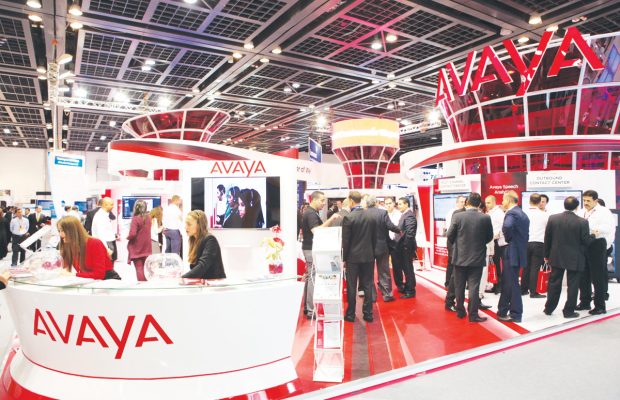
    Business communications and ICT solutions provider Avaya has appointed COL Limited as its distribution partner for the Hong Kong market.

    Under the agreement, the two companies will collaborate to drive adoption of Avaya solutions in the market and helping Hong Kong organizations achieve their digital transformation ambitions.

    COL, a subsidiary of fixed line operator Wharf T&T, will provide the full range of Avaya products – including unified communications and collaboration, contact center, cloud-based communication applications and networking solutions – to resellers in Hong Kong, and later to the wider region. Resellers will be able to offer products to enterprises of all sizes.

    COL has a more than 40 year history in Hong Kong. Its flagship product is its data center and business continuity solution, which has an 80% market share in the financial and multi-national corporation market segments.

    “This distribution agreement signals the start of an exciting time for the industry and for us. Avaya has the reputation, the reach and the commitment to deliver quality communication applications,” COL VP for the business market Kam Poon said.

    “Together and through our resellers, we will make a highly positive impact in delivering future-proof communications solutions to business customers with proven competence to design, build, implement and operate.”

  • Another first for Hactl’s pharma handling

    Another first for Hactl’s pharma handling

    Hong Kong Air Cargo Terminals Limited (Hactl) has been confirmed as complying with all the requirements of IATA CEIV Pharma. Hactl is the first handler in Hong Kong to obtain the certification.

    Hactl’s certification is the result of an initiative sponsored by Hong Kong Airport Authority, in which all relevant industry players at the airport will undergo validation for the IATA CEIV Pharma standard.

    IATA CEIV Pharma represents a co-ordinated effort to ensure competency, as well as operational and technical readiness, for the storage and transportation of pharmaceuticals by air. It is designed to help the industry further develop a network of certified pharmaceutical trade lanes that meet consistent cold-chain management standards and assure product integrity.

    Hactl’s accreditation follows an extensive independent assessment and validation, involving detailed inspections, and personal interviews with managers and supervisors at all levels within Hactl. The assessment and validation covered the company’s quality management system and procedures, personnel, training, documentation, infrastructure and equipment, quarantine procedures, sub-contractor management, self-inspection procedures, transportation and operations. All were found to be fully compliant, with no non-conformances.

    The validation report praised Hactl’s preparations for the audit process, the helpful attitudes of its staff, and its total cooperation. Says IATA’s General Manager, Hong Kong and Macau, Yvonne Ho: “I congratulate Hactl on being the first to receive CEIV certification in Hong Kong.  In doing so, Hactl has achieved an internationally recognized standard for pharmaceutical handling.”

    Adds Hactl’s senior manager – quality assurance, Benny Siu: “We are very pleased with the positive outcome of the IATA CEIV Pharma Validation, and value the cross-departmental team effort that resulted in Hactl becoming the first to obtain this important certification.”

    Mark Whitehead, chief executive of Hactl, concludes: “We applaud the Airport Authority’s initiative in sponsoring this drive to adopt IATA CEIV Pharma in Hong Kong. It’s an excellent example of what can be achieved through collaboration, and will benefit the entire airport cargo community and its customers.”

  • InstaReM launches free money transfers for HK users

    InstaReM launches free money transfers for HK users

    Singapore-based money transfer provider InstaReM is introducing free money transfers exclusively for users in Hong Kong.

    InstaReM, a Money Services Operator licensee in Hong Kong, is running this campaign until end of April 2017.

    By offering interbank rates directly from the exchange rates provided by Reuters.com, InstaReM will charge zero margins. InstaReM also doesn’t charge any handling or transaction fee for money transfers as a rule.

    “We are keen to introduce our new way of money transfer to Hong Kong residents. We feel remittance services should be easier, quicker and more cost effective. Traditional services are costly. InstaReM enables individuals, SMEs, and financial institutions to send across payments at the lowest possible cost and fastest possible time,” said Prajit Nanu, InstaReM co-founder and CEO.

    InstaReM also provides a separate service to help corporations and SMEs to make bulk payments to its payees in the quickest possible time.

    Individual users can sign up with basic personal information, with a simple upload of valid HKID copy and residential address proof on www.instarem.com. Upon verification, users could immediately perform money transfers online. The payees will receive the exact amount in the designated currency on the same or next business day.

  • Tourists dent February Hong Kong retail sales

    Tourists dent February Hong Kong retail sales

    Hong Kong retail sales fell by 5.7 per cent in February.

    But when the sales data for January and February are combined – eliminating the distortion caused by the timing of Lunar New Year – the decline is a more modest 3.6 per cent over the two months.

    The Census and Statistics Department provisionally estimated the value of retail sales in February at HK$34.8 billion. It revised its estimate for January to a decline of 1 per cent year-on-year.

    For the first two months of 2017 taken together, the value of retail sales decreased by 3.2 per cent compared with the same period in 2016, a figure similar to that for the fourth quarter of last year.

    A government spokesman said the retail sector’s performance was still constrained by the lack of growth in tourist spending despite the modest recovery of visitor arrivals in recent months.

    “Looking ahead, the performance of retail sales will depend on the recovery pace of inbound tourism as well as whether consumer sentiment will be affected by the various external uncertainties,” the spokesperson said.

    “At present, local consumer sentiment remains well underpinned by the prevailing favourable job and income conditions.”

    After netting out the effect of price changes over the same period, the provisional estimate of the volume of total retail sales in February 2017 decreased by 6.1 per cent year-on-year.

    Luxury relief

    Supporting comments from several watch and jewellery retailers in recent weeks, it appears the long-running decline for that sector has tapered off. The category recorded a mere 1.2 per cent decline in sales in January-February combined, the smallest decline of any category in negative territory.

    Electrical goods and photographic equipment plunged 23.6 per cent, while supermarket sales fell 3.5 per cent and department store sales by 1.6 per cent.

    Apparel sales fell 6.9 per cent, footwear and accessories by 6.5 per cent and furniture by 5.4 per cent.

    Cosmetics was the major improver by category, rising 2.7 per cent. Optical goods sales rose 1.4 per cent and food, alcohol and tobacco by 1.4 per cent.

    The C&SD used combined figures for the two months rather than February figures on their own, to provide a fair year-on-year comparison.

    “Retail sales tend to show greater volatility in the first two months of a year due to the timing of the Lunar New Year. Consumer spending in the local market normally attains a seasonal high before the festival. As the Lunar New Year fell on January 28 this year but on February 8 last year, it is more appropriate to analyse the retail sales figures for January and February taken together in making year-on-year comparison.”

  • Jetstar Pacific launches low-cost flight between Hong Kong and central Vietnam

    Jetstar Pacific launches low-cost flight between Hong Kong and central Vietnam

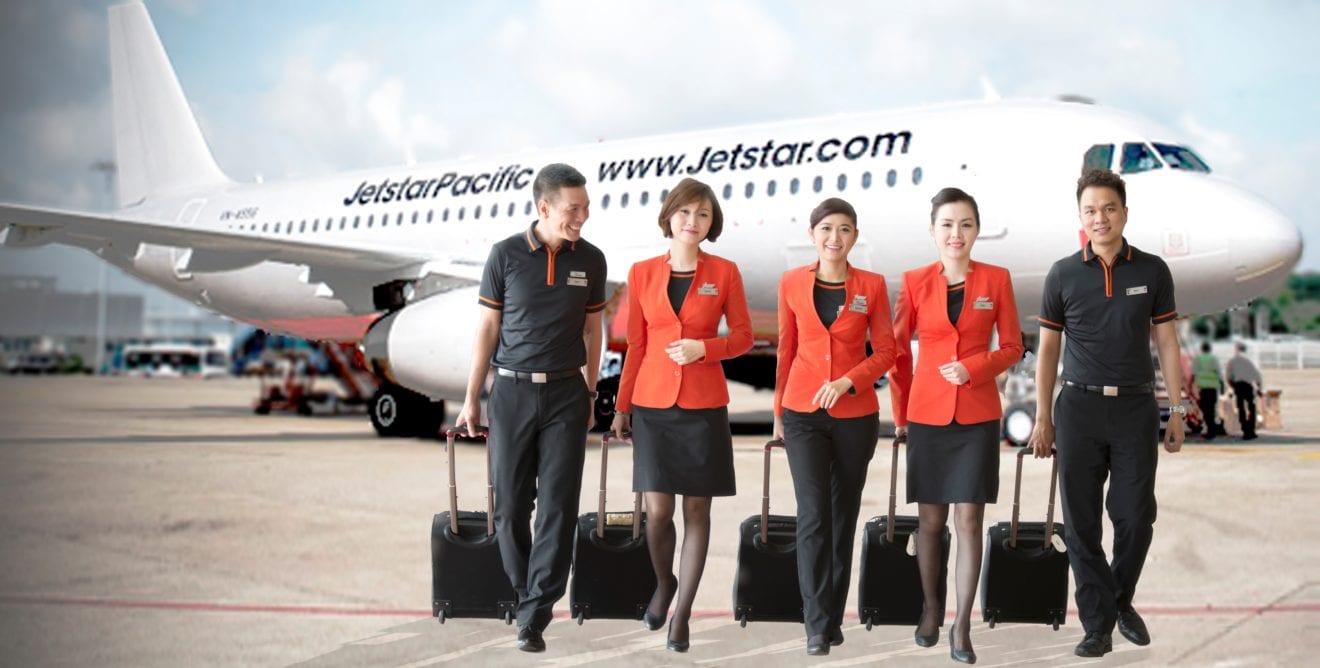
    It is the carrier’s third international flight route from Da Nang City. Jetstar Pacific has started its Da Nang – Hong Kong service, using Airbus A320 aircraft with 180 seats in economy class, to meet the rising travel demand and promote tourism in Vietnam’s central resort city, the Da Nang tourism department said.

    Tickets cost from VND290,000 ($12.75) for one-way flight, which lasts one hour and 45 minutes, the department said in a report, citing the airline.

    The carrier will run three flights per week on Monday, Tuesday and Friday.

    The route, which was launched Monday, is the budget airline’s third international route linking Da Nang with foreign cities, after Taipei of Taiwan and Singapore.

    Jetstar Pacific, 70 percent-owned by flag carrier Vietnam Airlines and 30 percent by Australia’s Qantas Airways, currently operates flights to 80 destinations of 17 countries.

    International tourist arrivals to Da Nang last year jumped 31.6 percent from 2015 to 1.7 million.

    Cathay Dragon and HK Express have already been operating on the Da Nang-Hong Kong route, with seven flights and three flights per week, respectively.

  • Hong Kong Feb retail sales fall 5.7% y-o-y

    Hong Kong Feb retail sales fall 5.7% y-o-y

    A government spokesman indicated that the performance of retail sales was still constrained by a lack of growth in tourist spending despite a modest recovery in visitor arrivals in recent months.

    Taking the first two months of 2017 together to neutralise the distortions by the timing of the Lunar New Year, the volume of retail sales declined by 3.6 per cent year-on-year, similar to that in the fourth quarter of 2016.

    Looking ahead, the performance of retail sales will depend on the recovery pace of inbound tourism as well as whether consumer sentiment will be affected by the various external uncertainties.

    At present, local consumer sentiment remains well underpinned by the prevailing favourable job and income conditions. The government will continue to monitor the situation closely.


  • Atradius announces key Asia hire on the back of strong 2016 results

    Atradius announces key Asia hire on the back of strong 2016 results

    In a newly created role Atradius appoints Oliver Ford as Regional Sales Manager Asia based in Hong Kong. Mr. Ford’s hire comes on the back of strong Group and Asia results which saw the credit insurer surge ahead of its competition and signals Atradius’ continued commitment to growing its business in the region. “I am excited to be supporting continued profitable growth for Atradius in its most culturally diverse region” says Oliver Ford.

    Mr. Ford will start in his new remit on June 1st and will report to Eric den Boogert, Managing Director for Asia.

    Mr. den Boogert adds “Oliver has been the face of Global Sales in the London market for the last five years and has greatly enhanced the professionalism of our sales process. That, com-bined with his enthusiasm and cooperative approach has helped to keep Atradius in pole position in this fast changing market.”

    In his previous position Mr. Ford led business development for Atradius Global in the UK.

    Collaboration with key distribution partners and building bespoke international credit insurance programs for multinational organizations were amongst his key responsibilities. Oliver Ford has spent his entire career with Atradius and has risen quickly through the ranks in his past decade of service with the organization.

  • Katrina Group plans So Pho restaurants for Hong Kong

    Katrina Group plans So Pho restaurants for Hong Kong

    Singapore’s Katrina Group, an F&B business specialising in multi-cuisine concepts, has taken a step toward opening So Pho restaurants in China and Hong Kong.

    It has signed a non-binding memorandum of understanding with fast-casual restaurant group Ajisen (China) Holdings regarding collaboration on the restaurants. The parties will negotiate and determine if this will be through a franchise or JV, with a definitive agreement expected to be finalised within the next few months.

    Ajisen China, which is listed on the mainboard of Hong Kong Stock Exchange, has a chain of restaurants under different brands in China and Hong Kong.

    Katrina founder/CEO/executive chairman Alan Goh says the collaboration is a step toward the company’s aim of growing its overseas presence and diversifying its revenue stream.

    Katrina Group owns and runs 33 restaurants in Singapore under nine different brands, including Bali Thai and Streats, which services streetfood-style dishes. It also has two restaurants in China.

  • Frette China opens Shanghai flagship

    Frette China opens Shanghai flagship

    Frette China has opened its first flagship store, in Shanghai’s Puxi district.

    In the five-level Plaza 66 shopping centre and designed by New York architectural firm Kohn Pedersen Fox, the Frette boutique covers 230 sqm.

    It offers classic and seasonal collections of bed linen and towels, as well as accessories.

    Frette was established in Grenoble, France, in 1860. It relocated to Concorezzo, Italy, in 1865 and now has its headquarters in Monza. It specialises in luxury home furnishings, including bedding and towels, and provides linen to such hotels as Raffles Hotel Singapore, The Four Seasons, The Peninsula Hong Kong and The Ritz London.

    Frette China Shanghai


    While the company has 25 stores across Asia, it regards the market as “significantly underdeveloped”.

    “We’ve opened flagships in Taiwan and Hong Kong, but have really only just started in Southeast Asia,” says CEO Herve Martin. “Until now, we haven’t been present at all in China and Japan.

    “In my eyes, China is the place of the moment and will play a major role in the coming decades — not just in the luxury business industries, but in all industries. China is at the forefront of world evolution. Now is the right time to build up here.”

    After Shanghai he expects there may be a demand to open in Beijing, and the company’s mid-term goals could possibly also include Chengdu, Guangzhou and Shenzhen.

  • 6ixty8ight expansion plan to Korea

    6ixty8ight expansion plan to Korea

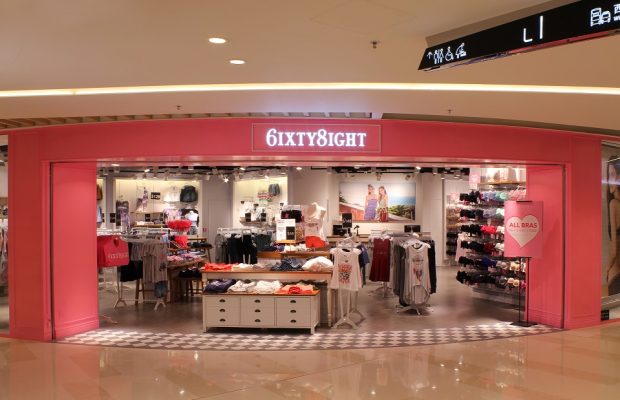
    Hong Kong-headquartered youth fashion brand 6ixty8ight has chosen South Korea for its first international foray outside Greater China.

    The company will open a flagship store in Myeongdong, downtown Seoul, at 992 sqm, its third largest footprint. A second store will follow on the fashion street of Garosu-gil in Sinsa-dong of southern Seoul.

    Owned by Hop Lun Group, which has for 25 years manufactured lingerie for many of the world’s largest brands, 6ixty8ight sells affordable, fashionable lingerie and casual wear designed specifically for the Asian female figure.

    Over the last two years, the retail brand has undergone a revamp and launched a major expansion, now numbering more than 130 stores through Hong Kong and Mainland China.

    Last year, in an exclusive interview, 6ixty8ight COO Anders Heikenfeldt said the secret to the brand’s new success has been a single-minded focus on who it is, what it stands for and who its customers are – a narrow band of 15 to 30 years.

    “We have a unique offer. Our value proposition is different to H&M, Zara, Forever 21 or Uniqlo – they go broad trying to cover menswear, women, kids – very mass – and they have something for everyone under the one roof.

    “Our strategy is to be very different and to be very true to our target. That’s our DNA. We are not going to divert into men or older customers.”

    At the time, Heikenfeldt said the company was in the final stages of planning to enter two international markets. It has not yet revealed the second.

  • Signs abound that the worst may be over for Hong Kong retailers

    Signs abound that the worst may be over for Hong Kong retailers

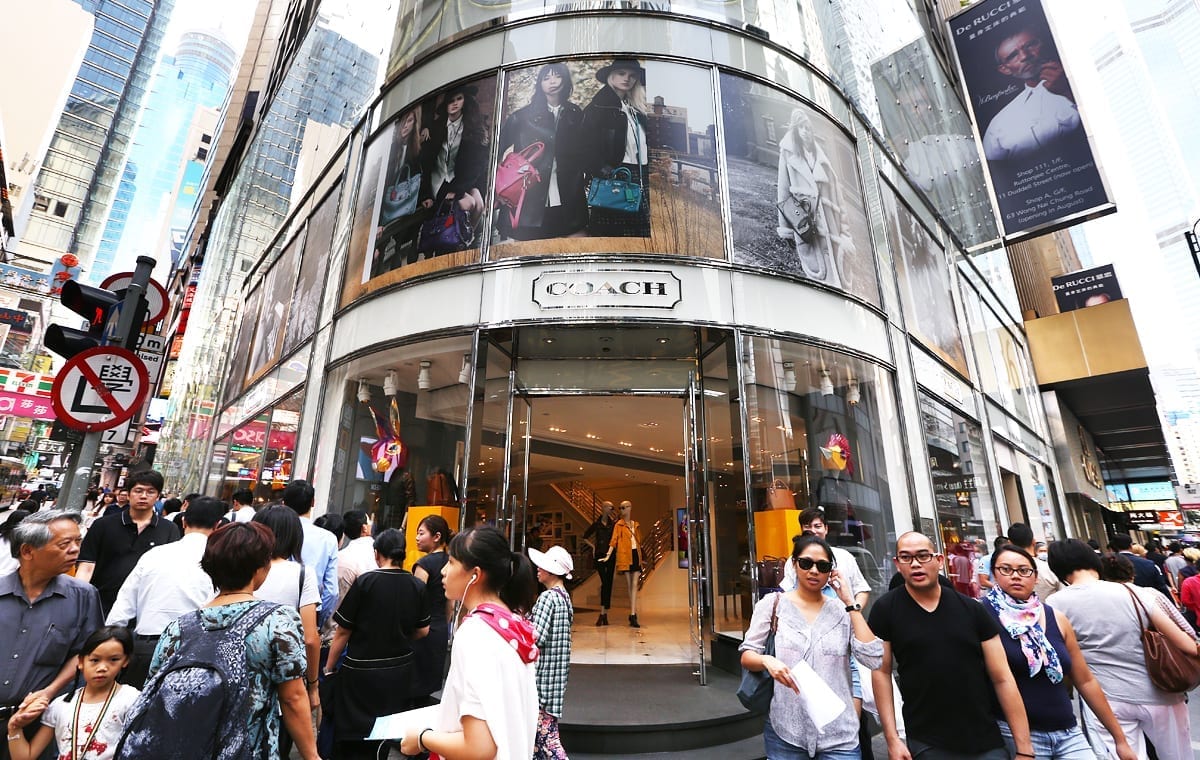
    Hong Kong’s retailers and mall operators are crossing their fingers in the hope that the signs of recovery in tourist arrivals and the return of spending aren’t flashes in the pan.

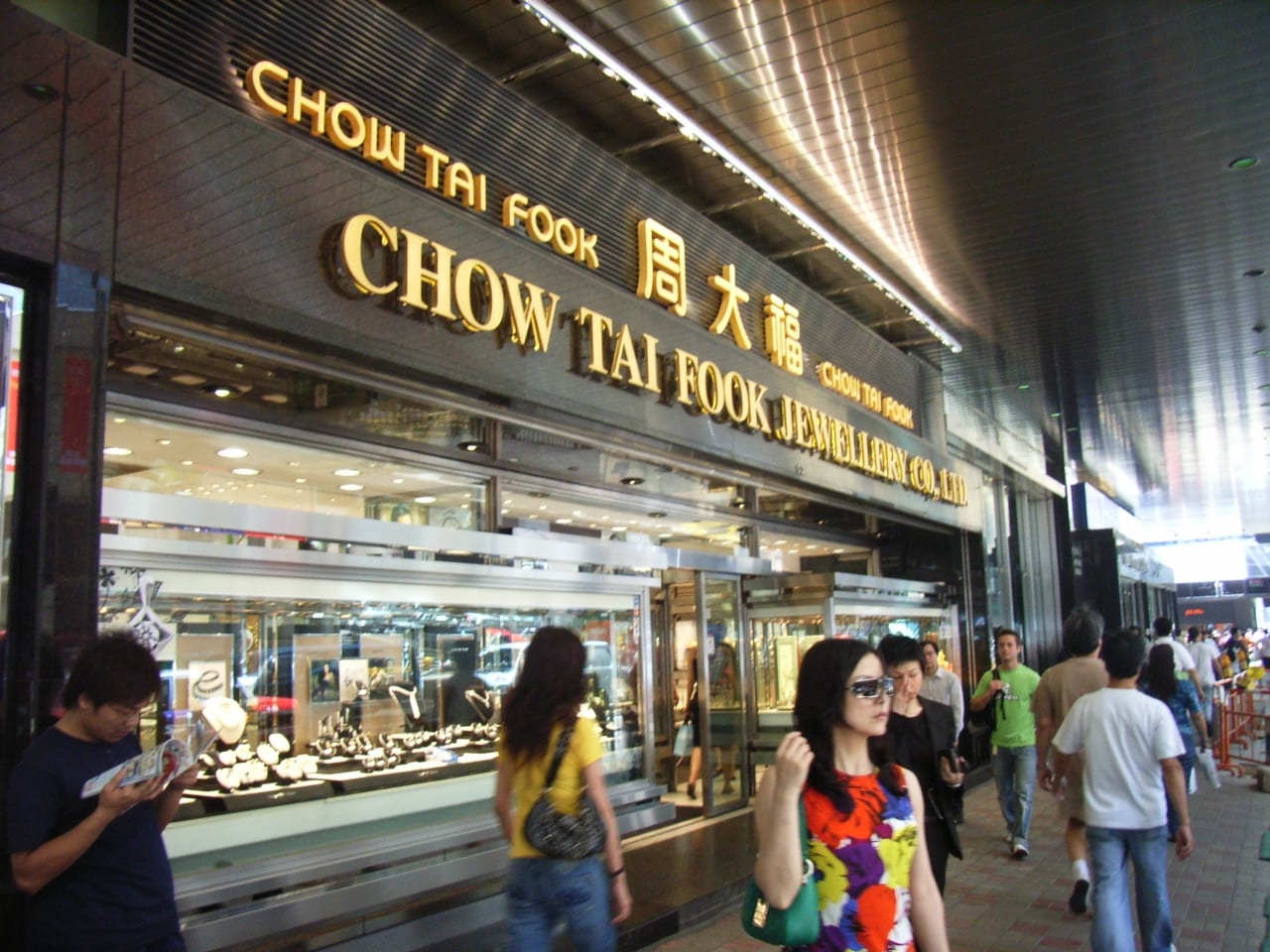
    Jewellers like Chow Tai Fook and retailers are reporting that the pace of their sales declines have slowed, indicating that the struggling industry may have finally found a bottom.

    Hong Kong used to be the favourite shopping destination for mainland Chinese tourists, lured to the city by its wide selection of tax-free brands and cheaper currency.

    Retail sales dwindled since 2014 amid Beijing’s anti-corruption campaign started a year earlier, local backlash against the hordes of mainland tourists thronging Hong Kong malls and the strength of the Hong Kong dollar.

    As tourist numbers started to recover in the past few months, mall developers and clothes vendors are becoming more optimistic towards their profit prospects.

    SEE ALSO: Red Valentino opens new Hong Kong store, debuts Walky Land collab

    “The signs of bottoming out are visible, as same-store gross profit has stopped declining, after a period of negative growth for more than one year,” said Tsin Man-kuen, chairman of fashion brand Bossini, whose same-store gross profit declines slow to 6 per cent in the second half of 2016 from the 14 per cent the same period a year ago.

    Wharf Holdings, the city’s biggest mall operator, said tenants’ 2016 sales decline at Harbour City slowed to 10 per cent at HK$27.7 billion, compared with the 15 per cent first-half slump. At Times Square in Causeway Bay, the sales drop narrowed to 11 per cent, from 16 per cent over the same period.

    The Sogo department store in Causeway Bay, which contributes to 87 per cent of the revenue of Hong Kong-listed Lifestyle International, said its sales decline slowed in the second half.

    Samsonite International, the world’s largest luggage maker, said its Hong Kong sales drop narrowed to 7 per cent in the second half of 2016 from the 16 per cent decline in the first half, adding the market has shown “early signs of stabilising”.

    Analysts largely agree with the cautiously optimistic view, citing a recovery in inbound tourism and improving consumer sentiment in the mainland.

    Mainland visitor numbers grew 6.1 per cent in December and 7.7 per cent in January, compared with a 6.7 per cent drop in the entire year of 2016.

    The city’s retailers can also benefit from a wealth effect caused by rising property price in the mainland – meaning consumers spend more because of a strong sense of financial security, analysts said. However, some warned that mainland tourists who opt for Hong Kong are no longer the wealthiest batch, and a weaker yuan means they are not able to buy as much as they used to.

    “The spending power per head for mainland Chinese tourists is decreasing,” Walter Woo, an analyst with China Merchant Bank, said. “But I’m still quite positive on the Hong Kong retail segment because the traffic has been rising.”
  • Eye-pleasant artful NikeLab exhibition

    Eye-pleasant artful NikeLab exhibition

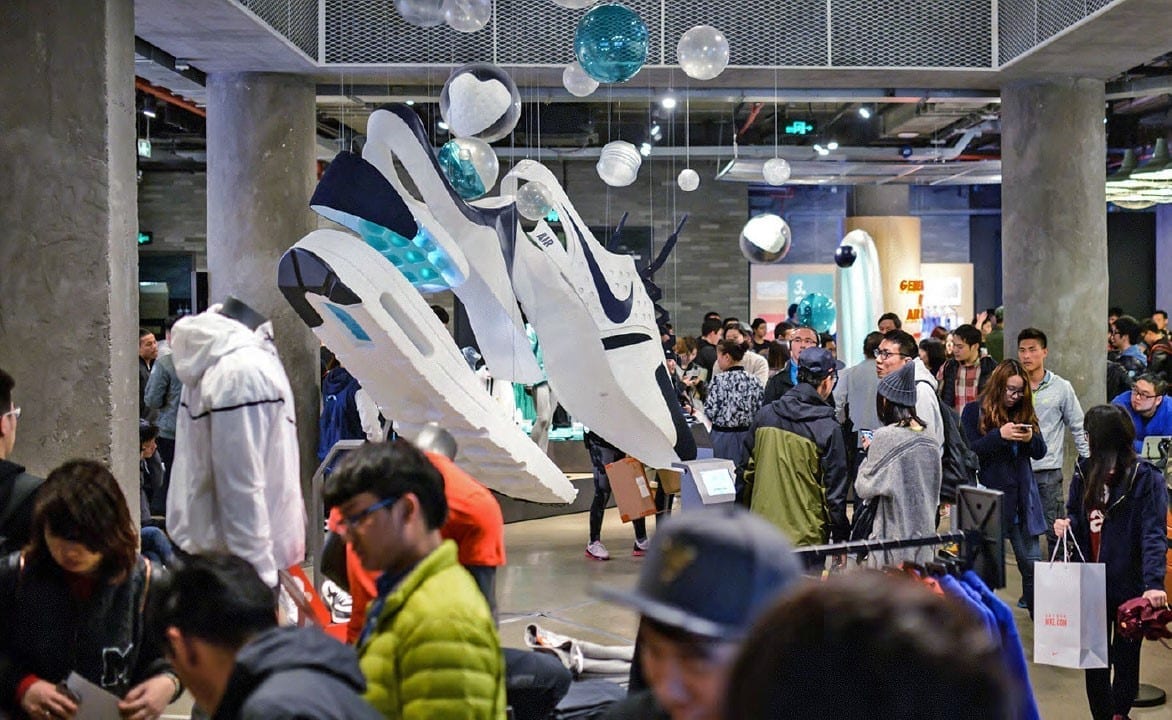
    A NikeLab exhibition in Hong Kong draws on artists to help launch its latest sneaker.

    It marks the rebirth of Nike Air via the Air Vapormax sneaker, which builds on nearly 30 years of Air Max legacy to provide lightweight, consistent cushioning that is both reliable and rigorous, says the shoe company.

    Inside Hong Kong Art Central’s space for Art Basel Hong Kong 2017, the NikeLab exhibition is dubbed “The Vision-Airs”. The installation was designed by Collective and showcases the work of artists Feng Chen Wang, WanBing Huang and Anals Mak of Jourden, plus photographer Laurent Segretier. Sound artist h0nh1m (Chris Cheung) is also featured with his latest “vapor-reactive” piece.

    The exhibition explores the techniques used to create the shoe, as well as its possibilities.

  • Alipay HK Strikes Deal with Standard Chartered to Expand into Hong Kong

    Alipay HK Strikes Deal with Standard Chartered to Expand into Hong Kong

    Alipay, China’s biggest payments service, has struck a partnership with Standard Chartered as the company looks to expand its footprint and deepen its mobile-payment push into Hong Kong.

    The company controlled by billionaire and Alibaba co-founder Jack Ma gained a license for e-payments from the Hong Kong Monetary Authority last year, and already began to roll out accounts denominated in the local currency back in October.

    Alipay HK is partnering with Standard Chartered in order to make it easier for Hong Kong residents to top up their account in HK dollars through online and mobile banking. Specifically, the unit of Chinese e-commerce giant Alibaba will work with Standard Chartered to facilitate Alipay payments via the bank’s merchant network in Hong Kong, while the bank will provide its users with digital ways to fund their accounts.

    The size of its newest partner in Hong Kong could bring Alipay to a considerable number of stores. The deal with Alipay will also allow Standard Chartered to target Chinese tourists particularly with Alipay users cannot link the HKD account to their existing yuan- denominated one, nor can they transfer money into the new account.

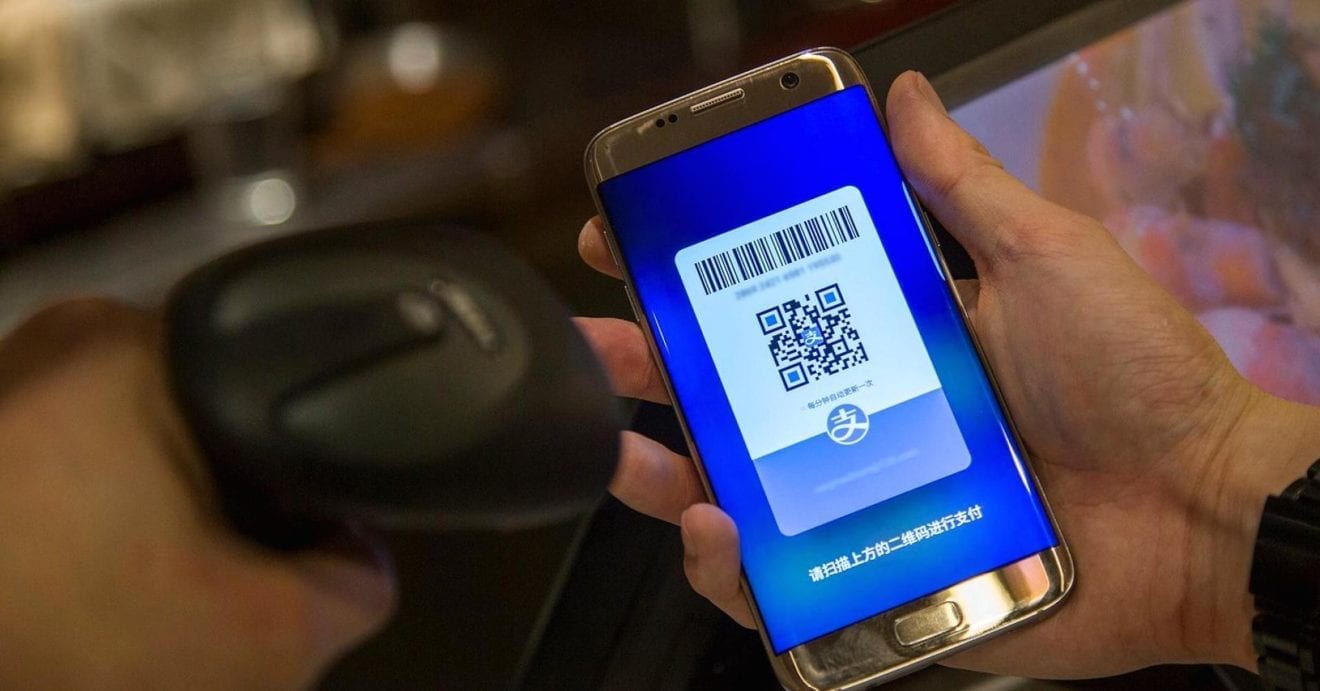
    Alipay, which is operated by Alibaba’s financial services arm Ant Financial, is a separate app on devices that allows customers to pay for their purchases in-store through opening the Alipay app, then scan a QR code provided by the retailer.

    Alipay holds nearly 70 percent of China’s third-party mobile payment market share and processed more than 380 million daily transactions as of June 2016.

    Vicky Kong, head of retail banking at Standard Chartered Hong Kong, said: “We believe the partnership with Alipay, the world’s largest online and offline payment platform with over 450 million active users, will enhance customer engagement with our existing clients on one hand, and help reaching out to new clients, especially the active online users on the other.”

  • China leads Nike sales growth

    China leads Nike sales growth

    Nike boosted earnings by 20.1 per cent in its latest quarter, on sales up a much more modest 5 per cent.

    While the bottom line was impressive – aided by a substantial reduction in costs – the top line growth trailed Adidas’ impressive 18 per cent growth achieved in 2016.

    In the three months to February 28, Nike sales totalled US$8.4 billion, up 7 per cent on a currency-neutral basis. Of that, the Nike brand accounted for $7.9 billion, driven by 15 per cent growth in Greater China, 10 per cent in Western Europe, 12 per cent in emerging markets and 8 per cent in Japan.

    Sales at Converse were up 3 per cent to $498 million.

    “The power of Nike’s diverse, global portfolio delivered another solid quarter of growth and profitability,” said Mark Parker, chairman, president and CEO of Nike.

    “To expand our leadership and ignite Nike’s next phase of growth, we’re delivering a relentless flow of innovation through performance and style, increasing speed throughout the business and creating more direct connections with consumers leveraging digital and membership.”

  • Equinix expands Hong Kong footprint to meet demand

    Equinix expands Hong Kong footprint to meet demand

    Equinix is expanding its Hong Kong footprint to accommodate local interconnection needs and increasing numbers of inbound cloud service providers.

    This latest expansion of Equinix’s Hong Kong footprint adds over 1,400 new cabinets and brings the company’s total investment in the city to over $250 million.

    The expansion in Hong Kong includes 515 new cabinets in HK1 and represents an incremental investment of $16 million and adds 900 new cabinets in HK2 and represents an incremental investment of $39 million. It is the latest in a series of expansions across Asia-Pacific to meet the rising demand for interconnection services, with other recent expansions including Melbourne, Tokyo and Sydney.

    The new development will enable Equinix to support the growing needs of an increasing variety of enterprises – such as FSI and FinTech, e-payments and logistics – to interconnect with cloud and technology providers.

    Equinix’s cloud and IT ecosystem has continued to gain momentum in Hong Kong. Its cloud customer-base has grown significantly since 2014, as local and international internet security and CSPs are increasingly choosing to deploy with Equinix Hong Kong as their initial entry point or hub location for the Asia-Pacific region.

    Major cloud service providers in Equinix Hong Kong now include Alibaba Cloud, the cloud computing arm of Alibaba Group, Microsoft Azure & Office 365 and Google Cloud. According to Cisco, global cloud IP traffic will almost quadruple in over the next 5 years, this expansion will enable Equinix to meet the needs of Hong Kong customers looking to take advantage of this growth.

    One Hong Kong customer taking advantage of Equinix’s increased capability is ClusterTech Limited, which specializes in using cloud, high performance computing and big data technologies to solve challenging technical problems and improve operational efficiency for their customers. The company is in the process of adding more resources within Equinix’s IBX data centers to launch a new solution that will enable environmental engineering companies to run complex simulation applications.

    In addition to supporting the core cloud needs of customers, Equinix is now also in an excellent position to accommodate the growing trend towards multi-cloud convergence and “interconnected commerce” that Equinix experts predict will be a key feature of the IT landscape over the coming year.

    The additional capacity comes online at a time when Equinix is predicting IoT will become a concrete reality – evolving from independent, single-vendor solutions to those that talk to each other and rely on the same data.

    With the Hong Kong expansion, Equinix will relieve the growing pressure on corporate-centric networks by distributing the traffic more broadly, as well as better control the performance of the streaming IoT information for more real-time business and operational insight.