Tag: Hong Kong

  • Cloudbric opens IDCs in Hong Kong and Vietnam

    Cloudbric opens IDCs in Hong Kong and Vietnam

    Web application firewall (WAF) service provider Cloudbric announced the opening of five internet data centers, including facilities in Hong Kong and Vietnam, in response to the growing, global demand for cloud services.

    The new data centers are located in New Jersey (US), Hong Kong, Binh Duong and Ho Chi Minh City (Vietnam) as well as Amsterdam (the Netherlands)

    Additionally, with Cloudbric’s growing partnership base, the expansion of IDCs means Cloudbric’s customers can benefit from greater WAF infrastructure and experience elite security better than ever.

    Enterprises of all sizes rely on and often expect websites to be up and running without any lapses. Maintaining this uptime depends on strategically placed data centers to handle high-volume requests. As a result, Cloudbric is not only increasing its network capacity through its IDC expansion but also introducing an all-inclusive, fully-managed WAF service to a wide range of IT service and solution providers.

    Regarding Cloudbric’s current partnership model, VP of Product & Technology TJ Jung says “From individuals to small or mid-size businesses and enterprises, we are growing our service to reach all parts of the globe by engaging in partnerships with different solutions providers in the IT industry, and Cloudbric is excited to continue in this endeavor. Partnering with data centers, for example, means Cloudbric can be deployed on their own infrastructures instead of relying on external networks – making the delivery of Cloudbric’s advanced WAF to their clients a seamless process.”

    Utilizing the precise, trusted technology created by Penta Security Systems, Cloudbric’s WAF can intelligently recognize and block both unknown and known web attacks with its logic analysis engine. Through Cloudbric, various service providers can also benefit from quality customer service and a user-friendly, intuitive dashboard and extend it to their own end users. With new IDCs and thus even greater bandwidth, Cloudbric’s ability to withstand cyber attacks such as DDoS attacks is augmented.

    Cloudbric currently has plans to open ten additional IDCs in Q2, specifically in cities across North America, the Middle East, and South America. Cloudbric will continue to appeal to various service providers in its expansion of WAF infrastructure.

  • China drives Tiffany Asia sales growth

    China drives Tiffany Asia sales growth

    Tiffany Asia sales rose 9 per cent on the back of new store openings in 2016, with a solid fourth quarter balancing out a difficult year.

    In the Asia-Pacific region, total sales of US$1 billion in the full year were approximately equal to the prior year and total sales of $284 million in the fourth quarter were 9 per cent up on 2015 as the company benefited from store network expansion.

    Tiffany Asia opened four new stores last year and another in Japan, taking its network to 85 in Asia-Pacific and 55 in Japan. Globally, it opened 11 and closed five.

    Same-store sales declined 9 per cent for the full year, but 2 per cent in the final quarter. On a constant-exchange-rate basis, total sales rose 1 per cent in the full year and 10 per cent in the fourth quarter, while comparable store sales declined 7 per cent and 1 per cent, respectively.

    “During the year, management attributed performance in this region to increased purchasing by local customers and declines in spending by foreign tourists. In addition, there was strong retail sales growth in China, increased wholesale sales in Korea, a decelerating rate of retail sales decline in Hong Kong and varying performance in other countries,” Tiffany said in its results announcement.

    In Japan, total sales rose 12 per cent to $604 million in the full year and 15 per cent to $185 million in the fourth quarter; comparable store sales increased 16 per cent and 19 per cent, respectively, while wholesale sales declined in both periods.

    On a constant-exchange-rate basis, total sales in the full year were approximately equal to the prior year while total sales in the fourth quarter were 8 per cent above the prior year with comparable store sales growth of 5 per cent and 12 per cent, respectively, partly offset by a decline in wholesale sales. Management attributed sales growth in both periods to higher spending by local customers, with declines in spending by Chinese tourists.

    Worldwide results

    Worldwide quarterly net sales increased 1 per cent to $1.2 billion and same-store-sales were unchanged from the prior year. Net earnings were $158 million, compared with $163 million in the prior year.

    For the full-year, sales reached $4 billion, down 3 per cent on 2015, reflecting a 5 per cent decline in same-store-sales. Performance was generally soft across all jewellery categories. On a constant-exchange-rate basis net sales and comparable store sales declined 3 per cent and 5 per cent respectively.

    Net earnings were $446 million, compared with the prior year’s $464 million.

    Chairman and interim CEO Michael J Kowalski said the company expects the macroeconomic and geopolitical challenges of the past year to continue in 2017.

    “We strongly believe that Tiffany’s strategies are sound and that we have meaningful growth opportunities. Our management team is focused on accelerating the execution of our strategies to deliver extraordinary products, communications and experiences that will delight our customers around the world. Through strong leadership and this accelerated execution, we believe we are well-positioned to deliver attractive total shareholder return over the long-term,” he said.

    Tiffany “failing to connect”

    Analyst Neil Saunders, MD of GlobalData Retail, said while Tiffany sales in the final quarter were soft, they at least indicate the declines which have plagued the company for a long period are starting to level off.

    But he maintains a lot of work lies ahead to reconnect with customers.

    “Although the business is making some progress, that progress is patchy and does not indicate a company that is back to full health. Indeed, under the detail of the numbers it is clear that Tiffany still has issues in a number of regions, including the Americas and Europe.

    “Part of the decline in the Americas is down to lower tourist spend which is impacting some flagship stores; that said, trend is now starting to dissipate and the effect on results is only slight compared to where it was at the start of the year. However, in the final quarter this was exacerbated by disruption at the Fifth Avenue flagship store which, due to its proximity to Trump Tower, saw customer traffic dip by around 14 per cent over November and December, and sales drop by 7 per cent in the final quarter. Given that this store usually contributes almost a tenth of company sales, it is reasonable to attribute some of the decline to this exceptional factor,” Saunders said.

    “The troubles, however, run wider than flagships and tourists. Tiffany is a brand that is increasingly overlooked by American consumers, especially younger demographics. Just as was the case at the start of the year, Tiffany is still failing to connect with many shoppers segments and continues to lose ground to rivals.”

    Saunders says jewellery has become a less-significant holiday purchase.

    “Jewellery is no longer at the top of the Christmas list. For a brand like Tiffany, where lavish gifting is an important driver of buying, such a trend is distinctly unhelpful.”

    Looking ahead, he says, it is clear Tiffany wants to re-establish its relevance and to project a much more distinctive image.

    “The advertising during the Super Bowl, which highlighted Lady Gaga as the face of the brand, was a good start. However, it is not enough: it needs to be accompanied by a step change in products, store environments, and the general approach to selling. There is a need for a more fundamental and deeper shift in the brand’s direction.

    “Fortunately, recent changes made to the management team, including the appointment of Reed Krakoff as chief artistic officer and the hiring of three new board members, should act as a catalyst for this change.”


  • CITIC Telecom posts record $109.5m profit for 2016

    CITIC Telecom posts record $109.5m profit for 2016

    Hong Kong-based CITIC Telecom International has reported a record high operating profit of HK$850.1 million ($109.5 million) for 2016, up 6% from the prior year.

    During the year, CITIC Telecom launched its new City Link roaming services supporting data sharing in mainland China, Hong Kong and Macau, based on a network of more than four million Wi-Fi hotpots in the three markets.

    This launched helped the operator capture a 57% share of Macau’s 4G market, and increase its mobile broadband users by 17%.

    CITIC Telecom also achieved 100% coverage in Macau with its optical network, and completed the acquisition of 340,000 square feet for CITIC Telecom Tower, which once complete will become one of the largest data centers in Hong Kong.

    Internationally, the company commenced the process of acquiring Linx Telecommunications, which serves 14 countries in Europe and Asia. This deal was completed last month.

    The company also recently completed the acquisition of Singapore-based cloud, technology and managed services provider Acclivis Technologies and Solutions, and achieved growth with its data flow trading platform DataMall through a collaboration with China Mobile.

  • Starbucks Asia boosts digital engagement

    Starbucks Asia boosts digital engagement

    Starbucks Asia has debuted its mobile Order and Pay app in Hong Kong and India.

    Starbucks globally already offers the largest and most robust mobile ecosystem of any retailer in the world, with more than 12 million Starbucks Rewards members, 8 million mobile paying customers with one out of three now using Mobile Order & Pay, and more than US$6 billion loaded onto prepaid Starbucks Cards in North America during the past year alone.

    Now Starbucks has expanded its digital platform to Asia Pacific with the launch of the Mobile Order and Pay program in Hong Kong and India.

    Starbucks Hong Kong and Tata Starbucks Private Limited are the first retailers in their markets to launch a mobile-ordering feature using its mobile payment technology combined with a loyalty program.

    Customers can choose a store from a map view, browse, select and customise beverage and food items – including the option to modify the size, number of espresso shots and dairy selections – view the estimated pick up times and pre-pay for the order – all within the Starbucks app. Every order is freshly prepared and ready for pick-up in the beverage handoff area. Members can easily collect Stars and earn rewards with Starbucks Rewards loyalty program.

    “Hong Kong is one of the busiest cities in the world and our customers have a very high expectation of convenience,” said Norbert Tan, executive director, Starbucks Hong Kong and Macau. “Starbucks is committed to exploring digital innovations which deliver meaningful value and convenience that enhance the Starbucks Experience.”

    The Mobile Order & Pay feature will be accessible through an update to the Starbucks mobile app. Customers who do not yet have the app can download it from the App Store or Google Play.

    Sumitro Ghosh, CEO of Tata Starbucks India, said mobile app will help meet Indian customers’ needs while serving them seamlessly on the My Starbucks Rewards program.

    “This digital innovation underscores our continued commitment to drive innovation and provide an exceptional and convenient customer experience in our stores across the country.”

  • Herr Seoul opens in Central

    Herr Seoul opens in Central

    Herr Seoul has opened its first store outside Korea.

    The prestigious Seoul barbershop has chosen bespoke menswear destination Attire House for its offshore debut, which opened this week.

    HERR_in_Seoul

    Founder Sangyoon Lee visited Hong Kong to meet customers and local influencers and share his knowledge of men’s grooming, entrepreneurship at his young age and Herr’s mission to be “the ultimate gentleman’s paradise”.

    HERR_at_AttireHouse

    Established in 2013 in Seoul, Herr believes it has “set the trend of men’s grooming in Korea as it encourages men to release their dapper potential by providing professional knowledge of personal care and offering highly skilled stylists for the finest and latest haircuts”.

    HERR_interior

    Customers are encouraged to take dwell time and build a relationship with their barber.

    TaylorOfOldBondStreet_grooming_kit

    Herr Seoul has collaboration projects with luxury fashion giants, watchmakers and hotels, including Louis Vuitton, Gucci, Tod’s, Club Monaco, Patek Philippe, and the Four Seasons Hotel.

    HERR_cupboard1

    Herr currently has three branches in Seoul – next to Hyundai Card Headquarter, Lotte Department Store in Myeong-dong and the Four Seasons Seoul providing full grooming services.

    HERR_sink2

    HERR_barberchair1

    Attire House, the  brainchild of Brandon Chau and Roger Chan, is a two-story, 5000 sqft ‘gentlemen’s haven’ in Central established in December 2016, offering ready-to-wear attire, bespoke tailoring, grooming and a mixologist’s bar.

  • Hong Kong retailers may benefit from missile row

    Hong Kong retailers may benefit from missile row

    China’s ban on group tours to South Korea in retaliation against a planned deployment of a missile defence system there could see a revival of tourism to Hong Kong, where retailers have been struggling.

    “South Korea, Southeast Asia and Hong Kong are all short-haul attractions favoured by mainlanders, and if one market faces headwinds there can often be a knock-on effect on the others,” says investment firm CLSA head of Hong Kong consumer research Mariana Kou.

    Beijing last week ordered domestic travel agents to stop offering group tours to South Korea, as well as hotel and flight booking services for individual travellers.

    Although designed to protect against attacks from North Korea, South Korea’s installation of THAAD radar is considered by Beijing as a threat.

    Mainland Chinese visitors to South Korea rose to 8 million last year, almost quadruple the level of 2012. The Korea Tourism Organisation estimates that a 50 per cent drop in mainland tourism would hit the tourism sector to the tune of US$9.6 billion.

    People speaking Chinese were noticeably absent from the shopping district of Myeong-dong in Seoul yesterday, just as the Chinese government’s ban went into effect, reports The Korea Times.

    “I think the number of Chinese tourists has declined almost 70 to 80 per cent,” says an information officer helping foreigners. “There are obviously fewer Chinese tourists here than Japanese visitors these days.”
    Previously, Chinese tourists were crowding shops to buy cosmetics and luxury goods. Now the owners of so-called “road shop brands”, such as Innisfree, Nature Republic and The Face Shop, are struggling to attract custom. Now their workers are speaking Japanese and distributing leaflets and maps in the language.

    Meanwhile, some tourist buses have been taking Chinese groups to the main Lotte Department Store, but tourism officials expect this mark to dry up by the weekend. “Those who came to Korea before the measure have yet to leave,” says one official.

    Experts say the situation could see middle-class shoppers from China’s less affluent cities flock to Hong Kong as an affordable alternative, reports The South China Morning Post.

    Hong Kong Tourism Board data shows that spending by individual travellers has been trending downward. The average overnight visitor to the city spent HK$6602 (US$850) last year, down from HK$7234 in 2015. The board predicts a further 5.2 per cent drop to HK$6256 this year.

  • Chow Tai Fook looks to Japan for growth

    Chow Tai Fook looks to Japan for growth

    Hong Kong jeweller Chow Tai Fook is looking to Japan for growth to compensate for its challenges in greater China.

    The company is about to open a shop inside the Laox duty-free shopping centre in Tokyo’s Shinjuku district, a prime destination for Chinese tourists to the city.

    Currently, Chow Tai Fook operates just 19 of its total 2326 stores outside Hong Kong and Mainland China.

    Chow Tai Fook’s sales fell by 25.7 per cent in Hong Kong and Macau and by 20.9 per cent in Mainland China in the half year to September 30.

    In Japan, the jeweller will targeting tourists from China, rather than Japanese consumers who are unlikely to be lured by the style of its offer. Tourism numbers from China to Japan have been rising in recent years due to more relaxed visa conditions and currency fluctuations. Last year, more than 6 million Chinese visited Japan, spending an average of US$2000, more than twice that of the average tourist.

    “With an emphasis on gold and somewhat ostentatious design, Chow Tai Fook looks unlikely to appeal to the Japanese market,” commented David Blecken of Campaign Japan. “That should not be a major problem considering the continuing growth of inbound tourism to the country and relatively high spending of visitors, although Chow Tai Fook has low awareness among non-Chinese groups.”

  • Inditex Group sales rise on new stores

    Inditex Group sales rise on new stores

    Zara parent Inditex Group sales rose by 12 per cent in its latest trading year, to January 31, reaching €23.3 billion.

    Growth was achieved in every geographic region where the group is present, and includes contributions from debut stores in Vietnam and New Zealand.

    Same-store sales rose by 10 per cent, up from 8.5 per cent the previous year, with positive same-store sales growth in all geographies and across all brands.

    Net profit was €3.2 billion, up 10 per cent year-on-year, while earnings before interest and tax grew 8 per cent to €5.1 billion.

    Chairman and CEO Pablo described the result as positive against a backdrop of strong prior-year performance.

    Inditex opened 279 stores, net of closures, in 56 markets, across all its brands, ending the year with 7292 stores in 93 countries, a large proportion of the new ones in Asia, including its first Zara in Vietnam, in Ho Chi Minh City.  Other Zara stores opened in China, Thailand, Indonesia and Japan and it refurbished it flagship in the Shinjuku district in Tokyo, one of Japan’s most important shopping districts, which reopened to the public in November.

    A flagship Pull&Bear store opened in Windsor House in Hong Kong and new stores were opened by Massimo Dutti in India and by Oysho in Indonesia. Bershka refurbished its flagship on Nanjing Road East in Shanghai and Zara Home opened a global flagship on Garosu de Seoul in South Korea.

    Since the financial year ended, it has opened online stores in Malaysia and Singapore, taking its online platform to 43 markets.

  • Spoiled for choice for e-payments in Hong Kong

    Spoiled for choice for e-payments in Hong Kong

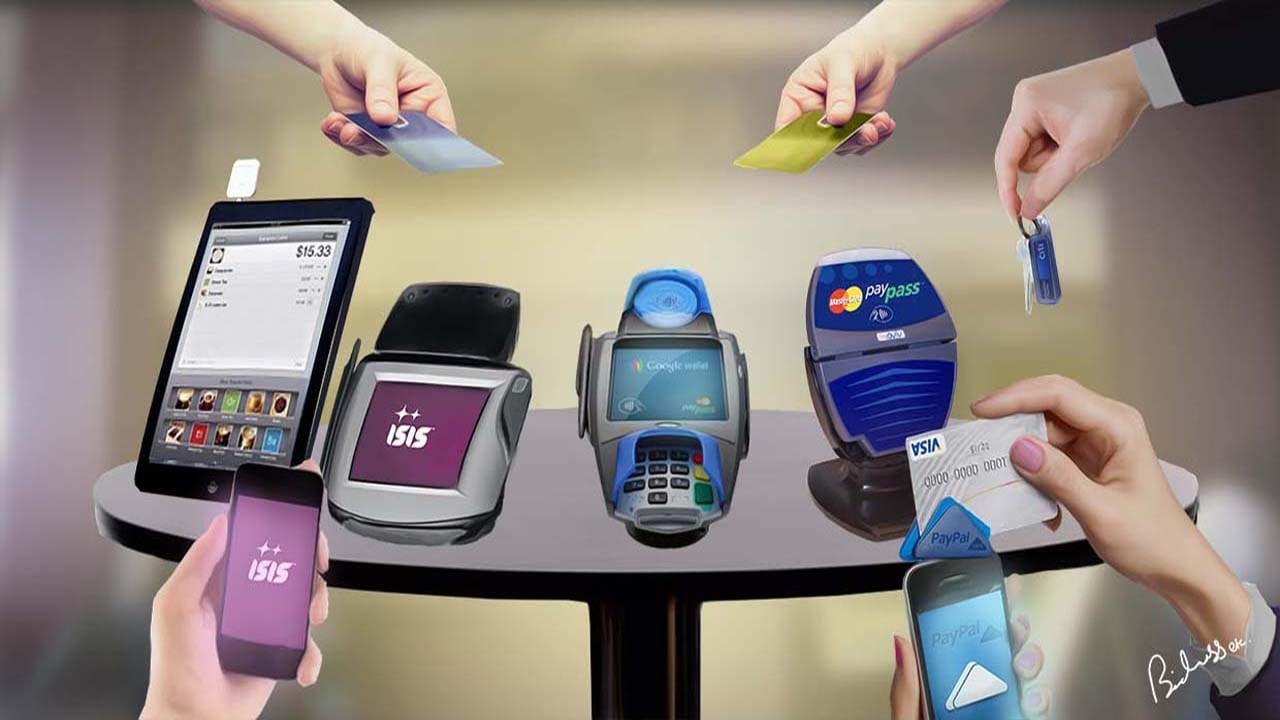
    Whether it is paying for groceries, a cup of coffee or a meal in a restaurant, most places provide payment options using the Octopus card, mobile e-wallets and credit cards.

    The city was one of the first in the world to implement a cashless payment system when it launched the Octopus card in 1997. The card has since grown into a widely used payment mode for all public transport and purchases in shops, from convenience stores, supermarkets, to parking meters, car parks and other point-of-sale applications such as service stations and vending machines.

    There are now 32 million of the cards in circulation – nearly four and a half times the population of Hong Kong, reported South China Morning Post.

    China Daily Asia reported last September (2016) that Octopus had daily spending of HK$173 million (S$31.3 million).

    To stay ahead in the race to a cashless society, last year the Hong Kong government approved stored-value licences for 13 e-wallet providers, including PayPal, Optal, UniCard, Alipay Wallet, Tap&Go by PCCW’s HKT, Tencent’s WeChat Pay and TNG Wallet.

    In response, last November (2016) Octopus launched O! ePay, a smartphone app carrying out peer-to-peer payments and topping up Octopus cards.

    Following the launch of Apple Pay last July, Android Pay introduced its touchless payment system at more than 5,000 locations in the city, after Singapore and Australia.

    Hong Kongers can use the system with Visa or MasterCard cards issued by least six banks in Hong Kong, and there is no limit on the number of cards users can add.

    A report by research firm Statista estimated the total value of digital transactions in Hong Kong will reach US$13.85 billion (S$19.45 billion) this year(2017) and with an annual growth rate of 16 per cent, it is expected to hit US$25.1 billion (S$35.2 billion) in 2021.

    Last year(2016), the value of total retail sales was HK$436.6 billion (S$78.9 billion).

    The report defined digital payments to include payments for goods and services made over the internet, mobile payments for point-of-sale made over smartphone applications and cross-border peer-to-peer transfers between private users.

    The Hong Kong Monetary Authority does not have statistics on transactions using cashless payment other than credit cards.

  • Daniel Wellington Expands Across Hong Kong

    Daniel Wellington Expands Across Hong Kong

    Leading watch company Daniel Wellington revealed its brand new Classic Petite collection and global marketing campaign featuring four a-list global icons today at LCX, Harbour City. Hong Kong expansion plans are also under way as the brand announced their goal to open around 10 new stores across the city over the next year.  

    Celebrity Cantopop singers Fiona Sit and Pakho Chau helped launch Daniel Wellington new Classic Petite collection and the brand’s global marketing campaign today at LCX, Harbour City.

    The new Daniel Wellington faces are world-famous, incredibly successful, young global icons: model and TV personality Kendall Jenner is featured across Daniel Wellington media wearing the brand new Classic Petite watch alongside highly sought-after model siblings Lucky Blue Smith and Pyper America Smith and model, TV personality, actress and singer ROLA.   

    Kendall Jenner is one of the most influential people on the internet, boasting a staggering 75.9 million Instagram followers. Lucky Blue (2.8 million followers) has been a successful model since a young age while his sister Pyper America’s (722K followers) modelling career has been skyrocketing over the past year. Rola, with 4.4 million Instagram followers, was discovered in Japan at the age of 16 and rose to fame in no time due to her character, sense of style and distinctive beauty.

    The campaign release comes hand in hand with four new watches launched under the brand’s newest Classic Collection named Classic Petite. Available in the signature rose gold and silver, they are inherently Daniel Wellington , the quintessence of classic sophistication and timeless design, intended to match any occasion and outfit. Thin, refined and perfectly round, the Classic Petite 32mm watch is the ideal staple especially for females.

    Inspired by an intriguing gentleman with impeccable style who caught Founder Filip

    Tysander’s eye on a trip across the globe back in 2011, Daniel Wellington watches are known and loved worldwide for their classic, minimalist design and interchangeable straps. Carried in all major cities worldwide, the company has firmly established itself as one of the most beloved watch brands in the industry, which is not traditionally known for being active on social media. Having started the brand with a no-traditional-advertising rule, Daniel Wellington is proof that carefully planned online content truly is the best brand catalyst. With over 2.9 million followers and over 1 million uses of the hashtag #danielwellington, their combined strategy of influencer activity and user generated content has clearly paid off and changed the watch industry forever. 

    The brand celebrated the campaign kick-off at a pop-up event at LCX, Harbour City, with celebrity Cantopop singers Fiona Sit and Pakho Chau taking centre-stage alongside the anticipated global icons campaign and coveted new watches. In line with the way the brand rose to fame, many of Asia’s top social influencers were invited to participate in the pop up event. The store will remain open to the public until Sunday, March 19 th .  

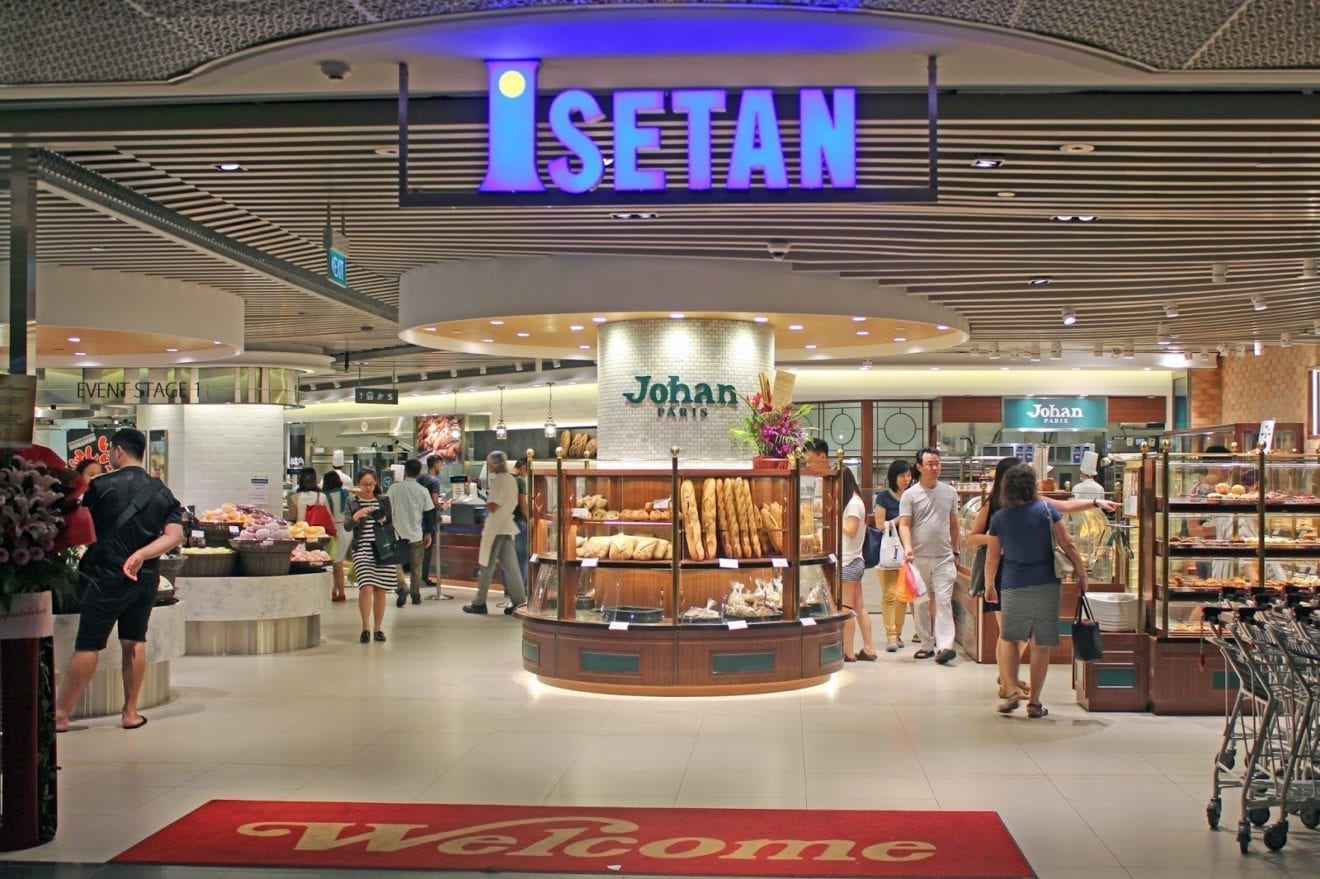
  • Isetan Mitsukoshi replacing CEO

    Isetan Mitsukoshi replacing CEO

    Japanese department store chain Isetan Mitsukoshi Holdings has appointed a new CEO as retailers battle to recover from a sharp fall in shopping spend by tourists.

    In a filing with the Tokyo Stock Exchange, Isetan Mitsukoshi says senior managing executive officer Toshihiko Sugie will become CEO on April 1, replacing Hiroshi Ohnishi, who had been in the role since 2012.

    Isetan Mitsukoshi says it made the change “to further improve corporate value by installing fresh management”.

    Japanese department store sales fell to less than ¥6 trillion (US$52.70 billion) last year from a 1991 peak of ¥9.7 trillion, with retailers hit by weak economic growth, changing consumer tastes and e-commerce competition.

    There was a brief boom when tourists, especially Chinese, were buying expensive items such as jewellery and watches. This has come to an end despite tourism numbers growing by 21.8 per cent to a record 25 million last year, according to the Japan National Tourism Organization. More than 70 per cent of tourists came from China, Hong Kong, South Korea and Taiwan.

    Isetan Mitsukoshi says its duty-free sales fell 19 per cent to ¥36.7 billion over the nine months through December.

  • Adidas sales soar on reformation plan

    Adidas sales soar on reformation plan

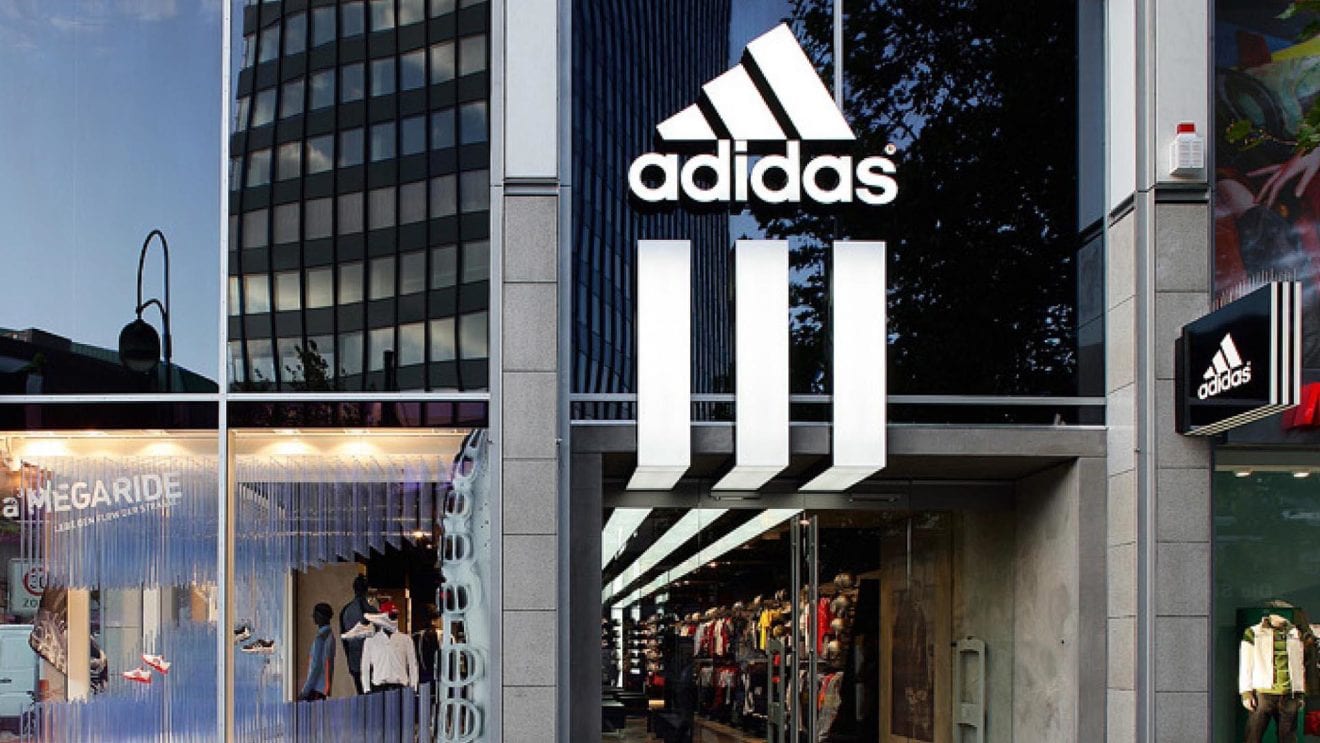
    Adidas sales have soared 18 per cent last year as the German sportswear brand plays catch-up with America’s Nike.

    For the first time in its history, Adidas’ net income topped euro 1 billion.

    In Greater China, sales soared 28 per cent year-on-year.

    “These results are proof positive that our strategy ‘Creating the New’ is paying off,” said Adidas CEO Kasper Rorsted. “2016 was an exceptional year for Adidas. We have improved the desirability of our brands and products around the globe. Building on our 2016 performance, our momentum continues and we will again achieve strong top- and bottom-line improvements in 2017.”

    Total sales reached euro 19.3 billion with operating margins up 1.3 percentage points to 7.7 per cent. Net income soared 41 per cent to euro 1.019 billion, allowing the company to promises shareholders a two euro per share dividend.

    The company is projecting another sales increase during 2017 ranging from 11 to 13 per cent, another increase in operating margin to between 8.3 and 8.5 per cent and net income up between 18 and 20 per cent to euro 1.225 billion.

    Even the troubled Reebok brand gained ground in 2016, currency-neutral sales up 6 per cent year-on-the-year, reflecting double-digit sales increases in its Classics range as well as mid-single-digit growth in the training and running categories.

    The Adidas group achieved double-digit revenue growth in nearly all market segments. In Western Europe, sales increased by 20 per cent, in North America by 24 per cent, in Russia by 3 per cent, in Latin America by 16 per cent and in Japan by 16 per cent. Revenues in Middle East and Africa also grew 16 per cent on a currency-neutral basis, reflecting double-digit growth in almost all of the region’s countries.

  • New face of Louis Vuitton Hong Kong Landmark

    New face of Louis Vuitton Hong Kong Landmark

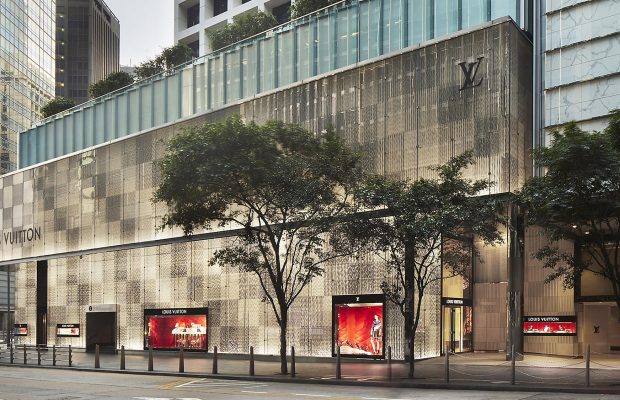
    Following a transformation, the Louis Vuitton Hong Kong Landmark has a new look.

    At one of the busiest junctions in Hong Kong, the flagship maison in Central has a new glass facade designed by Japanese architect Jun Aoki, who also designed the exterior of the brand’s store in Ginza, Tokyo.

    There is a new interior by New York architect/interior designer Peter Marino, who has designed Louis Vuitton stores in London and Los Angeles. It includes an intimate space across two floors where customers can sit on plush sofas and lounge chairs while browsing through the latest collections of ready-to-wear, leather goods, accessories, fragrance, jewellery, watches and shoes. There is also a private space by invitation only for a personalised shopping experience.

    There was a red-carpet opening in The Landmark atrium for the redesigned store, attended by special guests including Hong Kong actress/model Janice Man (Wing-San Man).

    As well as the complete revamp of the Landmark maison, Louis Vuitton is also rebuilding its flagship store in Canton Road, which opened in 2008.

    “The leader in the market believes in Hong Kong,” says LV CEO/chairman Michael Burke, who says the company needs to keep investing in Hong Kong as a “unique, iconic destination in the world that will remain important for Chinese shopping”.

    “There was a moment two years ago in Hong Kong when the day trippers were excessive,” he says. “We had what we call ‘froth’ in the market. If we have a drop in froth, there’s no problem.”

    He says the key is looking long-term, with short-term swings, temporary rises and falls, not really affecting strategy.

    “We’re coming back now to a more healthy situation. The norm is going to be the steady, uphill growth of the upper middle class in China.”

    LVMH chairman/CEO Bernard Arnault also believes Hong Kong’s downturn is just a “cyclical problem”.

    “Hong Kong will remain one of the high points in Asia and one of the drivers of our growth,” he says.

  • Retail woes a boost for Hong Kong indie fashion

    Retail woes a boost for Hong Kong indie fashion

    High-end international brands have long held court alongside local Hong Kong indie fashion designers – who are now enjoying greater visibility in the city’s vibrant retail market.

    The city’s deep-rooted love of luxury has seen names like Gucci and Hermes open multiple stores in the city – stores that have co-existed with a stable of local apparel brands, such as Giordano, Baleno, Bossini and Esprit.

    By 2014, consumers’ tastes had diversified and fast-fashion overseas brands began descending on Hong Kong. The arrival of names like Topshop, American Eagle, H&M, Zara and Mango added yet more to the mix in Asia’s favourite shopping destination. Now that shop rents are finally becoming more affordable, independent fashion retailers are increasingly making their presence felt.

    Structural change

    In a report by commercial real estate firm CBRE, Joe Lin, executive director, retail services at CBRE Hong Kong, said that the city is undergoing a period of structural change.

    “Over the previous decade, high-street shop landlords have reaped the benefits of strong demand from luxury retailers and massive rental growth.”

    Lin noted that in the past 12 months, luxury retailers have adjusted their leasing strategies to save costs. “Landlords have become more realistic on rental negotiations, enabling more mid-range brands to tap into prime locations at relatively affordable rental levels.”

    The trend has opened the door for mid-market brands to expand, and for the rise of independent labels.

    “More independent stores are coming back to the market, streets, malls, and even some up-and-coming revitalised buildings in the traditional industrial districts, such as Lai Chi Kok and Kwun Tong,” said Lin. “They modernise the decoration and with the decent F&B outlets that draw good foot-traffic to these areas, independent retailers also benefit from this new trend.”

    Refined taste

    British fashion designer Elizabeth Lau established The Refinery in 2014 after moving to Hong Kong with her husband. Lau said she saw an opportunity to “curate for individuals” in Hong Kong by introducing unique fashion, accessories and lifestyle brands from around the world.

    Her first store, at the creative and design hub PMQ in Central, found a steady following, and in January 2016, The Refinery opened a second retail outlet in Tai Koo.

    Fashion edit

    Partners in fashion Genevieve Chew and Jacqueline Chak, an accountant and architect respectively, launched Edit in Central in 2012 as a concept store stocking emerging brands. They later created their own in-house label, which is described as “one part eclectic femininity and the other relaxed ease.” Their collections are worn by fashion personalities such as Yasmin Sewell, Margaret Zhang and Amanda Strang. The partners have also designed uniforms for Hong Kong’s new boutique Tribute Hotel in Kowloon.

    Fé Valvekens is another career-change entrepreneur who found her fashion foothold in Hong Kong. German-born Valvekens is a qualified engineer who founded fashion label A Day with Fé, blending daywear with yoga wear. Her PMQ store in Central also holds yoga and fashion styling workshops

    Quality indie labels

    Building on her established career in fashion, US expat Jamie Dredge co-founded Polkadot Boutique on Hollywood Road, Central, in 2011. After moving to Hong Kong two years earlier, Dredge spotted a gap between high-end luxury designers and mass-market clothing in Hong Kong.

    Her idea was to offer quality, well-designed womenswear and accessories from indie labels in the US, as well as supporting upcoming local designers.

    “We still have our local-based designers, but are also working with hot new labels out of Los Angeles and New York,” she said. Examples include Yumi Kim and Blank NYC Denim from New York, Veronica M from Los Angeles, and Hong Kong’s What the Frock?!.

    Being an independent retailer in Hong Kong has its challenges, said Dredge. Rents remain high, especially for smaller operators who don’t have the negotiating leverage of a famous brand. The demise of free print lifestyle magazine HK Magazine, which folded last year after 25 years, closed one door for independents to build a profile – and paid advertising is expensive.

    “We now have to work harder on our social media channels – and be more creative in our promotions,” Dredge said.

    On the other hand, word-of-mouth networking is an advantage in a city as close knit as Hong Kong.

    Pop-ups and collaborations

    One of Polkadot’s strategies is to host events where customers can meet the designers for a social night out, which might involve hair and makeup as well as fashion. One of the “biggest perks of Hong Kong” is the willingness of businesses to collaborate with each other, Dredge said.

    “Hong Kong is great for doing pop-up events and collaborations, which get the customers involved,” she said.

    It also illustrates how a physical boutique can still be successful, despite the challenges of online shopping.

    “People still like to feel the clothes, to try them on, to talk to the designer,” she said.

    “A lot of our garments are unique, and many of them exclusive. Our customers aren’t walking around seeing other people dressed the same, and that’s why they come to us.”

    -HKTDC

  • NEC updates postal automation system for Hongkong Post

    NEC updates postal automation system for Hongkong Post

    In recent years, Hong Kong has witnessed a rise in the number of postal items addressed in traditional Chinese characters. This has in turn boosted the need for automated sorting and processing of addresses written in traditional Chinese characters in addition to those handwritten or printed in English.

    This new function has been introduced to 15 systems delivered to Hongkong Post by NEC on several occasions since 2008 that are currently in operation at the Central Mail Centre in Kowloon Bay. The introduction of this function enables the automatic sorting and processing of up to 564,000 postal items with addresses written in traditional Chinese characters per hour, thereby contributing to the improvement of Hongkong Post’s operational efficiency.

    NEC has been doing business with Hongkong Post for approximately 30 years since the postal operator’s introduction of a postal automation system in the latter half of the 1980s. The introduction of this function was made possible by the high acclaim NEC has received over the years for its achievements and technological capabilities.

    NEC began developing its postal automation system business in 1961, and has since then delivered systems to postal operators in more than 50 countries around the world. In Japan, domestic postal operators have utilized a function for reading and sorting addresses written in Chinese characters as part of postal automation processing since the 1980s. The introduction of this function by Hongkong Post was made possible by applying the wealth of knowhow NEC has developed in Japan over the years in reading and sorting addresses written in Chinese characters. Moreover, it has resulted in increased efficiency and a reduction in the amount of time needed for processing.