Tag: india

  • The Body Shop India to open 20 new stores in 2019

    The Body Shop India to open 20 new stores in 2019

    The concept of beauty has evolved dramatically over the last few years. The desire to look attractive and feel good is at an all time high among consumers from all walks of life. Consumers are continuously looking out for products that make them look good. Innovation, ingredients and integrity are the new buzzwords in beauty. Natural and organic has never been more popular. The movement towards healthier, wellness-oriented lifestyles around the world – complemented by a growing consumer awareness of sustainability, naturality, and ethical sourcing, has influenced personal attitudes towards beauty.

    There has been a huge upsurge of consciousness in beauty purchase – Beauty with Responsibility. Today consumers want to buy beauty products which are chemical free, natural, organic, vegetarian and not tested on animals. ‘Ethical and Clean Beauty’ is indeed on the rise.

    Keeping up with the rising demand, many new brands have entered the beauty retail space in India but brands like The Body Shop which have been there in the industry from past 12 years, has carved a niche for itself.

    Vishal Chaturvedi, General Manager-Retail – India, Sri Lanka and Bangladesh, The Body Shop explains how the brand has become a established household name. He says, “The brand is a one stop shop for new and trending beauty products and ingredients. We have ranges across skincare, bath and body, haircare, make-up, men’s grooming range and gifting. Perfected by centuries of wisdom, the brand brings to its cusotmers the finest natural ingredients, refined textures and delicate fragrances, from purifying and firming clays, sensorial and luxury oils, refining natural scrubs and decadent creams.”

    “We are always on the verge of experiments to bring new beauty formats and testing efficacy to bring the very best to our consumers,” he adds.

    All the products of the brand are made exclusively in the UK and supplied across the world. India is one the fastest growing markets and among the top markets for The Body Shop.

    “We have been in India since 2006 and have 175 stores across the country. We have presence in 60+ Indian cities and over 600 towns and cities through own e-commerce channel. The brand is known for its ethical positioning with strength of natural ingredients, community trade programs, animal cruelty free and 100 percent vegetarian products. The Body Shop has a fast growing consumer base. We are expanding into new markets and are a leading global beauty retailer in the country,” asserts Chaturvedi.

    Store Innovations

    The Body Shop keeps the customers at the centre of their business and their location strategy is driven by the endeavour to reach as many customers across a wide spectrum of segments.

    “We choose locations that allow us access to all kinds of beauty consumers and where we can offer our unique The Body Shop experience,” reveals Chaturvedi.

    The brand’s pillars are naturality, animal cruelty free and activism and the stores celebrate this through their ambience and every customer touch point.

    “Through the stores, the brand offers a heightened personalized experience by unique display of products and experiential zones which uplift the sensorial experience of the customers. We have a marquee Community Wall that specifically talks s about our ongoing ethical campaigns and initiatives,” states Chaturvedi.

    “Our greatest innovation is our beauty experts and advisors. They are the true ambassadors of the brand. The advisors undergo rigorous training and each one of them is well equipped to give a 360° experience of the brand,” he adds.

    Future Plans

    The beauty brand has endeared itself not only to consumers in big cities like Mumbai, Delhi, Bangalore, Chennai, Hyderabad, Kolkata but is also hugely popular in Tier II cities like Guwahati, Siliguri, Jammu, Aurangabad, Patna, Nasik, Mysore, Calicut and many more towns and cities.

    “We shall be opening 20 more stores this year in 2019, establishing our footprint in new cities to make ourselves even more accessible to new customers,” he reveals.

    “Apart from physical presence, we have a very strong online presence. E-commerce is our fastest channel of reaching 600+ cities and towns adding almost 30,000 customers to The Body Shop family every year. Our e-commerce business contributes to 10 percent of our business. We are expecting to grow by 12 percent,” he concludes.
  • Ananth Narayanan steps down as Myntra Jabong CEO

    Ananth Narayanan steps down as Myntra Jabong CEO

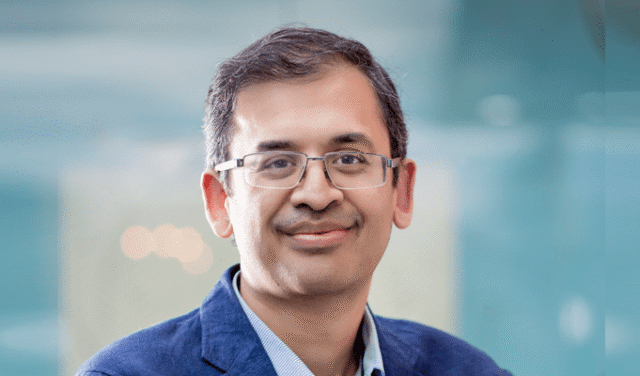
    Fashion e-tailer Myntra Monday said its CEO Ananth Narayanan has quit, a development that ends months of speculation about his exit following a recent re-jig at its parent group Flipkart. In a statement, Myntra said Narayanan has decided to step down as CEO of Myntra and Jabongto pursue external opportunities. Amar Nagaram has been named as Head, Myntra and Jabong, and will report to Flipkart Group CEO Kalyan Krishnamurthy, it added.

    According to a report, there were speculations that Narayanan would quit after a new reporting structure was put in place when Binny Bansal — the then CEO at Flipkart Group (which owns Myntra and Jabong) — quit the company.

    As a part of the new structure, Myntra and Jabong were brought under Flipkart, with Narayanan reporting to Krishnamurthy.

    “Ananth has played an important role in making Myntra and Jabong into a formidable player in the fashion e-commerce market and steering the company towards sustainable growth,” Myntra said in its statement Monday.

    It added that over the last three and a half years, Narayanan and the management team have built a strong foundation for the company.

    “Myntra and Jabong are an important part of the Flipkart group serving our valuable customers. The company will continue to execute the growth strategy and leverage synergies with Flipkart as appropriate,” it said.

    The strong bench strength and new leadership at Myntra and Jabong will allow the business to continue on its strong and sustainable growth trajectory, the statement added. Nagaram, who recently moved to Myntra from Flipkart, has been working with the group for around seven years.

    “…(Nagaram) has played a pivotal role in making shopping accessible, delightful and affordable on every connected device. Most notably, he led the efforts on revisiting the boundaries of mobile web, making the experience on it as good as native,” the statement said.

  • The Indian Luxury Outlook 2019

    The Indian Luxury Outlook 2019

    As 2018 comes to a cold & wintry end, as political environment hots up, as new alliances, mergers and acquisitions take shape in business & politics, as GST corrections & FDI norms in ecommerce are tinkered, what is it that the Indian Luxury Industry can look forward to?

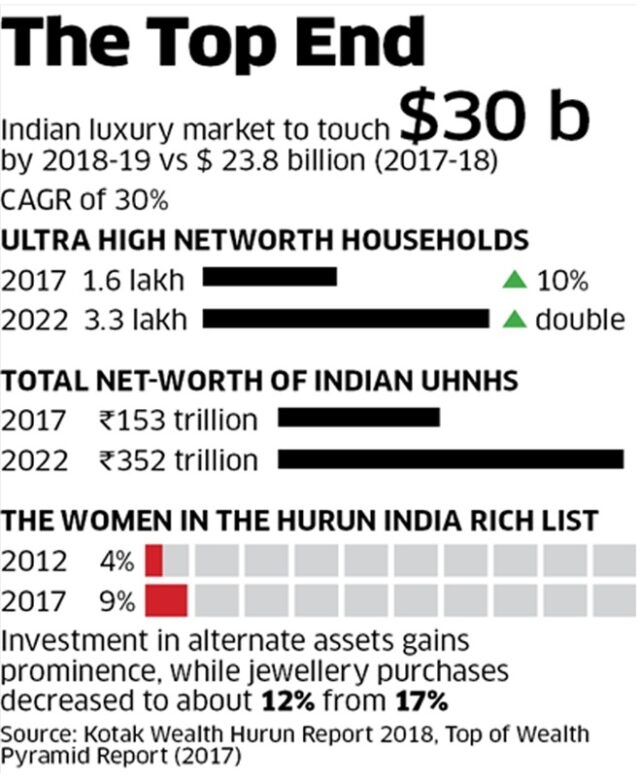
    Assocham figures continue to be optimistic and bullish. As per last projection, not only is the industry expected to be of a size of USD 30b by the year end 2018, but is also to continue its growth trajectory unhindered. But alas, the suddenly disturbed seemingly stable political applecart, the floundering rupee, the growing uncertainty, and the eminent global slowdown of 2020 looms large. Ground reality for luxury could be different. Industry insiders, trade analysts and brands all alike seek the pot of gold at the end of the rainbow.

    A seeming direction that the Indian Luxury Industry could take or adopt from the rest of the world appears as under:

    1. Consolidation is the key: With Reliance brands having taken over Genesis Retail in 2018, the largest fashion and accessory conglomerate of Indian Luxury and premium space has taken shape. With almost no competition, the all-powerful group is set to be the only point of entry into India. Surely independent brands and smaller groups continue to offer their wares, the sheer strength, negotiation powers and might of Reliance will perhaps be the single most driver of the fashion & Luxury space.
    2. Power of the Common Man: Someone wise enough once said ‘don’t underestimate the power of the common man’. Sure enough, luxury has slowly spread its wings to the hitherto sleepy tier I & tier II towns. The fast emerging Indian market is not only witnessing demand for luxury products from the Metros but also Tier I and Tier II cities which have a sizable number of HNIs (High Net-worth Individuals). Alongside, an increase in wealth for the middle class coupled with internet penetration has resulted in newer segments of first-time luxury buyers. This has given ample space for a whole lot of brands to set up shop in India, retail their brands through distribution networks. This surely will be the next growth driver for Luxury in India.
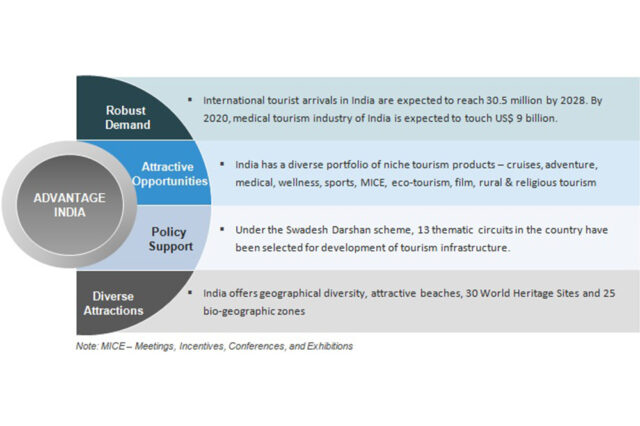
    3. Travel, Tourism &Hospitality will drive further growth to the value pie: With increased e-visa processing, faster on the ground arrival support, eye catchy Incredible India campaigns, the tourist inflow from within and outside is likely to further increase. Statistics according to a new report of the World Travel and Tourism Council (WTTC) reveal that India’s travel and tourism sector ranks 7th in the world in terms of its total contribution to the country’s GDP.During January-October 2018 FEEs from tourism increased 8.30 per cent year-on-year to US$ 23.54 billion.


      Source : www.ibef.or


    4. The Great Big Fat Indian Wedding carnivals will drive luxury: The wedding industry and the wedding service industry sets unprecedented benchmarks. According to a 2017 KPMG report titled Market Study of Online Matrimony and Marriage Services in India, the marriage services industry is estimated to be worth approximately US $53.77 billion (Rs 3, 68,100cr).This is one sector which adds incremental sales to all sectors of the industry – from beauty, fashion, accessories,  photography, jewellery, travel, hospitality, gifting to also the cuisine segment. With high standards being set by the likes of stars like Anushka Sharma – ViratKohli ; Priyanka Chopra – Nick Jonas& finally the Ambani weddings, the aspiration of average Indian to splurge on weddings is reaching a new peak. With Rolex watches as gifts to the entire wedding procession to bespoke clothing from super luxury brands to not only the entire family but the whole procession adds further fillip to the trade.
    5. Technology and Luxury: From high end home appliances such as Sub Zero Wolf to tech controlled homes like Home Automat, luxury and technology seem to marry and create an inseparable union. What was earlier restricted to high end laptops and computer systems demand has now invaded the mobile space, the home entertainment space besides the affluent kitchens. Super expensive mobiles from Iphone X to Hanmac are finding a demand que beyond their imagination in India.
    6. Technology and Retail: Omni-presence now means beyond just available everywhere to also be ‘Phygital’. A merger of the physical and digital retail is quietly invading the global retail. Amazon Go has already launched 8 number of cashier less stores& plans to ramp up to 3000 by 2021. Can India, the tech brain of the world be far behind? In Bangalore, Decathlon launched a similar store by introducing a ‘phygital experience’- an innovative mix of physical retail and digital touch points. From virtual reality to digital payments the intent is to create a fun, unique and immersive user experience designed to engage and add value to for them at every step of the way while choosing their favourite sports gear.On other hand, another concept store called ‘Watasale’ went further to create cashier less store, its first store in Kochi and have plans to expand to other cities including Bengaluru and New Delhi in the near future. Can Indian Luxury ignore this anymore?
    7. Predictive Analysis to Predictive Selling: The Indian fashion industry proudly receives its first futuristic analysis software, ‘Stylumia’. Created by ex Myntra founder Ganesh Subramanium, the software will assist in better buying to be able to improve efficiencies and sell through ratios. Most Luxury brands dependent on the human predictions of the buyer can now resort to technology and manage their budgets better. This coupled with predictive selling, could bring in the much needed correction in stocks over load with luxury brands.
    8. Experiential retail, Virtual Reality and Artificial Intelligence: These three aspects will come to the forefront: Brands like Arvind have introduced Magic Mirrors through its brand Creyate Custom Clothing. Also, Shoppers Stop has launched an innovative augmented reality-based dressing room: ‘The Magic Mirror’. It is an intelligent photo booth that gives customers the option to select and view apparel and accessories on themselves without having to physically ‘try on’ the desired products. Apart from this, ecommerce players such as Lenskart(Eyewear) and Caratlane (Jewellery) are already into Virtual trial of the products by customers.
    9. Rent a Luxury / Reusable Luxury are a reality: What started as a trickle two years back, is now a stream with more ventures offering specialised product categories arriving at the horizon.Websites such as Confidential Couture offer usable Luxury Goods while Ziniosa & Rent A Closet offer fashion on rent.And now, even the affluent women are renting high end jewellery for their wedding. The fashion rental market is becoming the biggest trend. A wedding suit or gown worth Rs. one lakh could be rented for as low as Rs. 2000 to Rs. 2500! It is estimated that the online wedding rental  business is worth Rs. 100 crore and the existing players have claimed a 25 to 50 per cent year-on-year surge in business (Black Book).
    10. Sustainable, Authentic and Responsible Luxury is being sought forGrassRootby Anita Dongre and Nicobar by Good Earth are few names that are famous for their Sustainable offerings.Slowly but surely, the well exposed Indian consumer seeks value over mere brand name. Value definitions are shifting rapidly in line with global shifts. A brand who pays heed to such demands will perhaps go a long way.
    11. SUVs take over the roads Various variants of SUVs have been introduced by automakers of all categories. From Mahindra XUV 500 to Lamborghini Urus, Rolls Royce Cullanin to Porsche Cayenne, almost all Luxury brands have come up with their SUV variant. Sale of SUVs grew seven times faster than that of passenger sedans. While small cars and sedans managed a growth of 3% in the last financial year, the sales of SUV grew 21%. The share of SUVs in overall passenger vehicle sales rose to nearly 30 % in 2017-18, compared to 14% recorded at the end of March 2017-18.According to numbers released by Society of Indian Automobile Manufacturers (Siam), 9.2 lakh SUVs were sold in 2017-18 against 7.6 lakh units in the previous year.
  • LOTS Wholesale Solutions expands footprint with its third store in India

    LOTS Wholesale Solutions expands footprint with its third store in India

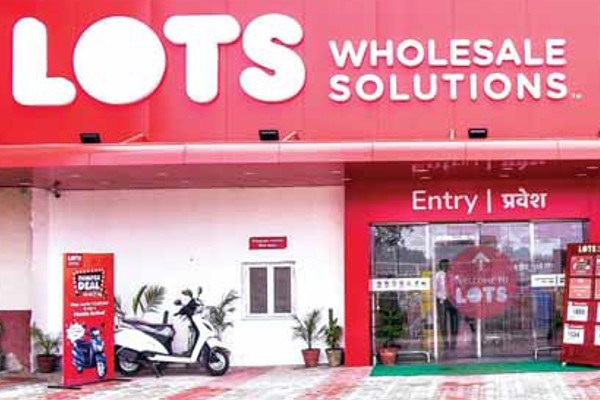
    LOTS Wholesale Solutions, a part of the US$ 50 billion Charoen Pokphand Group and a wholly owned subsidiary of Siam Makro Public Company Limited from Thailand, has unveiled its third wholesale distribution centre in India at Ithum, Sector 62, Noida. In 2018, the company inaugurated their stores at Netaji Subhash Place and Akshardham. The three stores, opened within a span of seven months, will cater to a total of 1,40,000 registered customers in Delhi NCR.

    LOTS Wholesale Solutions store in Noida is the first step towards the company’s commitment of investing Rs 250 crore in the state of Uttar Pradesh. The expansion plan will witness the opening of more stores in the state in the coming years.

    The new store in Noida is spread over an area of 50,000 sq.ft. and will provide its customers with more than 5,500 assorted products in food and non-food categories. It will cater to over 40,000 business customers with a diverse clientele including kiranas, hotels, restaurants and caterers (HoReCa), corporates, MSMEs and institutions such as government agencies, educational institutes and hospitals from the catchment area.

    In addition to the announcement of its third store, LOTS Wholesale Solutions also launched its own brands Basic Plus and PlusMo with an aim to provide best quality products at economical prices. The first two product categories introduced under these brands are bakery items and home-cleaning.

    Talking about the launch of the third store in India, Tanit Chearavanont, Managing Director, LOTS Wholesale Solutions said, ‘Following our values of victory, we have outperformed ourselves and unveiled the third store within a span of seven months. As promised, we delivered our two stores in 2018. Uttar Pradesh was an obvious choice for expansion after Delhi NCR, owing to the proximity to the enormous market opportunity in the state. It fits well within our cluster strategy for the business in India. Aided by government support, we aim to establish an environment of mutual growth for farmers, traders and our business in the state. We will work directly with them to establish a strong supply chain and demand for their products.’

    Featuring specially curated assortments for its members, delivery services, e-commerce, credit facility etc, LOTS Wholesale Solutions is a one-stop shop for all its customer needs.

  • Ombre Lane India wins seed funding

    Ombre Lane India wins seed funding

    Indian women’s workwear brand Ombre Lane has received seed funding from a group of angel investors. The investment group includes ex-LinkedIn India CEO Akshay Kothari, LinkedIn general counsel Aditi Jha, and director at Bristol-Myers Squibb US Neeraja Balachander. The fashion start-up plans to use the funds to establish Ombre Lane as a go-to destination for modern Indian women seeking to buy functional office-wear styles. Forecasting a five-fold annual growth rate, the brand plans to scale significantly over the next year while staying focused on building the brand.

    The brand, launched by sisters Shweta and Prachi Sharma, launched with the motto of making women feel confident as well as comfortable at work. It conducted extensive surveys to establish average body shapes and sizes of Indian women, finding that more than 70 per cent of Indian women have a pear-shaped body and an average height of 5 feet 2 inches, while more than 75 per cent of Western workwear available on the Indian market is made for a woman with a height of 5 feet 7 inches and the more rectangular body shape common in the west.

    The market for women’s workwear in India is expected to grow in double digits over the next five years. Ombre Lane offers shipping throughout India via its e-commerce platform ombrelane.com.

  • Organic Footwear: Is the Indian consumer ready?

    Organic Footwear: Is the Indian consumer ready?

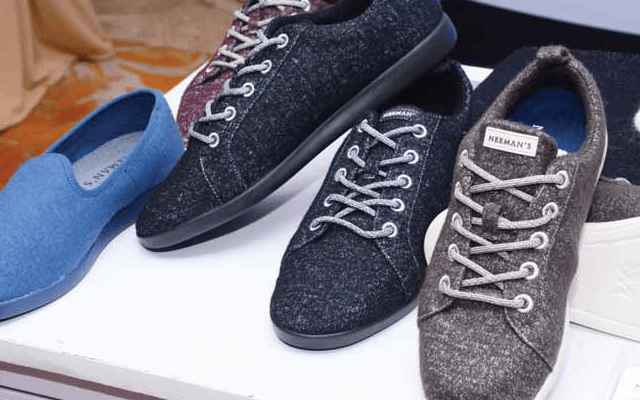
    Footwear brand Neeman’s has partnered with The Woolmark Company – the global authority on wool – to launch a range of shoes made from 100 percent Merino wool. The eco-conscious brand showcased its attractive range of men’s shoes in New Delhi.

    Neeman’s is India’s first footwear brand to use natural, renewable and biodegradable fibre in its shoes. The brand’s footwear collection comprises joggers (multi-functional, lightweight running shoes), classic sneakers with a modern twist, and simple, yet elegant, loafers in subtle colours, fit for all occasions. Its shoes are suitable to wear throughout the year with the ability to withstand every weather condition.

    Celebrating the unique organic inclusion in Indian lifestyle through their exclusive men’s shoes, Taran Chhabra, Founder, Neeman’s explains that it was his own personal struggle to find a shoe that could truly provide all-day comfort. “This led me to look beyond synthetic fibres and my search ended with the naturally versatile Merino wool fibre,” he stated.

    Ajay Pradhan, Marketing Manager, The Woolmark Company, India says, “The Woolmark Company is looking at innovative ways to showcase the versatility of the Merino wool fibre and this collaboration with Neeman’s allows us to do exactly that. Merino wool is the world’s most revolutionary natural fibre that’s trans-seasonal, breathable and has a variety of eco-credentials, making it the perfect addition to your wardrobe be it in the form of luxury apparel or innovative. We cannot wait for consumers to try them and experience the natural benefits and versatility of Merino wool.”

    The Idea Behind Neeman’s

    Neeman’s focuses on two core principles – true comfort and creating a culture of sustainability.

    “We are focused on bringing truly comfortable footwear that looks good, feels good and is good for the planet. Today, when the whole world is talking of organic and natural resources, we decided to take undervalued ‘comfort’ for wearers to the heart of the shoe industry and follow nature’s path of environmental sustainability using natural fibres along with recycled and renewable materials,” Chhabra says.

    While in the pursuit to understand footwear manufacturing, Taran Chhabra had travelled to many footwear manufacturing hubs around the world and what he saw left him perplexed. He found that footwear manufacturing units use too many synthetic materials like nylons, polyesters and leathers and consume a lot of non-renewable resources like petroleum in the manufacturing process. Apart from this, the industry is responsible for emitting a huge amount of carbon dioxide into the atmosphere.

    “According to a recent study, around 10 percent of the carbon dioxide that is emitted in the atmosphere is by footwear units alone. So these things kind of hit me,” he explains.

    As a result, while making Neeman’s, he made a conscious decision to remove everything synthetic and unnecessary, and kept only the stuff that was required to actually make shoes. He chose a natural fiber like Merino wool from Australia in-place of synthetic materials. Merino wool is a superfine and lightweight fiber with features like moisture-wicking and breathable, naturally odour resistant and keeps skin cool and dry even in extreme temperatures.

    “Merino wool comes from Merino sheep, and all it takes is water, sunshine and grass to raise them. So we are not spending any energy, we are not emitting any carbon dioxide into the atmosphere, we are not using any petroleum based oils and we are preserving our environment,” he says.

    Another important component within a shoe is the insole. Traditionally the insole is made of petroleum based foams. Neeman’s also reduced the amount of petroleum based foam with a natural plant-based castor bean oil and recycled rubber.

    A Global Brand

    The shoes—conceptualised in America and designed in London—are made from the finest Merino wool sourced from Australia. The Merino wool then travels to South Korea, where it goes through a proprietary process of combing, drawing, steaming and being made into a fabric. There, three different type of fabrics are being produced, one for the shoe upper, another for the insole and a third for lining the shoe. Then the fabric travels to China, where a highly specialised women-owned shoe manufacturing unit—which has been in operation for the past 30 years—assembles the shoes. After that the shoes finally reach India to be sold.

    Market, Consumer & Retail Strategies

    The opportunity for brands like Neeman’s in India is immense. “The Indian footwear market is very vast. India is the second largest in terms of footwear manufacturing and the third largest in terms of consumption. It is just behind China,” says Chhabra.

    Operating within the premium range, the brand’s target consumers are the one who seek comfort. Precisely, any male from 26 to 40 years is its target customer. “Just by looking at the consumption rate in India, there is a vast segment that looks at economy range but there is still a major segment that looks at premium range and we fall within the premium segment,” he says.

    At present, it is being sold through its website (www.neemans.com). Being a direct-to-consumer, the brand has excellent customer acquisition strategies to share, such as educating its consumers through content on social media. “We plan to travel and organise several demo locations, pop-ups locations within major places where people can come and experience our products,” Chhabra says.

    The brand is taking expansion slowly

    “We aren’t giving our shoes to outlets for now. The focus is to drive people to our website and help them understand what Neeman’s stands for. So right now we are keeping a very close hold on how and where our product is being represented. Right now our focus is India and then may be to spread Neeman’s to different countries within Asia in the next year,” he concludes.

  • Online Marketplaces India: Delivering fashion to the discerning masses

    Online Marketplaces India: Delivering fashion to the discerning masses

    The online fashion space in India is positively buzzing with private labels or brand partnerships. Recently, heritage American denim brand, Wrangler collaborated with Indian e-commerce giant, Flipkart to launch an exclusive sub-brand called Wrangler 20X. Myntra also launched its in-house plus size apparel brand, Sztori as well as House of Pataudi, an ethnic wear brand co-owned by Myntra, Exceed Entertainment and Bollywood actor Saif Ali Khan.

    Addressing Consumer Demand

    Wrangler 20X is targeted at the digitally-savvy youth who increasingly shop for fashion online and are seeking the perfect mix of trend and value. Gen Z are increasingly brand-aware and aspire to own brands with flaunt appeal. The denim brand aims to give them a brand that they would be proud to wear at prices they can afford.

    Known for democratising fashion across segments, the launch of both Sztori and House of Pataudi enables Myntra to go a step further and include profiles into the ambit of ‘fashion for all’. It champions inclusivity in fashion, evaluating and emphasising greater attention to styles, trends, designs, fit and fabric for plus sized apparel and fashion conscious consumers, in order to bring out the personality of the person wearing it.

    Sztori has been especially designed to suit a larger range of body shapes and sizes. It is essentially a designer wear in the plus size category, offering consumers the perfect fit and multiple style options. The apparel is made to suit plus size body types rather than prove to be a mere extension in size on existing profiles, thus breaking the existing age-old norm in the Indian market.

    Manohar Kamath, CXO and Head, Myntra Fashion Brands, says, “We are extremely delighted to announce the addition of Sztori to our portfolio of private brands. Plus size clothing is in great demand and it was time we offered something substantial in the category, opening up more avenues and possibilities for our customers.”

    The brand offers a range of products for men and women, including, tees, denims, tops, dresses and more in L to XXXXL (Large to 4 times Large) sizes. Shoppers can choose from over 225 styles and designs at prices ranging from Rs 799-Rs 1,999.

    Myntra identified a space opportunity in this segment and set out to design and develop merchandise under a new brand to cater to the category and make wearers look fashionable with multiple style options at affordable prices and opening new avenues in the industry.

    ‘House of Pataudi’ is a lifestyle brand for men and women that delivers fine taste and refinement to the discerning and the fashion conscious. Each piece not only exudes style but also narrates the rich story and history of the Pataudi heritage. The collection comprises traditional Indian wear, conceptualised inthe form of Rozana, every day wear with a contemporary ethnic touch; Jashn, festive finery with a regal charm; Riwayat, bespoke splendour for the classic Indian wedding; and a Special Edition, comprising collections inspired by the Pataudi trousseau.

    The range includes kurtas, sherwanis and Nehru jackets for men and kurta sets, lehengas and dresses for women. Products from House of Pataudi will be available exclusively on Myntra and Jabong, across a price range of Rs 1,500-Rs 15,000 for men and Rs ,000-Rs 20,000 for women. The brand’s design team has worked closely with Saif Ali Khan; inspired by his own personal style statement and has designed and perfected the line, modelling it on the Pataudi lineage and contemporary fashion preferences, to make it relatable for the modern fashion shopper. House of Pataudi is focused on changing the perception about ethnic dressing being limited only to festivals and occasions and bringing it back to everyday wear.

    Tapping the Market

    “Research estimates that the plus size segment will account for US$ 5 to 6 billion in the US$40 billion Indian online fashion apparel market, by 2020, which is approximately 10 to 12 percent of the overall market, making it an important proposition,” shares Manohar Kamath.

    Flipkart’s has aggressive plans to grow the fashion business and this maps well with Wrangler’s vision of meeting the needs of the young, online shopper. “We are delighted to partner with

    Flipkart on the launch of Wrangler 20X. The brand will be available exclusively on Flipkart and is designed for young, trend-aware digital citizens who aspire to buy Wrangler but are also looking for a more affordable value proposition. We look forward to working with Flipkart to make this a successful sub-brand of Wrangler,” comments Krishna Dorai, General Manager, Wrangler.

    Rishi Vasudev, Vice President, Flipkart Fashion says, “Men’s fashion is one of our fastest growing categories, where we have witnessed a 75 percent Y-o-Y growth, within which denims is one of the most successful categories. Crafted basis an understanding of what fashion shoppers are looking for, we are excited to launch Wrangler 20X, a denim-wear brand, from the house of Wrangler, exclusively on Flipkart Fashion. The range is specifically designed to off er the latest in fashion to the style conscious young men looking for the best in the value branded segment and we are sure, this range will be a massive hit, while it strengthens our men’s portfolio.”

    The Wrangler 20X collection features attractive style elements such as PU detailing on the pockets and belt loops, the shirts embrace printed designs with yarn-dyed fabrics and the tees receive a fresh colourful graphic spin. The sub-brand is currently available only for men.

    Ananth Narayanan, Ex-CEO, Myntra- Jabong, said, “We are clearly focused on a strong customer proposition and currently there is a huge gap in brand offerings in the ethnic wear space, especially for men. House of Pataudi is an ideal fit, being rich on tradition, heritage, design, and offers customers a slice of the world that we believe is lost, at price points that are highly affordable.”

  • Kutchina opens second store in Nepal

    Kutchina opens second store in Nepal

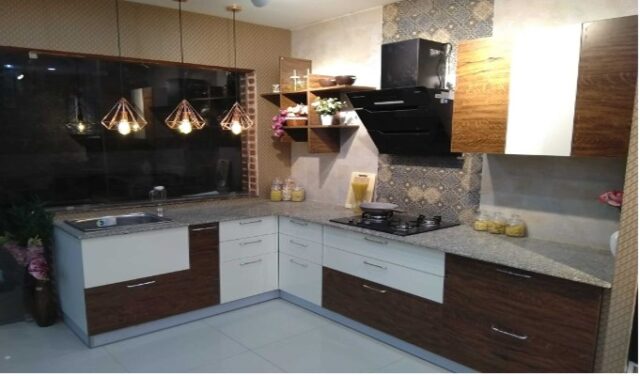
    Kutchina has opened its second store in Kathmandu spanning across 500 sq.ft. Targeting middle and higher income group customers, the store offers complete kitchen solutions including entire range of big appliances and modular kitchen. Look and feel of the store is a mixture of Kutchina’s modern concept with a traditional touch of Nepal’s rich culture. The walls of the store are given a look of Brick Mounting which resembles traditional houses of Nepal and adds that wow factor to the store.

    Designed by in-house designers, the store highlights all the elements of the products with the use of LED and Track lights. At present, the brand has 20 stores in India and 2 in Nepal.

  • Restaurant association questions deep discounts on Swiggy, Zomato

    Restaurant association questions deep discounts on Swiggy, Zomato

    The National Restaurant Association of India (NRAI) on Tuesday said it has raised concerns over deep discounting and data masking by food ordering and delivery startups such as Swiggy, Zomato and Ola’s Foodpanda. According to a report, The restaurants’ body said it flagged issues regarding misuse of dominant position, in a meeting with the app-based food ordering and delivery startups.

    “NRAI delivery task force had its first meeting with Swiggy, Zomato, Uber Eats and Foodpanda today (Tuesday). Concerns of the standalone and chain business operators regarding deep discounting, data masking, right to use own logistics, private labels and ad hoc campaigns were put forth,” NRAI president Rahul Singh said in a statement.

    Stating that the “concerns have been well taken”, he said, “we aim to continue these meetings on a bi-monthly basis for communicating feedback from the restaurant industry to the aggregators to ensure a healthy business environment for all stakeholders.” NRAI is the apex body of the Indian restaurant industry, representing over one lakh restaurants across the country.

  • India’s Rocking Deals plans 500 stores

    India’s Rocking Deals plans 500 stores

    India’s Rocking Deals is planning to launch 500 retail stores within next five years. The move by the online retail electronics marketplace follows the opening of the brand’s first offline store in Agra (Uttar Pradesh) last month, with up to 20 stores planned for the state in the near future. “We have chalked out an all round growth plan, be it online or offline,” said founder & CEO Yuvraj Aman Singh. “With our new retail stores, the company plans to weed out inefficiencies, lack of certified products in the market, and under or overvaluation of pre-owned products.

    “We would like to tap all major markets of smaller towns and cities through our offline market strategy.”

    The company has already signed with 27 retail franchises in various states, including Uttar Pradesh, Jharkhand, Odisha, Punjab and others.

    “The refurbished market is to rise by a compounded 27 per cent over 2019-20, as large players are joining through their existing online marketplaces such as Amazon and Flipkart, which posted surging growth in annual sales, and we too wanted to significantly capture the market through our organised channel,” added Singh.

    Rocking Deals was founded in 2012 and to date has sold close to 4 million refurbished and pre-owned units in 18 categories to end customers.

  • Fonterra India appoints Ishmeet Singh CEO

    Fonterra India appoints Ishmeet Singh CEO

    Fonterra Future Dairy Pvt Ltd, a new joint venture between global dairy nutrition company Fonterra Co-operative Group and new age FMCG company Future Consumer Limited, announced the appointment of Ishmeet Singh as its CEO, effective from January 7, 2019.

    Singh, a seasoned leader with a proven track record of profitable growth and business expansion, joins the business to deliver its ambition to bring high value and innovative dairy products to Indian consumers.

    Singh was a member, Western Region Committee (WRC) of the American Chamber of Commerce. He is a physics graduate, and has a Master’s in Management Studies from Mumbai’s Sydenham Institute.

    Singh says, “Over the next seven years dairy consumption is set to increase by 82 billion litres – seven times the forecasted growth for China. I feel extremely privileged to be able to lead this new opportunity as we look to bring an enhanced dairy experience to Indian consumers. I firmly believe through Fonterra Future Dairy we have a huge opportunity to challenge and change the market, combining Fonterra’s global dairy innovation, manufacturing and nutrition expertise with Future Group’s leadership in retail and distribution expertise and infrastructure.”

    Leading the growth and expansion of some of the world’s largest, trusted flagship brands in the Indian market, is familiar territory to Singh, having worked over the last 25 years at top multinational and FMCG companies such as Mattel, Vodafone, Hindustan Unilever, and Coca-Cola.

    Most recently, he led the business at Mattel, largest toy manufacturer in the world, as its Country Manager for India and the SAARC region. Previously, he held the role of Business Head at Vodafone India for over 5 years, leading remarkable revenue growth and retail expansion in many circles including Mumbai and Maharashtra.

    Managing Director Future Consumer Limited and Board Member of Fonterra Future Dairy, Ashni Biyani says, “We’re delighted to have someone of Ishmeet’s calibre to lead the business. As a sales and marketing professional at heart, we see him being instrumental in helping us build a brand that Indians love.”

    Fonterra’s Managing Director of Sri Lanka and the Indian Subcontinent, Chairman of Fonterra Future Dairy, Sunil Sethi said, “As our exciting growth phase picks up steam, it is critical that people with the right experience, values and drive are in place to steer the business forward. We are in the process of putting together a first-class team to build a fantastic legacy for the business. Through the ambition we have set, we believe the learning experience and possibilities here at Fonterra Future Dairy are limitless. Ishmeet is a proven and highly accomplished professional with a passion for leading teams to transformative success and growth. With his vision and deep personal commitment to society, we are confident that he will bring immense value in delivering on our ambition.”

  • Amway forays into the herbal oral care segment

    Amway forays into the herbal oral care segment

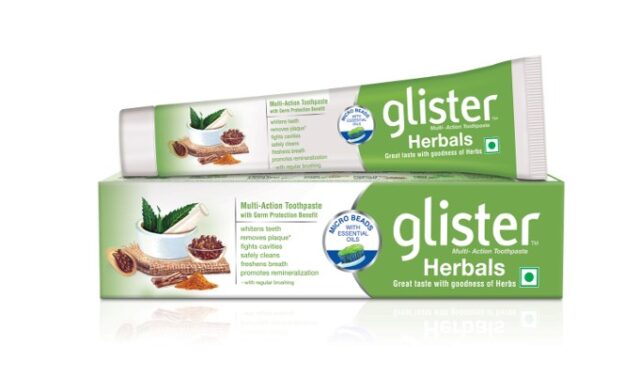
    Amway India, the country’s largest FMCG direct selling company has announced the launch of its latest innovation – ‘Glister Herbals Toothpaste’, to mark its entry into the herbal oral care market. Building on the success of its globally popular Rs 100 crore brand – Glister, the new herbal oral care product is a seamless blend of numerous herbal ingredients with appealing taste and pleasing color to suit everyone’s palate. With this new and advanced product, Amway aims to target the flourishing Rs 1,980 crores oral care segment in India.

    Announcing the launch of Glister Herbals, Sundip Shah, Chief Marketing Officer, Amway India, said, “Glister has been one of our most popular global brands. A bestseller for over five decades, it has won the trust of millions of consumers worldwide and has been an integral part of their oral hygiene routine. Keeping with our commitment of offering highest quality products and addressing the increasing demand for natural and herbal alternatives for long-term healthy living, Glister Herbals is an expansion of our flagship brand and indigenously developed for our Indian consumers.”

    He further added, “The industry for herbal oral care products has grown significantly in recent years, fueled by consumers’ preference for herbal solutions and trust in their long-term benefits. However, our research empirically highlights the need for likeable sensorials – a gap that exists in the available offerings in the market currently. This often leads to consumers shifting to regular and non-herbal products. Glister Herbals’ has the goodness of herbs with great taste and appealing colour. With this powerful mix, we aim to transform the product usage experience and long-term adoption of herbal toothpastes in the market and I am confident in our latest innovation and its potential to transform the category”

    Anisha Sharma, Category Head, Beauty & Personal Care, Amway India, added, “Glister Herbals is best defined as the herbal oral care solution from Amway offering great taste with the goodness of herbs. This multi-action toothpaste is enriched with 11 ingredients such as spearmint, clove, ginger, neem, mulethi, among others, which are known for their benefits and great taste. It also has biodegradable microbeads of essential oils comprising clove and tea tree to ensure maximum efficacy of the constituents. The goodness of herbs promises 12-hour germ protection and fresh breath benefits along with remineralization and teeth whitening.”

    She further added, “We are excited with the business opportunity offered by the market. In order to ensure national wide reach and to engage consumers, we are introducing digital activations across platforms and organizing dental camps in key markets. As ingredient story and taste is key to the success of our new herbal offering, we have begun taste challenges for our direct sellers for which we have received an overwhelming response. We are sure that the Glister Herbals will receive favorable response from the consumers.”

    Glister Herbals follows the thriving success of Amway’s Nutrilite Traditional Herbs in its Nutrition and Attitude Be Bright Herbals in beauty categories last year.

    Amway Glister Herbals is sold exclusively by Amway Direct Sellers across India and can be easily ordered on the company’s website.

  • Carlton London launches its first store in Mumbai

    Carlton London launches its first store in Mumbai

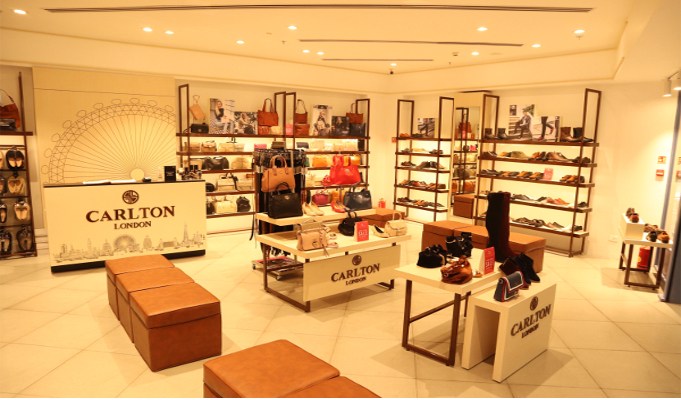
    Carlton London, the leading fashion footwear and accessory brand has launched its first store in Mumbai at Phoenix Marketcity, Kurla. After running nine stores successfully in the Northern region including Delhi NCR and Punjab, the tenth store in Mumbai marks the expansion of the brand in the Western region of the country. Spread across an area of 1,200 sq.ft., the new Carlton London store is extremely spacious and offers a complete range of fashion footwear along with an exclusive collection of accessories.

    The store displays a wide range of footwear from party collection, work-wear and ballerinas to premium collection for men. Being one of the fastest growing fashion and accessory brand, Carlton London aims to target consumers across the country. The brand thrives at its philosophy of providing highest quality designs to the customers, which are at par with the international standards. Their diversified product line offers comfortable fashion which creates a mark of luxury while being affordable. Having established itself as one of the key players in the footwear industry, the brand caters to various age groups and target audience.

    Commenting on the store launch , Director, Carlton London, said, “We are extremely delighted to announce the launch of our first store in Mumbai. Being the fashion capital of India, Mumbai is a key market for us and we aim to expand our retail footprints in various parts of the country. We always work towards providing fresh and innovative designs to our customers and keep our collection in sync with the global runway trends.”

    “Like our other stores, the theme of the new store is inspired by rich British architecture. With a minimalistic approach, the store has soft and subtle lighting with elegant couches and fancy mirrors,” he added.

  • Tablez to launch Build-A-Bear in India

    Tablez to launch Build-A-Bear in India

    To meet an ever-increasing demand for an engaging retail environment, Tablez India announces the partnership with Build-A-Bear, a global experiential retailer. U.S.-based, customized stuffed-animal retail-entertainment brand Build-A-Bear aims to reach as many as 9 million households in the top 15 cities in India by 2025. Besides standalone stores, shop-in-shop formats of Build-A-Bear would be launched within Toys“R”Us as part of Tablez, the retail arm of LuLu Group International.

    Adeeb Ahamed, MD, Tablez said, “The Build-A-Bear concept is a one-of-a-kind retail experience, and we are thrilled to bring it to India. We believe that children who come to our stores will be able to enjoy a different shopping experience that includes participation in creating stuffed animals of their own choice.”

    He also added, “At Tablez, we are continuously striving to meet the increasing demand for high-quality specialty toys, and we look forward to opening more Build-A-Bear and Toys”R”Us stores across India, as our company continues to grow.”

    On this occasion, Dorrie Krueger, Build-A-Bear Workshop Chief Strategy Officer, said, “We look forward to embarking on this new partnership with Tablez India and helping establish and grow the Build-A-Bear brand in this important global market. As our international franchise portfolio continues to expand, we are further assured that the hug of a teddy bear is understood in any language.”

    Established in 1997, Build-A-Bear has helped millions find their own meaning in a new furry friend. The brand has nearly 500 stores worldwide, and more than 175 million furry friends have been made globally in its 21-year history. Build-A-Bear helps guests mark special occasions, start friendships, and inspires people to make their own adventures. At Build-A-Bear, one is empowered to feel that anything is possible.

    The ‘Choose Me’ wall at every Build-A-Bear store is where the empowerment journey begins as each guest chooses an unstuffed animal to bring to life. Accessories give customers the reins to customize their creation. The heart ceremony is where one can add special wishes to their friend. During the stuffing process, a heart is placed in the bear along with special wishes, and the guests promises to care for their new furry friend. This signature ceremony brings each stuffed animal to life in a personal way, further ensuring a greater attachment. Guests find meaning in each of the animals designed – they are friends, playmates, heroes, look-a-likes and evidence of special memories. Dogs, cats, bunnies and even unicorns complement the timeless teddy bear to ensure there’s a furry friend for everyone.

    Tablez launched the first Toys“R”Us store in Bangalore in 2017. Before end of 2018, 4 stores will be operational, and another 20 stores are expected to be launched in 2019. In February 2019, Build-A-Bear will be launched as part of Toys“R”Us in Phoenix Marketcity, Bangalore. Further, a Build-A-Bear shop-in-shop format will follow in Vega City Mall, Bangalore; City Centre Mall, Mangalore and Phoenix Marketcity, Pune. The 20 additional standalone stores of Toys”R”Us are expected to be launched in major locations starting January 2019. Build-A-Bear plans to expand to as many as 65 shop-in-shop format stores and 20 standalone stores in India over the next 10 years.

  • Domestic, foreign e-commerce players should be treated alike: CUTS India

    Domestic, foreign e-commerce players should be treated alike: CUTS India

    The Government needs to create a level-playing field for both domestic and foreign e-commerce platforms through a comprehensive e-commerce policy, said Pradeep S. Mehta, Secretary General, CUTS International on Sunday. He noted that the current norms for the segment are applicable to foreign online retailers and this might create a discriminatory environment towards the domestic players.

    “The Government may not be wrong in its clarificatory policy on Foreign Direct Investment (FDI) in e-commerce, as it was a case of backdoor entry in multi-brand retail trade. But vital issues remain to be resolved to promote healthy economic democracy”, said Pradeep S Mehta, Secretary General, CUTS International.

    “However, the issue of creating a level-playing field between domestic and foreign players in retail sector is yet to be resolved, for which a comprehensive National E-Commerce Policy is need of the hour”, he said.

    The Department of Industrial Policy and Promotion (DIPP) recently had said that 100 percent FDI is permitted in the market place model of e-commerce and not in the inventory-based model or the multi-brand retail segment.

    The Commerce Ministry in December revised the FDI policy for e-commerce players whereby it barred online retail firms such as Amazon and Flipkart from selling products of companies in which they have stakes. It also prohibited e-tailers from mandating any company to sell its products exclusively on its platform only.

    Mehta said: “The new guidelines are stricter for e-commerce companies with FDI providing marketplace, but there are no such restrictions for companies without FDI.”

    He also observed that there is no need for a separate regulator for the e-commerce segment.

    “India does not need a separate regulator for e-commerce, which would be yet another parking place for retired babus who are generalists and turn into controllers.

    Most of the malpractices adopted by e-commerce platforms, for instance, discrimination among its vendors, deep discounts etc, can be dealt by the Competition Commission of India. If need be, the Competition Act, 2002 can be tweaked for which the process is going on,” he said.

    The Consumer Protection Bill, 2018, which is likely to be passed soon by the Rajya Sabha, also has specific provisions on e-commerce, he added.