Tag: india

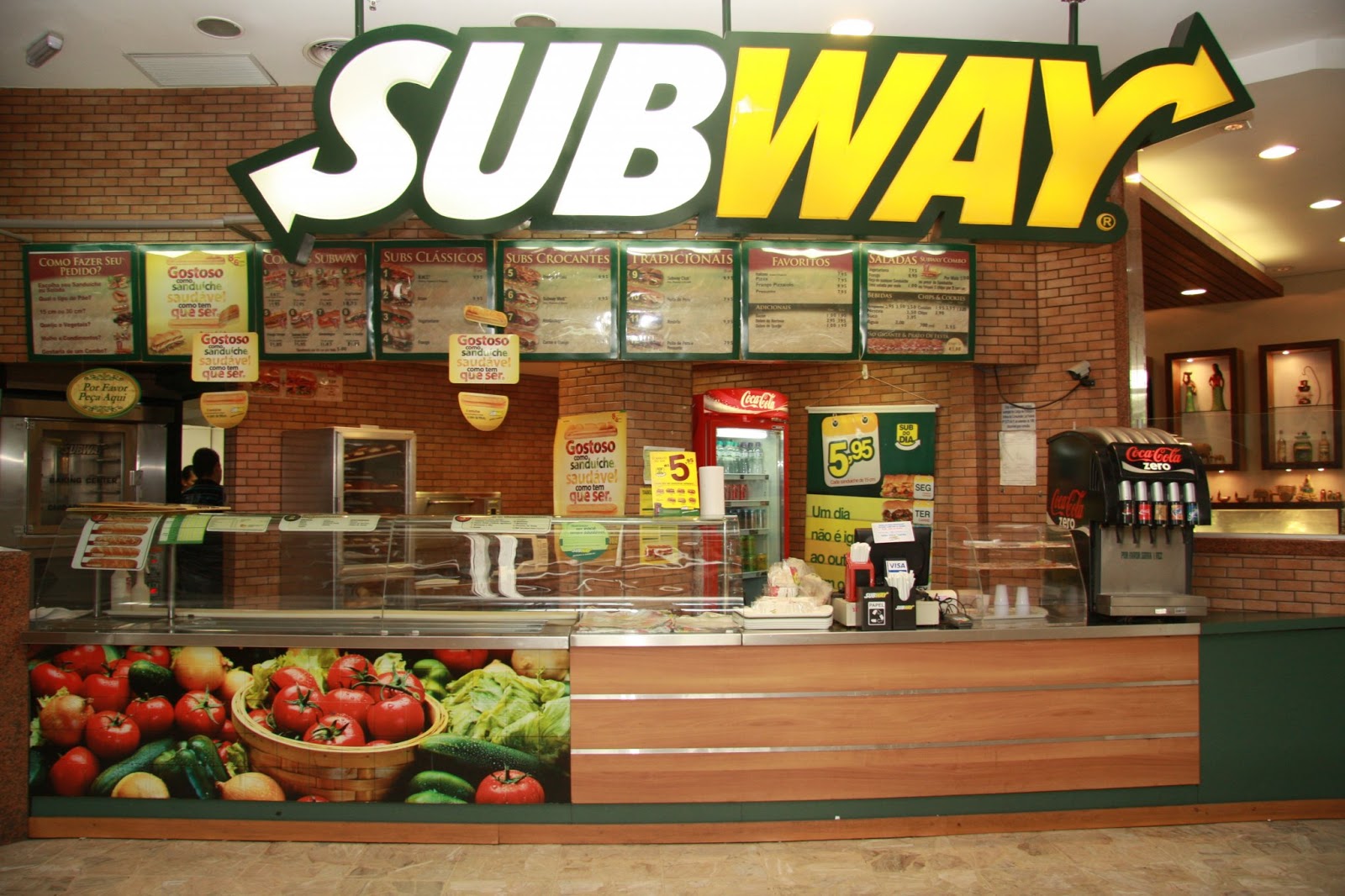
  • Subway Plans Major Expansion In India With 100 New Outlets By Next Year

    Subway Plans Major Expansion In India With 100 New Outlets By Next Year

    Subway, the internationally renowned sandwich chain, has announced its plans to increase its footprint in India by establishing 100 new outlets by next year. This expansion will augment Subway’s existing presence in over 160 cities throughout the country, a significant growth since the brand’s inception in the Indian market in 2001.

    Culinary Brands, the retail operator responsible for Subway’s operations in India, affirmed that this move is a continuation of the company’s robust growth observed in the initial quarter of the year. During this period, Subway debuted 33 new outlets spanning across 17 cities.

    Tarun Bhasin, CEO of Culinary Brands, reflected on the importance of India within the framework of Subway’s global operations. He emphasized that the country plays a crucial role in the company’s long-term investment and partnership strategies.

    Further, Bhasin revealed that the forthcoming expansions will not be confined to the existing markets. The sandwich chain intends to penetrate new markets, including those in Tier 2 and Tier 3 cities.

    Bhasin expressed optimism for the future of Subway in India, stating, “With a robust expansion pipeline and continuous product innovation, we’re optimistic about Subway’s growth journey in India.”

    Questions & Answers

    What are the expansion plans of Subway in India?
    Subway aims to set up 100 new outlets in India by next year, extending its reach to more than 160 cities.

    Who operates Subway’s retail operations in India?
    Culinary Brands is responsible for operating Subway’s retail outlets in India.

    What are the future prospects of Subway in India according to Tarun Bhasin, CEO of Culinary Brands?
    Backing the expansion plans with a strong pipeline and continuous product innovation, Bhasin is optimistic about Subway’s growth journey in India.

  • Indian Boycotts Challenge U.S. Giants: A Push For ‘made In India’ Amid Tariff Tensions

    Indian Boycotts Challenge U.S. Giants: A Push For ‘made In India’ Amid Tariff Tensions

    American multinational corporations, including household names such as McDonald’s, Coca-Cola, Amazon, and Apple, are feeling the pressure of increasing calls for boycotts in India. This sentiment has been fueled by business leaders and supporters of Prime Minister Narendra Modi as a form of protest against U.S. tariffs.

    India, known as the world’s most populous nation, presents a significant market for these American brands. With a rapidly expanding base of affluent consumers who view international brands as symbols of societal advancement, many American companies have found success in India.

    For instance, Meta’s WhatsApp counts India as its largest user base and Domino’s boasts more restaurants in India than in any other country. Similarly, beverages such as Pepsi and Coca-Cola often take up prime real estate on store shelves, and there is typically a significant buzz when a new Apple store opens or Starbucks offers discounts.

    Recently, however, there has been growing support for choosing local products over American goods, both on social media and offline. This shift in consumer behavior has been catalyzed by a 50% tariff on Indian goods imposed by former U.S. President Donald Trump, which has unsettled exporters and strained relations between New Delhi and Washington.

    Indian Business Leaders Advocate for ‘Made in India’

    Manish Chowdhary, co-founder of India’s Wow Skin Science, has taken to LinkedIn to voice his support for Indian farmers and start-ups. His goal is to transform ‘Made in India’ into a ‘global obsession’, learning from countries like South Korea, which boasts globally renowned food and beauty products.

    Similarly, Rahm Shastry, CEO of DriveU, an Indian car driver service, wrote on LinkedIn that India should develop its own versions of popular platforms like Twitter, Google, YouTube, WhatsApp, and Facebook, much like China.

    Indian retail companies offer stiff competition to foreign brands like Starbucks in the domestic market, but global expansion remains a challenge. However, Indian IT services firms, such as TCS and Infosys, have integrated deeply into the global economy, providing software solutions to clients around the world.

    In a recent address in Bengaluru, Prime Minister Modi made a “special appeal” for increased self-reliance. He urged Indian technology companies, who have been producing products for global consumption, to prioritize India’s needs.

    Consumer Opinions Differ

    Despite the ongoing anti-American sentiment, the American electric vehicle and clean energy company Tesla recently opened its second showroom in India. The opening event in New Delhi was attended by Indian commerce ministry officials and US embassy officials.

    Simultaneously, the Swadeshi Jagran Manch group, which is associated with Modi’s Bharatiya Janata Party, organized small public rallies across India, encouraging people to boycott American brands.

    However, not all Indian consumers share this sentiment. For instance, a customer named Rajat Gupta, who was dining at a McDonald’s in Lucknow, expressed that he was not concerned with the tariff protests and simply enjoyed the value for money he received from his 49-rupee coffee.

    Questions & Answers

    What has led to the calls for a boycott of American products in India?

    These calls for boycotts have been fueled by the imposition of a 50% tariff on goods from India by former U.S. President Donald Trump, which has created unrest among exporters and strained diplomatic ties between New Delhi and Washington.

    How are Indian business leaders responding to this situation?

    Leaders such as Manish Chowdhary, co-founder of Wow Skin Science, and Rahm Shastry, CEO of DriveU, have been advocating for a focus on “Made in India” products and services, and the development of home-grown alternatives to popular platforms like Twitter, Google, YouTube, WhatsApp, and Facebook.

    Are all Indian consumers supportive of the boycotts?

    No, consumer opinions on the boycotts vary. Some consumers, such as Rajat Gupta, a McDonald’s customer in Lucknow, are not concerned by the tariff protests and continue to enjoy the products and services offered by American brands.
  • AU Bank Secures In-Principle Approval to Transform into a Universal Banking Powerhouse in India

    AU Bank Secures In-Principle Approval to Transform into a Universal Banking Powerhouse in India

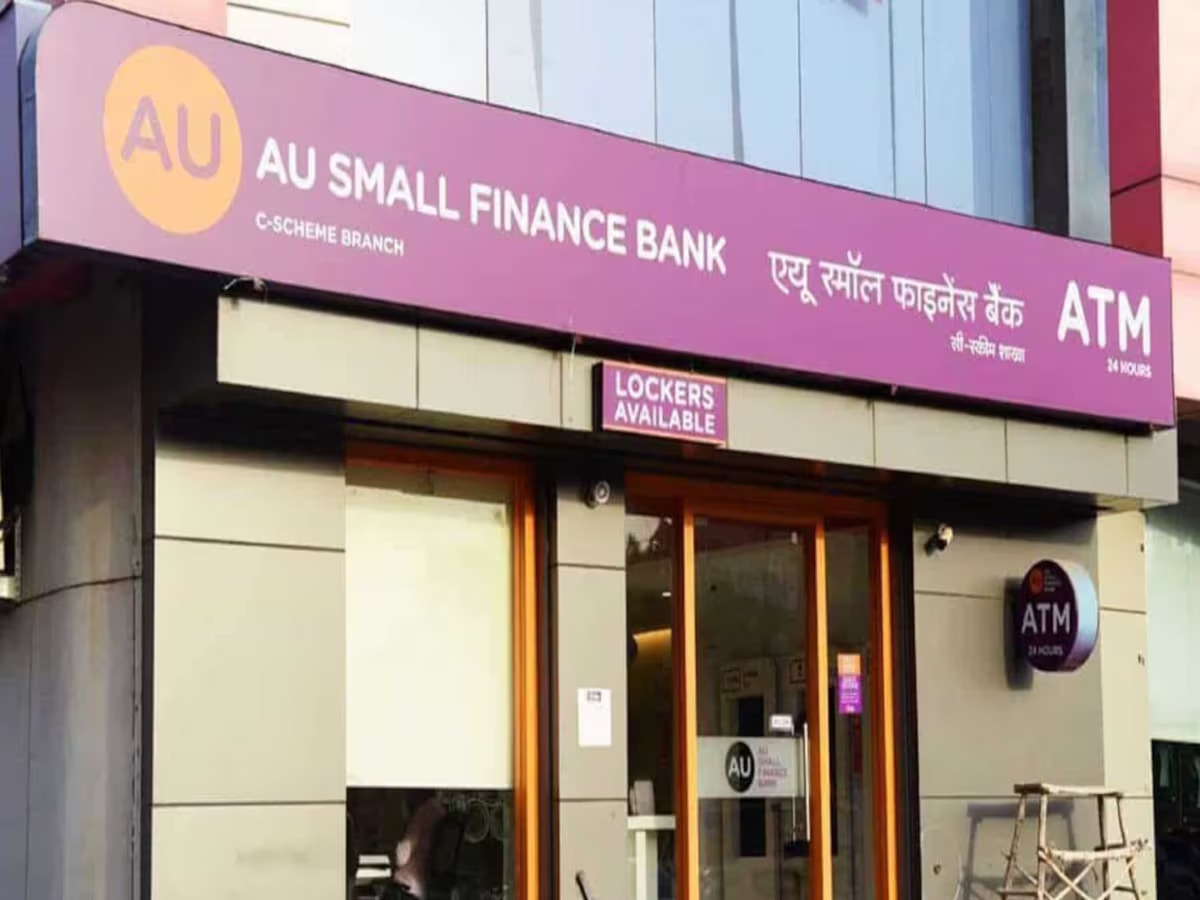
    In a moment that will go down in India’s banking history, AU Small Finance Bank (AU) has received an in-principle approval from the Reserve Bank of India (RBI) to become a Universal Bank. With this notification, AU becomes the first Small Finance Bank in India to receive this in-principle approval to become a Universal Bank, a milestone shaped by purpose, perseverance and discipline.

    This regulatory approval is a strong validation of AU’s robust business model, sound governance, and enduring commitment to financial inclusion. More importantly, it affirms AU’s evolution into a complete bank, one that offers a full spectrum of banking products and services that today’s customer expects, spanning retail, business, and digital solutions.

    The application for this transition was submitted on September 3, 2024, under the RBI’s ‘on tap’ licensing guidelines (August 2016) and April 2024 framework for the voluntary conversion of Small Finance Banks to Universal Banks.

    At the heart of AU’s extraordinary journey is Mr. Sanjay Agarwal, Founder, MD & CEO of AU, whose story exemplifies India’s enterprise ethos. In 1996, at just 26, the newly qualified Gold-medallist Chartered Accountant from Jaipur, a first-generation entrepreneur and cricket enthusiast, declined a conventional corporate career to start his own finance company with a singular belief that India’s underserved and unbanked deserved dignified financial services. Starting with no institutional capital and no inherited influence, Mr. Agarwal established a lending company focused on offering vehicle finance to small entrepreneurs across Rajasthan’s heartland. What began as a modest dream has since become a case study in perseverance, masterclass of sustained growth, sharp execution, and institution building.

    Mr. Sanjay Agarwal, Founder, MD & CEO of AU Small Finance Bank, said: “We have made history by receiving in-principle approval from the Reserve Bank of India to transition into a Universal Bank. This milestone is a reaffirmation of our purpose, perseverance, and passion.

    AU is not just a bank – AU is a mission. As Hon’ble Prime Minister Narendra Modi Ji has rightly said, “India is not just a market. India is a mission.” At AU, we have lived this mission every day. Our journey has always gone beyond banking – it’s about building a more inclusive, empowered, and enterprising India.

    We are deeply grateful to the Government of India and the Reserve Bank of India for nurturing an ecosystem where institutions like AU can grow with integrity. This achievement is a tribute to every stakeholder who has stood by us – our customers, whose trust has shaped us; our employees, whose energy powers us; our investors and partners, who believed in our model; and our Board of Directors, whose guidance has been instrumental in our journey.

    This in-principle approval acknowledges not just our ability to grow, but to grow responsibly. It is a testament to AU’s strength in reaching widely, integrity in serving wisely, and resilience to shine across economic cycles. As we step into this new chapter, we do so with humility, responsibility, and the pride of a homegrown institution ready to serve – our people, our nation, and the vision of Viksit Bharat 2047.”

  • Indian Fashion Pioneer Brand Studio Lifestyle Expands Into Uae With Three Flagship Stores

    Indian Fashion Pioneer Brand Studio Lifestyle Expands Into Uae With Three Flagship Stores

    Brand Studio Lifestyle, the parent company of Indian fast-fashion labels Highlander and Tokyo Talkies, has expanded its operations into the Middle East with the launch of three flagship stores in the United Arab Emirates (UAE).

    Flagship Stores Launch in the UAE

    The new stores have been established in prominent shopping locations, including the BurJuman Mall in Dubai and the Sahara Centre and Mega Mall, both situated in Sharjah. The Sahara Centre location is the largest of the three, spanning an impressive 9,000 square feet, while the other two stores each occupy 5,000 square feet spaces.

    A Strategic Move into a Growing Market

    Shyam Prasad, the co-founder and CEO of Brand Studio Lifestyle, expressed his optimism about this international venture, stating that it closely aligns with the increasing demand for Indian fashion within the Middle East. He highlighted the company’s pioneering status in terms of exporting Indian fast fashion on a global scale, expressing hope that this move will inspire other domestic brands to explore international expansion.

    Future Expansion Plans

    The company also disclosed plans to further strengthen its presence in the region. By next year, Brand Studio Lifestyle aims to open an additional seven stores, as well as establish 600 shop-in-shop formats across various large-format and multi-brand outlets.

    Creating a Comprehensive Retail Experience

    Rapheal Lifestyle, the retail and consumer-facing subsidiary of the UAE-based Rapheal Group, has been instrumental in supporting the launch of these stores. The founder of Rapheal Pozholilparambil emphasized the significance of the launch. He explained that the objective is not simply to introduce new retail outlets, but to offer customers an affordable, accessible, and expressive lifestyle experience.

    Questions & Answers

    What is the significance of Brand Studio Lifestyle’s entry into the Middle East market?

    The company’s expansion into the Middle East aligns with the growing demand for Indian fashion in the region. This move also signifies the brand’s intent to internationalize Indian fast-fashion.

    Where are the new flagship stores located?

    The three flagship stores are located at the BurJuman Mall in Dubai, and the Sahara Centre and Mega Mall in Sharjah, UAE.

    What are the company’s future plans in the region?

    Brand Studio Lifestyle intends to expand its presence by opening seven more stores in the region by next year. The company also plans to establish 600 shop-in-shop formats across various large-format and multi-brand outlets.

  • China and India Surge Ahead in Global Coal Production Growth, Shaping the Energy Landscape

    China and India Surge Ahead in Global Coal Production Growth, Shaping the Energy Landscape

    The coal mining landscape is gearing up for a significant shift as developers in 30 countries, particularly China and India, prepare to expand their production capacity despite an impending decline at newly operating mines in 2024. This ambitious initiative comes at a time when the need for clean energy solutions is at an all-time high, creating a complex tension between economic growth and environmental concern.

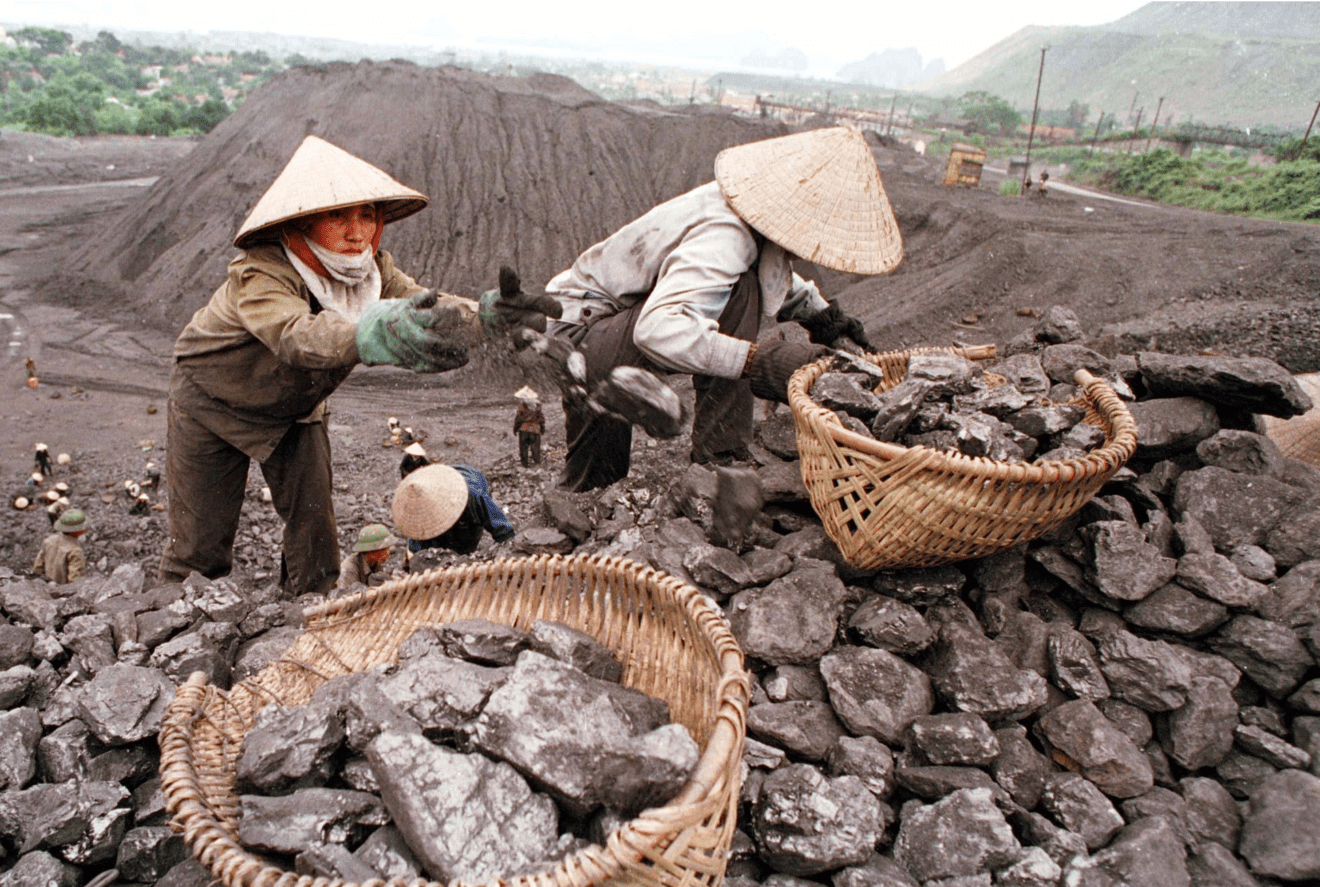
    According to a report from Global Energy Monitor (GEM), the global coal industry is bracing for the rollout of more than 850 new mines, expansions, and recommissioned projects. Alongside these developments, there are also 35 mine extension projects being reviewed. A striking statistic reveals that nearly 90% of this proposed capacity is concentrated in only a handful of countries, with China leading the pack at a staggering 1,350 million tonnes per annum (Mtpa), primarily in its northern and northwestern regions. India follows with plans for 329 Mtpa, almost half of which is attributed to state-owned Coal India.

    Environmental Implications

    While the projected capacity could revitalize coal production, it raises significant environmental concerns. GEM warns that a total of 2,270 Mtpa of coal mine capacity is currently in development, which poses serious risks of escalating methane emissions. This issue is particularly pressing as methane is a greenhouse gas with over 80 times the warming potential of carbon dioxide over a span of 20 years. The organization estimates that if all proposed projects come to fruition, approximately 15.7 million tonnes of methane could be released annually, eclipsing Japan’s total annual greenhouse gas emissions, putting further strain on global climate commitments.

    “The canary is literally and figuratively in the coal mine,” states Dorothy Mei, project manager for the Global Coal Mine Tracker at Global Energy Monitor. “Without drastically scaling back plans for new mine capacity, the world could see a massive rise in potent methane emissions that would make it all but impossible to reach the goals of the Paris Agreement.” As the dialogue around climate change intensifies, these developments compel stakeholders to reevaluate the balance between economic ambitions and sustainability. After all, while coal production may be heating up, the planet is on a different kind of warming trend.

    Questions & Answers

    What countries are leading in coal production capacity expansion?
    China and India are at the forefront, with China proposing 1,350 million tonnes per annum and India planning for 329 million tonnes per annum.

    What environmental risks are associated with the expansion of coal mines?
    The expansion poses significant risks of increased methane emissions, which can have a warming potential over 80 times that of carbon dioxide, significantly impacting climate goals.

    How many new coal mining projects are under consideration worldwide?
    More than 850 new mines, expansions, and recommissioned projects are set to be rolled out across 30 countries, alongside 35 additional mine extension projects currently under review.

  • Bharti Airtel Launches Exciting ‘Airtel Cloud’ in Collaboration with Singtel, Globe, and Airtel Africa

    Bharti Airtel Launches Exciting ‘Airtel Cloud’ in Collaboration with Singtel, Globe, and Airtel Africa

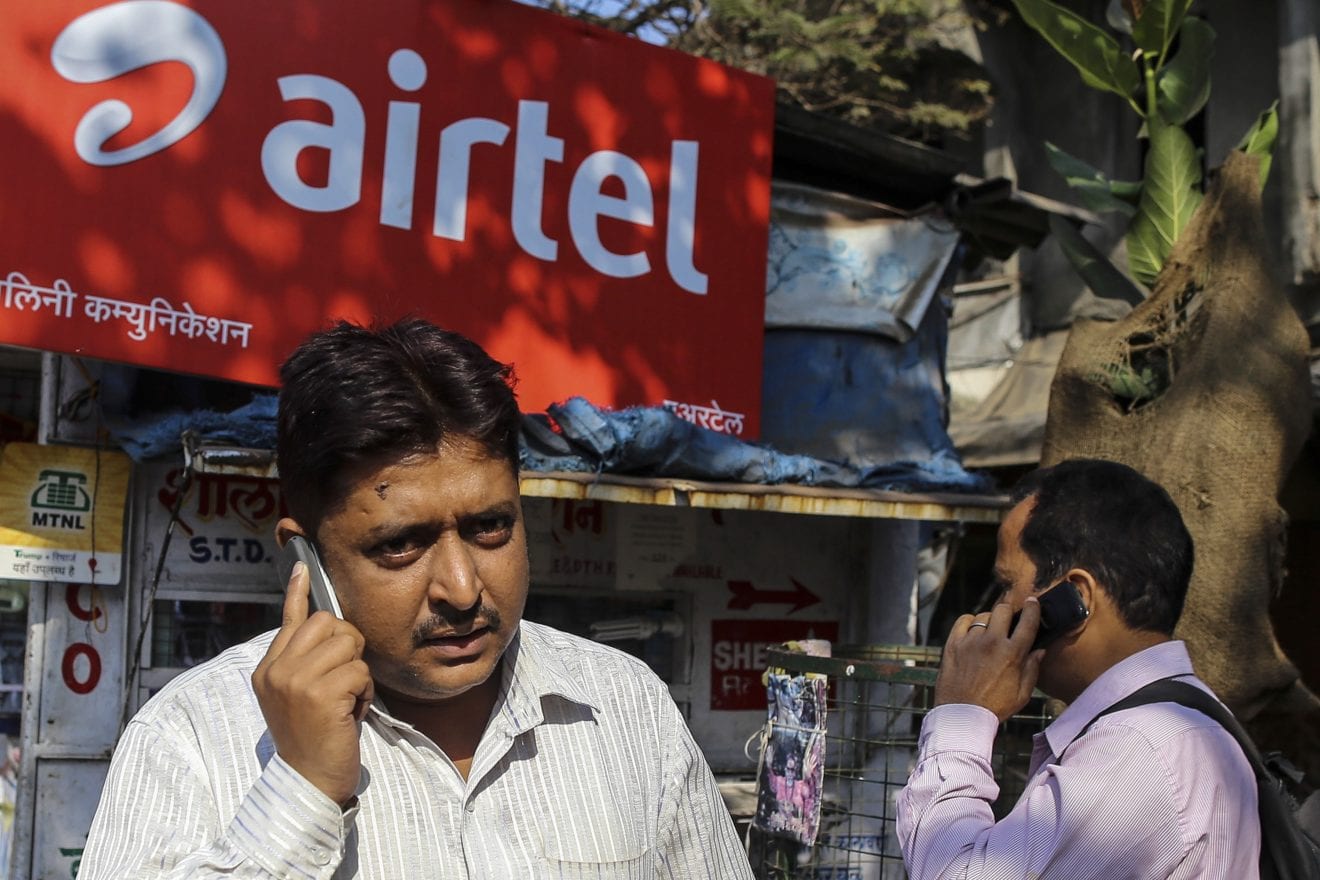
    Bharti Airtel has unveiled an innovative AI-powered cloud and software platform for enterprises, launching it through its wholly owned subsidiary, Xtelify. The platform, named ‘Airtel Cloud,’ is poised to accelerate digital transformation for Indian businesses and global telecom operators, delivering robust security, scalability, and intelligence on a large scale. In a marketplace where digital prowess is the new currency, Airtel has positioned itself as a formidable player.

    Transforming Airtel’s Offerings for the Global Market

    Xtelify represents a pivotal shift for Airtel, as the company expands its in-house digital platforms—which have previously supported its large-scale operations—into external markets. The Airtel Cloud platform is accessible to enterprises throughout India, capable of processing a staggering 140 crore transactions per minute. Backed by a team of 300 certified cloud experts, the platform is housed in next-generation sustainable data centers and utilizes generative artificial intelligence (GenAI) for provisioning. Its services include infrastructure-as-a-service (IaaS), platform-as-a-service (PaaS), and advanced connectivity, with secure migration and zero vendor lock-in being standout features.

    A Vision for Secure Digital Growth

    Gopal Vittal, Vice Chairman and Managing Director of Bharti Airtel, expressed enthusiasm for this development, stating, “Within Airtel, we have been actively harnessing digital innovations at unmatched scale to transform our services and enhance customer experience for many years. This involves powering over 590 million customer touchpoints and addressing some of the most intricate telecom challenges globally. All our applications run at a competitive cost on Airtel Cloud. Today, we’re excited to extend our telco-grade, sovereign-cloud platform, enabling Indian businesses to innovate faster, scale smarter, and remain secure in an ever-evolving digital landscape.” Vittal assured that all cloud controls will remain strictly within India, eliminating any risk of external access to sensitive data.

    Empowering Telecom Operations with AI

    Xtelify has also launched an AI-driven software suite designed to optimize telecom operations and enhance customer journeys, ultimately improving average revenue per user (ARPU). This comprehensive suite includes Xtelify Work for real-time workforce management, Xtelify Data Engine for operational intelligence, Xtelify IQ for customer experience analytics, and Xtelify Serve for personalized engagement and resolution. It’s as if the future of telecom is knocking on the door, demanding an innovative response.

    International Collaborations Amplify Global Reach

    In a noteworthy international initiative, Xtelify has formed partnerships with Singtel, Globe Telecom, and Airtel Africa. These agreements are set to implement various aspects of Xtelify’s offerings across multiple operations. Singtel will harness Xtelify Work for increased frontline efficiency, Globe Telecom plans to utilize Xtelify Serve to enhance customer service, and Airtel Africa will incorporate Xtelify Data Engine, Work, and IQ into its operations.

    Ng Tian Chong, CEO of Singtel Singapore, articulated the platform’s benefits, stating, “We are constantly seeking ways to better equip our field engineers to provide exceptional customer experiences. This platform allows us to reimagine our workflows with AI at the core, leading to improved efficiency and customer service.” The emphasis on optimizing dispatch and resource management not only expedites engineer response times but also contributes to lowering the carbon footprint—a win-win in today’s eco-conscious world.

    Jacques Barkhuizen, Group CIO of Airtel Africa, noted the transformative potential of this partnership, highlighting how it will enhance digital progress and uplift millions across Africa. Globe Telecom’s president and CEO, Carl Cruz, echoed this sentiment, explaining that integrating Xtelify’s AI-driven Case Management Platform reinforces their commitment to exceptional service from the initial customer contact to resolution. “We are proud to collaborate with Airtel and Xtelify,” Cruz added, “as we aim to elevate global customer experience standards.”

    Questions & Answers

    What is Airtel Cloud and what does it offer to enterprises?
    Airtel Cloud is an AI-powered cloud and software platform designed to facilitate digital transformation for Indian businesses and global telecom operators. It provides infrastructure-as-a-service (IaaS), platform-as-a-service (PaaS), and advanced connectivity while ensuring secure migration and zero vendor lock-in.

    How does Xtelify enhance telecom operations?
    Xtelify’s AI-driven suite optimizes telecom operations by improving workforce management, operational intelligence, customer experience analytics, and personalized engagement, ultimately boosting average revenue per user (ARPU).

    What international partnerships has Xtelify established?
    Xtelify has formed significant partnerships with Singtel, Globe Telecom, and Airtel Africa, enabling various implementations of Xtelify’s offerings to enhance operational efficiency and customer service across these companies.

  • Starlink Secures License to Launch Groundbreaking Satellite Broadband Services in India

    Starlink Secures License to Launch Groundbreaking Satellite Broadband Services in India

    Elon Musk’s Starlink has officially secured a Unified License to provide satellite internet services in India, as confirmed by Union Telecom Minister Jyotiraditya Scindia. This development ushers in a new era for digital connectivity in the nation, with Starlink poised to debut its offerings by late 2025 or early 2026. With a robust regulatory framework now established for spectrum allocation and satellite gateways, India is on track to narrow its rural connectivity gap through low-Earth orbit (LEO) satellite networks.

    The newfound license allows Starlink to operate in tandem with existing players such as Bharti Group-backed Eutelsat OneWeb and Jio’s partnership with SES, both of which are gearing up for their own satellite service launches. Starlink intends to roll out monthly internet packages priced around INR 3,000 and will offer hardware kits for about INR 33,000, targeting impressive speeds between 50 Mbps and 250 Mbps.

    Partnerships to Optimize User Experience

    To enhance distribution and customer service, Starlink is teaming up with prominent Indian telecom giants, Airtel and Reliance Jio. Globally, Starlink has already launched over 6,000 satellites and has ambitious plans to expand its fleet to 42,000 by 2027. This growth cements its position as the world’s largest LEO satellite network, and they say it’s not easy being this popular—after all, it takes a lot of satellite power to keep the world connected!

    This announcement coincides with the 30th anniversary of India’s first cellular call, a momentous occasion that underscores the country’s rapid digital evolution. Minister Scindia highlighted the remarkable progress achieved under Prime Minister Narendra Modi, noting that broadband users have skyrocketed from 60 million in 2014 to an astounding 944 million today. He also pointed to a staggering 96.6% decline in mobile data prices, positioning India as a global leader in accessible connectivity.

    5G Expansion and Telecom Revival

    The expansion of 5G technology in India is also gaining momentum, now reaching 99.6% of districts and serving 300 million users. The country leads in 5G data consumption, with an impressive average of 32 GB per user each month, and it ranks among the top six countries in 6G patent filings. Significantly, the resurgence of BSNL, marked by two consecutive years of net profits and the deployment of over 83,000 4G sites, illustrates the revitalization of the domestic telecom sector.

    Reflecting on the industry’s remarkable three-decade journey, Lt. Gen. Dr. S.P. Kochhar, Director General of the Cellular Operators Association of India (COAI), remarked, “Relentless efforts from the government and the industry have ensured digital connectivity reaches even those villages that once were off the grid. India’s world-leading 5G rollout has been transformative. Today, over 85% of the population and more than 99% of districts enjoy access to 5G services, fueling innovations from remote education to telemedicine and smart agriculture.”

    Questions & Answers

    What services will Starlink offer in India?
    Starlink plans to provide monthly internet packages priced around INR 3,000, targeting speeds between 50 Mbps and 250 Mbps, with hardware kits available for approximately INR 33,000.

    Who are Starlink’s primary competitors in the Indian market?
    Starlink will operate alongside Eutelsat OneWeb, backed by Bharti Group, and Jio’s partnership with SES, both of which are preparing to launch their satellite services.

    How is India’s digital landscape currently evolving?
    India has witnessed explosive growth in broadband users from 60 million in 2014 to 944 million today, with 5G now available in 99.6% of districts, marking significant advancements in digital connectivity and innovation.

  • Swiggy’s Losses Double Amid Marketing Surge And Delivery Challenges

    Swiggy’s Losses Double Amid Marketing Surge And Delivery Challenges

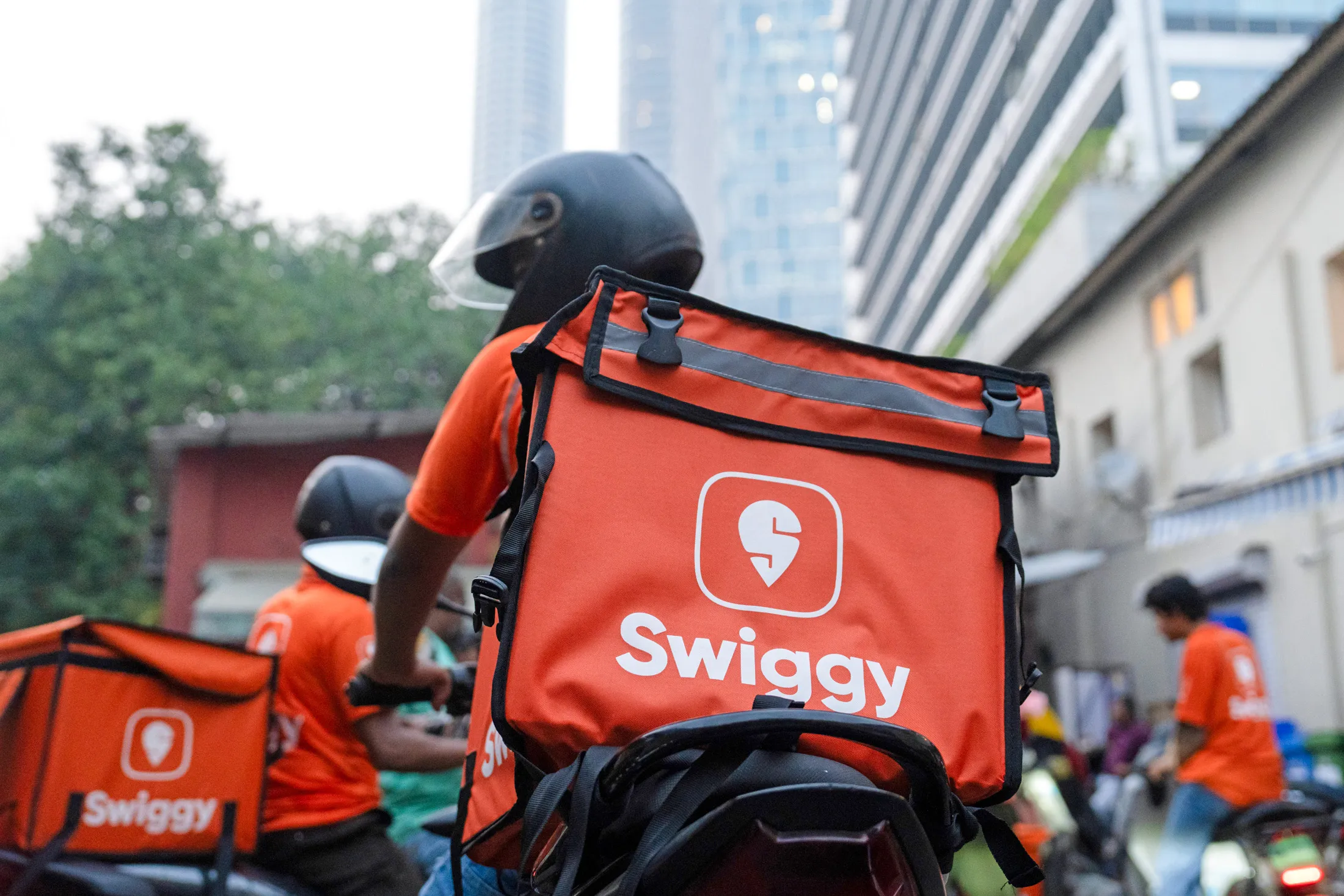
    Swiggy, one of India’s leading online food delivery platforms, has reported a near-doubling of its quarterly loss compared to the same period last year. This increase in losses is attributed to a significant rise in marketing expenditures aimed at securing a larger customer base in an intensely competitive market.

    Growth Strategies and Challenges

    In its decade-long presence in the market, Swiggy has maintained its position among the top contenders in the food delivery industry through continuous investments in marketing, platform enhancements, and customer loyalty programs. The company is also directing funds into its rapid retail division, Instamart, as part of efforts to expand its network of stores, fortify logistics, and provide enticing discounts.

    However, the company’s operations have been affected by issues relating to a shortage of delivery partners, a situation exacerbated by unanticipated monsoon rains in India. Concurrently, the need for sustained, high levels of marketing investments has been necessitated by persistent competition.

    The competition is not just limited to the food delivery sector. The rapid retail sector in India is becoming increasingly crowded, with competitors such as the Tata-backed BigBasket and Amazon vying for market share. Furthermore, Swiggy faces additional competition in the food delivery space from the ride-hailing platform, Rapido, where Swiggy holds a 12 per cent stake.

    Financial Performance

    Despite these challenges, Swiggy’s total revenue for the quarter ending June 30 increased by 54 per cent, amounting to 49.61 billion rupees (US$566.2 million). However, consolidated expenses also saw a significant jump, up by around 60 per cent to 62.44 billion rupees, with sales promotions more than doubling. Consequently, the company’s consolidated net loss for the quarter rose to 11.97 billion rupees, a significant increase from the 6.11 billion rupees loss reported in the same period last year.

    Expansion and Order Value

    Despite these financial setbacks, Swiggy continued to expand its geographical reach, adding three new cities to its network to stand at a total of 127. The company also added 41 stores and increased the size of existing ones. The gross order value from its food delivery segment climbed by approximately 19 per cent to 80.86 billion rupees in the June quarter. Meanwhile, Instamart’s gross order value saw a massive surge of nearly 108 per cent, reaching 56.55 billion rupees.

    Questions & Answers

    What factors contributed to Swiggy’s increased quarterly losses?
    Increased marketing spend to attract customers in a fiercely competitive market, along with the expansion of its quick-commerce arm, Instamart, significantly contributed to Swiggy’s increased losses.

    What challenges did the company face recently?
    Swiggy experienced a shortage of delivery partners due to earlier than anticipated monsoons in India. Additionally, the company faced stiff competition, necessitating high marketing investments.

    Did Swiggy see any growth despite these challenges?
    Yes, Swiggy reported a 54 per cent surge in total revenue for the quarter ending June 30. The company also expanded its services to three new cities, added 41 stores, and saw a substantial rise in gross order value from both its food delivery segment and Instamart.

  • Exploring Barriers to the Growth of Green Bonds in India’s Eco-Friendly Investment Landscape

    Exploring Barriers to the Growth of Green Bonds in India’s Eco-Friendly Investment Landscape

    The trajectory of India’s green bonds is expected to climb steadily as the nation pushes towards a low-carbon economy. However, a new analysis from the Institute of Energy Economics and Financial Analysis (IEEFA) unveils a constellation of challenges that could throw a wrench in this optimistic outlook.

    Obstacles Looming Over Green Financing

    In their latest briefing note, IEEFA identifies several hurdles that threaten to stifle the scalability of green bonds, which are vital for financing sustainable projects. Labanya Prakash Jena, a sustainable finance consultant at IEEFA and co-author of the analysis, emphasizes the need for robust monitoring and reporting mechanisms. Without these, greenwashing becomes more prevalent, potentially undermining the very purpose of green bonds.

    The landscape is further complicated by inconsistent definitions, verification processes, and reporting standards for green bonds in various jurisdictions. While frameworks like the Green Bond Principles from the International Capital Market Association and the Climate Bonds Standard aim to create consistency, Jena’s collaborator, Vandana Vuppuluri, noted that their interpretation can vary widely from one market to another.

    The Cost Conundrum

    Another significant barrier is the high cost associated with issuing green bonds. This financial burden has resulted in an uneven playing field, largely favoring well-resourced corporations and sovereign entities. “It’s crucial to recognize that the green bond market remains relatively small compared to the broader bond market,” Jena states. “This limitation restricts investment opportunities and casts a long shadow on transparency, as securing consistent post-issuance reports about environmental impacts can deter potential investors.”

    While green bonds are not a panacea for climate issues, Vuppuluri insists they hold essential value in financing a transition to a low-carbon future. “Success relies on how well market dynamics, regulatory frameworks, and stakeholder commitment coalesce around environmental objectives,” she asserts. And remember, as challenging as the road ahead may seem, a little creativity can often turn obstacles into stepping stones—just ask any aspiring entrepreneur navigating the bustling streets of Delhi!

    Questions & Answers

    What are the main challenges facing India’s green bond market?
    The key challenges include a lack of robust monitoring and reporting mechanisms, inconsistent definitions and regulations across jurisdictions, and the high cost of issuing green bonds, which limits participation to well-resourced entities.

    How do varying frameworks affect the green bond market?
    While frameworks like the Green Bond Principles and the Climate Bonds Standard exist to establish coherence, their interpretation can differ significantly across markets, leading to confusion and inconsistency in green bond issuance.

    What role do green bonds play in battling climate change?
    Although they are not a standalone solution, green bonds are critical for financing initiatives that support a transition to a low-carbon economy, with their success contingent on effective regulation and stakeholder commitment to environmental goals.

  • Belgian Bakery Le Pain Quotidien Returns To India, Plans 100 Outlets By 2035

    Belgian Bakery Le Pain Quotidien Returns To India, Plans 100 Outlets By 2035

    Le Pain Quotidien, a renowned Belgian bakery-cafe chain, has made a comeback in the Indian market by establishing a fresh outlet in Palladium Mall, Mumbai. The brand’s return is facilitated through a master franchise agreement with Bake & Brew Private Limited.

    Le Pain Quotidien’s Location

    The latest store of Le Pain Quotidien is strategically positioned in the Gourmet Village zone of Palladium Mall. This zone is known for its assortment of local and international restaurants, some of which include Gold by Ice Cream Works, Burma Burma, and Kuuraku.

    Le Pain Quotidien, a name that translates to “the daily bread” in French, initially launched its venture in India in 2010. However, the brand withdrew from the Indian market during the pandemic in 2020.

    New Franchise Agreement

    In August last year, Le Pain Quotidien entered into a new franchise agreement with Bake & Brew. The arrangement has an ambitious target – to inaugurate upwards of 100 outlets across India by 2035.

    Le Pain Quotidien was first established in Brussels in 1990 by Alain Coumont. Today, the brand operates over 200 locations in 18 different countries.

    Future Expansion Plans

    Le Pain Quotidien has major expansion plans on the horizon. It aims to launch a second store in Mumbai by the close of this year, while other major cities are also in its crosshairs for expansion. The brand is particularly keen on tapping into travel and transit hubs.

    Questions & Answers

    What is Le Pain Quotidien’s expansion plan in India?
    Le Pain Quotidien plans to open more than 100 outlets across India by 2035 as a part of their franchise agreement with Bake & Brew. They also aim to open a second store in Mumbai by the end of this year.

    When did Le Pain Quotidien first launch in India and when did it exit?
    Le Pain Quotidien first launched in India in 2010 and withdrew from the market during the pandemic in 2020.

    What is Le Pain Quotidien’s focus area for its future expansion?
    Le Pain Quotidien intends to expand into major Indian cities, particularly focusing on travel and transit hubs.

  • Decathlon Aims To Double Indian Procurement, Boosting Local Manufacturing

    Decathlon Aims To Double Indian Procurement, Boosting Local Manufacturing

    Decathlon, the renowned French sports goods company, has disclosed its ambitious plans to double its procurement of goods from India, aiming to reach a monetary value of $3 billion in the next five years. This strategic move will enhance India’s contribution to the company’s global sourcing to 15 per cent by 2030.

    Driving Expansion with High-Potential Categories

    The intended increase in sourcing from India is set to be propelled by categories of high potential, such as fitness equipment, footwear, and clothing. As of now, India accounts for 8 per cent of Decathlon’s global sourcing volumes.

    Decathlon boasts a long-standing sourcing relationship with India, spanning over 25 years. The company predicts that by 2030, locally sourced products will constitute 90 per cent of its sales in the Indian market, marking a significant rise from the current rate of over 70 per cent.

    Strong Support from Domestic Operations

    Decathlon’s operations within India are robust, supported by 113 manufacturing sites, 83 suppliers, and seven production offices. The company also showcases solo categories like yoga and cricket, which are designed and manufactured domestically.

    Frederic Merlevede, the head of Decathlon production, expressed confidence in the company’s strategic investment in India. He said, “Our long-term investment in India reflects the profound trust we have established with our partners.” Merlevede also stated their clear ambition to position India as one of Decathlon’s leading global manufacturing hubs as the company continues to grow.

    At present, Decathlon runs 132 retail stores across 55 cities in India.

    Questions & Answers

    What are Decathlon’s expansion plans in India?
    Decathlon plans to double its sourcing of goods from India, aiming for a monetary value of $3 billion over the next five years.

    Which categories are expected to drive this expansion?
    The expansion is expected to be driven by high-potential categories such as fitness equipment, footwear, and clothing.

    What is Decathlon’s future vision for its operations in India?
    Decathlon aims to increase the representation of domestic products in its sales to 90% by 2030. Furthermore, the company aims to make India one of its main global manufacturing hubs.

  • India-UK Free Trade Agreement: A Game Changer for the Telecom Sector

    India-UK Free Trade Agreement: A Game Changer for the Telecom Sector

    India and the United Kingdom have reached a pivotal milestone with the signing of a landmark Free Trade Agreement (FTA), heralding a new era of collaboration in the telecom and emerging technology sectors. The historic deal was witnessed by Indian Prime Minister Narendra Modi and UK Prime Minister Keir Starmer, propelling bilateral economic relations to new heights.

    A Game-Changer for India-UK Relations

    “In a historic milestone, India and the UK have successfully concluded an ambitious and mutually beneficial Free Trade Agreement, along with a Double Contribution Convention (DCC),” Modi celebrated on social media platform X. “These landmark agreements will deepen our Comprehensive Strategic Partnership and catalyze trade, investment, growth, job creation, and innovation.” With this agreement, the two nations are aiming for growth that goes beyond just numbers—think of it as ‘telecom magic’ that’s set to unfold over the coming years.

    Streamlining Access for Telecom Giants

    The FTA provides UK telecom companies with guaranteed access to Indian facilities and services on fair, transparent, and non-discriminatory terms. Furthermore, it ensures the open allocation of essential resources, including spectrum and radio frequencies, vital for smoother market entry and fostering collaboration throughout the telecom value chain.

    Reducing Operational Hurdles

    In a strategic move to facilitate easier business operations, the agreement simplifies trade procedures for businesses operating between the two countries. Under the DCC, employees transitioning between India and the UK will be subjected to social security regulations in only one jurisdiction, effectively minimizing compliance challenges and reducing costs for companies with cross-border teams.

    A Mutual Growth Catalyst

    Vodafone has been a longstanding player in the Indian market, operating through its joint venture, Vodafone Idea. Meanwhile, Bharti Enterprises, a major Indian telecom group, holds significant stakes in BT Group and satellite operator Eutelsat OneWeb, a collaboration born from the merger of the UK’s OneWeb and France’s Eutelsat. Sunil Bharti Mittal, Founder and Chairman of Bharti Enterprises as well as Chair of the India-UK CEO Forum, praised the FTA, calling it the first substantial agreement between two economies of comparable stature. He noted that this deal not only opens doors for UK companies but also sets the stage for Indian enterprises to expand their reach in the UK.

    Empowering Innovation in the Telecom Sector

    Indian telecom manufacturer, HFCL, joined in the chorus of support for the agreement. “This FTA enables us to accelerate international growth, provide competitive technology solutions, and contribute to building next-generation digital infrastructures that will power AI-driven economies for both nations,” stated Mahendra Nahata, HFCL’s Managing Director, underscoring the promising possibilities ahead.

    Aligning with Long-term Visions

    Piyush Goyal, India’s Minister of Commerce and Industry, characterized the FTA as a strategic move in line with India’s upward trajectory. He remarked, “The India-UK FTA, along with a Double Contribution Convention, is a bold, future-ready step that will unlock growth, jobs, and innovation, accelerating our journey towards Viksit Bharat 2047.”

    The latest figures indicate that India and the UK enjoyed a bilateral trade volume of GBP 43 billion (USD 56 billion) in 2024, with a shared ambition to double this figure by 2030. This agreement not only lays the groundwork for enhanced cooperation in digital infrastructure but also opens doors to advance smart networks and emerging technologies such as AI, satellite broadband, and cloud services.

    Questions & Answers

    How does the FTA impact UK telecom companies in India?
    The FTA grants UK telecom firms guaranteed access to Indian facilities and services under fair terms, paving the way for greater collaboration and market entry within India’s extensive telecom landscape.

    What is the significance of the Double Contribution Convention?
    The DCC simplifies operational processes for businesses by ensuring that employees transferring between the UK and India will pay social security in just one jurisdiction, significantly reducing compliance costs and complexities.

    What are the future goals for India-UK bilateral trade?
    Both governments aim to double their current trade volume, which stands at GBP 43 billion, to GBP 86 billion by 2030, capitalizing on the FTA to drive deeper collaboration in various tech sectors.

  • TRAI Takes Action Against Spam and Cyber Fraud: What Retailers Need to Know!

    TRAI Takes Action Against Spam and Cyber Fraud: What Retailers Need to Know!

    In a bid to address the growing menace of spam, cyber fraud, and the misuse of telecom infrastructure, the Telecom Regulatory Authority of India (TRAI) gathered the Joint Committee of Regulators (JCoR) on Tuesday. This pivotal meeting took place at TRAI’s headquarters, bringing together influential figures from various sectors.

    Representatives from top regulatory bodies, including the Reserve Bank of India (RBI), the Securities and Exchange Board of India (SEBI), the Insurance Regulatory and Development Authority of India (IRDAI), and the Pension Fund Regulatory and Development Authority (PFRDA), joined their counterparts from the Ministry of Electronics and Information Technology (MeitY). Also present were officials from the Department of Telecommunications (DoT), the Ministry of Home Affairs (MHA), and the National Payments Corporation of India (NPCI).

    A united front against digital threats

    During the meeting, TRAI Chairman Anil Kumar Lahoti emphasized the necessity of collaboration among different regulatory bodies in an increasingly digital marketplace. He said, “In a digital-first economy, collaboration among financial sector regulators, digital communication regulators, and security agencies becomes paramount. TRAI appreciates the swift collaboration being facilitated through JCoR in building a reliable and safer communication environment.”

    The agenda took a concentrated approach at combating digital payment fraud while enhancing consumer protection measures. One significant proposal discussed was the phased adoption of a dedicated 1600-series number range for service and transactional calls in banking and finance, aimed at reducing confusion and potential scams.

    Innovating security with digital consent

    Additionally, the meeting reviewed advancements in the Digital Consent Acquisition (DCA) pilot. This innovative initiative replaces traditional paper-based consent methods with a secure digital system, making the process streamlined and efficient. The pilot, a joint effort between TRAI and RBI, involves participation from major telecom companies and banks, including SBI, PNB, ICICI, HDFC, Axis Bank, Canara Bank, and Kotak Mahindra Bank.

    Speeding up fraud prevention

    To further combat fraud, the regulators discussed methods for facilitating automatic data sharing between the Indian Cyber Crime Coordination Centre (I4C), the DoT’s Digital Intelligence Platform, and the telecom industry’s Distributed Ledger Technology (DLT) systems. This collaboration is intended to expedite responses to fraudulent activities involving illicit phone numbers and telecom resources.

    Concerns about the misuse of SIP and PRI lines for bulk spam calls were also raised, leading participants to explore remedies such as assigning these lines from controlled number ranges and implementing additional security measures. This meeting followed a workshop co-hosted by TRAI and RBI, where banks and telecom providers delved into DCA’s development and pledged to enhance collaboration.

    Questions & Answers

    What key topics did the TRAI meeting focus on?
    The meeting centered on tackling spam, cyber fraud, and enhancing consumer protection, particularly in the context of digital payments.

    Which organizations participated in the JCoR meeting?
    Representatives from the TRAI, RBI, SEBI, IRDAI, PFRDA, MeitY, DoT, MHA, and NPCI were present, highlighting a robust collaboration across various sectors.

    What is the significance of the Digital Consent Acquisition pilot?
    The DCA pilot aims to streamline communication consent by replacing paper-based approvals with a secure digital system, involving major telecom operators and banks.

  • India’s Ambitious Draft Telecom Policy Aims for 90% 5G Coverage by 2030

    India’s Ambitious Draft Telecom Policy Aims for 90% 5G Coverage by 2030

    In a bold move aimed at establishing India as a global telecom leader by 2030, the Indian government has unveiled its National Telecom Policy 2025 (NTP-25). This ambitious draft is not just a roadmap; it’s a vision that outlines major objectives, including the creation of 1 million jobs, extending 5G coverage to 90% of the population, and connecting 100 million households to fixed broadband.

    Strategic Goals to Transform Telecom

    Currently open for public consultation, the NTP-25 elaborates a five-year framework with ten strategic objectives. Among these goals is a significant uptick in telecom investment, targeting INR 1 lakh crore (approximately USD 12 billion) annually. The policy also aims to double telecom exports, reskill an additional million workers, and ensure universal access to 4G services. This is not just a plan; it’s a clarion call for a digitally empowered nation.

    Key Innovations on the Horizon

    The heart of this policy lies in its innovative strategies to strengthen India’s digital infrastructure. One of the standout initiatives is the introduction of the Digital Bharat Nidhi (DBN), designed to expand mobile networks in rural and underserved urban areas. This ambitious initiative is all about bridging the connectivity gap — because who wouldn’t want to send a WhatsApp message while trekking through a remote village?

    Pioneering National Security Measures

    On the front of national security and privacy, the NTP-25 proposes the establishment of a National Telecom SafeNet, alongside a biometric-based identification system for telecom users. To monitor both domestic and foreign satellites, a Satcom Monitoring Facility (SMF) will be launched to detect unauthorized access, aiming to bolster the country’s defenses in its ever-evolving digital landscape.

    Fostering a Resilient Tech Ecosystem

    But that’s not all — the policy also emphasizes the importance of design-led manufacturing, allocating spectrum for private 5G networks and captive non-public networks (CNPNs). Moreover, it aims to establish robust cybersecurity standards that will protect users amid an increasingly interconnected world.

    Questions & Answers

    What are the main goals of the National Telecom Policy 2025?
    NTP-25 aims to create 1 million jobs, ensure 90% of the population has access to 5G, and connect 100 million households with fixed broadband, all by 2030.

    How does the policy propose to enhance digital infrastructure?
    Through initiatives like the Digital Bharat Nidhi, which will expand mobile networks into rural and underserved urban regions, and by fostering support for small internet providers to improve last-mile connectivity.

    What measures are being taken to ensure cybersecurity?
    The policy includes the establishment of a National Telecom SafeNet, a biometric identification system for users, and the creation of robust cybersecurity standards to combat threats in a connected environment.

  • India Boosts Renewable Energy with 22 GW Capacity Surge in First Half of 2023

    India Boosts Renewable Energy with 22 GW Capacity Surge in First Half of 2023

    India has achieved a remarkable milestone, adding 22 gigawatts (GW) to its renewable energy capacity in the first half of 2025—its highest six-month boost to date. According to an analysis by Rystad Energy, this represents a staggering 57% increase from the 14.2 GW installed during the same period last year. The latest expansion includes 18.4 GW of solar energy, 3.5 GW from wind, and 250 megawatts (MW) of bioenergy.

    Government Policies Drive Renewable Momentum

    The surge in renewable capacity is largely attributed to developers racing to capitalize on the government’s Interstate Transmission System (ISTS) charge waiver. This incentive starts with a 25% discount that will increase annually, fully implemented by June 2028, effectively slashing project costs and spurring immediate action among developers, according to Rystad.

    A Step Closer to Clean Energy Goals

    This rapid expansion brings India closer to its ambitious target of sourcing 50% of its installed power capacity from clean energy sources, now reaching a total of 234 GW. Nuclear power is also gaining traction, highlighted by the commissioning of Unit 7 at the Rajasthan Atomic Power Project and the recent approval for the country’s first small modular reactor, set to rise in Bihar. However, the journey forward isn’t all smooth sailing; reliance on coal remains a significant hurdle, and the safety, cost, and waste management debates surrounding nuclear energy persist.

    Battery Energy Storage: An Integral Component

    In another notable advance, India has allocated 5.4 GW of collocated solar-battery energy storage systems (BESS) and 2.2 GW of standalone BESS to developers, marking its highest capacity allocation to date. Major players like Jindal Group secured 990 MW of collocated solar and BESS capacity, while NTPC and ReNew both captured 900 MW in the same area. In the standalone BESS sector, JSW Energy was granted 625 MW, and Reliance Power achieved 525 MW of collocated capacity.

    The Leaders of Renewable Capacity in India

    Geographically, India’s western states are leading the renewable energy charge, with Rajasthan topping the list at 37.4 GW of installed capacity, closely followed by Gujarat at 35.5 GW, and Tamil Nadu with over 20 GW. As India gears up to transform its energy landscape, it appears that the sun is shining ever brighter on its renewable aspirations.

    Questions & Answers

    What has driven India’s recent surge in renewable energy capacity?
    The surge is primarily due to developers moving quickly to take advantage of the government’s Interstate Transmission System (ISTS) charge waiver, which significantly reduces project costs and incentivizes timely action.

    How much renewable energy capacity has India installed recently?
    In the first half of 2025, India added 22 GW of renewable energy, marking a 57% increase from the previous year, with a strong emphasis on solar energy.

    What role does nuclear power play in India’s energy strategy?
    Nuclear power is increasingly being integrated into India’s energy mix, highlighted by the commissioning of new facilities; however, it faces ongoing debates about cost, safety, and waste management.