Tag: india

  • Valentino heading into India

    Valentino heading into India

    Italian fashion house Valentino is about to enter India, joining a growing list of luxury brands changing their focus to a buoyant retail scene far from the slowing Chinese economy.

    Valentino is reportedly dealing with IDFS Tradings and is also in talks with DLF Luxury Retail.

    Over the past few months, French luxury leather-goods maker Longchamp, Italian bespoke menswear brand Isaia and Swiss watch brand Bovet have been launched in India.

    One commentator says the possibilities of an omni-channel strategy is among factors attracting top brands to India.

  • NEC sets up open-source software center

    NEC sets up open-source software center

    NEC in Japan and NEC Technologies India have established the “OSS Technology Center,” an organization specializing in technical support related to the use of open source software (OSS).

    The new organization began operations July 1, with approximately 50 staff based out of NTI, consisting of experienced OSS engineers who are well-versed in OSS solution architecture, as well as essential software development and support capabilities.

    The OSS Technology Center aims to strengthen the organizational structure for supporting global enterprises in building systems based on OSS, to reinforce collaboration with international OSS vendors and to provide rapid technical support to users who construct systems operated globally using OSS.

    Moreover, the new organization will actively carry out development of new network functions related to Software-Defined Networking (SDN), Network Functions Virtualization (NFV) and application platform functions, such as container and Platform as a Service (PaaS).

    All of these are part of the OSS Technology Centre’s OpenStack-based development activities, in addition to its contributions to making source codes openly available by providing them to the OSS community.

    In recent years, the need for enterprises to capitalize on OSS, particularly OpenStack, in cloud computing, big data computing and SDN/NFV, has become increasingly pronounced.

    Also, in terms of next-generation ICT technologies, there are heightened expectations towards OSS applications in areas related to Systems of Engagement (SoE) and Internet of Things (IoT).

  • ABFRL takes over Forever 21 India

    ABFRL takes over Forever 21 India

    Aditya Birla Fashion and Retail (ABFRL) will acquire US-based clothing brand Forever 21 India from existing local franchise partner Diana Retail.

    The Rs.175-crore (US$26 million) transaction involves a business transfer agreement, not share transfer, says ABFRL in a filing with the Bombay Stock Exchange.

    The Forever 21 business will become part of ABFRL’s Madura Fashion & Lifestyle division.

    ABFRL was formed after the consolidation of the branded apparel businesses of the Mumbai-based Aditya Birla Group, one of India’s largest conglomerates. It has a presence in 375 Indian cities.

    Forever 21 has a network of more than 700 stores worldwide.

    “With the acquisition of Forever 21, we aim to create a strong foothold in the womenswear business in the western-wear segment, which is growing at 20 per cent,” ABFRL MD Pranab Barua said in May when the company announced it would enter into a deal to acquire Forever 21’s online and offline rights for the Indian market.

    In March, it is reported that Flipkart’s online fashion store Myntra, which sells Forever 21 products, was seeking to take over management of the US brand’s India  brick-and-mortar stores.

  • Airtel cleared to buy 4G spectrum from Aircel

    Airtel cleared to buy 4G spectrum from Aircel

    India’s Bharti Airtel has received approval for its 35 billion rupee ($521.2 million) acquisition of 4G spectrum from Maxis-owned Aircel.

    The Telecom Ministry has agreed to allow Bharti Airtel to acquire 20 MHz of 2300-MHz spectrum in eight of India’s 22 telecoms circles.

    Airtel announced in a stock exhange filing that it has now concluded the acquisition in six of the eight circles – Tamil Nadu, Bihar, Jammu and Kashmir, West Bengal, Assam and North End.

    The operator announced it will issue a new market update once the transactions are closed for the remaining two circles of Andhra Pradesh and Orissa.

    Airtel was required to surrender 1.2 MHz of spectrum in one circle as the acquisition would have left the company is breach of regulations limiting operators from holding more than 25% of the total spectrum allocated in a single circle, sources told Press Trust of India.

    But Maxis, which owns 74% of Aircel, is facing legal action from an activist lawyer over proposed deals with Airtel and RCom. The lawyer, Prashant Bhushan, had called for the spectrum.

  • Troubles may mount for Indian smartphone vendors and you can blame China

    Troubles may mount for Indian smartphone vendors and you can blame China

    It’s going to be a lot tougher to buy smartphones in India around the festive season beginning October, a time when Indians buy the maximum, fancy gadgets included.

    The reason is really very simple, plain economics-a demand-supply mismatch. There is, as of now a glaring shortage of mobile components in China, the country which sells the maximum number of smartphones in India, through companies like Xiaomi, LeEco, Huawei, Oppo, etc.

    Many Chinese manufacturing units in China have shut shops due to new technology, which requires more investment and hiring labour at higher rates.

    The display panel shortage comes as some of the panel makers, especially for the LCD displays which are largely used in the low-end smartphones and make up for majority of the smartphones sold in India, have shut shop recently, while others have not had significant increase in capacity.

    This is further aggravated by the fact that consumers are moving towards larger screens, 5″+ and especially at 5.5″, so there are fewer glass panels are coming out from the same capacity.

    Even though top Chinese handset and component makers mulled over investing around $3 billion in India, the country is still dependent on the Dragon nation.

    Some of the key components such as screen displays, 3G SOCs and flash memory will be short in supply, hitting the production plans of many vendors in the Indian market.

    “This is likely to impact local Indian vendors, the small ones as well as the heavy weights, more than it will impact the global vendors such as Samsung or Apple, who have a more secure supply chain, and Chinese vendors such as OPPO, vivo, Lenovo, Xiaomi and Huawei, who are able to secure better deals due to the large volumes they can commit,” said Kiranjeet Kaur, Research Manager Mobile Phones IDC Asia/Pacific.

    “The local country vendors have a disadvantage in this case. This shortage could also possibly lead to longer time to market and increased costs, and some of the costs may eventually get passed on to the consumers,” she added.

    It is noteworthy that Chinese companies such as Techno, Gionee, Coolpad, Holitech, Wingtech, Camera King, Galaxy Core, Poxiao, Vivo and Sprocomm, which took part in ‘China-India Mobile Phone & Component Manufacturing Summit’, explored avenues to tap the existing and emerging opportunities.

    “Going by the encouraging response of Chinese companies and definitive joint collaboration talks between the Indian and Chinese mobile and handset manufacturers, Chinese investment of $2-$3 billion (roughly Rs. 13,360 crores – Rs. 20,040 crores) over the next two years looks like a real possibility along with employment for one-two lakh people” Pankaj Mohindroo, national president, Indian Cellular Association (ICA), had said.

    However, IDC expects the Indian smartphone market to still pick up in Q2 of this year, with further gains coming in Q3.

    Jaipal Singh, Market Analyst Mobile Phones IDC India, said, “China-based vendors have extended their retail presence in the larger part of India and getting the shelf space along with the Indian vendors. Even as some of the eTailers are focusing more on profitability, which could mean lesser discounts this season, we believe the China-based vendors with presence in retail and push from the eTailers will drive the market this year.”

    The China-based vendors had 24% share in the Indian smartphone market in 2016 Q1, up from 12% a year ago. Almost two-thirds of their sales takes place through the online channels.

  • Adidas Group India plans shopping app

    Adidas Group India plans shopping app

    Sportshoe brand Adidas Group India is planning to launch a shopping app by December, primarily to drive customer engagement through content and loyalty programs, as well as boost online sales.

    It is a significant move as it indicates increasing fragmentation in online fashion shopping, as most brands do not have independent shopping apps, reports Live Mint.

    With its app, Adidas is aiming to strengthen its online presence as brands and offline retailers adopt omnichannel strategies to offer customers access to products across physical stores via their mobile phones and websites.

    “Our engagement with consumers does not end in incremental sales,” says Adidas Group India’s senior eCommerce director Abhishek Lal. “Shopping is just a small fraction. We are planning an app and rewards program to increase engagement with the brand.”

    Separate apps will be rolled out for Adidas and its subsidiary Reebok India.

    Adidas is currently available on online stores such as Amazon India, Flipkart and Myntra, and online channels contribute 10 to 15 per cent of the company’s overall sales, says Lal.

    Other brands are already building online stores to reduce their dependence on the likes of Amazon India and Myntra. Leading the way is Madura Garments with two online stores, Abof and Trendin. Its brands include Allen Solly, Louis Philippe and Peter England.

    By launching an app, Adidas is also trying to tap into social commerce by offering content and creating communities of fashion followers.

    “Social commerce is complementary to pure play eCommerce, and also the way forward for us,” says Lal. “There is no history of a single-brand app yet, so it is hard to assess what the outcome will be.”

    Adidas has also expanded its omnichannel presence since its launch early last year. Adidas plans to bring about 400 stores under the omni-channel loop by December. Those already involved in the strategy have had their revenue grow about 3 to 5 per cent.

    “There has been some impact on revenue because of omni-channel,” says Lal. “A lot of sales were lost because sizes were not available in stores. There was also a lot of cross-selling. We have a brand called Neo which is available only online, so a lot of people walked into the stores and bought Neo on the tab. That is an upsell opportunity.”

  • Maybank Indonesia converts Indian operations to Intellectual Property branches

    Maybank Indonesia converts Indian operations to Intellectual Property branches

    Intellect Design Arena Limited, a specialist in applying true Digital Technologies across Banking, Financial Services & Insurance, announced that Bank Maybank Indonesia one of the largest banks in Indonesia has gone live with Intellect’s Integrated Treasury Management System(ITMS)-OneTreasury for their Indian operations.

    The centralized treasury management solution from Intellect’s Risk, Treasury and Markets (iRTM) division has enhanced operational efficiency across asset classes and enabled overseas branch to eliminate dependence on intensive manual operations. The entire process of solution deployment, User Acceptance Testing (UAT) and data migration was completed in a span of 7 months.

    The product implemented will play a key role in the bank’s treasury operations in India. This robust and functionally rich ITMS solution is compliant with the RBI regulations and integrates seamlessly with the Bank’s Core Banking System. The solution suite implemented will enable its Indian customers to trade across Fixed Income, Money Market and Foreign Exchange securities electronically and mitigate the risk associated with these trading activities. The flexible data upload facility aids decision makers to make insightful decisions on time by reducing manual intervention and minimizing errors. Bank’s need for a treasury solution which could be implemented in quick time frame for mobilizing operations was possible by Intellect’s Rapid Implementation Methodology which allows the bank to transfer and deliver a working system in a span of couple of months inclusive of go-live.

    Commenting on the successful go-live, Pravin Batra, CEO, India, Bank Maybank Indonesia said, “We are happy to have chosen the stable and functionally rich solution from Intellect to manage our treasury operations in India. This implementation has been smooth and has enabled us to meet India-specific regulatory needs in line with our business objectives.

    We are extremely delighted to see the outstanding team effort put forward by team Intellect during implementation. At Maybank we believe in providing superior customer experience, with a stable treasury system from Intellect we are confident of providing an unprecedented service and banking experience. We look forward to further strengthening the relationship
    between Maybank group and Intellect Design Arena going forward.”

    Venkatesh Srinivasan, Chief Executive Officer, Risk, Treasury & Capital Markets, Intellect Design Arena Limited said, “Bank Maybank Indonesia’s choice of Integrated Treasury Management System, Intellect OneTREASURY, to power their foreign branch operations is yet another testimony to the superior functionality of our solution and our leadership in the country’s treasury management space. The cost effective OneTREASURY solution meets the Indian regulatory requirements which will enable the bank to achieve its business objectives and improve its competitiveness in the international marketplace.”

    The advanced scalable OneTREASURY solution enhances productivity and enables centralized decision making for the bank. Customers of the Indian branch will now have access to a user-friendly treasury system which centralizes operations and provides operational efficiency through complete automation and seamless integration of treasury functions.

  • Vodafone India may buy out Telenor India

    Vodafone India may buy out Telenor India

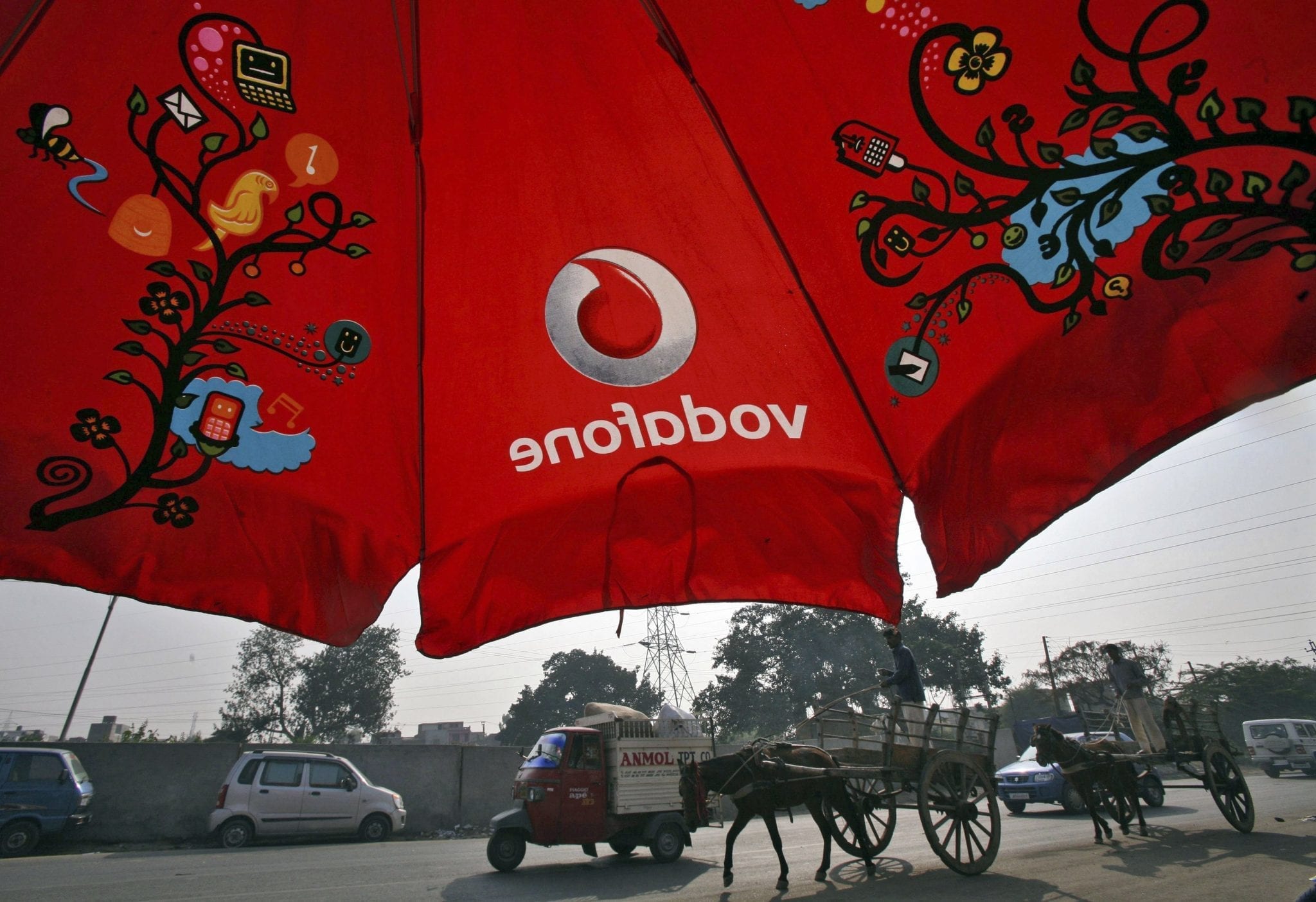
    Vodafone India is reportedly the frontrunner for acquiring Telenor’s Indian spectrum holdings and operations in a deal that could be worth over $1 billion.

    Two people close to the negotiations said that Vodafone India is pursuing the deal to help it better compete in the battle over mobile data customers.

    The sources differed over whether the deal would involve only acquiring Telenor’s Indian spectrum holdings or the company as well. But they both told the publication that Telenor India’s 1800-MHz spectrum is valued at around $1 billion.

    Spectrum is the main draw of the acquisition, but if Vodafone does buy Telenor India’s operations as well it may involve taking on Telenor India’s significant debt and try to remain the operator’s customers in key service areas.

    Vodafone currently only possess 4G spectrum in five of India’s 22 telecoms circles, whereas rival Bharti Airtel and the soon-to-launch Reliance Jio have pan-India holdings and Idea Cellular has 4G spectrum in 10 circles. Acquiring Telenor’s Indian spectrum would help even the playing field.

    Telenor India operates in seven telecoms circles, but its customer base remains relatively low after eight years of operation.

    Vodafone India has declined to comment specifically on the matter, but a spokesperson confirmed that the company is open to options including spectrum trading and M&As.

  • AWS opens first Indian region

    AWS opens first Indian region

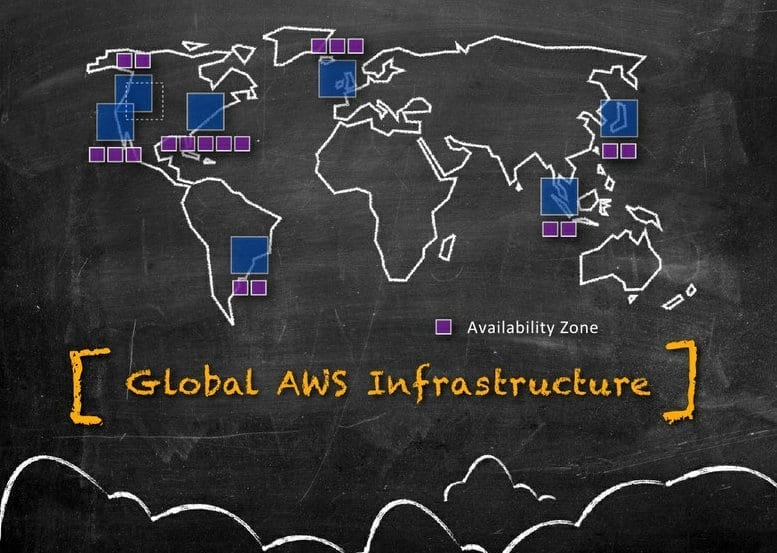
    AWS has launched two data centers in Mumbai, taking the total number of Availability Zones to 35 across 13 technology infrastructure regions globally. With these data centers, Mumbai becomes AWS’ sixth region in Asia Pacific.

    The new AWS Mumbai Region consists of two separate Availability Zones at launch. Availability Zones refer to data centers in separate, distinct locations within a single region that are engineered to be operationally independent of other Availability Zones, with independent power, cooling, and physical security.

    AWS customers focused on high availability can architect their applications to run in multiple Availability Zones to achieve even higher fault-tolerance.

    According to Andy Jassy, CEO of AWS CEO Andy Jassy said more than 75,000 customers in India are using other AWS Regions.

    “These same 75,000 Indian customers, along with others interested in starting use of AWS, have asked for an AWS India Region so they can move their applications that require low latency and data sovereignty,” he said.

    “We’re excited to make this available today, with the same pay-as-you-go pricing, ability to get started immediately without having to negotiate enterprise agreements or wait days for access, and unmatched functionality that customers enjoy in AWS Regions worldwide.”

    AWS is also partnering with India’s National Institute of Electronics and Information Technology to train 25,000 people on cloud technologies.

  • Starbucks India helping Tata Group internationally

    Starbucks India helping Tata Group internationally

    Strengthening their partnership, Coffee retailer Starbucks India is helping lift international exposure for India’s Tata Group brands.

    Starbucks is introducing Tata’s single-origin coffee in the US and its mineral water in Singapore, and helping develop a signature Indian tea blend. In return, Tata group is introducing Starbucks coffee on Vistara flights and launching its specialty tea brand Teavana in India.

    Starbucks will sell single-origin, premium coffee from India at its Starbucks Reserve Roastery and Tasting Room in Seattle, says chairman/CEO Howard Schultz said after meeting Tata chairman Cyrus Mistry at the iconic store. Starbucks will be opening a similar outlet in Shanghai next year.

    Tata-Starbucks will also introduce Kenyan and Sumatran coffees at Starbucks stores across India, says the company, and Starbucks coffee will be available on Vistara, a full-service airline, later this year. Vistara is a joint venture between Tata Sons and Singapore Airlines, and has more than 457 flights weekly to 17 destinations.

    Following the success of the tea category in its US stores, Starbucks will extend its Teavana specialty tea brand to India in December. The joint venture is also collaborating on the development of a signature Indian tea blend for Starbucks stores in India.

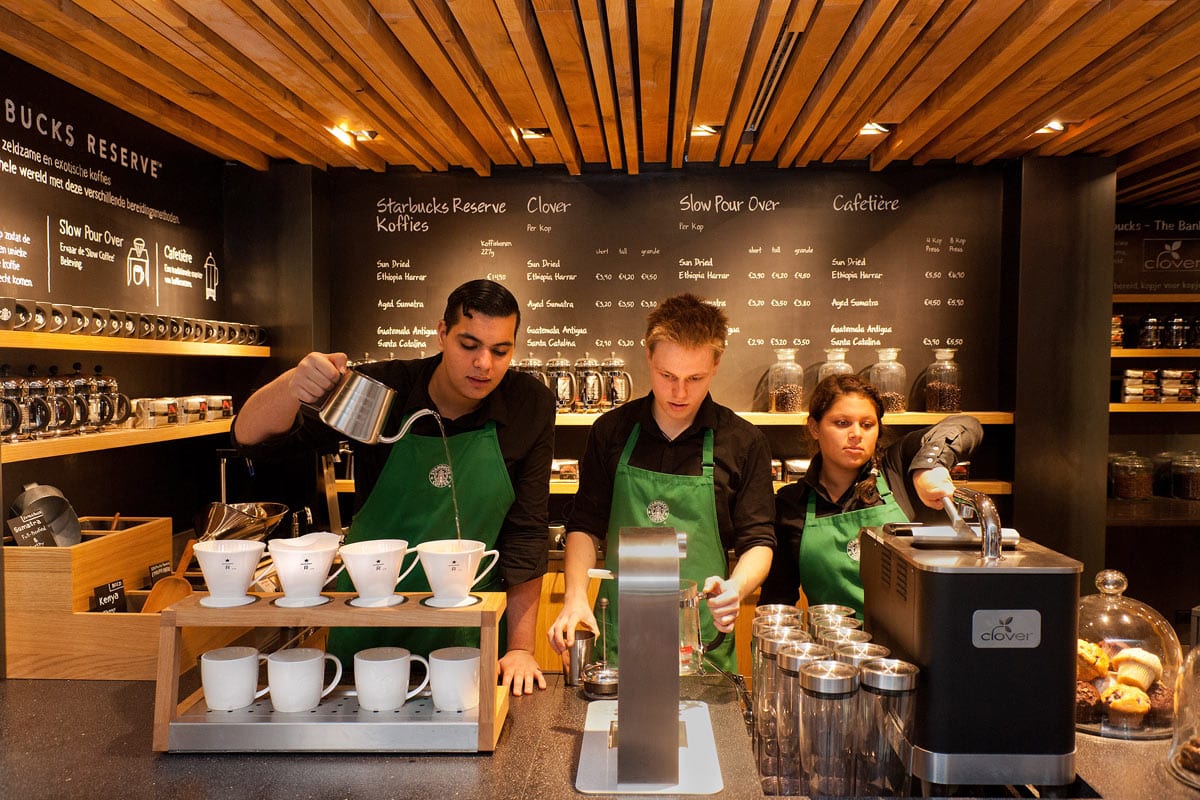
    India has become Starbucks’ fastest-growing market since the first cafe opened in 2012 in a partnership with Tata Global Beverages. The chain has expanded to 84 locations across six cities.

    The company’s China and Asia-Pacific unit generates about 13 per cent of its total revenue, and Starbucks plans to open about 900 outlets in the region this fiscal year, compared with 700 store additions in the Americas and 200 in Europe, the Middle East and Africa. It has more than 2000 cafes in China alone and plans about 500 new stores a year in the country.

    Starbucks also plans to expand the availability of Himalayan Mineral Water, bottled by Tata Global Beverages, beyond Starbucks stores in India to Singapore this year. It is also exploring opportunities to introduce the brand to stores across Starbucks China and Asia-Pacific region.

  • Indian telco sector to be worth over $100b by 2020

    Indian telco sector to be worth over $100b by 2020

    The Indian telecoms services market is on track to pass the $100 billion mark by 2020, maintaining its status as one of the fastest growing markets in the world, a new report predicts.

    Market Research Store forecasts that the market will grow at a CAGR of 10.3% for the period between 2015 and 2020 to reach $103.9 billion.

    Wireless services will grow at a 9.3% CAGR over the same period to reach $39.02 billion, with 4G services achieving a CAGR of a strong 26.6%.

    According to the report, increasing network coverage and shrinking tariff rates due to heavy competition have served as the main drivers of the market in recent years. Due to these factors the market has grown exponentially to emerge as the second largest market in the world.

    Bharti Airtel leads the Indian wireless market, followed by Vodafone, Idea Cellular and Reliance Communications. Reliance Jio Infocomm is meanwhile expected to have a disruptive impact on the market when it fully launches pan-India 4G services.

    The banking, financial services and IT enabled service industries are helping to drive demand for telecoms services as they seek to engage more with customers through mobile applications, the report states. Oil and gas is meanwhile emerging as another key industry segment.

  • Tata Teleservices may sell spectrum to pay DoCoMo

    Tata Teleservices may sell spectrum to pay DoCoMo

    India’s Tata Teleservices is reportedly considering pursuing a sale of part of its spectrum holdings to help raise funds for the compelled buyout of NTT DoCoMo’s stake in the operator.

    The company is looking into selling some of its 800-MHz and 1,800-MHz spectrum, and is sending feelers to rival operators that may be interested in the sale.

    Operators including Vodafone and Telenor had previously expressed an interest in acquiring part of Tata Teleservices’ spectrum, but the discussions at the time stalled due to a lack of clarity around spectrum trading regulations.

    But the operator’s efforts to sell its spectrum may well be complicated by the fact that most of its 1,800-MHz spectrum had been allocated under the earlier regulatory regime and is not eligible for trading.

    Indian spectrum trading rules also require operators to pay a substantial fee to liberalize the spectrum to be sold, which would reduce the potential proceeds.

    Tata Teleservices needs to raise money to fulfil its obligation to buy out NTT DoCoMo’s minority stake for $1.17 billion.

    DoCoMo announced in 2014 that it plans to exercise its option to compel Tata Group’s majority shareholders Tata Sons to buy out this stake for at least 50% of the acquired price, but the transaction has not yet taken place.

  • Vodafone said to plan $2.5b India IPO in Q4

    Vodafone said to plan $2.5b India IPO in Q4

    Reports indicate that Vodafone is preparing to conduct an IPO of its Indian business in the fourth quarter that could raise as much as $2.5 billion.

    The operator is expected to file a draft prospectus for the IPO in August, citing sources close to the deal.

    According to the report, Vodafone has hired Bank of America, Kotak Investment banking and UBS AG as the global co-ordinators for the IPO. The bank selection process commenced in April.

    With a potential value of up to $2.5 billion, the IPO would be India’s largest public listing since 2010. Previous reports indicate that the value of the offer could be much larger, to the extent that the IPO has the potential to be India’s largest ever float.

    Vodafone has been considering an IPO of its Indian operations for years, but the process has been complicated in part by disputes with the government over tax demands and the merger of its operating businesses.

  • New Indian ruling appears to finally give Apple go-ahead to open retail stores

    New Indian ruling appears to finally give Apple go-ahead to open retail stores

    Amended foreign investment rules clear the way for Apple India stores, and the possibility for the US technology giant to start manufacturing there.

    Under the new rules, foreign retailers are exempted for three years from a requirement to locally source 30 per cent of the goods sold in company-owned stores.

    This means Apple, which now sells its hardware through resellers and first applied for store licences in January, can set up its own shops in India, the world’s fastest-growing major smartphone market with sales expected to rise more than 25 per cent this year.

    Apple, which has a less than 2 per cent share in India’s smartphone market, can resubmit its application for store licences.

    India has been lobbying Apple and its partner Foxconn to start manufacturing in India as part of Prime Minister Narendra Modi’s agenda to bring in foreign manufacturers to create millions of jobs. The rule-change announcement comes a month after Apple boss Tim Cook met Modi to discuss the company’s plans for retail and manufacturing in India.

    Meanwhile, India’s new look at retail rules may also help with expansion for Swedish furniture-retailer Ikea, which is setting up stores in Hyderabad and Mumbai.

  • CenturyLink acquires cloud startup ElasticBox

    CenturyLink acquires cloud startup ElasticBox

    CenturyLink has announced the acquisition of ElasticBox, a multi-cloud application management service for an undisclosed amount.

    The acquisition combines the ElasticBox platform with the global network, hosting and delivery capabilities of CenturyLink.

    ElasticBox, a startup with offices in San Francisco and Madrid, enables enterprise IT organizations to orchestrate the deployment of applications and create a self-service catalog of applications and infrastructure.

    Aamir Hussain, CenturyLink CTO said the acquisition of ElasticBox strengthens and enhances CenturyLink’s development and deployment of multi-cloud services management capabilities, as well as the company’s ability to deliver end-to-end network and hybrid IT services to business customers globally.

    “The ElasticBox multi-cloud management platform frees businesses to focus on issues that are central to their organization rather than spending time and resources managing multiple clouds,” Hussain noted.

    ElasticBox enables application orchestration for more than 12 different cloud providers, including Amazon Web Services, IBM’s SoftLayer, Microsoft Azure and VMware. ElasticBox recently added support for CenturyLink Cloud and more feature support for Google Compute Engine and OpenStack. ElasticBox also supports Docker and Amazon ECS containers, and recently added Kubernetes as another destination for applications. These deployment options enable customers to package a range of applications into a container and manage it via ElasticBox.

    CenturyLink and Nxtra Data Limited, a wholly owned subsidiary of Bharti Airtel, meanwhile announced an exclusive business partnership to provide advanced hosting and managed IT services to enterprises in India.

    This exclusive partnership brings Nxtra Data’s Indiadata center management expertise together with CenturyLink’s cost-effective hosting, managed services and cloud capabilities to serve businesses and government organizations in India.