Tag: india

  • Taiwan Mobile eyes investments in India, Indonesia

    Taiwan Mobile eyes investments in India, Indonesia

    Taiwan Mobile is considering investing in the telecoms markets of India and Indonesia due to their strong growth potential.

    At the operator’s annual general meeting, chairman Richard Tsai said the company is evaluating opportunities to enter the markets.

    While Tsai acknowledged that India’s overcrowded market has resulted in heavy price competition, he said that the large population is creating opportunities in segments including data transmission.

    The operator is evaluating the possibility of teaming up with operators in India to carve out a slice of the nascent 4G market in the nation.

    According to Tsai, the company has also been eyeing an entry into the e-commerce sector in Southeast Asia, with subsidiary momo.com preparing to explore the markets of the Philippines and Vietnam.

    Domestically Taiwan Mobile is focused on developing its third party payment business while kicking off an OTT content business. Taiwan Mobile has meanwhile set a target of lifting its 4G subscriber base to 5 million in 2017 from 3 million at the end of 2015.

  • Singtel, Airtel to combine IP VPNs

    Singtel, Airtel to combine IP VPNs

    Singtel and India’s Bharti Airtel have announced a strategic alliance to provide high-speed connectivity to global enterprises through a single IP VPN.

    The operators have combined their infrastructure into one network providing coverage to 325 cities through 370 points of presence in APAC, MEA, Europe and the US. This will form one of the largest IP VPNs worldwide.

    The network will support MPLS and high-bandwidth business applications including unified communications, video conferencing and SDN.

    A single helpdesk and a single integrated operations and maintenance system have been jointly developed to support the combined networking operations.

    “We believe joining forces this way makes total sense. By tapping on one another’s infrastructure assets we enhance each other’s capabilities,” Singtel Group Enterprise managing director of global enterprise business Lim Seng Kong said.

    “With its wide coverage of cities in India, this network paves the way for our international customers to enter into one of the world’s most vibrant economies. Conversely, this partnership also opens the door for Indian companies to expand abroad, supported by Singtel’s high quality IP VPN network in major business cities in Asia, Europe and the US.”

    He said the agreement will allow Singtel to strengthen its lead as the largest IP VPN provider in APAC with domestic data networks in Australia, India and Singapore.

  • H&M collaborates with Caitlyn Jenner for its newest athleisure range

    H&M collaborates with Caitlyn Jenner for its newest athleisure range

    A new H&M athleisure wear range is to be launched in July, developed with input from the Swedish Olympic team and fronted by personalities including Caitlyn Jenner.

    The launch of For Every Victory makes H&M one of the first major multinational fashion brands to make a serious foray into the booming athleisure wear market, to date dominated by fast-growing specialist brands including Lululemon, UnderArmour and 2XU.

    H&M -For Every Victory

    H&M For Every Victory – described by the H&M as “high fashion performance sportswear made to inspire” has been developed with input from the Swedish Olympic team, and the campaign is fronted by inspirational personalities who have all achieved their own victories, whether in sport or life.

    H&M -For Every Victory 1

    The athletes advised on design, performance and wearability. H&M also designed outfits for the Swedish Olympic and Paralympic team for Rio 2016, including the opening ceremony uniform, selected competition pieces and the prize ceremony outfits.

    “This is a collection about performance with great style and the input of the Swedish Olympic team has been invaluable in the creation process,” said Pernilla Wohlfahrt, design and creative director at H&M. “The result is high fashion technical sports pieces for everyone to wear.”

    The For Every Victory collection has a similar visual expression and technical knowledge to the Swedish Olympic team collection, with its own colour palette in black, grey, dusty pink and gold. It is centered on performance T-shirts, running shorts and leggings, as well as sports bras for women.

    H&M -For Every Victory 3

    The quick-drying, breathable materials help to optimise performance and recycled polyesters prove that high-function sportswear can also be conscious and more sustainable − all showing that there’s no compromise on either fashion or performance.

    H&M -Olympic collection

    Among the personalities fronting the new range are Caitlyn Jenner with her Olympic gold medal in the decathlon; Chelsea Werner, a gymnast who has never let Down Syndrome halt her progress; surfer Mike Coots who still takes to his board even though he lost his leg in a shark attack and boxer Namibia Flores who has fought against prejudice to pursue her dreams.

    The new range and brand will be launched globally on July 21.

  • India may import pulses from Myanmar, African nations

    India may import pulses from Myanmar, African nations

    Faced with the highest-ever surge in food prices in the past two years, the NDA government did some brainstorming on Wednesday to devise steps to check prices, especially of pulses.

    At a review meeting convened by Finance Minister Arun Jaitley here, it was decided to boost supply by increasing buffer stocks and imports.

    The Centre may look to Myanmar and Africa to import lentils and pulses, it is learnt. India has already submitted a draft agreement for import of tur from Myanmar via the government route.

    Many African nations have also evinced interest in supplying lentils to India.

    “The Finance Minister said imports via public and private agencies should be strengthened to meet the deficit,” Food Minister Ram Vilas Paswan told newspersons after the meeting. He added that the demand-supply gap of about 7.6 million tonnes of pulses was being met by imports and local procurement to create a buffer stock of 1.5 lakh tonnes this year.

    It is not only the runaway increase in prices of pulses, which have soared to as much as ₹170/kg, that has hurt the aam aadmi; even vegetable prices have shot up in recent weeks.

    Tomato prices in most retail markets have doubled to ₹80-100/kg in the last fortnight due to sluggish supply owing to crop damage. Potato prices have also been on the rise.

    Besides Paswan, the high-level meeting was attended by Agriculture Minister Radha Mohan Singh, Transport Minister Nitin Gadkari, Commerce Minister Nirmala Sitharaman and Urban Development Minister Venkaiah Naidu.

    Discussions involved releasing more pulses from the buffer stock whenever there is a demand from the States. However, Paswan passed some of the blame for high prices to the States.

    “If prices rise despite this move, the Centre is not responsible. In a federal structure, States have equal responsibility in controlling prices,” he said, adding that the Centre had created a buffer stock, but “not many States had shown interest.”

    Against this year’s procurement target of 1.5 lakh tonnes of pulses for buffer stocks, 1.15 lakh tonnes has been purchased, he added.


  • Lenovo eyes India as sales plunge in China

    Lenovo eyes India as sales plunge in China

     As part of its plans, Lenovo aims to increase its market share from less than 10% during the January-March quarter by expanding its reach of smartphones in retail outlets. (Reuters)

    As sales slide in its home country China, Lenovo Group is planning to ramp up its presence in India, the world’s second largest smartphone market including expanding its retail presence for its smartphones, extending apps for the local market, and increasing local manufacturing.

    “India for most of our product categories is a key strategic market” said Aymar de Lencquesaing, senior vice president, Lenovo Group, who also leads the Chinese company’s mobile business including R&D, product and supply chain management.

    “We believe this market will continue to grow not only in volume but also in the line-up of premium products,” he said.

    As part of its plans, Lenovo aims to increase its market share from less than 10% during the January-March quarter by expanding its reach of smartphones in retail outlets.

    The company had been predominantly focussing on selling through online channels to increase sales, since it gives better margins by saving on inventory and supply chain costs.

    Lenovo also plans to increase manufacturing of its handsets within India as and when the demand increases, he said.

  • LeEco India moves into stores

    LeEco India moves into stores

    Chinese internet and ecosystem conglomerate LeEco India has ventured into the offline retail space to expand its consumer base in an increasingly competitive market on the sub-continent.

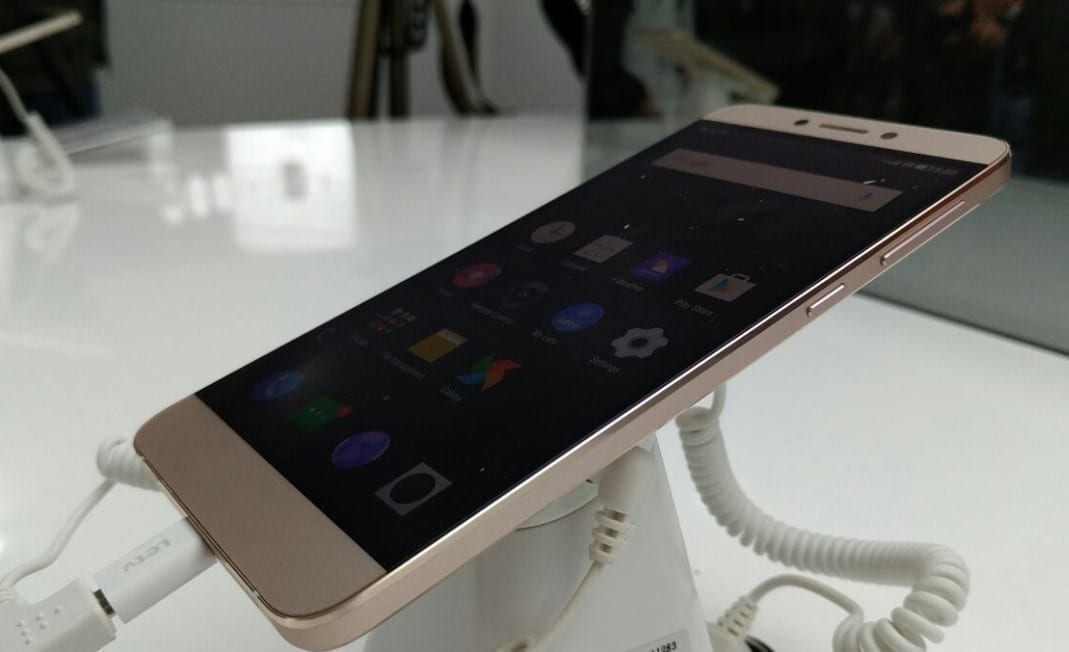
    It has started selling its Le 1s smartphone, initially available exclusively on Flipkart, through retail stores across prime locations in Delhi and Mumbai. In the second phase, LeEco plans to cover nearly 70 per cent of retail stores across India that sell mobile technology, by the end of September.

    “We have fast-tracked our growth trajectory in India, and our entry into the physical retail space affirms it,” says Smart Electronics Business of LeEco India COO Atul jain.

    LeEco has also just launched its eCommerce platform LeMall in India, and also has a new ecosystem membership program. As well as providing users with high-quality content, the program integrates personal cloud services (LeEco Drive), LeMall and after-sales services.

    Founded in China in 2013, LeMall is now available in Hong Kong and the US with a product range including smartphones, smart TVs, reverse in-ear headphones, all-metal earphones and Leme Bluetooth headphones. The company started in India in January with the Le 1s and Le Max, and now has 555 service centres in prime locations.

  • India says Apple can open stores, but first create jobs

    India says Apple can open stores, but first create jobs

    Foreign companies eager to sell products in India must also create jobs in the country, Indian Finance Minister Arun Jaitley told CNBC in an interview, amid efforts by tech giant Apple to win approval to open its own retail stores in Asia’s third-largest economy.

    Apple’s application — aimed at boosting sales in India and countering a slowdown in China — has yet to be approved, as India typically requires single-brand retailers to source at least 30 percent of their raw material needs from local suppliers.

    Jaitley said the thought process behind the rule, which was put in place by the previous United Progressive Alliance coalition, was sound.

    “Speaking for myself, I feel it was based on good rationale, and the rationale behind the policy was, when somebody eyes such a large market, obviously job creation also is something the government of India is concerned with,” Jaitley said.

    “Now am I to be concerned with job creation or not? Or am I only to allow foreign companies to sell products in India and not create jobs in India?,” he said.

    Jaitley said exceptions could be made in case of specific high-technology areas and the government would take a call on whether Apple’s application meets this criteria.

    Apple currently sells products in India through distributors. The tech company recently opened an iOS developer center to help support and develop future app-makers.

    Bolstering jobs creation is a key cog of the Indian government’s showpiece “Make in India” initiative that aims to encourage foreign manufacturers to set up shop in India.

  • Intel India debuts three digital literacy projects

    Intel India debuts three digital literacy projects

    In a bid to bridge the digital divide in India, Intel has launched three projects to accelerate digital literacy at the grassroots level.

    Intel India aims to reach out to the population in rural areas, upskill citizens in tier two cities and beyond and encourage innovation at the local level.

    The chip manufacturing company will partner with state governments and the central government to set up 100 digital learning centers at Common Service Centres (CSCs) in rural areas. The company will work with state governments that are active on the Digital India program.

    “We are thrilled to see the progress made through our collaboration with the government of India on various initiatives like ‘Digital India’ that are bringing technology and innovation mainstream in India,” Robby Swinnen, General Manager, Intel Corporation (Asia-Pacific & Japan) said in a statement.

    Building on the momentum of its “Ek Kadam Unnati Ki Aur” initiative to accelerate access to technology in non-urban India, Intel India e-launched its latest “Unnati Kendra at Common Service Centre” (UK at CSC) in Karnal, the first in Haryana. The ‘UK at CSC’ will serve as the common access digital learning centers for people of the state.

    Intel India is working with the government to open a network of up to 100 ‘UK at CSC’ facilities across 10 states this year, with 10 such facilities already set up in the state of Telangana. The “Digital Unnati” website, set up in collaboration with the CSC e-Governance Services India Ltd, will enable Village Level Entrepreneurs (VLEs) to learn how to assemble a PC online and upskill their technology know-how.

    In addition, the Intel and Government of India’s Department of Science & Technology (DST) Innovate for Digital India Challenge will be launched later on in the year. The challenge supports local innovation and entrepreneurship and is a nationwide competition inviting technology solutions to solve real problems faced by citizens.

    “Intel India is fully committed to achieving the realization of a truly Digital India and has been supporting this vision by fostering innovation and upskilling of the non-urban population,” sums up Debjani Ghosh, vice president, sales and marketing and director, Intel South Asia.

  • Volkswagen awaits approval for its dieselgate fix in India

    Volkswagen awaits approval for its dieselgate fix in India

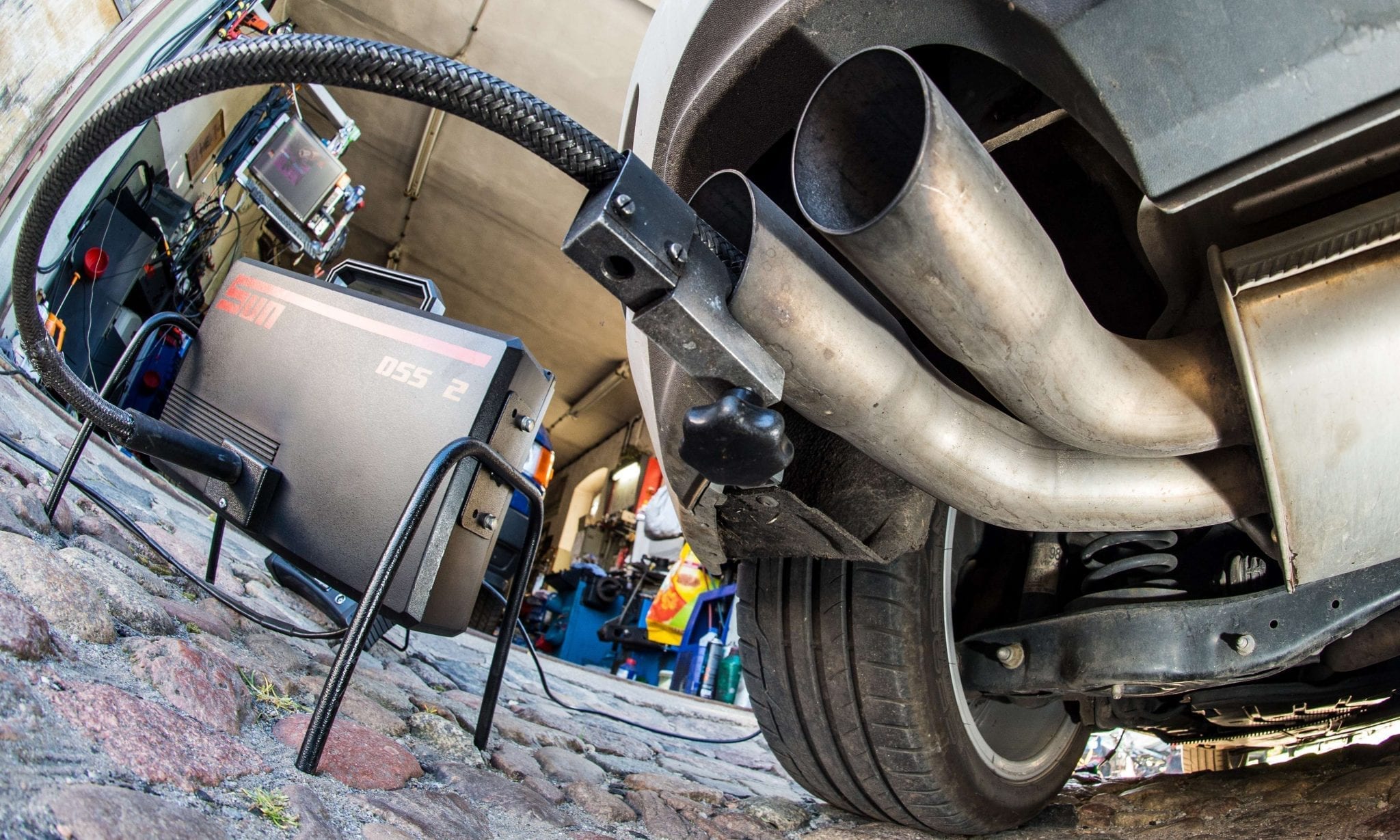
    Volkswagen, the European automotive major hit by the dieselgate scandal, said the company has found a fix for its EA 189 diesel engines in India and has sent it for approvals of the local authorities.

    Once it gets the clearance, the solution would be applied on 3.23 lakh vehicles that have been sold in the country with the EA 189 family of engines. The company said it has also found a software solution for the local Vento manual diesel model, production of which is currently stopped due to inconsistent emission of carbon monoxide. People in the know said Volkswagen could start recalling vehicles by the end of June or July to fix the problem. It is aiming to complete the process within six to eight months.

    “We are awaiting approval (for the fix) and will begin the recall process in the coming months and are hopeful that fixes on all vehicles will be concluded by the end of the year,” Volkswagen India managing director Andreas Lauermann told ETon the sidelines of an event to roll out the Ameo sedan from its factory.

    He said the company’s focus is currently entirely on the Ameo as VW seeks to make a strong comeback in the Indian market. The company’s image had taken a major hit globally following revelations that it had cheated on emission test results. Its sales were hit in India and elsewhere, even as it announced a massive programme to fix the problem.

    The recall process for vehicles fitted with the EA 189 diesel engines, which was to begin at the start of 2016, is yet to get underway. These EA 189 engines are of different displacements 1.2-litre, 1.5-litre, 1.6-litre and 2.0-litre TDI. The 1.2-litre and 2-litre engines need software updates in India, while the 1.5-litre and 1.6-litre engines will get both software and a hardware fix.

    Volkswagen India, which posted strong sales in the first nine months of 2015 with double-digit growth, got hit because of the controversy, with domestic volume declining 2.4% to 43,152 units in 2015. Thanks to the strong export offtake and incremental Ameo output, Volkswagen India is planning to grow its output 15% in 2016 to about 1.42 lakh units. Developed with an investment of Rs 720 crore, the Ameo sedan is a made-for-India product in the VW world.

    Ameo will be positioned in the subcompact sedan market, which sees sales of 25,000 to 30,000 units a month. It will take on the likes of Maruti Suzuki Dzire and Honda Amaze. The company aims to produce about 150 Ameos a day. With the Vento and Polo monthly volumes taking a hit, VW is now betting on Ameo to bring in decent incremental volumes.

  • Nissan plans to establish 300 dealerships in India by March 2017

    Nissan plans to establish 300 dealerships in India by March 2017

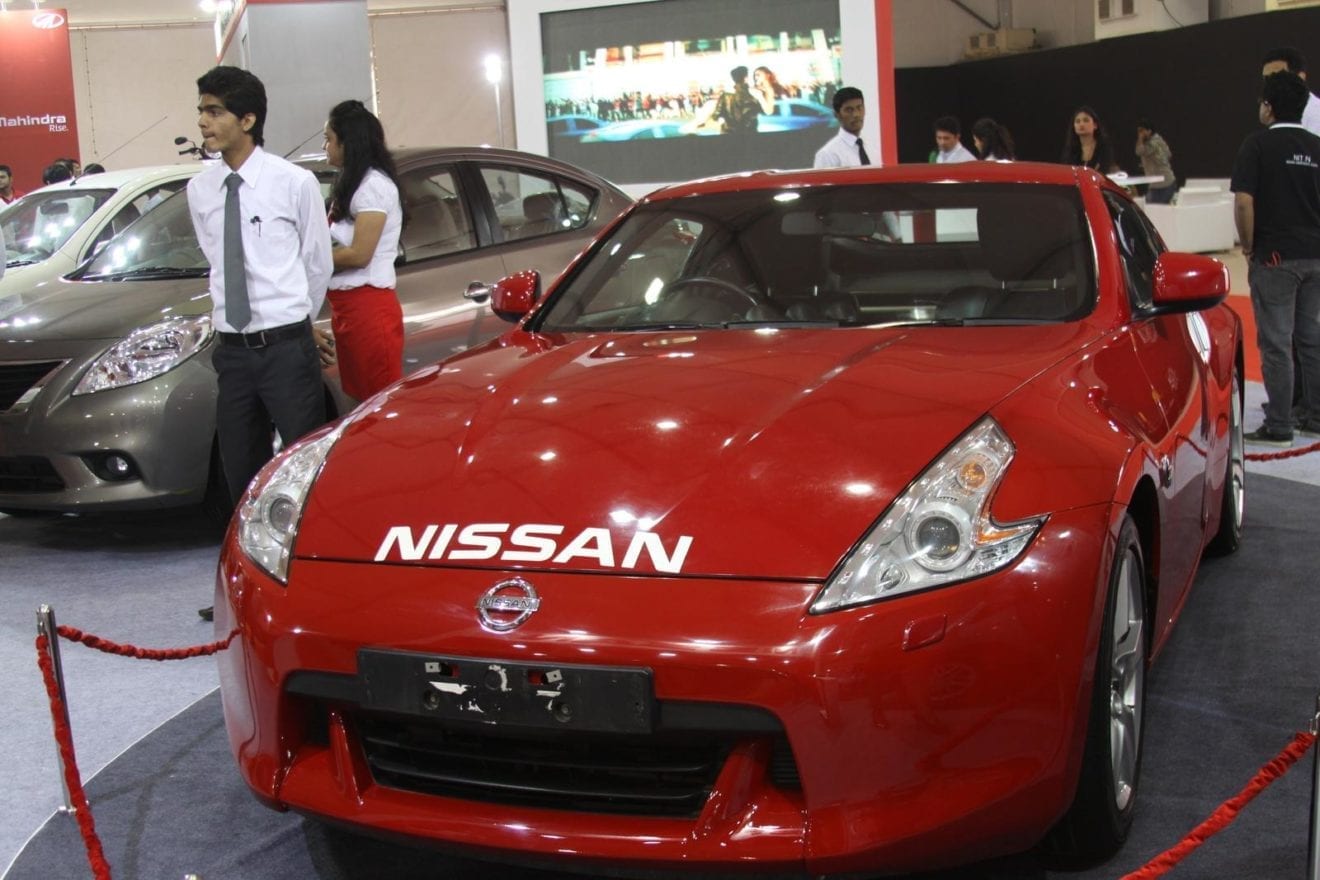
    Japanese car maker Nissan is gearing up to launch “Datsun redi-Go” in the entry level segment and was on course to establish 300 dealerships in the country.

    “We are gearing up to launch Datsun redi-Go, which will compete in the entry level car segment of the Indian market. With redi-Go, Datsun is pioneering a new segment – Urban Cross, combining the best of a hatchback and a cross over”, President of Nissan India Operations, Guillaume Sicard said.

    “As we expand our dealership footprint we are on course to meet our target of establishing 300 dealerships by end of March 2017 across the country,” he said here today.

    At present the company has 218 dealers across 165 cities, Sicard said, adding with new dealerships the company would cover 90 per cent of customers and “enable them with easy and immediate access to committed sales and after sales services”.

  • Airtel Digital TV powers HD offerings with Harmonic solution

    Airtel Digital TV powers HD offerings with Harmonic solution

    Airtel Digital TV has deployed a compression headend solution from Harmonic in an effort to substantially improve the HD viewing experience for its customers.

    The high-density, scalable and HEVC-upgradeable video infrastructure solutions from Harmonic is expected to help Airtel Digital TV increase bandwidth efficiencies and significantly improve video quality while lowering operating expenses.

    The deployment is also expected to enable Airtel Digital TV to expand its DTH HD portfolio to over 50 premium channels, making it one of the largest HD offerings in India today.

    “Harmonic’s compression solution allows Airtel Digital TV to deliver superior video quality at low bit rates while adapting to next-generation video compression standards such as HEVC,” said Dan Taylor, general manager in India at Harmonic.

    “Our video infrastructure solutions help customers like Airtel Digital TV reduce OPEX and drive new business growth by simplifying the launch of additional HD channels,” said Taylor.

    At the heart of the headend solution is Harmonic’s Electra X2 advanced media processor, which promises high-quality, low-bandwidth MPEG-2 and MPEG-4 encoding of SD and HD video content for live DTH services.

    The Electra X2 media processors support a wide range of video formats and codecs for satellite delivery, including HEVC, simplifying operations and future upgrades for Bharti Airtel.

    At Airtel Digital TV, the Electra X2 media processors will be integrated with Harmonic’s ProStream 9100 stream processor and ProView 7100 integrated receiver-decoder (IRD), and controlled by Harmonic’s NMX video network management solution.

  • Google may get approval to test Loon in India

    Google may get approval to test Loon in India

    Google is reportedly in discussions with the Indian government to test its Project Loon in the nation through a four-day pilot program.

    The company is likely to secure approval for the test in Andhra Pradesh or Maharashtra. State-owned operator BSNL is co-ordinating with Google on the project, providing space, spectrum coordination and equipment testing, according to the report.

    The companies are evaluating the use of either the 700-MHz or 2500-MHz bands for the pilot, and the latter seems the more likely choice as it would not require the approval of the Department of Telecom. BSNL has 20 MHz of spectrum in the 2500-MHz band across 14 of India’s 22 telecom circles.

    Project Loon is a Google “moon shot” aimed at providing internet connectivity via a network of high-altitude helium balloons circling the globe.

    Trials of the technology are also being conducted in the US, Australia, Brazil, Indonesia, New Zealand and Sri Lanka. The technology is being developed with a particular focus on improving connectivity in emerging nations

  • Reliance Jio said to close in on iPhone deal

    Reliance Jio said to close in on iPhone deal

    India’s Reliance Jio Infocomm is reportedly on the verge of securing a long-term partnership with Apple covering the supply of VoLTE iPhones for the operator’s upcoming 4G network.

    Executives from Reliance Jio parent Reliance Industries and Apple recently reached an in-principle agreement at a meeting in Mumbai, citing senior executives aware of the meeting.

    The prospective deal would reportedly see Apple supplying “a couple of million” iPhones with VoLTE support that will work on the operator’s network. Reliance plans to sell bundled iPhones through its sales and distribution network covering 120,000 retailers and e-commerce companies.

    Reliance Jio also plans to adopt the enterprise retail offerings developed by Apple and IBM for its retail network, to help improve the customer experience.

    Apple CEO Tim Cook has given in-principle agreement to such a partnership with Reliance Jio, the report states.

    Cook is said to have also used the meeting to make a pitch for Reliance Jio to adopt Apple Pay in Reliance Retail stores, and the company has agreed to evaluate the possibility of such a deployment.

    Reliance Jio recently revealed it had exceeded 500,000 LTE users despite only so far launching services for its employees and those of its partners and vendors. The operator’s long-awaited public launch is expected for later this year.

  • Babyshop mulls major GCC expansion to reach 270 stores in 2016

    Babyshop mulls major GCC expansion to reach 270 stores in 2016

    Babyshop is looking to launch 25 stores in Saudi Arabia alone in two years, says Vinod Talreja, CEO of the retail unit under Dubai-based Landmark Group.

    Retail sector data from various markets, including the US, highlights the current global economic outlook. The markets in the MENA region, the UAE in particular, have already been hit by the dip in tourist flow. What are your projections?

    The retail sector in the MENA region has witnessed strong growth over the years, driven by strong economies, high disposable incomes and increased population, and will continue to see growth in the coming years.

    Having said this, in business, there could be periods where markets and situations could be a little slower than the other highly aggressive times. Such situations only give us retailers the opportunity to fuel innovation and strive even harder, working towards improved business growth using various different channels and activities that are in sync with the objectives of the business. Enhancing value propositions while closely catering to customers’ needs and requirements is one way of dealing with situations such as these.

    At Babyshop, we are continuing to expand. We are a company that has been expanding consistently for the past many years and our growth plans will not be affected by any short-term market challenges, as our business plans are laid out with long-term future strategy in mind.

    In terms of tourism to the region and to the UAE in particular, the upcoming Expo 2020 will definitely propel economic growth, thereby boosting the overall retail sector.

    The emirate is targeting 20 million visitors per year by 2020 and this will clearly have a tremendous impact on the sales of every category, proportionate with this massive number of visitors and thus taking retail to new heights.

    In 2015 alone, Dubai attracted more than 14.2 million overnight visitors, recording a solid 7.5 per cent increase over 2014, which is double the United Nations World Travel Organisation’s (UNWTO) projected three to four per cent global travel growth for the same period.

    These numbers clearly reiterate that the region is geared and well-positioned for the expected huge numbers which in turn will surge sales to significant levels across, thus fostering growth and invigorating the local economy.
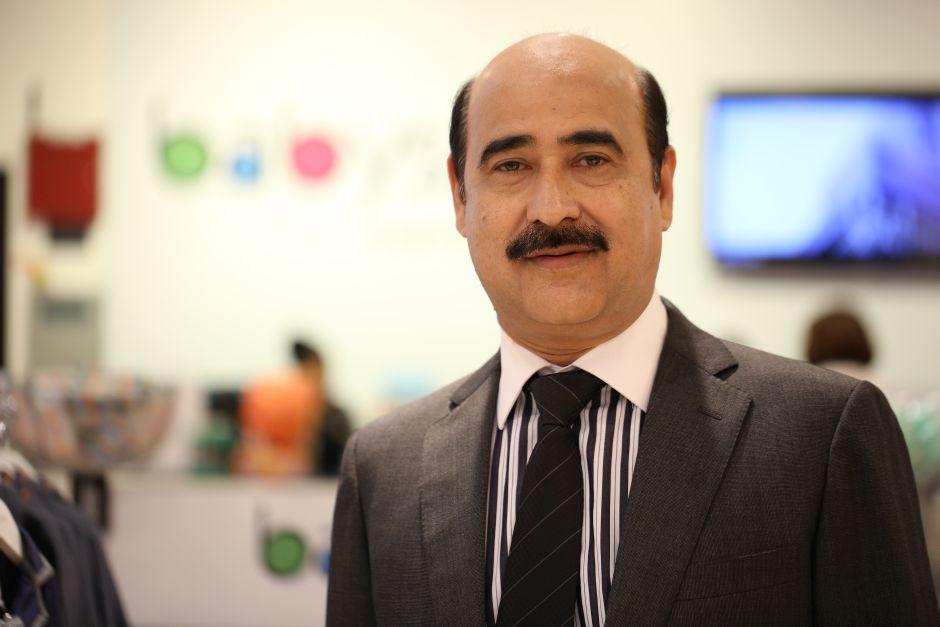
    Vinod Talreja, CEO Babyshop

    Babyshop, as well as its parent group Landmark, has an impressive footprint in the GCC. Although it has a few stores in the regions beyond MENA, the presence there is not much felt.

    Is it that the mid-market retailer is not so optimistic about those markets or is it that the “comfort zone” in the home region pulls it back?

    Babyshop, started in 1973, has 235 stores across 19 countries in the MENA region. The number is expected to reach 270 by end 2016. The brand is also well on track to achieve its target of 300 stores by end 2017, expanding into regions beyond the GCC.

    With a strong retail sector, Saudi Arabia today stands as our largest market, with 116 stores, followed by the UAE with 47 stores. We also have significant presence across the rest of the GCC and Egypt, Jordan, Lebanon, Iraq, Yemen, Libya, Kenya, Nigeria, Tanzania, Pakistan, Thailand and Kazakhstan.

    With a long-term vision of having significant footprint across the world, Babyshop has plans to expand into three new territories in 2017, with a major focus on the GCC, predominantly Saudi Arabia; Africa, with an emphasis on North Africa; and Thailand.

    We are extremely optimistic about our foray into newer markets in the MENA region and beyond, where retail sales are expected to continue and the retail space pipeline remains strong. These markets continue to be hotspots for the growth of retailers at both the regional and international levels.

    In a clear indication of the fundamental role the brand plays, this noteworthy presence of Babyshop and the aggressive expansion plans beyond this region into newer territories confirms its leading position at the frontline of the retail industry.

    What factors do you consider when choosing a new market for entry?

    Entering a new geography is a very important decision any brand can make and requires significant effort and commitment to implement an appropriate entry plan. In fact, target-marketing selection is a key part of our overall strategy at Babyshop and typically involves a significant in-depth analysis to understand various factors.

    Keeping in mind the vision and mission of Babyshop, the key factors that we consider before entering any market are the size of the market, its growth potential, the consumers and their purchase patterns and habits, competition, ease of accessibility to the local residents and, most importantly, the capital investment required to enter the chosen market.

    Is India on the list of new markets that you will be entering as part of your expansion plans, bearing in mind that it is going to be one of the fastest-growing economies this year?

    Our expansion plans set for the coming years are focused on the GCC, Africa and Thailand. These are highly favourable regions, with continued backing and support of the local governments, increased business prospects and growing population.

    As per AT Kearney’s Global Retail Development Index 2015, with a population of 30.8 million in Saudi Arabia, total retail sales grew at a CAGR of 7.7 per cent during 2010-2014 to reach $103 billion. In the next two years, we are looking to launch 25 stores in that market alone.

    India is currently not on the cards; however, with the market being a promising retail segment, we might consider it within our strategy in the future.

    Is franchising in retail by regional brands a new direction that is being witnessed? Landmark is seen to be taking the lead on this. How is Babyshop doing this?

    Franchising in general is just another way of reaching out to larger and booming retail segments, while being able to respond to local tastes, the changing needs of consumers and catering to distinct consumer groups by offering them a different product mix of high-quality products.

    Today, we are present in Nigeria, a market that we tapped into in January 2016 in a franchising model with Artee Group, along with Splash and Lifestyle, the other leading fashion and lifestyle brands of Landmark Group. We also have a presence in Thailand under the same model with Robinson, the exclusive distributor for Babyshop products in the market, as well as in Kenya, where The Junction and Sarit Centre are a franchise held with Deacons, a leading retail company in the East Africa region.

    The fresh approach adopted for the brand has showcased incredible success so far with great consumer feedback garnered. In Thailand alone, we plan to open ten stores over the next year.   We will be continuing to launch in various other regions under the franchising model in the coming years as well.

  • Zara India cuts prices as rival arrives

    Zara India cuts prices as rival arrives

    To be more affordable for the market, Zara India has cut its merchandise prices by 10 to 12 per cent.

    The Spanish fashion brand took this move to coincide with the entry of rival H&M into India, reports the Business Standard.

    Established in India for six years in a joint venture with Tata’s Trent, Zara has 16 stores and is planning to open more. H&M has three stores after arriving late last year.

    Though it has become the fastest fashion brand to achieve $100 million revenues, Zara has seen a slowdown in sales growth. Its prices are reportedly 30 per cent higher than H&M. It has 7013 stores internationally, while H&M has about 3900 in 61 markets.

    Both brands are in malls in India’s National Capital Region, such as Select City Walk in Delhi and Mall of India in Noida. In Mumbai, H&M is planning to open a store next to Zara in High St Phoenix and in Phoenix Market City, Kurla, where Zara also has a store.

    Zara’s sales in India were down from 43 per cent in 2014 to 23 per cent last year, according to the Trent annual report.