Tag: Indonesia

  • Garuda to Fly to the US in 2017

    Garuda to Fly to the US in 2017

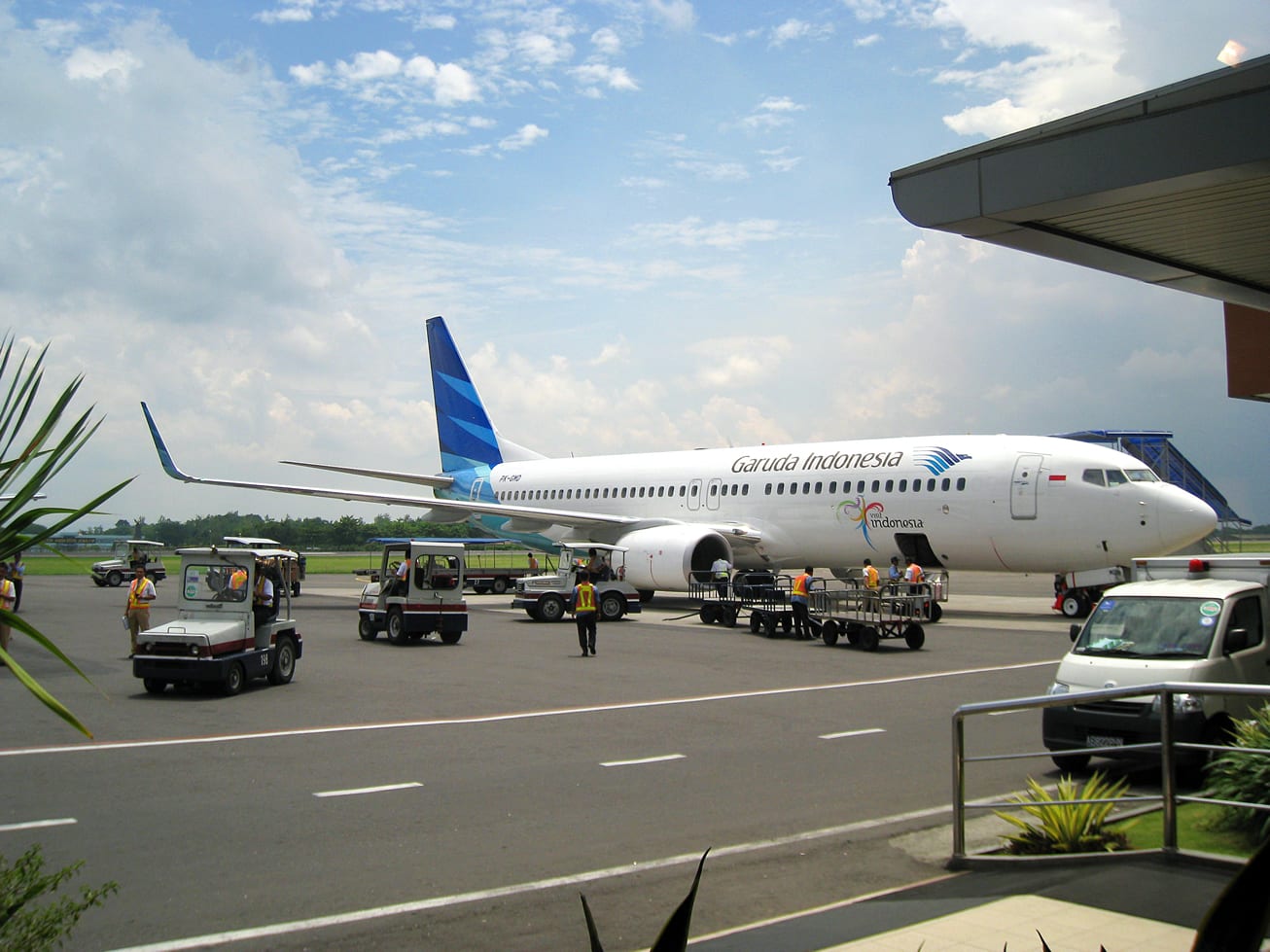
    National carrier Garuda Indonesia plans to serve flights to the United States starting next year.

    Vice President Corporate Communications Garuda Indonesia Benny S. Butarbutar said Garuda’s plan to fly to the United States is one of the measures to strengthen its business expansion.

    “The plan to fly to the United States is business expansion to strengthen the position of Garuda Indonesia as a global player in the aviation industry,” Benny said in a press release on Saturday (10/9).

    Benny said Indonesia’s flight market potentials to the United States is quite high, reaching 400 thousand passengers per year.

    Based on this potential, Garuda Indonesia targets a return flight to Los Angeles will go and New York, as the two cities with the highest market potentials.

    Benny added, in realizing the strategic plan, Garuda Indonesia has initiated various preparations, including a feasibility study of the potential market, profitable routie, and the type of fleet to be utilized optimally, and many others.

    Garuda Indonesia plans to use large-bodied Boeing 777-300ER fleet to fly to America.

  • Indonesian Aircraft Maker Showcases N219 Cockpit Simulator

    Indonesian Aircraft Maker Showcases N219 Cockpit Simulator

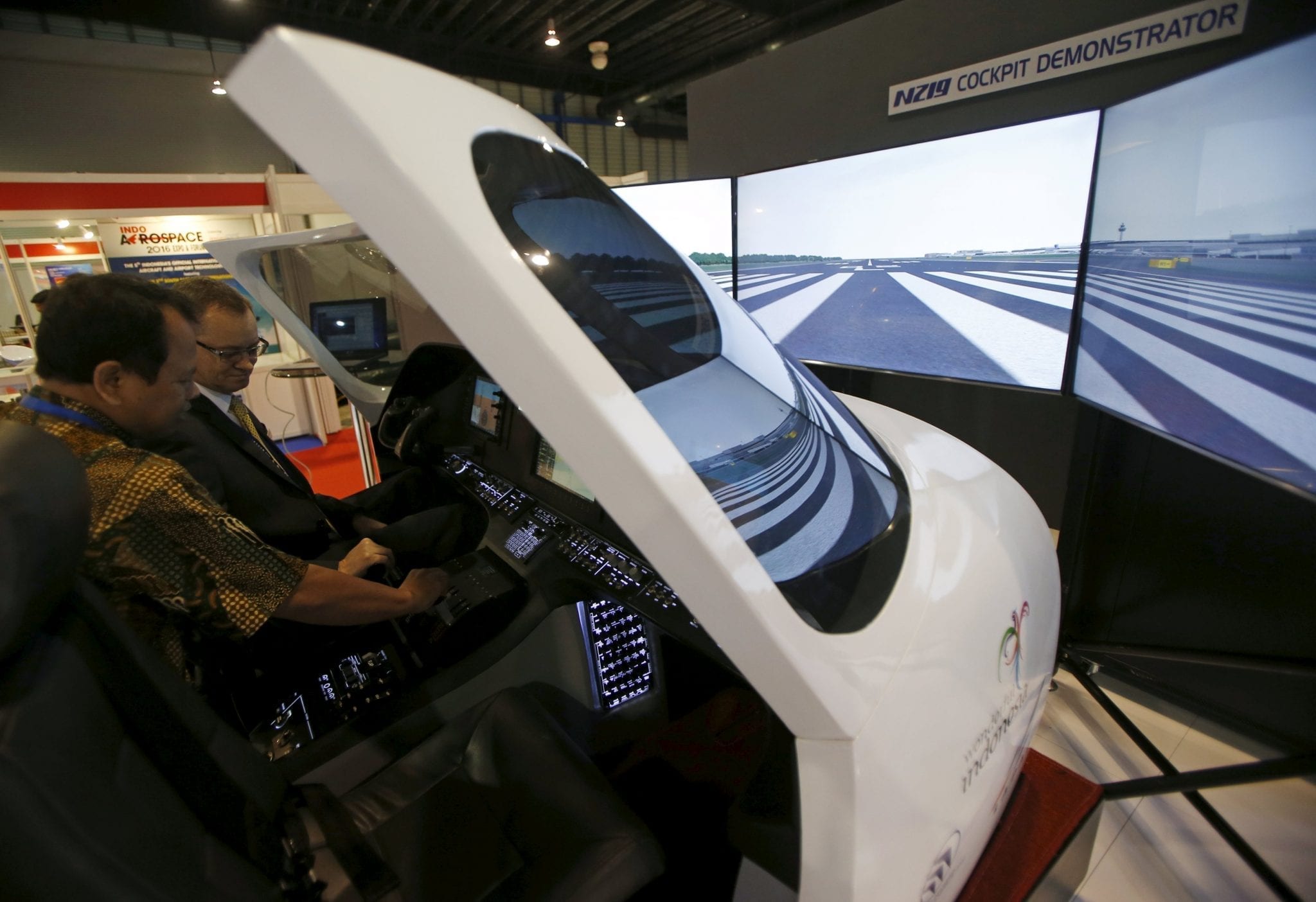
    Indonesian aircraft maker PT Dirgantara Indonesia (PTDI) is showcasing its new product, N219 cockpit simulator, at the Indonesia Business & Development (IBD) Expo 2016 being held from September 8 – 11.

    “We are showcasing CN235 model and N219 cockpit simulator,” the spokesperson of PTDDI, Irland Budiman, said on Friday.

    The simulator is the main attraction at the PTDI booth as visitors are allowed piloting the N219 and fly as if they are in N219.

    Irland said N219 was included in the booth of best innovation products created by Indonesian human resources.

    N219 is a multi-purpose twin-engine aircraft designed to be operated in remote areas. It is a developed version of NC212, produced by PTDI under CASAs license.

    Indonesia Business & Development (IBD) Expo 2016 is witnessing the participation of 118 companies with 700 subsidiaries and 1,100 local government enterprises.

    The event, which features the BUMN (the state-owned enterprises) awards, an exhibition, an international conference, seminars, and many other programs, is being held under the theme: State-owned Enterprises are Agents of Development.

    The Expo is a platform to promote and market various innovative products as well as an opportunity for stakeholders to explore investment opportunities.

  • BI Targets 11% Credit Growth

    BI Targets 11% Credit Growth

    Governor of central bank Bank Indonesia Agus Martowardojo said that BI is targeting bank credit growth by 11 percent next year.

    According to him, the target is expected to be reached due to the influx of fresh funds into financial institutions through the tax amnesty.

    “We consider that the tax amnesty will bring enough funds,” he said in Jakarta on Friday.

    The estimate, however, is lower than that of the original target of 12.7 percent.

    According to Agus, the change coincided with the approval of the 2017 economic growth target of 5.1 percent.

    Assumptions credit growth of 12.7 percent, he said, is met if the government and the House of Representatives agreed on economic growth target of 5.2 percent.

    The cause of the slow growth of credit is the weakening global economic growth, which is below 3.5 percent, he added.

  • Kebab Turki Baba Rafi chain heads to Philippines

    Kebab Turki Baba Rafi chain heads to Philippines

    Indonesia’s Kebab Turki Baba Rafi chain is set to open in southern Philippines.

    Parent company BabaRafi Enterprise says it wants to increase its Philippine footprint, after spending the last three years getting established here.

    “We’d like to expand our outlets not just here in Manila but we’re also heading in other islands as well,” said Hendy Setiono, president and director of BabaRafi Enterprise, in a press conference at the Management Association of the Philippines International CEO Conference.

    “So after Cotabato, we’d like to go to Zamboanga. Hopefully that would be a great venture in the southern part of the Philippines,”

    Setiono said the company has already secured a franchise partner for the south.

    Armed with a budget of US$1 million, BabaRafi has set itself an ambitious goal of opening more than 100 stores in the Philippines over the next three years.

    “The first three years was only a testing period where we tried the market first and opened 14 outlets but we believe the Philippine market is our biggest ASEAN market outside Indonesia.”

    BabaRafi, whose stores are an equal mix of company-owned outlets and franchised operations, also operates in Singapore, China, Malaysia, Vietnam, Bangladesh, Sri Lanka and the Netherlands.

  • Telkom set to become international telecommunications hub

    Telkom set to become international telecommunications hub

    PT Telekomunikasi Indonesia Tbk (Telkom) said it is optimistic it would play the role of international telecommunication infrastructure hub with the development of its Indonesia Global Gateway Cable System (IGG).

    “We are developing IGG and it is now in process. Tekom will have significant role. We have program to become an international hub,” Vice President for Corporate Communication of Telkom, Arif Prabowo said here on Thursday.

    Arif said the IGG would link Indonesia and Europe and the United States.

    In 2018, it is expected that construction of the networks between Indonesia and Europe would be completed with the landing point in Dumai and the landing point for submarine cable between Indonesia and the United States would be in Manado, he said.

    “The two lines would connect with each other to support domestic and international data traffics,” he said.

    Separately , General Manager for Submarine Network Division of NEC Corporation Toru Kawauchi said in a statement that his company had signed a contract with Telkom for the IGG development.

    “NEC is chosen again by Telkom as the supplier of optic fiber submarine cable system with a speed of 100Gb/s IGG, which would link nine big cities in Indonesia with Singapore and two international submarine cable systems Dumai and Manado,” Toru Kawauchi said.

    IGG is a submarine optic fiber cable system consisting of cables with a speed of 100 Gigabit per second (Gbps) x 80 wavelength (wl) x 4 optic fiber pair (fp), around 5,300 kilometers long which will link big cities in Indonesia such as Dumai, Batam, Jakarta, Madura, Bali, Makassar, Balikpapan, Takaran and Manado, with Singapore.

    After the completion of the IGG project in early 2018 , the cable systems will not only increase connectivity between big cities in Indonesia, but also would provide direct links between the two international submarine cable systems — one from Europe with landing point in Dumai, and another from the West Coast of the United States with landing points in Manado.

  • Indonesia Banking Award Winners Announced

    Indonesia Banking Award Winners Announced

    Tempo Media Group, in collaboration with the Indonesia Banking School, held the annual Indonesia Banking Award (IBA) to recognize Indonesian banks with the best performance in 2015.

    The IBA this year featured an award for the best bank in remuneration and a new award for a sharia business unit. Banks with the best performance in Indonesia were given awards in six categories, namely the most efficient bank, the most reliable bank, diversity of the board, the best bank in retail banking services, the best bank in productivity, and the best sharia business unit.

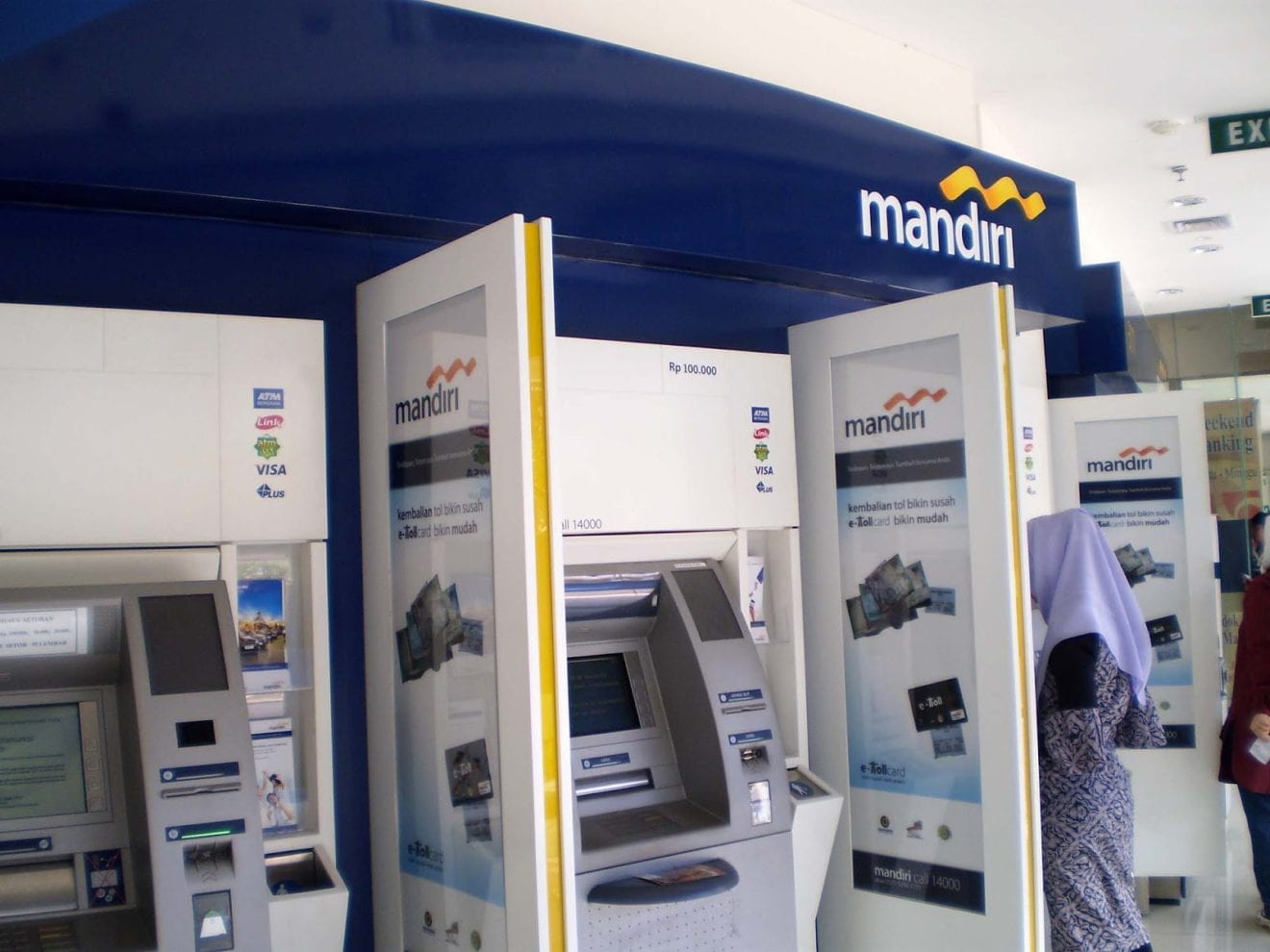
    The most reliable bank award in the national conventional bank category with a total asset of above Rp 100 trillion (US$7.6 billion) was given to Bank Central Asia (BCA), Bank Rakyat Indonesia (BRI), Bank Negara Indonesia (BNI) and Bank Mandiri. For conventional banks with a total asset value of Rp 50 trillion (US$3.8 billion)-Rp 100 trillion, the award was given to OCBC NISP and Bank BTPN. In the sharia bank category, the award was granted to BRI Syariah, Syariah Bukopin and BNI Syariah.

    The best bank in productivity award for conventional banks went to Panin Bank, Bank Jasa Jakarta, KEB Bank Hana, and regional development banks (BPD), i.e. Bank Jatim, Bank Sulteng, and Bank BJB.

    The best sharia business unit award went to BPD commercial banks, namely Bank Kalbarl, BPD DIY, Bank NTB, and Bank Jambi. In the non-BPD category, the award was given to Maybank Indonesia, CIMB Niaga, OCBC NISP, and Bank BTN. In addition, the diversity of the board award went to Bank Mandiri, BNI, and BCA.

    The most efficient bank went to BPDs with a total asset value of above Rp30 trillion (US$2.3 billion), namely Bank Jateng, bank Jatim, and Bank BJB. The award for BPDs with a total asset value of Rp10 trillion (US$769 million)-Rp30 trillion went to Bank Kalbar, Bank SulSelBar, Bank Aceh, Bank Papua, and Bank BPD Bali. In the category of BPD with a total asset of below Rp 10 trillion, the award was won by BPD DIY, Bank Lampung, Bank Sulteng, Bank NTT, and Bank Sultra.

    Conventional banks with a total asset value of above Rp 100 trillion granted with the best bank in retail banking services award were Bank Mandiri, BCA, BNI, BRI and Danamon. For conventional banks with a total asset value of Rp 50 trillion-Rp 100 trillion, the award went to OCBC, NISP and Bank BTPN.

    Bank Jatim, Bank Jateng and Bank BJB bagged the Best Bank in Retail banking services award in the category of BPDs with a total asset value of above Rp 30 trillion. In the category of BPDs with a total asset value of Rp 10 trillion-Rp 30 trillion, the award went Bank Riau Kepri, Bank Nagari, and Bank Sulselbar. In the category of BPDs with a total asset value of below Rp 10 trillion, Bank Maluku, Bank NTB and Bank Sulteng had been awarded with the title.

    The IBA was held at Hotel JS Luwansa in Kuningan, Jakarta, on Wednesday, September 7, 2016. Attending the event was Financial Services Authority (OJK) deputy chairman Nelson Tampubolon, Deposit Insurance Corporation (LPS) executive director, Bank Indonesia (BI) deputy governor Hendar Harahap, and Tempo Media Group president director Bambang Harimurti.
  • Telkom contracts NEC for new subsea cable

    Telkom contracts NEC for new subsea cable

    Indonesia’s PT Telkom has contracted NEC to build a cable system connecting six of the nation’s large islands with Singapore.

    The Indonesia Global Gateway Cable System will link the islands of Sumatra, Batam, Java, Bali, Kalimantan and Sulawesi.

    As well as providing enhanced connectivity between nine major Indonesian cities, the cable will link to Singapore and provide direct connectivity with two international subsea cables that land in Europe and the US respectively.

    The 100Gbps, eight wavelength, four fiber pair cable system will span around 5,300km in total. It is scheduled for completion in early 2018.

    “NEC is honored to be selected once again by Telkom as the supplier of an optical fiber submarine cable system, the advanced 100Gb/s IGG system,” NEC general manager for submarine networks Toru Kawauchi said.

    “Since first building an optical fiber submarine cable system for Telkom in 1991, NEC has continuously helped to expand Indonesia’s domestic connectivity, the Papua Cable System (SMPCS) being the latest such contribution.”

    The Sulawesi Maluku Papua Cable System connects eight provinces in eastern Indonesia – East Nusa Tenggara, Maluku, North Maluku, North Sulawesi, Papua, Southeast Sulawesi, South Sulawesi and West Papua.

    The nine cities that will be connected via the IGG system are Dumai, Batam, Jakarta, Madura, Bali, Makassar, Bilikpapan, Takaran and Manado.

  • DHL and UN Development Programme Hold Airport Disaster Workshops

    DHL and UN Development Programme Hold Airport Disaster Workshops

    Germany’s Deutsche Post DHL Group and the United Nations Development Programme (UNDP) are once again conducting their joint preventative training, known as Get Airports Ready for Disaster (GARD), from September 5 to 9 at Bali’s Ngurah Rai International Airport, Lombok International Airport and Selaparang Airport in Lombok. Indonesia was the pilot country when the program was implemented globally in 2009 – in Makassar and Palu.

    Indonesia is located on the Pacific Ring of Fire where several continental plates collide. As a result, the chain of islands is at frequent risk of earthquakes, tsunamis and active volcanoes. Additionally, Bali and Lombok are categorized as high risk areas in the Indonesian Disaster Risk Index (2013). Airports in both provinces experienced operations shutdown due to volcanic eruptions from nearby Mount Rinjani.

    The multi-day workshop involves over 50 participants – including representatives from the airport operating company, aviation safety experts, national and regional Disaster Management Planning Agencies, Indonesian Red Cross, immigration authorities, the military and the police force – who will be trained to handle the high volume of incoming relief goods and increasing number of passengers during the aftermath of natural disasters.

    “Following natural disasters, airports become vital hubs for the processing of incoming relief supplies,” says Christof Ehrhart, Head of Corporate Communications and Responsibility at Deutsche Post DHL Group. “With sound processes in place at the airport and with the relevant agencies, relief goods and aid can be channeled through airports to reach the affected communities quickly and efficiently. This program continues to help improve disaster management in this geologically high-risk region.”

    “Often airports are unprepared to manage large disasters or humanitarian crisis and as a result, assistance gets slower in getting to those most affected. GARD is working specifically with all partners on the ground to solve any potential bottlenecks that could impede fast response to save lives. I praise the Indonesian government for its commitment to preparedness and the airport authorities for their risk informed management.” says United Nations Resident Coordinator in Indonesia, Douglas Broderick.

    The training includes evaluation of the airports’ capacities for processing high volumes of passengers and cargo and warehousing relief supplies. Location-specific disaster plans are drawn up as well.

    Since 2009, GARD trainings have been held in eight airports in Indonesia, namely Sultan Hassanuddin Airport in Makassar (2009), Mutiara Airport in Palu (2009), Ngurah Rai Airport (old airport) in Denpasar (2011), El Tari Airport in Kupang (2011), Polonia Airport in Medan (2012), Sultan Iskandarsyah Airport in Banda Aceh (2012), Fatmawati Airport in Bengkulu (2012) and Minangkabau Airport in Padang (2013).

  • AirAsia to lease two aircraft from Indonesia AirAsia Extra

    AirAsia to lease two aircraft from Indonesia AirAsia Extra

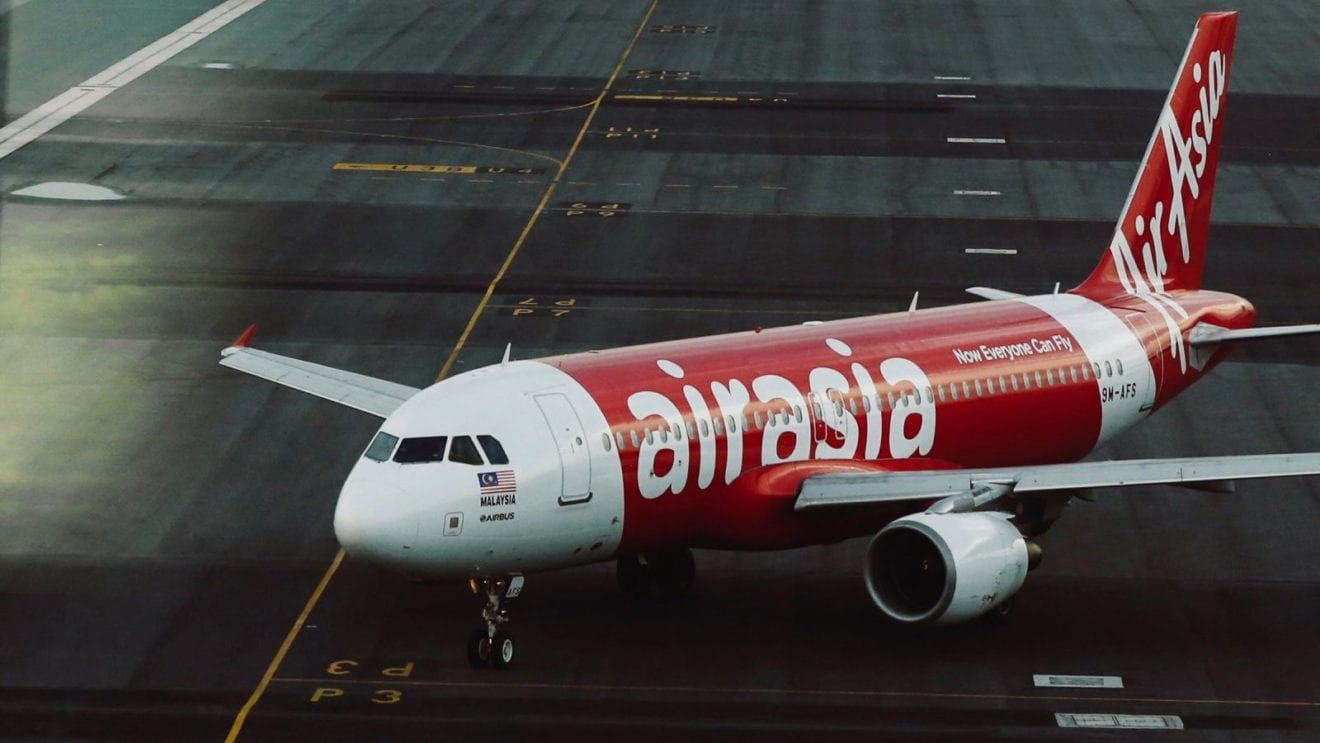
    AirAsia Bhd has entered into a wet lease agreement with PT Indonesia AirAsia Extra (IAAX) to lease two Airbus A330 widebody aircraft for US$12.9mil (RM52.5mil).

    In a filing with Bursa Malaysia on Tuesday, AirAsia said one aircraft would be leased from Sept 16, 2016 till March 15, 2017 for US$9.8mil (RM39.9mil).

    The other’s lease would be from Oct 1, 2016 till Nov 30, 2016 for US$3.1mil (RM12.62mil), it said.

    AirAsia said the leasing was due to operational requirements.

    “The lease of the aircraft is in the form contained in the agreement which shall include the flight crew, all maintenance of the aircraft and insurance,” it said.

    AirAsia said the agreement provided up to additional six crew sets daily to AirAsia’s manpower supply.

    “Additionally, extra capacity from the A330s allows AirAsia to rationalise its network by reducing flight frequencies, which results in lesser crew requirement,” it said.

    It said the additional capacity from A330s will also allow for AirAsia to overcome slot constraints in some airports as well as enable AirAsia to better manage its network.

    “For routes with low load factor, AirAsia could reduce frequency, thus reducing fixed costs required to operate them. Whereas additional capacity could be added for routes with high load factor to capitalise on the high demand,” it said.

  • Telkom launches innovation services in Indonesia

    Telkom launches innovation services in Indonesia

    Multimedia Nusantara (TelkomMetra), a unit of Telekomunikasi Indonesia (Telkom), has launched innovative service MediaHub to support the content and advertising industry in Indonesia.

    “Telkom is offering an integrated solution, not limited to telecoms but also takes part as the platform that delivers value to content that is delivered through its main connectivity business,” said Muhammad Awaluddin, director of enterprise and business service at Telkom Indonesia.

    MediaHub is said to be the first one to facilitate content providers, advertising agencies, Ministry of Communication and Informatics (Kominfo), the Indonesian Broadcasting Commission (KPI) and pay TV operators in developing safe and convenient contents.

    The service will also support in a new way of generating revenue and cost efficiencies for content providers and pay TV operators.

    Supported by over than 20 years of experience in playout technology from SmartCast, MediaHub through Metrasat, provides practical solutions as content aggregation and distribution services to overcome the obstacles over content distribution and its monetization in Indonesia.

    As a partner for the Indonesian Broadcasting Commission, MediaHub with its playout and ad-insertion system enables the selected content in dedicated feed to comply the regulation of broadcasting in Indonesia and ready to distribute them in any required formats to pay TV operators.

    Through its plug and play system, MediaHub provides efficient process to be the only pay TV ad network to support content business and local productions.

  • Indonesia to overtake Brazil and Mexico as 4th largest smartphone market in 2020

    Indonesia to overtake Brazil and Mexico as 4th largest smartphone market in 2020

    Global prospects for wearable electronics continue to be strong with retail value sales projected to grow by 138% to become a US$45 billion dollar industry in 2021, remaining the worlds second best-selling product behind smartphone

    Euromonitor International’s new data released Tuesday on the global consumer electronics industry also said new products like smart wearables and wireless speakers and innovations like Ultra HD and convertible laptops resonate with the shift in consumer preferences.

    These products command higher retail selling prices, helping boost profit margins of manufacturers and retailers, says Head of Consumer Electronics at Euromonitor International, Wee Teck Loo.

    While wearable electronics demand is growing, Emerging markets like India and Indonesia provide plenty of untapped opportunity for smartphones due to the huge pool of feature phone upgrades.

    Indonesia is projected to overtake Brazil and Mexico as the fourth largest smartphone market reaching almost $1 billion dollar sales in 2020, adds Loo.

    The top-10 smartphone markets in 2021 are projected to be: 1. China 2. India 3. US 4. Indonesia 5. Brazil 6. Russia 7. Mexico 8. Japan 9. Philippines 10. United Kingdom

  • Indonesian house in Russia`s Vladivostok opened

    Indonesian house in Russia`s Vladivostok opened

    Indonesian Ambassador to Russia and Belarus Wahid Supriyadi has opened Indonesian House in the easternmost Russian city of Vladivostok to promote Indonesian products.

    The opening of the Indonesian House took place on the sidelines of Eastern Economic Forum, the second largest economic forum in Russia, the embassy said in a press statement released on Tuesday.

    Supriyadi said the Indonesian House is the second of its kind held in Vladivostok after his predecessor, Djauhari Oratmangun, opened the first such an event in 2015.

    Unlike the first Indonesian House which focused on coffee commodity, the second Indonesian House focused on promoting furniture, antique goods and interior products for hotels and restaurants, he pointed out.

    On the occasion, the ambassador held talks with 20 local businessmen who have done business and are interested in doing business in Indonesia.

    In his address to the opening of the Indonesian House, Supriyadi praised businessmen in Vladivostok for their desire to make investment and do business in Indonesia.

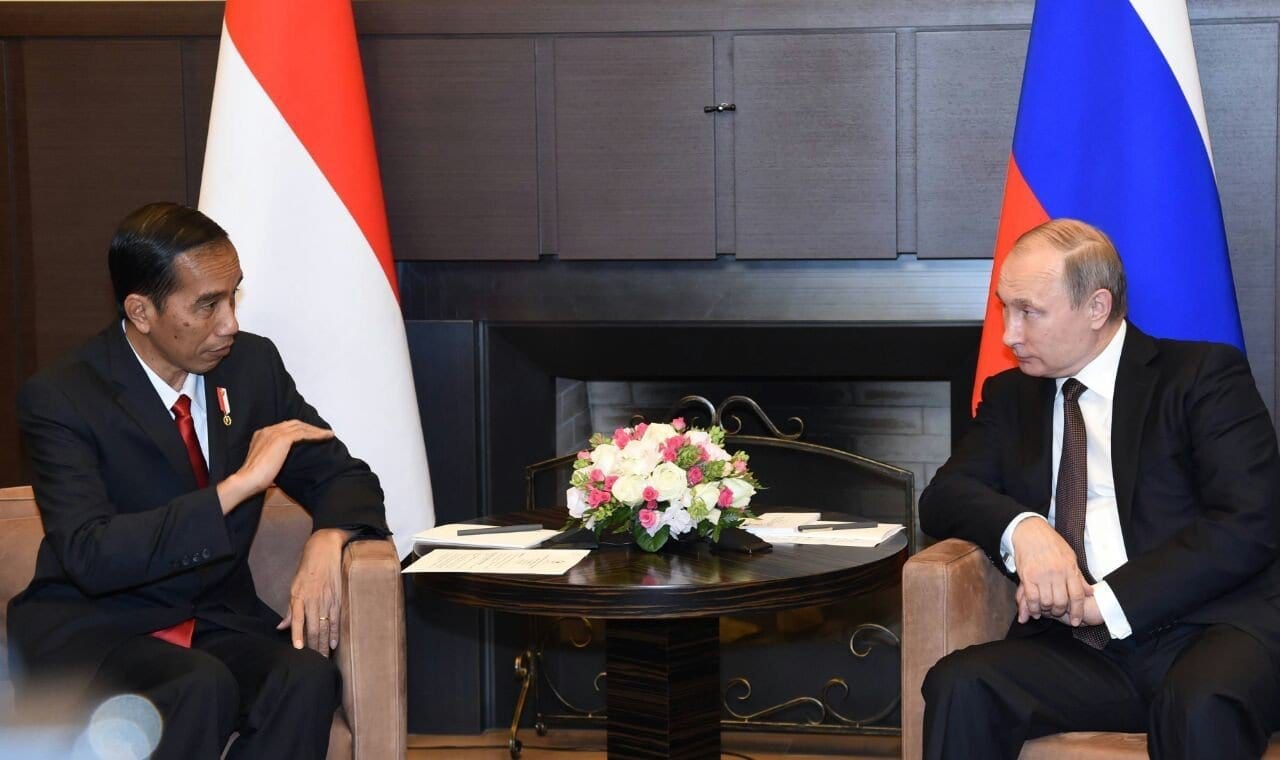
    “This is the right momentum. Since President Joko Widodo (Jokowi) visited Sochi last May, businessmen from both countries have shown high interest to do business. The Indonesia Festival held on August 20-21 proves it (the high interest),” he said.

    Despite the sluggish global trade, bilateral trade between Indonesia and Russia in the first quarter of this year rose 17 percent, while the number of Russian tourists visiting Indonesia in the January-June 2016 period also increased 17.5 percent, he said.

    Since the first Indonesian House was opened in 2015, Indonesias export of furniture and antique goods to Russia reached US$23 million.

  • Central Java to build high quality salt factory

    Central Java to build high quality salt factory

    The Central Java administration plans to build factories to produce high quality salt to improve the welfare of the local salt farmers.

    “Currently five pilot projects of salt factory are being prepared,” Central Java Governor Ganjar Pranowo said here on Tuesday.

    Ganjar said factories to produce high quality salt need to be built immediately in Central Java as the province is a potential producer of salt especially its northern coastal areas.

    Unfortunately the quality of farmers salt in that area is relatively low that the price is also low, he said.

    The provincial administration has discussed the plan with a number of relevant experts, the governor said.

    “There has been talk on the possibility of producing high quality salt,” he said.

    He said so far the price of farmers salt in northern coastal area of Central Java has been very low at around Rp350 per kilogram.

    With the factories the quality of salt would be improved and the price could rise to an ideal level of Rp650 per kg, he said.

    Deputy chairman of the regional legislative assembly Yudi Sancoyo asked the regional administration to address the condition of the salt farmers in the region.

    “It is feared that the price of farmers salt would drop in this years grand harvest. Instead of gaining from the grand harvest the farmers would likely suffer losses,” he said.

  • Taiwan invited to take part in maritime development in Indonesia

    Taiwan invited to take part in maritime development in Indonesia

    Indonesia has invited Taiwan to invest in the maritime sector to help bring to reality the governments vision of making the country a world maritime axis.

    Director of Investment Planning in the Agribusiness and Natural Resources of the Capital Investment Coordinating Board (BKPM) Hanung Harimba Rachman said the maritime sector is a priority in the countrys 5 year development program.

    “The maritime sector is a priority in our strategic plan for 2015-2019,” Hanung said in a maritime seminar here on Tuesday.

    Investment in the maritime sector is open in shipbuilding, fisheries and cold storage sectors, he added.

    Other areas open for investment in Indonesia by Taiwan include in infrastructure sector such as seaport and deep sea energy development, he said.

    “In January 2016, the government issued a policy to accelerate implementation of national strategic projects with 225 projects offered under the scheme of government private cooperation,” he said.

    Hanung said participation of Taiwan in investment is important for Indonesia, in its program to enter the phase of industrialization.

    Taiwan is known to be strong in the manufacturing industry as it has high technology, he added.

    “Indonesia wants to develop its maritime sector with high technology,” he said.

    Representative of Taipei Economic and Trade Office (TETO) in Indonesia Liang Jen Chang said he welcomed Indonesian offer for cooperation in the maritime sector.

    “Taiwan and Indonesia already have close relations for years , but the good relations are no longer enough with the changing condition especially in the maritime sector,” Chang said.

    Based on data at BKPM, Taiwan is among major foreign investors in the country . In the first half of 2016, Taiwan investors implemented US$816 million worth of projects in paper industry and US$400 million in metal industry in Indonesi8a.

  • Citilink recruits 70 new pilots for business expansion

    Citilink recruits 70 new pilots for business expansion

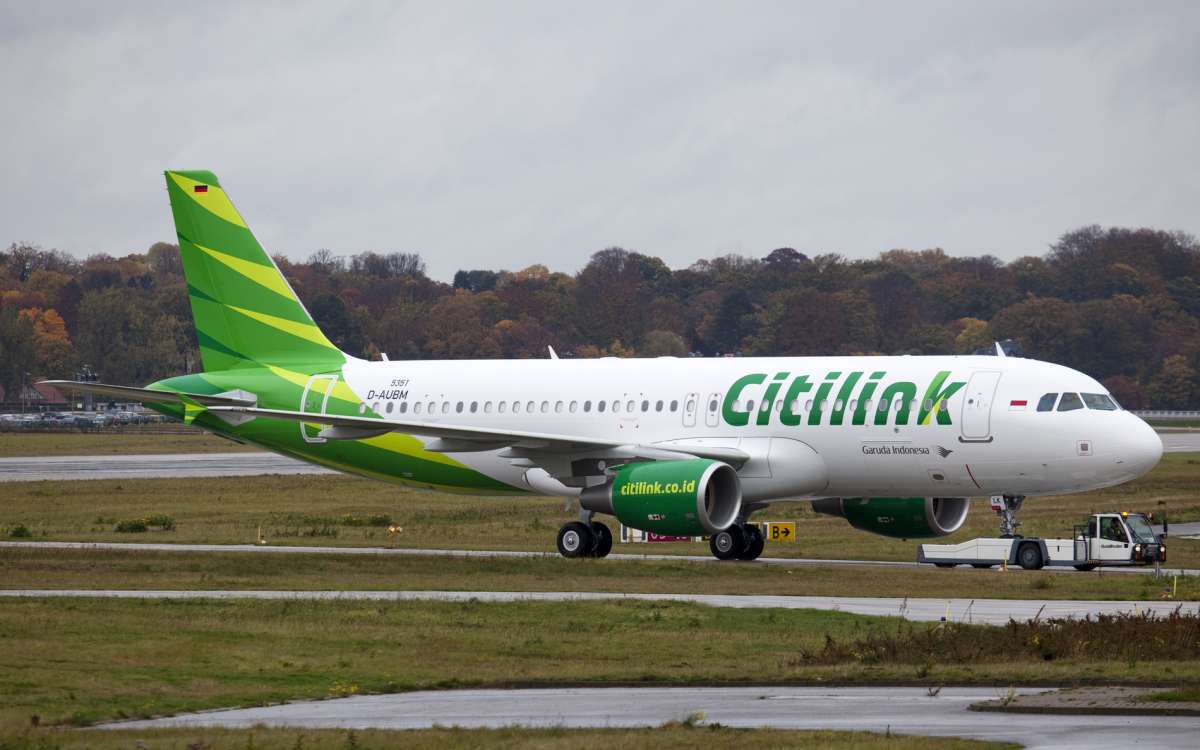
    Low-cost carrier Citilink, a subsidiary of national flag carrier Garuda Indonesia, recruited 70 candidate pilots to boost the company’s business expansion after a three-month enrollment process from June to August this year.

    Citilink president director Albert Burhan said that the company had chosen the candidates out of 897 applicants from across country.

    “We need to recruit more pilots to undertake our expansion and open new routes,” Albert said at the Garuda Indonesia Training Center (GITC) in Jakarta on Monday.

    The recruited pilots will undergo a series of training at the GITC and at the Airbus training centers in Toulouse, France, and Florida, US, for at least six months. They will exercise to achieve a “type rating” as is required to operate an Airbus A320.

    Garuda Indonesia human resources director Linggarsari Suharso warned the candidate pilots that working as a pilot was a difficult job. A pilot must prioritize the safety of passengers over other considerations, he said.

    “Safety is the top priority in the transportation business,” he said at the training center on Monday.

    According to data from the Transportation Ministry last year, Indonesia needs at least 600 new pilots every year. Meanwhile, 24 pilot schools across the country graduate from 15 to 24 students each annually.