Tag: Indonesia

  • Indonesia asks Alibaba’s Jack Ma to advise its e-commerce development

    Indonesia asks Alibaba’s Jack Ma to advise its e-commerce development

    Indonesia has asked the chairman of China’s Alibaba Group Holding Ltd, Jack Ma, to act as adviser in the development of the Southeast Asian country’s nascent e-commerce industry, according to a video released by the government.

    Indonesia has the world’s fourth-largest population, boasting a young, internet-savvy demographic, and a thriving e-commerce market that is increasingly attracting global investors.

    Earlier this year, Alibaba bought a controlling stake in Southeast Asian online retailer Lazada Group for around $1 billion, while a group of investors led by private equity firms KKR & Co LP and Warburg Pincus LLC poured more than $550 million into Indonesian ride-hailing start-up Go-Jek.

    To promote growth in the e-commerce industry, the government is setting up a “steering committee” consisting of 10 ministers for which it has asked Alibaba’s Ma to be an adviser, Communication and Information Minister Rudiantara said.

    “The thinking behind this is to make Indonesia’s positioning in the international marketplace more prominent,” Rudiantara said in a video released by the state secretariat. The minister, like many Indonesians, only uses one name.

    Rudiantara is part of President Joko Widodo’s delegation attending the G20 summit in the Chinese city of Hangzhou.

    An Alibaba spokeswoman confirmed that Ma was asked to be adviser to Indonesia’s e-commerce steering committee, but declined to say whether he had accepted the offer.

  • Millennials to Decide Future of TV in Indonesia

    Millennials to Decide Future of TV in Indonesia

    As of 2016, according to the Central Statistics Agency’s estimations, Indonesian millennials  born between the 1980s and early 2000s  make up about 41 percent of the 258.8 million population.

    “The future will be in OTT and many want to capture this market. The number of millennials is going to be big in Indonesia and infrastructure is now being prepared. The government has rolled out 4G and smartphone prices are getting lower each year,” Greeny said.

    Genflix offers its customers thousands of videos, Japanese cartoons and other exclusive content. Genflix currently has three million subscribers, 60 percent of whom are paying customers. Most of them access the service via their smartphones.

    The catch

    Hendy Lim from the Redemption Entertainment said this is the moment for the local talents and content creators as the content-hungry OTT services will keep on coming to tap into the growing Indonesian middle-class. But there is a catch.

    Hendy, who has just left his position as the vice president of the media company MNC Group, said the OTT services need to compete with the deep-pocketed free-to-air televisions.

    “These free-to-airs can pay up to $30,000 per episode. I can’t tell the exact number, but I think [the OTT] can pay only 5 percent of it,” he said, adding that free-to-air revenues are high because many people still watch television.

    The on-demand services will also have to face uncertain regulations with regard to corporate establishment, taxes and censorship.

    Communications and Information Technology Minister Rudiantara promised that this year the government will produce a regulation governing the OTT services. The regulation will take into account the international tax treaty and censorship measures similar to those applied for televisions.

    Desmond Poon, chief technology officer of the listed internet service provider Link Net, said during the summit that censorship as such is against the idea of the internet.

    Despite the challenges posed by censorship and the not yet fully available broadband connectivity, especially in the easternmost part of the country, Poon remains optimistic the OTT business will continue to grow.

  • July Sees Record-high Tourist Arrivals to Indonesia

    July Sees Record-high Tourist Arrivals to Indonesia

    The Central Statistics Agency (BPS) recorded 1.03 million foreign tourist arrivals to Indonesia in July 2016. The number represents a 17.67-percent year-on-year increase from July 2015.

    Compared to June 2016, the increase is 20.42 percent.

    “This is a new record, with the number foreigners entering Indonesia reaching more than a million in one month,” BPS deputy for Statistic and Distribution Sasmito Hadi Wibowo said in Jakarta Thursday, September 1.

    The achievement, he said, is largely thanks to the Tourism Ministry’s intensive campaigns in many parts of the world and the many promotional events held in domestic travel destinations.

    Sasmito said the biggest number of tourists came from China, Saudi Arabia, and Australia.

  • Bank Indonesia to launch national payment gateway

    Bank Indonesia to launch national payment gateway

    Bank Indonesia will soon issue a new policy in payment system — “National Payment Gateway” (NPG) — to prevent outflow of fund in the “e-commerce” transactions that will help redress the countrys domestic trade balance .

    “Soon we will issue a policy of national payment gateway. All payment systems in the country from various providers will be connected in what we call inter-connectivity and inter-operability. Jut wait and see,” Deputy Governor of the central bank Perry Warjiyo said here on Friday .

    Perry said with the NPG all domestic transactions would be wrapped up in the country without the use of foreign payment system service.

    “This is important before we start cooperation with other countries that all transactions made in Indonesia could be settled in the country ,” Perry said.

    With the NPG we could increase domestic trade balance in each transaction made in Indonesia without relying on financial service of agency, he added.

    Perry said NPG also would support payment system in tourism industry, which the government actively develops as a potential foreign exchange earner.

    Bank Indonesia encourages the government to develop and modernize the countrys tourism industry to grow to become a new economic growth driver amid the slump that hits the export and mining sector which have lost their most of role as the economic backbone.

    Perry said the tourism industry could help accelerate the economic development in mid term.

  • Jakarta’s tax amnesty gets a rich boost

    Jakarta’s tax amnesty gets a rich boost

    Two of Indonesia’s wealthiest men say they will participate in a government-led tax amnesty to clear their past omissions, boosting the scheme’s credibility.

    Mr James Riady, the son of Lippo Group’s founder, went to the Jakarta tax office yesterday to take part, said his spokesman Danang Kemayan Jati. Mr Tahir, founder of Bank Mayapada, who goes by one name, said by phone that his family would submit documents this month to support the plan.

    “If a big fish like Riady joins the programme in a public way, that lessens the restraint for everybody else to follow suit,” said OCBC Bank economist Wellian Wiranto in Singapore, according to Bloomberg.

    “We have seen the momentum start to build, so things are starting to look up for the tax amnesty.”

    President Joko Widodo has staked his credibility on a programme that the government estimates will generate 165 trillion rupiah (S$17 billion) in revenue.

    He ordered his Cabinet to summon the largest taxpayers, especially those with assets overseas, to ensure they take part. Since the amnesty began in July, the finance ministry has seen 4 trillion rupiah in penalty fees, or 2.4 per cent of the target.

    Tax rates under the amnesty will range from 2 per cent to 10 per cent over three stages, depending on how soon individuals declare their previously untaxed assets and whether the funds are repatriated.

    Indonesia has a population of 250 million, but only 27 million are registered taxpayers. Of these, just a million file tax returns regularly each year – one of the lowest figures among countries in the region.

    Newly minted Finance Minister Sri Mulyani Indrawati has said she is putting trust-building at the top of her agenda as she tries to get more Indonesians to pay taxes, to raise funds for a massive infrastructure plan aimed at stimulating growth in South-east Asia’s largest economy.

    “It’s not acceptable for a country like Indonesia to have a tax ratio that is very low,” she told Bloomberg in an interview last month. “This is… because both sides, the taxpayers as well as the government, have not been able to establish a good relationship based on trust, confidence and credibility.”

    She also pledged to address Indonesia’s complicated procedures and high tax rates compared with neighbouring countries.

    Individuals who sign up for the plan will be allowed to invest in assets such as gold, property and infrastructure projects, according to the finance ministry. Participants can also move funds between approved assets before a three-year holding period ends, the ministry said.

    The scheme has got off to a slow start, but could pick up pace with big businesses getting on board.

    Lippo Group, founded by Mr Mochtiar Riady in the 1950s, has stakes in property developer Lippo Karawaci, healthcare firm Siloam International Hospitals and retailer Matahari Department Store. It also has stakes in Singapore-based First Real Estate Investment Trust and Lippo Malls Indonesia Retail Trust.

  • IBDExpo 2016, a Gateway to the Business Opportunity in Indonesia

    IBDExpo 2016, a Gateway to the Business Opportunity in Indonesia

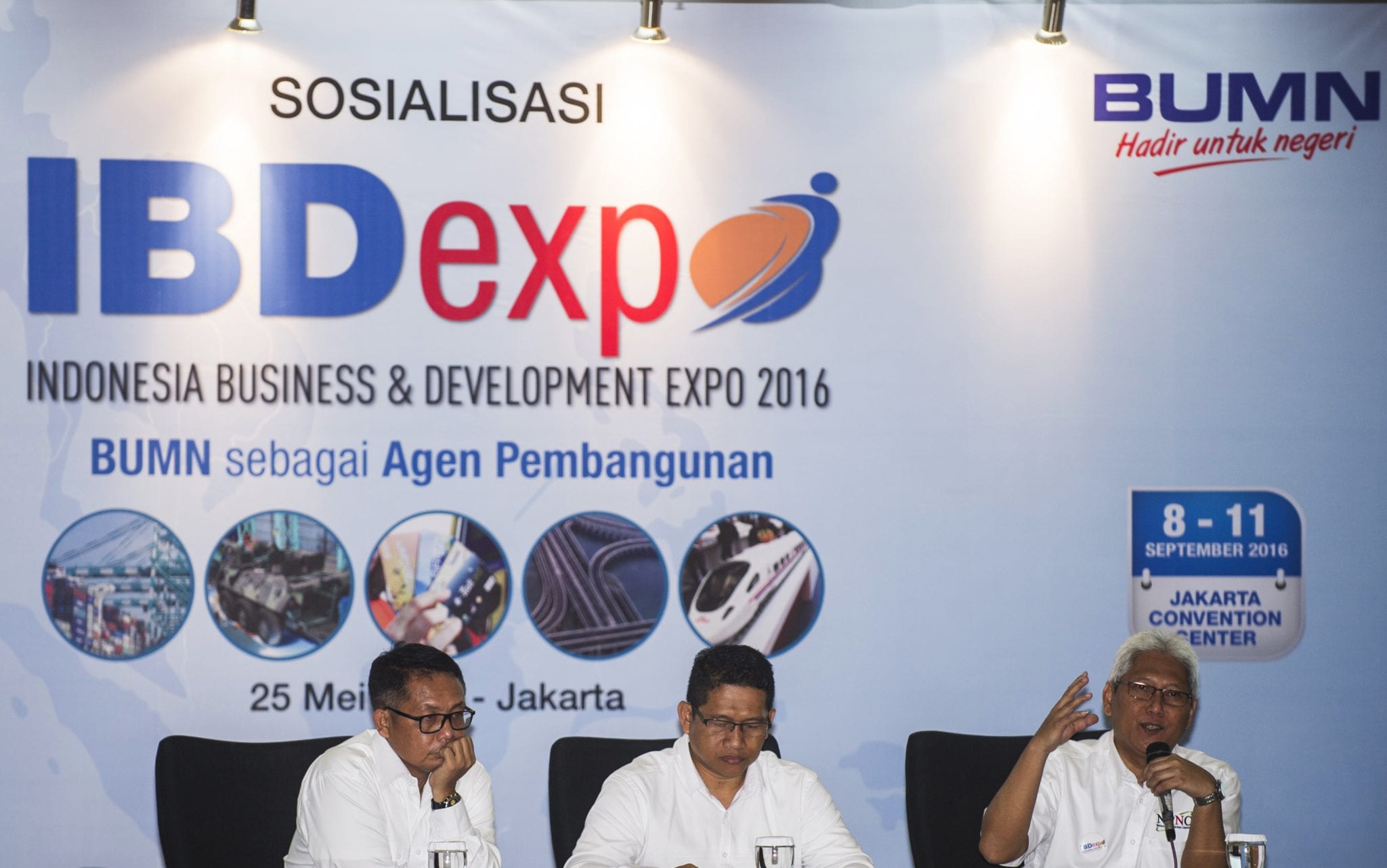
    The Minisitry of State Owned Enterprise of Republic of Indonesia (MSOE), announced on Friday that it will hold Indonesia Business and Development Expo (IBDExpo) 2016 on September 8-11, 2016 in Jakarta Convention Center. This event is organized by National Publishing and News Corporation (NPNC), a consortium of media-focused SOEs consisting of Antara News Agency, Balai Pustaka, National Publishing of Indonesia (PNRI), and PFN.

    Themed “SOE, an Agent of Development,” IBDExpo 2016 will be participated by almost all of 118 Indonesian SOEs and ROEs. The event is designed to promote all of the achievements, innovations, and the role of SOEs to the nation, as well as publicly sharing the commitment of SOEs to develop and empower the underserved and underdeveloped regions which is in accordance with the President Jokowi’s Nawacita vision.

    The event will include a number of side events such as the corporate exhibition, International Conference, Ministerial Lecture by the Minister of SOE, Rini Soemarno, business matching, SOE Career Opportunity, and Partnership and Community Development Program (PKBL) Pitching. This year’s IBDExpo also presents a number of domestic and international keynote speakers, such as Singapore’s Temasek and ICBC China.

    Open to public and free of charge, IBDExpo 2016 will also feature a number of flagship products and innovations of SOEs, such as: the Indonesian military producer, Pindad, that will exhibit firearms and Tank Anoa; PT PAL that will bring their ships; a mock-up of High-speed Train, a project of PT Kereta Cepat Indonesia China; and a flight simulator of PT Dirgantara Indonesia. In addition, the visitors can expect folk art and mini theater playing the films produced by PFN every day during the expo.

    IBDExpo 2016 is scheduled to be inaugurated by President Joko Widodo on September 8 2016 and attended by the Ministers of Republic of Indonesia, the legislators, the ambassadors, and a number of the C-suite invitees.

  • Foodpanda India looking to raise $50m

    Foodpanda India looking to raise $50m

    Rocket Internet-backed Foodpanda India, which last year faced allegations of internal fraud and misappropriation of funds, is reported to be raising fresh capital.

    It has mandated Mumbai-based mid-market investment bank O3 Capital for a US$40-60 million fundraise as it initiates talks with investors, reports the Times of India.

    Foodpanda has already said it is selling its Indonesian business and rethinking its presence across the rest of Southeast Asia.

    “To be certain, we are not looking to exit India,” says Foodpanda India CEO Saurabh Kochar. “We have grown rapidly over the past months while increasing our already positive operating margins.”

    In the past six months, Foodpanda India is said to have had its average daily orders inch up to about 30,000. Swiggy, the market leader, clocks about 45,000 orders a day on average, while Zomato has about 35,000.

    Over the past year, Rocket Internet global head of corporate development Spyro Korsanos has been stationed in India to get the business back in shape, according to an insider.

    Launched in 2012, Foodpanda has a presence in 20 countries.

  • Indonesia leading charge, says Asia Luxury Index

    Indonesia leading charge, says Asia Luxury Index

    Indonesians have become Asia’s foremost online buyers of luxury goods, according to the latest Asia Luxury Index.

    Amid difficult economic conditions, online sales of luxury goods in Indonesia have grown by 84 per cent, according to the index, which draws mainly on the sales data of Reebonz, a Singapore-based eCommerce platform for luxury products.

    Reebonz Indonesia executive manager Anggono Wijaya says social media, digital marketing and collaborations with influencers and young designers were among the main reasons behind the ballooning sales.

    Senior marketing manager Bernard Widjaja Ng says the group of luxury consumers is evolving and expanding as luxury is no longer just for the select few. “With growing affluence and accessibility, more consumers can readily buy luxury goods.”

    He says consumers have also become younger, with 21-year-olds starting to buy luxury goods. “There is a shift in an economical class of buyers, as people from the B-level economy have started to buy luxury goods.”

    Accounting for 62 per cent of online transactions in Asia are bags, with Balenciaga, Fendi and Longchamp topping the brand list in Indonesia. The report also notes an 87 per cent rise in shoe sales and a 39 per cent increase in timepiece sales.

    It also notes a shift in buying trends, with a 30 per cent increase in pre-owned luxury goods sales.

    Topping the brand list in this category are bags and shoes by Chanel, Hermes, Louis Vuitton and Prada.

    Starting as a luxury product retailer in Singapore, Reebonz has expanded via eCommerce platforms with offices in Indonesia, Australia, Hong Kong, Malaysia, South Korea, Thailand and Taiwan.

  • Report predicts $25b in eCommerce revenues

    Report predicts $25b in eCommerce revenues

    Southeast Asia eCommerce revenues are projected to exceed US$25 billion by 2020, according to new research by growth partnership company Frost & Sullivan.

    Despite acquisitions, market exits and many online retailers struggling to achieve profitability, the market earned $11 billion last year, says the report, from its Telecommunications and Digital Services program, Analysis of the Southeast Asian E-commerce Market. The study examines market trends and opportunities in six key Southeast Asian markets – Indonesia, Malaysia, the Philippines, Singapore, Thailand and Vietnam.

    Key findings include continuing rapid growth as the industry evolves.

    Total revenues from business-to-consumer (B2C) eCommerce in the six markets will increase at a compound annual growth rate of 17.7 per cent.

    Malaysia and Thailand were the largest eCommerce markets in the region last year, generating revenues of $2.3 billion and $2.1 billion respectively. But by 2020, both these markets are expected to be eclipsed by such emerging economies as Indonesia and Vietnam.

    “Despite being relatively young, the eCommerce market in Southeast Asia is developing quickly, thanks to an astounding rate of digital adoption,” says Frost & Sullivan Asia-Pacific lead consultant for eCommerce and digital transformation, Cris Duy Tran.

    “However, companies pursuing an Amazon-style B2C mass-market business model are struggling to turn a profit, and there have been several mergers and acquisitions and market exits,” he says.

    “With fewer players in the market, eCommerce players are beginning to compete beyond price points and logistics, and are moving into new areas such as Online-to-Offline (O2O) eCommerce and loyalty programs.”

    Although the mass-marketing approach has not worked so far in Southeast Asia, he says there are many exciting opportunities in specialized eCommerce and peer-to-peer (P2P) eCommerce. Services such as Carousell, Shopee and Tokopedia are aggressively pursuing a “mobile first” strategy, and Frost & Sullivan expects to see more sector-specific services in areas such as travel, food delivery and luxury goods.

    Challenges

    While the opportunities for growth are immense, says the report, the eCommerce market in Southeast Asia is not without challenges.

    Several key factors that inhibit growth have been identified, including low credit-card ownership – less than 7 per cent of the population in all Southeast Asian markets except for Malaysia and Singapore. In some countries, more than half of the population does not have a bank account, making payment the biggest challenge for eCommerce companies.

    Logistics is another issue hampering eCommerce growth, especially in areas with complex geographies such as Indonesia and the Philippines. However, recent investments by regional logistics players such as aCommerce and SingPost have strengthened eCommerce logistics infrastructure in these markets.

    China’s rapid expansion in eCommerce is providing further impetus for online retail growth in Southeast Asia, says the report.

    “The eCommerce revenue in China represented 12.1 per cent of all retail sales last year, surpassing the US, Europe and Japan,” says Tran. “Given the massive adoption of eCommerce in China, Southeast Asia is set to follow a similar upward trajectory, even though eCommerce now represents less than 2.5 per cent of all retail sales.”

    With more mergers and acquisitions likely during the forecast period, more exciting market developments can be expected in the near future, says Tran.


  • Pizza Hut, Japanese franchise used expired ingredients in Indonesia

    Pizza Hut, Japanese franchise used expired ingredients in Indonesia

    A joint investigation by Tempo, a weekly news magazine, and BBC Indonesia has reportedly revealed the use of expired ingredients by fast food chain Pizza Hut, its delivery arm Pizza Hut Delivery (PHD), and Japanese franchise Marugame Udon.

    The investigation, according to the reports, show evidence of Indonesian firms Sarimelati Kencana and Sriboga Marugame Indonesia – both subsidiaries of major flour producer Sriboga Raturaya – extending the expiry date on their ingredients, and using them in the food. This practice, according to reports, happened systematically, involved top management, and carried on for years.

    Some of these ingredients include: “Veggie Chicken Sausage”, a “Carbonara Sauce Mix”, “Citrus Marinade”, and “Satay Sauce”, among several others. Photographic evidence reportedly shows a sticker on a packet of “Bonito powder” with instructions to use it for up to a period of three months after expiry. The instructions were said to be relayed via email by the purchasing department.

    Both Sarimelati Kencana – which manages Pizza Hut and PHD in Indonesia – and Sriboga Marugame Indonesia – which manages Marugame Udon – issued statements on Sunday (Sep 4) denying the allegations, saying they only used food ingredients “of high quality” which were “suitable for consumption.”

    Meanwhile, Stephen McCartney, president director of Sarimelati Kencana, told local media in a press conference that the company that the company never made a profit “by compromising on food safety.” Alwin Arifin, president director of Siboga Raturaya, said the allegations were defamatory.

    The matter is currently under investigation by police. Besides Yum! Brands and Japan’s Toridoll Corporation which owns Marugame Udon, Sriboga Raturaya is also a local partner for Nissin and Mitsubishi.

  • Blackmores, Kalbe join forces in new Indonesian venture

    Blackmores, Kalbe join forces in new Indonesian venture

    Australian Ambassador to Indonesia Paul Grigson has welcomed the new partnership between Australian company Blackmores and Indonesias Kalbe that will allow new vitamin products to enter the local market.

    Blackmores will initially supply eight products in Indonesia through the joint venture, the Australian Embassy here said on its official website on Saturday (Sept. 3).

    Ambassador Grigson said while the two companies shared many values, it was the small differences between them that had generated the creativity needed for such a partnership.

    “Blackmores experience shows the importance of Australian companies choosing the right local partner to do business in Indonesia,” Ambassador Grigson added.

    The Blackmores – Kalbe partnership was sealed during Indonesia Australia Business Week in November 2015, when 360 Australian businesses travelled to Indonesia to build collaborative partnerships with Indonesian companies and explore investment opportunities.

    Blackmores CEO Christine Holgate has thanked the Indonesian Government and Australian Embassy for their support in finalizing the partnership.

    “We will be launching with eight products and will have 25 products by the end of the year,” Holgate informed.

    She explained that Blackmores had chosen to partner with Kalbe as it was a major supplier of pharmaceutical products and has an institute to train people in natural health care products.

    She hoped that Blackmores would be able to leverage Kalbes training processes and its strong representation in shopping centers throughout Indonesia where it has health centers giving advice on natural health products.

  • Indonesia to host Forbes conference

    Indonesia to host Forbes conference

    Indonesia is set to host the Forbes Global CEO Conference for a second time. The gathering will see business players and thought leaders from around the world discuss possible solutions to the continuous global economic slump.

    Now in its 16th year, the conference will host at least 42 speakers and has received confirmation from 300 delegates who have been invited to come to the conference in Jakarta, a change of pace from the 2013 conference held in Bali.

    Forbes Media chairman and chief editor Malcolm Stevenson “Steve” Forbes, Jr. said that Jakarta was chosen to host this year’s conference due to its continued growth even during the global economic slowdown.

    The country’s sheer size and President Joko “Jokowi” Widodo’s efforts to establish economic reforms have caught the eye of business players from across the globe.

    “Even though it’s facing some economic challenges with the collapse of commodity prices, Indonesia is still achieving higher growth rates than many of its neighbors. You have a president who is determined to make major economic reforms to unleash the potential of the Indonesian economy,” he told on Friday.

    President Joko “Jokowi” Widodo has pushed for economic reforms and has issued 13 economic stimulus packages that aim to increase investment and nurture growth.

    The economy grew 5.2 percent year-on-year (yoy) in the second quarter, beating average estimates of 5 percent from economists and Bank Indonesia’s (BI) forecast of 4.9 percent.

    The growth domestic product (GDP) growth rate was higher than the 4.9 percent yoy reported in the first quarter and the 4.7 percent posted in the second quarter of 2015.

    With the second quarter result, the economy has so far expanded by 5.04 percent this year.

    However, despite positive-looking growth, experts have predicted that the official 5.2 percent growth target for the whole year may still be unattainable as the second quarter’s performance was largely due to a surge in consumption and production during the Ramadhan and Idul Fitri festivities, a trend that typically happens every year.

    Meanwhile, not much is happening on the global stage. The World Bank has forecast that global growth will only reach 2.4 percent by the end of the year.

    “So you look around the world and business leaders, whether with established companies or start-ups, they face very real headwinds,” Forbes said.

    Mayapada Group owner Dato’ Sri Tahir said the conference was an important event to show off the economic reforms that Indonesia had made to cut costs and create a conducive investment environment.

    “Through this platform, the President can explain to these 300 and more delegates about Indonesia’s future. This platform is
    important to introduce Indonesia to the world and the world to Indonesia,” he said.

    Mayapada Group is one of the sponsors of this year’s conference.

    The conference, themed “Rising to the Challenge”, will feature distinguished Indonesian and international speakers.

    They include Investment Coordinating Board (BKPM) chairman Thomas Lembong, CT Corp. chairman Chairul Tanjung, AirAsia Group chief Tony Fernandes and Ayala Corporation chairman and CEO Jaime Augusto Zobel de Ayala.

    The conference will be held from Nov. 29 to Dec. 1.

  • Indonesia encourages direct trade with Cuba

    Indonesia encourages direct trade with Cuba

    The Indonesian government will encourage direct trade contact with Cuba to increase the value of the two countries bilateral trade, Indonesian Deputy Foreign Minister A.M. Fachir has said.

    “Indonesia will encourage direct trade contact with Cuba in order to increase the volume of bilateral trade between the two countries and appreciate the significant economic development in Cuba,” Fachir said here over the weekend.

    The deputy foreign minister made the remarks in connection with his meeting earlier with Cuban Director General for Bilateral Relations Affairs of the Foreign Ministry of Cuba, Ambassador Gerardo Penalver Portal.

    During the meeting, Fachir discussed various issues of mutual concerns, both, at bilateral and multilateral forums.

    “On the bilateral basis, the political relations of the two countries had been closely established. Yet this closeness should be translated into a concrete form of cooperation, among others in the fields of trade, health and agriculture,” he said.

    In the multilateral context, Indonesia and Cuba shared similarities in views and cooperation regarding various international issues, the deputy foreign minister said.

    “In the bilateral aspect, Cuba pays attention to direct trade contact to increase trade relations by among others planning a Cuban trade mission to Indonesia and that of Indonesia to Cuba,” Fachir said.

    Meanwhile, Gerardo Penalver Portal expressed appreciation for the establishment of good cooperation between the two countries at various international forums.

    Cuba appreciates Indonesias big contributions to the Non-Aligned Movement so that the movement remains relevant to the present conditions, he said.

  • Indonesia to export chicken due to overproduction

    Indonesia to export chicken due to overproduction

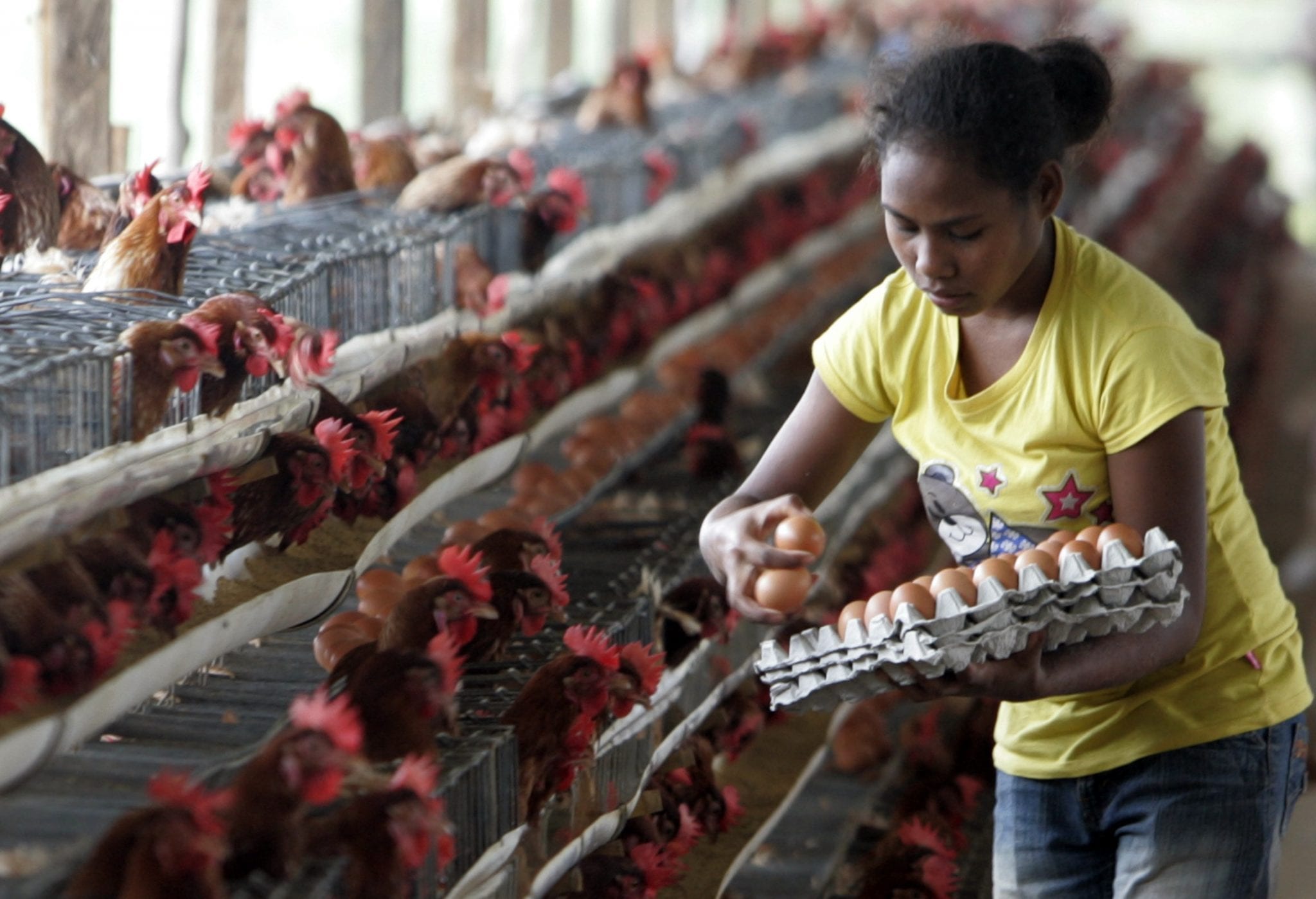
    Indonesia will soon export chicken as production has doubled, Agriculture Minister Amran Sulaiman said.

    “Right now, we are campaigning for self-reliance in protein which is found in abundance in our husbandry and fishery commodities,” he stated here on Saturday.

    Amran Sulaiman, along with Chief of the Business Competition Supervisory Commission (KPPU) Syarkawi Rauf and Deputy Chairman of the House Commission IV Viva Yoga, was in Makassar to address a workshop, titled, “Developing Husbandry Industry in Pursuit of Self Reliance in Animal Protein.”

    The minister underscored the importance of maintaining food stocks in support of the country self-reliance.

    The Agriculture Ministry has made various breakthroughs and innovations along with other parties to support the governments program to achieve self-reliance in food production, thus adding to national resilience, he added.

    He believed that Indonesia would achieve the goal of self-reliance in animal protein by the time the country celebrates the 100th anniversary of its independence.

    Livestock and marine products have already helped achieve self-reliance in animal protein, he reminded.

    “We have changed our policy so that we are no longer self-reliance in meat but are self-reliance in protein. In fact, we have exported chicken to Vietnam and Japan,” he noted.

  • Alfamart sales strengthen

    Alfamart sales strengthen

    Indonesia’s Alfamart has reported a healthy first half year’s performance.

    Alfamart sales rose by 21.5 per cent to IDR36,870 billion (US$2 billion) thanks to an aggressive store expansion program.

    The company’s unaudited gross profit increased 20.6 per cent.

    With a network total of 12,971 stores, Alfamart group remains narrowly behind competitor Indomaret, with 13,099, records research house IGD.

    Alfamart added 713 new stores from end of 2015, across the Lawson, Alfa Midi, Alfamart and Dan Dan (health and beauty) banners, compared to 889 reported by Indomaret.

    The new stores are mainly located outside of Greater Jakarta, which still accounts for 35.6 per cent of Alfamart’s stores, IGD reported.

    During the second quarter, the group added a warehouse in Serang, Java to support the Alfamart banner. As of June 2016, the retailer managed 40 warehouses in Indonesia (32 for Alfamart, seven for Alfamidi and one for Dan Dan).