Tag: Indonesia

  • Thousands of foreign tourists come to Enliven Togean Festival

    Thousands of foreign tourists come to Enliven Togean Festival

    Thousands of tourists from Italy, France, Germany, Australia, and South Korea, among other things, were present to enliven the Togean Festival, opened by Central Sulawesi Vice Governor Soedarto in Tojo Unouno district on Saturday.

    Held from Augut 27 to 31, 2016, the Togean Marine Festival aims to promote the natural beauty and unique underwater paradise in Tojo Unouno district, according to Central Sulawesi Culture and Tourism Office Chief Siti Norma Mardjanu.

    “Yes, more than one thousand tourists from various countries are now in Tojo Unauna to enliven the marine festival of Togean Islands charm,” Mardjanu affirmed here on Sunday.

    According to her, all cottages accommodations in Tojo Unauna are fully booked by the foreign tourists, and many of them have to stay at the homes of local government officials.

    To enliven the Togean Marine Festival, the foreign tourists also participates in road race hosted by Tojo Unauna District Head Mohammad Lahay, underwater photo contest, boat race, the tug of war on the boats, cultural attraction, traditional martial arts, swimming and fishing contest.

    Increased tourism promotion in Togean, according to her, will continue to be made through the festival by involving the Ministry of Tourism to maximize the dissemination of information about the charm of the area nationally and internationally.

    “Central Sulawesi provincial government took the central government to participate in promoting the Tojo Unouno tourism through the Togean Marine Festival,” Mardjanu explained.

    Togean Marine Festival is being held to promote the regional tourism in the country and abroad in a bid to boost tourist visits to Togean Islands.

    Indonesia is home to some of the worlds most beautiful aquatic areas including the Togian Islands, where diving is one of the best things the visitors can do.

    “Tropical coral reefs filled with an abundance of marine life can be found in many areas around the island,” she said.

  • Indonesia Port Net to be Launched by Year-End

    Indonesia Port Net to be Launched by Year-End

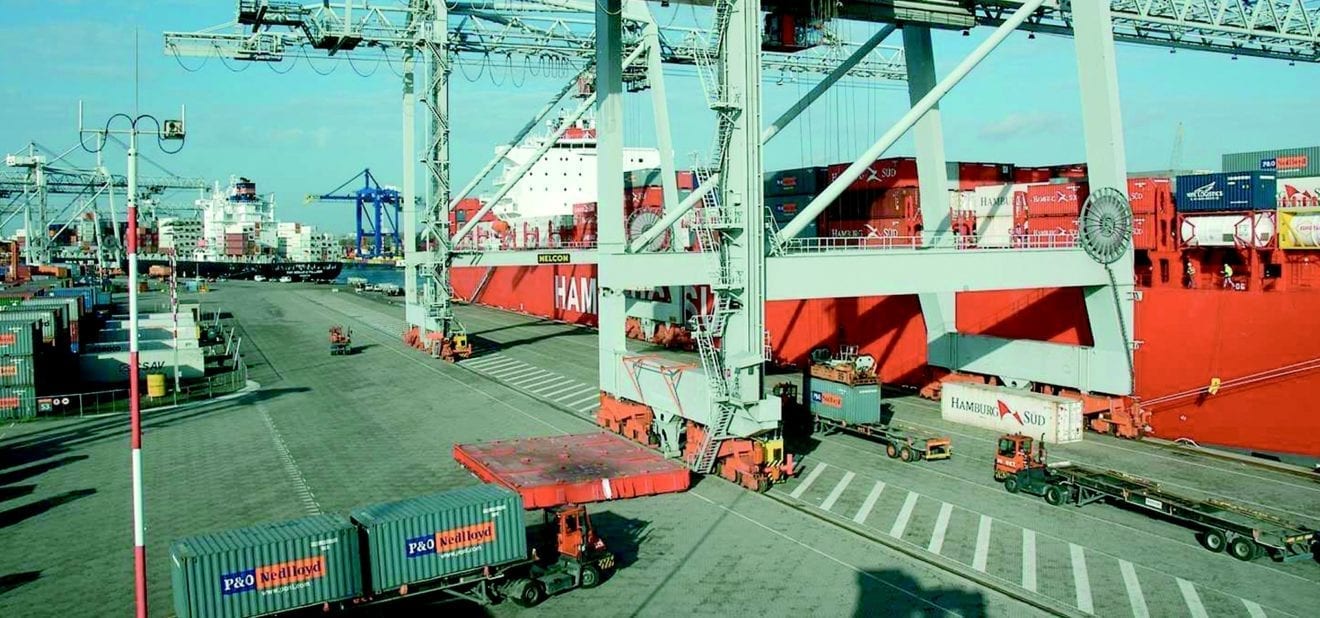
    President Director of state-owned seaport operator PT Pelindo II Elvyn G. Masassya said the implementation of a single Internet-based electronic service or the Indonesia Port Net (Inaportnet) in Pelindo I to Pelindo IV has entered the finalization stage.

    Inaportnet is expected to improve connectivity of the four enterprises.

    Masasya added the Inaportnet application throughout all seaports managed by PT. Pelindo would be gradually done.

    “Our plan is that the Inaportnet in all the seaports managed by PT. Pelindon will be integrated at the end of 2016,” she said in Jakarta on Saturday.

    The Inaportnet will integrate the information system of ports throughout Indonesia and one of the benefits is to monitor domestic commodity and anticipation of complaints about waiting times for vessels.

  • Jokowi to Open Indonesia Fintech Festival and Conference 2016

    Jokowi to Open Indonesia Fintech Festival and Conference 2016

    President Joko “Jokowi” Widodo is scheduled to open the Indonesia Fintech Festival and Conference 2016 at the Indonesia Convention Exhibition, Tangerang, on 29th August 2016. The event is organized by the Financial Service Authority (OJK) and the Indonesia Chamber of Commerce and Industry (Kadin).

    “President Jokowi will open the event and it will be closed by Queen Maxima of the Netherlands,” said the OJK’s Deputy Commissioners for Non-bank Finance Industry (IKNB) Dumoly F. Pardede on Thursday.

    Dumoly said a startup competition will be held during the event. In addition, an international financial technology conference will also be held. It will also provide assistance to fintech startups. “It will also host meetings between investors.”

    The event is aimed at establishing shared understanding of harmonious development of fintech ecosystem among industrial stakeholders in Indonesia. “There’s a shared commitment among several fintech practitioners to enhancing fintech in Indonesia,” Dumoly explained.

    Dumoly said the festival will be held annually in order to produce the best startups. “It’s a prestigious event, we will create an area of fintech, new trends and cultures in Indonesia,” he said.

    Kadin’s Startup Technology Innovation Department head Patrick Walujo said 72 startups will participate in the festival. “They will exhibit their products. We expect to see more startups next year,” he said.

  • Many foreign banks have not complied with SMEs credit policy

    Many foreign banks have not complied with SMEs credit policy

    Bank Indonesia said many banks mainly branches of foreign banks have not complied with the call for setting aside at least 10 percent of their credits for micro, small and medium enterprises (SMEs) .

    Head of Bank Indonesias division for development of SMEs Yunita Resmi Sari in Jakarta said despite facility such linkage branches of foreign banks are still in difficulty in extending credits for SMEs as asked by the central bank.

    “We are aware that foreign banks have limited networks of branches and their capacity is not for SMEs,” Yunita said here on Thursday.

    In 2015, the central bank asked banks to increase the portion of their credits for SMEs by 5 percentage points a year to 20 percent in 2018.

    Yunita , the central bank is preparing a policy on SMEs credits from foreign bank branches.

    Until August, this year, more than 100 of the 119 banks in the country already set aside 10 percent of their credits for SMEs.

    Yunita said the SMEs credit market is still wide open , pointing out only 22 percent of 57.8 million units of SMEs have access to bank credits.

    SMEs account only 19.7 percent or Rp827.3 trillion of the total outstanding credits of banks in the country by the end of the second quarter of 2016.

    The SMEs credits grew 8.3 percent year-on-year in the second quarter of 2016.

  • Electricity Prices May Decline

    Electricity Prices May Decline

    The National Energy Board (DEN) is asking state power company PLN to review its suggestion to formulate a new formula for the basic prices of electricity. The DEN believes a new price formula will bring benefits to the public.

    “Concept-wise, it is good. But PLN must first hold a price simulation to figure out how positive a new price scheme would be for the public. The tariffs could be a lot cheaper,” DEN member Abadi Purnomo told.

    He said the opportunity to lower electricity prices arrives from the abundant power supply generated by coal-fueled power plans, which accounted for 52.8 percent of the national energy mix last year. The second largest portion is gas energy use with 24.2 percent.

    PLN suggested a new price formula that will include energy mix component in the calculaton. Today’s tariffs calculations only refer to the Indonesian Crude Price (ICP), whereas the use of oil fuel for power-generation has declined from 11.7 percent in 2015 to just 6.7 percent this year.

    Another DEN member Sonny Keraf also supports PLN’s proposal. He asks the government to evaluate the current electricity price formula as a way to develop new renewable energy sources.

    A new, cheaper price electricity scheme will trigger industry growth, Sonny said. Industry players have always complained about Indonesia’s pricy electricity rates that prevent them from competing with other nations.

    PLN’s planning director Nicke Widyawati promised to bring their proposal to the DPR.

    Meanwhile, Acting Energy Minister Luhut Binsar Pandjaitan said his ministry is reviewing the suggestion.

  • Madiun develops tourism villages to attract tourists

    Madiun develops tourism villages to attract tourists

    Madiun district government in the Indonesian province of East Java is making efforts to develop a number of areas into tourism villages to attract local and foreign tourists, according to an official.

    “Of all 206 villages in Madiun district, 11 have been surveyed to be developed into tourism villages to attract both local and foreign tourists,” said the head of Department of Cooperatives, Industry, Trade and Tourism (Diskoperindagta), Sawung Rehtomo, here.

    He said the 11 villages are Brumbun, Kresek, Segulung, Dolopo, Durenan, Kare, Batok, Tawangrejo, Gunungsari, Pilangrejo, and Mruwak.

    According to him, the concept of the tourism village will highlight the potential that exists in each village for sale to tourists.

    In Brumbun village, for example, tourists will have the opportunity to cruise down the beautiful riven on the slopes of Mount Wilis, or to have the sensation of picking durian fruits in Kare village.

    Rehtomo explained that the development of tourist villages will be carried out as part of efforts to build the tourism industry in Madiun district, both nature and cultural tourism.

  • Toyota to Continue to Invest Big in Indonesia

    Toyota to Continue to Invest Big in Indonesia

    Toyota will continue its major investment plan in Indonesia, particularly in manufacturing, up to Rp20 trillion by 2020.

    PT Toyota Motors Manufacturing Indonesia (TMMIN) deputy president director Warih Andang Tjahjono in Tokyo, Japan, said Sunday, August 28, 2016, that Toyota has made Rp10 trillion investment of its planned investment in Indonesia, as promised by Toyota Motor Corp (TMC) president director Akio Toyota.

    “Major projects have been realized, the third plant has been completed,” he said.

    Since 2013, he went on, Toyota’s production capacity in Indonesia continues to increase, from 110,000 units to currently 25,000 units per day.

    According to Warih, the total TMC investment in the past few years have reached roughly Rp10 trillion, in which the biggest investment had been made to develop the production capacity of Kijang Innova and Fortuner at approximately Rp5 trillion, followed by the production of Sienta at around Rp2.5 trillion, and NR engine production with an investment value of roughly Rp2.3 trillion.

    “Investment will continue, although it would not be as big as the current investment,” Warih said.

  • Huawei, Indonesian partners build cloud platform

    Huawei, Indonesian partners build cloud platform

    PT Huawei Tech Investment (Huawei Indonesia) has worked with Accenture, Cloudera, Anabatic, IDPRO, Infosys and Telkomsigma to build a new cloud ecosystem.

    The new solution, FusionSphere 6.0, was launched during the recent Huawei Cloud Conference Indonesia.

    FusionSphere 6.0 is an enterprise-class cloud operating system that helps customers deploy virtual servers, private clouds, public clouds, hybrid clouds, cloud desktops and NFVI.

    The ecosystem brings the concept of open source which used in components, architecture, and ecosystem enabling customers to have more choices in software. Huawei FusionSphere 6.0 keeps pace with the open-source OpenStack community, complies with the native OpenStack standards, and supports OpenStack APIs.

    Third-party applications developed based on native OpenStack can run on Huawei FusionSphere 6.0 without having to make changes.

    The platform is designed to help enterprises overcome the challenges faced during different stages of IT transformation, making enterprise business and workflow more effective and efficient in the deal with changes in the market, lowering investments on IT assets and human resources.

    “Huawei enthusiastically built a win-win cloud ecosystem with partners,” Huawei Indonesia CEO Liu Haosheng said.

    “We would like to share our successful practices in the global ICT sector, and to use the most innovative and competitive ICT technologies, products, and solutions to support our strategic business partners in Indonesia , creating values and benefits for their users in the cloud era.”

    At the conference, Huawei Indonesia also shared its successful practices in cloud transformation in cooperation with Accenture, as partners, for Telkomsigma.

    This successful practice in cloud transformation embodies Huawei Indonesia’s commitment to do innovation together with partners in an effort to build an open cloud ecosystem to help customers accelerate the transformation toward cloud solutions.

  • Flying start for Innisfree China at Disneyland

    Flying start for Innisfree China at Disneyland

    Korean beauty brand Innisfree China, known for its natural ingredients, has come up with a fresh idea to promote its new store in Shanghai Disneyland.

    Using the “Jeju flying bike”, it is offering customers a virtual visit to the company’s home base of Jeju Island. They mount the bike and put on VR goggles for the journey, created by PostVisual.

    They “fly” from the 16.5 sqm store to the 1650 sqkm island, which is a Unesco World Heritage Site for its volcanic landscape. Through eye-tracking technology, the virtual tourists can fly around the island and “collect” natural ingredients such as canola blooms, green tea leaves and nutmeg.

    To create the 360deg aerial and underwater surroundings, PostVisual spent about three months producing the content, even building its own VR drone camera in-house.

    innisfree VR

    Thousands of visitors have already taken the virtual ride, and the concept will be rolled out this year to flagship stores in Hong Kong, Indonesia, Singapore and Vietnam as well as elsewhere in the US.

  • CBRE Research urges landlords to engage

    CBRE Research urges landlords to engage

    Online and offline retailing in Southeast Asia is expected to merge further, according to a new study by CBRE Research Singapore.

    Its report It’s All About Place-making urges landlords to play their part to stay ahead in a fast-changing retail landscape where consumers transit seamlessly from physical to digital platforms.

    CBRE Research projects that nearly 4 million sqm of city retail stock across Malaysia, Singapore, Thailand and Vietnam will be completed in the next three to five years. CBRE studied retail stock in Bangkok, Hanoi, Ho Chi Minh City, Jakarta, Kuala Lumpur and Singapore.

    “Some retail developments across these six cities have had to shut down in the face of high vacancy rates and low footfall as they failed to capture consumers and retain tenants,” says the report. “One suggestion is for landlords to acquire eCommerce platforms or set up logistics networks to give consumers the fully integrated omnichannel experience.”

    Established shopping centres with online platforms that provide “click-and-collect” or “store-to-door” services give consumers a higher sense of reliability and earn trust as well, says the report.

    “Both physical and online-only retailers are also more inclined to expand their footprint in these shopping centres in their bid to incorporate an omnichannel strategy.”

    Wave of change

    Combining both online and offline channels is one of five strategies CBRE Research recommends to landlords as Southeast Asian economies cope with structural shifts in the face of disruptive technologies.

    This wave of change has affected retail sales across the markets, with CBRE Research using the PLACE acronym…

    Place-making: Conceptualising shopping developments with the consumer’s experience at the forefront. A good social experience makes a strong positive association on the consumer and is tougher to replicate on the digital platform, says the company.

    Leveraging technology: Landlords should take advantage of the high internet and smartphone penetration among SEA consumers to improve the offline shopping experience. Technology can provide consumer insights and interaction while helping boost foot traffic and sales.

    Actively engaging: Forging personal connections with consumers is imperative for landlords to stand out from the competition and gain loyalty. Tenant engagement, and landlords need to find ways to show support.

    Combining channels: Landlords can break down the silos between online and offline by helping tenants incorporate an omnichannel strategy through vertical and horizontal integration, such as acquiring an eCommerce platform or setting up a logistics network to fulfil delivery needs.

    Engaging digital tenants: Landlords should seek to lease space to up-and-coming eCommerce retailers as they are likely to be more savvy about digital marketing and in tune with modern consumer needs.

    New needs

    “The onus of ensuring that stores in shopping centres remain an important and relevant touch point for consumers should not lie with retailers solely,” says CBRE Research Singapore/Southeast Asia head Desmond Sim. “The roles of the asset manager, landlord and shopping centre need to evolve to cater to the new needs of retailers and consumers amid stiff competition.

    “This task is all the more urgent as the market is anticipating a surge in internet use among developing countries, particularly Indonesia and Vietnam where mobile phone use has the greatest potential to increase.”

    Store-based retailing will stay the key point of purchase among SEA consumers in the next five to 10 years and account for at least 90 per cent of total sales value, says CBRE Research. However, landlords will face increasing pressure to make every visit to the shopping mall a memorable experience.

    With its headquarters in Los Angeles, CBRE Group is a commercial real-estate services and investment firm with more than 400 offices worldwide.

  • Jamba Juice Opens First Location in Indonesia

    Jamba Juice Opens First Location in Indonesia

    Jamba Juice Company, a leading lifestyle brand with a passion for making healthful living fun, announced today that the Panen Lestari Internusa (“PLI”) group has opened the first Jamba Juice location in Indonesia. The store is located in the popular Central Park Mall, in Jakarta. PLI is a subsidiary of Mitra Adiperkasa (“MAP”), the largest retailer in Indonesia, with more than 1,800 retail outlets, a portfolio of 150 brands, and over 22,000 employees.

    The Jakarta store brings the total number of Jamba locations to 886 stores globally.

    “We are excited to introduce the Jamba Juice brand in Indonesia,” said Agus Gozali, Managing Director of PT, PLI. “Their menu of local fruit-based products are aligned with our consumers’ needs. Central Park Mall is one of the largest premium lifestyle malls in Indonesia and by adding a lifestyle brand like Jamba Juice to the mall we will ensure consumers have access to menu offerings that are both fit and fun. The Jamba store will be located at one of the mall’s major entrances, making it highly convenient for mall guests.”

    In addition to Jamba’s top selling products like Strawberries Wild® and Banana Berry™, the Indonesian menu will include several local products featuring popular Indonesian fruits, including guava and dragon fruit.

    “The launch of our first Indonesian location is significant for the Jamba brand and business. We continue to see demand for our hand-made, premium products across the globe,” noted Arnaud Joliff, Senior Vice President, Chief Systems Officer and GM International at Jamba Juice. “We are very fortunate to be represented in Indonesia by such a knowledgeable, passionate and well-established partner as PLI. We look forward to many years of partnership as we build the Jamba Juice brand in Indonesia.”

    Jamba Juice is currently awarding franchise opportunities in other select markets around the globe. For more information, please visit www.jambafranchise.com.

  • Singapore Builds Flight Simulation Center in Tangerang

    Singapore Builds Flight Simulation Center in Tangerang

    Singapore-based flight simulator provider SIM Aero Asia plans to build a flight simulator training center in Tangerang, Banten. The US$50 million (Rp666.6 billion) project is expected to start operating next year.

    SIM Aero Asia business development officer Alex Teoh said the Indonesian aviation industry’s growth rate is currently among the most rapid in Asia. He said this creates an opportunity for SIM Aero Asia to its business in Indonesia.

    “We have received the permit from the Investment Coordinating Board (BKPM). Through our subsidiary SIM Aero Indonesia we are ready to rent airline simulator equipment to Indonesian airlines,” he said in Jakarta, Wednesday, August 24.

    Teoh said Indonesia’s need for flight simulation devices will increase, especially since a number of domestic airlines are raising the number of their fleet to meet the rising demand for air transport services.

    Alex is confident SIM Aero optimistic Indonesia can contribute to the development of the Indonesian aviation industry by providing aviation training with international standards.

    Alex said his company plans to provide three simulation equipment; one A320 flight simulator and two helicopter simulators. The rent is around US$400 per hour for the A320 and US$800 for a helicopter simulation.

  • Indonesia asks New Zealand to lower import duty

    Indonesia asks New Zealand to lower import duty

    Indonesia has asked New Zealand and Australia to lower import duties on two export products from Indonesia-herbicides and insecticides-from 5 percent to zero percent under the ASEAN-Australia New Zealand Free Trade Agreement (AANSFTA).

    “To increase trade with Indonesia, import duties for herbicide and insecticide, which are high at 5 percent need to be made zero percent,” said Industry Minister Airlangga Hartarto here on Thursday.

    Airlangga said this after holding a meeting with the Ambassador of New Zealand to Indonesia, Trevor Matheson at the Industry Ministry Building, Jakarta.

    Meanwhile, the Director General of Security and Development Access International Industry, Ministry of Industry, Harjanto explained, there are two ASEAN member countries that export herbicide and insecticide to New Zealand, namely Indonesia and Malaysia.

    Unfortunately, since the cooperation agreement has been in force, the import duty for Indonesian products is higher than for Malaysia, which is zero percent.

    This makes the products from Malaysia more competitive than the products from Indonesia.

    “Herbicide and insecticide is used by New Zealand for work on the farm. We hope products from Indonesia can be as competitive as from Malaysia through the liberalization of this market,” said Harjanto.

    Harjanto speculated that outside the AANZ FTA agreement, Malaysia and New Zealand have other agreements, which allow import duties for Malaysian products to be zero percent.

    According to data from the Industry Ministry, trade value between Indonesia and New Zealand reached US$1.07 billion, of which Indonesia is experiencing a deficit of US$200.8 million.

    Harjanto hoped that with zero percent import duty, the trade balance between Indonesia and New Zealand would become more balanced, so that cooperation between the two countries can be strengthened further.

  • Pertamina Reports Net Profit rp23,8 Trillion Six Months

    Pertamina Reports Net Profit rp23,8 Trillion Six Months

    PT Pertamina reported US$1.83 billion (Rp23.8 trillion) in net profit in the first half of the year, or an increase of 221 percent from the same period last year.

    Chief Executive of the state-owned energy company Dwi Soetjipto attributed the increase in profit to improved performance of its business units and efficiency in operation.

    “We are grateful that efficiency and increase in performance in the upstream and downstream operations have resulted in an increase in net profit to US$1.83 billion,” Dwi said.

    He said in the first half of the year, the company was still confronted with declining prices of oil in the world market.

    The condition served a big blow to oil companies in the world though the impact was less damaging on Pertamina, he said.

    The prices, however, began to pick up in the following three months, he added.

    Pertaminas Finance Director Arief Budiman said in the first half of 2016 the company recorded US$17.19 billion in income, down 21 percent from US$21.79 billion in the same period last year.

    Its operating income rose 110 percent from US$1.56 billion in the first six months of 2015 to US$3.28 billion in the same period in 2016.

    “We are strong in cash flow with balance reaching US$5 billion. Therefore, we are strong enough to carry out corporate action when necessary,” he said.

    He said the company produced 640,000 barrels of oil equivalent per day consisting of 305,000 barrels of crude oil and 1,938 mmscfd of gas.

    Investment in a number of upstream projects have been implemented such as in the 1×55 MW geothermal power project of PLTP Ulubelu 3, and 2×55 MW PLTP Lumut Balai now 45 percent completed .

    The company also continued to develop infrastructure both for gas transport and processing and marketing.

    Among gas pipe projects such as Arun-Belawan-KlM-KEK, Muara Karang-Muara Tawar, Gresik-Semarang, and Porong-Grati gas pipes have been more than 80 percent completed.

    Development of processing infrastructure is being accelerated such as Refinery Development Masterplan Program (RDMP) of Kilang Balikpapan, which is now in the final phase of “Basic Engineering Design”, and RDMP of the Cilacap refinery now in the phase of “Front End Engineering Design”.

    Meanwhile, a number of marketing infrastructure projects have been in the final phase of development such as Pulau Sambu and Tanjung Uban oil fuel terminals, procurement of oil fuel and crude oil tankers of the General Purposes (GP) and Medium Range (MR) types with delivery expected this year.

  • Yusen Logistics Indonesia acquires highest standard of quality certification

    Yusen Logistics Indonesia acquires highest standard of quality certification

    PT Yusen Logistics Indonesia has become the first logistics business in Indonesia to acquire GDP certification, the industry standard of quality for the storage and transport of medical and pharmaceutical products.

    PT Yusen Logistics Indonesia has been handling pharmaceutical and medical devices more than 10 years, transferring high value, temperature sensitive products all over the world through Yusen Logistics’ European Pharma Network. With demand for advanced quality rising, the Company has invested in acquiring GDP(*) certification to verify the quality of its services to customers.

    Yusen Indonesia can now assure customers that transportation quality and shipment safety is being met through strict compliance with GDP guidelines; insured by regular inspections and systematic staff training.

    The Company’s Pharma shipping service employs company-owned vehicles with temperature control capability and real-time GPS tracking. Delivery routes are finalized after assessment of transportation risks, with implemented temperature mapping and monitoring. For air shipments, through using systematic cargo management techniques, Yusen Indonesia’s Customs clearance services are faster and more efficient; achieving greater service accuracy.

    As part of Yusen Logistics’ medium term business plan, “GO FORWARD, Yusen Logistics – Next Challenges”, the Company has taken measures to expand its healthcare logistics services across Europe, most recently opening a new GDP warehouse in Amsterdam(**) and expanding its global shipping network. Now that Yusen Logistics Indonesia has acquired GDP certification, the expertise Yusen Logistics has cultivated in Europe will be applied to Asia – providing safe, reliable and speedy services to its customers.

    (*)GDP: Good Distribution Practice
    (**)September 2015