Tag: Indonesia

  • Browser and search engine UCWeb claims 50pc market shares in India and Indonesia

    Browser and search engine UCWeb claims 50pc market shares in India and Indonesia

    UCWeb, the mobile browsing arm of e-commerce giant Alibaba Group which is behind the UC Browser, is claiming more than 50 per cent shares of both the Indian and Indonesian mobile browser and search engine markets, six years after entering the countries for the first time.

    The company also revealed it has reached the milestone of recording more than 400 million monthly active users globally, including 88 million in India.

    Amid stagnant growth in mobile internet usage and cutthroat competition in its home market, the Chinese company said the successes have been built on its relentless effort to adapt to both media environments, spearheaded by local sales teams, and a lack of any strong local competitors.

    “In these markets [UCWeb] has focused on being a big ‘platform’ that enables users to discover content.

    Indian viewers have a much stronger appetite for sport, music and videos, while less interest in social and gossip news, as in China

    He Xiaopeng, UCWeb’s president

    “We don’t care about short-term revenue and profit overseas. And we don’t rely on small apps to acquire traffic,” said He Xiaopeng, UCWeb’s president.

    His comments came as the company officially shortened its name from UCWeb to just “UC”, in an effort to highlight its upgrade from being a simple browser to what officials called a “digital media and entertainment platform”, which along with other operations such as Alibaba Music, and Alibaba Pictures, form the company’s growing culture and entertainment matrix.

    In a separate announcement, it said in partnership with Mumbai entertainment TV station Colors, it is also launching an English language news conglomerate, “UC News”.

    “India is among the few markets that still see traditional media outlets growing,” He explained.

    “This is different from China and Indonesia, where social media and online celebrity culture dominate.

    “Indian viewers have a much stronger appetite for sport, music and videos, while less interest in social and gossip news, as in China,” He said.

    The company employs nearly 100 staff in India, and a few less in Indonesia, mainly business development and marketing staff, who are backed up by much larger technical and products team in Guangzhou, He said, within a total workforce of 500.

    Chen Chao, the company’s general manager, said it is relatively easy building a successful presence in markets like India and Indonesia, where users are happier to accept foreign companies, and there is a lack of competitive local firms.

    UCWeb has far less interest in developed markets such as Japan, he added, for instance.

    The company’s expansion in the emerging markets comes as growth in the number of mobile internet users has plateaued in China, and browser competition has intensified between rivals such as QQ, which is backed by Tencent, and Baidu’s own browser.

    Zhu Dalin, an analyst with Analysys International, said the announcements underlined UCWeb’s ambition to become a major platform, which alll users can access easily.

    “It is also stressing its customised feeds, but its competitors are doing this.

    “China’s mobile internet landscape has changed so fast that it may not necessarily have developed in the way that UC wished,” said Zhu.

    Unlike during the personal computer age, mobile users can now access content through a various of ways, so browsers such as UC have to fight even harder for users, analysts say.

    India and Indonesia have become natural targets for UCWeb, despite having to overcome tough regulatory risks.

    The company has also built a strong presence in Iran, before being blocked by the Iranian government overnight, along with Facebook and Google.

    He Xiaopeng said the biggest challenge in India turned out to be poor infrastructure, on top of a lack of electricity, water and online payment tools.

    UCWeb’s local operating experience could potentially be an asset for its parent Alibaba, which is also exploring opportunities in markets including India.


  • Samsung promises to employ more local talent

    Samsung promises to employ more local talent

    Korean technology giant Samsung has promised to develop and nurture local talent in Indonesia through its Samsung Research and Development Institute (SRIN), a platform for innovation.

    The SRIN is currently carrying out a roadshow at several academic institutions in Indonesia to help young developers put their ideas into practice where previously it “would be hard for them to do so”, as the company claims. The platform could become a gateway for Indonesian talent to contribute to the development of new technologies for Samsung or other companies.

    Aside from developing its devices, Samsung’s other goal is to drive innovation in the internet of things (IoT) segment, which the company says is starting to take off in Indonesia.

    Samsung Indonesia’s marketing director for IT and mobile technology, Vebbyna Kaunang, said the use of Samsung’s IoT technologies in Indonesia was currently limited to business-to-business application, such as equipping offices with smartphone-controlled lights and other utilities. It is still unclear when these features will be made available to the general public.

    Because the company is pushing this segment further in the hope of preparing it for the Indonesian market, the development of local talent seems more important than ever, as qualified Indonesians could contribute to future Samsung technologies.

    Earlier this year, the company laid out plans to seek more Indonesian developers to help create local content for its burgeoning virtual reality (VR) service.

    “What we plan to do is to get our digital ecosystem in gear and hopefully fulfill all device segments with the latest technology every time. Through programs held by the SRIN, we are able to do that using unnurtured talent,” she said at the launch of Samsung’s new Galaxy Note 7 on Tuesday.

    The Galaxy Note 7 is described by Samsung as its pinnacle of innovation. Assembled in the company’s factory in Cikarang, West Java, the smartphone is equipped with features such as an iris scanner for more secure access, an improved stylus called the S Pen, and the ability to function for 30 minutes under water at a depth of 1.5 meters.

    The device itself is not yet available in retail stores in Indonesia, but pre-orders for the country sold out within three days earlier this month at a price of Rp 10.7 million (US$813).

    Vebby added that the components of the Galaxy Note 7 were 100 percent compliant with the upcoming regulation, which requires all 4G smartphones sold in the country to be made of at least 30 percent local components.

    At present, the government applies a mandatory rule of having 20 percent local content in 4G smartphones sold in the country, but the rule applies mostly to hardware, while the upcoming regulation will also encapsulate software requirements.

    The regulation is slated to be implemented at the beginning of next year.

    Samsung released its Galaxy S7 smartphone in March.

  • Indonesia outlines strategy for sports development

    Indonesia outlines strategy for sports development

    Indonesia President Joko Widodo on Wednesday stressed on the development of sports which have the potential to garner medals at international championships, including badminton, archery and weightlifting.

    “Prioritise development of games which have already shown achievements,” President Widodo said at the State Palace after congratulating the country’s medallists at the Rio Olympics, including the gold medallists in the badminton mixed doubles.

    In addition to that one gold medal, Indonesia also collected one silver medal and one bronze medal in weightlifting competitions at the Olympics, improving from the achievement at the Olympics in 2012, during which only one silver medal and one bronze medal were secured, reports Xinhua.

    Widodo added that the development “includes the improvements of facilities, infrastructure and training camps”.

    “If it is better undertaken with a long strategy, more gold medals will be able to be garnered,” he said.

    Widodo said that he had coordinated with the sports minister on how to materialise the new strategy.

  • Trade Expo Indonesia Targets 14,700 Potential Buyers

    Trade Expo Indonesia Targets 14,700 Potential Buyers

    The Trade Ministry is targeting the Trade Expo Indonesia (TEI) 2016, which will be held on October 12-16, to be able to attract 14,700 domestic and foreign potential buyers.

    “We provide 1,100 outlets,” Director General of National Export Development of The Trade Ministry Arlinda said in a press conference in Jakarta on Wednesday, August 24, 2016.

    Arlinda said there are currently 4,000 potential buyers who have confirmed to attend the expo.

    The Trade Expo 2016 comprises of six leading sector zones, namely manufacture, furniture and home decoration, food and agriculture, creative industry and investment.

    The TEI promotion has been intensively conducted in domestic and abroad.

  • RHB Bank to assess opportunities in Indonesia

    RHB Bank to assess opportunities in Indonesia

    RHB Bank Bhd, which saw its bid to acquire a stake in Indonesia’s PT Bank Mestika Dharma Tbk fall through, is optimistic about the prospects in that country and and will assess the opportunities.

    Group Managing Director, Datuk Khairussaleh Ramli, said the Indonesian market was good with banks recording stronger credit growth and higher return on equity compared to Malaysia’s.

    It has been reported that, on average, an Indonesian bank’s return on investment was between 15% and 20% compared with Malaysia’s 9) and 11%.

    “(However) at this point there is nothing on the table for us to look at and when it does we will have to evaluate the opportunity,” he said after announcing RHB Bank’s first-half 2016 financial results here on Wednesday.

    He said the recent bilateral agreement signed between Indonesia Financial Services Authority (IFSA) and Bank Negara Malaysia would pave the way for banks to have greater access in both countries.

    In 2009, RHB Bank, which was then the banking unit of RHB Capital Bhd had, proposed to acquire 80 per cent of PT. Bank Mestika Dharma Tbk for RM1.16 billion but IFSA’s move to limit the foreign ownership to 40 per cent emerged as a stumbling block for the deal to be signed.

    The second bid to acquire a 40% stake, also fell through after RHB Capital did not get the Indonesian authorities’ approval before the deadline of the sales and purchase agreement on June 30, 2014.

    Also under its own corporate exercise, on April 14, 2016, RHB Bank emerged as the new group’s holding company and it was listed on Bursa Securities on June 28, 2016.

    For the first half-year ended June 30, 2016, its pre-tax profit fell by 12.7% to RM1.22bil due to a one-off impairment on a corporate bond in Singapore. For the first-half of 2015, it reported a pre-tax profit of RM1.40bil.

    Revenue for the six months of 2016, however, rose to RM5.42bil from RM5.37bil.

    Khairussaleh said the financial market would remain challenging due to the macro-economic uncertainties in most parts of the world.

    “The risks of external demands and softer consumer sentiments are expected to moderate Malaysias gross domestic product growth in 2016 to 4% from 5% last year.

    “The banking sector growth too is expected to remain modest, attributable to a deceleration in corporate loans market and ongoing consolidation of household loans sector,” he said.

    He said although the bank’s performance in the second quarter was affected by one large impairment on securities, RHB was on track to achieve its long-term objectives set under the reframed strategy of focusing on performance.

    For the second quarter ended June 30, 2016, pre-tax profit stood at RM469.33mil, down from RM724.9mil a year ago. Revenue increased to RM2.68bil from RM2.65bil previously.

    “The group will stay on course in executing the various initiatives under its transformation programme, while continuing to be vigilant amid a challenging macro environment and volatility in the market place,” he said.

  • East Nusa Tenggara proposes flights on Kupang-Dili-Darwin route

    East Nusa Tenggara proposes flights on Kupang-Dili-Darwin route

    The Tourism and Creative Economy Office of East Nusa Tenggara Province has suggested to the Ministry of Transportation to start the Kupang-Dili-Darwin flight route.

    “The flight route will increase the number of foreign tourist arrivals in East Nusa Tenggara and other regions in Indonesia,” Head of the Tourism and Creative Economy Office of East Nusa Tenggara Province, Marius Jelamu, stated here on Thursday.

    He noted that the Kupang-Dili-Darwin flight route is, so far, unavailable. Hence, foreign tourists keen on visiting the province have to take a flight via Jakarta or Denpasar to Komodo airport in Labuan Bajo or El Tari airport in Kupang.

    Until mid 80’s there were international commercial route between Kupang and Darwin in Australia.According to Jelamu, the flight route should be considered as the three destinations are located in proximity to each other.

    “East Nusa Tenggara shares its borders with Timor Leste, and it is close to Australia. If there is a flight connecting the three destinations located in three different countries, then the transportation and communication lanes will be smoother,” Jelamu affirmed.

    Starting a transportation lane from one country to East Nusa Tenggara would help the province boost its economic growth, especially in the tourism sector.

    “It will ease travel for the foreign tourists from Timor Leste and Australia planning to visit East Nusa Tenggara and other regions. Moreover, the visa-free policy will facilitate the flow of tourists into the province,” he stated.

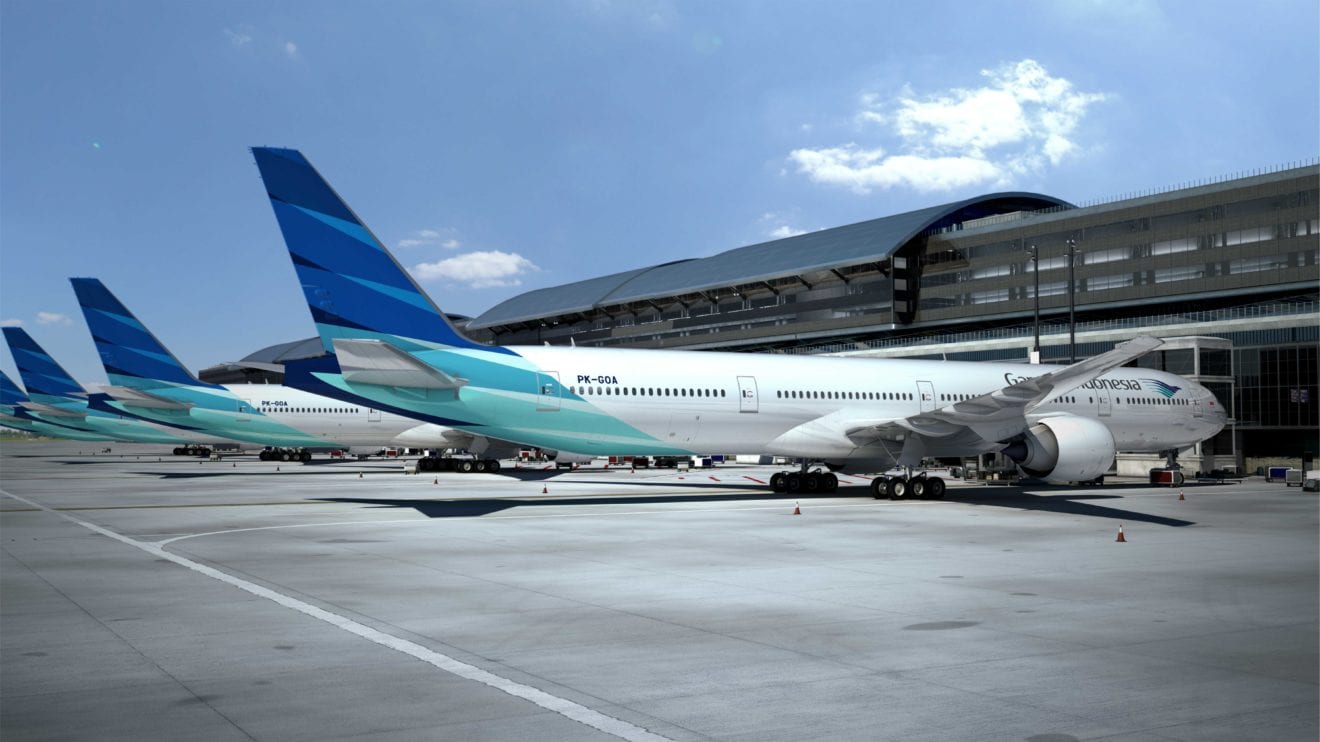
    He noted that the Indonesian flight carrier Garuda Indonesia could seize this opportunity as the market will always exist.

    “The flight carrier should not harbor concerns as passengers are always available,” he added.

  • Tata Motors launches two new commercial vehicles in Indonesia

    Tata Motors launches two new commercial vehicles in Indonesia

    Tata Motors today said its Indonesia unit has launched two new generation commercial vehicles in that country. PT Tata Motors Distribusi Indonesia (TMDI), a unit of Tata Motors, has launched the Tata Ultra 1012 light truck and the Tata Xenon XT D-Cab 4×4 pick-up, at the 24th Gaikindo Indonesia International Auto Show (GIIAS) 2016. Developed, keeping the Indonesian customer in mind, both vehicles have gone through rigorous trials of more than 25,000 kms, over different terrains and various operating conditions, Tata Motors said in a statement.

    “Both vehicles have been designed for the modern commercial vehicle customer with superior performance, world-class cabins, high load carrying capacity and flexible body-load configurations,” Ravi Pisharody, Tata Motors Executive Director, Commercial Vehicles, said. Tata Motors is also committed to bring the latest global technologies to the commercial vehicles market in the country, he added. Tata Motors is India’s largest automobile… Tata Motors today said its Indonesia unit has launched two new generation commercial vehicles in that country.

    PT Tata Motors Distribusi Indonesia (TMDI), a unit of Tata Motors, has launched the Tata Ultra 1012 light truck and the Tata Xenon XT D-Cab 4×4 pick-up, at the 24th Gaikindo Indonesia International Auto Show (GIIAS) 2016.

    Developed, keeping the Indonesian customer in mind, both vehicles have gone through rigorous trials of more than 25,000 kms, over different terrains and various operating conditions, Tata Motors said in a statement.

    “Both vehicles have been designed for the modern commercial vehicle customer with superior performance, world-class cabins, high load carrying capacity and flexible body-load configurations,” Ravi Pisharody, Tata Motors Executive Director, Commercial Vehicles, said.

    Tata Motors is also committed to bring the latest global technologies to the commercial vehicles market in the country, he added.

    Tata Motors is India’s largest automobile company, with consolidated revenues of Rs 2,75,561 crore in 2015-16. Through subsidiaries and associate companies, Tata Motors has operations in the UK, South Korea, Thailand, South Africa and Indonesia.

  • BEI launches online investment-based simulation game

    BEI launches online investment-based simulation game

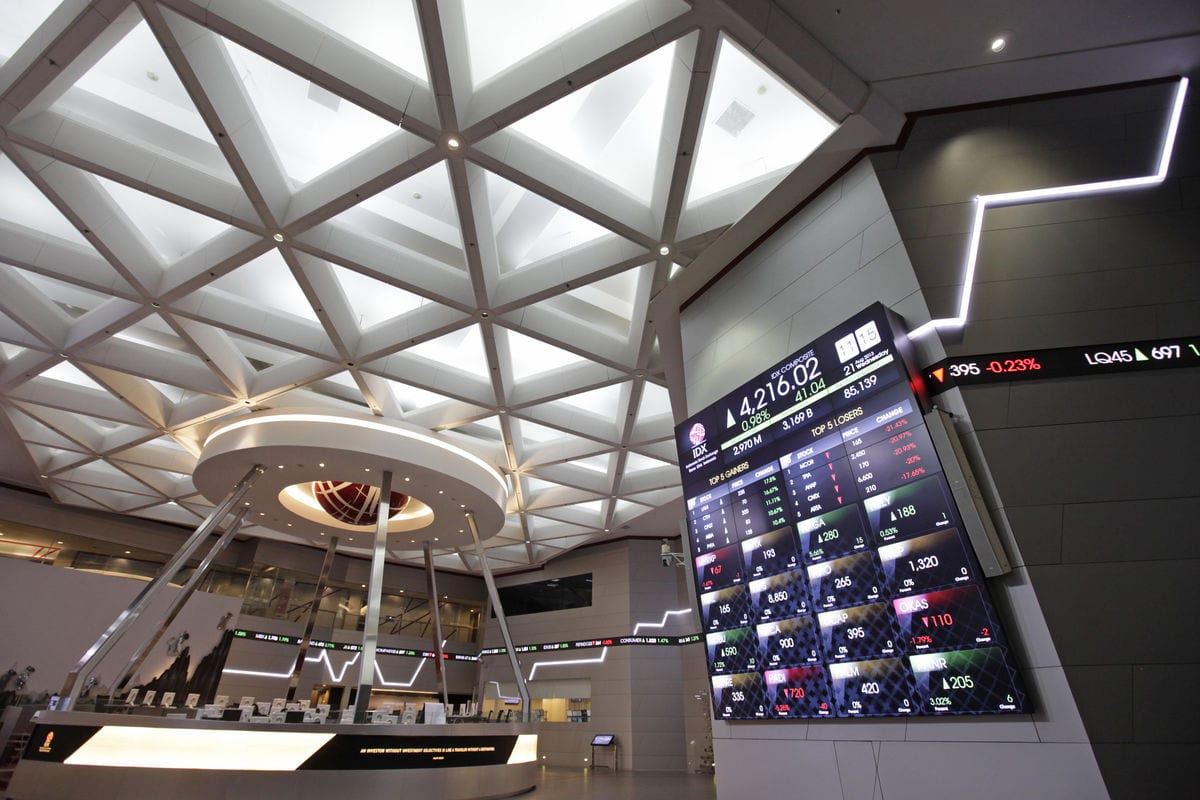
    The Indonesia Stock Exchange (BEI) launched an online investment-based simulation game “Nabung Saham Go” (Saving Stocks Go) as one of the measures to introduce the capital market industry to the public, especially to university students.

    “The game was one of the steps to introduce the capital market to the public. The Nabung Saham Go game can be played by anyone although it is aimed at university students as it is easier for them to play. The game is similar to Pokemon Go,” Development Director of BEI Nicky Hogan stated here on Tuesday.

    Hogan emphasized that the game falls under the education category and offers a fusion of the virtual and real worlds. Players will encounter small adventures bearing different themes and will get a series of interesting information.

    “The application encourages players to become more familiar with the capital market,” he remarked.

    Hogan elaborated that the “Nabung Saham Go” game invites players to collect points gained after answering the questions posed by the gaming application.

    “Players can visit certain places, such as the Financial Services Authority Building and Indonesia Stock Exchange Building to get information on how to gain points in the game. In each of the places visited, the player will have to answer a few questions on the stock market. Each correct answer will be given points,” he explained.

    In addition to “Nabung Saham Go,” Hogan said the users can play an analog game called “Stocklab,” which is associated with investment instruments, such as stocks and mutual funds.

    “The game Stocklab uses media cards and as an outline, the players will be guided on the strategy of investing and are invited to find out how the company made its initial public offering,” he added.

  • Plaza Indonesia’s ‘Fashion On4’ Showcases Favorite Local Brands

    Plaza Indonesia’s ‘Fashion On4’ Showcases Favorite Local Brands

    “We’re currently re-branding the whole level four as a new hang-out place for young people in the city,” Astri Abyanti, senior marketing communications, public relations and digital marketing manager of Plaza Indonesia, said at the opening of Fashion On4 on Tuesday (16/08).

    “We want to support Indonesia’s growing fashion industry, especially local brands that target young people. That’s why we’ve invited these nine brands to showcase their collections at Fashion On4,” Astri said.

    The nine fashion labels, according to Astri, were selected based on a survey of the shopping mall’s young clientele.

    “These are the brands that [our young clients] would like to see at the mall,” she said.

    Among the brands are Ikat Indonesia, No’om, Populo Batik, Rama Dauhan, Ria Miranda and Sky Inc.

    “(Fashion On4) breathes fresh air into Plaza Indonesia,” fashion designer Rama Dauhan said. “It’s also an opportunity for us to show that Indonesian fashion brands’ creations are on par with international ones.”

    For Fashion On4, Rama showcases his newest collection “Sensatia,” whose main strength is in easy-to-wear pieces embellished with patchwork designs.

    “It’s a great opportunity for us to branch out,” Sky Inc’s designer Amot Sjamsuri Muda said.

    For the new pop-up store, Sky Inc, previously known as Isis, presents an extended summer collection, inspired by “ulos,” a traditional fabric from North Sumatra. The fabric is made into casual dresses, crop tops and oversized jackets showcasing the intricate patterns of the traditional textile.

    Ria Miranda is the only Muslim fashion label among the nine new labels at the pop-up store.

    “I’m so excited to be here,” Ria said. “I hope to get a lot of new customers from this new store.”

    For Fashion On4, the Muslim designer presents her 2016 Fall/Winter collection, Forresta, inspired by her recent visit to Japan.

    “It’s a universal collection that can be worn by Muslim and non-Muslim [women] alike,” she said.

    The collection features simple pieces in a combination of bold colors that can easily be mixed and matched.

    Fashion On4 will be open at the mall until December 2016.

  • Direct India-Indonesia flights necessary to attract more Indian tourists

    Direct India-Indonesia flights necessary to attract more Indian tourists

    The Indonesian Tourism Ministry believes that direct flight from and to India could increase the number of Indian tourist arrivals in Indonesia.

    “The main challenge is direct flights as the existing ones are just transit flights from and to India,” Dody Prianto, assistant deputy director of the Tourism Ministry, noted here.

    Prianto was in Kolkata, India, for a roadshow to promote “Wonderful Indonesia,” the tourism brand of the country, at a hotel in the city, with the objective of attracting more tourists from India.

    He hoped airlines, such as Garuda Indonesia, would be interested in operating direct flights between India and Indonesia.

    To draw more Indian tourists to Indonesia, the ministry is intensifying tourism promotion to introduce other tourist destinations apart from Bali.

    He mentioned Sumatra as one of the interesting places for Indian tourists to visit as it is located near Singapore, and its culinary dishes bear similarities to those in Indonesia.

    The Tourism Ministry has set a target of attracting at least 350 thousand Indian tourists this year.

    “The target is quite high, but we are optimistic that it can be achieved,” Prianto stated.

    During the first semester of this year, a total of 185,911 Indian tourists had visited Indonesia, he said on the sidelines of a sales million event.

  • Surplus predicted in Indonesia`s rice supply

    Surplus predicted in Indonesia`s rice supply

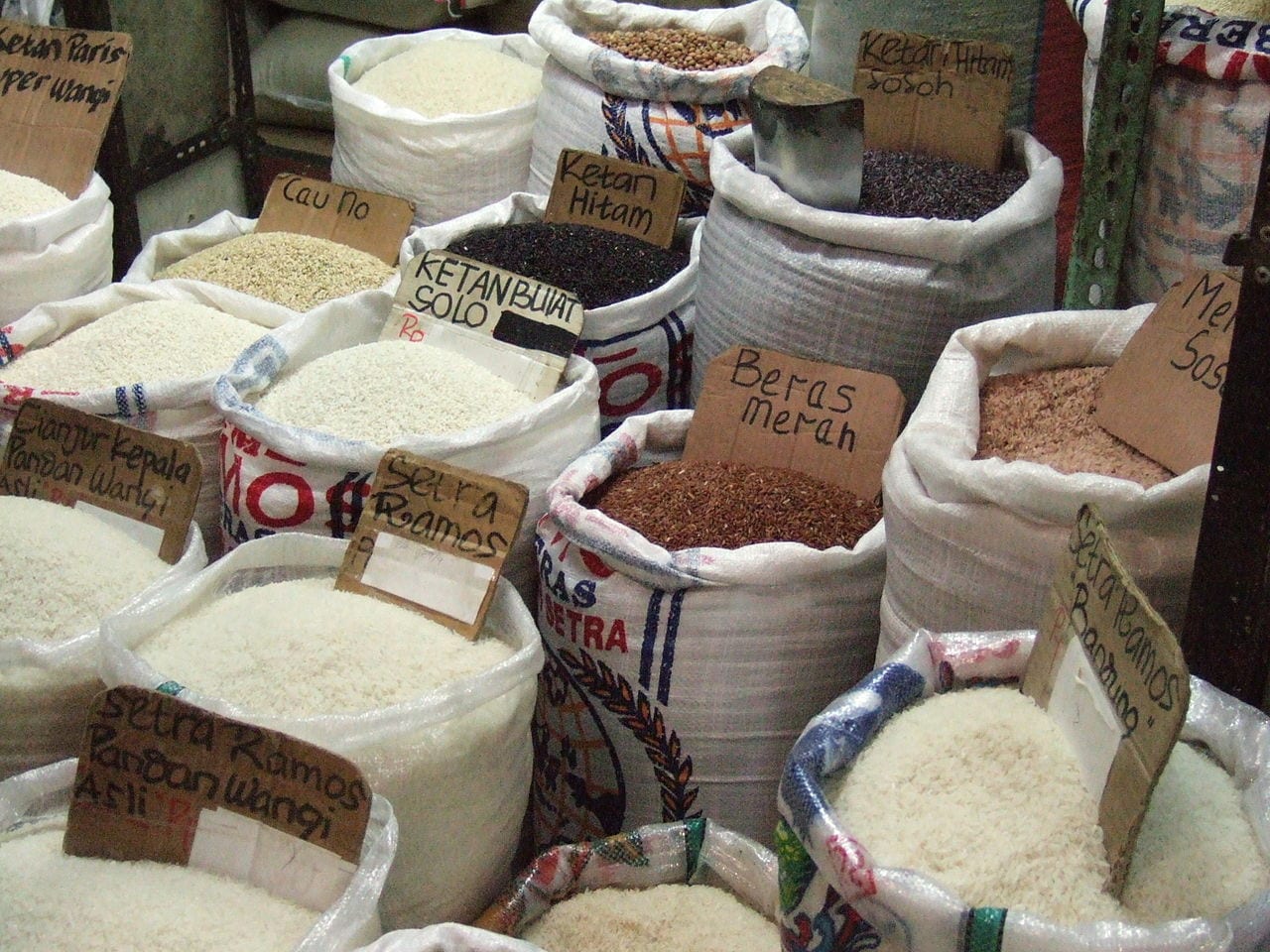
    The agriculture ministry said the country is expected to have a surplus of 11.38 million tons in supply of milled rice by the end of this year.

    Chief spokesman of the ministry Agung Hendriadi said rice supply is estimated to reach 43.69 million tons as against requirement of 32.3 million tons this year.

    “A surplus , therefore, is expected to reach 11.38 million tons, even there would be an excess of 20 million tons in supply on stocks including early year stock and Bulog stocks and harvest 8.8 million tons,” Agung said.

    Similarly excesses are also estimated in the supply of other foodstuff including 2.1 million tons of corn grains, 339,400 tons of sugar, 18.5 million tons of cooking oil, 131,800 tons of red onion, 414,400 tons of chili, 1.59 million tons of chicken meat and 1.44 million tons of eggs.

    Meanwhile, deficit is expected in the supply of beef and soybeans.

    Deficit in beef supply is estimated to reach 220,000 tons with supply totaling 441,8000 tons as against consumption of 662,300 tons, and deficit in soybean is around 1.09 million tons with supply totaling only 1.5 million tons as against consumption of 2.59 million tons.

    Agung, however, said in general supply of the 11 strategic commodities is relatively safe until the end of the year.

    “Deficit would be recorded only in the supply of two commodities until the end of the year,” he said.

  • Korean fashion brands in Zalora pop-up

    Korean fashion brands in Zalora pop-up

    South Korean fashion brands are featuring in an online pop-up store on regional sites of online fashion portal Zalora.

    It’s all part of a concerted bid to expand recognition of Korean fashion bards across the broader Asia-Pacific region.

    Launched in Singapore, the Premium Korean Fashion pop-up shop is open until October in Zalora sites in Singapore, Malaysia, Indonesia, the Philippines, Hong Kong and Taiwan, according to the officials at the Korea Trade-Investment Promotion Agency (Kotra) and the Korea Fashion Association.

    Seventeen South Korean designer brands, which have been recognised for their competitiveness both at home and abroad, are showcasing their products on the pop-up store.

    A launch ceremony was attended by some 80 Southeast Asian fashion journalists and so-called power bloggers. It marks South Korea’s first marketing activity targeting the entire Southeast Asian region.
    At the event, Giulio Xiloyannis said there is growing interest in Korean fashion in Southeast Asia and that the opening of the pop-up store is not only a new attempt but also an important event for Zalora.

    A Kotra official said the trade agency will step up efforts to gain access to major online portals in an effort to make inroads into regional markets.

    “Southeast Asia is emerging as the next eCommerce market after China as youths account for a large portion of its population and regional economies are growing at a fast pace,” Lee Byung-woo, head of Kotra’s office in Kuala Lumpur. “Efforts will be made to help Korean brands gain a foothold there.”

  • From loss to profit for Parkson Retail Asia

    From loss to profit for Parkson Retail Asia

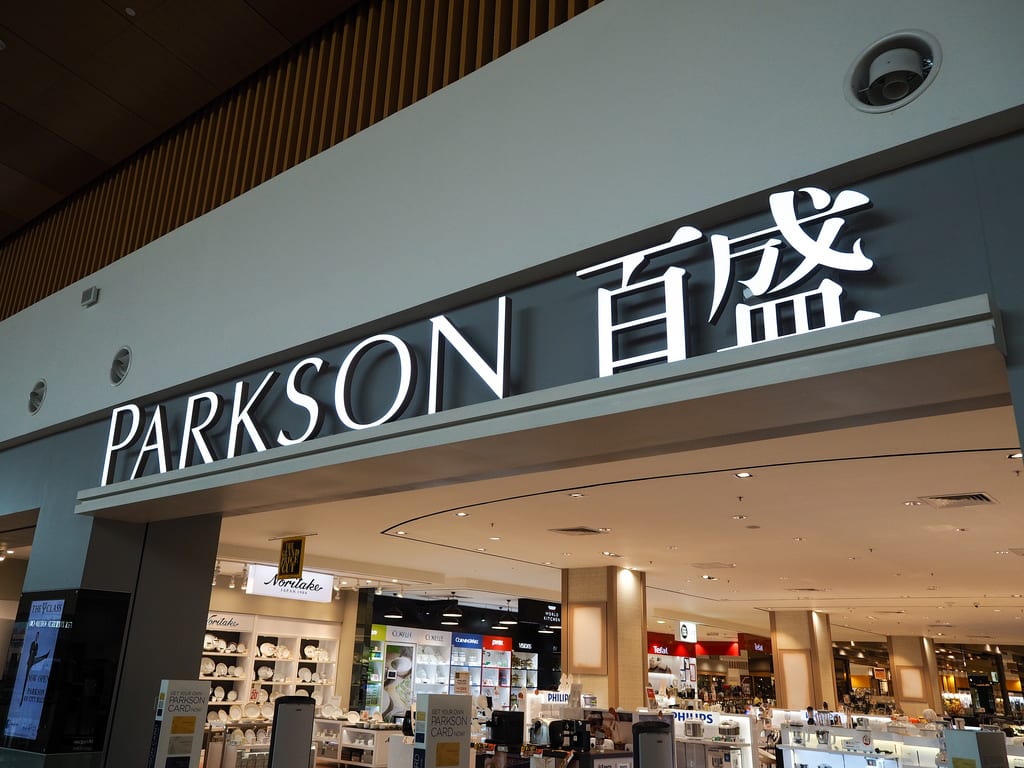
    Department store Parkson Retail Asia has managed a turnaround with profit before tax (PBT) of S$35 million (US$25.8 million) for the year ended June 30, compared to a pre-tax loss of $40.6 million the previous year.

    Profit was boosted by gain from a partial disposal of equity interest in Parkson Hanoi (PHCL) of $45.6 million. A subsidiary of the group, PHCL is now an associate company.

    On a same-store basis, PBT for the year fell by 46.9 per cent year-on-year to $17.4 million.

    For Malaysia, PBT declined by 28.9 per cent through negative same-store sales of -6.5 per cent and weak local currency; Vietnam had a pre-tax loss of $0.5 million with -2.9 per cent same-store sales; there was a pre-tax loss of $3.2 million in Indonesia; while Myanmar’s results were affected by uncertainty arising from redevelopment plans for the FMI Centre where the store is located.

    For the group’s fourth quarter, same-store sales grew 21.5 per cent in Malaysia, attributed to early festive buying arising from a shift in the Hari Raya calendar as well as the same quarter last year being hit by low sales following the introduction of the Goods & Services Tax.

    New concepts

    New concepts have been initiated, such as introducing Korean apparel, affordable private labels, and specialty shoe stores.

    “We have been consolidating our department store space by identifying non-performing stores with the view to closure upon tenancy expiry,” says Parkson.

    In Myanmar, the group had a 25 per cent decline in same-store sales, affected by plans to close the FMI Centre, while Vietnam had a 4.1 per cent decline for the quarter, with the discretionary retail environment difficult amid an increasingly crowded retail scene.

    Indonesia was more positive with 7.3 per cent growth in same-store sales, mainly because of early festive buying as a result of a shift in the Lebaran calendar.

    Overall, gross sales proceeds (GSP) and revenue for the quarter grew by 9.8 per cent and 10.9 per cent respectively to $232.1 million and $93.9 million. However, GSP and revenue declined by 10.2 and 9.4 per cent respectively to $967.7 million and $388.4 million.

    The group’s pre-tax loss for the quarter was $13.4 million. Contributing factors included impairment on fixed assets for two loss-making stores of $5.4 million, impairment on prepaid rental and rental deposit of $3.3 million, provision on deposit for a managed store in Ho Chi Minh City of $2.2 million, and the initial loss-making periods associated with new stores and businesses.

  • Raja Ampat launches tourism and conservation website

    Raja Ampat launches tourism and conservation website

    The government of Raja Ampat, West Papua, has launched a website on tourism and conservation to support tourism services in the region.

    The government is striving to boost innovation, Head of the Public Service Regional Office Technical Implementation Unit (BLUD UPTD) Water Conservation Area Raja Ampat Adrianus Kaiba noted in a press release received by Antara in Manokwari on Thursday.

    A technical institute, since its establishment in 2015 and under the coordination of the Department of Marine and Fisheries Raja Ampat, has been given the authority to manage water conservation in the area.

    He remarked that it was committed to improving services. Launching a website is rated as a step forward to improve the quality of services offered to both domestic and foreign tourists.

    “As a conservation area, we felt it was important to manage conservation in a professional and sustainable manner for the preservation of nature in this area,” he pointed out.

    He emphasized that the website was launched by Raja Ampat Regent Faris Abdul Umlati at Kampung Saonek, South Waigeo District, Wednesday (Aug. 17). It is part of a series of celebration activities to commemorate the 71st anniversary of the countrys independence.

    Kaiba said any information on water conservation in Raja Ampat can be updated on www.kkpr4.net, which is developed by BLUD UPTD.

    Meanwhile, Umlati highlighted that the website provides information on various conservation initiatives, scientific research, as well as water conservation activities being carried out in Raja Ampat in a sustainable manner.

    He believes the website will help domestic and foreign tourists obtain information regarding Raja Ampat, mainly related to water conservation.

    Moreover, Umlati remarked that the website is important to ensure that the areas biodiversity is always maintained and can be enjoyed by future generations.

    The Raja Ampat Islands are located at the northwestern tip of West Papua Province. They are located right in the heart of the coral triangle and are the worlds center of marine biodiversity.

    The results of ecological studies by The Nature Conservancy and Conservation International showed that Raja Ampat is home to 75 percent of the coral reefs in the world, with 553 species of coral and 1,437 species of reef fish.

    The waters in the area have abundant resources to provide sustenance and a means of livelihood for more than 40 thousand people spread across 135 villages in Raja Ampat.

    Local communities in Raja Ampat have cultural links and strong traditional ownership rights over the land and sea territory.

    Local authorities, through the BLUD UPTD Water Conservation Area, continue to ensure that water conservation is being carried out effectively, efficiently, and professionally.

    This step is being taken to ensure preservation of the natural resources and to improve the experience of tourists visiting the area to enjoy its natural beauty.

  • Tokopedia Tops Indonesia`s E-Commerce Website List

    Tokopedia Tops Indonesia`s E-Commerce Website List

    Seven years after its establishment, start-up company Tokopedia continues to strengthen its foothold in Indonesia’s e-commerce market. Tokopedia CEO William Tanuwijaya said that there are currently one million registered sellers in Tokopedia.

    “Over 16.5 million items are delivered monthly to buyers in Tokopedia,” William told Tempo, Wednesday, August 17, 2016. “The items are sent [to various regions] from Sabang to Merauke. The volume reaches trillions of rupiah per month,” William said during Tokopedia’s 7th birthday party at Pullman Hotel Central Park, Jakarta.

    William said Tokopedia has successfully become Indonesia’s most popular e-commerce website. Per SimilarWeb data, Tokopedia (9th in Indonesia) ranks above Twitter and Wikipedia. Data from Appnie also show that Tokopedia app is used most often compared to other e-commerce websites, such as Lazada (16), Bukalapak (17), Blibli (22), Elevenia (18), or Mataharimall.com (20). Its total active users are twice of other e-commerce website users.

    William said Tokopedia was started with a dream of providing an equal opportunity for all Indonesians. “Today is Tokopedia’s seventh year in realizing the dream,” William said.

    Willian said consumer behaviour has changed in the past few years. “Two years ago, mobile visitors were 56 percent and contributed to 29 percent of purchase. Yet, in the first half of 2016, 79.55 percent of visit were mobile and the transaction volume hit 73.5 percent,” he said. Today, a total of 1.3 billion pages are opened monthly in Tokopedia.

    Tokopedia is currently making efforts to help vendors by establishing cooperation with banks to distribute loans of up to Rp18 billion per vendor.

    “Our mission is to ensure all Indonesia a digital access to economic equality,” William said.