Tag: Indonesia

  • AirAsia to lease two aircraft from Indonesia AirAsia Extra

    AirAsia to lease two aircraft from Indonesia AirAsia Extra

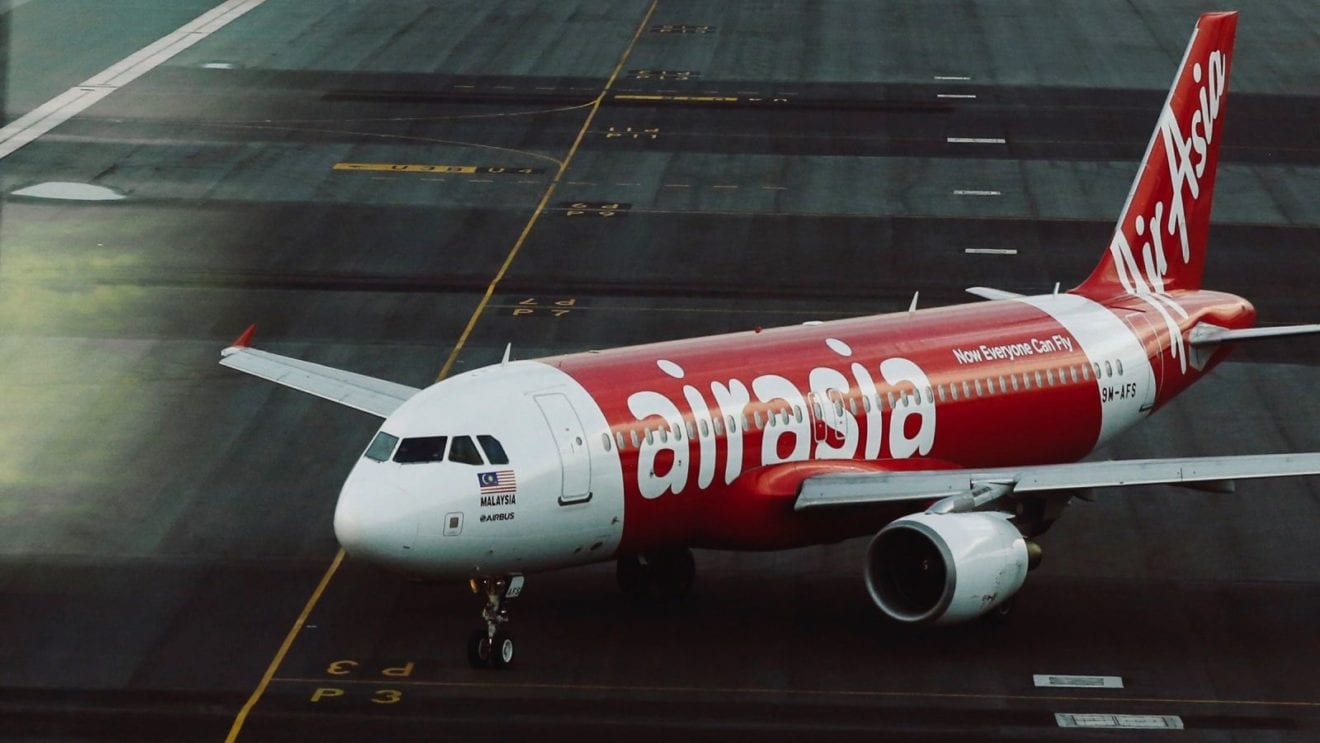
    AirAsia Bhd has entered into a wet lease agreement with PT Indonesia AirAsia Extra (IAAX) to lease two Airbus A330 widebody aircraft for US$12.9mil (RM52.5mil).

    In a filing with Bursa Malaysia on Tuesday, AirAsia said one aircraft would be leased from Sept 16, 2016 till March 15, 2017 for US$9.8mil (RM39.9mil).

    The other’s lease would be from Oct 1, 2016 till Nov 30, 2016 for US$3.1mil (RM12.62mil), it said.

    AirAsia said the leasing was due to operational requirements.

    “The lease of the aircraft is in the form contained in the agreement which shall include the flight crew, all maintenance of the aircraft and insurance,” it said.

    AirAsia said the agreement provided up to additional six crew sets daily to AirAsia’s manpower supply.

    “Additionally, extra capacity from the A330s allows AirAsia to rationalise its network by reducing flight frequencies, which results in lesser crew requirement,” it said.

    It said the additional capacity from A330s will also allow for AirAsia to overcome slot constraints in some airports as well as enable AirAsia to better manage its network.

    “For routes with low load factor, AirAsia could reduce frequency, thus reducing fixed costs required to operate them. Whereas additional capacity could be added for routes with high load factor to capitalise on the high demand,” it said.

  • Telkom launches innovation services in Indonesia

    Telkom launches innovation services in Indonesia

    Multimedia Nusantara (TelkomMetra), a unit of Telekomunikasi Indonesia (Telkom), has launched innovative service MediaHub to support the content and advertising industry in Indonesia.

    “Telkom is offering an integrated solution, not limited to telecoms but also takes part as the platform that delivers value to content that is delivered through its main connectivity business,” said Muhammad Awaluddin, director of enterprise and business service at Telkom Indonesia.

    MediaHub is said to be the first one to facilitate content providers, advertising agencies, Ministry of Communication and Informatics (Kominfo), the Indonesian Broadcasting Commission (KPI) and pay TV operators in developing safe and convenient contents.

    The service will also support in a new way of generating revenue and cost efficiencies for content providers and pay TV operators.

    Supported by over than 20 years of experience in playout technology from SmartCast, MediaHub through Metrasat, provides practical solutions as content aggregation and distribution services to overcome the obstacles over content distribution and its monetization in Indonesia.

    As a partner for the Indonesian Broadcasting Commission, MediaHub with its playout and ad-insertion system enables the selected content in dedicated feed to comply the regulation of broadcasting in Indonesia and ready to distribute them in any required formats to pay TV operators.

    Through its plug and play system, MediaHub provides efficient process to be the only pay TV ad network to support content business and local productions.

  • Indonesia to overtake Brazil and Mexico as 4th largest smartphone market in 2020

    Indonesia to overtake Brazil and Mexico as 4th largest smartphone market in 2020

    Global prospects for wearable electronics continue to be strong with retail value sales projected to grow by 138% to become a US$45 billion dollar industry in 2021, remaining the worlds second best-selling product behind smartphone

    Euromonitor International’s new data released Tuesday on the global consumer electronics industry also said new products like smart wearables and wireless speakers and innovations like Ultra HD and convertible laptops resonate with the shift in consumer preferences.

    These products command higher retail selling prices, helping boost profit margins of manufacturers and retailers, says Head of Consumer Electronics at Euromonitor International, Wee Teck Loo.

    While wearable electronics demand is growing, Emerging markets like India and Indonesia provide plenty of untapped opportunity for smartphones due to the huge pool of feature phone upgrades.

    Indonesia is projected to overtake Brazil and Mexico as the fourth largest smartphone market reaching almost $1 billion dollar sales in 2020, adds Loo.

    The top-10 smartphone markets in 2021 are projected to be: 1. China 2. India 3. US 4. Indonesia 5. Brazil 6. Russia 7. Mexico 8. Japan 9. Philippines 10. United Kingdom

  • Indonesian house in Russia`s Vladivostok opened

    Indonesian house in Russia`s Vladivostok opened

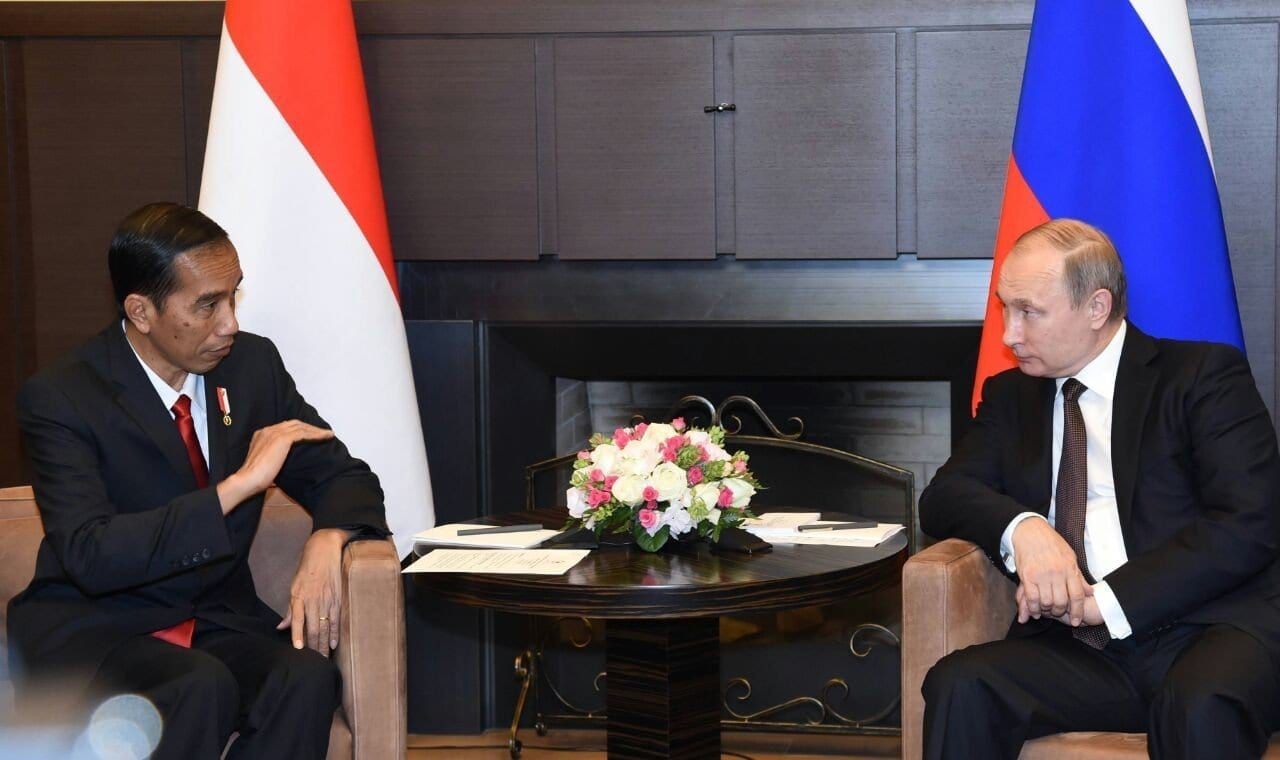
    Indonesian Ambassador to Russia and Belarus Wahid Supriyadi has opened Indonesian House in the easternmost Russian city of Vladivostok to promote Indonesian products.

    The opening of the Indonesian House took place on the sidelines of Eastern Economic Forum, the second largest economic forum in Russia, the embassy said in a press statement released on Tuesday.

    Supriyadi said the Indonesian House is the second of its kind held in Vladivostok after his predecessor, Djauhari Oratmangun, opened the first such an event in 2015.

    Unlike the first Indonesian House which focused on coffee commodity, the second Indonesian House focused on promoting furniture, antique goods and interior products for hotels and restaurants, he pointed out.

    On the occasion, the ambassador held talks with 20 local businessmen who have done business and are interested in doing business in Indonesia.

    In his address to the opening of the Indonesian House, Supriyadi praised businessmen in Vladivostok for their desire to make investment and do business in Indonesia.

    “This is the right momentum. Since President Joko Widodo (Jokowi) visited Sochi last May, businessmen from both countries have shown high interest to do business. The Indonesia Festival held on August 20-21 proves it (the high interest),” he said.

    Despite the sluggish global trade, bilateral trade between Indonesia and Russia in the first quarter of this year rose 17 percent, while the number of Russian tourists visiting Indonesia in the January-June 2016 period also increased 17.5 percent, he said.

    Since the first Indonesian House was opened in 2015, Indonesias export of furniture and antique goods to Russia reached US$23 million.

  • Central Java to build high quality salt factory

    Central Java to build high quality salt factory

    The Central Java administration plans to build factories to produce high quality salt to improve the welfare of the local salt farmers.

    “Currently five pilot projects of salt factory are being prepared,” Central Java Governor Ganjar Pranowo said here on Tuesday.

    Ganjar said factories to produce high quality salt need to be built immediately in Central Java as the province is a potential producer of salt especially its northern coastal areas.

    Unfortunately the quality of farmers salt in that area is relatively low that the price is also low, he said.

    The provincial administration has discussed the plan with a number of relevant experts, the governor said.

    “There has been talk on the possibility of producing high quality salt,” he said.

    He said so far the price of farmers salt in northern coastal area of Central Java has been very low at around Rp350 per kilogram.

    With the factories the quality of salt would be improved and the price could rise to an ideal level of Rp650 per kg, he said.

    Deputy chairman of the regional legislative assembly Yudi Sancoyo asked the regional administration to address the condition of the salt farmers in the region.

    “It is feared that the price of farmers salt would drop in this years grand harvest. Instead of gaining from the grand harvest the farmers would likely suffer losses,” he said.

  • Taiwan invited to take part in maritime development in Indonesia

    Taiwan invited to take part in maritime development in Indonesia

    Indonesia has invited Taiwan to invest in the maritime sector to help bring to reality the governments vision of making the country a world maritime axis.

    Director of Investment Planning in the Agribusiness and Natural Resources of the Capital Investment Coordinating Board (BKPM) Hanung Harimba Rachman said the maritime sector is a priority in the countrys 5 year development program.

    “The maritime sector is a priority in our strategic plan for 2015-2019,” Hanung said in a maritime seminar here on Tuesday.

    Investment in the maritime sector is open in shipbuilding, fisheries and cold storage sectors, he added.

    Other areas open for investment in Indonesia by Taiwan include in infrastructure sector such as seaport and deep sea energy development, he said.

    “In January 2016, the government issued a policy to accelerate implementation of national strategic projects with 225 projects offered under the scheme of government private cooperation,” he said.

    Hanung said participation of Taiwan in investment is important for Indonesia, in its program to enter the phase of industrialization.

    Taiwan is known to be strong in the manufacturing industry as it has high technology, he added.

    “Indonesia wants to develop its maritime sector with high technology,” he said.

    Representative of Taipei Economic and Trade Office (TETO) in Indonesia Liang Jen Chang said he welcomed Indonesian offer for cooperation in the maritime sector.

    “Taiwan and Indonesia already have close relations for years , but the good relations are no longer enough with the changing condition especially in the maritime sector,” Chang said.

    Based on data at BKPM, Taiwan is among major foreign investors in the country . In the first half of 2016, Taiwan investors implemented US$816 million worth of projects in paper industry and US$400 million in metal industry in Indonesi8a.

  • Citilink recruits 70 new pilots for business expansion

    Citilink recruits 70 new pilots for business expansion

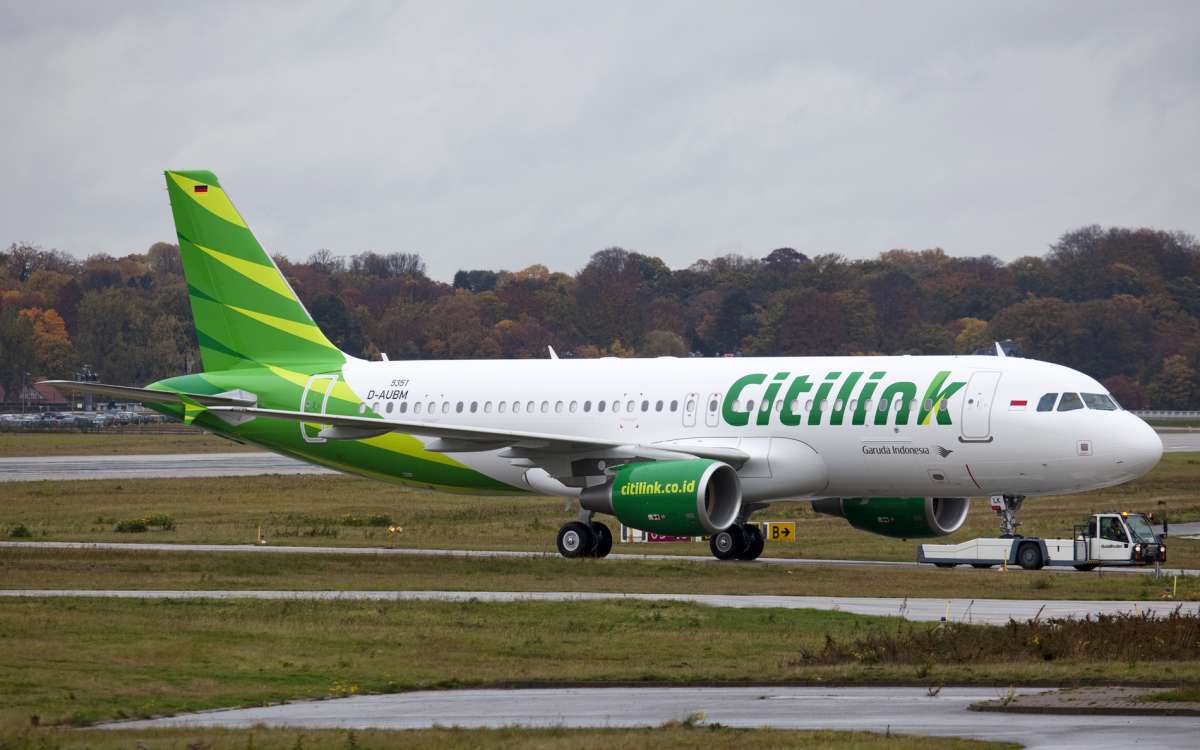
    Low-cost carrier Citilink, a subsidiary of national flag carrier Garuda Indonesia, recruited 70 candidate pilots to boost the company’s business expansion after a three-month enrollment process from June to August this year.

    Citilink president director Albert Burhan said that the company had chosen the candidates out of 897 applicants from across country.

    “We need to recruit more pilots to undertake our expansion and open new routes,” Albert said at the Garuda Indonesia Training Center (GITC) in Jakarta on Monday.

    The recruited pilots will undergo a series of training at the GITC and at the Airbus training centers in Toulouse, France, and Florida, US, for at least six months. They will exercise to achieve a “type rating” as is required to operate an Airbus A320.

    Garuda Indonesia human resources director Linggarsari Suharso warned the candidate pilots that working as a pilot was a difficult job. A pilot must prioritize the safety of passengers over other considerations, he said.

    “Safety is the top priority in the transportation business,” he said at the training center on Monday.

    According to data from the Transportation Ministry last year, Indonesia needs at least 600 new pilots every year. Meanwhile, 24 pilot schools across the country graduate from 15 to 24 students each annually.

  • Indonesia asks Alibaba’s Jack Ma to advise its e-commerce development

    Indonesia asks Alibaba’s Jack Ma to advise its e-commerce development

    Indonesia has asked the chairman of China’s Alibaba Group Holding Ltd, Jack Ma, to act as adviser in the development of the Southeast Asian country’s nascent e-commerce industry, according to a video released by the government.

    Indonesia has the world’s fourth-largest population, boasting a young, internet-savvy demographic, and a thriving e-commerce market that is increasingly attracting global investors.

    Earlier this year, Alibaba bought a controlling stake in Southeast Asian online retailer Lazada Group for around $1 billion, while a group of investors led by private equity firms KKR & Co LP and Warburg Pincus LLC poured more than $550 million into Indonesian ride-hailing start-up Go-Jek.

    To promote growth in the e-commerce industry, the government is setting up a “steering committee” consisting of 10 ministers for which it has asked Alibaba’s Ma to be an adviser, Communication and Information Minister Rudiantara said.

    “The thinking behind this is to make Indonesia’s positioning in the international marketplace more prominent,” Rudiantara said in a video released by the state secretariat. The minister, like many Indonesians, only uses one name.

    Rudiantara is part of President Joko Widodo’s delegation attending the G20 summit in the Chinese city of Hangzhou.

    An Alibaba spokeswoman confirmed that Ma was asked to be adviser to Indonesia’s e-commerce steering committee, but declined to say whether he had accepted the offer.

  • Millennials to Decide Future of TV in Indonesia

    Millennials to Decide Future of TV in Indonesia

    As of 2016, according to the Central Statistics Agency’s estimations, Indonesian millennials — born between the 1980s and early 2000s — make up about 41 percent of the 258.8 million population.

    “The future will be in OTT and many want to capture this market. The number of millennials is going to be big in Indonesia and infrastructure is now being prepared. The government has rolled out 4G and smartphone prices are getting lower each year,” Greeny said.

    Genflix offers its customers thousands of videos, Japanese cartoons and other exclusive content. Genflix currently has three million subscribers, 60 percent of whom are paying customers. Most of them access the service via their smartphones.

    The catch

    Hendy Lim from the Redemption Entertainment said this is the moment for the local talents and content creators as the content-hungry OTT services will keep on coming to tap into the growing Indonesian middle-class. But there is a catch.

    Hendy, who has just left his position as the vice president of the media company MNC Group, said the OTT services need to compete with the deep-pocketed free-to-air televisions.

    “These free-to-airs can pay up to $30,000 per episode. I can’t tell the exact number, but I think [the OTT] can pay only 5 percent of it,” he said, adding that free-to-air revenues are high because many people still watch television.

    The on-demand services will also have to face uncertain regulations with regard to corporate establishment, taxes and censorship.

    Communications and Information Technology Minister Rudiantara promised that this year the government will produce a regulation governing the OTT services. The regulation will take into account the international tax treaty and censorship measures similar to those applied for televisions.

    Desmond Poon, chief technology officer of the listed internet service provider Link Net, said during the summit that censorship as such is against the idea of the internet.

    Despite the challenges posed by censorship and the not yet fully available broadband connectivity, especially in the easternmost part of the country, Poon remains optimistic the OTT business will continue to grow.

  • July Sees Record-high Tourist Arrivals to Indonesia

    July Sees Record-high Tourist Arrivals to Indonesia

    The Central Statistics Agency (BPS) recorded 1.03 million foreign tourist arrivals to Indonesia in July 2016. The number represents a 17.67-percent year-on-year increase from July 2015.

    Compared to June 2016, the increase is 20.42 percent.

    “This is a new record, with the number foreigners entering Indonesia reaching more than a million in one month,” BPS deputy for Statistic and Distribution Sasmito Hadi Wibowo said in Jakarta Thursday, September 1.

    The achievement, he said, is largely thanks to the Tourism Ministry’s intensive campaigns in many parts of the world and the many promotional events held in domestic travel destinations.

    Sasmito said the biggest number of tourists came from China, Saudi Arabia, and Australia.

  • Bank Indonesia to launch national payment gateway

    Bank Indonesia to launch national payment gateway

    Bank Indonesia will soon issue a new policy in payment system — “National Payment Gateway” (NPG) — to prevent outflow of fund in the “e-commerce” transactions that will help redress the countrys domestic trade balance .

    “Soon we will issue a policy of national payment gateway. All payment systems in the country from various providers will be connected in what we call inter-connectivity and inter-operability. Jut wait and see,” Deputy Governor of the central bank Perry Warjiyo said here on Friday .

    Perry said with the NPG all domestic transactions would be wrapped up in the country without the use of foreign payment system service.

    “This is important before we start cooperation with other countries that all transactions made in Indonesia could be settled in the country ,” Perry said.

    With the NPG we could increase domestic trade balance in each transaction made in Indonesia without relying on financial service of agency, he added.

    Perry said NPG also would support payment system in tourism industry, which the government actively develops as a potential foreign exchange earner.

    Bank Indonesia encourages the government to develop and modernize the countrys tourism industry to grow to become a new economic growth driver amid the slump that hits the export and mining sector which have lost their most of role as the economic backbone.

    Perry said the tourism industry could help accelerate the economic development in mid term.

  • Jakarta’s tax amnesty gets a rich boost

    Jakarta’s tax amnesty gets a rich boost

    Two of Indonesia’s wealthiest men say they will participate in a government-led tax amnesty to clear their past omissions, boosting the scheme’s credibility.

    Mr James Riady, the son of Lippo Group’s founder, went to the Jakarta tax office yesterday to take part, said his spokesman Danang Kemayan Jati. Mr Tahir, founder of Bank Mayapada, who goes by one name, said by phone that his family would submit documents this month to support the plan.

    “If a big fish like Riady joins the programme in a public way, that lessens the restraint for everybody else to follow suit,” said OCBC Bank economist Wellian Wiranto in Singapore, according to Bloomberg.

    “We have seen the momentum start to build, so things are starting to look up for the tax amnesty.”

    President Joko Widodo has staked his credibility on a programme that the government estimates will generate 165 trillion rupiah (S$17 billion) in revenue.

    He ordered his Cabinet to summon the largest taxpayers, especially those with assets overseas, to ensure they take part. Since the amnesty began in July, the finance ministry has seen 4 trillion rupiah in penalty fees, or 2.4 per cent of the target.

    Tax rates under the amnesty will range from 2 per cent to 10 per cent over three stages, depending on how soon individuals declare their previously untaxed assets and whether the funds are repatriated.

    Indonesia has a population of 250 million, but only 27 million are registered taxpayers. Of these, just a million file tax returns regularly each year – one of the lowest figures among countries in the region.

    Newly minted Finance Minister Sri Mulyani Indrawati has said she is putting trust-building at the top of her agenda as she tries to get more Indonesians to pay taxes, to raise funds for a massive infrastructure plan aimed at stimulating growth in South-east Asia’s largest economy.

    “It’s not acceptable for a country like Indonesia to have a tax ratio that is very low,” she told Bloomberg in an interview last month. “This is… because both sides, the taxpayers as well as the government, have not been able to establish a good relationship based on trust, confidence and credibility.”

    She also pledged to address Indonesia’s complicated procedures and high tax rates compared with neighbouring countries.

    Individuals who sign up for the plan will be allowed to invest in assets such as gold, property and infrastructure projects, according to the finance ministry. Participants can also move funds between approved assets before a three-year holding period ends, the ministry said.

    The scheme has got off to a slow start, but could pick up pace with big businesses getting on board.

    Lippo Group, founded by Mr Mochtiar Riady in the 1950s, has stakes in property developer Lippo Karawaci, healthcare firm Siloam International Hospitals and retailer Matahari Department Store. It also has stakes in Singapore-based First Real Estate Investment Trust and Lippo Malls Indonesia Retail Trust.
  • IBDExpo 2016, a Gateway to the Business Opportunity in Indonesia

    IBDExpo 2016, a Gateway to the Business Opportunity in Indonesia

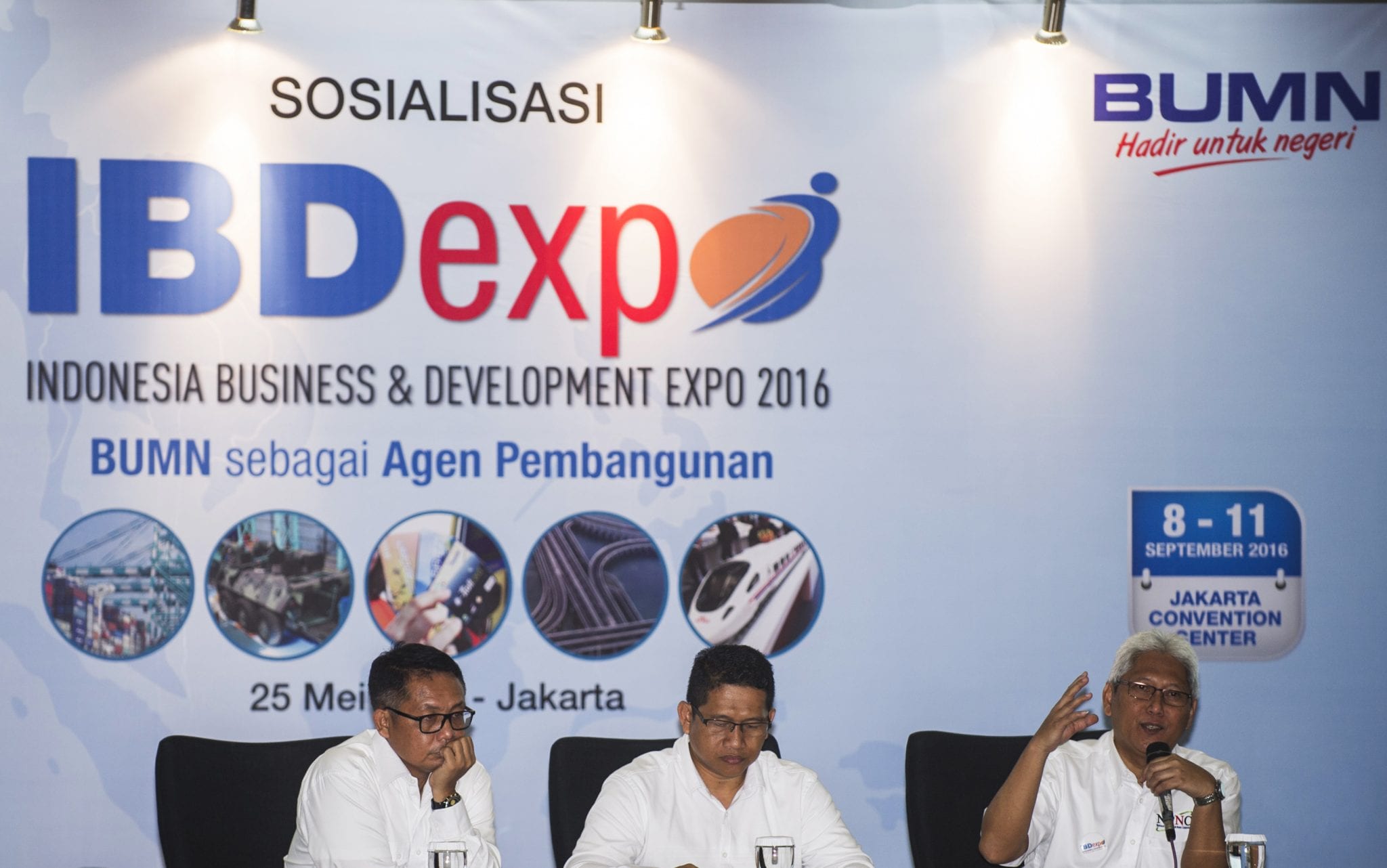
    The Minisitry of State Owned Enterprise of Republic of Indonesia (MSOE), announced on Friday that it will hold Indonesia Business and Development Expo (IBDExpo) 2016 on September 8-11, 2016 in Jakarta Convention Center. This event is organized by National Publishing and News Corporation (NPNC), a consortium of media-focused SOEs consisting of Antara News Agency, Balai Pustaka, National Publishing of Indonesia (PNRI), and PFN.

    Themed “SOE, an Agent of Development,” IBDExpo 2016 will be participated by almost all of 118 Indonesian SOEs and ROEs. The event is designed to promote all of the achievements, innovations, and the role of SOEs to the nation, as well as publicly sharing the commitment of SOEs to develop and empower the underserved and underdeveloped regions which is in accordance with the President Jokowi’s Nawacita vision.

    The event will include a number of side events such as the corporate exhibition, International Conference, Ministerial Lecture by the Minister of SOE, Rini Soemarno, business matching, SOE Career Opportunity, and Partnership and Community Development Program (PKBL) Pitching. This year’s IBDExpo also presents a number of domestic and international keynote speakers, such as Singapore’s Temasek and ICBC China.

    Open to public and free of charge, IBDExpo 2016 will also feature a number of flagship products and innovations of SOEs, such as: the Indonesian military producer, Pindad, that will exhibit firearms and Tank Anoa; PT PAL that will bring their ships; a mock-up of High-speed Train, a project of PT Kereta Cepat Indonesia China; and a flight simulator of PT Dirgantara Indonesia. In addition, the visitors can expect folk art and mini theater playing the films produced by PFN every day during the expo.

    IBDExpo 2016 is scheduled to be inaugurated by President Joko Widodo on September 8 2016 and attended by the Ministers of Republic of Indonesia, the legislators, the ambassadors, and a number of the C-suite invitees.

  • Foodpanda India looking to raise $50m

    Foodpanda India looking to raise $50m

    Rocket Internet-backed Foodpanda India, which last year faced allegations of internal fraud and misappropriation of funds, is reported to be raising fresh capital.

    It has mandated Mumbai-based mid-market investment bank O3 Capital for a US$40-60 million fundraise as it initiates talks with investors, reports the Times of India.

    Foodpanda has already said it is selling its Indonesian business and rethinking its presence across the rest of Southeast Asia.

    “To be certain, we are not looking to exit India,” says Foodpanda India CEO Saurabh Kochar. “We have grown rapidly over the past months while increasing our already positive operating margins.”

    In the past six months, Foodpanda India is said to have had its average daily orders inch up to about 30,000. Swiggy, the market leader, clocks about 45,000 orders a day on average, while Zomato has about 35,000.

    Over the past year, Rocket Internet global head of corporate development Spyro Korsanos has been stationed in India to get the business back in shape, according to an insider.

    Launched in 2012, Foodpanda has a presence in 20 countries.

  • Indonesia leading charge, says Asia Luxury Index

    Indonesia leading charge, says Asia Luxury Index

    Indonesians have become Asia’s foremost online buyers of luxury goods, according to the latest Asia Luxury Index.

    Amid difficult economic conditions, online sales of luxury goods in Indonesia have grown by 84 per cent, according to the index, which draws mainly on the sales data of Reebonz, a Singapore-based eCommerce platform for luxury products.

    Reebonz Indonesia executive manager Anggono Wijaya says social media, digital marketing and collaborations with influencers and young designers were among the main reasons behind the ballooning sales.

    Senior marketing manager Bernard Widjaja Ng says the group of luxury consumers is evolving and expanding as luxury is no longer just for the select few. “With growing affluence and accessibility, more consumers can readily buy luxury goods.”

    He says consumers have also become younger, with 21-year-olds starting to buy luxury goods. “There is a shift in an economical class of buyers, as people from the B-level economy have started to buy luxury goods.”

    Accounting for 62 per cent of online transactions in Asia are bags, with Balenciaga, Fendi and Longchamp topping the brand list in Indonesia. The report also notes an 87 per cent rise in shoe sales and a 39 per cent increase in timepiece sales.

    It also notes a shift in buying trends, with a 30 per cent increase in pre-owned luxury goods sales.

    Topping the brand list in this category are bags and shoes by Chanel, Hermes, Louis Vuitton and Prada.

    Starting as a luxury product retailer in Singapore, Reebonz has expanded via eCommerce platforms with offices in Indonesia, Australia, Hong Kong, Malaysia, South Korea, Thailand and Taiwan.