Tag: Indonesia

  • Honda hoping for 20% industrywide sales jump on Indonesian tax amnesty

    Honda hoping for 20% industrywide sales jump on Indonesian tax amnesty

    Indonesia’s tax amnesty could boost industrywide car sales by a fifth as people spend their newly declared wealth on big-ticket items, according to the local unit of Honda Motor Co.

    “The car ownership ratio in Indonesia is relatively low and there’s enough room for producers to sell more,” Jonfis Fandy, head of sales and marketing at PT Honda Prospect Motor, said in an interview Friday at the Gaikindo Indonesia International Motor Show.

    “If the tax amnesty program proves to be a success, we could see an increase of as much as 20 percent next year,” he said as people crowded around the latest models at the annual expo in Jakarta.

    Indonesia’s central bank estimates the reprieve, which runs through March 2017, could lure as much as 560 trillion rupiah ($43 billion) of undeclared income back to the country from overseas.

    If the amnesty lives up to those projections, it will lift economic growth and enable the government to continue with an ambitious infrastructure program.

    With a population of 256 million, Indonesia is Honda’s third-biggest overseas market after the U.S. and China.

    Honda, which is No. 2 in the Indonesian car market behind Toyota Motor Corp., posted 35 percent sales growth in the first half, official data show, compared with 1.2 percent expansion for the industry as a whole.

    Some of Honda’s fastest expansion is occurring in outlying areas of the archipelago, such as Sulawesi in eastern Indonesia, Fandy said. If the 20 percent growth estimate comes to pass in 2017, that would be the sharpest growth since 2012.

    Total car sales will rise to 1.05 million units in 2016 from 1.01 million last year, Yohannes Nangoi, chairman of Indonesia’s automotive industry association, known as Gaikindo, told reporters on Aug. 11.

    PT Astra International, which manufactures and distributes Toyota cars in Indonesia, recorded a 4.1 percent expansion in sales in the first half, Gaikindo figures show. Toyota controls 33 percent of the market, with Honda at 21 percent.

    “The comeback of the Indonesian market is extremely good for Japanese automakers” struggling with a shrinking home market, said Koji Endo, a Tokyo-based analyst at SBI Securities Co. “Honda may benefit the most as it has a big share in the motorcycle market there and people tend to step up to vehicles of the same brand.”

    Southeast Asia’s largest economy beat estimates to expand 5.18 percent in the second quarter from 4.92 percent in the previous three months. Bank Indonesia is forecasting full-year growth of 5.4 percent, including an estimated 0.3 percentage point increase from the amnesty.

    While the tax reprieve could boost automotive sales, it’s too early to tell how successful it will be and if Honda’s projection is achievable, said Isnaputra Iskandar, an analyst at PT Maybank Kim Eng Securities in Jakarta. Iskandar raised Astra International to a buy this month, citing the improving economy and a recent rule reducing the minimum level for hire-purchase deposits for vehicle purchases. Honda’s Indonesian unit isn’t listed.

    Honda sold 109,662 cars in Indonesia in the first half and is targeting 180,000 for the full year, said Fandy, who oversaw an almost quadrupling of sales in the 10 years through 2015. The company has the capacity to produce 200,000 cars a year at its manufacturing plant in Karawang, east of Jakarta, and has the flexibility to increase that to 240,000, he said.

    “Indonesia is among the few countries in the world with a bright future for the automotive industry,” Fandy said.

  • Newcomers try to tap into Indonesia’s niche motorcycle market

    Newcomers try to tap into Indonesia’s niche motorcycle market

    New players in the premium motorcycle business are optimistic that they can tap into the Indonesia market despite the sluggish sales the country has been experiencing.

    Garansindo Euro Sports, the sole distributor of Italian luxury motorcycle maker Ducati and French Peugeot Scooters, lined up several new models at the Gaikindo Indonesia International Auto Show (GIIAS) in Serpong, Banten, in an attempt to entice people in the middle- and upper-income brackets.

    Garansindo became Ducati’s sole distributor in the country in January, taking over from PT Supermoto Indonesia, while Peugeot Scooters made its Indonesian debut in 2015.

    “People tend to buy new vehicles in August, plus economic conditions seem better now,” Garansindo managing director Dhani Yahya told The Jakarta Post on Monday.

    Indonesia’s economy rose to 5.18 percent on an annual basis in June from a yearly rate of 4.91 percent in March, fueling optimism that recovery is under way. However, the country’s motorcycle sales dropped 27.6 percent year-on-year in July, with 305,153 units sold, a more than 40 percent slump from the previous month.

    Astra Honda Motor (AHM), the country’s leading motorcycle manufacturer, said, however, that the domestic market for premium bikes was still promising and expected its marketing of its big bike model BR250RR to strengthen its grip in that segment.

    At the country’s biggest auto expo, Ducati rolled out four new motorcycles in the 959 Panigale, Hyperstrada, Hypermotard 939 and Xdiavel S models, priced at Rp 658 million (US$50,008), Rp 570 million, Rp 515 million and Rp 988 million, respectively.

    Apart from the new models, Dhani said that it was banking on the Ducati Scrambler Sixty2, which made its Indonesian debut in April, to meet demand for entry-level premium motorcycles.

    The Scrambler Sixty2, named after the year when Ducati first produced its Scrambler model, is equipped with a 400 cc air-cooled engine and is priced at Rp 219 million, discounted to Rp 199 million for GIIAS visitors.

    “We see the price as affordable for middle-income people between 30 and 40 years old, such as managers and entrepreneurs wanting to upgrade their style,” Dhani said.

    In May, Garansindo opened up its flagship store in the elite Kemang, South Jakarta, said to be Ducati’s largest dealership after its outlet in New Delhi, India.

    The 3,000 square-meter flagship store is also equipped with Ducati’s one-stop service, spare parts provider and certified used-bike-reseller in the country.

    Garansindo also relies on the Peugeot Django 150 model to tap into Indonesia’s growing premium scooter market. At the expo, Garansindo showcased three kinds of Django 150: the Django Sport, Django Evasion and Django Allure, priced at Rp 40 million, Rp 41 million and Rp 43 million, respectively.

    Indian motorcycle manufacturer Royal Enfield, which entered Indonesia in January, used the GIIAS opening last week to introduce its new Himalayan motorcycle. The brand currently has four types of motorcycle sold in Indonesia — Bullet, Classic, Rumbler and Continental GT — with prices ranging from Rp 64 million to Rp 172 million.

    “We are currently focusing more on introducing the brand and encouraging people to try and feel the riding experience using our products,” said Distributor Motor Indonesia managing director Ade Sulistioputra, whose company is the sole distributor of Royal Enfield in the country.

    Meanwhile, Russian heavy sidecar motorcycle manufacturer IMZ-Ural, which made its Indonesian debut at the expo, is upbeat that it can expand its market in Indonesia after achieving overseas success in several regions such as the US, Australia, Europe and South America.

    Ural Indonesia CEO Michael Sofyan said the company targeted premium motorcycle buyers in the country as its segment, hoping that Ural’s unique design, which was initially tailored for Russian military officers, would lure them into purchasing its products.

    “We are trying to reach big bike communities first,” Michael told the Post.

    Fifty-nine-year old Affandi Permana, a visitor at Ural’s booth at the expo, said that he was very eager to purchase the maker’s military-styled Gear-Up model, which is priced at Rp 405 million. “The Gear-Up model represents masculinity,” Affandi said.

  • Indonesia launches master plan to breathe new life into Islamic finance sector

    Indonesia launches master plan to breathe new life into Islamic finance sector

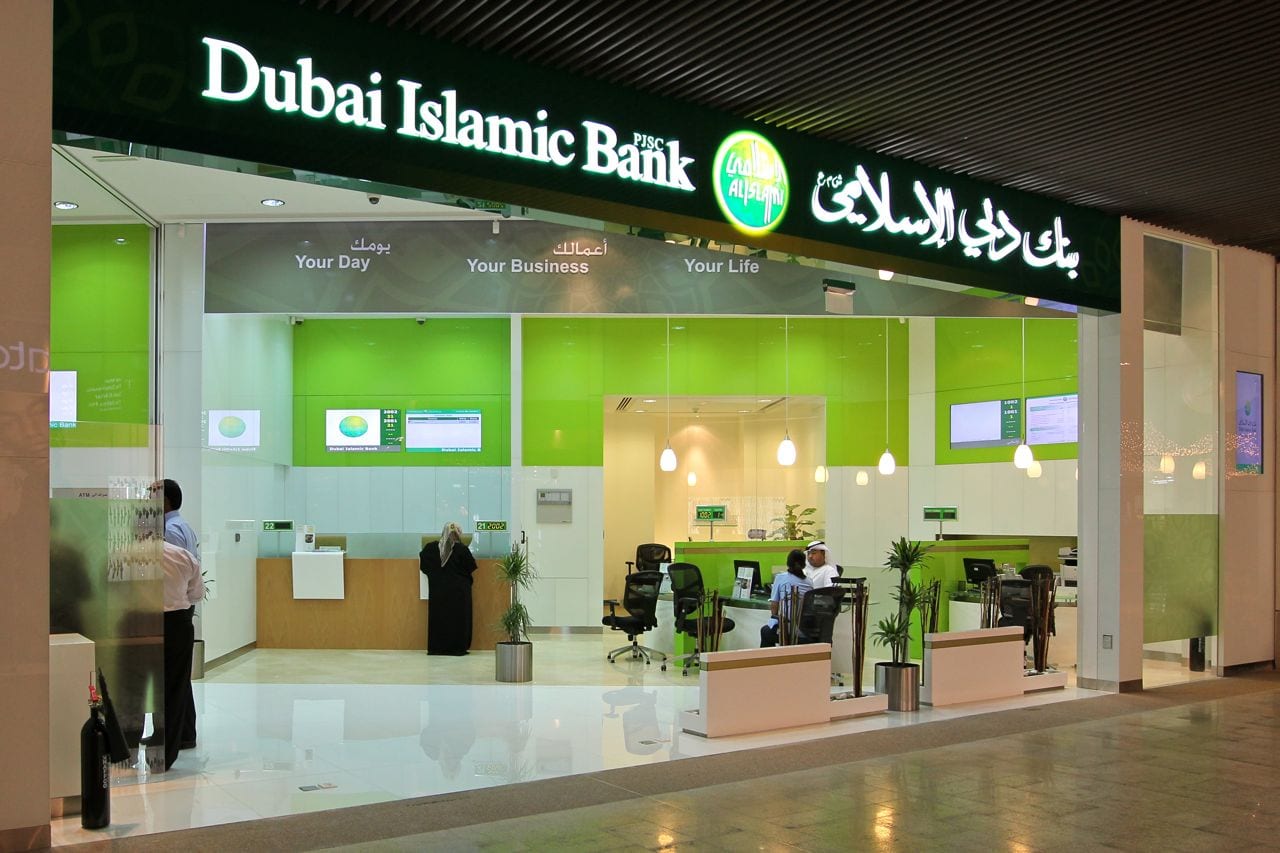
    The Indonesian government has launched a national master plan to develop its Islamic finance industry, the latest effort aimed at awakening what is still a niche sector in the world’s most populous Muslim country, Reuters news service reported.

    Islamic finance was introduced in Southeast Asia’s largest economy more than two decades ago but it has managed only modest gains in the country of 250 million, despite multiple regulatory efforts and grassroots initiatives.

    Indonesian Islamic banks hold roughly 5 percent of total banking assets, compared with more than 20 percent in neighbouring Malaysia and about a third of total banking assets in several Gulf countries. The government aims to drive its planned breakthrough via a range of initiatives, from mobilising Islamic charitable funds to modernising investments made by Indonesia’s pilgrims’ fund.

    “This could finally awaken Islamic finance in Indonesia to allow the country to claim its true potential,” managing director of IFAAS Farrukh Raza said, an Islamic finance consultancy which designed the 10-year master plan. “We found that government efforts are very comprehensive but also very scattered. Regulations are there but there is no coordination, promotion is fragmented and those expenses are not always bearing fruit.”

    The initiatives include a government policy to increase use of Islamic bonds, or sukuk, by issuing debt instruments related to infrastructure development, agriculture and education. Under the policy, the government would increase its use of Islamic debt instruments to as much as 50 per cent of total issuance in 10 years time, Raza said.

    Currently, Islamic instruments represent around 13 percent of total outstanding government debt, according to Thomson Reuters data. Indonesia’s pilgrims’ fund would also see the establishment of a dedicated asset management arm to implement a more rigorous investment policy and attract external fund managers.

    The fund receives an estimated $800 million every year from Indonesians wishing to make the Hajj pilgrimage to Saudi Arabia, with new applicants facing a quota backlog of around 15 years, Raza said. “The industry is overconcentrated in retail but there is little in terms of wholesale banking. That is one of the big show-stoppers,” said Raza.

    The establishment of a national coordination committee, possibly chaired by Indonesia’s President Jokowi, Raza said, would help ensure implementation of longer-term objectives, potentially seeing Islamic finance take as much as a 20 per cent share of the financial sector in 10 years time. An additional layer of more complex measures, such as the merger of several state-owned Islamic banks, could help raise that figure to 30 per cent, Raza added.

  • Wonderful Indonesia promoted in Qatar

    Wonderful Indonesia promoted in Qatar

    The Indonesian Embassy in Doha, Qatar, has promoted the countrys tourism brand “Wonderful Indonesia” by introducing its culinary richness to mark the 40th anniversary of the two countries diplomatic ties.

    The event to promote Indonesias traditional snacks featuring the culinary richness of different ethnic groups was attended by representatives of the diplomatic corps in Doha, the embassys spokesperson Boy Dharmawan informed ANTARA News here Friday.

    Several snacks served to the guests were Ketan Srikaya, sweet custard with sticky rice; gethuk cake, traditional snack made from cassava; onde-onde, glutinous rice flour balls; wajik sticky rice; jalangkote, fried pie filled with chicken; Lemper, steamed sticky rice cake with beef or chicken; and apem, rice flour cakes, he remarked.

    “The cakes served are delicious,” Thai Ambassadors wife Benj Chaiyindeepum said when asked to comment on the taste of the served snacks.

    Benj was one of the 16 spouses of ambassadors of different countries in Qatars capital city who attended the event, he added.

  • Foodpanda is selling its Indonesia business and rethinking the rest of Southeast Asia

    Foodpanda is selling its Indonesia business and rethinking the rest of Southeast Asia

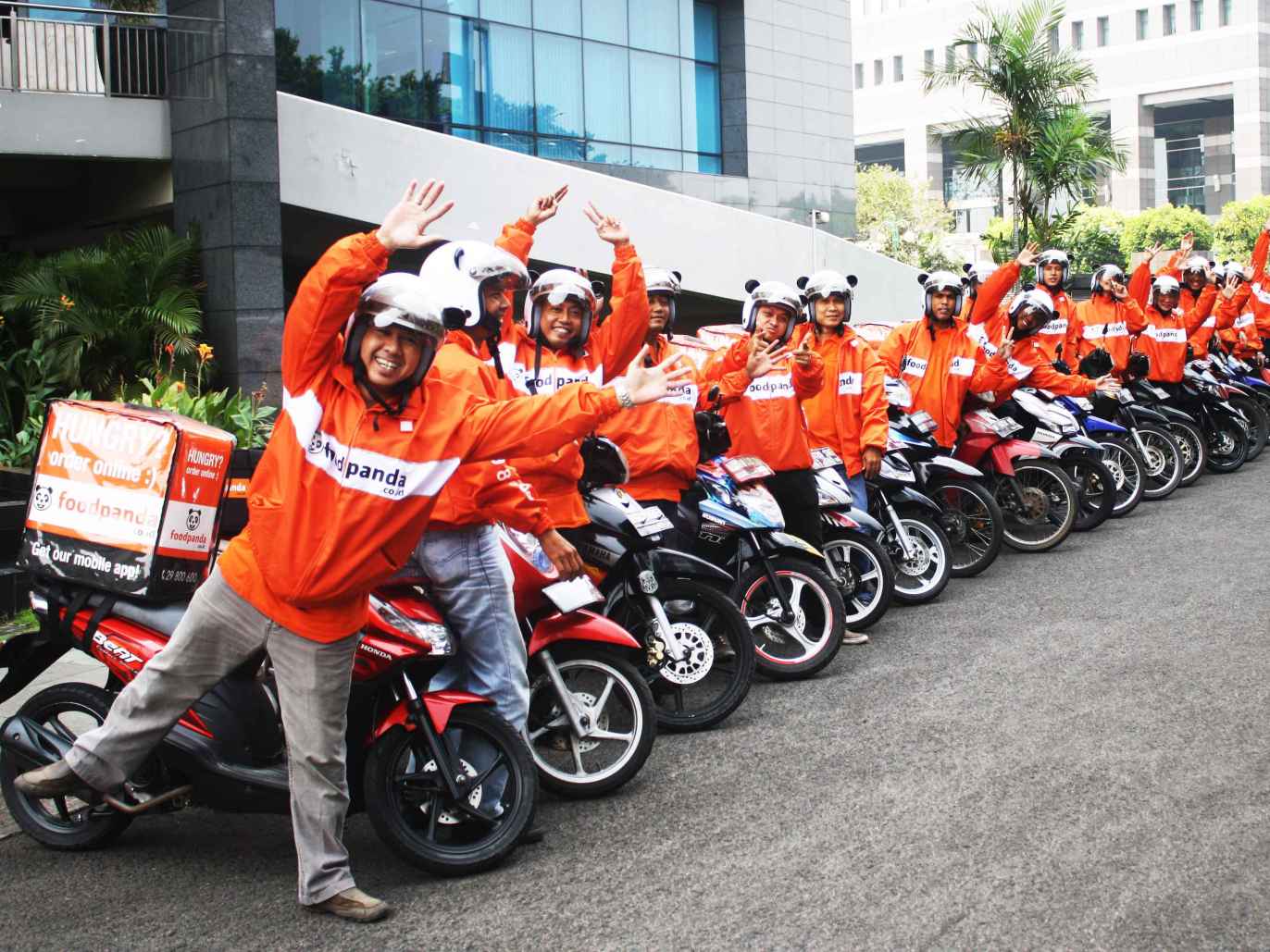
    Foodpanda, the food delivery startup backed by Rocket Internet, is selling its operations in Indonesia and evaluating its presence in the rest of Southeast Asia as part of a push towards profitability.

    Multiple sources close to the company told that its business in Indonesia, the world’s fourth-most populous country, is available to potential acquirers for less than $1 million — and an all-cash deal isn’t even a requirement. Foodpanda, which is active in 500 cities across five continents worldwide, has slashed the asking price for its Indonesia operations to basically zero after more than a year of unsuccessfully trying to offload it, one source added.

    The intention mirrors the sale of its business in Vietnam last year. The company reportedly tried to offload its India business earlier this year without success.

    Foodpanda provided the following statement which, if you strip out the grandiose terms, does hint at transactional activity up ahead:

    Foodpanda has grown very fast in Southeast Asia over the last couple of months and strengthened its market leading position in the region. Driven by our increased dominance in the region we have experienced interest from a variety of different parties to partner or to invest which we are evaluating now.

    Indonesia may be Southeast Asia’s largest economy but it has proven to be a challenge due to factors including competition and local market conditions. Go-Jek, a motorbike taxi-on demand company that this month raised $550 million, is the primary thorn in Foodpanda’s side. The company offers food delivery as one of its many services, and it is able to price that business competitively thanks to its massive fleet of 200,000 drivers and revenue from other services. Grab also offers services like food delivery, while Uber is tipped to follow suit.

    One source close to Foodpanda added that Jakarta’s challenging traffic congestion and a lack of infrastructure have added complexities.

    Reviewing regional presence

    Foodpanda is actively seeking to cash out of Indonesia, but that may not be its only exit from Southeast Asia.  We understand from a source that the company is reevaluating its entire business across the region, and it has already made tentative efforts to sell in some countries. The company expanded in Asia via a series of acquisitions, which, in many cases, ironically leaves it without obvious suitors.

    News of its reassessment of Southeast Asia comes just weeks after Foodpanda co-founder and CEO Ralf Wenzel claimed that the company is profitable in two of its markets — Europe and the Middle East — but not Asia.

    Wenzel told Reuters his company is “focused on improving market share” in Asia, which has included asset exchanges with competitors, in order to turn its finances positive there.

     “Over the next couple of months we will turn break-even and then profitable in the first Southeast Asian countries,” Wenzel added.

    While the Foodpanda CEO claimed profitability in Asia is “just a matter of scale,” our sources said that discarding under-performing units — which Wenzel did not mention — is a very key part of the plan.

    Challenging investment climate

    Foodpanda raised $210 million last year — including a $100 million injection from Goldman Sachs and a separate $110 million round — but the climate for investment is tougher now. One source close to Rocket Internet told us that the venture builder is not optimistic about landing capital for many of its older, more capital-intensive businesses, including Foodpanda.

    That’s evidenced by a recent round of capital for Global Fashion Group (GFG), a collection of Rocket Internet-backed fashion marketplaces worldwide. GFG raised $330 million but the capital came from a collection of trusted Rocket Internet entities and at a huge mark down. The group’s valuation plummeted from $3.4 billion at its last raise to $1.1 billion.

    Sources speaking at the time told us that GFG CEO Romain Voog met with more than 90 investors, but came home empty-handed.

    GFG had already preempted that challenge by discarding some of its unprofitable business units in Southeast Asia — does that sound familiar?! — which included the sale of Zalora Thailand and Lazada Vietnam for low prices and triggered high-level execs to leave. Rocket Internet isn’t alone to struggle in Southeast Asia, though. Groupon sold its Indonesia business to fitness membership startup KFit, a fairly unorthodox acquirer, after it had already exited other Asian markets.

    Now it looks like Foodpanda is following a similar approach. While Southeast Asia is often noted for its 600 million cumulative population and growth potential, today its nascent digital economy is challenging for many online retail companies.

    This year has marked a different approach for Rocket Internet in Asia. This summer, it finally offloaded Jabong, its fashion marketplace in India, to rival Myntra in a $70 million deal this summer, while Alibaba bought a majority stake in Amazon-like Lazada for $1 billion in April. Despite a seemingly decent outcome on the face of it, many Lazada investors were left disappointed, and the company itself ran out of money thanks to spiraling loses.

  • Singtel sale slide offset by Indonesia, Thai mobile affiliates

    Singtel sale slide offset by Indonesia, Thai mobile affiliates

    Singapore Telecommunications announced a net profit of S$944 million for its first quarter ended June, up 0.3 per cent on the year, mainly due to stronger contributions from its mobile affiliates in Indonesia.

    Singtel’s sales fell 7.1 per cent on the year to S$3.9 billion. Singapore consumer revenue declined by 8.5 per cent to S$558 million. The growth in mobile data use could not fully offset the revenue decline in roaming and voice services in the city-state. The company’s operating revenue in Australia also fell by 15 per cent due to higher mobile service credits from device repayment plans and a weaker Australian dollar.

    Weaker equipment sales also dragged revenue down for both countries. “Equipment sales both in Singapore and Australia showed a decline and that reflects lower re-contracting volumes. There was also a higher take-up of SIM-only plans where they don’t buy the handset from us,” said Chua Sock Koong, group chief executive of Singtel, in a media briefing on Thursday.

    Contributions from Singtel’s other mobile affiliates helped to offset its losses. Indonesian mobile operator Telekomunikasi Indonesia’s profit after tax jumped 31.1 per cent on the year to US$244 million (S$327.78 million), supported by strong growth in voice, data and digital businesses. Thailand’s Advanced Info Service also generated higher contribution for the quarter, a 5.1 per cent increase to US$98 million after tax on the year.

  • UOB Indonesia and ITB join up to train SME bankers

    UOB Indonesia and ITB join up to train SME bankers

    UOB Indonesia and Bandung Institute of Technology (ITB) have joined forces to educate bankers with small and medium-sized enterprises (SMEs), a banker from UOB Indonesia has said.

    “A lot of these SMEs don’t have the right networks for distributors and suppliers and bookkeeping is essential,” UOB Indonesia business banking head Lawrence Loh said in Jakarta on Friday.

    The program, called the SME Bankers’ Executive Certification Program, was launched in March and already has 23 graduates, Loh said.

    The collaboration between the two institutions will inaugurate five new SME business centers in several cities across Indonesia such as Jakarta, Semarang and Surabaya next year, ITB school of business and management consultancy director Leo Aldianto said.

    “We have to help small businesses upgrade their level to medium,” Leo said.

  • President to open Lake Toba Charm Carnival

    President to open Lake Toba Charm Carnival

    President Joko Widodo (Jokowi) is scheduled to open Lake Toba Charm Independence Carnival in Balige, North Sumatra, on Sunday as part of the efforts to promote tourist destinations in the region.

    “The carnival will be conducted in such a way that it will reflect the cheer and joy of the people. It will also serve as a means to promote Lake Toba,” chief of the events organizing committee Premita Fifi said here Saturday.

    The carnival will be held on August 20 and 21. First Lady Iriana Joko Widodo and a number of ministers, ambassadors, actors and actresses will attend the event.

    Shortly after opening the carnival in Balige on Sunday, President Joko Widodo is scheduled to walk three and a half kilometers along the road on the side of the lake to Parapat.

    The carnival will feature not only Batak arts and culture from North Sumatra but also those from the rest of the country.

    “Hundreds of decorated cars will travel from Balige to Parapat. Likewise, scores of decorated boats will accompany them on Lake Toba,” she said.

    The carnival is part of efforts to promote Parapat and Lake Toba as national and international tourist destinations, Premita said.

    “Admittedly, Lake Toba Charm as a world tourist destination has begun to become overcast. This event is expected to attract more domestic and foreign tourists in the future,” she said.

    Lake Toba is among 10 domestic tourist destinations which are quite popular, particularly in Sumatra, she said.

  • Indonesia Stock Exchange Opens More ‘Go Public Information Centers”

    Indonesia Stock Exchange Opens More ‘Go Public Information Centers”

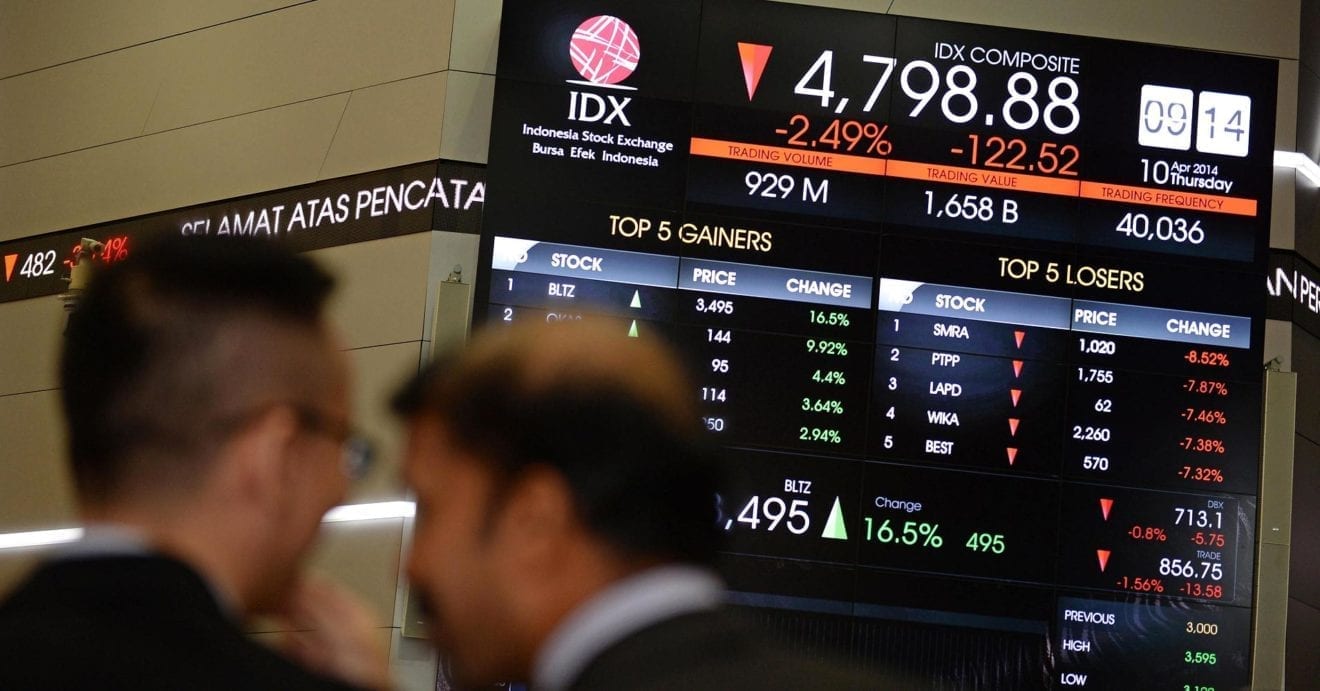
    The new information service – Go Public Information Center – will present all necessary information to private firms about the steps and processes required to become a listed company in Indonesia (including information about underwriters). The center was first opened in Indonesia’s capital city of Jakarta (in June 2016), located at the ground-floor of the Indonesia Stock Exchange Building. Over the next couple of years the IDX plans to open information centers in 15 more cities.

    The IDX targets to see 35 companies conduct on IPO on the local bourse in 2016. However, this probably is a too ambitious target. So far this year only eight companies have been added to the IDX.

    Only 529 companies are listed on the Indonesia Stock Exchange (while there may be more than 60 million business units active in Indonesia; mostly small and medium sized enterprises). This figure is much lower compared to listed companies in Thailand (644), Singapore (766) and Malaysia (904). Being Southeast Asia’s largest economy, Indonesia is eager to top this ranking somewhere in the future. Meanwhile, in the advanced Asian nations, the number of listed companies is much higher.

    According to the IDX, costs of an IPO (paid to the bourse, auditors, underwriters, independent appraisers and legal counselors) is approximately 3.16 percent of the total funds raised in the IPO. Those companies that have existed for at least a year and have a minimum of IDR 5 billion (approx. USD $373,340) in net assets can undertake an IPO on the IDX. To make it more attractive to conduct an IPO, companies are offered several tax incentives, including a discount of income tax up to 5 percent.

    Advantages for a company to go public:

    • Generate fresh funds that can be used for business expansion or to pay off debt
    • Raise public awareness of the company/adding a new group of potential customers
    • Increase the company’s market share
    • Lucrative exit strategy for founding individuals
    • Improved management due to mandatory higher degree of financial and corporate transparency to the public

    Disadvantages for a company to go public:

    • Higher costs of complying with regulatory requirements
    • Adjust to a higher degree of financial and corporate transparency
    • “Market pressure” causes companies to focus on short-term instead of long-term growth

  • Tourism provides largest number of jobs

    Tourism provides largest number of jobs

    President Joko Widodo (Jokowi) has said that the tourism industry is the number one provider of jobs.

    “Tourism has employed the largest number of manpower, but indeed it needs a change of the communitys culture,” President Jokowi said before prominent community figures living in Lake Toba area, here, Saturday evening.

    A change is needed because basically the community should be able to serve tourists coming to their region.

    “I hope prominent community, religious, and custom figures could give guidance to the community,” the Head of State said.

    Lake Toba which has been known internationally, has huge tourism potential.

    “However, over the past several years, its image and branding as a tourist area has dropped. Therefore, we work on Lake Toba first, among 10 destinations designated by a presidential decree,” he said.

    Lake Toba area is being promoted as an eco-tourism destination and MICE (Meetings, Incentives, Conferences and Exhibitions) tourism to be developed on 600 ha plot of land in the authority zone.

    The local culture and traditions will be strengthened and promoted as tourist attractions.

    To support the development of Lake Toba as a main tourist destination, the capacity of Silangit Airport will be expanded.

    “I have ordered the transportation minister and Angkasa Pura (state airport operator) to widen and lengthen the runway. I have asked for demolition of its terminal within a week, and the new one should be ready in the end of this year,” he said.

    The president also asked Garuda Indonesia to fly to Silangit Airport thrice a week, whether it is empty or full.

    “We will be grateful if it is full of passengers, so the flights could be served daily, not only by Garuda but also others such as Sriwijaya and Wing Air,” he noted.

    Initially, Silangit Airports capacity would be expanded to 150 thousand passengers, but now it would be increased further to 180 thousand passengers per year.

    The government will also create a world-class flower park to support the Lake Toba tourism.

    Jokowi also urged villagers living around Lake Toba area to plant trees for the preservation of the environment.

    “I just planted trees. The target is 300 thousand trees per district, or one million per year for all districts. We dont want the water of Lake Toba to decrease due to environmental degradation,” he said.

  • Bali`s exports of furniture up 41%

    Bali`s exports of furniture up 41%

    Balis exports of furniture rose 41 percent in value to US$4.88 million in June from US$3.47 million in May.

    Year-on-year, the furniture export earning also rose sharply in June up 36.17 percent from US$3.59 million,” the Bali office of the Central Bureau of Statistics (BPS) said.

    Head of the BPS office Adi Nugroho said furniture contributed 10.18 percent to the total export earning of US$48 million recorded by Bali in June.

    “Bali export earning rose 15.34 percent from US$41.66 million in the previous month,” Adi said here.

    The furniture including chairs, beds, cupboards, tables, and room partitions are generally made up of bamboo with rattan decorations, he said.

    The sets of furniture were exported to the United States, France, Germany, the Netherlands , Japan and Australia.

    Statues made of bamboo roots from the regencies of Bangli and Gianyar are also gaining market abroad, Adi said.

  • Bukalapak CEO Shows Confidence in Indonesia’s Internet Business

    Bukalapak CEO Shows Confidence in Indonesia’s Internet Business

    Ahmad Zaky, CEO of Indonesian e-commerce company Bukalapak.com, said that the growth of Indonesian internet business has the ability to compete with Japan and ASEAN countries. One of the strong supporting factors of Indonesia’s internet business is demography.

    “Our population mostly consists of young internet users,” Zaky said at the Investor Summit Grand City Expo event in Surabaya, Friday, August 19, 2016.

    Zaky predicted that currently, around 60 percent of the Indonesian population has access to the internet. Combined with the demography factor, Zaky forecasted that all Indonesian citizen will be able to use the internet in the next five years. “In the next five years, people not using the internet will feel alienated,” Zaky said.

    Zaky added that the rapid development of smartphone technology is another factor that supports the growth of internet users. “I can’t imagine, within the next 10 years, everything must have already use digital technology,” Zaky said.

    Zaky also compared the number of Indonesian population, which could reach up to 300 million, with Japan’s population. “Japanese population is not that many. It tends to decrease,” Zaky explained.

    Another driver of Indonesian internet business, according to Zaky, is the increasing sales of smartphones. Zaky said that smartphone sales could reach as high as 3.5 million in just one month. As a result, Zaky asserted that in the next two to three years, there will be 100 to 150 million smartphone users in Indonesia. “This is why I am confident that the internet business in Indonesia could exceed Japan,” Zaky explained.

    Zaky said that in order to overrun ASEAN and Japan internet companies, local internet business players must be able to dominate the domestic market.

    Other supporting factor, as Zaky explained, is the number of potential customers in Indonesia. For example, Zaky said that the largest number of Google PlayStore customers is from Indonesia. Foreign applications such as BlackBerry Messenger, Whatsapp, and games like Clash of Clans or Pokemon Go, are mainly downloaded by Indonesians. “Now imagine if Indonesian people were to create games or applications to be sold at PlayStore,” Zaky said.

    However, Zaky also highlighted the challenges that must be faced in the era of global competition, one of which is price competitiveness. Zaky said that nowadays, people can buy cheaper goods from China rather than Indonesia through e-commerce. “Well this will depend on the President’s discretion in developing the needed infrastructure,” Zaky said.

    Nevertheless, Zaky remains optimistic that the current economic growth can strengthen Indonesia’s position in the Asian region. “If we can conquer Indonesian [market], we can conquer ASEAN,” Zaky concluded.

  • Parkson Retail Asia cuts Q4 loss by 80%

    Parkson Retail Asia cuts Q4 loss by 80%

    South-east Asian department store operator Parkson Retail Asia narrowed its fourth quarter net loss by 80 per cent, owing to the absence of costs associated with a store closure a year earlier.

    Parkson, which does not have stores in Singapore, reported a net loss of $12 million for the three months to June 30.

    Revenue was up 10.9 per cent to $93.9 million from a year earlier, it added yesterday.

    The closure of a store at Landmark 72 in Hanoi, Vietnam in January last year had cost the firm $68.4 million. This went under other expenses – which include advertising, selling and administrative expenses, for instance – which improved 70.4 per cent to $27.6 million.

    Owing to this, the firm added in a statement that “as a percentage of revenue, the other expense ratios for the fourth quarter and the full year declined substantially year on year”.

    For the 12 months to June 30, Parkson reversed a net loss of $34.7 million to a net profit of $33 million, while revenue dipped 9.4 per cent to $388.4 million from a year earlier.

    Parkson has department stores in cities across Malaysia, Vietnam, Indonesia and Myanmar.

    Malaysia reported same store sales growth being up 21.5 per cent, thanks to “early festive buying arising from the shift in the Hari Raya calendar”. The growth also came from a low base a year earlier, where consumers bought less after the 6 per cent goods and services tax was introduced on April 1 last year.

    Even though consumer sentiment remains subdued in Malaysia, the firm said it has initiated new concepts such as introducing South Korean apparel, affordable private labels and shoe speciality stores to diversify earnings.

    Parkson added: “We have been consolidating our department store space by identifying non-performing stores with the view to closure upon tenancy expiry.”

    The Myanmar operations’ same store sales growth, however, took a 25 per cent hit in the fourth quarter.

    Parkson added that there are plans to close the store in FMI Centre in Yangon for re-development, and this upcoming closure has affected sales.

    “The landlord has not confirmed the timing for the re-development,” the firm added.

    Overall, it expects the first quarter of the next financial year to remain challenging.

    Quarterly loss per share stood at 1.78 cents, up from a loss of 8.82 cents in the same period last year. Net asset value per share was 24 cents as at June 30, up from 19 cents as at the same date last year.

    Parkson proposed a final dividend of 0.5 cent.

    Its shares closed 0.3 cent lower at 15.6 cents yesterday.

  • Kantar Worldpanel partners with Facebook to expand advertising measurement service

    Kantar Worldpanel partners with Facebook to expand advertising measurement service

    Kantar Worldpanel has formed a global partnership with Facebook that brings Facebook mobile ad exposure data into Kantar Worldpanel’s Consumer Mix Model (CMM) service.  In Asia, the service has launched in South Korea, Taiwan, Thailand, Philippines, and Vietnam, and will soon be available in Indonesia and Malaysia as well.

    The enhanced CMM tool combines Facebook’s mobile ad exposure data (in addition to desktop) with Kantar Worldpanel’s continuous consumer packaged goods (CPG) purchase data to provide brands with an accurate assessment of the effectiveness of their cross-media advertising campaigns. 

    The advertising landscape has witnessed rapid change in recent years as brands increasingly turn to digital formats.  In April Facebook announced that its advertising revenue had grown by 57 percent to $5.2 billion in the first quarter of 2016 alone, with advertisers drawn to its increasingly large user base. 

    The tool allows brands and advertisers to understand the real impact of individual advertising campaigns on actual sales and the contribution Facebook and other media have on their return on investment.  This in turn will help them to optimise their media planning and ultimately improve the efficiency of their media investment.

    Josep Montserrat, chief executive of Kantar Worldpanel, commented: “The partnership allows our experts to build a solid understanding of how advertising works and the role that Facebook plays in a wider campaign context.  Working with Facebook will allow us to inspire even better decisions to optimise advertising budgets and maximise advertisers’ return on investment.”

    Marcy Kou, chief executive of Kantar Worldpanel Asia, said: “It brings tremendous potential for advertisers on Facebook as the number of smartphone users continues to grow in Asia Pacific. Retail ecommerce in this region is going stronger than the rest of the world, and is still considered the “it” market. Yet there hasn’t been a reliable method to measure the effectiveness of mobile ads, and with this partnership, we will finally be able to.”

    Patrick Harris, director of Global Agency Development at Facebook, said: “We believe that strong partnerships with our agency partners are key to providing advertisers with the tools they need to measure true business value on Facebook.  We are excited to help inform Kantar Worldpanel’s Consumer Mix Model solution by bringing in our mobile ad exposure data in a privacy-safe way.”

    Kantar Worldpanel’s continuous CPG purchase panels are already widely used by the advertising community worldwide to understand the effect of cross-media advertising.  Its measures take into account in-store promotions and consumer loyalty to determine the full picture behind consumer purchase behaviour. 

    This partnership with Facebook is part of a wider alliance between WPP and Facebook to activate WPP’s data proprietary assets within Facebook, which was announced in April 2015.

  • For Indonesia, assisted e-commerce may just be the next big thing

    For Indonesia, assisted e-commerce may just be the next big thing

    In the case of Indonesia, only a small portion of the population can enjoy such benefits despite the rapid growth of smartphone sales. Over the past few years, the boom of e-commerce has opened up many possibilities for Indonesians. From the rise of young entrepreneurs to a chance to purchase rare goods from overseas, we have seen how the internet drives the interactions between marketers and buyers onto the next level.

    Among the litany of advantages, it is evident that consumers would benefit the most from the thriving e-commerce through price competition. The availability of e-commerce platforms allows buyers to browse varieties of products and pick those that are offered at the most reasonable price.

    Putting aside the argument that blames e-commerce for promoting consumerism, the new shopping platform has undoubtedly helped customers make informed decisions and ensure prudent spending of their money.

    In the case of Indonesia, only a small portion of the population can enjoy such benefits despite the rapid growth of smartphone sales. That is because, in part, only 20 per cent of the country’s population of 250 million own bank accounts, a prerequisite for making payments on many e-commerce platforms. Meanwhile, only about 5 million of Indonesia’s 125 million-strong workforce have credit cards and hence more convenient access to e-commerce.

    Apart from the technical barriers, lack of trust has halted potential customers from shopping online. Futhermore, while many Indonesian e-commerce players have been focusing on attracting tech-savvy end users, these unbanked, technology illiterate segments have remained untouched in the business. With such a huge gap, there are a number of reasons why assisted e-commerce — in which online purchases are made with assistance from a third party — serves as an alternative model to help more people access e-commerce and relish its benefits.

    Filling the Gap

    The first and foremost factor is, of course, the huge room for expansion in the local e-commerce market. Although they have been enjoying continuous growth in the number of registered sellers and transactions, major players such as online marketplaces Bukalapak and Tokopedia have been mainly relying on purchases made by end users who browse and buy products for their own use. The abundant parts of the society who have neither means nor knowledge to make online purchases, meanwhile, will remain at a distance in the absence of efforts or innovations that can help them understand and, therefore, access online shopping platforms.

    And this is where the assisted e-commerce providers start to fill the gap. Jakarta-based Kudo, for instance, claims that it has managed, as of last week, to recruit more than 100,000 marketers, or agents, across the archipelago within just a few months after the launching of its application early this year. Running on the Android operating system only, the Kudo application serves as a mobile online store for its agents, who receive a certain commission for every product they manage to sell to people around them.