Tag: Indonesia

  • Indonesia`s economy improves

    Indonesia`s economy improves

    The central Bank of Indonesia has said that Indonesia’s economy will continuously improve, along with the stability of the economy, the continuation of fiscal stimulus, and the implementation of structural reforms.

    “In the medium-term, Indonesias economic growth will be higher, more inclusive, and more sustainable,” the Director of Economic and Monetary Policy at Bank of Indonesia, Solikin M Juhro, said here on Thursday.

    He noted the consistent implementation of structural reforms is a key to the improvement of the domestic economic outlook.

    According to Solikin, amid various external and domestic challenges, Indonesias economic performance during 2015 recorded a positive development.

    The macroeconomic stability becomes better, and the stability of the financial system has been maintained, he added.

    “After being slow, the nation’s economic growth began to increase in the second half of 2015,” Solikin said.

    He explained that such success was supported by the Bank of Indonesias policies, as well as close coordination with the government in safeguarding the economic stability, promoting economic growth, and accelerating structural reforms.

    Further, according to Solikin, the consistent implementation of structural reforms should be continued through the optimization of infrastructure developments, such as roads, electricity, and irrigation, including the development of human resources.

    “The economy of Indonesia keeps growing at a rate of 4.8 to 5.5 percent. We are able to grow above 6 percent, if we apply economy diversifications,” he added.

  • Indonesia the most favorite destination for Australian tourists

    Indonesia the most favorite destination for Australian tourists

    Indonesia has so far proven to be the most favorite destination for Australian tourists, overtaking New Zealand, Indonesian Ambassador to Australia Nadjib Riphat Kesoema said.

    “The variety of natural wealth and beauty, culture and world-class tourist facilities that the Indonesian government offers to tourists have become special attractions for Australian tourists,” he stated in a press statement released on Saturday.

    His remarks came when the Indonesian Tourism Ministry and the Indonesian Embassy in Australia were conducting a promotional activity at Hotel Hyatt in Canberra recently.

    Besides helping promote mutual understanding between the peoples of the two countries, the tourism sector can also create jobs in Indonesia, he added.

    He underlined that he supported the program to conduct tourism promotion in several Australian cities such as Canberra, Sydney, Melbourne and Brisbane.

    The program will serve as a venue for a meeting between Australian travel agents and their Indonesian counterparts directly, he said.

    The ambassador has called on Australian tourism companies to encourage Australian citizens to visit other Indonesian tourist destinations than Bali.

    Data from the Indonesian Embassy in Canberra showed that almost 85 percent of 1.2 million Australian tourists visited Bali in 2015.

    Nadjib offered potential visitors from Australia other tourist destinations such Toraja, Lake Toba, Raja Ampat, Labuhan Bajo, Tanjung Kalayang, Seribu Islands, Borobudur Temple, Mount Bromo, Wakatobi and Morotai Island.

  • Large customer base benefits RI start-ups

    Large customer base benefits RI start-ups

    Indonesia’s mushrooming start-up companies have the potential to boost the country’s economy, thanks to their large customer base.

    According to Sillicon Valley-based Fenox Venture Capital, the movement could drive the Indonesian economy to expand faster than its Southeast Asian neighbors.

    “Indonesian start-ups are very powerful, in the sense that Indonesia has a very big consumer base. There are actually a lot of customers who can give feedback,” president and CEO Anis Uzzaman said on Friday.

    He said they had the advantage of endorsement from President Joko “Jokowi” Widodo’s administration, resulting in supportive regulations.

    Indonesia’s current rules are quite liberal in terms of supporting start-ups, compared to several other countries, particularly in the field of financing. For instance, Indonesia allows venture capital firms to invest with convertible notes, which are banned in many countries, said Uzzaman.

    A convertible note is a short-term debt that converts into equity. Under the scheme, investors can lend money to a start-up during the first round of funding and receive shares of preferred stock, rather than getting a payback loan plus interest rates.

    “Regulation issues are a common problem across the world, but the current Indonesian government is willing to make changes. It is a good thing,” he said.

    The Jokowi administration expressed its seriousness in expanding into the digital economy when the President visited Silicon Valley, the world’s center of technological innovation, during a working visit to the US in February.

    Envisioning the birth of 1,000 technopreneurs in the country, the administration allows foreign e-commerce players valued over Rp 100 billion (US$7.62 million) to open businesses and team up with financial authorities to support funding for IT companies and small and medium enterprises (SMEs).

    Several start-ups in Indonesia have gained prominence, such as Go-Jek, a motorcycle taxi service application.

    However, Uzzaman claimed that Indonesia often thwarted the efforts of venture capitalists and investors to reach out to start-ups in regions beyond Java.

    In an effort to provide business opportunities for start-ups across the country, Fenox Venture Capital, a Silicon Valley-based venture capital firm, plans to hold a global contest called the Startup World Cup 2017, in partnership with the government’s Creative Economy Agency (Bekraf).

    The event will comprise a start-up conference and competition with participants coming from 15 countries, including Indonesia.

    The countries will hold their own regional qualifications to select the top 10 participants to present their ideas in front of international judges, as well as world investors and tech company CEOs.

    The regional winners will compete to win a $1 million prize in the grand finale, which will be held in Silicon Valley on March 24 next year. Part of the prize will take the form of investments in the winning start-up.

    Fenox expects to see at least 750 startup entrepreneurs from the ASEAN region apply for the competition.

    In Indonesia, the company is conducting road shows in six cities to ensure that start-ups in the region take part in the event.

    “The start-ups should be a PT and we prefer those that already obtained financing, whether from institutional or individual investors,” said Aldi Adrian Hartanto, an associate member at the firm’s Jakarta branch office.

  • BCA records profit of Rp9.6 trillion

    BCA records profit of Rp9.6 trillion

    PT Bank Central Asia Tbk. (BCA) made a net profit of Rp9.6 trillion in the first semester of this year, reflecting a growth of 12.1 percent year-on-year, mostly from interest income following the bright growth of corporate credits.

    BCA President Director Jahja Setiaatmadja said here on Wednesday that although domestic economic condition was still in the process of recovering, corporate credits had contributed the highest to the growth reaching 19.6 percent year-on-year or Rp135.4 trillion.

    Commercial and small and medium credits on the other hand have been the biggest portfolio but their growth was only recorded at 6.5 percent or Rp146.5 trillion while consumer credits were up 9.1 percent year-on-year, reaching Rp105.2 trillion.

    “We indeed saw that demand is still slow, but thanks to our efficiency and growth of transaction accounts, the business has registered a boost,” he added.

    In the consumer line, housing credits rose by 8.5 percent to Rp61.7 trillion and motor-vehicle credits were up 11.4 percent to reach Rp34.0 trillion.

    The BCA credits in all segments grew 11.5 percent to Rp387 trillion, year-on-year.

    According to Jahja, the efficiency attained through reduction of cost of funds has contributed to the growth of profit and revenues.

    “Before the monetary easing effected by Bank Indonesia since 2015, we have been able to lower the interest rates of deposits and, in turn, reduce the cost of funds. In February, we also reduced the loan interest,” he explained.

    BCAs operational income in the first semester this year rose 15.5 percent to Rp26.1 trillion while operational burden also increased by 7.3 percent, failing to reach double digits, and touching Rp12.07 trillion.

    The compensation of growth in credit distribution was seen in the hike of non-performing loan ratio to 1.4 percent by the end of June 2016 from 0.7 percent in June last year. Jahja, however, saw the trend of NPL hike would weaken.

    “The NPL is indeed predicted to rise until September but the rise will not be drastic and may have a tendency of slowing seeing the start of improvement in the economy,” he underlined.

    To anticipate problem credits, the BCA has set up an additional reserve fund worth Rp2 trillion. In June, the ratio of the reserve to total problem credits reached 193 percent.

    The BCAs liquidity condition seemed to be easing continuously. Although the credit growth reached double digits, the ratio of funds to lending (LFR) was recorded at only 77.9 percent.

    The LFR position was still below the central banks existing standard, which is at 78 to 92 percent. The newest standard is at 80-92 percent.

    In the first half of this year, the BCA collected Rp490.6 trillion in third-party funds, reflecting a growth of 7.8 percent.

    With the credit achievement and the third party funds, BCA assets in the period were recorded at Rp626.1 trillion.

  • BNI reports healthy growth with profit up 79.9 percent

    BNI reports healthy growth with profit up 79.9 percent

    State lender PT. Bank Negara Indonesia Persero Tbk (BNI) reported a strong growth of 79.9 percent year-on-year in profit to Rp4.37 trillion in the second quarter of 2016 despite a decline in credit quality.

    President Director of the countrys fourth largest bank in assets Achmad Baiquni attributed the rise in profit to high growth in credits and fee based income, and efficiency in cost of fund.

    “Our cost of funds dropped to 3.1 percent from 3.2 percent,” Baiquni said here on Friday.

    BNI outstanding credit grew in two digit by 23.7 percent year on year (yoy) to Rp288.7 trillion.

    However, the non performing loan (NPL) of the bank also rose from 2.7 percent to 3 percent gross by the end of the first half of this year.

    He acknowledged the quality of credit assets became a problem shadowing the performance of the bank in the first six months of the year.

    Therefore, BNI has to increase its reserve funds from 138.8 percent in the second quarter 2015 to 142.8 percent in the same period in 2016.

    The increase in the credit of the publicly listed bank resulted in a rose in its net interest income to Rp13.91 trillion or an increase of 11.7 percent yoy.

    Its non interest income including fee based income grew 28.7 percent to Rp4.43 trillion.

    Baiquni said business credit disbursements sustained credit portfolio as high as 73 percent with annual growth of 25.6 percent to Rp260.7 trillion.

    Corporate credits accounted for 25.1 percent of its business credits.

    The bank also recorded a soaring growth of 331 percent or Rp7.3 trillion in low interest Peoples Business Credit (KUR) pushing up KUR contribution to outstanding credit to 19.9 percent from 5.6 percent earlier.

    Baiquni attributed the high growth to facility of guarantee and subsidy on interest offered by the government.

    “Speaking about target, we prefer the government to set target for us,” he said.

    The bank holds Rp391.4 trillion in third party funds or an increase of 19.6 percent yoy, dominated by cheap funds (current account saving account (CASA) making up 60.4 percent and deposits making up the rest, he said.

    With the outstanding credits and third party funds, BNI has assets valued at Rp539.1 trillion by the end of he second quarter of 2016.

  • Indonesian coffee showcase to open in Seoul

    Indonesian coffee showcase to open in Seoul

    Indonesia has high hopes of carving out a share of the crowded Korean domestic cafe scene and coffee market.

    A cafe specialising in artisanal Indonesian coffee is planned to open soon on the Bojeong-dong Cafe Street in Seoul. It will sell ground coffee and coffee beans from different regions in Indonesia, according to the Southeast Asian nation’s small and medium enterprises minister Anak Agung Gede Puspayoga.

    “As one of the top coffee consumers in the world, South Korea should buy more coffee from Indonesia,” he said.

    According to USDA data, South Korea’s coffee market is estimated at more than US$3 billion annually. Indonesia does not believe it is getting its fair share.

    The planned Indonesian coffee cafe will initially sell coffee beans grown in three cities: Temanggung in Central Java, Denpasar in Bali and Bandung in West Java, including Priyangan coffee, Indonesia’s version of kopi Luwak, the famed civet coffee, and Temanggung, its Arabica and Robusta coffee.

    The shop is part of a partnership hatched between the Korea Federation of Micro Enterprise, or KFME – which represents South Korea’s 7 million small businesses – and the non-profit International Council of Small Business.

    The partnership will also see prominent Korean bakeries provide training for Indonesian bakers.

  • Store roll-out boosts Starbucks Asia

    Store roll-out boosts Starbucks Asia

    A massive Starbucks Asia store roll-out has boosted the global coffee company’s third quarter results.

    Across China and the Asia-Pacific region, Starbucks opened 888 new stores in the first nine months of the current financial year. That helped lift revenues by 18 per cent in the region.

    However, underlying same-store sales were a far more modest 3 per cent up on the same quarter last year.

    “The concern is that some of this is related to a general slowdown in China which, if part of a longer term trend, could harm company earnings,’ observed retail analyst Neil Saunders, CEO of Conlumino.

    The company’s Channel Development division – which encompasses the sale of Starbucks branded products in grocers and other stores- also posted positive numbers, with revenues rising 9 per cent. This was aided by strong sales of single-serve Starbucks products following a new agreement with Keurig Green Mountain to push branded K-Cups into more channels. A new partnership with Nespresso to launch Starbucks-branded pods should provided a further uplift to this division in the quarters ahead.

    “Unfortunately, the stronger performances in Asia and in the Channel Development Segment were not enough to offset the weakness in the Americas, which remains larger than all other divisions combined,” said Saunders.

    “And therein lies the forward issue for Starbucks: it has to increase momentum in this part of its business if it is to get back into high growth territory and if it is to avoid a future squeeze on profits.”

    Globally, Starbucks seemed to lose momentum in the third quarter, with overall growth slowing to 7 per cent and global same-store growth moderating to 4 per cent – both below forecast.

    “Worryingly, the slowdown took hold across all regions with even the Americas division, which usually puts in a fairly robust performance, posting a lacklustre same-store increase of 4 per cent. The fact that the company appears to have run out of steam somewhat overshadows its nonetheless impressive achievement of breaking the $1 billion operating income barrier for the first time in a non-holiday quarter.”

  • Indonesia sparkles as jewellery retail market

    Indonesia sparkles as jewellery retail market

    Indonesia sparkles in the jewellery retail market, according to a new report from Euromonitor International.

    Buoyed by growth in Asia Pacific, particularly China and India, jewellery will continue to be the best-performing category in the personal accessories segment, according to its research.

    Indonesia is expected to be the fastest-growing country in the world for jewellery sales with 7.8 per cent compound annual growth rate (CAGR) predicted until 2021. It is followed by India at 6.9 per cent.

    Euromonitor’s research shows that jewellery sales will be worth US$316 billion this year. It is the fastest-growing segment within the personal accessories industry with 3 per cent growth over the past year.

    Jewellery, including both costume and fine jewellery, had 15 per cent year-on-year growth of internet retail sales, reaching $19 billion this year, up from $9 billion in 2011. Fine jewellery’s 16 per cent growth in internet retailing beat out costume jewellery’s 12 per cent growth, with more fine jewellery retailers going online.

    “Technology is the answer for the future growth of jewellery and personal accessories,” says industry analyst Jasmine Seng. While global sales of personal accessories are growing at 2 percent, internet retailing is experiencing double-digit growth.

    The lowest performer in internet sales is the watch segment.

    “Facing competition from smartwatches, industry players should collaborate with wearable-technology innovators to drive organic growth for their companies,” says Seng.

    Personal accessories sales are forecast to have 4 per cent CAGR between now and 2021 to reach $633 billion.

  • SCR Corp set to move into Indonesia

    SCR Corp set to move into Indonesia

    Sarawak (Malaysia) restaurant chain SCR Corp is set to move into Indonesia, first targeting Pontianak in Borneo as well as Jakarta.

    GM (franchising and strategic planning) Johnny Leo Lee Boon says the company is ready to launch its franchise business once potential partners have secured prime locations in the two cities. He says business groups from Pontianak and Jakarta have visited Sarawak several times to study the chain’s franchise business model.

    “They have come up with proposed secondary locations to set up SCR restaurants that we find may not be ideal,” he says. “We advise them to look for strategic prime locations where there are good daily crowds… The ball now is in their court.”

    Leo says Jakarta has more than 70 malls that are ideal for F&B, while Pontianak with its population of about 1.6 million people could also support the franchise.

    SCR, which celebrates its 30th anniversary next year, owns 36 restaurants and has 19 franchised outlets in Sarawak, Sabah, Labuan and Brunei. Fourteen of the owned outlets and five franchises are in Kuching. The menu features 110 local and western dishes and beverages, with Singapore chicken rice the signature dish.

    Leo says SCR is also in preliminary talks with a company in the Philippines about franchising, and its executives are expected to visit soon.

    Meanwhile, SCR will soon open its first franchise outlet in Lawas, northern Sarawak, and there are expansion plans to to Kapit once the road link is ready.

    “The food business market in Sarawak is saturated,” says Leo. “We are consolidating and limiting the number of outlets in certain towns. Our focus is to expand our franchise business to more countries in Asean.”

  • Telkom launches 1Gbps broadband for enterprises

    Telkom launches 1Gbps broadband for enterprises

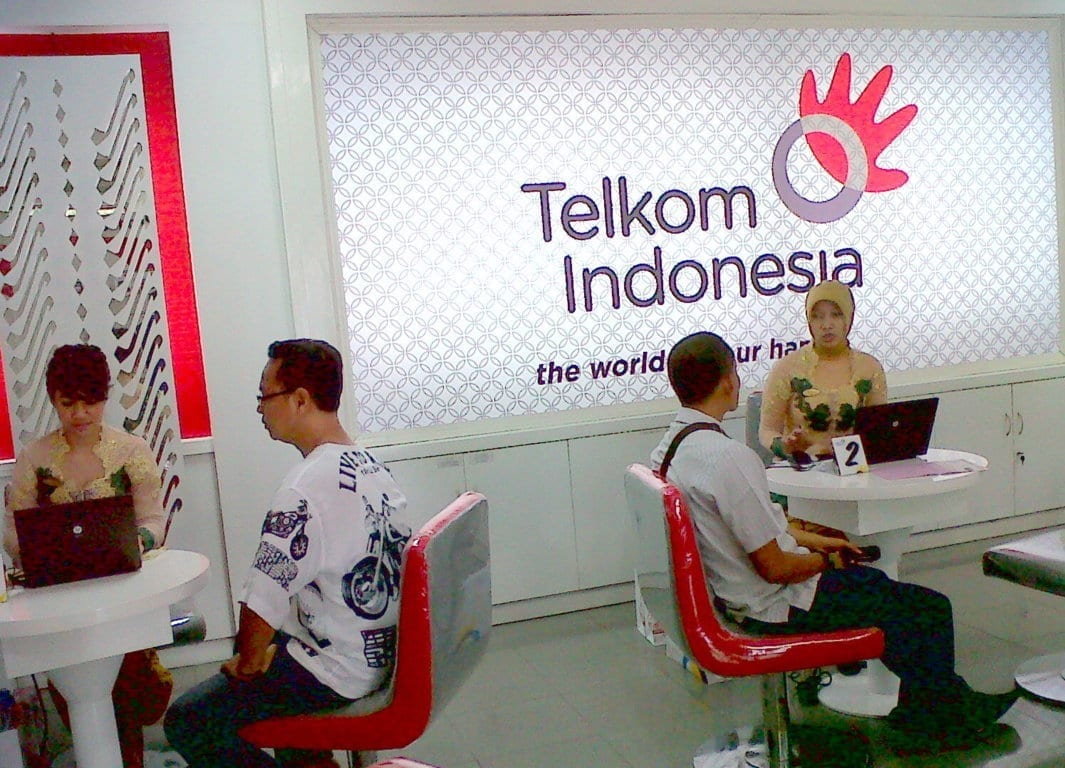
    Indonesia’s PT Telkom has launched a new line of high-speed broadband services for enterprise customers offering speeds of up to 1Gbps.

    The operator’s new Smart Office Pro services are designed to meet business customers’ requirements for high-speed broadband in the digital age.

    The company is offering a 1Gbps package bundled with up to 1,000 minutes of free voice calls, IPTV and bundled services including storage, hosting and managed services.

    At a press conference announcing the new offers, Telkom director enterprise and business services Muhammad Awaluddin said the service aims to help customers benefit from increased efficiency, flexibility, stability, sustainability ad continuity.

    He added that the launch is in line with the operator’s commitment to building a digital society in Indonesia, which itself also aligns with the government’s vision of transforming the nation into a digital economy.

  • Citilink to Open New Hong Kong-Manado Route

    Citilink to Open New Hong Kong-Manado Route

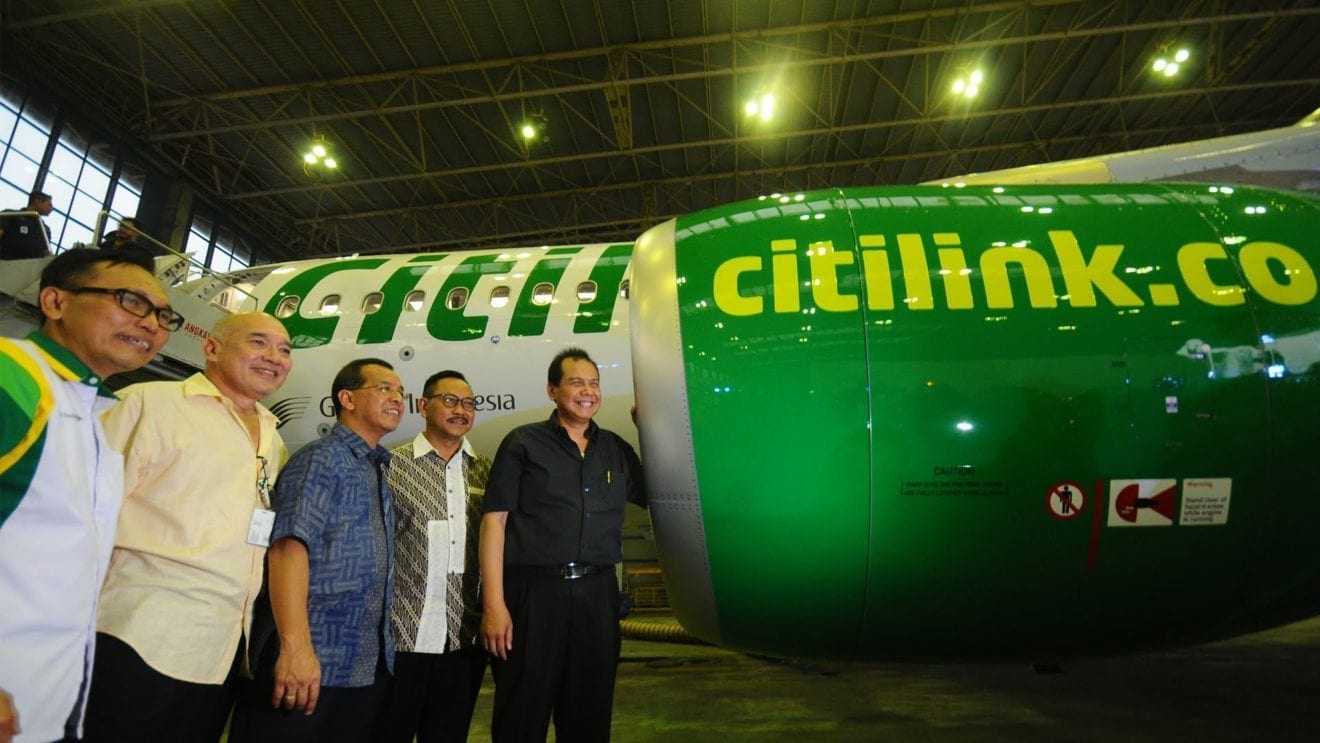
    Citilink, the low-cost arm of national flag carrier Garuda Indonesia, is set to open a new route from Hong Kong to Manado in North Sulawesi in a bid to lure Chinese tourists to the archipelago.

    Citilink Indonesia commercial president director Hans Nugroho said Manado was one of Indonesia’s most popular destinations among Chinese tourists besides Bali and Raja Ampat in West Papua.

    “Manado has become famous as a diving destination. Hopefully the new route will afford foreign tourists easier access to Indonesia,” said Hans.

    Using an Airbus A320 for its maiden flight on the new route, Citilink is slated to carry 180 tourists from Hong Kong to Manado on Tuesday. Hans estimated that the carrier would be able to accommodate up to 3,000 passengers until the end of August.

    According to Tourism Ministry data, the number of foreign visitors to Indonesia reached 915,200 in May, 12.6 percent of whom came from China.

  • MoneyGram Inks Deal with Arsema, Expands to Indonesia

    MoneyGram Inks Deal with Arsema, Expands to Indonesia

    MoneyGram recently announced that its Indonesian subsidiary PT MoneyGram Payments System has inked a long-term deal with Indonesian remittance company Arsema. Per the agreement, Arsema would channel MoneyGram’s money transfer services at all post offices of Indonesia. The services would start from Central Java and Bali region.

    MoneyGram strives to provide secure money transfer services to its customers and the deal with Arsema will further help the company in its efforts. This collaboration will also expand MoneyGram’s reach across Indonesia. Also, the aforesaid deal will facilitate operation to serve customers better with faster and more convenient offerings.

    The overall process has become much easier and can be completed in a few simple steps. Customers can now simply visit any MoneyGram agent location and start transferring and receiving funds after filling up and submitting a form and displaying a photo identification proof. The funds can be ready for collection is Depending on agent’s operating hours and regulatory requirements, the transactions can be made within 10 minutes or less.

    Apart from strengthening its presence in high-growth potential markets, MoneyGram has forayed into several unexplored and underdeveloped global markets. The company has also been expanding in markets that offer high growth potential. Per the World Bank report, remittances worth $9.6 billion flowed into Indonesia in Apr 2016. We expect the latest deal to help the company capitalize on the opportunity, which in turn, should add to its top line going forward.

  • Batam to continue cooperation with Yokohama

    Batam to continue cooperation with Yokohama

    The Batam city government said it will continue cooperation, which began last year, with the Japanese city of Yokohama.

    Batam city mayor Muhammad Rudi said the cooperation would be continued as the cooperation has been a success thanks to assistance from the Yokohama city administration.

    “The assistance includes how Batam could reduce carbon gas emission and economize on power. At the airport and government hospital, power consumption could be saves by 30 percent,” Rudi cited.

    He said Batam also hopes that the Yokohama city administration to provide assistance in the form of technology needed for Batam development.

    “In seeking to reduce carbon gas emissions, denuded forests are a problem, therefore wee need more assistance to cope with the problem,” he said.

    “We are grateful with the equipment but we also need technology to use the technology products,” he said.

    Director of the Development Cooperation Department of Yokohama, Toru Hashimoto said Batam is the fourth city in ASEAN with which Yokohama cooperates.

    The three other cities are Da Nang of Vietnam, Bangkok of Thailand, and Cebu of the Philippines.

    Through the cooperation, Batam is expected to grow to be like Yokohama to become a smart city, Toru said.

    “Batam and Yokohama are equally good. In November we will have a seminar on Asia Smart City in Yokohama. We hope the mayor and deputy mayor would attend the seminar,” he said.

  • Over six million tourists visit Indonesia

    Over six million tourists visit Indonesia

    Some six million foreign tourists visited Indonesia since the issuance of presidential regulation number 21 of 2016 concerning visa-free facilities for foreign citizens from 169 countries, an official said.

    While 4,095,264 tourists came from 15 countries which have reciprocal agreements with Indonesia, 2,881,945 tourists came from 144 countries without any such pact with Indonesia, chief of the public relations services of the directorate general of immigration, Heru Santoso, elaborated at a meeting with journalists here on Friday.

    “Admittedly, the figure is still far from the government-set target of 20 million tourists per year, but I believe it will further increase in the future,” he stated.

    He noted that no tourists visited from 10 countries in this list of 169 countries. These ten countries are Antigua and Barbuda, Burundi, Czech Republic, Gabon, Haiti, Marshall Islands, Kiribati, Lesotho, Puerto Rico and Saint Lucia.

    “I think the promotion campaign still needs to be intensified,” he added.

    The directorate general of immigration also handled 135 criminal cases (pro justitia) in the first half of 2016, he said, adding at least three foreign nationals were involved in the cases.

    “They committed immigration related crimes. In 2015, five foreign nationals were involved in such cases,” he informed.

    The office also recorded 4,715 cases of immigration administration violation in the January-June 2016 period. The cases involved 117 citizens from countries eligible for visa-free facilities, he disclosed.

  • Sriwijaya Air to open Manado-China flight route

    Sriwijaya Air to open Manado-China flight route

    Sriwijaya Air is planning to open the Manado-China direct flight route at the end of this year to cater to the increasing number of Chinese tourists traveling to North Sulawesi.

    Sriwijaya Air’s move is aimed at benefiting from the opportunity as it will have a positive impact on the regional economy, its district manager for Manado, Achmad Trenggono, said here on Friday.

    The plan to open more flight routes from and to the North Sulawesi provincial capital of Manado will have a multiplier effect, he added.

    “We are ready to support the North Sulawesi provincial governments efforts by encouraging the tourism sector,” he stressed.

    He believed that if the tourism sector is developed properly, it will have a massive impact on other sectors in the province.

    The general manager of the state airport operator of Sam Ratulangi (Samrat) international airport, Halendra Waworuntu, pointed out that his side is prepared to help the airline company open new flight routes from Manado to destinations across the world.

    “Only chartered planes have served international flights from Manado so far,” he informed.

    He underlined that the plan to open the Manado-China flight route will have a bright prospect because the province has a large potential to develop its economy.