Tag: Indonesia

  • BI Urged to Stimulate Housing Market

    BI Urged to Stimulate Housing Market

    Indonesia Property Watch (IPW) CEO Ali Tranghanda asked Bank Indonesia to issue a more progressive regulation on Loan to Value (LTV) in order to tackle issues with a slowdown in the national housing market recovery.

    “For the middle-lower segment, particularly houses with loan liquidity facility (FLPP), the LTV can be fully provided so that the down payment is set to 0 percent,” Ali said in a press release on Friday, May 6, 2016.

    For the middle segment, Ali suggested that the LTV should be set to 90 percent, so that the down payment would stand at 10 percent. Meanwhile, Ali said that BI should strictly govern the LTV for upper segments, “because the upper segment is a subject to massive speculations, although it has impacts on the housing market,” Ali added.

    According to Ali, policies that can hamper the cash flow of middle-lower segments includes the requirement for developers to market homes that are under construction.

    “BI is expected to stimulate the housing market movement,” Ali added.

    Ali explained that the relaxed policy could be implemented until the housing market fully recovered. Given with the current market condition, Ali said that BI should not burden the housing sector with strict regulations.

    The national housing market has so far not shown signs of recovery. After a growth in sales figure in the fourth quarter 2015, the trend did not continue in the first quarter of this year. The IPW reported that the housing market in the first quarter plummeted by 23.1 percent compared to the previous quarter, or was down by 54.09 percent compared to the first quarter of last year.

    Data from the IPW revealed that almost all regions experienced a decline in sales, and the middle segment remained the largest market share at 52.19 percent. Meanwhile, the upper and lower segments accounted for 28.27 percent and 19.54 percent of the housing market share, respectively. Earlier in the fourth quarter 2015, the upper segment dominated the market share.

  • Apkasi to prepare online app system to ease investors

    Apkasi to prepare online app system to ease investors

    The All Indonesia District Administrations Association (Apkasi) will set up an online application system to make it easier for those seeking to invest in the countrys regions, its chairman Mardani H Maming said here on Saturday.

    “The online application system will help investors wishing to know about potential of any region,” he said, adding the system is planned to be launched in 2017.

    Mardani, who is also the district head of Tanah Bumbu, South Kalimantan province, stated that he hoped the new system would make importers able to buy commodities directly from producers.

    Also, the same system could be used as a mechanism for distributing subsidy to regions in need, he explained.

    Citing an example, he said a region that did not produce rice could obtain the produce from other regions to ensure it remained well stocked.

    Apkasi organized Investment and Trade International Summit 2016 at JIExpo Kemayoran in Central Jakarta from May 5-7 in an effort to attract investment.

    Mardani informed that a number of investment and trade related transactions were made during the event, including in plantation, animal husbandry, infrastructure and tourism sectors.

    “Memorandums of understanding have also been signed with foreign parties, including those from Japan and China,” he said.

    In the speech marking the events conclusion on Saturday, President Joko Widodo urged the regional governments in the country to develop their respective regions potential.

    He called on them to focus on a certain area for efficiency and to also ease control.

    He cited the example of a region that only provided golfing facilities and grew as a result.

    “It is not impossible for regions here to develop only sugar or fish. If they do so, these will become known as sugar or fish regions,” he said.

    He also asked the regional governments to speed up the licensing process.

    “If BKPM (capital investment coordinating board) could finish the process of giving eight licenses within an hour, the regional governments must also be able to do the same,” he stated.

    The government is continuing to make efforts to improve ease of doing business in the country, he said.

    “Several years ago, we were ranked 120th in ease of doing business index. Last year, we were at 109th out of 189 countries, far below the list topper Singapore, or Malaysia at 18th and Thailand at 49th,” he elaborated.

    He said he has ordered the Coordinating Minister for Economic Affairs to ensure that the country achieves the 40th rank this year, he said.

    “Breakthroughs must be made to achieve it. This is our common task. It is not impossible to achieve it, but we need to work hard. We must not be at ranks lower than 100 or so forever,” he urged.

    The president again reminded that Indonesia has now entered a competitive era, and said, “If we are unable to change ourselves, we will be run over. We must win the competition if we wish to become a victorious nation.”

  • BreadTalk to open in Myanmar next year

    BreadTalk to open in Myanmar next year

    Myanmar’s growing group of middle-class consumers can now look forward to Singapore bakery giant BreadTalk’s pastries and baked goods as the home-grown bakery brand will soon be available in Myanmar.

    It signed a franchise agreement with Myanmar Bakery on Tuesday (May 3), which will allow Myanmar Bakery to hold the master franchise to operate BreadTalk outlets in Myanmar.

    The first outlet is expected to open in Yangon by early 2017 in one of the shopping centres owned by the Shwe Taung Group. Myanmar Bakery is part of Myanmar conglomerate Shwe Taung Group, which owns an extensive network of real estate businesses in Myanmar.

    The deal marks the first food and beverage venture in Myanmar for the Shwe Taung Group and is also BreadTalk’s maiden foray into Myanmar.

    “With a growing middle class and rising retail consumption, there are immense growth opportunities for BreadTalk in Myanmar,” said Mr Tan Aik Peng, chief executive officer of BreadTalk’s Bakery division.

    “The Singapore team is working closely with the Shwe Taung Group to understand the Myanmar market and we promise an exciting line up with BreadTalk’s first boutique bakery in Yangon.”

    He added that BreadTalk was confident that they will “introduce a new lifestyle of bread appreciation” to Myanmar’s burgeoning middle class.

    BreadTalk operates close to 800 outlets across Singapore, China, Hong Kong, Indonesia and Thailand.

    The Shwe Taung group of companies is a conglomerate involved in real estate, construction and engineering, infrastructure, hotels, entertainment, trading and investment. It also operates the Junction Centre group of shopping centres, which include malls in Yangon and in Naypyitaw, the country’s administrative capital.

    The group is also behind the upcoming Junction City, which is an integrated development in downtown Yangon which will comprise a lifestyle shopping mall, an office tower and a five-star luxury hotel scheduled to open in the first quarter of 2017.

  • Applecrumby & Fish wins $300k funding boost

    Applecrumby & Fish wins $300k funding boost

    An online boutique that offers all-natural and organic baby products, Applecrumby & Fish has obtained a fresh round of seed funding worth $300,000 from Silicon Valley’s VC 500 Startups.

    The Malaysian company aims to use the money to establish itself as the top-of-mind site for safe baby essentials, reports Tech in Asia. Founded by husband and wife Sean and Jesmine Tan in Kuala Lumpur in late 2012, Applecrumby & Fish started out with 900 products. These have increased tenfold, and free same-day delivery is offered in its home market.

    Like other parents, the Tans resorted to importing their preferred baby products. After having their first child in 2011 they fell in love with organic brands not easily available in Malaysia.

    “We are very sensitive to the needs of parents who are looking for the best they can afford for their baby, at fair prices,” says Sean.

    Applecrumby & Fish sells skincare products, toiletries, food, supplements, gear and toys. Its brands include Bellamy’s, Drypers, Enfa, Gerber, MamyPoko, Putto, Spectra, Stephen Joseph and Quinny, and there are plans to add other brands not unavailable online.

    Its new funding will help it develop an in-house brand for baby products, starting with wipes and nappies. The company also wants to boost its content marketing and gear up for its launch in Indonesia as well as Brunei.

    As well as those markets, it ships to Singapore, Thailand and the Philippines.

    Applecrumby & Fish was among startups in the annual 10-week Distro Dojo program in Malaysia. Led by 500 Startups, the program focuses on customer acquisition, growth and distribution.

    Applecrumby & Fish graduated at the top of the program last month, increasing its site traffic by more than 200 per cent and tripling its revenue in less than four weeks.

    Meanwhile, the Tans aim to disrupt the diaper and wipes industry of South-East Asia with their inhouse brand, says Digital News Asia.

    “We have done our research and there is nothing quite like our brand in the market, not at our kind of non-premium pricing but with premium quality,” says Jesmine, who is also COO.

    She says the company has had 300 per cent year-on-year growth in terms of revenue, and aims to hit RM6 million (US$1.5 million) by the end of this year.

    Before launching Applecrumby & Fish, the Tans were property investors who also freelanced as interior designers. Despite Applecrumby & Fish sounding similar to US retail giant Abercrombie & Fitch, the name stems from their daughter’s first word at the age of six month, “apple”.

    “She would walk and crawl, dropping crumbs of food everywhere she went, hence crumby, while her favourite food was steamed fish,” says Jesmine.

  • Indonesian ride-hailing firm Go-Jek needs more funds in market fight-CEO

    Indonesian ride-hailing firm Go-Jek needs more funds in market fight-CEO

    Indonesian online ride-hailing service Go-Jek is in talks with potential investors to raise fresh funds to expand the business, as the heavy subsidies it gives to drivers to keep rates competitive are unsustainable in the long run, its chief executive said on Friday.

    Go-Jek, a play on the local word for motorbike taxis, has become popular among commuters on the traffic-clogged streets of Jakarta as its phone app removes much of the hassle of finding a driver and negotiating fares.

    Go-Jek, which has a network of more than 200,000 motorbike taxi drivers, is battling aggressively with other ride-hailing apps such as Grab and Uber [UBER.UL], driving rates lower to gain market share in the country of 250 million people.

    But Go-Jek cannot afford to continue relying on subsidies as “you end up where you run out of money”, Go-Jek founder Nadiem Makarim told on the sidelines of an e-commerce industry conference in Jakarta.

    Raising funds from investors to expand the business is part of the solution, the Harvard Business School graduate said, adding that several venture capital and private equity firms have expressed an interest in Go-Jek because of its size and potential.

    Founded in 2010, Go-Jek has since increased its services to food deliveries, cleaning and even massages. The company, which already operates in big Indonesian cities like Bandung and Surabaya, also plans to broaden its reach and add more drivers.

    Its ambition, however, has been met with regulatory obstacles and strong resistance from established taxi operators such as PT Blue Bird Tbk and PT Express Transindo Utama Tbk.

    Taxi drivers’ protests turned violent in the Indonesian capital last month, when they called for ride-hailing apps to be banned. Government ministers had also said the tech firms should be subject to the same regulatory and tax requirements as conventional public transportation companies.

    Yet Go-Jek’s Makarim told a packed conference that regulations and demonstrations were not his “biggest headaches”.

    “For me, the number-one challenge is building something to scale,” he said. “It’s the technology part that I think is the hardest, it’s what keeps me up at night.”

  • Indonesia AirAsia to Go Public

    Indonesia AirAsia to Go Public

    Budget airliner PT Indonesia AirAsia—the subsidiary of Malaysian AirAsia Berhad—is preparing to hold an initial public offering on the Indonesia Stock Exchange in late 2017 or early 2018. Before going public, the airline will seek to improve its finances.

    “We are improving our financial performance. We cannot say yet what the improvements are,” president director Sunu Widyatmoko told yesterday.

    He did say that the IPO proceeds will be used to increase AirAsia’s number of fleet and flights.

    Based on the financial statements of AirAsia Berhad, which owns 49 percent stake in Indonesia AirAsia, the subsidiary posted negative performances last year with revenues dropping 37 percent to Rp5.02 trillion.

    The main reason for the income decline was a decrease in passengers’ volume by 22 percent.

    In December 2015, Indonesia AirAsia recorded a loss of Rp885.2 billion and a net loss of Rp2.33 trillion. It was an even bigger loss compared to 2014, when the company noted a loss of Rp635.8 billion and a net loss of Rp883.5 billion.

    The airliner also recorded a foreign exchange loss of Rp1.27 trillion last year, which prompted its Malaysian parent company to inject an additional capital of Rp2.05 trillion in quarter three, in the form of perpetual capital securities.

    Sunu said that another cause for last year’s major loss was the Flight QZ8501 disaster. The plane crashed while en route from Surabaya to Singapore, claiming the lives of 155 passengers and seven crew members.

    AirAsia Berhad CEO Tony Fernandes said the two main reasons why Indonesia AirAsia needs to become a listed company is to improve transparency and corporate management, and to allow Indonesian investors to own the airliner’s shares.

    Fernandes also said in Jakarta earlier this week that Indonesia AirAsia had gone through rough times last year, but the company now aims to leave that past behind and focus on business expansion.

    In mid-2015, Indonesia AirAsia is one of 13 airlines ordered by the Transportation Ministry to raise capital due to its negative equity. At that time, Indonesia AirAsia’s equity was minus Rp1.32 trillion, with liabilities amounting to Rp6.15 trillion and an assets value total of Rp4.83 trillion.

  • Citi Indonesia posts Rp 633 billion profit

    Citi Indonesia posts Rp 633 billion profit

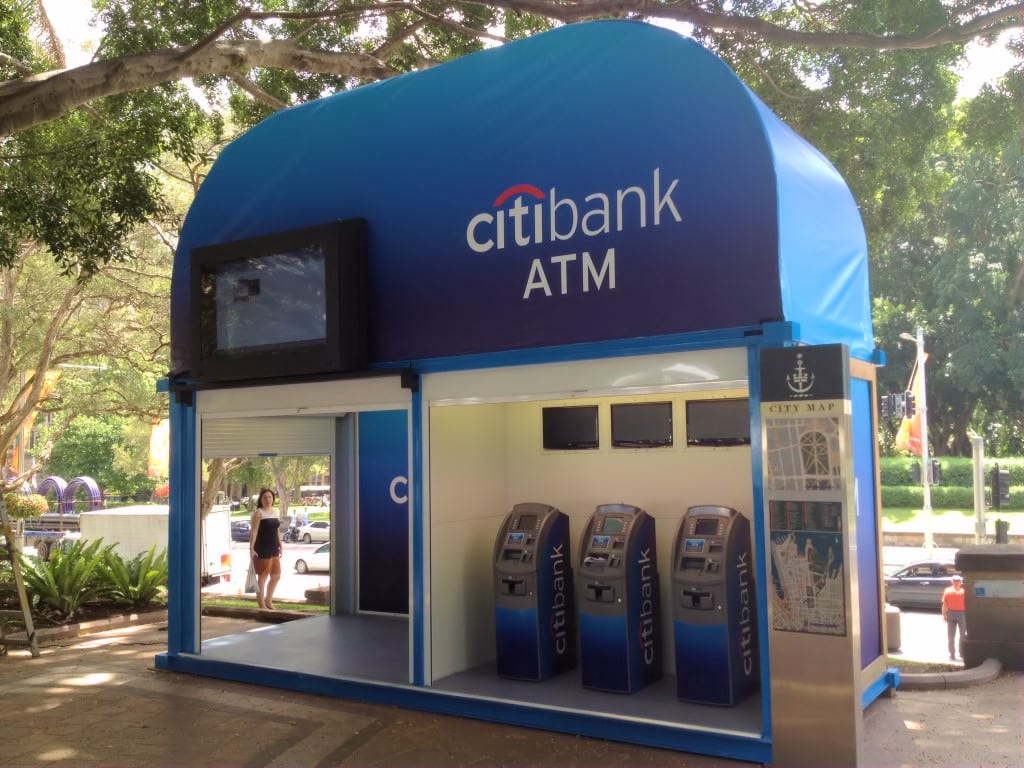
    Citi Indonesia recorded Rp633 billion ( US$48 million ) in net profits in the first quarter this year, a 12 percent rise from Rp 567 billion in the same period last year.

    The profit growth was driven by a 10 percent increase in net interest income, as also reflected in the bank’s total assets as of March this year that reached Rp76.5 trillion, a 6 percent year-on-year ( yoy ) surge from the corresponding period last year.

    Citi Indonesia chief executive officer Batara Sianturi said,”We enjoyed higher quality of assets in the first quarter this year with our net non-performing loan [NPL] ratio staying as low as 1.15 percent,” adding that the bank’s loan loss provision ( CKPN ) had also improved by 25 percent to Rp 131 billion.

    Citi Indonesia also fared well, as seen in the third-party funds that reached Rp 51.2 trillion, a 4 percent increase yoy with the current account and savings account ( CASA ) taking the lion’s share of 71 percent and therefore contributing to the sustained net interest income.

    The bank also set aside a minimum capital requirement of 28.86 percent as of March, the company said in a statement.

    The bank’s financing ratio for small and medium enterprises account for 9 percent of the total credit as of March this year.

    “We will continue supporting Indonesia’s economic growth by implementing fund disbursements in accordance with the government’s priority programs, including in the infrastructure sector and other industries that bolster exports and loans being channeled to small and medium enterprises.”

    Last year, Citi Indonesia garnered Rp 1.5 trillion in net profits with an asset increase of 14.6 percent yoy.

    In the digital arena, the bank also developed innovations and services by launching four smart branches focusing on digital banking solutions.

  • Garuda Indonesia Urged to Strengthen Domestic Market

    Garuda Indonesia Urged to Strengthen Domestic Market

    Indonesian Tourism Minister Arief Yahya has told national carrier PT Garuda Indonesia to continue strengthening domestic market due to its huge potentials.

    “Our domestic market is very strong. Last year, there were 255 million visits by domestic tourists. This year, the target is 260 million visits. If that amount is multiplied by Rp. 1 million, it means Rp260 trillion circulated,” Arief said in Jakarta on Friday (29/4).

    Arief added that once the domestic market is strengthened, it would be easy to develop international market.

    In comparison with domestic market of neighboring countries, Aried added, Indonesia is much bigger. He cited Singapore, which does not have domestic market or domestic market in Malaysia that is not too big.

    The Minister added that that the Government is gearing up to meet the target of 20 million tourists visiting Indonesia in 2019.

  • Indonesian online retailer Bhinneka plans IPO to fund expansion

    Indonesian online retailer Bhinneka plans IPO to fund expansion

    Indonesian online retailer PT Bhinneka Mentari Dimensi is planning an initial public offering (IPO) in 2018 to widen its reach, one of its directors said on Thursday, as the e-commerce battleground heats up in Southeast Asia’s biggest economy.

    The e-commerce market in the country of 250 million people is ripe with potential but it is fragmented and comes with complex regulatory and logistical barriers.

    “Our objective to go public is for scaling,” director Andi Boediman said, adding that the company plans to expand its store network and strengthen its supply chain while investing in technology and marketing.

    The company operates online through Bhinneka.com, with customers able to have purchases delivered to their homes or its physical stores, which also serve as retail outlets for the electronic goods specialist.

    Bhinneka is in a good position to attract investors, Boediman told reporters on the sidelines of a conference in Jakarta.

    “We are an online retailer that is focused and reasonably sizeable,” Boediman said, adding that revenue “at least doubled” last year and that he expects a strong performance in 2016.

    Bhinneka decided to pursue an IPO in Indonesia because it can be a dominant player on its home ground, Boediman added. He declined to disclose how much the IPO is expected to raise or the company’s financial figures.

    The company’s domestic rivals include SoftBank-backed Tokopedia, Blibli and Indonesian conglomerate Lippo Group’s MatahariMall.com. Lippo is also considering an IPO for its e-commerce business, a director said in February

    The Indonesian market is still growing while being supported by a large consumer base, said David Rimbo, managing partner for transaction advisory services at Ernst & Young in Indonesia.

    “I think the timing is right for Indonesian players to actually realize basically decent valuations,” he said.

  • E-Commerce to Take Up 20% of the Indonesian Retail Market

    E-Commerce to Take Up 20% of the Indonesian Retail Market

    The Trade Ministry said that the e-commerce business has a chance of capturing 20 percent of the conventional retail market. The scouring of conventional retail markets is likely to happen given the fact that customers are now more familiar and accustomed with online shopping, due to its time and budget efficiencies.

    “This phenomenon must be supported by adequate policies and infrastructure,” Srie Agustina, the ministry’s acting director general of domestic trading, said during the Indonesian E-Commerce Summit and Exhibition in Serpong, Banten, yesterday.

    Srie estimated that the e-commerce industry will take over 20 percent of the conventional retail market share in the next four years. Right now, e-commerce’s share in the conventional retail market is five percent.

    At the E-Commerce Summit opening yesterday, President Joko Widodo warned local e-commerce businesses about the “attack” of foreign players. According to the President, the acquisition of Southeast Asia’s popular online shopping site Lazada by China’s e-commerce giant Alibaba two weeks ago is something that industry players must keep an eye on. “It’s a warning for everyone.”

    Alibaba announced that it has acquired Rocket Internet’s stake in Lazada worth US$1 billion (Rp13 trillion). The takeover strengthens Alibaba’s position in the e-commerce markets of Asia and the world. The acquisition allows Alibaba to reach 560 million online consumers in Southeast Asia, including Indonesia.

    To boost the quality the domestic e-commerce industry, the Trade Ministry will mandate online trade sites to register with the ministry.

    The Indonesia E-Commerce Association (IDEA) is planning for an accreditation of e-commerce sites, in a bid to improve the quality and credibility of local e-commerce players. The accreditation assessment will begin in June carried out on 200 sites online sales-and purchase businesses. The assessment categories include operational sites, clarity payment, and customer service aspects.

    Earlier, Minister of Communications and Informatics Rudiantara expressed his optimism that the retail e-commerce business this year can record a transactions deals total of US$20 billion or around Rp260 trillion.

  • SIA to support Indonesia’s tourism campaign under new partnership

    SIA to support Indonesia’s tourism campaign under new partnership

    National carrier Singapore Airlines and Indonesia’s Ministry of Tourism on Thursday (Apr 28) announced a partnership to boost foreign tourist arrivals into Indonesia.

    Both parties signed a memorandum of understanding at the National Coordination Tourism Meeting in Jakarta on Thursday, and they will work to finalise details of the partnership in a memorandum of cooperation at a “later date”, the joint press release said.

    Under the three-year partnership, SIA will support the ministry’s tourism campaign “Wonderful Indonesia”, which aims to attract 20 million foreign tourist arrivals annually by 2019.

    Joint activities will include advertising and other campaigns to promote travel to Indonesia via Singapore from key source markets, which include China and India for the first year of collaboration, the press release said.

    SIA, together with its subsidiary SilkAir, serve 13 cities in Indonesia with more than 150 weekly flights, the airline said.

  • Indonesian charter operator orders 30 Bell Jetranger X

    Indonesian charter operator orders 30 Bell Jetranger X

    The aircraft will be used for air taxi operations throughout Indonesia and its more than 14,000 islands.

    PT Whitesky Aviation is a Jakarta based company specialising in non-scheduled (charter) flight. The company currently operates a fleet of six Bell Helicopter aircraft, including three Bell 429s and three Bell 407s.

    “This signing is testament to the growing demand for the Bell 505, especially in the corporate and VIP sectors,” said Matt Hasik, executive vice president of commercial business for Bell Helicopters. “There are now more than 380 letters of intent around the globe, and more than 130 Bell 505 LOIs in the Asia Pacific Region alone.”

    The Bell 505 is the company’s long mooted Bell Jetranger 206 entry-level replacement. With a cruise speed of 125 knots (232 km/h), range of 360 nautical miles (667 km) and useful load of 1,500 pounds (608 kg), the Bell 505 is designed to be safe and easy to fly while remaining affordably priced.

  • Huawei may acquire stake in Bakrie Telecom

    Huawei may acquire stake in Bakrie Telecom

    Huawei is reportedly set to acquire a 9% stake in struggling Indonesian CDMA operator Bakrie Telecom as part of a debt repayment procedure.

    Bakrie Telecom secured shareholder approval to issue convertible bonds worth 56% of shares in the company, that will then be divided among its 50 creditors.

    The convertible bonds are worth around 7 trillion rupiah ($530.5 million), with a price per share of 200 rupiah, four times higher than the company’s current trading price.

    As Bakrie’s largest lender Huawei will receive bonds accounting for 9% of Bakrie Telecom shares. Indonesian independent telecom tower operators Protelindo and SUPR will receive stakes worth 7%  and 6.8% respectively, according to the report.

  • Old Navy Indonesia makes debut

    Old Navy Indonesia makes debut

    American apparel and accessories brand Old Navy Indonesia has opened its first retail outlet at the Central Park Mall in west Jakarta.

    Offering American-style basic clothing items, Old Navy is part of the Gap portfolio alongside Athleta, Banana Republic and Intermix. The brand has more than 700 stores and shops-in-shop in 11 countries, including the Philippines.

    Old Navy Central Park mall Indonesia

    “Indonesian customers understand the international retail scene very well,” says Old Navy senior director of franchise buying Michele Chinn Fahey. “There’s a really a high awareness of international retail brands and a growing demand for American fashion.”

    For its Indonesian debut, Old Navy is collaborating with Armaan Retail Indonesia.

    Old Navy Central Park mall Indonesia 1

    “With 250 million people living across 15,000 islands, and three different time zones, Indonesia has huge potential,” says Armaan Retail CEO Benjamin Handradjasa.

    Old Navy’s store covers 1200 sqm and offers clothing and accessories for men, women, children and babies. There is also a special section for maternity clothes.

    Among the store’s first customers on its opening day was Indonesian actress and singer Ana Octarina.

  • Indonesia’s H3I taps Nokia for core network upgrade

    Indonesia’s H3I taps Nokia for core network upgrade

    Hutchison 3 Indonesia (H3I) has contracted Nokia to expand its core network to meet growing mobile data demands in the market.

    Under the agreement, Nokia will supply H3I with packet core technology in cities including Surabaya, Semarang, Solo and Yogyakarta – the most densely populated cities in the country.

    Nokia will also provide network planning, optimization, implementation and care services, as well as its Flexi convergent mediation device and its NetAct operations support system. The contract is also aimed at laying the groundwork for future network upgrades to meet emerging demands.

    H3I has been seeing data traffic double around every nine months as a result of rapid smartphone and 3G data adoption in Indonesia’s growing economy.

    Mobile is playing a leading role in providing internet connectivity to Indonesians. As of the start of 2016 there were over 320 million mobile subscribers across Indonesia, while fixed broadband penetration remained under 2%.

    “We are pleased to have Nokia’s services and technology expertise at our side as we evolve our core network to meet the speed and quality needs of a growing number of connected consumers and business users in Indonesia,” H3I president director Randeep Singh Sekhon said.