Tag: Indonesia

  • Indonesia to reopen banking transactions with Iran

    Indonesia to reopen banking transactions with Iran

    Indonesia said it is open to resume banking transactions with Iran following the lifting of economic sanctions against Iran.

    “Banking relations, an obstacle we are facing, will soon be resumed,” President Joko Widodo said after receiving Irans Foreign Minister Mohammad Javad Zarif on the sidelines of the 5th Organization of Islamic Cooperation Extraordinary Summit on Palestine and Al Quds here on Monday.

    The President said economic and investment cooperation between the two countries had been hindered because banking transactions were closed due to the imposition of economic sanctions against Iran.

    He said Indonesian banking authorities had agreed to follow up on the cooperation plan.

    “The chairman of the Financial Service Authority (OJK) said just now that the banking transactions would soon be resumed to develop and strengthen economic relations between the two countries,” he said.

    Bank Indonesia (the Central Bank) and OJK would discuss the mechanism for cooperation with Iranian banking officials.

    Due to the imposition of economic sanctions several years ago, Iranian banks were unable to conduct transactions with overseas banks.

    Since Irans nuclear program came to be known in 2002, the United Nations, the European Union, the US and several other countries had imposed economic sanctions on Iran.

    After these sanctions were revoked, the flow of trade to and from Iran is expected to become easier.

  • Indonesia cuts exports of natural rubber to prop up market

    Indonesia cuts exports of natural rubber to prop up market

    Indonesian rubber exporters agreed to cut their exports of that commodity in line with the Agreed Export Tonnage Scheme (AETS) starting March until August this year.

    “AETS scheme agreed upon by the three member countries of the International Tripartite Rubber Council (ITRC) is aimed at propping up the natural rubber market by cutting supply of that commodity to the world market,” Foreign Trade Director General Karyanto Suprih said in a statement here on Monday.

    The government has asked the business players to comply with the scheme, Karyanto pointed out.

    The commitment was declared at a Focus Group Discussion (FGD) with theme “Readiness of Indonesian Rubber Exporters to implement the AETS scheme in 2016 in line with the agreement reached on February 4, 2016 between the governments of Indonesia, Thailand, and Malaysia to cut supply of natural rubber to the world market.

    The export cut would be effective from March 1 to August 31 this year.

    Under the AETS scheme Thailand, the worlds largest producer is to reduce its exports of natural rubber by 324,005 tons, Indonesia, the second largest producer by 238,736 tons, and Malaysia, the third largest by 52,259 tons.

    Altogether ITRC member countries agreed to reduce exports of natural rubber by 615,000 tons during the March-August period.

    Indonesia, while cutting exports hopes to increase domestic consumption of natural rubber.

  • Indonesian fishery products showcased at Boston expo

    Indonesian fishery products showcased at Boston expo

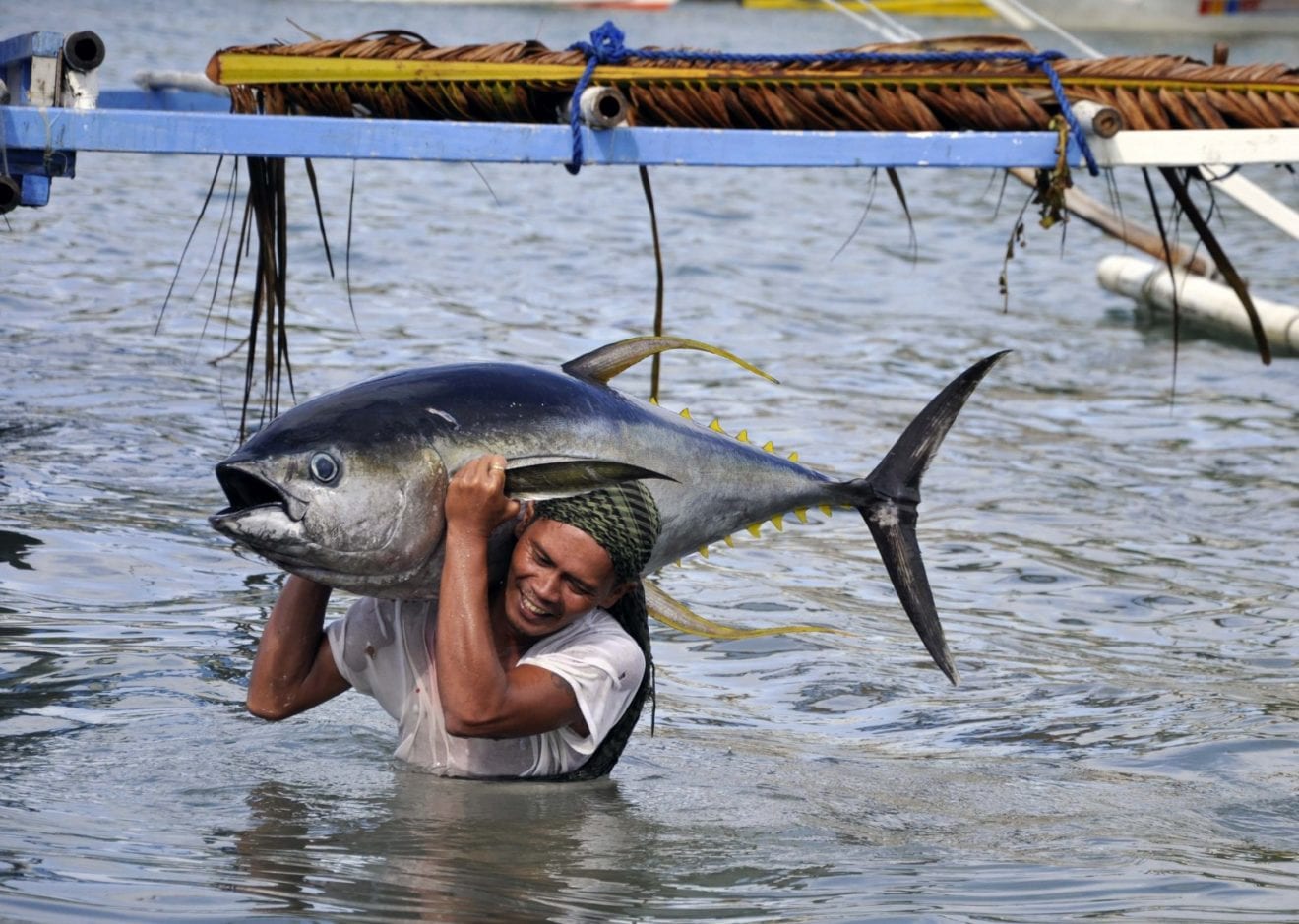
    Maritime Affairs and Fishery Minister Susi Pudjiastuti hoped that the visitors and prospective buyers of fishery products at the seafood exhibition in Boston, the United States, would recognize the progressive market and potential of Indonesia.

    “With our sincere efforts to combat illegal, unreported, and unregulated (IUU) fishing, the people will witness a rapid growth in our fishery products,” the minister noted on the sidelines of the seafood fair held in Boston on Sunday local time.

    The minister was also optimistic of receiving valuable feedback from both the exhibitors and visitors to boost the exports of its maritime products and to garner global recognition.

    “I also hope that the Indonesian fishery businessmen would engage in fishing in a responsible manner,” Susi said, adding that the Indonesian fishery community is not only selling the products but also engaging in rightful fishing practices and not violating IUU.

    The minister also urged the Indonesian businessmen to continue developing the fishing industry in ways that are environment-friendly.

    “I see a great opportunity for the exports of Indonesian marine products, although there are still obstacles to be faced, and certainly, we can solve such problems,” she emphasized.

    Susi also gave assurance to the Indonesian maritime businessmen that curbing illegal fishing would open up a larger market, and thus, they must follow the international regulation on fishing.

    “The Indonesian fishery businessmen have been urged to follow responsible and sustainable fishing practices,” Susi remarked.

    As many as 17 fishery companies, including PT. Central Proteina Prima, Tbk, Sustainable Fisheries, Sekar Bumi, PT. Wahyu Pradana Binulia, PT Permata Marindo Jaya, and Kudatama Mas had showcased their products at the Indonesian pavilion during the seafood exhibition.

  • “Wonderful Indonesia” promoted on sidelines of OIC Summit

    “Wonderful Indonesia” promoted on sidelines of OIC Summit

    Indonesias Tourism Ministry promoted “Wonderful Indonesia” brand on the sidelines of the Fifth Extraordinary Summit of the Organization of Islamic Cooperation (OIC) held at the Jakarta Convention Center on March 6-7.

    The ministry extended support for conducting the summit, the ministrys spokesman Billy Iqbal Alamsyah said here on Monday.
    “We provided support in several forms, including by providing souvenirs, etc.,” he said.
    The summit was also a strategic forum to promote “Wonderful Indonesia” brand as a total of 605 delegates from 57 countries and two international organizations were present in the meeting, he said.

    While the OIC leaders held a closed-door meeting, the ministry showed a video on Indonesias top tourist destinations at the media center set up to facilitate some 500 national and foreign journalists.

    Heritage and Wonderful Indonesia stands presenting the Indonesian Beauty Pageant were set up in front of the media center.
    Widayanti Bandia, head of the tourism business partnership department of the Tourism Ministry, said the ministry, in cooperation with Mustika Ratu, offered free spa treatment to delegates.

    “The spa that we offer here is halal and in accordance with Syariah (Islamic laws),” she said.

  • KerjaDulu, ‘Indonesia’s LinkedIn’ raises money from MNC Group

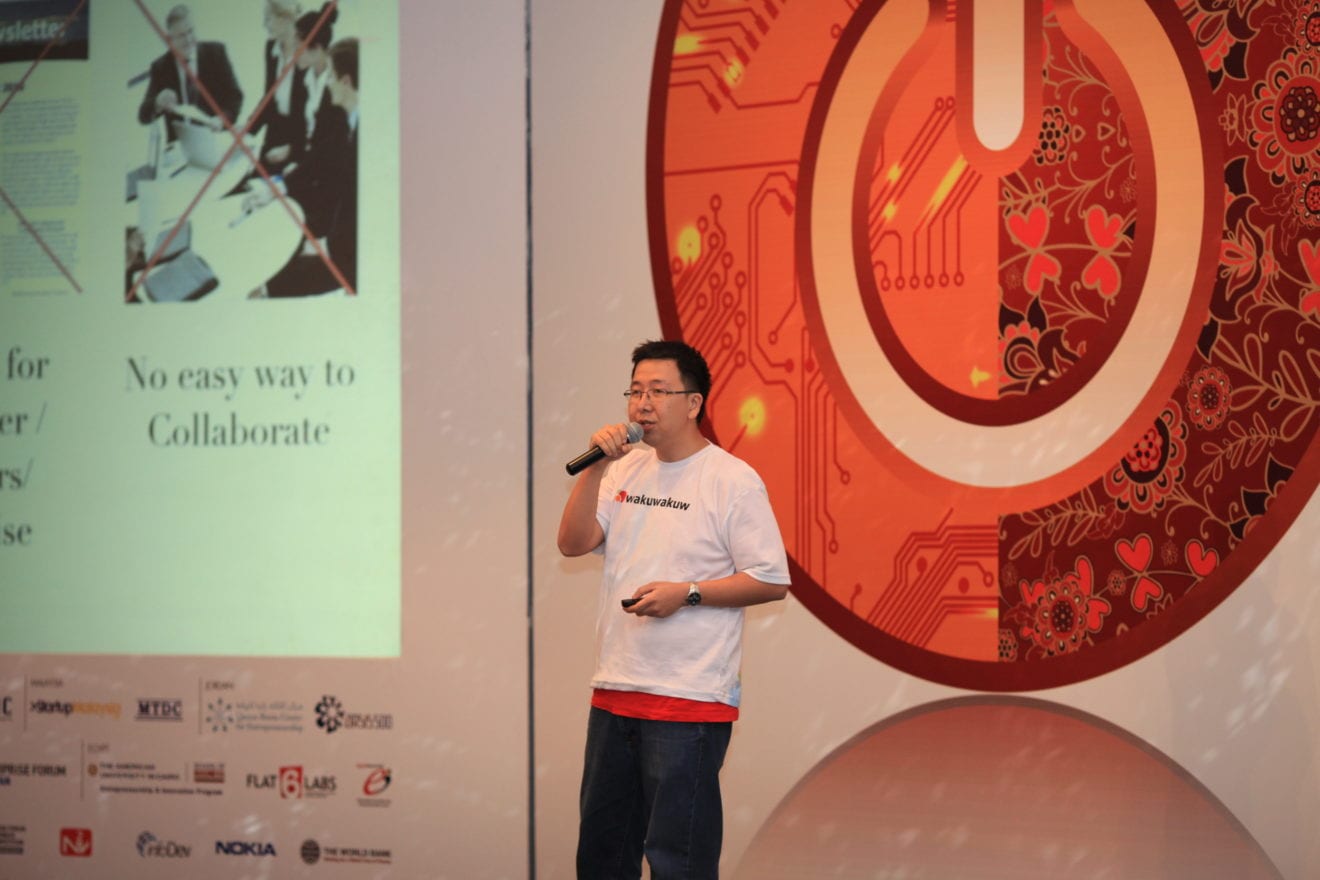
    KerjaDulu, ‘Indonesia’s LinkedIn’ raises money from MNC Group

    KerjaDulu, an Indonesian social recruitment portal for job seekers and employers, today announced a strategic investment from local media conglomerate MNC Group. The startup said its post-investment valuation is at $5 million, but did not disclose other terms of the deal. Following the investment, MNC plans to intensify its own use of the portal for recruitment purposes and use its media channels to help market KerjaDulu.

    “MNC itself has more than 40,000 employees and is very active with recruitment. We can utilize KerjaDulu’s innovative social recruitment platform as our priority to hire talented people,” David Audy, director of MNC Media Group, said in a statement. David will join KerjaDulu’s board of commissioners as part of the investment.

    Launched in January 2014, KerjaDulu now consists only of about ten people, CEO and co-founder Chris Liu says.
    Some of the site’s features make it resemble LinkedIn. People set up a profile page and connect with professional contacts. But unlike LinkedIn, which prioritizes a person’s CV, member pages on KerjaDulu focus on their online activities.
    Members can follow company profiles and get an alert when there are new job openings. Chris says the aim is to combine the benefits of a job portal with that of a social network.

    The site now has “somewhere in between 500,000 and 1,000,000 registered users,” according to Chris.
    So far, Chris says, 388 companies have completed the site’s sign-up procedure, where they are put through a verification process.
    KerjaDulu is free to use for companies and job seekers, explains Chris. Monetization will come at a later point, and the team is still discussing the possibilities.

  • Indonesia could block internet services

    Indonesia could block internet services

    Indonesia is the latest country to question the tax arrangements of the world’s internet giants, issuing a threat to block their services if they fail to comply with local set-up requirements and pay tax.

    “All have to create a permanent establishment, like the contractors for the oil sector, so they can be taxed,” stated Bambang Brodjonegoro, the finance minister, although the Jakarta Globe reported that he did not name any particular businesses.

    According to Communications Ministry estimates, digital advertising was worth around $800m last year but was untaxed because of the loopholes in regulations.

    A spokesman for the Ministry said that imminent new regulations would address this issue and would apply to streaming and messaging providers as well as social media websites.

    Indonesia is one of the most social media-connected countries in the world. It is Facebook’s fourth-largest market target, while Jakarta is the most active city for Twitter – Jakartans account for 2.4% of all tweets worldwide.

    Accordingly, major brands are looking to tap into this high level of digital social engagement while local entrepreneurs have been able to use social networks as an inexpensive platform to build their brands and do business.

    But these activities could be at risk if the government carries out its threats: the Communications Ministry spokesman, Ismail Cawidu, indicated that those internet businesses that did not comply with the new regulations faced a reduction in bandwidth or, in extremis, being blocked completely.

    While some of the businesses potentially affected have already set up legal entities in Indonesia, others only have representative offices.

    And even those, such as Google, that do have a properly constituted business may not be immune from government scrutiny.

    “Google has an office in Indonesia, but digital age transactions do not go through that office,” Communication Minister Rudiantara told Metro TV. “That is what we’re looking to straighten out,” he added.

  • Lotte Group in Indonesian confectionery push

    Lotte Group in Indonesian confectionery push

    South Korean confectionery manufacturer Lotte Group is planning an eCommerce joint venture with one of Indonesia’s largest conglomerates, the Salim Group, within the next few months with the aim of being up and running by early next year.

    This follows a new government policy on eCommerce that opens up a market of nearly 250 million people to foreign brands. According to the Korean media, the deal was formalised when Lotte Group chairman Shin Dong-bin met with Salim Group chairman Anthony Salim in Singapore during an Asia Business Council meeting.
    Under Shin, Lotte has been aggressively expanding its overseas businesses, and the Indonesian confectionery market is considered a key strategic opportunity, reports Deal Street Asia. The company hopes to secure a strong foothold in the eCommerce market through an omni-channel retailing strategy and establishing a stable delivery service via the partners’ offline stores.
    Also planning to introduce products popular in Korea, Lotte first became involved in the Indonesian market in 2008 when it acquired 10 stores of the Dutch discount chain Makro. Lotte has one department store in Indonesia and 41 retail outlets, while Salim Group has 11,000 Indomartconvenience stores. The Salim Group’s businesses cover such sectors as food, distribution, telecommunications, media, automobile manufacturing and property development.

    An eCommerce roadmap has been drafted by the Indonesian government as a basis for guidelines regulating the sector. It covers such aspects as funding, taxation, communication infrastructure, logistics, cyber security, consumer protection and education, with the aim of achieving eCommerce transaction value of $130 billion by 2020.

  • Mountia launches Bali outlet

    Mountia launches Bali outlet

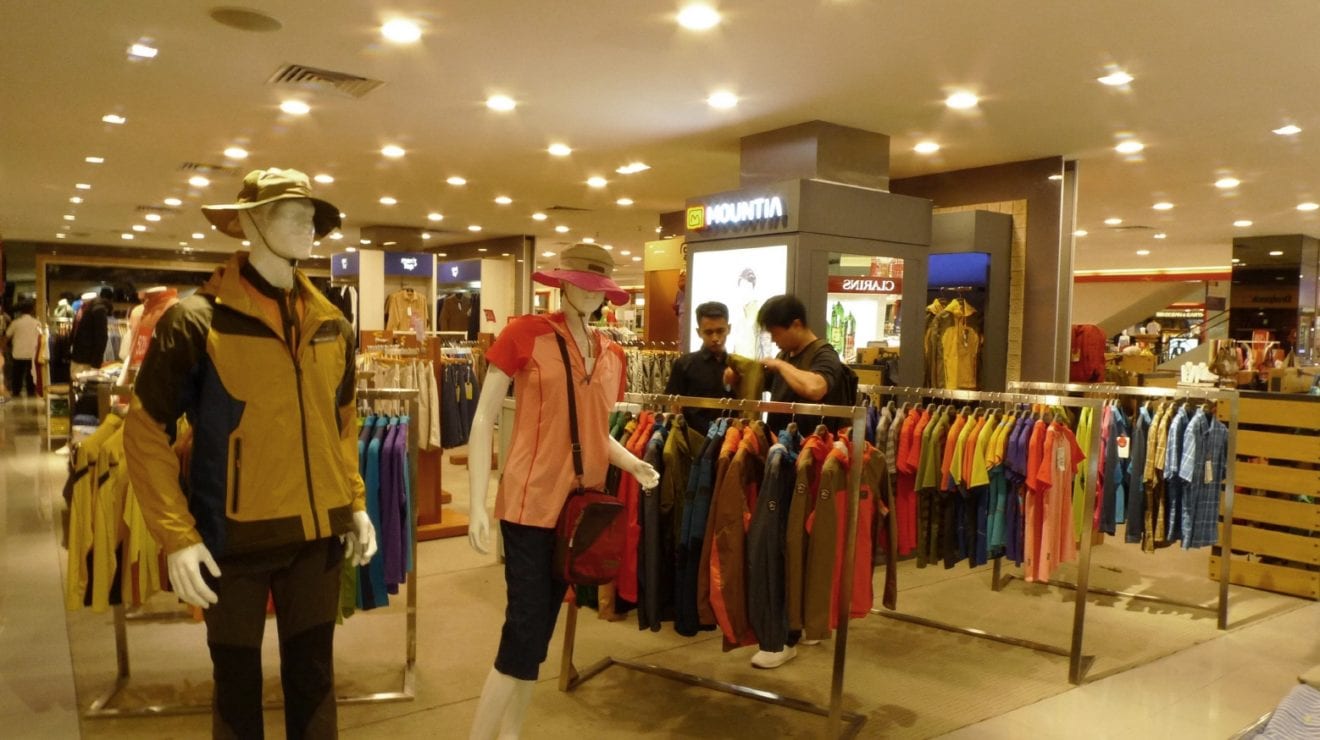
    A Korean outdoor brand has opened a store in Bali, its third store in Indonesia.

    Mountia, owned by Dongjin Leisure, opened stores in Jakarta and Puri last year, with its latest outlet being in Parkson Department Store, in Bali’s Discovery Shopping Mall.

    A Mountia official describes as “meaningful” the fact the company has opened a third store in the market for outdoor sports clothing and equipment, with Southeast Asian countries traditionally not being regarded as attractive markets for such products.

    “We can say that Black Yak is strengthening its position as a global luxury brand, and Mountia will make another success story in the global market with  products developed using entirely domestic technology.”
    Meanwhile, Mountia will participate in the sports market exhibition ISPO Beijing 2016, from February 24 to 27.

  • Wildcraft expands out of India

    Wildcraft expands out of India

    As a first step toward growing its international presence, Indian fashion brand Wildcraft has launched into the Middle East and Southeast Asia.

    It has formed partnerships for its foray into the UAE, Oman and Muscat markets, and online partnerships for Hong Kong, Indonesia, Malaysia, Singapore and Taiwan, reports ETRetail.com.

    Wildcraft unveiled a new brand identity last year while expanding its product portfolio into clothing and footwear. It has also added 130 retail outlets in more than 50 cities across India, giving it more than 3000 distribution points in more than 400 cities in India.

    In Southeast Asia, the brand has partnered with Zalora, part of the Global Fashion Group, giving Wildcraft access to the Hong Kong, Malaysia, Singapore and Taiwan markets. It will use this alliance to initially sell its outdoor gear products.

    Co-founder Gaurav Dublish says the international expansion “is just the start of our growth plans”.

    “The focus, at this point, is to reach countries with similar climatic conditions and geo-proximity.”

  • Singapore-based ecommerce marketing startup raises $1m to enter Indonesia

    Email and digital marketing startup Ematic Solutions has raised a pre-series A round of close to US$1 million, it announced today. The funding comes from MDI Ventures, a venture capital fund backed by Telkom Indonesia, the country’s major telco.

    The pre-series A round comes just two months after Ematic raised its seed round, worth US$1.07 million, led by Wavemaker Partners and joined by 500 Startups and Convergence Ventures.

    The funding will be used to intensify the Singapore-based startup’s quest for regional expansion. Indonesia was already a priority destination for the company, and it expects MDI’s support to help it further along. It has just opened an office in Jakarta, its first outside of Singapore, and is currently recruiting there.

    Ematic’s products include HiIQ, a tool that figures out when is the best time to reach out to which customer, and ByeIQ, a method for encouraging engagement when a user is about to leave your website.

    Indonesia is a particularly attractive market for Ematic given its mammoth market size and ecommerce potential. The numbers are well known; a population of 250 million, the largest in Southeast Asia, with a recent annual GDP increase of five to six percent. A 65.6 percent growth for retail ecommerce in 2015, according to eMarketer. 73 million internet users – the highest number in Southeast Asia.

    singapore-based-ecommerce-marketing-startup-raises-1m-to-enter-indonesia

    “Indonesia has the largest internet population in Southeast Asia, which is set to grow at a blistering pace,” says Ematic founder and CEO Paul Tenney in a statement. “There has been a huge pull for us from regional and local online retailers to be in Indonesia to help these retailers capitalize on this opportunity.”

    Paul explains that the resources provided by MDI Ventures in terms of investment and market insight will help Ematic to quickly expand in the country. Telkom’s 150 million customer base and network is also an attractive prospect for the startup.

    Even in the event that market enthusiasm isn’t completely warranted, there’s enough of an incentive for ecommerce players to strike while the iron’s hot. Ematic, in turn, wants to be there to offer its services to those ecommerce players. It’s already signed up high-profile clients like fashion estore Berrybenka and lifestyle marketplace Bobobobo. Back in December, the company had more than 50 clients in Singapore, Thailand, and Indonesia.

    “Email marketing is the most important channel for digital marketers in Indonesia; we see it contributing between 25 to 35 percent of total sales for the companies we work with,” Paul adds.

    “Our approach allows us to achieve desired long term results and improve all marketing metrics within a short period. But more importantly, our solutions are much more manageable for the small marketing teams that we often see in Southeast Asia.”

  • Indonesia to close down all red-light districts by 2019

    Indonesia to close down all red-light districts by 2019

    Indonesia plans to close down all red-light districts in the country by 2019, media reports said on Wednesday.The plan, under the supervision of the Indonesian Social Affairs Ministry, looks to shutting down a total of 168 such prostitution zones in the country, Efe news agency reported.

    While 68 red-light areas have already been closed down, the remaining will be closed down in the next three years, said Social Affairs Minister Khofifah Indar Parawasan.The ministry offers programmes for the social rehabilitation of women trapped in the sex trade.According to Unicef, 30 percent of sex workers in the country are minors.

    Prostitution is widespread in the Indonesian archipelago, flourishing mainly in big cities such as Jakarta, Surabaya and Bandung and tourist destinations like Bali and Riau, the last being a hub for visitors principally from Singapore.Theoretically, prostitution is legal in the country as it is not classified under any law in Indonesia — however, the police tends to penalise it by including it among offences related to indecency or outrage to public morality.

  • Indonesia to Block Line, WhatsApp, Other Unlicensed OTT Apps

    Indonesia to Block Line, WhatsApp, Other Unlicensed OTT Apps

    The Indonesian government plans to block over-the-top (OTT) applications that fail to meet the state regulation on permanent business entities.

    Rudiantara, Minister of Communication and Informatics, said his department is finalizing a bill related to the obligations of permanent business entities for OTT players operating in Indonesia. The bill is expected to be released in March 2016.

    The minister said the rule will stipulate a transition period for these OTT developers to meet the requirements.

    “The punishment is easy technically, they will be blocked by the cellular carrier,” he said on Wednesday, February 24.

    Rudiantara also said that he does not want these OTT developers to only open branches in Indonesia. Instead he wants them to become an incorporated business entity in the country,

    The OTT players, he said, can also opt to establish a joint venture or form a partnership with local cellular carriers.

    According to Rudiantara, this is the government’s way of protecting Indonesian consumers. The regulation, he said, can also pool in tax potentials that Indonesia are losing since the OTTs are not a legal entity working in Indonesia.

    As an example, he said that in 2015 the value of digital ad revenues from Indonesia stood at US$430 million. “If these ad revenues are imposed a 10-percent income tax, the state could get US$43 million,” he said.

    Some time ago, the Indonesian Telematics Society (Mastel) urged the government to block foreign OTTs that have been operating for quite a long time in Indonesia without contributing anything to the state; only making Indonesia a market to rake in profits.

    Mastel Institute chairman Nonot Harsono projects the growth of foreign OTTs in Indonesia will be more significant, as indicated by the rapid growth of the country’s internet and smartphone users.

    “Most of these OTT players are running their business in Indonesia without licenses; like LINE, Whatsapp, Kakao Talk, Netflix, and plenty of others. They should have filed for a license first if they wish to sell here,” he said.

    Of Indonesia’s 255.5 million citizens, 72.2 million are active internet users. Meanwhile, the number of smartphone users in the country has exceeded the population with 308 million.

  • Panasonic Broadcasts Total Eclipse Live Using Solar Energy

    Panasonic Broadcasts Total Eclipse Live Using Solar Energy

    As Sumatra, Borneo and Sulawesi plunge into darkness during a rare total solar eclipse on the morning of March 9, 2016, Panasonic will deliver a live broadcast of the approximately 4-minute-long phenomenon from Ternate, an island in eastern Indonesia, using its Power Supply Container, a stand-alone photovoltaic power package.

    https://www.youtube.com/watch?v=ahltwzTATjA

    To enable live filming and broadcast from the island, the Power Supply Container will be transported from Jakarta to Dodoku Ali of Ternate. 12 Panasonic HIT® solar modules with high conversion efficiency will generate approximately 3kW of electricity by tapping renewable energy from the top of the container, and store the power in 24 built-in lead-acid storage batteries. The stored energy will be supplied to a Panasonic LUMIX GH4 camera attached to a telescope to capture the spectacular moment. Mobile computers, production and editing equipment, internet connection and other supporting technology will also be powered by solar energy.

    The live broadcast of the solar eclipse will begin at 05:00 AM, March 9 in Ternate (08:00 PM, March 8 UTC) and can be viewed on platforms including Ustream, YouTube Live and Periscope (refer to Annex).

    This will be the third time Panasonic is broadcasting a solar eclipse live. Unlike previous occasions where time and effort had to be spent setting up HIT® solar modules on the ground, the process is significantly more convenient this time round due to the portability of the Power Supply Container and its capability to be assembled quickly and easily with minimal construction work.

    Prior to this live broadcast project in Ternate, Panasonic has developed and introduced the Power Supply Container to other parts of Indonesia. The first container was installed in July 2014 at the National Elementary School Karimunjawa 01 located on a remote island of Indonesia to improve the educational environment for students and teachers. Following its success, a second container was introduced in July 2015 at another elementary school in the mountainous region of West Java Province to enhance both study and water supply conditions.

    Panasonic strives to extend this technology to other areas without electricity to provide stable power supply and mitigate social challenges towards a better life and a better world.

  • Facebook Co-Founder Saverin Among Investors in Indonesia’s Orami

    Facebook Co-Founder Saverin Among Investors in Indonesia’s Orami

    Facebook Inc. co-founder Eduardo Saverin, who’s been stepping up his investments in Southeast Asian technology startups, joined a $15 million round of financing for Indonesian e-commerce startup Orami.

    Other investors included the technology-focused investment arm of Indonesia’s Sinar Mas Group, Shanghai-based Gobi Partners Inc., Velos Partners and Ardent Capital LLC, according to a statement Wednesday. Orami is the new brand for the female-focused business formed through the merger of Moxy and Bilna and is led by Chief Executive Officer Jeremy Fichet. It plans to expand to other countries in the region.

    “The Orami team is on top of its game with a laser focus on the intersection of social commerce, content and women,” Saverin said in the statement. “Between Thailand and Indonesia, where more than five million babies are born a year, women not only serve as the gate to the home but are the key drivers of rapidly growing economy and future generation.”

    Saverin’s recent investments include online news site Tech in Asia, car rental service Silvercar, and Hopscotch, a shopping site for Indian moms.

    Orami now has almost 500 employees in Indonesia and Thailand. Some 75 percent of its customers are women and the startup gets about three million visits a month.

  • Malaysia to Invest in Indonesian Startup Companies

    Malaysia to Invest in Indonesian Startup Companies

    Malaysia Venture Capital Management Berhad (MAVCAP) held a meeting with the Indonesian Chamber of Commerce and Industry to talk about e-commerce.  With the revision of negative investment list, it is expected to facilitate the state’s investment towards digital business in Indonesia.

    Communications and Informatics Minister Rudiantara appreciates this intention.  However, he asked that Malaysia not only invests in funding, but also request that the cooperation can simultaneously share knowledge.  “So its not just about money, but also on the know how,” he said in Jakarta on Tuesday, Feb 23.

    Rudiantara said that Malaysia’s intention to invest in the e-commerce sector is normal.  Especially when Indonesia is the largest digital economy in ASEAN.  In order to quickly achieve digital economy by 2020, Indonesia needs knowledge and experts.

    Deputy of Investment Implementation Control of the Indonesian Coordinating Investment Board (BKPM) Azhar Lubis says to build a startup company, this type of financing is actually required.  This is supported by the revision of DNI.

    The financing is a solution if a company wants to develop but has difficulties getting a bank loan, especially when bank loan requires collateral.  “Hopefully there will be many startup companies that can be aided,” said Azhar.