Tag: Indonesia

  • Lotte, Salim to set up e-commerce platform solution JV in Indonesia

    Lotte, Salim to set up e-commerce platform solution JV in Indonesia

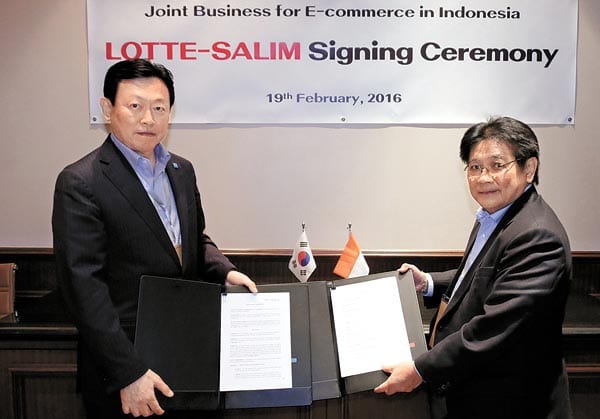
    South Korea’s retail conglomerate Lotte Group said Sunday that it plans to form a joint e-commerce venture with Indonesia’s biggest conglomerate Salim Group to grab a pie of the rapidly growing e-commerce market in Indonesia.

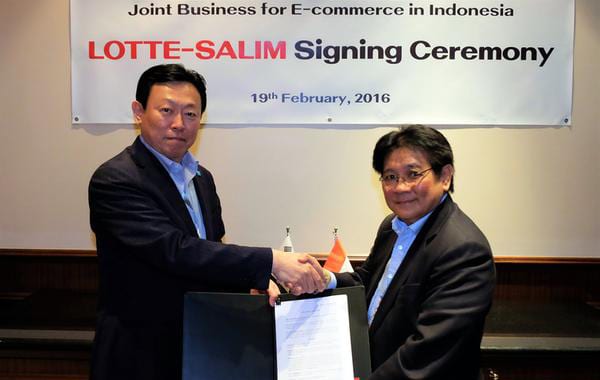
    According to Lotte Group, its Chairman Shin Dong-bin on Friday signed a memorandum of understanding (MOU) agreement with Salim Group Chairman Anthony Salim to establish an e-commerce platform solution joint venture in the first half of this year. They aim to officially launch the company early next year.

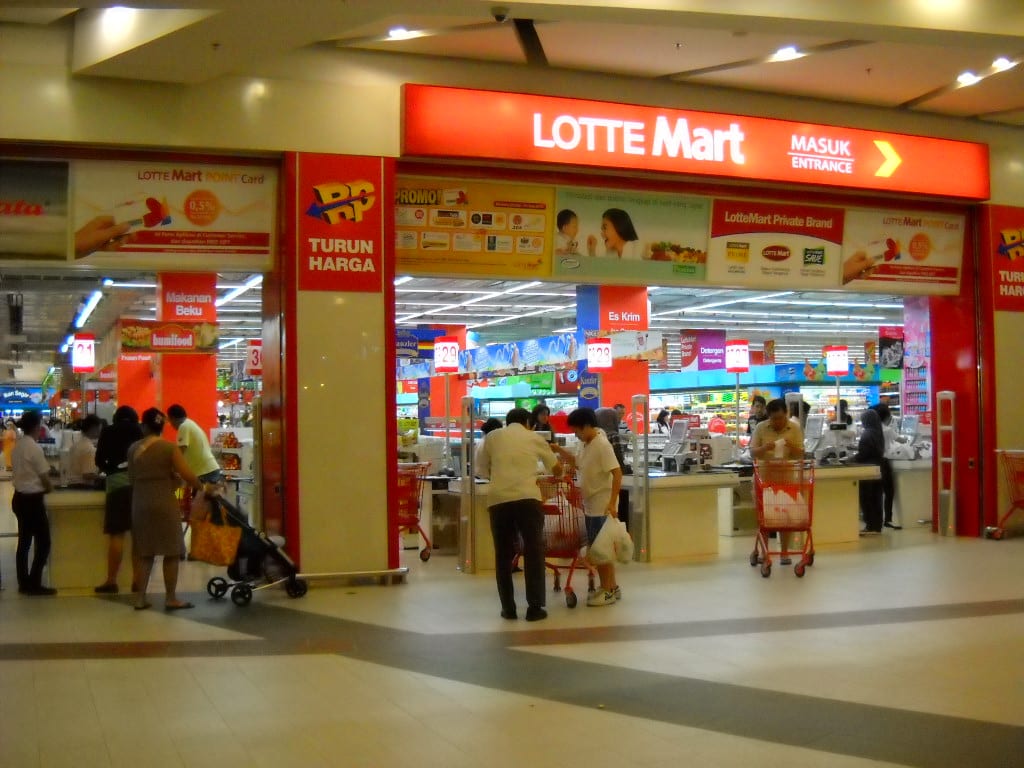
    The South Korean retail mogul expects the Indonesian online retail market to grow to 25 trillion won ($20.27 billion) in value by 2020 after the market grew to 3.2 trillion won in 2014. The two companies plan to set up a comprehensive e-commerce platform solution and logistics service that will allow Lotte’s 41 offline retail stores and one department store operating in the Southeast Asian country as well as Salim’s 11,000 offline convenient stores, Indomaret, to sell and deliver products to Indonesian consumers. They will also introduce some popular products of Lotte Mart and Lotte Department Store in Korea through the new platform.

    In Indonesia, Lotte is operating one department store, 41 retail stores (including two grocery stores), 31 Lotteria fast-food franchises, two Angel-in-us cafés and two Lotte duty-free shops (one in airport and the other in downtown). In 2010, the retail group acquired Titan Chemicals, one of the leading petrochemical company in Southeast Asia, to gain a foothold in the petrochemical industry in the region.

    Salim Group, the biggest Indonesian conglomerate, operates a diverse array of business ranging from food, infrastructure, logistics, telecommunications, media and automobile, to real estate.

  • Hero Supermarket Indonesian retailer unloads convenience stores

    Hero Supermarket Indonesian retailer unloads convenience stores

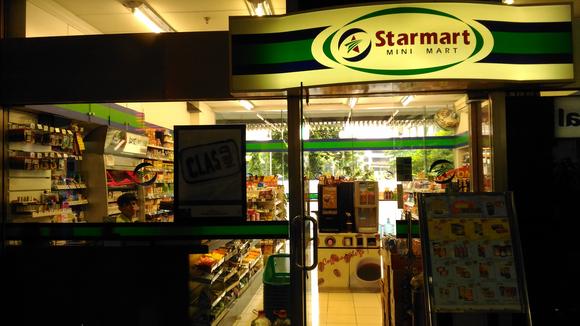
    Indonesian retailer Hero Supermarket on Wednesday said it will sell its poorly performing Starmart convenience store business to local food conglomerate Wings Group.

    Hero is selling about 80 Starmart outlets to Fajar Mitra Indah, a unit of Wings Group and the franchisee of Japan’s FamilyMart convenience stores in the country. The move follows the closure of 50 Starmart stores in 2015. In a press release, Hero said it will pull out entirely from the convenience store business. The sale will have no material impact on the company’s finances, it added. The value of the transaction was not disclosed.

    A Startmart outlet in Jakarta

    Fajar Mitra plans to convert 50 of the Starmart stores to FamilyMarts by the end of the year, which will help raise the number of FamilyMart stores to around 80, according to a person familiar with the matter.

    Starmart has been struggling to compete against the top two local brands, Alfamart and Indomaret, which run about 10,000 outlets each and are expanding aggressively. Hero’s move comes after Supra Boga Lestari, a high-end supermarket operator, recently announced the sale of its Ministop convenience store business.

    Hero’s core supermarket business, which targets middle-class shoppers, has also faced intense competition from hypermarkets, which purchase large amounts of merchandise and sell at low prices. Combined with slowing consumer spending and rising labor costs, the company’s earnings have eroded quickly. Hero’s net profit in 2014 plunged more than 90% from the previous year, and it slipped into a loss for the nine months ended September 2015.

    In addition to Starmart, Hero has also closed some of its Guardian drugstores. Searching for new sources of revenue, the company became the franchisee of Swedish furniture retailer Ikea, opening its first store in Indonesia in 2014. But its prospects have been clouded by a recently published Supreme Court ruling that allowed a local furniture company to use the Ikea trademark.

    Hero is owned by the retail arm of Hong Kong-based conglomerate Jardine Matheson Holdings. Jardine, which also controls Indonesia’s largest automaker, Astra International, has been increasing its investment in other countries in the region, such as Thailand and Vietnam.

  • BrandOutlet pushes Indonesian style

    BrandOutlet pushes Indonesian style

    Local brands are a focus of a new eCommerce fashion venture in Indonesia.

    Part of the PT Media Nusantara Citra Group (MNC), BrandOutlet features fashion and beauty collections for women, men and children, reports the Jakarta Post.

    Not to be confused with the UK’s Brand Outlet, the new site devotes 6 per cent of its offering to quality local brands such as Damn! I Love Indonesia, Ingrid Husodo and Nikicio. Its international labels include Michelle Worth, Oscar de la Renta and Ted Baker.
    “Most of the branded products are available only at offline shops and boutiques, making them inaccessible to people living outside big cities such as Jakarta and Surabaya,” says BrandOutlet COO Andry Huzain. “We aim to provide anyone anywhere with easy access to buy them affordably.”

    Andry says mobile applications for iOS and Android users will be available in April.
    The company also publishes an eMagazine offering features tips, tricks and updates on fashion trends.
    BrandOutlet’s COO, Valencia Tanoesudibjo, is the daughter of MNC Group CEO and founder Hary Tanoesudibjo.

    Meanwhile, a fashion eCommerce app has been launched in Jakarta that enables users to buy products for a range of online shops without having to open each individual site.

    Lyke showcases up to 100,000 products on such platforms as Berrybenka, Bobobobo and Local Brand, as well as smaller businesses that market through blogs or social-media platforms, reportsE27.

    Users can also “follow” their favourite shops and receive recommendations based on their preferences.
    “Lyke is the perfect partner for local fashion brands that want to reach out out their customers via mobile,” says CEO Bastian Purrer, who quit his MBA studies at Harvard Business School to launch the business. Future plans include features that enable social interaction between users, such as sharing the fashion products or celebrity styles they like.
    Online shopping via mobile site or app is starting to gain traction in Indonesia, with companies such as Zalora claiming that most of their sales during the national online shopping day Harbolnashappened on mobile sites and apps.

  • Salim Group backed Indonesian bread maker forays into Philippines

    Salim Group backed Indonesian bread maker forays into Philippines

    Indonesia’s top bread producer Nippon Indosari Corpindo on Monday said it will enter the Philippines bakery market by setting up a joint venture factory with local food company Monde Nissin Corporation.

    A girl looks at breads shaped like roasted pigs, locally known as “Lechon”, sold for $3 at a bakery in Manila December 31, 2012. Lechon is a popular delicacy served during New Year revelries in Philippines. © Reuters

    Nippon Indosari will own 55% of the joint venture, Sarimonde Foods Corporation, which will have a total paid up capital of $12.5 million. It plans to start producing white and sweet bread in 2017.

    The Philippines marks Nippon Indosari’s foray into overseas markets. Established in 1995, the company produces the locally well-known Sari Roti branded sweet bread sold in local retail stores and commands a 20%-plus market share. The company logged 1.56 trillion rupiah ($109 million) in revenue for the nine months ended September, a 15% increase from the previous year, while net profit rose 46% to 192 billion rupiah.

    But competition at home is intensifying. A joint venture between Japan’s Yamazaki Baking and Mitsubishi Corp. began producing bread locally in 2014 under a partnership with Sumber Alfaria Trijaya, which runs a network of 12,000 convenience stores and mini supermarkets. Nippon Indosari wants to establish a new source of revenue in the Philippines, a populous and growing consumer market.

    “The Philippines is a very attractive market to serve as the company’s overseas expansion area because it has a very large population,” Nippon Indosari said in a news release. “The Philippines has a demographic profile that is no different from Indonesia, where 60% of the population is aged under 30 years, has a growing middle economic class, and has the trend for healthy and practical food that fits their busy lifestyle.”

    The Philippines is also a core market for Salim Group, which owns 31.5% of Nippon Indosari’s shares through its Indonesia-listed investment vehicle Indoritel Makmur Internasional. The group, controlled by Chinese-Indonesian billionaire Anthoni Salim, has interests in Philippine Long Distance Telephone, the country’s largest telecommunication company, and infrastructure developer Metro Pacific Investments. But its presence in the food industry was small.

    Japan’s Sojitz Corp. and Pasco Shikishima Corp. also have minority stakes in Nippon Indosari.

    Monde Nissin is a major snack maker in the Philippines. The privately held company produces packed instant noodles, biscuits, cookies and yoghurt drink. In most product segments, the company directly competes with Universal Robina, a leading producer of branded consumer foods.

    The 35-year-old company founded by entrepreneur Betty Ang has been expanding aggressively in the last few years by teaming up with other brands and acquiring companies. With vast distribution network and market presence, cereal maker Kellogs partnered with the company last month as its distributor. In October 2015, Monde Nissin signed a joint venture agreement with Thailand’s Malee Beverage Public Co. Ltd., a leading juice and canned fruit manufacturer. In the same year, it acquired British meat substitute maker Quorn and Australian food producers Menora and Black Swan.

  • Indonesia to expand seafood market to England

    Indonesia to expand seafood market to England

    Indonesian government, through the Coordinating Ministry for Maritime Affairs and Resources, will work to expand the seafood market to England and North Ireland as part of an MoU for maritime cooperation signed by the two countries in July 2015.

    “The UK is the biggest seafood market for Indonesia, and the European Union accounts for 60 percent of our total seafood market,” Deputy Minister for Maritime Sovereignty Arif Havas Oegroseno said on the sidelines of the “Bilateral Maritime Workshop” here on Monday.

    With a large market, Great Britain is considered as setting the standards in the seafood market in the world.
    “Through our collaboration with the British, we could manage our shrimps, fishes, or other seafood species to meet the world standards as well as increase the production,” Havas stated.

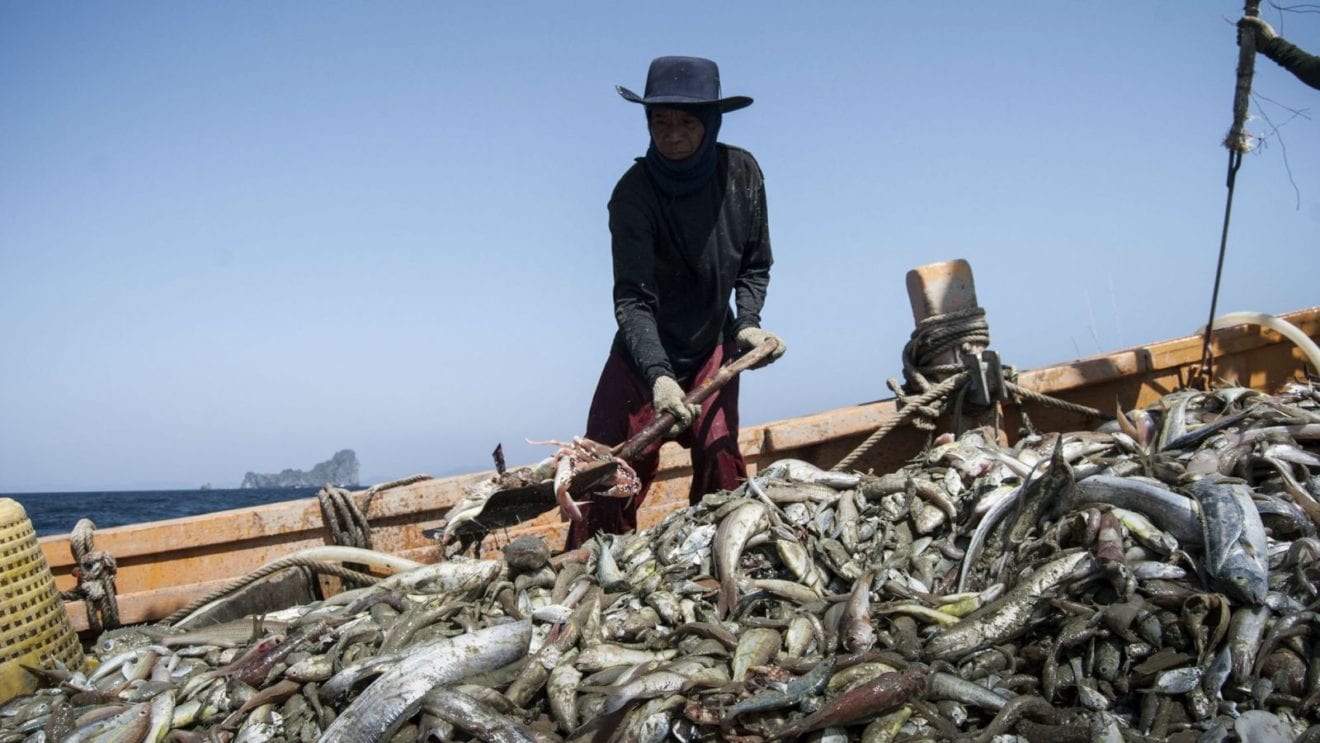
    In addition, he said, cooperation on marine fisheries between the two countries was also considered as an opportunity to introduce Indonesian seafood products which were free of any illegal practices, including slavery.
    Indonesia and the UK have initiated maritime cooperation through the Bilateral Maritime Forum, a meeting of which would be held in London next April.

    The UK was one of the maritime countries, known for its experience and high end technology in the field.
    Therefore, the workshop held in Jakarta was expected to focus on some maritime issues which would be later discussed in the forum in London.

    Besides expanding the seafood market, the Indonesia-UK cooperation would also involve education, maritime investment in the shipbuilding field and exchange of information on international maritime law.

  • BKPM Launches Easy Investing Service

    BKPM Launches Easy Investing Service

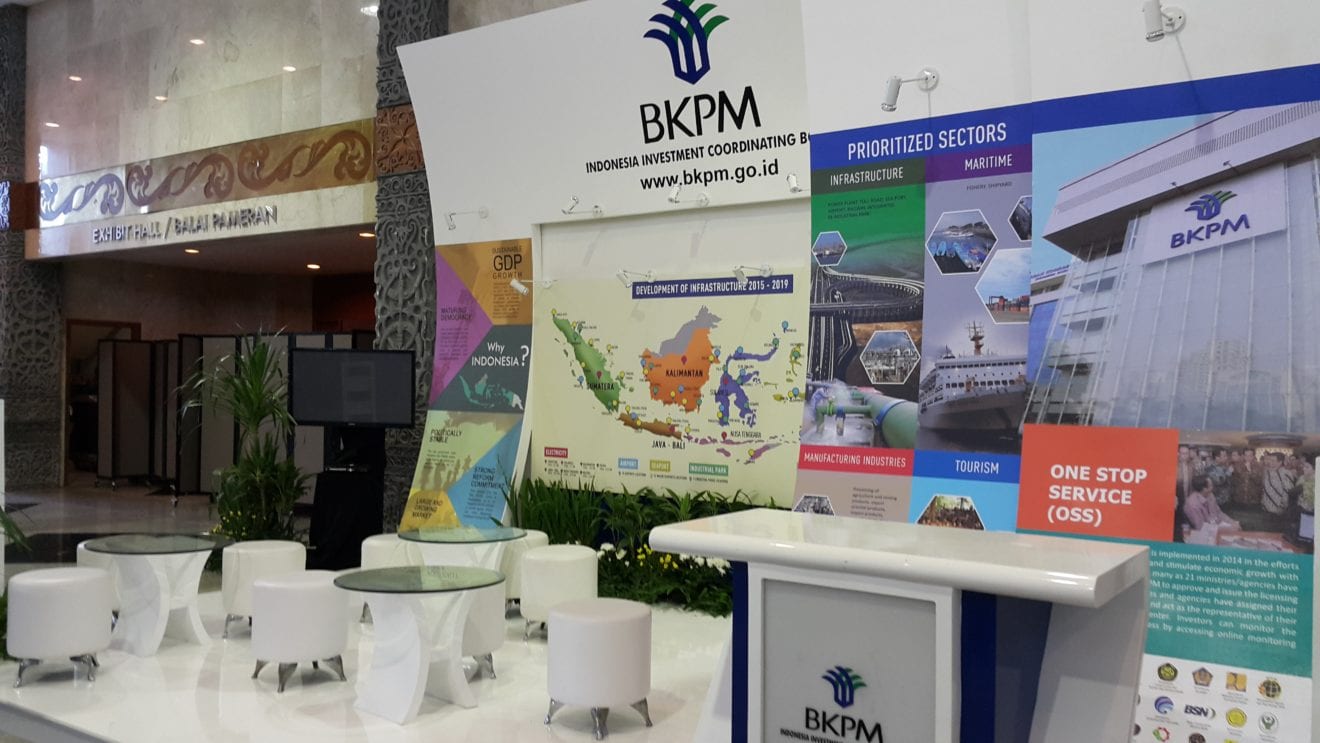
    The Investment Coordinating Board (BKPM) has launched two investment services for the convenience of investors. The first service is called KLIK, which is short for Kemudahan Investasi Langsung Konstruksi, a.k.a. simplicity in direct investment for the construction sector. The second is a three-hour service for permit upgrade in the infrastructure sector.

    In the launching ceremony at the Mercure Hotel in Jakarta, Monday, February 22, BKPM chief Franky Sibarani said the KLIK facility is a convenience provided by the government to companies willing to invest in specific areas. There are 14 industrial areas in six provinces and nine regencies/cities established to implement this service. The areas cover 10,022 hectares of effective land from a total land size of 17,154 hectares.

    With KLIK, Franky said, investors can immediately build their projects after obtaining the principle license.

    The launching ceremony was also attended also by officials from relevant ministries including the Public Works and Public Housing Ministry, the Energy and Mineral Resources Ministry, the Transportation Ministry, and the Ministry of Communication and Information. Also present were officials from the Attorney General, the Indonesian National Police, and representatives from provinces associated with the KLIK program: North Sumatra , Banten, West Java, Central Java, East Java, and South Sulawesi.

    In a press conference held at the same day, Franky said the investment facilities are given as a way to enhance Indonesia’s competitiveness and help meet the government’s investment target of Rp 594.8 trillion in 2016.

  • Garuda Indonesia Attains “5-Star Airline” Award for second year running

    Garuda Indonesia Attains “5-Star Airline” Award for second year running

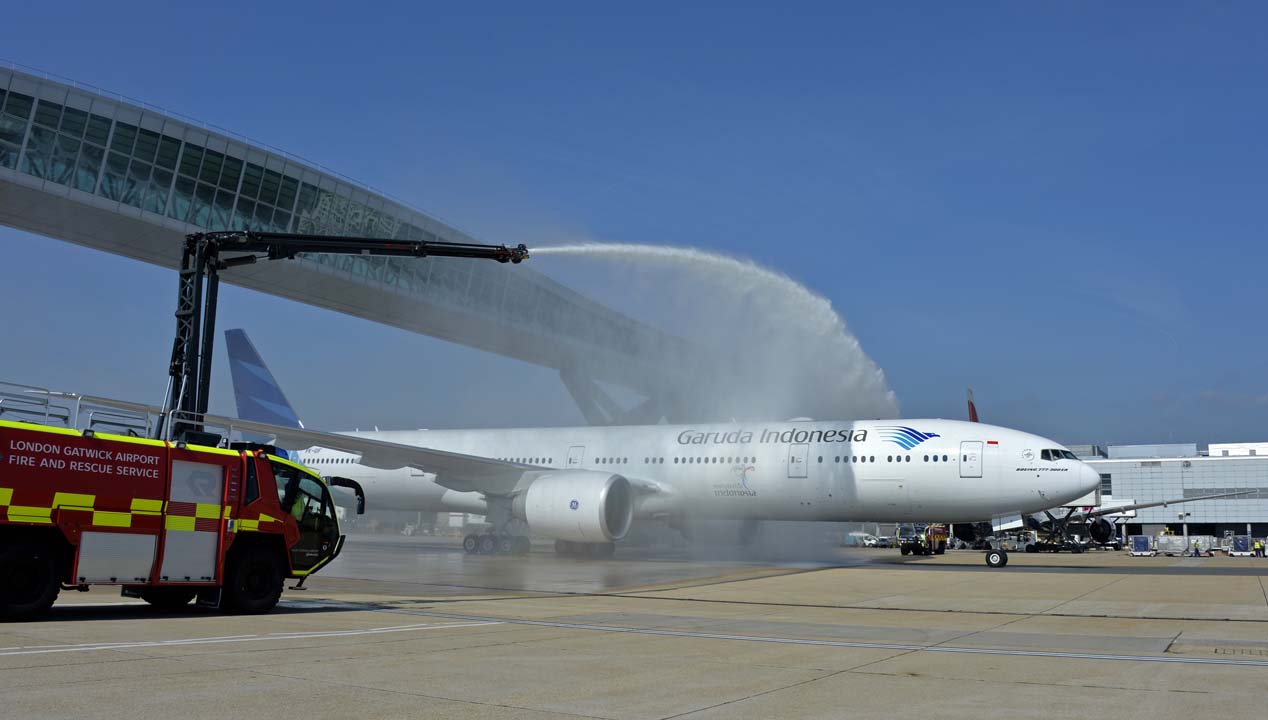
    National flag carrier Garuda Indonesia has been awarded the ultimate “5-Star Airline” rating from Skytrax for a second year running. This year’s award was presented to the President & CEO of Garuda Indonesia, M. Arif Wibowo, by Edward Plaisted, CEO of Skytrax, at the Changi Exhibition Center during Singapore Airshow 2016.

    Indonesian Minister of State-Owned Enterprises Rini Soemarno, Indonesian Ambassador for Singapore I Gusti Ngurah Swajayam, and President Commissioner of Garuda Indonesia Jusman Syafii Djamal were present during the ceremony. Minister Rini Soemarno expressed her highest regards “for all Garuda management and staff, their hard work, and their success in maintaining the quality and standards that exemplify a “5-Star Airline”.”
    “We believe that recognition of Garuda Indonesia as a “5-Star Airline” for consecutive years will not only help to strengthen Garuda Indonesia as a global brand, but also support our efforts at “Nation Branding”, as laid out in the Indonesian government’s strategic program,” Rini added.

    As the national flag carrier, Rini said, Garuda Indonesia was succesfully representing the Republik of Indonesia with this achievement. “But success also brings a larger challenge for Garuda Indonesia, to continuously improve the quality of their service, and deliver this service to all customers on the ground and in the air.”

    The Minister finished by suggesting that the global achievement would be followed by better financial results, and extended her appreciation for Garuda Indonesia’s turnaround financial results which ended in net profit for 2015.
    M. Arif Wibowo, President & CEO, Garuda Indonesia, expressed that “The 5-Star rating reflects the hard work and deep commitment from both management and staff at Garuda who continuously deliver their best efforts to maintain and improve the company’s performance in all business aspects.

    “This achievement will be an important milestone for Garuda Indonesia in 2016, as well as being a challenge for everybody in Garuda Indonesia Group to constantly improve performance and deliver service excellence to all customers,” Arif said.
    The “5-Star Airline” certification was awarded following the ongoing Skytrax Audit, with comprehensive points covering all service aspects; pre-flight, in-flight and post-flight, including ground handling services, lounge, seat and cabin comfort, inflight meals and inflight entertainment.

    Skytrax CEO Edward Plaisted said that the “5-Star Airline” rating awarded to Garuda Indonesia for two years consecutively was a result keeping consistently high service standards.
    “In the globally competitive airline industry, Garuda Indonesia proved that they can survive and even perform to the highest values and service standards. The consistency of product and service quality is the most important part in a 5-Star certification audit, and we proudly announce that Garuda’s aircraft are offering the variety of classes that is a requirement of a 5-Star Airline,” Edward added.

    Spurred on by a strong commitment from the airline’s management and staff to deliver best service, Garuda Indonesia’s performance continues to earn global recognition. In 2013, Skytrax awarded Garuda Indonesia for “The World’s Best Economy Class”. This continued in 2014, with recognition as “The World’s Best Cabin Staff”, a “5-Star Airline”, and 7th rank in “The World’s Top 10 Airlines”.

    At the World Airline Awards, Paris Airshow 2015, Garuda Indonesia was once again named “The World’s Best Cabin Staff”, based on a global customer satisfaction survey conducted by Skytrax of more than 18 million passengers. The survey, which covers 245 international airlines, is held every year and measures standards across 41 key performance indicators of airline products and services.

    As part of a fleet revitalization program throughout 2016, the Garuda Indonesia Group will receive 16 new aircraft in total; 1 Boeing 777-300ER, 4 Airbus A330-300, 4 ATR72-600, and also 8 Airbus A320 to be operated by Citilink. By the end of 2016, Garuda Indonesia Group will operate a total of 188 aircraft; 144 aircraft for Garuda Indonesia and 44 aircraft for Citilink.
    To continue the positive growth achieved during its “Quick Wins” program in 2015, Garuda Indonesia will enter a “Sky Beyond” program for 2016 aiming at rapid company expansion, focusing on three ‘core strategies’ – company group synergy, effectiveness and efficiency, and service enhancement – to accelerate company achievement and performance.

    As part of its company synergy, the Garuda Indonesia Group joined Singapore Airshow, Asia’s largest aerospace and defence event. This was Garuda Indonesia’s first participation as a Group, as only a subsidiary, the Garuda Maintenance Facility AeroAsia, had participated in the past.

    The presence of Garuda Indonesia Group at the Singapore Airshow follows Group strategy to develop brand image, to elaborate potential business, to enhance business relations with stakeholders, and to boost up the awareness to Garuda Indonesia Group’s strategic role as Indonesia’s trade envoy in international level.
    At Singapore Airshow 2016, the Garuda Indonesia Group, through Garuda Maintenance Facility AeroAsia, looks to several short- and long-term business contracts, with a value of nearly USD 100 milion.

    Garuda Indonesia currently has 6 subsidiaries with diverse business sectors; Garuda Maintenance Facility AeroAsia, specialized in integrated aircraft maintenance, including engine and aircraft components repair service; Citilink, a low cost carrier (LCC) airline projected for budget traveller; Aerowisata, specialized in hospitality, transportation, catering and travel agent service; Gapura, specialized in ground handling service, supoorted by cargo and warehousing service; Asyst, specialized in IT and consultation service; and Abacus – which now has transformed to Sabre Travel Network Indonesia – specialized in technology provider service for global travel and tourism.

  • Game changer for Maybank Islamic

    Game changer for Maybank Islamic

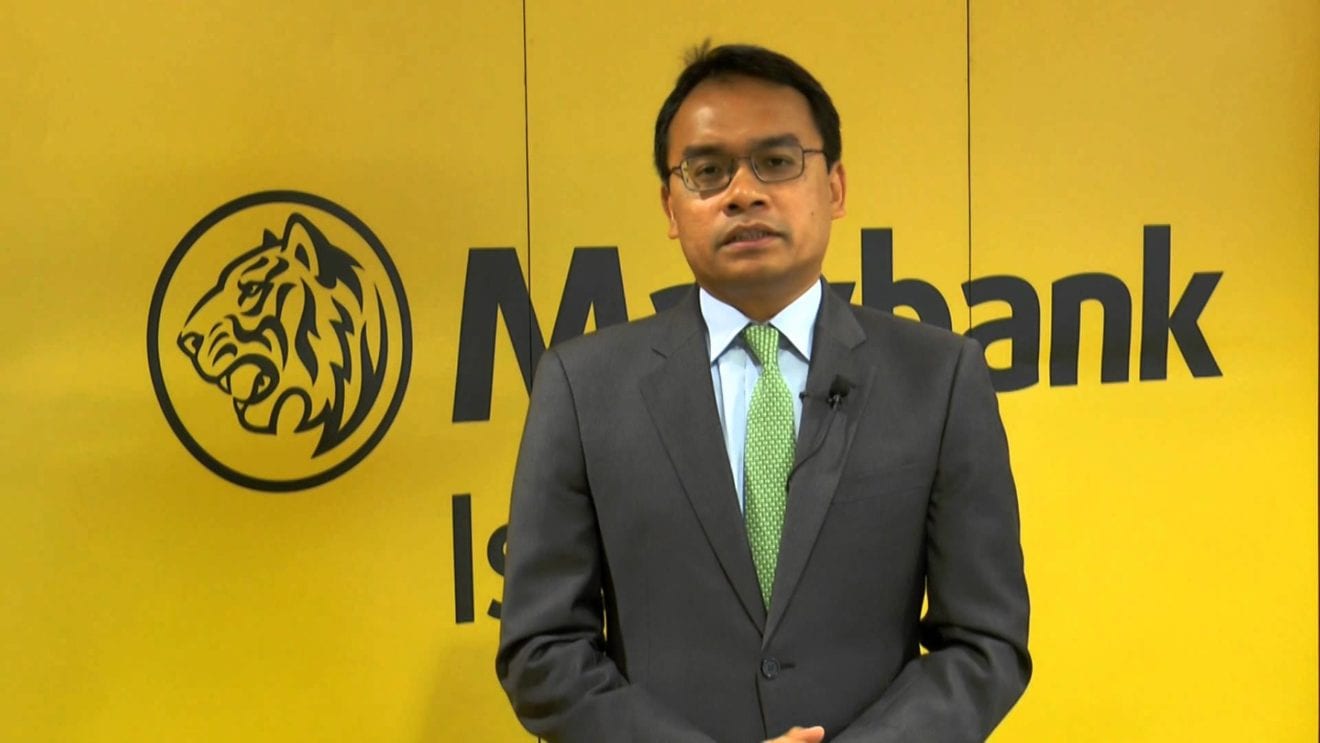
    Malaysia’s biggest Islamic lender, Maybank Islamic Bhd, says the investment account (IA) business is set to be a game changer for the group in its effort to boost earnings growth amid the subdued banking landscape.

    The Islamic lender, which has total assets worth close to RM147bil, will focus on its new mudarabah (profit-sharing) investment fund launched in July last year in view of the Islamic Financial Services Act (IFSA) 2013.

    Describing the IA business as “the evolution of the next phase of growth”, Maybank Islamic chief executive officer Datuk Muzaffar Hisham told StarBiz that demand for the IA business has shot up significantly, as the value of its mudarabah fund rose to RM18bil in the last six months of 2015.

    “Judging from this figure, we are confident that the fund will continue to grow, underpinned by strong demand from the Muslim and non-Muslim population as well as the benefits it offers.

    “We have a customer base of about 4.5 million, of which 50% comprises non-Muslims,” explained Muzaffar.

    The value proposition offered by the mudarabah IA is that MayBank Islamic could provide steady returns of between 4% and 5% per year to its customers.

    “We are confident that this fund will be a growth driver for us, moving forward,” he added.

    He pointed out that “the bank has put in place an effective and robust risk management framework for all of its products, including the new IA, which aims to provide capital preservation, financial security and steady returns through low risk and low to medium-risk investments.”

    Under the IFSA 2013, all banks are required to distinguish IA and Islamic deposit. This means that products with mudarabah (profit sharing) or wakalah (agency) features are considered IAs and are not-principal guaranteed and hence not protected by the Malaysia Deposit Insurance Corp.

    The classification aims to provide greater legal clarity on the types of syariah financial contracts. Customers will have a choice and will be able to differentiate between products that are principal guaranteed and those which are not that provide potentially higher risk returns like mudarabah.

    Besides garnering a pole position in terms of asset size, Maybank Islamic’s market share in the country is also the biggest in terms of financing at 33.6% and deposit at 27.9%.

    At group level, Maybank Islamic’s contribution to the Maybank Group is also significant, accounting for close to 30% in revenue and 48.7% in total loans and financing.

    All these figures were for the third quarter ended Sept 30, 2015 (Q3’15).

    Muzaffar said the bank is also looking to grow its Islamic banking business in the region, adding that the business in Singapore and Indonesia each accounted for about 5% of Maybank Islamic’s revenue.

    Although Indonesia has the highest Muslim population in the world, he noted that syariah banking was relatively still at its infancy stage unlike commercial banking.

    “The Islamic banking business in Indonesia accounts for close to 9% of the total banking business there.

    “In Malaysia, it is 25%. Hence, there is plenty of room for growth and we intend to grow and take advantage of this situation,” he added.

    According to Muzaffar, the challenge for the bank in venturing overseas will be the regulatory framework, in which Maybank Islamic has to operate in, as well as the uncertainties in the Basel III rules pertaining to its implementation in Islamic finance.

    On the corporate investment business, he said it would be dependent on the country’s economic growth, adding that the bank would continue to look at opportunities in the debt and initial public offering markets.

    As for its fourth-quarter results, he said Maybank Islamic hopes to maintain its performance in the preceding quarter, although much will be dictated by the external economic environment and market conditions.

    For Q3’15, the bank recorded a 13.2% year-on-year growth in pre-tax profit to RM1.23bil from RM1.09bil. The growth in earnings was on the back of strong financing growth, which grew by 23% to RM127bil.

    Total income for the period stood at RM2.98bil as opposed to RM2.46bil. Total capital ratio and return on equity for the period stood at 15.18% and 16.14%, respectively.

  • Indonesian Cities Now Charging Shoppers for Plastic Bags

    Indonesian Cities Now Charging Shoppers for Plastic Bags

    The policy is imposed on all retailers, including supermarkets, stores and vendors at traditional markets.

    Bandung is adopting a more conservative approach, charging customers the minimum Rp 200 per bag, mayor Ridwan Kamil said at the initiative’s launching ceremony in Jakarta. The world renowned architect said that by charging customers for plastic bags, the city will not only reduce waste but also generate revenue.

    “Buying plastic bags can generate Rp 1 billion a day for the city government. In a year we should have Rp 360 billion from plastic bag sales. That can be earmarked to buy dump trucks, build incinerators or a recycling plant,” he said.

    Bogor, in the outskirts of Jakarta, also demanded retailers and stores charge Rp 200 per plastic bag.

    “The government [central and local] have agreed that the lowest price for each plastic bag is Rp 200. What matters most is to reduce the use of plastic bags,” Bogor mayor Bima Arya said.

    “If we do not see a significant impact from the policy, then there might be a possibility to raise the price.”

    Roy Madey, chairman of the Indonesia Retailers Association (Aprindo), said that the association would also help the government educate the public about the negative environmental impact of plastic bags through various social media platforms and posters displayed at retail stores.

    During the public awareness campaign, retailers will subsidize each bag in order to maintain a price of Rp 200.

    “If the policy calls for the fee to go above Rp 200 per plastic bag, we are concerned that it will decrease the number of customers shopping at modern retail stores. The government has to protect every industrial sector to allow it to grow, including the retail industry,” Roy said.

    Indonesia is ranked the world’s second largest plastic waste producer, using 187.2 million tons each year according to a study published last year in the journal Science. China stands at number one, producing 262.9 million tons of plastic waste, most of which ends up in the ocean.

  • Indonesia’s MAP Group is the latest to venture into e-commerce

    Indonesia’s MAP Group is the latest to venture into e-commerce

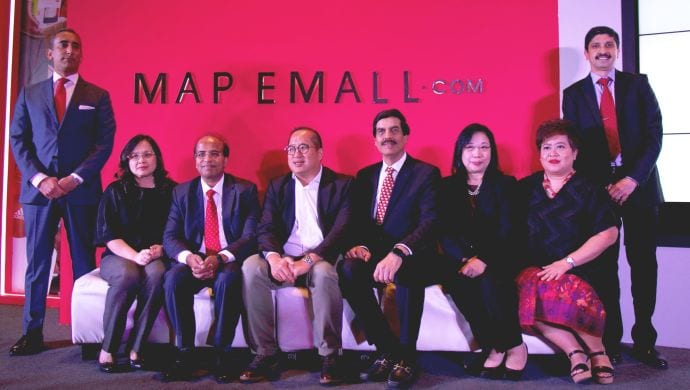
    Indonesian lifestyle retail company PT Mitra Adiperkasa (MAP Group) has launched a fashion products portal MAP EMALL, with an aim to capture the country’s robust e-commerce sector.

    Targeting the middle and upper class segment, the online store will sell fashion products from leading brands such as Marks & Spencer, Lacoste, Mango, Swatch, Birkenstock, Nike, Adidas, Reebok, and Converse.

    MAP EMALL plans to develop an O2O feature that will enable customers to pick up their products purchased online at MAP Group’s offline retail stores. This is in addition to the traditional home delivery services.

    MAP will also launch a mobile app in April this year.

    “MAP has a clear and strong roadmap to unite all of its assets to offer a reliable and wholesome omni-channel shopping experience for all our loyal customers,” said CEO VP Sharma during the launch event.

    The company also announced a partnership with Standard Chartered, which will be giving exclusive offers to credit card holders to shop on the new platform.

    The MAP Group has partnered with more than 150 global lifestyle brands, and has at least 2,000 offline retail stores in 60 cities across Indonesia.

    MAP Group is the latest major Indonesian business mogul to venture into e-commerce. In early February, MNC Group marked their entry into e-commerce by launching a fashion e-commerce portal BrandOutlet.

    Earlier, Lippo Group had forayed into e-commerce with MatahariMall.

    MAP EMALL is also one of the very few e-commerce platforms that target the middle- and upper-class segment, apart from Bobobobo.

  • Toyota ready to invest Rp5.4 trillion in Indonesia

    Toyota ready to invest Rp5.4 trillion in Indonesia

    The Toyota Motor Corporation (TMC) group is ready to invest Rp5.4 trillion in Indonesia this year, according to Industry Minister Saleh Husin.

    Husin received the pledge during a meeting with TMC Executive Vice President Seiichi Sudo in Nagoya, Japan, on Thursday.

    “Toyota is serious about doing business in Indonesia. This year, it will invest Rp5.4 trillion, following the Rp5 trillion worth of investment that the company made in 2015,” he noted in a press statement received here, Friday.

    This reflects that global investors still trust Indonesias investment climate and see prospects in the nations automotive industry, he noted.

    The minister has lauded Toyota for its trust and continued investment in Indonesia, after selecting the nation as one of its investment destinations and a Toyota car production base so far.

    He called on Toyota and its partners in Japan to increase investment in the automotive sector, particularly for the manufacturing of materials and spare parts.

    The minister also invited the company to conduct research and development activities in Indonesia to strengthen the structure of Japans existing automotive industry in Indonesia.

    Husin also urged Toyota to increase the production of cars in Indonesia, which has a population of over 250 million, including 74 million belonging to the middle class.

    The Toyota brand dominates around 31-32 percent of Indonesias domestic market.

    Within five years, from 2015 to 2019, Toyota has planned to invest a total of Rp20 trillion.

    Until 2014, Toyota had invested Rp40 trillion in Indonesia.

    Currently, the Japanese company is constructing an engine plant in Karawang, West Java.

  • Lotte in joint e-commerce venture in Indonesia

    Lotte in joint e-commerce venture in Indonesia

    Lotte Group is planning a joint effort to enter the e-commerce market in Indonesia, which has a population of almost 250 million people.

    The company plans to start building up the e-commerce venture with Indonesia’s biggest conglomerate, the Salim Group, during the first half of this year and expects to be in full operation by early next year.

    According to the Korean retail giant on Sunday, the deal was agreed when Lotte Group Chairman Shin Dong-bin met with Anthony Salim, the chairman of Salim Group in Singapore on Friday, during the Asia Business Council meeting.

    Lotte hopes to secure a strong foothold in the e-commerce market in one of Southeast Asia’s biggest markets by employing an omnichannel retailing strategy and establishing a stable delivery service by utilizing the existing networks Lotte’s and Salim’s offline stores. Lotte has one department store in Indonesia but has 41 retail stores. Salim Group has 11,000 Indomaret convenience stores.

    The Korean retailer said it also plans to introduce selected products that are popular in Korea to the Indonesian market.

    Under Chairman Shin, Lotte Group has been aggressively expanding its overseas businesses and Indonesia has been considered one of its key strategic markets.

    The Korean retail giant first got involved in the Indonesian market in 2008 when it acquired 10 chain stores of the Dutch discount store Makro.

    The advance into e-commerce comes as Indonesia’s online market has been growing rapidly. The country’s online market, which is estimated to have been about 3.2 trillion won ($2.5 billion) in 2014 is expected to expand to about 25 trillion won by 2020. This is largely due to the growing internet distribution, which already has exceeded 30 percent of its population.

    Smartphone distribution, which speeds up the growth of e-commerce, was 21.3 percent in Indonesia as of 2014.

    This figure is expected to reach 40 percent by the end of this year as faster LTE service was adopted last year.

    The Salim Group is Indonesia’s biggest conglomerate that is involved in wide range of businesses from food, distribution, telecommunication, media, automobile manufacturing and property development. It is most famous for its instant noodles Indomie. Additionally Salim Group’s logistic company Indomarco ranks No.1 in Indonesia.

  • Furla Asia-Pacific plans more flagships

    Furla Asia-Pacific plans more flagships

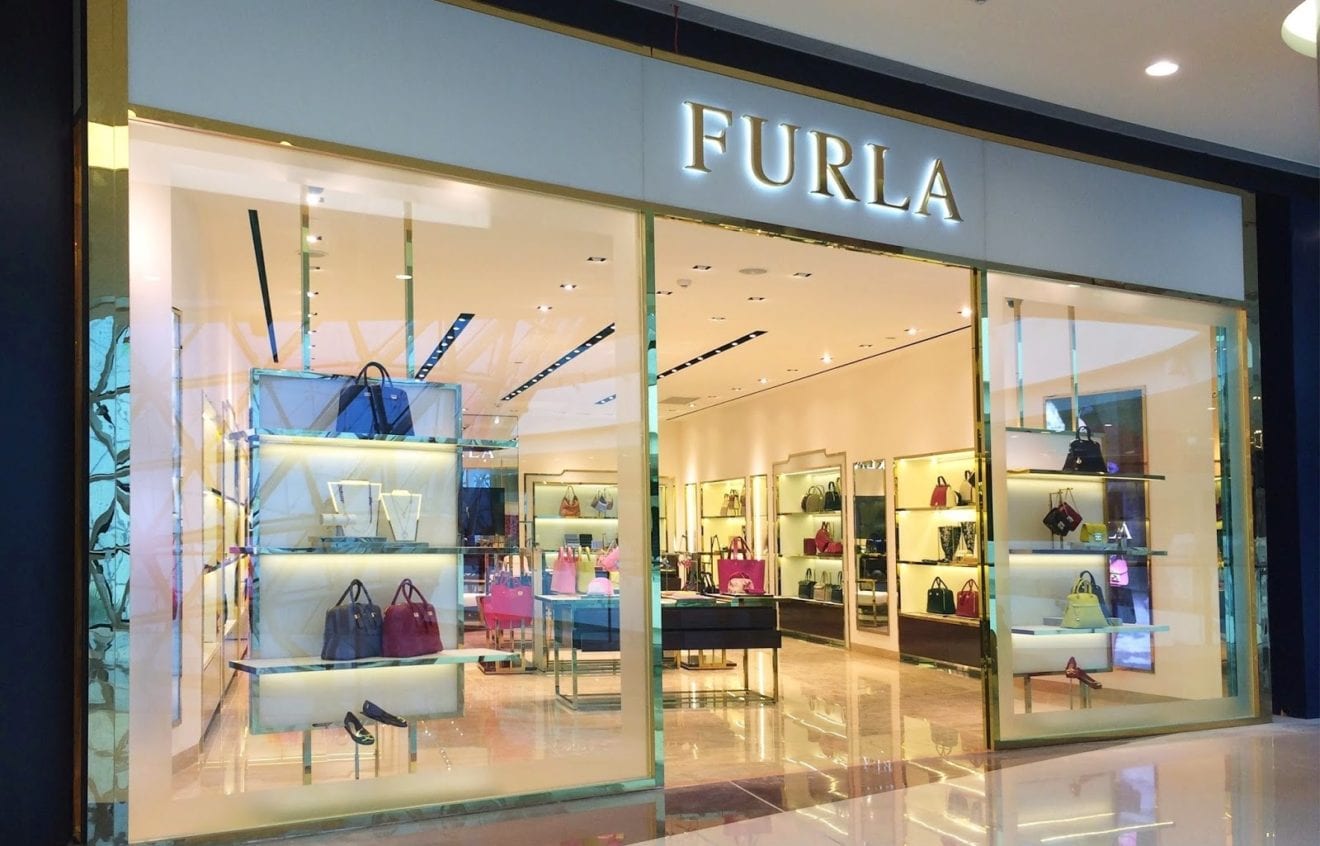
    Luxury Italian brand Furla is planning more flagship stores in Asia as the region delivers strong growth for the 89-year-old family-owned company.

    FURLA CEO_Eraldo PolettoIn an exclusive interview with Inside Retail Asia, Furla CEO Eraldo Poletto explains how the company has bucked the decline in luxury spending in core markets like Hong Kong and Singapore during the past year. Furla achieved 53 per cent growth in total sales (in euro at the current exchange rate) in Asia-Pacific, where it counts 14 markets – Australia, Cambodia, China, Hong Kong, India, Indonesia, Korea, Macau, Malaysia, Singapore, Taiwan, Thailand, The Philippines and Vietnam. Japan, a stand-alone territory in Furla’s accounts, saw sales grow 24 per cent.

    Even discounting sales from new stores, like-for-like growth for Furla Asia-Pacific reached 15.5 per cent last year, yet the region accounts for just 19 per cent of the company’s sales – about €64.4 million ($72.1 million) – suggesting strong growth potential ahead.

    “The consistent strategy we have implemented over the past four years – positioning ourselves as the only Italian and ‘Made-in-Italy’ brand in the premium segment, without accepting compromises in terms of quality – is paying off,” says Poletto.

    “We are expanding our footprint with important flagships: Singapore Marina Bay Sands opened in September; Hong Kong Miramall and Shanghai Citic, each with a 300 sqm street facade, opened in December with a luxury retail concept showcasing our full ladies’ and men’s collections.”

    Furla China Flagship Store @ Shanghai Citic Square 4

    He says more flagships will open this year in Australia and Bangkok.

    “Flagships are meant to represent every aspect of the brand in terms of image and product range; however, we are not expecting to open more than five or six flagships in the region, as we are focusing on the profitability of our retail network, and prefer to penetrate the market extensively.”

    In what he terms a “capillary” approach, more standard-sized stores and points of sale will also open across the region.

    Furla China Flagship Store @ Shanghai Citic Square 7

    For the past two years the company has opened or renovated one store a week. It now has 172 points of sale in Asia-Pacific, along with 72 monobrand stores in Japan.

    “In terms of our retail format, our average store size is increasing together with Furla’s total-look collections. Malls and high-street locations complement each other, and in this period of time, rent levels in some markets have decreased substantially because of a drop in demand from luxury, watch and jewellery brands. We are always on the lookout for new opportunities to invest in,” says Poletto.

    “Our retail store concept is also quite special, as it wants to deliver a 360-degree luxury shopping experience while maintaining our the value-for-money approach.”

    Furla China Flagship Store @ Shanghai Citic Square 2

    Asians appear to be embracing Furla’s distinctive quality brand feel and shopping experience. Perhaps surprisingly, the brand has no strategy of differentiating its Asia-Pacific product range from those of other markets.

    “We believe that if a product captures customers’ hearts in one market, its appeal is universal. Our price and product range have always been appealing to a large spectrum of clientele; it is not by chance that our two best-seller styles – Metropolis and Artesia – represent the most affordable and the highest offer of our collection respectively.

    Furla China Flagship Store @ Shanghai Citic Square 6

    “In terms of branding, strong marketing investments – like our collaboration with Mario Testino and a more aggressive digital and outdoor media planning strategy – are making Furla far more visible.”

    Department stores are still an integral part of the Furla sales strategy, especially in China, where that sector is still in its infancy by western standards.

    “The department store culture in Greater China isn’t very strong yet, and there are very few players compared to the shopping mall retail model in western markets. There is most surely room for improvement in this region.

    Furla China Flagship Store @ Shanghai Citic Square

    “The situation is much more developed in Singapore and Australia, and obviously a priority in Korea with Shinsegae, Hyundai and Lotte, where we are present with 10 domestic stores and an aggressive development plan.”

    Furla is also experiencing strong growth in the travel retail sector, which is helping both top-line sales and brand awareness.

    “Travel retail will continue to fuel the growth in APAC,” says Poletto. “Total sales generated by the travel retail channel were up 27 per cent for 2015, and we opened five new locations. We see blooming opportunities in this channel as Asian customers shop worldwide while they travel: it is a great showcase for the brand.”

    In June, Furla will open a directly managed boutique in Hong Kong International Airport.

    Furla China Flagship Store @ Shanghai Citic Square 8

    Southeast Asian focus

    Furla’s strong growth in the region is coming not just from the established markets of Hong Kong, Singapore and Greater China.

    “We have witnessed a significant double-digit growth in Southeast Asia markets including Cambodia, Malaysia, Singapore, Thailand, The Philippines and Vietnam,” says Poletto.

    “In Indonesia, a fast-growing country with a population of 250 million, we have a capillary quality presence with 10 boutiques in five cities. As of today, Furla has 46 stores in Southeast Asia, and we will focus on strengthening our foothold in these markets this year.”

    Furla China Flagship Store @ Shanghai Citic Square 5

    In India, which Furla has entered in a joint venture with Genesis Luxury, the label has three boutiques – one each in Mumbai, Delhi and Calcutta.

    “They are all performing very well with a 50 per cent sales growth increase in 2015,” says Poletto. But the market has considerable challenges.

    “India is a market with very high potential, but also with a huge limits when it comes to infrastructures. There are not enough qualitative shopping malls to cover Indian clients’ high demand for fashion and luxury: this is why Indian consumers represent a key nationality in markets like Dubai, London or Singapore.

    “In terms of expansion, we will tap into all the new relevant real-estate projects.”

    Globally, Furla has 415 monobrand stores, of which 190 are directly owned and 198 franchised. It has 27 travel retail stores and more than 1200 outlets in department stores and multibrand outlets.

    Furla China Flagship Store @ Shanghai Citic Square 10

    Results released today show that Furla’s global turnover reached €339 million last year, up 30 per cent on 2014. The growth was driven across all Furla product categories, including the new men’s collection, women’s footwear collection and eyewear.

    Poletto says that being a family-owned business – an increasingly rare phenomenon in the model luxury retail business – has its advantages.

    “Being 89 years old gives us a great DNA to be around into the future: the real assets are the brand and its heritage, which are translated into equity. The Furlanetto family has very strong values – they have a long-term vision, instead of making opportunistic choices.”
  • Pernod Ricard Asia troubles parent

    Pernod Ricard Asia troubles parent

    Despite difficulties in Asian travel retail, particularly in Korea, liquor supplier Pernod Ricard reports solid first-half 2015/2016 results totalling €5b ($5.7b) and organic growth of 3 per cent.

    It says the results represent a continued gradual improvement apart from difficulties for the Chivasbrand in the pernod Ricard Asia portfolio.

    There was a negative mix driven by geography – growth in India vs. a decline in China. Overall in Asia, the company had 5 per cent growth (or 4 per cent, taking into account the changing dates of the Chinese New Year) with double-digit growth in India. However, China declined by 2 per cent (down 8 per cent adjusting for Chinese New Year).

    “Our half-year results are solid, delivering a continued improvement in sales,” says chairman and CEO Alexandre Ricard. “Our strategy has remained consistent and is driving results, in particular in terms of innovation.”

    He says the company plans to continue improving its performance and will continue to support priority markets, brands and innovations.

    Pernod Ricard includes Cambodia, China, India, Indonesia, Malaysia, Sri Lanka, Thailand, The Philippines and Vietnam in its emerging markets, and lists its top 14 brands for organic growth as Absolut, Ballantine’s, Beefeater, Chivas Regal, Havana Club, Jameson, Kahlua, Malibu, Martell, Mumm, Perrier-Jouët, Ricard, Royal Salute and The Glenlivet.

    Formed in 1975 by the merger of Ricard and Pernod, the company has a workforce of about 18,000 people. Its decentralised organisation has six brand companies and 80 market companies in each key market.

  • Rakuten Singapore axes eCommerce site

    Rakuten Singapore axes eCommerce site

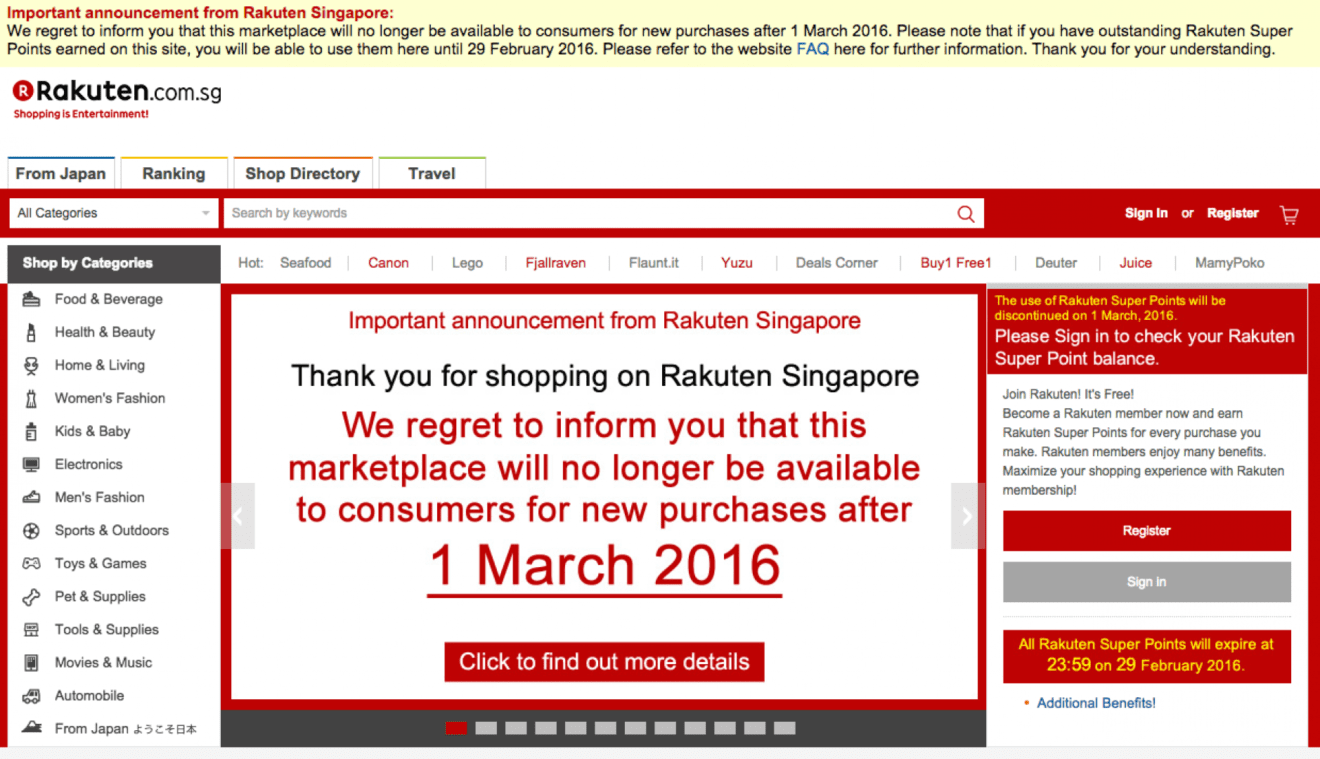
    Japan’s online retailing giant Rakuten is to close its eCommerce websites in Singapore, Indonesia andMalaysia on March 1.

    And it is reportedly seeking a buyer for its Thailand business Tarad.com which it bought in 2010.

    The decisions follow a disappointing trading result which has prompted the business to refocus on its domestic operations and scale back unprofitable overseas activities. The company reported net profit for the year fell 38 per cent year-on-year to 44.3 billion JPY (US$393 million) on revenue of 714 billion JPY ($6.3 billion) – up 19 per cent, largely due to writedowns of its Kobo, Southeast Asian and other struggling divisions.

    Some 30 staff in Singapore had their employment terminated on Friday, just five days into the Lunar New Year. By the time the sites are wound down, about 150 staff will have been axed in the three markets, but the company will retain a regional headquarters in the city state.

    Rakuten’s apparently profitable Taiwan business will continue to operate.

    Tech website Techcrunch reported the three eCommerce sites to be shuttered will be replaced by a new product in Southeast Asia, “a consumer-to-consumer app called Rakuma” which, Rakuten said, has grown 20 per cent month-on-month in Japan.

    “That concept sounds a lot like (indeed, the same as) Carousell, the app that Rakuten Ventures is an investor in. Singapore-based Carousell is currently in three countries in Southeast Asia but, as we reported late last year, it is trying to raise a $50 million round to expand its service significantly across Asia.”

    No further details of the Rakuma concept, which is mobile-based, have been released, with the project still under development.

    In a statement to Reuters, Rakuten said the new concept was a consumer-to-consumer business model, rather than the aggregation-based business-to-business-to-consumer format of the closing Rakuten sites.

    “In Southeast Asia, as the market itself changes and adapts, we are looking toward C2C (customer to customer) and mobile business models for eCommerce and other businesses,” Rakuten said.