Tag: Indonesia

  • E-commerce expansion primed for Indonesian market

    E-commerce expansion primed for Indonesian market

    As smartphones become more commonplace in Indonesia, apps are enjoying a surge in popularity, suggesting that e-commerce – for both goods and services – is filling market voids and strengthening its economic foothold.

    Online trading and transport apps in particular are generating interest, offering a solid foundation for other start-ups, and attracting international players and financiers to the country.

    However, technology companies will be looking to further improvements in related services, such as logistics, and changes to foreign investment regulations to support continued expansion.

    The era of the app

    Since launching its mobile app in early 2015, Go-Jek, the Indonesian two-wheeled motorbike taxi service, has seen its market value rise as high as $400m and the number of registered drivers jump from 500 to 200,000.

    Also seeing the opportunity in the market, in May Malaysia’s Grab expanded into Jakarta, launching its GrabBike service, before introducing a car-based service several months later. The company is now active in at least five cities around the country, with plans to expand further in the coming year.

    The scale of the popularity of e-services was evidenced by the major backlash that Ignasius Jonan, minister of transport, faced last December when he attempted to ban transport apps like Go-Jek. Amid a public outcry and #SaveGojek trending on Twitter, the government quickly reversed its decision.

    Voicing his support for ride-hailing apps, President Joko Widodo told local media, “Innovation among the younger generation should not be stifled. Applications such as Go-Jek exist because they are in demand.”

    The growing use of ride-hailing apps signals a wider expansion under way across the country in e-commerce and mobile transactions.

    According to the Indonesian eCommerce Association, the country’s online market is projected to triple between 2014 and 2016 to reach Rp283trn ($20.8bn).

    While online sales represented around 1% of all retail sales in Indonesia in 2015, research firm eMarketer expects this share to grow to 4.4% by 2019, with e-commerce spending forecast to rise from $3.2bn to $10.9bn over the period.

    Major players moving in

    With a population of around 250m, Indonesia’s e-commerce potential has captured the attention of global technology and investment giants.

    In late January US-based e-commerce platform eBay confirmed plans to open an office in Indonesia, following in the footsteps of Twitter, which has had a base in the country since March. The move will see eBay build on its local partnership with state-owned telco Telkom, through which it operates the online shopping portal Blanja.

    For its part, the Chinese internet search company Baidu announced plans to boost investment in Indonesia, where it operates the MoboMarket app store with more than 500,000 products available for download.

    Major new domestic players are also entering the e-commerce scene. MatahariMall.com launched its operations in early September with $500m in backing from Indonesian real estate developer Lippo Group. Describing itself as the Alibaba of Indonesia, the firm said it hopes to become a driving force for e-commerce in the country.

    Hadi Wenas, the company’s CEO, suggested the site was created to mimic a brick-and-mortar shopping experience.

    “Just like an offline supermall, you enter, walk around and shop by floor. Each floor focuses on different categories,” he told media at the launch.

    Leading start-ups in Indonesia are also benefitting from international venture capital interest. Go-Jek, for example, attracted $6m in seed funding in mid-2014, with another $15m raised from US-based Sequoia Capital in April of last year.

    Further investment in the industry is likely to be spurred by the easing of foreign ownership limits in the e-commerce segment. Previously included on the country’s negative investment list, the government recently ruled to allow up to 33% foreign ownership of e-commerce ventures.

    More to be done

    However, some obstacles to sector growth remain. While internet connectivity is rapidly growing, it is coming from a smaller base than other countries in the region.

    The number of internet users in Indonesia reached 73m in 2015, or approximately 29% of the population, according to the Ministry of Communications and IT, significantly less than Malaysia (67.5%), Thailand (55.9%) or the Philippines (43%).

    A fragmented logistics landscape and underdeveloped payment infrastructure also present hurdles to expansion, with just 6% of Indonesians holding credit cards, according to a 2014 report by UBS.

    App developers will need to keep the characteristics of the market in mind when planning expansion. For example, a targeted approach is likely needed to attract Indonesia’s traditionally risk-averse and brand-loyal shoppers. A survey by McKinsey last year found that 63% of Indonesian consumers only buy products from brands they already know, suggesting word of mouth may be an important tool for growing local market share.

    E-commerce solutions are increasingly being used to bridge gaps in Indonesia’s infrastructure, with some start-ups helping firms extend their reach to rural areas.

    Start-ups looking for innovative ways of reaching rural customers are also employing a tactic known as assisted e-commerce, which uses technology to connect local stores with product distributors, helping to minimise geographic challenges and overcome low penetration of credit cards.

    Kudo, for example, which was founded in early 2014, offers online shopping through physical point-of-sale kiosks in public places.


  • Wing Tai’s Q2 net profit falls 85% to $1.08m

    Wing Tai’s Q2 net profit falls 85% to $1.08m

    Earnings plunged 85 per cent at developer Wing Tai Holdings in the second quarter due to the absence of a one-off gain in the corresponding quarter last year.

    The group had recorded a gain of $21.1 million on the disposal of a property subsidiary in Indonesia in the same period a year ago.

    Net profit this time came in at $1.08 million for the three months to Dec 31 while revenue fell 5 per cent to $120.6 million.

    The decline in turnover was due mainly to progressive sales of units recognised from The Tembusu, additional units sold at Le Nouvel Ardmore in Singapore, The Lakeview in China as well as contribution from Phase 2 of Jesselton Hills in Penang.

    The group’s share of profits from associated and joint venture companies fell by 25 per cent to $15.8 million, largely due to the lower contributions from Wing Tai Properties in Hong Kong.

    Distribution expenses fell 20 per cent to $22.2 million from $27.7 million due to lower rental and depreciation from its Singapore retail outlets. Administrative and other expenses rose 12 per cent to $23.8 million from $21.3 million a year ago due to the closure of Singapore retail outlets.

    Earnings per share tumbled to 0.40 cent from four cents, while net asset value per share rose to $4.09 as of Dec 31 from $4.07 as at June 30.

    No dividend was declared.

    The firm said the effect of the cooling measures will continue to weigh on market sentiment here this year while economic conditions in Malaysia will likely keep sales soft.

    In China, residential sales are expected to improve with the relaxation of home purchase restrictions in certain cities.

    Wing Tai shares closed 0.3 per cent or 0.5 cent up to $1.525 yesterday.

  • $100m deal for RedMart?

    $100m deal for RedMart?

    A $100 million investment aimed at funding pan-Asian expansion is on the cards for Singapore’s online grocer RedMart.

    Discussions involving the Series C investment are said to be at an advanced stage, reportsTechCrunch, citing two sources. While closure is expected in this first quarter, the grocery company has not issued any public comment on the development.

    Launched in late 2011 by Vikram Lupani, Rajesh Lingappa and Roger Egan, the venture introduced online and on-demand shopping in Singapore. So far, the company has raised $55.1 million from 19 investors. These include, according to Crunchbase, gaming company Garena, SoftBank Ventures Korea, Visionnaire Ventures and Facebook co-founder Eduardo Saverin.

    In August, RedMart raised a $26.7 million bridging round from its investors.

    Potential targets for RedMart’s expansion include Hong Kong and Jakarta, reports DealStreetAsia. However, the firm wants to establish its market leadership in Singapore, where Egan estimates the grocery market to be worth $16 billion a year. The company’s strategy is to maintain its own logistics system and warehouses so as to have greater control of the customer service cycle and enable rapid expansion later into other verticals.

    RedMart’s Asian competitors, HonestBee and HappyFresh, have raised significant equity financing and have adopted a model relying on third-party logistics and delivery services while expanding across South-east Asia and establishing a presence in Hong Kong and Taiwan, says DealStreetAsia.

  • Uber strategy that will change retail face

    Uber strategy that will change retail face

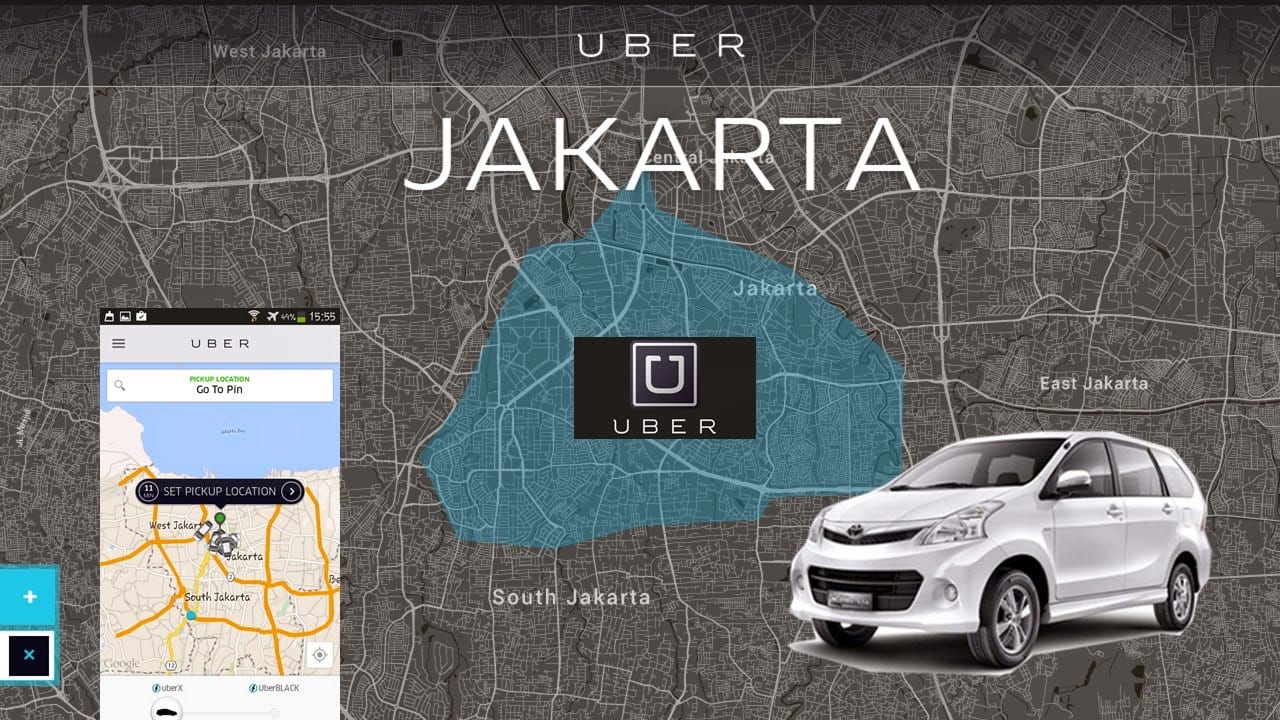
    Isn’t it fascinating that the world’s largest accommodation provider doesn’t own a room, or that the world’s largest retailer doesn’t own a shop (for the time being) and here we have the world largest taxi company that doesn’t own a taxi.

    So what might some of the lessons of Uber show us as retailers? The past five years have seen the logistics and transport app, Uber, grow from a start up with big ambitions based out of San Francisco into a global disruptive business operating in more than 350 cities, 64 countries and over six continents. Such rapid unheralded growth, underpinned by technology disruption and adaptation and above all challenging the normal or established models and just being disruptive, yet focussed on one central competency.

    As a natural-born disruptor of the transport sector, of course Uber has naturally asked how do we build at transporting people? After all, Uber is not narrowly interested in transportation; instead, the company is building a logistics platform that captures and predicts supply & demand so well that it can be applied to many other commercial domains. However at the heart of the Uber offer is one common foundation offer – one great “glue” that transcends and links all their offers globally.

    We live in an on-demand economy, where consumer’s ‘need it now’ tendencies dictate the retail strategies of retailers around the world. Smart or “fit” businesses are partnering their offers in collaborative models as distinct from attempting to “be all things and to simply attempt to acquire”

    The horizontal integration model, in a world increasing without boundaries is becoming yesterday’s approach. Today’s Uber-like approach is to disrupt and collaborate with other specialists enabling global growth and far greater efficiencies in all forms of the business operations.

    So where does Uber sit in the future of the retail sector in Australia and how is partner collaboration showing the way forward?

    Last October Uber launched Uber Rush in Chicago, New York and San Francisco. An on-demand delivery service for retailers, and while it’s launch coincided with partnerships with some big name retailers such as Rent The Runway and Nordstrom, the potential this service offers to small retail businesses is huge.

    Entering this on-demand delivery market aligns Uber alongside logistics giant Amazon.com and in particular Amazon’s program Flex, which pays independent drivers to deliver orders locally.

    However it also aligns independent brick and mortar retailers alongside the big e-commerce giants. While in the past it may have seen like a long lost dream to small independent retailers to be able to compete on the same level as the e-commerce giants who own their own complex logistics models allowing for same day and next day delivery, Uber Rush makes this dream a reality at very little cost. Retailers signed up to Uber Rush are given their own merchant platform to book the cars or bike couriers live as the orders come in, and all they pay for is the trips they use.

    According to Jo Bertram, regional general manager for the UK, Ireland and Nordics at Uber at a WIRED retail conference in London last year, the goal of Uber Rush is to make getting anything in your city more convenient, affordable and reliable than picking it up yourself.

    UberRush is particularly exciting for small independent retailers, allowing them to cater to today’s consumer’s ‘need it now’ tendencies’, boost customer loyalty and satisfaction, and ultimately provide customers with the same cost effective and efficient shopping experience when shopping local that they would get online. This platform also provides the small retailers the opportunity to grow and scale by reaching customers further away than they may have been able to before.

    Research by Uber suggests 60 per cent of customers would pay more to get same day delivery. Add this to today’s consumer journey to a brand or retailer often beginning and ending on mobile, the potential growth and adoption of this service all around the world is huge.

    Retailers who understand this disruptive positioning coupled with smart partnering and who don’t define the market by geography, rather by customer catchments are trailblazing the new frontier of retail.

  • MatahariMall.com Embraces Foreign E-Commerce Investment in Indonesia

    MatahariMall.com Embraces Foreign E-Commerce Investment in Indonesia

    When asked for his views on the issue, Hadi Wenas, the chief executive officer of MatahariMall.com, told reporters on Wednesday (10/02): “We are very optimistic. It will be business as usual for us, we are not afraid, not shocked or confused.”

    For foreigners, Indonesia is an attractive market for investment, particularly in the e-commerce sector, according to Indonesian E-commerce Association (idEA).

    The association estimated that the number of online shoppers in Indonesia could reach 10 million this year as the country’s middle class continues to grow. The e-commerce business is projected to rake in Rp 20 trillion ($1.49 billion) this year, double from last year’s estimated Rp 10 trillion.

    At the office launch of MatahariMall.com, Wenas noted that the same practice is common in Brazil, Russia, China and India, where local e-commerce firms are able to succeed in the market, supported by global investors, without the companies losing their identity.

    “With the support of Lippo Group, the biggest retail group in Indonesia, and the team we currently have, we are super solid now. Look at our campaign breakthrough. Foreigners won’t match our local taste in our ‘Lu mau apa?’ [(‘What do you want?’)] campaign,” Wenas said, referring to the company’s catch phrase.

    The Jakarta Globe and MatahariMall.com are both affiliated with the Lippo Group.

  • Tweetwars: the social challenge in Twitter ‘capital’, Indonesia

    Tweetwars: the social challenge in Twitter ‘capital’, Indonesia

    Indonesia has long been the Twitter capital of the world, but rival apps and rancorous political debate are driving users away, illustrating the challenges the microblogging service faces even in markets once considered strongholds.

    While Twitter doesn’t break down country figures, Global Web Index data shows Indonesia remains joint first with Mexico in active users among the 34 countries the UK-based metrics company monitors – and significantly ahead in terms of penetration, at 74 per cent of all Internet users.

    But that masks a deeper shift, analysts and users say, as changing tastes, culture and politics push Indonesians to rival services.

    The proportion of active Twitter users in Indonesia has dipped 10 percentage points in the past two years, to about one third of Internet users, the Global Web Index data show.

    “Unless Twitter makes changes or there’s some new exciting things on Twitter that can’t be found on other platforms then I don’t think people are coming back to Twitter,” said Enda Nasution, a blogger and entrepreneur who has nearly 200,000 followers on his Twitter account.

    A Twitter spokesman declined to comment on the data, saying he had not seen it, but said younger people in major markets like Indonesia and India were eager users. He said the company was expanding in Indonesia and working with airlines, banks and celebrities to add services and content.

    He noted Indonesia was one of the top markets for Facebook’s recent acquisition Periscope, which allows users to stream live video.

    Twitter on Wednesday reported its first quarter since going public with no growth in users, and announced changes to its global service.

    Among younger users – active Twitter users in the 16-24 year age range – Indonesia lags Spain, Mexico and the UK. JakPat, an Indonesian survey company, found last month that teenagers were less likely to use Twitter regularly than those aged 26 and above, and were switching to other apps such as Facebook and its photosharing sibling Instagram.

    But there’s also a push factor: Indonesians are leery of Twitter’s core appeal; its default public feed, where everything a user posts is visible to everyone on the network. What was once an attraction in Indonesia’s sociable culture became a liability in 2014’s fractious presidential election.

    FISTICUFFS

    As politicians saw the power of Twitter to mobilise support, the network was flooded by digital armies of volunteers and automated accounts, or bots, spawning what Shafiq Pontoh, chief strategic officer at Jakarta-based social media consultancy Provetic, described as a “tsunami” of “black campaigns, hoaxes, prejudice, racism, spam, harassment, anonymous accounts and political action to frame topics, issues (and) spin doctoring.” “Twitter,” he said, “became an uncomfortable place to be.”

    This antagonism hit rock bottom when two Twitter users took a dispute over government car-making policies offline and slugged it out near a sports stadium. Cellphone footage of their fist-fight was broadcast on TV. “After that it felt like that if you don’t want to get into trouble, people would retreat and find a more comfortable space online,” said Nasution, the entrepreneur.

    Those online spaces include Facebook’s WhatsApp and Messenger apps, South Korean Kakao’s Path, Japan’s Naver Corp’s LINE and BlackBerry’s Messenger.

    Mr Nasution said students he has spoken to use WhatsApp to communicate with their lecturer, and LINE to chat with each other. Or Facebook and Path, says student Jeremiah Mandey, who joined Twitter in 2010. “I used Twitter to interact with friends, but now I use it to get news,” he said.

    MISSING A CULTURAL BEAT

    Government departments, companies and even President Joko Widodo have embraced Twitter as a public announcement service. The Jakarta police traffic feed, alerting commuters to jams, accidents, potholes and protests, has over 5 million followers.

    This provides a service, but is too passive for younger people, says Aulia Masna, an editor. “People are on social media to have fun and be entertained,” he says. “Twitter in Indonesia is better known as the place for news, debate and politics. So it attracts the more serious, older crowd.”

    The company spokesman said Twitter opened a Jakarta office last year and added staff, in part to expand its user base beyond the capital. The recruits included a government relations expert. It was also working with local bank BNI to allow customers to transact via Twitter. “We see great potential in Indonesia, it’s one of the top markets,” he said, adding Mr Joko was due to visit Twitter’s headquarters in San Francisco next week.

    Simon Kemp, regional managing partner of social media marketing agency We Are Social, said Twitter should focus more on understanding how people in places like Indonesia use their service before tweaking things.

    “People are still looking at these things as a technology base,” he said, “while it’s the cultural driver that determines what you use and when you use it.”

  • Indonesia warns messaging apps to drop same-sex emoticons

    Indonesia warns messaging apps to drop same-sex emoticons

    Indonesia’s government has demanded that instant messaging apps remove stickers featuring same-sex couples, in the latest high-profile attempt to discourage visible homosexuality in the socially conservative country.

    The government move comes after a social media backlash against the popular smartphone messaging app Line for having stickers, which are an elaborate type of emoticon, with gay themes in its online store.

    Information and Communication Ministry spokesman Ismail Cawidu said Thursday that social media and messaging platforms should drop stickers expressing support for the LGBT community, a common abbreviation for lesbian, gay, bisexual and transgender.

    “Social media must respect the culture and local wisdom of the country where they have large numbers of users,” he said.

    Homosexuality is not illegal in Indonesia, but is a sensitive issue in the Muslim-majority nation of more than 250 million people. At the same time, most of Indonesian society, which follows a moderate form of Islam, is tolerant, with gay and transsexual entertainers often appearing on television shows.

    Line on Tuesday said it had removed all LGBT-related stickers from its local store after receiving complaints from Indonesian users. Twitter and Facebook had exploded with criticism of Line and its competitor WhatsApp for containing gay content.

    Ismail said the government would tell WhatsApp to do the same as Line.

    Last month, Research, Technology and Higher Education Minister Muhammad Nasir said openly gay students should be banned from the University of Indonesia’s campuses. His statements followed controversy over news a sexuality research center planned to offer counselling services for students.

    Nasir’s statement sparked public controversy in Indonesia for weeks, with objections from human rights groups but support from the Indonesian Ulema Council, an influential board of Muslims clerics.

    Gay rights advocate King Oey urged the government to respect international treaties signed by Indonesia protecting the rights of minorities and women.

    “Gays and lesbians are not illegal in Indonesia,” Oey said. “We urge people who are concerned with human rights to not sit by silently.”

    In 2014, lawmakers in Aceh, a conservative Indonesian province, passed a law that punishes gay sex by public caning and subjects non-Muslims to the region’s strict interpretation of Islamic sharia law.

  • Parkson Retail Asia profit down 71.6% in Q2

    Parkson Retail Asia profit down 71.6% in Q2

    Department store operator Parkson Retail Asia has posted a second quarter net profit of $2.9 million, down 71.6 per cent from the same period a year ago.

    Revenue in the three months to Dec 31 fell 12 per cent to $103.5 million, driven by a 7.3 per cent fall in same store sales growth in Malaysia and 5.2 per cent fall in same store sales growth in Myanmar.

    Some new stores were also in their first year of operations, which is an initial loss-making period, the group said.

    Earnings per share stood at 0.43 cents, down from 1.51 cents a year ago.

    Net asset value per share was 27 cents as at Dec 31, up from 22 cents as at June 30 last year.

    “The Malaysia operations for the next reporting quarter may encounter muted consumer sentiment, however, this drag will be buffered by progressive normalisation of sales post-GST (Goods and Services Tax ),” the group said in a statement to shareholders after market close on Feb 3.

    It said that it expects Vietnam’s retail environment to improve in the second half, while demand from Indonesia’s middle class will remain robust.

    “The Myanmar operations may be affected by the possible closure of FMI Centre, where the store is located, for re-development. However, the landlord has not confirm on the timing for the redevelopment,” the group added.

  • Chinese flock to Bali celebrating new year

    Chinese flock to Bali celebrating new year

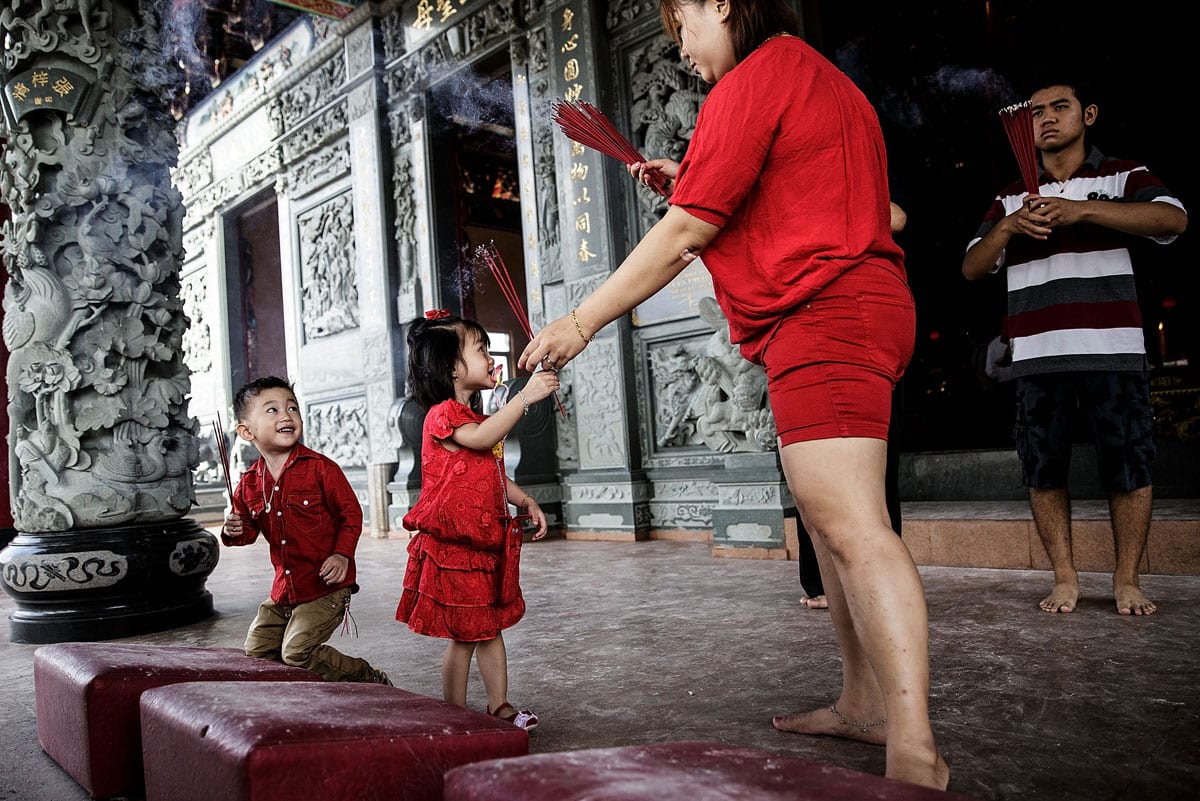
    Thousands of Chinese have flocked to Bali to cerebrate Chinese new year using chartered flights of a number of airlines including Garuda Indonesia

    Tourism Minister Arief Yahya said here on Monday at least 65 chartered flights carrying 23,000 Chinese from 11 cities in China had landed on Bali.

    “It seems Bali has become the favorite destination of Chinese tourists . More than 114 million Chinese travel abroad every year,” Arief said.

    Other airlines carrying Chinese to Bali on chartered flights include HongKong Airlines, Shenzen airlines, Air Asia, China Southern, China Eastern, Dragon Air, Cathay Paciific, Eva Air, Singapore Airlines, Brunai Air, etc.

    Arief said the airlines could serve to promote Bali in China.

    “They speak good things about Bali, its beauty and generosity of its people, ” he said.

    He attributed the success in luring Chinese to Bali to intensive advertising, and sales by a marketing team of the tourism ministry.

    He said he had instructed the provision of 6,000 souvenirs for the tourists and facilities to entertain the visitors.

    The tourism ministry has launched promotion campaigns to attract Chinese to cerebrate Chinese new year in Bali since early January.

    “Winter in northern China including Beijing and the province of Heilongjiang is extreme 15 degree Celsius below zero prompting people from that region to leave for warm place and choose Bali to celebrate the new year,” he said.

    In 2016, the tourism ministry sets the target for foreign visitors to Bali at 1.7 million . In February alone the target is set at 200,000 visitors.

    “China is a potential market , a big market. Therefore it needs special handling,” Arief said.

    Arief said currently only 1.14 million Chinese tourists visit Indonesia a year far smaller than 8 million to Thailand.

    “We have been lagging too far behind . If they are so interested in visiting Thailand , they should be more so in Indonesia,” he said, adding Indonesia needs only to intensify promotion.

    Generally Chinese tourist like beach resorts and shopping, he said.

  • Indonesia to host 30th IAPH World Ports Conference 2017

    Indonesia to host 30th IAPH World Ports Conference 2017

    Indonesia will host the 30th World Ports Conference of the International Association of Ports and Harbors (IAPH) in 2017, the spokesperson of the state port operator PT Pelabuhan Indonesia (Pelindo) III Edi Prayitno noted here on Friday.

    “In 2017, Pelindo I, II, III, and IV will be active IAPH members to host and hold the biannual conference that will take place at the Bali Nusa Dua Convention Center on May 7-12, 2017,” Edi stated.

    The conference would serve as a platform to share experiences and common interests on certain issues faced by port officials globally.

    Currently, Pelindo I, II, and III are holding a preparation meeting in Bali, which is being attended by more than 1.5 thousand members and delegations from around the world.

    iaph-press-05-06

    “Pelindo, a state-owned enterprise involved in the management of Indonesian ports, must actively play an important role in local and global port activities, one of which is by participating in the IAPH,” he pointed out.

    The conference is considered as one of the measures to deepen business relations with other port officials in the world in addition to improving and updating their knowledge.

    “This conference is expected to be a potential forum for Indonesian seaport businesspersons to mutually promote ideas and products along with serving as a means of promotion and learning about port management in the country,” affirmed Edi.

    The IAPH, established in 1955, represents more than 200 ports in 90 countries, with total cargo being serviced reaching 60 percent of the global trade by sea, as well as nearly 80 percent of the flow of containers around the world.

    In addition, individuals and organizations that are interested or are involved in a variety of port and maritime businesses in this organization are the associate members.

    “The IAPH is a non-profit and non-governmental organization that is headquartered in Tokyo, Japan,” Edi added.

  • Wyndham Hotel Group Introduces Days Inn brand to Indonesia

    Wyndham Hotel Group Introduces Days Inn brand to Indonesia

    Continuing its robust expansion in South East Asia, Wyndham Hotel Group today announced the opening of its first Days Inn® hotel in Indonesia, the 119-room Days Hotel & Suites Jakarta Airport.

    Located in the capital of Jakarta at the site of the former Padjadjaran Suites, the hotel is the eighth property to open under the Days Inn® brand flag in South East Asia and the Pacific Rim region. It is owned by PT Graha Bandung Sentosa, an affiliate of the Sun Motor Group, and managed by PT Wyndham Hotel Management, an Indonesian subsidiary of Wyndham Hotel Group. The hotel is the second to be opened by Sun Motor Group and Wyndham in Indonesia in just over a month, the first being the 271-room Ramada Bali Sunset Road Kuta.

    Said Barry Robinson, President and Managing Director of Wyndham Hotel Group South East Asia and Pacific Rim, “We are looking to introduce more affordable business hotels in prime locations across the region and Days Hotel & Suites Jakarta Airport will be a valuable addition to our portfolio in Indonesia targeting business travellers and leisure makers on transit. Indonesia represents a tremendous opportunity for Wyndham, with its growing middle class who have demonstrated an increased demand for globally-known and value-driven brands such as Days Inn.”

    Situated just 5.3km from Soekarno-Hatta Intl Airport in the Cenkarang district of West Jakarta, the Days Hotel & Suites Jakarta Airport is a full service property catering to business and leisure travellers. The hotel will undergo light renovations to offer tastefully designed guestrooms and suites complemented with an all-day dining restaurant, a lobby lounge and bar, as well as eight meeting rooms with banqueting services.

    Additional facilities include a rooftop pool, a spa and wellness centre, high speed Wi-Fi access throughout the hotel and complimentary airport shuttle bus transfers.

    Hartono Hosea, Director at the Sun Motor Group commented “Wyndham Hotel Group’s extensive global distribution, flexibility and management expertise will definitely help to solidify our position as a market leader in Indonesia. The hotel will greatly complement our Bali property and will set the standard for hospitality in Asia.”

    Days Inn® is a globally recognised brand with nearly 1,800 economy to upper-midscale hotels located around the world. Most offer free Wi-Fi, complimentary DayBreak® continental breakfast, meeting rooms, banquet facilities, copy and fax services, fitness centres and more. All Days Inn hotels in Indonesia participate in Wyndham Rewards®, the simple-to-use, revolutionary loyalty program from Wyndham Hotel Group that offers members a generous points earning structure along with a flat, free-night redemption rate.

  • Telkom Indonesia Blocking Netflix For Pornographic Content

    Telkom Indonesia Blocking Netflix For Pornographic Content

    News of the service’s entry was quickly embraced by social media by Indonesia’s young and urban population who were familiar with the service due to pop culture references, as well as Netflix’s award-winning productions.

    Netflix has indicated that it is willing to adhere to Indonesia’s laws and regulations, but it believes that it doesn’t have to follow the same procedures as cable networks.

    Be that as it may, it’s hard to imagine that the decision wasn’t also influenced by a desire to protect the company’s own business interests. Uber argued that it does not own any vehicles, but eventually said it will set up a subsidiary to better comply with local regulations.

    Regardless, many worry that Telkom’s move suggests that a blanket ban on Netflix is imminent.

    Some Telkom competitors were capitalising on the ban Thursday, promoting their Netflix packages in a bid to lure Telkom customers angered by the move. The ministry now monitors websites and blocks content on a case-by-case basis.

    Arif Prabowo, Telkom’s vice president for corporate communications said in a statement that Netflix needed to adjust to Indonesia’s regulations-namely a 2009 film law. With technological advancement comes both increased access to tools such as virtual private networks, and the debate on censorship.

    On the other hand, Netflix is also posing a threat to Telkom’s pay TV business, which is jointly operated with an Indonesian conglomerate.

  • Jakarta Economy Slows Down in 2015

    Jakarta Economy Slows Down in 2015

    Data from the Central Bureau Statistics (BPS) of Jakarta revealed that the Jakarta economy grew by 5.88 percent, slower than in the previous year at 5.91 percent. The economic growth was measured based on the regional gross domestic product (GDP).

    “The regional GDP per capita in Jakarta last year reached Rp194.87 million or US$14,570,” BPS Jakarta head Syech Suhaimi said on Friday, February 5, 2016.

    From the production, Suhaimi explained, the highest growth was achieved by the financial services sector at 10.72 percent. From the spending, the household consumption gained the highest growth by 5.04 percent.

    The Jakarta economy structure is currently dominated by three sectors, namely car and motorcycle reparations (16.65 percent), the processing industry (13.84 percent), and construction (13.16 percent).

    The Capital’s economic growth had been slowing down over the last three years. In 2013, the Jakarta economy grew by 6.07 percent, and dropped to 5.91 percent in 2014.

    “The trend continues to decrease. Since 2011, the government and the business community have been watching this trend,” he said.

  • Garuda Indonesia to set up new company for non-core units

    Garuda Indonesia to set up new company for non-core units

    Garuda Indonesia (GA, Jakarta Soekarno-Hatta) is planning to establish a new holding company to contain subsidiaries that do not contribute to its core business.

    Airline president Arif Wibowo told the Asia Nikkei newspaper that the plan has already secured shareholder approval – including that from the Ministry of Transportation – with a proposal set to be submitted to the Ministry of State Enterprises in the middle of the year.

    “We hope this will increase the company’s leverage, as each business unit will have clearer management and they can develop more specific focuses,” he said.

    Garuda currently operates five subsidiaries including: budget carrier Citilink (QG, Surabaya); PT Aero Wisata which deals with travel, hotel, transportation and catering services; PT Abacus Distribution Systems Indonesia which handles GDS services; PT Garuda Maintenance Facility Aero Asia (GMFAA) which deals with aircraft MRO; and PT Aero Systems Indonesia which is an IT solutions provider.

  • Bali welcomes tourists with typical souvenirs for Chinese New Year

    Bali welcomes tourists with typical souvenirs for Chinese New Year

    Balis entrepreneurs and craftsmen are ready to offer some unique and affordable souvenirs to foreign tourists who plan on celebrating the upcoming Chinese New Year in the Island of God.

    “Various typical Chinese New Year souvenirs are especially being offered to the tourists from China and Hong Kong,” Ni Nyoman Sukiati, a Balinese craftswoman, stated here on Thursday.

    To welcome the upcoming Lunar Year 2016, various souvenirs, such as wall decorations, hanging lanterns bearing Chinese characters, and porcelain god statues are on sale at some supermarkets, shops, and tourism sites.

    Sukiati believes that the number of Chinese tourists visiting Bali will increase following the implementation of the visa-free policy for several countries, including China.

    “Chinese tourists, who spend their holidays here in Bali, will certainly want to buy some Balinese souvenirs,” she remarked.

    Beside the Chinese souvenirs, Balinese craftsmen have created some unique and creative merchandise, such as bracelets, necklaces, and brooches, which are also considered as the main export commodities to be shipped to some destination countries such as the United States, Australia, Singapore, Hong Kong, Japan, and Europe.

    Based on data from the Central Statistics Agency (BPS) of Bali, the realization of non-oil products and handicrafts during 2015 reached US$498.6 million, a decrease of 7.02 percent compared to US$536.3 million in 2014.