Tag: Indonesia

  • Indonesia Gov’t to Foot Rising Fuel and Electricity Subsidy Bills

    Indonesia Gov’t to Foot Rising Fuel and Electricity Subsidy Bills

    The government has reiterated its commitment to keep fuel and electricity prices steady this year, amid rising global oil prices and the recent strengthening of the US dollar.

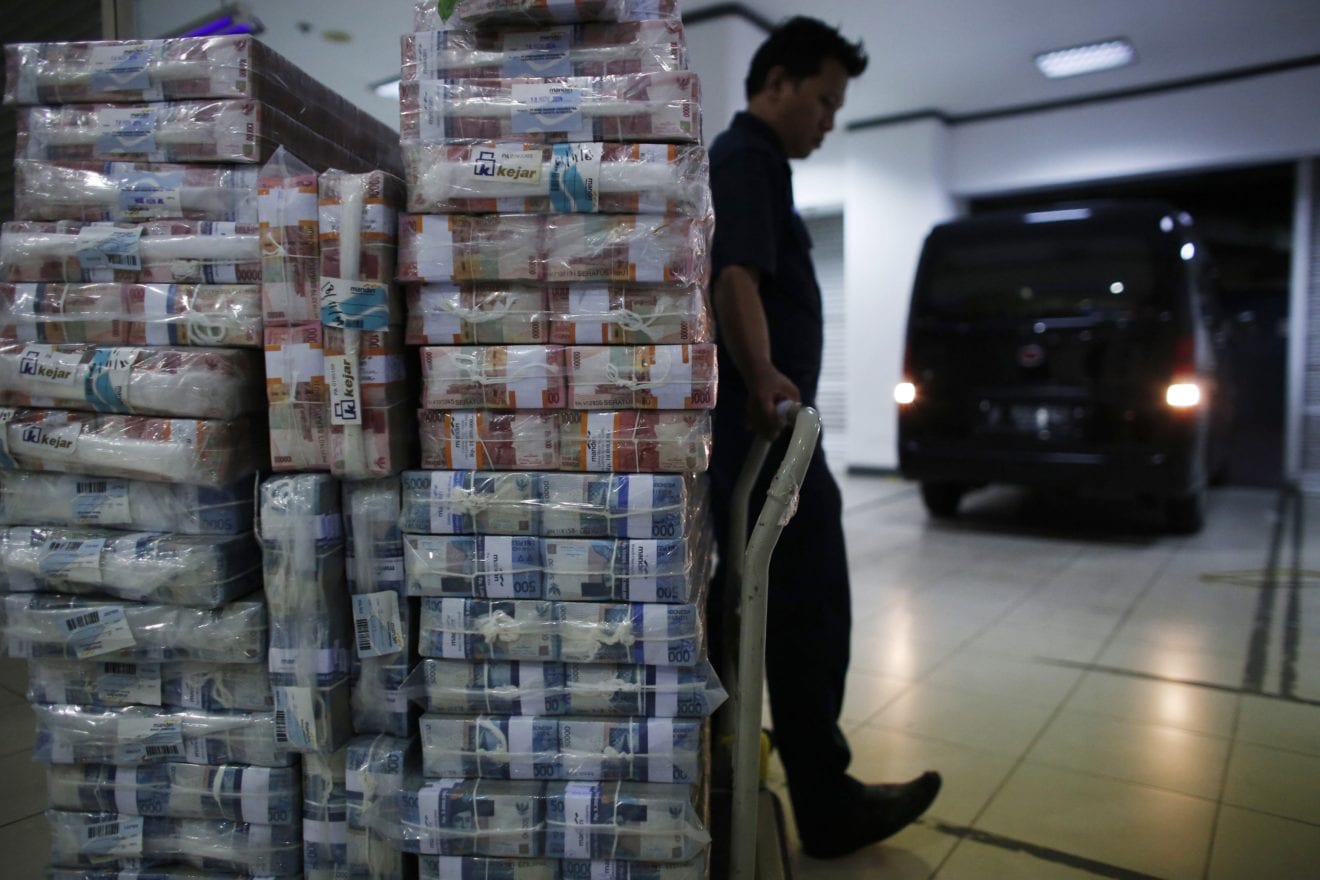
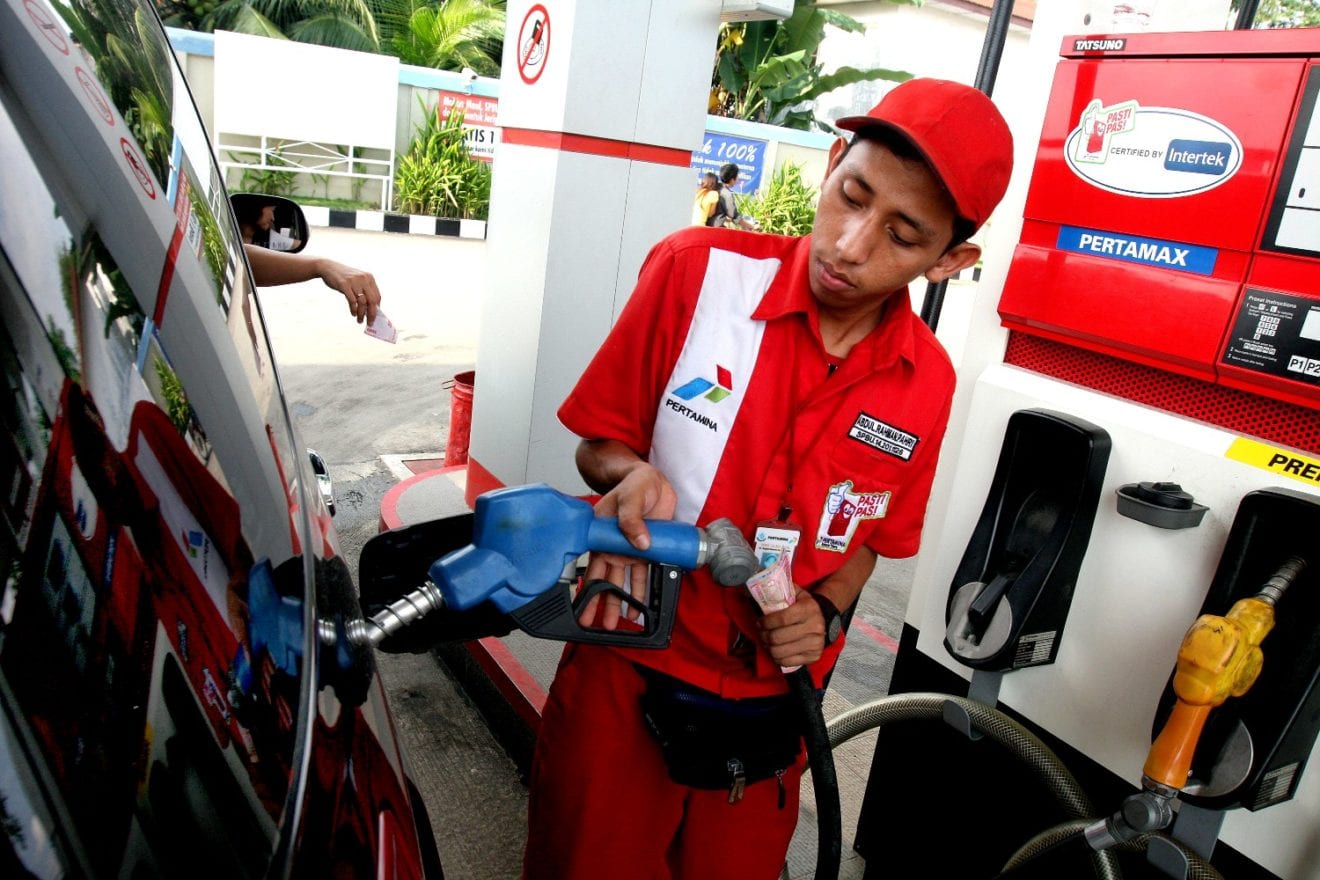
    State Enterprises Minister Rini Soemarno said the government will continue to subsidize diesel fuel at the current rate, which is four times higher than planned in the state budget. The government will also increase its subsidies for electricity.

    “Diesel was subsidized Rp 500 [a liter] by the government. Now it is Rp 1,500 and it will be Rp 2,000. It is covered from the current state budget,” the minister said over the weekend.

    According to her deputy, Harry Fajar Sampurno, the government’s diesel fuel quota is 16.23 million kiloliters for this year, which means the subsidies will cost Rp 32 trillion ($2.3 billion).

    The government will discuss the increase with House of Representatives Commission VII, which oversees the energy sector.

    It was previously planned to keep fuel and electricity prices stable until the end of 2019, but pressure is mounting to increase them, as crude oil prices are now nearly 50 percent higher than the government’s initial forecast of $48 a barrel.

    President Joko “Jokowi” Widodo, who is preparing to run for a second term next year, went as far as to support consumer purchasing power by raising energy subsidies to $588 million to keep fuel and electricity cheap until the end of 2019.

    Household consumption, which accounts for half of Indonesia’s economy, has been subdued over the past few years as Jokowi opted to divert money previously used for energy subsidies toward infrastructure development.

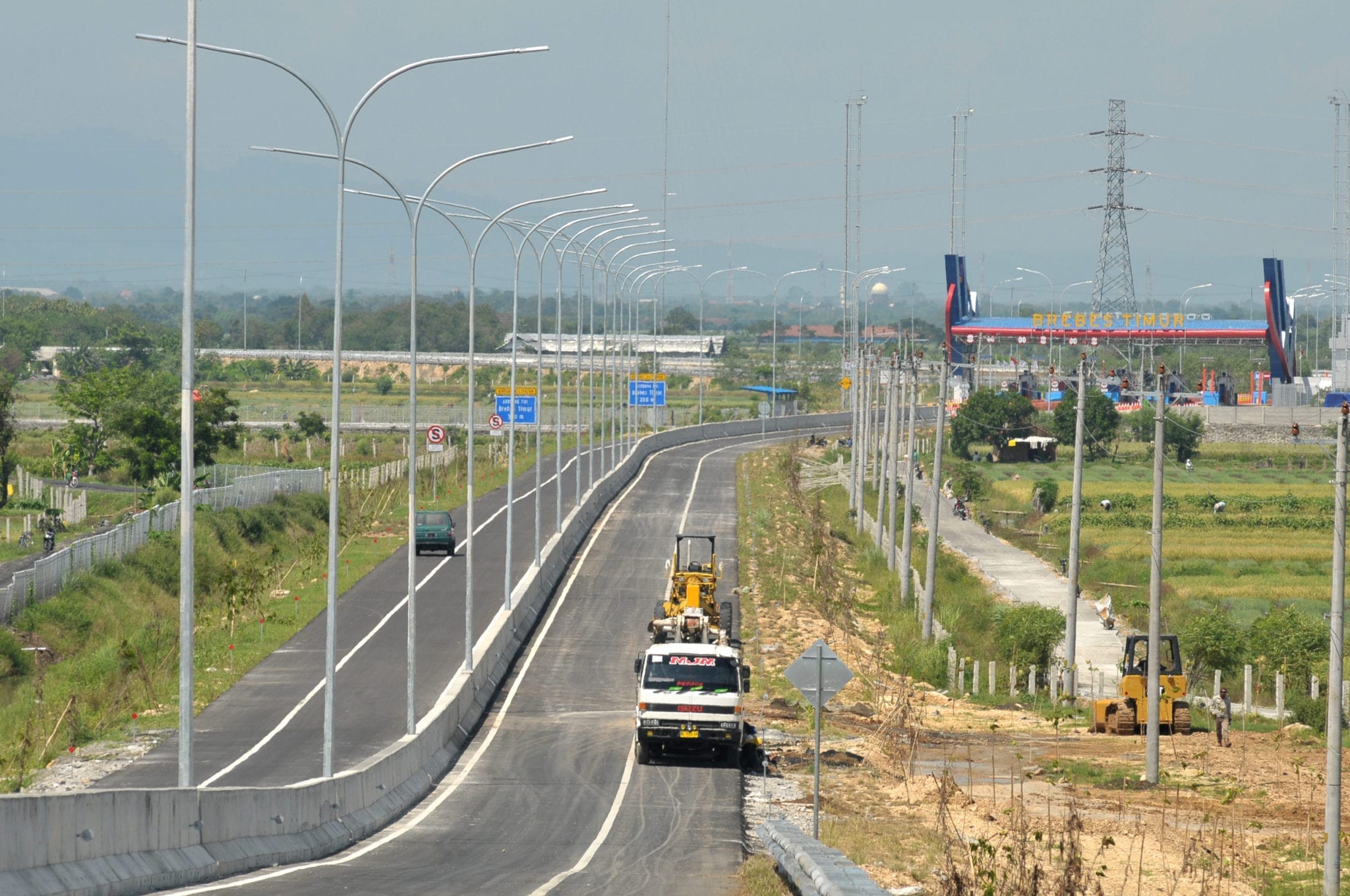
    The government spent Rp 98 trillion on energy subsidies last year, compared with Rp 342 trillion in 2014. State spending on infrastructure has meanwhile increased by more than 80 percent to Rp 376 trillion in the same period.

    Last month, oil prices spiked after the United States announced plans to impose new sanctions on Iran, a major exporter. The announcement resulted in oil prices hitting their highest levels since November 2014, with Brent crude futures at $77.90 and US West Texas Intermediate at $71.80 a barrel.

    Meanwhile, the rupiah traded at an average rate of 13,713 versus the dollar, compared with the initial forecast of 13,400, according to central bank data. Bank Indonesia governor Perry Warjiyo said the central bank expects a rupiah exchange rate of between 13,800 and 14,100 to the dollar for the remainder of this year and next year.

    Although higher oil prices and the weaker exchange rate will likely boost state revenue from oil and gas, they will also increase energy subsidies, especially for electricity and liquefied petroleum gas.

    The decision to maintain fuel and electricity prices is also intended to avoid undue pressure on the 2018 state budget, while at the same time limiting the budget deficit to 2.19 percent of gross domestic product.

    The government aims to keep the budget deficit at Rp 325.9 trillion, or 2.19 percent of GDP for the full year, compared with last year’s Rp 336.4 trillion, which amounted to 2.48 percent of GDP.
  • Most SE Asian stocks gain; Singapore, Indonesia up nearly 1 percent

    Most SE Asian stocks gain; Singapore, Indonesia up nearly 1 percent

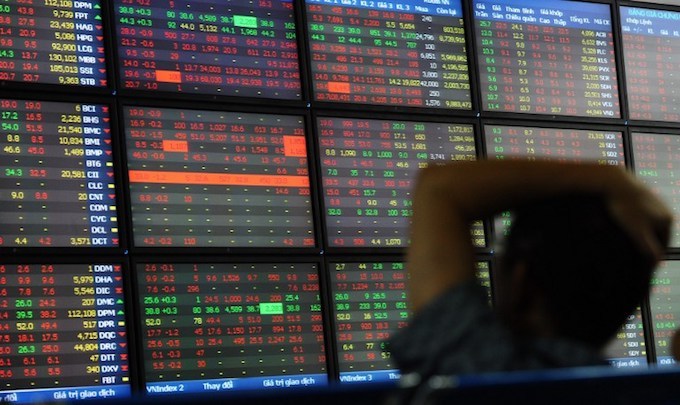
    Most Southeast Asian stock markets rose on Monday, with Singapore gaining nearly 1 percent as upbeat sentiment following positive U.S. jobs data pushed global equities higher.

    Asia ex-Japan shares rose 1 percent to their highest level since May 17.

    Data on Friday showed that U.S. job growth accelerated in May and unemployment rate dropped to an 18-year low.

    “We are following the bullish sentiment on Friday on U.S. after job data,” said Linus Loo, Head of research at Lim & Tan Securities.

    “Because we (South-east Asia) are export-driven, especially Singapore, we tend to track the U.S.,” he added.

    Singapore shares rose 0.9 percent in early trade. Financials drove gains, as heavyweights DBS Group Holdings and Oversea-Chinese Banking Corp gained 1.2 percent each.

    Indonesian shares rose 0.8 percent led by financials and telecommunication stocks.

    Indonesia’s annual inflation rate in May was 3.41 percent, slightly below the median forecast of 3.28 percent in a Reuters poll, data from the statistics bureau showed on Monday.

    An index of the country’s 45 most liquid stocks rose about 1.3 percent.

    Vietnam stocks rose as much as 0.9 percent, as materials and industrials extended gains from last week. Vietjet Aviation climbed nearly 7 percent while Vietcombank rose as much as 2.5 percent.

    Meanwhile, Philippine shares fell 0.9 percent, dragged lower by industrial on caution ahead of inflation data due on Tuesday.

    Philippine inflation likely accelerated for the fifth straight month in May, a Reuterspoll showed, but analysts were divided over when the central bank will again raise interest rates.

    Aboitiz Equity Ventures slumped 3.8 percent while SM Investments Corp fell 2.7 percent.

    Malaysian and Thai shares were largely unchanged in early trade.

  • Lippo Group Indonesia Opens Matahari Department Store’s 155th Outlet

    Lippo Group Indonesia Opens Matahari Department Store’s 155th Outlet

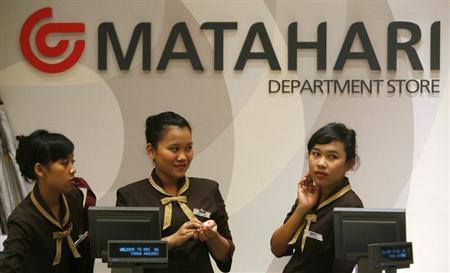
    Residents of Cilegon in Banten Province, Indonesia, responded enthusiastically to the opening of Matahari Department Store’s 155th outlet on Friday (01/06).

    In addition to being strategically located in the central business district, the 5,700-square-meter store inside the 67,000 square-meter Cilegon Center shopping mall also boasts a modern design.

    The first day of trading saw extraordinary sales, as more than 30,000 customers flooded the new outlet, said Irwin Abuthan, director at Matahari Department Store.

    “It was an extraordinary day. The turnout was fantastic. The store and mall will bring great added value and benefit to the city of Cilegon and surrounding areas,” Irwin said.

    Matahari Department Store, Hypermart, Matahari Supermarket, Foodmart, Primo, Boston Health & Beauty and Books & Beyond are all controlled by the Lippo Group, Indonesia’s largest multi-format retail group with more than 600 outlets spread out across Indonesia, from Aceh to Papua.

    This vast retail network is supported by a robust system comprised of formidable logistical networks and distribution channels.

    The Lippo Group owns and operates 70 shopping malls in Indonesia, making it the country’s largest.

    The image of the opening can be viewed below (3 images) :

  • Indonesia’s Coffee Retail Market Shows Lots of Promise

    Indonesia’s Coffee Retail Market Shows Lots of Promise

    Indonesia is one of the world’s biggest coffee retail markets by volume, driven by increasing domestic demand, according to the result of a recent study by global market intelligence agency Mintel, released on Thursday (31/05).

    The United of States, with 607,000 metric tons, is the world’s biggest, followed by Brazil (425,000 tons), Germany (424,000 tons), Japan (304,000 tons) and Indonesia (268,000 tons).

    The research also estimates that the compound annual growth rate in the coffee retail market in Indonesia will likely rise by 11.4 percent between 2017 and 2021, making it the world’s fastest-growing coffee retail market among a list of countries that includes Vietnam, ranked second at 9.2 percent, followed by Turkey (6.8 percent), the Philippines (6.7 percent) and Mexico (6.1 percent).

    “Coffee culture has surged in Asia with more and more specialty coffee houses setting up shop in countries like Japan, Singapore and Indonesia. Big-brand coffee chains are also increasing their expansion efforts in the region,” Jonny Forsyth, associate director at Mintel Food & Drink, said in a statement.

    The number of specialty coffee outlets and chain-store coffee shops in Indonesia has doubled to 1,025 and 1,083 respectively, between 2012 and 2016, with most of the new outlets in Jakarta, according to data compiled by research group Euromonitor.

    Since United States-based coffee giant Starbucks entered Indonesia in 2002, it has expanded to 22 cities with around 240 stores across the archipelago.

    According to data compiled by the International Coffee Organization, coffee consumption in Indonesia, the world’s fourth-largest coffee producer, surged to 276,000 tons in 2016 from only 108,000 tons in 2000.

    The Mintel study also showed strong growth in single-serve coffee in emerging Asian markets, thanks to rapid economic growth and urbanization, unlike more developed countries.

    In an annual report by Mintel released last year, Indonesia was ranked as the world’s fastest-growing consumer of packaged coffee, including instant coffee, ready-to-drink coffee and coffee in pods or capsules, between 2011 and 2016.

    “Asia’s emerging markets have led global coffee growth in years past and will continue with Indonesia leading this charge,” Forsyth said.

  • Courts Malaysia hurts Asia performance

    Courts Malaysia hurts Asia performance

    Regulation changes in Malaysia dragged down both revenue and profits for Southeast Asian electrical, IT and furniture retailer Courts Asia.

    For the year to March 31, Courts Asia had a 3.7 per cent dip in revenue to SG$713.1 million (US$532.5 million). Profits slipped to $8.1 million from $23.7 million.

    Meanwhile, distribution and marketing expenses “remained relatively stable” at $56.5 million, or 7.9 per cent of revenue, the group says.

    Revenue from Malaysia, which contributed to 26.2 per cent of total turnover, slid 15.4 per cent on a year-on-year basis. This was mainly because of lower sales of goods and earned service charge income, says the group.

    Courts Asia executive director/group CEO Terence Donald O’Connor says the company faced headwinds in Malaysia following the introduction of the Consumer Protection (Credit Sale) Regulations 2017. This saw interest rates being capped at 15 per cent a year along with new compliance processes that led to a revenue drop.

    “The fall in revenue, coupled with an increased credit cost and a more prudent credit-sanctioning approach in Malaysia, affected our profitability,” says O’Connor.

    Taskforce

    As a result, Courts Asia has formed a transformation taskforce to look into business processes with the objective of driving productivity in Malaysia.

    Meanwhile, seven underperforming stores have been closed, ending with a footprint of 63 outlets. Other key actions taken in Malaysia include deploying a regional credit taskforce comprising executives with “specialised credit collections and marketing skill sets”.

    “While we agree that consumer sentiment has lifted with the changes sweeping through Malaysia, it will take time for it to filter through to discretionary spending,” says O’Connor. Initiatives such as zero rating GST from 6 per cent from today have been welcomed.

    In Singapore, Courts Asia’s performance remained strong at $25.2 million, the company says. Revenue from Singapore accounted for 69.9 per cent of the group’s top line, and increased 1.5 per cent. This was underscored by improved sales and follows an increased focus on driving an omni-channel approach with the relaunch of its online platform and the re-opening of Courts Megastore at Tampines in November.

    As part of its move toward offering furniture for the modern home, Courts Asia has refreshed its furniture range leading up to the Hari Raya festive season.

    For Indonesia, the group achieved 13.7 per cent growth in revenue in rupiah, thanks mainly to new stores. After “prudently widening its footprint”, Courts Asia now has 32 locations across the Jakarta region, including nine stores and 23 pop-ups.

  • Indonesia Central Bank Raises Key Rate to Aid Rupiah, Flags Chance of More Hikes

    Indonesia Central Bank Raises Key Rate to Aid Rupiah, Flags Chance of More Hikes

    Indonesia’s central bank raised its benchmark interest rate for the second time in two weeks on Wednesday (30/05) and flagged more possible hikes as it escalated a battle to boost the fragile rupiah and contain capital outflows.

    Newly appointed Bank Indonesia Governor Perry Warjiyo pledged more action to promote financial and economic stability to bolster Indonesian assets amid an emerging market sell-off.

    The central bank “will continue to calibrate global and domestic market developments to utilize room for further rate hikes in a measured way,” Perry said after a meeting.

    On May 25, one day after being sworn in for a five-year term, Perry called Wednesday’s off-cycle meeting. On May 17, Bank Indonesia raised its key rate by 25 basis points to shore up the rupiah, then trading at its weakest since October 2015. Perry said the additional meeting was needed as a “pre-emptive, front-loading and ahead of the curve step” in response to expectations of higher US interest rates, which could push US Treasury yields higher.

    Rahul Bajoria, an economist for Barclays in Singapore, said the two hikes in two weeks “very forcefully signals to the market that the new governor is very serious about maintaining financial stability, and the institution is willing to be pre-emptive in managing risks that are emanating largely from external drivers.”

    Currency First

    Stephen Innes, head of Asia-Pacific currency trading at Oanda, said Wednesday’s decision showed “currency first and nothing else really matters.”

    The governor said Bank Indonesia will discuss loosening its “macroprudential” rules at its meeting in late June, and new ones should be released “soon.” He earlier said the central bank is looking at housing mortgages, but he did not give any details.

    In 2016 and 2017, Bank Indonesia cut its benchmark rate by a total of 200 bps in a bid to boost sluggish lending and economic growth.

    Perry said he expects loan growth to reach 12 percent at the end of 2018 compared with a year earlier. During much of 2017 and until April this year, annual loan growth was in single digits. April’s growth rate was 8.9 percent.

    With loan growth low and consumption weak, Indonesia’s annual economic growth has been stuck at about 5 percent.

    On Monday, Finance Minister Sri Mulyani Indrawati said: “We are ready to take any kind of policy to support Indonesia’s economy,” adding that if short-term measures mean slightly lower growth, “then that consequence has to be accepted.”

    The government has a 2018 growth target of 5.4 percent. Bank Indonesia said on Wednesday that it still expects expansion of 5.2 percent, better than last year’s 5.07 percent.

    Sound Key Indicators

    The rupiah, one of the worst performers among Asian currencies this year, barely moved following the rate announcement. It was trading at about 13,985 per dollar at the time it was made.

    Sri Mulyani and other senior officials on Monday sought to shore up confidence in Southeast Asia’s biggest economy at a time Indonesia, like other emerging markets, has seen an outflow of funds as US assets become more attractive due to rising interest rates.

    Key economic indicators are sound, Perry said, noting that the annual inflation rate is seen at 3.6 percent at the end of 2018, while the current-account deficit is expected to below 2.5 percent of gross domestic product, which Bank Indonesia considered “healthy.”

    Harry Su, managing director at financial research firm Samuel International, said the central bank “is now doing more proactive and forward-looking policy, particularly with regard to a possible higher current-account deficit, as well as inflationary pressure stemming from the current higher oil price environment.”

    All but one of 18 analysts in a Reuters poll expected Bank Indonesia to raise the key rate on Wednesday.

  • Most SE Asian markets fall; Malaysia down for 5th session in six

    Most SE Asian markets fall; Malaysia down for 5th session in six

    Most Southeast Asian stock markets fell on Monday, with Malaysia declining for a fifth session in six, while Indonesia extended gains on the back of financial and infrastructure stocks.

    “There are lots of pitfalls that could sideswipe the markets,” said Stephen Innes, head of trading APAC at Oanda, referring to the U.S.-China trade issues, N.Korea-U.S. summit and strong U.S. dollar.

    U.S. oil futures hit six-week lows on expectations major producers may ease output curbs, while Asian stocks and U.S. share futures gained on signs the United States and North Korea were still working towards holding a summit.

    In Malaysia, trading services firms including IHH Healthcare and Sime Darby were among the top losers. IHH Healthcare fell as much as 4.8 percent and Sime Darby plunged 9 percent on disappointing quarterly results.

    Vietnam shares fell as much as 2.9 percent to a more than five-month low. Vinhomes JSC declined 5.5 percent and Vietnam Prosperity Joint Stock Commercial Bank fell 5 percent.

    Indonesian shares climbed as much as 1.4 percent and were headed for a fifth straight session of gains. Bank Mandiri (Persero) Tbk PT rose 5 percent and Bank Central Asia Tbk PT climbed 1.1 percent.

    The central bank said on Friday that it would hold an additional meeting of its board of governors on Wednesday to discuss economic and monetary conditions.

    “We suspect that the persistent selloff in the rupiah and upward pressures on local government bond yields (despite the recent 25bps rate hike) may prompt further action,” DBS said in a note.

    “Further BI rate hikes may be needed, with the next one possibly as early as this week.”

  • Indonesia Firms Face $34b in Losses Due to Cyber-Attacks

    Indonesia Firms Face $34b in Losses Due to Cyber-Attacks

    Cyber-attacks on Indonesian companies in 2017 will eventually cost domestic businesses $34 billion due to direct financial losses and long-term reputation damage, according to a recent study commissioned by global technology giant Microsoft.

    The study — which was carried out by research consultancy firm Frost & Sullivan by surveying 1,300 businesses and IT companies in the Asia-Pacific region — also put total potential losses to the region from cyber-attacks at $1.745 trillion, or 7 percent of the region’s current GDP.

    Almost half of Indonesia’s companies could have already been affected by cyber-attacks last year. The study found 22 percent of companies surveyed in Indonesia reported they had a security breach, while 27 percent were unsure if they had had one, due to a lack of data forensics assessments.

    Sixty-one percent of organizations either do not think about cybersecurity at all, or only after starting a new project. Almost seven out of 10 companies which had cyber attacks saw job losses in the last 12 months.

    “Companies face the risk of significant financial loss, damage to customer satisfaction and market reputation — as has been made all too clear by recent high-profile breaches,” said Haris Izmee, president director of Microsoft Indonesia, in a statement last week.

    Last year, Indonesia saw over 205 million cyber-attacks, including the ransomware WannaCry that attacked the country’s major hospitals, according to the Ministry of Communication and Information Technology.

    In calculating the potential losses, the study took into account direct financial losses from the attacks themselves, the opportunity cost to the organization caused by the incident, such as loss of customers because of reputation loss. The study also estimated cyber-attacks induced costs on the broader economy, such as a decrease in consumer and business spending.

    A large organization — one that has more than 500 employees — can possibly incur an economic cost of $16.3 million due to cyber-attacks.

    Of this, only $1 million is likely to be a direct cost to the company itself. Around $5.7 million is predicted to come from indirect costs, and $9.6 million to come from the induced costs.

    Over 90 percent of cyber-attacks can be prevented with maintaining most basic best practices, such as strong passwords, use of multi-factor authentications for suspicious log-in attempts and keeping all software up to date, Microsoft said.


  • Levi’s Indonesia Presents Special Collections for Ramadan and Idul Fitri

    Levi’s Indonesia Presents Special Collections for Ramadan and Idul Fitri

    Denim jeans might not be the first thing that pops into our minds when we prepare our wardrobes for Ramadan and Idul Fitri. But let’s admit it, these are among the most versatile clothing items, which we can easily mix and match and wear to almost every occasion.

    Pioneering jeans brand Levi’s presented its special collections for Ramadan and Idul Fitri in Jakarta on Tuesday (22/05).

    “Ramadan and Idul Fitri are among the most important moments for Indonesia’s fashion industry,” said Adita Idris, head of marketing at Levi’s Indonesia. “And that’s why we’re now launching new collections specially for this season.”

    The collections are named after three main activities usually associated with Ramadan and Idul Fitri, which are Buka Puasa (Iftar), Mudik (Homecoming) and Lebaran (Idul Fitri).

    In the Buka Puasa collection, Levi’s features casual looks that combine regular and slim-fit denim pants with button-up shirts for men and women in a variety of indigo hues.

    Classic plaid patterns enhance some of the shirts in the collection.

    “People usually go straight from their campuses or offices to restaurants for iftar, so [in this collection], we’re presenting something that they can easily wear from day to night.”

    Levi’s presented more relaxed looks in its Mudik collection.

    Presenting this collection, the female models wore light cotton tank-tops and loose-fitted blouses with floral prints, matched with Levi’s 710 skinny cropped jeans that extended to just above their ankles.

    The male models on the other hand, wore a combination of regular-fit denim pants, T-shirts with simple graphics and trucker jackets. A scarf tied around the neck added a macho touch to the overall look.

    “All denim pants in this collection are made with our latest Performance Cool technology, which makes the jeans lightweight and breathable,” Adita said. “The fabric also moves perspiration away from the skin, keeping it cool and comfortable all day.”

    In the Lebaran collection, female models sported elongated and oversized tie-cuff shirts in hues of white and gray, which were matched with black and dark-blue skinny denim pants.One of the outfits in the Lebaran collection.

    “Simple dark-wash denim pants are more suitable to wear during respectful occasions, such as silaturahmi [visiting relatives’ homes] on Lebaran day,” Adita said.

    In the Lebaran collection, the male models presented long-sleeved shirts with Mandarin collars in plain white and denim hues, which were paired with Levi’s 505 regular-fit jeans.

    “As you can see, with our rich variety of clothing items, we can surely accommodate your every need for this festive season,” the head of marketing said.

    These special Ramadan and Idul Fitri collections are available in Indonesia and Malaysia.

    “In Indonesia, these items are available at all original Levi’s stores, as well as Sogo and Matahari Department Stores,” Adita said.

    ‘Hidup Positif’ Campaign

    Levi’s also used the occasion to launch a video campaign titled “Hidup Positif” (Positive Lifestyle).

    “Ramadan is a moment for introspection,” Adita said. “Therefore, in this special moment, we would like to encourage our customers to see things from a positive point of view and to always choose love, rather than hate.”

    The video campaign features a song with the same title by Yogyakarta-based band Batiga, which won last year’s Levi’s Band Hunt, and Malaysian actress-singer Daiyan Trisha.

    “I think the song is especially good and necessary, especially in the light of recent incidents in Indonesia,” said Riosa Oktaf, the band’s vocalist. “And it’s also in line with our vision as a band, which is to touch the hearts of our listeners and encourage positive values among them.”

    The video campaign is currently aired on Levi’s social media accounts, as well as by various TV channels and in cinemas.

    As winner of last year’s Levi’s Band Hunt, Batiga is also entitled to a record deal with Universal Music Indonesia.

  • Net1 Ready to Support Broadband Internetin Rural Area of Indonesia

    Net1 Ready to Support Broadband Internetin Rural Area of Indonesia

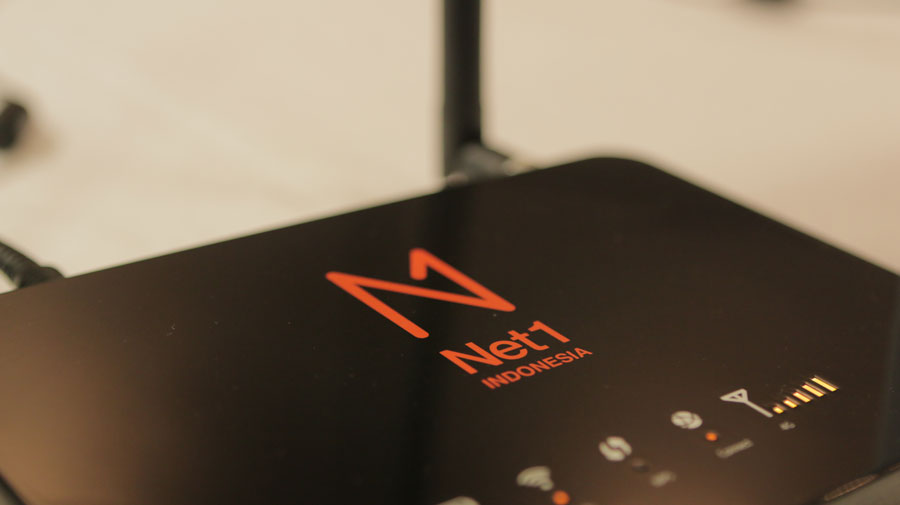
    Net1 Indonesia is ready to support the government in accelerating the provision of internet connections in rural areas, especially in frontier, outermost and least (3T) developed regions of the country. Net1 Indonesia’s mission to spread the internet access in the rural area is in line with the government nine agenda priorities or often referred to Nawa Cita, which mentions developing Indonesia’s rural area within the framework of Republic of Indonesia.

    One of the pillars of those points is realizing the availability of telecommunication infrastructure and network connectivity in the regions. Currently, the Government, through the Ministry of Communications and Informatics, is spurring the availability of internet network for rural areas. According to data from the ministry, currently 73% of villages/sub-lower districts already have internet connection based on 3G technology.

    Meanwhile, the LTE 4G network only 55%. By 2019, the government is targeting to provide 3G-based internet for more than 83,000 villages. Another target for the upcoming year is covering total of 514 districts/cities by 4G LTE network. So far, only 64% of them have access to 4G LTE.

    “The advantage of Net1 4G LTE network is running at 450 Mhz frequency, which is perfect for rural area geographic character, with large area but low density. The characteristic of low-frequency is not pursuing the access speed, but covering the larger area,” said Larry Ridwan, CEO of Net1 Indonesia, in a discussion forum on Universal Service Obligation (USO), held by Indonesia LTE Community (ILC), at Balai Kartini Exhibition and Convention Center, Jakarta (24/05).

    Net1 Indonesia can serve the markets or areas that geographically are difficult to reach and economically are very costly by other operators. Most of 450 Mhz 4G LTE operators in other countries also operate in special areas, such as suburban and rural areas or targeting a very segmented market, such as corporations (mining, plantation, fishery), Machine-to-Machine (M2M) and others.

    Larry added that the biggest challenge in deploying internet networks in rural areas is the varying of geographical conditions, ranging from mountains to coastal areas, with scattered populations. This kind of conditions is requiring a large investment for operators. Meanwhile, observed from the business side, developing telecommunication infrastructure in rural area with less population is less profitable.

    However, this condition will not break Net1 Indonesia’s spirit to continuously supporting the government’s program in rolling out the Internet network for rural areas. “Net1 4G LTE Network at 450MHz is able to reach 50-60 Km, even up to 100 Km, from a base transceiver station (BTS), so it is suitable for archipelago country like Indonesia which has 16,056 islands. In terms of infrastructure investment in developing the site, it is certainly more efficient,” revealed Larry.

    Therefore, Net1 Indonesia can reduce the investment of building 4G LTE network for rural areas more efficiently and effectively. Investment can be pushed much lower. So far, Net1 has deployed 4G LTE service in 19 Provinces spread across Indonesia. A total of 306 districts/cities have accessed Net1 4G LTE network, consisting of 25,279 villages. Overall, 126,299,415 populations have been reached by Net1 Indonesia.

    Net1 Indonesia has also cooperated with a number of local governments in district and province level throughout Indonesia. The local governments cooperate with Net1 Indonesia to provide data broadband access for societies in sub urban and remote areas in their domain. Among others, Musi Banyuasin Regency, West Halmahera Regency, Talaud Islands Regency, Tual City, Siau Tagulandang Biaro (Sitaro) Islands Regency, Sangihe Islands Regency, Teluk Bintuni Regency and Kaimana Regency, have signed a Memorandum of Understanding (MoU) to working together building 4G based communications infrastructure with Net1 Indonesia.

    The cooperation with a number of local governments that have been started since 2017 is a first step for Net1 Indonesia to be able to meet the needs of data access for up to 260 million Indonesian populations who lives in more than 14.000 islands.

  • Indonesia Drops in IMD World Competitiveness Ranking

    Indonesia Drops in IMD World Competitiveness Ranking

    Indonesia’s competitiveness has dropped this year due to external pressures arising from trade, fluctuating exchange rates, and insufficient efforts to eradicate corruption, Switzerland-based International Institute for Management and Development, or IMD, revealed on Thursday (24/05).

    Indonesia now ranks 43rd among 63 countries assessed for the World Competitiveness Yearbook ranking, down one place from the previous year.

    Other countries showing signs of declining performance include Taiwan, Thailand, New Zealand and the Philippines, which fell seven places.

    Singapore remained on the third position, Malaysia on 22nd, while Thailand dropped to the 30th position, three ranking points lower than last year.

    Beside the problems with currency fluctuations, trade and corruption, IMD’s report also mentions other challenges faced by Indonesia, including low contribution of its industries in the global value chain, gaps in infrastructure funding, and stagnant economic growth.

    On the bright side, IMD noted several several improvements: expanded access to higher education, increased health care spending, business expenditure on R&D, value-added knowledge-and-technology intensive industries, lower youth unemployment, and a number of patents in force.

    IMD, one of the world’s top business schools, surveyed 6,371 respondents from 63 countries, based on 258 indicators and statistical data from local and international sources, as well as information from executives and experts.

    The report used four key indicators to determine weaknesses and strengths of a country: its economic performance, infrastructure development, business efficiency and government efficiency.

  • Indonesia Considers Stopping Palm Oil Exports to the EU

    Indonesia Considers Stopping Palm Oil Exports to the EU

    Indonesia is preparing for a worst-case scenario should the European Parliament’s draft of a ban on the use of palm oil in biofuels get approved by the European Commission and European Council.

    In January, members of the European Parliament voted in favor to phase out the use of biofuels made from palm oil by 2021 to fulfill the EU’s Renewable Energy Directive, which aims to reach a renewable energy target of 27 percent by 2030, including in transport fuels.

    A decision on whether the ban will be legally imposed in all EU country members will be made in 2019. If approved, Indonesia and Malaysia, who together produce nearly 90 percent of the world’s palm oil, will suffer a hard blow.

    “There’s an [ongoing] study about stopping exports to the European Union altogether. When it’s done, Indonesia can see that palm oil trade with them is risky. The study is to eradicate that risk once and for all,” Mahendra Siregar, executive director of the Council of Palm Oil Producing Countries, said in a discussion hosted by the Jakarta Foreign Correspondents Club (JFCC) on Friday (25/05).

    The council has commissioned several research institutions and universities to help produce its research, which is expected to be completed by the end of the year at the latest.

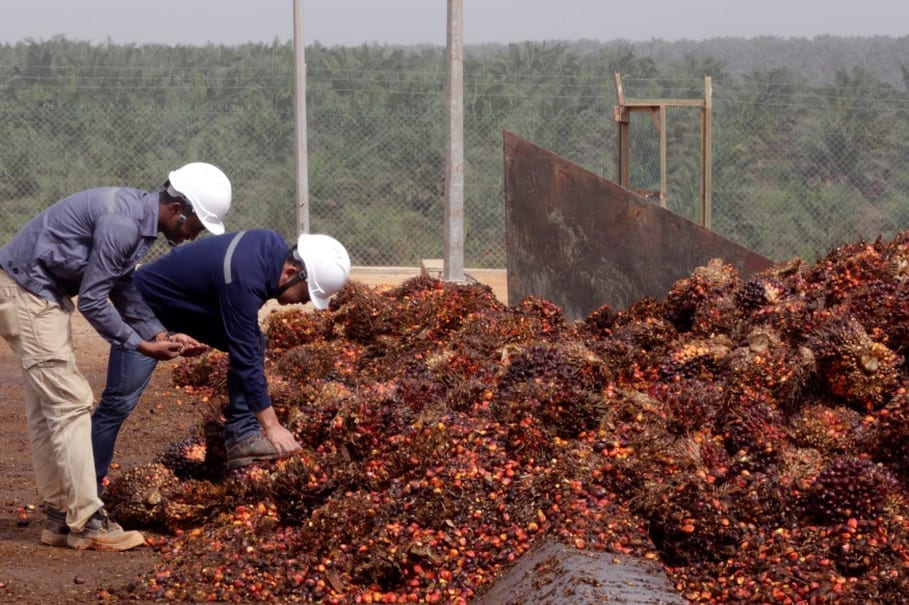
    Palm oil is a key source of revenue for Indonesia — the world’s biggest palm oil producer — accounting for about 14 percent of the country’s total exports.

    The EU is the second largest export market for Indonesian palm oil, importing around 5 million tons of the key Nutella ingredient each year. According to Ministry of Trade data, the EU has always been in the top two destinations for palm oil, along with India, since the 1990s.

    Purbaya Yudhi Sadewa, deputy minister of coordinating maritime sovereignty at the Coordinating Ministry of Maritime Affairs, said the EU must address trade barriers that discriminate against palm oil for the matter to be solved quickly.

    “Our goal is not to force the European Union to use palm oil, but we demand fair treatment for palm oil with other vegetable oils,” Purbaya said, adding that the EU now seems to solely target palm oil.

    “If the European Union has shown that they are not discriminatory towards palm oil, then we will gladly comply to their policy,” he said.

    The EU has insisted that it has no intention of building trade barriers against Indonesian palm oil and will address all drivers of deforestation, including soy, cocoa and coffee, but it has so far only proposed to ban palm oil imports.

    “The way I see it there is a [business] competition as they [EU country members] produce rapeseed oil which is expensive, while our palm oil is cheaper,” Trade Minister Enggartiasto Lukita said last month.

    According to a study by the Malaysia Palm Oil Council, oil palms occupy 9.2 million hectares of agricultural land and produces 31.8 percent of global oils, while soybean and rapeseed crops require 10 times this amount of land to produce similar yields.

    “This is an unhealthy competition … If it [palm oil] is disturbed, then we will also disturb the EU,” Enggartiasto said, adding that the ministry plans to ban fisheries from the EU if the draft is approved.

    Deforestation

    Vincent Guerend, EU Ambassador to Indonesia and Brunei Darussalam, however, said the union is considering to progressively replace food-based biofuels by more advanced ones, such as electricity, to prevent land-use changes affecting peatlands and tree cover.

    “The EU was the one to promote biofuel as renewable over 10 years ago. But because EU is such a big market, it has some very strong pull effects—negative effects to be exact,” Vincent said.

    According to Vincent, food prices are rising due to increasing land use for palm plantation that reduces available land for food crops. The expansion also contributes to deforestation, threatening species including elephants and orangutans.

    Data from the Central Statistics Agency (BPS) shows that land used for palm plantation rose from only 4 million hectares in 2000 to 11.9 million hectares in 2017. That figure is predicted to increase to 13 million hectares by 2020.

    A research study by the European Commission also shows that greenhouse gas emissions from biodiesel are more than three times higher than those from conventional diesel engines, when indirect effects are considered.

    New Markets

    Indonesia shipped out the highest value of palm oil ever in 2017, contributing to the year’s $12 billion trade surplus.

    According to BPS, palm oil exports and its derivative products reached $23 billion, up 26 percent from $18 billion in the previous year. The increase was in line with higher sales in non-traditional markets, according to a report by the Indonesian Palm Oil Association (Gapki) released in January.

    The export volume of palm oil to Africa countries jumped nearly 50 percent to 2.3 million tons in 2017 from 1.5 million, while exports to Middle Eastern countries also increased by 7 percent to 2.1 million tons from 1.9 million, the report showed.

    China — facing a threat of declining edible oil supply in trade wars with the United States — has also promised to increase palm oil imports from Indonesia by up to 500,000 tons per year. China bought 3.73 million tons of Indonesian CPO last year, from 3.23 million tons in 2016.

    “When we talk about the importance and significance of the EU on palm oil, this is the reality, which means the worst scenario can lead to a situation that palm oil can live without the EU. The question is of course whether the EU can live without palm oil,” Mahendra said.

  • Indonesia, Peru to Enter a Free Trade Agreement

    Indonesia, Peru to Enter a Free Trade Agreement

    Indonesia and Peru agreed to step up economic cooperation during a meeting between their foreign ministers in Lima, Peru, on Wednesday (23/05).

    The cooperation is going to start with a trade in goods agreement (TIGA) to intensify trade engagement.

    “Indonesia proposed that the establishment of a comprehensive economic partnership agreement [CEPA] should be carried out step-by-step, beginning with the TIGA,” the Ministry of Foreign Affairs said in a statement.

    Peru is Indonesia’s fourth-largest trade partner in South America. Data from the Ministry of Trade showed an increase of around 5 percent between 2016 and 2017, with total trade valued at nearly $230 million last year.

    According to the statement, Foreign Minister Retno Marsudi said during the meeting with her Peruvian counterpart, Néstor Popolizio, that Peru is an important market for Indonesia, but the economic cooperation still needs to meet its potential.

    Retno also stressed the importance of increasing business interaction between the two countries and diversification of products in bilateral trade.

    At the meeting, Retno invited Peruvian businesses to participate in Trade Expo Indonesia (TEI) in October. Indonesia is also set to take part in Peru’s Expoalimentaria and Mistura Food Festival later this year.

    The ministers also discussed efforts to increase cooperation in other fields, including agriculture and fisheries.

    Indonesia’s economic diplomacy seeks to boost bilateral trade with the country’s non-traditional markets, especially in Africa and South America.

    In December, a CEPA with Chile made it the first South American country to have a free trade agreement with Indonesia.

  • Indonesia Improves in Getting Private Money for Infrastructure

    Indonesia Improves in Getting Private Money for Infrastructure

    President Joko “Jokowi” Widodo must have felt relieved and proud when the presidential airplane touched down at Kertajati International Airport in Majalengka, West Java, to inaugurate its service last week.

    The president can now showcase the airport as a successful and punctual public-private partnership (PPP) for infrastructure development.

    Initiated by the provincial government of West Java in 2009, the $800 million airport project was initially marred by land-clearing and financing problems. In 2015, Jokowi decided to step in with a state fund for the airport’s runway, taxiway and air navigation system.

    The move allowed Bandarudara Internasional Jawa Barat (BIJB), a state-owned enterprise, to concentrate on developing the terminals.

    Since then the project has become more attractive to investors, who saw a much lower risk. A syndicate of local Islamic banks injected $68 million into the airport last year. And soon BIJB will sell multimillion-dollar asset-backed mutual funds to investors.

    “The Kertajati airport is an example of successful cooperation between the central government, provincial government and the private sector. We will replicate this business model in other regions to accelerate development,” Jokowi said at the airport’s taxiway on Thursday (24/05).

    Second Best

    Indonesia was second after China in terms of attracting private funds to infrastructure projects last year, according to the World Bank’s Private Participation in Infrastructure (PPI) report released in April.

    It showed Indonesia attracted $15.4 billion to 11 projects. Of that amount, about $6 billion alone was used to build the Jakarta-Bandung high-speed railway, which is in 60 percent funded by a consortium of Indonesian state-owned companies and in 40 percent by Chinese enterprise China Railway Construction Corp.

    Among 304 projects considered in the report, 58 percent of the world’s PPI was in China, Indonesia, Mexico, Brazil and Pakistan, amounting to $93.3 billion, a 37 percent increase from 2016.

    Indonesia’s infrastructure push started under President Jokowi, who in 2015 said that more than $400 billion will be spent to accomplish 247 national strategic projects by 2019. Since 2014, when he took office, 30 of the projects, worth Rp 94.8 trillion ($6.7 billion) have been completed.

    Stronger Mechanism

    Since its implementation in the 1990s, private participation has been limited to the sectors of transportation and energy infrastructure. Having realized that the state budget simply cannot bear the costs of its infrastructure projects, the government has broadened the scope of public-private partnerships. Health care, telecommunications and water treatment projects have also been included.

    A 2015 presidential regulation, which expanded these financing possibilities, also set up a guarantee mechanism to fix the rate of return for investors in such projects. It also established Sarana Multi Infrastruktur (SMI) to help channel private funds into ready-to-built projects, and Penjaminan Infrastruktur Indonesia to provide guarantees for investors.

    “Over the past few years, the Indonesian government has considerably strengthened the legal and institutional frameworks for PPPs,” ADB country director for Indonesia, Winfried Wicklein, said last week.

    “By improving the quality of project preparation, ensuring competitive, fair and transparent procurement processes, and complying with obligations under existing long-term PPP contracts, Indonesia can deepen private sector interest in its PPP program,”  he said.

    There are 12 ongoing PPP infrastructure projects, including the Jakarta-Cikampek II Elevated Toll Road.

    The National Development Planning Agency (Bappenas) said that in 2018 there will be at least 15 new public-private projects, including the $1 billion, 71-kilometer Yogyakarta-Bawen Toll Road.

    Of these 15, only the $34-billion West Semarang Water Supply has been tendered, the rest are still being prepared.

    Benefits, Costs

    The most common form of public-private partnership is called “build, operate, transfer.” With this model, a public facility is built and operated by a private enterprise for a longer time, after which its ownership returns to the government.

    With this scheme, the government can refrain from taking in more loans or save the money for social programs.

    “However, when a toll road is built under a PPP scheme, it means the private operator would charge higher prices [to obtain profit]. When this happens, people may have to bear the higher price, which also means lower social benefits of the projects,” said Ahmad Mikail, an economist at Samuel Sekuritas Indonesia.

    The government should take this into consideration.

    “Whether a PPP has gone effectively is when people are satisfied with the facility built under the scheme,” Ferdinand Pecson, head of PPP Center of the Philippines, said earlier this month.

  • Indonesia Central Bank Steps Up FX Swap Auctions to Support Liquidity

    Indonesia Central Bank Steps Up FX Swap Auctions to Support Liquidity

    Bank Indonesia will conduct three foreign-exchange swap auctions this week to ensure there is enough rupiah liquidity in the market following its benchmark interest rate hike, a senior official at the central bank said on Monday.

    Bank Indonesia raised its key rate, the seven-day reverse repo rate, by 25 basis points to 4.50 percent on Thursday last week to bolster the rupiah and stem capital outflows.

    The three Bank Indonesia swap auctions this week are more than the two conducted last week and the one conducted each week in April. Analysts say the increase in frequency could be a pre-emptive move to provide rupiah liquidity to banks before customers start taking cash for spending related to Ramadan and the Idul Fitri celebration.

    The overnight contract for the Jakarta Interbank Offered Rate (Jibor) rose to 4.22528 percent on average the following day, from 4.02500 percent.

    “Even though the seven-day reverse repo rate was hiked 25 basis points, we must maintain enough rupiah liquidity in the money market,” said Nanang Hendarsah, head of monetary management at Bank Indonesia. “With more FX swaps, there will be more rupiah liquidity.”

    Andry Asmoro, an economist at Bank Mandiri, said this measure is likely a part of the central bank’s policy mix where the central bank “wants to tighten to guard against volatility in the market, but on the other hand it also wants domestic liquidity to be stable.”

    Bank Indonesia’s currency intervention has caused rupiah liquidity to tighten. While its sovereign bond buying operations could sterilize this effect, Andry said the central bank has been less active with these operations.

    Late last month, Bank Indonesia Governor Agus Martowardojo announced that the central bank would increase the auction frequency to twice a week from once a week, amid increasing open market intervention to shore up the rupiah.

    The rupiah has been under pressure in past weeks as United States Treasury yields rose and the dollar rallied. The currency continued to fall despite Bank Indonesia’s rate hike and on Monday it softened further to trade at 14,195 to the dollar, its weakest since October 2015.

    Under the auctions, the central bank swaps rupiah funds with commercial banks’ foreign-currency holdings for a period, which allows the banking system access to extra liquidity.

    Nanang said Bank Indonesia will review whether to conduct two or three FX swap auctions each week, depending on market conditions.

    So far this month, Bank Indonesia has sold swap contracts worth nearly $2.7 billion, mostly with one-month and three-month tenors.

    Prior to this, the central bank had not sold any FX swap contracts this year, either because there were no bids in the auctions or because it had refused all bids, according to its website.