Tag: Indonesia

  • Indonesia AirAsia adds two Singapore services on same day

    Indonesia AirAsia adds two Singapore services on same day

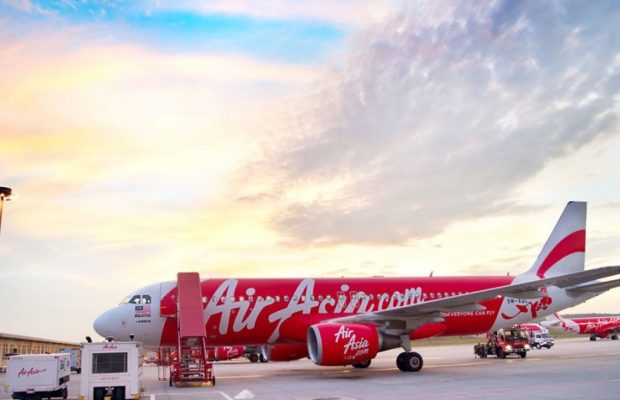
    Indonesia AirAsia added two new Singapore (SIN) services from Medan (KNO) and Padang (PDG) on 9 February. The 621-kilometre Medan link and the 472-kilometre Padang connection will both be served with daily flights operated by A320s.

    The LCC faces incumbent competition on the Medan-Singapore airport pair which is already served by SilkAir with double-daily flights, Jetstar Asia, which has 12 weekly frequencies, and Garuda Indonesia which operates daily flights. However there is no direct competition on the Padang route.

    AirAsia Singapore CEO Logan Velaitham said: “The inaugural flights to Padang and Medan emphasise our commitment to expand Singapore’s network as one of AirAsia’s hubs by linking up to new cities in Indonesia. In 2017, AirAsia Group carried a total of 4.3 million passengers to and from Singapore, an increase of 1.8% from the previous year.”

  • Newcomer Logistics Firm Iruna eLogistics Seeks to Empower E-Commerce

    Newcomer Logistics Firm Iruna eLogistics Seeks to Empower E-Commerce

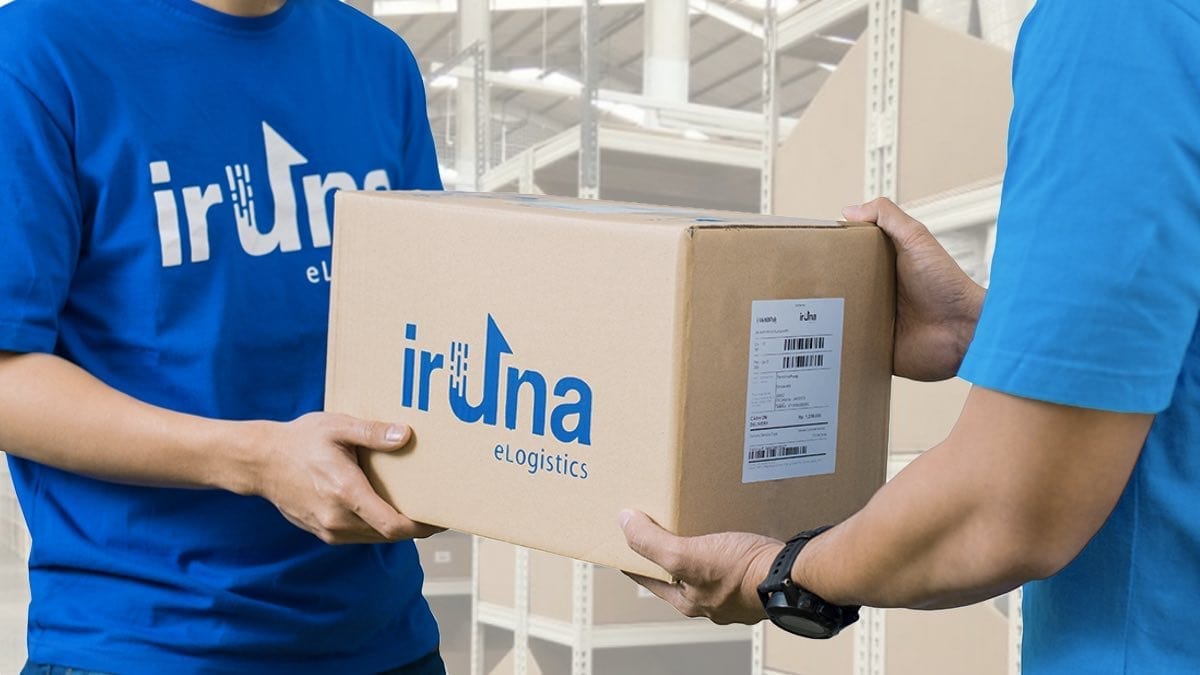
    Iruna eLogistics, a logistics startup company, plans to open two new fulfillment centers in Surabaya and Medan by the end of this year as part of its rapid expansion to provide back-end logistics services to Indonesia’s small and medium-sized enterprises.

    Indonesia’s small and medium-sized businesses have embraced e-commerce and digital marketing platforms to boost sales in the last two years. However, they often find high warehousing and transportation costs expensive and experience complications in tracking inventory, which in turn hinder growth.

    Iruna, which was founded by logistic veteran Yan Hendry Jauwena last December, tries to address the problem by offering integrated logistics solutions which manage the storage, packaging, handling and delivery of items for small business.

    “We wanted to improve the ecosystem by taking care of the back-end issues involved in online commerce. That way the small and medium-sized businesses can focus only on the production and marketing of their products,” Maria Bebasari, Iruna’s vice president for marketing and communication, said on Tuesday.

    Currently, Iruna handles delivery of more than 1,000 types of items a day, ranging from tiny soaps to bulky furniture from its 5,000-square-meter space in Sunter, North Jakarta. The facility is equipped with freezers and coolers to handle food and beverage delivery as well as secured storage for items worth more than Rp 5 million ($374), Maria said.

    Still, the company is not yet able to transport gold — which requires a separate license — or living plants or animals, she said.

    Iruna plans to open similar facilities in Surabaya next month and in Medan by the end of the year, occupying an area of 2,000 to 3,000 square meters each, Maria said.

    Maria said e-commerce consumers are concentrated in big cities despite vendors being spread out across the archipelago, making it costly for individual item delivery.

    “It’s more economical for both the producers and consumers if the delivery is done from our warehouse,” Maria said, adding that their storage and handling facilities differentiate the company from existing logistics firms like state-owned Pos Indonesia, Tiki or JNE.

    Maria said that Iruna targets to deliver 1 million different types of items and add six more fulfillment centers across the archipelago over the next three years, fully confident in the country’s e-commerce prospects.

    Indonesia e-commerce market is projected to reach $130 billion in sales by 2020, according to an estimate from the Ministry of Communication and Information Technology.

  • Indonesia Central Bank to Prepare Fintech Regulatory Roadmap

    Indonesia Central Bank to Prepare Fintech Regulatory Roadmap

    Bank Indonesia is currently preparing a roadmap of regulations for financial technology, or fintech, products in an effort to support the rapid change of the global financial system in the digital era, the central bank’s official said on Thursday (08/02).

    “This is a response to the shift from physical to virtual as it presents risks and challenges […] There will be a roadmap to regulate fintech to follow its dynamic development,” Sukarelawati Permana, director of the policy and payment department at the central bank, said at an economic forum.

    The central bank is collaborating with Financial Services Authority, or OJK, to create the regulatory roadmap.

    Sukarelawati, however, did not reveal the details of the framework or when it will be released.

    The regulations, according to her, will mitigate risks presented by the sector’s development, while still supporting the shift of traditional payment systems into the digital realm.

    “As we surely cannot block innovation, we as the authorities will try to balance the digital economy,” Sukarelawati said.

    The central bank previously issued a provision to support innovation in the fintech sector that benefits the economy while maintaining the principles of consumer protection, risk management and prudence, Sukarelawati said.

    A 2017 Bank Indonesia regulation regarding financial technology implementation dictates that fintech providers register with the central bank.

    The regulation excludes payment system service providers (PJSP) who have obtained a license from Bank Indonesia and providers who are under other authorities. But the providers must still inform the central bank regarding new products, services, technologies and business models.

    Bank Indonesia is currently also conducting a study on the feasibility of issuing digital currency.

  • AirAsia Opens 3 New Routes in Indonesia

    AirAsia Opens 3 New Routes in Indonesia

    AirAsia Indonesia, a budget carrier based in Tangerang, Banten, announced on Friday (09/02) it has opened three new routes, two international and one domestic, to tap into the increasing demand for air travels.

    The carrier, an affiliate of Southeast Asian low-cost airline AirAsia, opened new routes to Singapore from Medan, North Sumatra, and Padang, West Sumatra, and from Jakarta to Medan.

    The flights are served on Airbus A320 airchraft with 180 seats.

    “The opening of the new routes from Padang and Medan showed that AirAsia’s network expansion in Indonesia is not centered in Jakarta and Bali only,” AirAsia Indonesia Dendy Kurniawan chief executive said in a statement.

    Dendy said AirAsia Indonesia expects that the direct flights to Singapore from the capitals of two provinces of the Sumatra island, coupled with low-cost tickets, will attract more visitors from the city-state.

  • Asia boosts growth for L’Oreal

    Asia boosts growth for L’Oreal

    French cosmetics giant L’Oreal reports “spectacular” growth for last year, particularly in Asia.

    It had growth acceleration of 5.5 per cent in the fourth quarter with sales exceeding €10 billion (US$12.2 billion) in the ‘new markets’, which include Asia Pacific.

    Operating margin reached a record 18 per cent.

    Sales were €26 billion, up 4.8 per cent like-for-like, 2 per cent at constant exchange rates and 0.7 per cent on reported figures.

    Representing a record 18 per cent of sales, the operating profit was €4.68 billion.

    “L’Oreal had a good year with sustained sales growth momentum and robust profits,” says chairman/CEO Jean-Paul Agon.

    The second half accelerated compared with the first, particularly in the fourth quarter.

    Sales grew in all divisions, especially L’Oreal Luxe in Asia. The Active Cosmetics Division achieved more than €2 billion of sales for the first time.

    The new markets exceeded more than €10 billion in sales for the first time ever. The Asia Pacific zone had growth of 12.3 per cent like-for-like and 9.2 per cent reported. In Northern Asia, Chinese consumers are driving growth, particularly for the L’Oreal Luxe Division in China and Hong Kong. China’s growth was fuelled by strong e-commerce results. In Southern Asia, India is proving dynamic, while Malaysia and Thailand are also growing strongly.

    Overall, operating profit, at €4.6 billion, has grown by 3 per cent and amounts to 18 per cent of sales, representing an increase of 40 basis points. Excluding exchange rates, operating profit grew by 4.4 per cent.

  • Here’s Why Pre-Owned Luxury Fashion Are Growing In Asia

    Here’s Why Pre-Owned Luxury Fashion Are Growing In Asia

    Asia’s pre-owned luxury fashion market is continuing to grow, with shoes and t-shirts gaining ground, according to multichannel retailer Reebonz.

    Although bags continued to dominate, with an average of 77 per cent of total transactions in 2016 and 2017, both shoes and apparel achieved steep sales growth throughout the region, according to Reebonz’s now annual Asia Luxury Index.

    In Hong Kong, for example, sales of used branded sneakers rose 48 per cent last year, while “luxury t-shirt” sales soared six-fold.

    The report is based on Reebonz’s own trading data across Australia, China, Hong Kong, Indonesia, Malaysia, New Zealand and Singapore, along with unspecified “industry reports”.

    Reebonz says millennials are driving the sector’s growth, “tilting the scales in favour of a pre-owned luxury market that continues its growth trajectory”.

    Chanel, the most-purchased pre-owned brand by millennials, recorded more than double the total sales value on Reebonz last year over 2016.

    The report said the changing perceptions towards pre-owned luxury have altered the state of resale and how consumers shop today, contributing to 40 per cent sales growth in the pre-owned category at Reebonz.

    “The growing demands of buying from the resale market cleverly gives rise to a community of individual sellers, injecting the luxury ecosystem with products that meet these needs,” said Reebonz cofounder Daniel Lim.

    Louis Vuitton, Hermes and Chanel were the three top-selling brands on Reebonz last year, fetching resale values as high as 125 per cent of their original retail price in the secondary market. Gucci, Celine and Dior were also among the top 10.

  • Coal buyers spooked by Indonesia’s new shipping rules

    Coal buyers spooked by Indonesia’s new shipping rules

    Buyers of Indonesian coal are holding back orders of the fuel after the government issued new shipping rules for coal and crude palm oil that would restrict exports to Indonesian vessels, an industry association said today.

    Jakarta issued rules in October requiring coal and palm oil exporters to use Indonesian-flagged vessels and Indonesian insurance companies, to boost the role of the archipelago’s shipping industry in its export market.

    However, guidelines on implementing the rules and possible exemptions have not been released, raising concerns among shippers in Indonesia, the world’s top thermal coal exporter and palm oil producer.

    The regulation will take effect at the end of April.

    “There was some information, several potential buyers from abroad put on hold making any new contracts,” Hendra Sinadia, executive director of the Indonesia Coal Mining Association said.

    Describing the new rules as “dangerous”, Sinadia said they could affect export volumes and state revenues if shipping contracts had to be renegotiated to shift to so-called cost,
    insurance and freight (CIF) contracts from free-on-board (FOB) contracts.

    Under CIF contracts, the seller is responsible for the shipping arrangements and must buy insurance to protect the cargo against losses during the voyage. Under FOB contracts, the buyer procures the vessel and is responsible for all shipping costs.

    The industry is worried that time is running out to make adjustments before the rules come into effect, Sinadia said, noting that it would be difficult to do so without the
    guidelines.

    Indonesia Palm Oil Association secretary-general Togar Sitanggang said in an interview on Jan 24 that there were several problems with the new rules, noting there were not enough Indonesian-flagged food-grade tankers, and that Indonesian insurers may lack capacity.

    “If we’re selling CPO (crude palm oil), free-on-board at Belawan port, does this mean our buyer has to use Indonesian vessel? That is ridiculous.”

    The palm oil industry is awaiting guidance on when foreign vessels can be used if local vessels are unavailable, he said. “There should be no obstacles, but if we must do this and that, it could hold up exports.”

    The new rules could add to freight costs, Sitanggang said, if shipping companies were unable to find cargo for their return trips to Asia. “If their ships are empty, of course they’ll ask for a higher price from us.”

    According to Oke Nurwan, director-general of foreign trade at the Ministry of Trade, while most domestic shipping uses Indonesian-flagged vessels very little is exported on Indonesian ships.

    “It can’t be like that any more,” Nurwan said on Jan 25, adding that the government wanted the domestic shipping sector to compete more with multinationals.

    “If (the government) didn’t intervene there would be no trigger, so we made it mandatory,” he added.

  • Quick Serve to expand Texas Chicken in Indonesia

    Quick Serve to expand Texas Chicken in Indonesia

    Quick Serve Indonesia, the new franchisee for US quick-service chicken chain Texas Chicken, has launched its first two stores.

    The first is in Surabaya, East Java, in the Tunjungan Plaza 3 (TP3), with a second a signature stand-alone restaurant in Kertajaya, East Java. The two-storey restaurant seats 175 guests.

    As well as items from Texas Chicken’s international menu, the two outlets offer chicken and rice dishes with international and Asian sauces.

    “The Surabaya location is in a culinary hub for our region, which gives the brand an opportunity to solidify its base in Indonesia,” says Quick Serve Indonesia MD Julius Evan Kritianto.

    Texas Chicken already has 60 outlets in Indonesia run by another franchise group, Cipta.

    Quick Serve says it plans to move quickly to expand the brand primarily in the Java and Bali regions.

  • Bangladesh Signs Deal With Indonesia for LNG Imports

    Bangladesh Signs Deal With Indonesia for LNG Imports

    Bangladesh signed an agreement with Indonesia on Sunday (29/01) to open talks on imports of liquefied natural gas, as the South Asian country turns to the supercooled fuel to fill a shortfall of domestic natural gas.

    A letter of intent was signed between two state energy companies, Petrobangla and Pertamina, after a meeting between Bangladeshi Prime Minister Sheikh Hasina and President Joko “Jokowi” Widodo, who arrived in Dhaka on Saturday.

    Bangladesh, a country of more than 160 million people, may import 17.5 million tons of LNG a year by 2025, as its domestic gas reserves dwindle and demand grows.

    Petrobangla is finalizing several floating storage and regasification units, the first of which is expected to commence operations in April 2018.

    In September, Bangladesh signed its first ever LNG import deal with Qatar, underscoring the rise of South Asia as a new market for the fuel.

    Jokowi’s visit comes as Bangladesh is struggling to cope with an influx of around 688,000 Rohingya refugees who have fled an army crackdown in Myanmar’s Rakhine state since last August.

    “He reiterated his country’s support to the safe, dignified return of the displaced persons to the Rakhine State,” a joint statement said after Jokowi visited a refugee camp in the Cox’s Bazar region of southern Bangladesh.

    Hasina “appreciated Indonesia’s supportive role, including the humanitarian assistance for the displaced persons from Rakhine State sheltered in Bangladesh,” the statement said.

    Myanmar and Bangladesh agreed earlier this month to complete a voluntary repatriation of the refugees in two years.

    The plan has sparked fears in refugee camps in Bangladesh that people may be forced to return despite a lack of guarantees around their security. Witnesses have reported killings, looting and rape after the Myanmar army cracked down in response to militant attacks on security forces in Rakhine.

    Many in Buddhist-majority Myanmar regard the Rohingya community as illegal immigrants from Bangladesh. The United Nations has described the crackdown as ethnic cleansing, which Myanmar denies.

  • Garuda Indonesia Eyes $2.4b From Singapore Airshow

    Garuda Indonesia Eyes $2.4b From Singapore Airshow

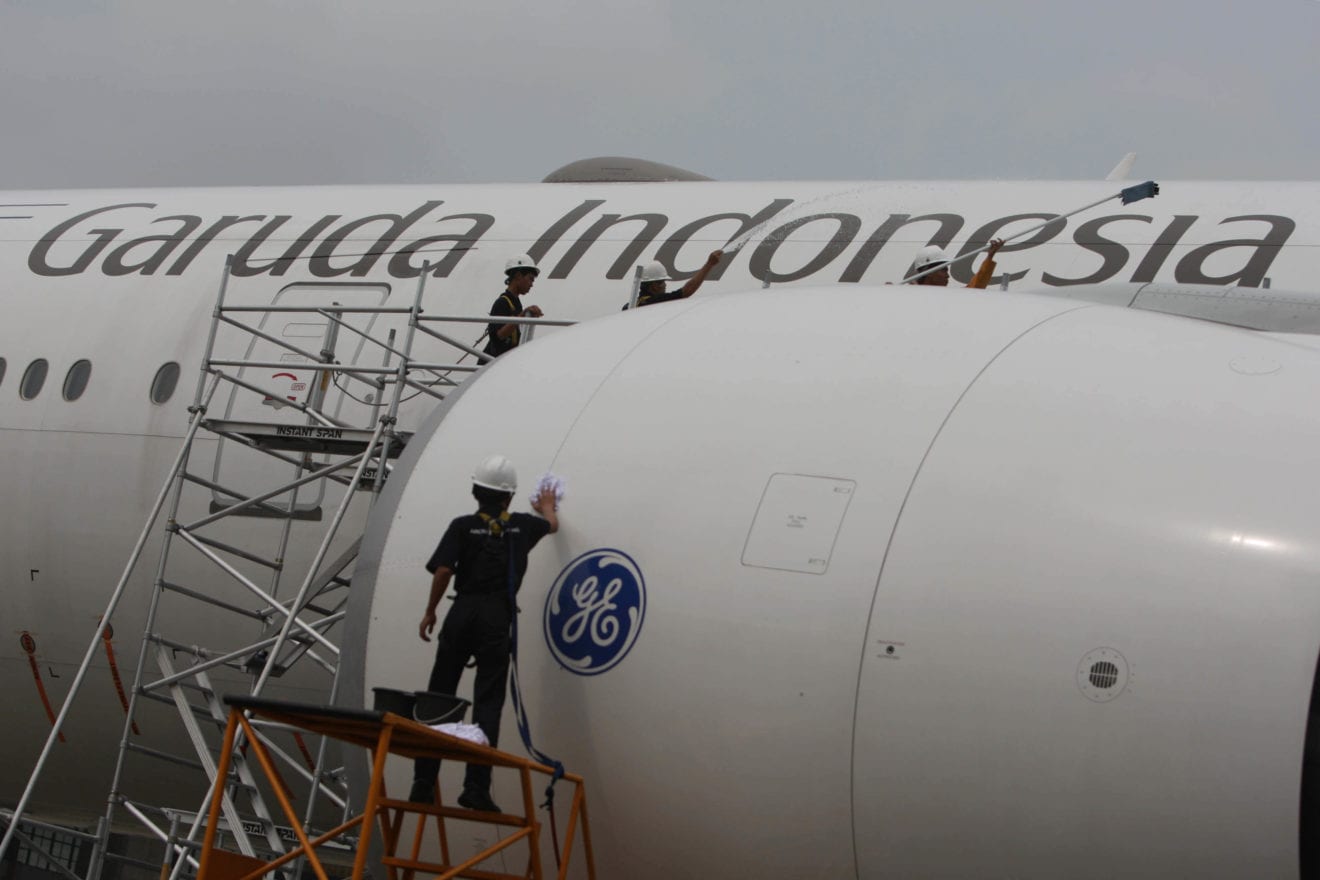
    National flag carrier Garuda Indonesia eyes $2.4 billion in transactions from the 2018 Singapore Airshow, which takes place at the Changi Exhibition Center on Feb. 6-11, the company said in a statement on Monday (05/02).

    The airshow, the biggest of its kind in Asia, gathers major stakeholders in the aviation industry.

    During last year’s edition, Garuda signed transactions worth $129 million. This year, it brings its subsidiaries, including maintenance, repair and operations (MRO) company GMF AeroAsia, budget airline Citilink Indonesia and operations support unit Aerowisata.

    “We’re trying to tell everyone that Garuda Indonesia is a giant in the aviation industry in region, and this event is the place for us to showcase our excellence,” Garuda Indonesia chief executive Pahala Mansury said in the statement.

    Pahala added that the group will be looking for partnerships to expand its business.

    “We’re aiming to penetrate the market this year,” GMF AeroAsia chief executive Iwan Joeniarto said.

    GMF AeroAsia says it has recorded significant growth in the past few years. Overseas investors have recently expressed interest in buying the company’s shares.

    In the third-quarter of 2017, GMF generated $310.5 million in revenue, which exceeded its initial projection by 102 percent, the company said on its website. Its net profit was $38.1 million, up 8.9 percent from the same period a year earlier.

    Meanwhile, Citilink Indonesia said it will take advantage of the event to open international routes. Last year, the company said it will inaugurate international flights in the Asean region in 2018.

    “With our participation in the Singapore Airshow, we try to prove that as a premium low-cost carrier we are ready to open international routes in the immediate future,” Citilink chief executive Juliandra Nurtjahjo said.

  • With Fastest Growth in Four Years, Indonesia Enters Trillion Dollar Club

    With Fastest Growth in Four Years, Indonesia Enters Trillion Dollar Club

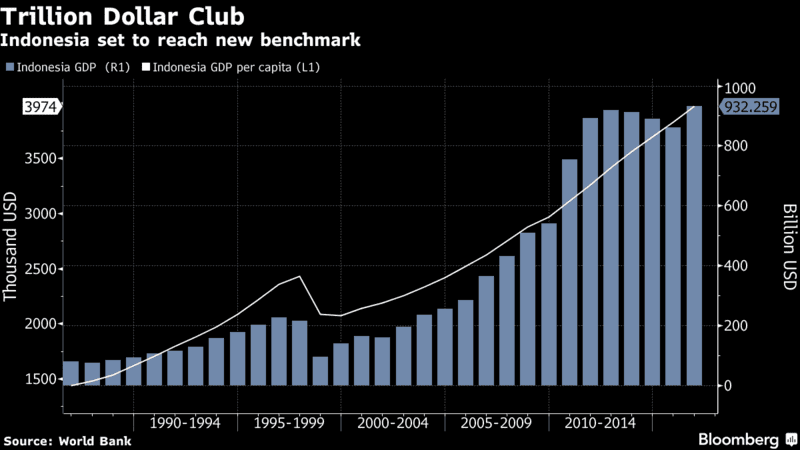
    Indonesia’s full-year gross domestic product growth last year accelerated at the fasted pace in four years, as robust exports and investment growth compensate for weak household consumption, the Central Statistics Agency, or BPS, revealed on Monday (05/02).

    The agency said the economic growth rate was 5.07 percent, the highest since 2014. In 2015, the economy grew only 4.88 percent, while in 2016 at a 5.03 percent rate.

    Indonesia’s nominal gross domestic product was Rp 13,558 trillion, or $1 trillion at the 2017 exchange rate. This places Indonesia in a group of countries with economies above $1 trillion, like Australia, South Korea and India.

    Coordinating Economics Minister Darmin Nasution said he is optimistic this year’s economic growth rate will meet the government’s target of 5.4 percent, as he expects domestic consumption to rise with the upcoming regional elections and the Asian Games in August.

    “[We are] still optimistic … As long as we maintain the investment and exports,” Darmin said.

    Darmin needed to put economic growth in a more positive light, as the 5.2 percent target from the revised 2017 state budget was missed, because consumers withheld spending.

    “The top 20 percent of consumers tended to postpone their spending. There were concerns about politics and aggressive tax policies. Meanwhile, the lowest 40 percent were hit by rising food prices,” said Bhima Yudhistira Adinegara, an economist at the Institute for Development of Economics and Finance (Indef).

    “The key now is in recovering the confidence of the upper class and ensuring timely disbursement of social aid,” Bhima said.

    Gundy Cahyadi, a Singapore-based economist at DBS, said infrastructure projects are expected to continue supporting economic growth in 2018.

    “And if commodity prices are to remain at current levels, we expect investment growth to be more broadly based this year, with possibly positive spillover impact to household consumption,” Gundy said, adding that he expects Indonesian economy to expand by 5.3 percent in 2018.

    In 2017, Indonesia posted a five-year high of $11.84 billion trade surplus, thanks to the recovering global economy and rising commodity prices, with an increase in exports and imports — 9.09 percent and 8.06 percent, respectively.

    Foreign direct investment grew 8.5 percent last year from the previous year.

    “Trade and investments increased, but [household] consumption was still at 4.95 percent. If we want the economy to grow above 6 percent, these three components have to go hand in hand,” BPS head Suhariyanto told reporters.g

  • Eight Firms Eye Q1 IPOs at Indonesia Stock Exchange

    Eight Firms Eye Q1 IPOs at Indonesia Stock Exchange

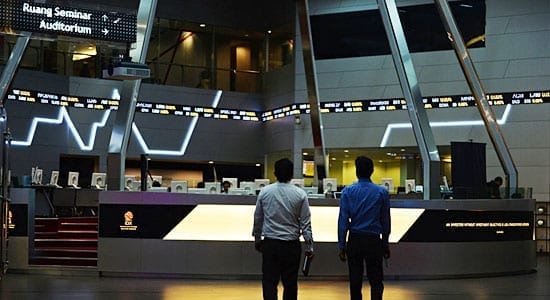
    Eight companies are currently preparing for initial public offerings in the first quarter this year, Samsul Hidayat, a director at Indonesia Stock Exchange said Monday (06/02).

    So far this year, only one company has completed an IPO at the exchange, which is aiming to list more than 35 new companies in 2018.

    Among the eight companies in the pipeline are power company Sky Energy Indonesia and BTPN Syariah, the Islamic banking unit of mid-size lender Bank Tabungan Pensiunan Nasional (BTPN), Hidayat said.

    He did not disclose the potential sizes of the new IPOs.

    In 2017, 37 companies launched IPOs, raising a combined 9.6 trillion rupiah ($710.06 million) in proceeds, according to data from Financial Service Regulator (OJK).

    That compared to 14 companies in 2016, which raised a combined 12.1 trillion rupiah.

  • ZALORA announces partnership with American brand J.Crew

    ZALORA announces partnership with American brand J.Crew

    Asian online fashion destination Zalora and J.Crew have announced they are forming a partnership to expand the US brand’s reach.

    From next month, a curated range of J.Crew’s women’s ready-to-wear and shoes as well as men’s apparel and accessories will be available at Zalora.

    It is J.Crew’s first online venture with a partner into Indonesia, Malaysia, Singapore, Taiwan and the Philippines, and will strengthen its store presence in Hong Kong.

    “Through our innovative platform and expansive logistics network, J.Crew will reach shoppers well beyond capital cities reaching a far wider network of potential customers than ever before,” says Zalora Group CEO Parker Gundersen.

  • 2018 rice export to hit 6m tonnes

    2018 rice export to hit 6m tonnes

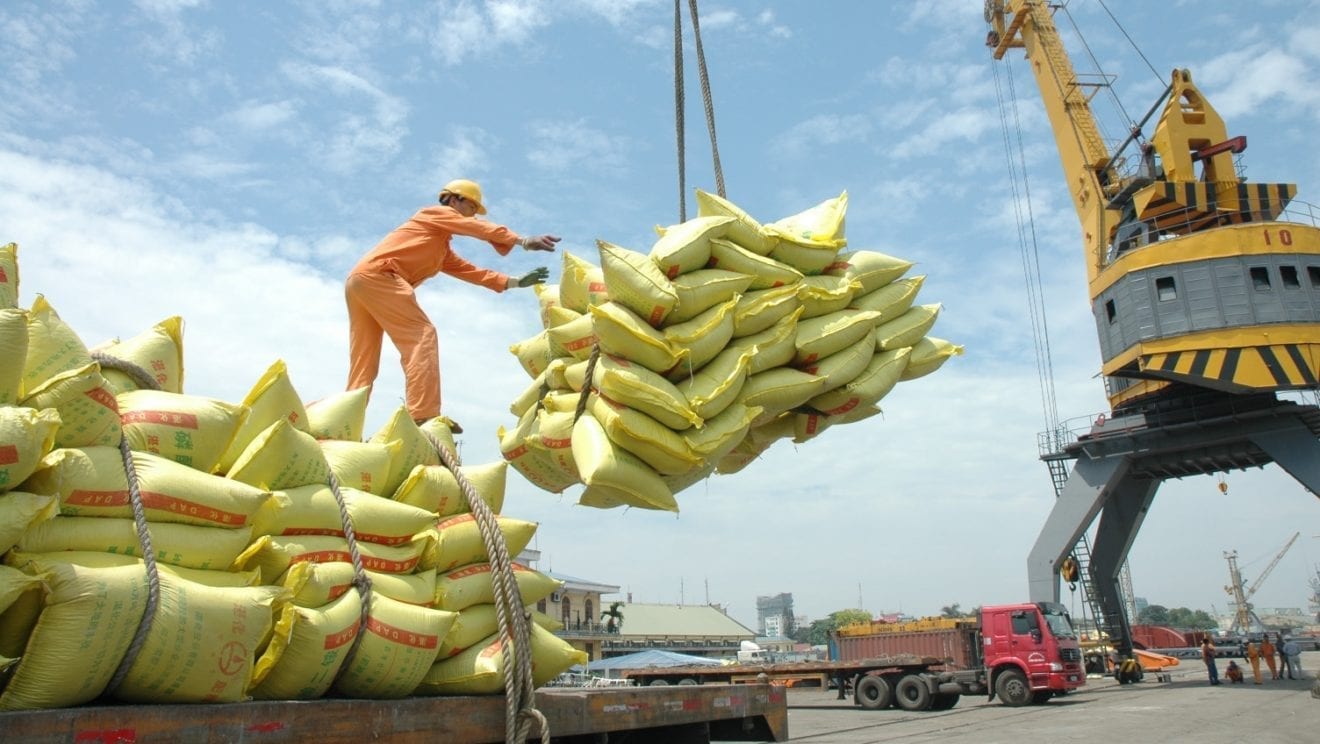
    Việt Nam’s rice export volume in 2018 is expected to increase by 400,000 tonnes from 2017 to reach 6 million tonnes, due to increased demand from Southeast Asia, especially from the Philippines, with China expected to be the country’s largest rice market.

    The Vietnam Food Association (VFA), in a report earlier in January, said countries in Southeast Asia will import a large amount of rice from Việt Nam, helping boost the country’s turnover this year.

    The VFA said Indonesia will import rice from Việt Nam and Thailand again in 2018 to increase reserves, as Indonesia’s rice price has been rising, almost double the floor price.

    Similarly, the National Food Board of the Philippines approved of up to 250,000 tonnes of imported rice to offset declining inventories, due to unfavourable weather in 2017.

    These developments are encouraging for Việt Nam’s rice export market, said the VFA’s report, with export price of 5 per cent broken rice rising to US$400 per tonne from $390.

    Domestic rice price also increased, with the average price between to $267 to $293 per tonne as of January’s end, having increased by $13 to $15 per tonne from December 2017’s price.

    According to the VFA’s data, throughout 2017, the country exported 5.7 million tonnes of rice worth $2.54 billion.

    As mentioned by the US Department of Agriculture (USDA)’s 2018 world rice production forecast, issued late 2017, the main factor behind this year’s rice trade expansion is increased output from Việt Nam, Pakistan and Myanmar, three of the world’s top six rice exporting countries.

    The USDA’s report stated that though 2017 global rice output fell by 20 per cent from 2016’s number, as a result of weak outlook for grain products, long, heavy rainfall and spring floods and other unfavourable weather, meaning there should be positive signals from traditional rice importing markets in Southeast Asia in early 2018.

    In Bangladesh and Sri Lanka, whose rice crops were heavily influenced by harsh weather, demand for rice imports will also increase in 2018. Rising import demand is supported by increased purchasing power in Africa and the Middle East, while China continues to be a leading importer of rice from neighbouring regions.

    As such, Việt Nam will witness an increase in revenue from rice exports to several large consumer markets.

    According to the Department of Crop Production under the Ministry of Agriculture and Rural Development, in early January 2018, the Mekong Delta’s rice producers harvested 860,000 hectares of rice, with an average yield of 5.3 tonnes per hectare.

    Nonetheless, problems remain for national rice production, the majority of which stem from farmers’ ignorance.

    Talking to Vietnam News Agency during a late 2017 agricultural conference in the Mekong Delta, Võ Tòng Xuân, former vice rector of Cần Thơ University and rice expert, emphasised growing competition in global rice markets.

    Xuân warned that Việt Nam needs to find ways to make its rice exports stand out if it wants to achieve export targets.

    Regarding export rice quality, he was convinced that since rice merchants often mix different batches from different farmers into one large batch, there is virtually no way to completely track the origin of any batch.

    Without clear origin, there are no certain product quality controls, and no major national rice brand for Việt Nam, Xuân added.

    He suggested issuing contracts between rice farmers and processing plants for sustainable production, via agricultural co-operatives instead of relying on middlemen.

    Xuân also said that there remain regulations acting as barriers to small and medium enterprises from entering the rice market. Exporting low quality rice and fragrant rice without a brand name is becoming increasingly difficult for Việt Nam, especially in finding niche markets to sell several thousand tonnes.
     

  • Indonesia to Start Implementing Stricter Regulation for Ride-Hailing Services in February

    Indonesia’s Transportation Minister Budi Karya Sumadi confirmed on Thursday (25/01) the government will start implementing its newly-revised regulation for app-based ride-hailing services in February.

    The new ministerial regulation for services like Uber and Grab was set in October last year. It has been trialled in some major cities including Jakarta, Bandung (West Java), Semarang (Central Java), Surabaya (East Java) and Medan (North Sumatra).

    The new regulation will impose operational area limits for app-based taxis and require their drivers to obtain a public transportation driver’s license. Each driver will also have to join up with a company or a co-operative with at least five members.

    Cars used by app-based taxis will have to undergo regular test to keep their certificate of roadworthiness, or KIR, and each car should have a sticker saying it is being used as a ride-hailing cab.

    “In England, Uber cars have that kind of sticker, that’s easily seen on the street,” Budi told reporters at Kuningan City Mall in Jakarta on Thursday (25/01).

    “The ultimate goal for this regulation is to provide better safety for passengers,” he said.

    Many online taxi drivers have been complaining about the new regulation since it was first introduced in October.

    According to them, the hardest requirement to meet in the new regulation is re-registering the car as a public transportation vehicle and doing the KIR test regularly.

    “The regulation has to be fair,” Budi said. “It’s for everyone’s benefit. But public safety is our top concern. The regular KIR test, for example, is to make sure the cars are in tip-top shape,” Budi said.

    Last Monday, hundreds of online taxi drivers marched to the Transportation Ministry headquarters in Jakarta.

    The drivers promised a bigger street protest next Monday, Jan. 9, in front of the presidential palace.

    The government has also said it will impose tiered sanctions for drivers who disobey the rules, from suspending their license, fines of up to Rp 500,000 ($37) to a two-month jail sentence.