Tag: Indonesia

  • Indonesia Bourse Poised To Rebound On Monday

    Indonesia Bourse Poised To Rebound On Monday

    The Indonesia stock market headed south again on Friday, one session after it had ended the two-day slide in which it had fallen more than 85 points or 1.3 percent. The Jakarta Composite Index now rests just beneath the 5,815-point plateau although it is expected to bounce higher again on Monday.

    The global forecast for the Asian markets is upbeat after better than expected jobs data from the United States, although those numbers may fan concerns over the outlook for inflation rates. The European markets were mixed and the U.S. bourses were higher, and the Asian markets figure to follow the latter lead.

    The JCI finished modestly lower on Friday following losses from the financials, resource stocks and food companies.

    For the day, the index shed 34.87 points or 0.59 percent to finish at 5,814.79 after trading between 5,810.36 and 5,863.59. Volume was 5.91 billion shares worth 6.4 trillion rupiah. There were 239 decliners and 102 gainers, with 101 stocks finishing unchanged.

    Among the actives, Bumi Resources retreated 2.92 percent, while Vale Indonesia added 0.27 percent, Jasa Marga plunged 3.21 percent, Lotte Chemical Titan dropped 2.38 percent, Tiga Pilar Sejahtera tumbled 1.88 percent, XL Axiata sank 0.31 percent, Bank MNC Internasional and Bank Pan Indonesia were unchanged, Bank Danamon Indonesia skidded 1.64 percent and Bank Mandiri dipped 0.56 percent.

    The lead from Wall Street is positive after Friday’s jobs report as the markets regained some ground after heavy losses in the previous session.

    The Dow climbed 94.30 points or 0.4 percent to 21,414.34, while the NASDAQ added 63.61 points or 0.1 percent to 6,153.08 and the S&P gained 15.43 points or 0.6 percent to 2,425.18. For the week, the Dow rose 0.3 percent, the NASDAQ added 0.2 percent and the S&P was up 0.1 percent.

    The rebound followed a Labor Department report showing stronger than expected job growth in June. The report said non-farm payroll employment jumped by 222,000 jobs in June following an upwardly revised increase of 152,000 jobs in May.

    The Federal Reserve is scheduled to make its next decision on interest rates following a two-day meeting later this month.

  • Marketplace for used automobiles Droom to invest upto $10m in acquisitions

    Marketplace for used automobiles Droom to invest upto $10m in acquisitions

    After closing its $20 million Series C round of funding last week, Droom, an online marketplace for used automobiles, plans to announce a few acquisitions by the end of this year, founder Sandeep Aggarwal said.

    “We are planning 2-3 acquisitions this year and will probably spend about $8-10 million. We have been in talks with several companies,” he added.

    Droom will also expand into Indonesia this year, a year later than its earlier planned foray into Southeast Asia. When asked on the deferred timelines, Aggarwal admitted the plan had been ‘delayed’ as the company had stayed focused on its operations in India.

    “We stayed focused on India because if we capture India, then we can capture many other countries. After Diwali (this year), we will expand internationally and Indonesia will be the first country. After that, we will be expanding to Malaysia, the Philippines, Thailand and Singapore,” he said.

    After SEA, Droom will consider Middle East and Western Europe for expansion. It expects international expansion to contribute 10-15 per cent of the total revenues in calendar year 2018. In 2019, overseas revenue could increase to 20-25 per cent, Aggarwal added.

    The company’s recently closed Series C round was lower than than the quantum it had raised as part of its earlier Series B financing.

    At a press briefing announcing the funding last week, Aggarwal had said: “Series C is smaller than Series B in terms of quantum  of money – it is not because we could not get more money – in fact more money was available, but we are still sitting on 70-80 per cent of our Series B. We feel bad that we could have raised the same money now at a much higher valuation now (when compared to Series B), and seen a lesser dilution.”

    The company says it was unable to spend its Series B funding entirely as it had achieved at least three times more its internal target. It also claims to be the first e-commerce company that had achieved low single-digit dilution in Series C.

    Droom will be launching two new services — RTO services and test drive at doorstep in the coming months. By December this year, it aims to cross Rs 5,000 crore in gross revenues and close to Rs 125 crore in net revenues. Droom has 1,79,000 auto dealers and has sold 1,50,000 vehicles since its inception.

    Aggarwal has recently been locked in a bitter spat with the top management of Shopclues, another online marketplace he co-founded.

    He had handed over the reins of Shopclues to his now-estranged wife Radhika Aggarwal in 2013, when he was arrested by the FBI for his alleged involvement in an insider trading case in the US in 2013. In March this year, Aggarwal took to social media to accuse his wife of pushing him out of Shopclues, in collusion with co-founder Sanjay Sethi.

  • Garuda flights delayed because of ‘technical constraint’

    Garuda flights delayed because of ‘technical constraint’

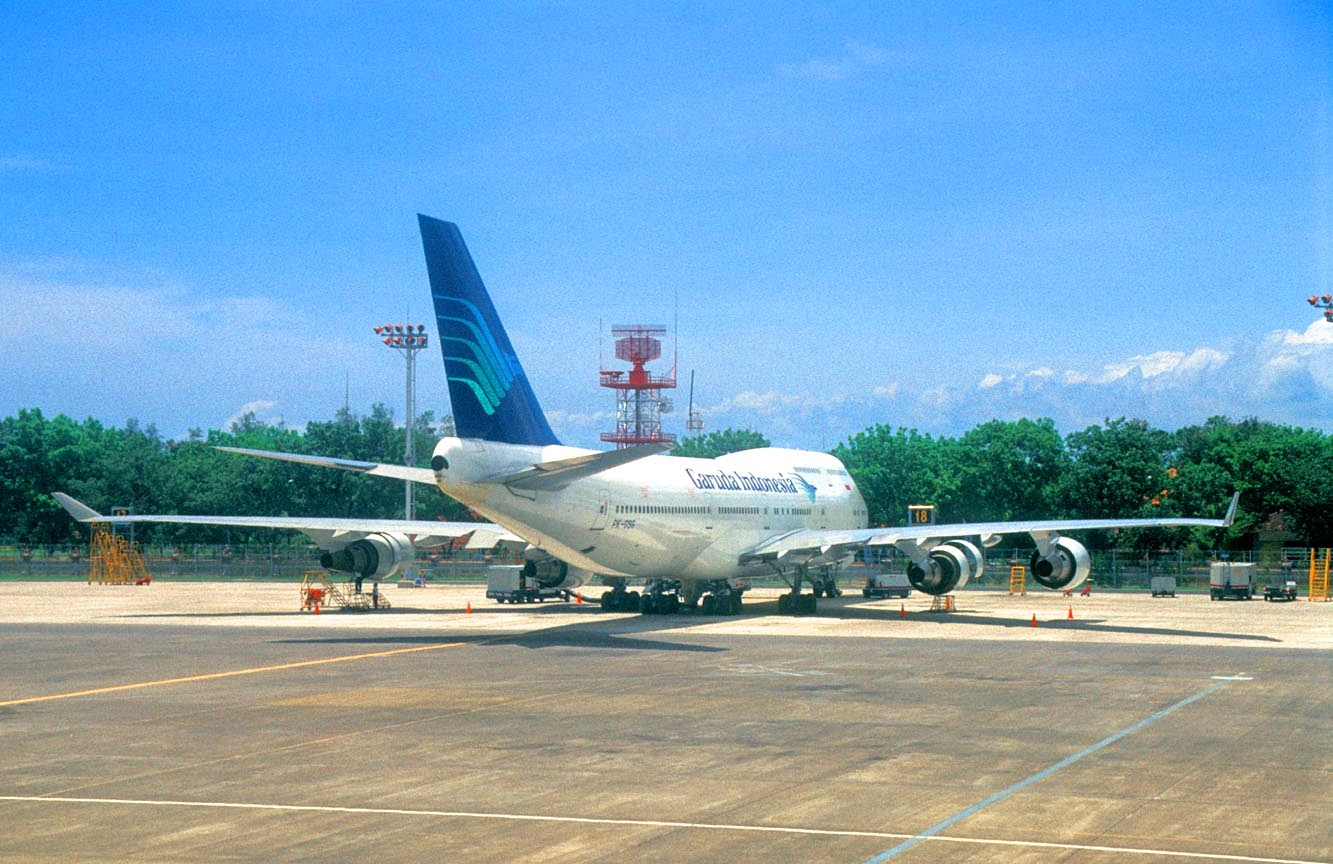
    PT Garuda Indonesia has confirmed the delay of 68 flights from Friday to Saturday as a result of a “technical constraint” at Soekarno-Hatta International Airport’s Terminal 3, resulting in long waits for passengers.

    The delays at the airport in Tangerang, Banten, had affected both domestic and international flights, including those to Japan and China, Garuda Indonesia said in a press statement on Saturday.

    “We apologize for the inconveniences in the situation, which is out of our authority, and we will continue to give our best effort to coordinate and reduce the length of the delays,” Garuda Indonesia spokesperson Hengki Heriandono said.

    Citing details provided by state air navigation firm AirNav, he explained that the cause of the delay was the limited movement at the newly opened terminal. “We have implemented a delay management policy to all affected passengers to ensure passenger rights can be fulfilled,” Hengki added.

    Last month, 30 Garuda Indonesia flights were delayed for hours because of an electrical system failure at the new terminal. (dis/ags)

  • Bank Mandiri to expand in Malaysia as first ‘ASEAN bank’

    Bank Mandiri to expand in Malaysia as first ‘ASEAN bank’

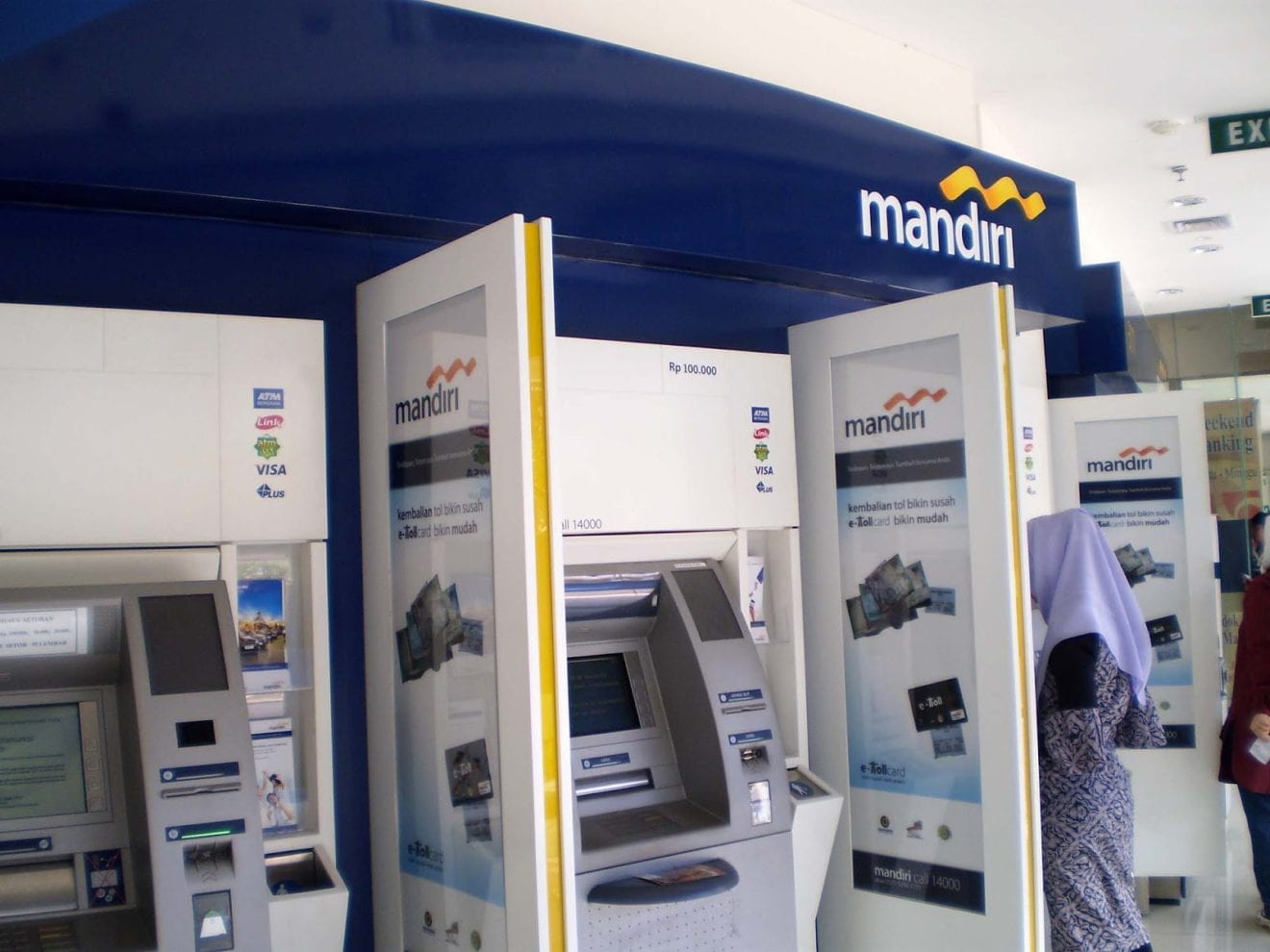
    Bank Mandiri will expand operations in Malaysia by using its newly awarded status as a cross-regional lender, Indonesia’s largest state-owned bank said Thursday.

    Mandiri said it is the first bank in the region to be designated a qualified ASEAN bank — a concept developed by Association of Southeast Asian Nations members as part of an effort to create an open, integrated financial market providing services to companies investing and trading in the region.

    To obtain QAB status, banks must meet certain conditions, such as in capital adequacy, and pass screening under bilateral agreements between monetary authorities. Indonesia and Malaysia agreed in 2016 to grant QAB status to three banks from each other’s countries.

    Such Malaysian banks as CIMB Group Holdings and Malayan Banking already have major operations in Indonesia, while Indonesian banks have been seeking opportunities to grow outside the home market. “We highly appreciate the Malaysian banking authorities that support the presence of banks from Indonesia,” said Muliaman Hadad, chairman of Indonesia’s Financial Services Authority. “Indonesia has also treated Malaysian banks as their own. This is a step forward that can strengthen relations between Indonesia and Malaysia.”

    Malaysia will become the first overseas market for Mandiri to operate a full-fledged banking business in, the lender said. It plans to invest 300 million ringgit ($70 million) to upgrade a remittance office in Kuala Lumpur to a full branch and roll out wholesale and retail banking services.

    Mandiri is also exploring expansion into Myanmar and the Philippines, it said in a news release.

  • Over 1 million passengers travel through Bali airport

    Over 1 million passengers travel through Bali airport

    State-owned airport operator PT Angkasa I said that over 1 million passengers have traveled through Balis Ngurah Rai International Airport during the homecoming flow of post-fasting travelers since 10 days (D-10) before the Lebaran D-Day to D+4.

    Head of Public Relations of PT Angkasa Pura I at I Gusti Ngurah Rai International Airport, Arie Ahsanurrohim, stated in Denpasar on Saturday that the passengers recorded during the period were those for domestic and international routes.

    Arie added that the movement of passengers was calculated based on regular and unscheduled flights.

    He explained that the unscheduled flights were the ones used by former US president Barack Obama and Malaysian Prime Minister and family when they visited during the Lebaran holiday season.

    Meanwhile, related to the flow of Lebaran homecoming, Arie explained that the movement at the local airport was quite unique compared to other airports in Indonesia, which are mostly dominated by the flow of departing passengers.

    At Ngurah Rai Airport, the flow of departure and the arrival of passengers were high or only slightly different, considering Bali as a tourist destination where many tourists spend the long Lebaran holidays.

    Data from Integrated Monitoring Lebaran Command Post at the airport mentioned on H+4 or on Friday (June 30) that the number of domestic passenger arrivals reached 19,174 people, up 10.6 percent compared to the same period in 2016.

    Passengers departing from the airport reached 21,573 people, or jumped 14 percent compared to the same period in the previous year.

    The number of those arriving and departing through the international routes increased with arrivals recorded at 16.3 thousand, or up by 16 percent, and departure at 17.7 thousand, or up by 14 percent.

  • Government committed to relocating Indonesian capital

    Government committed to relocating Indonesian capital

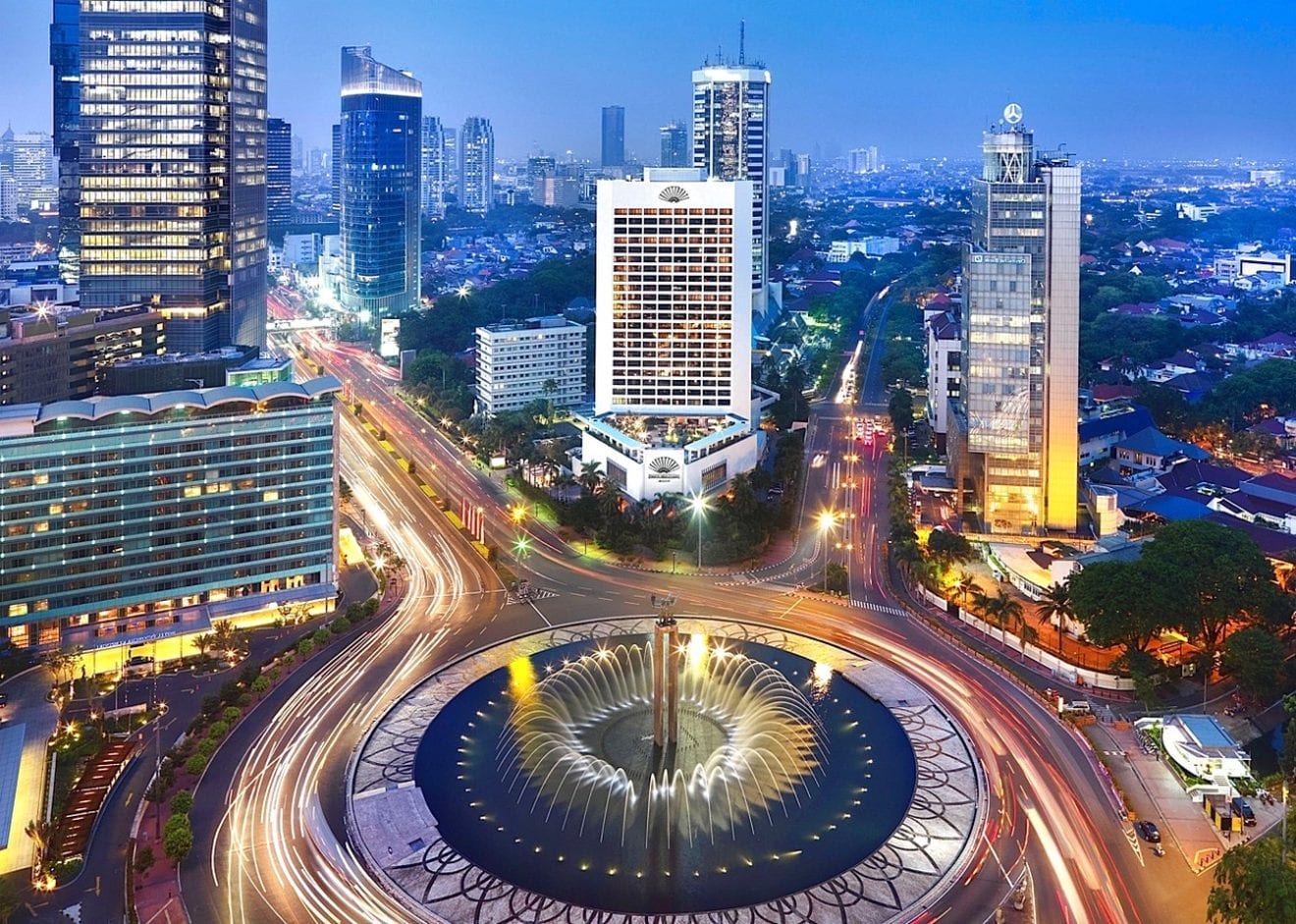
    The Government of Indonesia is determined to relocate the state capital Jakarta out of Java Island to avoid total traffic gridlock by 2020.

    President Joko Widodo, better known as Jokowi, had urged the National Development Planning Board (Bappenas) to conduct a feasibility study on the possible location, and Palangkaraya in Central Kalimantan was one of the options.

    Bappenas Chief Bambang Brodjonegoro has stated that by the end of this year, the agency would have completed assessing potential alternative cities that could become the new capital of Indonesia.

    Brodjonegoro expressed hope that in the next two years, activities related to the transfer of the administrative center of the state capital would be carried out.

    Debates on relocating the capital have frequently resurfaced since it was first mooted by President Sukarno in 1957.

    Sukarno once held a discourse that the state capital could be relocated to Palangkaraya, as he had also visited the city to review its development.

    Problems of the overcrowded Jakarta city have since then become more practical and less ideological, with reports surfacing that areas of north Jakarta are sinking at a rate of 25 centimeters a year.

    In search of a new capital city of Indonesia, Bappenas is looking at aspects, such as the availability of land and natural resources around the potential cities.

    “We have discussed the matter with the president, and essentially, we will soon begin the process of relocating the capital,” the Bappenas chief remarked.

    Brodjonegoro reiterated that the assessment would hopefully be completed this year, including its estimation and funding scheme.

    According to Brodjonegoro, Bappenas will encourage private involvement in the planned relocation of the state capital, particularly in terms of funding.

    For funding, he said Bappenas will push the public-private partnership model.

    Until now, Bappenas is still reviewing the plan to relocate the state capital from Jakarta to a new area outside Java Island.

    The capital city should be relocated to outside of Java Island, given the availability of more adequate land.

    Nevertheless, Brodjonegoro has not revealed details of the specific location of the new capital of the country.

    “Certainly, outside Java, most likely on the island of Kalimantan, but the specific location will be finalized soon,” Brodjonegoro said.

    Java Island is believed to dominate Indonesias economic activities. Moreover, economic activities in Java are more concentrated in the areas of Jakarta, Bogor, Depok, Tangerang, and Bekasi.

    If the plan to relocate the capital city is truly realized, the Bappenas chief said the heavy burden on Jakarta, as the center of government, finance, and business, can be reduced.

    In addition to heavy burden of Jakarta as the center of government, finance, as well as business, annual flooding during the rainy season has repeatedly crippled Jakarta and hindered the smooth functioning of administrative and business activities.

    The flooding has aggravated several existent problems faced by Jakarta, which conventional measures have failed to resolve.

    Public services and government businesses grind to a halt every time floods lash the capital city.

    In a bid to solve Jakartas problems, the idea of relocating the state capital has repeatedly resurfaced.

    But numerous political figures have stated that moving the capital to another island in Indonesia outside of Java would not solve the problems.

    They suggested that it would be better if the city of Jakarta remains Indonesias capital, but it would be beneficial if some government activities are relocated outside Jakarta.

    They said the problems of Jakarta can be solved by relocating some ministries to other islands across the country.

    According to them, shifting some of the ministries can resolve the issues plaguing the capital city. But, the Ministry of Finance, the Ministry of Religious Affairs, the National Police, Defense and Security Ministry, and the Presidential Palace should remain in Jakarta.

    By relocating the capital, the political figures do not want to give the impression that they are shifting Jakartas problems to another city.

    The names of some Indonesian cities in Kalimantan, West Java, and Papua had circulated among the public following the discussions related to relocating the countrys administrative center.

    Some of the proposed cities were Palangkaraya in Central Kalimantan, Jonggol in West Java, and Jayapura in Papua.

    Some years ago, in an address to all provincial governors across the country at a gathering in Palangkaraya, Central Kalimantan, the then President Susilo Bambang Yudhoyono stated that Jakarta Metropolitan City was already too crowded and hence not an ideal location to be the center of the national administration.

    “Around 15 years ago, Jonggol in West Java was under consideration to be the new national administration center,” Yudhoyono stated at the time.

    The idea of relocating the center of administration from Jakarta to another area was shelved as Indonesia was hit by a monetary crisis some years ago.

    Over the years, the Jakarta Metropolitan City has become too crowded, and the idea of relocation should be reconsidered.

  • Direct Flights from Indonesia to Moscow Set to Open

    Direct Flights from Indonesia to Moscow Set to Open

    Indonesia has planned to open direct flights to Moscow, Russia, in a bid to attract the countrys tourists to visit Indonesia.

    “Currently, we have to transit in a third country when we fly to Russia, and this could take 24 hours, whereas with direct flight, it might only take 11 hours,” Ambassador to Russia M. Wahid Supriyadi said here on Wednesday. Wahid is scheduled to hold a meeting with the management of the national flag carrier Garuda Indonesia to discuss the plan.

    “Alhamdulillah, Garuda has the commitment to fly to Moscow,” he noted. Garuda Indonesia has planned to fly thrice a week to Russia, two flights from Denpasar in Bali and one from Jakarta, from August.

    A data of the Tourism Ministry showed that some 85 thousand Russian tourists had visited Indonesia in 2016. The number is targeted to reach 100 thousand tourists in 2017. However, Wahid remarked that the number was still relatively small compared to Russian tourists visiting Thailand, which is about 1.5 million per year, through direct flights from the country.

    “Garuda’s flight would not only carry passengers but also tropical fruits and vegetables,” he revealed, adding that these commodities were scarce in Russia. Following the European Union and the US embargo, Russia would halt import of fruits, vegetables, and dairy products from the two regions as a response.

    The move would provide an opportunity for Indonesian commodities to penetrate the Russian market. “These products would have to be transported by air cargo,” Wahid pointed out, adding that Garuda Indonesia planes could carry some 5 tons of the products in one flight.

  • Wings Air to open new route to three cities from Jakarta

    Wings Air to open new route to three cities from Jakarta

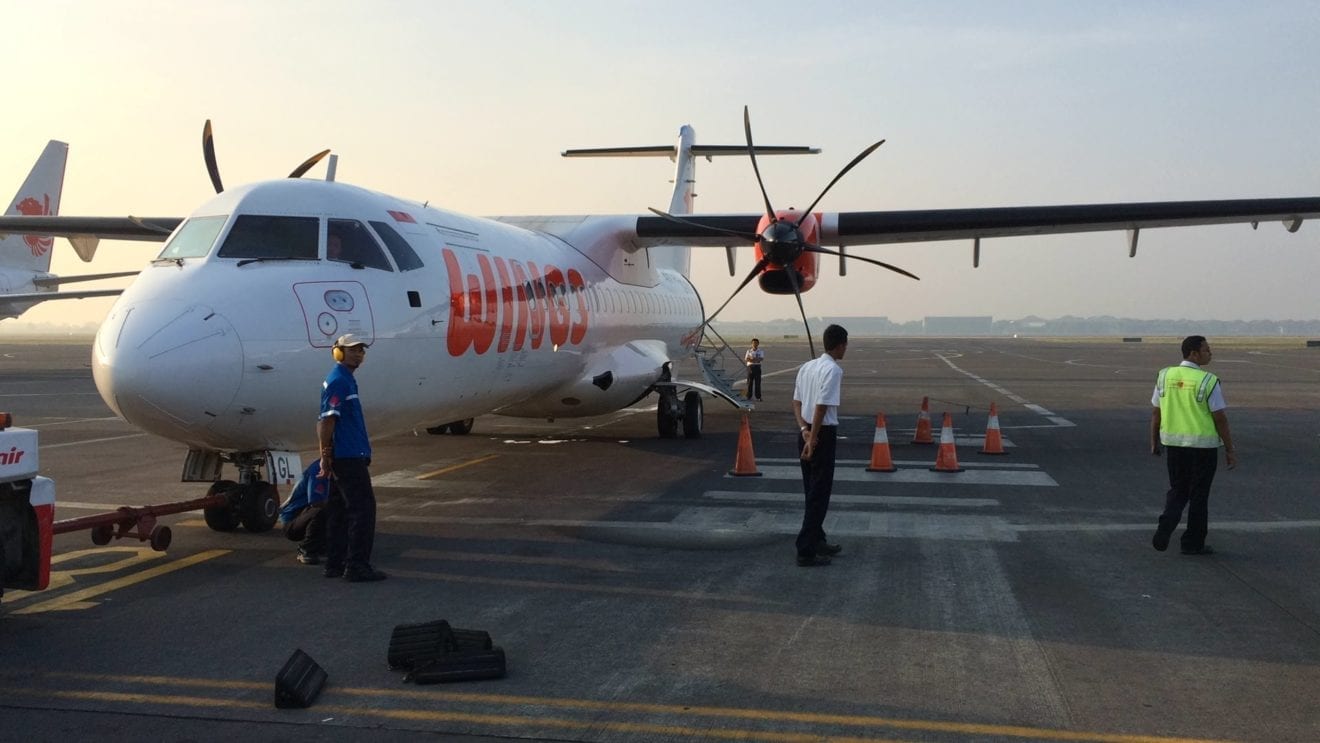
    Wings Air, a subsidiary of Indonesia’s largest airline, Lion Air Group, will soon open a new route from Jakarta via Halim Perdanakusuma International Airport to three destinations in one go, namely Bandung, Malang and Makassar.

    “The new route will only be served once every day and will use ATR ‪72-500/600 aircraft that have a capacity of 72 passengers,” said Lion Air Group president director Edward Sirait.

    The route will launch on July 2, with departure from Jakarta scheduled at 1:55 p.m., from Bandung to Malang at 2:15 p.m. and from Malang to Makassar at 4:35 p.m.

    On July 3, the plane will fly back from Makassar to Malang at 6 a.m., then from Malang to Bandung at 7:25 a.m. and from Bandung to Jakarta at 9:35 a.m.

    “Currently, Wings Air flies to more than 86 domestic destinations with more than 293 daily flights and owns 52 ATR ‪72-500/600 aircraft,” Edward added.

  • Indonesia’s Credit Growth in May Fueled by Abundant 3rd Party Fund Placement

    Indonesia’s Credit Growth in May Fueled by Abundant 3rd Party Fund Placement

    Indonesias banking credits grew 8.71 percent in May 2017, up 0.37 percent from 8.34 percent in the same month last year, according to the Financial Service Authority (OJK). However, the May 2017 credit growth fell 0.76 percent from 9.47 percent a month earlier.

    Although the banking credits in May 2017 grew at a slower pace than in April 2017, OJK believes the credit growth until May 2017 was still relevant to the business plans of banks which have set the target of credit growth for 2017 at 9-12 percent.

    “Compared to last year, it (the credit growth) is better,” Chief of OJKs Board of Commissioners Muliaman Hadad said at the Indonesia Stock Exchange (BEI) Building here on Tuesday.

    The May 2017 credit growth was fueled by abundant third party fund placement which grew by 11.18 percent year-on-year, he said. The amount of credits which were extended to the electricity sector grew 31.05 percent, the construction sector 24 percent, the fisheries sector 11.2 percent and the agricultural sector 10.8 percent.

    Muliaman noted that the expansion of four state-owned banks businesses contributed significantly to the credit growth.  The amount of credits extended by the four state banks, Bank Mandiri, Bank Rakyat Indonesia (BRI), Bank Negara Indonesia (BNI) and Bank Tabungan Negara (BTN), until May 2017 reached 14.81 percent, with third party fund placement growing 16.77 percent.

    However, the banking credit growth did not spread evenly as the amount of credits channeled by private banks grew 4-5 percent. The ratio of non-performing loans remained at 3.07 percent until May 2017.

  • East Nusa Tenggara urges Garuda to open Kupang-Dili-Darwin flight route

    East Nusa Tenggara urges Garuda to open Kupang-Dili-Darwin flight route

    The East Nusa Tenggara Tourism Office has urged Garuda Indonesia to open Kupang-Dili-Darwin flight route round trip immediately to help boost foreign tourist arrivals to the islands province.

    The head of the Tourism Office, Marius Ardu Jelamu, stated here on Tuesday that in the past year, the number of tourists visiting the province in cruises and chartered aircrafts had increased.

    According to Marius, Kupang-Darwin flights will help travelers in terms of cost and time because it only takes 1.5 hours to reach the destination.

    Marius is optimistic that the Kupang-Timor Leste-Darwin flight would increase the number of tourist arrivals to East Nusa Tenggara, considering the current growing tourism potential in the province.

    East Nusa Tenggara is increasingly attractive to domestic and foreign tourists, especially with regard to the various cultural festivals.

  • Indonesia sets tariff ranges for online car-hailing services

    Indonesia sets tariff ranges for online car-hailing services

    Indonesia set minimum and maximum tariffs for online car-hailing services in a bid to ensure comparable pricing with conventional transport providers and address complaints of undercutting, sending shares of the nation’s top two taxi firms soaring.

    Ride-hailing services such as US group Uber Technologies Inc, Southeast Asia’s Grab and Indonesia’s GO-JEK have heavily subsidised their drivers in Indonesia in order to gain market share in the country of 250 million people, analysts say.

    The transport ministry said in a statement on Sunday that it had set a tariff range for online car-hailing services of 3,500-6,000 rupiah (S$0.35-S$0.62) per kilometre for the islands of Java, Bali and Sumatra.

    For Kalimantan, Sulawesi, Nusa Tenggara, Maluku and Papua, the range is 3,700-6,500 rupiah per kilometre.

    The regulation kicked in on July 1 and will be evaluated in the next six months, the ministry said. “There has to be a balance between conventional and online transport, so that has to be regulated,” Pudji Hartanto Iskandar, director-general of land transport at the ministry, told by phone.

    The news sent shares of Indonesia’s two biggest taxi operators, PT Blue Bird Tbk and PT Express Transindo Utama Tbk, surging on Monday.

    By 0340 GMT, Blue Bird shares jumped as much as 10.7 per cent, while Express gained as much as 4.3 per cent. The broader Jakarta stock exchange was 0.7 per cent higher.

    Drivers of Blue Bird and Express have called for a ban on ride-hailing services, claiming they were subject to less stringent requirements than conventional taxis.

    Uber said in an emailed statement it had yet to receive a copy of Indonesia’s regulations. “However, we remain committed to working with the government to find a path forward that accommodates the interests of riders and driver partners and supports innovation, competition and customer choice,” Uber said.

    Grab said it is ready to cooperate with the transport ministry and to comply with regulations. “After receiving direction from the government, we will review the policy and make the necessary adjustments to ensure that our driver-partners will still earn the best incomes when using the Grab platform,” it said in an email.

    GO-JEK did not provide an immediate comment. Blue Bird and Express did not immediately respond to requests for comment.

  • e-retail brands out of the social media loop in SE Asia

    e-retail brands out of the social media loop in SE Asia

    Over 85% of consumers in Singapore, Malaysia and Indonesia, who mention e-retailer brand names in their social media posts don’t tag brand handles, according to Digimind.

    This means brands need to be vigilant in monitoring their brand reputation in the wider social media space to ensure they aren’t missing out on key conversations and trends, and are able to act upon any customer service concerns quickly.

    With the rise of empowered consumers and an increasing adoption of online shopping, e-retailers need to adopt customer-centric strategies in order to thrive. With so much of our daily conversations happening online, data from social media can provide key insights for e-retailers wishing to optimize customer experiences.

    Digimind’s study, Social Shopping in 2017, assessed the state of the e-retail industry in the three countries by monitoring 15 local and regional e-retailers, including Lazada, Zalora, and Berrybenka.

    “It’s no secret that brands who implement customer-centric strategies are excelling. With 2.8 billion active social media users in Southeast Asia, it is crucial for e-retailers to listen to what is being said about their brand, competitors and the industry online,” said Stephen Dale, general manager of APAC at Digimind.

    “Understanding what consumers are saying on social media can provide companies with an arsenal of insights that can be used to develop content strategies, improve customer service, build brand advocacy, and increase sales,” said Dale.

    He added that when analyzed in conjunction with other data such as web page visits and browsing behavior, this can further inform marketing plans and Voice of the Customer programs.

    The study also revealed that while the majority of e-retailer’s followers in the countries studied were on Facebook, consumers were most actively publicly posting their opinions and experiences on e-retailers on Instagram and Twitter.

    This means while Facebook is the ideal channel for brands to communicate with followers, Instagram and Twitter are key channels for community engagement.

  • Indonesian banks urged to update their IT systems

    Indonesian banks urged to update their IT systems

    Indonesian banks have been urged to update their system of information technology so that they could protect themselves from possible cyber attacks that have become more and more massive.

    Bank Indonesia Governor Agus Martowardojo said here on Monday hackers or virus attackers continued to innovate and find loopholes in the IT system and so banking industry and other financial sectors must update their security standard.

    His statement came in the midst of increasing alertness following global virus attack by so-called “”Petya” after global system of IT routed by “Ransomware Wannacry”.

    “All who use technology applications must use the latest version. The latest version usually has been given features to prevent possible cyber attacks,” Martowardojo said.

    “We must not be offguard. We must be prepared because there will certsinly be other innovations that could disrupt the system,” he said.

    The general chairman of the State-owned Banks Association, Maryono, said that until Monday there had been no report coming from four state-owned banks – three of them controlling banking markets -being attacked by Peyya virus.

    “Usually if one bank is hit and so will the others but so far we have received no teport about it,” he said.

    The chief of PT. Bank Central Asia Tbk. which is the countrys largest private bank said Petya did not disrupt the banking system. Howevet cyber attack has been rife to give a warning for banks to improve their IT security system.

    “We will keep safeguarding it. Thank God there has been no problem so far,” BCA president director Jahja Setiaatmadja said.

    The ministry of informatics and communication has earlier called on the people and heads of institutions to take anticipatory measures against global Ransonware Petya cyber attack by preparing backup and updating their IT security system.

    Indonesias financial industry including capital market is worth more than Rp16,000 trillion and so security system in the industry is a very important pillar to maintain trust and sustainability of the industry which also serves as a source of development funding.

    Petya was first known after infecting the server in Russias biggest oil company and disrupted the operation of a bank in Ukraine and paralyzed computers in multinational shipping and advertising companies.

    Petya-infected computer will show a message telling that the system has been blocked and its owner must pay a tansom of US$300 in the form of Bitcoin.

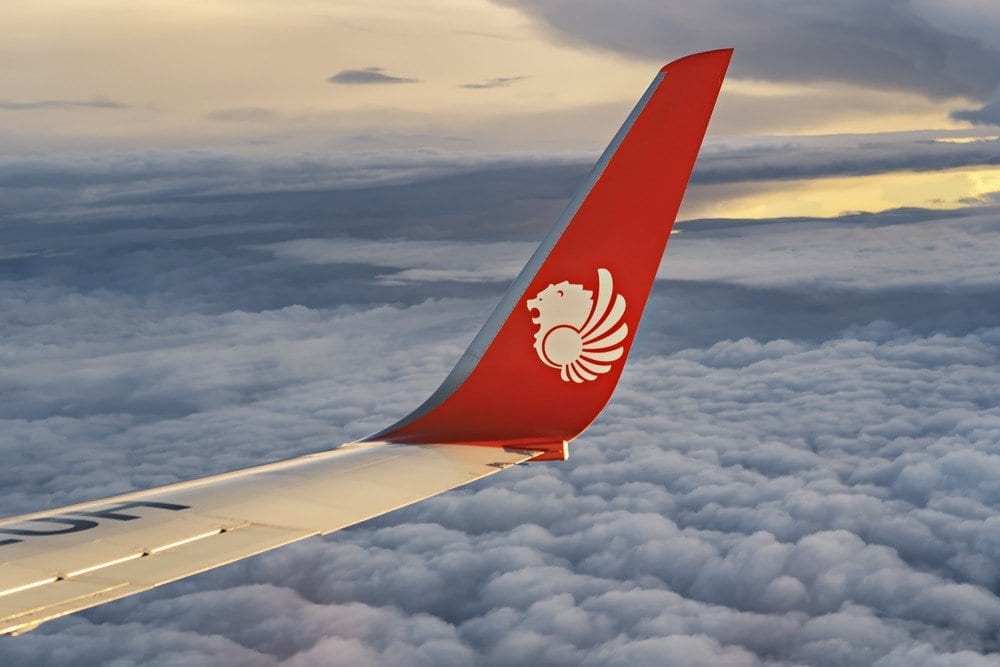
  • Lion Air welcomes Indonesia’s first Boeing 737 MAX-8

    Lion Air welcomes Indonesia’s first Boeing 737 MAX-8

    Indonesia’s largest low-cost carrier Lion Air welcomed on Tuesday the arrival of the first of hundreds of Boeing 737 MAX-8 aircraft it ordered from the United States planemaker, paving the way for the company to move forward with its expansion plan.

    The aircraft will be the first of its kind operated by an Indonesian airline.

    Lion Air is part of the Lion Air Group, together with Wings Air, Batik Air, Lion Bizjet, Malaysia-based Malindo Air and Thailand-based Thai Lion Air.

    The aircraft delivery is the second this year for Lion Air Group as Malindo Air earlier welcomed a similar type of aircraft in May.

    “This new aircraft will help us develop our routes to other destinations and to offer affordable air fares,” Lion Air Group public relations manager Andy M. Saladin said in an official statement.

    Lion Air Group has ordered 218 Boeing 737 MAX-8, eight of which will be delivered this year.

    The Boeing 737 MAX-8 can fly for seven and a half hours without refueling and is the first Boeing aircraft to have a double winglet feature.

    Lion Air currently operates 113 aircraft to serve 630 flights to 44 domestic and international destinations.

  • Indonesia, Swiss to exchange information on finance

    Indonesia, Swiss to exchange information on finance

    The governments of Indonesia and Switzerland have declared the readiness of both countries to implement the Automatic Exchange of Information (AEOI).

    The signing of the joint declaration was undertaken by Director General of Taxes, Ken Dwijugiasteadi, and Swiss Ambassador to Indonesia, Yvonne Baumann, witnessed by the Minister of Finance of the Republic of Indonesia and Members of the Board of Commissioners of the Financial Services Authority here on Tuesday.

    Finance Minister Sri Mulyani stated that it was important for Indonesia to be able to implement AEOI with Switzerland as it was one of the largest financial centers in the world.

    “Financial information obtained from Switzerland and nearly 100 other countries will be used as a tax database to test the compliance rate of taxpayers. It is expected to encourage their awareness to fulfill tax obligations voluntary, especially in reporting their earnings and financial assets abroad which have not been reported,” Sri Mulyani explained.

    Through the joint declaration, Indonesia and Switzerland agreed to exchange financial account information automatically in accordance with the Common Reporting Standard (CRS) starting from 2018, with the first exchange in 2019, protected by data security assurance according to international standards.

    Both jurisdictions also stated that they will share information on the development of CRS implementation in each countrys domestic legislation and affirm the commitment to continue strengthening cooperation in the financial sector.

    The joint declaration is required by Switzerland to enable the Multilateral Competent Authority Agreement (MCAA) to implement AEOl to obtain the Swiss Parliament approval by the end of 2017.

    On May 8, 2017, the Indonesian Government adopted a Government Regulation In lieu of Law No. 1/ 2017 on Access to Financial Information for Tax Interests.

    It regulates the authority of the Directorate General of Taxation to receive and obtain financial information from financial institutions throughout Indonesia and the authority of the Minister of Finance to execute financial information exchange with authorities for other countries or jurisdictions.