Tag: Indonesia

  • Unilever Indonesia secures Rp 3 trillion standby loan for expansion

    Unilever Indonesia secures Rp 3 trillion standby loan for expansion

    Publicly listed consumer goods giant PT Unilever Indonesia (UNVR) has secured a standby loan worth Rp 3 trillion (US$225 million) from Unilever Finance International AG to expand its business in the country.

    Unilever corporate secretary Sancoyo Antarikso said the loan facility could be disbursed anytime the firm needed it in the next five years, with a tenure of one to 12 months and at a 0.15 percent lower interest compared to bank loans.

    “The shareholders meeting has agreed to allow the firm to receive a standby loan within five years from now, so we can use it anytime we need it,” Sancoyo told after the meeting at Unilever Indonesia headquarters in BSD City, Banten, on Tuesday.

    The loan can be used to fund the company’s plan to expand the capacities of its nine existing factories in West Java and East Java. The Indonesian unit of the Dutch-British transnational consumer goods company has announced plans to invest $500 million within the 2016-2020 period in Indonesia.

    In 2016, Unilever Indonesia spent Rp 1.79 trillion (US$134.4 million) in capital expenditure toward capacity expansion, among other aims, while booking a 9.2 percent increase in its net profit to Rp 6.4 trillion and a 9.8 percent increase in net sales to Rp 40 trillion.

    Almost all of its 2016 profit will be distributed as dividends worth Rp 835 per share. While Rp 2.9 trillion has been paid as an interim dividend last year, the company will distribute the remaining Rp 3.5 trillion this year.

  • Bank Indonesia sets chip technology standard for ATMs, debit cards

    Bank Indonesia sets chip technology standard for ATMs, debit cards

    Bank Indonesia has set National Standard Indonesian Chip Card Specification (NSICCS) as the country’s technology benchmark for ATMs and debit cards of all card providers across the country.

    The regulation was officially implemented during a meeting attended by Bank Indonesia deputy governor Sugeng, bankers and the Indonesia Payment Systems Association (ASPI) on Wednesday in Jakarta.

    The central bank also appointed ASPI to oversee the implementation of the NSICCS and to develop it through observation of several aspects, such as security and technology development.

    “The implementation of a standard was aimed at increasing the security of transactions and encouraging the creation of an interoperability instrument, which was in line with the National Payment Gateway program,” the central bank wrote in an official statement.

    Bank Indonesia through its letter, No.17/52/DKSP on the requirement of a six digit PIN number for all debit and ATM cards utilizing magnetic stripe technology, tried to improve on the security aspects of transactions.

    The NCICCS technology will not only be implemented in the ATM and debit cards, but also in the system, which processes transactions within the cards. The full implementation is expected to finish at the end of 2021.

    The implementation of the NCICCS is part of an ongoing effort to mitigate fraud and align ATM and debit card standards in Indonesia with the best practices on the international level, Bank Indonesia wrote.

  • Number of Indonesian air passengers spike before Idul Fitri

    Number of Indonesian air passengers spike before Idul Fitri

    Indonesian flyers embarking on the homeward-bound Idul Fitri exodus have surged in the six days before the holiday, Transportation Ministry data has shown.

    “According to the data collected until June 20 at midnight, domestic flights have seen a 10 percent surge in passengers,” an official with the Transportation Ministry in charge of the Idul Fitri holiday daily integrated transportation post, Adi Karsyaf Rahayu, said in a statement.

    On the accumulated data from 10 days before until six days before the festivity collected from 35 airports, the number of domestic flyers has surged to 1.3 million from 1.18 million passengers in the same period last year.

    A higher jump was observed in international flights in seven airports in Indonesia six days  before Idul Fitri, with a 12.69 percent hike to 222,976 passengers from the 197,871 in the same period last year.

    The Transportation Ministry, which spearheads the coordination for this year’s annual exodus, predicted that the country would see a 4.8 percent surge in the number of people traveling by public transportation to 19.04 million.

  • Over two million Chinese tourists to visit Indonesia in 2017

    Over two million Chinese tourists to visit Indonesia in 2017

    The number of Chinese tourists visiting Indonesia is estimated to reach more than 2 million tourists in 2017, an official said. Charge d’Affaires of the Embassy of the Peoples Republic of China in Jakarta Sun Weide said here on Tuesday that the tourism cooperation between Indonesia and China continues to grow.

    The Chinese Embassy has recorded around 560,000 Chinese tourists to have visited Indonesia during the first three months of this year.

    “The number of Chinese tourists visiting Indonesia is estimated to reach more than two million this year,” Sun Weide said in a press conference followed by an iftar at the Chinese Embassy in Jakarta.

    Last year, 1.45 million Chinese tourists had visited Indonesia. The number was the second largest after Singapores with 1,47 million tourists.

    It is estimated that the visiting Chinese tourists had contributed around two billion US dollars of foreign exchange to Indonesia last year, he said.

    Cooperation in the tourism sector between Indonesia and China has been robust, he said.

    On the same day, delegation from Guizhou Province of China held a conference to promote its tourism potential in Jakarta.

    Ren Xiang Sheng, Guizhou Provincial Secretary in southwestern China, said the increased cooperation in the fields of tourism and culture has become part of efforts to strengthen Chinas One Belt and One Road (Obor) initiative.

    In 2016, more than one million tourists had visited Guizhou, a region dotted with picturesque mountain in China. Out of one million visiting tourists, 128,000 were Indonesians.

    Indonesian Ministry of Tourism has estimated that the number of Chinese tourists visiting Indonesia will reach 2.4 million in 2017, surpassing Singaporeans who were estimated to top around 2.275 million in the same year.

    Achieving its 12 million tourist visit target in 2016, Indonesia has set a target to attract 15 million tourist in 2017.

  • Indonesian supermarket opened in Qatar

    Indonesian supermarket opened in Qatar

    A supermarket selling Indonesian products was opened in the Messaieed City, located around 40 kilometers from Doha, Qatar. The Indonesian supermarket, called KWIQ Supermarket, was officially opened to the public on June 17 by Indonesian Ambassador to Qatar Muhammad Basri Sidehabi, as quoted from the official website of the Indonesian Ministry of Foreign Affairs on Monday.

    “This Indonesian supermarket serves as a concrete manifestation of Deputy Minister of Foreign Affairs A.M. Fachirs instruction during a coordination meeting last month,” Sidehabi noted.

    The deputy minister had instructed the Indonesian representative to focus on feasible and concrete efforts and to dare to innovate for the benefit of the people, he said.

    The supermarket is expected to encourage the Indonesian diaspora to develop businesses in Qatar as well as to serve as a platform for Indonesian businessmen keen to expand their business in Qatar.

    The plan to set up an Indonesian supermarket was initiated by the KWIQ cooperative group.

    Head of the KWIQ cooperative group Kartini Sarsilaningsih said Indonesian citizens living in Messaieed and Wakrah are keen to support the plan to set up an Indonesian supermarket in Qatar.

    Sasilaningsih said the business holds high potential, adding that the Government of Qatar is currently conducting diversification of products following the diplomatic rift with several gulf countries.

    She hoped that in future, the Indonesian supermarket would gain greater support from Indonesian business entities and producers that are looking to expand their business in Qatar.

    “For now, the supermarket has set a target to function as a distributor for Indonesian products since it has a business network,” she revealed.

    The supermarket has been supported by the Indonesian Business Association in Qatar and is selling Indonesian products, such as food and beverages and household appliances.

  • The Ramadan Productivity Drop And How To Overcome It

    The Ramadan Productivity Drop And How To Overcome It

    The holy fasting month of Ramadan is a special time in Indonesia, with nightly celebrations and long days of devout reflection for Muslims and discrete respect from non-Muslim expats and locals. Although for bosses and managers, the month can be a time of frustration with productivity seemingly grinding to a halt.

    “The productivity of workers declines in the holy month by 35 to 50 percent as a result of shorter working hours and the change in behaviour during this month,” Samer Sunnuqrot, an economist based in the Jordanian capital Amman told.

    Unlike Muslims practicing in Muslim-minority countries, like the United Kingdom or Australia, the specific needs of fasting can be taken into account by business and government in Muslim-majority countries like Indonesia or Jordan.

    “Decisions and meetings will be postponed until the period of Ramadan is over, especially in governmental institutions. This causes lower productivity and performance and might incur losses for business people because of the postponing of decisions and processing of government transactions,” Sunnuqrot said.

    While productivity dips during the fasting month, Sunnuqrot notes consumption tends to rise.

    “The positive side of Ramadan for business people is a higher demand for goods and services and higher consumption.

    “That often means higher prices, which translates into higher profit margins for merchants, retail stores, restaurants and cafes – especially those which arrange amusement programmes for after iftar (the breaking of the fast),” he said.

    Rumy Hasan, a lecturer at the University of Sussex, investigated the economic impact of lost productivity during Ramadan. His research found Ramadan creates a loss of 42 working hours per fasting participant each year, representing an overall 2.5 percent reduction in output annually.

    “Productivity declines not only from the physical strain of fasting but from the disruption to the flow and organization of work. It is reasonable to assume that a decline in productivity would further reduce economic output by at least 3 percent each year, which represents a significant annual recessionary impact of Ramadan,” he said.

    This decline is due largely to the physical effects of fasting.

    “Occupational health researchers have highlighted various adverse health consequences from severe dehydration, including headaches, dizziness and nausea,” Hasan found.

    For Muslim-minority countries this loss can be absorbed by the non-fasting majority of the labour force, but in Indonesia, where almost 88 percent of the population identifies as Muslim, this represents a massive issue.

    But all hope is not lost for managers and bosses hoping to boost productivity in the office until the Idul Fitri long weekend. While fasting, early mornings and late nights leave workers lethargic and struggling to focus so making the workplace flexible can help overcome some productivity issues.

    Beginning work earlier for an earlier finish will ensure workers maximize their energy from the pre-dawn morning meal, or suhoor, while also helping employees make it home in time to break the fast, or iftar, while dodging crippling traffic.

    Business consultant Mohammed Faris suggest non-Muslim managers and bosses take part in their own three-day fasting challenge in an effort to demonstrate both solidarity and to better understand the experiences of fasting colleagues.

    “If you want to engage with your staff on the challenges of fasting in Ramadan and work productivity, the best way is to actually talk about it and empathize with them. Start a conversation by asking your fasting employees how they consider work would be affected in Ramadan and what could be done about it,” he told.

    United Kingdom news portal Metro recommends tailoring traditional productivity tips for the month, such as goal setting and creating daily lists of tasks. This ensures Ramadan is treated as the special time that it is, while also maintaining good work habits.

    Additionally, while it may be tempting to gorge on the traditional treats and meals of the season, keeping healthy during the working week at least will go a long way to maintaining functionality. Lots of fresh fruit and proteins during the morning meals will help keep any participant in great health for a long, productive day ahead. Likewise, avoiding overly sugary and fried snacks in the evening and staying hydrated will keep the body healthy.

  • OJK to Monitor Fintech

    OJK to Monitor Fintech

    The Financial Service Authority (OJK) has formed two new directorates as a response to financial technology (fintech) development. OJK deputy chief commissioner Rahmat Waluyanto said that the two new directorates are Digital Financial Innovation Unit and Fintech Permit and Monitoring Unit.

    “The directors have been appointed, but it can’t yet be announced because it’s not official yet. The Digital Financial Innovation Unit will handle regulatory sand box and research,” he said, as quoted by Antara last week.

    In a bid to respond to fintech development, OJK has also formed Fintech Expert Forum and fintech innovation hub. The forum will facilitate fintech industry development comprising individuals from 21 entities, such as ministries, agencies, associations, universities and other relevant business players.

    The committee will give recommendations and inputs as well as facilitate coordination between agencies and fintech start-up companies. Meanwhile, OJK’s fintech innovation center is projected to become a hub of various fintech incubators to discuss developments.

    OJK chief commissioner said that Fintech Expert Forum will facilitate and ensure coordination of various start-up players. The forum will discuss developing fintech issues. “And discuss future developments in fintech industry,” he said.

    Indonesia has seen a rapid growth of fintech players. As of January 2016, Indonesia Fintech Association reports that the country has 165 domestic start-ups. The figure has quadrupled compared to that of in the first quarter of 2014 with 40 companies.

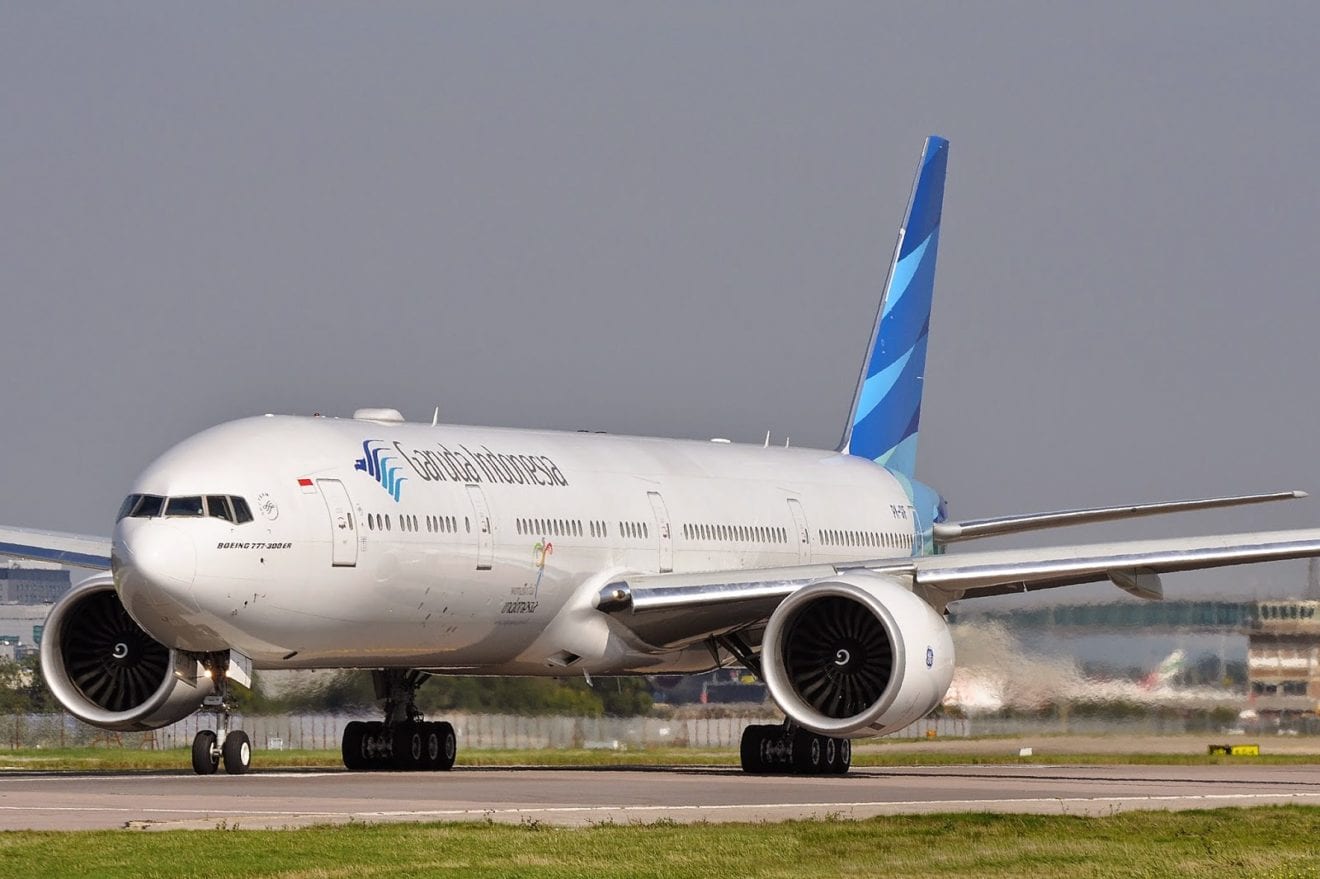
  • Garuda Indonesia poised to trim losses with Idul Fitri traffic

    Garuda Indonesia poised to trim losses with Idul Fitri traffic

    After suffering US$89.49 million in losses during the first quarter of the year, PT Garuda Indonesia is poised to see a recovery in the second quarter, especially in the June and July months that encompass the Idul Fitri holiday.

    Garuda Indonesia president director Pahala N. Mansury said the second quarter offered good prospects and the Idul Fitri exodus would help improve the company’s accumulative performance in the first semester.

    In the first quarter of 2016, the state-owned flag carrier booked $74.48 million in profits, but still suffered $63.2 million, or around Rp 824 billion, in losses.

    “Even if the losses have yet to be covered, hopefully we can at least push the losses down,” he said after accepting an award from TripAdvisor as one of the top 10 best airlines in the world on Friday.

    He also denied accusations from Rizal Ramli about the company’s lavish spending and potential corruption in the purchase of an Airbus A350.

    “We don’t have an Airbus A350 and thus the statement is not true,” he said, adding that the company was currently focused on optimizing efficiency.

  • Philippines, Indonesia agree to open up banking

    Philippines, Indonesia agree to open up banking

    The Philippines and Indonesia are set to ink an agreement this weekend to open up the banking industry aimed at greater financial integration and economic development among members of the Association of Southeast Asian Nations (ASEAN).

    Bangko Sentral ng Pilipinas Governor Amando Tetangco Jr. said a letter of intent (LOI) on the ASEAN Banking Integration Framework (ABIF) would be signed with Indonesia’s Financial Services Authority (OJK) in Jakarta over the weekend.

    “The LOI is in line with the ASEAN Banking Integration initiative,” he said.

    Under the ABIF timeline, each ASEAN-5 including Indonesia, Malaysia, Philippines, Singapore, and Thailand should conclude at least one bilateral agreement with another ASEAN-5 country by 2018.

    By 2020, ABIF targets the conclusion or near conclusion of at least one bilateral agreement for each of the 10 ASEAN members as part of the integration under the ASEAN Economic Community (AEC).

    The integrated system is defined under the ASEAN Financial Integration Framework (AIFF) that also covers the integration of the banking markets wherein qualified ASEAN banks (QABs).

    To achieve the consolidation of the 10 ASEAN markets into a single economic base with the launch of the AEC in 2015, the BSP chief said there is a need to have an integrated and well-functioning regional financial system.

    “It reflects the mutual interest of the BSP and OJK to begin discussions intended to culminate in a formal bilateral agreement on the entry of QABs between the Philippines and Indonesia,” the outgoing BSP chief said.

    The BSP signed the Declaration of Conclusion of Negotiations (DCN) with Bank Negara Malaysia and the LOI with the Bank of Thailand on the sidelines of the 3rd ASEAN Finance Ministers’ and Central Bank Governors’ joint meeting and related meetings in Mactan, Cebu last April 6.

    Tetangco signed the DCN on the entry of Qualified ASEAN Banks between the Philippines and Malaysia with Bank Negara Malaysia Governor Muhammad bin Ibrahim as well as the LOI with Bank of Thailand Governor Veerathai Santiprabhob.

    The agreement signed by the BSP and Bank Negara Malaysia reflects the specific conditions for QABs from each jurisdiction to enter the other in a manner that is consistent with global banking standards and meets host jurisdiction regulations.

    The ASEAN region has a great potential as savings rate reached 33 percent of gross domestic product (GDP) against the lower rate of 25 percent in other regions.

    For his part, BSP Deputy Governor Nestor Espenilla Jr. said several foreign banks have expressed interest in establishing its presence in the Philippines through several modes of entry.

    Aside from entering as a QAB or as a strategic partner, he said foreign banks could enter the country through Republic Act 10641 signed by former president Benigno Aquino III in July 2014.

  • Google Settles Tax Matter with Indonesia

    Google Settles Tax Matter with Indonesia

    Alphabet’s Google has made an agreement with Indonesia for 2016 after a long-standing dispute over charges of insufficient annual payments to the government.

    The latest settlement figure has been estimated using a new method which will finally conclude to charges that the tech firm was avoiding the required tax payments in the country.

    The report also corresponds with information that a decision was expected very soon.

    Indonesia’s Finance Minister Sri Mulyani Indrawati said on Tuesday that they already have reached a deal with the group based on prior year but they cannot release the figure yet.

    Google has so far not provided any statement.

    It is a notable progress seeing that both parties have settled for just one collection year. The government had been going after the search giant for tax avoidance and failure to pay the required amount for the past five years.

    Indonesia is doing the same but is coming across complication with tracking the money flow in view of the fact that the revenue of Google’s Indonesian business is managed at its Asia Pacific headquarters located in Singapore.

    The search giant was expected to pay about $376 million in taxes for 2015 but only paid $391,000.

    Google had mentioned that the estimated size of Indonesia’s digital advertising market was at $300 million for the said year.

    If found to have failed with taking care of payments, the five years of back taxes will cost the company a fine of over $400 million for only the year 2015 which could put a slight pressure on Google’s swamp bank account.

    Indonesia is keen on increasing tax collection and is planning to make use of the newly loaded capital to reduce its budget shortage and add fund to their current infrastructure program in the country.

    Other governments around the world are searching as well so as to crack down on what they consider as business tax avoidance.

    Other News

    During the Ramadhan, Google Indonesia e-commerce consumer behavior presented data searches on areas associated with the celebration in the country rose up to 28 percent while spending added to 30 percent.

    The country’s e-commerce head Henry Prihatna said that fashion product had the biggest sales gaining 180 percent, home appliances with 100 percent high and cellular phones edged up 80 percent.

    On the other hand, Google’s shares closed its Monday session losing as much as 0.7 percent to $942.90 on the Nasdaq Composite Index as tech stocks declined nearly 75 percent with Apple, Microsoft and Alphabet falling almost 6.5 percent.

    The three companies make up for approximately 30 percent of the index’s weighting.

    However, some experts believed that investors do not have to worry as any decline is likely to be buying opportunity and that the market is overbought from a long-term point of view and estimations are extended.

    With regards to money flows, investors may think about merging the variation between rising and falling matter in the stock market or their preferred index with money flows so as to have a useful perspective.

  • Indonesia may lose 50,000 tourists because of Qatar crisis

    Indonesia may lose 50,000 tourists because of Qatar crisis

    The Indonesian government is predicting that the recent severing of ties between several Arab countries and Qatar would deal a blow to the archipelago’s tourism industry, with 50,000 expected tourists not showing up because of the crisis, a senior official said on Tuesday.

    That is the number of visitors Tourism Minister Arief Yahya said Qatar Airways, for the most part, would have brought to Indonesia this year.

    “Given that seven months are left in the year 2017, we estimate we will lose about 50,000 foreign tourists as a result of the boycott of Qatar,” Arief told reporters at the State Palace on Tuesday.

    In order to reduce the expected loss, Arief said his ministry would coordinate with the Transportation Ministry to transfer the license given to the Qatari airline to other airlines, such as Emirates and Etihad.

    “First of all, I will ask the Transportation Ministry to transfer the aircraft license given to Qatar Airways to other airlines. We have no option as they Qatar Airways could not fly their aircraft anyway,” Arief said.

    Qatar Airways said on its official website it had suspended all flights to Saudi Arabia.

    Saudi Arabia and several of its allies on Monday cut relations with Qatar, accusing it of supporting extremism.

  • Tesla Model X electric cars to hit Indonesian roads

    Tesla Model X electric cars to hit Indonesian roads

    Indonesians can now purchase US-made Tesla Model X electronic luxury cars with price tags starting from US$200,000. Prestige Image Motorcars, the sole Tesla motor car distributor in Indonesia, began exhibiting one of the cars at its showroom in Pluit, North Jakarta, on Tuesday.

    Prestige president director Rudy Salim said his company started receiving orders for the car in June with deliveries, beginning in September.

    “Tesla cars have good prospects in the Indonesian market, considering they are not the most expensive among the super cars in the country,” Rudy said.

    Each Telsa cars is equipped with a battery that supports up to 350 kilometers of travel, much more than Indonesians generally needed, Rudy said.

    A director of the Association of Indonesian Automotive Manufacturers (Gaikindo), Jongkie Sugiarto, said that Tesla cars would have their own fans in Indonesia.

    However, he said, luxury cars belonged to a specific and limited market, which did not grow significantly.

    According to Gaikindo, the domestic sales of diesel and petrol cars in the first four months of the year increased by 5.71 percent to 373,407 from 352,072 in the same period of 2016.

    Tesla Inc. of the United States was quoted by Reuters as saying in April 2 that its first-quarter vehicle deliveries jumped by 69 percent to 25,000 vehicles compared to the same period last year.

  • Vietnam, Indonesia have much faster internet speed than India

    Vietnam, Indonesia have much faster internet speed than India

    Ranked 89 globally, India’s average internet connection speed of 6.5 Mbps is slower than Vietnam and Indonesia, which are much faster, a report said on Friday.

    While Vietnam, ranked 58, had an average internet speed of 9.5 Mbps, Indonesia at rank 77 provided a speed of 7.2 Mbps, Global leader in content delivery network services Akamai Technologies’ “The State of the Internet Q1 2017 Connectivity” found.

    The report also said that India witnessed a 4 Mbps broadband adoption of 42 per cent in the first quarter of 2017 with a year-over-year change of 81 per cent.

    “Increases in connection speeds and broadband penetration have helped enable the internet to support levels of traffic that even just a few years ago would have been unimaginable,” David Belson, editor of the report, said in a statement.

    “One need only look to January’s US Presidential Inauguration, which broke traffic records for live coverage of a single news event delivered by Akamai, largely thanks to the combination of more viewers watching at increasingly higher levels of video quality,” Belson added.

    On a global level, the average connection speed was 7.2 Mbps – an increase of 15 per cent year-over-year – and average peak connection speed increased 28 per cent year-over-year to 44.6 Mbps in the first quarter of 2017.

    “While South Korea had the highest average connection speed globally at 28.6 Mbps in the first quarter, Singapore had the highest peak connection speed at 184.5 Mbps in the first quarter,” the report noted.

    The average mobile connection speeds ranged from a high of 26 Mbps in Britain to a low of 2.8 Mbps in Venezuela. Germany had the highest peak mobile connection speed at 200 Mbps in the first quarter.

  • Government to realize self-sufficiency in garlic in 2019

    Government to realize self-sufficiency in garlic in 2019

    The Agriculture Ministry has targeted to achieve self sufficiency in garlic in 2019, sooner than its previously set target of 2033, Agriculture Minister Amran Sulaiman stated here, Monday.

    Sulaiman noted after the delivery of the Supreme Audit Agency Report that the decision to advance the target was made following recent fluctuations in the prices of the commodity.

    “We are learning from the recent fluctuations in the prices of garlic. Earlier, we had planned to become self-sufficient in garlic in 2033. However, we would advance the target; god willing, it would be in 2019 or 2020. We are aiming to advance the target by 13 years,” he remarked.

    According to the minister, a total of 60 thousand hectares of land will be needed to realize the target.

    Currently, some 90 percent of the countries garlic demand is met through imports annually reaching some 500 thousand tons worth Rp20 trillion.

    “If we can have 60 thousand hectares of (garlic plantations), then we can save Rp20 trillion in foreign exchange while boosting the farmers income,” he added.

    Sulaiman noted that the ministry will maximize the existing land potential, including four million hectares of rain-fed land and 21 million hectares of former swamp areas.

    “We can cultivate (garlic) in these four million hectares of land, with three harvests a year. Farmers could earn Rp150 trillion-Rp200 trillion from this. Secondly, we have 21 million hectares of swap areas that we can use for farming along with building a sugar factory. If we can achieve this, then we can become the worlds largest food producers,” Sulaiman remarked.

    Data from the Central Bureau of Statistics showed that 22,630 tons of garlic was imported from China as of April, while 1,971 tons of the commodity was imported from India during the same period.

    Indonesia has recorded self-sufficiency in garlic production in the period between 1990 and 1998.

  • 4.36 Percent Inflation Expected in 2017

    4.36 Percent Inflation Expected in 2017

    The Governor of Bank Indonesia Agus Martowardojo projects year-on-year inflation rate in 2017 of 4.36 percent, an increase compared to late 2016 of 3.02 percent, mostly attributable to pressure from administered prices.

    Agus said yesterday that the projection was based on the movement in the Customer Price Index (CPI) that was down in January to May 2017 and lower compared to January to April 2017.

    “At the meeting of the Board of Governor in April, the year end inflation rate is predicted at 4.63 percent (year on year/yoy). In May 2017, it will drop to 4.36 percent (yoy),” Agus said.

    Lower annual inflation forecast, according to Agus, was due to correction to inflation impacts of administered prices.

    Bank Indonesia views that inflation pressure from administered prices, particularly raise in electricity price for 900 VA category will not be as high as predicted before.

    Moreover, controls on food prices and other components in volatile foods category from January to May 2017 have convinced the central bank that inflation rate can be curbed.

    Inflation due to volatile foods as of May 2017 stood at 3.26 percent (yoy), whereas inflation contributed by administered prices hit 9.14 percent (yoy).

    “We will see the year-end inflation rate if the current forecast remains the same as has been targeted before,” he said.

    Bank Indonesia expect to set inflation target through out this year in the range of 4 percent plus or minus 1 percentage points. Inflation control is also the reason behind the central bank’s decision to hold the benchmark 7-Day Reverse Repo Rate at 4.75 percent for the eight consecutive time on May 18.

    Meanwhile, the government in the 2017 state budget (APBN) assume the inflation rate at four percent.