Tag: Indonesia

  • Kimia Farma to open 100 new outlets

    Kimia Farma to open 100 new outlets

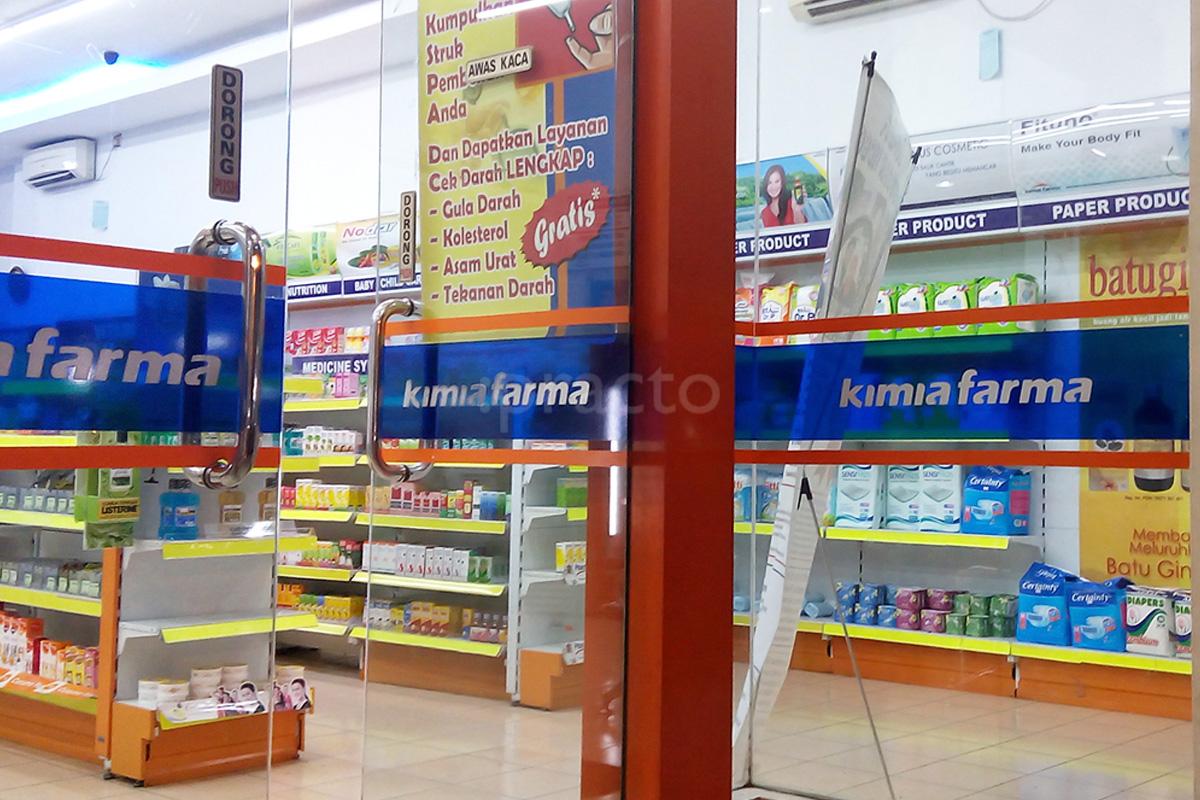
    Kimia Farma Apotek, the operator of hundreds of dispensaries all over the country, will open 100 more dispensary outlets this year. The subsidiary of the state owned pharmaceutical company Kimia Farma said the new outlets would bring the total number of the companys dispensaries to 1,000 units this year.

    Chief Executive of Kimia Farma Apotek Imam Fathorrahman said the management has set aside Rp20 billion for the plan to increase the number of its outlets.

    “Currently the company already has 900 dispensaries with sales valued at a round Rp1.3 trillion last year,” Imam said here on Sunday.

    He said to coincide with its 14th anniversary in January, Kimia Farma Apotek will start entering the market of e-commerce.

    “Holders of smart phones have reached 126 percent of the total population and internet owners around 52 percent. This is an extraordinarily big e-commerce market,” he said.

    In the first phase, the company will eye the Jabodetabek (Greater Jakarta) market and cooperate with order shopping service between Go-Mart.

    “In principle through this service we could be accessed by customers in the Jabodetabek area, Bandung, Surabaya, Bali, and Makassar with more than 250 selected locations of our dispensaries,” he said.

    The digital service, however, is only for non-ethical medicines that could be sold without doctors prescription.

    “This access has become a requirement . People dont have to go to dispensary for cosmetics and drugs that could be bought without doctor prescription,” he said.

  • Multivo – The all-in-one revolution in shelf management to boost your profit

    Multivo – The all-in-one revolution in shelf management to boost your profit

    After 2009 when the financial crisis hit most part of the world, labor productivity has fallen in many countries while minimum wages have increased steadily. As a consequence, many retailers and brands owners are experiencing pressure on already low margins, which put larger focus on improving retail store efficiency. Volumes are relatively flat, though in some studies have indicated that the basket size maintains itself but the number of visit per year decreases. Improving store traffic is high up on most retailer’s agenda.

    The questions now emerge, how to create differentiation between retailers and brands, how to increase the sales, and how to reduce the labor costs?

    This leads the retailers and brands owners need to continuously innovate, not for novelty but to bring about change for the better. With the extensive knowledge of retail environment and customers’ needs and challenges, HL Display Indonesia are now launching a new innovation within shelf management system named Multivo™.

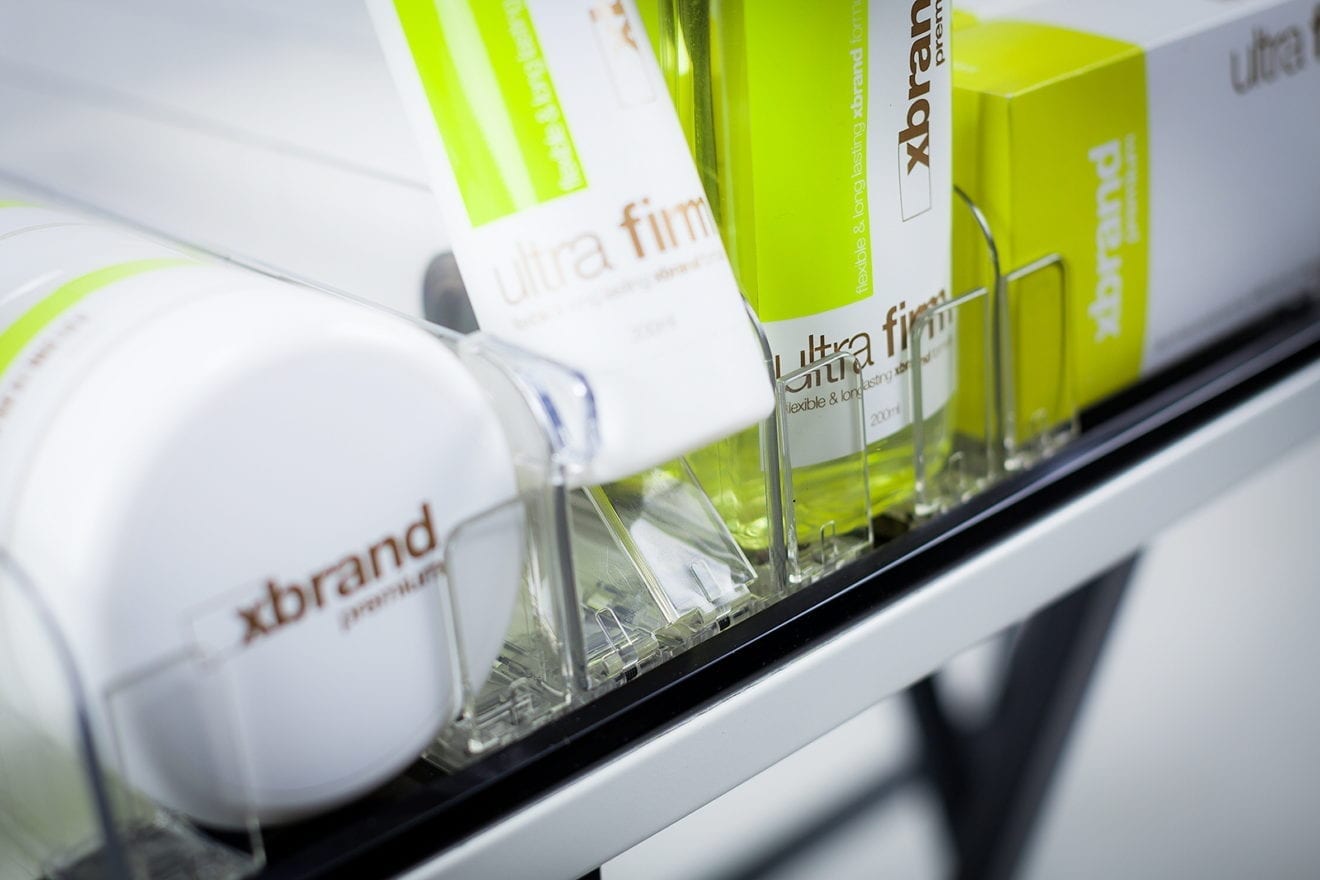
    Multivo™ is the newest shelf management system that makes the daily work of refills, front facing and planogram changes easier and faster than ever. The system is especially suited for health and beauty category but can also be used for multiple products and pack types. The solution allows automatic fronting of more pack types than ever before.

    https://www.youtube.com/watch?v=Nrfb8iFAO8o

    Having a good visibility is proven to drive sales. Reducing time spent of fronting, refill and planogram changes is a key for today’s retailers and brands owners. Multivo™ maintains products faced up and ensures that shelves always look attractive and well-stocked without staff having need to invest too much of their time keeping the shelves in order.

    For further information, HL Display Indonesia is based in Jakarta office can be directly contacted during office hour at +622179186024 / +622179198613 with the attention to Ms. Sharania Pangalila, or e-mail to [email protected] or  [email protected].  Visit the company website at www.hl-display.com/asia.

  • Indonesia to set up agency to combat fake news

    Indonesia to set up agency to combat fake news

    Indonesia is setting up an agency that will tackle fake news after a flood of untrue stories on social media, an official said Thursday, including claims China was waging biological warfare against the country using contaminated chilli seeds.

    The new cyber agency will also seek to protect state institutions from hackers, said presidential spokesman Johan Budi.

    Chief Security Minister Wiranto said that the move was necessary to combat a flood of news on social media that was “slanderous, fake, misleading and spread hate”.

    “Freedom (of speech) is a right in a democracy but there is also an obligation to obey the law,” he said.

    Officials said among the agency’s tasks would be to monitor news circulating online to check for false stories. It will be overseen by the security ministry and will work alongside other government agencies, they said, without giving further details.

    It came after President Joko Widodo declared his intention at a cabinet meeting in December to combat fake news in a country where people are rapidly getting online for the first time, with over 130 million out of 255 million inhabitants now estimated to be internet users.

    One of the most high-profile cases in recent times was a false claim circulating on social media in December that Beijing was seeking to wage biological warfare against Indonesia, after a true story that four Chinese citizens were arrested for using imported chilli seeds infected with bacteria on a farm south of Jakarta.

    The Chinese embassy in Jakarta was forced to issue a statement saying that the reports were “misleading and have caused great concerns”.

    Another fake story that spread online said that millions of Chinese workers had entered Indonesia to replace local workers. It comes as anti-Chinese sentiment is running high with Jakarta’s ethnic Chinese governor standing trial for alleged blasphemy.

    Indonesian internet expert Nukman Luthfie said he hoped the new agency would not breach people’s privacy, but added it was too early to tell.

    “It would be really unfortunate if it was going to be used to monitor public discussions because that’s people’s right,” he said.

    There has been growing global concern about the spread of fake news, with some critics claiming a flood of false stories circulating online may have helped brash billionaire Donald Trump win the US election.

  • Indonesian Bitcoin Market Rises, Rapid Increase in User Base Reported

    Indonesian Bitcoin Market Rises, Rapid Increase in User Base Reported

    Bitcoin Indonesia, a prominent online Bitcoin marketplace for Indonesian traders and investors, revealed a rapid development in its user base after adding over 170,000 members within 12 months.

    At the beginning of 2016, Bitcoin Indonesia served 80,000 active users on its marketplace. Tens of thousands of members purchased and sold Bitcoin through Bitcoin Indonesia through simplistic deposit and withdrawal methods such as bank over-the-counter cash settlement and online transfer.

    Over the past year, Bitcoin Indonesia’s user base grew from 80,000 to more than 250,000 active members. In January of 2015, Bitcoin Indonesia operated a platform with less than 50,000 members, thus, in essence, throughout the entire year of 2015 the platform only added 30,000 consumers.

    In comparison, this year’s growth is equivalent to nearly 6x of the average user base growth of last year, which can be considered to be an optimistic sign for the long-term development of Bitcoin Indonesia and the Indonesian Bitcoin market in general.

    Massive increase in daily trading volume

    Bitcoin Indonesia revealed a massive increase in its daily transaction volume, which currently stands at $1.48 mln. While the platform’s trading volume is only a fraction of other major Bitcoin exchanges, it is substantially larger than other markets such as the Philippines and Thailand.

    Suasti Atmastuti Astaman, the business development manager at Bitcoin Indonesia, attributed the growth of the platform’s user base and trading volume to the legalization of Bitcoin in various countries including China, the US and Russia.

    The clear regulatory framework and policies on Bitcoin are allowing local Indonesian users to better understand the benefits and advantages of using Bitcoin instead of fiat or other banking services.

    Astaman said in an interview with a local publication:

    “Bitcoin’s value completely depends on supply and demand in the market. At present, as more and more countries have relaxed their stances on the digital currency, including the United States, China and Russia, more and more people are putting their trust in it. That’s why Bitcoin’s value has been rapidly surging.”

    However, the operators of Bitcoin Indonesia and other startups in the region must attempt to educate users on the basic concepts of Bitcoin to prepare for the inevitable legal conflicts that will arise in the future.

    If certain governments such as China attempt to ban Bitcoin and the entire motivation of using Bitcoin relies on the current regulatory frameworks, it may significantly affect the long-term survivability of the company.

  • Retailer Transmart Carrefour to open 30 new stores in 2017

    Retailer Transmart Carrefour to open 30 new stores in 2017

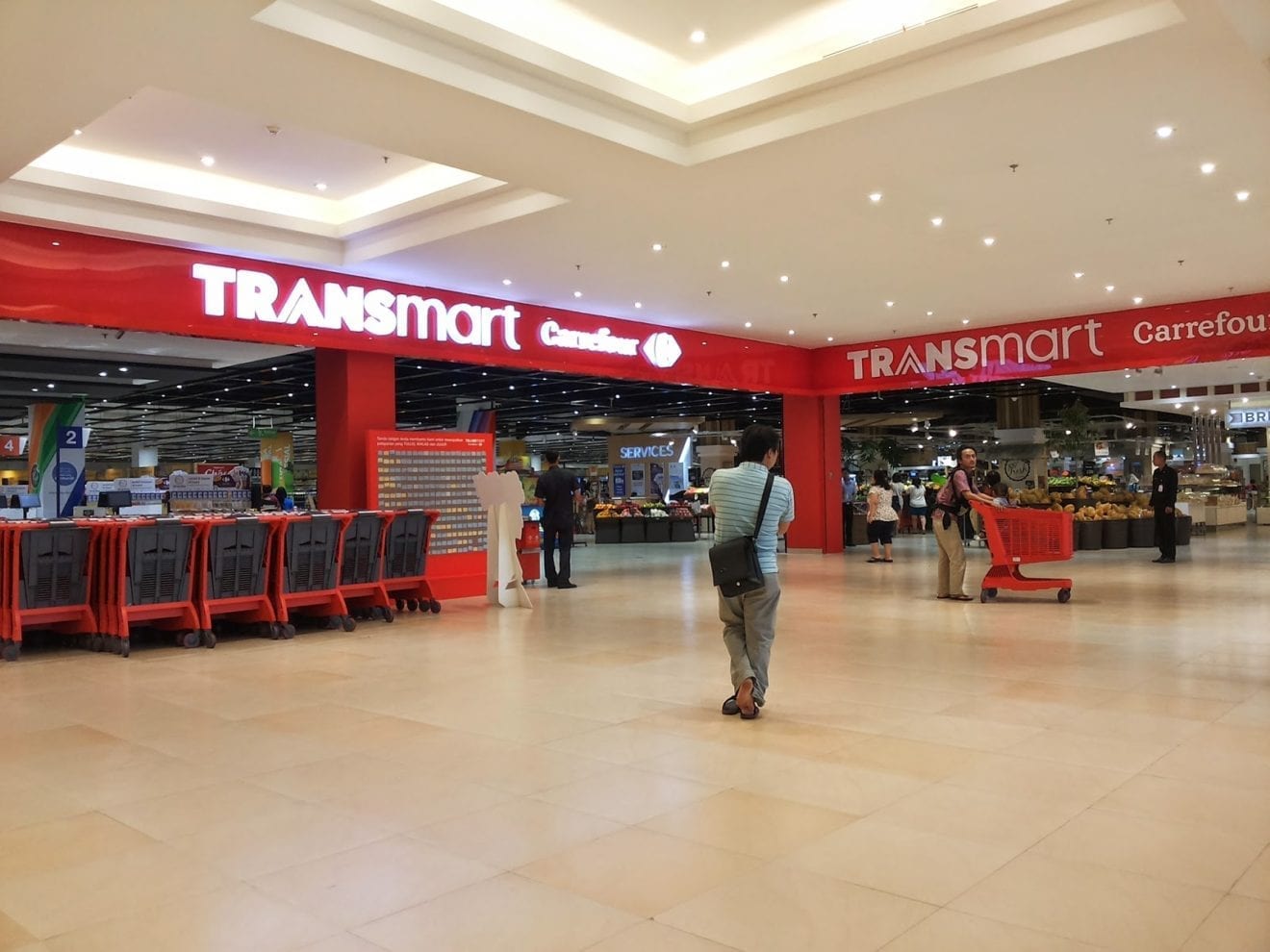
    Major retailer Trans Retail Indonesia will open dozens of new stores this year in a bid to attract more visits to its physical stores despite the booming online retail industry.

    “We will open 30 new stores under the Transmart Carrefour brand in 2017,” Transmart Carrefour corporate communications general manager Satria Hamid told on Friday. However, he declined to mention the amount of capital expenditure (capex) that the firm had earmarked to support the expansion.

    Despite Indonesia’s surging domestic retail business, Trans Retail Indonesia, part of business tycoon Chairul Tanjung’s CT Corp business group, has decided to step up to the challenge posed by the burgeoning online retail business.

    The retailer says it is determined to be more creative by way of promotional activities, intensive marketing and sales of fresh products to lure customers to its stores.

    “We will refresh several stores with a new concept,” Satria said, in reference to a combination of retail and culinary experience, department stores and child play areas.

    Currently, the company operates 94 Carrefour stores nationwide, of which 15 stock the Transmart Carrefour brand and the remainder will gradually follow suit.

  • JPMorgan lashing by Indonesia signals global threat to analysts

    JPMorgan lashing by Indonesia signals global threat to analysts

    The world is getting more hazardous for skeptical analysts, the banks that employ them and investors who rely on their published research.

    Even by the rough-and-tumble standards of emerging markets, Indonesia’s punishment of JPMorgan Chase & Co this week for a bearish analysis of the nation’s stock market stands out. The country’s finance ministry cut business ties with America’s biggest bank, telling reporters on Tuesday that the firm’s November research note wasn’t “accurate or credible.”

    Official attempts to deter such research are nothing new in developing economies, but rarely do governments retaliate against a Wall Street powerhouse for publishing opinions that contradict official views. The move builds on a trend: In July, Turkey’s banking regulator issued an industry-wide warning to avoid negative reports. In 2014, Brazil President Dilma Rousseff chastised an analyst for suggesting her election would hurt the economy.

    “It’s definitely been getting more aggressive recently,” said Paul McNamara, a London-based emerging markets fund manager at GAM Ltd, which oversees client assets of about US$65bil.

    As money managers around the world pull capital from developing economies on concerns over rising US interest rates and a stronger dollar, policymakers are becoming especially sensitive to critical analyst opinions, according to Medley Global Advisors. The risk for Indonesian authorities is that their actions backfire by undermining investor confidence in the country’s market research.

    “Published research is already a diluted view, but these kinds of actions will make it even more bland,” McNamara said. “Retail investors will have no idea what analysts are really thinking because the written reports won’t say anything real.”

    JPMorgan downgraded Indonesia’s equity market by two notches to underweight from overweight in a Nov 13 report, calling it a “tactical response” to Donald Trump’s election win. The bank also cut its rating on Brazil, while noting that both countries may provide a “better buying opportunity” later.

    Indonesia’s finance ministry said on Tuesday it would stop using JPMorgan as a primary dealer and as an underwriter of its sovereign bonds. While Finance Minister Sri Mulyani Indrawati said the government is open to improvement and respects the assessments of research providers, she said banks should take responsibility for economic reports that “could influence fundamentals and psychology.”

    “The finance ministry and the government are very open to criticism, but JPMorgan’s research result was pretty weird and unfair,” Sofjan Wanandi, head of the experts team at the vice-president’s office, said in an interview on Wednesday.

    JPMorgan’s business in Indonesia continues to operate as normal, the bank said in an e-mailed statement on Tuesday. “The impact on our clients is minimal and we continue to work with the Ministry of Finance to resolve the matter,” the bank said. On Wednesday, the finance ministry clarified that it won’t stop JPMorgan from conducting private-sector business in the country.

    Government retaliation for negative research can have a chilling effect on market analysis.

    Some investment banks in Turkey scaled back commentary on sensitive political subjects after the banking regulator warned brokerages last July against publishing “reports that would turn expectations and the atmosphere negative.”

    That same month, the head of research at one of Turkey’s largest brokerages was stripped of his professional license and charged criminally over a report analysing the impact of a failed July 15 coup targeting President Recep Tayyip Erdogan. The criminal charge was later dropped, but an investigation started by the capital markets regulator is still ongoing. An official for the Ankara-based market regulator SPK, who asked not to be named citing the institution’s policy, declined to comment on the investigation.

    In 2014, Rousseff publicly shamed an analyst at Banco Santander Brasil SA for forecasting a deterioration in the country’s currency and stock markets if she were re-elected. The firm later said it fired the analyst, disowning the remarks as that person’s opinion, not necessarily reflecting the company’s view. The episode spooked other analysts, according to Klaus Spielkamp, head of fixed-income sales at Bulltick LLC. “If anybody had anything bad to say about Brazil at the time, they wouldn’t say it,” he said. “Everybody was afraid.”

    Rousseff’s campaign press office declined to comment at the time, as did the nation’s banking association, Febraban. Rousseff was replaced as president last year after being impeached for breaking budget laws.

    Other governments’ moves also have stoked concerns among research analysts. China’s crackdown on hedge funds and broker-dealers for alleged trading abuses during its 2015 stock market rout was seen by some as targeting negative financial views. And in Italy prosecutors accused Fitch in 2012 of mismanaging its analysis of the eurozone debt crisis. The firm disputed the claim, and the case against it was later dismissed.

    While governments usually go after negative research during political or economic turbulence at home, the biggest concern for emerging markets today is capital outflows tied to the prospect of faster interest rate increases under a Trump presidency. International investors pulled US$23bil from developing-nation funds from the start of October through mid-December, according to the Institute of International Finance.

    “Governments are sensitive to criticism, especially in countries where there are large capital inflows that can quickly turn into outflows and prompt a currency sell-off,” said Nigel Rendell, London-based senior analyst at Medley Global Advisors.

    Yet even the most developed market isn’t immune to concerns that free speech is being stifled. S&P Global Ratings initially claimed that the US government’s 2013 lawsuit against the firm for allegedly inflating ratings on subprime-mortgage bonds was in retaliation for S&P’s downgrade of America’s sovereign credit rating. The firm dropped that accusation when settling the government’s case in 2015, acknowledging in a statement of facts that it hadn’t found evidence to support the claim. The company didn’t admit wrongdoing in agreeing to pay US$1.375bil to federal and state authorities.

    Still, Indonesia relies on international securities firms to market its sovereign bonds to overseas investors, who accounted for about 40% of local government debt holdings as of September, according to the Asian Development Bank. If policymakers were to alienate more banks with similar spats, they might undermine the government’s ability to finance its spending plans.

    “JPMorgan has been in the country for a very long time,” said Christopher Wheeler, an analyst at Atlantic Equities in London. “It will blow over them, but probably do more harm to Indonesia.”

  • Indonesia introduces new regulations for fintech startups

    Indonesia introduces new regulations for fintech startups

    Indonesia’s financial services authority (OJK) has issued its first regulations relating to financial technology, or fintech, companies running peer to peer (P2P) lending services, Deal Street Asia has reported.06 Jan 2017

    The regulation lays out minimum capital requirements, interest rate provision and education and consumer protection rules.

    Every fintech P2P lending firm must now register and secure a business licence from the authority, the report said.

    A company must have Rp1 billion (£61,000) in capital to register, and a further Rp2.5 billion to apply for a business licence. These figures are approximately half those that had been proposed in draft regulations, the news site said.

    Foreign ownership is limited to 85%, Deal Street Asia said.

    No maximum interest rate has been set, which again contradicts previous drafts of the regulations which set a cap of seven times Bank Indonesia’s seven-day reverse purchase rate per annum, the news site said.

    Muliaman Hadad, chair of OJK, told that the regulation was only an initial step in the authorities’ efforts to regulate and supervise the business.

    “What’s important is they get onto our radar because we don’t want to regulate the prudential aspects hastily. We want to provide business transparency guidelines first,” Hadad said.

    The OJK also has implemented a regulatory sandbox for firms to test services for consumers, the newspaper said.

    Bryan Tan of Pinsent Masons MPillay, the Singapore joint venture partner of Pinsent Masons, the law firm behind Out-Law.com said: “The Indonesian fintech market is one which has huge potential for its large consumer base and the unbanked, which is different from the financial service hub role that Singapore, Hong Kong and London play.”

    “This means that fintech regulations on payments and digital banking would be more keenly looked at, as opposed to fund-raising type activity,” Tan said.

    “A large potential customer base that is largely unbanked is a huge attraction for banks looking to expand and technology may be an enabler to that. The Indonesian regulation is clearly an evolving one and picking a leaf from the markets around it,” he said.

    Bank Indonesia set up a dedicated office and regulatory sandbox in November 2016 to help fintech developers.

    It will also provide services to help developers to understand Indonesia’s regulatory policies on fintech, gather and disseminate information on developments, and hold regular meetings with authorities and international bodies interested in the use of technology in finance, Bank Indonesia said.

    Indonesia’s launch of a regulatory sandbox for fintech follows similar announcements from Singapore and Hong Kong, with both countries following the lead taken by the UK’s Financial Conduct Authority (FCA) in developing a regulatory sandbox initiative.

    Singapore launched a sandbox in June, and released updated guidelines for the service this month.

  • Indonesia seeks to re-brew its coffee glory

    Indonesia seeks to re-brew its coffee glory

    Wake up and smell the coffee. After four years of posting lower production volume and shrinking plantation area, Indonesia is finally making a move to reverse the situation.

    Despite being the world’s fourth largest coffee producer, the country produces mainly Robusta coffee beans that are of lower quality than Arabica, and its own production volume has been falling over the past few years.

    The fact has prompted the government to rejuvenate 8,850 hectares of unproductive coffee plantations and open 200 ha of new ones in Central Kalimantan.

    For 2017, Rp 35.51 billion (US$2.66 million) has been allocated for that purpose, said the Agriculture Ministry’s plantation director general, Bambang.

    “Our vision is to increase plantation size, supported by programs from the government and various stakeholders. We need support from the latter because the state budget is limited,” he said on Friday.

    Ministry data shows overall plantation size has been steadily shrinking every year since 2013. The figure stood at 1.24 million ha back then and is predicted to have fallen to 1.22 million ha in 2016, with further reduction expected this year.

    Seasonal changes, combined with frequent volcanic eruptions, have been named as culprits behind the falling plantation size.

    With diminishing plantations, production volume has declined as well. While the volume reached 675,881 tons in 2013, it is predicted to have dropped 5 percent to 639,305 tons in 2016 and to slump to 637,537 tons in 2017.

    Bambang acknowledged the rejuvenation program would not yield instant results, as coffee plantations normally take three years to harvest and assured that the government had a few more tricks up its sleeves to improve the situation.

    It is in the process of registering more coffee products under the geographical indication (GI) scheme and specialty coffee to the Law and Human Rights Ministry’s Directorate General of Intellectual Property Rights.

    It is also supporting more farmers to plant Arabica coffee plants, as they only account for 30 percent of total plantations. Arabica coffee and those labeled GI, as well as specialty coffee — such as Gayo, Mandailing, Kintamani, Temanggung,

    Ciwidey, Manglayang, Wamena, Toraja and Gowa — are priced higher than Robusta. Arabica is planted on high land of 600 to 2,000 meters above sea surface, while Robusta, with its low acidity and bitterness, is planted on low land of 200 to 800 m above sea surface.

    Yusriadi, a 37-year-old coffee farmer from Bondowoso, East Java, is among farmers that have enjoyed the benefits of planting Arabica coffee. He has a monthly income of more than Rp 10 million, as Arabica sells higher than Robusta.

    “The central government and regional administration introduced Arabica coffee planting with good SOP [standard operating procedures] in 2011, so we can increase productivity and sell the harvest at a much higher price,” he said.

    Meanwhile, M. Kirom of the Indonesian Coffee Exporters and Industry Association (AEKI) said Indonesia still had room to improve its productivity, which stood at around 700 kg per ha compared to Vietnam with 3 tons per ha.

    “We can increase it to 1.5 tons per hectare and still have better quality than Vietnamese coffee because our soil is just naturally suitable for coffee,” he said.

    Separately, Indonesian Coffee Farmers Association (Apeki) chairman Sumarhum lauded the government’s move.

    “In the past, the government was half-hearted toward this commodity, but that’s not the case now. Coffee prices are good and global demand is huge, there’s no way the government is closing its eyes to it,” he said.

  • Agriculture ministry to stop corn imports in 2017

    Agriculture ministry to stop corn imports in 2017

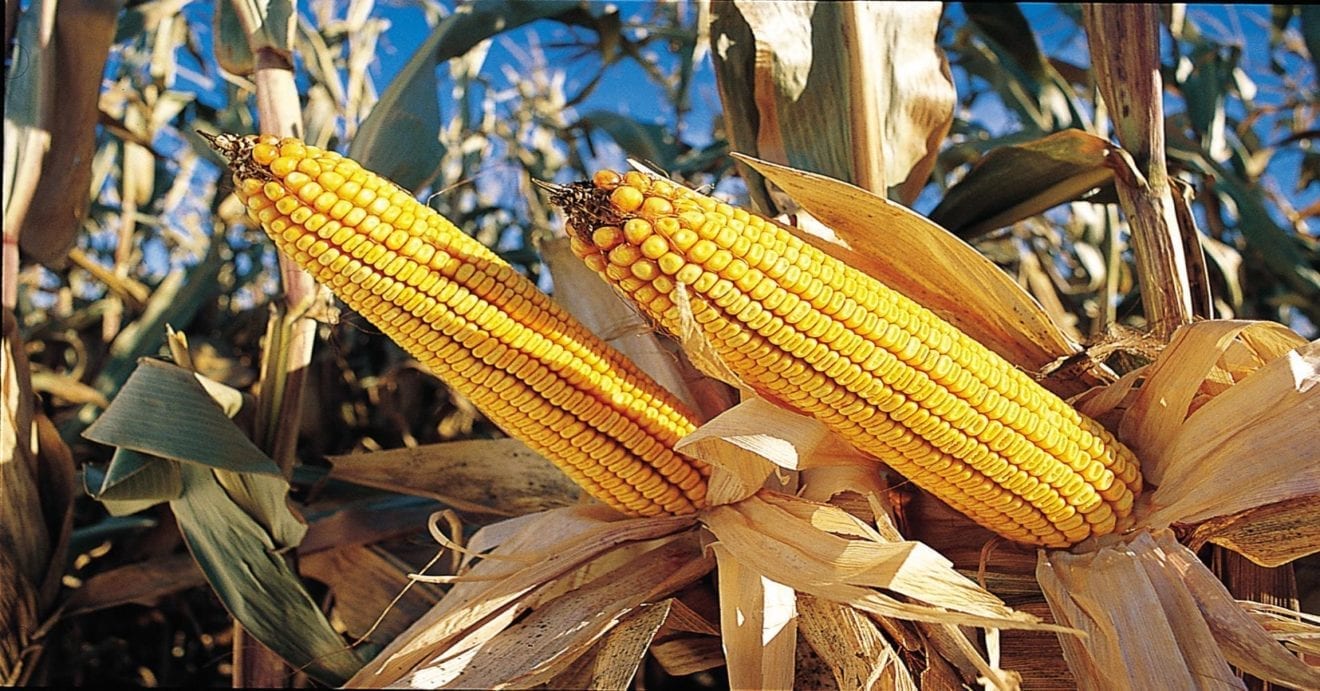
    Indonesias Agriculture Ministry has targeted to stop the import of corn that is used as raw material for producing livestock feed in 2017, an official of the ministry stated.

    The ministry has expanded the corn plantation area by two million hectares and has encouraged feed producers to buy corn produced locally, an official of the Ministrys Directorate General of Animal Feed Triastuti Andajani said in a statement.

    Corn is the largest component in livestock feed production.

    “With the increasing population of poultry, including broilers, hens, local chicken, and ducks, the demand for corn has also increased,” she pointed out.

    The Indonesian Feed Millers Association (GPMT) has forecast that feed production in 2017 could reach 18.5 million tons, and it would need 9.25 million tons of corn.

    Independent farmers will need some 3.6 million tons of corn based on the assumption of 300,000 tons of consumption per month.

    Corn demand for animal feed in 2017 is estimated to reach 12.85 million tons, or 1.1 million tons per month on an average.

    In September, the ministry and GPMT had signed a memorandum of understanding, which was followed by cooperation between the agriculture offices in 33 provinces and local feed producers to buy corn produced locally.

    The cooperation is aimed at ensuring that animal feed producers buy locally produced corn, with price reference based on Trade Ministers Regulation No. 21 of 2016.

    The ministrys data revealed that corn imports in 2016, as of December, had declined to 884,679 tons, or 68 percent as compared to imports during the last five years.

    The country had imported 3 million tons of corn in 2011, 1.5 million tons in 2012, 2.95 million tons in 2013, 3.1 million tons in 2014, and 2.74 million tons in 2015.

  • Lolalola closes online store

    Lolalola closes online store

    Indonesian online lingerie store Lolalola closed yesterday, but customers can still shop on its social-media platform.

    Lolalola says incoming orders will be processed “normally”.

    There has been no word yet from the startup on why it decided to close down the service, but it could be related to the increasingly tight competition among fashion eCommerce startups in Indonesia, says DailySocial. Berrybenka and SaleStock last year laid off employees in order to save their businesses, while Pink Emma temporarily shut down its service before resuming in September.

    Under CEO Donna Lesmana, Lolalola officially launched in March 2015 after being active for six months.

    Claiming to have been inspired by global lingerie brands such as Agent Provocateur and Victoria’s Secret, the startup aimed to “change the way Indonesian customers shop for lingerie” by providing products from local and international brands.

    Lolalola is backed by Ardent Capital and received logistics support from aCommerce. When the startup tested its service for Thai market, it claimed to have sold out within two weeks.

  • MDS ups stake in MatahariMall.com parent

    MDS ups stake in MatahariMall.com parent

    Matahari Department Stores (MDS) has increased its ownership in Global eCommerce Indonesia (GEI), the parent company of Indonesian eCommerce startup MatahariMall.com.

    MDS has paid Rp164.9 billion (US$12.2 million) for 7.3 billion shares, or 3.62 per cent of paid-up capital, in GEI. This gives it a 12 per cent share in total.

    MDS last ramped up its stake in GEI in January last year to 10.33 per cent, but its ownership was diluted to 8.38 per cent over the 12 months because of investments by other shareholders. In October, Mitsui & Co announced plans to inject $100 million in GEI over the next 12 months, and MDS has decided to expand its control gradually.

    “The company sees large potential in the eCommerce sector. With increased stakes in the platform, Matahari secures opportunities for huge returns in the future. We will also be able to synergise MatahariStore.com into MatahariMall’s platform, which will in turn widen reach across the country as well as boost Matahari’s net profit,” the company says in a statement.

    MDS has 148 stores in 68 cities across Indonesia.

    Proceeds from the new funding round will be used to improve market share, and to strengthen its position as Indonesia’s “leading eCommerce player”.

    MatahariMall warehouses and ships products from about 5000 affiliated sellers, and also procures goods directly to sell independently.

  • Over 4.48 million tourists visit Bali

    Over 4.48 million tourists visit Bali

    More than 4.48 million foreign tourists visited Bali via the resort islands Ngurah Rai Airport from January to November 2016, up 23.52 percent from 3.63 million in the same period last year.

    Some 4.48 million tourists traveled to Bali by air, and 70,449 others by sea, Chief of the Central Statistics Agency (BPS) Office in Bali, Adi Nugroho said here Tuesday.

    The number of foreign tourists visiting the resort island from January to November 2016 exceeded the target of tourist arrivals for all of 2016 at 4.2 million, he said.

    Bali has set the target of tourist arrivals for 2017 at 5.5 million.

    In November 2016 alone, the number of tourist arrivals in Bali reached 413,232 consisting of 396,150 who traveled to the island by air and 17,082 by sea.

    The figure increased 52.52 percent compared to the same month a year earlier but declined 4.39 percent compared to the previous month.

    The number of tourists from eight out of top ten sources of tourist arrivals in Bali increased significantly, Nugroho said.

    The eight countries were Australia, China, Japan, Britain, India, France, the United States, and Germany, while the number of tourists from Malaysia and South Korea declined.

  • India, Indonesia key areas of focus for DBS in 2017

    India, Indonesia key areas of focus for DBS in 2017

    India and Indonesia will be the Development Bank of Singapore’s “big” areas of focus for this year, its chief executive officer Piyush Gupta has said. “We also remain focused on building leading regional cash management, foreign exchange, debt markets and wealth management franchises,” Gupta said here.

    “So India and Indonesia will be our big areas of focus in 2017,” Gupta was quoted. DBS leads foreign banks with expansion plans in India.

    DBS’ wealth management business has quadrupled over the past six years, and now accounts for to 13 to 14 per cent of group revenue.

    “Over the next five years, we think it could get up to 20 per cent,” he said in a report on Singapore banks’ prospects during this year.

    “The world will have to grapple with massive consequences behind technological disruption on jobs displacement, both blue-collar and white-collar workers. My own bet is that you will find a lot more entrepreneurship, or what people call the gig economy,” he said.

    “It is likely that there will be a new wave of redistributive economics. Governments may prove inadequate to do this entirely under their own steam, and the private sector will have to play a meaningful role,” said Gupta.

    DBS’s top priorities for this year is to be prepared for volatility as markets will continue to be choppy.

    An increase in US dollar rates could also create negative impact, he added.”Step up the pace on transformation of the bank that is re-imagine banking, and be a 22,000-person start-up,” stressed Gupta. “The third priority is to continue our steady business expansion,” he said.

    But he also cautioned that uncertainties over US President-elect Donald Trump’s policies will be a headache for Asian strategies and could result in heightened market volatility in the short-term. At the same time, global growth is expected to remain subdued, said Gupta.

    “To navigate these uncertain times, we need to remain watchful and vigilant, as well as disciplined about costs and the risks we take,” he advises.

  • Trump’s Indonesia projects proceed despite potential conflicts of interest

    Trump’s Indonesia projects proceed despite potential conflicts of interest

    One resort, planned as the largest in Bali, will overlook a spectacular Hindu temple. The other, in the verdant hills of West Java, will adjoin a theme park. The properties will be so luxurious, the Trump Organisation says, that even an impressive five-star rating will not do them justice. So it will give them six stars instead.

    Even as President-elect Donald Trump promises to end foreign business deals that could pose conflicts of interest — there will be “no new deals” while he is in office, he has said — his company is moving ahead with two Indonesian projects that illustrate how tricky that pledge might be.

    None of the construction work to build or renovate structures at the Indonesian resorts has even begun, but Mr Trump has forged relationships with powerful political figures in Indonesia, where such connections are crucial to pushing through big projects.

    That tangle of relationships includes an Indonesian business partner who aspires to high office; a powerful politician accused of trying to extort billions of dollars from a United States mining company; and Mr Trump’s new adviser on regulatory issues, Mr Carl C Icahn, a top shareholder in the mining company.

    The resort projects, which a Trump spokeswoman said last week were “binding contracts”, have created a grey area of conflicting interests that could be hard to separate from an array of issues facing the US and Indonesia, including trade and contested claims over the South China Sea.

    Mr Trump’s local partner on the resorts, Mr Hary Tanoesoedibjo, is a billionaire media mogul with his own political ambitions. He ran for vice-president of Indonesia in 2014 and is organising a political party for another possible run at national office in 2019. If Mr Tanoesoedibjo or his party wins a major role in government, the potential conflicts could escalate significantly.

    “You could have two world leaders that are business partners,” said Professor Richard W Painter, who served as a White House ethics lawyer during the George W Bush administration. “It makes it almost impossible to conduct diplomacy in an even-handed manner. That does not work.”

    Through the partnership with Mr Tanoesoedibjo, Mr Trump has gained access to some of Indonesia’s top political figures, including Mr Setya Novanto, Speaker of the House of Representatives, who was temporarily forced to surrender his leadership post because of corruption allegations in 2015. Mr Novanto was heard on an audio recording seeking a US$4 billion (S$5.8 billion) payment from the US mining giant Freeport-McMoRan.

    Months before the recording came out in December 2015, Mr Trump met Mr Novanto during the presidential campaign at Trump Tower. After their lunch, Mr Trump pulled Mr Novanto before the cameras at a news conference and called him “a great man”, adding, “We will do great things for the United States.”

    The knot of potential conflicts includes Mr Icahn, the billionaire investor who will serve as a special adviser to Mr Trump. He is one of the largest shareholders in Freeport, which does so much business in Indonesia that it is the country’s largest taxpayer and has been seeking to extend its mining contract with the Indonesian government.

    “This stuff is so murky,” said Ms Karen Hobert Flynn, president of Common Cause, a nonprofit group that has called for Mr Trump to sell off his businesses to avert conflicts of interest. “It is not going to be clean moving forward. There are going to be complications as these projects move forward.”

    Mr Trump has provided little clarity about what he means by “no new deals”, a vow made in a Twitter post he sent out in mid-December. His aides suggested in interviews last week that even if construction had not started on a project, the Trump Organisation would move ahead if it had a binding agreement.

    For Mr Trump, the Indonesian deals are licensing and management agreements in which he provides the use of his name and his company manages the resorts.

    Even though no structures were built, Mr Trump secured a considerable payout on the two deals, according to a financial disclosure report that listed payments ranging from US$1 million to US$5 million for each of the projects between January 2015 through May 2016. That is far more than the US$400,000 salary paid to the President, which Mr Trump has said he will decline.

    Mr Trump created the corporations that manage these projects — including DT Bali Hotel Manager and DT Lido Hotel Manager — in late June 2015, just a week after he declared his intention to run for President.

    His companies have operations in at least 20 countries, including the Philippines, India, Turkey and Britain, but the full extent of his foreign financial ties is unclear because he has refused to release his tax returns or disclose the identity of his lenders.

    In addition to the no-new-deals pledge, Mr Trump has said that his sons, Eric and Donald Jr, along with other executives, will manage the family’s global real estate business.

    The Trump Organisation has recently moved to resolve potential controversies, in part by closing family foundations. It has also dropped a number of its proposed projects, including Trump Office Buenos Aires in Argentina; Trump Towers Rio and Trump Hotel Rio de Janeiro, both in Brazil; Trump International Hotel & Tower Baku in Azerbaijan; Trump Tower Batumi in Georgia; and Trump Riverwalk in Pune, India, representatives from the Trump Organisation have said last week, in response to questions.

    But other projects — including some on which construction has not started or is not well underway — are moving ahead, including Trump Tower Mumbai and a Trump tower in Gurgaon, both in India; Trump Tower Punta del Este in Uruguay; Trump International Golf Club, Dubai, and Trump World Golf Club, Dubai, both in the United Arab Emirates; and Trump International Hotel & Tower Vancouver, in Canada, the Trump Organisation confirmed.

    Ms Amanda Miller, the Trump Organisation spokeswoman, said of the two Indonesian projects: “Construction is well underway and will proceed as planned.”

    In fact, construction has started only on a golf course and toll road as part of the Lido Lakes resort in West Java. Separating the enterprise from politics may also be difficult because Mr Tanoesoedibjo’s MNC Group is building the road to the site as part of a government highway project.

    No new structures have been built at Lido Lakes or at the resort near the stunning Tanah Lot temple in Bali. A 20-year-old hotel, the Pan Pacific Nirwana Bali Resort, stands on the Bali property and could be renovated to create a Trump hotel, but that work has not begun.

    The two resorts will give the Trump brand a high profile in Indonesia — which has the world’s largest Muslim population — with the Trump name adorning two luxury hotels and premier golf courses as well as high-end villas and condominiums. Yet the US President’s name on the projects could also make them potential targets. During the campaign, Mr Trump made statements about Muslims widely viewed as inflammatory. US hotels in Jakarta have been attacked by terrorists several times.

    On Wednesday, Mr Trump accused the news media of exaggerating any potential conflicts presented by his business holdings. “It’s not a big deal; you people are making it a big deal, the business,” Mr Trump said on the steps of his Mar-a-Lago resort in Florida, where he was spending the holidays. “They all knew I had big business all over the place.”
  • Apple allegedly deepening partnership with Foxconn

    Apple allegedly deepening partnership with Foxconn

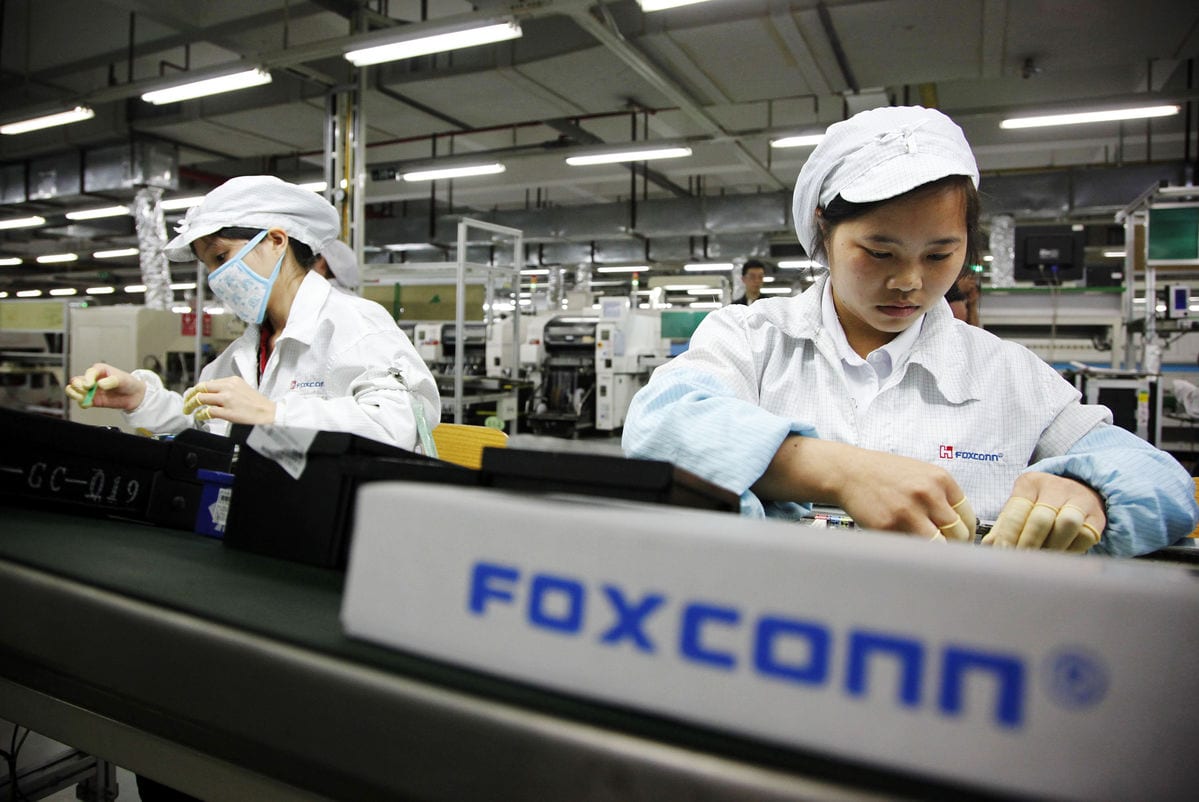
    Apple is turning to manufacturing partner Foxconn to facilitate efforts to expand both research centers and business further into Southeast Asia, and open up facilities in China and Indonesia, according to recent reports

    Foxconn has been manufacturing for Apple for over a decade. While Apple’s Indonesian presence is somewhat limited at the moment, Foxconn has been in Indonesia for several years.

    Not clear is what assistance Foxconn may specifically give Apple, beyond access to already-forged business arrangements with local suppliers and businesses.

    In late November, Indonesian Communication and Information Minister H.E. Rudiantara said that the country’s Communication and Informatics Ministry was “finalizing the plan” for an Apple-led research center in Jakarta. Apple has reportedly already selected a few locations in the country for the center.

    Earlier in the year, Chinese media reported that Apple is launching its first research and development center, located in technology incubation area Zhongguancun Science Park, Beijing. According to reports on the matter, the center has a budget of about $15 million, with a long-term expenditure goal of $45 million over the next few years. The center is allegedly seeking to hire around 500 workers, with no particular focus beyond Apple products and software.