Tag: Indonesia

  • Tourism Investment Grow 23 Percent

    Tourism Investment Grow 23 Percent

    Tourism Minister Arief Yahya said that investment realization in tourism sector during January to September 2016 reached US$1,094 billion (Rp14.7 trillion), a 23 percent increase year-on-year. “The highest [percentage of] investment was made in star hotel development,” Arief said yesterday as quoted from the Tourism Ministry website.

    Tourism investment realization comprised of foreign investment (PMA) of US$594.59 million and domestic investment (PMDN) of US$139.06 million. Foreign investment in star hotel development made up 56 percent of total investment. The rest consisted of management consulting (27 percent) and restaurant (7 percent). Domestic investment comprised star hotel development (65 percent), water tourism (21 percent) and amusement parks (4 percent). Some 51 percent were Singapore-based investors.

    On tourist arrivals, Arief said that the number of foreign tourist arrivals from January to October 2016 was 9,403,641 or grew 9.54 percent year-on-year. He expects that until late December, the target of 12 million foreign tourist arrivals will be exceeded, with an estimated 1.3 million arrivals in November and 1.5 million arrivals in December. “I’m optimistic that it will be surpassed as the said months are the peak periods,” he said.

    To attract tourists in 2017, Arief will roll out three priority programs: digital tourism, homestay and air connectivity. According to him, digital tourism is a strategy to win global markets, particularly that of 26 countries. Digital tourism program will kick off with the launch of ITX (Indonesia Tourism Exchange), which will bring together travel agencies, accommodation operators and attractions to facilitate transactions.

    Earlier, President Joko Widodo had instructed his subordinates to bring in up to Rp670 trillion worth of investment. According to Jokowi, investment proposals in tourism sector can help the government to achieve the target. “We must simply establish the product support, positioning, packaging and promotion.”

    The Investment Coordinating Board (BKPM) chairman Thomas Lembong said that several Chinese investors are interested to develop national tourism industry. He named Fosun International and HNA Group as prospective investors. Fosun International is a company actively investing in tourism and fashion industries. The HNA Group is China’s first airline company.

  • BlackBerry has no plans to move BBM servers to Indonesia

    BlackBerry has no plans to move BBM servers to Indonesia

    Back in June, BlackBerry announced a new partnership with Indonesia-based Emtek to help expand the consumer BBM business. Since then, several inaccurate articles have come out about who now owns BBM and most recently, several outlets published articles noting that BlackBerry would be moving BBM server(s) to Indonesia. Looking to clear the air surrounding that information, BlackBerry COO Marty Beard, has taken to the Inside BlackBerry blog to lay out the situation accordingly.

    In June, we struck a partnership with Indonesia’s leading media company, Emtek, to license the rights to develop and offer cross-platform BBM.

    The goal was to better serve our many BBM users, and, in particular, our 60 million monthly active users in Indonesia, by working with a trusted partner who we know can accelerate the delivery of new features and services for BBM. That goal has been more than met – see all of the new security features, mobile shopping offerings, mobile games, and more that have become available on BBM in the last several months.

    However, we’ve read some inaccurate press reports that tell a different story and we want to bring the facts to light. First of all, let’s be clear. BlackBerry owns 100% of BBM. We have merely licensed the rights to the Android, iOS and Windows Phone versions of BBM to a newly formed subsidiary of Emtek named Creative Media. BlackBerry maintains direct control over the BBOS and BlackBerry 10 versions of BBM, as well as BBM Enterprise (formerly BBM Protected).

    Businesses running BBM Enterprise for the ultimate in high-security mobile communications can remain confident that there will be no changes, disruptions or degradation of their service. It is also important to note that there are NO plans to move any BBM infrastructure, including BBM servers located in Canada and the U.S., to Indonesia, contrary to what the Head of Creative Media apparently communicated to the media.

    BlackBerry and Emtek are 100% aligned on their vision to advance BBM for consumers and on making sure our many Indonesian users continue to have the best experience possible. We remain extremely committed to Indonesia and our fans there. To that end, we have ensured that Indonesian consumers will have ready access to our handsets through our partnership with PT BB Merah Putih..

  • Apple targets Indonesia with $44 million in R&D investment

    Apple targets Indonesia with $44 million in R&D investment

    Apple is working hard to break into the Indonesian smartphone market, announcing plans to invest roughly $44 million in a research and development (R&D) center over the next three years.

    The investment will let the company sell its iPhone 7 there after the Indonesian government recently announced that as of January 2017, all 4G-enabled phones sold in the country must include at least 30% local content, which can be reached via hardware, software, or an investment.

    Indonesia presents a massive growth opportunity for Apple, which posted its first annual decline in revenue in 15 years during Q3 2016. The year-over-year decline is primarily due to the decelerating global smartphone market since the iPhone comprises almost two-thirds of the company’s total revenue.

    Nevertheless, Apple is unlikely to find immediate success in Indonesia, much as it has in other emerging markets such as India. The smartphone market is largely controlled by Samsung, which accounted for 26% of smartphone shipments in Q2 2016, according to IDC. Meanwhile, low- to mid-tier devices from local and Asian vendors such as OPPO, ASUS, Advan, and Lenovo make up the rest of the top five vendors, by share.

    The low- to mid-tier smartphone market is a key area in which Apple does not yet have a significant presence. This is a missed opportunity Piper Jaffray analyst Gene Munster noted during Business Insider’s IGNITION conference in December. And while the iPhone SE at $400 could be seen as an attempt by the company to partly capture the mid-tier market, it’s still marginally more costly than those being offered by local and Asian vendors. The OPPO F1, for instance, retails for around 3.8 million Indonesian Rupiah (roughly $283 USD).

    The global smartphone market is expected to slow considerably over the next few years. Despite a record-setting holiday quarter, 2015 was likely the last year of double-digit growth for smartphone shipments.

    Mature markets were at the heart of this year’s deceleration. Adoption has reached new highs in key markets in the United States, Europe, and China. The pool of first-time buyers in these countries is shrinking rapidly, and sales are now primarily coming from phone upgrades.

    Meanwhile, emerging markets will continue to see robust shipment growth. India and Indonesia, in particular, will help fuel a large share of the shipments growth within the global smartphone market over the next few years.

  • Indonesian property players welcome house price increases for foreign buyers

    Indonesian property players welcome house price increases for foreign buyers

    The government’s decision to increase house prices for foreign buyers has been met with positively by Indonesian real estate business players, who reason that it will help to protect the domestic property market.

    “If the government keeps the price low for foreign buyers, Indonesians will be forced to bear the high price jump. Therefore, I think this is a right decision,” Association of Housing Development in Indonesia (Apersi) chairman Eddy Ganefo said on Tuesday. He explained that the higher purchasing power of foreigners might hurt the domestic industry.

    The price increase is stipulated in a regulation issued by the Agrarian and Spatial Planning Ministry.

    The minimum house price set for foreigners in Yogyakarta and Bali now stands at Rp 5 billion (US$371,112) per unit, up from Rp 3 billion under a previous regulation.

    In West Nusa Tenggara and North Sumatra, the minimum price also jumped to Rp 3 billion from Rp 2 billion.

    Indonesian Real Estate Association (REI) chairman Eddy Hussy said he was optimistic that the changes in price would not affect demand from foreigners to purchase houses.

  • Lotte Mart opens 46th store in Indonesia

    Lotte Mart opens 46th store in Indonesia

    Lotte Mart, a discount store chain operated by retailer Lotte Group, said Wednesday it has opened its 46th store in Indonesia in line with its global growth strategy.

    With floor space of 5,572 square meters, the Pramuka shop opened on the underground floor of a commercial-residential building in Jakarta with some 7,000 households.

    Lotte Mart’s 16th retail outlet in Indonesia has a health and beauty section, as well as young children and fresh food corners, the company said.

    Lotte Mart also operates 26 wholesale stores and two supermarkets in the world’s fourth most populous nation.

    Currently, Lotte Mart runs a total of 290 stores in South Korea, China, Indonesia and Vietnam, and plans to raise the number of shops to over 300 next year.

  • Indonesia challenges Google to disclose financial reports

    Indonesia challenges Google to disclose financial reports

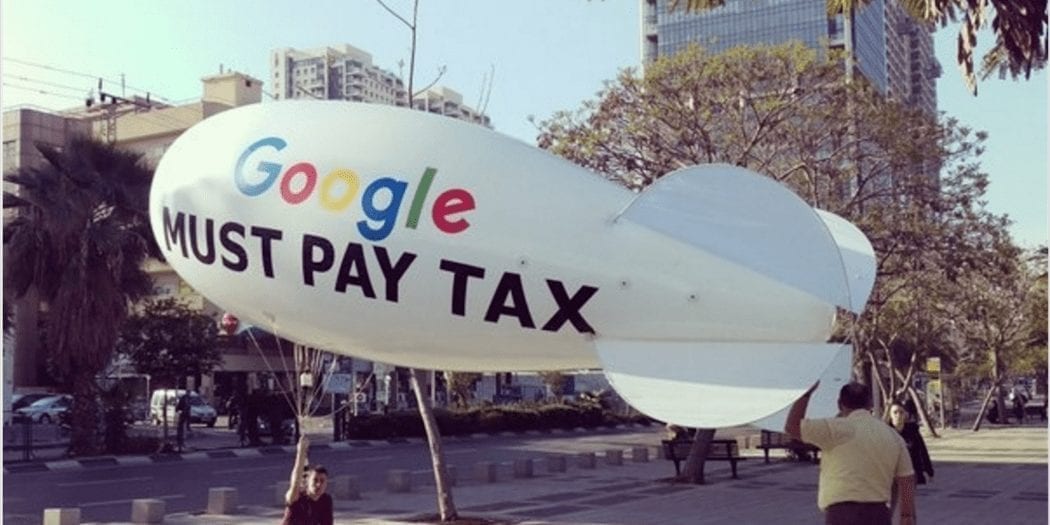
    The Directorate General of Taxation will intensify its investigation on the suspected unpaid taxes by tech behemoth Google, claiming that the company’s tax settlement offer was too small.

    The government said that it would continue investigating Google as it has gathered preliminary evidence indicating that the firm has allegedly committed a criminal act.

    “Next year, it is not going to be about a tax settlement anymore,” Muhammad Haniv, the head of the Taxation Directorate General’s Jakarta branch, who is also the main investigator in the case, said on Tuesday.

    “We have to accelerate the process. We want Google to disclose its financial reports and the tax office will calculate the tax owed,” he said.

    He said the consequence of the tax office’s findings would be that Google had to pay taxes owed plus a 150 percent penalty.

  • Samsung Maintains its Market Dominance followed by OPPO and ASUS in Indonesia

    Samsung Maintains its Market Dominance followed by OPPO and ASUS in Indonesia

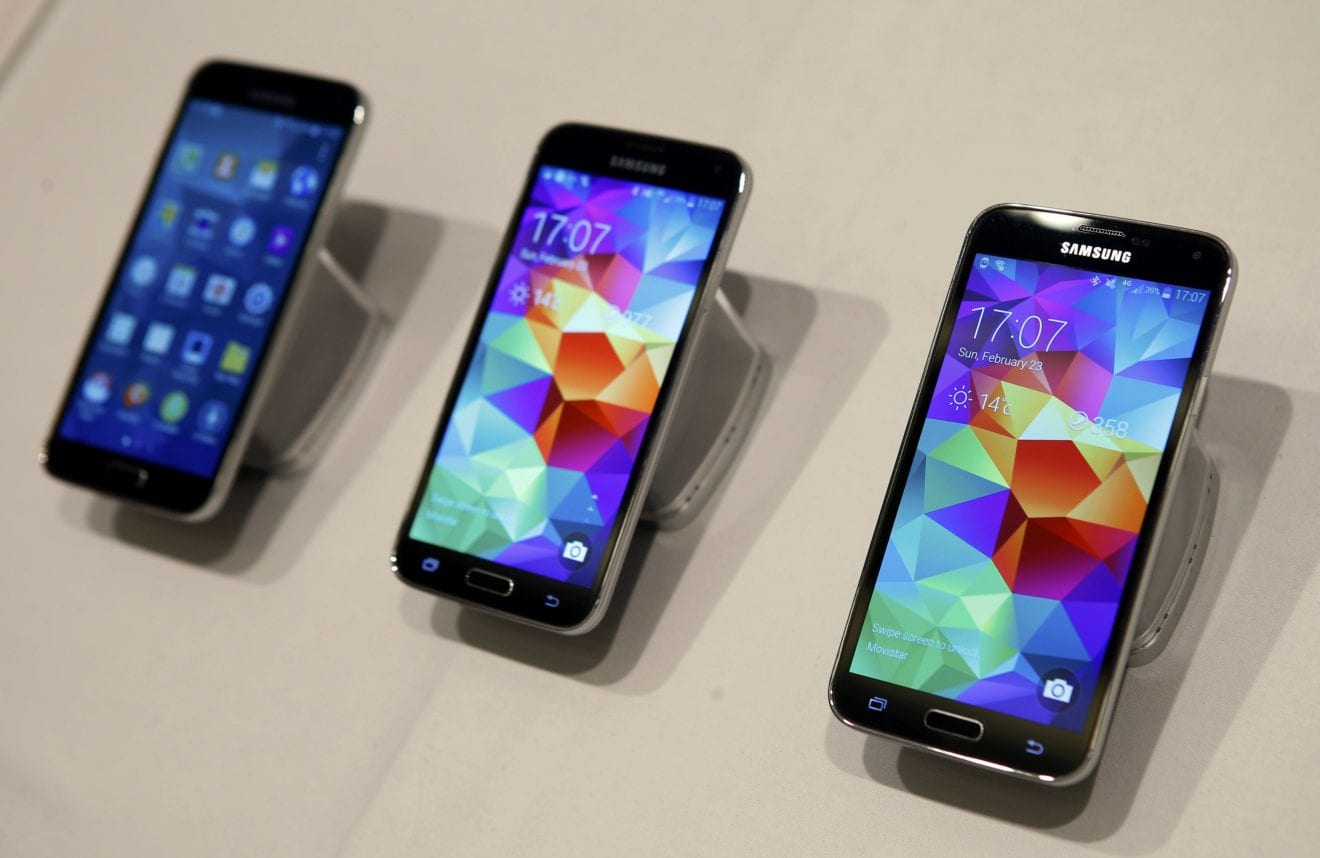
    According to International Data Corporation’s (IDC) latest Quarterly Mobile Phone Tracker, total smartphone shipment in Indonesia in 2016Q3 recorded a slight Quarter-On-Quarter (QoQ) drop of 7% but still showed a moderate increase of 4% over the same period last year. “After the peak season of Lebaran ended, a stretch of quiet business begun in 2016Q3 which forced smartphone vendors to lower their shipment and focus more on improving the sales performance as well as laying the groundwork in anticipation of the peak shopping season in 2016Q4.” Says Reza Haryo, Senior Market Analyst, Client Devices, IDC Indonesia.

    Key highlights in the Indonesian smartphone market in 2016Q3 include: 

    US$250<US$300 price band segment grew significantly, which was contributed by the traction of OPPO’s F1s and Samsung’s Galaxy J7. However, when considering the Indonesian market as a whole, the US$100<US$200 segment remained the sweet spot, thanks to the demand for entry level 4G phones which usually offers the combination of 2GB ram and 16 GB internal storage.

    The share of 4G phones have also increased from 58% in 2016Q2 to 68% in 2016Q3 and had 8% sequential growth. This is largely due to the fact that telco service providers have been competing to expand their market share in a bid to capitalize on the growing number of smartphone users in the country through data bundling packages. In line with this expansion, the portion of smartphones sold in telco channel has also increased 22% YoY.

    “Indonesians use smartphones for entertainment purposes such as social messaging, video streaming, gaming, as well as browsing. Hence, there is a demand for the larger screen sized phones and the share of phablets have increased from 11% in 2015Q3 to 16% in 2016Q3. Most of the volumes came from major vendors such Samsung, OPPO and Asus. Samsung’s Galaxy J7, OPPO’s F1s and ASUS’ Zenfone Selfie were among the most popular models.” Adds Haryo.

    Top Five Vendor Highlights in 2016Q3 

    Samsung’s consistent marketing campaigns in retail shops enabled the vendor to increase shipments despite having a slower demand. This also extended the gap between the market leader and its competitors. The fallout from the Note 7 incident had relatively little impact on its brand perception in Indonesia.

    OPPO decreased sequentially relative to the non-peak period but still maintained its aggressive online and offline marketing activities. OPPO’s direct to retail strategy with various marketing supports continued to allow OPPO to increase its retail presence.

    Asus continued to rely heavily on the affordable Zenfone Go but the lack of marketing efforts throughout the quarter brought about its decline in the market.

    Advan introduced 8 low-cost 4G models in 2016Q3 alone. 4G models have been quick to pick up, partly thanks to the local vendor’s marketing activities heavily focusing on retail channels.

    Smartfren. As a local vendor that also operates as a telco provider, Smartfren tried to book more revenue from data services and recorded a 17% sequential decline for its smartphone shipment. Aside from bundling programs with leading smartphones such as the Samsung J Series, Smartfren have been consistent in promoting their Mifi product with attractive bundling program.

    Lenovo decreased sequentially relative to the non-peak period choosing to focus on sell-out instead. A6000, A1000 and A2010a were their top 3 models shipped in 2016Q3 in terms of units.

    Overall Positive Outlook for Indonesia

    IDC maintains the forecast for 2016 as the market is expected to expand significantly in Q4 and high demand during the festive season will allow vendors to increase shipment volume to reach targets. In addition, the continuous economic improvement from heavy infrastructure investment will continue to boost the Indonesia economy.

    The Local Content regulation (TKDN) is getting more accepted in a sense of clearer approach. A number of vendors including Xiaomi, LG, and Blackberry have now showed commitment to comply with this regulation. In the short term, it is expected that the industry will be focusing on local assembly but the challenge remains from the inadequate component supply chain ecosystem. But in the longer term, depending on the effectiveness of incentives provided by the government, more component manufacturers could move to Indonesia. This means that vendors would need to be prepared to have end-to-end manufacturing in Indonesia instead of just assembly. Hence, we expect that the future outlook will remain positive for 2017 onwards,” ends, Haryo.

    Channel dynamics

    With the intense competition and relatively low demand in 2016Q3, it caused vendors to put their utmost focus on liquidating stocks through improvement to their channels. The Direct to retail approach by cutting down the intermediaries has proven to help the sell-out of OPPO. IDC believes smartphone vendors will try to replicate this distribution strategy soon but this will require a strong retail relationship which only the larger vendors will be able to execute given the large volumes that they have and that they are more established in the market.

    Telco collaboration

    “Telco providers need to challenge the status quo and find ways to innovate as their core business continues to be pressured by over the top players which could be significant threats in revenue loss even as mobile data traffic grows exponentially. With an advanced network infrastructure and strategic partnership between telco providers, over the top players and hardware vendors, IDC believes that Telco providers and smartphone vendors can leverage the increasing demand for over the top players to drive up ARPU as well as brand exposure,” ends, Haryo.


  • The rupiah may soon have three fewer zeros

    The rupiah may soon have three fewer zeros

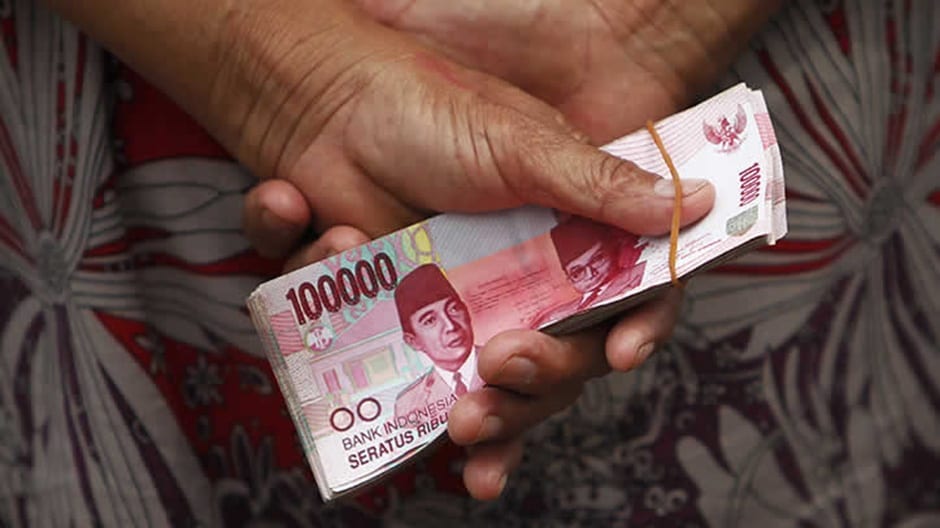
    Indonesia’s central bank governor said yesterday that the bank is seeking to slash three zeros off the face value of rupiah notes to simplify its currency system.

    Bank Indonesia Governor Agus Martowardojo said he has asked President Joko Widodo to revive a previously shelved plan to redenominate the rupiah to make it “more efficient and simpler”.

    A draft law backing redenomination was submitted to parliament in 2013, but it was put aside due to instability in Indonesia’s financial markets then

    If approved, the central bank would need two years to prepare new notes and another seven years of transition, Mr Martowardojo s.aid.

    “Prices of goods and services have to also be simplified. Because of the transition period, in which people can use both the old and new rupiah denominations, we are sure it wouldn’t affect inflation,” he said at the launch of a new series of new currency designs.

    The largest rupiah denomination is currently 100,000 and the smallest is 1,000.

    Indonesian Finance Minister Sri Mulyani Indrawati said she would discuss the proposal with parliament. However, it is not on the list of current legislative priorities for next year.

    “A redenomination would strengthen assurance in Indonesia’s currency, but it does not affect anything nominally,” she told reporters.

  • Express, Uber team up to tap opportunities in Indonesian market

    Express, Uber team up to tap opportunities in Indonesian market

    Despite its roller coaster relationship with new competitors, publicly listed taxi operator Express Transindo Utama announced on Monday it would team up with ride-hailing application Uber for a ride-sharing integration in hope to improve services and increase revenue.

    Under the collaboration, Express drivers will be able to use Uber’s application to take uberX orders apart from running conventional services.

    “Through collaboration with Uber, we expect to improve the utilization of our fleet,” Express Group chief operating officer Benny Setiawan said in a statement.

    Express, Benny went on, was also developing a scheme that would allow Uber partner drivers to purchase cars from Express through an installment scheme.

    Uber also shared enthusiasm about its partnership with Express.

    “We are enthusiastic that Express Group, a prominent taxi operator in Indonesia, now uses ride-sharing and technology to expand its market,” Uber Asia Pacific head of business Eric Alexander said.

    On March 22, over 10,000 conventional transportation drivers—mostly Express and Blue Bird taxi drivers, as well as drivers of angkot (public minivans), buses and bajaj (three-wheeled vehicles)—took to several thoroughfares in Jakarta to stage a protest.

    The protesters accused the government of failing to regulate increasingly popular app-based transportation services, such as Grab, Uber and Go-Jek, which they say were eroding their incomes.

    During the protest, conventional taxi drivers initially targeted Go-Jek and Grab drivers, though groups of ojek (motorcycle taxi) drivers later retaliated, smashing cab windows.

  • Indonesia, Michelin Cooperate in Tire Exports

    Indonesia, Michelin Cooperate in Tire Exports

    The Indonesian government has joined hands with French tire company Michelin to open market access to Europe and the United States. The plan was proposed in a meeting between Industry Minister Airlangga Hartarto and Vice President Public Affairs of Michelin East-Asia and Oceania Segsarn Trai-Ukos in Jakarta last week.

    According to Airlangga, the government and Michelin will also cooperate in aircraft tire retreading. “Michelin has developed tire retreading in Thailand,” he said yesterday.

    He said that Michelin technology can help develop aircraft tire retreading in Indonesia and reduce negative perception of retreaded tires. High-tech retreaded tires can help lower airline costs and boost growth of air transport industry.

    Indonesia and Michelin will also collaborate in utilizing used tires. According to Airlangga, Michelin is expected to process used tires into raw material for asphalt. He pointed to the example of 80 million units of two-wheeled vehicles with 160 million tires. “With an average lifespan of 1.5 to 2 years, abundant supply of used tires will be available to be utilized.”

    The Minister also discussed business opportunities with French Ambassador to Indonesia Jean-Charles Berthonnet. Airlangga said that France can become Indonesia’s export gateway to the non-traditional European market.

    He sees France as an important trade partner. In 2015, Indonesia’s import value from France hit US$1.3 billion for aircraft components, vehicles, machinery, milk, and pharmaceutical. Whereas, Indonesia’s export to France worth US$972 million, which include footwear, rubber, furniture, clothing, and coffee.

  • Bank Indonesia releases new notes, coins

    Bank Indonesia releases new notes, coins

    Bank Indonesia released on Monday seven new banknotes and four coins bearing the pictures of 12 national heroes. The launch of the new notes and coins was attended by President Joko “Jokowi” Widodo and Bank Indonesia governor Agus Martowardojo in Jakarta, Antara news agency reported.

    The new notes are the Rp100,000, Rp50,000, Rp20,000, Rp10,000, Rp5,000, Rp2,000 and Rp1,000, while the new coins are Rp1,000, Rp500, Rp200, and Rp100.

    Indonesia’s founding fathers, Soekarno and Mohammad Hatta, will be featured on the Rp100,000 note, while Djuanda Kartawidjaja and Sam Ratulangi are on the Rp50,000 and Rp20,000 notes, respectively.

    Other national heroes featured are Frans Kaisepo, Idham Chalid, Mohammad Hoesni Thamrin, Tjut Meutia, I Gusti Ketut Pudja, TB Simatupang,  Tjiptomangunkusumo and Herman Johannes.

  • Toyota Indonesia to see exports down by 5 percent this year

    Toyota Indonesia to see exports down by 5 percent this year

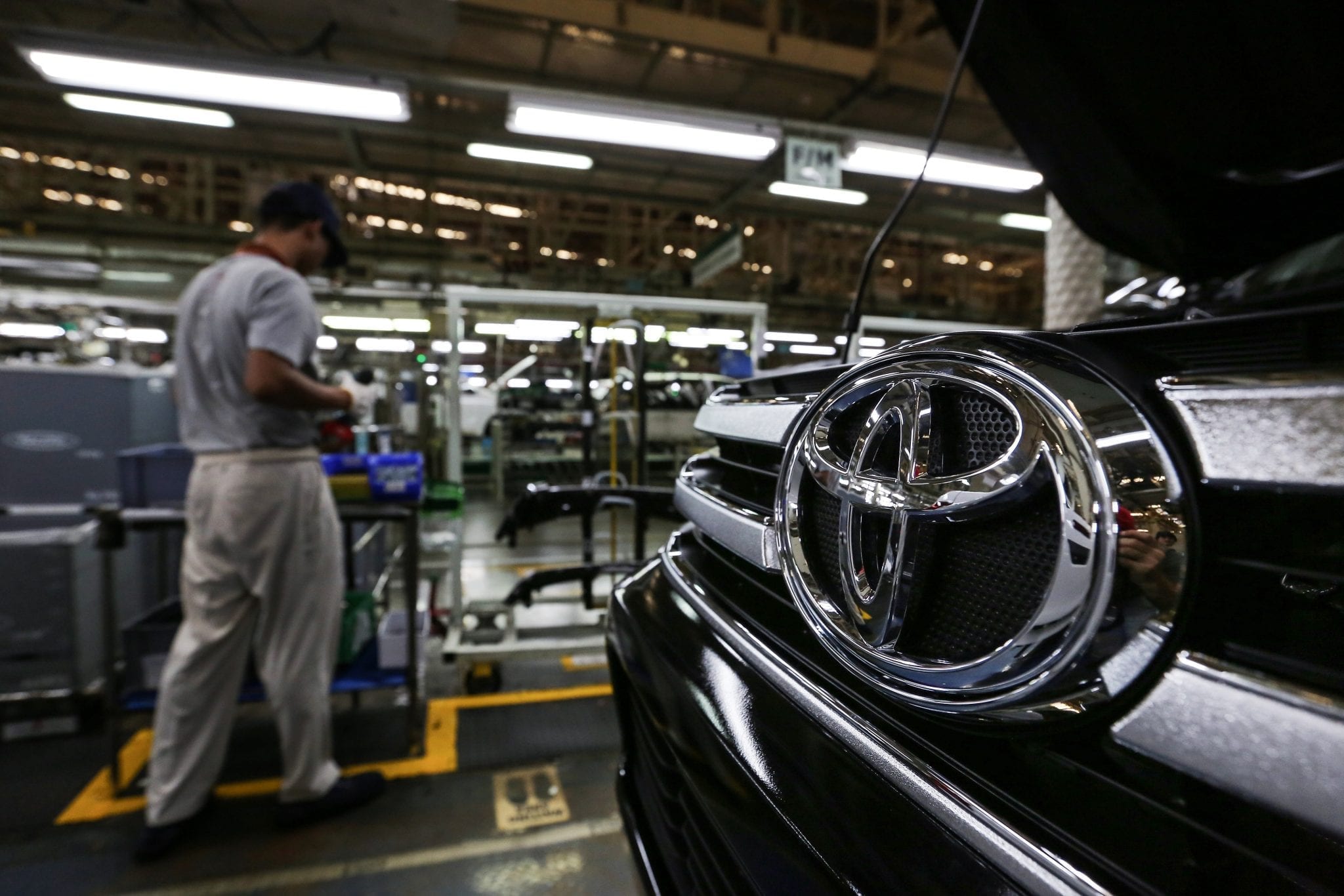
    Car manufacturer PT Toyota Motor Manufacturing Indonesia (TMMIN) expects to see its exports fall by 5 percent this year mainly due to low demand in the Middle East.

    TMMIN vice president director Warih Andang Tjahjono said, a protracted security crisis in the Middle East and global oil price decline had impacted car demand in the region. Thus, the company will see its car exports down to 165,000 units this year from 176,000 units last year.

    Car exports to Saudi Arabia, which makes up 50 percent of the company’s exports to the Middle East, saw a 30 percent decline this year, the biggest in the region. The Middle East and Asia are the biggest markets for Toyota cars, contributing more than 50 percent to the company’s exports, Warih said.

    While demand in the export market declined, domestic demand for Toyota cars has grown above the industry’s average.
    As of November, Toyota car sales had risen by 19 percent year-on-year compared to the corresponding period last year, Toyota Astra Motor vice president director Henry Tanoto said.
    “We predict our domestic car sales will reach between 375,000 and 380,000 units by year-end,” he said

  • Local brand Rusty Lopez opens 9th outlet in Jakarta

    Local brand Rusty Lopez opens 9th outlet in Jakarta

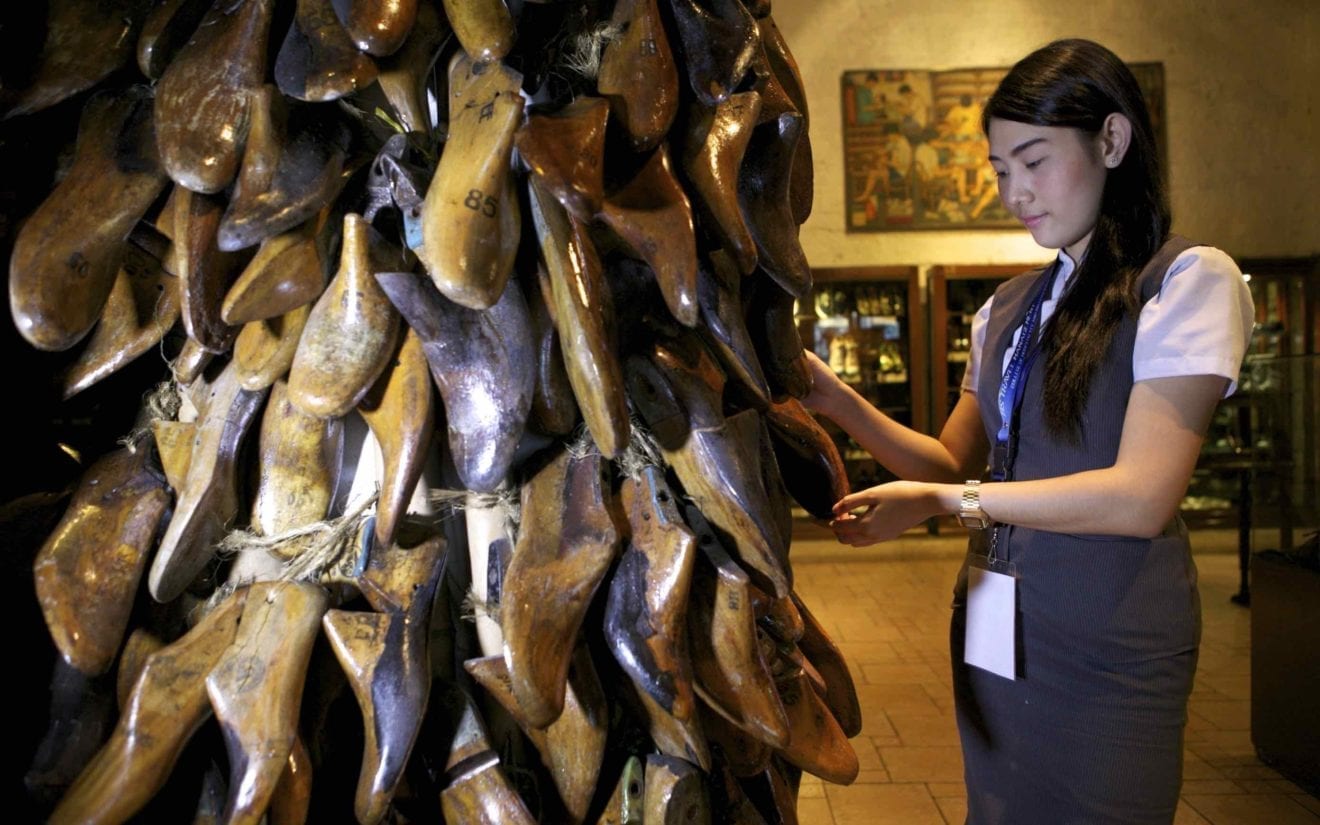
    Filipino fashion retail brand Rusty Lopez opened its newest store in Jakarta on Thursday, featuring comfortable sandals and casuals made from Marikina, the Philippines’ shoe capital, according to a recent report of the Department of Trade and Industry’s Philippine Trade and Investment Center–Jakarta.

    The outlet in Sogo Lippo Mall Puri located in the St. Moritz Central Business District is the brand’s ninth outlet following the opening of stores in Seibu Grand Indonesia, Sogo Emporium Pluit, Sogo Central Park, Sogo Alam Sutera, Lotte Shopping Avenue, Metro Plaza Senayan, Metro Gandaria City and Metro Taman Anggrek.

    Philippine commercial attaché to Indonesia Alma Argayoso said sales of the newest collection during the opening were brisk. The other stores also received positive feedback.

    “It is exciting to bring to the Indonesian market the Philippines’ world-famous Marikina-made shoes. This affirms our belief on the potential of fashion retail products in Indonesia, Southeast Asia’s biggest economy,” Argayoso said.

    The first overseas store of Rusty Lopez opened in Jakarta on March 6, 2016 at the Seibu Department Store of Grand Indonesia Mall and featured selected designs suited to the Indonesian market.

    The Trade Department noted that increased interest in Philippine-made shoes abroad was helping revive the local shoe industry and opening more opportunities for small enterprises.

    PTIC in Jakarta is supporting and assisting Filipino homegrown brands in globalizing their products and accessing the regional markets by looking for potential partnerships.

    Aside from Rusty Lopez, other Filipino fashion retail brands in Indonesia are Karimadon, Penshoppe, Gingersnaps and Ann Ong Jewelry.


  • Marikina shoes a hit in Indonesia

    Marikina shoes a hit in Indonesia

    Filipino fashion retail brand Rusty Lopez has recently opened a new store in Jakarta, featuring comfortable sandals and casuals made from Marikina City, the Philippines’ shoe capital known for producing durable and high-quality footwear, according to the Department of Trade and Industry’s Philippine Trade and Investment Center – Jakarta.

    The store in Sogo Lippo Mall Puri located in St. Moritz central business district is the brand’s ninth outlet following the opening of stores in Seibu Grand Indonesia, Sogo Emporium Pluit, Sogo Central Park, Sogo Alam Sutera, Lotte Shopping Avenue, Metro Plaza Senayan, Metro Gandaria City and Metro Taman Anggrek.

    Philippine commercial attaché to Indonesia Alma Argayoso said the sales of the newest collection during the opening were brisk. The other stores also received positive feedback.

    “It is exciting to bring to the Indonesian market the Philippines’ world-famous Marikina-made shoes. This affirms our belief on the potential of fashion retail products in Indonesia, Southeast Asia’s biggest economy,” Argayoso said.

    The first overseas store of Rusty Lopez opened in Jakarta on March 6, 2016 at the Seibu Department Store of Grand Indonesia Mall and featured carefully selected designs suited to the Indonesian market.

    DTI said the increased interest in Philippine-made shoes abroad helps revive the local shoe industry and is expected to open more opportunities for small enterprises to generate employment within their communities.

    As part of the DTI’s industry promotion group, PTIC-Jakarta said it would continue to support and assist Filipino homegrown brands in globalizing their products and accessing regional markets by continuously looking for potential partnerships.

    Aside from Rusty Lopez, other Filipino fashion retail brands in Indonesia are Karimadon, Penshoppe, Gingersnaps and Ann Ong Jewelry.

  • Lazada’s 12.12 sale nets $40.5 million

    Lazada’s 12.12 sale nets $40.5 million

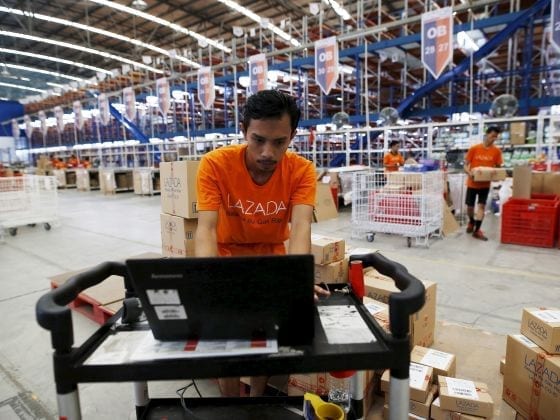
    Lazada Group’s Online Revolution, also known as 12.12, has again proven to be the biggest online shopping event in Southeast Asia, ringing up US$40.5 million in sales.

    About 60 per cent of the gross merchandise value (GMV) of the December 12 event came from mobile, with shoppers spending an average of 12 minutes on Lazada apps browsing deals from international and local brands and sellers.

    With the theme “Brands for All”, the 12.12 event featured more than 500,000 offers and flash sales from more than 1000 brands and 55,000 sellers. Best-sellers included shower gels and mascaras, tote bags and bracelets, vacuum cleaners and tableware, and virtual-reality headsets and speakers.

    Lazada Group CEO Maximilian Bittner says the sale has become highly anticipated among more consumers in Southeast Asia, who are no longer just from large cities, but also from small cities and rural areas.

    “This year, the difference was consumers clearly shopping for everyday products such diapers and groceries, as well as higher-value items from trusted brands.”

    Lazada has a presence in Indonesia, Malaysia, the Philippines, Singapore, Thailand and Vietnam.