Tag: Indonesia

  • Panasonic targets 50% sales jump for TVs in Indonesia

    Panasonic targets 50% sales jump for TVs in Indonesia

    Electronics giant Panasonic Corp. is seeking to sell up to 50 percent more TVs in Indonesia this year by offering online shopping and a greater variety of models. The company’s TV sales have been stagnant for three years.

    “We hope this year we can sell around 250,000 to 300,000 units,” said Erwin Lim, a Panasonic Gobel Indonesia product manager. The figures represent increases of 25 to 50 percent from 200,000 TVs sold last year.

    As part of its goal, Panasonic launched a website designed to help consumers select TV models according to their needs and budgets.

    “We want to strengthen our relationship with our customers and make it easy for consumers to choose products effectively and efficiently according to their needs and budgets,” Panasonic Gobel President Hiroyoshi Suga said.

    Lim said one challenge is that TVs are not a primary need for consumers in Indonesia.

    “Therefore, we will also innovate (our marketing) in order to increase sales,” Lim said. “We will begin to focus marketing on digital means, seeing a trend in today’s society.”

    Referring to Panasonic’s medium-term target over the next three years, Lim said the company wants to move to the No. 2 or No. 3 position by boosting its market share to 14 percent or 15 percent from the current 11 percent.

    Panasonic, currently No. 4 in the market, is seeking to catch up with third-ranked Sharp, a Japanese firm owned by Taiwan’s Hon Hai Precision Industry.

  • CT Corp moving to open cinemas

    CT Corp moving to open cinemas

    Indonesia’s retail/media conglomerate CT Corp is partnering with cinema companies to open movie theatres in its retail complexes.

    CT retail arm Trans Retail has announced a partnership with Graha Layar Prima, which runs the Korean-owned CGV cinema chain (formerly known as Blitz Megaplex), to develop cinemas at CT’s Transmart Carrefour stores across Indonesia. Launched last year, the Transmart centres feature restaurants, apparel stores and supermarkets. There are presently 13 outlets, with a US$3 billion plan to expand the number to 100 by 2019.

    CT founder/chairman Chairul Tanjung says that over the next three years a minimum of 500 cinema screens will be opened in Transmart centres.

    GLP will open CGV cinemas in four Transmart centres in Java and Sumatra in May, with plans to add four more by the end of the year. Each cinema will have five screens and include 4D entertainment systems, sofa-type seating for couples and VIP spaces that serve drinks and snacks.

    GLP says its cinemas attracted more than 10 million visitors last year, a 150 per cent increase from 2012. It aims expand its network of cinemas to 40 from the current 27.

    Meanwhile, Singaporean sovereign wealth fund GIC is to acquire an undisclosed stake in cinema company Nusantara Sejahtera Raya (NSR) for 3.5 trillion rupiah (US$262.9 million).

    Trans Retail has just signed a deal to install NSR’s Cinema XXI movie theatres in at least four Transmart stores this year.

    Meanwhile, mall management company Lippo Group is expanding its own cinema business, with plans to have 2000 screens across 85 cities by 2024.

  • Indosat Ooredoo enters alliance with Thuraya

    Indosat Ooredoo enters alliance with Thuraya

    Indonesia’s Indosat Ooredoo has entered an alliance to provide a range of enterprise services combining its products with satellite connectivity from Thuraya.

    Under the agreement, new services will be developed using Indosat SIMs roaming on the Thuraya network, as well as satellite services bundled with Indosat Ooredoo digital applications.

    In the near future, the partners said they plan to expand this alliance to cover new services for the fast-growing IoT market.

    Indosat will target the bundled products at market segments that benefit from remote connectivity extending beyond the reach of terrestrial networks and in a range of extreme environmental conditions. Examples include oil and gas, mining, military and police as well as boating and fishing.

    “We look forward to working with Thuraya to offer communication services beyond terrestrial reach,” Indosat Ooredoo director and chief of wholesale and enterprise Herfini Haryono said.

    “The cooperation will expand the reach of our digital services such as unified communications, and provide a truly seamless experience. By adding satellite connectivity from Thuraya to the Indosat Ooredoo Business portfolio we continue to deliver on our strategy to lead in digital transformation.”

    Thuraya chief commercial officer Bilal Hamouri added that the agreement is an important step towards a long-term collaboration between the two companies.

  • Indonesian mall integrates tech in the shopping experience

    Indonesian mall integrates tech in the shopping experience

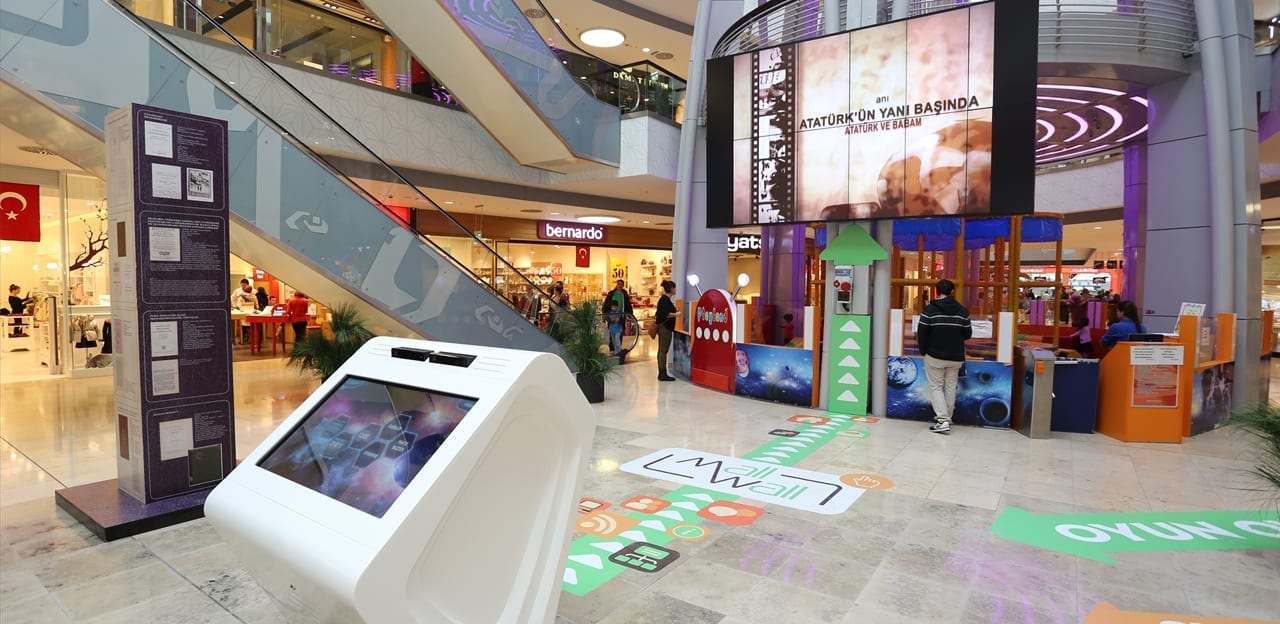
    Supermal Karawaci, one of the largest mall entertainment center in Western Jakarta, has launched an interactive mobile application that would allow retailers to offer personalized content and engage with customers better.

    The 125,000-square-meter retail destination in Banten Province, West of Jakarta has over 1,000 retail stores and outlets, three cinemas and the largest Timezone arcade in Southeast Asia.

    The app, which was built on the shopper engagement platform of Singaporean technology firm Sprooki, is integrated with Supermal Karawaci’s touchpoints and mobile apps. Using location and contextual data, retailers would be able to offer individualized content such as vouchers, special offers, event alerts and store information.

    The system allows social sign-in and content sharing on platforms, including Facebook, which has more than 76 million users in Indonesia as of end 2016 and projected to grow to 86.4 million by end of 2017, according to eMarketer. The service will also be available in both English and Bahasa.

    Pipih Tjandra, Supermal Karawaci Marketing and Leasing General Manager, said the Sprooki platform would help keep the shopping hub at the cutting edge of technology, which customers had come to expect.

    “Supermal Karawaci works every day to be in tune with what today’s consumers want and expect through innovative marketing strategies. By implementing the Sprooki platform, our mall will be one of the first shopping precincts in Indonesia to incorporate a data-driven mobile platform to improve shopper experience, helping our tenants to increase in-store traffic and sales,” he said in a news release.

    Pablo Amante, Sprooki’s Head of Marketing, said in an email interview that the Indonesian market is ready to start adopting location-based and engagement technologies to help retailers and business to engage their shoppers, making the Indonesian retail industry much more competitive.

    The latest report from eMarketer shows that the number of smartphone users in Indonesia will rise from 55 million in 2015 to 92 million in 2019 and would be the third largest smartphone market in the Asia-Pacific.

    According to Lee Kang, the Vice Chairman of the Indonesian Cellular Phone Association (APSI), number of smartphone users in Indonesia has been growing between 30 and 50 percent each year and this growth momentum will remain intact due to the availability of affordable 4G smartphones on the Indonesian market and further development of Indonesia’s 4G network.

    “Based on these figures, retailers, shopping malls, and all companies focused on engaging their customers through mobile will see in our software a powerful tool to optimize their sales and marketing strategies, based on real data about their customers’ behavior,” Amante said.

    Cloud-based platform

    The Sprooki software is a cloud-based platform that analyzes physical and digital shopper behavior detected inside and outside stores. The platform is an analytics and contextual engine that algorithmically analyzes digital and physical data and predicts what shoppers are most likely to respond to, offering shoppers most relevant products at the best moments and locations.

    “Mall’s retailers benefit most from Sprooki platform, which gives them the possibility of engaging mobile shoppers in context and personalized ways; driving footfall to their stores; rewarding their top customers; making data and insights actionable through integrated reporting and predictive recommendations, and all these by using only one platform, saving time and efforts, so retailers and malls can focus on their marketing and sales strategies,” Amante explained.

    The software can be integrated either in mobile apps or websites. In these environments, consumers are always able to opt out or not sign in. The challenge, however, is to provide highly targeted and relevant content in a way that shoppers appreciate the added value of having access to these offers, campaigns or rewards.

    “When our customers provide to its shoppers with contextual and personalized offers, general response by consumers is very positive, as the shopping experience is different for each one and it’s relevant according to their likes and what they are looking for,” Amante added.

    While this is the first implementation of Sprooki technology in Indonesia, its customers are already spread across Southeast Asia.

    Amante said some of its customers include the 313@somerset iconic mall at Orchard Road in Singapore where the company implemented Sprooki Campaigns module, which allows shoppers to access to exclusive offers and coupons through vouchers. At Far East Organization /Shop Far East Asia (Singapore), it has also implemented Sprooki Rewards, a module that allows the mall to offer a card-less loyalty program to its shoppers.  In Vietnam, the technology allows location-based features and beacon technology to work both outside and inside the Crescent Mall to collect strategic data, providing a unique experience to shoppers.

    At this stage, Supermal Karawaci shoppers are exploring this new way of access to exclusive offers, and the response has been more than positive, with a high rate of voucher downloads since its launch last December 15.

    “Sprooki is delighted to enable Supermal Karawaci with the most advanced technology for engaging with customers and understanding their behavior. Our mobile platform will give the precinct’s retail tenants an effective way to drive frequency of visits and increase sales conversions,” said Sprooki CEO and Co-founder Michael Gethen in a media statement during the launch.

    Retail challenges ahead

    Sprooki is confident that location-based, data-driven mobile services are the present and the future for the retail industry.

    “After the struggles that retailers have suffered in the last years due to the e-commerce and online shops, the game is again on for big retailers and shopping malls that want to bring shoppers back to the physical stores. And the only way to make this happen is by providing a new shopping experience, based on offering what the digital world already offers (personalization, analytics, related purchases, recommendations, rewards, etc.),” Amante said.

    Shoppers nowadays also expect more from their brands in terms of product offerings, customer services, efficiency, and engagement. That is the reason why features such as ‘click and collect’, digital voucher redemption, scan receipts, faster and easier payment methods are raising, in order to meet consumers’ expectations.

    Taking a look at the region and the challenges that retailers are facing in Southeast Asia, Sprooki sees a lot of opportunities.

    “Retailers nowadays have a big gap in terms of what they know about their shoppers, and how they behave in their shopping journey. Even the most advanced retailers that work already with big data haven’t found an effective and sustainable way to manage all these data without the need of investing a lot of money and time,” Amante said.

    Sprooki today is currently based in Singapore, and has offices in Hong Kong and Australia, with local contacts in Indonesia, Malaysia, Philippines, and Vietnam.


  • Digital transformation and what it means for Indonesia

    Digital transformation and what it means for Indonesia

    Digital transformation will attain macroeconomic scale in Indonesia over the next 2-3 years, according to new predictions from IDC.

    The analyst firm says this will change the way enterprises operate and reshape the global economy. IDC calls this as the dawn of the DX Economy.

    “As digital transformation reaches macroeconomic levels, a DX economy will emerge and will become the core of what industry leaders do and operate,” says Mevira Munindra, research manager, Consulting of IDC Indonesia.

    “Essentially, to succeed, Indonesian enterprises must begin to think of the relevancy of their business in 10 years, and how they should react in the face of disruptive forces,” Munindra explains.

    Munindra also revealed the strategic top predictions that will unfold in 2017 and beyond and make the biggest impact to organisations in Indonesia:

    1. By 2019, 50% of IT organisations will create new customer-facing and ecosystem-facing services to meet the business DX needs.

    2. By 2018, lack of vision, credibility, or ability to influence will keep 80% of IT executives from attaining leadership roles in enterprise DX.

    3. By 2020, Indonesian firms will use open innovation to allocate expertise to 15% of new projects, aiming to increase their new product introduction success rates by over 50%.

    4. By 2020, nearly 20% of operational processes will be self-healing and self-learning — minimising the need for human intervention or adjustments.

    5. By 2018, online brand ambassadors and social media influencers will have more marketing power than traditional digital advertising, although this will subside through 2019 and beyond.

    6. By 2019, digital transformation investments will double, drawing funds away from store capital and profoundly changing the retail industry.

    7. By 2019, only 30% of manufacturers investing in digital transformation will be able to maximize the outcome; the rest are held back by outdated business models and technology.

    8. By 2019, cloud adoption will reduce infrastructure spend by 25% among top-tier banks.

    9. By 2019, 20% of local and regional governments will use IoT to turn infrastructure like roads, street lights, and traffic signals into assets instead of liabilities.

    10. By 2017, 90% of Indonesian cities will fail to take full advantage of Smart City data and digital assets due to a lack of process, project management, and change management skills.

    “In Indonesia, Digital Transformation is still not adequately represented within the enterprise, and this disparity in leadership will lead towards a delayed response towards market changes that will adversely impact business,” says Sydev Bangah, country manager at IDC Indonesia.

    “Timing is critical, and archaic thinking of riding-out trying economic times is no longer relevant, and should be addressed with process-led innovation,” Bangah  adds.

  • Bitcoin penetrates deeper into Indonesian market

    Bitcoin penetrates deeper into Indonesian market

    Bitcoin, a cryptocurrency that uses cryptography to make transactions anonymous, has penetrated deeper into the Indonesian market even though there is currently no legal umbrella for the currency’s use in the country.

    Bitcoin Indonesia currently has 250,000 members, up from 80,000 at the end of 2015, with a daily transaction value of Rp 20 billion (US$1.48 million).

    Bitcoin Indonesia business development manager Suasti Atmastuti Astaman said it was natural to see such a positive trend as Bitcoin had successfully gained global trust, especially following the recent Russian government’s decision to legitimize Bitcoin as an official currency at the end of November 2016.

    “Bitcoin’s value completely depends on supply and demand in the market. At present, as more and more countries have relaxed their stances on digital currency, including the United States, China and Russia, more and more people are putting their trust in it. That’s why Bitcoin’s value has been rapidly surging,” Suasti said.

    However, Suasti also said the Indonesian government might need more time to learn the know-how of Bitcoin, while waiting for its real impact in other countries that had legitimized the digital currency. “So, if someone asks when will Indonesia make Bitcoin an official currency, only God knows,” she said.

    As of Monday, Bitcoin was priced at $1,018 with a market capitalization of $16.36 billion, seeing an annual increase of 151.7 percent, according to CoinMarketCap.

  • Citilink to concentrate on flights to eastern Indonesia

    Citilink to concentrate on flights to eastern Indonesia

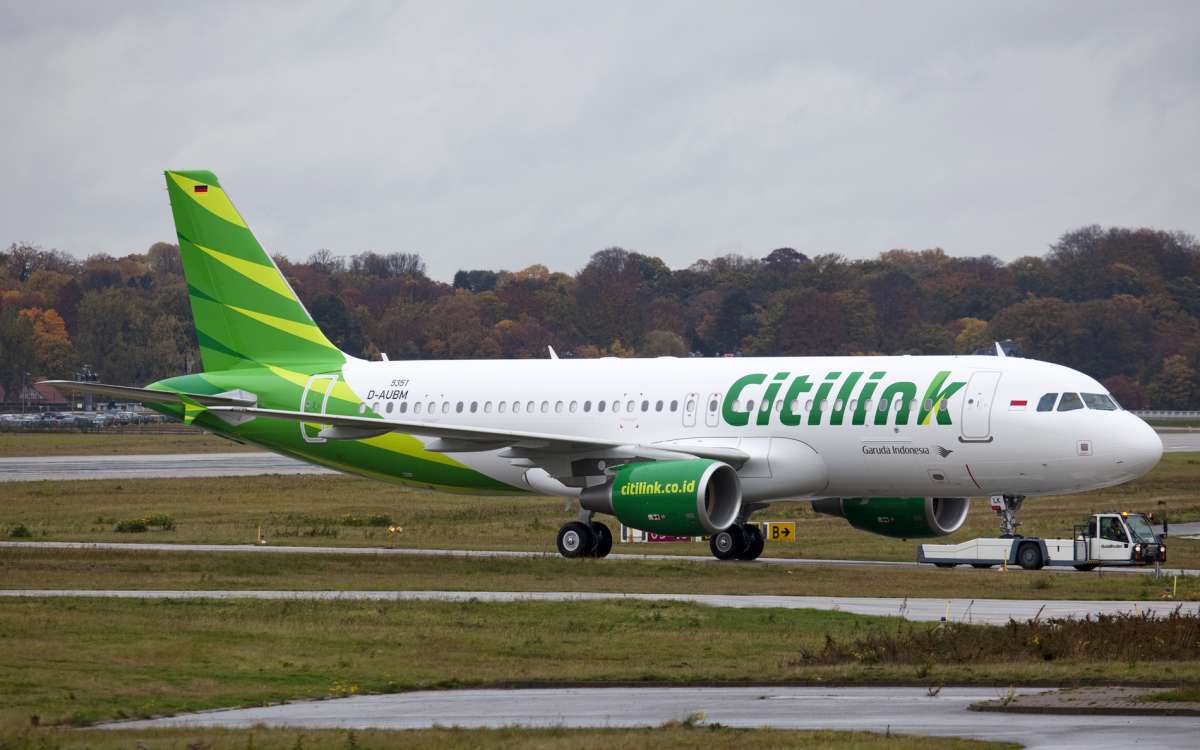
    Chief Executive of Citilink Indonesia Albert Burhan said the airline would focus on expanding flights to eastern Indonesia this year.

    Albert said there are potential routes to eastern Indonesia, which have not attracted other airlines.

    “There will be plan to open routes to other areas in Papua, but we start from Jayapura. In 2017 we want to focus on expanding flights to eastern regions of the country,” he said.

    He said he knew not all airports in eastern Indonesia could take wide bodied aircraft like Airbus, the main aircraft of the subsidiary of the nations flag carrier Garuda Indonesia.

    “Only a few could be used for Airbus A320. We might have to rely more on ATR aircraft to be safe,” he said.

    He said eastern Indonesia still needs more airlines to serve flight to and from eastern Indonesia.

    He said he was optimistic Citilink could chalk up quite high load factor in flights between Jayapura and Jakarta, although there are already a number of other airlines serving the route.

    “Our target is a load factor of 80 percent. In our first flight from Jakarta to Jayapura the load factor was almost 100 percent,” he said.

    Citilink Indonesia officially started serving the Jakarta Jayapura route on Monday using Airbus A320 with a seat capacity of 180 passengers.

  • Raja Ampat to organize various festivals to lure tourists

    Raja Ampat to organize various festivals to lure tourists

    The district administration of Raja Ampat in West Papua Province will organize various festivals to lure tourists to the island.

    The planned festivals will be part of the tourism campaign for the region, according to the Head of Raja Ampat tourism office, Yusdi Lamatenggo, on Saturday (Jan. 21).

    This years list of festivals include a maritime festival, a flute and drum festival, the Wonderful Misol festival, the Wonderful Salawati festival, the Wonderful Waigeo festival, a fish cooking festival and a Red and White festival.

    There will also be a spiritual festival, a blue sea festival, the Raja Ampat Fair and the Raja Ampat childrens reading festival.

    The events are also intended to preserve and promote the regions local culture and arts, he added.

    In an effort to improve transportion access to Raja Ampat, the government has also launched several key infrastructure projects on the islands.

    Regular transportation will be made available from the regional capital of Waisai to other islands, including Misol Island.

    “Foreign and local tourists will now be able to visit the islands without having to hire expensive speedboats,” explained Lamatenggo.

    The Wing Air Lion Group will also operate direct return flights from Jakarta to Manado and Waisai to improve the access to West Papua from outside the region, he said.

    “At the moment, tourists wishing to visit Raja Ampat have to take a long flight from Jakarta to Sorong,” he added.

    The Indonesian archipelago of Raja Ampat, fondly called the Living Eden or Paradise on Earth, was a lesser-known tourist destination and was familiar only to intrepid travelers and avid divers.

    Considered to be a crown jewel in Indonesia, Raja Ampat has crystal clear turquoise waters and islands covered by dense green forests and mangrove swamps.

    Located in an area called the “Coral Triangle” between the Pacific and Indian oceans in eastern Indonesias West Papua province, the world is now taking notice of Raja Ampat after the Indonesian government intensified its tourism campaign to promote the region.

  • Indonesia’s cooperative kicks off smart phone production

    Indonesia’s cooperative kicks off smart phone production

    Jumping on the bandwagon of local cell phone production, newly-founded cooperative Koperasi Digital Indonesia Mandiri (KDIM) on Friday started the production of a locally built smartphone under the brand of Digicoop.

    The smartphone is set to bolster the domestic cell phone market currently dominated by big players, especially foreign manufacturers.

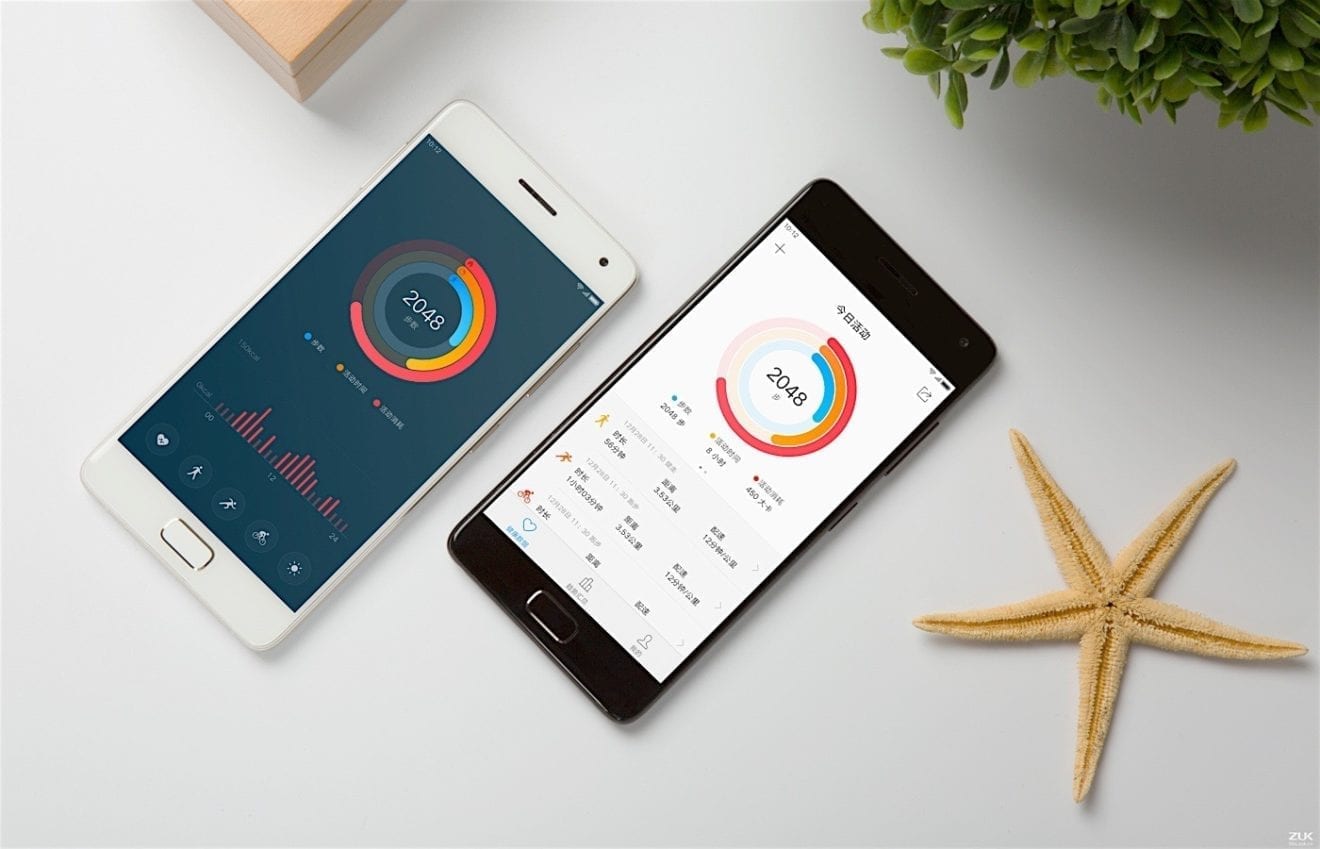
    The initial model comes with a 4.7 inch-screen, a 1.5 Ghz quadcore processor, 1 GB of RAM, two cameras, two SIM card slots and 4G LTE compatibility.

    Unlike commercially distributed phones, this smartphone can only be obtained by becoming a member of the cooperative via its website, after which one needs to pay Rp 100,000 (US$7.48) per month for one year. Delivery occurs after two month of subscription.

    KDIM chairman Henry Kasyfi Soemartono said the cooperative would produce 5,000 units in the initial phase, with pre-orders currently running at 1,500 units.

    Henry further said the basic idea of the cooperative was to maximize people’s power to create a strong local information technology business.

    “A cooperative is the ideal format for crowdfunding in Indonesia,” said Henry during the event to kick off production. “It is neutral and everybody has the same say. It also provides benefits to its members.”

    KDIM was set up in June last year by the Associations of Indonesian Internet Providers (APJII) and Indonesian Information and Telecommunications Society (Mastel).

    It aims to bring the cooperative format to Indonesia’s information technology (IT) business currently saturated by giants.

    The cell phone is the result of collaboration with a team of experts from the Bandung Institute of Technology (ITB) and is made in the factory of electronics manufacturer PT VS Technology in Cikarang, West Java.

    Indonesia has seen its domestic phone industry rise in recent years, with some manufacturers, like Polytron, already running local factories.

    Communications and Information Technology Minister Rudiantara, who was present during the event, said the economic model of a cooperative could be a solution for the IT business, including the ride-sharing business based on mobile phone applications.

    “The Uber and Grab Car drivers need entities to operate, while both companies have yet to register as transportation companies. So, we’ve suggested that they form cooperatives for the drivers,” he said.

    Rudiantara said the government would support the development of KDIM, such as by facilitating synergy with cooperatives for ride-sharing.

    Henry said KDIM had ambitions beyond smartphone-making, namely to buy a satellite and run an internet provider business. To do this, members interested in participating in the satellite purchase could deposit Rp 5 million and in return access internet for free for a lifetime.

    “We need to find at least 500,000 people who want to participate, so that we can buy a satellite for the people,” Henry said, adding that a satellite would cost between $200 million to 250 million.

    The plan would materialize in the next three years as preparations were still underway, he added.

    Based on the latest APJII survey, Indonesia has 132.6 million internet users, the highest number in Southeast Asia and the fourth-highest globally. Half of its more than 260 million population still cannot access the Internet.

    KDIM digital equipment head Teguh Prasetya said KDIM was preparing for designs for middle and high-end models. In the meantime, the cooperative tried to increase its local content, including applications, from 20.2 percent at present to 30 percent by the end of this year.

  • Bali expected to lure 40% of 2017 tourist arrivals

    Bali expected to lure 40% of 2017 tourist arrivals

    Bali is expected to attract 40 percent of the total target of 15 million foreign tourists to Indonesia in 2017.

    The province has been given a bigger portion than other regions because it still remains the prime destination for foreign tourists, according to the Assistant Deputy for Tourism Human Resource Development, Wisnu Bawa Tarunajaya, on Saturday (Jan. 21).

    “Bali is still number one compared to the other regions in Indonesia,” he said.

    The capital Jakarta is expected to attract 30 percent, while Batam in the Sumatran province of Riau Islands is expected to get 20 percent. All other regions of the country are expected to get the remaining 10 percent.

    The three major regions will play important roles in meeting the targets for attracting foreign tourism in Indonesia, added Tarunajaya.

    In order for the other regions to compete, the Ministry of Tourism is also planning to develop new tourist destinations. These include Toba Lake in North Sumatra, Tanjung Klayang in Bangka-Belitung province, Thousand Islands in Jakarta and Tanjung Lesung in Banten province, West Java. Mandalika in Lombok in West Nusa Tenggara, Labuhan Bajo in East Nusa Tenggara, Wakatobi in Southeast Sulawesi and Morotai in North Maluku are also listed for potential development.

    Through careful planning and sustainable development, the Ministry of Tourism is hoping to boost the promotion of new tourist destinations to attract more foreign visitors, said Tarunajaya.

    He also mentioned that most of the foreign tourists that are expected to visit this year are likely to come from China and other ASEAN countries, as well as Australia.

  • Lippo explores investment possibilities in border with Timor Leste

    Lippo explores investment possibilities in border with Timor Leste

    Lippo Group is exploring investment possibilities in the eastern province of Nusa Tenggara, which borders Timor Leste, to generate development and improve living standards in the region.

    “Increased investments in the border region is very important as it can help to improve the welfare of the local population. We are now studying the regions investment potential,” said Lippo Group President Theo L Sambuaga on Saturday (Jan. 21).

    He added that explorations to see if the region had any investment potential would be done in the districts of Timor Tengah Utara, Belu and Malaka.

    Businesses under the Lippo Group include those in education, health and the retail sector.

    Sambuaga stated there are possibilities of establishing a world-class health service, as well as a BPJS (government-subsidized health insurance scheme) scheme for poor people that live along the border region.

    With regards to the education sector, he added that Lippo are planning to provide scholarships for promising university students from the region.

    “We have already offered scholarships to students at State Timor University (Unimor) in Kafemenanu totaling Rp150 million, this was announced to the university on Friday,” he said.

    The Lippo Group also has an education division that was involved in the building of 340 schools across the country, as well as a health division that has built several general hospitals.

    “We have one hospital in East Nusa Tenggara province and also one in Kupang and another one in Labuan Bajo. We are still exploring the possibilities of building others in the border regions, such as in Timor Tengah Utara and Belu,” said Sambuaga.

    With regards to the retail sector, Lippo Group includes a chain of Hypermarts and Matahari Department Stores, which they claim to be a boost for local economies.

    Its chain of Hypermarts are located across the region, totaling up to 120 stores. There is also a possibility that the company may set up more in Kafemenanu in Timor Tengah Utara or Atambua in the Belu district. The group also has 150 department stores across the country.

    “The investment possibilities are there in view of our capacity, in addition to the positive impact our investments will bring for the development of the welfare of the people in the border region,” added Sambuaga.

    As one of its major stakeholders, he also stated that the Indonesian government shares the same level of responsibility with Lippo in improving the welfare of the local people.

    “This is about shared responsibility and I hope that this could motivate other parties to join our efforts. Cooperation between the government and the public is a must,” he said.

  • Lingerie Maker Victoria’s Secret Looks to Uncover Supply Chain Issues in Indonesia

    Lingerie Maker Victoria’s Secret Looks to Uncover Supply Chain Issues in Indonesia

    Lingerie giant Victoria’s Secret, famed for its racy bras and thongs, has pledged to trace the sources of its wood-based fabrics, joining the ranks of fashion companies addressing human rights and deforestation, its parent company said. In a new policy statement, parent company L Brands said it aimed to eliminate sources of wood pulp, used to make rayon, viscose and modal, that contribute to rainforest destruction or violate the rights of local people.
    L Brands is the latest in a growing number of US fashion companies to commit to investigate its supply chain for products from destructive regions and stop using those sources by the end of 2017, according to Rainforest Action Network (RAN). Ralph Lauren, whose designs are popular on Hollywood’s red carpets, adopted a similar policy earlier this month. “Our Forest Products Procurement Policy is written to reduce threats to ancient and endangered forests and to avoid products that contribute to deforestation or human rights abuses,” said L Brands’ policy statement published on its website.
    “We will report on our progress publicly.” Production of wood pulp can involve clearing forests to build eucalyptus plantations and taking land traditionally used by indigenous communities, campaigners say. The issue is particularly acute in Indonesia, a major producer of wood pulp. The Victoria’s Secret catalog features voluptuous models clad in tiny thongs, push-up bras and “cheekini” panties, and its top models who appear in its popular fashion shows are known as its Angels. It is one of several companies owned by L Brands. Its other well-known brands include Henri Bendel, Pink and Bath & Body Works. L Brands did not respond to a request for comment.
    RAN said the new policy was posted on the company website late on Wednesday. RAN, which helped develop the sourcing policies for L Brands and Ralph Lauren, has been waging an “Out of Fashion” campaign to publicize the impact of forest-based fabrics and call on major US brands to adopt stringent sourcing systems. “It’s encouraging to see brands beginning to take responsibility for their supply chains,” said Brihannala Morgan, senior forest campaigner with RAN. “
    L Brands’ commitments and actions, following right behind Ralph Lauren and among more than 60 other brands who have developed policies, can have a real positive impact for forests and the people that depend on them.” H&M, Zara, Levi Strauss & Co and British fashion designer Stella McCartney have adopted similar policies, RAN said. Last year Stella McCartney partnered with environmental non-profit Canopy to encourage clothing companies to stop sourcing fabric from ancient and endangered forests.
  • UCWeb to invest R200 cr in India, Indonesia over 2 yrs

    UCWeb to invest R200 cr in India, Indonesia over 2 yrs

    UCWeb, part of Alibaba Mobile Business Group, plans to invest R200 crore over the next two years in India and Indonesia. The funds will primarily be used to make use of user-generated content in India via its news distribution and content platform, UC News.

    Jack Huang, president of overseas business, Alibaba Mobile Business Group said, “India is the most critical overseas market for UCWeb and this investment will help bring in the global mobile internet to an era of ‘GUF’ (Google, UCWeb, and Facebook).” UC News, a product of UCWeb Inc is a content distributor of trending and curated news content covering all kinds categories including news, cricket, technology, entertainment, movies, lifestyle, health, humor, etc.

    UCWeb plans to add more than 30,000 self-publishers, bloggers and key opinion leaders to its platform in 2017.

  • Indonesia’s CT launches cinema blitz to boost retail chain

    Indonesia’s CT launches cinema blitz to boost retail chain

    Indonesia’s CT Corp. is partnering with cinema operators to open movie theaters in its commercial complexes. The retail and media conglomerate hopes to tap growing demand for entertainment and gain an edge over other retailers.

    On Wednesday, CT retail arm Trans Retail announced a partnership with Graha Layar Prima, operator of the CGV cinema chain (formerly known as Blitz Megaplex), to develop cinemas at CT’s Transmart Carrefour stores across Indonesia.

    CT officially launched its Transmart centers, which feature restaurants, apparel stores and supermarkets, in 2016 and currently operates 13 outlets across the archipelago. It plans to invest $3 billion to expand the number to 100 by 2019.

    “For the next three years, we will deliver [a] minimum of 500 [cinema] screens” to Transmart centers, CT founder and Chairman Chairul Tanjung told the Nikkei Asian Review on the sidelines of a recent business conference in Hong Kong.

    GLP will open CGV cinemas in four Transmart centers in Java and Sumatra in May, with plans to add four more by the end of the year. Each cinema will have five screens. CGV theaters stand out for their 4-D entertainment systems, sofa-type seating for couples and VIP spaces that serve drinks and snacks. CT is targeting the country’s growing middle class, which is expected to account for nearly half the population by 2030, compared with 19% in 2010, according to a 2012 report by McKinsey Global Institute.

    Mall operators have been keen to invest in the growing entertainment market to set themselves apart amid stiff competition from convenience stores and online retailers. Lippo Group, the largest mall operator in Indonesia, is aggressively expanding its own cinema business, with plans to have 2,000 screens across 85 cities by 2024.

    The relative scarcity of entertainment facilities and scorching temperatures in Indonesia have made movie theaters an increasingly popular destination there. GLP said its cinemas attracted over 10 million visitors in 2016, up 150% from 2012. The top-grossing domestic film this year raked in a record 205 billion rupiah ($15.3 million), according to local media.

    GLP aims expand its network of cinemas to 40 from the current 27. The partnership with CT provides it a major retail platform for increasing its footprint at a time when cinema operators are bracing for fiercer competition amid a wave of deregulation. In 2016, the government removed film projection, production and distribution from its list of businesses with foreign investment caps. In December, Singaporean sovereign wealth fund GIC announced that it will acquire an undisclosed stake in Nusantara Sejahtera Raya, Indonesia’s largest cinema operator, for 3.5 trillion rupiah.

    Satria Hamid, a spokesperson for Trans Retail told that the company signed a deal in December to install NSR’s Cinema XXI movie theaters in at least four Transmart stores in 2017.

    Even as cinema and mall operators take steps to gain an edge over traditional and online retailers, a new wave of competition is emerging in the form of online streaming services, such as Netflix.

  • Bank Indonesia Keeps Benchmark Rate

    Bank Indonesia Keeps Benchmark Rate

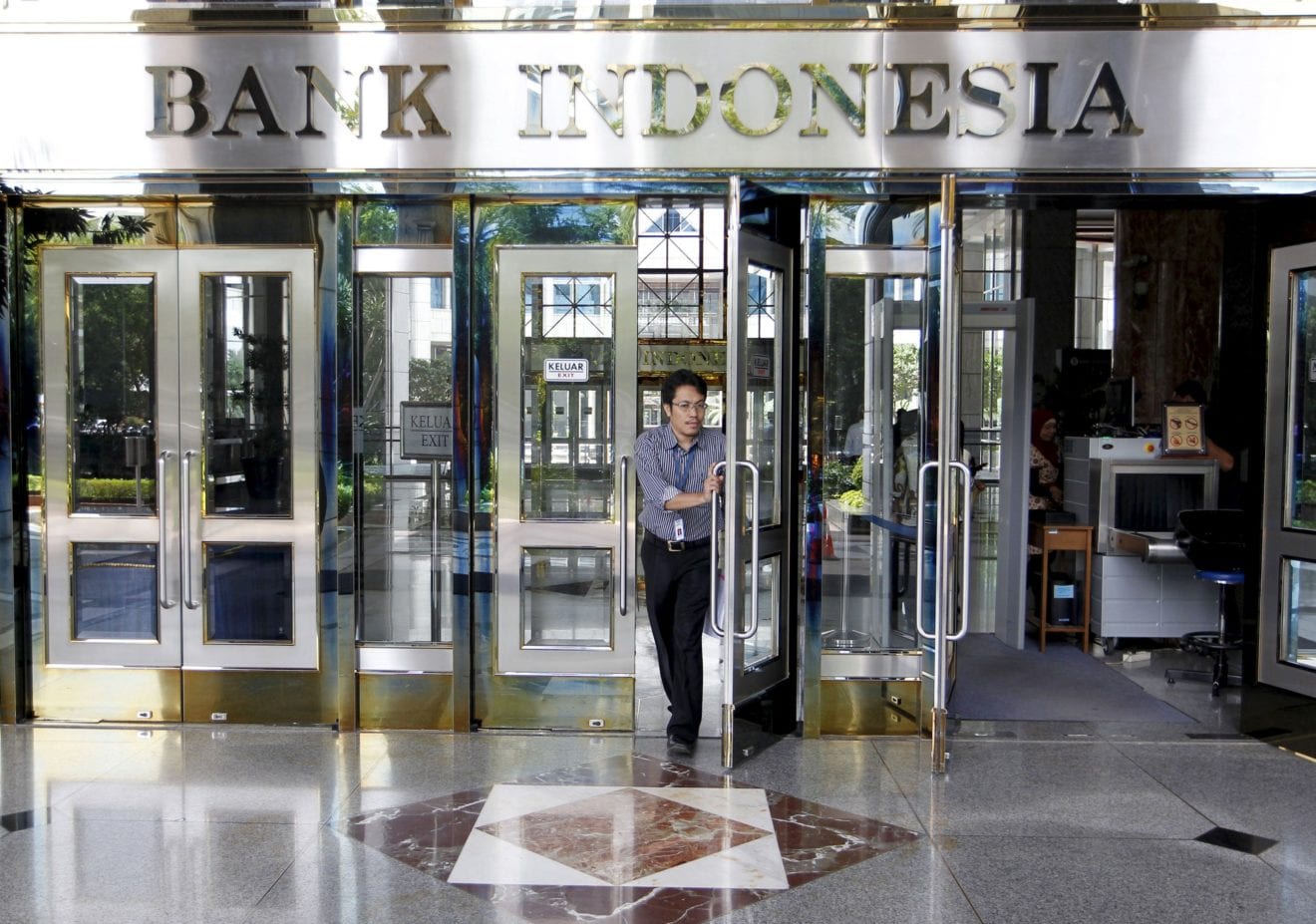
    Bank Indonesia (BI) has kept its 7-days reverse repo rate at 4.75 percent. Other monetary benchmark rates such as deposit facility rate and lending facility rate have also been kept at 4 and 5.5 percent. “The decision was made by BI to preserve domestic macroeconomic stability,” Bank Indonesia spokesman Tirta Segara said yesterday.

    As such, the BI has maintained its benchmark rate since October 2016. Tirta did not deny that economic policy uncertainty in the United States future following Donald Trump’s victory in the US presidential election in November have also come into play. However, he said that domestic inflation rate is positive at around 3.02 percent.

    Indonesian economy will also be affected by China’s economy. The United States and China are Indonesia’s major trade partner. “BI and the government will continue to collaborate to monitor every development,” Tirta said.

    Finance Minister Sri Mulyani Indarwati said global economic outlook may not improve this year. “Economic growth in developed countries, such as the United States, Japan and European countries, may not be as rapid as expected,” Minister Sri said.

    Sri said the United States is the only developed country that may recover from the economic downturn. However, at the same time, the US economic recovery may pose new problems to the global economy. The Fed, according to Sri, may increase interest rates should the US manages to achieve economic growth.

    The Fed itself had said that it plans to increase interest rates. However, it would await Trump’s policy on tax cuts and increased infrastructure and defense spending that may lead to increase in inflation.