Tag: Indonesia

  • Rupiah continues to fall to Rp13,529 per dollar on Friday evening

    Rupiah continues to fall to Rp13,529 per dollar on Friday evening

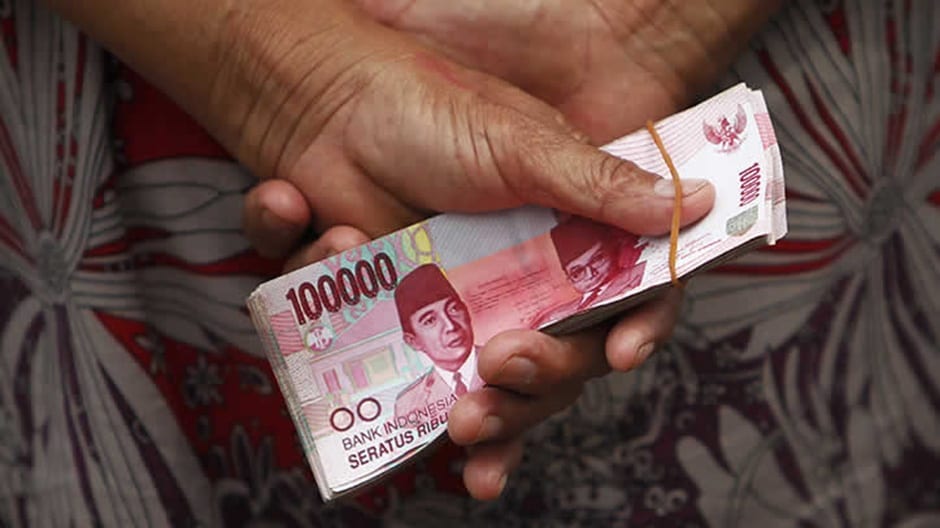
    The Indonesian rupiah fell 20 points to close at Rp13,529 per dollar in the Jakarta interbank spot market on Friday evening, compared to the previous close of Rp13,509 per dollar.

    “The US dollar continued its rally against the majority of the main global currencies, including rupiah, along with investors optimism about the looming Fed rate hike in December 2016,” chief researcher Ariston Tjjendra of Monex Investindo Futures said here on Friday.

    The US dollars appreciation was also supported by US president-elect Donald Trumps plan to raise fiscal budget and slash taxes to boost economic growth and curb inflation rate.

    “The faster-than-expected US economic growth will lead to an increase in the inflation rate, which may encourage the Fed to tighten its monetary policy in 2017,” he stated.

    Under these circumstances, funds parked abroad in developing nations will move to the US, which will automatically cause the dollar to appreciate against other currencies, he noted.

    On the other hand, the prices of global crude which dropped this weekend also influenced commodity currencies, including rupiah.

    On Friday evening, WTI Crude fell by 0.88 percent to US$47.54 per barrel, while Brent Crude dropped 1.18 percent to touch US$48.42 per barrel.

  • Fashion reseller Banananina joins e-commerce race

    Fashion reseller Banananina joins e-commerce race

    Jakarta branded fashion reseller Banananina has moved into eCommerce in a bid to reach potential customers outside the Indonesian capital.

    The company, which launched in 2009 through now-defunct eCommerce site Multiply, offers apparel, bags, shoes, accessories and beauty products. Its new website will also offer men’s products for the first time.

    Founder Fitri Maya Safira says the new sales channel is expected to grow daily transactions from 30 to 70 items.

    Banananina claims its luxury goods all have original guarantees as they come from licensed suppliers. Online buyers will be given a return guarantee, particularly for shoes.

    Fitri says her company’s customers live as far apart as Aceh, Bandung,  Biak, Jayapura, Makassar, Surabaya and Timika.

  • Singapore Airlines to cut 5 weekly flights to Jakarta

    Singapore Airlines to cut 5 weekly flights to Jakarta

    Singapore Airlines will cut five weekly flights to Jakarta, from Dec 1, as directed by the Indonesian civil aviation authorities, the airline said.

    SIA which has been operating 63 flights a week to and from Jakarta has been told to cut five flights a week due to runway maintenance works at Jakarta’s Soekarno-Hatta International Airport.

    The five affected flights are SQ962 and SQ963 on Mondays, Tuesdays, Wednesdays, Thursdays and Saturdays.

    SIA apologised to customers for the inconvenience and said it will progressively contact those affected to accommodate them on other flights.

    Responding to media queries, a Civil Aviation Authority of Singapore (CAAS) spokesman said the authority is aware of SIA’s plans.

    “CAAS hopes that the runway maintenance works will be completed expeditiously and that the impact on airlines will be fairly distributed,” she said.

    CAAS also hopes that the Indonesian civil aviation authorities will be able to allow Singapore Airlines to resume all 63 weekly services to Jakarta as soon as possible to reduce the impact on business travelers and tourists, who rely heavily on air services to travel between Singapore and Jakarta.

    The latest development comes several weeks after SIA said it had had to postpone plans for a thrice-weekly Singapore-Jakarta-Sydney service, which had been due to start on Nov 23.

    The Indonesian authorities had also cited runway maintenance works as the reason for withdrawing approval for the route.

  • Facebook Is Next on Indonesia Tax List as Google Deal Nears

    Facebook Is Next on Indonesia Tax List as Google Deal Nears

    Indonesia is eyeing Facebook as its next target in a government tax crackdown as it nears a settlement with Google Inc. Facebook, which counts more than 88 million Indonesians among its users, owes about 2 trillion rupiah ($148 million) to 3 trillion rupiah in unpaid taxes and penalties, Muhammad Haniv, head of the special taxpayers office at the Finance Ministry’s Tax Directorate-General, said on Wednesday in Jakarta. The office has sent a letter to the company in Ireland, calling for a meeting to discuss the issue and seek information on the company’s business interests in Indonesia, he said.

    Yunita Purnamasari, an external spokeswoman for Facebook in Jakarta, said Thursday she couldn’t comment at this stage on the tax demand. Apple, which is also being targeted by the tax office along with Twitter and Yahoo!, didn’t immediately respond to a request for comment.

    Indonesia’s government is seeking to boost revenue as it tries to keep the budget deficit below the legal limit of 3 percent. Authorities have turned to Instagram Inc. stars and merchants peddling goods and services on social media to bridge a revenue shortfall as an ambitious tax amnesty program loses steam after earning the government 97.1 trillion rupiah in the first three months of its start in July.

    Indonesia’s government plans to drop claims on any unpaid taxes and penalties it has sought from Google if a settlement is arrived through negotiations, Haniv said. The settlement with Google, the largest unit of Alphabet Inc., may come as early as next week and the government will focus on ensuring the company pays all future taxes, he said. The company owes about 5 trillion rupiah in taxes and penalties, he said.

    Taj Meadows, Google’s head of policy communications for Asia Pacific, declined to comment on Wednesday and referred to an earlier statement that said the company had paid all applicable taxes and will continue to fully cooperate with the Indonesian government.

    Indonesian tax officials have visited Google’s office in central Jakarta several times in recent months. The government had earlier sent Google a warning letter for refusing a tax audit that can result in criminal punishment, Haniv said in September.

  • Indonesia, Netherlands to strengthen economic ties

    Indonesia, Netherlands to strengthen economic ties

    Indonesia and the Netherlands have pledged to strengthen economic cooperation in the future, boosted by a number of new business deals inked by the two governments and businesses.

    The partnership will involve various areas including agriculture and infrastructure development as stated during the three-day visit by Dutch Prime Minister Mark Rutte, which concluded on Wednesday.

    Rutte underlined Indonesia’s role as Netherlands’ strategic partner, saying that both countries had a lot to offer in the economic field, especially owing to the former’s status as Southeast Asia’s biggest economy.

    “Indonesia plays a big role in the region. It is one of the central players in ASEAN and Indonesia’s leadership in this region is highly valued,” Rutte said in a limited press briefing. “The country will contribute to maintaining stability in the world, particularly in this region.”

    The importance of the two countries’ economic ties is highlighted by an already robust bilateral trade, which amounted to €3.2 billion (US$3.4 billion) last year, according to figures released by the prime minister. Netherlands is now the main market for Indonesian exports to Europe.

    Dutch businesses invested a total of $1.3 billion in 2015, down 24.4 percent from 2014, in 421 projects, according to data from the Investment Coordinating Board (BKPM).

    During his visit, Rutte led a Dutch delegation comprising ministers, including Infrastructure and Environment Minister Melanie Schultz van Haegen, business leaders from 110 companies, educational institutions and NGOs.

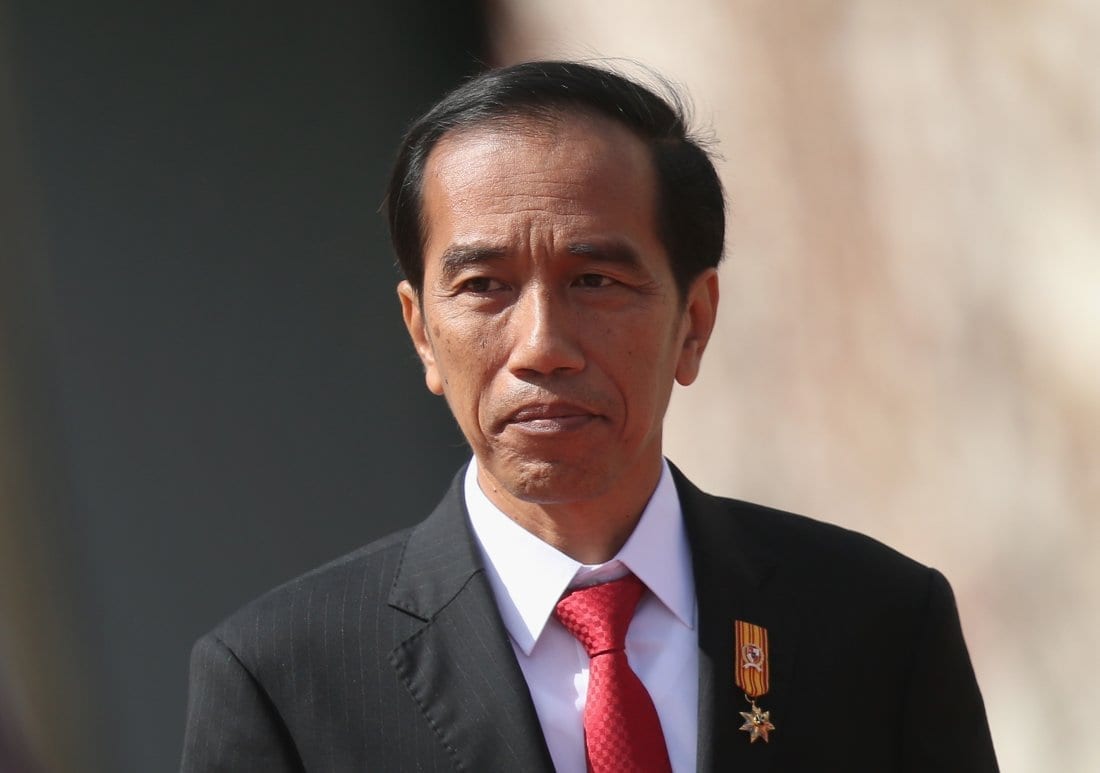
    Rutte’s second state visit to the former Dutch colony in three years followed a similar visit by President Joko “Jokowi” Widodo to the Netherlands in April.

    The delegates signed 38 memorandums of understanding (MoUs) and letters of intent (LoIs) covering economic and non-economic issues, such as water management, flood protection, climate change and health care, with their Indonesian counterparts, further intensifying ties between the two countries.

    On the occasion, Rutte also said the Netherlands was keen to enhance its bilateral relationship as business prospects in Indonesia had improved due to extensive reforms, particularly on the ease of doing business.

    “[Dutch] businesspeople find it is increasingly easier to do business here. But still, there is more room for improvement,” he said, adding that the 14 economic reform packages issued by Jokowi’s administration would boost the business climate, although they still depended on implementation.

    Indonesia climbed 15 places to 91st on the World Bank’s Ease of Doing Business Index for 2017 as its deregulation moves have attracted the attention of global investors.

    The Netherlands has reasserted its commitment to helping Indonesia develop its infrastructure, particularly in port construction and the National Capital Integrated Coastal Development (NCICD), popularly known as the Giant Seawall.

    Another major interest for the Dutch delegation is seaport management, according to Rutte. This follows an agreement signed last year by Indonesia’s state-owned port operator Pelindo I and the Port of Rotterdam Authority to develop a nationally strategic port at Kuala Tanjung, North Sumatra.

  • Indonesia Considers Importing Cows from Mexico

    Indonesia Considers Importing Cows from Mexico

    Indonesia is considering to import cows from Mexico and negotiations are now underway for that, an agriculture ministry official disclosed on Wednesday.

    “Private parties and a local government were currently in the process of negotiations,” Syukur Iwantoro, an expert staff on innovation and technology under the ministry, said after attending a calf harvest event.

    Regarding permit for import of up to 400,000 heads of cows, he admitted that private parties would be given full authority for this purpose and negotiations were on with partners in Mexico.

    Iwantoro noted that the government would ensure that cows to be imported from Mexico are free of foot and mouth disease.

    “So far, the government has been in touch with a number of countries, including Australia, in connection with beef supply,” he disclosed.

    He recalled that the government has put in place several alternatives to prevent escalation of beef prices in various regions in the country.

    “Price of beef in different regions in Indonesia varies from Rp85,000 to more than Rp100,000 per kilogram,” he pointed out.

    The imported cows were to be distributed in Jakarta and surrounding areas.

    “The country is now importing almost 700,000 heads of cows. So far, most of the cows are being imported from Australia,” he stated.

  • BRI Launches JCB Platinum Credit Card for Travelers

    BRI Launches JCB Platinum Credit Card for Travelers

    PT Bank Rakyat Indonesia (Persero) Tbk. (BRI) and PT JCB International Indonesia, a subsidiary of JCB International Co., Ltd., the international operations subsidiary of JCB Co., Ltd. (collectively “JCB”), today announced the launch of the BRI JCB Platinum Credit Card in the BRI JCB Indonesia Open 2016. The card will be ready in the market in the next spring 2017.

    Bank BRI is a leading bank in Indonesia with an extended network of more than 10,000 outlets and more than 100,000 e-Channel outlets. JCB brand cards are currently issued in 21 countries and territories with 95 million cardmembers around the globe. BRI has cooperated with JCB for JCB card acceptance at BRI merchants with BRI EDC machines since April 2016. The launch of this new product is the next step of the partnership.

    BRI JCB Platinum Credit Card is a strategic complement to the BRI product line for the consumer segment, especially as a credit card product to tap the traveler segment.

    BRI JCB Platinum Cardmembers can enjoy special features such as:

    1. Double BRI points at all merchants such as restaurants, airlines, golf courses and car rental.

    2. Triple BRI points for transactions overseas.

    3. 0% installment conversion for all transactions overseas for the first 12 months.

    BRI points earned by BRI JCB Platinum Cardmembers can be converted into airline miles, exemptions of card annual fees and a variety of other exciting promos.

    “We are optimistic about issuing 50,000 cards from early Q1 2017 until Q4 2017,” said Sis Apik, Managing Director of BRI.

    “BRI believes that this JCB brand credit card will grab the travel segment, increase the BRI number of cards and card usage for travel, for both domestic and overseas destinations,” he added.

    To give extra convenience to BRI JCB Platinum Cardmembers who travel abroad, JCB provides a variety of features that support travel needs such as free access to 28 airport lounges in Japan, 26 lounges in China, 2 lounges in Korea, and 1 lounge each in Singapore, Thailand, and Hong Kong.

    Besides that JCB provides JCB Plaza Lounge in several world-class business and travel destinations: Tokyo, Paris, Honolulu, Hong Kong, Guam, and Singapore. Last but not the least JCB also provides free wifi hotspot access and discounts at many selected merchants in Japan.

    “JCB is very excited and proud to have a partnership with BRI for the issuance of BRI JCB Platinum Credit Card that means JCB market share expansion in the premium credit card segment in Indonesia. Our strategy to tap the premium segment has resulted in 60% growth in the number of JCB cards in the market since 2014,” said Koichiro Wada, Director PT. JCB International Indonesia.

    “As you may know traveling overseas is increasing year on year especially to Asian countries, therefore we are confident that the BRI JCB Platinum Credit Card with special features for travelers will be very interesting for Indonesians who love to travel, and increase the cashless society in Indonesia,” he added.

    The uniqueness of the BRI JCB Platinum Credit Card is not only the card features, there is also the card design of the Nuri Irian bird which is an exotic bird from the jungle of Papua, East of Indonesia. It expertly mimics diverse sounds and has charming feathers, ranging from blue, red, and green that dominate the whole body as well as black on the head, back and neck.

    In addition to beauty, the Nuri Irian bird also illustrates openness and freedom as the species loves being outdoors and singing beautifully. This is in line with the purpose of the BRI JCB Platinum Credit Card issuance for the traveler as well as the spirit of BRI and JCB to always develop and present new products and give the best service to their customers.

  • Promotion, collaboration sought to boost tea exports

    Promotion, collaboration sought to boost tea exports

    The government should give more attention to Indonesia’s tea industry by intensifying promotional efforts and strengthening collaboration among ministries to reverse the trend of declining exports that started a few years ago, a public policy expert suggests.

    “The Trade Ministry, for example, can collaborate with Pak Arief Yahya [the tourism minister]. So while traveling overseas, they could promote Indonesian teas,” University of Indonesia’s public policy lecturer Riant Nugroho said on Monday.

    The declining tea exports, which was partly caused by there being limited land for tea plantations, could also be solved through better coordination with the Public Works and Public Housing (PUPR) Ministry, he added.

    “Talk to them and find out ways so they won’t use all the available area to build [the planned] Jakarta-Bandung high-speed railway, for example,” he said, referring to the megaproject designed to better connect Jakarta and the capital of West Java, Indonesia’s largest tea-producing region.

    Ranked as the seventh largest tea producer in the world, Indonesia’s tea exports dropped to 62,700 tons last year from 92,000 in 2009, with the value going down to US$128 million from $171 million in the same period.

    Only 6 percent of the 62,700 tons exported last year comprised value-added processed tea.

    “Tea production in the country still faces a lot of challenges, such as the limited area for plantations, outdated machinery and low tea prices at the farm level,” said the Trade Ministry’s director general for foreign trade, Dody Edward.

    Among the largest of Indonesia’s tea export destinations are Russia, Malaysia, Pakistan, Australia and Germany.

  • Nutmeg higher in demand in Europe

    Nutmeg higher in demand in Europe

    Exports of nutmeg from Indonesia to Italy has increased toward the end of the year, a North Sulawesi official said.

    “Orders have come more regularly from Italy for North Sulawesi nutmeg. Demand is growing toward the end of the year,” head of the provincial industry and trade office Jenny Karouw said here on Tuesday.

    Jenny said in the third week of November 2016 nutmeg exports to Italy totaled 15 tons worth US$112,500.

    She said nutmeg from the district of Sitaro Islands is high in demand in Europe especially in Italy for its high quality.

    “The quality of nutmeg from the district of Sitaro Islands has been internationally recognized. The exporters, therefore, should maintain the reputation,” she said.

    Buyers from Europe would look for other suppliers once they found the quality is not up yo their expectation, she added.

    Nutmeg from North Sulawesi has been exported to Europe and the United States, where quality is the priority.

  • BNI President Addresses Rush Money Issue

    BNI President Addresses Rush Money Issue

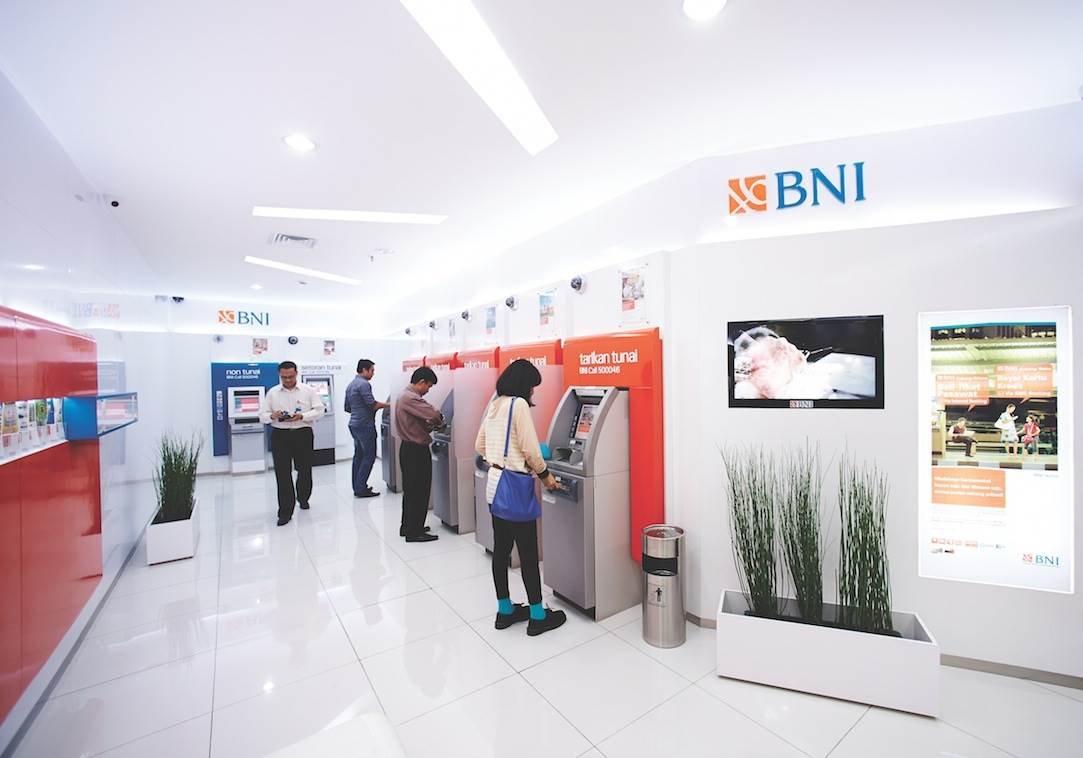
    Bank Negara Indonesia (BNI) president director Achmad Baiquni asked customers not to panic and get affected by solicitations to withdrawal money en masse. The so called rush-money rumor has been circulating on social media in recent days.

    According to Baiquni, the rumor is baseless and irrelevant, considering Indonesia’s banking fundamentals are normal and healthy.

    “Banking conditions are very good, so there should be no reason to worry,” Baiquni told.

    Baiquni firmly stated that banks’ performance continues to grow, both in terms of assets, loans, deposits and third party funds. Baiquni also urged people to ignore the call to withdraw their savings from banks.

    “Let’s not over-blow the issue—especially in social media. There is no need to worry,” Baiquni said.

    In terms of macroeconomics, Baiquni said the rupiah is stable while the Jakarta Composite Index is slowly gaining. “Last week’s correction was only a brief Trump effect.”

    Baiquni said BNI is asking customers to remain calm and not be provoked by the issue. “If there are customers who want more information about this matter and require an explanation, we are ready.”

    Earlier, the Police Headquarters’ Director of Special Economic Crimes Brig. Gen. Agung Setya said the solicitation is prone to prone risks of greater crimes that can harm the public.

  • Alibaba eyes young, savvy Indonesia market

    Alibaba eyes young, savvy Indonesia market

    Chinese e-commerce giant Alibaba Group sees “huge potential” in the Indonesian market as the government, through a recent e-commerce road map, pushes efforts in developing the sector to make the country the biggest digital economy in Southeast Asia by 2020.

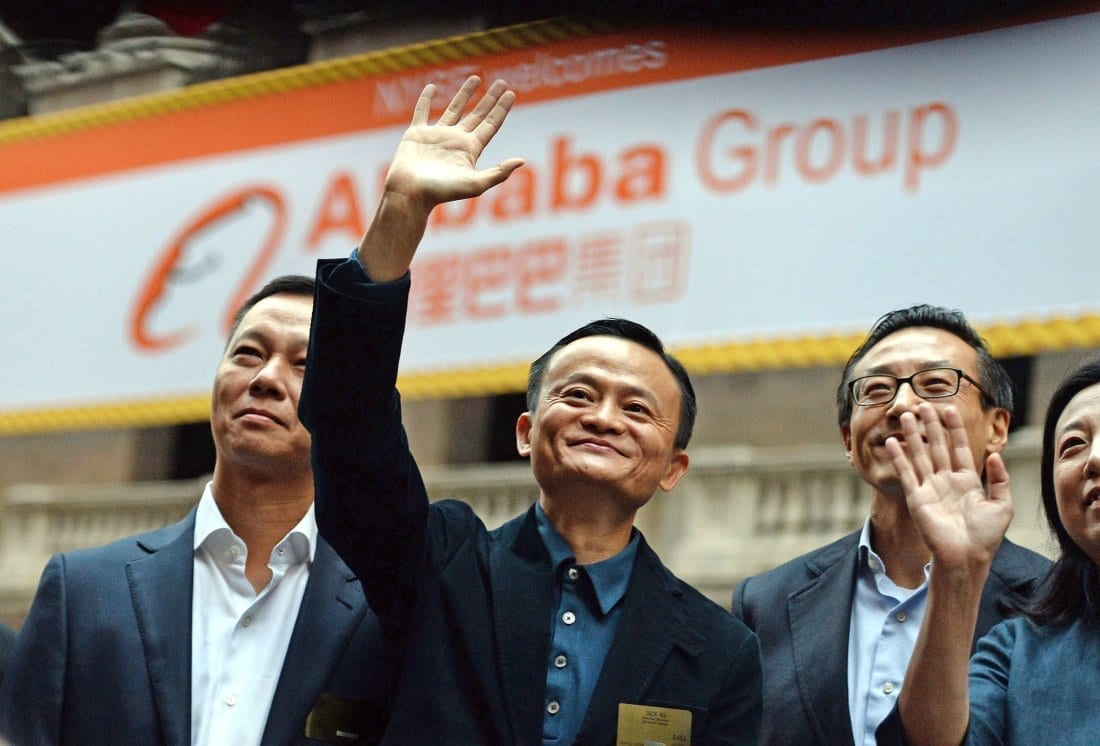
    Alibaba Group vice chairman Joseph Tsai said the diversified company — which has assets in e-commerce, technology, payment systems and logistics — saw “huge potential in Indonesia” for two reasons: The young population and a mobile phone savvy public.

    “We acquired (Southeast Asia e-commerce platform) Lazada so that we could be in Indonesia as well as five other Southeast Asian countries — Malaysia, the Philippines, Singapore, Thailand and Vietnam, with Indonesia obviously being the largest market,” Tsai told a press briefing on the sidelines of the 11.11 Global Shopping Festival on Nov. 11. The 11.11 Alibaba Group Global Shopping Festival, more commonly known as Singles’ Day, is the world’s largest shopping event.

    Alibaba Group acquired Lazada for US$1 billion earlier this year, its largest international investment ever. Lazada, which operates its own logistics and networks, is currently one of the fastest growing online shopping platforms in Indonesia.

    “We see that consumers in Indonesia are even younger than consumers in China. Indonesia is very much a “mobile first” e-commerce environment. People are enthusiastic about mobile phone use,” Tsai said.

    A survey of smartphone owners in Indonesia, who account for 43 percent of the population, showed that up to 57 percent of online shopping in the country is done on mobile phones, with average time spent on smartphones reaching more than two hours (136 minutes) per day, according to recent Google research.

    “They’re skipping computers and instead using mobile phones as their premier technology device. That growth is extremely fast, and we’re extremely excited about that,” Tsai said of the Indonesian market.

    Emerging Middle Class

    Indonesia’s e-commerce transactions are expected to reach US$24.6 billion this year, three times the US$8 billion recorded in 2013, thanks to emerging numbers of internet users and middle class Indonesians.

    The government even expects e-commerce transactions to reach US$130 billion in 2020 as it introduced the 14th economic stimulus package on an e-commerce roadmap covering support for funding, human resources training, logistics and telecommunication infrastructure, among other elements.

    In tapping into the growth potential in Indonesia, Alibaba Group aims to localize its operations to make them relevant in serving domestic consumption, which accounts for more than half of the country’s gross domestic product (GDP).

    “We want to be as local as possible to understand consumers locally through the Lazada platform,” Tsai said.

    In doing so, Alibaba Group may introduce the 11.11 Global Shopping Festival in local platforms to capture more transactions from Southeast Asia.

    “The service will also roll out to other markets, such as Southeast Asia, leveraging Alibaba Group’s investment in Southeast Asia e-commerce site Lazada, and markets that have a sizeable Chinese community,” the company’s press statement explained.

  • Starbucks launches mobile payment app in Indonesia

    Starbucks launches mobile payment app in Indonesia

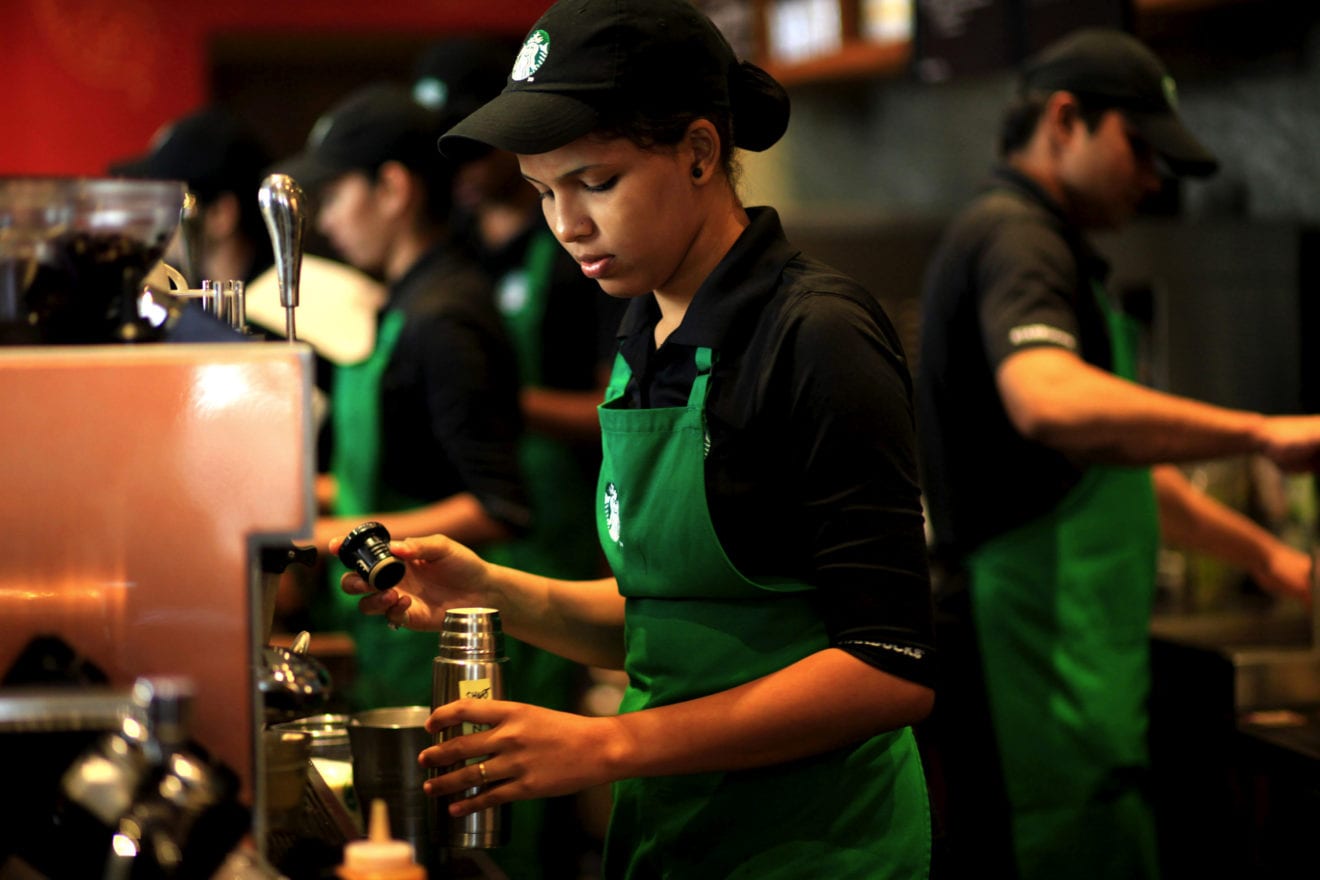
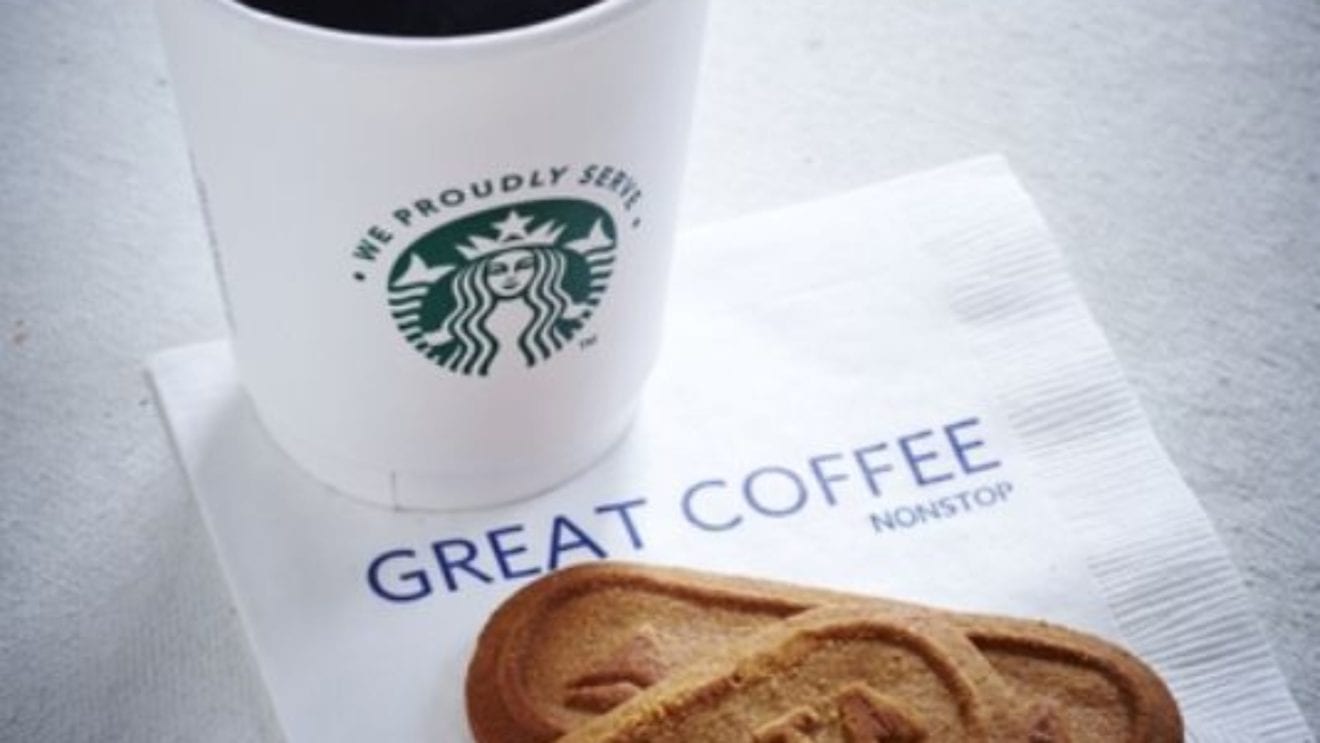
    Starbucks recently launched a mobile application in Indonesia to allow customers to pay for in-store purchases at the coffee marker’s more than 260 stores across the country.

    Building on the cashless payment system Starbucks Indonesia introduced in 2013 with Starbucks Card, the move is part of the broader plan to expand the company’s digital ecosystem.

    The new Starbucks Indonesia Mobile App for iPhone and Android allows customers to quickly pay for in-store purchases by scanning the barcode linked to a registered Starbucks Card. Customers can register multiple Starbucks Cards onto their account, which are linked to the Starbucks mobile app.

    The app also compiles the latest information on Starbucks products in a browsable menu of beverage, food, and merchandise, as well as feature a convenient store locator.

    “This is the latest Starbucks innovation which aims to provide an enhanced experience and meet customers’ needs in the digital space while continuing to provide an exceptional experience in our stores,” Starbucks Indonesia VP of marketing and operations Roger van Tongeren said.

  • Cash Crunch Chokes off India Palm Oil Imports From Indonesia & Malaysia

    Cash Crunch Chokes off India Palm Oil Imports From Indonesia & Malaysia

    India’s palm oil imports are expected to slip next month by up to a fifth, including from the top two producers Indonesia and Malaysia, as New Delhi’s removal of high-value rupee notes from circulation disrupts distribution systems and curbs demand.

    Traders in Malaysia, India’s largest palm oil supplier taking up half of its imports last year, say the absence of the large bills has already impacted sales. Indian buyers are delaying shipments and cancelling vessel space bookings, and the traders expect them to hold back further in the month ahead.

    In India – top importer of vegetable oils – traders are forecasting up to a 20 percent drop in crude and refined palm oil imports for December from the previous month, with edible oil refiners reducing purchases as the cash crunch weakens retail demand.

    Having fewer high-value notes in circulation is also hampering distribution because village shops typically pay local wholesale dealers in cash.

    “Bulk buyers are not ready to lift stocks. Most of November shipments we cannot cancel or postpone as tankers have already left Indonesian and Malaysian ports. So we are postponing shipments in December to January,” said a senior official with an Indian oil refiner who declined to be named.

    Cargo surveyor data shows Malaysian palm oil shipments to India for the first half of November have already dropped by 81 percent to 85 percent versus the corresponding period last month.

    “Inquiries have fizzled out since last week,” said a Kuala Lumpur-based trader, who reported an over 50 percent decline in sales volumes. “It’s not going to be easy now for the market to sustain high price levels.”

    Benchmark palm oil prices have been volatile in recent trading sessions, hitting a four-year high a week ago and then posting its biggest intraday drop in more than four months in the next session.

    Palm oil looks set to fall more than 3 percent this week, down about 0.2 percent on Friday around 2,870 ringgit per tonne.

    Purchases from top consumers India and China typically fall-off at year-end because palm oil solidifies during the Northern Hemisphere winter, but this year the numbers are being hit hard.

    India’s total palm oil imports stood at 739,159 metric tons, according to traders, and are expected to fall to 650,000 metric tons in November and by another 20 percent from there in December.

    Total palm oil imports in December 2015 were 790,368 metric tons, according to the Solvent Extractors Association of India (SEA).

    No cash in a cash market

    Exact numbers aren’t available from largest producer Indonesia, but analysts there also expect lower shipments to India because of the cash shortage, while Indian buyers said they have cut vegetable oil imports from all suppliers, even for soyoil from Brazil and Argentina in December.

    Last week, Indian Prime Minister Narendra Modi declared 500 rupee and 1,000 rupee bills no longer legal tender to crack down on corruption and bring unaccounted wealth back into the economy, leaving millions with insufficient cash.

    “Retail sales are going down as many people don’t have cash to buy essential commodities. Refiners are not able to dispose their stocks, so they are likely to cut imports in the short-term,” said B.V. Mehta, executive director of SEA.

    Still, while India cannot do without imports due to limited local supplies, it is not clear how long the slowdown will last.

    Jitendra Kadam, a grocery shop owner from India’s western state of Maharashtra, said consumers have cut down purchases of everything from sugar to edible oils.

    “Until they get notes of smaller denominations, demand will remain weak,” he said.

    Said a Malaysian trader: “Everything is at a standstill. There is not enough cash around, so people are not going to trade much. They are going to wait and see.”

  • US investor buys into Mitra Adiperkasa

    US investor buys into Mitra Adiperkasa

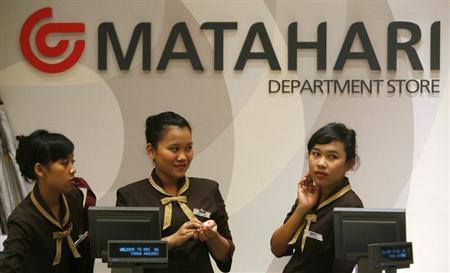
    US private-equity company General Atlantic has made its first investment in Indonesia by buying into lifestyle retailer Mitra Adiperkasa (Map).

    It has subscribed for Rp1.08 trillion (US$80.5 million) in bonds issued by Map which are convertible into shares in its F&B subsidiary Map Boga Adiperkasa (MBA), which runs Cold Stone Creamery, Godiva, Krispy Kreme, Pizza Express and Starbucks in Indonesia. It has more than 300 stores across 24 cities, and has more than doubled its store count over the past five years.

    Map runs multi-channel retail concepts in Indonesia across a diversified portfolio of department stores, sportswear, specialty fashion, F&B, and lifestyle products. It has nearly 2000 retail stores.

    “We believe the rapid rise in Indonesia’s middle and young working classes, the increase in this population’s disposable income, and the continued rural-to-urban migration represents an opportunity for us to strengthen our international food brands and cement our leadership position in the F&B market,” says Map CEO V.P.

    Sharma. A portion of the investment money will be used to accelerate the F&B division’s network expansion.
    “Indonesia’s domestic consumption comprises more than half of gross domestic product, and consumption patterns are increasingly shifting toward modern and aspirational lifestyle brands,” says General Atlantic Southeast Asia head Wai hoong Fock. “These secular trends position MBA’s food & beverage portfolio well for further expansion.”

    Regional commitment

    The partnership, General Atlantic’s first investment in Indonesia, indicates its commitment to long-term market prospects in South-east Asia,” says Fock, who joined General Atlantic from CVC Capital Partners last year to lead its South-east Asia investing program. He is based in the firm’s Singapore office.
    General Atlantic has 18 investment professionals in Asia, based in offices in Beijing, Hong Kong, Mumbai and Singapore. The firm opened its Singapore office in 2011, investing three years later in Singapore-based online mobile entertainment/communication Garena platform. It has also supported the growth of retail and F&B companies including lifestyle brand Tory Burch, luxury fashion brand Zimmermann, restaurant group Barteca Holdings, urban juice-bar concept Joe & The Juice, community accommodation marketplace AirBNB and transportation network company Uber.

    Map has 1921 retail outlets in 68 cities throughout Indonesia. Its retail concepts include department stores (Debenhams, Galeries Lafayette, Seibu and Sogo), fashion and lifestyle (Crabtree & Evelyn, Kipling, Lacoste, Marks & Spencer, Massimo Dutti, Nautica, Sephora, Swarovski, Topman, Topshop and Zara), sports (Converse, Golf House, Oakley, Payless ShoeSource, Reebok, Rockport, Skechers, The Athlete’s Foot and The Sports Warehouse), F&B (Burger King, Cold Stone Creamery, Domino’s Pizza, Godiva, Krispy Kreme and Starbucks), kids (Kidz Station and Oshkosh B’Gosh) and bookstore Kinokuniya.

  • MPPA opens its new Hypermart G7 store at Citimall Baturaja in South Sumatera

    MPPA opens its new Hypermart G7 store at Citimall Baturaja in South Sumatera

    PT Matahari Putra Prima Tbk (MPPA), a multi-format modern retailer in Indonesia, which operates Hypermart, SmartClub, Foodmart, Boston Health & Beauty and FMX, today (October 27, 2016) proudly opens its new Hypermart G7 store at Citimall Baturaja in South Sumatera.

    MPPA keeps continuing to execute and deliver its expansion strategy throughout the country with a series of new store openings across its business formats. The Hypermart Baturaja Citimall is 20th store within Sumatra Island.

    The new store is strategically located within the growing province of South Sumatera along with other existing Hypermart stores already operating in the city of Palembang and other areas within the province. The store has adopted the latest G7 concept with gross selling area of ± 6,500 m². This format features a new and improved store design. The new retail offering from Hypermart G7 will certainly add the MPPA’s strength as the dominant modern retail player in Sumatera.

    MPPA’s Director of Public Relations and Communications, Danny Kojongian stated, “We are delighted to open our latest new Hypermart G7 store at Baturaja, South Sumatera. We would ensure that our quality product assortments and unparalleled retail services would bring a positive impact of modern retail offerings in Baturaja and South Sumatera, support the positive impact toward regional economy as well as provide the best services for the modern lifestyle in the region.”