Tag: Indonesia

  • Halal zone to appear in Pulogadung Industrial Area

    Halal zone to appear in Pulogadung Industrial Area

    Halal Zone will soon arrive in Pulogadung Industrial Area, East Jakarta, serving as a showcase for Indonesias halal industrial products, officials said.

    “Halal Zone will have facilities that support halal management and halal product distribution,” Financial and Supporting Director of PT Jakarta Industrial Estate Pulogadung (JIEP) Sitta Izza Rosdaniah stated here on Friday.

    The zone will feature Moslem Fashion Hub, MICE (Meetings, Incentives, Conferences, and Events), Halal Warehouse, Halal Laboratory, Shariah Finance Centre, National Creative Industry and Training Centre, Halal Lifestyle Showcases, National Logistics Centre, Halal Culinary Centre, and Organic Urban Farming.

    “We want establish a halal laboratory in the industrial area,” Sitta noted, adding that the facilitys management will prioritize small and medium enterprises to help them develop their businesses.

    According to her, these enterprises need support to meet halal standards for their products.

    “This is the meaning of a halal zone, where people can get assistance and the opportunity to consult with experts,” Sitta remarked.

    JIEP also provides special facilities for all business sectors in the industrial area.

    On August 2016, in Jakarta, JIEP signed a Memorandum of Agreement (MoA) with the Indonesian Port Corporation (IPC) on the Study of Development and Operation Cooperation in the Pulogadung Industrial Area.

    The agreement was for the preparation of a study of an Integrated Logistics Area for an International Halal Hub in the JIEP area.

    The MoA is aimed at establishing a partnership and synergy between JIEP and Pelindo to develop the International Halal Hub and Halal Port.

  • Foodpanda Indonesia shut down

    Foodpanda Indonesia shut down

    No one wants Foodpanda Indonesia.

    Not enough consumers ordered its delivery service and after as long as a year trying to sell the business as a going concern, Foodpanda’s parent Rocket simply shut it down.

    The last order was taken  at 10pm on Monday October 3, after which the business disappeared from online.

    It’s the latest chapter in a tale of woe for the delivery company in Southeast Asia. It sold its Vietnam business last year and is currently trying to raise $50 million to keep its Indian operations running, as it struggles to gain market share off more successful local rivals. In Hong Kong it closed down an upmarket Foodpanda spin-off last year just weeks after its launch, disguising it as a merger.

    In a statement sent to staff obtained by DealStreet Asia, Foodpanda Indonesia management said the company had ceased all food ordering activities on a permanent basis. “In particular, the company will close its website and mobile application in Indonesia, and terminate cooperation with all restaurant partners.”

    The closure of the business comes as no surprise, despite misleading statements on its future by Foodpanda management earlier this year..

    In August, Techcrunch correspondent said multiple sources had confirmed the business was for sale – for less than US$1 million. Yet a Foodpanda spokesperson said somewhat enigmatically: “Foodpanda has grown very fast in Southeast Asia over the last couple of months and strengthened its market leading position in the region. Driven by our increased dominance in the region we have experienced interest from a variety of different parties to partner or to invest which we are evaluating now.”

    But no one wanted the business, despite Indonesia being the world’s fourth most populous nation.

    Foodpanda Indonesia debuted in 2012 and had built a virtual menu from thousands of local restaurants. Consumers, however, appeared to prefer app-based ride-hailing services offering delivery, such as Grab Bike and Go-Jek.

    Foodpanda CEO Ralf Wenzel says the company will continue to focus on “core markets” such as Singapore, Hong Kong, Thailand, Malaysia and Taiwan.

  • FMCG, fashion spur Lazada Indonesia growth

    FMCG, fashion spur Lazada Indonesia growth

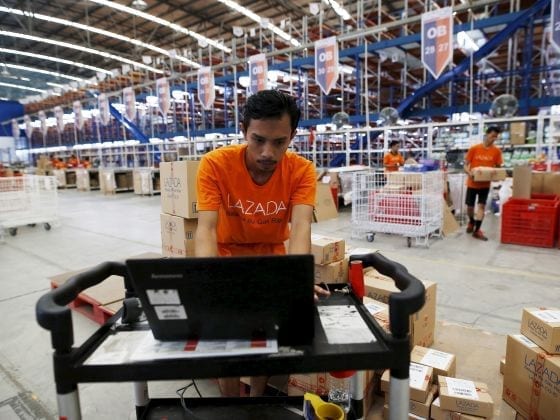
    eCommerce group Lazada Indonesia says its current volume growth has accelerated to more than 150 per cent than at the same time last year.

    Key contributing categories are FMCG and fashion, which are both growing more than three times as much as last year. Also, about 80 per cent of the orders are via mobile devices.

    “Our rapidly growing orders in categories such as FMCG and fashion, being shipped all across the country, further demonstrates that Lazada has truly become the one-stop shopping destination of choice,” says Lazada Indonesia co-CEO Florian Holm.

    This success is also helping SMEs, which can now sell on Lazada free of commission – an initiative that will ultimately also benefit consumers through more competitive pricing, says Lazada. The initiative has helped SMEs achieve up to 10 times growth in sales since the beginning of the year.

    Brands are also benefiting from the growth through partnerships with Lazada Indonesia to offer exclusive products.

    In a recent Lazada collaboration with L’Oreal Paris, the My Superstar Look campaign – endorsed by celebrities Maudy Ayunda and Dian Sastrowardoyo – resulted in a 10-times increase in sales as well as engaging thousands of new customers for the cosmetics giant.

    Levi’s is now working with Lazada to create an onsite experience including product story videos, and fit and size guides to help consumers find the right jeans. This season the companies will run joint marketing campaigns for the Levi’s 511 Slim Fit Jean for men and Levi’s 711 Asia Skinny Jean for women.

    Free shipping

    Meanwhile, Lazada Indonesia has launched a free shipping service, enabled by its last-mile logistics arm and network of reliable delivery partners. The company has also extended its cash-on-delivery option to more products.

    Lazada Indonesia’s strong growth comes on the back of Alibaba Group’s investment, announced in April. To reduce lead-time to the consumer, Lazada has started using Cainiao, a logistics network 47 per cent owned by Alibaba which allows parcels to be picked up from Lazada merchants in China. Lazada has also entered into a partnership with Alibaba subsidiary UCWeb to drive more traffic to the platform.

    For the fourth quarter, Lazada Indonesia is planning more initiatives and preparing for the Online Revolution, an online event involving sellers and consumers. From November 11 to December 12, Indonesian consumers will be offered flash sales, special promotions, attractive deals and engaging activities.

    “Since we created the Online Revolution in 2012 to introduce consumers to online shopping, it has sparked a shopping frenzy that breaks records year after year. No other eCommerce player in Southeast Asia can claim a similar achievement,” says Holm.

  • Barry Callebaut Opens First Chocolate Factory in Indonesia

    Barry Callebaut Opens First Chocolate Factory in Indonesia

    Swiss chocolate producer Barry Callebaut has expanded its operations in Indonesia with the grand opening of its first chocolate factory in the country.

    Through a long-term outsourcing agreement with GarudaFood Group, one of the largest food and beverage companies in Indonesia, Barry Callebaut built its three-story, 43,000-sq.-ft. factory on the premises of GarudaFood’s biscuit plant in Gresik. Barry Callebaut will also supply GarudaFood with 10,000 tons of chocolate per year.

    Antoine de Saint-Affrique, Barry Callebaut’s ceo, said the new factory, which will employ 50 people, is a “cornerstone” in its strategy to strengthen its position in Asian Pacific markets.

    “It also enables us to grow our already significant presence in Indonesia — an important emerging market with about 260 million people that offers above-average growth opportunities,” he says. “We are truly excited that our strong relationship with GarudaFood and this new factory will provide GarudaFood with the means to differentiate themselves in an increasingly competitive market.”

    GarudaFood CEO Hardianto Atmadja said the partnership will give GarudaFood the opportunity to put emphasis on biscuit production, including its Gery brand.

    “The chocolate production lines at the Barry Callebaut factory allow us to focus our manufacturing facilities in Indonesia on biscuits and strengthen the factory as a key competence center for our biscuits products in Indonesia,” he says. “This move will help us to further develop our successful biscuit brands.”

    Barry Callebaut also operates chocolate grinding facilities in Bandung and Makassar, Indonesia, employing more than 500 people. The company also has chocolate factories in China, India, Japan, Singapore and Malaysia.

  • Bali Airport Sees Passengers Traffic Increase

    Bali Airport Sees Passengers Traffic Increase

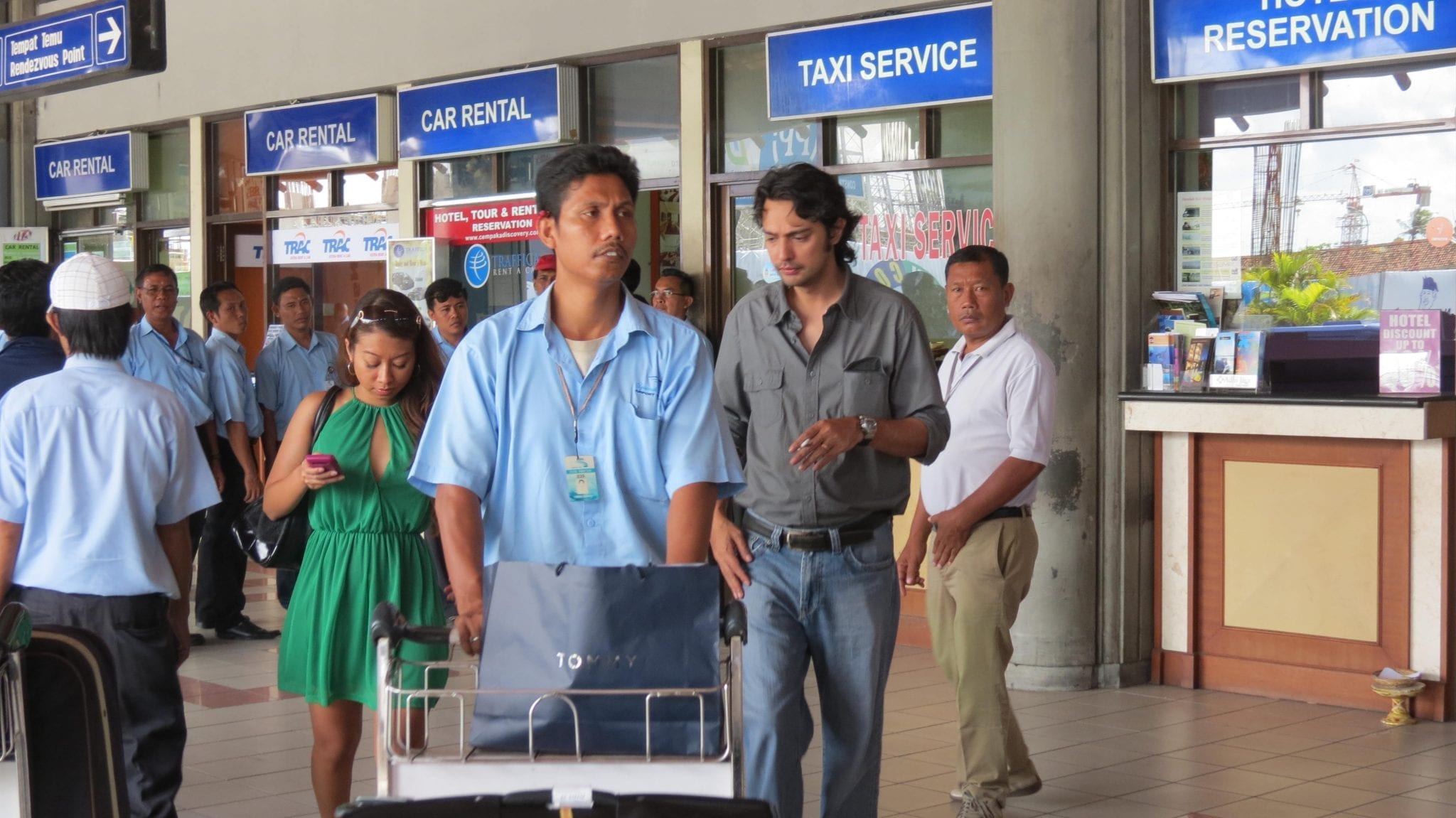
    Bali’s Ngurah Rai International Airport recorded an increase in the number of passengers coming and going through the airport. In September, the airport has seen 14.8 million passengers flying from and to the airport, an increase of 16 percent from the same month last year.

    The airport’s General Manager Yanus Suprayogi said on Thursday that both domestic and international passengers’ traffics are relatively the same with 7.4 million passengers each.

    “In the last four years, the traffic growth in 2016 is the highest. In addition to the number of passengers, we also see an increase in the number of inbound or outbound cargos, as well as aircraft movement,” he said in a press release, October 6.

    Meanwhile, the airport’s cargo volume reached more than 30,000 tons, or up by 39 percent compared to September 2015’s volume. The number of aircraft movements also increased by 10 percent on a year-on-year basis.

    “We are optimistic that the number of passengers, aircraft, and cargo will continue to increase until the end of this year,” Yanus said.

    Meanwhile, the Central Statistics Agency (BPS) of Bali recorded 438,135 foreign tourists’ visits to Bali in August 2016, of which 437,929 came in through the airport.

  • Susi Promises Banking Access for Fishermen

    Susi Promises Banking Access for Fishermen

    Marine and Fisheries Affairs Minister Susi Pudjiastuti will facilitate fishermen or ship owners who owns ships with a capacity of less than 10 gross tonnage to have access to banking services. Minister Susi said that ship owners would only need came to the Marine and Fisheries Affairs Ministry office.

    “I will establish an outpost at the Ministry’s licensing office. We will meet [fishermen] with banking institutions,” Susi said on Wednesday, October 5, 2016.

    Susi promised to help fishermen to be able to access credit facilities to get funds to replace their trawls. Susi targeted fishermen to be able to get at least Rp 200 million loan. The Minister also offered to provide a debt restructuring program for fishermen.

    Susi hoped that ship owners will take the opportunity to replace their trawls and fish with more environmentally friendly method. The Minister added that she had recently managed to help a fisherman to get a fresh loan from the bank.

    Susi said that she had contacted two state-owned banks, Bank Rakyat Indonesia, and Bank BNI, to help with the program. The Minister also expected other banks to take part in the program, which is supported by the Financial Services Authority.

    In addition, the Marine and Fisheries Affairs Ministry had asked fishermen to re-measure their ships, while Minister Susi guaranteed that there will be no illegal levy in the process.

  • Jakarta tax amnesty has little impact on banks here

    Jakarta tax amnesty has little impact on banks here

    The tax amnesty scheme in Indonesia has had a much smaller impact on funds flowing out of Singapore’s private banking industry than feared, an RHB report suggested on Tuesday.

    The funds flowing out of Singapore likely made up only 1-2 per cent of assets under management (AUM) of the private banking industry. Some 79 trillion rupiah (S$8.3 billion) was repatriated in the first nine-month phase of Jakarta’s tax amnesty programme.

    The scheme allows Indonesians to declare assets that were previously undeclared to tax authorities. In return, they paid a sharply reduced tax rate on those assets – just 2 per cent – in the first phase, which ended on Sept 30.

    The 79 trillion rupiah was 12 per cent of the assets of wealthy Indonesian clients that were declared to be kept in Singapore, according to data from the Indonesian government. Singapore has been a big draw for rich Indonesians. All in, the assets held here and declared to the Indonesian authorities made up 70 per cent of all overseas funds that had been declared.

    RHB calculated that the total assets of the three Singapore banks’ private banking segment stood at about S$321 billion. This means the amount repatriated to Indonesia from Singapore accounts for only 2.6 per cent of the three banks’ total AUM. These already exclude the asset base of the top private banks in Singapore, such as UBS, Citi, and Credit Suisse. So, all in, the impact on Singapore’s private banking industry should be about 1-2 per cent of all assets held here, RHB noted.

    “There is likely to be more repatriation of funds from Singapore to Indonesia going forward, but the experience of Phase 1 suggests that the amount repatriated is unlikely to be a large percentage of Singapore banks’ assets under management,” it said.

    This comes as the tax rate for those who repatriate their assets in Phase 2 rises to 3 per cent, one percentage point more than in Phase 1. The tax rate will be increased yet again in the third phase, Jakarta has said.

    Indonesian taxpayers had declared more than 3,600 trillion rupiahs in assets both domestically and overseas. An Indonesian tax authority quoted by The Straits Times said the country had set a 4,000 trillion rupiah target for the first phase.

    The tax amnesty scheme comes amid heightened scrutiny of tax evasion. Banks here had to file a suspicious transaction report on clients taking part in the programme, with the Singapore authorities later having to state publicly that participation in a tax amnesty scheme alone would not attract criminal investigation in Singapore. The Monetary Authority of Singapore (MAS) said that the use of suspicious transaction reports is a practice across other jurisdictions when handling tax amnesty cases.

  • BI to Introduce Coin Deposit Machine

    BI to Introduce Coin Deposit Machine

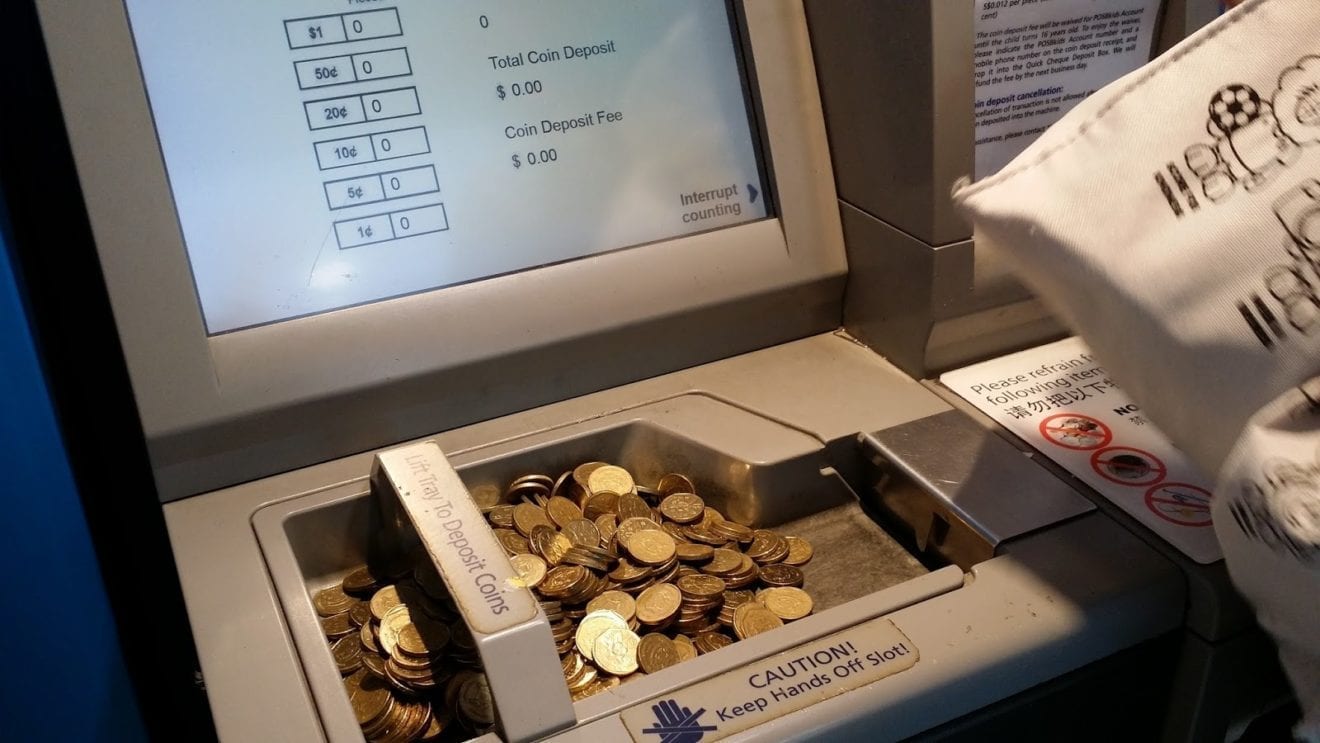
    Deputy Director of the BI Financial Management Department Asral Mashuri in Jakarta, Tuesday 4, 2016, said that Bank Indonesia (BI) is planning on implementing a coin deposit machine to ease people in saving the form of money.

    “The machine would look like an ATM, but this one is for coins, and the machine can sort out the money; which is one thousand and one hundred. It would be easy for people to use,”  he said.

    According to Asral, nowadays, many people keep the coins and left it uncirculated. The uncirculated coins have forced BI to reprint it, although coins have a longer lifespan than paper money.

    A coin deposit machine is hoped to help banking institutions in retracting the coins. “This also accelerates the money circulation, and later on, banking institutions can retrieve money from people’s savings,” Asral said.

    He added that it will be implemented as soon as possible. The study is still ongoing; it will be realized but not in the coming months. “The machine will be available for the public to use soon as possible,” Asral said.

  • Price of New iPhone 7 in Indonesia Will Be Among Highest Worldwide

    Price of New iPhone 7 in Indonesia Will Be Among Highest Worldwide

    Indonesia is predicted to be the country in Southeast Asia with the second-highest price for Apple’s new iPhone 7, according to a recent price study by iPrice Indonesia, local arm of online shopping startup the iPrice Group.

    The iPhone is manufactured in China, which neighbors Southeast Asia, but according to the iPrice Indonesia study, the iPhone 7 will be significantly more expensive in the region compared to the United States, due to shipment export costs, import duties and taxes, and other fees imposed by governments.

    According to iPrice, the iPhone in Indonesia will be one of the most expensive worldwide.

    “For countries where the iPhone 7 has not yet been officially launched, such as Thailand, Vietnam, Indonesia, Malaysia and the Philippines, the tech savvy have resorted to going abroad in the hope of being the first to own it,” iPrice said in a statement e-mailed to the Jakarta Globe by Andrew Prasatya, the company’s content marketing executive.

    “Unauthorized retailers are purchasing the iPhone 7 from Singapore and Hong Kong [where the iPhone 7 has already been launched] and selling them in their home countries at higher prices, which can go up to 14 percent in Vietnam and 49 percent in Thailand,” iPrice said in the statement.

    Apple has not yet announced the official release date for the iPhone 7 in Indonesia.

    How Expensive Can It Go?

    The study estimates that an iPhone 7 with 128 gigabytes of internal storage will cost about $1,268 when it arrives in Indonesia, making it nearly $500 more expensive than in the United States, from where it originates.

    As for neighboring countries, buyers in Thailand are expected to pay the most, where a new iPhone may cost up to $1,340.

    The cheapest is in Singapore at $897, where the iPhone 7 has been available since last month.

    The study said middle-income Indonesians, with an average salary of $1.80 (or Rp 23,900) per hour, have to work at least 87 days to afford an iPhone 7, assuming that the whole salary is spent on the phone.

    They may likely think twice before purchasing a 128 GB iPhone since the price is equivalent to the latest automatic scooter by Japanese manufacturer Honda. The price would also be equivalent to three-months’ rent of an apartment located in the heart of Jakarta, or 32 bags of rice at 50-kilograms per bag.

    Highly Anticipated

    Still, the iPhone 7 is eagerly awaited in Indonesia. And despite negative reaction around the replacement of audio jack with Apple AirPods, the latest model is in demand because of innovations such as increased storage, a new home button and water-resistance, according to reports from various local media and online tech-focused news portals.

    IPrice said regardless of its fairly high price, the iPhone generally remains popular in Indonesia.

    It referred to industry data showing that about 61.2 million units of the previous generation iPhone 6 and 6s were sold in the country during the first quarter of 2015.

    “In addition to the innovation of the iPhone 7, the iPhone is a status symbol in Indonesia where the owners are perceived as being rich, successful and living in luxury,” iPrice’s statement said.

  • Indonesia to reach self sufficiency in salt supply

    Indonesia to reach self sufficiency in salt supply

    The government is optimistic the country would be self sufficient in salt supply in 2017, an official said here on Wednesday.

    Agung Kuswandono, the Deputy II in Coordination of Natural Resources and Service at the office of the Coordinating Minister for Maritime Affairs said self sufficiency in salt supply is expected to be reached in 2017.

    Agung said the Marine and Fisheries Ministry has taken various steps to improve the quality of the farmers salt to meet the standards for household consumption and industries.

    He said the country needs around 4.02 million tons of salt including 2.05 million tons of industrial salt and 1.97 million tons of consumption salt.

    The domestic production is around 3.8 million tons a year including 3.1 million tons of farmers salt and 700,000 tons produced by the state -owned salt company PT Garam.

    Based on data from the Indonesian Association of Salt Consuming Industries (AIPGI), in 2015 , the country needs 400,000 tons of salt to preserve fishes a year.

    The process of fish salting generally does not use iodine although iodine is important for human health, Agung said.

    Indonesia imports salt especially from Australia to cover the deficit in domestic supply

  • Malang Opens Courses for Domestic Workers

    Malang Opens Courses for Domestic Workers

    Dozens of domestic workers attended a course at Sanggar Kegiatan Belajar in Malang City on Tuesday. The course for domestic workers was held by the Institute for Community Research and Development (LPKP) Malang chapter and the International Labour Organization (ILO).

    “Domestic workers are trained to work effectively according to the applicable standards,” said Irfan Afandi, ILO promote project coordinator for East Java.

    Similar courses are also opened in South Sulawesi’s Lampung and Jakarta. East Java, along with Makassar and Lampung, is renowned for its supply of domestic workers. Whereas Jakarta is the destination market of the domestic workers.

    Community-based courses for domestic workers have been trialled in Malang, East Java. Education will be held in certain communities, comprising participants hailed from several areas in Malang. The courses for domestic workers are aimed at improving their skills, particularly ability to use home appliances.

    The first phase of the courses will include household management and cooking. Domestic workers will be given theoritical and practical training. The courses will last six months, with two meetings in a week.

    Improved skills are expected to put domestic workers in better position to seek employment rights, such as to negotiate employment contract, standardized and timely payment of wages, defined office hours, and request for breaks and holidays. Irfan said that according to ministerial regulations, domestic workers include nannies, drivers, gardeners, as well as caregivers for elderly persons and people who have disabilities.

    “A domestic worker would not be able do all things by themselves,” he said. After attending the courses, domestic workers will be given a certificate which would enable them to seek better pay and recognition as professional workers. Moreover, improved skills of domestic workers are expected to protect them from violence, sexual abuse, child exploitation and human trafficking.

    Data from ILO shows that Indonesia has 2.6 million domestic workers. Most of whom are hired to work in private homes, live in their employer’s home and are not given employee leaves nor holidays.

    Course participant Yuliati said she is interested to attend the course for domestic workers to get more experience. According to her, she had been learning to do domestic work by herself. “I’m paid Rp30,000 a day, without employment contract,” she said.

  • Vietnam, Indonesia to lead Southeast Asian eCommerce

    Vietnam, Indonesia to lead Southeast Asian eCommerce

    Vietnam and Indonesia are tipped to become the largest Southeast Asian eCommerce markets within the next five years.

    Stunning growth in both markets is predicted in a report by global research company Frost & Sullivan which expects the broader region’s eCommerce market to double within five years.

    By 2020, the total revenue from B2C eCommerce in the six largest Southeast Asian countries, including Viet Nam is expected to grow at nearly 18 per cent, from US$11.2 billion in 2015 to $25.2 billion.

    Growth will be driven by an astounding rate of digital adoption, young and tech-savvy consumers, and increasing disposable incomes.

    Vietnam already has

    There are 127 million SIMs in circulation in Vietnam and nearly 40 million active internet users.

    “eCommerce players are beginning to compete beyond price points and logistics and moving into new areas such as Online-to-Offline (O2O) e-commerce and loyalty programmes,” says Cris Duy Tran, lead consultant in eCommerce and digital transformation at Frost & Sullivan Asia-Pacific.

    But he says eCommerce companies face significant challenges across the markets with many existing players struggling to achieve profitability. He singled out the failure of Foodpanda in VIetnam and Groupon in Thailand and the Philippines. Low levels of credit card ownership and distribution challenges also made it difficult to run online businesses profitably.

  • DHL, UN hold airport disaster preparedness workshops in Indonesia

    DHL, UN hold airport disaster preparedness workshops in Indonesia

    Germany’s Deutsche Post DHL Group and the United Nations Development Programme (UNDP) are once again conducting their joint preventative training, known as Get Airports Ready for Disaster (GARD), at Bali’s Ngurah Rai International Airport, Lombok International Airport and Selaparang Airport in Lombok.  Indonesia was the pilot country when the program was implemented globally in 2009 — in Makassar and Palu.

    Deutsche Post DHL Group and United Nations Development Programme Hold Airport Disaster Preparedness Workshops in Bali and Lombok. L-R: Teguh Pratomo (MoT); Medi Herlianto (BNPB); Christian Usfinit (UNDP); Welani Widjaja, Managing Director, DHL Global Forwarding Indonesia; Chris Weeks, Director of Humanitarian Affairs, Deutsche Post DHL Group.

    Indonesia is located on the Pacific Ring of Fire where several continental plates collide. As a result, the chain of islands is at frequent risk of earthquakes, tsunamis and active volcanoes. Additionally, Bali and Lombok are categorized as high risk areas in the Indonesian Disaster Risk Index (2013). Airports in both provinces experienced operations shutdown due to volcanic eruptions from nearby Mount Rinjani.

    The multi-day workshop involves over 50 participants — including representatives from the airport operating company, aviation safety experts, national and regional Disaster Management Planning Agencies, Indonesian Red Cross, immigration authorities, the military and the police force — who will be trained to handle the high volume of incoming relief goods and increasing number of passengers during the aftermath of natural disasters.

    “Following natural disasters, airports become vital hubs for the processing of incoming relief supplies,” says Christof Ehrhart, Head of Corporate Communications and Responsibility at Deutsche Post DHL Group. “With sound processes in place at the airport and with the relevant agencies, relief goods and aid can be channeled through airports to reach the affected communities quickly and efficiently. This program continues to help improve disaster management in this geologically high-risk region.”

    “Often airports are unprepared to manage large disasters or humanitarian crisis and as a result, assistance gets slower in getting to those most affected. GARD is working specifically with all partners on the ground to solve any potential bottlenecks that could impede fast response to save lives. I praise the Indonesian government for its commitment to preparedness and the airport authorities for their risk informed management,” says United Nations Resident Coordinator in Indonesia, Douglas Broderick.

    The training includes evaluation of the airports’ capacities for processing high volumes of passengers and cargo and warehousing relief supplies. Location-specific disaster plans are drawn up as well.

    Since 2009, GARD trainings have been held in eight airports in Indonesia, namely Sultan Hassanuddin Airport in Makassar (2009), Mutiara Airport in Palu (2009), Ngurah Rai Airport (old airport) in Denpasar (2011), El Tari Airport in Kupang (2011), Polonia Airport in Medan (2012), Sultan Iskandarsyah Airport inBanda Aceh (2012), Fatmawati Airport in Bengkulu (2012) and Minangkabau Airport in Padang (2013).

  • Property Report Congress Indonesia 2016 to debut in Jakarta

    Property Report Congress Indonesia 2016 to debut in Jakarta

    With Indonesia’s affluent middleclass and millionaire population growing rapidly amidst a temporary slowdown in the property market, there is great interest from local and regional industry players and experts on how Indonesia’s property sector can face its current challenges and how it will evolve in the future.

    Some of these experts will be at the inaugural Property Report Congress Indonesia 2016 , the acclaimed conference series hosted by Property Report, Asia’s leading luxury real estate, architecture and design media platform.

    The wholeday event will bring together experts from Indonesia and around the region to discuss the current state of the Indonesian real estate market. It will be held on 13 October, from 08:00 to 16:00 at the Fairmont Jakarta, supported by official property portal Rumah.com , Indonesia’s leading property website.

    Confirmed speakers include the who’s who of the industry and the government, including conference chairman Todd Lauchlan, country head of Jones Lang LaSalle Indonesia.

    The opening keynote address will be given by Hendra Hartono, chief executive officer of Leads Property Services Indonesia and chairman of the Indonesia Property Awards 2016 judging panel. Hartono has been tapped to give a 2016 market overview and lead a panel discussion called “What it takes to develop a luxury project.”

    Mr Bambang Brodjonegoro, the Minister of National Development Planning of Indonesia, will talk about how Indonesia’s government is supporting the real estate industry in his keynote speech.

    Panel moderators at the Jakarta leg of the conference series include: Mina Ondang, director, Cushman & Wakefield (“How the MRT could transform Jakarta real estate”); Mink Tan, chief designer/registered architect, MINKKE Architects (“The rise of stateoftheart architecture in Indonesia”); and Paulius Kuncinas, regional editor, Oxford Business Group (“What tax and the law can do improve the Indonesian real estate market”). In addition to the panel sessions, there will be a workshop on “The content marketing sweet spot and how to find it,” to be facilitated by digital strategist Ian Payton, founder of Hashtagcontent.com. Paynton

    has shared his content marketing insights at the previous Property Report Congress events in Vietnam,Myanmar and Malaysia.

    Jaime Rivera, Asia regional director at Crystal Lagoons, official sponsor of the Indonesia Property Awards 2016, in turn will talk about waterbased technology and how it can increase interest in property developments in the region. A worldrecord holder for the largest manmade lagoon, Crystal Lagoons’ first project in ASEAN was in Bali.

    Conference delegates will have a chance to meet and learn from Asia’s industry leaders who are redefining the Indonesian property landscape. Panelists will be coming from Jakarta and overseas. As always, the opening and closing remarks will be given by Liam Aran Barnes, brand director and editor in chief of Property Report. “We’re bringing our conference series to Jakarta at a time when the Indonesian government is looking for various means to implement programmes to boost the sluggish domestic market ,” Barnes said. “This is

    one of the ways that our publication can support Indonesia’s property sector apart from the annual Indonesia Property Awards.” Since debuting in Singapore in October 2015, five successful Property Report Congress events have been held in Manila, Ho Chi Minh City, Yangon, Kuala Lumpur and most recently in Bangkok, which welcomed the series’ biggest audience in 2016 of about 140 delegates, speakers and media.

    Property Report Congress has been described as “a great networking event and platform for people in the real estate industry to come together and share ideas,” according to Bertil De Kleynen, sector director for Architecture, Interiors & Landscape at Atkins Global, and featured speaker at the Ho Chi Minh City conference.

    Organised by PropertyGuru, Asia’s leading online property portal group, the Property Report Congress will be followed by the annual Indonesia Property Awards 2016 blacktie gala dinner in the evening, from 18:00 to 22:30, which will be attended by 300 of the country’s top real estate developers, executives and industry professionals.

    For registration and enquiries, email conference director at [email protected] or visit

    the official website: https://www.AsiaPropertyAwards.com/Congress/

  • Uniqlo Canada takes it slowly

    Uniqlo Canada takes it slowly

    After the Japanese apparel retailer decided to open its first shop in Canada, Uniqlo Canada COO Yasuhiro Hayashi visited Toronto every month for nearly a year.

    During each visit he would spend the week taking notes on what people were wearing.

    “I didn’t expect that everyone was so unique and multicultural,” says Hayashi, who previously helped launch Uniqlo in Singapore and Indonesia. “That was very surprising in a very positive way. We don’t have a specific target customer – that’s our uniqueness. We say we are made for all.”

    Finally, the company is opening its first store in Canada on Friday, a 28,000-sqft (27,989 sqm) space in the Toronto Eaton Centre, between fast-fashion rival H&M and the newly arrived luxury retailer Nordstrom. A second store opening is planned at Yorkdale Shopping Centre in north Toronto on October 20.

    Even with more than 1000 stores worldwide, Hayashi says Uniqlo may not have the same name recognition in Canada as some of its international rivals before they entered the country. It is a challenges that needs to be overcome if it wants to continue expanding in Canada, but Hayashi says there is no rush.

    “We want to be very cautious,” he says. “Of course, I don’t want to give a name, but some other brands have had ambitious plans that didn’t work out. We want to make sure we serve the customers well and fine-tune the merchandise mix as well.”

    US retailer Target last year abruptly announced it was shutting down all its 133 Canadian stores only two years after arriving. Since then, several international retailers such as Muji, Nordstrom and Saks Fifth Avenue have taken a slower approach to opening locations in Canada.

    Hayashi says Uniqlo’s Toronto stores will largely be the same as its other locations, with a few nuanced differences for Canadian shoppers. Customers can expect more than usual plaid and flannel shirts. Most sizing will be for a North American fit, but there will also be some smaller sizes to reflect Toronto’s multicultural population.

    Uniqlo will also sell house slippers, commonplace in its stores in Asia.