Tag: International

  • Alibaba Announces Smart Mobility Initiatives with Partners

    Alibaba Announces Smart Mobility Initiatives with Partners

    Alibaba Group Holding Limited announced a series of smart mobility initiatives in partnership with auto brands and technology service providers. The announcement was made during The Computing Conference, the company’s largest technology showcase, held over four days in Hangzhou, Alibaba’s home base.

    Partnering with Bosch on Automated Valet Parking

    Alibaba Cloud, the cloud-computing arm of Alibaba Group, and Bosch, a leading global supplier of technology services, announced plans to introduce Automated Valet Parking (AVP) solutions in China. Both parties will work together to enable the infrastructure-based, driverless parking solution. The technology is powered by software in a cloud and it will offer a fully automated valet parking service in the near future.

    As part of the cooperation, Bosch will provide its AVP technology, its experience in systems engineering and its IoT competencies. Alibaba Cloud, meanwhile, will share its technologies and its experience in cloud computing, data analysis and smart mobility. Both parties intend to explore building showcase sites to demonstrate next-generation AVP technology throughout China.The two companies are also committed to exploring future opportunities in connected mobility in China and abroad.

    AVP is an ideal accompaniment to smart cities, an area in which both Bosch and Alibaba aim to become significant players. AVP is also an important milestone on the road to autonomous driving.

    Partnering with Volvo Cars for Car-to-Home AI services

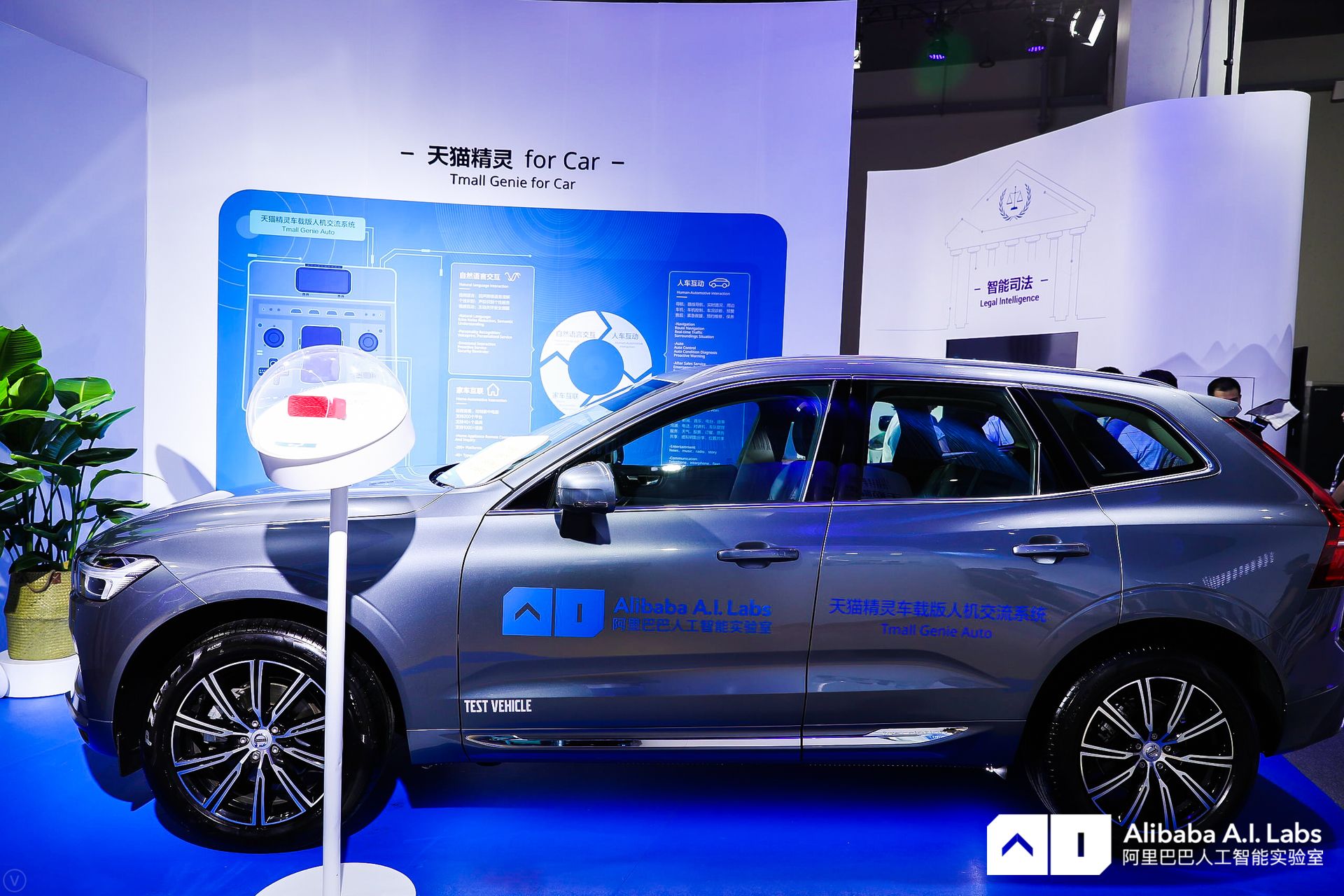
    Alibaba A.I. Labs, the department leading consumer AI product development at Alibaba, announced it is upgrading its auto Artificial Intelligence solution, Tmall Genie Auto, by partnering with Volvo Cars and adding car-to-home AI services. Tmall Genie is an AI-powered smart assistant developed by the Labs. Through the upgraded solution, Volvo Cars drivers with a Tmall Genie-compatible device will be able to monitor and control their smart-home devices from their cars, starting next year. Some of the newly added services include:

    · Running a status check on humidity, temperature, light and air conditioning at home, as well as the on and off status of smart home appliances;

    · Controlling appliance functions, including turning on the heater, air conditioning, door lock and air purifier;

    · Turning on the “home model” when drivers are 10 minutes away from home, which readies smart appliances for your arrival while you’re still in the car.

    Over 90 appliance brands are already in the Tmall Genie ecosystem, enabling over 600 smart home appliances to be easily connected for car-to-home AI services.

    Last June, Alibaba A.I. Labs partnered with Daimler, Audi and Volvo Cars to offer home-tocar AI services through Tmall Genie Auto. The Labs also rolled out in-car AI services by integrating the speech-interaction and Natural Language Processing features of AliGenie, the AI platform behind Tmall Genie. This technology supports voice commands for different tasks, such as identifying nearby attractions and restaurants, booking hotels and movie tickets and ordering to-go boxes by activating the cars’ navigation and infotainment systems.

    Partnering with Ford for New Internet Car

    As part of the strategic cooperation inked last December between Alibaba Group and Ford, the auto brand today confirmed that Ford Kuga SUV customers will be able to order the car which has a 10.4-inch center screen and software powered by AliOS later this year. The debut of this technology in the Kuga marks another milestone in strengthening ties between the two leaders in their respective fields, and highlights the rapid growth of internetconnected cars in China. As of today, there are over 500,000 AliOS – equipped Internet vehicles on the road in China.

  • Mastercard Signs partnership with League of Legends

    Mastercard Signs partnership with League of Legends

    Mastercard has announced a multi-year partnership with Riot Games to become the first global sponsor for League of Legends esports, the largest esport in the world and one of Hong Kong’s most popular esports. This first-of-its-kind global agreement signifies Mastercard’s support of the esports community and further diversifies the technology company’s world-class sports and entertainment portfolio.

    “Esports is a phenomenon that continues to grow in popularity, with fans that can rival those at any major sporting event in their enthusiasm and energy,” said Raja Rajamannar, chief marketing and communications officer, Mastercard. “Our Priceless platform is built around connecting with people through their passions. We are excited about the experiences and benefits we can bring to the world’s largest esport – both in-game and to the millions of League of Legends fans that watch and attend the tournaments each year.”

    “We’re thrilled to team up with Mastercard on this groundbreaking partnership that will provide meaningful and long-term value to our fans,” said Naz Aletaha, head of esports partnerships at Riot Games. “Mastercard is among the first of world-class brands to take such a big step into esports at the global level, and we’re proud to have them support League of Legends esports events alongside their other premier sports and entertainment sponsorships.”

    As the exclusive global payment services partner for League of Legends global esports events, Mastercard will focus on three annual global tournaments – the Mid-Season Invitational, the All-Star Event, and the pinnacle of all esports events, the World Championship. Mastercard will curate unforgettable Priceless experiences and offers across onsite event activations, priceless.com and through other various promotions to bring fans closer to their passion and everything they love about League of Legends events.

    The first live-event activation will take place at the League of Legends World Championship this October in South Korea, and the first experiences available on Priceless.com will include:

    • Opening ceremony rehearsal viewing and a behind the scenes tour
    • Opportunity to watch a game with a League of Legends pro player from VIP seats
    • Test the gaming PCs the pros will compete on during the World Championship final

    “We’ve long been impressed with Mastercard and their fan-focused approach to partnerships,” said Jarred Kennedy, co-head of esports at Riot Games. “Our community has made League of Legends the biggest esport in the world, and we’re excited to work with Mastercard to bring them new and innovative experiences for years to come.”

  • Budapest Airport Starts Construction Of A New European Gateway For Air Cargo

    Budapest Airport Starts Construction Of A New European Gateway For Air Cargo

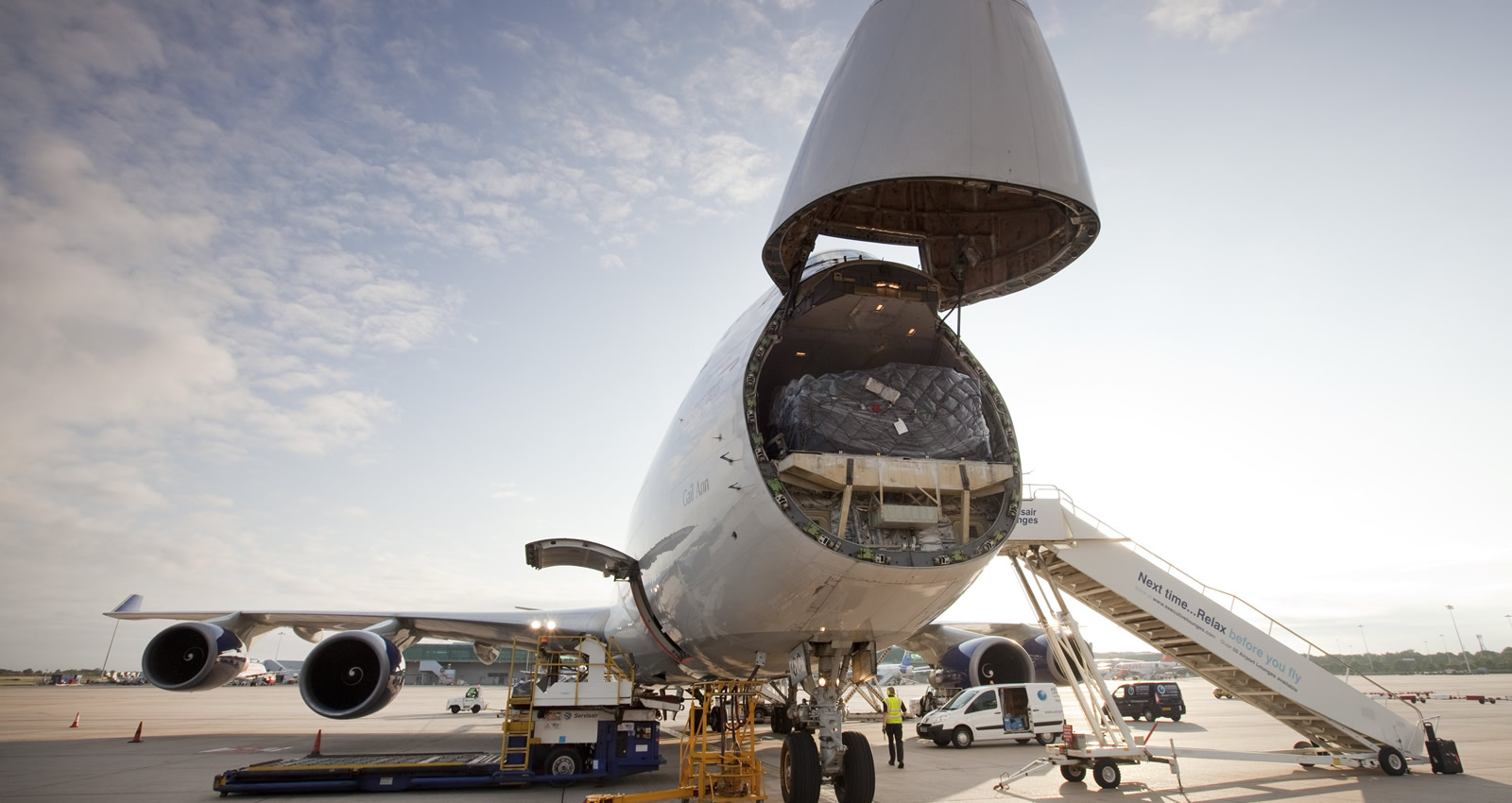
    Construction of Budapest Airport’s (BUD) new dedicated freight centre, Cargo City, part of the EUR160 million BUD:2020 Development Programme at the Hungarian hub, has begun. The EUR32.6 million investment into a new 20,000 sq m cargo handling facility and new dedicated B747-8F freighter stands, will centralise cargo operations and expand the airport’s handling capacity to handle increasing air cargo volumes at BUD in the years to come.

    After unprecedented cargo volume development of 39 per cent over two years, BUD processed a record 127,145 tonnes of cargo in 2017, and has seen a further 15.5 per cent increase in tonnage between January and August 2018 compared to the same period in 2017.

    As part of the BUD:2020 Development Programme, Budapest Airport opened two state-of-the-art express facilities in 2017 with a total area of 16,000 sq m in order to supply increasing volumes from the express and e-commerce business.

    “This is an exciting milestone for the Hungarian cargo community. Following on from our infrastructure developments for the integrator market, our aim is to provide the ideal environment for air cargo with our Cargo City project,” said René Droese, Executive Director Property and Cargo at Budapest Airport.

    “With the start of AirBridgeCargo and Silk Way West Airlines services in 2018, we now have five freighter operators at BUD.

    “Volumes from our existing full-freighter partners, such as Cargolux, Turkish Cargo, and Qatar Airways Cargo, are also increasing.

    “The cargo connectivity of BUD is also continuously expanding via the new belly cargo services of LOT, American Airlines, and Qatar Airways, as well as Emirates, Air China, and Air Canada Rouge.”

    President of the Hungarian Investment Promotion Agency (HIPA) Róbert Ésik added, “Hungary is the world’s seventh most popular investment destination, according to IBM’s Global Location Trends 2017 Annual Report.

    “The Cargo City development at BUD supports and warmly welcomes the new investments in Hungary.”

    Jost Lammers, CEO of Budapest Airport said, “Air cargo is of strategic importance to BUD, and Cargo City will ensure that we continue to provide our growing customer base with efficient, modern facilities, so that they can thrive in our booming catchment area.”

    Budapest this summer welcomed Kuehne + Nagel to its cargo community and saw four new North American routes launched, connecting New York, Chicago, and Philadelphia in the USA, and Toronto, Canada to Budapest.

    As part of ongoing investment in its cargo offering, the Central European hub will once again team up with its sister airports Düsseldorf and Hamburg, both in Germany, to take part in The International Air Cargo Association (TIACA)’s Air Cargo Forum in Toronto from the 16th to 18th October 2018.

  • Cashmaster Launches QR-Connect in Asia Pacific

    Cashmaster Launches QR-Connect in Asia Pacific

    Cashmaster Asia announced the Introduction of Cashmaster QR-Connect, a QR code application providing enhanced software functionality for its Cashmaster One range of count-by-weight cash counting devices that offers an innovative, simple solution to integrating with back office or POS systems.

    When installed, count data is presented as a QR code on the display of the Cashmaster One device that can be scanned by a standard POS scanner or the camera of a mobile/tablet device. The count data is instantly transferred to the POS or other system. The QR code avoids the need for USB or ethernet cable connectivity between the POS and the Cashmaster Cash counter – effectively providing wireless transfer of the cash count (including vouchers/coupons in addition to notes and coins) as well as other information for process traceability, such as cashier ID and till ID.

    In a connected world, a deeper level of integration and seamless transfer of data to the POS is a growing requirement for Cashmaster’s clients. Its customers are looking to remove multiple levels of manual processing of data across their businesses in order to: reduce opportunities for errors; speed up the processing of data; give more real-time information that businesses can use to make better, faster decisions; and provide greater accuracy and accountability to their enterprises. Integration can be seen also as a key component in a loss prevention strategy.

    No matter the level of operation, these solutions provide data in a format that can be easily digested by cash management and analytics programs for big, medium or small companies. As competition increases, the rewards of deploying Cashmaster One and Cashmaster QRConnect can show directly in bottom line improvements.

    Gordon McKie, Group CEO of Cashmaster, commented, “Companies are under intense pressure to maximise income and improve efficiencies, while at the same time motivating staff. It’s a complex dynamic that Cashmaster understands; it has also been a powerful imperative for us in designing the intuitive technology for cash management that helps clients achieve those goals.

    “Solutions can be tailored to customers’ specific needs, from simple off-the-shelf tools requiring minimal customer resources to implement, to working with customers’ IT teams in providing more complex solutions. With a proven quick return on the initial investment to boot.”

  • Louboutin focuses more on kids

    Louboutin focuses more on kids

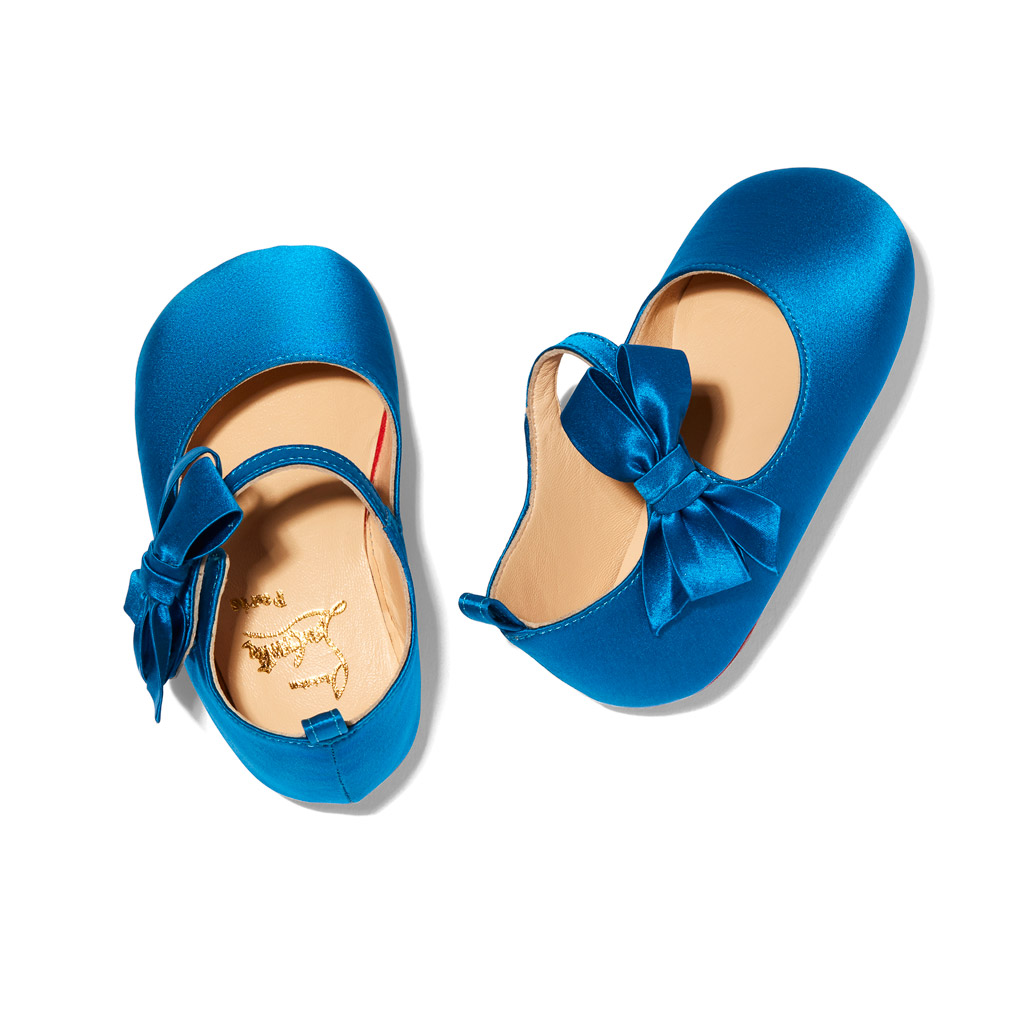
    For many women, investing in a set of Christian Louboutin shoes is the ultimate luxury-good rite of passage. A pair of the heels will set you back hundreds of dollars, but that’s a small price to pay to rock the famous red sole. Now, because it’s 2017 and the world is #extra, the brand has announced it’s branching out into making teeny tiny versions of their favourites with the help of Gwyneth Paltrow’s Goop lifestyle brand.

    The shoes are set to launch in November. The Loubibaby collection includes red, blue, pink and gold Mary Janes.

    Each shoe features a handmade ribbon bow, the brand’s signature red sole, and is guaranteed to turn any child into the chicest baby on the block.

    The baby shoes will retail for US$250 and will be available exclusively on Goop from 16 November.

  • Worldpay extends real-time payouts to over 50 countries

    Worldpay extends real-time payouts to over 50 countries

    Worldpay, Inc., a global leader in payments, has announced the launch of new dynamic payout solutions that give multi-national eCommerce businesses more choices to disburse funds to partners and customers – quickly, easily and across country borders. Worldpay’s dynamic payout solutions combine the enhanced Worldpay Bankout solution, which now delivers 154 direct bank disbursement destinations (up from 65), and Worldpay FastAccess – enabled by Visa Direct.

    With these versatile payout options, partners and customers need no longer wait for days to receive funds or refunds as they now can obtain them via card in near real-time – through mobile wallet or directly to a local bank account.
    Bankout is an ideal solution for businesses needing to make a large number of global payments to – or on behalf of – their customers and suppliers. With 89 new local markets, Worldpay now provides seamless cross-border payouts for businesses in local currencies without the expense of making multiple international bank transfers.

    Dynamic payouts allow businesses to make faster, seamless card-based payouts in near-real time within a maximum of 30 minutes. Building on its launch in the United States last year, FastAccess is now available to Worldpay customers in over 50 new markets across Europe and Asia.

    A wide-range of industries benefit from these new flexible payout solutions. For example, travel and tourism companies and marketplaces can pay out funds to accommodation vendors or disbursements to travellers in a variety of countries and currencies; gaming businesses can provide near-instant payouts to customers; insurance companies can save costs by replacing local checks with bank transfers; and marketplaces can allow independent sellers to retrieve funds more quickly.

    Shane Happach, executive vice president, Head of Global Enterprise eCommerce at Worldpay, Inc., said: “As more and more companies send payments at lower values, cross-border, it will become a competitive differentiator to send quicker payouts to consumers and inexpensive disbursements to vendors and suppliers. It is estimated that by 2025, the sharing economy will generate Europe-wide revenues worth over €80bn and facilitate nearly €570bn of transactions4. At the heart are seamless, transparent, secure payouts, which can be made via card, mobile wallet or bank transfer in any currency, anywhere in the world.”

  • Brooks Brothers Selects Manhattan Active Omni to Elevate Global Omnichannel Commerce

    Brooks Brothers Selects Manhattan Active Omni to Elevate Global Omnichannel Commerce

    Brooks Brothers, the oldest clothing retailer in the U.S., selected  Manhattan Associates Inc. (NASDAQ: MANH) to improve contact centre operations and deliver a seamless omnichannel shopping experience for customers worldwide. New York-based Brooks Brothers is deploying Manhattan Active Omni to fuel its “buy anywhere, get anywhere” customer experience platform across its full network of 300 retail locations.

    Brooks Brothers selected Manhattan Active Omni, which marries order management and store fulfilment applications on a single platform, to deliver superior product fulfilment across all channels. No matter how customers choose to shop, they expect their purchase experience to be positive, quick, and unified. The Manhattan Active Omni solution will provide Brooks Brothers associates with a 360-degree view of customer information and access to the company’s full network of inventory, enabling them to deliver a truly seamless omnichannel experience.

    “Brooks Brothers has been a leading provider of apparel for 200 years, and we take great pride in both the quality of our products and the customer experience we deliver,” said Todd Treonze, CIO, Brooks Brothers. “The Manhattan Active Omni platform will enable us to increase the level of service we provide by expanding our ‘buy anywhere, get anywhere’ offerings on a global scale and significantly improve the customer journey across channels. Working with Manhattan Associates will help us ensure that all our customers enjoy the type of shopping experience they desire, one that reflects the quality they have come to expect from Brooks Brothers.”

    A cloud-native, versionless and fully extensible offering, Manhattan Active Omni is always current and able to seamlessly scale to meet Brooks Brothers’ future needs. In addition to fuelling omnichannel growth, the platform will also help Brooks Brothers scale its flourishing uniform business.

    “Meeting the transformative demands of today’s omnichannel shoppers is perhaps the most significant challenge confronting modern retailers,” said Eddie Capel, president and CEO, Manhattan Associates. “Manhattan Active Omni helps iconic brands, like Brooks Brothers, remove boundaries across channels and capture the network-wide insight they need to consistently deliver high-level customer experience and maintain valuable brand loyalty.”

  • XPO Logistics to Deploy 5,000 Collaborative Warehouse Robots in North America and Europe

    XPO Logistics to Deploy 5,000 Collaborative Warehouse Robots in North America and Europe

    XPO Logistics, Inc., a leading global provider of transportation and logistics solutions, today announced plans to deploy 5,000 intelligent robots throughout its logistics sites in North America and Europe. The robots, which are designed to collaborate with humans, will supplement XPO’s existing workforce and support future growth. XPO has a strategic partnership with robotics manufacturer GreyOrange Pte. Ltd. that makes XPO the exclusive logistics provider for use of its robots in North America, the United Kingdom and eight European countries.

    Bradley Jacobs, chief executive officer of XPO Logistics, said, “We’ve developed our logistics technology to integrate the latest intelligent automation and adapt it at lightning speed. This allows us to dramatically improve fulfillment time and cut costs. The addition of 5,000 collaborative robots will make our logistics operations safer and more productive in picking, packing and sortation. These are important benefits for our customers – particularly in the e-commerce and omnichannel retail sectors, where order speed and accuracy are essential ways to compete.”

    The autonomous robots are part of a modular goods-to-person system that also includes mobile storage racks and fulfillment stations. Each robot can move a rack weighing approximately 1,000 to 3,500 lbs., bringing it to a station where a worker fulfills up to 48 orders simultaneously. The entire process is controlled by XPO’s proprietary warehouse management system. This high-speed, flexible solution supports same-day and next-day deliveries by shortening order-to-shipment times and helping workers minimize walk-time and manual errors.

    XPO’s latest robotics implementation is part of the company’s planned $450 million investment in technology this year. Other recent innovations include the XPO Direct shared-space distribution network, voice integration with Amazon Echo and Google Home to track the last mile delivery of heavy goods, and the XPO Connect digital freight marketplace with multimodal infrastructure.


  • British Designer Louise Trotter Named Creative Director for Lacoste

    British Designer Louise Trotter Named Creative Director for Lacoste

    British fashion designer Louise Trotter is Lacoste’s new Creative Director, the brand informed in a statement this Thursday. She is the very first woman to hold this role at the French label best known for its crocodile logo. Her first collection will be showcased at the next Paris Fashion Week.

    “We are very happy to welcome Louise in our team. Her visionary approach to lines and materials and her expertise in designing highly technical pieces, are valuable assets to strengthen the positioning of our collections”, said Thierry Guibert, CEO of Lacoste Group, in a statement.

    “I’m looking forward to joining a French brand with such a unique heritage. The brand managed to stay fresh and modern in throughout the last 85 years thanks to its unique combination of sports and fashion. I’m proud to be able to contribute to the next chapter of its history”, added Trotter.

    Trotter replaces the Portuguese designer Felipe Oliveira Baptista who parted ways with Lacoste in May. She stepped down from the role of Creative Director at British luxury label Joseph in July, after nine years. Before Joseph, Trotter held the same position at Jigsaw.

  • Stephen Marks mulls French Connection sale

    Stephen Marks mulls French Connection sale

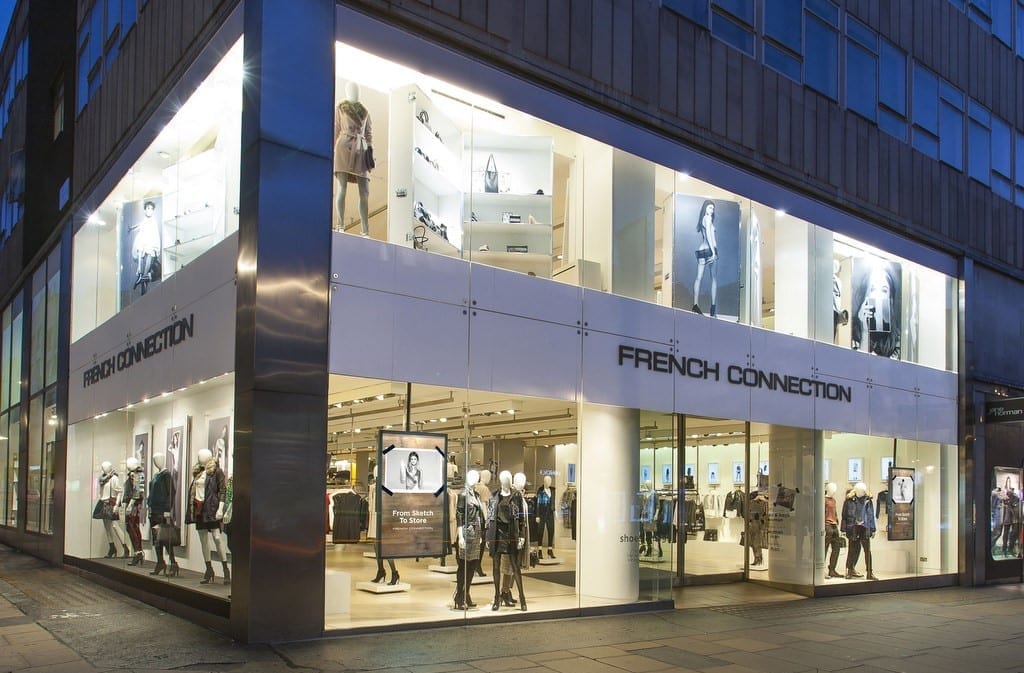
    French Connection founder and CEO Stephen Marks plans to sell his remaining cornerstone stake in the fashion label.

    Sky News UK has reported Marks has engaged Numis Securities to approach prospective buyers for the 42 per cent stake in French Connection which he still holds. He founded the brand back in 1969.

    UK media is reporting that should a buyer be found for the stake, it would almost certainly trigger a takeover bid for the entire company. A formal stock exchange announcement is pending.

    French Connection is emerging from a challenging period in its history after its hugely successful FCUK era brand positioning fell from favour in the late 2000s. In recent months, it has built strong sales online via Asos and it raised £23.3 million from the sale of 75 per cent of its Toast label in April to Danish retailer Bestseller United, parent of Selected, Vera Moda and Jack & Jones, among others.

    But the parent brand, now down to a store network of only about 30, recorded a like-for-like sales decline of 7 per cent in the half year to July 31 and a loss of £5.5 million. Marks, however, anticipates the business will be profitable by January with licensing income on the rise, reaching £2.6 million for the period, and wholesale revenues up 6.2 per cent.

    Any deal for Marks’ stake will be heavily influenced by the second largest shareholder in French Connection, Mike Ashley, who holds 27 per cent of the stock. Ashley recently bought out troubled House of Fraser and is CEO of Sports Direct.

  • Remo Ruffini invests in a brand founded by influencers

    Remo Ruffini invests in a brand founded by influencers

    A new generation of Italian fashion talents has earned a stamp of approval from a titan of the industry.

    Archive, an investment vehicle controlled by Moncler chairman and chief executive Remo Ruffini’s Ruffini Partecipazioni Holding, announced on Monday that it has taken a 49 percent stake in Attico, a fashion brand founded by Milan’s Gilda Ambrosio and Giorgia Tordini less than three years ago.

    The founders were already internationally known among fashion insiders for their street style and social media presence when they launched the opulent, vintage-inspired dresses in robes in February 2016, and that exposure helped catapult Attico into more than 140 stockists by the following year. Both former freelance designers and consultants, Ambrosio and Tordini together now count more than 630,000 followers on Instagram in addition to another 217,000 followers on Attico’s account.

    Attico is sold at Bergdorf Goodman, Net-a-Porter, Moda Operandi and Matches Fashion, among other global retailers, and has expanded into footwear, handbags and jewellery. Celebrities including Margot Robbie, Michelle Williams and Naomi Campbell have all worn their designs and prices range from $250 for a drawstring pouch to over $4,000 for a python printed leather coat.

    “The deal — to be considered a mere financial investment — is in line with Archive diversification strategy whose mission is to invest in the ready-to-wear as well as in the food and beverage and hospitality business,” said a representative for Archive in a statement.

    Ambrosio and Tordini said in 2017 that they had major ambitions for their growing label. “What we would love is to create a world that we started narrating with clothing and accessories and adding furniture, books and eventually make a platform that’s going to contain all these objects and you can navigate around the world of Attico,” said Tordini.

    With a new influx of cash from Archive, the founders have a chance to realise those ambitions.

  • Dr. Martens maker sues online retailer Yoox over lookalike boots

    Dr. Martens maker sues online retailer Yoox over lookalike boots

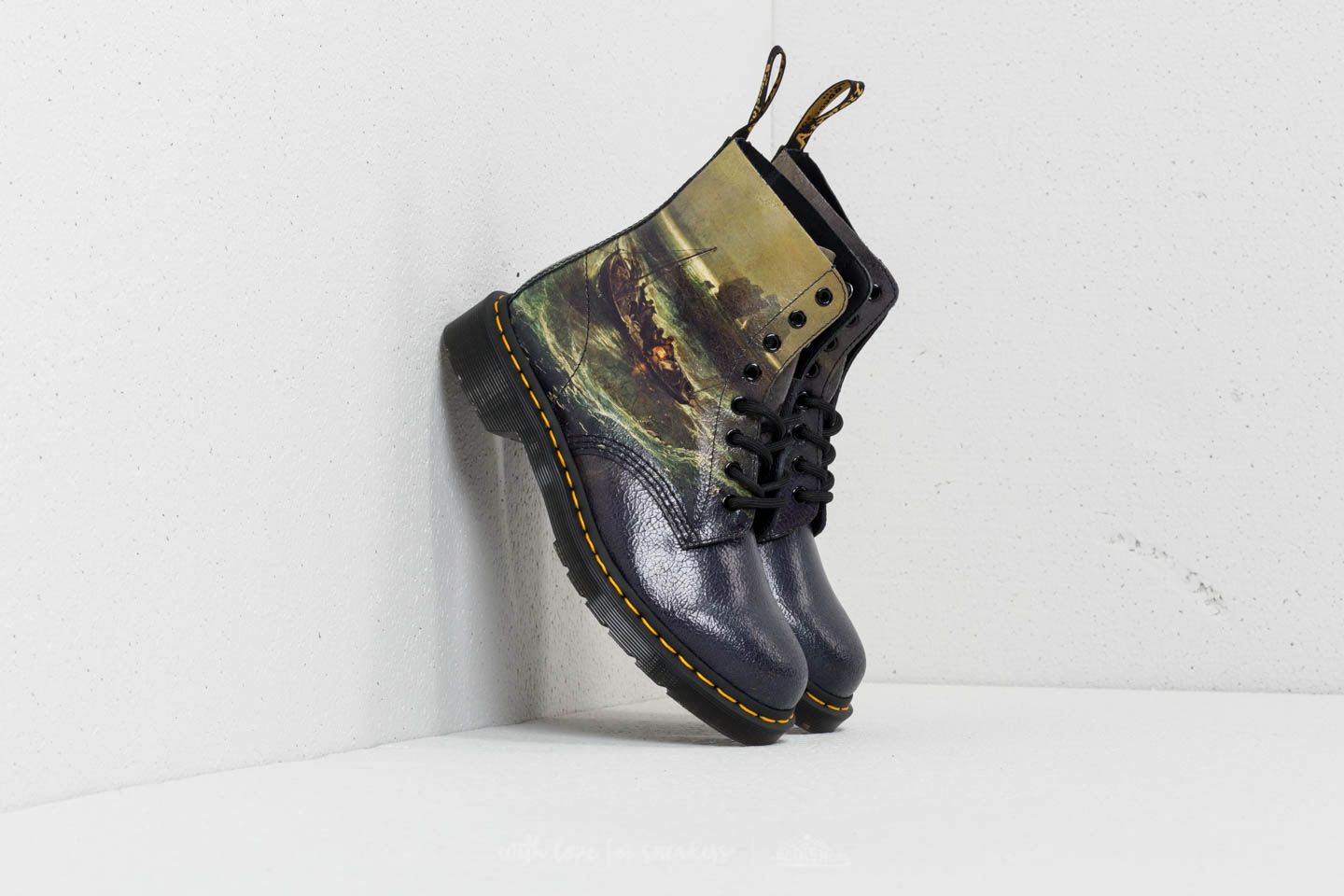
    Airwair International Ltd, the company that makes Dr. Martens, is suing Yoox-Net-A-Porter Group for selling shoes that, it claims, look too much like its iconic lace-up boots.

    The lawsuit, filed in federal court in San Francisco, alleges trademark infringement, trademark dilution and unfair competition which first reported the story.

    Dr. Martens is reportedly calling for a preliminary injunction against the online retailer.

    This isn’t the first time the British brand has sued a competitor for ripping off its designs.

    In 2017, Airwair International slapped US-based shoe brand Steve Madden with a lawsuit for trademark infringement, claiming that it unlawfully copied Dr. Martens’ two tone grooved sole edge, DMS undersole and heel loop.

    In 2013, the company sued US-based shoe brand Chinese Laundry, citing similar trademark infringements.

  • Chanel Acquires Orlebar Brown

    Chanel Acquires Orlebar Brown

    Luxury brand Chanel has bought high-end menswear label Orlebar Brown, with plans to expand the label in Asia and North America.

    The British brand, which specialises in men’s swimwear and board shorts, was bought from founder Adam Brown, the Piper investment fund and minority shareholders for an undisclosed price.

    Orlebar Brown was launched as an online business in 2007 before evolving into a multichannel business. The acquisition is seen as delivering Chanel two primary advantages: expertise in a successful digital platform and a comfortable fit with the women’s swimwear and lingerie brand Eres, which Chanel bought in 1996.

    “Besides the fact that we share the same values and the same approach towards quality and know-how, this acquisition offers an ideal opportunity for synergies between Orlebar Brown and Eres,” Chanel’s global CFO Philippe Blondiaux said in a statement.

    Brown will remain creative director of Orlebar Brown and Paul Donoghue as CEO.

    Orlebar Brown currently has 24 directly owned stores in 11 countries, and is stocked by more than 250 multibrand retailers.

  • Michael Kors is now Capri Holdings

    Michael Kors is now Capri Holdings

    Michael Kors is just the latest company to announce its intention to change its name, following a precedent set by a number of the country’s most famous brands. Most frequently, a name change reflects a shift in strategy.

    Michael Kors said it will change its name to Capri Holdings, inspired by an “iconic, glamorous and luxury destination” island.

    The move comes as the company announced plans to buy the Gianni Versace fashion house for $2.1 billion.

    The new name reflects the company’s efforts to move further into luxury and away from the more affordable handbags for which it has long been known.

    The company, which will keep the Michael Kors brand, made its first step in this direction when it bought shoe brand Jimmy Choo for $1.2 billion last year. But the Versace deal provides it with a launching pad to a more exclusive European luxury market.

  • Coca Cola Australia buys Mojo Kombucha

    Coca Cola Australia buys Mojo Kombucha

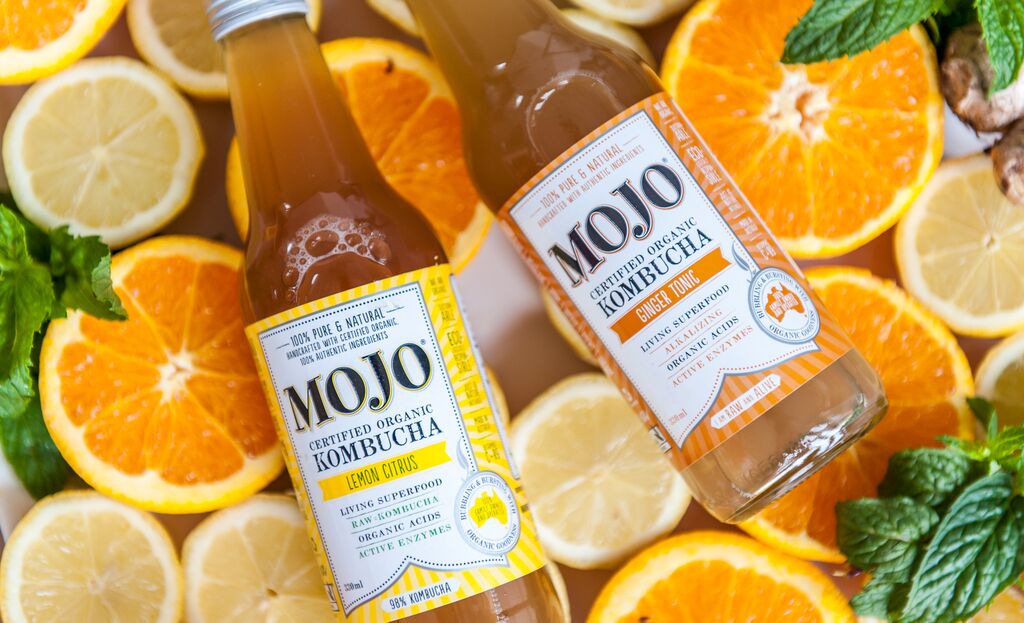
    Coca Cola Australia announced on Tuesday it has acquired the Organic & Raw Trading Co., the Australia-based owner of Mojo Kombucha.

    The terms of the deal were not disclosed. In a move that sees the soft drink maker diversify into low-sugar, natural beverages, Coca Cola will add Mojo brands to its portfolio of 165 products and 25 brands across Australia.

    “The addition of Mojo Kombucha fits perfectly with the growing popularity of organic, probiotic drinks,” Vamsi Mohan, president of Coca-Cola Australia, said in a statement.

    In the last twelve months, Coca Cola has been buying up healthier drink companies, including sparkling water, as consumers become increasingly health conscience.

    More recently, the soft drink heavy weight acquired UK coffee chain Costa for $5.1 billion and invested a small stake into Kobe Bryant’s sports drink BodyArmor in August.

    For the second quarter 2018, Coca Cola reported net revenues declined 8% to $8.9 billion, impacted by a 15% headwind from the refranchising of company-owned bottling operations.

    However, organic revenues grew 5%, driven by concentrate sales growth of more than 2% and price/mix growth of more than 2%.

    “We’re encouraged with our performance year-to-date as we continue our evolution as a consumer-centric, total beverage company,” said James Quincey, President and CEO of Coca-Cola. “We have the right strategies in place and remain focused on achieving our full year guidance.”