Tag: International

  • LINE to Acquire 20% Stake in Bank KEB Hana to Expand Fintech Services in Indonesia

    LINE Corporation, through its subsidiary LINE Financial Asia, will acquire a 20 percent stake in lender Bank KEB Hana Indonesia to expand digital banking services in Southeast Asia’s largest economy, the Japan-headquartered messaging giant said in a statement on Sunday.

    A signing ceremony was held in Seoul on Oct. 26, the company said in the statement, adding that executives from both firms sought closer cooperation to make them become leaders in the digital finance market in Indonesia and Asia.

    LINE said the acquisition would be carried out through a share subscription agreement and that the deal was currently pending approval from Indonesian financial authorities. Still, the messaging giant said it was upbeat that it may launch its new digital banking service in the country by next year.

    Bank KEB Hana is controlled by South Korea’s Hana Financial Group – one of the East Asian country’s largest bank holding companies. The deal will see LINE Financial Asia becoming the second-largest shareholder in the Indonesian lender.

    “Through this partnership with Bank KEB Hana, we will launch easy-to-use and innovative banking services in Indonesia,” LINE Financial Asia chief executive Hwang In-joon said in the statement.

    “This agreement is an important step toward becoming a leader in mobile banking and expanding our fintech services,” he said.

    LINE, which is one of the most popular messaging platforms in Indonesia, said it was keen to add digital banking services to its broad range of content and services for Indonesian users.

    The messaging giant said with a population of 260 million people in a country of more than 18,000 islands, “Indonesia lacks banking services that can cover the entire country.”

    It added that, the deal was expected to improve LINE Financial Asia’s positioning in the archipelago, as well as globally, as it looks to become a major fintech and digital banking provider.

    Indonesia also has more than 100 million smartphone users and a very high rate of social media engagement, which present a huge potential market for digital banking services.

    Bank KEB Hana president director Lee Hwa-soo said he believes “LINE’s advanced digital technology and KEB Hana Bank’s retail banking experience will prove to be the future of the banking industry, demonstrating a new financial model that begins in Indonesia.”

    Bank KEB Hana meanwhile expects the deal to provide it with access to LINE’s large userbase, which presents huge opportunities for acquiring customers, while the lender also expects to increase its product portfolio and expand its retail banking services, to boost the volume of low-interest deposits and retail customer numbers.

    With LINE coming up as the second-largest owner of the lender, Bank KEB Hana expects to improve its digital marketing capabilities through the messaging giant’s brand power, technology, content and expertise. Both companies are “also looking to create deposit/microcredit products, and remittance and payment services for Indonesia.”

    Bank KEB Hana also expects assistance from its future investors to implement and improve credit rating models through projects with local as well as international credit rating agencies. The bank also plans to create an electronic identity verification process, known as e-KYC, that can be optimized for local regulations, among other measures.

    “With LINE expanding its fintech operations in Indonesia, the company is currently on the lookout for global talent to join us, with positions open in such areas as business development, service planning and management. Details of the available positions and applications can be found on LINE’s careers page,” it said.
  • Aston Martin Lagonda Appointed New Director of Investor Relations

    Aston Martin Lagonda Appointed New Director of Investor Relations

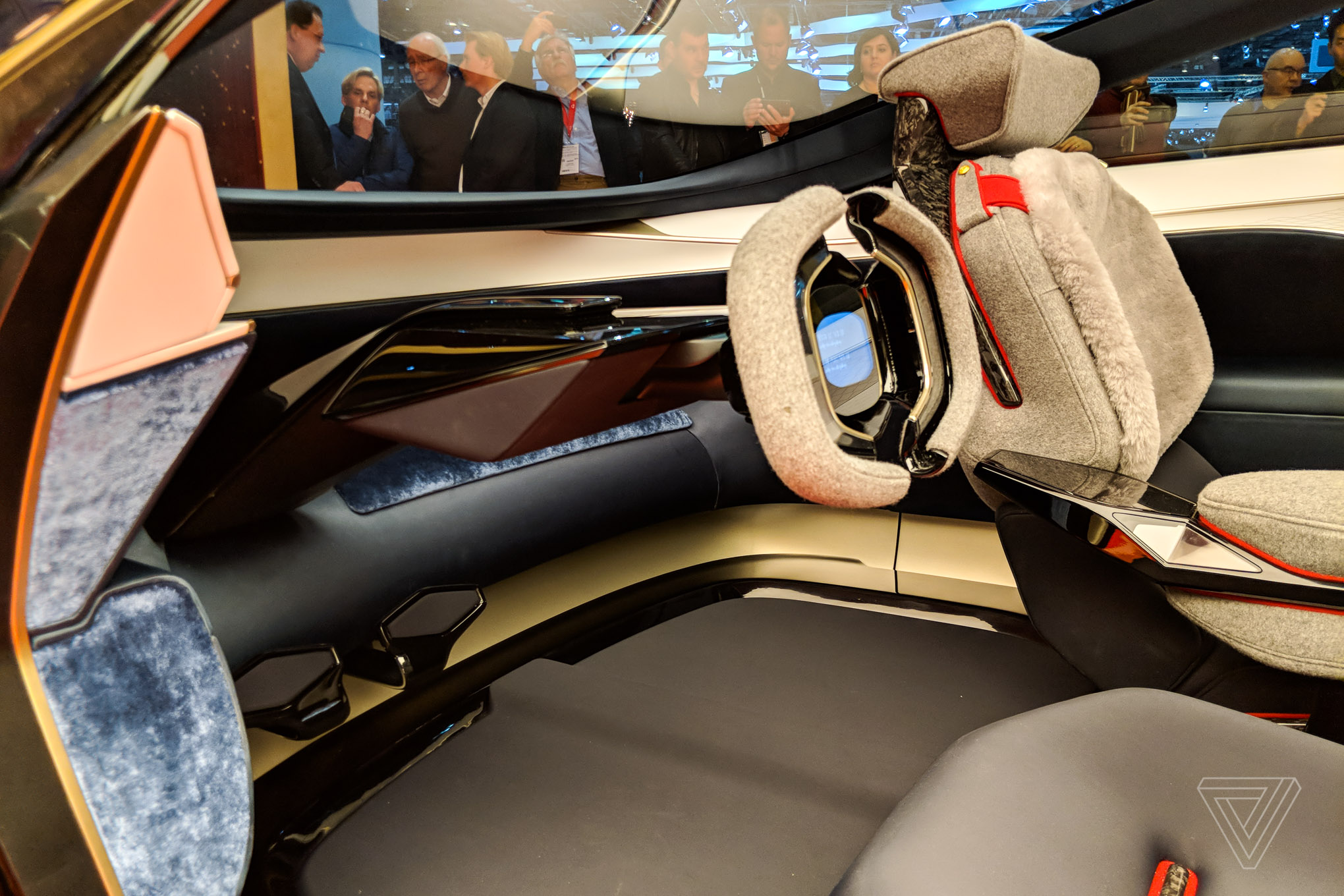
    Aston Martin Lagonda Global Holdings plc (AML) has today announced the appointment of Charlotte Cowley to the position of Director of Investor Relations. Charlotte joins Aston Martin from Burberry plc where she served as Vice President, Investor Relations, and was instrumental in establishing their dedicated IR function. Before this, Charlotte worked in corporate broking at UBS and prior to that, equity research at Credit Suisse.

    In this newly created role, Charlotte will lead the investor relations activities for the company and will report to EVP and CFO Mark Wilson, joining during January 2019.

    Aston Martin EVP and CFO Mark Wilson said: ‘Strengthening our Investor Relations team is a key priority for the business following our successful listing on the London Stock Exchange. Charlotte will bring significant experience to the company at this exciting time in our history. I am delighted to welcome Charlotte to the team as we continue on our execution of our Second Century Plan.”

  • Stocking up on Digitalization to Increase Share-of-Basket

    Stocking up on Digitalization to Increase Share-of-Basket

    With the rise of e-Commerce, Asian retailers are under tremendous pressure to continuously push traditional boundaries and embark on digital transformation to engage consumers. Keeping up with the latest trends in providing the best consumer experience have retailers looking to tech innovations, particularly digital technologies, to play a key role in capturing and keeping customers’ attention and loyalty.

    Technologies such as the cloud, Internet of Things (IoT), mobility solutions, and augmented reality (AR) are driving customer-facing innovations such as digital marketing, smart shopping carts, couponing, and mobile apps – that bring people into the store and keep them coming back. Cloud applications also make it easier for store associates and corporate staffers alike to collaborate and take care of back-office needs.

    The reality is that retailers need to embrace digital transformation and use technology in innovative ways to enhance the customer experience if they want to remain competitive.

    Technology Challenges

    However, rapid adoption of digital in retail not only improves outcomes but ignites new challenges for IT administrators in retail organizations. Among the challenges are how to:

    • Support increased customer engagement with in-store technologies that have high-bandwidth demands
    • Support increasing use of applications in the cloud with a resilient and secure network
    • Ensure connectivity and provide secure access for point-of-sale (POS) applications and electronic payment transactions
    • Ensure performance for real-time applications such as voice, video, and unified communications

    Taking on one of these efforts in the past may have required every resource, but now all of these must be accomplished by the same IT staff.  Also, these changes must be deployed across hundreds and even thousands of store locations spanning vast geographical regions.

    Yet the connective element that brings everything together for retailers –  existing networks are now too complex, too expensive, and frankly, too outdated to support the challenges and opportunities that come from digital transformation. A new approach to the retail network is required.

    With a Virtual Cloud Network, retailers can create an end-to-end software-based network architecture that delivers services to applications and data wherever they are located at global scale from edge to edge, with consistent, pervasive connectivity, and security.

    Faster service delivery on the cloud

    Alfamart in Indonesia is an example of a retailer that embarked on digital transformation by adopting cloud and mobility solutions, and reaped the benefits of a modernized, connected business network.

    Faced with a vast network of over 10,300 minimarts spread across the Indonesian archipelago and basic internet infrastructure in many far-flung areas, it was difficult for Alfamart to convey information in a timely manner across its network.

    The slow flow of information impeded the business’ ability to make critical decisions in a timely manner,  resulting in them not being able to react quickly enough to customer feedback or market trends, and affected overall competitiveness.

    Alfamart decided to connect all of its store employees and partners with a bring your own device (BYOD) strategy and an enterprise mobility management platform over the cloud.

    All store employees are now equipped with the most up-to-date product information, prices and stock level at their fingertips, enabling them to act quickly to meet market trends, and manage peaks in demand for the fast-moving perishable goods they provide.

    This has improved their speed-to-market, reduced training costs by 20 per cent, enhanced mobility across device and platforms, and improved internal communications between management and employees. Customer satisfaction levels have also gone up.

    Keeping systems up and goods in stock at all times

    City Mart in Myanmar is another retailer which benefited from modernizing its legacy IT infrastructure by adopting virtualization. Lengthy downtimes were a common occurrence under their old IT system, which affected their supply chain and resulted in unfulfilled customer orders, negatively impacting revenues.

    The supermarket network implemented a software-defined IT infrastructure and automated certain IT processes, which not only eliminated server downtime but also cut operational expenses by half. Predictive analytics and smart alerts also helped improve the system performance.

    With a new inventory management system, City Mart is now able to gain visibility of their stock across their entire network of 180 stores, whether on storeshelves or in the warehouse. This enabled them to better understand changing consumer demand patterns across different stores, ensure that goods are in stock at all times, and build stronger relations with suppliers.

    Ultimately, the virtualized IT infrastructure supports City Mart’s expanding business, enabling the retailer to meet the needs of Myanmar’s growing consumer class.

    Networking for Retail 2020

    The future of networking is software, and the network of the future is the Virtual Cloud Network. Virtual Cloud Networks allow retailers to create a digital business fabric for connecting and securing applications, data, and users across the entire network in a hyper-distributed world. In this way, retailers can simplify networking and wide area network management, optimize cloud access from all locations, assure high performance for even the most demanding applications, and enforce security and compliance across the network in every store location.


    – Sanjay K. Deshmukh, Vice President and Managing Director, South East Asia and Korea, VMware

  • Hong Kong Top 10 Most Visited Cities in Asia Pacific: Mastercard

    Hong Kong Top 10 Most Visited Cities in Asia Pacific: Mastercard

    Hong Kong is listed as one of Asia Pacific’s top 10 most visited destinations for the eighth consecutive year in the Mastercard Global Destination Cities Index 2018 released. Ranked 14th globally and seventh in Asia Pacific, Hong Kong welcomed 9.03 million international overnight visitors in 2017. Despite dropping a notch from ranking the sixth the previous year, the city saw a slight increase in international overnight visitors from 2016 which saw 8.86 million visitors. Overnight visitor arrivals to Hong Kong are forecast to grow by 0.9 percent in 2018.

    The city is currently at the tenth spot regionally, and is also expected to see 3.78 percent growth in international overnight visitor spending from US$5.92 billion in 2017.

    Ranking the world’s 162 top destination cities, the Index analyzes visitor volume and spending for the 2017 calendar year and provides a forecast for annual growth, insights on the fastest growing destination cities, and a deeper understanding of why people travel and how they spend around the world.

    Global & Asia Pacific Highlights:

     Bangkok remains to be the No. 1 destination city in the world with 20.05 million international overnight visitor arrivals, while London came in a close second with 19.83 million visitors. Paris and Dubai came at the third and fourth spots, with 17.44 million and 15.79 million visitors respectively. Singapore remains at the fifth spot with 13.91 million visitors.

     Forty-eight point five percent of travelers to the global destinations came from China, which ranks at number two among the top origin countries, next to the United States with 57.4 percent.

     Dubai continues to be the top ranking destination city in the world based on overnight visitor spend, having recorded an International Overnight Visitor Spend of US$29.70 billion, followed by Makkah and London with US$18.45 billion and US$17.45 billion each.

     The top three overnight international visitors in Hong Kong last year were from the Republic of Korea (12.9 percent), the U.S.A. (9.6 percent) and Taiwan (9.5 percent).


  • Amazon reports US$ 56.6 bn revenue in Q3

    Amazon reports US$ 56.6 bn revenue in Q3

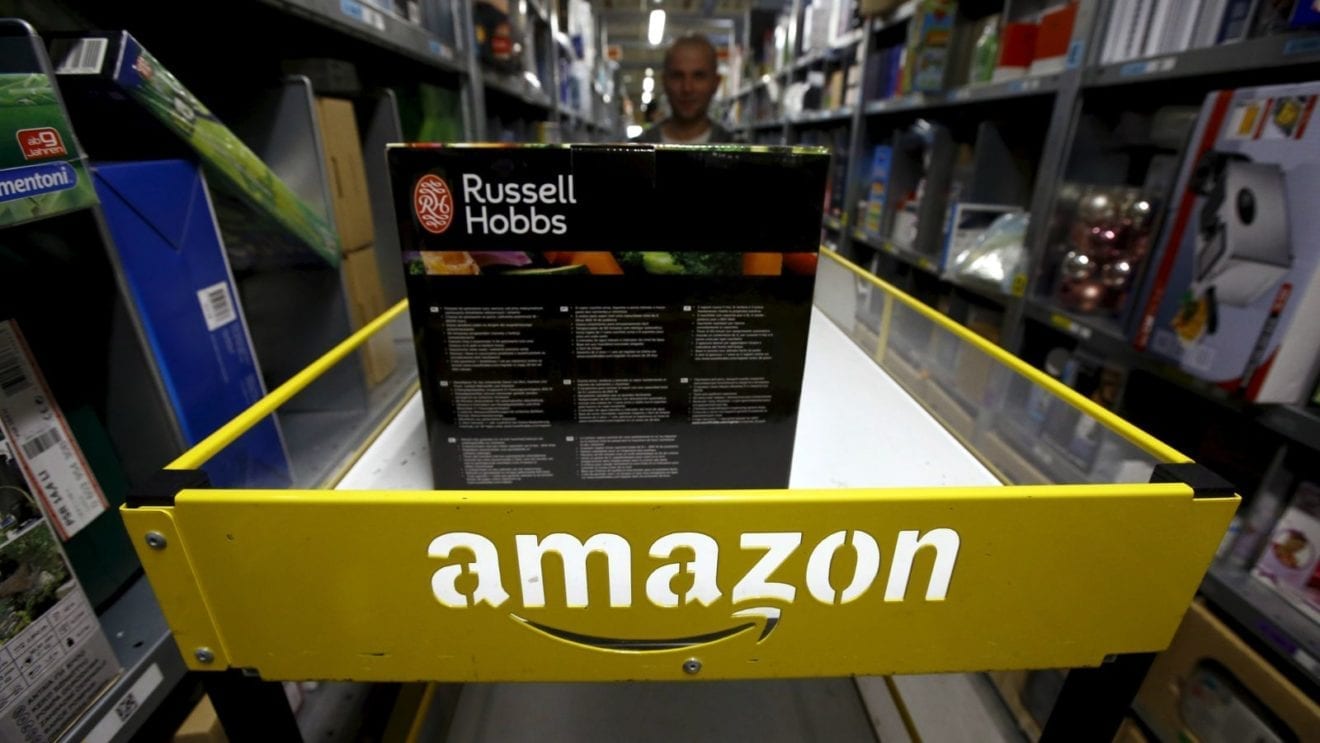
    Riding on its Cloud business, retail giant Amazon.com saw its net sales increasing 29 percent to US$ 56.6 billion in the third quarter this year, compared with US$ 43.7 billion in third quarter of 2017. Operating income increased to US$ 3.7 billion in the third quarter, compared with operating income of US$ 347 million in the third quarter of 2017.

    Net income increased to US$ 2.9 billion in the third quarter, or US$ 5.75 per diluted share, compared with net income of US$ 256 million, or US$ 0.52 per diluted share, in the third quarter of 2017.

    “Amazon Business has now reached a US$ 10 billion annual sales run rate and is serving millions of private and public-sector organisations in eight countries,” said Jeff Bezos, Founder and CEO, Amazon.

    “We’re not slowing down — Amazon Business is adding customers rapidly, including large educational institutions, local governments, and more than half of the Fortune 100,” Bezos said in a statement.

    Amazon gave fourth-quarter revenue guidance in the range of US$ 66.5 billion and US$ 72.5 billion.

    Amazon Web Services (AWS) announced several new customer commitments and major migrations during the quarter.

    In the third quarter, Amazon introduced a new family of Echo smart home speaker devices.

    Amazon also introduced the all-new Fire HD 8 tablet, featuring an 8-inch HD display, a quad-core processor, 16 GB of internal storage with support for up to 400 GB more via microSD, up to 10 hours of mixed use battery life, and hands-free access to Alexa.

    The number of Alexa-compatible smart home devices has quintupled year to date to more than 20,000 devices from over 3,500 brands.

    Through new tools, including updated Alexa Smart Home Skill APIs and the Alexa Connect Kit, developers and device makers can enable voice control of any device and feature with Alexa.

    Amazon India also announced the launch of Amazon.in in Hindi.

    Amazon Business is generating US$ 10 billion in annual sales, serving hundreds of thousands of business sellers and millions of customers across eight countries.

  • Strongest L’Oreal sales growth in 10 years led by APAC

    Strongest L’Oreal sales growth in 10 years led by APAC

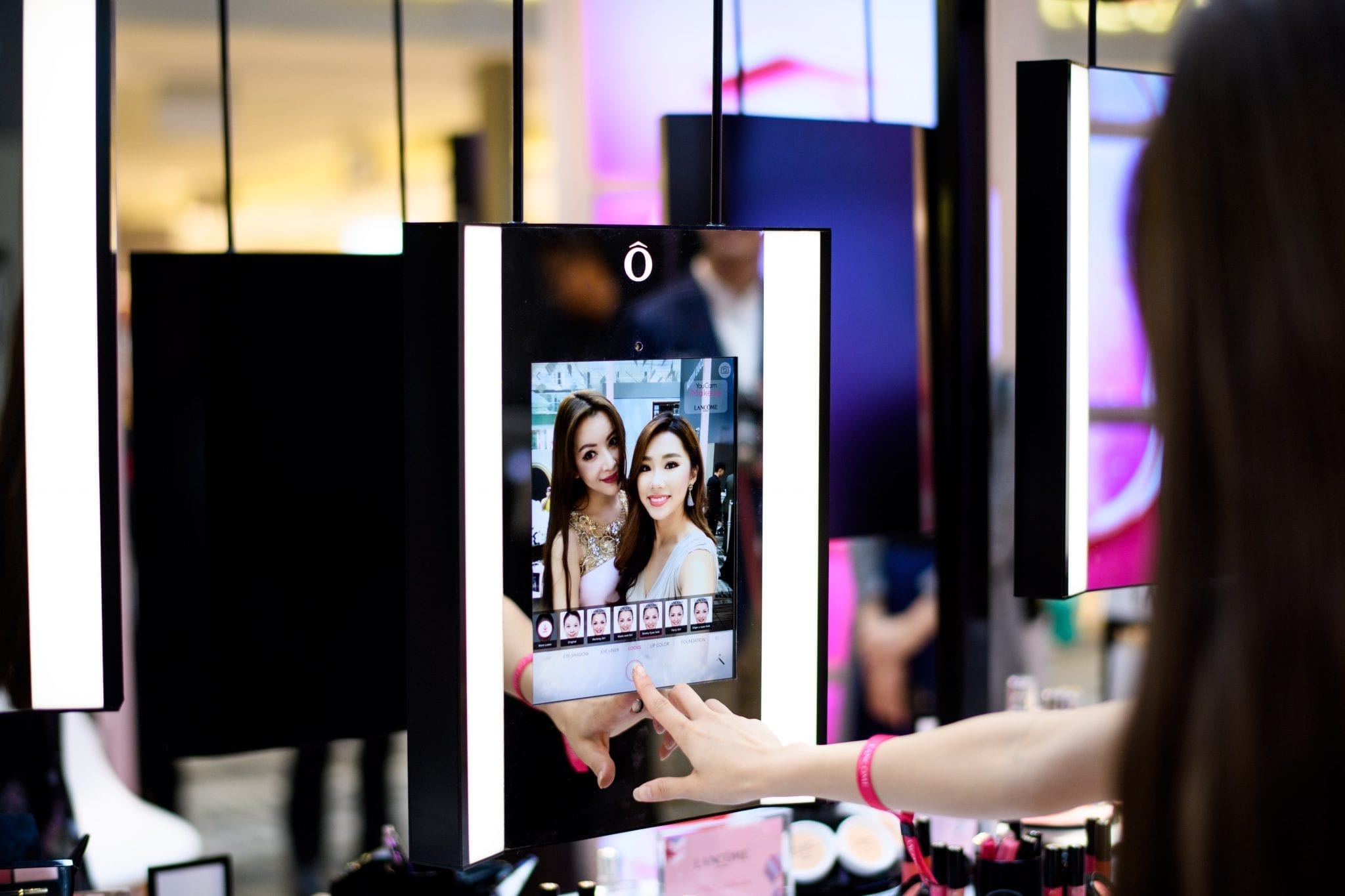
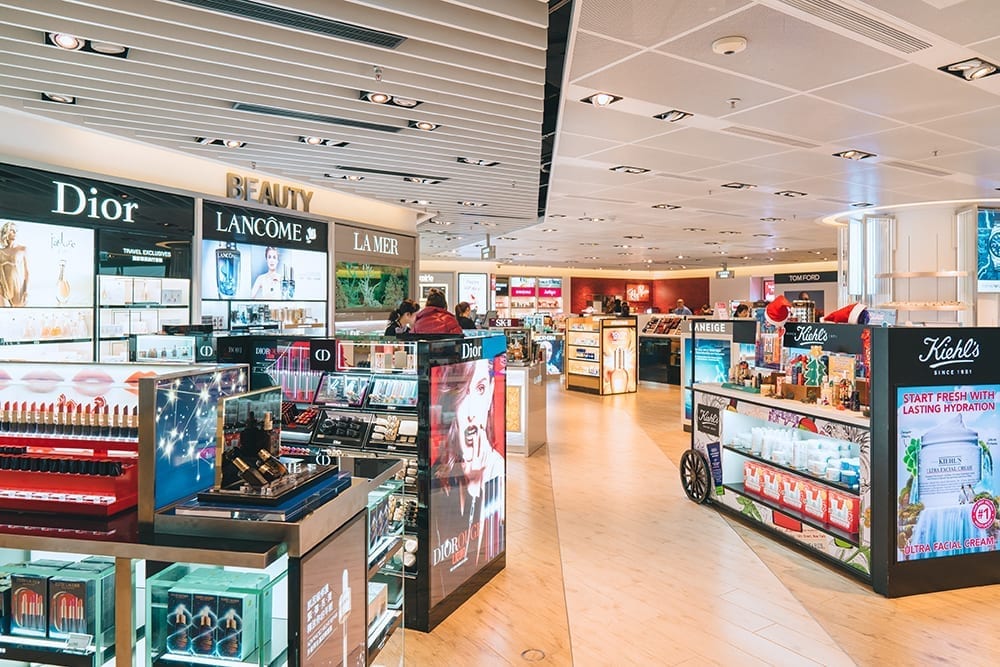
    L’Oreal sales in Asia Pacific soared 25.8 per cent on a like-for-like basis in the latest quarter – making it the French-headquartered company’s strongest international market. Sales in the region hit €1.794 billion in the quarter and €5.342 billion year to date, an increase of 23.3 per cent.

    “This acceleration in growth is boosted by strong demand from Chinese consumers, and the dynamic sales of the Lancome, Kiehl’s, Giorgio Armani, Yves Saint Laurent and L’Oreal Paris brands,” the company said in a statement.

    “In Northern Asia, the key factor remains the strong growth in China and Hong Kong, and in travel retail. In Southern Asia, sustained growth is continuing, particularly in India and Malaysia.”

    L’Oreal chairman and CEO Jean-Paul Agon said the company achieved its highest quarterly growth rate for 10 years in the three months to September 30. Worldwide sales reached €6.473 billion, up 7.5 per cent.

    “In a beauty market that continues to accelerate, driven by robust growth in skincare, the group maintains its strong momentum, with contrasted performances between the divisions. L’Oreal Luxe is showing dynamic growth, underpinned in particular by its four biggest brands, Lancome, Yves Saint Laurent, Giorgio Armani and Kiehl’s. The active cosmetics division, which continues to post double-digit growth, is being driven worldwide by consumer aspirations for dermocosmetics and the quality of its brand portfolio,” he said.

    While the consumer products division is being held back by persistent difficulties in some countries, the L’Oreal Paris and Maybelline New York brands are maintaining strong momentum.

    Travel retail globally was a standout for the group, posting growth of 29.9 per cent for the quarter and online sales grew by 38.3 per cent to now account for 9.7 per cent of L’Oreal’s turnover.

  • Dunkin’ to be seen as coffee place in future

    Dunkin’ to be seen as coffee place in future

    Global fast-food chain Dunkin’ plans to reposition itself as a coffee chain – but it will still sell fresh donuts. Just a month after Dunkin’ Donuts unveiled rebranding, including dropping ‘Donuts’ from its name, the company has announced a strategy to put quality coffee at the core of its menu

    Dunkin’ has previously revealed a US$100 million budget to revive its market position in its core US home market. Now it says half of that investment will be spent on espresso machines and other restaurant equipment enabling it to accelerate its beverage-led strategy. The company says Dunkin’ franchisees are also making a substantial investment in the initiative, which is focused on growing its market share of the hot and iced espresso category.

    “Espresso is one of the fastest-growing coffee categories, particularly among younger consumers, and with our coffee credentials we believe we have a tremendous opportunity to improve our awareness and credibility among espresso drinkers,” said Tony Weisman, chief marketing officer at Dunkin’ US.

    The company is promising “an entirely new espresso experience for customers” in its US restaurants by the coming holiday season, featuring new state-of-the-art espresso equipment, a new espresso recipe, extensive restaurant training and new espresso cups.  Dunkin’ will serve “handcrafted hot and iced espresso beverages” – including lattes and cappuccinos – “featuring a rich, smooth, balanced taste that meets the profile preferred by espresso customers, and in particular younger espresso drinkers,” the company said in a statement.

    Dunkin’ will support the launch with a comprehensive marketing campaign. New espresso cups are bright orange and feature an exclamation point, a symbol the company says positions the espresso beverages as bold, new and exciting.

    “Relaunching espresso in our restaurants nationwide has been a tremendous undertaking, from installation of the new espresso machines, to the creation of the new, bolder taste profile, to the extensive employee training,” said Dunkin’ US COO Scott Murphy. “This is a transformative initiative, and it would never have happened without the total alignment and support of our franchisees.”

    All espresso beverages served at Dunkin’ US restaurants will continue to be made with 100-per-cent espresso beans sourced from Rainforest Alliance-certified farms.

  • WatchTime New York 2018 Wraps Up After Another Record Year

    WatchTime New York 2018 Wraps Up After Another Record Year

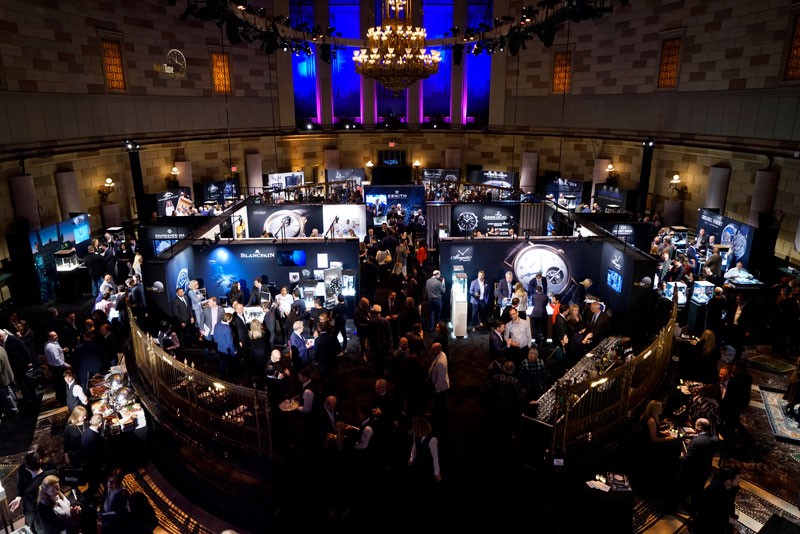
    WatchTime New York, America’s largest public watch event dedicated solely to collectors and enthusiasts, wrapped up its fourth year in Manhattan at Gotham Hall today. The two-day event began with a sold-out VIP cocktail party on Friday, October 26, followed by a full day of exciting panels, seminars, tours, and events on Saturday, October 27. Over the course of the two-day show, over 1,400 attendees came to see the latest watches from 35 internationally renowned watch brands: the largest number of exhibitors and the highest number of registered attendees the WatchTime New York Show has seen to date.

    WatchTime Magazine presented the annual event for the fourth consecutive year with returning partner, media platform WatchAnish. Additional supporting partners included SWISS Airlines, Wempe, and Four Roses bourbon, along with The Wall Street Journal, Robb Report, Gear Patrol, Watchonista, The Horological Society of New York, and the RedBar Group. WatchTime New York 2018’s guests included notable international watch collectors, timepiece enthusiasts, and social media influencers, with an appearance during the VIP cocktail event on Friday, October 26, by Number-1 ranked amateur boxer, Brian Ceballo.

    Over four years, the event’s runaway success has exceeded all expectations, a phenomenon reflecting the changing landscape of the watch industry’s annual event calendar and the rising importance of the United States watch market. The WatchTime New York show has become both a direct-to-consumer experience and hub for the industry. This direct-to-consumer event format is uniquely tailored to the U.S. market: a formula that is as much the New York Fashion Week of watches as it is an enthusiast meet-up, trunk show exhibition, and educational forum.

  • Keeping Up with the Centennials:  Buy Social, Pay Offline

    Keeping Up with the Centennials: Buy Social, Pay Offline

    Dentsu Aegis Network, in collaboration with Econsultancy, today launched Here Comes the Centennial: Southeast Asia’s New Generation of Shoppers, a white paper investigating the online buying behaviour of centennials – consumers of the future – in the region. Launched on the sidelines of FUTR Asia 2018 Summit, the study finds that, despite the surge in online shopping, cash is still king for centennials in the digital age, and shopping on social media platforms is the new norm.

    Despite being digital natives, the concept of a cashless society has yet to fully take off for centennials in six countries surveyed, as 56% of survey respondents still prefer paying cash on delivery for their purchases. The next generation of online shoppers also enjoy having a variety of payment methods, as 43% of centennials will readily abandon their purchases because their preferred payment option is not available.

    Having grown up in the smartphone era, centennials are also using social media platforms differently compared to previous generations in their buying journey. Social media applications (47%) such as Facebook and Instagram are the second most popular place for centennials to shop in. Close to half of the survey respondents (49%) also turn to social media when they are researching for more information on their future purchases, rather than asking friends (45%) and family (27%).

    Nick Waters, CEO of Dentsu Aegis Network Asia Pacific, said: “All eyes are on Southeast Asia as the world’s next consumer powerhouse, with its young population and increasing purchasing power. Close to 280 million centennials – tomorrow’s consumers – call this region home. Enabled more than ever before by technology and data, we are seeing incredible potential for growth in the region and our latest research ‘Here Comes the Centennial: Southeast Asia’s New Generation of Shoppers’, helps us understand what is important for these consumers of the future and how businesses can adapt and position effectively for Southeast Asia’s future retail landscape.”

    Brand name and image is no longer a priority of centennials, making end-to-end brand experience more important than ever for retailers. Only 11% cite having a prestigious or famous brand as one of their top three attributes when choosing where to shop. This means retailers need to work harder to get their brand experience perfect in order to capture the attention of tomorrow’s consumers.

    Who are the Centennials? Why are they important?

    Centennials – also known as Generation Z – are those who are born between now and 1995. Accounting for about 277 million of Southeast Asia’s population, 50% of centennials spend more than USD30 a month on online shopping, while 9% spend over USD100 monthly. The size of this new generation alone makes them attractive for retailers, but the behaviours of this group make them lucrative in terms of its online shopping and ecommerce potential.

    This new generation will also soon be one of the world’s most demanding consumers who have high standards and expectations of the online shopping experience. Technology should be an integral part of this experience, as 82% of centennials are excited about futuristic shopping technology such as virtual reality. Personalisation is key as well, as 76% of respondents are happy to share data with websites, if it makes more relevant recommendations.

    Jefrey Gomez, Managing Director, Econsultancy Asia Pacific, said: “Centennials are coming of age in an era when high speed internet is always available, and they expect technology and brand experiences that are fast, responsive, and seamless. The survey showed that 86% of centennials will not use an app or website that takes too long to load and 82% will not use an app or website that is difficult to navigate. This means that retailers can therefore no longer just provide well-designed stores or rely solely on brand campaigns to drive sales. Instead they need to focus on the utility of their online offering to make the purchasing journey easy to complete.”

  • Esprit sales continues to dive

    Esprit sales continues to dive

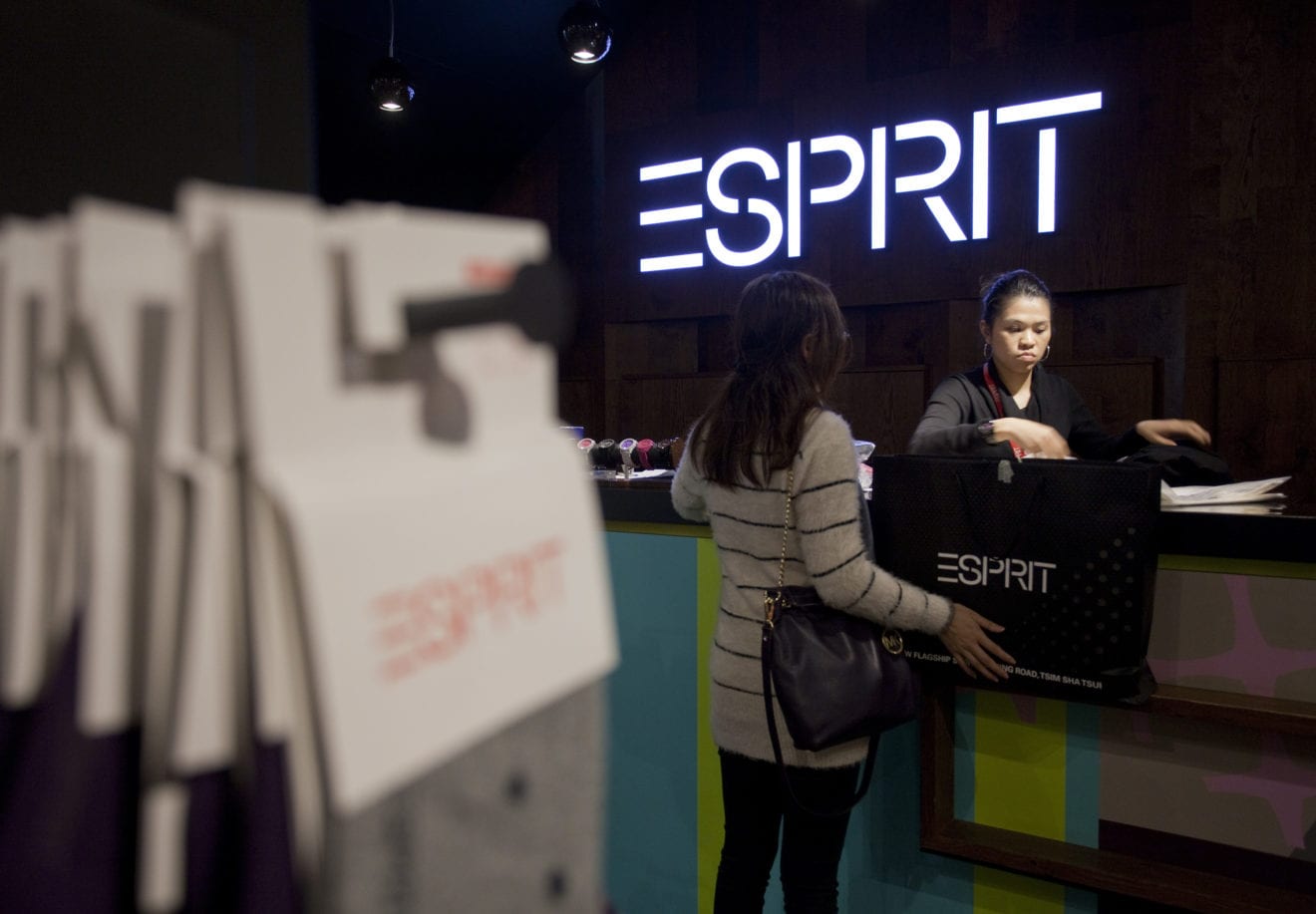
    Esprit sales slumped further in the first quarter as the embattled fashion brand’s store network continued to shrink. In a stock exchange filing on Friday, Esprit said group revenue for the quarter to September 30 slumped 16.2 per cent year on year in local currency while its own offline store sales area reduced by 10.6 per cent, to HK$3.34 billion (US$425.8 million). The company’s own-managed stores, which account for 37 per cent of the company’s total turnover, fell by 17.8 per cent.

    “The decline was due to a reduction in net sales area of 11.5 per cent year on year, a result of continued rationalisation of our distribution footprint, including the closure of the Australia and New Zealand markets and a decline in comparable retail store sales (excluding e-shop) of 14.1 per cent … mainly due to declining customer traffic to our stores and extended warm summer temperature in Europe which impacted sales of our autumn merchandise,” the company said.

    Offline same-store sales in Asia Pacific grew by 0.3 per cent, mainly due to promotional activities. But online sales, which accounted for 24.9 per cent of the company’s revenue, fell by 14.9 per cent globally.

    Eshop, almost entirely in Europe and representing 24.9 per cent of group revenue, recorded a decrease of 14.9 per cent. Online sales in Asia Pacific, which account for a mere 2.6 per cent of total e-shop sales, plummeted 36.7 per cent, largely blamed on the closure of the Australia-New Zealand business.

    Wholesale revenue, almost entirely from Europe, fell 15.5 per cent.

    The company reiterated comments made after its dire full-year results were released last month, which included a US$325.5 million loss in the year to June 30: “Corrective measures are in place to reignite sales momentum.”

    A strategy plan will be released on November 26 outlining how the company plans to sharpen its brand identity, putting the customer at the centre of everything it does; improve product offering and brand positioning; reduce complexity and improve accountability in the organisation; become a leaner organisation; and eliminate loss-making parts of the business.

  • Puma global sales grow on more stores number

    Puma global sales grow on more stores number

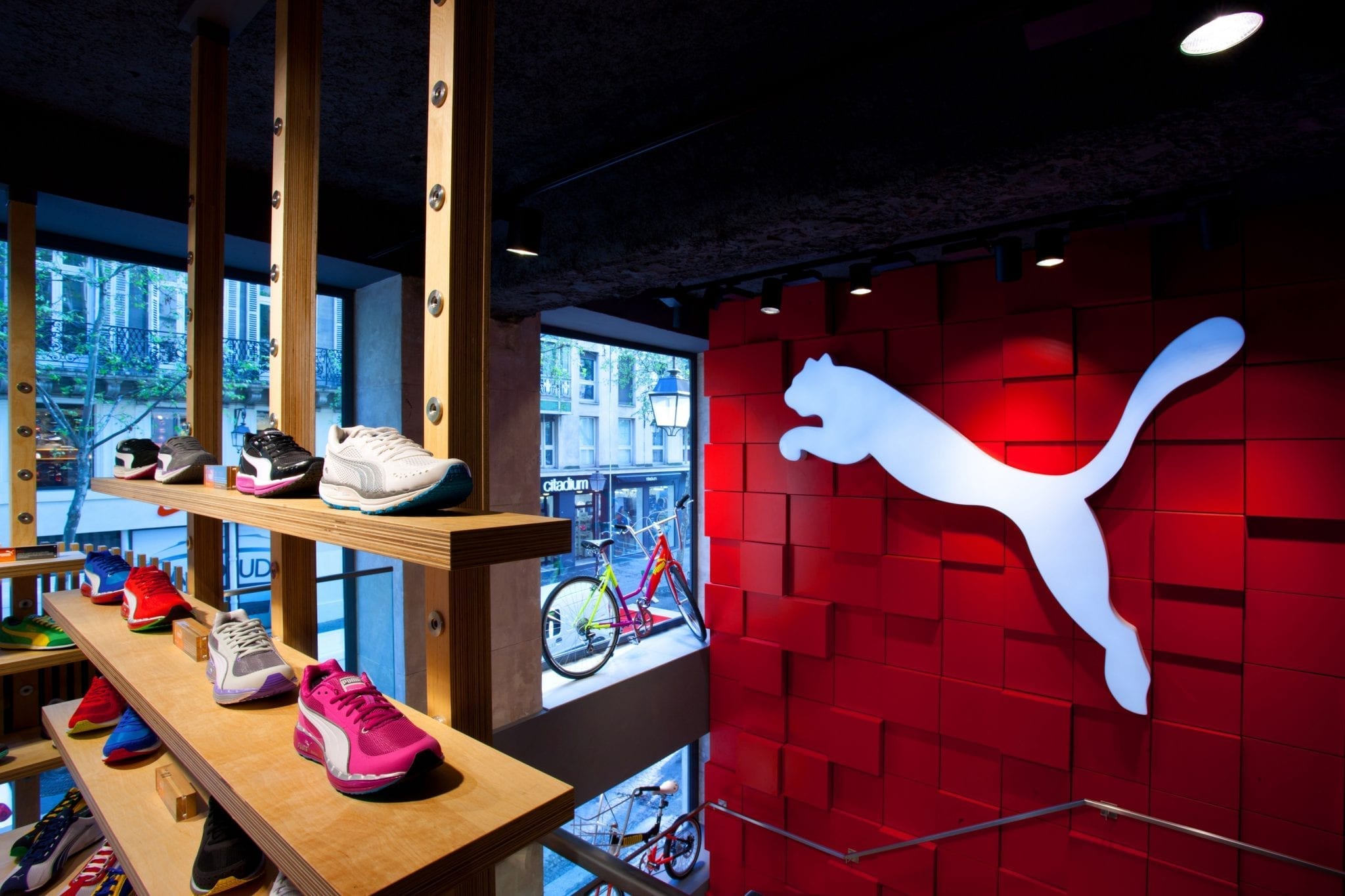
    Puma worldwide sales increased by 17 per cent on a constant currency basis in the first nine months of this year as the sportswear label achieved growth in every region. Asia and the Americas drove sales, with both markets achieving double-digit growth year-on-year.

    Sales for the period reached €3.422 billion, with gross profit margin by by 150 basis points to 48.8 per cent. Operating profit rose 40 per cent from €215 million to €300 million and net earnings from €134 million last year to €176 million.

    CEO Bjorn Gulden said Puma was still witnessing large shifts in product trends and consumer demand, “but feel we have reacted fast enough to continue our growth”.

    The company’s move to expand its own-operated store network is paying off, with sales up 22..5 per cent year to date, increasing the share of the company’s overall sales to 22.5 per cent. The company said additional stores, improving same-store sales and e-commerce all contributed to the increase.

  • Incheon to get on-arrival duty-free store in May

    Incheon to get on-arrival duty-free store in May

    The Incheon International Airport Corporation is planning to open Korea’s first on-arrival duty-free store in May next year. The airport operator announced on Sunday that it has commissioned a study to look into how it can optimize the duty-free service, which will be concluded by the end of the year.

    The study will focus on deciding the location and size of the shops in order to maximize customer experience by reducing congestion.

    Additionally, the research will consider the possibility of setting the rent for the duty-free shops based on revenue instead of unilaterally applying a fixed rate.

    In order to ease the burden on interior costs, Incheon airport will be responsible for basic interior constructions, while duty-free operators will only have to provide the finishing touches.

    This is because only SMEs will be allowed to bid for the slots.

    The Incheon airport said it will start taking bids for the duty-free shops in February and finalize candidates by April. It added that it will have a larger ratio of Korean companies controlling the arrival duty-free shops compared to departure stores. However, as the government earlier announced, the arrival duty-free shops will not sell cigarettes or products that are controlled by customs quarantine regulations such as fruit and meat products.

    The airport said it will work with the government to finalize plans to return some of the profits that it makes from renting the spaces to duty-free operators in March.

    Incheon airport Terminals 1 and 2 have units available for duty-free shops targeting customers arriving in Seoul. On the first floor of Terminal 1 there are two 190 square-meter (2,045 square feet) areas. On the first floor of Terminal 2 there is a 326 square-meter space. Currently these areas are not in use.

    The Ministry of Finance and Economy in late September announced plans to open the country’s first duty-free store available to returning travelers in May next year. The ministry was responding to an order from President Moon Jae-in to review the possibility of an on-arrival duty-free shop during a meeting he had with Blue House senior officials and secretaries in August.

    The purpose was to make travel less inconvenient for Korean tourists who were purchasing goods while departing Incheon and carrying them throughout their trip.

  • Gucci powers Kering third quarter sales

    Gucci powers Kering third quarter sales

    Kering sales growth significantly outpaced its rivals during the third quarter, up 27.6 per cent as reported and 27.5 per cent on a comparable basis, to €3.402 billion. In Kering-operated stores, Asia Pacific sales rose 33.3 per cent on a comparable basis, bettered only by North America’s 36.1 per cent increase. Growth in online sales exceeded 80 per cent and wholesale sales rose 27 per cent.

    “We are extraordinarily proud of the remarkable performances Kering delivers quarter after quarter,” said chairman and CEO Francois-Henri Pinault. “Our growth, whose pace is unprecedented in the luxury sector, is sound, well balanced and sustained across all regions and distribution channels.”

    Pinault said the company’s enduring success comes down to the talent of each of its brands in “creating strong emotional ties with its customers, conceiving a bold, generous creative universe, and reinventing its codes”.

    “Beyond short-term developments, we know that the secular growth of the luxury market, but particularly our solid fundamentals and the discipline with which we implement our strategy, will continue to support our operating and financial outperformance.”

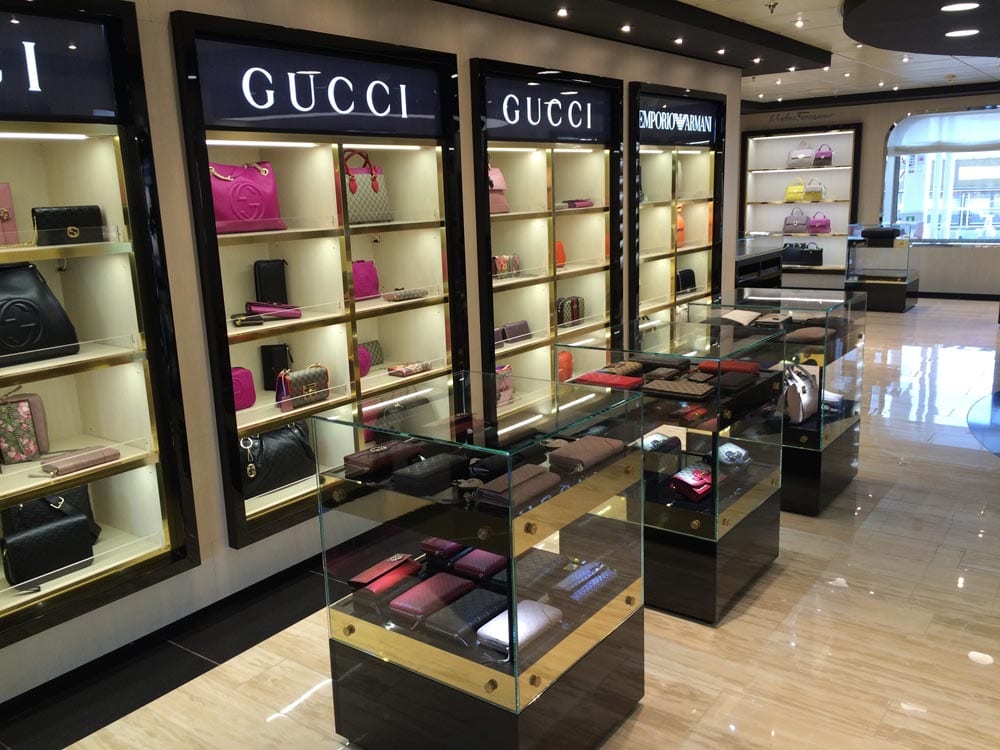
    Gucci led Kering sales growth during the quarter, with sales up 35.1 percent and strong performance across all distribution channels, regions and product categories. Gucci Asia-Pacific sales soared 41.9 per cent.

    Yves Saint Laurent sales rose 16.1 per cent, driven by the strong performance of iconic lines and the success of new collections.

    While Bottega Veneta sales were down 8.4 per cent on a comparable basis, the label is in a transitional phase led by recently appointed creative director Daniel Lee (ex Celine). His first full collection will go on sale early next year.

    Kering’s other houses (labels) achieved a 32.3 per cent increase in sales, driven by  “exceptional momentum” at Balenciaga and ongoing growth at Alexander McQueen. New collections and extended iconic lines from Boucheron, Pomellato and Qeelin were “very well received”.

    The watches and jewellery categories delivered what the company described as “solid performances”.

  • Tod’s is not for sale

    Tod’s is not for sale

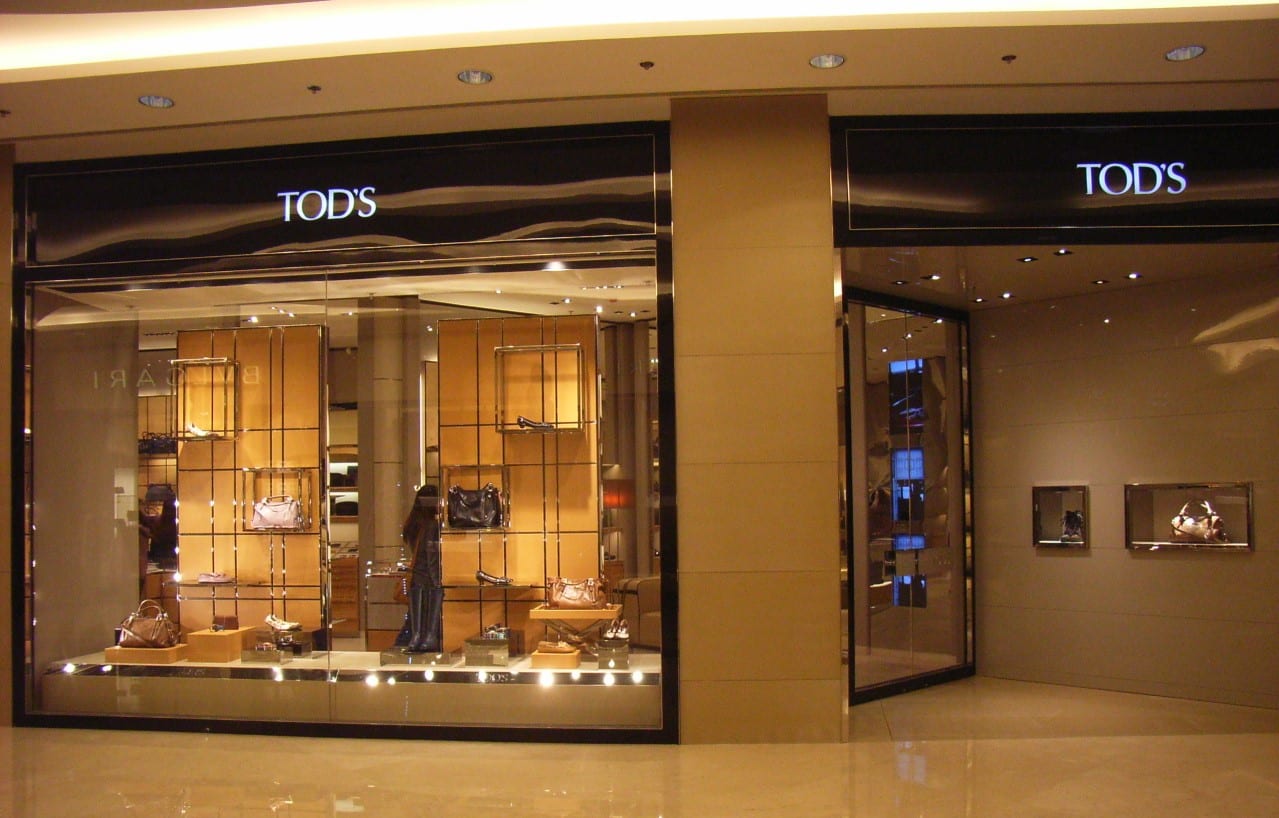
    Speaking at the 2018 Milano Fashion Global Summit, Tod’s Chairman and CEO Diego Della Valle denied rumours surrounding a possible sale of the Tod’s group, reports WWD. The report quoted Della Valle saying: “This rumor is a “recurring” one, but “if we really had to do an operation, it would be to buy, not to sell. “We are preparing the company for the next 10 years, when we will surely be attentive to new consumers, but carefully avoiding going overboard in chasing trends. We must not lose sight of who we are,” he added.

    Speculations followed after an Italian newspaper reported on Monday that Della Valle’s reorganization of the family’s holding companies may be an indication to a future sale of the group.

    The Della Valle family currently owns majority 60 percent of the Tod’s group through two separate holding companies – the Di.Vi. Finanziaria vehicle and the Diego Della Valle & C.

    For the first six months, Tod’s reported a 2.8 percent decline in its net profit to 33.7 million euros, while sales decreased 1.3 percent to 477 million euros compared to 483 million euros in the first half of the previous year but increased 1.8 percent at constant exchange.

  • 18 hours queue for Jollibee London opening

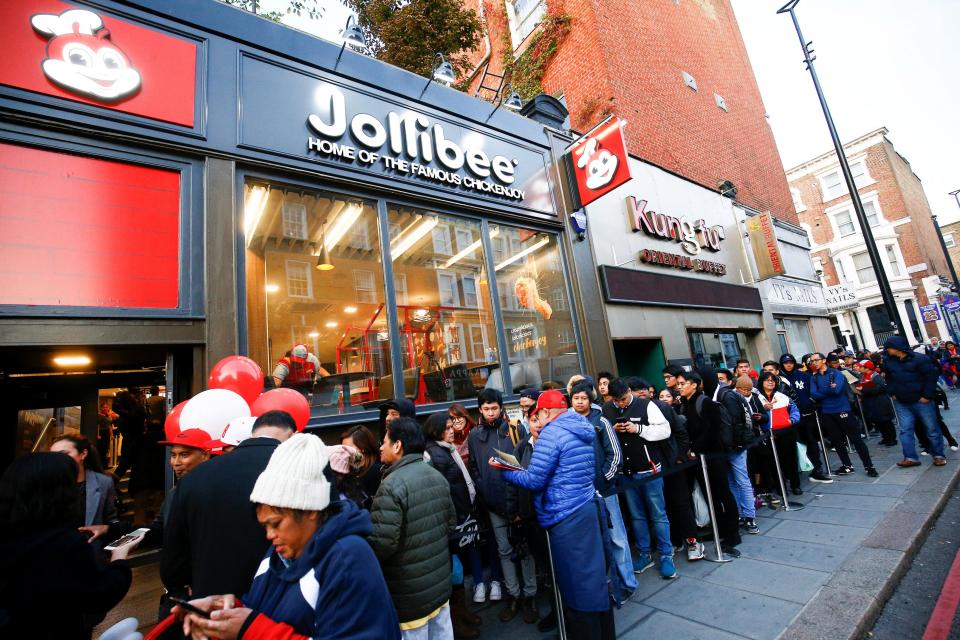
    18 hours queue for Jollibee London opening

    Jollibee opened its first fast-food restaurant in London on Sunday, drawing queues of expat Filipinos who braved the autumn chill overnight to be among the first locally to savour Chicken Joy and burgers. According to mainstream news media, “thousands” of Filipinos visited the Jollibee London restaurant, located in Earl’s Court.

    Ernesto Tanmantiong, CEO of Jollibee Foods, said at a press briefing on the site that the crowds at the London store demonstrated the depth of customer loyalty to the brand which was helping the company reach its ambition of expanding all over the globe. He wants Jollibee to one day become the world’s largest fast-food operator.

    “Today, we are at number 11 or 12, depending on [our] stock price. To achieve that dream, we will require an aggressive expansion coming from strong organic growth and strategic acquisitions.”

    Jollibee plans to open 50 stores across Europe during the next five years, with Spain and Italy the priority markets after the UK, where it would target large cities.

    “We believe we can be successful in the UK because of two factors,” added Dennis Flores, head of international business in Europe, Middle East, Asia and Australia. “We know our flagship product is Chicken Joy and the UK is the largest fried chicken [market] in Europe.”