Tag: International

  • Victoria’s Secret apologises for ‘insensitive’ transgender model comment

    Victoria’s Secret apologises for ‘insensitive’ transgender model comment

    Following the backlash on social media, the chief marketing officer of L Brands, parent company of Victoria’s Secret and Bath & Body Works, has posted an apology on Twitter for comments he made about transgender models. Ed Razek, L Brands’s CMO, released a statement on Twitter clarifying a comment he made in an interview with Vogue magazine, which read:

    “To be clear, we absolutely would cast a transgender model in our show. We’ve had transgender models come to castings… And like many others, they didn’t make it.”

    Razek and Monica Mitro, vice president of public relations for Victoria’s Secret, sat down in an interview with Vogue which touched on the topic on the casting team’s choices. Razek, who is part of the casting team, mentioned the company had considered putting plus-sized models and transgenders in the show but had not acted on it, since the company “did not market to the whole world.”

    L Brands has recently announced it is expecting a third quarter loss per share of about US$0.17.  The reported loss per share includes a total charge of about US$0.32 per share, which consists of an approximate pretax cash charge of US$20 million related to the closure of its Henri Bendel business, and an approximate pretax non-cash impairment charge of US$80 million related to certain Victoria’s Secret store assets.

    Excluding the charges mentioned, the company expects adjusted third quarter earnings per share to be approximately US$0.15, compared to its previous guidance of US$0.00 to US$0.05, principally driven by outperformance at Bath & Body Works.

    The company has recently reported an 8 per cent increase in sales of US$860.5 million for the four weeks ending November 3 and a 4 per cent increase in same-store sales for the period. It has seen a 6 per cent increase for the 13 weeks ending November 3 of US$2.78 billion compared to the previous corresponding period.

    L Brands, is scheduled to report third-quarter earnings on November 21.

  • China’s slowing economy also slows Singles Day

    China’s slowing economy also slows Singles Day

    China’s slowing economy was the primary reason for the slowing growth of sales on Alibaba’s Singles Day on Sunday. This year marked the 10th anniversary of the online shopathon, and while everyone expected a new record Gross Merchandise Volume (GMV) would be set, no-one was sure whether the spectacular 39 per cent growth rate of last year would be bettered. It wasn’t.

    While the total volume of transactions this year was 213.5 billion RMB (US$30.8 billion), the growth was a more moderate 27 per cent. Singles Day still dwarfs similar events in the US, such as Black Friday ($8 billion) and Cyber day ($6.6 billion). But are there early signs the gloss is starting to wear off?

    Pascal Martin, partner at OC&C Strategy Consultants, says the striking topline Singles Day numbers demonstrate Chinese consumers continue to love these big commercial events, which allow them to try new premium brands – normally out of reach – at more affordable price points. “Singles Day is therefore a great opportunity for brands to reach out to new customers and more and more of them are excited to join the party.”

    Martin says the reduced sales growth for Singles Day reflects a slowing Chinese economy, a view backed up by Alibaba’s recent announcement that its growth for the year would be 5 per cent lower than it initially forecast. The ongoing trade war and more cautious consumer sentiment were also factors, combined with growing competition from other big promotional events such as JD’s recent 618 shopping festival, which generated a GMV of $24.7 billion over 18 days (40 per cent growth year on year) and the high number of promotional opportunities during the year, such as Spring Festival, Labour Day in May, and Golden Week.

    Martin says growing competition from e-commerce sites that offer everyday super-low prices such as Pinduoduo, an upstart e-commerce company that went from zero to 350 million customers in just three years. “Prices on Pinduoduo are hard to beat round-the-year and the application has become hugely popular in China’s smaller cities and towns.”

    Three remarkable features

    Meanwhile, Martin says there were three remarkable features of Singles Day this year:

    New Retail: There were more brand partners this year, both online and offline, leveraging Alibaba’s New Retail ecosystem. “For example, Tmall’s 3000+ convenience stores, Hema and RT Mart supermarkets, Suning and Auchan, were all part of the event. Altogether 200,000 brick and mortar stores joined the party.”

    Globalisation: Singles Day has expanded beyond China through Lazada, the Southeast Asia platform owned by Alibaba. “We saw increased participation of international brands that are taking advantage of the Tmall Global platform – which is the number one by far among Chinese cross-border platforms – to get introduced to Chinese consumers without having to build a direct presence in China.”

    Diversification: The event is moving beyond just being about consumes purchasing products, it is also increasingly about purchasing a variety of services such as food delivery on Ele.com, videos on Youku to mobile games on UC, theatre tickets on Taopiaopiao, music on Xiami music and travel on Feizhu.

    Martin believes given China’s slowing economy Chinese consumers are becoming more cautious and the fact that Singles Day is now in its 10th year, it is less of a big news story. “There might be some consumer fatigue setting in.”

    Obstacles moving forward

    Martin believes three main challenges need to be addressed to sustain the growth momentum of massive commercial fairs like 11.11.

    Firstly, given the growing competition from other promotional events, Alibaba will have to continue to reach out to consumers earlier and earlier, and to expand the scope of the event even more broadly.

    “Another challenge is to continue to ensure flawless delivery for millions of parcels all over China in such a short amount of time. As the event grows, the logistical challenge becomes greater and greater. The number of parcels delivered during this year’s event hit 1 billion on Tmall alone. That’s a huge jump over last year’s 812 million parcels. Additionally, although brands don’t like to talk about it, there is a significant challenge in taking care of huge quantities of returned goods. Singles Day is a massive test bed for Alibaba’s backbone infrastructure: the network of partners that make it all possible, from payment to delivery to data management, as well as AI and cloud technologies that are put to work to ensure a successful event.

    “Finally, 11.11 has become much more than a commercial fair, it is now a major annual milestone in China’s cultural calendar. To keep the event fresh and exciting, Alibaba will need to continue to surprise Chinese consumers with entertainment and festivals around the event. This year, the double 11 gala event featured Miranda Kerr, Mariah Carey and Cirque Du Soleil, but no current big stars. Is this enough to continue to excite consumers, particularly younger generations?”

  • Kylie to expand her makeup line

    Kylie to expand her makeup line

    Reality TV star Kylie Jenner has announced she is expanding her cosmetic line from online to in-stores. After launching her own makeup line in November 2015 and with the company nearly three years old, Kylie’s products can be purchased from all Ulta Beauty stores around the US.

    “So I’m going to be starting of with just my best lip kits first, and then I’m going to be expanding and adding a lot more things super fast,” the 21-year-old wrote on Instagram.

  • Foldable phone coming early 2019

    Foldable phone coming early 2019

    Samsung Electronics will make its foldable smartphone available by the first half of 2019, with initial shipments estimated at least at 1 million units, according to Koh Dong-jin, president of the IT and Mobile Communications division at the company.

    The comments were made Thursday in San Francisco on the day two of the Samsung Developer Conference, where he discussed the rollout of the new flagship phone with considerable confidence.

    “We will definitely introduce the phone before the end of the first quarter next year, although I cannot pin down the date at this moment,” he said. “And we will maintain the line each year.”

    His comments indicate that Samsung will be adding foldables to its existing two flagship lines, the Galaxy S – released most recently in February – and the Galaxy Note – released in the fall. But the foldables will be released in a limited number of countries, including Korea and the United States. Koh added that Samsung has yet to confirm the name of the lineup.

    Given Samsung’s status as the No.1 smartphone vendor in the world and the fact that its flagship models sell at least 1 million units, Samsung is gearing up to churn out over 1 million foldables from the outset “if the market reaction is positive,” he added.

    Koh’s meeting came a day after Samsung introduced the foldable phone. The company demonstrated what it calls the “Infinity Flex Display,” which measures 7.3 inches diagonally when the phone is open like a book. The screen is slightly larger than the largest smartphone screen and slightly smaller than those of a conventional tablet PCs.

    The company has so far declined to provide additional specifications, including thickness, weight and the battery power.

    “We showcased the display to show off Samsung having reached the stage of commercializing the device,” he said. “We have overcome several barriers, such as making the central hinge through the screen invisible. What remains to be done is working on the user interface to make it more concrete.”

    He went on to say that Samsung distributed the foldable device to developers before the event so that they could help in designing the best-possible user experience.

    Two months earlier, he met with Google CEO Sundai Pichai to launch a task force for foldable user experience.

    Beginning with foldables, Samsung is getting ready to revolutionize smartphone display form factors – to rollables as well as stretchables.

    “As much as foldables will have a huge technological impact, so will rollables and stretchables. That’s why we are studying them,” he said. “But the entire workforce is devoted to foldables at present.”

    Samsung has been grappling with declining sales and revenue from smartphone business. Operating profit for the division during the third quarter fell 29.8 percent year on year to 2.22 trillion won ($1.96 billion), while revenue slid 10 percent to 24.91 trillion won over the same period.

    Chinese rookie Huawei is rapidly catching up.

    Koh mentioned 5G connectivity, artificial intelligence and the Internet of Things as breakthrough technologies that will help Samsung compete.

    “While we have been maintaining leadership with 4G over the past decade, 5G, AI, IoT and augmented reality will offer a new opportunity in 2019.”

    He added that foldables will achieve another leap when such technologies become reality and are combined with the device.

    “Next year will be the 10th anniversary of Galaxy smartphones, and it’s very meaningful to me,” he said. “We will be coming up with an impressive Galaxy S10 as well.”

  • Time for travel agents to embrace “true retail”

    Time for travel agents to embrace “true retail”

    A recent report by eMarketer predicts that by 2021, Asia Pacific consumers will spend $3.001 trillion online, and ecommerce will make up 25.4% of total retail sales. Whilst this hasn’t been the death knell for bricks and mortar, it has forced retailers to re-think how to use their physical stores.

    Apple was one of the first to pioneer using their real estate as a way to drive brand ‘experience’ as much as sales.

    With their open-plan design, army of knowledgeable staff and regular, in-store seminars, Apple’s stores inspire and educate customers, helping the company achieve long-term loyalty.

    The fashion sector has been quick to follow suit too, adopting a range of technologies to transform how their stores are used by customers – recent innovations include ‘live’ mirrors that suggest matching items as the customer enters the dressing room and geo-targeted apps that alert shoppers to discounts and in-store promotions when they walk past.

    By comparison, APAC’s travel agents have been slower to spruce up their bricks and mortar models.

    However, with mobile travel sales accounting for 50% of online travel sales, and the number of online travel sales is only set to rise as more digital natives reach adulthood, now is the time for them to start.

    Rather than being a burden, when done right this is an opportunity for travel retailers to diversify; improve their success in cross- and up-selling; and engage the next generation of travelers who want very different things from the booking experience than their parents and grandparents.

    A good example is global travel group, TUI Travel.

    With a third of their sales still taking place in their physical stores, the company noticed that their customers’ purchase journey was becoming increasingly non-linear and multi-channel.

    In response, they piloted the use of in-store touch screens in the UK to enhance their customers’ store experience and invested in integrating their physical and digital channels for seamless shopping.

    By doing so, they were able to optimize interaction at every touchpoint, resulting in an overall increase in sales and average spend tripling in the stores that introduced interactive technologies.

    On the back of this success, they have since rolled these changes out in a number of their other physical stores too.

    Welcome to ‘true retail’

    ‘True retail’ is the notion of taking a 360-degree view of the customer, thinking beyond just the point of sale to consider all other brand touchpoints – from early inspiration to aftercare – and channels, whether they are in-store, on mobile, online or, as is increasingly the case, a combination of all three.

    ‘Inspiration’ is one of the biggest, and as yet largely untapped, opportunities for travel retailers to differentiate themselves by setting up their physical stores differently.

    Following the Apple model, store design is a good place to start – iPads loaded with relevant travel content, interactive displays and AI technologies can all be used to create a fun environment where customers can browse without sales pressure.

    The key is for travel agents to focus on the customer experience first and foremost – to create a space where people actively want to visit as part of their holiday planning.

    Automate the predictable to invest in the exceptional

    Another big, in-store asset for ‘inspiration’ is a travel agent’s staff.

    The more time that they can spend talking to customers, and the more knowledgeable and passionate they are about travel, the better.

    Historically in-store staff at travel agents were stuck behind their screens due to cumbersome systems and back-end processes.

    However, with the right technology, a lot of this can now be automated, giving staff the information they need at the touch of a button and in turn freeing up their time to walk the floor and focus entirely on customer service.

    Make it multi-channel

    Embracing ‘true retail’ also means acknowledging that there is no longer a single, linear purchase journey for travel bookings.

    Just as some customers will come into store to make a purchase having already done a lot of research online, others may prefer to get in-store inspiration then buy at a later date, through another channel.

    Retail travel agents need to ensure that they don’t lose this second group of shoppers to their competitors by continuing to follow-up with highly-tailored content, to whatever channels the customer prefers, after they’ve left the store.

    ‘Personalization’ and ‘relevance’ are essential to doing this successfully, so travel agents should use data capture across all of their touchpoints to build up a detailed, single-customer-view that is drawn from real behavioral insights rather than demographic assumptions.

    Applied in the right way, this intelligence can also be used to inform more tailored cross- and up-selling, with a much higher chance of conversion.

    Aftercare

    Finally, taking a truly 360 view of customer needs means keeping channels of communication open long after the sale itself.

    Successful fashion retailers do this well through convenient returns processes on online orders and hyper-relevant ‘you might also be interested in…’ content, designed to inspire the next purchase.

    This is an equally important opportunity that travel retailers shouldn’t ignore.

    In short, travel agents should have a post-purchase strategy for every customer, the more tailored the better.

    For best results, this should go way beyond the immediate post-sale window and should incorporate practical on- and even post-trip value-add services too, such as delay notifications, visa information, and discounts on services at the destination.

    Ultimately, traveler expectations are changing, which means retail travel agents today need to think beyond the booking.

    This will require a significant mindset shift for some, but also promises big rewards, and future-proofed customer loyalty, for those that get it right.

  • UK Mulberry sales drop rescued by Asia growth

    UK Mulberry sales drop rescued by Asia growth

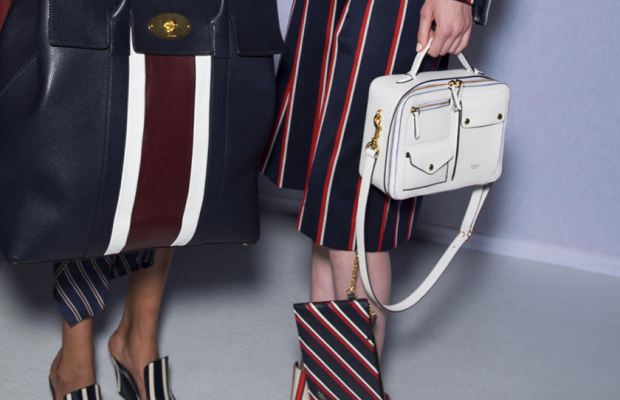
    Strong Asia performances helped mitigate falling UK Mulberry sales in the latest half year. While the UK fashion house’s total revenue was down 8 per cent to £68.3 million, international sales were up 13 per cent. Within that figure, new entities in South Korea and Japan saw the company’s retail chain expand to 29 stores, compared with just one a year earlier.

    And new digital partnerships in China with Toplife, Secoo and VIP.com also boosted sales. Mulberry says further such reseller agreements are planned.

    The core UK business was profitable, but the company was affected by the administration of House of Fraser and “soft retail conditions” in its home market. Overall UK retail sales were down 11 per cent during the six months.

    Globally, e-commerce sales rose 5 per cent and now representing 17 per cent of Mulberry sales, up from 14 per cent the same period last year.

    The company posted an underlying loss before tax of £3.6 million, compared with a £600,000 loss the previous year.

    However, after one-off costs for House of Fraser (£2.1 million) and the South Korea launch (£2.5 million), the company reported a loss pre-tax loss of £8.2 million.

    CEO Thierry Andretta said the company is delivering on a strategy to develop Mulberry as a global luxury brand and the new South Korean and Japan businesses, along with the creation of the China digital partnerships were big steps on that pathway.

    “We are confident that our focus on international growth is the correct strategy to develop Mulberry.”

  • Yoox Net-A-Porter acquisition boosts Richemont sales

    Yoox Net-A-Porter acquisition boosts Richemont sales

    Richemont sales in Asia Pacific surged 20 per cent in the first half of this year with the region the group’s single-largest market, accounting for 37 per cent of total sales.

    The increase was fuelled by the inclusion of the Yoox Net-A-Porter (YNAP) business into the Swiss-headquartered multibrand luxury retailers figures for the first time. Excluding YNAP and Uk online retailer Watchfinder, sales rose 14 per cent, driven by a net 20 new store openings and “high single-digit growth” in Mainland China and double-digit growth in Hong Kong, Macau and Korea.

    “Both the retail and wholesale channels saw double-digit growth, with strong performances in jewellery and watch sales,” the company said in a statement.

    In Japan, a 14 per cent growth in sales was driven by higher domestic and tourist spending, which benefited from a comparatively weaker yen. Excluding online distributors, sales in the region increased by 8 per cent, led by a double-digit growth in watch sales and the net opening of five directly operated boutiques. Japan represents 8 per cent of overall sales.

    Group-wide global sales rose by 21 per cent at actual exchange rates to €6.808 billion and by 24 per cent at constant exchange rates. Online retail sales, now reported separately following the e-commerce acquisitions, amounted to 14 per cent of group sales.

    Excluding YNAP and Watchfinder, sales rose by 6 per cent at actual exchange rates and by 8 per cent at constant exchange rates.

    Operating profit of €1.130 billion was down €36 million due to acquisition and disposal-related charges of €159 million, the company said. Excluding the impact of first-time consolidation of YNAP and Watchfinder, operating margin improved to 21.1 per cent. Profit for the period rose to €2.253 million primarily due to a post-tax non-cash gain of €1.378 billion on the revaluation of YNAP shares held prior to buy-out.

    Chairman Johann Rupert said offline Richemont sales growth was primarily driven by strong performance of the jewellery maisons and double-digit increases in the maisons’ directly operated boutiques and online stores.

    “Robust retail sales in jewellery and watches more than offset a 2 per cent decline in wholesale sales, which was mainly due to the specialist watchmakers’ ongoing prudent inventory management and upgrade of the wholesale distribution network,” said Rupert.

    “In our jewellery maisons, watch sales grew strongly in Cartier’s stores, benefiting from the successful Panthere and relaunched Santos collections. Jewellery pieces continued to outperform, notably with the iconic Cartier Love and Van Cleef & Arpels Alhambra collections.”

    He said while growth was muted for specialist watchmakers, retail was strong and there was good momentum at Vacheron Constantin, Roger Dubuis and JaegerLeCoultre.

  • Australia retail sales miss in September

    Australia retail sales miss in September

    Australian retail sales rose slightly in September 2018, missing industry expectations that the nation’s retail revenues would register a bigger increase for the first month of spring. Domestic retail turnover saw a 0.2 % gain in September, according to the latest Australian Bureau of Statistics (ABS) Retail Trade figures.

    While the growth remains positive, analysts were predicting a stronger result and forecast retail sales to climb 0.3%, on August’s 0.3% gain in the prior month.

    Year-on-year, September witnessed a rise of 3.67%.

    “Although September’s month-on-month figure isn’t as positive as we would have liked, we need to understand the year-on-year retail growth figure represents a better overview of the current state of Australian retail,” Russell Zimmerman, Executive Director of the Australian Retail Association said.

    “The ARA know personal tax cuts play a big role in discretionary spend, and believe a second round of personal tax cuts before the next election would certainly boost consumer confidence, and see an increase in retail sales in the new year.”

    For the month, café, restaurant and takeaway spending registered the highest growth in September, up 0.5%. This was followed by food retailing, up 0.4%, said the ABS.

    But the month of September was weighed down by lower sales across the clothing, footwear and personal accessories category, with three industries falling 1.2%. Household goods and department stores remained relatively flat from previous months.

    By state, sales were strongest in the state of Victoria and Tasmania, leading by 0.7%. New South wales fell 0.4%, while Western Australia and The Australian Capital Territory were relatively unchanged in September 2018.

    Online retail sales made up 5.6 % of total retail turnover in original terms in September 2018, an unchanged result from August, said the ABS.

    The ABS also released quarterly data that showed seasonally-adjusted retail sales rose 0.2%, a massive drop from the 1 per cent increase in the second quarter.

  • Indonesia to Sell $4b in Bonds to Fund Freeport Purchase

    Indonesia to Sell $4b in Bonds to Fund Freeport Purchase

    State-owned mining holding company Indonesia Asahan Aluminium, better known as Inalum, sold bonds worth $4 billion in its first-ever US dollar bond deal on Thursday to fund the acquisition of a majority stake in the Grasberg copper mine in Papua.

    The deal came amid choppy global markets, rocked by trade concerns and slowing economic growth in Asia – including Indonesia – that have made it hard for emerging market borrowers to attract investor interest.

    The coupon on the bonds was lower than the initial guidance.

    Inalum sold a tranche of three-year bonds at a yield of 5.230 percent, five-year bonds at 5.710 percent, 10-year bonds at 6.530 percent and 30-year bonds at 6.757 percent, according to a copy of the term sheet for the sale.

    That compared with initial guidance ranging from 5.875 percent to 8 percent.

    Inalum sold $1 billion in three-year and 10-year bonds each, $1.25 billion in the five-year bonds and $750 million in the 30-year paper, according to the term sheet.

    The bonds were sold slightly below face value.

    Inalum will use the funds to buy shares in US mining giant Freeport-McMoRan’s Indonesian unit, which owns the mine.

    Freeport agreed in July to sell its stake to the government for $3.85 billion, ending a long-running dispute with Indonesia, which is seeking to gain greater control over its mineral wealth.

    The sale occurs during a period of market turmoil which has seen Asian issuers hit particularly hard as rising US interest rates have pushed up borrowing costs.

    The sale drew over $20 billion in investor orders, most of them from the United States.

    Asset managers and fund managers represented the bulk of investors, making up 78 percent to 86 percent of buyers.

    The bonds are expected to be rated BAA2 by Moody’s and BBB- by Fitch.

    There is some uncertainty around the Grasberg deal as the government said it is binding while Freeport and Rio Tinto said it is non-binding.

    The bond deal includes a clause that says the bonds will be redeemed at 101 percent of face value if the acquisition is not completed by June 30 next year.

    BNP Paribas, Citigroup and Mitsubishi UFJ Financial Group were the joint global coordinators for the deal.

  • Viettel’s foreign market earnings up in Q3

    Viettel’s foreign market earnings up in Q3

    Viettel earned gross profits of $57.25 million from overseas markets in Q3, a year-on-year increase of 8 percent. Its overseas investment arm, Viettel Global, reaped net revenues of nearly VND4.43 billion ($188.71) in the third quarter, up 5 percent over the same period last year.

    Accumulated net revenues reached VND12.43 trillion ($529.7 million) between January and September.

    The revenues include nearly VND5.61 trillion ($238.94 million) from African countries, including Cameroon, Tanzania, Mozambique and Burudi, VND4.54 trillion ($193.68 million) from Southeast Asia countries, including Cambodia and East Timor, and VND1.69 trillion ($71.82 million) from Latin America.

    The company’s revenues from its three continents rose 3-11 percent, with Latin America registering the greatest increase.

    The increase is attributed to the company’s development of 4G services, digital wallet and other information technology projects serving overseas businesses and governments.

    Viettel Global is providing 4G services in 9 overseas markets, and digital wallet services in 8 markets.

    Also, Viettel Global’s sales expense and management costs reduced 4 percent and 12 percent respectively in the first 9 months of this year, compared to the same period last year.

    Viettel Global was established in 2006 to spread Viettel Group’s presence in foreign markets. Eight out of Viettel Global’s 10 overseas markets have begun earning profits. It has taken up the largest market share of the telecommunications sectors in Laos, Cambodia, and Timor Leste.

    It plans to expand its overseas operations in the Southeast Asian region and foreign markets that share similar population sizes as Vietnam this year. The company also aims to achieve a 10-15 percent year-on-year increase in terms of the number of subscribers by the end of 2018.

  • Trail Camera Market Inching Closer to Wireless Ubiquity, Global Demand to Grow at 3.5% Volume CAGR

    Trail Camera Market Inching Closer to Wireless Ubiquity, Global Demand to Grow at 3.5% Volume CAGR

    The bullish run in the Trail Camera market continues in 2018, with an incremental growth of 18,000 units over 2017According to Fact.MR’s new study, increasing wildlife exploration and rising demand for higher security and surveillance are instrumental in driving sales of trail cameras. The study opines that demand for trail cameras will grow at a CAGR of 3.5% in terms of volume throughout the period of forecast, 2018-2028.

    Technological advancements have significantly transformed the trail camera space, particularly with respect to connectivity and functionality. Possibility of obtaining thumbnail picture with trail camera has been a remarkable step reflecting a technological novelty in the trail camera marketplace.

    Growing proliferation of novel technologies such as Wi-Fi and Bluetooth in the trail camera marketplace are expected to influence the sales of trail camera, in turn presenting a positive outlook of the overall market. The demand for trail camera is being influenced with growing digitalization, as manufacturers continue to focus on researching and developing their products.

    The demand for wireless trail camera is projected to expand at a substantial rate throughout the period of forecast, says the report. As compared to standard trail camera variants, the Wi-Fi variants are expected to account for a relatively higher market share of the overall trail camera market. User friendly features and enhanced convenience continue to drive the sales of wireless trail camera.

    Cellular wireless trail camera products are estimated to largely contribute to the growth of the market. Sales volume of cellular trail camera are estimated to remain resurgent through 2028, dominating the Wi-Fi trail camera variants, according to the report. Fact.MR estimates that the volume sales of cellular trail camera are likely to maintain a 1.5x lead over Wi-Fi trail camera by end of 2028.

    The demand for trail camera with trigger speed up to 0.25 seconds is expected to gain high traction owing to the reduction in delay time while capturing pictures. Faster trigger speeds allow trail camera to capture moving units efficiently, making trail camera with 0.25 seconds trigger speed a valid candidate for forest exploration. However, the report estimates that the sales of trail camera with trigger speeds within the range of 0.25 – 0.75 seconds are expected to be on an upswing in terms of sales volume throughout the period of forecast.

    The report foresees that the demand for trail camera with low glow flash is expected to increase in the forthcoming years. Increasing volume sales of low glow trail camera can be attributed to its efficient picture quality during night, making them a convenient option for enthusiasts to capture wild life activities at night time. Further, the demand for no glow trail camera is also projected to increase at a higher rate throughout the period of forecast, 2018-2028.

    Trade shows, such as the ATA (Archery Trade Association) show, are expected to influence the trail camera market growth by providing a potential platform for manufacturers of trail camera to promote their offerings. Using trade shows as a significant growth platform, manufacturers can enhance their brand visibility. In addition, this aspect continues to influence the demand for technological robust trail camera, in turn contributing to the growth of the trail camera market.

    Sales volume of trail camera is likely to remain concentrated across developed countries in the North America region, particularly the United States. Use of trail camera in commercial buildings for surveillance remains a key determinant of growth in the US, apart from wide life exploration. The report also estimates that the European countries are expected to showcase significant adoption of trail camera in the forthcoming years on the back of growing wide life monitoring and hunting activities. Overall the market for trail camera is expected to follow a positive growth graph, albeit at a modest pace.

  • Retailers Transforming Distribution, Expanding Online and Turning to the Cloud as They Revolutionize Customer Experience

    Retailers Transforming Distribution, Expanding Online and Turning to the Cloud as They Revolutionize Customer Experience

    As retailers race to deliver more unique and personalized customer experiences, the use of Cloud, IoT and Big Data will accelerate in stores, online channels and distribution centers. However, one quarter of retailers still lag in the process of adopting new technologies and integrating them across operations to present a more integrated customer experience, according to a new report from Vertiv.

    For the report, participants included executives from 50 of the world’s largest retailers, with a combined annual revenue of $953 billion USD in 2017. The study, “Into Uncharted Territory: Retail Transformation and its Impact on Digital Infrastructure”, co-sponsored by Vertiv and DatacenterDynamics, revealed a heightened focus on online retail, as businesses transform their digital resources and capabilities to address changes in customer behavior. Over the next two years, the amount of data center space dedicated to online retail – both on-premise and colocation – is expected to increase by 20 percent, while cloud hosting would increase by 33 percent to support store applications.

    An important part of the retail digital evolution includes a massive transformation of distribution centers. The research suggests the number of distribution centers and warehouses will increase by about 26 percent over the next two years as retail companies increasingly realign operations to meet consumer demand for online purchasing. The amount of data center space dedicated to distribution/logistics is expected to increase by 10 percent and the use of cloud hosting to support distribution will increase by 87 percent.

    “It’s no secret that online retail is driving significant IT investment for retailers. However, as this study makes clear, digital transformation in the retail space is about more than e-commerce,” said Lucas Beran, analyst, data center infrastructure at IHS Markit. “Today’s retailers are striving to improve the IT systems in their stores and distribution centers as they pursue impactful customer experiences across all interactions with their brand. More business-critical online, distribution and in-store environments require new approaches to physical infrastructure to increase IT reliability, speed time to market, hold down costs and reduce management complexity,” Beran added.

    The survey confirms that more computing power is being moved into stores to support edge computing types of applications providing greater customer immediacy and influencing them at the point of use.

    “Retailers are going to move more IT footprint into the stores, to communicate with customers and to influence them closer to the point of decision,” said Martin Olsen, vice president, global edge and integrated solutions at Vertiv. “Our forecast for the next couple of years shows about two dollars going into stores and distribution for every dollar spent in the core data center. And much of that data center investment is being made to support online and stores.”

    To support their transformation, retailers are adopting new physical infrastructure options that provide higher reliability and are easy and fast to deploy. These technologies are based on standardized, modular designs that are scalable with capacity demand and future-proofed for next-generation technological advances.


  • DFS Group Launches “GIVE JOY” Holiday Gifting Campaign For 2018

    DFS Group Launches “GIVE JOY” Holiday Gifting Campaign For 2018

    DFS Group, the world’s leading luxury travel retailer, is launching its 2018 seasonal gifting campaign, “Give Joy”, to celebrate the spirit of the festive season and the gift of giving. From November 15, 2018 to January 1, 2019, customers will be able to add unique touches to exclusive products available at DFS’ first ever ‘Personalization Gift Shop’ concept. Boasting an assortment of specially curated luxury gifts, alongside an array of dedicated brand pop-ups, branded personalization stations and personalization services, the concept is designed to delight DFS’ discerning traveling customers and enhance their festive shopping experience in 13 T Galleria and airport locations worldwide.

    DFS is also launching the latest edition of its annual and much-anticipated “Give Joy” Holiday Gift Guide, offering customers a curated selection of personalized products. This year, the Holiday Gift Guide features DFS’ own employees as gifting experts, sharing their advice with customers on how to bring the festive season alive through the joy of giving. Showcasing an extensive selection of 143 incredible gifts from 108 world-famous brands across all of DFS’ luxury categories – from Fashion and Accessories and Beauty and Fragrance to Watches and Jewelry, Spirits, Wine and Food – shoppers will be spoiled for choice to treat their loves ones and themselves to something special.

    A stellar line-up of brands will also feature in DFS’ exclusive pop-ups during the “Give Joy” campaign:

    • Dior will host a special ‘Charms Bar’ offering customers the chance to create their own couture-inspired lucky charms accessory with a choice of four colors of ribbon and eight iconic Dior gold lucky charms.
    • Moët Hennessy will offer customers the opportunity to use elevated technology to write a tailored message in golden ink on champagne bottles on the spot.
    • Jo Malone London will offer a photograph transfer service on a beautiful Jo Malone classic gift box. Customers can choose from a personal favorite or an iconic city photograph, making it the perfect personalized gift for this holiday season.

    The exquisitely decorated Personalization Gift Shop will feature a life-size gift box, bringing an exclusive and enticing experience to DFS customers with personalization and the gift of giving. Holiday ribbons available in gold, silver and red and made especially for DFS allow customers to personalize their gifts with special greeting messages in six languages; superb leather goods can be made unique with on-the-spot monogramming; and t-shirts and tote bags can be adorned with limited-edition emoji iron-on patches so that customers can mix and match to create one-of-a-kind designs.

    “We’re excited to bring a sense of fun and individuality to our customers this festive season with our exclusive pop-up gift shops, offering a wonderful array of products from some of the best brands in the world,” said Ariel Gentzbourger, DFS Group Executive Vice President Merchandising. “We hope to enhance the pleasure of giving by offering our customers many ways to delight their friends and family, making the shopping experience a joy in itself.”

    Full serviced DFS’ Personalization Gift Shops will be available in the following locations:

    T Galleria by DFS, Hawaii, T Galleria by DFS, Okinawa, T Galleria by DFS, Guam, T Galleria by DFS, Saipan, T Galleria by DFS, Singapore, T Galleria by DFS, Angkor, T Galleria by DFS, Sydney, T Galleria by DFS, Bali,T Galleria by DFS, Hong Kong, Canton Road, and T Galleria by DFS, Macau, City of Dreams.

  • Samsung steps up Microsoft cooperation

    Samsung steps up Microsoft cooperation

    Samsung Electronics Vice Chairman Lee Jae-yong met with Microsoft CEO Satya Nadella in Seoul Wednesday and vowed to increase cooperation with the U.S. company in artificial intelligence and cloud computing. Nadella is visiting Seoul this week for the first time in four years and delivered a keynote speech at Microsoft Korea’s “Future Now” artificial intelligence (AI) conference Wednesday.

    The two met in the morning before the conference and agreed to step up partnership in artificial intelligence, cloud computing and big data, said a Samsung spokesman.

    Microsoft currently uses Samsung’s semiconductors for cloud servers, and Samsung could sell more of its chips to the American partner in the near future.

    Media reports in Seoul say, as a result of the meeting, some Samsung devices, including smartphones, will be embedded with Microsoft cloud services in the future. Samsung already uses Azure, a Microsoft cloud computing platform, for its system air conditioners to collect data on the surrounding environment, including temperature and humidity, so the machines run more efficiently.

    The two executives might meet on a regular basis and exchange ideas on tech development, according to reports. The two leaders met in Seoul four years earlier.

    During his keynote speech at the conference at a hotel in western Seoul, Nadella mentioned Samsung as one of several Korean companies that had developed offerings based on Microsoft’s Azure platform.

    “Take the example of Samsung Electronics’ IoT [Internet of Things]-based air conditioner that runs on Azure. By taking into account environmental factors, like the number of people, the smart air conditioner can save up to 25 percent in energy and 30 percent in costs,” he said.

    Other sections of the Microsoft CEO’s speech were centered around the need to use artificial intelligence responsibly.

    “We need to ask ourselves not only what computers can do, but what computers should do,” he said, addressing an audience of over 1,500 programmers and businesspeople.

    He also spoke of the necessity to find ways to develop AI for “people who don’t have the ability to participate” in the digital economy.

    As an example, Nadella shared the case of Korea University Prof. Lee Seong-whan using Microsoft’s deep learning Cognitive Toolkit. Lee, who heads the brain and cognitive engineering department, analyzes brain signals in the development of computer systems that amputees can use to move prosthetic arms or robotic arms.

    Earlier on Tuesday, Samsung hosted “Tech Forum 2018,” an event for developers in Silicon Valley. Around 150 developers and designers were invited to the Samsung Research America center there.

    Kim Hyun-suk, president and CEO of Samsung’s consumer electronics division, said in opening remarks that the company was developing many “unfamiliar acquaintances,” which he believes will shape Samsung’s future innovation.

    “Samsung encounters a vast number of customers, rapidly changing technologies and new staff from various backgrounds,” he said. “Our strength is in selling more than 500 million consumer devices a year. We will expand contact points with our customers to reach into the smallest corners of their living spaces and bring innovation to their lifestyles in general.”

    Kim added that in terms of working with various employees, the company will continue to develop a corporate culture where global staff can cooperate and freely suggest ideas. Samsung also introduced the company’s developments in future technologies and held open discussions.

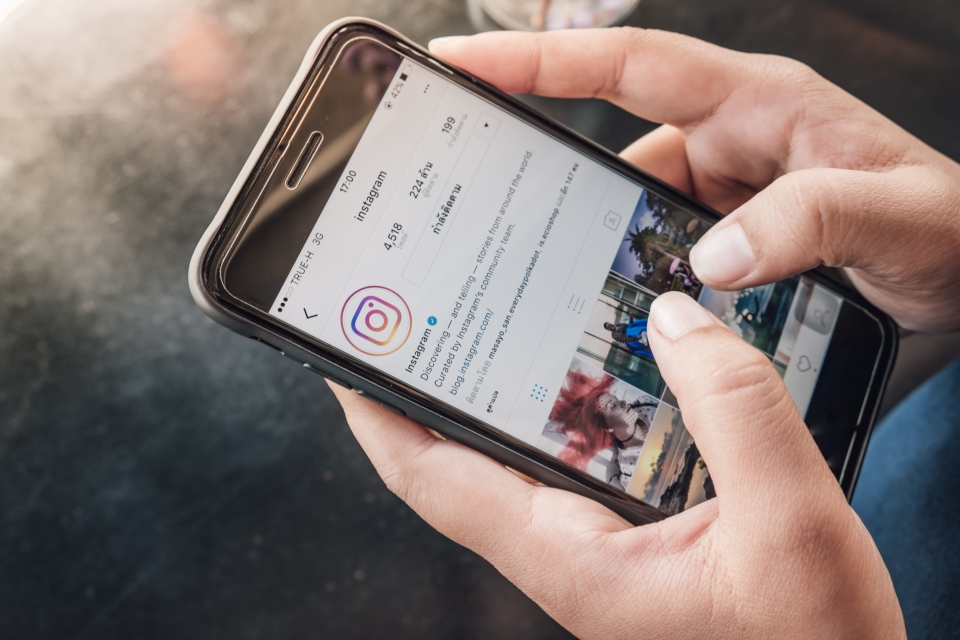
  • Post-Instagram age : What’s next?

    Post-Instagram age : What’s next?

    Oscar de la Renta was early to Twitter, early to Tumblr and, yes, early to Instagram. So in July 2013, when the American fashion house debuted its fall advertising campaign via the app, the industry was hardly surprised. It was a little thing. An experiment. After all, the Norman Jean Roy-shot images would still run in the September issues of every major fashion magazine.

    Actually, it was a “really big deal,” recalled Jason Wagenheim, a former Condé Nast publishing star who was, at the time, Teen Vogue’s chief revenue officer.

    “That was a real tipping point for fashion,” said Wagenheim, who left the legacy publisher in 2015 and is now chief revenue officer of Bustle Digital Group.

    “Here is this expensive luxury brand and their fall campaign, which everyone looked forward to seeing in the print pages of Vogue; and yet everyone is talking about the engagement — the bajillion likes within hours — that the campaign got on Instagram. It foreshadowed that this could be bigger than any fashion magazine.”

    In reality, each of the Oscar de la Renta advertising images attracted not much more than 1,000 likes within the first hour of their posting.

    But the campaign was indicative of a much wider shift that has transformed fashion, changing how publishers publish, how brands brand themselves, and how consumers consume.

    Brands have closed, stores have shuttered, magazines have folded — and both survivors and upstarts alike are fighting for consumer dollars in a new world where the formula for success is not nearly as clear as it is once was.

    And no single entity has had as lasting an effect on the fashion ecosystem as Instagram, the photo-sharing service let loose on Apple’s App Store on October 6, 2010.

    Three years later, when Oscar de la Renta drip-dropped those images down its feed, traditional print magazines like Vogue were still the arbiters of style.

    It feels like a long time ago. But back then, their authority remained intact and largely unchallenged, despite the rise of independent publications that operated outside of the traditional publishing industry and the emergence of digital brands that sold directly to consumers.

    But it’s 2018 now, and times have changed.

    Instagram, which was acquired by Facebook for $1 billion in 2012, is where people now go to discover fashion content and, increasingly, to shop, with 72 percent of users saying they have made fashion, beauty or “style-related” purchases after perusing the app, according to a 2017 study of 2,000 Instagram users.

    Instagram claims that more than 90 million users tap to see tags on shopping posts each month.

    In some ways, it was inevitable.

    Americans spend only 4 percent of their media-technology consumption hours with print, compared to 20 percent on personal computers and 28 percent on mobile.

    Many of them are spending their mobile phone screen time on Instagram.

    In June 2018, the app surpassed the billion-users-a-month mark, up from 800 million users in September 2017. More than 400 million people use Instagram Stories — the app’s more casual slideshow feature — every day.

    Rival Snapchat had 186 million daily active users in its most recent quarter, down from 191 million at the beginning of the year.

    As of August 2017, Instagram users under the age of 25 spend more than 32 minutes a day on the app.

    But the number dips only slightly to 24 minutes for those older than 25. That’s length of a sitcom…or a scan of a magazine.

    Of course, fewer and fewer consumers are buying those magazines. And brands have responded by following consumers online and shifting their marketing budgets from print to digital.

    In 1998, US print advertising revenue was $61 billion.

    In 2008, it was $54 billion, just a 12 percent decrease despite rising internet usage.

    But in 2018, it’s set to clock in at under $15 billion — down a staggering 75 percent from 20 years ago.

    Brands are increasingly using Instagram — via both organic and paid posts — to communicate directly with consumers.

    “Given the rising importance of social media for luxury brands — especially in the context of millennial’s growth — we believe Instagram data can no longer be ignored as a data point for luxury investors, to help them pick the winning brands,” Swiss investment bank UBS said in a recent note, going on to say that high Instagram engagement was a dependable reflection of brand heat.

    There is an unmistakable correlation between the size of a brand’s Instagram following and its retail sales.

    So it’s no surprise that, in the second quarter of 2018, global advertising spend on Instagram was up 177 percent year on year, significantly ahead of Facebook, which saw 40 percent growth in the same period.

    While Facebook still generates the majority of the company’s revenue, which hit nearly $41 billion in 2017, analysts estimate that Instagram will generate $8 billion to $9 billion in 2018.

    Projections predict that Instagram will account for about a third of its parent company’s overall ad revenue — and 70 percent of its new revenue — by 2020.

    In some ways, Instagram is to fashion what Napster was to music.

    You still can’t download a dress, but Instagram has fundamentally rewired the industry, replacing print magazines as the primary way in which people discover fashion.

    It’s the foundation on which the industry has built everything from new labels to an influencer economy worth $1.6 billion in 2018.

    All of Fashion Uses Instagram

    Consumers were quick to embrace Instagram, thanks to its simple user experience and flattering, colour-washed filters that made even grainy images look a little bit more perfect.

    They posted photos of their food, their travels and, yes, their outfits. Fashion brands picked up on this quickly, realising that creating content on Instagram — a highly visual platform — would allow them to reach more customers, and soon found themselves locked in a race for followers.

    Even luxury houses like Chanel, which has resisted selling core products online, took it seriously, using the service to post runway looks, campaign outtakes and inspiration boards.

    Some — from Proenza Schouler to Kith — have used the platform to tease their latest collections instead of waiting for a live Fashion Week moment.

    Earlier this year, Dior used Instagram as the main vehicle for the promotion of the relaunch of its classic saddle bag, tapping more than 100 influencers to spread the word.

    While the campaign proved controversial — several of the influencers did not disclose that they were paid to post on behalf of Dior — it was a blockbuster success.

    The #DiorSaddle hashtag drove $3.4 million in earned media value in the third quarter of 2018, beating #PFW, which garnered $2.6 million in earned media for the same time period.

    But it goes beyond the legacy players. “Instagram brands” — mostly independent startups with minimal capital — have caught the eye of major retailers looking to woo increasingly discerning customers.

    Why? Because their audiences are highly engaged, using Instagram stories to shop and direct message — “DMing”, in Instagram parlance — with the brands themselves.

    Labels like Doen, Cult Gaia and By Far boast little-to-no presence at major fashion weeks or within the traditional fashion system, and yet they are the brands industry insiders are most curious about because of the communities that they’ve built on Instagram.

    While Los Angeles-based bohemian apparel line Doen has just about 140,000 followers, it DMs with members of its community every day.

    The result? The brand regularly sells out of its peasant blouses and prairie dresses, creating an online frenzy.

    Cult Gaia, another Los Angeles-based label, may only have 317,000 followers on the platform, but the company says that it is on track to generate $15 million this year: far more than many independent high-end fashion brands with, in some cases, millions of followers.

    Through Instagram, we’ve built our own community.

    Instagram influencers are also launching brands, many with great success.

    Arielle Charnas, the influencer behind the account Something Navy, sold more than $4 million worth of product on the launch day of her collection with Nordstrom.

    In fact, the American department store has released multiple influencer collections, all of which are promoted via Instagram.

    Then there is the creative community, including relatively unknown artists, illustrators and photographers — from Gucci collaborator Jayde Cardinalli to artist Suzanne Jongmans, who has worked with Valentino’s Pierpaolo Piccioli— whose work now has global reach.

    But for Charles Porch, Instagram’s head of global creative programs, the platform’s crowning fashion moment came in October 2015, when American Vogue editor-in-chief Anna Wintour held a dinner during Paris Fashion Week in honour of Instagram co-founder and chief executive Kevin Systrom.

    Together, they celebrated the “Instagirls,” or models who earned or boosted their fame through Instagram, including Kendall Jenner and Gigi Hadid. Donatella Versace was there. So was Pat McGrath. They, too, were hooked.

    “To see the biggest designers, models, people in the industry talking about how much they love the platform, giving their feedback and, actually, huge people being able to talk about the product in depth … seeing their passion for a tech product … that really clicked for me,” Porch said. “They’re in so deep.”

    Earlier that year, Porch had wooed Eva Chen, an Anna Wintour protégé and the former editor-in-chief of now defunct Condé Nast shopping title Lucky, to lead fashion partnerships at the company.

    If Instagram is the modern equivalent of a fashion magazine, then you could call Chen its de facto editor-in-chief.

    Her personal brand — warm, friendly and, yes, democratic — aligns almost too perfectly with that of the platform itself. With more than one million followers, she has developed her own hashtag, written a children’s book, set to be published later this autumn, and earned a seat on the YNAP’s board of directors.

    Part of Chen’s job is to convince fashion industry stars like Kate Moss and Donatella Versace to join and use the app. But most importantly, she helps brands, image-makers, publishers and influencers get more out of their Instagram accounts.

    Chen travels the world to help fashion brands, holding master classes — filled with executives from brands like Madewell, Birchbox and Ralph Lauren — where she offers step-by-step instructions on how to take a good photo, how to get the most out of Instagram Stories, how to use hashtags without spamming people. All things that, if done well, can help improve engagement — and potentially increase sales.

    She also advises them on how to spend their advertising money on the app, although, like a traditional editor-in-chief, she is not cutting the deals and is more focused on organic marketing.

    “Instagram has made fashion more accessible,” Chen said recently one late Friday afternoon at the company’s New York city offices, wearing a pair of brown Gucci loafers and a checked blazer, the sort of off-duty look preferred by many of her friends who remain in print media.

    The Collateral Damage

    In many ways, Instagram has helped to modernise the fashion industry.

    But what about the collateral damage left in the wake of its success?

    Brands are not only pulling advertising from print, but also from legacy publications in general.

    While traditional publishers are still earning a part of the digital pie, brands are splitting up their marketing spends differently than they used to.

    Today, they might devote a certain percentage of budget to influencer marketing, and another slice to advertising directly on Instagram and other social media platforms.

    Oscar de la Renta has been using Instagram as an organic marketing tool for years, but it wasn’t until recently that it began spending a significant amount of its budget there.

    Three years ago, less than 5 percent of the overall budget was dedicated to digital advertising.

    For the spring 2019 season, it will be at least a third, said chief executive Alex Bolen, a portion of which will be spent on Instagram.

    Some brands are taking even bigger swings.

    About 55 percent of Gucci’s total 2018 media spend will go to digital efforts — mostly native advertising and paid social — per a report released by the Kering-owned brand in June. That is up from 44 percent in 2017 and 33 percent in 2016.

    And digital retailer Net-a-Porter has eliminated all national print advertising for 2018 bu for a few ads which will still run in local publications.

    Critically, the retailer also has its own newsstand-available magazine, Porter, that serves as a several-hundred-page advertisement.

    But moving away from print was not a small decision.

    “Instagram is where our customers expect to find us,” said Net-a-Porter managing director Matthew Woolsey.

    “Social media platforms certainly rise and fall, and while our outlook is agnostic, we are going to the platforms that enable us to have the brand conversation that we want to have and emotionally connect. Instagram does enable that.”

    Then there’s the talent drain.

    Image-makers and writers who would have normally held positions within legacy publications are now fleeing to digital-first publishers as well as brands, which are creating more content in-house to populate social channels.

    Many are also working independently as free agents, using Instagram to promote their projects.

    What’s more, declining advertising revenue means that there is less job security within traditional editorial.

    Today, editors might have to work across multiple publications within a company without any sort of raise or recognition. Going it alone often makes more fiscal sense.

    Legacy publications that cater to an older, affluent audience still have clout.

    As do those that still resonate with the industry.

    Doen — known for dreamy imagery and romantic silhouettes, created in limited-edition batches that often sell out — credits Instagram with much of its success.

    But it uses traditional media as a way to communicate to the trade.

    “Those are more of a tool to establish us as a brand within the fashion community,” said Doen co-founder Katherine Kleveland.

    “Through Instagram, we’ve built our own community.”

    But what happens if that community goes away?

    Testing Instagram’s Staying Power

    Eventually users will abandon Instagram.

    The question is when.

    Digital consumers can easily switch from one platform to another, making loyalty low.

    How long can Instagram keep them entertained?

    In September, the company made two significant announcements that could impact that answer.

    First, there was the introduction of new shopping features that make it easier for users to transact via the app.

    Then, just a week later, co-founders Kevin Systrom and Mike Krieger, who had carefully guided the business since its inception, announced their resignations.

    Reports in The New York Times and technology site Recode suggested that the two founders felt that parent company Facebook was moving too fast to change — and commercialise — the product, sacrificing the simplicity that made Instagram so popular in the first place.

    As Instagram has become the ultimate browsing tool, it has also become increasingly transactional.

    The company encourages this behaviour by making it easier for paying advertisers to link out and run targeted advertising both within the feed and Instagram Stories.

    Business accounts can also link out through Instagram Stories and tag products within posts.

    The addition of these tools is a natural — and welcome — progression, said Lauren Price, director of client strategy for luxury and special retail at research firm Gartner L2.

    “It doesn’t feel like it’s a huge divergence from the way that brands and consumers have used Instagram from the get-go,” she added. “The intention [to shop] has always been there.”

    After rumours that it would launch a standalone shopping app surfaced, Instagram announced that it would instead introduce a shopping channel on its “Explore” page, populated with products from brands the user follows, but also brands surfaced by its recommendation engine.

    While it is not yet possible to shop within the app, the company has linked up with major e-commerce providers including Shopify to ensure that the transition from post to check-out cart is as frictionless as possible.

    “Personalisation is a key principle,” said Layla Amjadi, Instagram’s product lead on Shopping. “In Explore, we want to make sure it’s your personalised mall.”

    Instagram insists that its focus remains on the user. That discovery is still the soul of the product.

    “Shopping is an inspiration-first product,” Amjadi said. “It maps to your interest, leans into relationships that you have… and is fantastic opportunity to help with consideration.” By “consideration” she means, “Should I buy this?”

    But as Instagram becomes more transactional, does it risk losing some of its magic?

    “I think it’s fine [for shopping] to be a part of the functionality,” said L2’s Price. “If you’re following a brand, you’re aware that it’s a brand.”

    The trouble comes in if Instagram integrates too deeply with Facebook and turns more into a pay-to-play platform.

    Right now, 93 percent of brands that advertise on social media advertise on Facebook, which prioritises advertising and organic posts from friends and family over organic posts from brands in its algorithm.

    “I advise the brands that we work [with] to get the most value out of that organic growth on Instagram in case it does change,” Price added.

    New Instagram head Adam Mosseri, the former vice president of the Newsfeed at Facebook, one of the platform’s most successful — and polarising — products, is said to have been Systrom and Krieger’s choice to lead the app into this next phase.

    But Mosseri has quite a bit of work ahead of him.

    Social networks fade as users grow tired of relentless promotions and frustrating user experiences.

    “You could certainly argue that there is an inherent scaling to the point of collapse in a social newtowrk,” said Benedict Evans, a partner at Silicon Valley-based venture capital firm Andreessen Horowitz.

    “But there isn’t an obvious next thing.”

    On the fashion front, competitors like YouTube and Snapchat are also hip to the success Instagram has seen with Chen, hiring fashion insiders Derek Blasberg and Vogue editor Selby Drummond, respectively, to head up fashion partnerships.

    And brands are likely to find it increasingly difficult to stand apart on Instagram, where they are competing for attention not only within their peer group, but with brands of all price points, quality and missions.

    The cost of advertising on the app will likely increase, as will the investment brands need to make on quality organic content.

    What if Facebook’s drive to squeeze more revenue out of Instagram makes it a less-fun experience?

    What’s more, if this “time well spent” movement actually catches on, how will this affect the new world order?

    Special interest groups are lobbying the government and private companies to better regulate the technology that powers social media.

    Instagram itself has contributed to this conversation, testing a feature that allows users to monitor their time on the app.

    Overall, fashion is still bullish on Instagram and eager to see what an easier shopping experience can do for its top line.

    For instance, the app’s bookmarking tool could be used, like Pinterest — a platform many brands still spend marketing dollars on — as a shopping list.

    If consumers continue to seek out Instagram for the fun stuff, and if Instagram can contain more of that fun stuff within the app, it could lead to more content creation, more talent discovery and more sales.

    “I don’t think Instagram is going anywhere,” Bustle’s Wagenheim said. “I feel like there’s a big opportunity to open the gates.”

    Of course, right now, fashion doesn’t really have a choice but to hope that’s the case.