Tag: International

  • Facebook defends itself against critics of social media

    Facebook defends itself against critics of social media

    Facebook Inc on Friday struck back against scientific researchers and tech industry insiders who have criticized the world’s biggest social media network and its competitors for transforming how people behave and express emotion.

    Facebook, in a corporate blog post, said that social media can be good for people’s well-being if they use the technology in a way that is active, such as messaging with friends, rather than passive, such as scrolling through a feed of other people’s posts.

    It was the second time this week that Facebook had published such a rebuttal, signaling a new willingness to defend a business model that translates users’ attention into advertising revenue.

    On Tuesday, the company released a statement saying that former executive Chamath Palihapitiya, who at a conference publicly blamed Facebook for “destroying how society works,” had been gone for six years and was unfamiliar with the company’s recent efforts to improve.

    Palihapitiya on Thursday revised his view, writing in a Facebook post that the service “is a force for good in the world.”

    Online services such as Facebook and its Instagram unit, Twitter Inc, Snap Inc’s Snapchat and Alphabet Inc’s YouTube are under attack for their seemingly addictive nature and perceived promotion of anti-social behaviors.

    A study in March by U.S. researchers found that using such services at least two hours daily was correlated with reporting feelings of social isolation.

    A nonprofit organization called Time Well Spent, led by a former Google design ethicist, is pressuring tech companies to move away from products that try to hook people’s attention.

    In its blog post, Facebook acknowledged what it called “compelling research” on the negative effects of social media and cited two such academic studies.

    The company said, though, that those studies are “not the whole story.” It went on to cite other studies suggesting that the dangers of social media may be exaggerated, and that it has potential benefits if used correctly.

    “We employ social psychologists, social scientists and sociologists, and we collaborate with top scholars to better understand well-being and work to make Facebook a place that contributes in a positive way,” said the blog post, written by Facebook Research Director David Ginsberg and Research Scientist Moira Burke.

    Fundamental change would require turning away from “where the money is,” said Roger McNamee, a venture capitalist and early Facebook investor who recently has criticized the social network.

    “Facebook’s business model depends on monopolizing consumer attention, and content that appeals to fear and anger is the most profitable way to do that,” McNamee said in an email on Friday.

    A Facebook representative declined to comment beyond the blog post.

    Facebook is spending $1 million on research into the relationship among technology, youth development and well-being, the blog post said.

  • Zalando seeks more brand partnerships to compete with Amazon

    Zalando seeks more brand partnerships to compete with Amazon

    The German company’s share price has come under pressure as Amazon’s big push into fashion has prompted Zalando to increase investment in logistics and technology to keep pace, forcing it to trim profit forecasts.
    But Zalando sees its new business line giving it an edge over its U.S. rival.

    Launched in Berlin in 2008, Zalando has grown fast to sell almost 2,000 brands in 15 countries via a classical e-commerce model, buying in stock to be sold online and shipped from its vast warehouses.

    It started complementing that with a partner programme two years ago to increase choice, charging fashion labels a commission for selling additional stock through the Zalando website and shipping the goods direct to customers. The brands, meanwhile, can keep control of pricing and presentation.

    After a pilot with Adidas, Zalando has signed up 700 brands and the programme now accounts for nearly 10 percent of the total value of goods sold on its site, with a long-term target of 20-30 percent.

    Carsten Keller, Zalando’s managing director of partner solutions, expects the scheme to support profitability and cement relationships with brands, some of which remain wary of listing on Amazon, where third-party sellers compete on price.

    “The brands are put in the driving seat. They keep control over the assortment, prices and brand representation. It is a very different environment to other market places like eBay or Amazon,” Keller told Reuters.

    PROFITABILITY

    German shoe brand Birkenstock is withdrawing from Amazon because of concerns over counterfeit products, while luxury brands last week won the right in Europe to stop retailers selling their products on online platforms.
    Zalando says the partner scheme’s expected profitability should help the company to reach a long-term target for an operating margin of 10 percent. But analysts have their doubts, on average forecasting 5.9 percent by 2020, up only slightly from the close to 5 percent Zalando expects in 2017.

    British rival ASOS, by comparison, forecasts a stable operating margin of 4 percent but is growing sales faster than Zalando and is seen as better insulated from Amazon’s advance thanks to a focus on fashion-mad youngsters.

    “We think expectations look demanding, as does the company’s longer-term margin guidance, given Zalando’s desire to push for market share, more intense online competition and expansion into lower-margin regions,” said RBC analyst Richard Chamberlain.

    Keller, a former McKinsey consultant who joined Zalando last year, says the partner programme was born because Zalando realised it was losing millions of potential sales when it ran out of stock on top-selling items.
    “It is growing with very high momentum. We doubled it over the past 12 months,” Keller said. “It adds substantial value and has a positive effect on the bottom line.”

    Nike is particularly pleased with the arrangement — so much so that its executives mentioned it three times on a recent analyst call.

    “Our partnership with Zalando is creating growth and shaping the digital marketplace in and beyond Europe,” said Elliot Hill, who runs Nike’s wholesale and direct-to-consumer businesses.

    Zalando is attracting brands that do not normally sell wholesale, such as Inditex’s Oysho, while also persuading others to offer exclusive ranges. Nike, for instance, released new colours of its classic Air Force 1 shoe for the German site.

    ‘VIRTUOUS CYCLE’

    “Amazon is a strong competitor, but is more transactional, offering more basic and discounted fashion. Zalando gets edgier stuff,” said Macquarie analyst Andreas Inderst, who has an “outperform” rating on Zalando.

    “It is a virtuous cycle because the more consumers come to the home page, the more Zalando can leverage consumer insights through data analytics, the more brands are attracted.”

    Zalando is offering its partners data about who is buying what and where, as well as helping brands with their marketing strategies, online content, logistics and inventory management, buying two software firms that help brands with digital inventory management.

    “In an Amazon or eBay environment, brands lose contact with their consumers because they do not get their hands on consumer data,” Keller said.

    Some analysts remain sceptical that Zalando will be able to fend off Amazon for long. Amazon more than doubled its share of the western European market for online fashion in five years to 6.5 percent in 2016, just behind Zalando on 7.4 percent, Euromonitor data shows.

    Amazon has signed up more than 350 brands in Europe in the past year and is running a pilot with Nike in the United States in return for more control over its goods on the site.

    “At the moment, Zalando has better brands and Amazon does not have as broad a range of current-season products,” said Berenberg analyst Michelle Wilson, who rates Zalando a “sell”.

    “But it is only a matter of time until Amazon can convince brands they won’t destroy their brand equity.”

  • Be ready with ‘more convenience’ app from 7-Eleven US

    Be ready with ‘more convenience’ app from 7-Eleven US

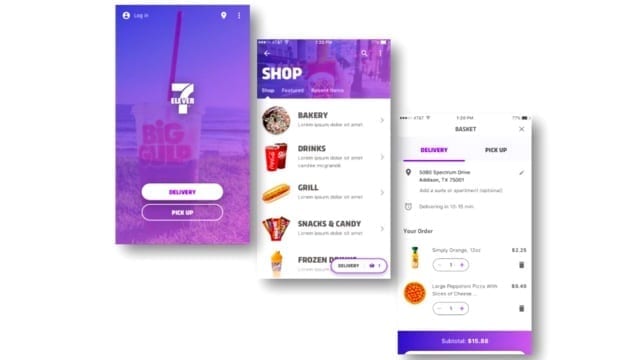
    7‑Eleven US is trialling on-demand ordering for delivery or in-store pickup at selected Dallas stores via its new 7‑ElevenNow smartphone app, ahead of a national roll-out.

    The new service is being tested in 10 downtown and uptown 7‑Eleven stores, and the convenience retail company says it will introduce the program into other locations in the US next year.

    Dallas customers who enroll in the new app – which runs on both Google and Apple platforms – will receive free delivery on their first order.

    “With more locations than any other convenience retailer in the world, 7‑Eleven has a corner on convenient, in-store shopping,” said 7‑Eleven US chief digital officer Gurmeet Singh.

    “As we undergo a significant digital transformation, we continue to look for ways to expand and enhance the company’s shopping footprint – and consumers’ digital shopping experience – outside its stores as well.”

    Singh said today’s digitally savvy consumer expects a wide range of options right at their fingertips.

    “We continuously ask our consumers how we can make their lives better, and 7‑ElevenNow is a proprietary solution to their on-demand needs. The app will enable our customers to get the products they want, when and where they want them, quickly and conveniently. This is redefining convenience.”

    When ordering items through 7‑ElevenNow, customers can choose to receive direct delivery to their location or pick up their prepared order at the participating store of their choice within the 7‑ElevenNow footprint. A wide selection of snacks, cosmetics, gift cards, home goods, beverages and hundreds of other products are available for purchase on the app.

    To use the app, shoppers choose the delivery or pick-up option. If delivery is selected, the app will auto-locate the nearest participating store and, once the order is placed, send it to a courier service. The courier then picks up the customer’s prepped products at the store and delivers them to the customer’s location. If shoppers choose pick-up, they select the items they want as well as the store they prefer for pick-up. The order will be waiting for them at the register. Customers can pay for both delivery and pickup via the app.

    “7‑Eleven has a legacy of innovation,” said 7‑Eleven US president and CEO Joe DePinto. “We have been pioneering new trends in the convenience industry for 90 years. Our company was the first to offer coffee in to-go cups, operate 24/7 and provide a self-serve soda fountain.

    7-Eleven, Inc. is testing on-demand ordering for delivery or in-store pickup at select Dallas stores with its new 7-ElevenNOW smartphone app. Currently being tested in 10 downtown and uptown 7-ElevenÆ stores, 7-ElevenNOW is expected to roll out to other U.S. locations in 2018. (PRNewsfoto/7-Eleven, Inc.)

    7‑Eleven will always look for innovative ways to reach and excite our customers and maintain our leadership position in convenience retailing. Today, that means redefining convenience through digital innovation.”

    7‑Eleven US’ digital team is working on a “full-stack digital transformation,” which includes the technology customers experience, as well as the technology that works behind the scenes to ensure seamless and effortless interactions.

    Other recent digital releases include the expansion of the 7Rewards app-based customer loyalty program, now available on a wider range eligible purchases, and the launch of 7‑Eleven Bot on Messenger, which allows millions of 7‑Eleven customers to engage with the brand from within Facebook.

    7‑Eleven US has also expanded the availability of Amazon Lockers for in-store package pickup, added Amazon Cash to over 8000 locations, and BillPay – an app powered by PayNearMe to help cash users pay for a variety of bills at 7‑Eleven stores.

  • Morocco announces auto industry deals worth $1.45 bln

    Morocco announces auto industry deals worth $1.45 bln

    Morocco said on Monday it had signed deals for 26 auto industry projects worth a total of 1.23 billion euros ($1.45 billion) as it seeks to build its position as an international hub for the sector.

    The deals include six agreements with French company Renault to expand an “industry ecosystem” allowing the firm to increase local sourcing of car components to 55 percent, according to a government statement.

    Renault has a large factory in the northern Moroccan city of Tangiers that opened in 2012, and an older assembly plant in Casablanca.

    Another 13 of the new projects are planned as part of a manufacturing hub linked to a PSA Peugeot Citroen factory under construction in Kenitra, north of the capital, Rabat.

    That plant is due to open in 2019 and initially produce 90,000 vehicles a year.

    The projects announced on Monday are with companies from France, Spain, Italy, China, South Korea, Japan and the United States, and are expected to create more than 11,500 jobs, the government statement said.

    Eleven of the companies will be operating in Morocco for the first time, Abdel Wahid Rahal, a senior official at the ministry for industry, investment, trade and digital economy, said.

    On Saturday, officials announced a memorandum of understanding with Chinese automaker BYD to build an electric car plant near Tangier that is expected to create 2,500 jobs. They gave no details on the value of the deal.

    Unlike many countries in the region, Morocco has avoided a big drop in foreign investment following the global financial crisis and the Arab Spring uprisings of 2011, partly by marketing itself as an export base for Europe, the Middle East and Africa.

    The kingdom has attracted a number of big auto and aerospace investors in recent years.

  • 2017 has been Donatella Versace’s year

    2017 has been Donatella Versace’s year

    In 1997, Gianni Versace was murdered on the steps of his Miami Beach home. His grief-stricken sister, Donatella, suddenly found herself in charge of the family company.

    Twenty years later, she has chosen to take this anniversary and make it extraordinary, hijacking the style agenda to the extent that fashion journalists have been calling 2017 the year of Versace.

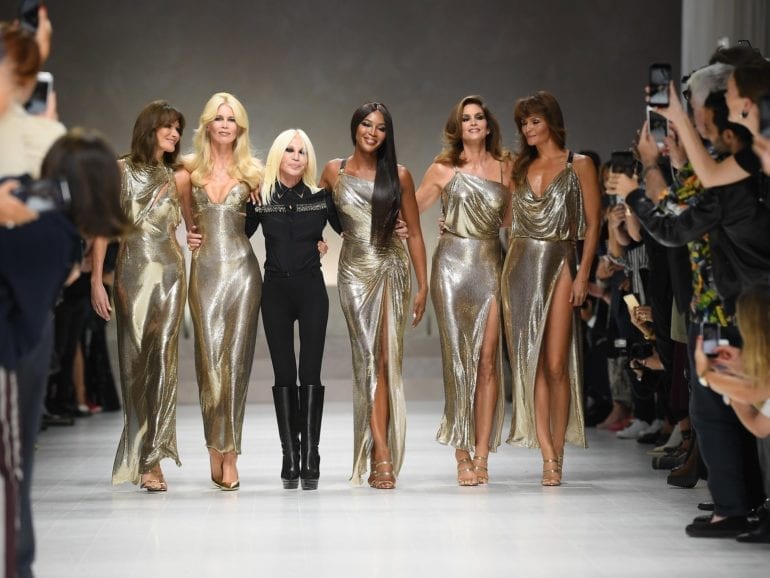
    She has designed a tribute collection inspired by Gianni’s archives, announced a scholarship in her brother’s name at Central Saint Martins and, in September 2017, in a fashion coup for the ages, reunited Gianni’s supermodel crew – Helena Christensen, Cindy Crawford, Naomi Campbell, Carla Bruni and Claudia Schiffer – for a catwalk finale that melted the internet.

    Here, it starts a series of achievements, she received a major accolade at the Fashion awards. She announces the opening of a new Versace store on Sloane Street in London.

    A lot of her year has been spent poring over old images and old creations, opening up the archive – a 10,000 sq ft storage facility in Novara, near Milan – and examining Gianni’s most famous creations for the first time since his death. “Not in a sad way,” she says, “but a very positive way. I saw what a genius my brother was. To me, he was my brother, but to the rest of the world – such a genius.”

    Even the names of the archive collections, produced between 1991 and 1995, speak of another, more glamorous age: Vogue, Warhol, My Friend Elton, Icons, Baroque.

    The pictures she shows me are from that time, too, and present the supermodel era exactly as you would want. Here is Bruni, a future first lady of France, dancing with abandon in thigh-high patent boots. Here is a babyfaced, never-off-duty Crawford, smouldering for the camera as she queues backstage. Here is Christy Turlington, running down a beach, wearing only shimmering sequins.

    Compared with the unsmiling models who have walked the catwalk since, and the airbrushed campaign images and omnipresent filtered Instagram photographs we have grown used to, these pictures feel authentic (however liberally doused in hairspray the models are).

    They bring back great memories, Donatella says. “This was the period that fashion became famous,” she says. “It was the beginning of fashion becoming pop culture, of being associated with music and rock’n’roll. Those two worlds were really in contact with one another. When something starts to happen, that is the most exciting moment. It was a huge change. The 90s was a huge change in fashion”.

    Donatella added : “My brother, of course, was the designer; I was working very closely with him all my life. But I started the relationship with the models that Gianni made ‘super’.” What “super” meant, she says, was showing personality. “Before that, I don’t think many designers let models have personality, nor after. The models should wear the clothes, be very serious, not smile, look in front of you, almost no soul. This was totally opposite: it was about the girls, what the girls were thinking, who they were dating. It wasn’t just about the clothes, but about who was wearing the clothes.”

    Fashion modelling is only just getting exciting again, she says, thanks to technology. “There are two generations of fashion for me: the one before the internet and the one after the internet.” Between the supermodels and now, she says, “was a moment of flatness. Now you could do this picture backstage again – there are people with enough personality there.” She likes the Instamodels, such as Gigi Hadid, who have become powerful thanks to their millions of followers on social media. “I think they are amazing. Very smart girls. Again, finally, we have girls who dare to stand out in the crowd.”

    The 62-year-old’s Fashion awards gong is icon of the year and the hype around her company is enormous, so it is easy to forget the starting point: the horror of her brother’s murder and her first few years running the company, during which she was so shellshocked that she broke down in tears on the catwalk. Does she feel like an icon? “Yes,” she says abruptly, then laughs. “OK, should I be shy? No. This is not because I’m full of myself, but I think, in fashion history, I did a lot. I mean an icon in fashion, not an icon in general, in the world.”

    To conclude with Donatella explained about contemporary trends by focusing on millennials. “Millennials are all many designers talk about backstage, particularly in Milan,” she says.

    In Italian fashion, the charge has long been that so many houses have been run for decades by the same designers or dynasties (Armani, Prada, Versace, Missoni; even relative newcomers Domenico Dolce and Stefano Gabbana are 59 and 55) that the scene has become stale.

    There have been rumours swirling around Versace for the past year or two that Riccardo Tisci, formerly of Givenchy – or Virgil Abloh of Off-White or Kim Jones of Louis Vuitton – might be in line for Donatella’s seat. That may be the case one day, but this year the conversation has shifted dramatically.

    In many ways, Donatella’s approach to millennials and social media feels remarkably modern – and not only because she has 2 million followers on Instagram (in typically understated style, when she joined the app in 2015, a press release was issued; ever savvy, in her first post, she posed with Gigi Hadid).

    This year, she says, has been “a rollercoaster of emotion. Not just that day [of the supermodel reunion show], but preparing for the show, going to the archive and seeing things that I last saw 20 years ago, before Gianni’s death. I never had the courage to go back there, because it was so painful, but I found the strength.”

    She did it, she says, “for the young generation who didn’t know, who weren’t born when Gianni was alive. I want them to know why Gianni was so important and what Gianni was about.” And to tell her side of the story? “To show them how relevant Gianni is today. No story, no filter.”
  • TommyXGigi Barbie Doll launches

    TommyXGigi Barbie Doll launches

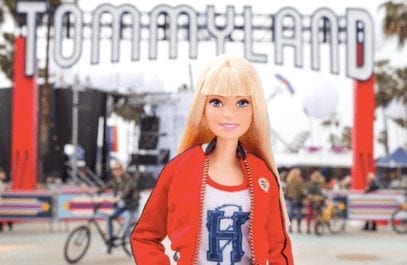
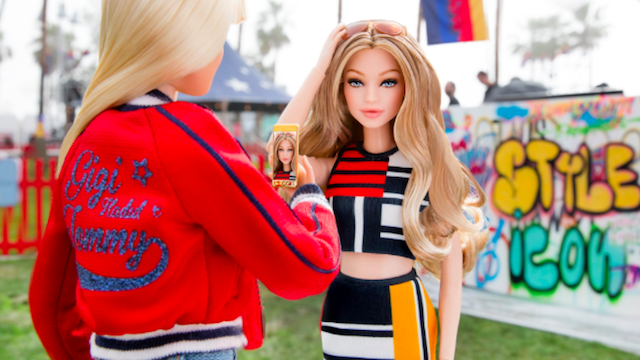
    Barbie has launched a doll depicting supermodel Gigi Hadid, the global brand ambassador for Tommy Hilfiger womenswear.

    Designed in collaboration with the Tommy Hilfiger lifestyle brand owned by PVH Corp, the special-edition TommyXGigi Barbie is available on Barbie.com and Tommy.com as well as at select retailers. Celebrating the runway event where Tommy Hilfiger introduced Hadid as global brand ambassador, the doll is styled in a navy hoodie, white shorts with red trim and brand logo, and white slip-on sneakers. It matches Hadid’s closing look for an experiential runway event at which the first TommyXGigi capsule collection was introduced.

    Tommy Hilfiger - Barbie Gigi 1

    With a suggested retail price of US$50, the doll comes with a stand and certificate of authenticity.

    “Seeing the doll for the first time was surreal,” says Hadid.

    Tommy Hilfiger - Gigi

    The doll joins more than 80 designers and fashion influencers who have been honoured by the brand, owned by US toy company Mattel.

  • Inditex Rises as Global Expansion Continues

    Inditex Rises as Global Expansion Continues

    Clothing company Inditex international, which owns Bershka and Zara, reports a strong performance for its latest nine months.

    Continuing to roll out its global fully integrated store and online platform, the Spanish group opened outlets in 52 markets during the period. Its store count reached 7504 in 94 markets at the end of October.

    It says like-for-like sales growth remains strong, while global online sales launches are on track. It launched online sales for Zara in India in October.

    Net sales for the nine months reached €17.96 billion (US$21.2 billion), up 10 per cent.

    Gross profit reached €10.3 billion, 9 per cent higher, while gross margin reached 57.4 per cent and EBIT was up 6 per cent to €2.99 billion. Net income was also up 6 per cent to reach €2.3 billion.

    During the nine months, Inditex opened 212 stores including 60 for Zara, 30 for Stradivarius and 13 for Pull & Bear.

  • Rich Data and Midea Smart Home Partner to Improve the Lives of Customers

    Rich Data and Midea Smart Home Partner to Improve the Lives of Customers

    Global leaders in using data science and AI to solve real business problems and make a tangible difference to people, Rich Data Corporation (RDC) is now working with China-based Fortune 500 company Midea Smart Home to support its app development and drive more innovation around consumer data and artificial intelligence. This five-year partnership is set to positively impact the lives of millions through data and smart home technology.

    The promise of the smart home is finally ready to be realised in 2018, with connected devices now capable of monitoring our appliances to anticipate malfunctions, detecting utility usage patterns to provide energy-saving recommendations, and making a range of everyday appliances more fun and convenient to use. Market-leading researchers Ovum have predicted that 2018 will represent an inflection point for smart home technology, with many businesses already primed to explore the retail impact of the smart home.

    RDC is leveraging artificial intelligence (AI) to bolster Midea Smart Home services; in order to enrich the lives of consumers who increasingly demand a tech-enabled, smart home experience to match the digital lives they lead outside the home. Consumers in APAC are some of the most digitally-forward in the world – expecting convenient payment, shopping, and communication services at their fingertips, and increasingly looking for the same conveniences within their home.

    To preempt consumer needs and provide a holistic, tech-enabled lifestyle ecosystem, RDC has deployed an AI-based personalised recommendation engine within Midea Smart Home’s Meiju app. Now, consumers can enjoy compelling, proactive recommendations tailored to their dynamic smart home needs. This superior customer experience is made possible through advanced machine learning algorithms via RDC’s innovative platform.

    “The Midea Smart Home team is changing the conversation with our customers and providing them with products and services that are highly relevant for their daily life via our Meiju app,” stated Mr Qiang Li, General Manager of Midea Smart Home. “RDC’s ability to add intelligence to our deep reserves of consumer data, and their rapid deployment of AI technology enables us to service and engage our customers in a more personalised and meaningful way.”

    Ada Guan, CEO of Rich Data Corporation stated, “Our ultimate vision is to use our data skills to make a difference for people and business; helping enterprises unlock new opportunities while improving everyday life for consumers through data and AI smart home solutions. We are thrilled to be working with a prestigious, global brand like Midea Smart Home. This is the first step in an ongoing journey to leverage AI, consumer and household data in order to set smart living standards for millions of home globally.”

    The RDC Recommendation Engine is currently live for all 3 million Meiju app users within China. The partnership also marks RDC’s entry into the Chinese market, furthering the company’s expansion into the Asia region.

  • DFS Hosts Ninth Annual Masters Of Time Event

    DFS Hosts Ninth Annual Masters Of Time Event

    DFS Group, the world’s leading travel retailer, launched its ninth annual Masters of Time exhibition on Saturday, December 9. The exhibition, which is held at T Galleria by DFS, Macau, in partnership with Shoppes at Four Seasons, will run until February 28, 2018 for customers to view and shop the curated collection. The DFS Masters of Time exhibition is well known for being the world’s largest and most prestigious retail event for luxury watches and jewelry, showcasing the best in design, innovation and heritage for men and women. This year, DFS’ expert teams brought together an unparalleled collection of more than 450 fine watches and exquisite jewelry from 30 brands in a theme that focused on the concept of memories.

    “This year’s Masters of Time exhibition explores how watch collectors and creators commemorate life’s most significant moments, so that certain pieces become imbued with our memories,” said Christophe Chaix, Senior Vice President, Fashion, Watches, Jewelry and Accessories. “As always, the customer is at the heart of everything we do at DFS, and each year we travel the world to curate a Masters of Time exhibition to delight returning and new customers alike. This exhibition offers seasoned collectors and first-time buyers the chance to
    own exceptional pieces that will forever become part of their own memorable journey.”

    The ninth annual Masters of Time exhibition kicked off with a prestigious gala event where award-winning artist Jade Kwan performed for guests as they explored a variety of intriguing activities. A multi-sensory exhibition was introduced for the first time at Masters of Time, in which the curated collection of timepieces and jewelry was displayed through a series of interactive pop-up spaces and animations to evoke emotions and ignite the senses. Guests were taken on a multi-sensory journey through four different spaces that explored the concepts of
    nostalgia, memories, adventure and heritage, each of which transported guests back to a special place, moment or time.

    Romantic, rare and archival pieces with a focus on “savoir faire” took center stage in the section dedicated to nostalgia, whilst innovative complications that are certain to become future icons embodied the idea of making memories. Highly technical sports and lifestyle watches dominated in the adventure area, and finally, iconic and classic timepieces brought heritage to life. In addition, guests were treated to a taste of The Macallan whisky and fine Petrossian caviar, paired to provide the ultimate culinary experience. Korean illustrator Jae Suk Kim flew in from Seoul to hand-paint guests’ portraits in his signature style, featuring Su Su girls adorned in fine jewelry and watch pieces, as holiday gift cards to commemorate the event.

    The 2017 Masters of Time exhibition is available for viewing and purchase at T Galleria by DFS, Macau, Shoppes at Four Seasons until February 28, 2018.

    2017 DFS MASTERS OF TIME COLLECTION

    The 2017 DFS Masters of Time collection of distinguished brands includes: Angelus; Arnold & Son; Audemars Piguet, Blancpain; Breguet; Bulgari; Chopard; FRANCK MULLER; Girard-Perregaux; Glashütte Original; Grand Seiko; Hublot; IWC Schaffhausen; Jaeger-LeCoultre; Jaquet Droz; Officine Panerai; Piaget; Roger Dubuis; Romain Jerome; TAG Heuer; Tiffany & Co; Ulysse Nardin; Vacheron Constantin; Zenith and more.

    Highlights include:
    • Audemars Piguet – Royal Oak Tourbillon Extra-thin
    • Blancpain – Tribute to Fifty Fathoms MIL-SPEC

    • Breguet – Tradition Dame 7038
    • Bulgari – Diva’s Dream High Jewelry Watch – DFS Special Edition – Unique Piece
    • Hublot – Techframe Ferrari 70 Years King Gold Tourbillon Chronograph
    • IWC – Da Vinci Perpetual Calendar Chronograph
    • Jaeger-LeCoultre – Master Gyrotourbillon 1
    • Jaquet Droz – Lady 8 Flower
    • Piaget – Limelight Mediterranean Garden Necklace – Unique Piece
    • Roger Dubuis – Excalibur Aventador S
    • TAG Heuer – Carrera Caliber HEUER 02 T Automatic Chronograph 45mm DFS Masters of Time IX

    Special Edition
    • Ulysse Nardin – Marine Grand Deck Tourbillon
    • Vacheron Constantin – Heures Créatives Heure Romantique
    • Zenith – Defy El Primero 21

  • Bitcoin futures rocket past $18,000; Asian shares buoyant

    Bitcoin futures rocket past $18,000; Asian shares buoyant

    The craze for cryptocurrencies entered a new chapter on Monday as bitcoin futures rocketed by one-fifth of their value at a hotly anticipated launch, while Asian shares climbed amid optimism about global growth.

    The most-traded contract on the Chicago-based CBOE Global Markets exchange XBTc1 opened at $15,460 in New York on Sunday evening, before leaping to a high of $18,700 – a gain of 21 percent. They were last quoted at $18,100 a premium of more than$1,700 to the price on Gemini Exchange.

    The futures are cash-settled contracts based on the auction price of bitcoin in U.S. dollars on the Gemini Exchange, which is owned and operated by virtual currency entrepreneurs Cameron and Tyler Winklevoss.

    The cryptocurrency has boasted a gravity-defying 15-fold gain since the start of the year, attracting institutional interest and no small amount of question marks.

    The acting governor of the Reserve Bank of New Zealand on Sunday said bitcoin appeared to be a “classic case” of a bubble.

    “With a bubble you never know how far it is going to go before it comes around,” Grant Spencer told a local television program.

    Some market participants believe the fallout across other financial assets from a potential bursting of the bubble will be limited.

    “Bitcoin’s market capitalization is currently around $240 billion, which is much smaller, say, than the value of gold outstanding,” said Andrew Kenningham, economist at Capital Economics.

    “If the price of bitcoin fell to zero today, the paper losses would be equivalent to a 0.6 percent fall in U.S. equity prices. As most investors have bought bitcoin at much lower prices, the relevant losses would arguably be smaller.”

    Asian shares were buoyant with every single market but one in the black, following strong U.S payrolls data and better-than-expected Chinese trade figures on Friday.

    Spreadbetters pointed to a strong opening for European shares, while U.S. stock futures indicated a firm start for the S&P 500 which is seen up 0.1 percent ESc1.

    The MSCI’s broadest index of Asia-Pacific shares outside Japan .MIAPJ0000PUS added 0.5 percent to 552.38, well above a recent two-month trough of 542.27 points.

    Japan’s Nikkei .N225 climbed 0.6 percent while Chinese shares rallied, with the blue-chip CSI 300 index .CSI300 up 1.3 percent. Vietnam .VNI was the only Asian index in the red.

    Rate rises?

    Currency market investors were cautious ahead of a big week for policy meetings globally, with the Federal Reserve the only major central bank expected to raise interest rates. The Bank of England and the European Central Bank are likely to hold rates steady.

    The dollar steadied near a one-month top against the yen JPY=, after climbing 1.2 percent last week. The dollar index, which measures the greenback against a basket of currencies, eased 0.1 percent from close to a three-week high. .DXY

    Traders will keep their eyes peeled for the Fed’s future rate projections as U.S. wages growth and inflation crawl at a snail’s pace.

    Data out on Friday showed average hourly earnings in the United States nudged up 5 cents or 0.2 percent in November when economists had looked for a 0.3 percent gain.

    The weakness persisted despite stronger-than-expected non-farm payrolls, which rose by 228,000 in November.

    “We’ll be listening close for any signs of a dovish shift,” said Aerin Williams, New York-based forex strategist for Citi about the Dec. 12-13 Fed meeting.

    Elsewhere, oil prices slipped after the latest rise in the U.S rig count pointed to an increase in production there.

    U.S. crude CLc1 was down 15 cents at $57.21 a barrel and Brent crude LCOc1 inched 17 cents lower to $63.23, drifting away from a recent 2-1/2 year peak of $64.65.

  • Diane von Furstenberg seeks new investor for DVF

    Diane von Furstenberg seeks new investor for DVF

    Diane von Fürstenberg has decided to look for an investor willing to acquire a stake in her US label and support it through a new expansion phase.

    “I’m not about to sell my business, but the time has come to give the company the senior management it deserves,” the 70-year-old designer has told Women’s Wear Daily (WWD). “I’ve decided we will probably sell a stake in the company.”

    A spokesperson for the label says talks are at an initial phase, and no target date has been set.

    In the past few years the label has reduced the number of items in its ready-to-wear collections by 40 per cent, and has also streamlined its retail and wholesale networks.

    “Retail sales are going through a difficult phase for all brands right now,” says the company, founded in 1972. “In terms of physical stores, we have not renewed a number of leases and, effectively, we have deliberately rationalised our distribution.

    “Meanwhile, our e-tail business is performing extremely well.”

    In May last year, Jonathan Saunders joined Diane von Furstenberg (DVF) as its chief creative officer, overseeing all design and creative. The founder is still chairman.

    Headquartered in New York City, DVF has a global distribution network in more than 55 countries, including Asia Pacific, with 1500 points of sale including 148 DVF owned and partnered stores.

  • Apple buys song recognition app Shazam

    Apple buys song recognition app Shazam

    Apple said Monday that it would buy leading song recognition app Shazam in a fresh bid to secure an edge in the intensifying battle of streaming services.

    Apple, whose streaming service has rapidly grown but still has only half the paid subscribers of Spotify, said that Shazam has consistently been one of the most popular items on its App Store.

    The two companies did not disclose financial terms. The technology news sites Recode and TechCrunch, quoting unnamed sources, both put the deal at around $400 million.

    The market signaled its approval, with Apple share prices jumping 2.0 percent, well outpacing the 0.2 percent rise on the Dow Jones Industrial Average.

    “Apple Music and Shazam are a natural fit, sharing a passion for music discovery and delivering great music experiences to our users,” Apple said in a statement.

    London-based Shazam said in a separate statement: “We can’t imagine a better home for Shazam to enable us to continue innovating and delivering magic for our users.”

    Shazam, which was founded in 1999 in the early age of online music, has offered a solution to a longtime agony of listeners — putting a name to elusive songs. With a click, the app identifies tracks playing on the radio, at parties or as background music.

    But Shazam has struggled to find a way to make money off its technology, even as it said that it had reached one billion downloads on smartphones last year.

    Shazam only recently announced it had become profitable, thanks to advertising and steering traffic to other sites such as Spotify and Apple Music.

    The technology is also no longer quite as novel, with Shazam facing rivals such as SoundHound and with smartphones capable of ever more advanced recognition functions.

    Mark Mulligan, who writes a popular blog on the music industry, described Shazam as “cool tech without a business model” and said Apple was a rare player that could bring out the app’s value.

    Facing tough competition

    The world’s most valuable publicly traded company, Apple earns most of its revenue from iPhones but has also found it vital to be seen on the cutting edge culturally.

    Apple, which revolutionized online music a generation earlier with iTunes, in 2015 launched Apple Music as the market turns to streaming, which offers unlimited on-demand listening.

    Apple said in September that the service had more than 30 million subscribers — a quick rise, but still trailing Spotify.

    Spotify — which has emphasized a barebones, user-friendly interface instead of unique features — said it had 60 million paying users as of July and 80 million more on its free tier.

    And with streaming experiencing rapid growth, competition has become even fiercer.

    Retail giant Amazon seized on its vast consumer reach as it launched its own streaming service last year.

    YouTube, the video-sharing behemoth owned by Apple’s rival Google, also has its own music streaming platform and recent reports said it was looking to launch a new paid subscription package next year.

    Tech battle turns to services

    Shazam has already proven it can be woven into another service. A year ago, it formed a partnership with SnapChat, the youth-driven social media platform whose videos evaporate, with users able to “snap” to friends the music they discover around them on Shazam.

    Neil Saunders, managing director of GlobalData Retail, said the Shazam sale “underlines the fact that the battle of the technology companies is firmly moving beyond hardware and into services.”

    “This is a good move for Apple that helps to consolidate its already strong position in music content. It won’t be the last takeover of a tech firm by these big giants,” he said.

    Apple has already invested in buying big-name music brands, in 2014 paying an eye-popping $3 billion for Beats Electronics, the headphones, speaker and streaming brand of rapper Dr. Dre.

    Soon afterward, it bought Semetric, a British company that tracks music consumption on behalf of labels and artists.

  • Things you might not know about ballistic bitcoin

    Things you might not know about ballistic bitcoin

    Bitcoin rocketed to another record high close of $16,000 on the Luxembourg-based Bitstamp exchange on Thursday after gaining more than $4,000 in just 48 hours, stoking concerns that a rapidly swelling bubble could be set to burst.

    There were huge disparities between prices across different exchanges. On GDAX, one of the biggest, the price reached $19,500.

    Here are some facts that you might not know about the largest and best-known cryptocurrency.

    How many are there? Bitcoin’s supply is limited to 21 million – a number that is expected to be reached around the year 2140. So far, around 16.7 million bitcoins have been released into the system, with 12.5 new ones released roughly every 10 minutes via a process called “mining”, in which a global network of computers competes to solve complex algorithms in reward for the new bitcoins.

    Energy drain These mining computers require a vast amount of energy to run. As the price increases, more miners enter the market, driving up the energy consumption further. A recent estimate by tech news site Motherboard put the energy cost of a single bitcoin transaction at 215 kilowatt-hours, assuming that there are around 300,000 bitcoin transactions per day. That’s almost enough energy as the average American household consumes in a whole week.

    Bits of Bitcoin If you want to buy bitcoin, you do not need to buy a whole one. Bitcoin’s smallest unit is a Satoshi, named after the elusive creator of the cryptocurrency, Satoshi Nakamoto. One Satoshi is one hundred-millionth of a bitcoin, making it worth around $0.0002 at current exchange rates.

    Bitcoin billionaires Bitcoin has performed better than every central bank-issued currency in every year since 2011 except for 2014, when it performed worse than any traditional currency. So far in 2017, it is up more than 1,400 percent. If you had bought $1,000 of bitcoin at the start of 2013 and had never sold any of it, you would now be sitting on around $1.2 million. Many people consider bitcoin to be more of a speculative instrument than a currency, because of its volatility, high transaction fees, and the fact that relatively few merchants accept it.

    Exchange heists More than 980,000 bitcoins have been stolen from exchanges, either by hackers or insiders. That’s a total of more than $15 billion at current exchange rates. Few have been recovered.

    Mystery creator Despite many attempts to find the creator of bitcoin, and a number of claims, we still do not know who Satoshi Nakamoto is, or was. Australian computer scientist and entrepreneur Craig Wright convinced some prominent members of the bitcoin community that he was Nakamoto in May 2016, but he then refused to provide the evidence that most of the community said was necessary. It is not clear whether Satoshi Nakamoto, assumed to be a pseudonym, was a name used by a group of developers or by one individual. Nor is it clear that Nakamoto is still alive – the late computer scientist Hal Finney’s name is sometimes put forward. Developer Nick Szabo has denied claims that he is Nakamoto, as has tech entrepreneur Elon Musk more recently.

    Inflated Chinese trading Until earlier this year, it was thought that Chinese exchanges accounted for around 90 percent of trading volume. But it has become clear that some exchanges inflated their volumes through so-called wash trades, repeatedly trading nominal amounts of bitcoin back and forth between accounts. Since the Chinese authorities imposed transaction fees, Chinese trading volumes have fallen sharply, and now represent less than 20 percent, according to data from website Bitcoinity.

    “Market cap” The total value of all bitcoins released into the system so far has now reached as high as $283 billion. That makes its total value – sometimes dubbed its “market cap” – greater than that of Visa, and bigger than the market cap of BlackRock and Citigroup combined.

    Crypto-rivals Bitcoin is far from the only cryptocurrency. There are now well over 1,000 rivals, according to trade website Coinmarketcap.

    “Shorting” It is already possible to short bitcoin on a number of retail platforms and exchanges, via contracts for difference (CFDs), leveraged-up margin trading or by borrowing bitcoin from exchanges without leverage. But a number of big financial institutions – including CME Group, CBOE and Nasdaq – have recently announced that they will offer bitcoin futures, which will open up the possibility of shorting the cryptocurrency to the mainstream professional investment universe.

    Lost Bitcoins Many fewer than the 16.7 bitcoins that have been mined are actually in circulation and accessible, because of forgotten passwords, accidental losses, hoarding, owners forgetting about coins or even dying. It is impossible to know for sure how many bitcoins have been permanently lost, because those that have are still in the system, in dormant addresses. But according to a December 2013 research paper by the University of San Diego and George Mason University, 64 percent of the 12 million bitcoins that had by then been mined had never been spent. Bitcoin developer Sergio Lerner estimates that almost 1 million unspent bitcoins belong to the cryptocurrency’s mysterious creator.

    Rich list There are 5,638,155 bitcoins in the 1,000 biggest wallets – more than a third of all bitcoins in circulation. That makes the 1,000 biggest wallet-holders worth a collective $87 billion, at current rates.

    High fees The average fee paid to process bitcoin transactions has soared over the past year, outpacing even the staggering price increase of the cryptocurrency itself. Each bitcoin transaction now costs around $7.30 to process, up from around 30 cents at the start of the year, according to trade website BitInfoCharts.

    Forking off If you owned bitcoin prior to Aug. 1, 2017, you also own Bitcoin Cash – a clone of the original. That is because on that date bitcoin underwent a so-called “fork”, in which the underlying software code was split into two. One unit of Bitcoin Cash is now worth more than $1,300. That adds roughly another 135 percent to the returns from a bitcoin investment at the start of the year.

  • Ferragamo and Versace watches to innovate

    Ferragamo and Versace watches to innovate

    It is no secret that retailers, distributors and manufacturers need to find new ways to meet consumers’ changing expectations in the luxury and fashion markets.

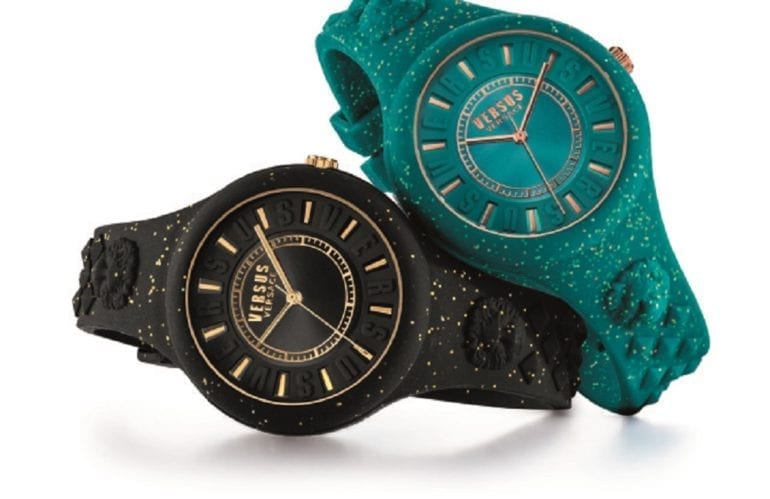
    These changes in consumer behavior led Paolo Marai, president and CEO of the Timex Group Luxury Division, which manages the timepiece business for Salvatore Ferragamo, Versace and Versus Versace, to appoint the MadaLuxe Group as its U.S. and Caribbean distributor.

    This new arrangement was actually announced in January 2017 but the two companies have spent almost a year formulating a strategy before truly making the partnership known in November 2017. It is a multi-tiered approach that ultimately focuses on the in-store experience for consumers.

    “We started in January 2017, but we really wanted to have a kind of honeymoon period and develop an understanding of the way we need to work and the way we need to develop and that is why we decided not to make it a big event in the very beginning. Let’s work a few months together and get a really strong team,” Marai said in a recent interview.

    The companies have spent this year hiring people in management roles experienced in both the fashion and the Swiss watch industry, including people who used to work with Fossil, Burberry, Tom Ford and Tag Heuer.

    They are working on sales training, product pricing, inventory management at the store level, in-store displays and after-sales service that are all uniform in the experience they provide. It’s not an easy task as the watch brands are sold in department stores, independent specialty stores and in branded boutiques. So relationship building is vital for this effort to be successful.

    “This year has been a transition year but we are seeing very positive signs that 2018 will be a strong year. First of all because we have a bunch of new products coming that we feel good about; and second, we organized ourselves to have this smooth transition not to disrupt the market,” he said. “I feel that 99% of the time we are absolutely aligned at what needs to be done.”

    MadaLuxe Group is a 30-year-old family-owned business that is one of the largest distributors of luxury fashion and accessories. It designs, produces, buys, sells, markets and distributes apparel, accessories and home goods from well-known luxury and contemporary brands. This is the company’s first time in the watch business, which is one reason why it has been on a hiring spree looking for talent. However, this is a company well-experienced in providing solutions for luxury fashion brands with a distribution network of about 300 retail stores in the U.S.

    The company, which has seven divisions, was co-founded by the mother and son team of Sandy Sholl, CEO, and Adam Freede, president. They created the luxury segment of their business seven years ago and see it as a growth business because of younger consumers who are well-educated and curious when it comes to luxury.

    “We just believe many more Americans understand what luxury is,” Sholl said during the same interview with Marai. “In the past they may have been intimidated to walk into a luxury store but now they are a lot more knowledgeable. We penetrated the luxury market very aggressively and spent a lot of time with all types of luxury lifestyle products.”

    Freede added, “We see the American market as a very big growth area in all categories, not just timepieces, because of the quality and craftsmanship of heritage brands. These timepieces go right into what we believe are major trends in the U.S.”

    Marai said MadaLuxe has long-term relationships with department stores. He believes MadaLuxe will increase their presence of Ferragamo and Versace watches, ensure the sales staff is well trained and properly manage the inventory.

    “We needed a partner who knows luxury and who has a distribution-enhanced approach with department stores. They know the heads when going from one department store to another. This helps a lot. We chose someone with tremendous luxury experience and with a very open-minded approach.”

    Marai is also happy that MadaLuxe has created a division just for the management of the Ferragamo and Versace watch business.

    “There is a complete new team dedicated to watches, which is something that makes us feel good,” he said. “We really hired a bunch of people who are expert in the watch category.”

    Marai, a native of Milan, has seen first-hand the changes in the fashion and luxury watch businesses since he began to lead the Timex Group Luxury Division in 2005, headquartered nearby in Lugano, Switzerland.

    “It is a new type of consumer that wants to buy in a different way and we have to learn how to process this new consumer,” he said. “It’s not just about new products because new products mean nothing if you don’t have the entire marketing story around it. I’m not even talking about marketing as it has been done in the past. It is a completely different story right now.

    “What is happening is that when people are entering a store they don’t want to buy a product. They want to have an experience, which involves the quality of service and the way you display your story inside the store,” Marai continued. “There is a lot of history behind a brand and there’s a new generation of people who want to know more about it in order to feel that they’re not just buying a product. Instead, they want to buy something that pertains to their world.”

    Much of the strategy is dealing with how young people digest fashion today and what appeals to them. Some fashion brands, such as Versace, have an identity based on its enormous popularity in the 1990s. When asked if young people still identify with this esthetic, Sholl said that in her experience Versace is as relevant today as it ever was and she points to her Versace watch as an example.

    “Versace is the most recognized and the most popular brand. It’s actually astounding how good Versace does in general as a brand,” she said. “When you look at this watch I would buy this as jewelry. It’s more than just a timepiece. It’s just a great fashion statement.”

    Marai pointed to Milan Fashion week, where Versace was the highlight with its tribute to its founder, Gianni Versace, who was tragically killed 20 years ago. For the runway show, the fashion house brought back supermodels of the ’90s: Cindy Crawford, Naomi Campbell, Claudia Schiffer, Carla Bruni and Helena Christensen. But Marai also noted that the show was a statement about the future of the brand.

    “The strength of the brand is not from a position of the past. It must show that it has a capacity of what it says for the future generations. Definitely, Versace as a brand is showing they are really turning the page. The last show they did in Milano was in honor of Gianni. But it also was statement that said, ‘You did it, now it’s time to move forward.’ It was a very important message.”

  • Melt Shop Signs First SEA Franchise Agreement

    Melt Shop Signs First SEA Franchise Agreement

    Melted sandwiches are about to take on the world, including Southeast Asia, according to the directors of US franchise chain Melt Shop.

    Founder/managing partner Spencer Rubin believes the company is perfectly positioned to begin franchising internationally after expanding into the Middle East.

    Melt was established in 2011 and now has eight corporate locations in New York, Philadelphia, and Minneapolis. Parent company Aurify Brands is a hospitality-focused business founded by multi-unit franchisees, and its plans for the Melt Shop include a global target of more than 100 locations over the next five years.

    “Melt Shop has spent the past six years perfecting our brand and business model,” says Rubin. “The timing is right to take our New York-born fast-casual concept to the world.”

    He says the company sees immense potential to grow through franchising, and is targeting experienced multi-unit franchisees who have restaurant and hospitality experience.

    “Keeping the integrity of the Melt Shop brand is important to us. We will have dedicated operators overseeing the day-to-day running of our international locations. An intense and all-encompassing training program will also ensure no steps are overlooked.

    “We strongly believe in compliance, and it is important we find partners who are dedicated and passionate about the Melt Shop brand. All locations will follow the same processes and quality standards, and we’ll do everything to make sure it is consistent across every location.”