Tag: International

  • Leading Australian Label Sol Sana Enlarges Footprint in Asia

    Leading Australian Label Sol Sana Enlarges Footprint in Asia

    Australian women’s leather footwear label Sol Sana is seeking investment partners in Asia to support its international expansion.

    The company has appointed R3D Global as its strategic investment relations adviser and aims to secure further distribution networks and sales agents in Asia.

    It has also appointed Primer Group of Companies to manage its distribution into the Philippines, and already has distributors in China, Japan and South Korea.

    “We have seen a growing demand for our footwear over the past few years in Asian markets,” says CEO Michael Shandler. “The time is right for us to bring in new partners to help take our brand to the next stage of development. Our continued expansion to Asia is key to the company’s continued international strategy.”

    He says Sol Sana plans to double its sales in Asia in the next three to five years through both online and retail stores.

    Founded six years ago, Sol Sana has a focus on minimal designs, craftsmanship, leathers and environmentally friendly materials.  As well as online, its footwear is available in departmental stores such as Bloomingdales and Nordstrom in the US, Robinsons in Singapore and Harvey Nichols in Hong Kong, as well as independent retail stores.

    With a presence in 22 countries, the brand earlier this year appointed sales agents in five European countries.

  • Heineken Partners With A Bathing Ape For Its Capsule Collection

    Heineken Partners With A Bathing Ape For Its Capsule Collection

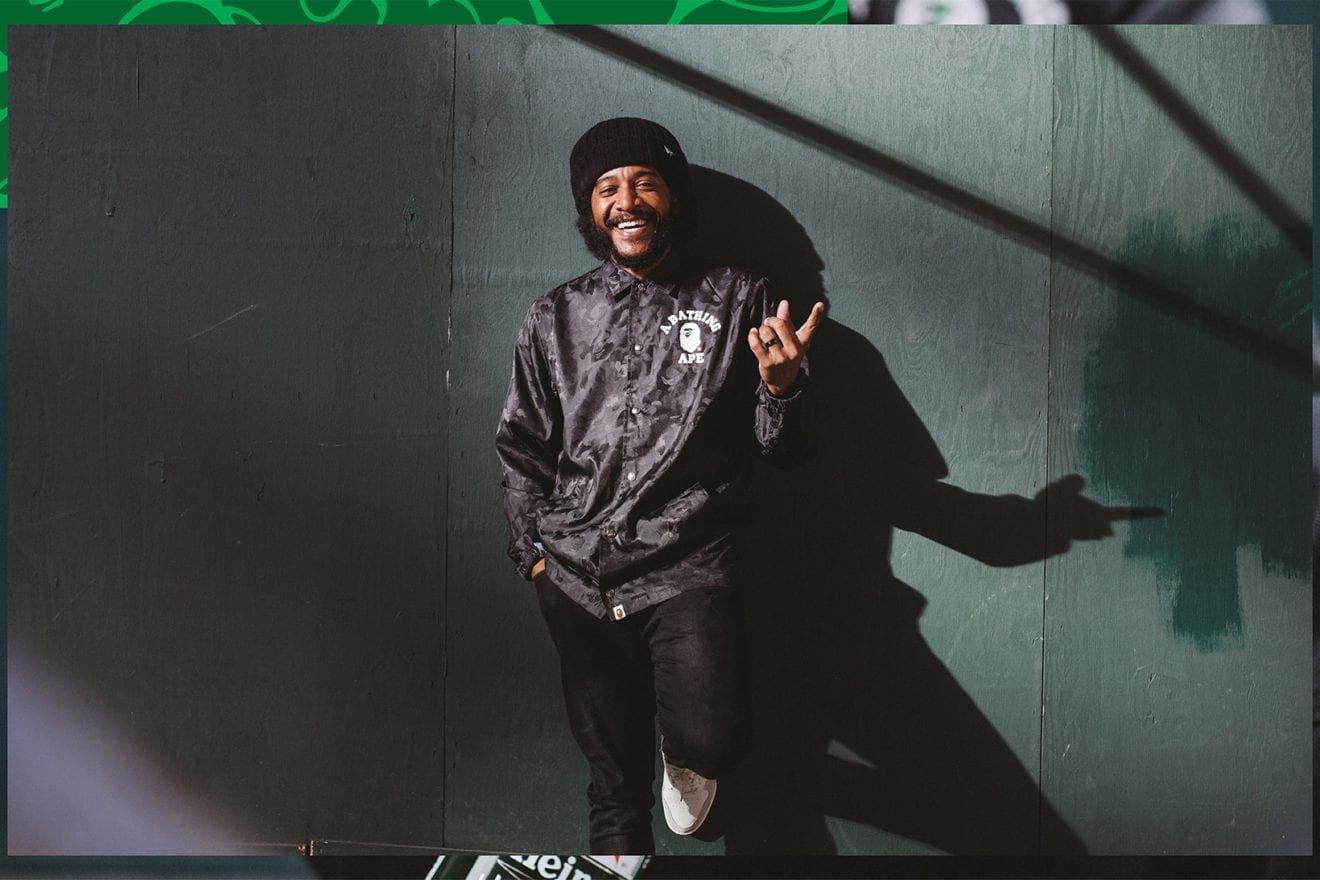
    Hong Kong-owned A Bathing Ape has been chosen by brewing giant Heineken as its partner for this year’s #Heineken100 program, its eighth collaboration with a retail fashion brand.

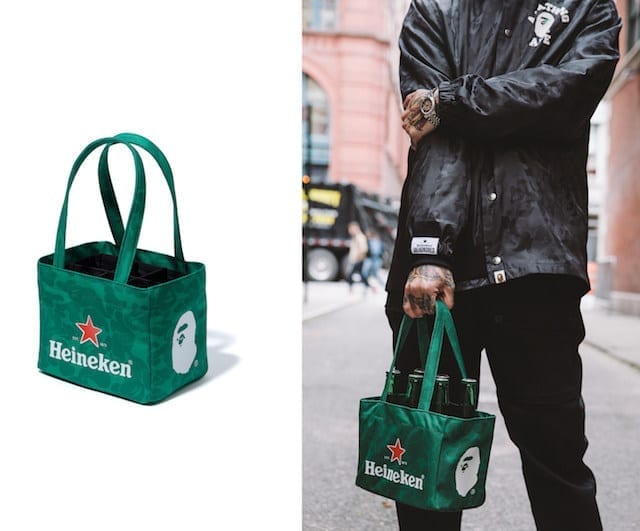
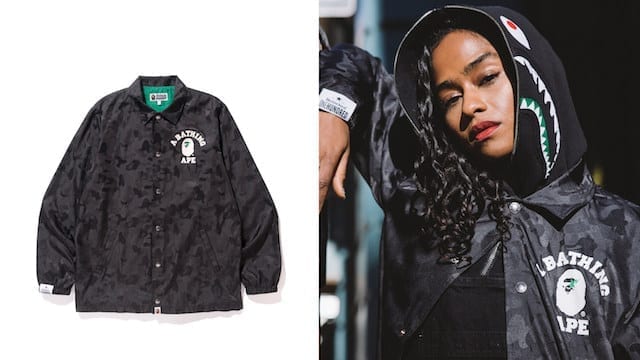
    The two companies have created a capsule collection of four co-branded fashion items: a hoodie, coach jacket, t-shirt and a six-pack bottle carrier.

    Unlike previous years – when the creations were gifted only to the 100 most influential beer drinks around the globe – this year consumers can buy the merchandise at a one-day only popup in New York. The store will be open in Japanese gastropub Izakaya in Manhattan’s East Village neighborhood in New York on Tuesday (December 12).

    Last year, Heineken collaborated with luggage brand Tumi to create a series of essential travel products. Other previous partners include Public School, Garrett Leight, Union Los Angeles, Parabellum, Mark McNairy, Kith and Neighborhood Japan.

    “The goal of the #Heineken100 program has always been to connect the brand with people who drive culture forward,” said Coltrane Curtis, founder and managing partner of Team Epiphany, the marketing agency behind the initiative. “This year, we listened to the fans. By opening up #Heineken100 to New Yorkers, we’re able to directly engage with consumers in one of the most influential cities in the world.”

    “This year’s #Heineken100 campaign brings together two brands with global ubiquity, whose consumers have a taste for luxury and innovation,” added Raul Esquer Lopez, Heineken USA brand manager. “We’re thrilled to partner with Bape, an iconic brand that shares a history of inventiveness through creating highly-aspirational imports for the man of the world.”

    The half-zip pullover hoodie will sell for US$399, the camo coach jacket for $413, the t-shirt for $112 and the cooler for $115. All feature dual branding.

    Bape is owned by Hong Kong’s I.T. Group.

  • Cameroon to have its first Carrefour market

    Cameroon to have its first Carrefour market

    French grocery giant Carrefour has opened its first store in Cameroon, expanding its African footprint.

    The Carrefour Market supermarket is located in the city of Douala and is operated by local partner CFAO Retail, which has stores in eight African countries. The 1430sqm Carrefour Market anchors a shopping centre which includes six other retail stores and two dining options, including CFAO Retail’s Brioche Doree. The total centre occupies 8250sqm, including carparking.

    Carrefour says the market’s unique selling proposition is high-quality fresh products, local products, exclusive Carrefour brand products, strict sourcing and cleanliness standards to ensure food safety, and merchant services that make customers’ lives easier and improve the shopping experience.

    “For our first site in Douala, we have assembled the ingredients that have driven the success of our offering in Africa over the past two years: strong local engagement and a significant economic footprint,” said Xavier Desjobert, CEO of CFAO Retail.

    “The Douala opening is the first step in the broader CFAO Retail roll-out in Cameroon. In 2019, Yaoundé will become home to a Playce shopping centre, a brand that is already very well known in sub-Saharan Africa. For the past two years in Côte d’Ivoire and now in Cameroon, we have been continuing to cement our long-term strategy for growth in Central and West Africa.”

    The Carrefour Market supermarket and Brioche Dorée restaurant employ 200 staff, with another 150 people working in the mall, shops and service providers.

    Carrefour Market and Brioche Dorée Douala have undertaken more than 7000 hours of training to their new hires.

    CFAO Retail has also developed synergy between the two countries taking part in the project. Managers from the Douala Carrefour Market and Brioche Dorée have received training in mass retail and convenience food at CFAO Retail sites in Abidjan, Côte d’Ivoire.

    Luc Demez, MD of CFAO Retail Cameroon, says the company has witnessed a rise of middle-class consumers in Douala – shoppers who are seeking access to modern products at the best possible prices.

    “Our customers have high standards and are loyal to the local economy. They want a wide range of high-quality options and purchases that have meaning. Carrefour Market will offer an exclusive range of Carrefour brand products, high-quality fresh products and more than 1500 products that are made in Cameroon.

    “It is important for us to contribute to the development of the Cameroonian economy,” he concluded.

  • VW in talks to buy stake in Russia’s GAZ

    VW in talks to buy stake in Russia’s GAZ

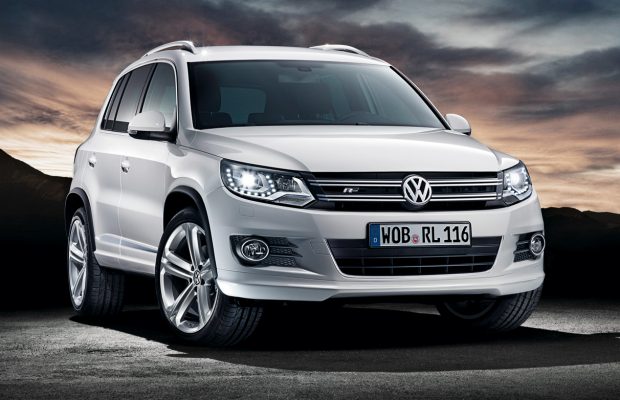
    German carmaker Volkswagen is in talks to buy a stake in GAZ, a Russian manufacturer of light commercial vehicles (LCV), five sources familiar with the talks told.

    It was not immediately clear how big a stake is being discussed or the value of the deal.

    GAZ is a part of the Basic Element group that holds the assets of Russian businessman Oleg Deripaska. Both GAZ and Basic Element declined to comment, while a spokesman at VW headquarters said he does not comment on market speculation.

    “There are talks, they are trying to reach an agreement. Deripaska has long been looking for a partner and VW does not have a Russian partner,” one well-placed industry source said.

    Another well-connected car industry source, two financial market sources and another person familiar with the matter also said talks were under way.

    One of the sources said that a decision on the size of the proposed stake sale has yet to be made.

    A source close to VW also confirmed that talks were in progress but said the possibility of the German group taking a stake in GAZ is not the only mater under consideration.

  • BMW expects jump in electric car sales in 2018

    BMW expects jump in electric car sales in 2018

    BMW expects its sales of electric and hybrid vehicles to jump next year, its research and development chief said as the premium carmaker races to catch up with rivals such as U.S. electric car pioneer Tesla.

    Sales in 2018 will exceed a 2017 sales target of 100,000 vehicles by a medium double-digit percentage, Klaus Froehlich said at an event, without being more specific.

    In the first 10 months of 2017, BMW sold 78,100 electric cars and plug-in hybrids.

    BMW, which launched the i3 electric car in 2013, is gearing up to mass produce electric cars by 2020 and aims to have 12 different models by 2025.

    Chief Executive Harald Krueger said BMW aimed to keep its return on sales around 8 to 10 percent even with the added costs of developing electric cars.

    Carmakers are trying to lower the cost of electric vehicles by investing in the development of affordable but powerful batteries and through modular production systems.

    BMW’s Froehlich said he expected such modular systems to benefit the development of autonomous cars as well.

    BMW earlier this year teamed up with U.S. chipmaker Intel and Israel-based camera specialist Mobileye to develop autonomous driving technologies.

    Frohlich said another carmaker was to join them by the end of the year. He said the aim was to have partners from Europe, North America and Asia.

    So far, U.S.-based Fiat Chrysler and auto parts makers Delphi and Magna have joined the partnership, along with Germany’s Continental.

  • JDA and SATO Partner to Deliver the Future of Warehouse Management

    JDA and SATO Partner to Deliver the Future of Warehouse Management

    JDA Software Group, Inc. and SATO today announced a new alliance representing JDA’s first Japanese hardware partnership as the company expands its presence in Japan. The technology partnership will combine JDA Warehouse Management and JDA® Warehouse Labor Management with SATO’s Visual Warehouse Solution to help customers take advantage of digitalization technologies such as the Internet of Things (IoT) and big data. The sales alliance will streamline the logistics process for customers leveraging JDA and SATO’s solutions together. JDA and SATO aim to deploy the solution in five leading food and beverage companies by March 2019.

    Japanese companies are facing labor shortages and increasing supply chain complexity due to rising consumer demands which require diverse product lineups to meet their needs. Meanwhile, Japan ranks poorly among the Organisation for Economic Co-operation and Development (OECD) nations (18 of 35) in terms of overall workforce productivity, even as nominal labor productivity hit a new high this year*1. This highlights the room for improvement Japanese companies can realize by fully unleashing the power of data in operations. Only six percent of large Japanese corporations utilize big data and 48 percent have yet to identify how to extract value from it.*2 Among Japanese manufacturers, only 45 percent utilize big data to drive operational efficiencies.*3

    “SATO is proud to have been selected as a partner by a cutting-edge solutions provider like JDA,” said Kaz Matsuyama, president and CEO of SATO Holdings. “We hold a mutual commitment to open innovation and user-centric value, so I am excited about the possibilities of our collaboration. We will strive to bridge the last inch of our customers’ last mile challenges to design the ultra-efficient, IoT warehouse of the future.”

    In today’s ever-complex unified commerce environment, companies need to do more than track labor productivity and warehouse processes, but to turn the warehouse into a performance-focused competitive advantage. JDA Warehouse Labor Management provides a real-time view into warehouse activities, improving planning and scheduling by ensuring the right number of workers with the right skills are available when and where they are needed to fulfill order demand. And companies can get real-time visibility into labor concerns before they become issues and shift workers where they are needed. Combined with JDA Warehouse Management, companies can address real-world disruptions to drive improved performance and predictable results by sensing these shifts in real-time to respond quickly and profitably.

    The SATO Visual Warehouse solution is a virtual warehouse director that fully streamlines picking route navigation for enhanced logistics and labor utilization. An accompanying picking guidance system guides workers on the shortest possible route, with audio and visual instructions, to cut time spent and distance travelled per picking order by approximately half. The system allows inexperienced warehouse workers to achieve a similar efficiency level as more experienced workers.

    JDA and SATO seek to improve warehouse productivity by enabling actionable improvements based on data sets of real, specific operational data. By logging individual workers’ location over time, the combination of JDA and SATO will enable collection of real operational data. Accumulating this real-time data in the warehouse and linking it to JDA Warehouse Labor Management makes true visualization of labor possible, and empowers users to make data-driven decisions to streamline their operations, providing a 30 to 40 percent boost to operational productivity in the warehouse upon deployment.

    “This partnership will tap into SATO’s real-time visualization and tagging technology to gather all information in the warehouse related to labor efficiency that will improve productivity and take advantage of the latest cutting-edge innovations,” said Amit Bagga, regional vice president, sales, Asia-Pacific, JDA. “As we expand our presence in Japan, we are best addressing Japanese customers’ demand, and leveraging SATO’s IoT capabilities, combined with JDA’s advanced warehouse management solutions.”

  • Amazon secret recipe to save the physical store

    Amazon secret recipe to save the physical store

    The Amazon-Calvin Klein pop-up stores in New York City and Los Angeles may be just what brick-and-mortar retailers need to bring online shoppers back to the real world, Morgan Stanley’s Brian Nowak said.

    Amazon is banking on its loyalty with consumers who rely on the company for the best prices, Nowak said. When it comes to brick-and-mortar, that transparency “could encourage more people to shop in store rather than online,” he said.

    The key way it does this is by having consumers experience dynamic pricing while at the shop, prompting shoppers to scan the barcodes of items in order to see the ever-changing prices. The prices will match what’s on Amazon.com, which is often the lowest price, Nowak said.

    The Amazon-Calvin Klein pop-up also offers free personalization and customization of basic items, such as underwear, the mainstay of Calvin Klein’s brand. It is also offering exclusive merchandise, which can only be found in the store or at the ‘My Calvins’ online brand store on Amazon.com.

    “This phone scanning and dynamic pricing combination is another example of Amazon’s attempt to change consumer behavior/expectations in the offline world in a way to build trust with consumers that they are always getting the lowest price,” Nowak wrote in a note.

    Amazon’s outsized influence as an ecommerce giant has retailers scrambling to stay relevant as it eats away at brick-and-mortars’ market share, particularly in-store sales. When Amazon announced a partnership with Nike in June, it hit Dick’s, Under Armour, Foot Locker and other competitors with many retailers reporting dismal third-quarter earnings.

    The company’s attempts at providing a different shopping experience in brick-and-mortar stores may be what saves the retail industry and brings shoppers back to physical stores.

    Amazon’s stock is trading at $1,133.97 a share and was up 50.39% up for the year. PVH Corp, the parent of Calvin Klein, is trading at $134.28 a share and is up 47.64% for the year.

  • Bitcoin surges above $16,000 as concerns mount

    Bitcoin surges above $16,000 as concerns mount

    Bitcoin flirted with $17,000 on Thursday, triggering a warning the cryptocurrency was like a “train with no brakes” and prompting fresh concern about its looming launch on mainstream markets.

    Still under $14,000 in Asian trading hours, it smashed through $15,000 in European trading and got as high as $16,777 before pulling back, according to Bloomberg data. Near 2145 GMT, bitcoin stood at $16,070.

    The rally came just a day after the virtual currency, which has been used to buy everything from an ice cream to a pint of beer, hit the $12,000 mark for the first time. The eye-popping rise has seen the currency’s value soar more than 50 percent in just one week, and from just $752 in mid-January.

    Bitcoin — which came into being in 2009 as a bit of encrypted software — has no central bank backing it and no legal exchange rate.

    It has surged dramatically in the past month, driven by growing acceptance among traditional investors of an innovation once considered the preserve of computer nerds and financial experts, and sometimes more shady users.

    But some, including the U.S. Federal Reserve, have warned against dabbling in bitcoin as it could threaten financial stability, and fears of a bubble have increased as the price has soared.

    “Bitcoin now seems like a charging train with no brakes,” said Shane Chanel, from Sydney-based ASR Wealth Advisers. “There is an unfathomable amount of new participants piling into the cryptocurrency market.”

    But he warned: “Once the hype slows down, we will most certainly see some sort of correction.”

    Financial industry concerns 

    There also are mounting concerns about its introduction into the mainstream financial system after a U.S. regulator last week cleared the way for bitcoin futures to trade on major exchanges, a decision which analysts say has helped spur the recent rally.

    The Commodity Futures Trading Commission decision allows bitcoin derivatives to be offered on the Cboe Futures Exchange starting this weekend and on the world’s biggest futures venue, the Chicago Mercantile Exchange (CME), from December 18.

    But the Futures Industry Association, which groups some of the world’s biggest derivatives brokerages, criticized the CFTC’s move in a letter to the regulator, saying contracts are being rushed through without properly weighing the risks.

    “A more thorough and considered process would have allowed for a robust public discussion among clearing member firms, exchanges and clearing houses,” the association said.

    Bitcoin transactions happen when heavily encrypted codes are passed across a computer network.

    Goldman Sachs, an FIA member, plans to clear bitcoin futures contracts for some clients, meaning it will serve as intermediary to enable transactions, a spokeswoman said.

    “Given that this is a new product, as expected we are evaluating the specifications and risk attributes for the bitcoin futures contracts as part of our standard due diligence process,” she said.

    The NiceHash marketplace was meanwhile on Thursday investigating a security breach resulting in the theft of bitcoin.

    “Clearly, this is a matter of deep concern and we are working hard to rectify the matter in the coming days,” NiceHash said in a statement.

    “In addition to undertaking our own investigation, the incident has been reported to the relevant authorities and law enforcement and we are co-operating with them as a matter of urgency.”

    Bitcoin and other virtual currencies use blockchain, which records transactions that are updated in real time on an online ledger and maintained by a network of computers.

    In 2014 major Tokyo-based bitcoin exchange MtGox collapsed after admitting that 850,000 coins — worth around $480 million at the time — had disappeared from its vaults.

    Bitcoin’s use on the underground Silk Road website, where users could use it to buy drugs and guns, also raised suspicions about the virtual money.

  • Lululemon sales skyrocket sales

    Lululemon sales skyrocket sales

    Canadian activewear retailer and manufacturer Lululemon has posted a 14 per cent uplift in total sales in the third quarter; same-store sales rose 8 per cent.

    Kevin Wathey, a consultant with GlobalData Retail, says that while other players in the sports and athleisure market struggle, Lululemon sales continue to go from strength to strength.

    While income dropped by 14 per cent, the increase in sales by either measure underlines that Lululemon is still attracting new customers – and getting existing shoppers to spend more both online and offline, he said. The drop in profit was the result of asset impairments and restructuring costs associated with the Ivivva closedown, rather than symptomatic of any fundamental issues with the business. Excluding the exceptional $21 million of fees, net income rose by a healthy 17 per cent year on year.

    “Exceptional items notwithstanding, the strength of Lululemon’s bottom line is mostly thanks to its ability to resist the temptation of excessive discounting – even in a market that has become steadily more promotional. In our view, this is made possible by the fact that Lululemon, unlike so many of its rivals, has a line-up of products that people want and for which they are prepared to pay full price. Constant innovation and a laser-like focus on functionality and quality are central to this,” said Wathey.

    International growth – including in Asia – and product innovation should continue to fuel sales.

    “The former is particularly helpful in driving revenue, and we remain excited about Lululemon’s prospects in both Asia and Europe. The latter gives the numbers a softer boost but also plays a critical role in keeping existing shoppers coming back for more. On the product side, we feel that Lululemon has some potentially significant wins ahead, especially in categories like footwear where it has just launched its first range of sneakers in collaboration with California-based Athletic Propulsion Labs.”

    Wathey said he remained optimistic about Lululemon.

    “It is true that the company has had a good run of growth and it is also the case that overall market conditions will continue to be challenging. However, Lululemon’s careful control of its brand, along with its efforts to position itself as a company that helps people achieve their lifestyle ambitions, will help it to speed through prevailing negative headwinds.”

  • The Up and Down for American Eagle result

    The Up and Down for American Eagle result

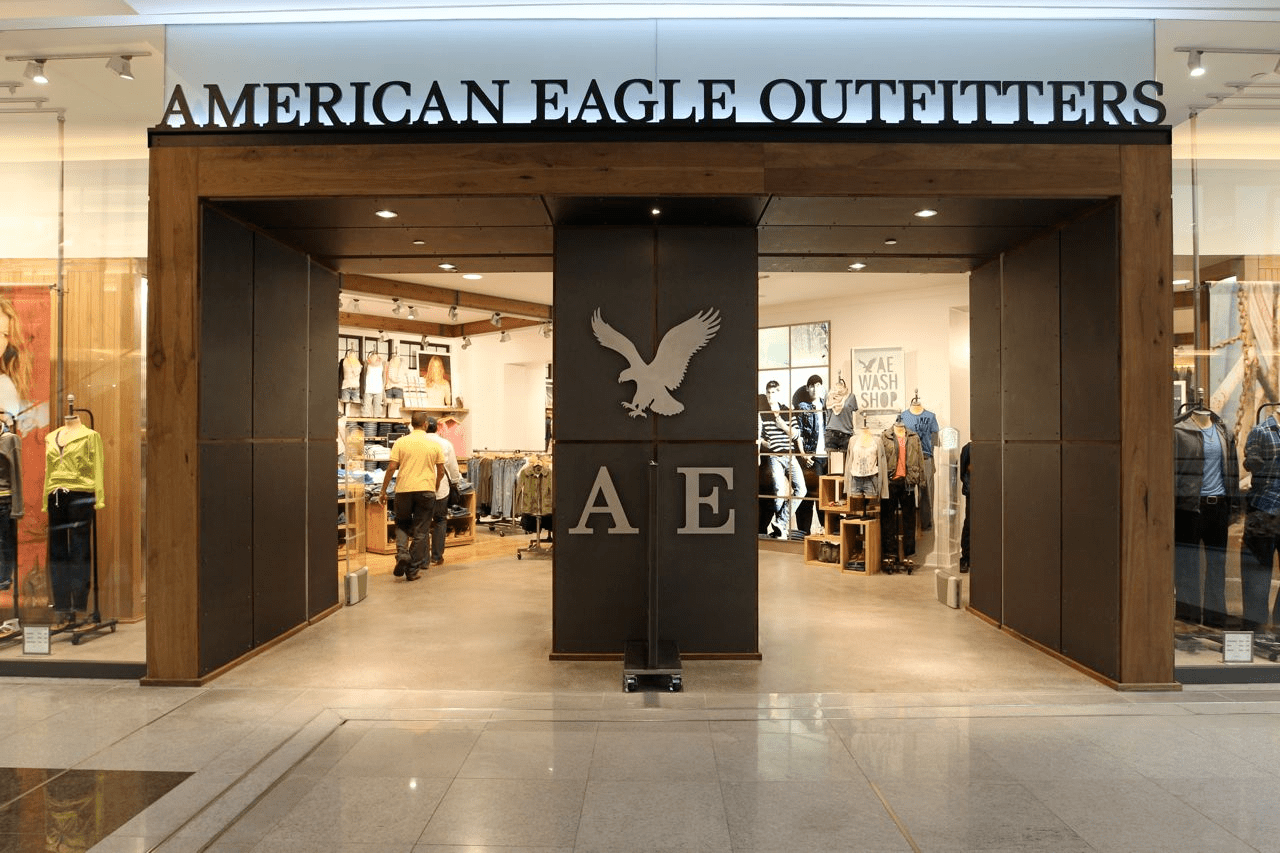
    Third quarter American Eagle results may be mixed, but they point to a company that is holding its own in a challenging market.

    There are, however, some negative numbers, such as the erosion on the bottom line, that signal the company has much more work to do before it can claim to be back to full health.

    American Eagle’s gross margin fell 1.2 percentage points to 39 per cent during the quarter, largely due to higher warehousing and shipping costs on online orders and increased promotional activity. Sales rose 2 per cent to US$960.4 million, but net income fell 16 percent to $63.7 million, partly due to a $14 million one-off charge.

    American Eagle stores posted a comparable sales increase of 1 percent, reversing the declines of the last two quarters which represents a step up on preceding periods when growth was present but anemic. As positive as this is, it is not a cause for unbridled celebration. The uplift was delivered against the backdrop of a stronger period for apparel overall. This raises a question as to how much is down to underlying natural demand, and how much is attributable to the improvements American Eagle has made over the past year.

    In fairness, a mix of both delivered the number. Categories like denim are performing well for American Eagle, with new washes and styles helping to drive sales. GlobalData Retail’s customer data suggests shoppers who visit to buy jeans are now buying more in other categories too – particularly in menswear.

    An increase in cross-category shopping is comforting and partly alleviates concerns that American Eagle was becoming overly reliant on denim. As much as this is currently helping results, it makes the company’s sales growth dependent upon denim remaining in fashion – something that it is unable to control or guarantee. By using denim as a springboard to promote other parts of its offer, American Eagle is on the right track.

    Along with a skew in category performance, American Eagle is also showing a disparity in channel results. The growth in stores is poor while growth online is much stronger. Given the interplay between shops and the website, it is arguably the overall numbers that matter. However, the higher costs associated with online fulfillment contributed to a margin decline this quarter. This was further exacerbated by heavy promotional activity, which was necessary to keep pace with the rest of the market.

    Aerie proves positive

    Away from American Eagle, Aerie continues to be a reliable source of growth. Its robust comparable sales uplift of 19 per cent this quarter was market-beating and underlines that it is still taking the share of other players. Usually, after such a long run of very high sales increases,one would be concerned about a softening as lapping comparatives become tougher. But that’s not the case with Aerie.

    The brand has excellent growth potential from two sources. First, the customer base continues to grow as more shoppers discover and migrate over to the brand. Aerie’s positioning and stance remain aligned with consumer attitudes, and this is helping to enlarge its share of shoppers.

    Second, the category extensions into products like soft knit tops and leggings are helping to increase average transaction values and are giving Aerie access to a more significant share of its shoppers’ overall spending.

    Overall, American Eagle is in a reasonable position and the performance over the holiday quarter should be solid, marking a good end to a respectable year.

  • VW brand forecasts record sales of over 6 million models

    VW brand forecasts record sales of over 6 million models

    The Volkswagen car brand expects deliveries to hit a record this year and raised its midterm profitability forecast on Thursday, citing cost cuts and expanding ranges of higher-margin models.

    While the emissions scandal of September 2015 has cost Volkswagen (VW) billions of euros in fines and penalties, it doesn’t seem to have had a lasting effect on the carmaker’s popularity with motorists.

    The world’s largest automaker said it expects to significantly exceed last year’s record 5.99 million VW brand auto sales in 2017, counting on strong momentum in China, Europe and the United States.

    The operating profit margin at the VW brand may climb to between 4 and 5 percent by 2020, the carmaker said, still lagging rivals such as PSA Group and Toyota  but higher than the 4 percent or more VW has previously been indicating.

    The increase brings the VW group’s largest division by sales into line with a more upbeat outlook for overall VW group profit announced earlier in November.

    “We have completed the first five kilometers of a marathon,” VW brand chief executive Herbert Diess said. “We are all aware of the challenges that lie ahead of us.”

    The maker of VW’s top-selling Golf hatchback expects to significantly improve underlying earnings this year from the 1.9 billion euros in 2016, which would mark the brand’s first profit gain year-on-year since 2011, Diess said at a news conference.

    Profit will be driven by a growing number of more lucrative sport-utility vehicles (SUVs), whose share of overall brand sales may triple to about 40 percent by 2020 from currently 14 percent, the CEO said, citing the redesigned Touareg and an all-new T-Cross due to hit dealerships in 2018.

    “With SUVs, we are earnings the money we need to fund the shift towards electric mobility,” Diess said, referring to the brand’s accelerating push into zero-emission vehicles.

    The VW brand, which has been undergoing heavy restructuring for about a year, said it has kept fixed costs broadly stable this year despite growing spending on model launches.

    The carmaker said it will achieve 3,800 job cuts in Germany by the end of 2017, a year after it agreed with unions to slash 23,000 positions via natural attrition by 2020.

  • Subaru Expands Production at Assembly Plant

    Subaru Expands Production at Assembly Plant

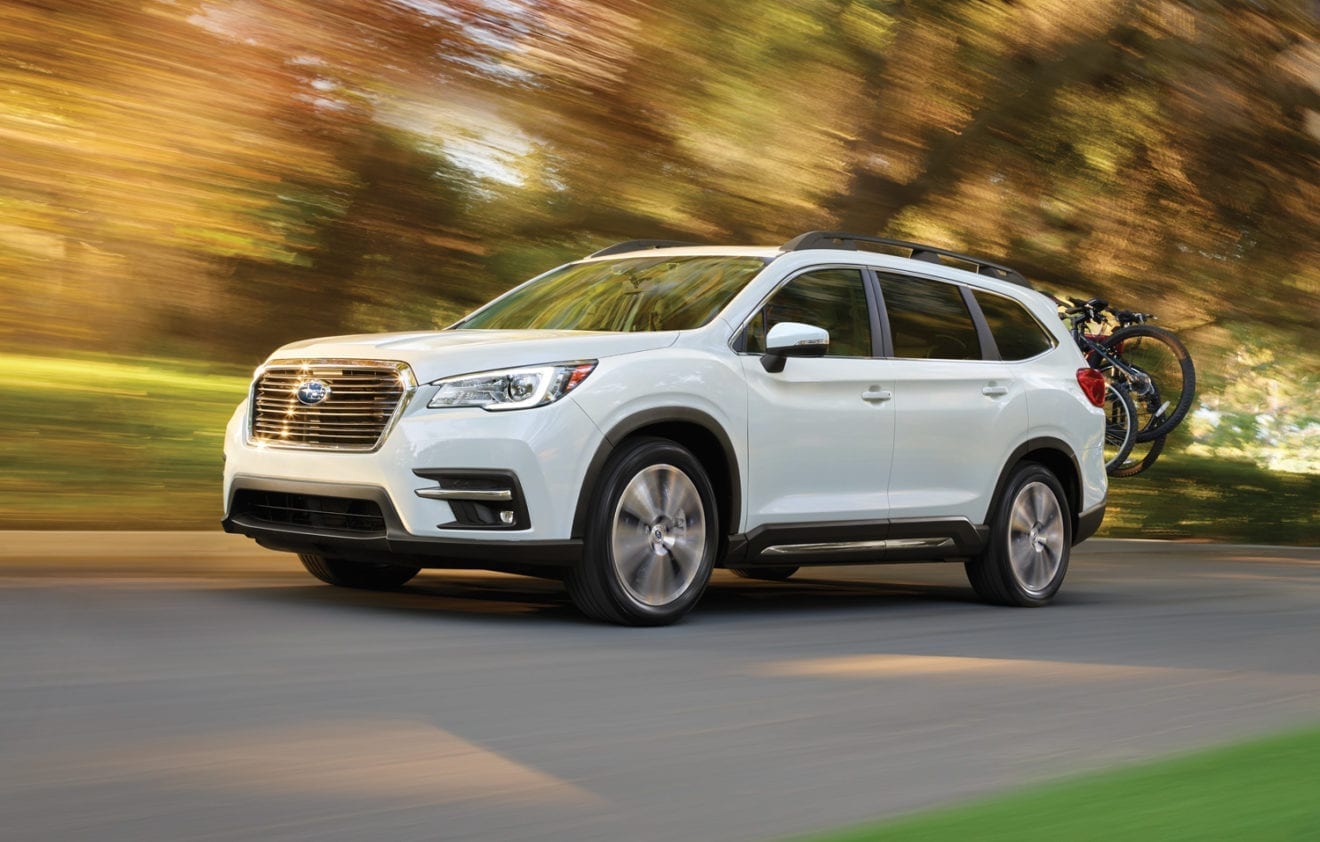
    Subaru of Indiana Automotive unveiled its new Subaru Ascent, which will be manufactured at the automaker’s assembly plant in Lafayette, Indiana. To support the increased production, the company plans to create up to 200 new jobs by 2018.

    As an incentive, Indiana Economic Development Corporation offered Subaru of Indiana Automotive Inc up to $500,000 in training grants based on the company’s job creation plans. These incentives are performance based, meaning until Hoosiers are trained, the company is not eligible to claim incentives. The city of Lafayette and Tippecanoe County support this project.

    “The Subaru Ascent is a great addition to our production mix,” said Tom Easterday, Senior Executive Vice President of SIA. “This great new family vehicle allows us to create hundreds of new jobs at SIA, and also at our suppliers in Indiana and across the country.”

    The company, which is a subsidiary of Subaru Corporation and is the company’s only assembly plant outside Japan, will invest more than $140 million to purchase new machinery and equipment to add production of the Subaru Ascent in 2018 to meet the growing demand for mid-level vehicles in North America. The all-new Subaru Ascent is a three–row crossover vehicle that has the capacity to hold seven or eight passengers.

    SIA currently employs more than 5,600 associates at its location in Indiana and will produce approximately 400,000 vehicles in 2018, including the Subaru Legacy, Impreza, Outback and Ascent. Since the start of the company’s production 30 years ago, the facility has produced more than five million vehicles.

    “Today we witness Subaru’s continued commitment to Indiana as the company unveils the all-new Subaru Ascent and announces its plans to create more jobs for Hoosiers,” Governor Eric J. Holcomb said. “For 30 years, Subaru has spurred economic growth and I’m confident they will witness continued success as we work to take Indiana to the next level by growing our economy and developing the skills of our workforce.”

    “We are pleased that the IEDC recognizes the value that SIA brings to our community,” said Lafayette Mayor Tony Roswarski. “As one of the area’s largest employers, SIA has established itself as a company who offers jobs that can translate to lifetime careers, with tangible and lasting benefits directly impacting quality of life.”

  • Facebook opens new London hub, creating 800 jobs

    Facebook opens new London hub, creating 800 jobs

    Social media titan Facebook will open a new office in London on Monday that is set to be its biggest engineering hub outside America, the company has announced.

    The investment in the office, near Oxford Street in the heart of the city’s West End district, will also lead to the creation of 800 jobs, more than half of which will be in engineering.

    The company, which opened its first office in the British capital ten years ago, said the new site would allow its local workforce to reach 2,300 by the end of next year, a sign that it “is more committed than ever to the U.K.”.

    The country “has been a huge part of Facebook’s story over the past decade”, Nicola Mendelsohn, Facebook’s vice president for Europe, the Middle East and Asia.

    “The U.K.’s flourishing entrepreneurial ecosystem and international reputation for engineering excellence makes it one of the best places in the world to build a tech company,” she said.

    The 23,000 square meters (247,000 square feet) of office space was designed by architect Frank Gehry, and is spread over seven floors while also incorporating a new public square.

    It includes an incubator space called “LDN_LAB” for technology start-ups.

    Finance minister Philip Hammond said it showed that Britain is “the best place” to grow new businesses.

    “It’s a sign of confidence in our country that innovative companies like Facebook invest here, and it’s terrific news that they will be hiring 800 more highly skilled workers next year,” he said.

    London Mayor Sadiq Khan said Facebook’s commitment indicated the city remained “at the forefront of global innovation”, while predicting that the incubator would “pave the way for the next generation of successful start-ups”.

  • Echo Base Collection Star Wars Jackets by Columbia

    Echo Base Collection Star Wars Jackets by Columbia

    Columbia Sportswear has unveiled three limited-edition jackets inspired by iconic characters in Star Wars: The Empire Strikes Back.

    Inspired by the costumes worn by Han Solo, Princess Leia and Luke Skywalker, the collection is named after the Rebels’ secret base on ice planet Hoth. In developing the Echo Base Collection, Columbia’s designers worked with Lucasfilm and it archives team to incorporate details of the original jackets worn in the classic movie, released in 1980.

    With Columbia’s “tested tough” promise, the jackets include the brand’s technologies to ensure they can withstand the freezing conditions on planet Hoth, or other galaxies closer to home.

    The limited-edition jackets, with vest combined, are made from water-resistant cotton-blend fabric and insulated with Omni-Heat Reflective lining. The Leia Organa Echo Base Jacket includes a stowable hood, seam piping and gusset sleeves, the Luke Skywalker Echo Base Jacket has a stowable hood and the Han Solo Echo Base Parka features multiple closures, a leather Rebel patch, and quilted faux-fur trimmed hood.

    Columbia has also produced a limited run of the dark-brown Han Solo Archive Edition parkas, and has also collaborated with actor Harrison Ford to raise funds for Conservation International, a global organisation dedicated to the protection of nature. Ford has hand-signed each parka, and Columbia will donate total proceeds from their sale to Conservation International.

    Only 1980 jackets of each style in the broad Echo Base Collection were produced. The jackets are individually numbered and contain references to Star Wars and the characters who wore them.

    The jackets are being sold on Columbia’s website and at branded retail locations including China, Hong Kong, Japan and Korea, from Friday.

  • 10,000 Google staff set to police YouTube content

    10,000 Google staff set to police YouTube content

    Google is to deploy a staff of 10,000 to hunt down extremist content on its YouTube platform following recent criticism, the video-sharing site’s chief executive told Tuesday.

    Susan Wojcicki, YouTube’s CEO admitted in the broadsheet that “bad actors” had used the website to “mislead, manipulate, harass or even harm.”

    British Prime Minister Theresa May has put pressure on internet giants to root out online radical material following a spate of terror attacks, while YouTube last week pulled 150,000 videos of children after lewd comments about them were posted by viewers.

    Wojcicki claimed that her company had developed “computer-learning” technology to identify extremist videos, and that it could also be used to identify content that risked children’s safety.

    “We will continue the growth of our teams, with the goal of bringing the total number of people across Google working to address content that might violate our policies to over 10,000 in 2018.”

    Last week’s move to take down suspect content came after a British newspaper reported that ads for big-name brands were displayed alongside videos of children or teens which, while innocent on their own, drew viewer comments that seemed paedophilic in nature.

    Media reports indicate the situation made advertisers skittish, with some halting YouTube advertising.