Tag: International

  • Franck Marilly, new President and CEO for Shiseido EMEA

    Franck Marilly, new President and CEO for Shiseido EMEA

    Japanese cosmetic giant Shiseido has named its new CEO for the Europe, Middle East and Africa (EMEA) region, after it confirmed earlier in the month that Louis Desazars is set to leave the company to “pursue other interests.”

    Franck Marilly has been appointed as President and CEO of Shiseido Group Europe, the Middle East and Africa (EMEA), effective January 1, 2018. Marilly will report to Shiseido Group President and CEO Masahiko Uotani.

    Marilly previously served as Managing Director Europe at Chanel’s Fragrance & Beauty division.

    At Shiseido, he takes over from Louis Desazars, who has served in the role since 2015.

    “Along his tenure at Shiseido Group, Louis made significant achievements and contributions such as initial development of BPI in Europe and in the United States and the successful brand development of Nars during his years in New York. Under his chairmanship in EMEA, he led the Shiseido Group EMEA new organization bringing the entities and brands within the region into ‘One Shiseido’ and directed the signature of a license agreement with the Italian fashion house Dolce & Gabbana,” said the company in a statement.

    Frank Marilly will oversee all of the countries and local affiliates that make up the Japanese cosmetic group’s EMEA region. He will also take charge of the perfume labels Dolce & Gabbana, Fragrance Designer Brands (made up of Alaïa Paris, Elie Saab, Issey Miyake, Narciso Rodriguez, Zadig & Voltaire) and Serge Lutens.

    Earlier in month, Shiseido published a third quarter net loss, despite notable growth for the first nine months of 2017. Shiseido said combined turnover over the nine months rose 17.4% to 731.2 billion yen, close to 6 billion euros.

    While the company recorded strong Asia revenues, particularly in Japan and China, European growth remained weak and sales slowed in the Americas, making up just 13.5% of total turnover.

    Shiseido CEO Uotani announced that the company is aiming to be one of the top five players in the luxury sector in the EMEA region, and wants to achieve 9% global market share of the perfume industry in the next five years.

  • Tech leads Wall St higher, Amazon and retail stocks gain

    Tech leads Wall St higher, Amazon and retail stocks gain

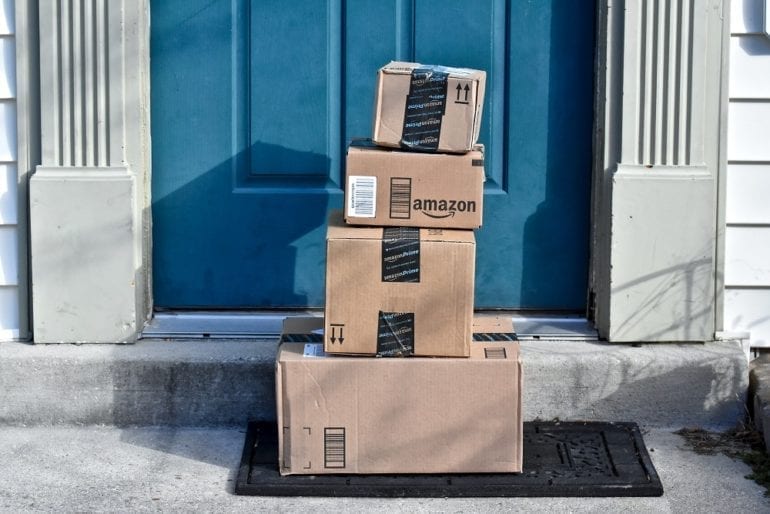
    Technology stocks led the S&P 500 and Nasdaq to record high closes on Black Friday, while Amazon and retail stocks got a boost from signs of a strong start to the holiday shopping season.

    The benchmark S&P 500 and the blue-chip Dow Jones industrials posted weekly gains for the first time in three weeks while the Nasdaq Composite posted its best weekly performance since the week to Sept. 1.

    The stock markets closed early on Black Friday, a day after Thanksgiving, the start of the holiday shopping season that accounts for as much as 40 percent of retailers’ annual sales.

    Turnout at U.S. retailers was relatively subdued on Black Friday, with many shoppers flocking to stores to eye items in person while waiting to do their actual bargain hunting online.

    On Thanksgiving, U.S. shoppers spent more than $2.87 billion online, according to Adobe Analytics. Adobe said Black Friday online sales were up 18.4 percent at $640 million as of 10 a.m. ET and would rise to a record of $5 billion.

    The S&P retail index rose 0.63 percent and had hit a record high, led by Amazon’s 2.61 percent gain.

    The online retail giant touted its sales for Cyber Monday, one of the biggest days for online shopping, and said shoppers using its digital assistant Alexa could score deals as early as Sunday.

    “In the retail environment, Amazon is extremely important – the fact that Amazon continued to soar bodes well for the fourth-quarter holiday shopping season and it bodes well for Wall Street,” said Adam Sarhan, chief executive of 50 Park Investments.

    Brick-and-mortar stores, which have been boosting their online presence, also fared well.

    Macy’s closed up 2.1 percent. The department store operator’s chief executive told CNBC the company was better off this year than last and was seeing very robust online demand.

    Kohl’s, Gap and J.C. Penney were up between 1.6 percent and 1 percent.

    Target ended 2.8 percent lower, with analysts noting that it closed its stores for several hours overnight while rivals stayed open. Wal-Mart inched up 0.2 percent.

    The Dow rose 31.81 points, or 0.14 percent, to 23,557.99, while the S&P gained 5.34 points, or 0.21 percent, to 2,602.42. The Nasdaq added 21.80 points, or 0.32 percent, to 6,889.16.

    The CBOE Volatility index, known as Wall Street’s fear gauge, was down 0.21 points to 9.67. It had hit a record low of 8.56.

    Eight of the 11 major S&P sectors were higher, led by the technology sector’s 0.54 percent rise.

    The energy index and the materials index were boosted by rising commodities prices.

    U.S. oil prices jumped to a more than two-year high as North American markets tightened on the partial closure of a key pipeline linking Canada and the United States.

    About 2.68 billion shares changed hands in U.S. exchanges in the shortened session. The daily average over the last 20 full sessions is 6.48 billion shares. Last year, volume during the session after Thanksgiving was about 3 billion.

    Advancing issues outnumbered declining ones on the NYSE by a 1.61-to-1 ratio; on Nasdaq, a 1.31-to-1 ratio favored advancers.

    The S&P posted 35 new 52-week highs and 1 new low; the Nasdaq recorded 120 new highs and 21 new lows.

  • J Crew best bet to slow down the losses

    J Crew best bet to slow down the losses

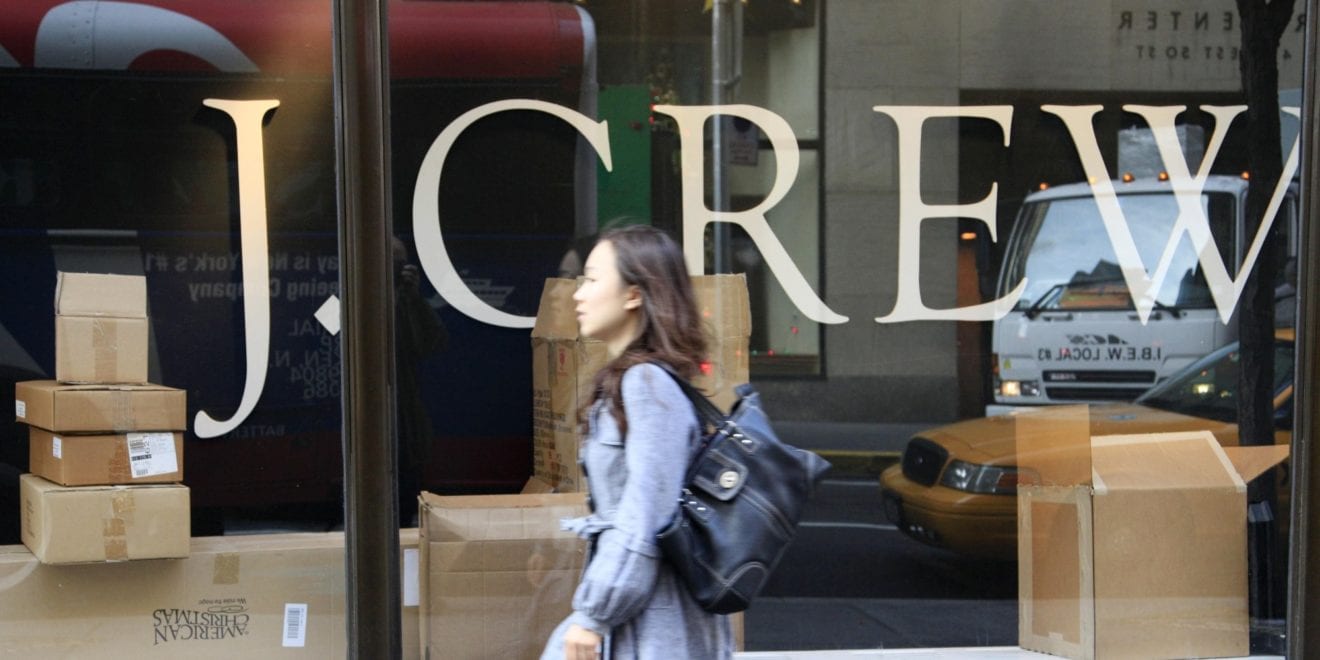
    US listed fashion retailer J Crew’s woes are worsening, with the company’s namesake brand dragging the business towards a significant loss.

    As a result the company will shutter another 39 stores in the final quarter, taking the total closed for the year to 50.

    In the latest quarter, J Crew group-wide comparable sales slid 9 per cent to $566.7 million, a figure made worse by poor figures for the same quarter last year, when sales were down 8 per cent.

    The flagship brand’s sales slumped 12 per cent, following a 9 per cent decline in the same quarter last year.

    A 22 per cent increase in sales by Madewell, largely down to an expanded store network, failed to stem the damage. J Crew lost $17.6 million in the quarter, compared with $7.9 million last year.

    In the nine months year-to-date, the company has accumulated losses of $126.1 million compared with operating income of $34 million in the same period last year, but it says most of that figure is the result of non-cash impairments and restructuring costs.

    Jim Brett, who took over as CEO from founder Mickey Drexler earlier this year, put a brave face on the figures, promising to “reinvigorate the J Crew brand to reflect the America of today and to continue to drive strong momentum in the Madewell brand”.

    However, complicating any recovery plan is a massive $2 billion debt the company is in the process of restructuring.

    “The numbers for the year so far are painful,” observed Retail Dive writer Ben Unglesbee.

  • Bolloré Logistics Strengthens Its Logistics Partnerships with Thales

    Bolloré Logistics Strengthens Its Logistics Partnerships with Thales

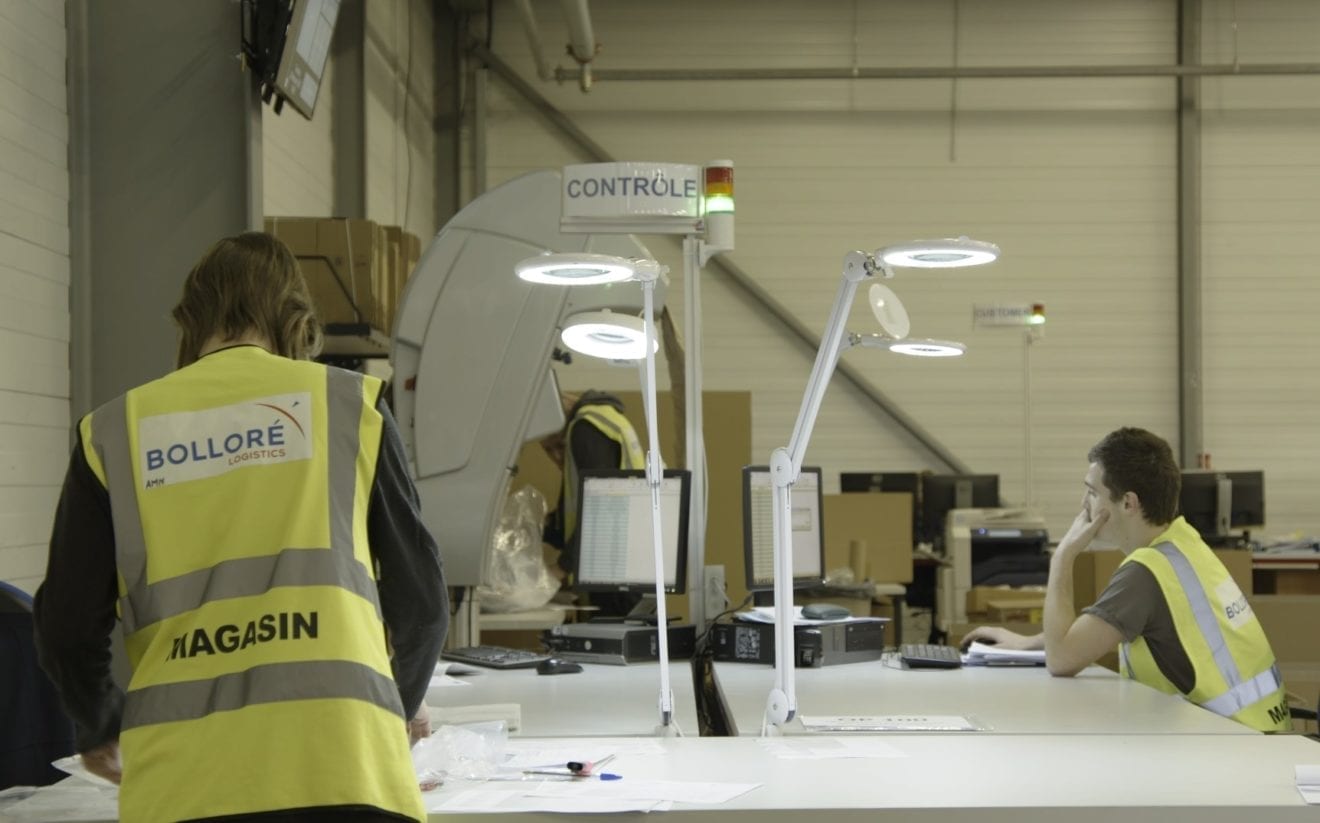
    This program promotes synergies between THALES entities. For this purpose, Bolloré Logistics is piloting six logistics platforms located in Toulouse, Bordeaux and Brest but also in the Ile de France, Val de Loire and PACA (Provence Alpes Côte d’Azur) regions for 10 different THALES entities.

    Our scope of work covers storage, orders management, final assembly line deliveries and quality controls. Bolloré Logistics’ central unit and innovative IT solutions enable optimized management of logistics flows, harmonization of processes and the conduct of an ambitious improvement plan.

    Bolloré Logistics thus confirms its leading position in Supply Chain solutions in the Aerospace and Defense sector. Our Aerospace expert teams and our supply chain specialists support manufacturers in their transformation on all continents.

  • Bolloré Logistics-Oro Inc. Partnership Launches Order-to-Delivery B2B E-commerce Platforms

    Bolloré Logistics-Oro Inc. Partnership Launches Order-to-Delivery B2B E-commerce Platforms

    International transport and logistics leader Bolloré Logistics has partnered with Oro Inc. in a global venture offering clients one-stop B2B e-commerce sales and processing service. The innovation creates an enhanced means for multichannel retailers to do business with customer companies, and simplifies and speeds order preparation, handling and delivery procedures orchestrated by Bolloré Logistics.

    The service harnesses the considerable success of direct digital sales to consumers by adapting those to the particularities of B2B e-commerce – an activity set to reach $6.7 trillion by 2020. ORO has helped Bolloré Logistics respond to needs that have not been fulfilled in the past, such as non-sellable inventory items. And with multinational companies prioritizing cost control to remain competitive, the Bolloré Logistics-ORO solution also creates value through a seamless customer experience portal.

    Under the offer, world-leading OroCommerce platforms – tailored to the specifics of B2B activity — are augmented with Bolloré Logistics’ LINK collaborative information network. LINK provides real-time tracking, inventory, first and last mile status and other updating, using the constant input of maritime, air and road transporters, warehouses, customs and other supply chains actors. LINK is already used by 5,300 customers, 20,000 specific users per month and receives 400,000 views per month.

    The new ensemble represents a powerful digital tool catered to customers’ individual business and sales requirements, and provides processing and handling services clients can track through LINK’s updating throughout transport and logistics operations.

    “B2C e-commerce sites have become the ambassadors of retailers’ online presence, and we import and adapt those efficiencies to simplify and increase B2B experience and activity,” explains Frédéric Serra, solutions director for Bolloré Logistics. “We then go further by integrating our transport and logistics expertise and IT assets into the offer, providing processing service and visibility from order placement and management to final destination delivery.”

    “Next step for us is to integrate well-known payment gateways in order to provide a complete, end-to-end offer for B2B” explains Ludovic Laungani, regional e-commerce solution for Bolloré Logistics Asia Pacific.

    The new service also provides cross-fertilization between clients’ popular consumer sales sites and
    enhanced B2B platforms, forging front-to-end logistics, transport and tracking management that
    can also be used for B2C activity.

  • Healey family to sell retail sites worth £144m

    Healey family to sell retail sites worth £144m

    Stadium Group, owned by the Healey family, has completed a conditional acquisition agreement with Ediston Property Investment Company (EPIC), which is based in Edinburgh.

     The sites, which are let to 23 tenants, include Kingston Retail Park in Hull, which has a market value of £25-30m, and Wombwell Retail Park in Barnsley, which has a market value of £10-15m.
    The value of all four sites nearly doubles Ediston’s portfolio to £317.6m.
    To fund the acquisition Ediston Property plans to raise £37m of capital by way of a new share issue.

    EPIC is currently trading at a marginal discount and the board is also increasing its annualised dividend by 4.5 per cent, to 5.75p per share.

    Stadium Group has agreed to subscribe for a maximum of £36.5m of new ordinary shares which will be subject to a 12 month lock-in.

    Ediston chairman William Hill said: “The board believes that acquiring the new portfolio will be accretive to the level of dividend cover and will provide a number of asset management opportunities which should enhance the income profile and the capital value of the group’s property assets.

    “There is a value play in retail parks as highlighted by low supply, good tenant demand and development potential all of which underpin future growth.”

    Retailing brothers Eddie and Malcolm Healey are the second wealthiest businessmen in Yorkshire with a collective wealth of £1.48bn, behind Robert Miller, the 84-year-old who co-founded the Hong Kong-based Duty Free Shop­pers chain of airport kiosks and is worth a total of £1.58bn.

  • Deutsche Bank to advice investors to avoid bitcoin

    Deutsche Bank to advice investors to avoid bitcoin

    Deutsche Bank has joined the ranks of those warning about the virtual currency bitcoin as an investment.

    “I would simply not recommend this to the everyday investor,” Ulrich Stephan, chief strategist at Germany’s largest lender, said on Wednesday.

    Stephan said that fluctuations are too great and regulation too scant. He noted that German investors were reluctant to invest in stocks, but were generating hype about bitcoin.

    Bitcoin smashed through the $8,000 level for the first time over the weekend and traded at $8,216 at 1523 GMT on Wednesday, with many experts saying $10,000 is possible.

    An eightfold increase in the value of the volatile cryptocurrency this year has led to multiple warnings of a bubble, and institutional investors are broadly staying away.

    Retail investors, however, as well as some hedge funds and family offices, are piling in despite JPMorgan Chase & Co Chief Executive Officer Jamie Dimon earlier this year calling bitcoin a “fraud”.

    Although UBS Chairman Axel Weber urged caution on bitcoin last week, he also said there was potential for the technology underpinning it.

    “At this point, I‘m very cautious about bitcoin as an entity. I‘m much more optimistic about the underlying technology,” Weber added.

    Sweden’s central bank is one organization which is investigating the potential for digital currencies.

    “An e-krona would have the potential to counteract some of the problems that could arise on the payment market in the future when the use of cash is rapidly declining,” the Riksbank said in a report in September.

  • German automakers set for record output expect further growth in 2018

    German automakers set for record output expect further growth in 2018

    German automakers, on course for record production this year, expect further output growth in 2018 powered by strong demand in Asia, the VDA carmakers’ lobby said.

    Producers including Volkswagen, Daimler and BMW may increase output “significantly” this year from 2016 levels to between 5.6-5.7 million units in Germany and about 10.8 million in the rest of the world, VDA President Matthias Wissmann said.

    “The automotive sector is and will remain a growth market,” Wissmann told an industry conference on Tuesday, citing momentum in China and India.

    “Current projections indicate that 2018 will also be a stable year,” he said, without being more specific.

    Separately, Wissmann said he expects demand in Germany for electric cars to show “a further significant gain” over the next three years as German carmakers plan to more than triple their offerings of purely battery-powered vehicles and plug-in hybrids to nearly 100 models from about 30 at present.

  • ‘Robo-taxis’ hold promise, and perils, for automakers

    ‘Robo-taxis’ hold promise, and perils, for automakers

    Are ‘Robo-taxis’ the future of public traffic?

    It’s November 22, 2028 and Sarah, a young mother, gives her two children a kiss goodbye before buckling them into the driverless car that will bring them to school.

    Sarah doesn’t have a car and has no plans to buy one. Living in a suburb, she has run the numbers and the result is clear: It’s much cheaper to order a car only when she needs one.

    The “robo-taxi” has also made her life easier, but only after such vehicles upended the business models which carmakers had relied on for decades.

    The revolution is already underway, with every major brand racing to create autonomous electric cars and trucks that will always be just a few clicks of a smartphone away.

    Fully electric cars are expected to make up 12 percent of the global market in 2025, before jumping to 34 percent in 2030 and 90 percent by 2050, analysts at Bank of America Merrill Lynch forecast last month.

    Adapt or perish

    The motivations are clear: Smog is becoming a serious menace in cities around the world, with China in particular demanding cleaner vehicles for its rapidly growing market.

    Traffic jams are also eating up hours of commuters’ time, meaning car ownership is already no longer a given for many city dwellers.

    And carmakers have nimble new rivals: Apple, Google and Tesla — which last week unveiled an all-electric semi truck — see a chance to dominate a market that will soon depend as much on software as on engineering.

    Industry chiefs aren’t waiting: France’s PSA is betting on car-sharing and other “services” with its Free2Move division, which it hopes will let it get back into the huge US market.

    In Germany, Daimler is working with Bosch to develop self-driving electric cars that could be on the road by the early 2020s, and has already launched its own car-sharing service, Car2Go, in some two dozen cities worldwide.

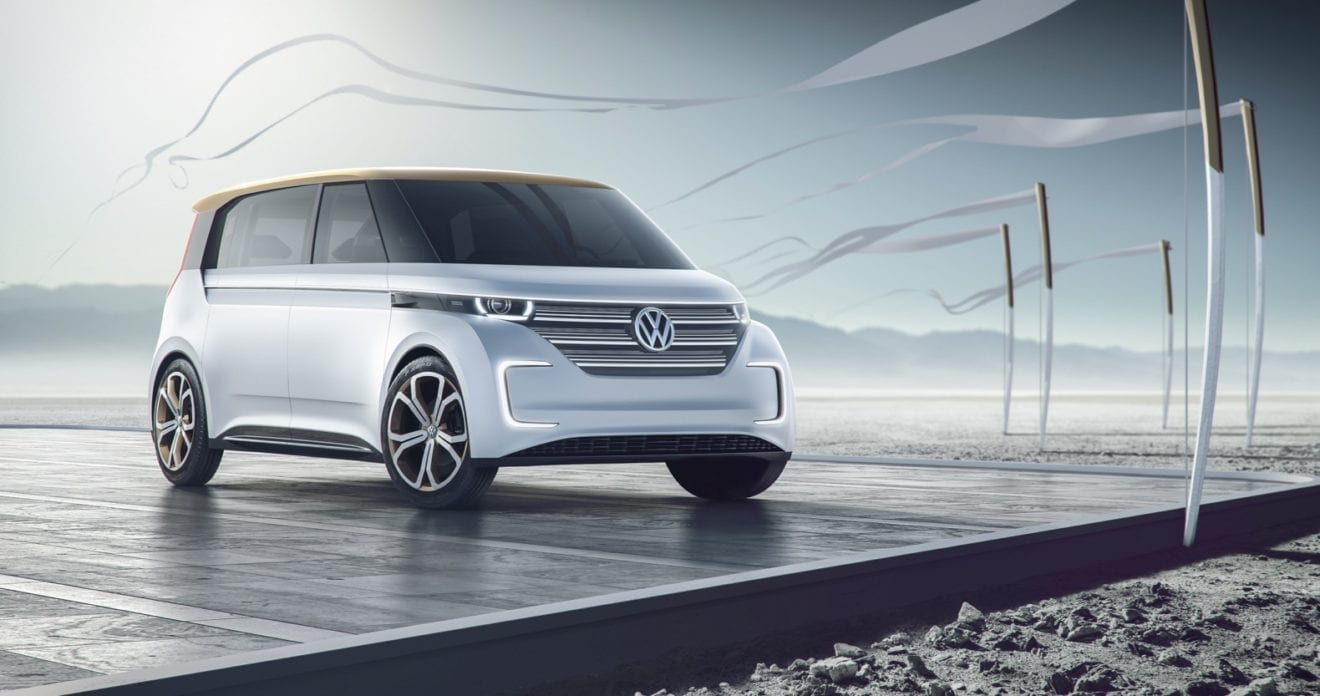
    Its German rival Volkswagen has created Moia, a “social movement” unit exploring e-shuttles, ride pooling and car hailing.

    “Even if in the future not everyone is going to own a car, with Moia we’re trying to make sure everyone will be a client of ours one way or another,” VW’s chief Matthias Mueller said.

    Robo-taxis could generate 40 percent of auto industry profits by 2030, according to German consulting firm Roland Berger, which expects demand for private vehicles to drop 30 percent in the period.

    And industry experts warn that the automakers which fail to adapt to the shift risk might not survive.

    Lagging behind Asia

    But that means investing billions in batteries, charging infrastructure and autonomous driving technologies with little prospect of seeing a payoff anytime soon.

    VW announced Friday a plan to spend 34 billion euros ($40 billion) over the next five years on hybrid and electric cars and services in a bid to “reinvent” the automobile.

    But for now, so-called “zero emission” vehicles remain a tough sell: Renault’s Zoe range of electric cars, which is has offered since 2012, made up just 1 percent of its sales last year.

    Its chief, Carlos Ghosn, is hoping that figure will reach 5 percent by 2022.

    The contest will be costly for all automakers, with PriceWaterhouseCoopers estimating that production costs for the next generation of electric cars will be 20 percent higher than traditional models, while warning of “serious problems” for returns on investment.

    “The speed” of the shift toward an electric future “will have to be taken on by all automotive companies,” PSA’s chief executive Carlos Tavares said at the Frankfurt auto show in September.

    Yet Western carmakers and government officials already fear they are lagging behind Asian rivals, with China in particular making headway on electric motors and batteries.

    That led the EU Commission to urge the creation of an “Airbus for batteries”, with European companies joining forces for large-scale battery production.

    “This technology is too important to import it from overseas,” the commission’s vice president charge of energy, Maros Sefcovic, warned.

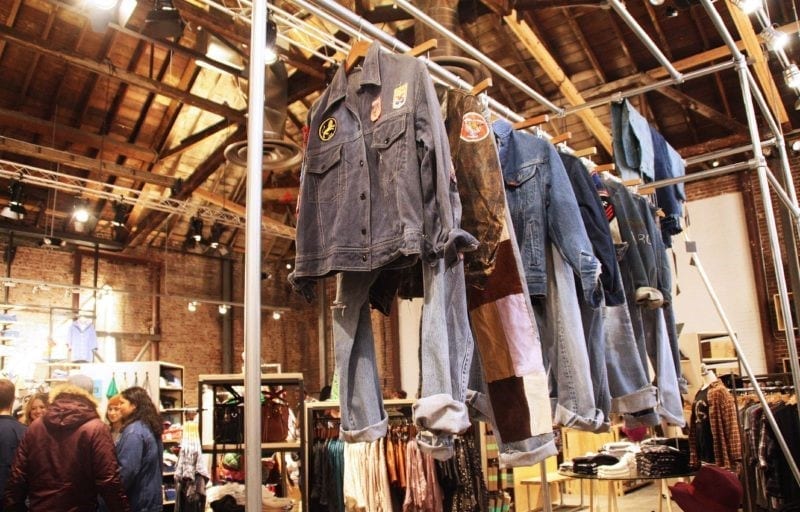
  • Urban Outfitters sales more by online

    Urban Outfitters sales more by online

    The latest Urban Outfitters sales figures make for happier reading, coming after a string of poor results.

    A 3.5 per cent uplift in total sales in the third quarter is welcome, but it is the return of all brands to positive comparable sales that is most agreeable. This rise came despite the negative impact of the hurricanes on some stores: without this, comparable Urban Outfitters sales would have risen by 2 per cent rather than the reported 1 per cent.

    As good as the numbers are, there are still some weaknesses in Urban Outfitters’ performance. Foremost among these is the growing disparity between stores and the online operation. The latter continues to grow strongly, while the former is still in decline. Although the two trends balance each other out in sales terms, the impact on profit is negative because of the higher costs associated with fulfillment. This is not a new dynamic, but it is one that Urban Outfitters is still largely failing to address.

    The impact of online joined with a couple of other trends in depleting gross margin by 142 basis points over the period. One of these was the higher proportion of lower-margin furniture products in the sales mix. The other was a higher percentage of lower-profit international sales. Taken together, these things contributed to the 4.8 per cent decline in net income over the prior year. While this is a lot better than the 31 per cent decline posted over the nine months to-date, it is still one that leaves Urban Outfitters in the red when it comes to profit growth.

    Putting these issues to one side, the better performance was also delivered against a more positive backdrop for apparel where demand was stronger than it has been for most of the year. This is not to take away from some of the progress made by Urban Outfitters, but it does suggest that when put in context, the company still has some work to do to lift its performance.

    While Urban Outfitters and Anthropologie stores are not unpleasant places to shop, they do not make the process of buying easy. The customer has to do a lot of work to find the right product, which is one of the reasons increasing numbers are opting to buy online where sorting and filtering options make it easier to identify items of interest.

    Furthermore, while the fall and winter apparel ranges appear to have a little more cohesion, the overall clothing offer is too eclectic. That’s the reason Urban Outfitters, and to a lesser extent Anthropologie, are still dropping off the radar of some consumers. To remedy this, both brands need to develop a much clearer and more compelling handwriting that resonates with the core customer.

    Free People does a much better job at creating a unique and interesting offer, which is one of the reasons its performance has been so much better. However, the Urban Outfitters’ over-reliance on this brand – where comparable sales rose by 5 per cent – is problematic. If it is to sustainably boost performance, the company needs to be firing on all cylinders, not just one.

  • Abercrombie opens eyes after a long sleep

    Abercrombie opens eyes after a long sleep

    After an extended run of decline, Abercrombie & Fitch is finally back with a market-beating 4.5 per cent uplift in total sales.

    Although the result comes off the back of a weak prior year comparable, it nevertheless provides comfort that the group’s strategies are starting to bear fruit.

    As good as the headline figure is, it masks disparities between A&F’s two core brands. Hollister’s 8 per cent increase in comparable sales is impressive and represents a significant acceleration from the first half of the year. Meanwhile, Abercrombie is still in the red with a 2 per cent drop in same-store numbers – a disappointing outcome, but one that marks a significant improvement over the double-digit declines the brand was previously recording.

    That Hollister is performing better than Abercrombie is not surprising. Hollister’s brand reinvention program is more advanced, and initiatives like the Club Cali loyalty program have had much longer to play out. As a result, the brand is engaging far more with its customer base and enticing them with relevant on-trend product across categories like denim and intimates.

    Abercrombie has not been neglected, but the division’s reinvention is at an earlier stage and so financial results are nowhere near as positive. Arguably, the task of finding a new voice and pitch for a brand that carries so much baggage has been far more difficult than Hollister’s reasonably gentle evolution. However, having seen the work undertaken at Abercrombie, it is clear that progress is being made and that the direction of travel is correct.

    Ditching the logos

    On the product front, there have been significant improvements in quality, especially to fabric and stitching. Subtle detailing, like more stylish buttons on shirts, has also helped to give basic garments a lift. On top of this, the big logos of the past have been firmly ditched in favour of no-branding or very subtle A+F monograms. The net effect is a range that is more mature and sophisticated, with much more emphasis on fit and function than branding.

    The new Abercrombie prototype store, which has been opened in a select number of locations, is impressive. It is revolutionary rather than evolutionary and is a significant step forward for the brand. The two most immediately striking things about the new design are how light and open it is, and how subtle the branding is. Alone, these make the shops almost unrecognisable as A&Fs.

    Beyond these significant shifts, there are more subtle changes, foremost among them a smaller footprint, with some new prototypes being around half the size of older stores. This is made possible by a much more efficient use of space and also because ranges have been thinned out.

    A&F is now putting more weight behind key items and cutting back on slower, less relevant lines.

    The consumer impact of all these changes is positive. The new format is more pleasant to shop, and the ‘less is more’ approach makes putting outfit ideas together easier. From A&F’s perspective, the new format provides financial benefits, with higher sales densities and lower rents.

    With only a few new stores open so far, the impact on Abercrombie’s sales is currently small.

    However, this should grow as the concept is rolled out further. In the meantime, there is much more work to do to reconnect the brand with customers. While initiatives like the loyalty scheme are working well, Abercrombie needs to communicate its new essence more effectively and more widely.

    Overall, Abercrombie & Fitch is still a company in transition and is not back to full health.

    However, it is now showing some encouraging signs of life.

  • Europe turns on Facebook, Google for digital tax revamp

    Europe turns on Facebook, Google for digital tax revamp

    With public coffers still strained years after the worst of the debt crisis, EU leaders have agreed to tackle the question, spurred on by French President Emmanuel Macron who has slammed the likes of Google, Facebook and Apple as the “freeloaders of the modern world”.

    As recently as March, five of the world’s top 10 valued companies were Silicon Valley behemoths: Apple, Google’s Alphabet, Microsoft, Amazon and Facebook. (Germany’s SAP was Europe’s biggest and 56th on the global list).

    But tax rules today are designed for yesterday’s economy when U.S. multinationals — such as General Motors, IBM or McDonald’s– entered countries loudly, with new factories, jobs and more taxes for the taking.

    These firms had what tax specialists call “permanent establishment”, when companies showed a clear physical presence measured and taxed through tangible, real world assets.

    But today in most EU nations, the U.S. tech titans exist almost exclusively in the virtual world, their services piped through apps to smart phones and tablets from designers and data servers oceans away.

    Ghost-like, Silicon Valley has turned Europe’s economies upside down, but often with just a skeleton staff and some office space in markets with millions of users or customers.

    Nation-less 

    According to EU law, to operate across Europe, multinationals have almost total liberty to choose a home country of their choosing. Not surprisingly, they choose small, low tax nations such as Ireland, the Netherlands or Luxembourg.

    Thus, it is through Ireland that Facebook draws its wealth from millions of accounts across Europe. There are 33 million accounts in France and 31 million in Germany, according to recent data.

    While users enjoy the platform, Facebook tracks likes, comments and page views and sells the data to companies who then target consumers.

    But unlike the economy of old, Facebook sells its data to French companies not from France but from a great, nation-less elsewhere, with no phone number, address or physical “presence” for a customer who probably cares little.

    It is in states like Ireland, whose official tax rate of 12.5 percent is the lowest in Europe, that the giants have parked their EU headquarters and book profits from revenues made across the bloc.

    Indeed, actual revenues from advertising are minimal in France and Germany, but at Facebook HQ Ireland they grew to 7.9 billion euros, even though the vast majority does not come from the tiny EU island-nation of a mere 2.5 million users.

    Google follows the same pattern: in Germany in 2015, it had a little over 71 million users, in France just over 55 million. But in both nations, revenues are minimal.

    Yet, in Ireland, where the number of search engine users is less than five million, revenues for Google-parent Alphabet reached 22.6 billion euros in 2015.

    According to an analysis by Paul Tang, a specialist on tax issues at the European Parliament, France lost 741 million euros in tax revenue and Germany 889 million euros between 2013 and 2015 due to so-called “tax planning” by Google and Facebook.

    ‘No transparency’

    The Organisation for Economic Cooperation and Development believes that such tax schemes cost governments around the world as much as $240 billion a year in lost revenue, according to a 2015 estimate.

    “The actual activity of each company, including U.S. tech giants, is not known,” said Manon Aubry, spokeswoman for the NGO Oxfam.

    “Beyond the number of accounts or users in each country, it would be necessary to know in the case of Google for example, the amount of advertising sales in each country. We do not have it.”

    For car-ride smartphone service Uber, “we need to know the number of rides, but we don’t have it,” she said.

    “One of the first issues, therefore, is that of transparency: to rule that large companies publish data on activities and taxes paid in all the countries where they are present.”

    To the European Commission, the digital shortfall on tax is clear. The effective tax rate on the profit of digital giants in the EU averages only nine percent, while that of traditional companies exceeds 20 percent, it said.

    ‘Political crap’ 

    Apple, also based in Ireland, became one of the EU’s most emblematic tax cases when Competition Commissioner Margarethe Vestager ordered the iconic iPhone maker to pay 13 billion euros in back-taxes.

    Vestager said the U.S. giant had benefitted from illegal state aid, a gift from Ireland in exchange for choosing Dublin as its headquarters, with thousands of jobs at stake in the deal.

    Brussels says Dublin’s red carpet treatment accorded Apple an effective corporate tax rate of one percent on its European profits in 2003 — a rate that decreased to a scant 0.005 percent in 2014 — just a fraction of the official rate.

    “It’s total political crap,” Apple chief executive Tim Cook barked at the time.

    Undeterred, Vestager has gone after similar arrangements, such as those revealed in the Luxleaks scandal that exposed deals struck between Luxembourg and a long list of multinationals, including online U.S. retail giant Amazon.

    Faced with this situation, several solutions are under study.

    Driven by Macron, France has proposed an unusual idea that has so far divided Europe: tax the U.S. tech giants on sales generated in each European country, rather than on the profits that are cycled through low-tax countries.

    France says this proposal, presented by French Finance Minister Bruno Le Maire in September, has received the support of some 20 countries, including Germany, Italy and Spain.

    But there is fierce opposition from states like Cyprus, Malta, Ireland or Luxembourg — countries that have linked their EU membership to low corporate tax and thus transformed their economies from rural backwaters to financial hubs in a globalised world.

    Global, not EU, solution 

    Member states now agree that the problem would be best addressed at the international level, in the G20 or by the OECD, in order to prevent a high-tech exodus from the EU.

    Caught by surprise by the French initiative, the European Commission announced at the end of September that it will also propose solutions in 2018.

    Ideally, Brussels agrees that there needs to be a major reform of international tax rules, which would establish a closer link between the way value is created and the place where it is taxed.

    Without rejecting the French proposal, the commission wants to dust off an old project from 2011 — for a long time deadlocked because of the differences among the 28.

    Relaunched in October 2016, the idea has one of the most cumbersome acronyms ever to come out of Brussels: the Common Consolidated Corporate Tax Base or CCCTB — an ambitious bid to consolidate a company’s tax base across the EU.

    This draft legislation is currently being examined by the 28 EU member states and taxation of the digital economy could easily be included in the scope of the rules that may be adopted.

    Under the plan, all multinationals operating in the EU with total sales of more than 750 million euros would be fixed at only one place of taxation, with one tax administration.

    However, this tax would be distributed in all the countries where the company operates, and not according to the level of booked profit in each of these states, but according to the level of activity.

    This level of activity in each member state would be measured using a combination of factors, including the number of employees, the importance of tangible assets (buildings, machinery, etc.) and sales.

    French MEP Alain Lamassoure, co-rapporteur of the project, proposes to add a fourth idea: the volume of personal data collected and used by a digital platform wherever its services are used.

    But in Europe, all is made infinitely more complicated since the adoption of new European legislation on tax matters requiring unanimity of the EU’s current 28 members.

    In addition to these European proposals, the OECD is working on a global solution, which it must present to the G20 finance ministers at their next meeting in April in Washington.

    This initiative would have the merit of including Europe as well as the United States, Japan and emerging countries.

    Until last October, the United States had dragged its feet in efforts to better tax its national champions, but changed attitude. Specifically, it agreed to set up a working group with France in the OECD.

    “The Americans are in the same situation as us: their own tax system is not adapted to the current economy and they too are experiencing very substantial revenue losses that must be compensated,” EU economics commissioner Pierre Moscovici said.

    “Taxation of the U.S. tech giants is a global problem and the answer should be as well.”

  • Volkswagen to invest $27 billion in core brand until 2022

    Volkswagen to invest $27 billion in core brand until 2022

    Volkswagen will invest 22.8 billion euros ($26.9 billion) in its main car brand over the next five years, it said on Saturday, a day after it announced a spending program aimed at bolstering its position as a maker of electric cars.

    Most of that sum, around 14 billion euros, will be spent in Germany, Volkswagen said, adding that one of the key measures included a 1 billion euro injection to transform the carmaker’s Zwickau plant into a pure e-mobility facility.

    “The investment package which has now been adopted will give a decisive boost to the largest product and technology offensive in the history of the brand,” Herbert Diess, Chief Executive of the Volkswagen brand and a VW management board member, said.

    Analysts see reviving the VW brand, which has long suffered from high staff and development costs, as crucial to the group’s ability to recover from a diesel emissions scandal that has gripped the carmaker. [nL8N1N51ST]

    The investments unveiled on Saturday are part of Volkswagen’s 72 billion euro spending plan for the 2018-2022 period that was announced on Friday.

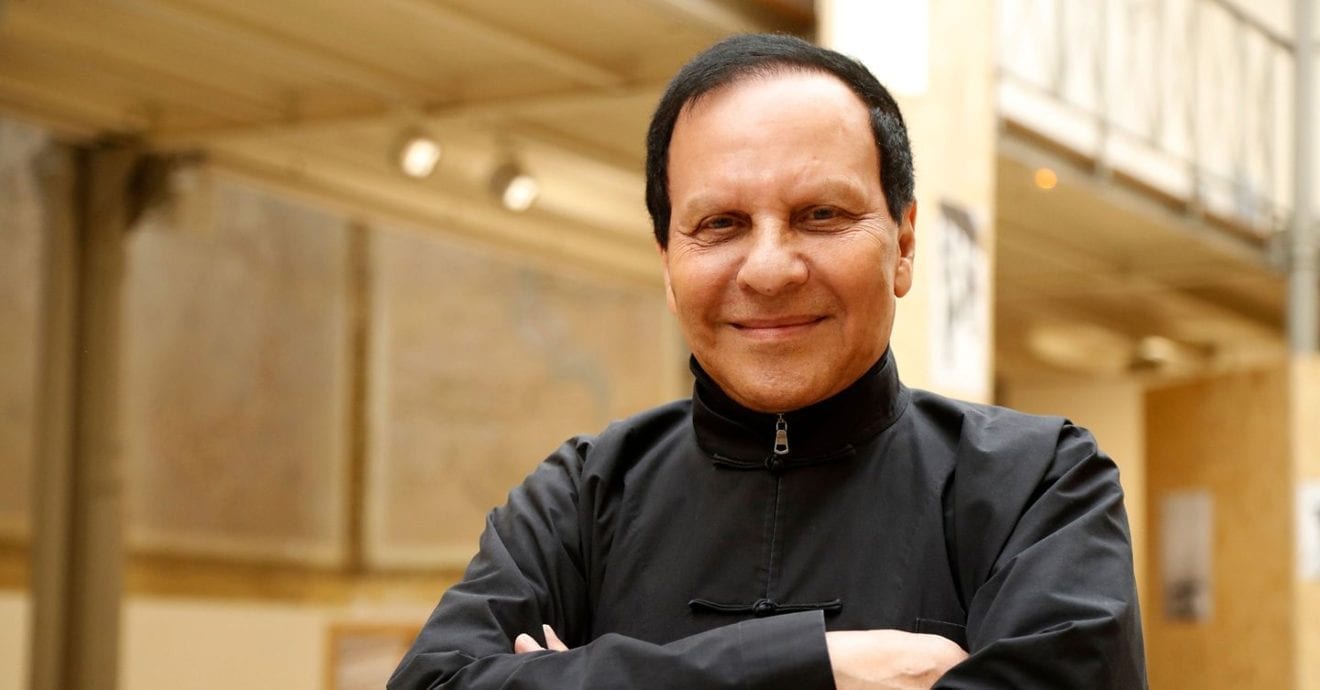
  • Azzedine Alaïa dies at the age of 77

    Azzedine Alaïa dies at the age of 77

    Alaïa was one of the industry’s few designers willing to follow his own conventions and ignore fashion schedules, creating his collections at his own pace.

    His ability to do so stemmed from his prodigious talent and fashion’s seemingly insatiable appetite for his designs.

    His skill at cutting and his idiosyncratic takes on classic silhouettes have made Alaïa popular for decades; his designs remain the aspirational zenith for many.

    “It is with great sadness that I learned of the passing of Azzedine Alaïa,” François-Henri Pinault, Kering’s chairman and chief executive, told BoF. “In the fashion world, he was a great, a major couturier. Everything was at the top with him: couture, art, the standards he aimed at, his dedication to his work, his mastering of techniques, and all the women he dressed. He was an artisan in the noble sense of the term, and a man fiercely attached to his freedom. He was a friend.”

    Alaïa’s love of fashion began through his reading of Vogue at a young age.

    Lying about his age to attend the École des Beaux-Arts in Tunis, he began working as a dressmaker after graduating, before electing to move to Paris in 1957.

    There he started his career at Christian Dior as a tailleur, but soon moved to work for Guy Laroche for two seasons and then on to Thierry Mugler.

    He opened his first atelier in his Rue de Bellechasse apartment in the late 1970s, from which he dressed his private clientele, which included Marie-Hélène de Rothschild, Louise Lévêque de Vilmorin and Greta Garbo.

    In 1980 he produced his first ready-to-wear collection, which was championed by the then doyennes of fashion, Melka Tréanton of Depeche Mode and Nicole Crassat of French Elle, who both regularly featured his work in their respective magazines.

    That same year the designer moved to larger premises in Paris and by 1988 Alaïa had opened boutiques in Beverly Hills and New York, and was soon dubbed the “King of Cling” by the media.

    During the mid-’90s Alaïa partially retired from the fashion scene for personal reasons.

    In 2000, Alaïa signed a partnership with the Prada Group. He then bought his brand back from the group in 2007 before entering an agreement with Richemont.

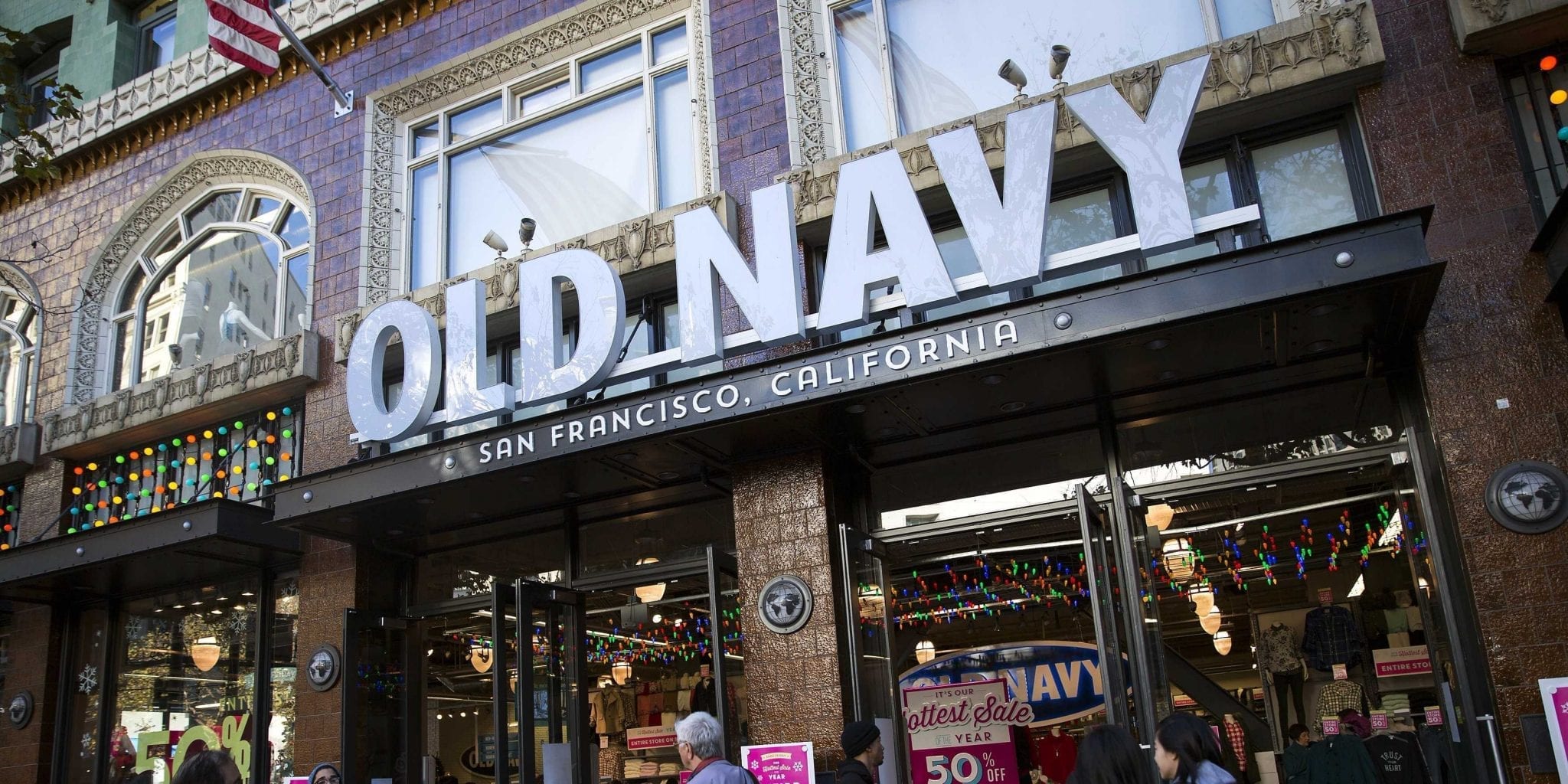
  • Gap results to be saved by Old Navy

    Gap results to be saved by Old Navy

    At headline level, the latest Gap Inc results are not too bad. Overall revenue rose by 1.1 per cent, a respectable increase that is some way above that posted over the last two quarters. Net income also increased by 12.3 per cent compared to the previous year.

    Unfortunately, behind the headline, it is the same old story. Old Navy is driving group performance while the other two leading brands are struggling. Admittedly, the 0.8 per cent US revenue decline at Gap and the 2.6 per cent dip at Banana Republic are better than recent reporting periods, but neither demonstrates a fully-fledged recovery.

    Management has been keen to emphasise the changes that are being made to revitalize the challenged brands. On the ground, there is some evidence of this happening. At Gap, for example, there have been marginal improvements in quality and greater emphasis has been placed on in-demand products like athletic wear. However, the majority of the offer remains samey, as do things like store environments and point of sale material. In our view, Gap has very little newness to communicate and, as such, is still finding it difficult to inspire customers.

    The new marketing campaign, ‘Meet me in the Gap’, is not terrible, but neither is it particularly compelling. As such, while it has helped rather than hindered sales, it has not succeeded at pulling in new shoppers or getting lapsed shoppers to take a fresh look. Given the offer has not shifted very much, perhaps this is just as well.

    In essence, the change at Gap is lacklustre – especially when compared to a brand like Abercrombie & Fitch which has ripped up the rulebook and completely reinvented itself. Gap needs to emulate this bravery and do something radical to put the business back on a sustainable growth trajectory.

    Stuck in a rut

    If Gap has made some progress, Banana Republic still seems stuck in a rut. Despite a change of leadership, the proposition still lacks energy and focus. As such, it is hard to understand who the brand is targeted towards or what needs it is trying to address. Until these things are resolved, Banana Republic will remain on the back foot. To be fair, management always said that the latter part of this year would be about stabilising the brand rather than reinventing it, but this could amount to a tacit admission of not knowing what changes to make or how to make them.

    Fortunately, Gap Inc has been able to rely on Old Navy to push up performance. While sales growth moderated this quarter, the brand remains a popular destination for younger and family shoppers. The new winter and fall collections are compelling, which should benefit sales over the holiday quarter.

    There has been good progress within Gap’s stable of smaller brands like Athleta and Intermix. Both of these concepts have significant potential, with Athleta in particular positioned to grow its market share. Unfortunately, the revenue contribution of these divisions is insufficient to make a material difference to the group’s overall numbers.

    In summary, Gap has become a more stable business and sales declines appear to be starting to bottom out. However, the company has no real sense of direction or ambition for two of its major brands.