Tag: International

  • Asos posts half year profit increase

    Asos posts half year profit increase

    Online fashion retailer, Asos, has posted a 14 per cent increase in profits for the six months to the end of February to £27.3 million.

    The company saw a 31 per cent increase in sales to £889.2 million. UK retail sales rose by 18 per cent and international sales went up by 42 per cent.

    Sofie Willmott, senior retail analyst at GlobalData, said Asos’ broad product range sold on local language and currency platforms, along with its aggressive delivery proposition and responsive pricing, allows it to steal market share from well-established international and local players.

    “Asos’ mobile-first approach has paid off with mobile devices now accounting for 58 per cent of orders and 70 per cent of traffic,” she said.

    Willmott said competitors targeting the 16-34 age group should take note that a spotlight on mobile functionality to create a smooth, and enjoyable, shopping journey will drive visitor-purchaser conversion.

    “In a period of weak volume growth, retailers must use mobile channels to capitalise on frequent engagement and implement fast and simple checkouts to capture impulse spend.”

    According to Willmott, Asos has continued to strengthen its product offer by introducing new brands, including competitors Miss Selfridge and Burton, while also broadening its own label offer into niche product areas such as plus size for men which was recently introduced and activewear due to launch in 2017 – allowing Asos to target a larger customer base.

    “Meanwhile, the number of UK Asos premier customers lifted 41 per cent on last year, leading to an eight per cent rise in order frequency in the UK.”

    GlobalData research shows Asos is market leading in driving spend through its delivery subscription scheme, with 60 per cent of consumers shopping at Asos more often since signing up.

    Despite a 14.3 per cent rise in operating profit to £27.1 million, operating margins fell to 2.9 per cent from 3.6 per cent last year, signalling the impact of the highly promotional sector.

    “Since Asos is committed to keeping prices stable despite higher inflation in 2017, we forecast margins to weaken further in H2.”
  • Fashion retailer Jaeger reportedly on brink of collapse

    Fashion retailer Jaeger reportedly on brink of collapse

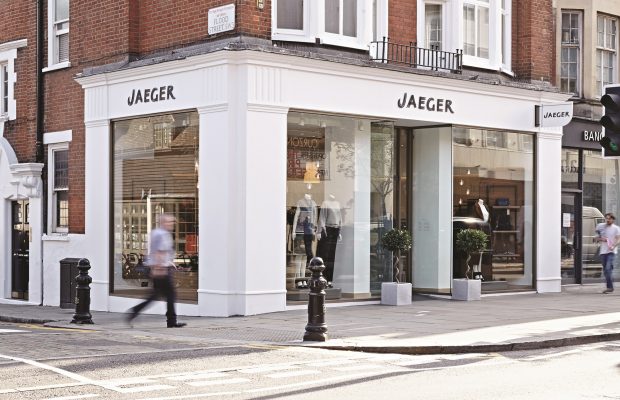
    Century-old UK fashion retailer Jaeger is reportedly on the brink of entering administration.

    The 25-store strong chain was recently sold by private equity company Better Capital to an unidentified buyer, but according to a report in the Sunday Times, the business is believed to be beyond repair.

    Better Capital paid £19.5 million for Jaeger in 2012, but the business has not been profitable since.

    Jaeger received a royal warrant in 1910 and in its heyday, its fashion models included Audrey Hepburn and Marilyn Monroe. But the business entered a decline in the 1980s, overtaken by more popular brands from Europe.

    The Sunday Times reported the mystery buyer was Edinburgh Woollen Mill, which has a track record of buying distressed retail businesses and turning them around.

    “Edinburgh Woollen Mill has a history of buying troubled retailers and turning them around, and it’s one of the more credible bidders for Jaeger,” an unnamed source told the Press Association.

  • New H&M retail brand revealed

    New H&M retail brand revealed

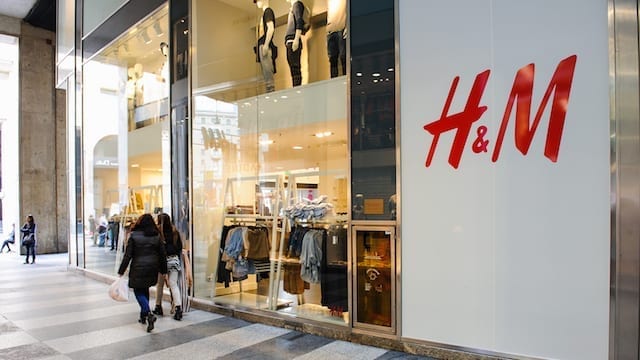
    The next new H&M retail brand will be called Arket.

    The first of the brand’s stores will open in London in late summer or early autumn this year.

    H&M CEO Karl-Johan Persson said Arket will be priced above H&M. He described the concept as “simple, yet timeless and functional”.

    Fast-fashion retailer H&M told Business of Fashion that Arket – the Swedish word for “sheet of paper” – would be positioned as a “modern-day market that will offer essential products for men, women, children and home”.

    Perhaps the most surprising feature of the new store brand is that it will sell selected lines from non-H&M brands beside its own label.

    At the release of the company’s results in January,  revealed the company would launch one or two new brands this year, joining Cos, Monki, Weekday and Cheap Monday.

    “In 2017 we are looking forward to delivering strong collections and customer experiences and launching one or two new brands. This, combined with the ongoing improvements and our investments in the omnichannel offering, the supply chain and advanced analytics make us positive towards our opportunities for reaching our newly rephrased growth target, both in 2017 and going forward,” Persson said.

    Arket is clearly the of those new H&M retail brands.

    In an interview with BoF, Arket’s creative director Ulrika Bernhardtz described the brand’s DNA as “timeless, crisp, quality and warmth”.

    “Timeless is style beyond trend. And crisp is the counterpart to that: to be always relevant, modern and fresh. Quality is not only the feel of garments; it’s also how they are produced. Warmth is about being generous and personal.”

    An Asian launch for Arket is not imminent, with BoF reporting it will be simultaneously launched in 18 European markets this year, starting with Brussels, Copenhagen and Munich. Some stores will feature a cafe serving “new Nordic” cuisine.

  • Bankruptcy looming for Payless ShoeSource?

    Bankruptcy looming for Payless ShoeSource?

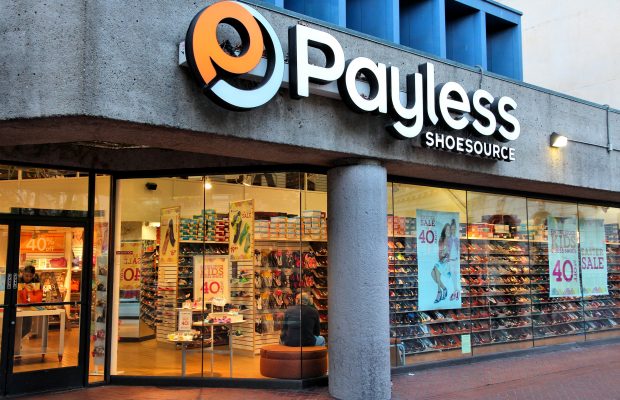
    Struggling US retailer Payless ShoeSource is headed for bankruptcy, reports Bloomberg.

    Payless, which has not commented on the report, operates some 4000 stores globally and under the reported Chapter 11 protection likely to be sought next week, will immediately shutter between 400 and 500. As many as 1000 may be closed as part of the restructuring plan aimed at rescuing the 61-year-old company.

    The company is owned by Golden gate Capital and Blum Capital Partners, who bought the business in 2012 as part of the break-up of Collective Brands. Headquartered in Kansas, it employs about 22,000 staff.

    Bloomberg cited sources familiar with the discussions but unable to comment publicly because they were not public.

  • Amazon shutting down unprofitable Quidsi unit

    Amazon shutting down unprofitable Quidsi unit

    Amazon on Wednesday confirmed that it is shutting down its Quidsi unit, which runs websites Diapers.com and Soap.com, due to a persistent lack of profitability there.

    Quidsi was an Amazon rival in the US before the online retail made a $545 million deal in late 2010 to buy the startup.

    “We have worked extremely hard for the past seven years to get Quidsi to be profitable, and unfortunately we have not been able to do so,” an Amazon spokesperson said in an email reply to an AFP inquiry.

    “Quidsi has great brand expertise and they will continue to offer selection on Amazon.com; the software development team will focus on building technology for AmazonFresh.”AmazonFresh lets people shop online for grocery store goods, including pet, baby and beauty supplies.

    Quidsi co-founder Marc Lore went on to create another online commerce company, Jet.com, which was bought last year by Walmart for about $3 billion in a move aimed at competing with Amazon.

  • Hermes promises year of ‘digital change’

    Hermes promises year of ‘digital change’

    French luxury retailer Hermes plans to update its digital strategy this year with an initial test run “in a small country”, according to chief executive Axel Dumas.

    He says 2017 will be “a year of digital change for us”, with the company’s e-commerce sales showing “significantly higher” growth rate than overall turnover.

    Dumas says he is proud of the result considering the company’s website “sort of stumbles along”.
    During the Christmas season, the Hermes e-shop was the group’s best-performing outlet for global neck-tie sales.

    “Hermes was the first luxury brand to launch e-commerce, in 2001, especially in the US,” says Dumas. “We are primarily retailers and wanted to handle our own online sales directly rather than hand over this business to an external corporate site.”

    However, he admits the website has aged while new technologies have forged ahead.

    “In wanting to maintain great image quality, we lagged behind in getting a mobile app,” says Dumas, also acknowledging a lack of clear organisation for the website.

    “To recreate the magic of Hermes, we decided to make a site where people could lose themselves. The result: people were really lost,” he says.

    “We hope to launch the new site this year. We will first run a test in a small country.”

  • Esprit jewellery set for revamp with new partner

    Esprit jewellery set for revamp with new partner

    The Esprit jewellery line-up is set for a major revamp after the appointment of a new licensee, Versteegh modeaccessoires effective July 1.

    Esprit says that with more than 60 years of experience in the wholesale trade, Versteegh brings valuable know-how and important expertise in the field of fashion accessories to the partnership.

    “Thanks to their excellent supplier network, Versteegh is able to guarantee short and reliable delivery times. The Esprit-branded jewellery collection from Versteegh will be available internationally in Esprit’s own retail stores and online,” said Maria Pambori, VP head of global licenses/product with Esprit.

    “Together with our new partner, we want to excite our customers with a product portfolio that reflects the latest trends and interprets them through the philosophy of our brand Esprit. With Versteegh we have found a partner who attaches great importance to quality, has a keen sense of trends and thus perfectly meets our high requirements.”

    Versteegh director Frans Lenting said the positioning of Esprit offers his company an ideal platform for its products.

    “We are looking forward to making a great impression on Esprit customers with our collections.”

    Headquartered in Houten in the Netherlands, Versteegh is an international wholesaler in the field of fashion jewellery and accessories. Its own design and styling team regularly provides for new collections.

    Alongside jewellery, the company also sells bags, sunglasses, watches, hair accessories and gloves.

  • Next faces a downturn

    Next faces a downturn

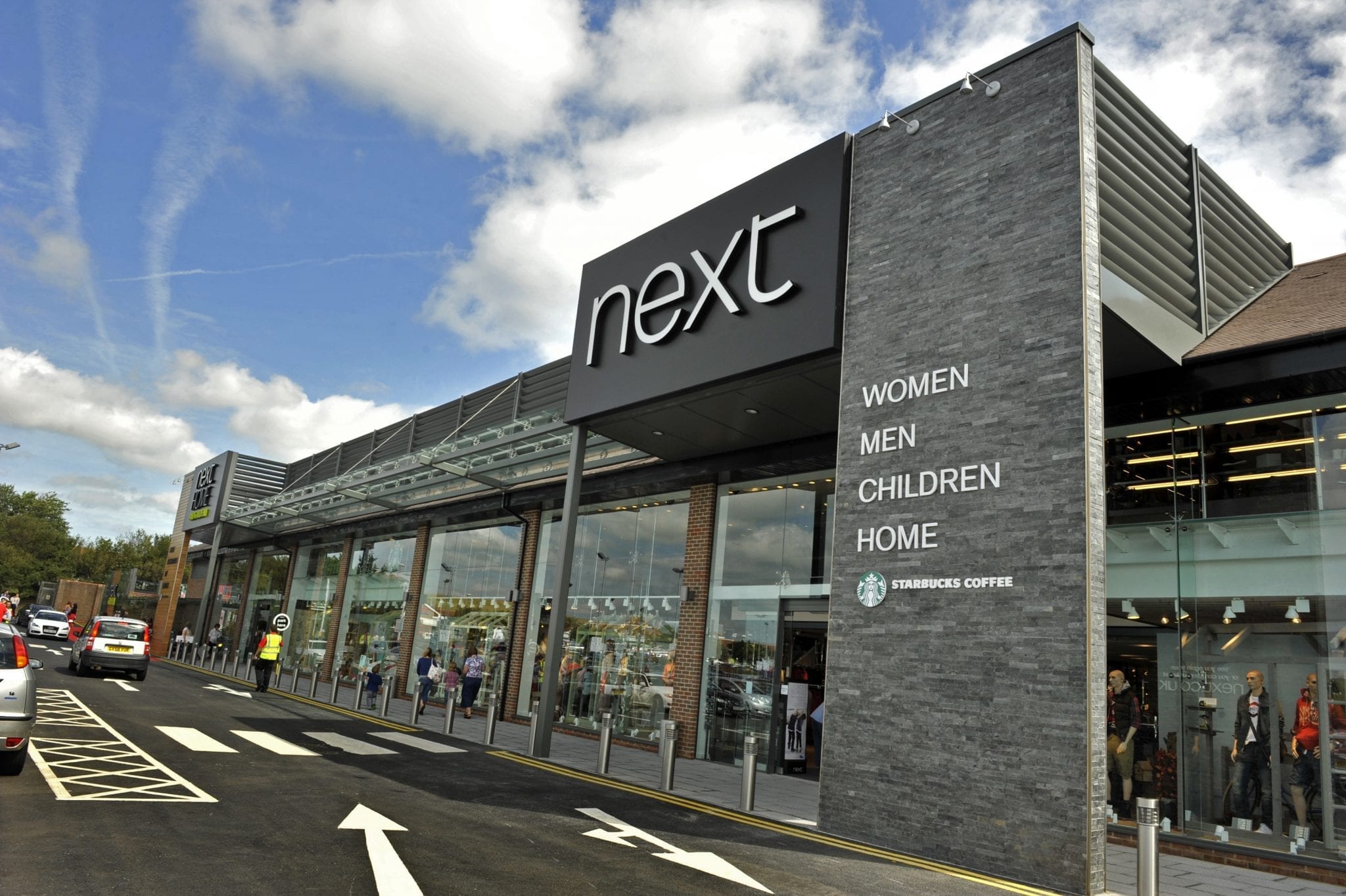
    Next profits have fallen for the first time in nearly a decade.

    The UK high street fashion retailer said pre-tax profits fell 3.8 per cent to  £790.2 million last fiscal year.

    Emily Stella, a senior retail analyst with GlobalData, says the company has faced numerous challenges over the last year: erratic weather, rising import costs as the pound depreciated, and Next Directory being hit by increased competition from online pure-plays Asos and Boohoo.

    “Not to mention a more general shift away from clothes buying in favour of spending on leisure,” she commented.

    “Next’s stance on discounting – only marking down items during sale periods – has been a good thing for the retailer, sustaining consumer perceptions of product value and allowing Next to retain high margins. However, full-price retail sales were down 4.6 per cent, indicating that shoppers are not buying into its current proposition – and Next admits it has not been fast enough at responding to new trends.”

    But she says the retailer remains one of the best-run brands on high street – the issue is that the clothing market is “far tougher than before”.

    Next says it anticipates a difficult first half of the new trading year with improved performance in the latter half.

    “But the retailer could find the next few years a challenge as competition intensifies and Next struggles to keep up,” concludes Stella.

  • Facebook launches new shopping format

    Facebook launches new shopping format

    Global brands Adidas and Tommy Hilfiger are among the first names to use Facebook’s newly launched shopping ad format, which incorporates creative media into product pages when selling.

    The social media giant said the new platform, dubbed ‘collection’, increases the “likelihood of discovery and a purchase” by featuring a primary creative video or image above relevant product images.

    Global sports brand, Adidas, said it used the platform to drive sales for its a new garment and complementary products, and saw a 5.3x return on ad spend

    “We used collection to showcase a video highlighting the technical features of the Z.N.E. Road Trip Hoodie,” said Rebecca Watts, performance marketing senior specialist, Adidas.

    “People who tapped on the ad were instantly taken to a full-screen shopping experience that included complementary Adidas products to complete the look.

    Meanwhile, American fashion brand, Tommy Hilfiger, said the platform creates a consumer experience that reflects how current generations of digital natives interact with their favorite brands. The fashion brand said it used the platform to for a marketing campaign targeting smartphones and saw a 2.2x higher return on ad spend.

    “Our mission was to democratise the runway and make every look immediately available to all consumers worldwide,” said Avery Baker, chief brand officer, Tommy Hilfiger.

    “We took our video assets to the next level, through integrating shopping functionality. The results exceeded expectations, generating an ROI increase of over 200 per cent.”

    Facebook said the platform was spurred by research that showed three in four consumers say that watching videos on social media influences their purchasing decisions and that 45 per cent of all shopping journeys now contain a mobile action,

    The US corp also said it will start a test of a new outbound clicks metric over the coming weeks, which will show the number of clicks leading people off of Facebook. Marketers with ads that appear on Instagram will also see outbound clicks reported.

  • Retail IoT connections to more than treble by 2021

    Retail IoT connections to more than treble by 2021

    Retail IoT connections will rise 350 per cent by 2021 according to new data from Juniper Research.

    The UK-based company predicts retailers will connect 12.5 billion business assets to IoT platforms by then, ranging from products to digital signs and Bluetooth beacons.

    That compares with an estimated 2.7 billion connections in 2016.

    Juniper also predicts that RFID (radio-frequency identification), will re-emerge as the industry’s ‘killer app’ becoming the key factor in the IoT retail ecosystem.

    “RFID tags, used to identify and locate retail assets in real-time, are now at a low enough price point for mass deployment and integrate well with new IoT systems and analytics,” Junpier said in its research paper IoT in Retail: Strategies for Customer Experience, Engagement & Optimisation 2017-2021.

    “New services, such as dynamic pricing or enabling promotional offers via in-store digital signs are also poised for growth.”

    The company says ‘next-gen’ processes, such as personalised retail, could be achieved by integrating enterprise software and emerging technologies, with data from connected IoT assets. Juniper forecast that software spend for enterprise resource planning systems to integrate this data would reach US$11.3 billion annually in 2021, from $1.5 billion in 2017.

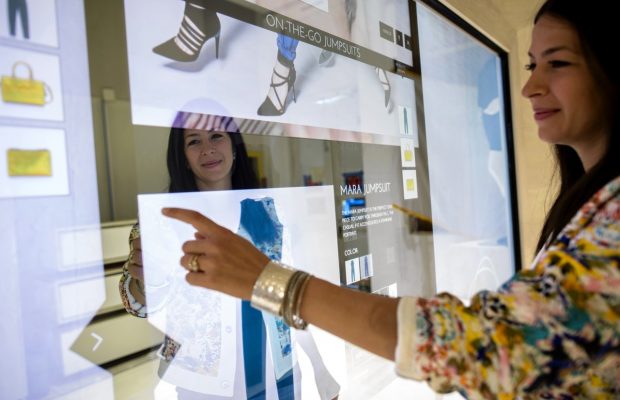
    “Innovative retailers such as Rebecca Minkoff have combined RFID with smart mirrors,” said research author Steffen Sorrell. “Integrating these systems allows real-time information to improve the store experience and bridge physical and virtual worlds – in this case, the concept drove a 200 per cent increase in sales.”

    Aiming for the Endgame

    Juniper predicts that each retailer’s approach to the IoT should differ depending on their main channel focus. It argues that physical retail spaces still have many benefits, not least in terms of being able to avoid the sterility of online shopping.

    “Therefore, Juniper predicts that online retailers’ focus would be on technologies such as machine learning to provide digital assistance, or digital performance management. In this latter instance, measurements such as user experience, IT performance and business outcome are analysed holistically to determine necessary improvements.”

  • Shopify revenues grow 90 per cent

    Shopify revenues grow 90 per cent

    Shopify, the cloud-based, multi-channel platform designed for small and medium-sized businesses, has reported a 90 per cent increase in revenues for 2016.

    GMV rose 99 per cent to US$15.4 billion, figures which “speak to the enormous opportunity in retail right now and our strategic position within it,” according to CFO Russ Jones.

    Total revenue for the full year reached $389.3 million, compared with $205.2 million in 2015. Within this, subscription solutions revenue grew 68 per cent to $188.6 million and merchant solutions revenue grew 115 per cent to $200.7 million.

    But it still recorded a net loss of $35.4 million, almost double the $18.8 million of 2015.

    Merchants can use Shopify software to design, set up, and manage their stores across multiple sales channels, including web, mobile, social media, marketplaces and physical retail locations. Shopify powers 377,500 merchants in some 175 countries. Its clients include Tesla, Nestle, GE, Red Bull and Kylie Cosmetics.

    “Our work at Shopify is to help entrepreneurs thrive in a space that’s changing all the time, and we did our job especially well this past holiday season,” stated Tobi Lütke, founder and CEO of Shopify. “That eight of our 10 top sellers over the Black Friday Cyber Monday weekend were merchants that had upgraded from lower-priced plans reminds us that today’s startups become tomorrow’s superstars, at a velocity that appears to be increasing all the time. As the engine powering the growth of these merchants, Shopify has an opportunity that stretches years into the future.”

    For the full year 2017, Shopify currently expects revenues in the range of $580 million to $600 million and an operating loss in the range of $73 million to $77 million.

  • Fashion house Calvin Klein rebranding

    Fashion house Calvin Klein rebranding

    Fashion house Calvin Klein, a wholly owned subsidiary of PVH, plans to rebrand its men’s and women’s contemporary apparel and accessories business.

    It is changing from Calvin Klein Platinum to CK Calvin Klein, with a global roll-out of the new branding to start this month.

    In Asia and Japan, in coordination with licensing partners Club21 and Onward Kashiyama respectively, the CK Calvin Klein rebranding will be introduced with this year’s spring season. Freestanding stores opening this year in Asia will feature the new branding, while existing stores will be transitioned on a rolling basis.

    Founded in the US in 1968 by Calvin Klein and his business partner Barry Schwartz, the company had global retail sales exceeding US$8 billion in 2015 with distribution in more than 110 countries. Calvin Klein employs more than 10,000 people globally, and was acquired by PVH in 2003.

    With a history of more than 130 years, PVH is an apparel company with a presence in more than 40 countries and more than $8 billion in revenues. As well as Calvin Klein it owns the Arrow, Izod, Olga, Speedo, Tommy Hilfiger, Van Heusen and Warner’s brands.

  • Generation Z prefers in-store shopping decisions

    Generation Z prefers in-store shopping decisions

    An overwhelming number of generation Z, also known as post-millennials, prefer visiting a store as the final step in their shopping process, new research has found.

    In its Evolution of Retail 2017 Generation Z shopper survey, Euclid Analytics found that 66 per cent of the demographic prefers in-store shopping, while 28 per cent wants to interact with store staff members.

    This mobile-first generation – by broad definition, aged under 22 – uses digital to research products, but then prefers to go to the store to touch and try out items before buying, says the survey. The challenge for retailers will be to figure out a way to help cater to this new approach.

    Generation Z prefers to get in and get out when it comes to shopping behaviour, the survey also shows, with 53 per cent saying they dislike browsing in stores and 31 per cent saying it is hard to find items in stores. Meanwhile, 26 per cent want retailers to provide a more tailored shopping experience.
    Euclid Analytics CEO Brent Franson says retailers should reach out to generation Z at this early stage to introduce their brands and forge enduring relationships.

    “Our findings highlight some great opportunities for them to connect with this mobile-first population that is still very much interested in meaningful in-store experiences. Winning their loyalty will mean getting creative about using mobile and social marketing outreach in their physical stores.”

  • H&M joins Better Than Cash Alliance

    H&M joins Better Than Cash Alliance

    Sweden’s H&M has become the first global fashion brand to join the United Nations’ Better Than Cash Alliance.

    The retailer says it will encourage its suppliers to pay their workers through mobile money or other digital forms to improve the livelihoods of its workforce, enhance transparency and cut factory costs.

    The Better Than Cash Alliance is a partnership of governments, companies and international organisations aiming to accelerate the transition from cash to digital payments.

    “Digital payments are an efficient and scalable way to improve the lives of the employees of our suppliers,” says H&M social sustainability manager Gustav Loven. “They offer a faster, safer and more transparent way for people to receive their salary, increase financial inclusion and support women’s economic independence.

    “Also, for our suppliers, paying wages digitally can generate savings, increase security and provide more accurate data on wages.”

    Of the 1.6 million people employed along H&M’s supply chain, 65 per cent are women, many with limited access to the financial services they need to create a better life for themselves and their families. Many factory workers worldwide are paid entirely in cash, which entails cumbersome, expensive and dangerous processes for both factories and workers.

    Encouraging suppliers to pay wages through digital channels, such as bank accounts, cards or mobile money, will build on H&M’s sustainability commitment to work with its business partners to promote good working conditions, fair living wages and sustainable economic growth.

    “H&M’s leadership will help inspire other companies in the industry, and beyond, to make the shift to digital payments,” says Better Than Cash Alliance MD Dr Ruth Goodwin-Groen.

    Expanding digital payments to the world’s cotton supply chain could potentially reach 250 million people, including smallholder farmers who have limited access to digital payment systems and financial services in general.

  • Pizza Hut’s new “Pie Tops” shoes can order pizza for you

    Pizza Hut’s new “Pie Tops” shoes can order pizza for you

    Ordering a pizza has stepped up a notch with new “Pie Tops” sneakers being launched by fast-food chain Pizza Hut.

    It is just a matter of the wearer pressing a special button on the tongue of the shoe. This makes a connection with a Pie Topps app, which then arranges to have a pizza delivered to the wearer wherever they are via geolocation technology.

    Dreamed up by advertising agency Droga5, the limited-edition shoes were made by US customised sneaker expert Dominic Chambrone, known as “The Shoe Surgeon”. Alas, they are unlikely to find their way to Hong Kong any time soon.

    Pie tops = pizza hut

    “This is one of those ideas that as soon as we saw it, we wanted to buy it,” says Pizza Hut VP of media and advertising David Daniels.

    The shoes are part of a two-month online ordering promotion for Pizza Hut, and tie in with the March Madness national basketball event in the US. As there are 64 teams in the field for the event, only 64 pairs of the shoes have been made.

    These are being given out to media members and influencers mainly, reports industry magazine Adweek, which says only a few Pizza Hut regulars are likely to score a pair.

    There is no word on who foots the bill for the pizza deliveries.