Tag: International

  • Subdued Amazon results clouds impressive growth

    Subdued Amazon results clouds impressive growth

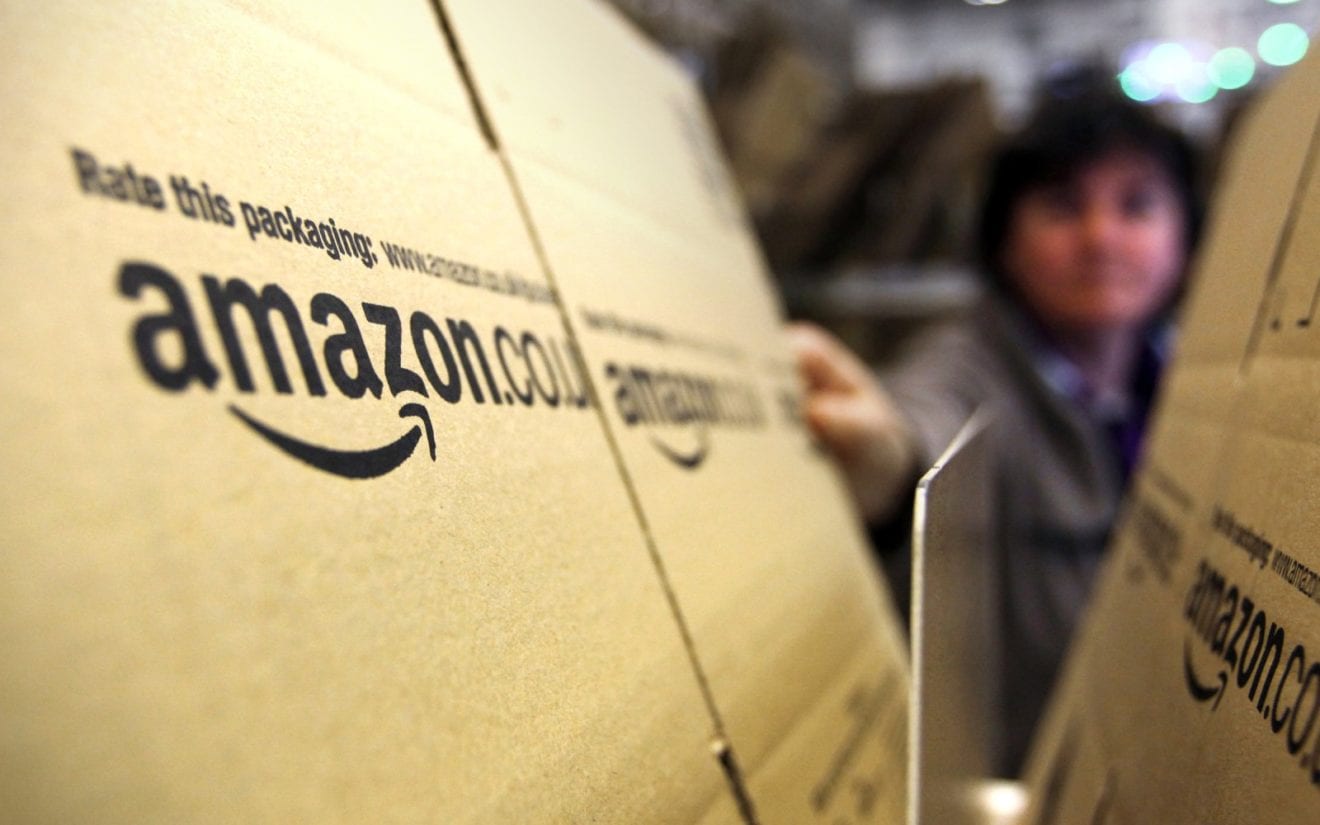
    Amazon is usually a retailer that operates at full volume, the noise of its sales growth a clarion call in an often muted retail sector.

    However, this quarter that volume seems to have been turned down a couple of notches. While the latest Amazon results show impressive growth, and is a long way above the retail sector overall, by the high benchmark the company has set, the latest numbers have a certain softness. Revenue totalled US$43.7 billion, up 22 per cent year-on-year, below analysts’ expectations.

    Some of the loss in momentum comes down to a more unfavorable exchange rate. On a constant currency basis, Amazon’s overall growth is a more respectable 24 per cent; while its international growth leaps to 23 per cent from 18 per cent, once the impact of the strong dollar is factored out. Even so, these upticks still leave a gap in growth compared to what Amazon delivered over the first three quarters of the fiscal.

    Part of the softness comes down to shipping-related revenue, which grew by its slowest pace in over a year. This has placed a little downward pressure on the revenue line. More worryingly it means that shipping revenue from consumers is now strongly adrift from Amazon’s shipping costs. In the final quarter, the former grew by 29 per cent, while the latter surged by 35 per cent to just over $5.6 billion. This is one of the reasons the company missed its profit forecasts, and why operating profit came in at 2.9 per cent of sales versus 3.1 per cent over the same period last year.

    Arguably, low cost and fast delivery are a fundamental part of Amazon’s appeal to consumers. However, they are also its Achilles’ heel – and with Prime becoming more popular, and with a greater focus being put on speedier shipping times, we have concerns that Amazon could see further profit erosion as it enters its new fiscal year. This view is supported by Amazon’s own guidance for the next quarter, which suggests profit will come in well below last year.

    As niggling as these points are, they do not diminish Amazon’s success in other areas. Over the holiday quarter, the company saw demand for its devices, including the Echo product, boom. This helped Amazon to a very strong performance in electricals at a time when the overall market was struggling with a lack of newness and innovation. It also aids Amazon to extend its ecosystem to more households, something we believe will yield fruit over the coming years as it becomes a more integrated and critical part of people’s lives.

    The AWS (Amazon Web Services) division is also a success story. Here revenue grew by 47 per cent off the back of a very strong prior year comparative. This part of the business is helpful as its relatively strong profitability gives buoyancy to Amazon’s balance sheet.

    As much as this quarter has been more subdued, Amazon remains firmly on the front foot in terms of innovation. This alone will continue to make it a retail outperformer, at least in sales terms, over the next year and beyond.
  • Starbucks future strategy applauded

    Starbucks future strategy applauded

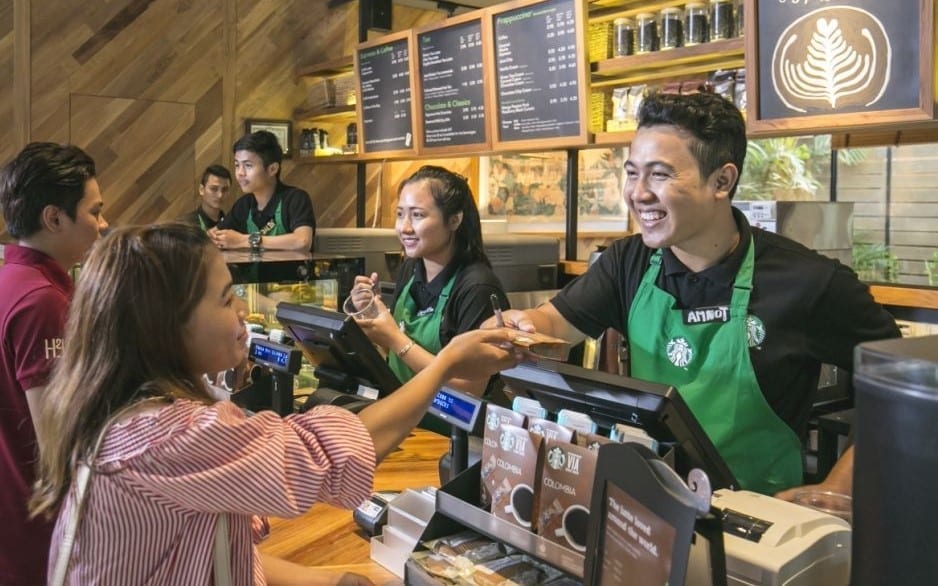
    While Starbucks has kicked off its new fiscal year with the lowest same-store sales growth since 2009, there is no reason to be overly discouraged by these results.

    Certainly, there are a few areas of softness, but the uplift of 3 per cent in the Americas comes off the back of a 9 per cent rise in the prior year. For a mature, fairly saturated company operating in a competitive segment of the market, the numbers show resilience.

    In any case, the overall revenue numbers are somewhat more robust – both within the Americas and on a global basis – thanks to a healthy program of store expansion. Starbucks may be reaching its peak in some localities, but it has demonstrated that even in its more mature markets it can still find headroom for new openings.

    Starbucks has done a reasonable job of managing its profitability at a time when margins are being squeezed by higher staffing costs. During this period, overall operating income increased by 7 per cent on a global basis and by 3 per cent within the Americas – partly thanks to the price increases of last year.

    All of that noted, there is no doubt that Starbucks is now firmly in middle age: it is finding growth more difficult to come by and, in financial terms, the business is not moving upwards at the pace it once did. In our view this is not demonstrative of a company in trouble, or even a company doing the wrong things, it is simply a reflection that Starbucks is a more mature business.

    Given that this dynamic is only likely to intensify over the next few years, it is incumbent on Starbucks to find new avenues for growth. The company is managing this well and has already set out its stall in terms of the innovations it intends to pursue to drive both the top and bottom lines.

    Some of these future plans lie outside the existing business model. Starbucks should be applauded for having the courage to look beyond its existing core operation, and to indicate its commitment to these ventures by putting Howard Schultz in charge of the new division. In truth, the push into premium through the development of the Princi chain and the Roastery and Reserve-only stores are not going to deliver sales volumes anywhere near those of the main business. However, their contribution will take the edge off the more subdued growth coming from core markets.

    As much as new initiatives will help, it is also important for Starbucks to look for ways to improve productivity at existing stores. This includes improvements to the food offer, which remains fairly low key and lacklustre.

    The year ahead will be both exciting and challenging in equal measure. However, Starbucks is a solid operator that will deliver single digit comparable sales growth, with total revenue uplifts just nudging into double digits.

  • AllSaints Mexico makes its debut in Mexico City

    AllSaints Mexico makes its debut in Mexico City

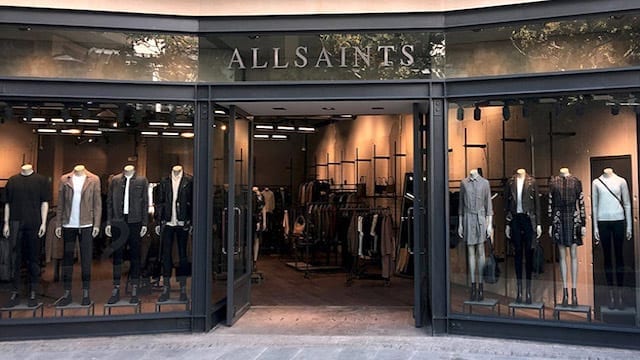
    UK fashion retailer AllSaints has opened its first store in Mexico as it begins a Latin American expansion.

    The 2368 sqft AllSaints Mexico store has opened in Mexico City’s Antara shopping centre.  It stocks menswear and womenswear collections and lines from the autumn/winter 2016 range and Capital Collection handbags.

    Like stores elsewhere in the world, the AllSaints Mexico store features distinctive tailor-made fixtures and handcrafted industrial display units, and wall-mounted vintage sewing machines set against an LED backdrop.

    AllSaints chose Grupo Sordo Madaleno as its local partner, a company which operates fashion, toy and cosmetics franchises across 25 Mexican retail locations.

    AllSaints CEO William Kim, said expansion in Latin America has always been an integral part of the retailer’s growth strategy.

    “With over 50 years expertise in the Mexican retail sector, Group Sordo Madaleno was an obvious partnership choice for us. Not only does it excel in its existing market, it shares our passion for exceptional customer experience and bringing AllSaints’ contemporary designs and premium quality collections to fashion lovers in Mexico.”

    Late last year, AllSaints opened stores in Peru and Chile. It now has 220 directly operated stores, franchises, concessions and outlets in 23 countries including the UK, Europe, North America, Asia and the Middle East.

  • Daphne International expects loss to balloon

    Daphne International expects loss to balloon

    Footwear products group Daphne International Holdings expects its net loss to balloon by more than half for the year ended December 31.

    Five main factors are listed for the projected loss by Daphne, which makes, distributes and retails its products and accessories…

    • A significant decrease in sales.
    • Negative same-store sales growth.
    • Lower gross profit margin resulting from aggressive clearance efforts and a higher
      weighting of aged products in the overall sales mix.
    • Operational charges related to inventory and store rationalisation.

    However, the group says its net cash position has improved and the inventory level lowered as a result of the liquidation of aged inventory.

    Also, the group’s eCommerce activities continued to achieve sales growth.
    Daphne says its announcement is based on a preliminary assessment, with its annual results expected to be published in late March.

  • eBay sales struggle to emulate Amazon’s growth

    eBay sales struggle to emulate Amazon’s growth

    At first glance, eBay’s final quarter numbers look relatively subdued – with growth across every line sequentially worse than the prior quarter.

    However, digging beneath the headlines reveals a slightly better picture, if only because the strength of the dollar has deflated sales. On a currency neutral basis, gross merchandise volume increased by 5 per cent, and net revenue jumped by 6 per cent. While these numbers are not ultimately reflected in the accounts, they show that eBay’s underlying performance is not quite as bad as it first seems.

    All that noted, when put into a wider context the gains remain fairly unspectacular. Indeed, eBay’s growth remains well below that of total eCommerce sales growth across the markets it serves. As well as losing market share, its performance is also anemic when contrasted to that of online peers such as Amazon – which had a stellar holiday season. This is especially so in the sale of physical products from the marketplace (which excludes the more buoyant StubHub part of the business) where revenue rose by just 1.1 per cent over the prior year.

    As much as eBay did enough to meet market expectations, the results are disappointing in that they show the various improvements the company is making are not, as of yet, generating significant traction with consumers. This includes the use of more structured data to make listings easier to find and view, and an increase in the number of full-priced products available from the site.

    As sensible as these steps are, they are really about correcting deficiencies rather than putting eBay on an innovative footing.

    eBay needs to go much further in revamping the whole online experience in order to allow it to compete more effectively with rivals. This includes trying to create some stickiness around the brand and proposition, in the way that Amazon has done by creating a whole ecosystem of products and services. Admittedly, this is a very tough ask, but it is the direction in which eBay needs to travel if it is to win back market share.

    In looking at ways to improve, eBay needs to focus its attention on younger shoppers, among whom brand perception and site usage have weakened. From Conlumino’s data, younger demographics – while active digital consumers – do not have the affinity with eBay that the generation before them did, or that older consumers do. In this regard, eBay has lost out to players like Etsy which these consumers believe to be more authentic, and more likely to offer innovative and interesting products.

    Looking ahead, there is no overly negative forecast for eBay: the company is addressing its issues and is making steady progress that will continue to aid results. However, it is one of the slower players in the fast-paced digital arena and to date there are very few visible signs it will move into the fast lane in its new fiscal year.

    -Neil Saunders

  • Levi’s exec says eCommerce forcing focus on inventories

    Levi’s exec says eCommerce forcing focus on inventories

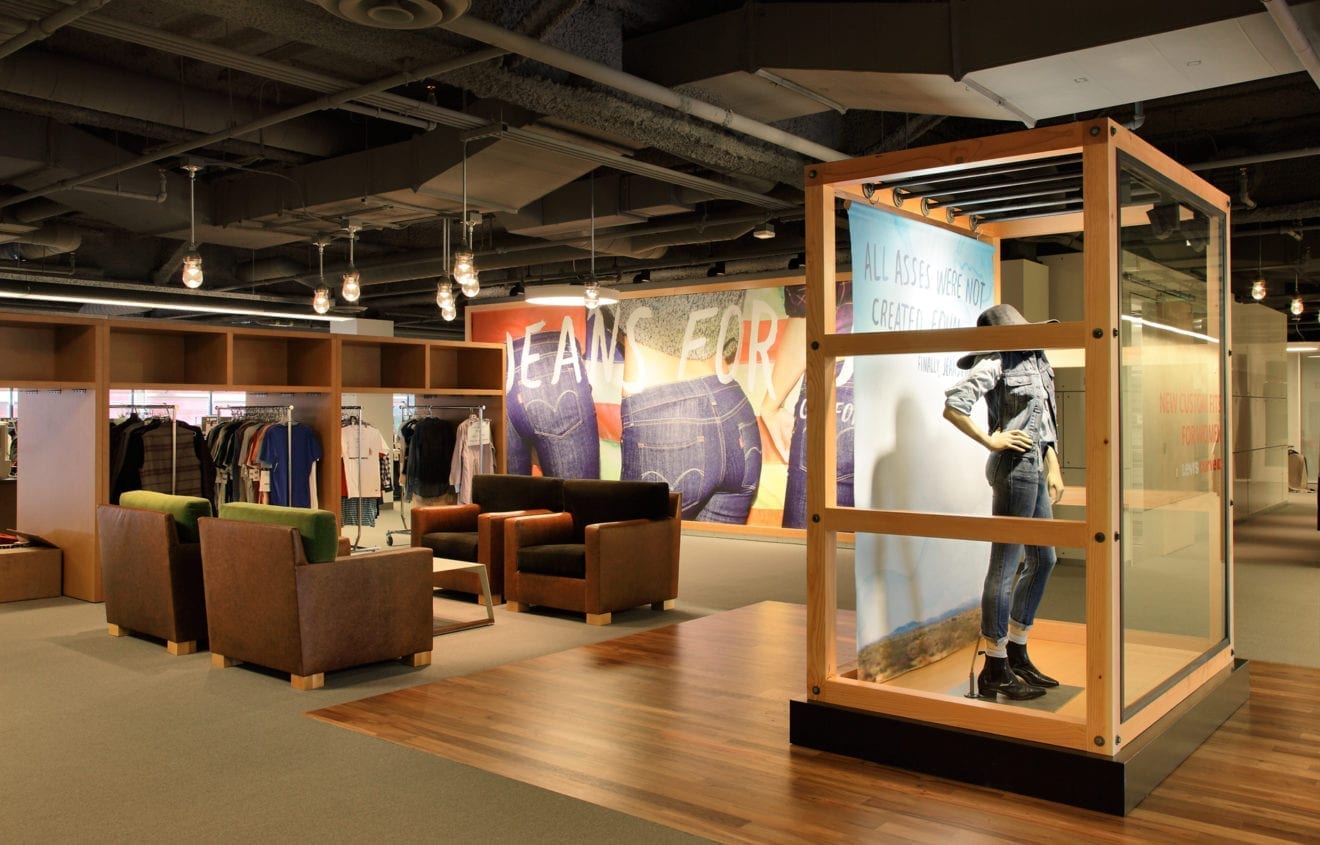
    Retailers can no longer accept a lack of shelf level inventory in-stocks and inaccurate inventories, according to Carrie Ask, executive VP and president of global retail at Levi Strauss & Co.

    Speaking at this month’s NRF Big Show in New York, Ask said that after travelling the world and observing consumers purchasing intent and behaviour in-store, the 164 year old brand’s executive team had an ‘a-ha’ moment.

    “Now while store traffic is declining, we discovered something else, something that we think is fundamentally different about store traffic today,” she said.

    “We discovered the purchase intent of consumers visiting stores, is rising. Makes sense, they don’t have to go to a store anymore, so when they do, their intention is higher.

    “In addition, we found that ‘out of stock’ and ‘couldn’t find my item’ are the top barriers to purchase for consumers that plan to make a purchase, as well as consumers who purchase but didn’t get everything they wanted.”

    Ask said the opportunity and stakes are now higher than ever for physical retailers. On the opportunity side, Ask said Levi’s were underestimating the potential within its store traffic to drive sales and conversion. And on the stakes side, the clothing brand also realised that when out of stock, the opportunity to drive a planned or impulse purchase is removed, resulting in frustrated and disappointed consumers that may decide their next trip, time and energy wasn’t worth it – potentially jeopardising future traffic.

    “In-store inventory insights, specifically shelf level instocks and accurate inventories are an age old problem for retail,” said Ask.

    “While we’ve had inventory management and planning systems for some time but typically limited to telling us whether an item is in the store but not whether it’s on the sales floor in its designated location on the sales floor.”

    In addition, Ask said instore inventory is often inaccurate, with sales associates in-store stock checks using radio or POS often culminating in coming back empty handed, not able to find products ‘even though the system said there was one.’

    “The truth is, full stop, this happens all the time and as a retailer and an industry, we can no longer accept this lack of shelf level inventory instocks and inaccurate inventories, which are an Achilles heel for us.

    “In the bad old days the consumer didn’t have very many choices and they could either keep looking and keep shopping, maybe go to a competitor or they had to settle for a substitute item, waiting for it to come back in-stock or to go without but consumers don’t have to settle anymore.”

    Levi’s is trialling technology from Intel in its stores, including the RFID tagging of all products and ceiling mounted sensors, trigger replenishment actions and get staff away from focusing on inventory management and back onto its consumers.

    “The goal is real-time, all the time, inventory insights, which brings several benefits,” said Ask. “It also gives our planning and allocation teams more accurate information to guide inventory decisions.”

  • Jack Wills fails to maximise Christmas opportunity

    Jack Wills fails to maximise Christmas opportunity

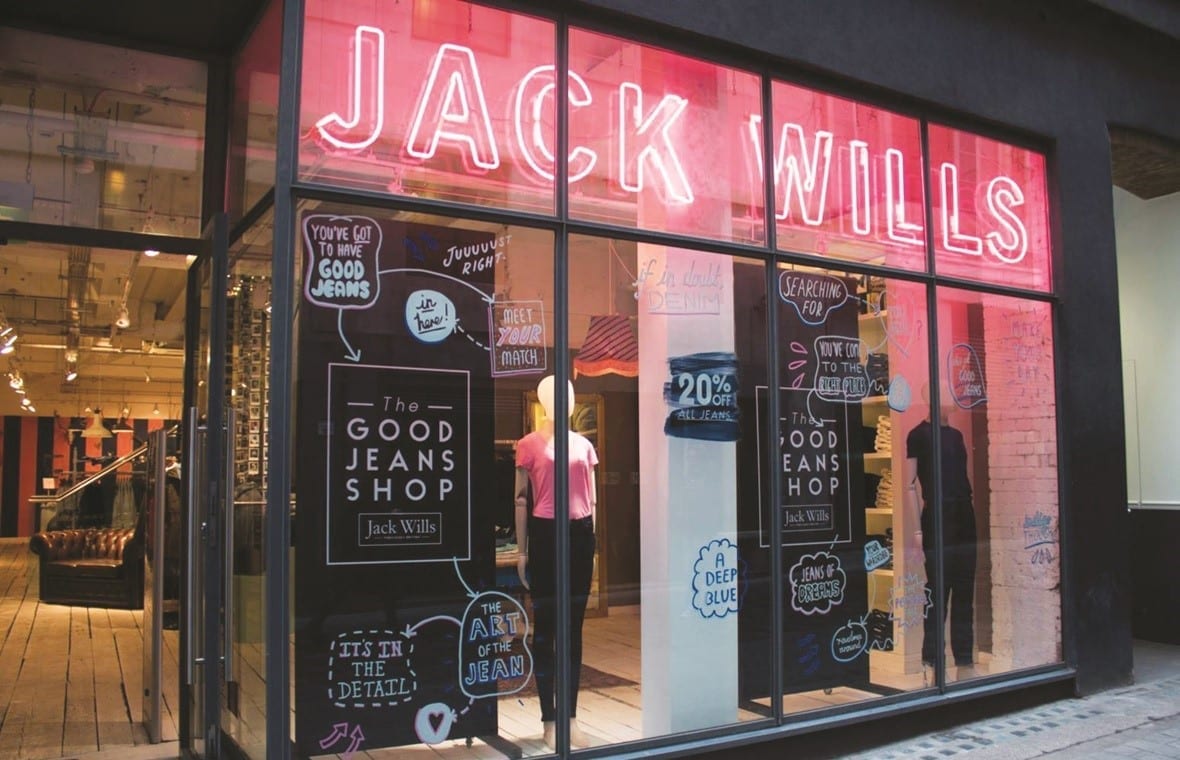
    Jack Wills, well known for its preppy style and predominant pink and navy colour palette, has reported an unexciting 1 per cent increase in like-for-like sales in December.

    However, back under the control of co-founder Peter Williams after a difficult few years, the chain’s profit margin increased by 6 per cent year-on-year after discounting was reduced.

    While other lifestyle brands such as Joules and Superdry have flourished over Christmas, Jack Wills has struggled to defend its place in the ever competitive market, indicating its appeal at home may be on the wane.

    Despite difficult trading conditions in the UK, the retailer’s international online sales doubled year-on-year, highlighting the brand’s potential in foreign markets, particularly in Asia. Jack Wills also saw mobile sales rise 60 per cent year-on-year, in line with other retailers’ growth for mobile, ensuring further investment to improve the mobile experience is a must to reduce pain points and drive conversion.

    Jack Wills’ bath and beauty category proved bountiful for the retailer, growing 44 per cent versus last year, and women’s loungewear and underwear also grew 20 per cent and 10 per cent respectively. The growth in these categories shows how the brand is a destination for premium gifting over the Christmas period, particularly for women. Jack Wills must now focus on further developing its menswear and grooming ranges in order to better capture the male gifting market.

    While the brand has recently launched its first activewear collection, capitalising on the athleisure trend, it is late to the party and Jack Wills must encourage existing, loyal customers to buy into its activewear offer for the first time. Jack Wills’ founder, Peter Williams, and private equity firm, BlueGem, will need to focus on driving destination appeal, especially as 2017 can be expected to be challenging with muted volume growth.

    -Charlotte Pearce

  • Ann Summers triumphs over turbulence

    Ann Summers triumphs over turbulence

    After a turbulent retail history Ann Summers had a stellar performance over the Christmas trading period.

    The UK lingerie and adult products retailer’s Christmas sales were enhanced by its collaboration with male cast members of The Only Way is Essex, which encouraged men to buy underwear for their partners as gifts. The campaign gained significant press coverage and led to last-minute gift purchases.

    Ann Summers should build on its existing wholesale partnerships with Asos and House of Fraser, which grew 72 per cent over the period, to help guarantee sales with minimal risk. Selling through other established retailers will also help Ann Summers compete with growing lingerie retailers such as Boux Avenue which also reported positive Christmas results, with like-for-likes rising 16.6 per cent, and have announced further store openings in the pipeline.

    Ann Summers

    The retailer’s online sales over the Christmas period were impressive at 54 per cent. However, Ann Summers faces increasing competition from online pureplays, such as LoveHoney, which are preferred by many consumers as online is a more discreet way to shop. Ann Summers can better compete with these retailers by lowering its £50 spend for free delivery online and allowing customers to select a discreet packaging option on its website.

    Ann Summers is expected to see a surge in sales in February as it benefits from Valentine’s Day and the release of the erotic film, 50 Shades Darker. However maintaining sales momentum through spring and summer without the boost from gifting occasions will remain a struggle for the retailer.

  • Nike opens 600 outlets inside JCPenney stores

    Nike opens 600 outlets inside JCPenney stores

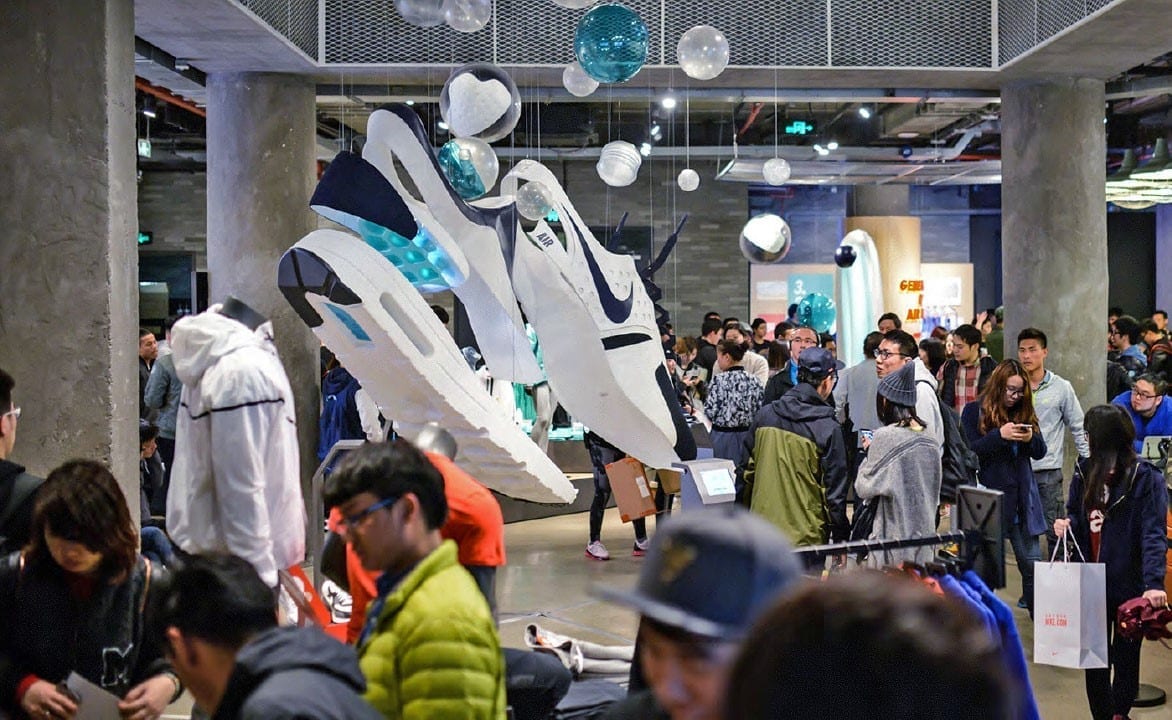
    Nike has opened more than 600 brand shops environments inside JCPenney stores.

    The two brands say they have teamed up due to the rapid growth of the activewear sector. The new Nike shops boast “pumped-up visual elements” featuring world-class athletes and crisp signage to help shoppers find the best gear for basketball, training and running. The shops also feature an expanded assortment of apparel and accessories from one of the world’s leading activewear brands.

    “Nike is immensely popular across all categories and with the rapid rise of activewear and athletic shoes, we want to have the best expression of Nike in any department store,” said John Tighe, chief merchant for JCPenney. “JCPenney is an activewear destination, and by partnering with a perception-shifting national brand like Nike, we can deliver both the performance and athleisure products that customers want.

    Shoppers browsing our new Nike environments will be both inspired and motivated to take their athletic wardrobe to the next level.”

    Anchored by an impressive Nike swoosh sign suspended above the shop, JCPenney has dedicated 500 sqft. of space to the activewear giant in a prominent location within the men’s department. Motivating graphics of athletes adorn the shop walls and updated fixtures, combined with dedicated mannequins, present the merchandise in an inspiring light. The iconic Nike logo is emblazoned throughout the shop and popular activities, including basketball, training and running, are called out with new signage to help customers shop quickly and easily. The JCPenney and Nike teams worked closely together to test various visual elements at a JCPenney store in Portland, Oregon, to create the inspiring environment for the men’s department, now available in 600 locations across the country. Similar visual elements are available in select stores for women and kids.

    The Nike selection at JCPenney will be featured throughout JCPenney marketing, including weekly sales circulars, direct mail, email and social media. Nike complements a robust assortment of fitness and athleisure brands available at JCPenney, including the retailer’s private brand, Xersion and an exclusive brand, MSX by Michael Strahan.

  • Fashion chain Hobbs builds global footprint

    Fashion chain Hobbs builds global footprint

    UK fashion chain Hobbs has reported a significant boost in sales driven by impressive international performances in the US and Germany.

    While same-store sales rose 3.9 per cent in the 13 weeks to December 31, total sales rose 14.3 per cent due to international expansion. Retail Week said the improvement reflected investment in product range and customer experience. Online sales grew 26.7 per cent.

    Hobbs joins other premium clothing retailers such as Reiss, Joules and Superdry to report positive trading results over the Christmas period.

    “This shows the opportunity and success in the premium fashion market despite 2016 being an incredibly tough year for mass market clothing retailers,” observes analyst Charlotte Pearce.

    Last year saw Hobbs open its first international solus store in Westchester, New York and further expansion across Bloomingdales’ store network and on bloomingdales.com. International sales rose by 97.9 per cent as a result.

    “Hobbs’ entry into Germany will prove worthwhile due to its strong British heritage and focus on quality and fit of products,” said Pearce.

    “Outerwear has been reported as a resounding success for Hobbs throughout the UK and its international markets, but as we move into spring/summer 2017 and put our coats to the back of the closet, CEO Meg Lustman and her team will need to close in on who Hobbs is targeting and which key trends will resonate best among its core shopper base to continue this run of better sales.”

    Hobbs is rumoured in the financial press to be up for sale after more than a decade under 3i’s ownership.

    “As we head into a difficult few years of trading, potential new owners must recognise that Hobbs is not yet out of the woods despite a better Christmas trading period.  It must firm up its place in the market and improve brand appeal and awareness to secure a loyal customer base,” concluded Pearce.

  • Essilor and Luxottica to create global eyewear powerhouse

    Essilor and Luxottica to create global eyewear powerhouse

    France’s Essilor and Italy’s Luxottica have agreed to terms of a 46 billion euro (US$49 billion) merger, creating a global eyewear powerhouse with annual sales of  more than 15 billion euros.

    Essilor and Luxottica said they will be focusing on boosting sales in Asia and Latin America as well as building their eCommerce presence.

    Essilor is the world’s largest lens maker and Luxottica the world’s largest frame maker and vendor which owns extensive retail chains, such as Sunglass Hut, Australia’s OPSM and brands including Ray-Ban, Oakley and Persol.

    “Finally, two products which are naturally complementary – frames and lenses – will be designed, manufactured and distributed under the same roof,” said Luxottica’s founder Leonardo Del Vecchio, 81, in a statement.

    The two companies are battling slowing growth internationally, but believe there is massive potential in the market with an estimated 2.5 billion of the world’s population suffering from uncorrected eyesight issues.

    Once complete, the merger of the two companies could add as much as 600 million euros to their combined bottom line.

    The new entity will be headquartered and listed in Paris and have a staff of more than 140,000 across the globe.

    It will be jointly headed by Del Vecchio and Essilor CEO and chairman Hubert Sagnieres. Del Vecchio will be CEO and executive chairman and Sagnieres, 61, executive vice-chairman and deputy CEO – but the pair will have equal powers.

    “We have and share the same values, we have and share the same vision, we have and share the same interest in the product…,” Sagnieres said in a conference call to discuss the merger. “If we really want to provide consumers with the best product, Leonardo and I will have to co-manage.”

    “This marriage will take place and will work,” Del Vecchio added.

  • Authenticity listed as top consumer value

    Authenticity listed as top consumer value

    Authenticity is the standout consumer value this year, according to market research company Euromonitor International’s Top 10 Global Consumer Trends for 2017 report.

    It cites such examples as AirBNB’s Guidebooks feature, which lets owners share local information, food apps that help consumers know more about what they are buying, and tour companies that promote “unplugged” vacations to help consumers escape the digital world.

    “Consumers are now more demanding of products, services and brands than ever before, and are using digital tools to articulate and fulfill their needs,” says Euromonitor International’s consumer trends editor Daphne Kasriel-Alexander. “They want authenticity in what they buy and expect elements of personalisation in mass-produced as well as upscale items.”

    Healthy living is becoming a status symbol as more consumers opt to flaunt their passion for wellness through paying for boutique fitness sessions, “athleisure” clothing, food with health-giving properties and upscale health and wellness holidays, says Kasriel-Alexander.

    “This is reflected in a thriving menu of more esoteric, boutique fitness workout choices in urban hubs and spas.”

    She says healthier eating options and fitness supplements are part of the trend, which even embraces pet food.

    Highlighted trends include…

    + Ageing: a changing narrative
    + Consumers in training
    + Extraordinary
    + Faster shopping
    + Get real: the allure of authenticity
    + Identity in flux
    + Personalise it
    + Post-purchase
    + Privacy and security
    + Wellness as a status symbol
    The free report can be downloaded from Euromonitor’s website.

  • John Lewis fashion sales soar

    John Lewis fashion sales soar

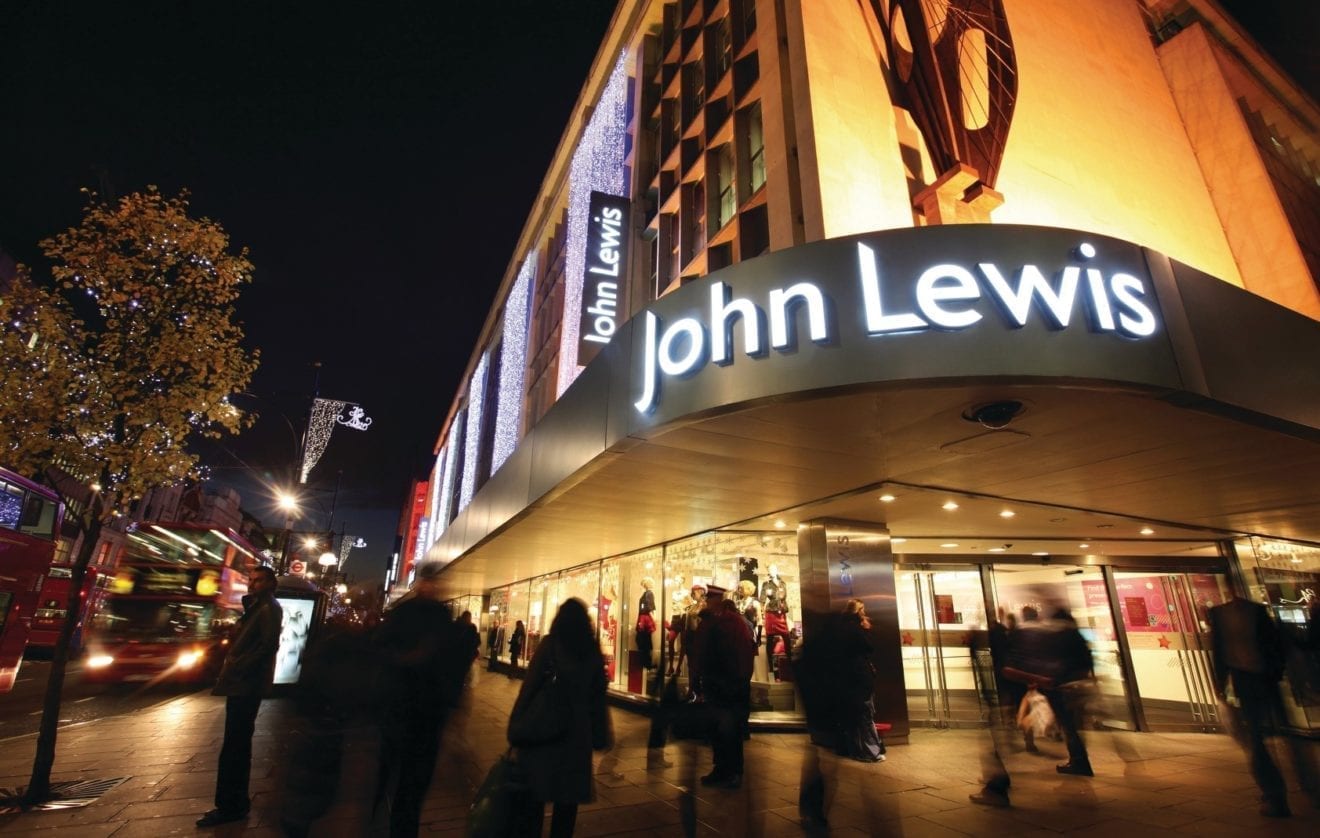
    John Lewis fashion sales rose a tremendous 7.2 per cent over Christmas – eclipsing the UK department store’s rivals, even robust performances by Debenhams, M&S and House of Fraser.

    Own brand collections continued to strengthen throughout 2016, with the inclusion of Modern Rarity filling a gap in its private label brand portfolio by appealing to a stylish, design-led shopper and taking Cos on as a direct rival. John Lewis should consider taking this brand into menswear, given the outperformance of menswear in 2017 versus other clothing sectors, and the current gaps in the market for brands targeting the 30-45 year old male shopper.

    Its Electricals Home & Technology division was up against the strongest comparative, rising 4.8 per cent against a 9.6 per cent rise last Christmas. The department faced huge discounting pressure from rivals Amazon, Argos and Dixons Carphone, particularly over Black Friday when promotions were offered over a week ahead of the main event. However, John Lewis’ strategy of selling the latest models across technology categories will have limited its exposure to the breadth of discounts available elsewhere.

    As one of the leading players in selling affordable smart home technology, John Lewis can expect to see a greater uptake in demand in 2017 following its significant investment in the department during 2016 and increasing consumer awareness.

    Home reported the slowest sales growth at 2.7 per cent against a 5.1 per cent rise last year, though this is outperforming both the home and furniture markets and is resilient given the fall in housing transactions.

    Paula Nickolds takes over the reins this month from Andy Street, marking the start of a new era for the department store. Nickolds’ understanding of the business will ensure Street’s legacy and strategy will be carried forward, but her new appointment begins at the start of what will be a challenging and unpredictable three year (at least) period, so new initiatives will be important to stimulate demand.

    -Honor Strachan

  • Jessica Hart leads Triumph bra campaign

    Jessica Hart leads Triumph bra campaign

    Australian model/entrepreneur Jessica Hart heads the new global spring/summer campaign for the Triumph bra brand.

    She was shot by British fashion photographer Rankin for the campaign, “Find the One for Every You”, which tells the story of the modern woman’s multifaceted life: athlete, business woman, mother. The concept is to show how Triumph bras support women whatever they do, and to help them “find the one” for every age, shape, size and occasion.

    Hart and supporting models are depicted in various roles, with the campaign playing on real personalities rather than an idealised image. Rankin says the most exciting thing about working on the campaign is that the brand is moving in a different direction.

    “The images are modern, accessible and incredibly confident. We’re really pushing the fact that it’s not just for the ‘perfect’ woman, Triumph is for every woman.”

    Hart says she is excited to be part of change, “representing this playful side of Triumph that speaks to all women”.

    The campaign spotlights the brand’s diverse styles, from the feminine Amourette 300, confidence-enhancing Magic Boost and innovative Triaction.

    Hart has also been a Victoria’s Secret model.

  • SuperGroup thrives after downsizing logos

    SuperGroup thrives after downsizing logos

    SuperGroup was a clear winner last Christmas as it benefitted from the weak pound and the opening of net nine new stores in the 10-week Christmas period helping to boost revenue to £162.1 million.

    SuperGroup’s conventional approach to discounting, with a series of online category specific promotions before Christmas and a clearance sale after, drove full price sales throughout most of the trading period.

    SuperGroup’s deliberate move away from the heavy logoed product of the past and investment in its womenswear ranges and premium menswear collection means Superdry has become a more fashion focused brand that has greater mass appeal – albeit its distinctive design flair still helps differentiate its offer from rivals.

    Communication of its updated ranges to new consumers is now imperative to its success. For females its investment in making stores more gender neutral will help shift views that it is a male brand, but with almost 50 per cent of women shopping menswear, it should consider assigning prime floorspace to womenswear to make it more appealing to browse collections when instore.

    In menswear it continues to outperform the sector boosted by its sportswear range and the prolonged athleisure trend. Despite its strong performance it still needs to shift perceptions that it is solely a casualwear retailer. The Idris Elba premium collection presents clothing that aligns it with new competitors such as Ted Baker, Whistles and Reiss; however winning the attention of these shoppers will remain difficult as merchandising, even in newer formats, still primarily focuses on casualwear.

    Dedicated window displays of the premium collection is one way Superdry can tempt new shoppers who have more tailored tastes in store and away from established smarter casualwear menswear retailers.