Tag: Japan

  • Seven & I store closures hit regions

    Seven & I store closures hit regions

    Losses have forced two Seven & I store closures in regional Japan, both outlets after 40 years of trading.

    Seven & I Holdings, which owns the Sogo and Seibu department store chains, is closing a Sogo store in Kashiwa, Chiba Prefecture, and a Seibu store in Asahikawa, Hokkaido. Both are scheduled to shut their doors on September 30, and the company has not revealed any plans for either site.

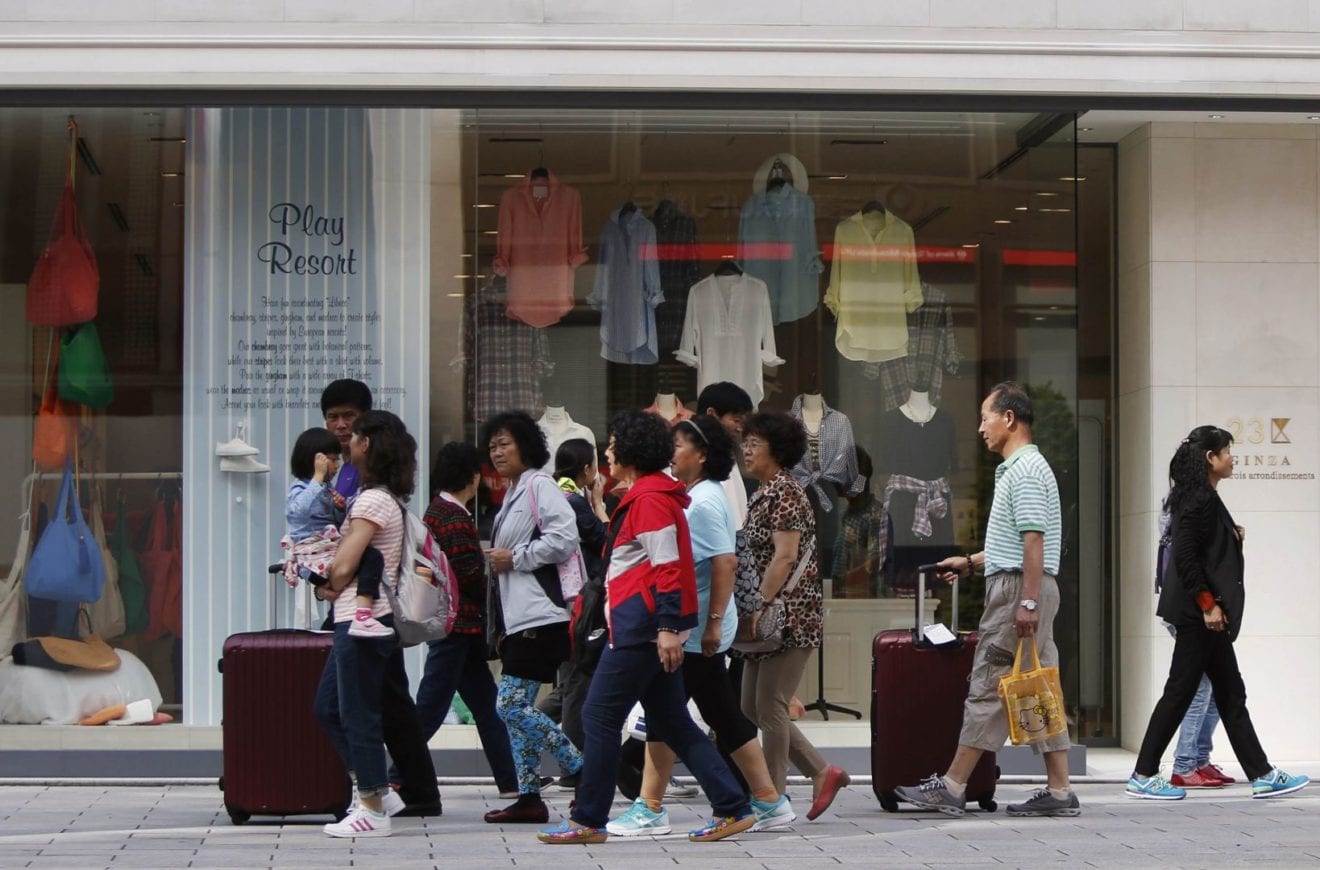
    Japan’s regional department stores have been hit hard by competition from major shopping developments and other factors. Also, they are not easily accessible for foreign tourists, so have not benefited from the tourism boom.

    “It has been difficult to attract customers and we cannot continue to run deficits,” says Seven & I Holdings president Noritoshi Murata.

    Sogo and Seibu are known for having a higher ratio of regional outlets than other major department store chains, says The Japan News. Since their sales peaked in the 1990s, both Sogo Kashiwa and Seibu Asahikawa have been on a downward trend.

    Many other regional department stores have already closed. The Kenmin Department Store in Kumamoto, in business for more than 40 years under different names, shuttered in February last year. The Imari Tamaya store in Imari, Saga Prefecture, closed in January, citing a shrinking population, poor sales and other factors.

    Run by Isetan Mitsukoshi Holdings, the Marui Imai department store in Hakodate, Hokkaido, has reported a 4.8 per cent drop in sales to ¥6.3 billion (US$55.46 million) for the nine months ending December compared to the same period the previous year. In contrast, the Mitsukoshi Ginza store in Tokyo logged ¥64.3 billion in sales during the same period, up 19.6 per cent from the previous year. The Ginza outlet has been helped by increased foreign tourism.

    Department stores in 10 major cities sold about ¥12.1 million per 100 sqm in January, compared to about ¥5.68 million in regional stores, according to the Japan Department Stores Association.

    “It will be difficult to close the gap,” says an association official.

    Meanwhile, Isetan Mitsukoshi Holdings plans to increase small and midsize stores nationwide from 102 to 180 by the end of the 2018 fiscal year.

    Takashimaya last year created in-store displays of cosmetics and other products available online instead of at the regional outlets themselves.
  • TimeVallee Watch Boutique goes duty free

    TimeVallee Watch Boutique goes duty free

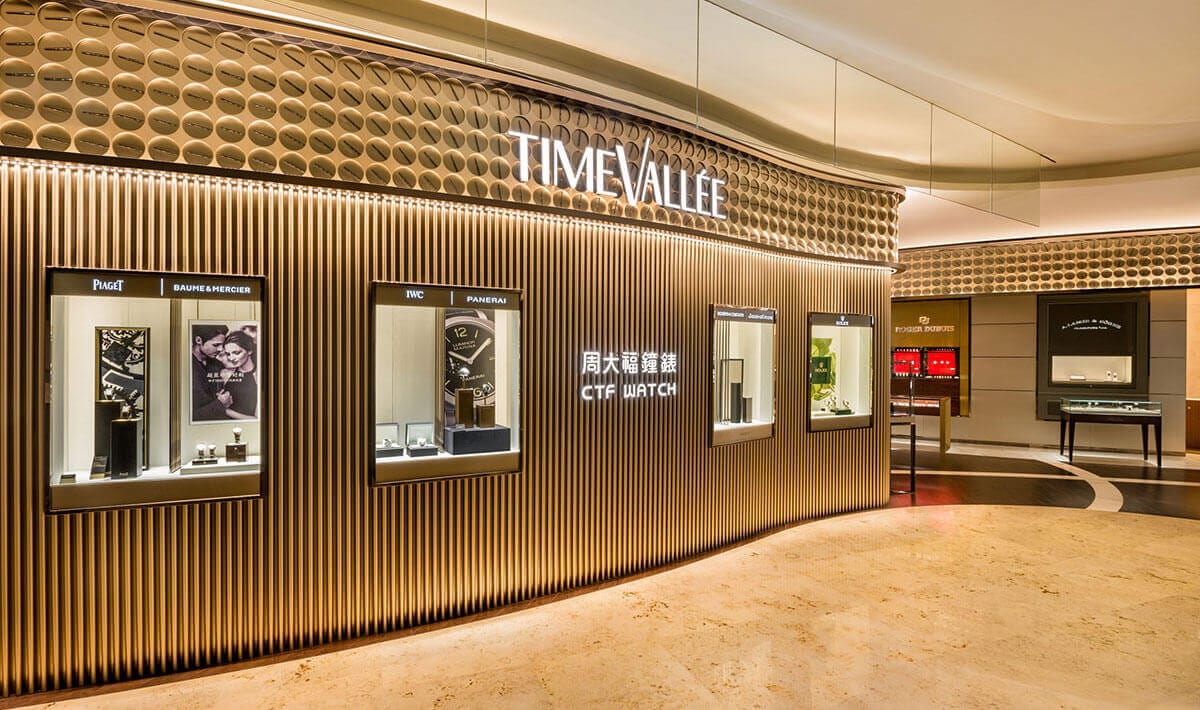
    In a first for the market, a TimeVallee Watch Boutique has opened inside Japan Duty Free Ginza on the eighth floor of Mitsukoshi Ginza Store in Tokyo.

    It is based on the concept of offering multiple international luxury-watch brands, and is the first such boutique within a Japanese duty-free shop.
    With its gold-toned interior, the store features a hands-on area where the latest technology enables shoppers to learn more about the history, traditions and technologies of the brands on display.

    TimeVallee1

    Japan Duty Free Ginza opened in January as Japan’s first airport-style duty-free shop in a city center outside Okinawa. It offers all products exempt from consumption tax, customs duties, and alcohol and tobacco duties.

    TimeVallee Watch Boutique features seven brands – Cartier, IWC, Jaeger-Lecoultre, Piaget, Roger Dubuis, Vacheron Constantin and Zenith.
    Japan Duty Free Ginza is run by Japan Duty Free Fa-So-La Isetan Mitsukoshi, established in 2014 and financed by Isetan Mitsukoshi Holdings, Japan Airport Terminal and NAA Retailing Corporation.

  • Kose cosmetics reveals global ambition

    Kose cosmetics reveals global ambition

    Japan’s Kose cosmetics has unveiled a global marketing plan that aims to give it a strong international presence – including department store outlets in China, Malaysia and Singapore.

    The plan was revealed as it celebrated its 70th birthday, with a media event at Roppongi Hills in Tokyo, attended by actress Yui Aragaki.

    In response to the success of its flagship Sekkisei skincare line, Kose is giving it more prominence on retail floors, and has introduced a “Stand by You” concept.

    Sekkisei products feature Chinese and Japanese herbal ingredients. The brand has been growing for 30 years and is continually updated, says Kose Corporation president/CEO Kazutoshi Kobayashi. Its latest addition is Sekkisei Herbal Gel.

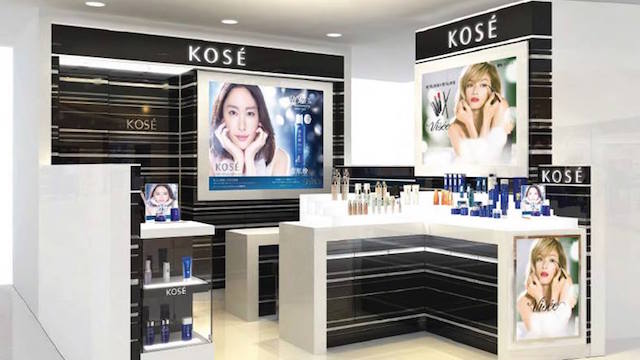
    A dedicated counter section has been designed by architect Kengo Kuma, in keeping with the store’s Japanese-motif interior design.

    “The counter uses a special material, high-density polyethylene non-woven fabric, and is lit from inside to represent the divine whiteness of Sekkisei,” says Kengo Kuma.

    The dedicated sections will launch inside department stores in Fukuoka, Osaka and Tokyo next month, and be added to a duty-free store location in Hawaii by the end of the year.

    Other locations are being established in department stores in China, Malaysia and Singapore, which will help Kose expand the Sekkisei network to seven countries within three years.

    According to the Nikkei Asian Review, Kose earns about 30 billion yen (US$266 million) in annual Sekkisei sales, and is looking to build this figure to as much as 60 billion yen by 2020.

  • Marni Japan opens flower cafe

    Marni Japan opens flower cafe

    Known for using fur in contemporary designs, Italian fashion brand Marni has opened its first flower cafe, in Osaka.

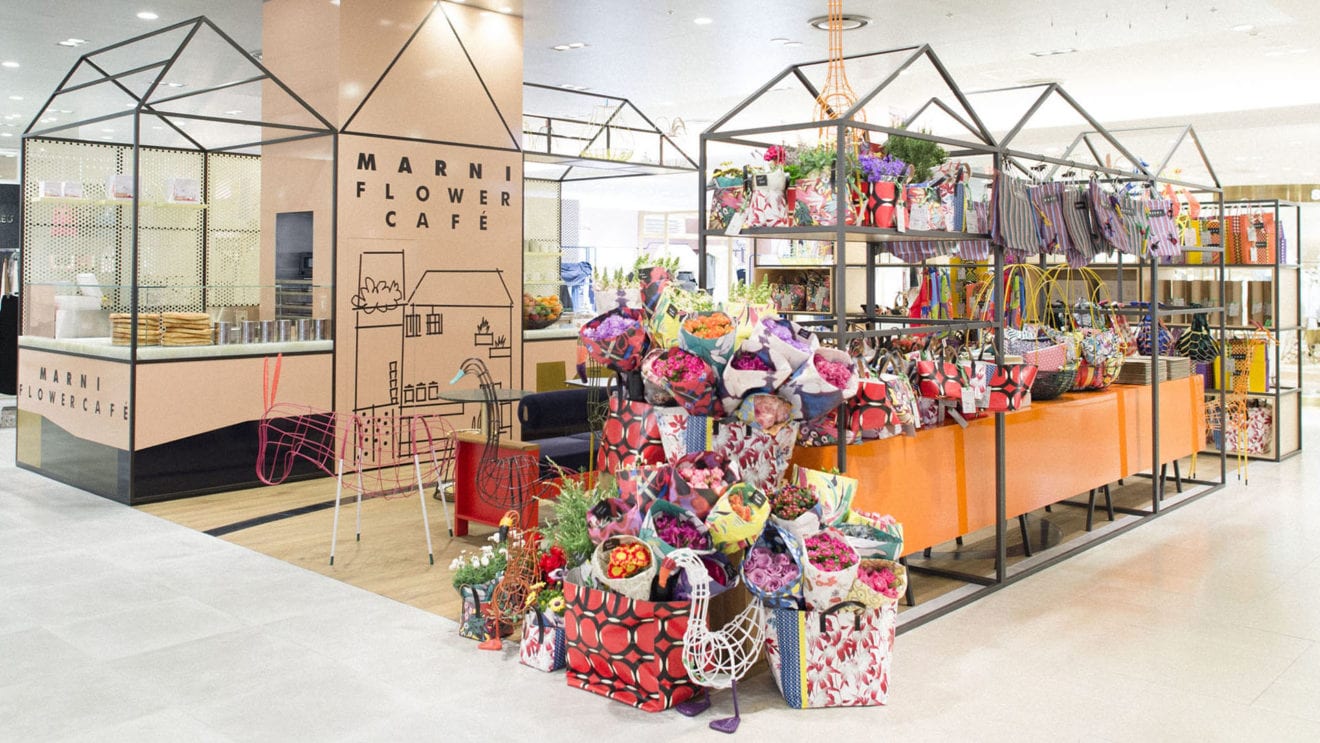
    On the third floor of the Umeda Hankyu Department Store, the 50 sqm (535 sqft) the Marni Japan cafe and shop combo is designed as a meeting place serving focaccia bread and Italian-styled cakes, as well as customised Marni products.

    Marni Flower cafe Japan 3

    It resembles a child’s playhouse, a reflection of the off-beat bohemianism associated with the creations of lead designer Castiglioni, who started the brand in 1994. Initially its focus was on womenswear “for women who eschew styling themselves sexy for men in favour of dressing for other women”.

    Marni Flower cafe Japan

    Marni went on to launch its own menswear line and now produces ready-to-wear clothing, handbags, eyewear and jewellery.

    Marni Flower cafe Japan 1Marni Flower cafe Japan 5

    At its opening event in Osaka, Marni Japan created a picnic set with wooden lunch boxes, multicoloured furoshiki (wrapping cloths), vacuum flasks, floral bags, PVC vases and porcelain sets featuring the company’s colourblock patterns. The store itself features a green onyx counter, interwoven PVC stools, small tables crafted from brass and green marble, and a bright blue sofa.
    The first of many Marni Japan stores planned, the cafe store will change its product lineup every four months.

    Marni Flower cafe Japan 4

    Part of the OTB Group that includes Diesel, Maison Martin Margiela and Viktor & Rolf, Marni has outlets in 16 countries with boutiques in Beijing, Hong Kong, Kuwait, Las Vegas, London, Los Angeles, Moscow, New York, Shanghai and Sydney.

  • Huawei Japan experience store planned

    Huawei Japan experience store planned

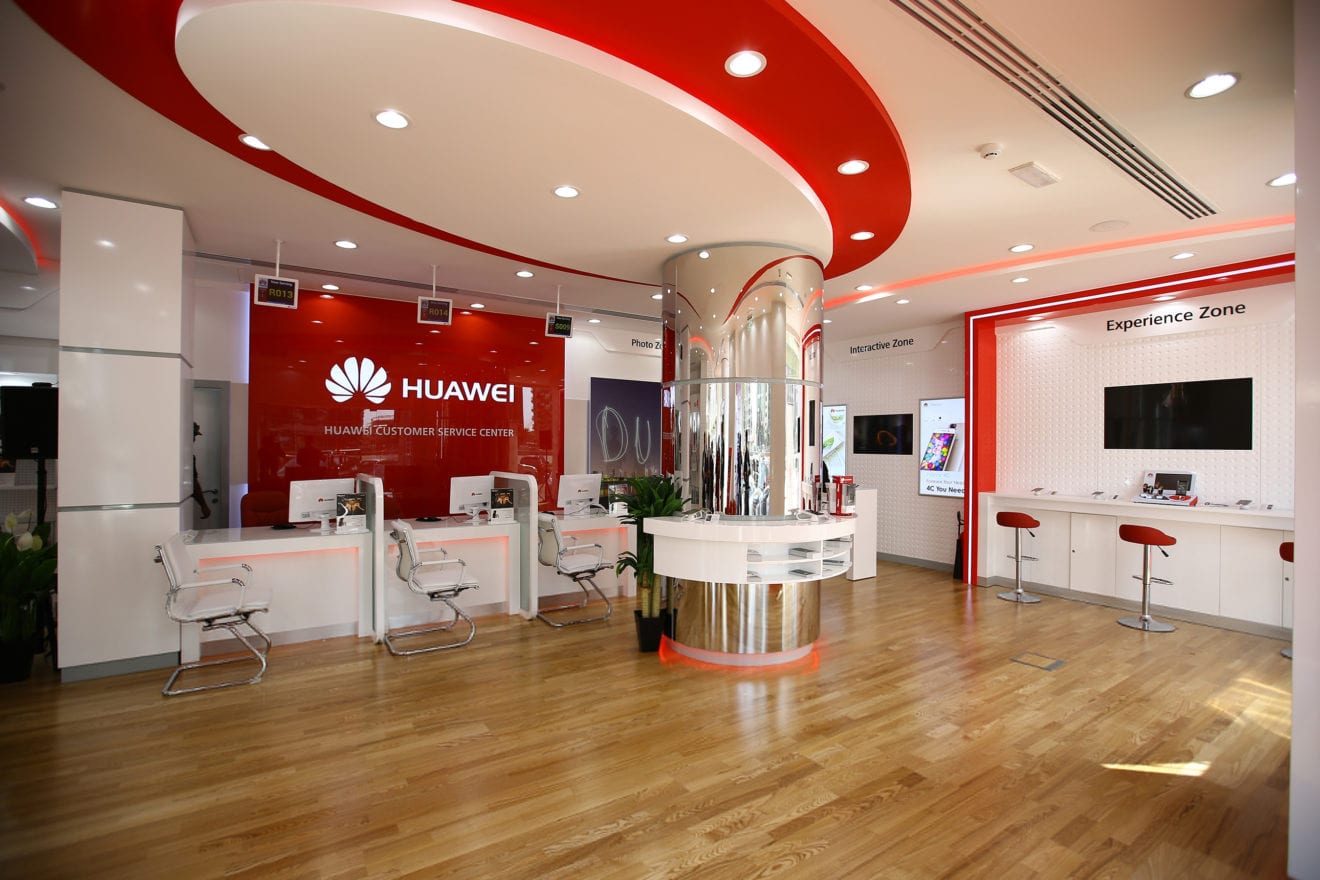
    Huawei Japan is to open its first smartphone experience store in Tokyo – but customers will not be able to buy a handset there.

    The Chinese phone manufacturer says it intends to use the outlet to provide services to users, improve brand influence and break the misunderstanding that low-price smartphones are not easy to use.

    While the store is scheduled to open in Tokyo before June, the company has yet to confirm the location.

    Meanwhile, Huawei plans to increase the number of its global smartphone stores from 23,000 to 40,000 – a 70 per cent jump. It is hoping to improve its sales performance in the smartphone sector, where growth has already started to slow.

    Huawei was ranked third by global smartphone shipments last year, trailing Samsung and Apple, and is aiming for second place.

  • Japanese stores target Thai tourists

    Japanese stores target Thai tourists

    Thai tourists are now in the sights of Japanese department stores after their success in luring Chinese during Lunar New Year.

    Such companies as Isetan Mitsukoshi Holdings and J.Front Retailing, which run the Daimaru and Matsuzakaya department stores, are ramping up efforts to lure Thai tourists during their traditional New Year holiday Songkran, which this year runs from April 13 to 15, reports Nikkei Asian Review.

    A weaker yen has helped boost tourism numbers to Japan, and visitors from Thailand have grown steadily to nearly 800,000 last year following the relaxing of visa requirements in July 2013.

    While most foreign visitors last year came from China, they were followed in volume by South Korea, Taiwan, Hong Kong, the US and then Thailand.

    Isetan Mitsukoshi and J.Front issued pamphlets and other materials to promote their Japanese stores during the Thai International Travel Fair at the Queen Sirikit National Convention Center on February 21, one of Southeast Asia’s largest travel-industry events. They mainly targeted Thai travel agencies.

    J.Front’s Daimaru and Matsuzakaya stores distributed flyers with discount coupons, and also plans to hand them out aboard Asia Atlantic Airlines flights between Thailand and Sapporo. The coupons will also be given to tourists buying the Japan Rail Pass at Thai outlets of Japanese travel agency HIS.

    Daimaru’s store in Sapporo has even prepared a floor guide in Thai language.
    Matsuya, another Japanese department-store chain, will give preferential treatment to customers of three Thai banks – Bank of Ayudhya, Kasikornbank and Krung Thai Bank – at its Ginza store in Tokyo. They will receive discounts and gifts.

    In January, Matsuya had a similar offer for customers holding membership cards from Thai retailer The Mall Group. Sales of duty-free goods at Matsuya during last year’s Songkran holidays surged 50 per cent from a year earlier, the company says.
    Visitors from Thailand spent a total of Y120 billion (US$1 billion) in Japan last year, up a quarter on 2014’s figures, according to a survey by the Japan Tourism Agency.

  • Japanese group buys into HMV Asia

    Japanese group buys into HMV Asia

    Hong Kong-based private-equity firm Aid Partners is about to sell a parcel of its HMV Asia shares, which it acquired three years ago.

    It has agreed to sell an 18.37 per cent stake in the business to Japan’s World Innovation Lab for US$9 million. Under the agreement, 2250 new ordinary shares in the capital of the HMV Group’s interests in Hong Kong and Singapore, run by HMV Marketing, will change hands.

    HMV Hong KOng 1

    A stock exchange filing says the proceeds from the stake sale will be used for the general working capital of the HMV Group. World Innovation Lab, which specialises in investment including the technology and media sectors, will help in the strategic development and promotion of the movie and music retailer with its international network and business experience.

    HMV new concept

    Aid Partners is selling the shares to WiL Fund I, an investment fund managed by World Innovation Lab. The Hong Kong firm will still own 81.63 per cent of the business.

    HMV tokyo bike

    Once the deal goes through, Innovation Lab will have a director on the board of HMV.
    Aid Partners bought HMV’s interests in Hong Kong and Singapore in 2013, along with all its licences in mainland China, Macau and Taiwan for an undisclosed amount.

    HMV Hong Kong new 3

    HMV then had six stores in Hong Kong and two in Singapore, plus an eCommerce business in Hong Kong. Aid Partners cut back the music and movie retail stores to five, and opened two restaurants and a cafe under the HMV brand.

    The Asian business is a separate entity from HMV in the UK, which went into administration the month before Aid acquired the Asian business.

    As at June 30, the unaudited net liabilities of HMV Marketing were about HK$39,512,000 (US$5,085,167).

  • Private equity firm buys Ishii Sports

    Private equity firm buys Ishii Sports

    Japanese private equity firm Advantage Partners has acquired Tokyo-based sports equipment retailerIshii Sports for an undisclosed amount.

    In  a release, Advantage Partners says the acquisition will help support the revenue growth of Ishii Sports, founded in 1964.

    Ishii sells sports equipment online as well as through a chain of 32 retail stores in Japan. The products are designed for outdoor activities such as canoeing, mountaineering, skiing and snowboarding.

    Along with self-branded products it also sells big brands including The North Face and Nordica and offers related services such as equipment repair and training.
    Established in 1992, Advantage focuses on acquisitions, growth capital, privatisation and turnaround opportunities in China, Japan and South Korea. Its investment portfolio lists nearly 50 companies, including retail and distribution companies Actus Corp, Credge, FMI and Ray Cassin.

  • Japanese Food Firms have Growing Interest in Indonesia

    Japanese Food Firms have Growing Interest in Indonesia

    Japan, the third largest foreign investor country in Indonesia, is showing interest in expanding their businesses in the food sector after seeing progressive developments of the Japanese society in Indonesia.”I have received reports that several Japanese food companies are contemplating entering Indonesia after observing the spurt in the number of Japanese restaurants and grocery stores in the country. This means that they already have market segments to sell their products in Indonesia,” Franky Sibarani, the head of the Capital Investment Coordinating Board (BKPM), noted in a press statement in Jakarta Wednesday (March 9).

    There were 1,199 students enrolled in Japanese schools in Jakarta in 2014. The institution also recorded that at the national level, there were 16 thousand Japanese expatriates living in Indonesia of which 10 thousand were in Jakarta, according to data at the representative office of the Japan External Trade Organization (Jetro).”Data on Japanese expatriates in Jakarta is the main factor that has led to new investment interest in Indonesia,” he claimed.Companies from Japan were so far mostly doing business in the electronics, automotive, and components sectors, in addition to garment products, Saribua Siahaan, the BKPM representative for investment promotion (IIPC) stated in Tokyo.

    However, the target of food consumers in Indonesia is of course not only Japanese citizens but also local people as Indonesia has a population of about 250 million. Indonesian people also like Japanese food.Yet, most of the Indonesian population or about 85 to 90 percent, are Muslims who are restricted to only halal (edible based on the Islamic law) food.

    Therefore, a Japanese noodle firm in Hyogo Prefecture has expressed readiness to meet administrative requirements such as halal certification for its food products to be sold to Indonesian consumers.The Japanese company notified the representative office in Tokyo of the BKPM on its readiness to meet the halal certification for its noodle products. The food and beverage industry of Indonesia is regarded as a lucrative investment opportunity, according to the Japan International Cooperation Agency (JICA), as quoted by Indonesia Investment online media in June 2014.Therefore, a total of 20 Japanese food and beverage industries were interested in making foreign direct investments worth between US$400 million and US$1.0 billion.

    These twenty Japanese companies are not only interested in conducting business in Indonesia because of the countrys large population (approximately 250 million people) and rapidly expanding middle, but also because the supply of raw materials for the food production process is available in Indonesia. The companies are focused on Indonesias most populous island of Java because infrastructure is most developed here, thus resulting in relatively low logistics costs, JICAs research also indicated. Regarding the interest of the noodle company in Hyogo Perfecture, BKPM Head Franky Sibarani affirmed that the Hyogo Prefecture was included in the areas covered by the Indonesian Consulate General in Osaka. The prefecture often conducted promotional activities in cooperation with the Tokyo office of the BKPM.Franky lauded the interest shown by the Japanese noodle firm to invest in Indonesia.

    It was an interesting development as, so far, Japanese companies making investments in Indonesia were mostly doing business in the automotive and component industries, he remarked.”This indicates that the interest of Japanese companies to invest in Indonesia is increasingly varying,” the BKPM chief pointed out.The Japanese noodle firm’s intention to expand its business in Indonesia is an example of how Japan has begun to vary its investment in the country, according to BKPM representative Saribua Siahaan in Tokyo.”Other fields of business that have attracted Japanese investors include semiconductor production and electrical appliances. The IIPC is ready to help the Japanese investor who came from Hyogo Prefecture,” Saribua remarked.The Japanese investors have begun showing interest in investing in the food sector in Indonesia also after seeing the implementation of the ASEAN Economic Community (AEC).”The Japanese investors view this as an opportunity since over 40 percent of the ASEAN population resides in Indonesia,” Saribua noted.

    The BKPM has set a target to attract US$13 billion in investment commitments from Japan in 2016. The commitment target was expected to come from the number of principle licenses issued for Japan in Indonesia, Franky told a seminar on investing in Indonesias industrial sector.”Japanese investors have the character that needs the cooperation of all parties, both the central and regional governments. We hope the BKPM and the Indonesian Embassy in Tokyo would continue to increase cooperation to attract as many Japanese investors as possible,” Franky had said last December.Based on the BKPM data, the realization of Japanese investment in Indonesia in 2015 increased by six percent compared to that in 2014.The Japanese investment realization in 2015 stood at US$2.87 billion, with 2,030 projects absorbing 115,400 workers.The manufacturing sector, particularly the automotive, electronics, machinery, and chemical, in addition to the pharmacy sectors, constituted the main contributors to the Japanese investment in Indonesia.Japanese investment commitment in 2015 reached US$8.1 billion, up 95 percent from that in the previous year.

    Japan came third on the list of foreign countries having investment commitment in Indonesia.The countries topping the list of foreign investors above Japan were China, with US$22.2 billion, up 42 percent compared to the same period in the previous year, and Singapore, with investment increasing by 69 percent to US$16.3 billion.Following Japan was South Korea, which recorded an increased investment of 86 percent that reached US$4.8 billion.

  • Seiko Australia opens Sydney boutique

    Seiko Australia opens Sydney boutique

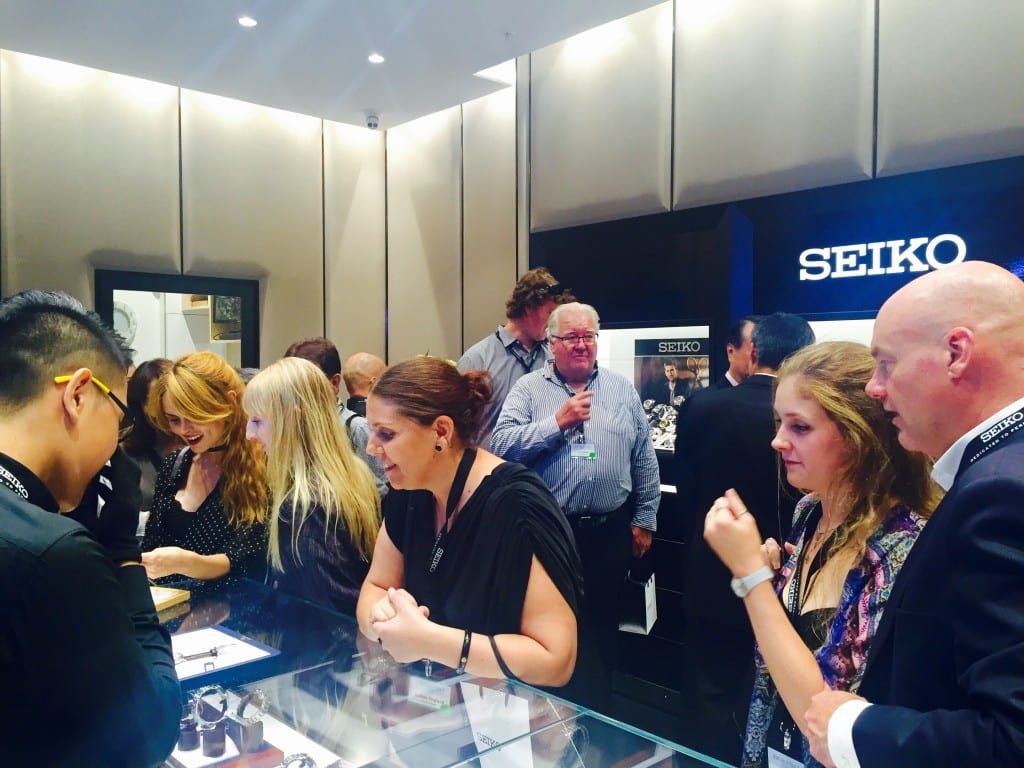
    Australia has its first boutique store for Seiko watches, just opened on the lower ground floor of the iconic Queen Victoria Building in Sydney.

    It has been opened by Seiko Australia, a subsidiary of Japan’s Seiko Watch Corporation, which sent its COO Hirohiko Umemoto to host a celebration at the Swissotel Sydney.
    Following Frankfurt, Moscow and Tokyo, the boutique is one of several Seiko is opening in leading cities, with more to follow this year.

    Seiko Botique launch

    Seiko says its aim is to let visitors “explore the world of the watch company through its history, its craftsmanship and its timepieces”. The boutique showcases such collections as Astron, Credor and Grand Seiko, and features several watches not previously available in Australia.

    Seiko's Botique launch


    A resident Seiko watchmaker will help customers with technical information.
    A Sydney landmark for more than a century, the Queen Victoria Building was originally a market and since 1986 has been home for a collection of luxury retail stores.

    Seiko Watch Corporation, a wholly owned subsidiary of Seiko Holdings Corporation, established in 1881, develops, designs and produces its luxury watches and all their components using traditional craftsmanship and advanced technologies. Its network covers more than 150 countries.

  • Japanese noodle firm ready for halal certification

    Japanese noodle firm ready for halal certification

    A Japanese noodle firm in Hyogo Prefecture has expressed readiness to meet administrative requirements such as halal certification for its food products to be sold to Indonesian consumers.

    The Japanese company notified the representative office in Tokyo of the Indonesian Capital Investment Coordinating Board (BKPM) on its readiness to meet the halal certification for its noodle products.

    “I have received reports that several Japanese food companies are contemplating to enter Indonesia after observing the spurt in the number of Japanese restaurants and grocery stores in the country. This means that they already have market segments to sell their products in Indonesia,” Franky Sibarani, the BKPM head, noted in a press statement here on Wednesday.

    He affirmed that the Hyogo Prefecture was included in the areas covered by the Indonesian Consulate General in Osaka. It often conducted promotional activities in cooperation with the Tokyo office of the BKPM.

    Franky lauded the interest shown by the Japanese noodle firm to invest in Indonesia. He remarked that it was an interesting development as, so far, Japanese companies making investment in Indonesia were mostly doing business in the automotive and component industries.

    “This indicates that the interest of Japanese companies to invest in Indonesia is increasingly varying,” the BKPM chief pointed out.

    According to data at the representative office of the Japan External Trade Organization (Jetro), there were 1,199 students enrolled in Japanese schools in Jakarta in 2014. The institution also recorded that at the national level, there were 16 thousand Japanese expatriates living in Indonesia of which 10 thousand were in Jakarta.

    “Data on Japanese expatriates in Jakarta is the main factor that has led to new investment interest in Indonesia,” he claimed.

    Saribua Siahaan, the BKPM representative for investment promotion (IIPC) in Tokyo, stated that companies from Japan were so far mostly doing business in the electronics, automotive, and components sectors in addition to garment products.

    “Other fields of business that have attracted Japanese investors include semiconductor production and electrical appliances. The IIPC is ready to help the Japanese investor who came from Hyogo Prefecture,” Saribua remarked.

    In line with the implementation of the ASEAN Economic Community (AEC), the Japanese investors have begun showing interest to invest in the food sector in Indonesia.

    “The Japanese investors view this as an opportunity since over 40 percent of the ASEAN population resides in Indonesia,” noted Saribua.

    Based on the BKPM data, the realization of Japanese investment in Indonesia in 2015 increased by six percent compared to that in 2014.

    The Japanese investment realization in 2015 stood at US$2.87 billion, with 2,030 projects absorbing 115,400 workers.

    The manufacturing sector, particularly the automotive, electronics, machinery, chemical, and pharmacy sectors, constituted the main contributors to the Japanese investment in Indonesia.

    Japanese investment commitment in 2015 reached US$8.1 billion, up 95 percent from that in the previous year. Japan came third on the list of foreign countries having investment commitment in Indonesia.

    The countries topping the list of foreign investment above Japan were China, with US$22.2 billion, up 42 percent compared to the same period in the previous year, and Singapore, with investment increasing by 69 percent to US$16.3 billion.

    Following Japan was South Korea, which recorded an increased investment of 86 percent that reached US$4.8 billion.

  • Mitsubishi Estate to build Myanmar’s ‘Marunouchi’

    Mitsubishi Estate to build Myanmar’s ‘Marunouchi’

    Major real estate firm Mitsubishi Estate Co. is planning to start a roughly 50 billion yen (about $438,616,000) redevelopment project featuring office buildings, apartments and hotels in what is now a run-down district in front of a central train station in Yangon, Myanmar.

    Mitsubishi Estate plans to draw on its experience of developing Tokyo’s Marunouchi into a world-class business district to create a Myanmar version in Yangon. The company is also planning similar projects in other Southeast Asian nations.

    Mitsubishi Estate is looking into a 40,000-square-meter site(about 9 acres) in front of Yangon’s central railway station, which serves as a gateway to Yangon. The district is currently filled with dilapidated offices and other buildings.

    Mitsubishi Estate is working with Mitsubishi Corp. and a local real estate firm in Myanmar for the project, which is now under way, to build multiple high-rise buildings that will house offices, commercial facilities, apartments and hotel accommodations. The total project is estimated to cost about 50 billion yen.

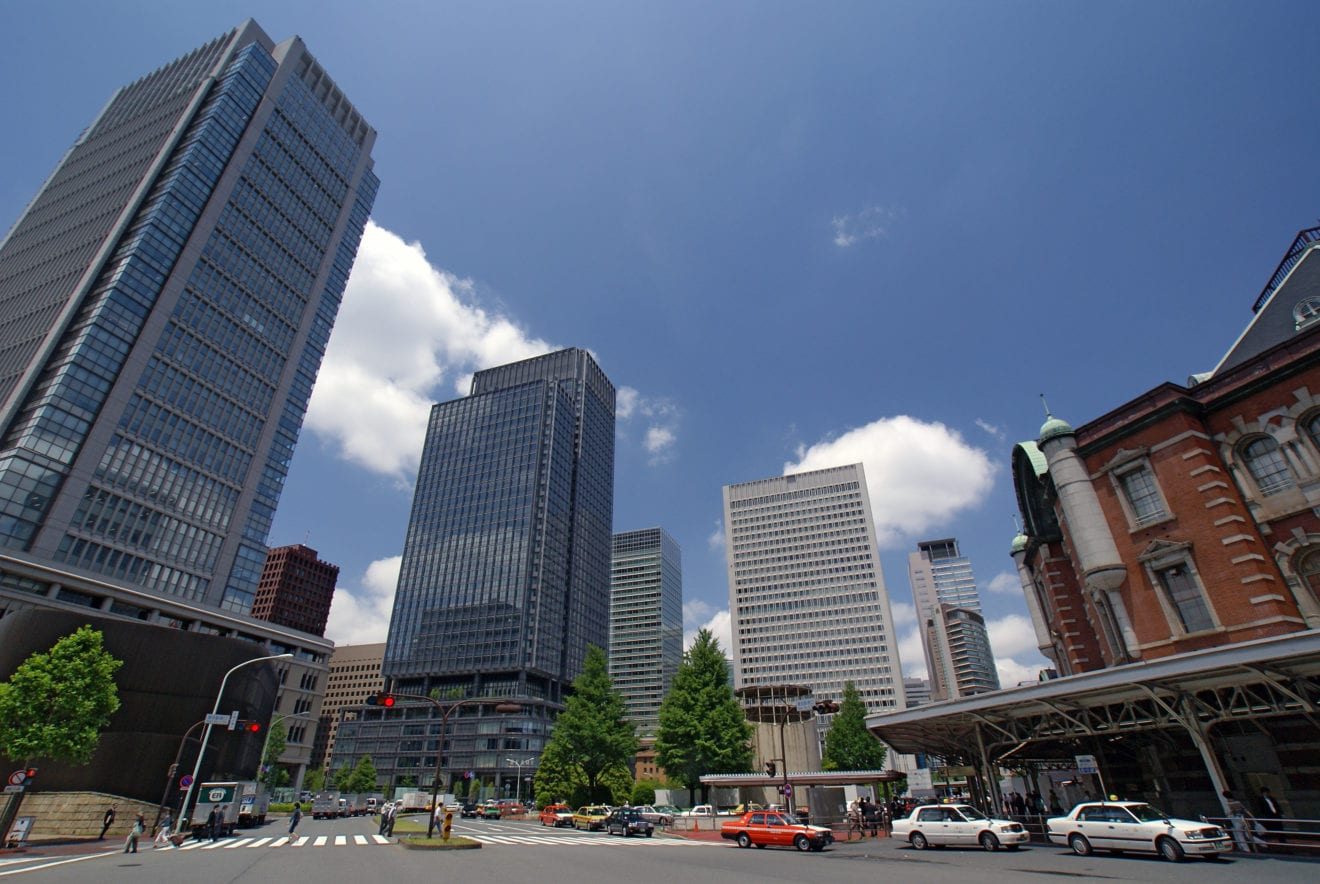
    Myanmar is facing real estate development woes, including office shortages stemming from its rapid economic growth. The landscape of the Marunouchi district in front of Tokyo Station, which was rapidly developed from the Meiji era (1868-1912) through the rapid postwar growth period, has been cited as a good model for the Yangon development project.

    Marunouchi grew into a town that attracts many visitors as a gateway to Japan, home to the offices of leading companies as well as retail stores, restaurants and hotels.

    Mitsubishi Estate is aiming to work on similar development projects in other South Asian countries by promoting its approach to build complex facilities on prime urban real estate.

    “We will export our urban development system,” Mitsubishi Estate President Hirotaka Sugiyama told The Yomiuri Shimbun. “The Yangon project will be an opportunity to introduce our approach.”

    Investment in Myanmar has sharply risen since the country made its transition in 2011 from military rule to a democratic government.

    According to the Japan External Trade Organization, foreign investment in fiscal 2014 stood at $8 billion (about 940 billion yen) – twice as much as the previous fiscal year.

    Japan-affiliated firms have entered into business in Myanmar one after another during its economic expansion period. There are now more than 280 companies belonging to the Japan Chamber of Commerce and Industry, Myanmar.

    Buildings are rapidly sprouting up, concentrated in the Yangon area. There are also more and more businesspeople visiting Myanmar, resulting in expensive rent for office buildings even for Southeast Asia as well as relatively high hotel charges.

  • Toys’R’Us Asia Pacific chief retires

    Toys’R’Us Asia Pacific chief retires

    Toys’R’Us has announced that Monika Merz, president, Asia Pacific, will retire effective May 31. Her successor will be named later.

    Monika-Merz

    As president of Toys’R’Us Asia Pacific, Merz oversees all operations and business activities for the company’s more than 300 stores in Japan, Southeast Asia, Greater China and Australia, responsible for the continued growth, profitability and success of the company in those markets.

    Since she started working at Toys“R”Us, Merz has been instrumental in the development of new store formats and merchandising concepts that have been successfully translated to other markets, ultimately strengthening the company’s position in the global marketplace.

    Dave Brandon, chairman and CEO, described Merz as a highly regarded leader “who has inspired new ideas, demonstrated innovative thinking and unwavering passion for the business and grown our Toys’R’Us brand internationally, even through challenging times and market transitions”.

    Merz’s retirement will bring to a close a remarkable career of nearly 20 years of continuous service to the company. She joined in 1996 as VP and GM, Toys’R’Us, Canada and was promoted to president, Toys’R’Us, Canada four years later. In 2007, she assumed leadership of Toys’R’Us, Japan. Her role was expanded to include responsibility for the company’s stores in Australia in 2011, and, later that year, she gained oversight of the company’s locations and corporate offices in Southeast Asia and Greater China when the company entered a joint venture agreement with Li & Fung to operate these formerly licensed stores.

    “During my time at Toys’R’Us I’ve had many experiences and challenges, but I’ve always been supported by exceptional teams and leaders,” she reflected. “I’m proud of all that we have accomplished and confident that the work we have done to provide a fun and memorable shopping experience for customers will continue after my retirement. After more than eight years in Asia Pacific, I’m now looking forward to returning to Canada and a new stage in my life.”

  • Fast rise for Chinese cross-border eCommerce

    Fast rise for Chinese cross-border eCommerce

    Chinese cross-border eCommerce will rise at a rate of 18 per cent annually through to 2020, predicts market research house Mintel in a new report.

    Mintel’s Haitao Retailing says Chinese spending on cross-border eCommerce soared more than 60 per cent in 2015.

    “The reason we chose to do this report was both due to Haitao becoming so large, and because this market is now becoming well-regulated, and encouraged by the central government,” said the report’s author Matthew Crabbe.

    “This was therefore clearly an important development in China’s international trade, its domestic consumer market, and as a route to entry for foreign companies hoping to sell to Chinese consumers.”

    Mintel surveyed more than 3000 Chinese online shoppers, of whom nearly 60 per cent said they had bought foreign products online from domestic shopping websites between June and November.

    The most popular products were beauty and skincare lines from South Korea, Japan and France; and food from Hong Kong, Macau, Taiwan and New Zealand. They also shopped for personal electronic devices from Japan and the US.

  • Ford to Shutter Operations in Japan, Indonesia

    Ford to Shutter Operations in Japan, Indonesia

    After pursuing “every possible option,” global auto giant Ford Motor Co. has said decided to close down all operations in Japan and Indonesia by the end of this year.

    “It has become clear that there is no path to sustained profitability, nor will there be an acceptable return over time from our investments in Japan or Indonesia,” said Karen Hampton, Ford’s Asia Pacific spokeswoman, in a statement.

    The company, she said, is committed to restructuring parts of its business that “have no reasonable path to achieve sales growth,” adding that Ford will provide ongoing support in both countries to customers for service, spare parts, and warranties.

    Industry-wide sales, even among domestic auto makers, in both Indonesia and Japan slumped in each of the last two years. Domestic automakers sold about five million vehicles in Japan last year with foreign brands holding less than six percent market share there.

    Ford's operations in Indonesia involved shipments of export cargo and import cargo in international trade.

    “In Indonesia, it was difficult for Ford to compete without local manufacturing and vehicles to sell in key market segments,” Ford spokesman Neal McCarthy told the Associated Press.

    The company, he said, has restructured its business there, but still has less than one percent of the market with “no reasonable path to sustained profitability,”

    The Ford retreat follows in the wake of rival GM’s closure last year of its manufacturing plant in Indonesia, the largest auto market in Southeast Asia.

    The GM plant was originally opened in 1995, but closed between 2005 and 2013, when it reopened with a $150 million investment.